
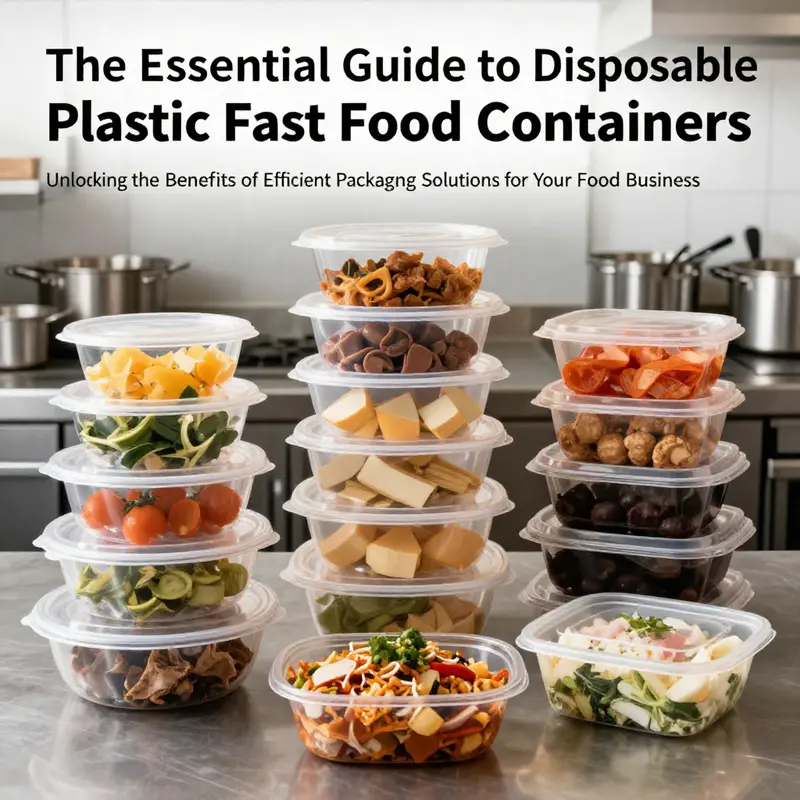
Disposable plastic fast food containers have become a staple in the food industry, especially for bubble tea shops, beverage chains, restaurants, food trucks, catering services, and corporate events. Their convenience, durability, and ability to maintain food quality make them a preferred choice for serving and transporting meals. In this guide, we will explore the materials and construction used in these containers, examine their economic implications for food service businesses, and delve into the environmental considerations surrounding their usage. Each chapter will provide valuable insights to help you make informed decisions about your packaging needs.
From Polymer to Package: Materials and Construction of Disposable Plastic Fast Food Containers
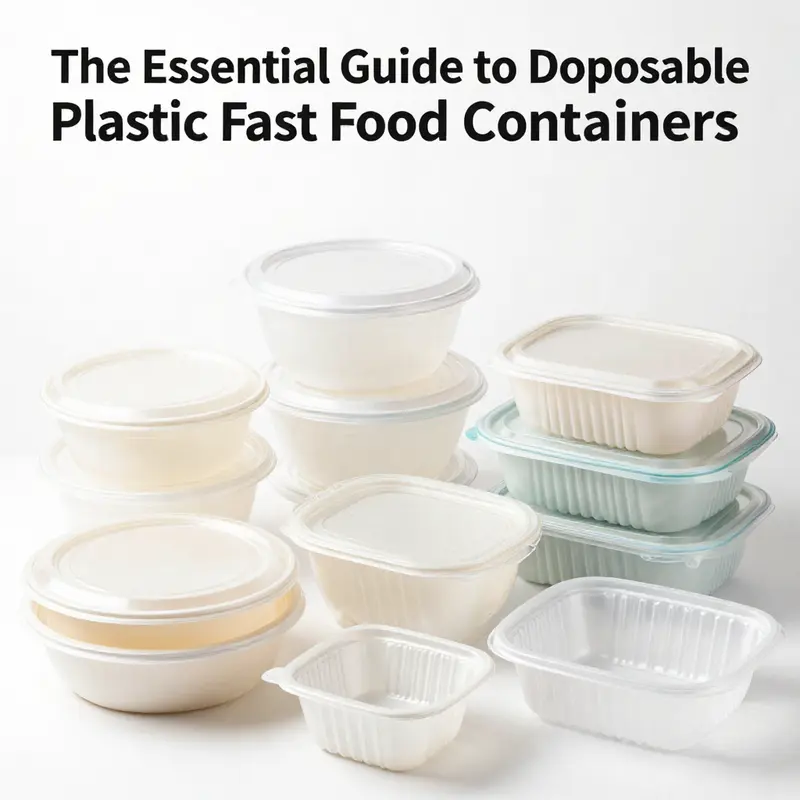
Every disposable plastic fast food container begins as a resin, a chemistry-based solution designed to transform a fleeting meal into a portable, reliable, and sanitary experience. The chain from resin to ready-to-use container is not a single jump but a sequence of choices that determine whether a box can withstand heat, resist grease, stay clear for visibility, and still be manageable on a crowded shelf or in a stack of takeout bags. In this chapter we trace that material and construction logic, not as an academic survey of plastics, but as a narrative of the practical decisions that shape everyday food service. The aim is to understand how the right combination of material properties and design features translates into packaging that protects food quality, supports efficiency, and—at least in current practice—fits within broader systems of waste and recycling. The familiar disposable container is more than a single piece of plastic; it is a carefully engineered interface between kitchen and consumer, between safety and convenience, and between today’s dining rituals and tomorrow’s environmental conversations.
At the heart of most disposable plastic fast food containers lies a trio of material families that balance performance with cost, ease of manufacturing, and end-of-life considerations: polypropylene (PP), polystyrene (PS) in its foam and solid forms, and polyethylene terephthalate (PET). Each material brings a distinct profile of strengths and limitations, and each is chosen in part because the intended use dictates whether a container will hold a hot dish, a cold beverage, a sauce, or a delicate salad. Polypropylene stands out as the workhorse for hot foods. It tolerates high temperatures better than many plastics, typically maintaining structural integrity and resisting deformation in the range of 100°C to 120°C for extended periods. In practical terms, PP containers are the go-to choice for hot soups and curries, for meals that travelers reheat in a microwave, and for any scenario where a lid must keep moisture, heat, and aroma contained. The heat resistance is not just about comfort; it translates into safer handling. When a meal exits the kitchen and enters a microwave, PP’s capability reduces the risk of leaching and deformation compared with other plastics, provided the user follows appropriate guidelines about temperature and time.
That thermally robust profile also comes with a barrier role. PP offers an effective moisture and oil barrier, which is critical for maintaining meal quality. When steam and oily sauces threaten to cloud the lid or soften the container, the right PP formulation preserves the container’s shape and keeps the food from prematurely soaking the walls. In many markets, the recyclability of PP is a meaningful advantage. It can enter local municipal recycling streams, helping to close the loop in a circular economy if the system is equipped to receive it and if consumers participate by disposing of containers in the appropriate stream. In this sense, PP is not only a material specification but a hinge between performance and recovery, one that makes the disposable option more viable in the long run for many operators.
Polystyrene, including the expanded foam variant known colloquially as foam, fills a different role. It has a long history in cold or room-temperature applications, where its light weight and cost-effectiveness are attractive. However, its heat resistance is limited; high temperatures can soften PS or EPS, leading to deformations that compromise both sealing and containment. This is why PS- or EPS-based containers are generally avoided for hot foods and reheating scenarios. Styrene, a component of some PS formulations, raises concerns at elevated temperatures, which in turn influences how these containers are marketed and used in the supply chain. The discussion around PS-related materials is not merely technical; it intersects with safety considerations and regulatory guidance, nudging many operators toward PP or alternative materials for hot-dish packaging.
PET, meanwhile, is more commonly associated with cold foods and beverages and is less frequently used for hot applications due to its heat resistance ceiling being lower than PP’s. PET’s strengths include clarity and rigidity; a transparent container can showcase a vibrant salad or a layered dessert, which can be a compelling selling point in takeout environments. The trade-off is that PET’s heat tolerance is insufficient for hot meals and hot liquids, and it is typically not recommended for microwave use. Still, its lightweight and rigid properties make PET an attractive option for cold items where a pleasing appearance matters and exposure to heat is limited.
Beyond these core resins, the construction of a disposable container often relies on design features that amplify performance without changing the fundamental material. Lids with snap closures or locking mechanisms, airtight seals, and stackable profiles are not cosmetic add-ons; they are essential elements that ensure the container can travel from kitchen to customer without leaks or breach of temperature. A well-engineered lid is a guarantee of hygienic transport, reducing the risk that a spill or contamination event occurs mid-delivery. The walls themselves can be formed with varying thicknesses across regions of the container to optimize strength where pressure is greatest, such as near the lid or at the corners, while saving material where possible to reduce weight and cost.
The shapes and sizes chosen for these containers—round, square, or more complex geometries like octagonal or multi-compartment designs—are not arbitrary. They respond to practical needs: a round container may simplify lid sealing and pouring; a square or rectangular form can maximize space on shelves and in transit; a three-compartment lunch box supports portioning and menu variety. In many eating occasions, compatibility becomes a criterion in itself. A container that stacks reliably even when hot needs ridges and lips designed to prevent misalignment. A transparent window in a PP container might help a customer identify contents at a glance, reinforcing trust in what is being purchased. Each design nuance carries a cascade of impacts, from the ease of handling and the speed of service to the reliability of the seal during transit and the ease of disposal or recycling at the end of use.
The construction story does not end with the resin and the lid. Adhesives, printing, and barrier layers all contribute to the container’s performance. Barrier layers may be used to improve resistance to fats, oils, and moisture, ensuring that the packaging preserves quality even when the meals are heavily sauced or contain oils that would otherwise permeate a thinner wall. Labels, branding, and even color can be achieved through printing that must withstand heat and oil while remaining legible. In a busy kitchen, the ability to produce a container quickly, at scale, and with consistent quality is a function of the manufacturing process as much as of the resin choice. The economics of production, including mold design, cycle times, and downstream recycling or waste handling costs, determine which material choices ultimately become standard in a given market or for a particular operator.
One aspect that frequently emerges in practice is the emphasis on compatibility. Food safety authorities emphasize choosing the right container for the temperature and acidity of the food. When a container is used outside its design envelope, problems can surface—coatings may delaminate, layers may fail to seal, and the risk of leakage or heat transfer that could alter the food’s safety profile increases. In many regulatory and advisory bodies, these guidelines translate into straightforward rules: hot foods require heat-tolerant materials like PP; cold foods are compatible with PET or PS in specific formulations; highly acidic foods may impose additional considerations around migration and resin choice. The measurable goal is to avoid significant food safety risk by ensuring that the container’s design and material properties align with the food’s characteristics and the expected handling conditions.
From a sustainability perspective, the discussion broadens to consider the environmental footprint of the material, its life cycle, and the availability of recycling streams. Polypropylene’s recyclability in many municipalities offers a path toward circularity, provided the system supports it and consumers properly separate materials. Yet the reality is mixed: recycling rates vary by region, and contamination can undermine recovery. In response, manufacturers and buyers increasingly explore environmentally friendlier or more responsibly sourced options without compromising performance. The market has seen a growing interest in plant-based alternatives and compostable materials, such as those made from sugarcane bagasse, polylactic acid (PLA), or bamboo fibers. These materials promise biodegradability or compostability under the right conditions, offering a different outcome for waste streams that would otherwise end up in landfills. The trade-offs here are nuanced. Compostable or biodegradable options often require industrial composting facilities rather than home composting, and their performance under heat, moisture, or mechanical handling can differ from plastics. They may also entail different supply chain costs and consumer education requirements. In certain contexts, these alternatives can align with sustainability goals that value a rapid end-of-life transformation over the convenience of a traditional plastic container.
To capture the broader consumer and business implications, it helps to look at how these materials perform under real-world conditions. A hot takeaway with a PP-based container must still withstand the heat when carried, microwaved (where permitted), and opened without the lid accidentally releasing steam or the contents. The container’s surface should resist oil stains and grease so that the product remains visually appealing, and the seal should remain intact during transit. The plastics’ integrity is tested in the field by the hands of riders, busy clerks, and hungry customers who expect reliability with every bite. In parallel, cold or room-temperature servings demand containers that maintain the product’s texture and moisture balance while staying clear of condensation or deformation. The balance of these demands is not purely technical; it is logistical. The operator must forecast demand, optimize packaging decisions for a range of menu items, and budget for disposal or recycling costs as part of a broader sustainability and procurement strategy.
In considering the alternatives to plastics, several paper-based or plant-derived options have gained traction in recent years. The appeal of alternatives such as sugarcane bagasse, PLA, or bamboo lies in their potential to reduce landfill accumulation and to align with circular economy goals. Even within the scope of disposable packaging, a growing number of operators think in terms of packaging ecosystems rather than single-material choices. The practical takeaway is that the conversation about materials is moving toward a more nuanced assessment of end-of-life pathways, compatibility with food types, and the relative costs and benefits of return, reuse, or disposal models. For readers who want to explore tangible examples of alternative packaging solutions beyond plastics, there are relevant product lines such as disposable kraft paper bowls with lids, which illustrate how suppliers are responding to the demand for compostable or recyclable packaging while maintaining performance for everyday takeout needs. As a concrete example of a non-plastic alternative that still demands careful handling in the supply chain, consider the disposable kraft paper bowl for food package with lid. disposable kraft paper bowl for food package with lid. This link demonstrates how packaging choices extend beyond polypropylene and PET, offering a window into the broader world of takeout solutions that compete in performance, aesthetics, and end-of-life responsibility.
The regulatory and guidance landscape also shapes how these materials are used in practice. Agencies responsible for food safety and environmental health provide practical, accessible guidance to help the trade select appropriate containers for specific foods and temperatures. They emphasize careful consideration of factors such as acidity, cooking temperatures, and the potential for substances to migrate from packaging into food. The overarching message is pragmatic: use the container that best preserves safety and quality for the particular food item, and be mindful of the conditions under which the container will be used, stored, transported, and reheated. This approach recognizes that no single material is ideal for all applications; the strength of the system lies in matching the food’s needs with a container’s material and design features, while staying mindful of waste, recycling, and broader environmental considerations.
In sum, the materials and construction of disposable plastic fast food containers embody a complex negotiation among performance, safety, cost, and environmental responsibility. PP provides warmth resistance, oil and moisture barriers, and recyclability in many locales; PS offers weight and cost advantages for cold or room-temperature items but carries concerns about heat stability and chemical migration; PET contributes clarity and rigidity for cold foods but lacks microwave compatibility. The actual containers used in markets around the world reflect these material profiles, shaped by manufacturing capabilities, regulatory guidance, and consumer expectations. The construction details—lids, seals, stackability, and barrier layers—translate these material traits into practical packaging that can endure the rigors of hot and cold foods alike, while also guiding disposal and potential recovery at the end of life. The conversation extends into sustainability, where plant-based and biodegradable options promise different end-of-life pathways but require careful alignment with recycling infrastructure, composting facilities, and consumer behavior. And as the field evolves, the story remains anchored in a simple truth: the container is the interface between a meal and its journey, and every grain of plastic or plant-based fiber carries the promise and responsibility of how we eat in a world of finite resources. For readers seeking a concrete example of how packaging alternatives can look in practice, consider the disposable kraft paper bowl for food package with lid as a tangible reference point within the larger packaging landscape. disposable kraft paper bowl for food package with lid.
External resources and guidelines continue to refine this landscape. For instance, the Centre for Food Safety provides detailed guidance to help the food trade select the correct containers for their specific needs, reinforcing the idea that safe use is context-dependent and that temperature, acidity, and handling conditions must inform packaging choices. Readers who want to explore regulatory perspectives and practical recommendations can consult the Centre for Food Safety’s guidance to deepen their understanding of safe container selection and use. This external reference underscores the practical reality that packaging is not a static choice but a dynamic decision aligned with safety, efficiency, and evolving environmental expectations. https://www.cfs.gov.hk/english/seasonal/20251020.html
The Hidden Toll of Convenience: An Economic Look at Disposable Plastic Fast-Food Containers
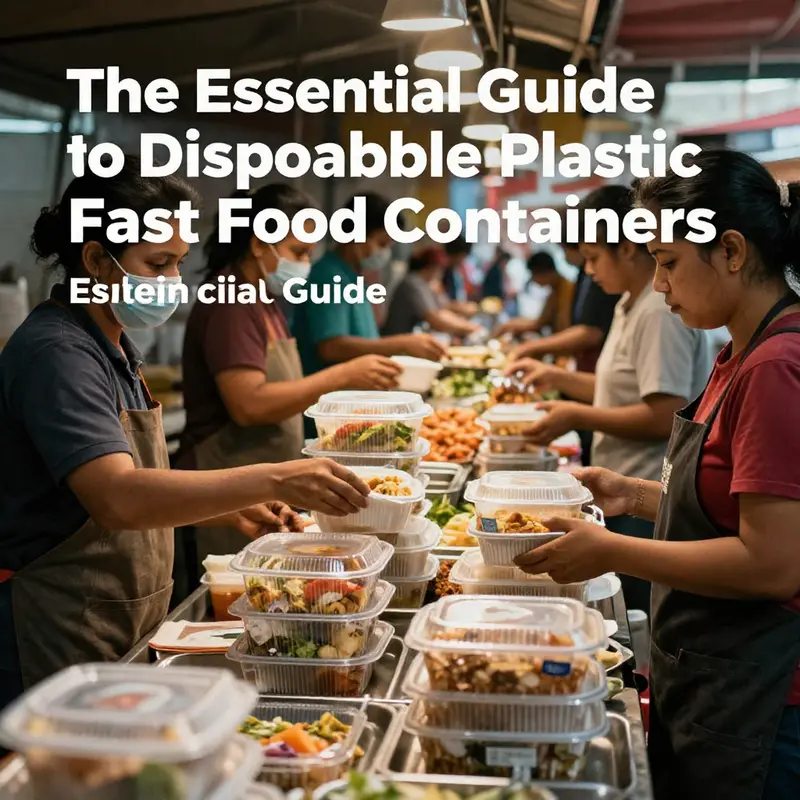
The economics of disposable plastic fast-food containers sit at the intersection of convenience, affordability, and long-run costs that are rarely visible at the point of purchase. For restaurants and takeout services, these containers deliver a predictable, low upfront expense, streamlined logistics, and the assurance that meals remain intact during transit. Yet the broader ledger of costs extends far beyond the sticker price and the per-piece cost paid by the consumer or the business. It stretches into municipal budgets, environmental stewardship, and public health—areas where the true price of convenience accumulates as an external tax paid not in dollars at checkout, but in environmental degradation, healthcare costs, and the reinscription of waste into the economic cycle through ever more intensive waste management. In this sense, the choice of packaging becomes a signal about a business’s approach to risk, resilience, and social license to operate, as well as a silent driver of long-term profitability when measured against the lifecycle of the product and the community around it.
Direct costs to businesses appear straightforward on the surface. Disposable plastic containers offer a low unit price in bulk orders, which helps keep per-meal costs down during peak service periods. The appeal is clear: a box that resists moisture and oil, that travels well, and that can be produced in large quantities with high batching efficiency. These are not minor financial considerations in a sector defined by slim margins and high throughput. When a restaurant can source a large batch of containers at a price near a fraction of a cent per piece, scheduling, inventory management, and labor costs all tend to stabilize. The immediate impact is a cleaner P&L line for packaging expenses, a factor that influences menu pricing, promotions, and the overall competitiveness of a business in a crowded market. The economics of scale also enable customization in packaging design, branding, and even the shape of the container to suit a particular meal profile or service model. In short, the economics of disposables have been built to reward scale, speed, and standardized performance—factors that many operators rely upon to maintain service quality and customer satisfaction.
But the short-run savings embed a longer and more complex set of economic effects. Environmental pollution is not a hypothetical hazard; it is a material cost that manifests through degraded ecosystems, lost tourism revenue in coastal communities, and diminished fishing stocks that support livelihoods. Global estimates presented in the research materials assert that hundreds of millions of tons of plastic waste enter aquatic environments and soils each year. The scale is staggering: an estimated 1,100 million tons entering aquatic environments annually and 1,300 million tons accumulating in soils. While these figures refer to the global system rather than any single city or country, they capture the externalities that accompany single-use packaging as it moves from a kitchen to a street, and then into a landfill or the environment. The economic costs multiply as these externalities ripple through ecosystem services—food security, water quality, climate regulation, and recreational value—that underpin local economies, particularly those relying on fisheries, beaches, and tourism. When a city must divert funds to address litter cleanups, marina maintenance, or infected habitats, the taxpayer bears a portion of the burden that originated with a simple packaging choice rooted in convenience and assumed hygienic safety.
Microplastics introduce yet another layer of cost that is challenging to quantify in the moment of sale but accumulates in public health expenditures across generations. Microplastics—tiny particles released as plastics degrade—have been detected in human blood, brain tissue, and even placental tissue, raising concerns about inflammatory responses, hormonal disruption, and potential long-term disease risk. The economic consequence here is twofold: patients demand care for conditions that may emerge or be exacerbated by environmental toxins, and healthcare systems adapt to a new spectrum of environmental disease that is difficult to attribute to a single source. The costs are spread across insurance systems, public health agencies, and research funding, reinforcing the case that packaging decisions echo through the health of a population and the financial stability of health institutions. In a landscape where chronic diseases impose mounting costs on care delivery, prevention and risk management begin long before a product reaches a consumer’s hands.
A third economic channel traces to the inefficiency of current recycling systems. Even with robust municipal programs, only a minority of plastic waste is economically recyclable in practice. The figure cited for global economic recyclability hovers around 21 percent, implying that a considerable portion of disposable packaging ends up in landfills or the environment rather than re-entering the production cycle. This leakage undermines efforts to build a circular economy, where materials flow back into new products rather than becoming waste. The cost footprint in this space includes extended waste management logistics, landfill capacity and closure liabilities, and the need for specialized infrastructure to track, collect, sort, and process plastics. Local governments and taxpayers shoulder much of this burden, even as businesses enjoy access to low-cost materials and the assurances of a clean supply chain. The mismatch between the perceived cheapness of a single-use container and the real price of waste management is a systemic risk that can surprise operators when regulatory regimes tighten, or when community expectations about stewardship shift.
Against this backdrop, the allure of disposables can be assessed not only on the basis of unit economics but also in terms of lifecycle costs and strategic risk. A typical lifecycle analysis would follow not only the purchase price or the immediate revenue impact but the cumulative costs associated with waste handling, environmental cleanup, and potential reputational risk. When a business consults a lifecycle framework, the initial cost advantage of disposables often becomes a smaller portion of the total cost picture. The long-run financial reality may favour alternatives that reduce waste generation, improve reuse, or extend the functional life of packaging. Still, those options come with their own upfront costs and operational complexities. Reusable takeaway food containers (RTFCs), for example, can incur higher initial investments in equipment, cleaning and logistics, and staff training. They also require reliable systems to guarantee hygiene and inventory control, which, in turn, translate into ongoing maintenance and management costs. The cost–benefit calculus thus hinges on a balance: can a business absorb higher start-up costs and adjusted workflows in exchange for lower lifecycle costs and enhanced resilience? The evidence from cost–benefit analyses suggests that, in certain configurations, RTFCs may reduce lifecycle costs and environmental dependency on virgin plastic. Yet, adoption demands a transformation of business processes, consumer engagement strategies, and partner coordination to be effective.
A key dimension of this economic narrative is the price discipline that arises from competition and supply chain dynamics. The stated price points for large orders of disposable food boxes reveal how aggressively suppliers price consumables to capture market share and secure repeat orders. The ability to price at or near marginal costs for bulk purchases fosters a perception of low risk in using disposables for everyday service. However, the same market dynamics can suppress the recognition of externalities until policy changes or stakeholder pressure alters the financial calculus. When communities begin to internalize the costs of waste management and environmental harm through fees, regulations, or consumer demand for sustainable packaging, the economic landscape shifts. Prices can rise, not only for packaging materials themselves but also for downstream services such as remediation and environmental monitoring. Businesses that adapt early to these shifts will likely enjoy a smoother transition and better stakeholder relationships, while those that delay may confront higher transition costs later.
To illustrate how choices around packaging shape the supplier landscape and product design, consider the potential for alternative packaging formats that still support convenience and safety. Some operators explore durable packaging solutions that can be reused or returned, offering a pathway to minimize virgin plastic use and to divert waste away from landfills. The financial logic behind these choices emphasizes not merely the per-piece price but the total cost of ownership, including cleaning, storage, transportation, and depreciation of equipment. The careful integration of such options into a business model requires coordination across procurement, operations, and customer experience. When done well, it can yield not only environmental benefits but also improved brand equity and customer loyalty. A single packaging design choice can thus ripple through the entire operational architecture, influencing supplier negotiations, labor scheduling, and even how menus are presented and sold. This is not a decision made in isolation; it is a strategic lever that affects risk management, capital expenditure planning, and the resilience of the service against disruptions in the supply chain.
Within this broader economic frame, many operators have begun to experiment with packaging alternatives that emphasize sustainability without sacrificing performance. One pathway involves integrating kraft paper-based packaging solutions that can be compostable or recyclable, offering a different waste profile than some plastics. The transition toward such materials is often accompanied by adjustments in product design, coating technologies, and consumer messaging to ensure performance standards are maintained. For example, a packaging option that maintains moisture control and temperature stability while reducing the environmental footprint can align with consumer expectations for responsible consumption and with municipal recycling or composting capabilities. In this context, the search for packaging that harmonizes cost, performance, and end-of-life outcomes becomes a central strategic effort rather than a peripheral concern.
An important thread in this discussion is the practical reality of sourcing and how it relates to cost stability and supplier reliability. For many operators, the ability to access low-priced, customizable packaging in sizable lots is essential to maintaining price competitiveness and service quality. Yet, this sourcing certainty should be weighed against the broader implications for waste streams and community health. Suppliers are increasingly responsive to environmental performance criteria, and forward-looking buyers can leverage this by requesting materials with verified recyclability, reduced hazard profiles, or endorsements that support circular economy goals. In this context, a single packaging decision becomes a signal to the market about a business’s commitment to sustainability and governance, which in turn can influence customer perceptions, investor trust, and regulatory readiness. The complexity of these interdependencies makes the packaging choice more than a procurement detail; it becomes a strategic indicator of a company’s values and long-term viability.
To anchor the discussion in tangible alternatives while keeping the narrative cohesive, consider the packaging option that blends durability, hygiene, and a more favorable end-of-life trajectory. The evolution of packaging formats—such as octagonal or kraft-based containers designed for takeout, with lids and secure seals—offers a viable route for operators seeking to balance performance with environmental considerations. For those curious about specific packaging designs that embody this balance, one example of a sustainable option can be explored through a dedicated product category focused on kraft paper packaging. This approach demonstrates how packaging choices can be aligned with both practical service needs and broader environmental objectives. For instance, disposable-octagonal-box-restaurant-food-kraft-paper-packaging presents a form factor designed to optimize portioning, stackability, and presentation while signaling a shift toward more sustainable materials. This kind of packaging is not a panacea, but it illustrates how a deliberate design can contribute to a more resilient operational model in which environmental considerations and economic feasibility coexist.
The overarching message emerging from this economic lens is that the cost of disposables extends beyond the ledger of immediate purchase and utilization. It includes the unseen, collective costs associated with environmental degradation, public health risks, and the strain placed on waste management systems. When policymakers, researchers, and industry players examine these dynamics together, a more nuanced picture emerges: the path to sustainable profitability likely involves a blend of improved materials with better end-of-life handling, smarter logistics, and consumer engagement that encourages mindful consumption. The balance of these elements remains context-specific, depending on local waste management infrastructure, consumer behavior, regulatory frameworks, and the maturity of alternative packaging solutions. In some settings, the cumulative advantage of reusable or more thoughtfully designed packaging may exceed the cost of sticking with traditional disposables; in others, transitional strategies that gradually reduce dependence on virgin plastics while expanding recycling capacity could be the most effective route.
Ultimately, the economic implications of disposable plastic fast-food containers prompt a reconsideration of what “cost” means in a modern foodservice system. The lowest price at the register might mask a hidden ledger of externalities that gradually alters the financial and social landscape. As communities, businesses, and governments grapple with these realities, the packaging choices made in every kitchen—and in every takeaway bag—reflect a broader negotiation between convenience and responsibility. The question, then, is not only how to achieve efficiency today, but how to ensure that efficiency does not erode the foundations of tomorrow’s prosperity. The answer may lie in deliberate shifts toward packaging that supports a circular economy, paired with policy instruments and innovation that reduce the environmental footprint while preserving the service quality customers expect. When those elements align, the economic narrative of disposable plastic containers can evolve from a story of short-term savings to a durable model of value that endures across generations.
External resource: https://www.unep.org/resources/report/global-plastic-pollution-crisis
Beyond Convenience: Tracing the Environmental Footprint of Disposable Plastic Fast Food Containers
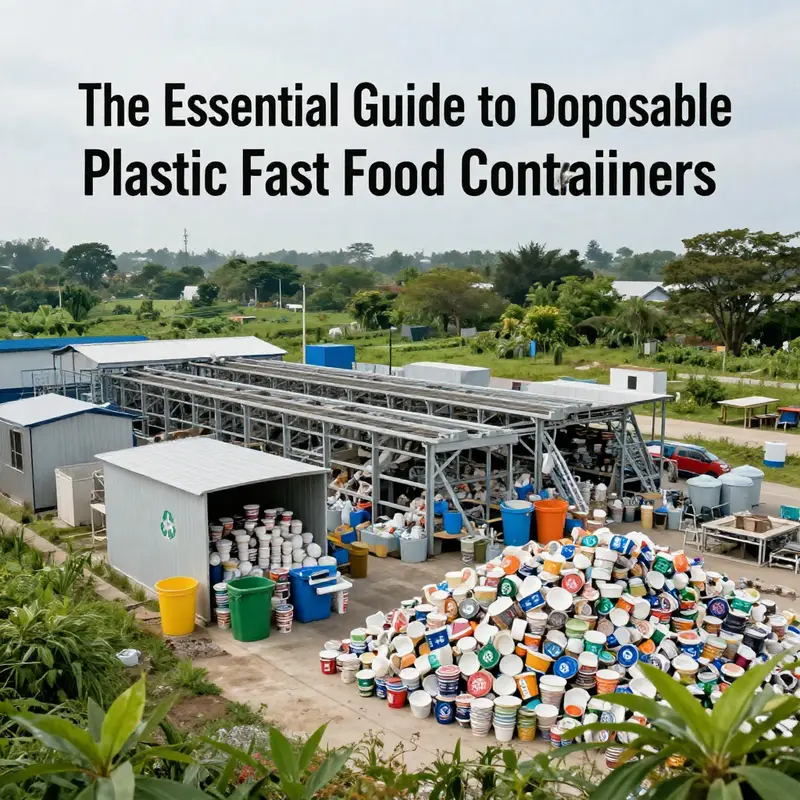
Disposable plastic fast food containers emerged as a practical response to a growing demand for speed, hygiene, and portability in the food-service ecosystem. They allowed meals to be prepared, packaged, and delivered with minimal delay, while maintaining moisture, protecting contents from leaks, and enabling reheating in home kitchens and some commercial settings. This combination of reliability and scalability fueled a rapid expansion of takeout and delivery culture, shaping how people eat on the go and how businesses operate behind the scenes. Yet this convenience comes with a price tag that often stays hidden in plain sight: the long, persistent, and increasingly costly environmental footprint of single-use plastic packaging. To understand this footprint, it is essential to view disposable containers not merely as end products but as links in a longer chain that stretches from raw material extraction to end-of-life outcomes. In that chain, the most striking tensions emerge between the benefits of hygiene and the burdens of environmental impact, a balance that societies are increasingly compelled to reassess as waste streams grow and environmental awareness rises.
At the heart of the environmental concern is the material reality of most disposable plastic containers. Polypropylene (PP) and polystyrene (PS) have dominated many segments of the market because of their light weight, durability, and cost-effectiveness. PP, in particular, offers notable advantages for hot foods and sauces due to its heat resistance, moisture barrier, and relative resilience under microwaving. However, even these advantages unravel when weighed against end-of-life outcomes. The same properties that support food safety and convenience—rigidity, transparency or opacity, and barrier performance—also slow down degradation in the natural environment. When containers escape the waste stream, they become part of a landscape where natural processes struggle to reclaim synthetic materials, contributing to a mounting global equalizer: plastic pollution. This reality has pushed researchers, policymakers, and industry players to confront questions about how long these containers persist and how far their influence travels beyond the dining table.
Decomposition profiles provide a stark lens into the scale of the problem. A widely cited estimate from a 2026 synthesis suggests that plastics can take up to two centuries to decompose when buried in soil. This is not a trivial timeline; it means a single container can outlive multiple generations of users and can fragment into smaller pieces that travel with wind, water, and urban runoff. The implications extend far beyond landfills. Plastic waste has entered aquatic ecosystems on a scale that rivals the most daunting pollution challenges humanity has faced. Estimates indicate that roughly 1,100 million tons of plastic enter aquatic environments every year, a staggering figure that underscores the magnitude of the plastics problem in the world’s oceans, rivers, and coastlines. In soils, the residue accumulates even as litter remains visible or invisible, contributing to a soil-based mass that scientists estimate at about 1,300 million tons in aggregate. These numbers are not abstract; they reflect a pervasive contamination that touches even the most remote corners of the planet, with stories of debris surfacing in places ranging from the deepest trenches to the highest summits.
A particularly alarming facet of this contamination is microplastics—the tiny particles that arise as larger plastic items degrade. Microplastics, defined broadly as particles between 1 nanometer and 5 millimeters, have emerged as a ubiquitous environmental contaminant. The United Nations Environment Programme (UNEP) has highlighted a troubling trajectory: in 2020 alone, an estimated 270 million tons of microplastics entered ecosystems, with projections suggesting this quantity could double by 2040 if current patterns persist. The presence of microplastics extends beyond ecosystems into human biology, as researchers have detected these particles in blood, breast milk, brain tissue, and even fetal material. While the health risks are still the subject of ongoing study, the potential for bioaccumulation and toxic exposure raises urgent questions about how everyday packaging choices translate into public health outcomes. Against this backdrop, the takeout container becomes a focal point for debates about safety, exposure, and precaution in the overlap between environmental sustainability and human health.
The challenges of recycling compound these concerns. Recycling remains a central policy tool but is limited by practical and economic realities. It is estimated that only about 21 percent of plastics are economically recyclable, meaning that the recovered material often does not fetch a price high enough to cover the costs of collection, sorting, and processing. This fundamental economic mismatch reduces the net environmental benefits of recycling and makes it insufficient to address the scale of plastic waste generated by disposable packaging. The implication is simple yet sobering: even with robust recycling infrastructure, most discarded containers will not return to the economy in a meaningful loop. This realization has spurred calls for more ambitious systemic changes that move beyond incremental improvements in recycling rates toward reimagining entire packaging systems.
To move beyond single-use paradigms, several initiatives have emerged that aim to reduce or reframe plastic consumption. Public awareness campaigns like Plastic-Free July challenge consumers to rethink their habits and to substitute disposable options with reusable alternatives where feasible. Policy actions, including bans and restrictions on certain single-use items, have demonstrated measurable reductions in use and waste generation in various jurisdictions. Yet the effectiveness of these measures depends on complementary strategies—namely, the development of viable reusable systems, reliable sanitation protocols, and convenient access to alternatives. A University of Michigan study, for example, found that reusable containers can have a lower overall environmental impact across their lifecycle when used multiple times, particularly when consumers integrate them into daily routines and ensure high reuse rates. This insight points toward a broader design principle: the environmental performance of packaging depends not only on the packaging itself but on how people use it within a system that supports multiple uses.
In parallel with policy and behavior shifts, the market is gradually diversifying its packaging options. The environmental narrative surrounding takeout has spurred interest in materials and designs that balance food safety with environmental stewardship. Paper-based and pulp-based packaging, for instance, often marketed as more recyclable or compostable, offers a different set of end-of-life dynamics than conventional plastics. However, it is essential to approach these alternatives with nuance. While paper and pulp products can reduce certain emissions and resource footprints in some scenarios, their production can carry its own environmental costs, including energy use, water consumption, and land-use impacts. The net advantage depends on the entire lifecycle and the waste-management infrastructure in a given region. This is why a lifecycle assessment framework is critical to comparing options in a way that captures real-world tradeoffs rather than relying on surface-level perceptions of “green” labels.
The conversation around disposal is equally shaped by the realities of waste management systems. Even when packaging is technically recyclable, the rate of actual recovery depends on the strength of collection networks, the efficiency of sorting facilities, and the local market for recycled materials. In places where municipal programs provide robust plastics recycling, some portion of PP or PS containers can be diverted from landfills. Yet the real-world recycling rate remains modest, and contamination in streams can render batches unrecyclable, transforming potential recycling gains into losses. This is where design for recyclability and standardization of materials can play an important role. Containers engineered with simpler resins, fewer mixed components, and clearer labelling can improve the probability that products will be recovered and reprocessed. But even with better design, the overarching issue persists: the scale of plastic packaging in the takeout economy is vast relative to waste-management capacity, making it a systemic problem rather than a problem that can be solved by recycling alone.
Against this backdrop, many businesses and researchers urge a pivot toward reusable container systems that are integrated into customer workflows. Such systems require reliable cleaning, convenient return channels, and clear incentives for customers to participate. The potential environmental benefits are substantial if those systems achieve high reuse rates, but they also demand careful governance to ensure hygiene, safety, and user convenience. The broader takeaway is that the environmental equation for disposable plastic fast food containers cannot be resolved by addressing a single stage of the lifecycle. It requires coordinated action across design, production, distribution, consumer behavior, policy, and waste-management infrastructure. When these elements align, it becomes possible to maintain the dining-out experience while curbing the environmental externalities associated with packaging waste.
The search for sustainable pathways also invites reflection on the end-of-life reality of current containers. What happens to a disposable container after its short life in a consumer’s hands? In many cases, it travels onward to landfills, incinerators, or informal recycling streams where the material’s value and the system’s capacity to reclaim it are tested. These pathways illuminate a central tension: the packaging we rely on for safety and convenience often ends up in systems that struggle to cope with the sheer volume and persistence of plastic waste. This tension has spurred researchers and industry players to look for integrated solutions that do not merely shift the burden from one stage to another but rebalance it across the lifecycle. Such solutions include improving recyclability and compostability where feasible, investing in more robust takeback programs, and promoting consumer practices that minimize waste through reduced usage and increased reuse.
As this environmental narrative unfolds, it is important to acknowledge the broader ecosystem of packaging alternatives that exist within a transition framework. Replacing conventional plastic containers with materials that offer comparable performance while presenting a cleaner end-of-life profile is not a trivial task. Performance tradeoffs, such as heat tolerance, leak resistance, and shelf-life preservation, must be carefully weighed against environmental benefits. In regions with advanced recycling infrastructure, PP-based containers may be recoverable and recyclable at meaningful rates, while in areas with limited facilities, those same containers may contribute disproportionately to waste streams. This nuance underscores the importance of tailoring packaging strategies to local context, infrastructure, and consumer behavior. It also highlights the value of ongoing research that quantifies environmental performance across real-world conditions and not just laboratory assumptions.
For those seeking to understand the policy and market dynamics beyond raw numbers, it helps to consider practical steps that help align convenience with sustainability. One pathway is to expand and improve the availability of reusable packaging programs, paired with consumer incentives that encourage participation without compromising service quality. Another pathway involves investing in infrastructure that supports efficient collection and cleaning, along with standardized packaging designs that ease sorting and recycling. Industry partnerships can play a critical role in creating a multifaceted system that makes sustainable choices easier for both businesses and customers. In this context, the role of consumer education becomes essential: when people understand the lifecycle implications of their choices, they can participate more thoughtfully in reuse and recycling programs, and demand for better packaging options can drive industry-wide improvements.
As this chapter closes a loop back to the central question—how to balance hygiene, convenience, and environmental stewardship—it is useful to return to one practical consideration that often guides decision-making in fast food operations: the cost and reliability of packaging. In designing or selecting containers, many managers weigh factors such as temperature tolerance, moisture and oil barriers, and the ease of stacking and transport. Yet the environmental dimension increasingly enters this calculus, not as a peripheral concern but as a core criterion alongside performance and price. A holistic assessment that includes end-of-life outcomes, potential health implications, and the feasibility of reuse can reveal configurations that satisfy customers and regulators while reducing ecological harm. The path forward, then, is not simply to replace one material with another or to preach abstention from packaging altogether. It is to cultivate systems that value longevity, reuse, and responsible disposal as deeply as they value convenience.
Within this broader narrative, there is room for pragmatic choices that acknowledge current realities while pushing toward better futures. The acknowledgment that plastic packaging will remain part of the food-service landscape for some time should not prevent bold thinking about how to reduce its harmful footprints. Instead, it should catalyze a more intentional approach to packaging design, waste management, and consumer engagement. When these elements are aligned, the environmental costs associated with disposable plastic fast food containers can be mitigated without surrendering the benefits that customers expect. This alignment requires collaboration across researchers, policymakers, industry, and the public—a shared commitment to reimagining packaging as a steward of both hygiene and planetary health rather than a disposable afterthought.
For readers who wish to explore these ideas further from a scientific and policy perspective, a notable external resource offers a rigorous examination of the environmental impacts of takeaway food containers. It provides insights into lifecycle considerations, material choices, and the broader implications for waste management and biodiversity. External reading can deepen understanding and inform decisions at both the system level and the consumer level. https://www.sciencedirect.com/science/article/pii/S095605352300089X
Within the discussion of viable alternatives, one practical bridge between today’s takeout reality and a more sustainable future is the promotion of accessible, eco-friendly packaging options that still meet the operational demands of busy food service. In this context, there is value in examining the potential role of paper-based technologies and hybrid designs that prioritize recyclability and reuse where feasible. An example of such options can be found in the broader ecosystem of packaging products that emphasize environmental responsibility while maintaining performance. For readers seeking direct examples of greener packaging opportunities in the market, one relevant resource highlights a range of eco-conscious, recyclable, and reusable packaging options that communities can adapt to their local waste-management capabilities. eco friendly printed logo cold beverage cup paper cup with lid
In sum, disposable plastic fast food containers have reshaped the way meals are shared, transported, and enjoyed. They have also illuminated a consequential environmental paradox: the technologies that improve convenience and safety can simultaneously contribute to long-term ecological and health challenges. The path forward is unlikely to be a single silver bullet but a composite strategy that blends better design, smarter reuse, stronger recycling, and informed consumer behavior. It invites a candid reckoning with tradeoffs and a disciplined commitment to system-level change. The journey toward a more sustainable takeout economy is not about eliminating plastic overnight but about elevating packaging choices to reflect their full lifecycle implications, investing in infrastructure that makes reuse and recovery practical, and empowering people to participate in solutions that are as durable as the challenges they address. With continued research, transparent reporting, and collaborative action, the environmental footprint of disposable plastic fast food containers can be reduced without sacrificing the benefits they offer in terms of hygiene, safety, and convenience.
Final thoughts
In summary, disposable plastic fast food containers play a crucial role in the operational success of food businesses, offering practical solutions for transporting and serving meals while considering economic and environmental factors. By choosing the right materials and understanding their implications, you can enhance your service efficiency and sustainability. As you move forward, weigh the benefits of these containers against your specific needs, and embrace packaging solutions that optimize both customer satisfaction and environmental responsibility.