
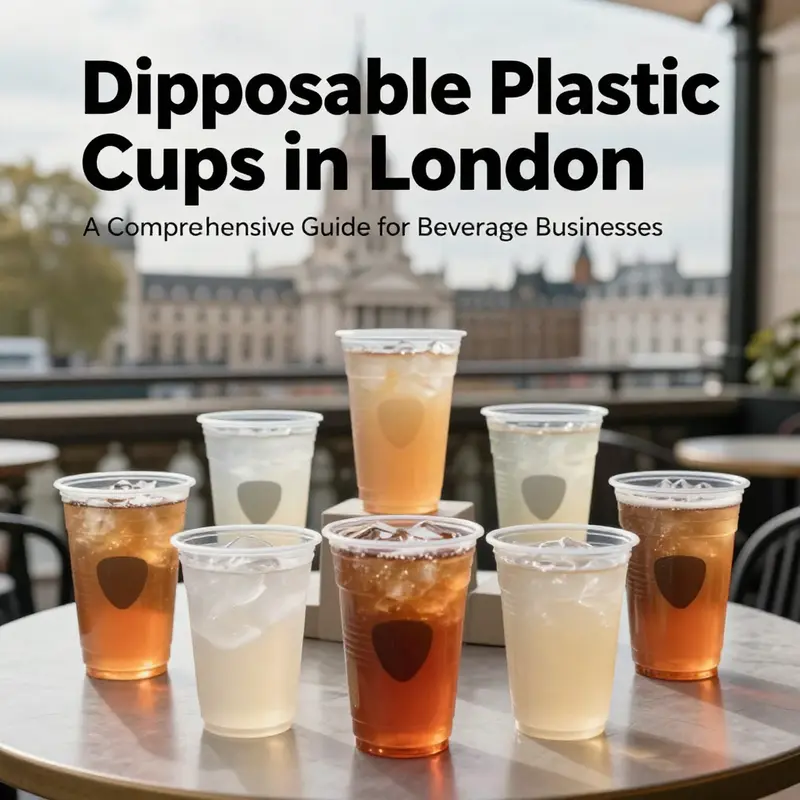
In the bustling city of London, disposable plastic cups have become a staple in various sectors, from bubble tea shops to catering services. Their convenience and practicality make them an attractive choice for businesses catering to events, outdoor gatherings, or everyday dining. This guide delves into the market landscape of disposable plastic cups, addressing their environmental impact and the emerging alternatives available. Additionally, we will explore customization options and supply arrangements, creating a well-rounded understanding for beverage chains, event planners, and corporate procurement teams to enhance their service offerings.
Recasting London’s Disposable Cups: Market Shifts, Regulations, and the Rise of Greener Alternatives
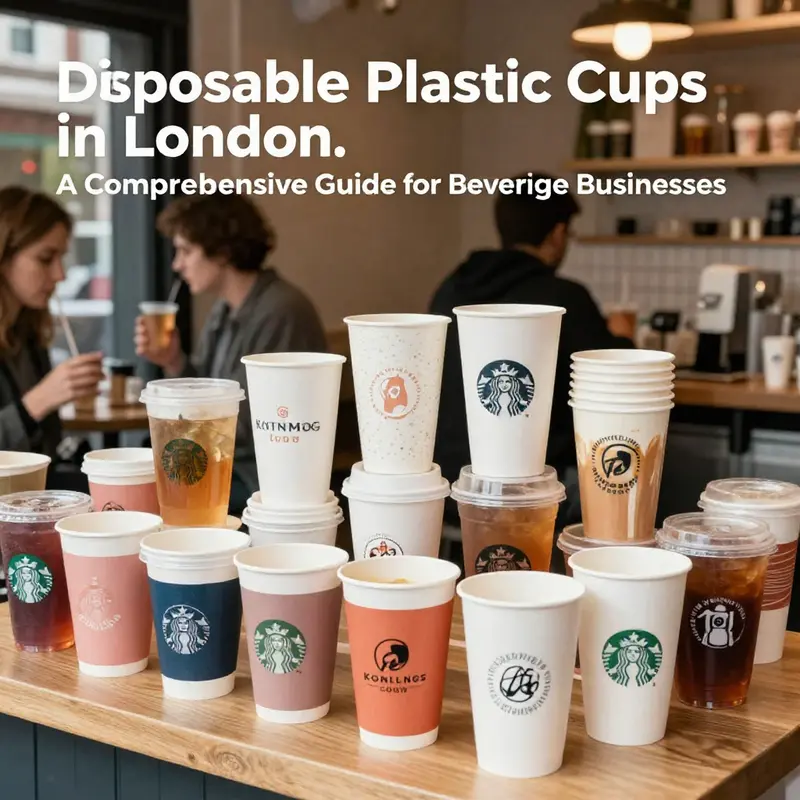
London’s bustling service culture has long depended on the quick turn of disposable cups to keep pace with the city’s demand for cold drinks, take-away refreshments, and large-scale events. In this landscape, a piece of everyday infrastructure—the disposable cup—has become a focal point for policy, business strategy, and shifting consumer expectations. Across the capital, and indeed across the United Kingdom, the market for disposable cups is at a turning point. The formal economic picture is clear enough: the UK disposable cups market generated roughly USD 971.6 million in 2024 and is projected to surpass USD 1.1 billion by 2030. Yet these numbers only hint at the deeper transformations underway. In London, regulators, retailers, and venues are working in tandem to steer demand toward materials and systems that fit a greener, more circular economy, even as practical realities—cost, performance, and infrastructure—continue to shape the pace of change. The result is a market that feels at once familiar and unsettled, one where the old habit of a universally convenient plastic cup is gradually being redesigned to align with rising standards of sustainability and accountability.
The most visible driver of this shift is policy. In London, as in many parts of the UK, there has been a determined push to reduce plastic waste and to minimize the environmental footprint of everyday consumption. Local authorities have moved to ban or restrict single-use plastics in public sector operations, and these policies ripple outward, influencing procurement choices across hospitality, events management, and retail. The intention is not merely to ban a disposable item but to reposition cups as components of a larger waste management and recycling framework. Businesses are encouraged to adopt solutions that are recyclable or biodegradable and to partner with suppliers who can demonstrate end-of-life pathways for their products. This regulatory pressure, combined with heightened public awareness of plastic pollution, has gradually shifted consumer expectations in London. People now expect that the cups they use, especially in public settings, contribute to a more responsible waste system rather than compromising it. The result is a market where traditional plastic cups are increasingly seen as transitional, not permanent, fixtures.
The market dynamics reflect this regulatory environment. The UK-wide trend toward eco-friendly options—papers, compostables, and other plant-based materials—has a counterpart in London’s merchant landscape. Shops and caterers are more frequently offering options that claim compostability or recyclability, backed by certifications and clear labeling. At the same time, the overall market remains sensitive to cost considerations. Eco-friendly alternatives, while increasingly capable and reliable, often require higher upfront investments and more complex supply chains. In London, where events seasons and hospitality volumes can be intense, procurement teams face a practical calculus: balance the objective of reducing environmental impact with the realities of price, performance, and convenience for customers and staff. The tension between aspiration and practicality is not a sign of weakness but of market maturation. It signals that sustainability is now a standard factor in decision-making rather than a niche attribute.
Innovation has responded in parallel with policy and price signals. Plant-based and compostable cup materials are no longer experimental footnotes; they are becoming mainstream components of a diversified portfolio of cup options. In London, suppliers and manufacturers are developing lines that deliver reliable performance with a reduced environmental footprint. The conversations at sourcing meetings increasingly revolve around end-of-life scenarios: can a cup be collected in the city’s recycling streams? does it require industrial composting to break down in a reasonable timeframe? what labeling and consumer guidance are necessary to prevent contamination and to maximize acceptance by waste haulers? These questions push product design beyond the cup itself and into the broader system of collection, processing, and certification. They also elevate the role of branding and customization as a way to build consumer trust around sustainability claims. It is not unusual to encounter offers that blend branding opportunities with eco-friendly materials, enabling organizations to communicate a message of responsibility while maintaining visibility and differentiation at events and in venues. For example, there are suppliers that offer customized, eco-friendly cups with logos or designs that travel with the cup through the waste stream, helping to reinforce a brand’s environmental commitments in a tangible form. And yet even as these innovations become more accessible, the narrative remains nuanced. Compostable or biodegradable cups still require appropriate facilities and reliable collection streams to deliver their environmental benefits. Without the necessary infrastructure, these materials can end up in landfills just as readily as conventional plastics. Here again, London’s regulatory and market environment serves as a catalyst for building the needed infrastructure, even as it challenges the industry to align product claims with real-world waste management outcomes.
One practical consequence of this environment is how organizations approach procurement and partner relationships. The London market increasingly rewards transparency about materials, processing, and end-of-life options. For businesses, the lesson is not simply to choose a different cup but to engage a broader ecosystem—from suppliers and waste managers to venue coordinators and local councils. The emphasis is on lifecycle thinking: the cup is a node in a system that includes sourcing, manufacture, distribution, use, collection, recycling or composting, and eventual disposal. In practice, this means negotiating supplier agreements that can demonstrate credible pathways for post-consumer cups, along with service models that handle the logistics of waste separation and transport. It also means recognizing that branding and consumer facing communications can play a key role in guiding behavior after the drink is finished. The goal is not merely to replace one material with another; it is to embed the cup within a circular logic that reduces waste and accelerates material recovery.
For event organizers and hospitality operators in London, this shift translates into considerably more planning and collaboration. A party or conference, especially those with a large footprint, is now an occasion to showcase leadership in sustainability as much as to deliver excellent guest experiences. This often leads to a more deliberate approach to cup selection, associated accessories, and the service model surrounding beverage service. The choice of cup interacts with other packaging decisions, including the bowls, lids, and sleeves used in the same setting, and with waste separation messages displayed on-site. It is a reminder that a single item—whether a cup or a lid—can influence the overall efficiency of waste sorting and the cost of disposal, which in turn can influence the overall sustainability profile of an event. In London, many organizations now view their beverage service as a lever for public accountability and reputational benefit, a way to demonstrate to attendees and customers that sustainability is not a marketing add-on but a core operational principle.
The strategic implications extend beyond compliance. The market’s current trajectory suggests a gradual contraction of demand for conventional disposable plastic cups in London, not an abrupt disappearance. The transition is informed by a combination of policy, brand trust, and practical execution. For some institutions, especially in the public sector or in organizations with a strong emphasis on sustainability, the switch to recyclable or compostable cups is a straightforward decision rooted in values and long-term cost benefits. For others, the calculus remains more complex, balancing brand experience and guest convenience with environmental considerations. The key is that London’s market is moving toward a balanced ecosystem where multiple cup solutions coexist, each selected for specific use cases, waste management capabilities, and life-cycle credentials. In this sense, the city’s market becomes a laboratory for testing how different materials perform under real-world conditions—from crowded stadiums to intimate gatherings in hospitality venues.
The broader market context supports this nuanced transition. The UK’s macro trend toward sustainable packaging solutions aligns with London’s own pace and appetite for change. As more businesses switch to eco-friendly options, the supply chain for paper-based and compostable products expands, driving reliability and, over time, a reduction in unit costs. Yet the transition is not uniform across all segments. Smaller independent venues may face higher per-unit costs or limited access to end-of-life services, while larger operators and corporate events often leverage procurement leverage to negotiate favorable terms. In both cases, the emphasis remains on credible environmental claims, clear labeling, and transparent communication with customers so that expectations align with what happens after disposal. The interplay between policy, consumer demand, and supply chain adaptation is creating a mature market that is capable of supporting London’s dynamic hospitality scene while gradually reducing its environmental footprint.
All of these strands—the regulatory drive, the operational realities, and the evolving material technologies—converge in a central question for London: how can a disposable cup, a seemingly trivial object, be part of a sustainable system without compromising the guest experience? The answer lies in a combination of smarter design, smarter procurement, and smarter end-of-life management. Cup design increasingly emphasizes modularity and clarity about disposal pathways. Procurement teams increasingly demand evidence of recyclability or industrial compostability, along with supplier commitments to responsible sourcing and waste collection. End-of-life management, including partnerships with city-wide recycling and composting programs, becomes part of the offer from suppliers and service providers. In this framework, the cup is not a one-off purchase but a component of a broader strategy to minimize waste, improve recyclability, and build trust with guests who want to see measurable environmental action from the places they visit.
A practical note for readers aiming to translate these industry shifts into concrete steps is to consider the branding and messaging attached to eco-friendly options. Budgets, timelines, and procurement cycles often shape whether a venue can adopt new cup solutions quickly or whether adoption must be staged alongside complementary changes in waste handling and signage. The integration of branding with sustainability, when done thoughtfully, can become a distinctive signal of responsibility, helping organizations differentiate themselves in a crowded market. For one illustrative angle on how branding can align with eco-friendly performance, see the dedicated eco-friendly branding option described in the product catalog linked here: eco-friendly-printed-logo-cold-beverage-cup-paper-cup-with-lid. This kind of offering demonstrates that sustainability does not require sacrificing visibility or guest experience; it can enhance both through clear communication and consistent execution at the point of service.
Looking ahead, the London market is likely to continue evolving along two interwoven paths. The first is material diversification: more robust availability of compostable and recyclable cup options, supported by credible certification schemes and clearer consumer guidance. The second is systemic integration: the alignment of cups with waste collection, sorting infrastructure, and city-wide recycling goals. In combination, these paths can enhance material circularity, reduce confusion among consumers, and improve overall waste outcomes. London’s leadership role in waste reduction and sustainable procurement creates a fertile ground for innovation, collaboration, and even new business models that reward efficiency and responsibility. Importantly, the pace will be governed not only by policy or price but by the efficacy of the partnerships that bring together manufacturers, event organizers, retailers, and municipal services in a shared commitment to a cleaner urban environment.
The conversation about disposable cups in London, then, is not really about cups themselves but about systems. It is about how a city integrates design, commerce, regulation, and behavior to ensure that a simple act—drinking from a cup—becomes a sustainable choice. The shift from single-use plastics to recyclable or compostable options is a signal of broader change, one that invites readers to reimagine the everyday objects that populate our streets, venues, and homes. As policy continues to tighten and consumer expectations rise, businesses and institutions in London have an opportunity to lead by example, investing now in materials, processes, and partnerships that deliver measurable environmental benefits without compromising the quality of the guest experience. If the market can sustain this dual focus on performance and responsibility, London may emerge as a model for how urban centers can reconcile the demands of hospitality with the imperatives of a circular economy.
For readers seeking a broader, data-driven sense of the market’s scale and trajectory beyond London, industry analyses indicate a robust growth path for the UK disposable cups market, underscoring the convergence of demand for convenience with the demand for responsible packaging. The long-run outlook remains favorable, albeit uneven across segments, with a clear emphasis on materials that can be recycled or composted within existing urban waste streams. In London, this translates into continued experimentation, policy-driven adoption, and an ongoing dialogue among manufacturers, buyers, and waste managers about how best to close the loop on disposable cups while preserving the city’s vitality and hospitality standard. The coming years will reveal whether the market can accelerate the transition quickly enough to meet ambitious climate and waste reduction targets, or whether incremental progress will prevail as stakeholders strengthen the infrastructure and trust required to sustain a circular cup economy.
External resource for broader context: for a comprehensive market outlook, see Statista’s UK Disposable Cups Market Size & Outlook, 2025-2030. https://www.statista.com/statistics/1486937/uk-disposable-cups-market-revenue/
From Convenience to Responsibility: London’s Disposable Plastic Cup Dilemma and the Rise of Reusable Solutions

In London, the everyday act of grabbing a cold drink from a café, standing at a market stall, or refilling a bottle at a water cooler often involves a disposable plastic cup. The scene is so ordinary that it rarely attracts notice, yet it sits at the heart of a complex crossroad between convenience, public health, and the health of ecosystems. These cups are typically made from plastic resins or coated materials that are designed to resist liquids and maintain clarity. They offer a practical solution for fast service and predictable portion control. They are transparent, sturdy, and not easily crushed or broken, qualities that make them invaluable during crowded commutes, festival queues, and citywide events. But those advantages are matched by a set of environmental costs that accumulate across the urban landscape and beyond.
The most visible of these costs is waste. In practice, many disposable cups are not recycled. The coatings that keep beverages from seeping through paper and the separation of plastics from paper complicate the recycling stream. When cups are contaminated with liquids, the base material can be difficult to separate and reuse. In London, as in many major cities, a large fraction of disposable cups ends up in landfills or as litter along streets, canal paths, river edges, and seaside fringes. These items can persist for centuries, gradually breaking down into smaller fragments that become microplastics. Left to weather in the elements, they contribute to a cycle of pollution that affects soil, water, and air quality, while also creating hazards for wildlife. Birds, aquatic organisms, and even urban wildlife like foxes encounter cups that can mislead or harm them.
The technical composition of the cups adds another layer of complexity. In many cases, cups used for cold beverages are either paper cups with a thin polyethylene lining or pure plastic variants such as polystyrene. The combination of paper, plastic, and adhesive films is difficult to separate at the recycling facility. This is not solely a local London issue; it is a global challenge tied to how packaging materials are designed, collected, sorted, and processed. The liquids inside the cups can also complicate matters; residual beverages reduce the likelihood that the cup can be diverted into a recycling stream. In practice, that means a large number of cups that could otherwise be repurposed or repackaged are instead sent to landfills. The long lifecycle of these items underscores the scale of the problem in a city that prides itself on cleanliness, modern infrastructure, and environmental ambition.
The consequences extend beyond waste statistics. When disposable cups litter streets or wash into storm drains, they join a broader set of plastic pollution that affects marine environments and urban waterways. In the United Kingdom and across Europe, plastic debris is a persistent concern for coastal communities and inland waterways alike. The cups act as a vector for toxins and as a physical obstacle for wildlife. They can degrade into smaller fragments that are easily mistaken for food by birds and fish. The problem compounds when cups are left in eateries near parks, event venues, or along riverwalks, where foot traffic mixes with wind and rain to spread litter further afield. The cumulative impact on biodiversity is subtle yet real, gradually altering habitats and food webs. Even when embedded into soil or compost piles, the contaminants and microfibers associated with these cups can travel through the environment and potentially re-enter ecological cycles in unpredictable ways.
In response to this confluence of concerns, policy and practice in London have begun to shift. The national policy framework that guides single-use plastics has begun to reshape the city’s consumption patterns. In October 2023, the United Kingdom introduced a ban on certain single-use plastic products, including many types of disposable cups. The intent behind the ban is to reduce the volume of plastic waste entering landfills and the natural environment, while encouraging a broader cultural shift toward reuse and responsibility. As cafes and food outlets adjusted to the new rules, the effects rippled through the supply chain. Some businesses embraced more durable, reusable approaches, while others explored alternatives that were easier to dispose of responsibly in appropriate streams. London cafes and event organizers, accustomed to the ease of single-use cups, faced both logistical and financial pressures as they redesigned service models around reusable systems or compostable substitutes. The practical outcome has been a more deliberate, often more expensive, but also more forward-looking approach to hospitality and public consumption.
The shift toward alternatives has unfolded in tandem with market responses. On the customer side, many visitors and residents now expect and value options that minimize waste. This has helped drive a reevaluation of standard workflows in busy service environments. Baristas and event planners increasingly design experiences around the concept of bring-your-own mug or cup reuse. In some settings, venues offer incentives, such as small discounts or loyalty rewards, to customers who decline a new cup and instead reuse a personal vessel. The economics of these changes are nuanced. While the upfront cost of high-quality reusable systems can be significant, the long-term savings come from reduced material purchases, waste handling, and disposal fees, as well as the reputational gains associated with sustainable practices. Businesses that communicate clearly about their packaging choices and waste reduction goals can also attract a growing segment of environmentally aware customers.
In addition to reuse schemes, compostable alternatives have become more visible in London’s streets and storefronts. Materials such as polylactic acid, or PLA, and fiber-based cups made from sugarcane or other agricultural residues are marketed as compostable substitutes. The environmental calculus behind compostable cups is not straightforward, however. For compostability to deliver real benefits, the material must actually reach an industrial composting facility equipped to process it. In some parts of the country, industrial composting infrastructure is still limited, and home composting is not suitable for many of these products. This mismatch between packaging claims and waste management realities can create a false sense of progress if not accompanied by robust sorting, collection, and processing capabilities. The upshot is that the environmental advantages of compostable cups depend on local waste streams operating efficiently and in alignment with the product’s specifications. Without this alignment, compostable options may end up in landfills as well, undermining their intended benefits.
A broader lesson emerges from London’s experience: the meaning of sustainability in packaging is not fixed by a single material or a single policy. Instead it rests on a system of practices, infrastructure, and consumer behavior that together decide how a given choice translates into environmental outcomes. The government’s ban provides a catalyst, but the day-to-day choices of retailers, municipalities, and shoppers determine the actual impact. In this context, the idea of a circular economy becomes more than a slogan. It becomes a practical framework for how food service operates in dense urban settings. Reusable cup schemes, for example, embody the circular principle by creating a loop: a container used many times, carried through logistics networks, and returned for cleaning and refilling. The success of such schemes depends on reliable cleaning, secure return mechanisms, and clear incentives for customers to participate. In London, several cafes and community spaces have begun experimenting with deposit schemes or cup libraries that allow customers to borrow a cup, then return it for refilling and cleaning. The idea is straightforward in principle, but it requires careful design to work smoothly in a busy city where flows of people, weather, and transit intersect. The coordination among suppliers, venues, and municipal waste systems becomes as important as the material choice itself.
For readers and practitioners looking for pragmatic paths forward, the key is to balance aspiration with practicality. If the goal is to reduce the environmental footprint of drinking cups, then a multi-faceted approach is required. This means pushing for more robust waste collection and sorting to ensure that recyclable or compostable streams can actually function. It also means investing in durable, reusable systems that can survive daily use in high-traffic settings while remaining affordable for small businesses and community events. In the meantime, consumer behavior remains a critical lever. Small changes—a customer choosing to reuse, a staff member reminding a patron to avoid an unnecessary cup, or a venue offering a small incentive for bringing a personal vessel—can accumulate into meaningful reductions when adopted widely. The social practice of reusing and sharing resources, once seen as frugality, now sits at the core of urban sustainability strategies. This is not simply a matter of replacing one material with another; it is about redesigning service processes to embed sustainability into routine choices.
In assessing the landscape of alternatives, it is worth noting the subtle yet important distinctions among options. Reusable systems carry embodied energy from the initial production and ongoing cleaning. Yet they reduce the recurring flow of disposable materials. Compostable options lower the burden in landfills when properly processed, but they require a compatible waste stream and reliable facilities. Paper-based or pulp-based alternatives may offer a middle path, blending the familiarity of single-use packaging with an emphasis on end-of-life options that align with regional waste infrastructure. The moral of this story, particularly in London, is that the best choice depends on the local ecosystem of collection, processing, and user behavior. A policy that works well in one borough may require adaptation in another, given differences in waste infrastructure, transport networks, and consumer habits.
The internal momentum for change is palpable in everyday life as well. Cafés are redesigning how they present beverages, shifting toward systems that minimize waste and maximize durability. Market stalls at busy markets are experimenting with uncompromising cleanliness standards that ensure cups do not leak and do not contribute to litter. And community spaces are exploring the social dimensions of reuse, from the etiquette of returning a borrowed cup to the etiquette of being mindful about the environmental costs of our consumption. This attention to detail matters because the perceived convenience of single-use cups has historically overshadowed the invisible labor of waste management, the energy used in production, and the consequences for ecosystems. When people understand that convenience comes with a price, the calculus changes. The challenge is to maintain convenience while internalizing environmental costs in a way that is fair to customers and sustainable for businesses.
In addition to policy and consumer behavior, the design of packaging itself plays a critical role. The push toward recyclable or compostable systems encourages designers to think about end-of-life outcomes from the very start. Are there meaningful recycling streams for a given material in London? Can a cup be designed so that its components can be separated easily at a facility without excessive energy use? And when a product could be borrowed rather than discarded after a single use, does it justify higher manufacturing standards and more resilient cleaning protocols? These are not merely technical questions; they are questions about business models, municipal capabilities, and the values that shape urban life. The answers require collaboration across industries, from packaging engineers to waste managers to policymakers, and they demand ongoing evaluation as technologies and infrastructures evolve.
A practical takeaway for practitioners is clear: pursue a portfolio of solutions that aligns with local waste flows and customer expectations. Reuse programs must be reliable, with clear procedures for cleaning and returning cups, supported by incentives that feel fair to the consumer. Compostable options should be deployed where there is confidence in industrial facilities and consistent collection streams. Paper-based or pulp alternatives can be appropriate when they demonstrably reduce overall environmental burden and can be integrated into existing sorting processes. This balanced approach is essential in a city like London, where density, movement, and cultural diversity create both opportunities and challenges for sustainable packaging. The outcome hinges on a well-timed mix of policy, infrastructure, and everyday choices.
The London narrative also invites reflection on the global context. While local actions matter greatly, the city’s experience mirrors a worldwide transition in how societies think about waste, consumption, and resilience. The genre of single-use cups is a tiny piece of a much larger puzzle: how cities craft sustainable everyday rituals without eroding the convenience and warmth of human interaction. In that sense, London’s cup story is less about a single product and more about a system—one that invites experimentation, learns from missteps, and gradually aligns incentives across participating actors. The aim is not to erase convenience but to reframe it within a philosophy of stewardship that can endure amid growth, traffic, and cultural change.
For readers who want to explore the practicalities of moving toward alternatives, the discussion dovetails with a growing interest in innovative packaging that respects both performance and planet. It involves examining repository data on how materials behave under real-world service conditions, assessing the energy footprints of production and cleaning, and evaluating end-of-life options across different waste streams. It is about asking what counts as sustainable in a city where space is precious and resources are finite. The story also invites reflection on global supply chains and the way local choices ripple outward. Although London is a focal point, the lessons learned here are transferable to other urban centers facing similar pressures. The aim is to sustain a vibrant culture of hospitality and public life while reducing the environmental consequences of how drinks are served.
Finally, as readers consider their own consumption habits and professional roles, a practical takeaway emerges. Choose reuse where feasible; support infrastructure that makes returning and cleaning viable; and recognize that responsible packaging requires more than a single intervention. It requires an ecosystem that invites participation from businesses, consumers, and policy-makers alike. In such an ecosystem, the embarrassment of waste becomes a teachable moment, a shared responsibility, and an invitation to redesign our rituals around everyday refreshments. The London case demonstrates that what seems to be a small decision—a cup, a lid, a sleeve—can reveal the broader architecture of sustainability in a modern city. It is a reminder that attention to detail, paired with bold policy and thoughtful design, can move a city toward a future in which convenience and stewardship are not enemies but partners in daily life.
For readers who want to explore the practicalities of moving toward alternatives, see this related resource that illustrates the type of eco-friendly alternatives being explored in this space: eco-friendly-recyclable-pulp-2-4-cups-coffee-take-away-cup-holder
External resource: https://www.gov.uk/government/publications/ban-on-single-use-plastic-products
Brand on the Go: Navigating London’s Customization and Supply Landscape for Disposable Plastic Cups
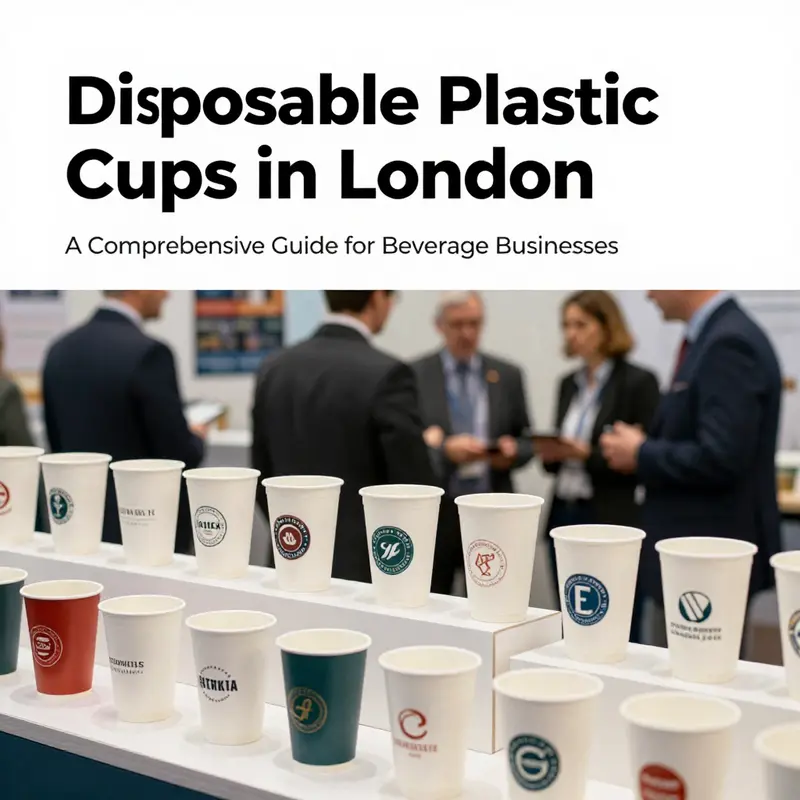
In the busy rhythm of London’s hospitality, events, and everyday beverage service, the disposable cup is more than a vessel. It is a canvas for branding, a practical tool for logistics, and a touchpoint that can shape a customer’s perception long before the drink is finished. The city’s market for disposable plastic cups sits at the intersection of functional reliability, rapid delivery, and the growing appetite for customization. Buyers range from craft breweries and pop-up street-food vendors to national chains staging large-scale city events. They all confront a shared challenge: how to source cups that not only hold cold drinks securely but also carry a brand story with clarity, consistency, and cost efficiency. London’s suppliers, logistics networks, and design capabilities have evolved to meet this demand with a blend of standardized options and bespoke solutions that can scale from a single event to a city-wide rollout.
The customization options available to London buyers are broad enough to transform a simple redelivery cup into a branded touchpoint that reinforces a business’s identity. At the core, suppliers offer imprinting services that place logos, company names, or selective graphic elements onto the cup body. This is not merely about aesthetics; it is a driver of recall and perceived quality. A well-printed logo in high fidelity can convey trust and consistency, especially when paired with matching lids, sleeves, or a cohesive take-away packaging ecosystem. Technology behind printing ranges from high-precision digital imprinting to more traditional screen techniques, chosen based on run size, color demands, and the complexity of the design. For someone planning a one-off festival, a short-run approach might be ideal for a few thousand cups with a vibrant, multi-color print. In contrast, a coffee shop planning a multi-season campaign might prefer a durable, multi-year branding strategy that tolerates frequent handling and varied light exposure in outdoor seating areas.
Capacity and size options are equally important. The London market typically covers a spectrum from compact 6-ounce cups to larger 15-ounce and 20-ounce variants, with many suppliers offering multiple intermediate capacities. For cold drinks—water, juice, iced coffee, or sparkling beverages—the cups must maintain rigidity and transparency while resisting condensation that could lead to slippage or discomfort for customers. The choice of size is not only about volume; it informs the user experience, from the ease of sipping to the feel of the cup in the hand. A minimalist brand may opt for a clean, crystal-clear appearance in the smaller range, while a more robust lifestyle brand might lean into a larger, more substantial feel that commands attention on the counter and on social feeds. In practice, many buyers choose a core set: a compact 6-ounce option for samples or tastings, a mid-range 12-ounce to 16-ounce cup for everyday service, and a larger 20-ounce variant for events or to-go needs.
Material choices in the disposable category lean toward food-grade, BPA-free plastics—most commonly PET, PP, or PS—each offering a distinct balance of clarity, strength, and heat resilience. PET is prized for its transparency and rigidity, making it ideal for cold beverages where presentation matters. PP can offer greater heat tolerance and a slightly more forgiving edge in terms of durability during transport, while PS remains light and economical for certain service contexts. The crucial factor for London operators is not only safety and compliance with local regulations but also recyclability within the city’s waste infrastructure. An increasing share of buyers signals a preference for recyclable, and where possible recyclable-friendly, configurations that align with corporate sustainability goals. In this space, suppliers often emphasize BPA-free certification and, increasingly, recyclable packaging claims that can help brands meet consumer expectations around responsible sourcing.
Beyond total customization, some suppliers offer practical design features that can improve usability and minimize leakage. High-quality cups may integrate features such as leak-resistant dome lids, measured markings on the cup wall for portion control, or tactile textures that aid grip in wet conditions. A few premium lines may incorporate anti-slip bases or shallow ribs that deter slippage when the cup is placed on a slick surface. While these enhancements add value, they also influence cost and minimum order quantities. For London’s buyers working to balance brand impact with margins, the decision often comes down to the intended usage scenario: a sleek, fully branded cup for a flagship cafe campaign or a more straightforward, cost-efficient print for short-duration events.
Sourcing channels in London’s market are as diverse as the needs of its customers. Global procurement platforms, frequently used by UK-based buyers, connect brands with manufacturers capable of handling custom orders at scale. The appeal here lies in access to multiple production facilities across regions, enabling competitive pricing, flexible lead times, and the ability to adjust orders mid-cycle if event calendars shift. These platforms typically enable buyers to specify imprint areas, choose between different materials, and set color requirements, all within a centralized interface. For many London operators, the procurement workflow begins with a clear brief: cup capacity requirements, desired material, print fidelity, color palette, and a forecasted quantity with a timeline. The platform then surfaces suppliers capable of meeting those parameters, with options that range from low-volume trials to large-scale contracts.
An important practical consideration for London buyers is delivery speed and reliability. While many cups originate from overseas production sites, a growing number of suppliers have established European or even local distribution options to shorten lead times and reduce customs friction. This is particularly relevant for last-minute stock replenishment around major events or sudden demand spikes during peak seasons. For organizers hosting outdoor gatherings or festival-style venues, fast replenishment can be the difference between smooth operations and a disrupted service line. In practice, buyers often negotiate a mix of shipments: a baseline global supply for core SKUs and regionalized stock for high-turn items in London warehouses or bonded facilities. This hybrid approach can yield faster response times for urgent needs while preserving the ability to scale up production for larger campaigns.
Alongside traditional print customization, many suppliers offer design support as part of a turnkey service. A brand team can submit artwork and receive a proof with color matching, ensuring the final product aligns with the brand’s visual identity before it goes into production. This reduces the risk of misaligned branding and costly reprints. The most successful London programs treat cup customization as an extension of the brand’s marketing toolkit rather than a separate procurement task. When the cups arrive as part of a cohesive packaging ecosystem—matching lids, sleeves, and point-of-sale materials—the overall consumer experience becomes more memorable and coherent.
Lead times vary with order size, print complexity, and whether the production is aligned with a single factory or a network of facilities. Small orders can be fulfilled within days if a supplier maintains local print capabilities and stock, while larger campaigns spanning tens of thousands of units typically require several weeks to ensure quality and color consistency. For responsible procurement, buyers should request samples, verify the material compliance documents, and assess the stacking and shipping stability. Damages and defects in transit are not uncommon in high-volume shipments; thus, a clear return policy and an agreed-upon inspection process before full-scale distribution are essential.
Sustainability considerations increasingly shape London’s customization and supply decisions. Consumers are more attuned to packaging waste and the environmental footprint of on-the-go consumption. While plastic cups are inherently disposable, brands are weighing options that reduce impact without sacrificing performance. Some suppliers highlight recycled-content materials, lighter-weight designs that use less resin, or packaging innovations designed to facilitate recycling in urban waste streams. For those pursuing more ambitious sustainability goals, biodegradable or compostable alternatives may be offered as part of a broader product family. However, the tradeoffs—such as higher cost, different handling requirements, and potential performance gaps for certain beverages—mean these options require careful testing in real-world service settings. London operators often pilot eco-forward cups for limited periods to gauge customer acceptance, operational feasibility, and the alignment with venue-specific waste streams.
The operational implications of choosing a customized cup are nuanced. Brand-driven cups can elevate a venue’s image, but they also demand tighter coordination with production schedules, packaging, and staff training. Cafés must train baristas and serving staff to recognize the branded cup format, ensure consistent fill levels, and avoid cross-brand confusion in high-volume service windows. In event environments, the cups become part of the experiential design—visible in branding signage, on-stage props, and social media moments. A well-coordinated approach to cup design supports a unified experiential narrative that extends beyond the beverage itself. The cost equation, too, shifts when considering the long-term impact of a branded cup on customer loyalty, return visits, and the likelihood of social shares. In short, the choice of a customized disposable cup is not merely a packaging decision; it is a strategic instrument in a brand’s engagement toolkit.
For London buyers considering a shift toward more customized and well-sourced disposable cups, a practical pathway emerges. Begin with a precise brief that defines capacity ranges, material preferences, and brand identity requirements. Next, engage with suppliers that offer flexible MOQs and transparent pricing for both standard and customized runs. Request proofs and samples that verify print fidelity and durability, especially if the cups will accompany hot beverages or complex, multi-color designs. When evaluating suppliers, pay attention to lead times, freight terms, and the ability to consolidate shipments to reduce handling steps for busy venues. It is also wise to explore the scalability of the supplier’s production line to ensure that any sudden growth in demand can be accommodated without compromising quality or delivery performance. Finally, incorporate a robust post-purchase plan that covers quality control, returns, and the integration of the cups into a broader recycling or waste management program that aligns with local city-wide environmental initiatives.
In practice, many London operators treat customizable disposable cups as part of a broader packaging strategy. The most resilient programs combine branding, packaging, and customer experience into a single, coherent flow. A branded cup can mirror a logo on the sleeve, coordinate with a matching lid color, or extend a campaign’s visual language into on-site signage and digital touchpoints. When this alignment exists, the act of drinking becomes a reinforcing moment of brand recall rather than a standalone action. That cohesion is particularly valuable for events such as pop-up markets, seasonal festivals, or city-wide campaigns where thousands of cups circulate through the hands of attendees. The value created by consistency—across the cup, the counter, and the consumer’s social channels—can translate into stronger perceived quality, higher customer satisfaction, and a more compelling narrative for future engagements.
To illustrate the relational dynamic between customization and supply, consider a hypothetical London venue planning a mid-summer festival with multiple bars and food stalls. The event brief would call for a unified color palette, legible branding for a diverse audience, and reliable performance across hundreds of thousands of cups. The procurement process would involve core cup SKUs for day-to-day service and a branded subset reserved for the main stage areas, VIP lounges, and partner zones. A single supplier capable of handling both standard and customized runs could simplify logistics, reduce the risk of misalignment, and accelerate refill cycles during peak hours. The logistics plan would specify staggered deliveries to the on-site storage facilities, coordinated with scheduled staff rotations to ensure that both the brand message and the practical, day-to-day operations run smoothly. In such a scenario, the value of a well-managed customization and supply ecosystem becomes clear: faster service, clearer branding, and a more satisfying guest experience that resonates beyond the festival grounds.
Embedded in this narrative is a practical reminder for buyers across London: while cups are a small component in the beverage ecosystem, they carry outsized potential to influence brand perception and operational efficiency. The most effective procurement strategies treat customization not as an occasional add-on but as an integrated capability that aligns with marketing goals, waste management practices, and the city’s dynamic service landscape. In making these decisions, London buyers are not simply choosing a bottle’s cover; they are selecting a conduit through which a brand’s voice can speak clearly in a crowded marketplace. This perspective helps explain why many businesses in the city pursue flexible supply agreements that allow for periodic refreshes of artwork, color updates to reflect seasonal campaigns, and scalable orders aligned with evolving customer demand.
For those seeking concrete routes into this market, it is worth noting that many suppliers understand the need for a streamlined procurement process. In practice, buyers can start with a request for a quote that includes the core variables: material type, cup capacity, print area, color requirements, and estimated total quantities. It is common to negotiate terms that include a sample batch, a clear proofing process, and a staged rollout plan. In this way, a brand can validate both the print outcome and the functional performance of the cups in real service. The long-term advantage lies in building relationships with suppliers who can adapt to changing branding needs, respond to seasonal campaigns, and support a reliable supply chain during peak demand periods. London’s market, with its dense network of foodservice operators and vibrant event scene, rewards those who approach customization with strategic clarity and operational discipline.
One practical takeaway is the value of exploring a curated catalog of options that can meet both branding ambitions and everyday needs. Buyers should look for suppliers that offer scalable design bundles, sample-print programs, and clear guidelines on color management and material safety. The most effective partnerships balance style with substance, ensuring that the cup is a product that customers not only notice but also feel confident using in a real-world setting. In this sense, the London market’s customization and supply landscape is not just a service layer on top of a disposable product. It is a tightly woven component of brand strategy, logistics planning, and sustainable operations that can elevate the ordinary act of drinking into a moment of connection and recognition.
Internal link note: for readers exploring related disposable packaging options and branding opportunities, see Wholesale Custom Logo Disposable Cups, which showcases how a branded cup can function within a broader marketing and packaging strategy. This example illustrates how suppliers can support brand identity across multiple touchpoints, from cup design to accompanying lid and sleeve options, creating a cohesive visual narrative across a city’s dynamic hospitality scene.
External context can further illuminate how global sourcing concepts translate into local practice. For a broader view of cross-border procurement platforms and their role in enabling customized packaging at scale, a widely used global marketplace offers additional perspective on supplier capabilities, quality assurance, and international logistics. This resource provides a framework for evaluating potential partners, negotiating terms, and understanding the trade-offs involved in moving from concept to finished product on a continental timeline.
In sum, London’s landscape for customizable disposable cups blends design, logistics, and sustainability into a single, practical equation. Brands that succeed here do so by maintaining a clear vision of how the cup fits into the customer journey, how the branding integrates with the broader packaging ecosystem, and how suppliers can deliver predictable quality within a framework of flexible, scalable supply. The result is a packaging solution that communicates a brand’s values at a glance, supports efficient service in high-volume settings, and aligns with evolving consumer expectations around responsible use and end-of-life options. As cities like London continue to host a diverse array of events and a thriving on-the-go beverage culture, the role of customized disposable cups is likely to grow in significance, becoming a routine lever for brand differentiation, operational resilience, and sustainable practice across the hospitality sector.
External resource reference: global sourcing insights and supplier evaluations can be explored at a cross-border marketplace: https://www.alibaba.com
Final thoughts
The insights provided into the disposable plastic cup market in London unveil significant considerations for businesses in the beverage industry. Understanding both the market dynamics and environmental implications enables better decision-making for sustainable practices. Additionally, customization options offer unique branding opportunities that can enhance consumer engagement. By choosing the right disposable cups, businesses can contribute positively to their operational efficiency and environmental footprint.