
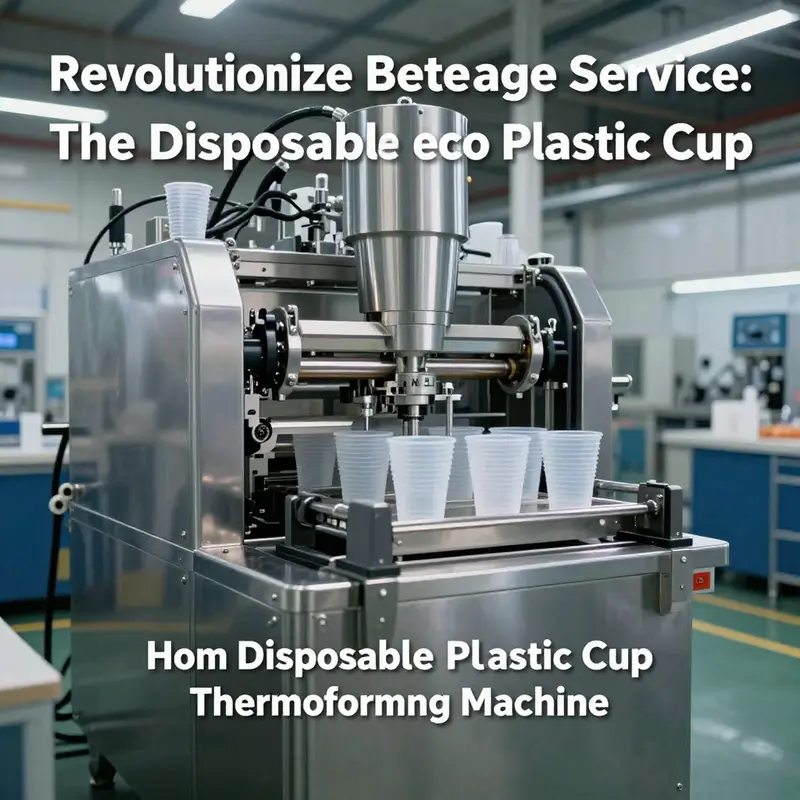
In today’s vibrant beverage industry, efficiency and quality in service are paramount, especially for bubble tea shops, restaurants, and event planners. Disposable plastic cup thermoforming machines are at the forefront of this need, enabling businesses to scale production while maintaining high standards of quality. These machines are not just an investment in machinery; they signify a commitment to meeting market demands with agility and precision. This article explores the technical specifications that empower these machines, analyzes the current market trends and economic implications surrounding this technology, and addresses environmental considerations crucial for sustainability, creating a comprehensive narrative on the role of thermoforming machines in contemporary beverage service.
Form, Precision, and Profit: The Living Mechanics of Disposable Plastic Cup Thermoforming Machines
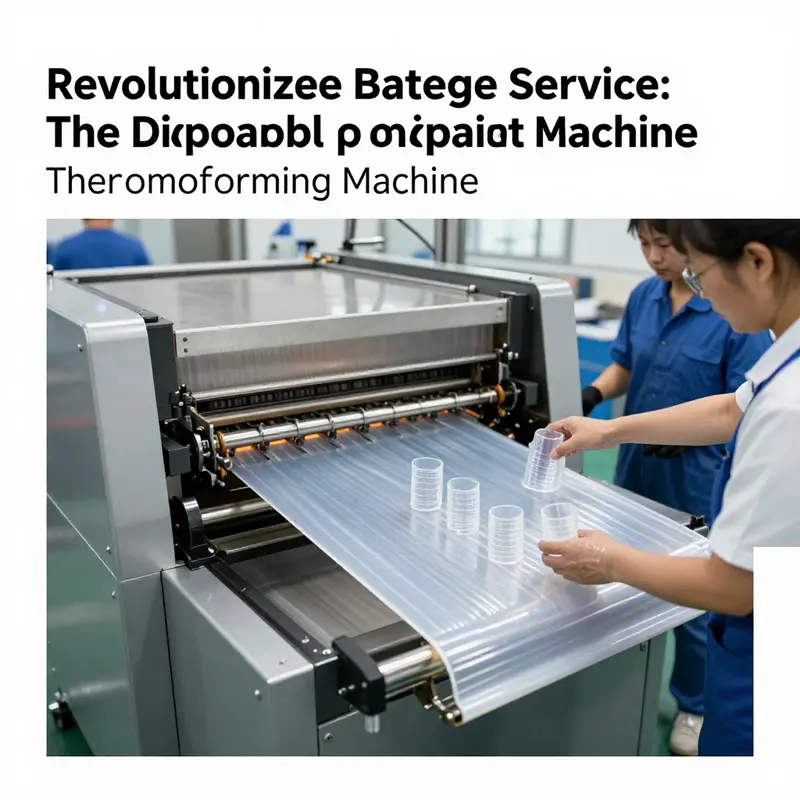
A disposable plastic cup thermoforming machine is more than a conveyor and a heater. It is a synchronized system that translates flat, ready-to-ship sheets into containers that hold beverages, soups, and snacks across countless venues. The chamber of the machine is a controlled ecosystem where heat, vacuum, pressure, movement, and timing converge. At a glance, the process looks simple: warm a thermoplastic sheet, draw it into a mold with vacuum, and produce a cup. But the reality is a choreography of engineering choices, material science, and production economics that determine quality, yield, and the bottom line. In modern facilities, these machines operate as single-stream lines, capable of keeping pace with demand while delivering consistent shape, wall thickness, and surface finish across thousands of cycles per day. The phenomenon is not merely the creation of a cup; it is the embodiment of how modern manufacturing disciplines convert raw sheet into a reliable packaging asset on a scale that would have challenged earlier generations of tooling.
Forming areas range widely, and this matters as it sets the maximum cup size and the potential for adjacent products within a single line. A typical range sits around 530×300 mm to 762×470 mm, a footprint that might seem modest until you consider the number of cups that can be nested within. Larger forming areas enable deeper draws and taller profiles, which in turn unlocks opportunities for vented or domed lids, expanded rim radii, or tall beverage cups that remain stackable and stable. The upper limit of forming depth, often cited at 220 mm in contemporary machines, is a practical anchor for engineers who design molds and feed systems for a family of products. Deeper draws require more precise heat placement, more sophisticated plug operations, and a refined control strategy to prevent thinning at corners or thinning within the base. Those parameters influence material choice and process parameters, linking geometry to resilience and performance.
Thermoplastic sheets in play span a spectrum from polypropylene (PP) and polystyrene (PS) to PET, PVC, high-impact polystyrene (HIPS), and even the more economical BOPS variants. The compatibility with 0.25–3.0 mm sheet thickness broadens the machine’s appeal, enabling it to service multiple product lines—from basic water cups to more rigid containers that demand sturdier walls. The breadth of materials reflects a design philosophy: the machine must accommodate a portfolio, not just a single SKU. For operators, this means tool changes and set-point memory become essential features. A well-calibrated line remembers the heat zones, mold positions, and timing for each product family, allowing rapid changeovers without sacrificing quality or waste control. In practice, this memory capability is anchored in PLCs and advanced HMI interfaces that couple simple operator input with precise, repeatable outcomes.
The heart of the forming operation is a servo-linked mechanism that coordinates sheet feeding, heating, forming, and trimming in a near one-step rhythm. Servo linkage control delivers repeatable cycle timing with energy efficiency that older, fully hydraulic lines could not match. When the sheet enters the heating zone, temperature uniformity becomes the gatekeeper of quality. Seven-zone automatic temperature control, with an error margin of around ±1.5°C, ensures the upper and lower heating zones cooperate to soften the sheet evenly. Uniform heating is critical: if the sheet is not uniformly pliant, the form forces can create wall thickness variations, warp, or pinhole defects where the sheet thins excessively near corners or edge radii. The heating architecture typically features immersed ceramic far-infrared radiation elements, a choice that blends rapid heat-up with safer operation and lower energy draw relative to more traditional convection-only schemes. The infrared approach concentrates energy where needed and reduces heat diffusion to surrounding machinery, contributing to a more stable forming envelope and a cleaner, more energy-conscious process overall.
Once the sheet is pliable, the vacuum and pressure dynamics take center stage. The mold cavity is designed to impart the cup’s geometry while the control system modulates vacuum suction and forming pressure to pull, push, and define the cup’s geometry. The air system’s requirements—0.6–0.8 MPa for forming pressure and vacuum—are not just specifications; they are the levers that set cycle stability and mold release reliability. A robust system is able to manage the rapid transitions between hold, draw, and settle phases, ensuring surface quality and dimensional accuracy while minimizing ejector-induced deformations. Air consumption in the range of 2000–2400 L/min is typical for high-throughput machines, reflecting the scale of the vacuum draw and the air needed for release from the mold. The power train supporting these motions typically stays below 120 kW, but the real story lies in how hydraulic and servo subsystems share load while maintaining consistent timing across dozens of cycles per minute.
In the realm of throughput, production speed is a function of cycle design, product size, and material behavior under heat. Modern lines commonly achieve between 20 and 35 cycles per minute, with advanced configurations approaching or surpassing the upper end as automation and mold design optimize each stage. These rates translate to thousands of cups per hour and, for large facilities, millions per day. The speed is not merely a count; it is the balance point for energy consumption, waste management, and downstream handling. A line that runs too fast without proper control may produce more rejects due to thinning, burrs, or warping. Conversely, a line that is undersized for demand invites downtime and inventory gaps. Thus, the best machines offer a tuned harmony between feed, heat, form, cut, eject, and stack—the six pillars of one-step operation that minimize intermediate handling and scrap.
Where material handling begins to matter is in sheet feeding and sheet geometry. A well-designed thermoforming line employs roller and chain systems that handle sheets with care, preserving edge quality and preventing material distortion during the journey from feed to form. The upper and lower molds are engineered for durability with stainless steel and corrosion-resistant surfaces to withstand repeated exposure to heat and the occasional cleaning solvent. The chain tracks, sometimes nitrified steel such as 38CrMoAlA variants, are selected for wear resistance as well as reliability under intermittent loads. The result is a robust frame that resists misalignment and maintains consistent mold-to-platen spacing across long production campaigns. The overall machine weight for these large-scale lines can be substantial—up to about seven tons—reflecting not only the rigid frame but the heavy-duty drive systems, hydraulic modules, and integrated automation that keep the line synchronized.
Precision is not just about the mechanics. It is about the intelligent use of sensors, control logic, and secure safety protocols that keep operators protected while maintaining a stable production environment. PLC-driven control and a touch-screen interface enable operators to set, monitor, and adjust dozens of variables on the fly. Temperature windows, vacuum levels, forming speeds, and feed lengths become fields in a digital form rather than hand-tuned knobs. Tooling memory and quick-change mold technology reduce downtime during changeovers, a crucial capability in markets where cup sizes and product formats must respond rapidly to seasonal demand or promotional campaigns. In parallel, integrated safety guards, emergency stops, and compliance with CE or ISO standards are not mere paperwork; they are the operational baseline that protects workers and ensures consistent results.
From an economic standpoint, the equation of cost and return is intimately tied to the machine’s versatility and efficiency. For many facilities, the primary cost drivers are the upfront capital investment and the ongoing energy and maintenance expenses. The price span for fully automated, high-speed lines is broad enough to accommodate different factory scales and needs, with typical ranges echoing the variability in forming area, automation level, and configuration. The more capable the line—the larger the forming area, the deeper draw, the tighter control tolerances—the higher the initial outlay, but the greater the potential for a broader product mix and higher yield. Energy-efficient hydraulic systems and servo-driven cycles help reduce long-term operating costs, and the ability to run multiple product families on a single line shortens changeover times, limiting downtime and material waste. In this ecosystem, the line itself becomes a strategic asset that can adapt to evolving packaging trends without requiring a wholesale replacement of the equipment.
The ecosystem around the machine is a mosaic of suppliers and component choices. In practice, many manufacturers in this space emphasize a combination of robust mechanical design and adaptable automation. The material portfolio matters here as well: PP, PS, PET, PVC, HIPS, and BOPS all bring distinct performance envelopes in terms of stiffness, clarity, impact resistance, and heat stability. Cups produced from these materials must meet consumer expectations for rigidity during handling, stability on tables, and compatibility with hot beverages in many markets. The tooling must respect wall thickness consistency and corner radii to minimize thinning that could compromise usability or stackability. For buyers, the decision tree includes not only the machine’s core capabilities but the availability of spare parts, ease of maintenance, and the supplier’s capacity to customize lines for feed rates, mold memory functions, and integrated waste sheet winding. A well-chosen machine becomes a partner in expansion, not merely a purchase.
As the market demands higher throughput and greater efficiency, one-step operation features become standards rather than luxuries. Automatic sheet feeding, heating, forming, in-mold cutting, ejection, and stacking reduce manual handling, lower the risk of operator-induced defects, and accelerate production. The integration of waste management—an automatic waste sheet winder, for example—helps minimize scrap and maintain a cleaner production floor. Temperature control rather than temperature guessing is at the core of quality, allowing for stable cyclic performance even as ambient conditions shift. When a line hits its rhythm, it becomes not only a producer of cups but a platform that supports branding through consistent process control, making it possible to implement product-line changes that align with market shifts with minimal downtime.
For professionals evaluating these machines, the full picture includes not only the geometries and cycle times but the capacity for customization. Systems can be tuned to the exact tolerances required by different cup designs, whether a simple 8-ounce water cup or a more complex 16-ounce beverage vessel. The manufacturing ecosystem rewards those who can balance standardization with flexibility. An established line will have a library of recipe data that maps heating zones, mold configurations, and cut tools to each product. This capability is critical when a company transitions from producing one SKU to a family of related cups—an evolution that often accompanies a move into larger markets or new distribution channels. In practice, the most successful facilities manage this complexity by investing in digital controls that capture and reuse operating data, enabling rapid reconfiguration while preserving process integrity.
The landscape of suppliers is not merely about achieving technical compatibility; it is about aligning with partners who can support long campaigns with maintenance, spare parts, and upgrades. The machines described here are frequently marketed through platforms that connect buyers with manufacturers who can tailor the line to regional material availability, regulatory environments, and specific packaging needs. While the technical core remains consistent—heater elements, vacuum systems, servo-linked mechanics, and robust mold tools—the customization layer is where the conversation becomes strategic. The choice of materials, the scale of production, and the shape of the cups all coalesce into a line that can adapt to evolving consumer preferences, regulatory standards, and sustainability goals.
In sum, the disposable plastic cup thermoforming machine is the focal point of a complex, integrated production system. Its efficiency depends on a precise balance of forming area, depth, and sheet thickness, governed by sophisticated heating, vacuum, and control strategies. It stands as a practical declaration of how modern packaging answers the demands of speed, quality, and adaptability. The machine’s performance is not merely a function of its individual components but of how well those components are wired together—how heat, motion, and control operate in concert with material behavior to deliver a reliable and scalable cup. When a line achieves that harmony, it becomes a quiet engine of throughput, capable of supporting brands, distributors, and retailers with cups that meet exacting standards for form, function, and finish. For those who explore further, one can observe how a particular product family—such as a disposable takeaway cup designed to carry hot beverages—could be approached through a dedicated variant of this technology. See a representative example here for context and alternatives in design choices: disposable-takeaway-paper-cup-custom-logo-kraft-coffee-cup-with-lid.
From a broader perspective, the trajectory of these machines mirrors a larger shift in packaging: toward smarter automation, greater material flexibility, and a more deliberate approach to waste reduction and energy stewardship. The forming line emerges as a microcosm of industrial optimization, where every parameter—area, depth, thickness, temperature, and air pressure—maps to tangible outcomes: product uniformity, cycle time, scrap rate, and total operational cost. The best lines not only produce cups; they generate reliability in supply chains, enable brands to offer consistent experiences across channels, and underpin the viability of scalable packaging solutions in a world that continues to demand swift, safe, and sustainable plastic packaging. In the end, the cup is more than a consumer object. It is the visible product of a highly engineered process, a small but telling example of how modern manufacturing translates sheet into shape, and heat into habit, day after day, shift after shift.
External resource for further reading: https://www.alibaba.com/product-detail/Advanced-Plastic-Cup-Thermoforming-Machine_1600484962677.html
Racing Through the Forming Line: Market Currents and Economic Forces Shaping Disposable Cup Thermoforming Machines
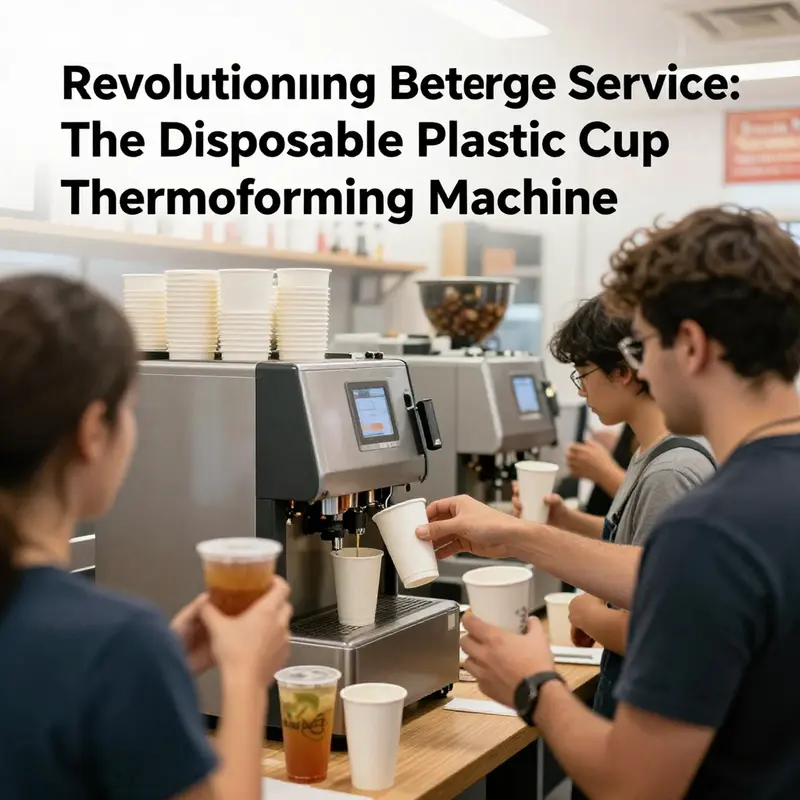
The market for disposable cup thermoforming machines moves with the pace of modern life, where convenience and speed are not luxuries but baseline expectations. Cities swell, takeaway cultures accelerate, and every restaurant, coffee shop, or event hall seeks packaging that can keep up. In this environment, automated, high-speed thermoforming lines have become a reliable backbone of the packaging supply chain. The broader market outlook mirrors this reality: growth is steady, not explosive, driven by a steady stream of new production facilities, upgrading cycles, and a persistent push toward better process control and lower total cost of ownership. Industry analysts put the global thermoforming machine market on a growth trajectory of roughly six and a half percent per year from 2025 through 2030, a rate that reflects both the enduring demand for single-use containers and the ongoing investments in automation that keep margins intact in the face of fluctuating input costs. Within this larger picture, disposable cup production stands out as a particularly important contributor, because cups represent a high-volume, recurring packaging item with relatively standardized specifications and well-understood manufacturing workflows. To translate demand into supply, manufacturers are increasingly opting for fully automatic, PLC-controlled lines that integrate sheet feeding, heating, forming, cutting, and stacking in a single continuous cycle. The advantages are tangible: higher throughput, lower human dependency, more consistent quality, and the flexibility to switch between cup sizes and thicknesses with minimal downtime. In practice, lines can reach production rates that approach tens of thousands of cups per day, and in peak operations—even multiples of that—when a facility runs multiple shifts and layers of automation. The shift from semi-automatic to fully automatic configurations is not simply a matter of speed. It is a strategic decision that affects labor discipline, energy efficiency, and waste management. A line designed to execute a one-step operation dramatically reduces the time from sheet to stack. It also consolidates the risk that human error introduces at each additional transition. This consolidation matters because the economics of single-use cups hinge not only on the price of resin but also on the cost of labor, energy, maintenance, and scrap. In a business where margins are often slim, every fraction of a second saved per cycle translates into meaningful annual gains. Across regions, manufacturers increasingly pursue lines with servo-driven components, precise temperature control, and integrated automation for waste handling and quality assurance. The takeaway is clear: the most valuable machines are those that couple rapid cycle times with robust process stability, minimal scrap, and predictable maintenance costs. That combination underpins the current pricing structure for high-performance automatic lines, typically ranging from roughly one hundred thousand dollars to half a million dollars depending on capacity, automation level, and optional features. The economics of investment look favorable when a facility can amortize the cost over a period of three to five years, aided by labor savings, waste minimization, and the ability to respond quickly to demand spikes. In this context, the market’s health is closely tied to the reliability of supply chains and the capacity of manufacturers to deliver turnkey systems with comprehensive service support and training. The presence of established suppliers in major manufacturing hubs provides a degree of market resilience. Even so, buyers must navigate a landscape that features both global competition and regional regulatory nuance. The drive toward sustainability adds another layer of complexity. While polypropylene (PP), PET, and polystyrene (PS) remain dominant due to their cost-effectiveness and performance, there is growing pressure to explore biodegradable or compostable alternatives such as PLA. This shift is compelling thermoforming manufacturers to consider multi-material processing capabilities, more versatile heating schemes, and upgraded control strategies to maintain throughput while accommodating new resins. In many cases, the path forward is not to abandon existing lines but to retrofit or upgrade them so they can handle a broader material portfolio. The ability to process different resins on the same line reduces capital outlay and preserves the flexibility essential to serving diverse customers, from coffee shops to catering services. The environmental dimension is increasingly central to the business case. Operators face evolving regulations on single-use plastics, extended producer responsibility programs, and recycling targets that influence container design and end-of-life pathways. In response, manufacturers are engineering lines with improved trim management and waste recovery, aiming to minimize trim loss and capture scrap for recycling or re-use wherever feasible. This is not a purely technical challenge; it is a commercial one that affects product mix, scheduling, and capacity planning. If a plant can demonstrate lower waste, higher yield, and more consistent quality, it gains a competitive edge not only in price but in reliability and customer confidence. The economic narrative is enriched by the realities of operating costs. Energy and water consumption are not afterthoughts but integral to the profitability of a thermoforming line. Modern lines optimize air pressure, heating cycles, and cooling phases to minimize energy use while preserving the integrity of the formed cups. Waste management features, such as integrated waste sheet winders, reduce downtime and improve operator efficiency. For plants that target high volumes, even small gains in cycle efficiency can compound into major improvements in output and profitability. Labor costs, too, have been trending down in tandem with automation. The most efficient lines shrink the labor footprint required per thousand cups, because the cycle is largely closed and automated. That does not mean labor becomes irrelevant; rather, the skill set required shifts toward line integration, maintenance, and programming. Operators need to understand material behavior, heat transfer, tool wear, and process monitoring so they can respond quickly to variations in resin quality or environmental conditions. In this sense, the technology itself becomes a driver of employment opportunities rather than a simple substitute for human labor. For buyers, this combination of speed, versatility, and reliability feeds a compelling ROI story. The price range cited in supplier literature—roughly $100,000 to $500,000 for fully automatic, high-speed lines—reflects not only the machine but the value of support services, warranty protections, and the ability to scale production during demand surges. The business case improves as facilities move from single-line operations to multi-line configurations designed to diversify output and buffer against downtime. In markets with high demand volatility, the ability to produce multiple cup formats on the same platform reduces the risk of underutilization and improves cash flow. From a regional perspective, demand concentrates in areas with dense foodservice networks and rapid takeout growth. Asia-Pacific, Europe, and North America each contribute distinct drivers: fast-food and coffee culture expansions in developing economies versus established, high-volume markets with stringent quality and safety expectations. Suppliers from major manufacturing corridors offer a wide array of optional features that extend line life and keep pace with evolving standards. These features include servo-driven feeding mechanisms that adjust to sheet length, plug-stretching controls within the upper mold, advanced lubrication systems, integrated automation for waste disposal, and precise temperature controllers for both the upper and lower heating zones. Each feature creates additional value by reducing downtime, improving part quality, and enabling one-step operation from sheet input to stacked cups. The economic calculus becomes more nuanced when sustainability is prioritized. Biodegradable and compostable resin options, while appealing to socially conscious customers, bring new processing challenges. They can display different flow properties, melting temperatures, or crystallinity, which in turn affect forming stability and cycle timing. Machines must therefore be adaptable, with heating zones and mold configurations that can be tuned to accommodate these materials without sacrificing cycle time or cup integrity. This adaptability often comes at a price premium or requires modular upgrades that preserve the core automation while expanding the line’s material envelope. For buyers, the decision to invest becomes a matter of balancing short-term costs with long-term advantages: reduced labor, improved yield, faster response to demand, and the ability to align with environmental and regulatory expectations. The supplier ecosystem supports these choices through certifications such as CE and ISO standards, plus warranties and post-sale technical support that can span years. These assurances reduce risk, particularly for plants entering new markets or expanding capacity. Yet even with strong warranties and support, execution risk remains. The most successful customers typically approach implementation with a staged plan: pilot runs to validate material compatibility, controlled ramp-up of production, and a rollout that aligns with marketing campaigns or seasonal demand. This disciplined approach helps protect against unplanned downtime and allows plant management to quantify gains in a transparent way. The broader market also reflects the realities of resin markets and commodity volatility. Resin prices can influence overall project economics, especially for facilities that switch between resin types or adjust formulation to meet sustainability goals. When resin costs spike, the value of high-yield, low-waste lines becomes even more apparent, underscoring the importance of a robust waste-management strategy and precise process control. On the supply side, a healthy market is marked by a mix of established manufacturers and rising equipment providers, including regional players that bring localized service expertise. This diversity supports competition on price, customization options, and after-sales service, which in turn reinforces buyer confidence and accelerates deployment. The dynamic nature of the market means that buyers should equip themselves with a clear set of criteria beyond upfront cost. Considerations include the machine’s total cost of ownership, service reach, spare parts availability, and the ability to upgrade as materials and demand evolve. It is also prudent to examine how a line integrates with other packaging lines, such as those for lids, sleeves, or alternative cup formats. A well-considered integration can yield end-to-end packaging solutions that reduce logistics complexity and improve throughput. For readers who want a concrete sense of how these factors translate into practice, a close look at the broader packaging economy reveals a consistent pattern: demand for automated, flexible, and scalable thermoforming platforms rises with the pace of consumer activity and the complexity of regulatory and sustainability requirements. When facilities invest in lines that can handle multiple materials, multiple sizes, and multiple process steps without sacrificing speed, they create a durable competitive advantage that is difficult for rivals to match in a price-only competition. In this sense, technological sophistication becomes a strategic asset. The value proposition is no longer simply about forming cups; it is about delivering reliable packaging that supports brand promises, reduces waste, and sustains profitability under varying market conditions. For practitioners, the practical takeaway is to anchor procurement decisions in a holistic view of process capability, maintenance regimes, and material economics. A line that can seamlessly switch between cup formats, accommodate eco-friendly resins, and sustain high throughput across shifts earns a premium in performance and resilience. It is this alignment of capability with market rhythms that explains why automation remains at the heart of competitive packaging results in today’s economy. As the industry continues to evolve, buyers and suppliers alike will need to stay agile, investing in both hardware and know-how. The opportunity lies not only in securing a robust single-line solution but in building an adaptable ecosystem around it—one that can absorb shifts in resin markets, respond to regulatory changes, and deliver consistent quality at scale. The result is a packaging system that does more than form cups; it accelerates a business’s ability to meet demand, protect margins, and support sustainable development across a broad spectrum of consumer needs. Internal link for further context on related beverage packaging solutions and consumer-facing design considerations: disposable single-wall paper cup with lid. For the latest industry intelligence and pricing dynamics, consult the external resource linked here to contextualize the macro trajectory of thermoforming machinery: https://www.marketsandmarkets.com/Market-Reports/thermoforming-machine-market-4541.html
Greener Cups, Smarter Machines: Lifecycle Considerations in Disposable Cup Thermoforming
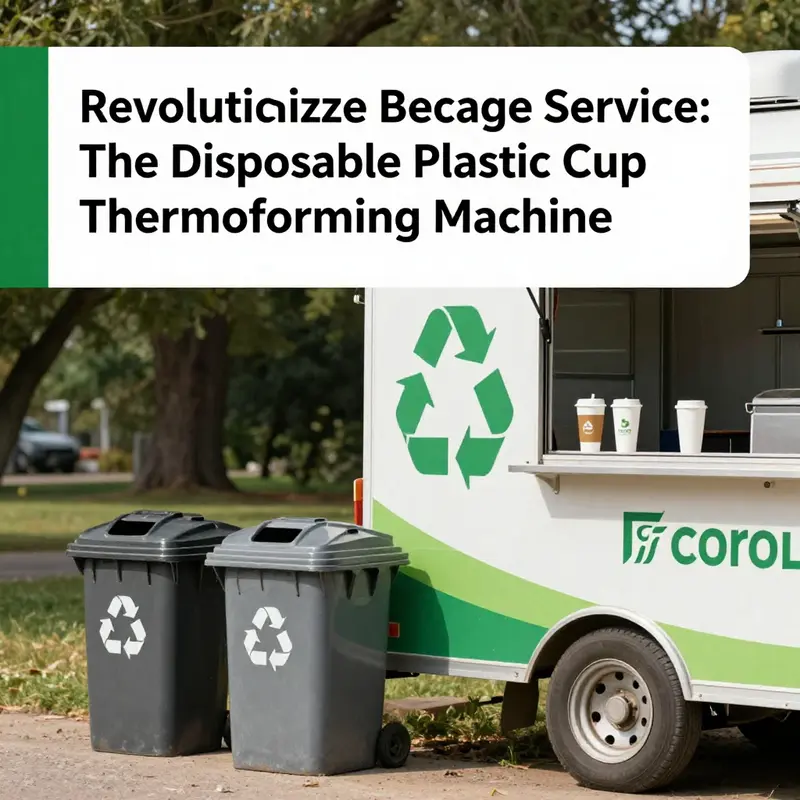
The environmental footprint of disposable cup thermoforming is not a side concern but a guiding thread that runs from material selection through production and, finally, end-of-life. In modern practice, customers, regulators, and investors expect packaging systems to align with long-term sustainability goals. The thermoforming line should be treated as an environmental system, where every choice, including material, energy pathway, waste handling, and product design, shapes outcomes beyond the factory floor.
Material choices anchor a line’s environmental profile. Polypropylene (PP), polystyrene (PS), and polyethylene terephthalate (PET) each bring strengths for cup performance, but they also carry different recycling realities. PP offers toughness and recyclability in many regions, PS enables thin-walled cups but faces variable end-of-life outcomes, and PET provides clarity and barrier properties that may enable higher recycled-content usage where programs exist. The industry is increasingly exploring bio-based and recycled-content options, such as PLA or recycled PET, with the caveat that each material introduces process adjustments and end-of-life considerations that must be understood in context.
Energy and water stewardship extend beyond heater efficiency. Modern lines use multi-zone heating, precise temperature control, and optimized cycle timing to minimize energy per cup. Servo drives, efficient cooling, and intelligent automation contribute to lower energy intensity without sacrificing throughput. Water use is managed through closed-loop cooling, reduced rinse steps, and heat-recovery strategies where feasible. Together, these practices reduce the line’s footprint and support regional resource stewardship.
Waste reduction and containment are critical. Reducing scrap through accurate sheet handling, die-cutting precision, and effective waste streams lowers material loss. Regrind reintroduction, scrap separation, and post-industrial recycling can close loops within the plant, while product design and wall thickness optimization help ensure consistent cup performance with minimal material use. Downstream recycling infrastructure—whether at curbside programs or specialized facilities—also shapes the real environmental benefit, making collaboration with packaging designers and recyclers essential.
Lifecycle thinking expands the scope beyond the plant. Design-for-recyclability, compatibility with recycled-content resins, and clear consumer labeling all influence end-of-life outcomes. Regulatory signals and market incentives increasingly reward transparency and stewardship, encouraging manufacturers to pursue cradle-to-cradle thinking rather than single-point gains. In practice, this means equipment that can handle material transitions, packaging that signals recyclability, and supply chains that thread sustainability into every link.
The journey toward greener cups is collaborative. Suppliers, processors, brand owners, waste-management partners, and policymakers all contribute to a more resilient ecosystem. Sharing best practices on material selection, heating profiles, cooling strategies, and post-consumer processing accelerates industry-wide progress. The result is a sustainable thermoforming environment where innovation, efficiency, and environmental accountability reinforce one another.
Final thoughts
The disposable plastic cup thermoforming machine represents a vital component in the beverage industry’s evolution, combining advanced technology with a commitment to sustainability. This dual focus not only meets the growing demand for efficient production but also addresses the critical need for environmentally responsible practices. By investing in such machinery, businesses not only enhance their operational capabilities but also align with consumer preferences for sustainability. As the market continues to evolve, those who embrace these innovations will position themselves ahead in quality, efficiency, and ecological responsibility.