
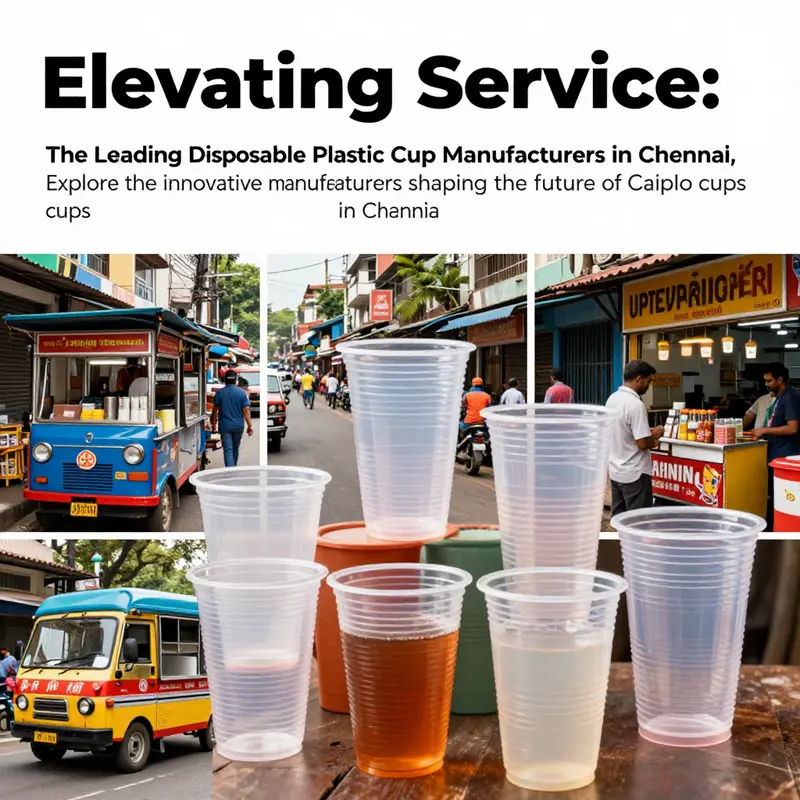
Chennai, renowned for its vibrant culinary scene and dynamic business environment, has emerged as a central hub for disposable plastic cup manufacturing. In an era where convenience meets demand, the manufacturers in this city play a pivotal role in supplying quality products to various sectors including bubble tea shops, restaurants, food trucks, catering services, and event planners. This article delves into the rich ecosystem of these manufacturers—highlighting their innovative technologies, economic contributions, and sustainable practices. In the following chapters, readers will gain insights into how these manufacturers leverage technology for efficiency, understand their economic impact locally and globally, and discover their commitment to sustainable practices, allowing them to meet the growing needs of their diverse clientele.
Chennai’s Cupcraft Corridor: Crafting Convenience, Compliance, and Change in a Plastic-Forward City
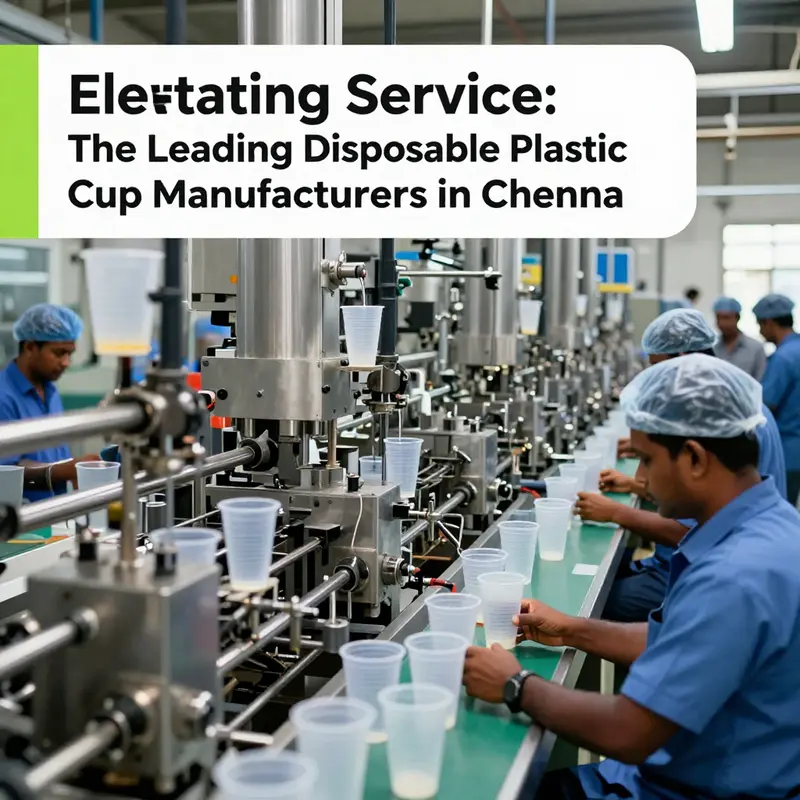
Chennai, a city where manufacturing and daily life intersect, supports a busy disposable cup industry centered on polypropylene (PP) cups.
The region features well-developed logistics, a port system that facilitates polymer import, a dense network of suppliers, and a skilled workforce that enables high-volume production for hospitality, events, and street vendors.
Key players Plastipack Industries, Vishal Plastics & Packaging, and Sri Srinivasa Plastics build portfolios around cups, lids, and related packaging, with PP and PET materials used to ensure food safety, durability, and reliable performance.
Plastipack Industries emphasizes standardization, process control, and robust supply for large contracts.
Vishal Plastics & Packaging focuses on customization and original equipment manufacturing (OEM) capabilities to translate brands into the cup, including color, labels, and compatible lids, while maintaining leak resistance and hot/cold performance.
Sri Srinivasa Plastics targets cost-conscious, high-volume buyers and scalable output for restaurants, canteens, festivals, and events.
All three rely on polypropylene cups for a balance of stiffness, heat resistance, and cost, with wall-thickness considerations to manage condensation and grip during cold beverages.
Sustainability is increasingly shaping the sector, driving waste reduction, recycling, and exploration of more eco-friendly formulations and end-of-life solutions.
Buyers and researchers map capabilities using platforms like IndiaMART and Justdial to assess production capacity, quality management, and supplier responsiveness.
The Chennai cluster remains responsive to festival seasons, casual dining growth, and high-volume service demands, balancing price with safety and branding.
Looking ahead, policy shifts and market dynamics may reshape packaging choices and the role of customization in brand perception, environmental impact, and consumer trust.
Smart Lines and Cleaner Cups: How Technology Is Redefining Disposable Plastic Cup Manufacturing in Chennai
Technologies Driving Efficiency, Quality and Sustainability
Chennai’s disposable plastic cup sector has moved beyond basic molding and mass output. Production floors now balance speed with precision, and cost with environmental responsibility. This shift is visible in how manufacturers integrate new equipment, smarter process controls, and material science to meet market demands. The result is higher throughput, better product performance, and measurable reductions in waste and energy use.
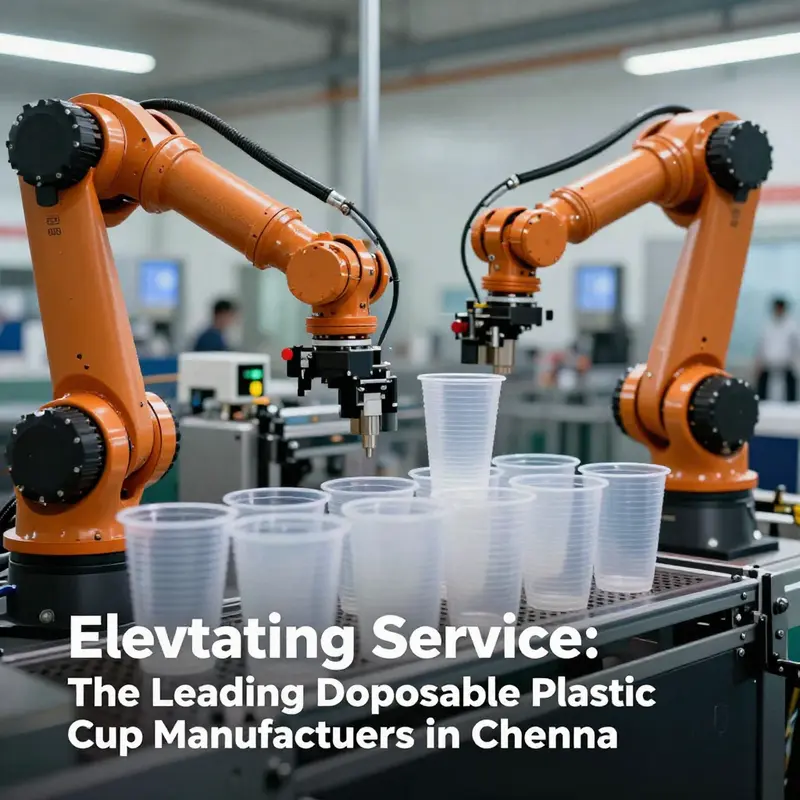
Automated thermoforming has become central to modern production lines. These systems use high-precision molds and controlled forming cycles to shape polypropylene and PET sheets into uniform cups. The machines execute vacuum and pressure forming steps with tight tolerances, producing cups with consistent wall thickness and symmetrical profiles. Automation reduces human error and increases repeatability. It also allows for rapid changeovers between sizes and shapes, which benefits manufacturers supplying varied clients such as caterers, restaurants, and event planners.
Material processing sits at the heart of cup performance. PP and PET each bring distinct advantages. Polypropylene yields cups that resist heat and flex without splitting, making them suitable for warm beverages and food service. PET offers excellent optical clarity and stronger barrier properties, crucial for carbonated drinks and chilled applications. Modern processing equipment conditions these polymers more precisely. Sheet extrusion lines can control crystallinity and orientation, improving stiffness and impact resistance while enabling thinner gauges. Thinner walls mean less raw material per cup and lower shipping costs, while retaining adequate strength for stacking and transport.
Real-time quality monitoring systems have changed how defects are detected and addressed. Inline sensors measure wall thickness, dimensional accuracy, and optical properties as cups emerge from the forming station. Vision systems inspect edges and rims for burrs or incomplete seals. Data from these sensors feeds into manufacturing execution systems that flag deviations immediately. Instead of rejecting large batches after finishing, operators can stop the line and correct a process parameter. That responsiveness reduces scrap and ensures customers receive consistent products.
Energy management is another area where technology delivers gains. Heating and cooling consume much of a line’s power. Energy-efficient heating elements, coupled with localized thermal control, minimize heat loss while providing uniform plasticization. Regenerative systems recover heat from waste streams and reuse it elsewhere in the line. Some manufacturers also deploy variable-frequency drives on motors and optimized sequencing of pneumatic actuators to shave kilowatt-hours. These measures lower operating costs and decrease the carbon footprint of each cup produced.
Waste reduction is addressed at multiple levels. On the shop floor, scrap trim and off-cuts are collected and reprocessed whenever polymer properties permit. Closed-loop recycling within the plant reintroduces suitable regrind into extrusion feed and reduces reliance on virgin resin. Advanced sorting and contamination control ensure regrind quality and prevent property degradation. Beyond reprocessing, product and tooling design incorporate material-efficient geometries that reduce melt volume without compromising integrity. Lightweighting strategies, validated by finite element analysis and physical testing, pare down wall thickness while preserving stacking strength.
Tooling itself has evolved. Computer-aided design and rapid prototyping accelerate mold development. Instead of lengthy manual adjustments, engineers iterate using 3D-printed prototypes and precision CNC tooling. Mold surfaces now include engineered texturing to improve grip and appearance, and they integrate conformal cooling channels. These channels reduce cycle time and produce more uniform cooling, which improves dimensional stability and reduces internal stresses that can cause cracking or warping.
Process automation extends into supply chain and maintenance. Predictive maintenance systems analyze vibration, temperature, and current draw signatures from motors and bearings. By identifying wear patterns, they schedule interventions before breakdowns occur. This reduces unplanned downtime and supports predictable delivery schedules. Digital inventory systems connect raw material use to production runs, enabling just-in-time ordering and lower inventory carrying costs. Manufacturers can respond faster to custom orders while keeping overheads lean.
Quality and compliance frameworks now integrate laboratory testing with inline validation. Material testing for tensile strength, melt flow index, and barrier performance occurs both at incoming inspection and in periodic lab cycles. Cups intended for carbonated beverages undergo pressure and leak testing to quantify burst resistance and headspace retention. Thermal cycling tests confirm cups for hot beverages resist deformation or chemical migration. Regulatory demands and customer specifications drive these tests, and automated reporting simplifies traceability for audits.
Sustainability-focused innovations are increasingly visible. Additive chemistry has introduced nucleating agents and impact modifiers that improve material performance, allowing further lightweighting. Some manufacturers experiment with blends that include post-consumer resin, subject to strict quality controls to prevent contamination. Biobased and biodegradable polymer options are also evaluated, though they require careful assessment for application suitability and recycling pathways. Design for recyclability guides choices, encouraging monomaterial constructions and avoiding incompatible coatings that complicate downstream processing.
Product differentiation now includes in-mold labeling and surface treatments integrated into line operations. In-mold labeling allows durable, high-resolution decoration without secondary printing steps. Surface finishes can be engineered for matte aesthetics or enhanced slip resistance. Such features meet branding needs and user preferences without significantly lengthening cycle times.
The push for customization has not slowed down operations. Flexible automation allows runs of custom-branded cups in small batches. Quick-change tooling and digital job recipes allow manufacturers to switch between configurations with minimal downtime. This agility supports niche markets and seasonal demand while preserving economies of scale for core SKUs.
Regulatory and market pressures have shaped the adoption of these technologies. Stricter environmental regulations make energy efficiency and waste reduction essential investments. Customers demand documented product safety and material provenance. As a result, manufacturers invest in certification-ready processes and transparent reporting. This investment strengthens market access and stability.
Human capital complements automation. Skilled technicians program and maintain equipment, analyze process data, and improvise solutions when novel issues arise. Training programs emphasize digital literacy and systems thinking. Operators learn to interpret sensor dashboards and collaborate with engineers on continuous improvement projects. Investment in staff capability sustains the technology, ensuring returns on capital equipment across its lifecycle.
Technology has also enabled better integration with distribution channels. Barcoding, RFID tagging, and batch tracking link finished goods to production metadata. Buyers receive information on polymer grade, processing parameters, and quality metrics. This transparency supports food-safety claims and helps clients manage inventory and traceability downstream.
While many innovations deliver clear benefits, trade-offs remain. Advanced equipment requires capital and disciplined maintenance. Incorporating recycled content demands robust quality control to avoid compromised mechanical properties. Alternative polymers may offer environmental appeal but require new recycling or composting infrastructure. Manufacturers in Chennai evaluate these trade-offs pragmatically. Investments prioritize technologies with measurable returns, such as energy savings, reduced scrap rates, and faster cycle times that lower per-unit cost.
The cumulative effect of these technological changes is noticeable. Production capacity rises without a proportional increase in resource consumption. Product consistency improves, reducing customer complaints and returns. The ability to produce lighter, stronger, and often clearer cups enhances competitiveness both locally and for export markets. Sustainability measures—including internal recycling and energy efficiency—align operations with tightening regulations and buyer expectations.
For those exploring technical specifications and best practices in cup production, an industry guide provides in-depth performance insights and manufacturing recommendations. Refer to an established technical resource for further reading: https://www.plasticindustryinsights.com/plastic-can-cup-technical-specifications-performance-insights/.
Manufacturers in Chennai combine these technologies to serve diverse needs across food service and events. They continue to refine processes, reduce environmental impact, and deliver consistent products at scale. For businesses evaluating disposable options, it’s worth comparing modern plastic cups with paper-based alternatives. One accessible example of such alternatives is the “best-price 8oz double plastic-free single-wall paper cup” which illustrates competing solutions in disposable beverage packaging.
These technological advances form a foundation for the next generation of disposable cup manufacturing. As process controls tighten and materials improve, Chennai’s producers are poised to offer products that meet higher standards for performance, cost, and sustainability. The path forward will require balancing innovation with pragmatic manufacturing economics and with the evolving expectations of regulators and buyers.
From Local Foundries to Global Shelves: The Economic Footprint of Disposable Plastic Cup Manufacturing in Chennai
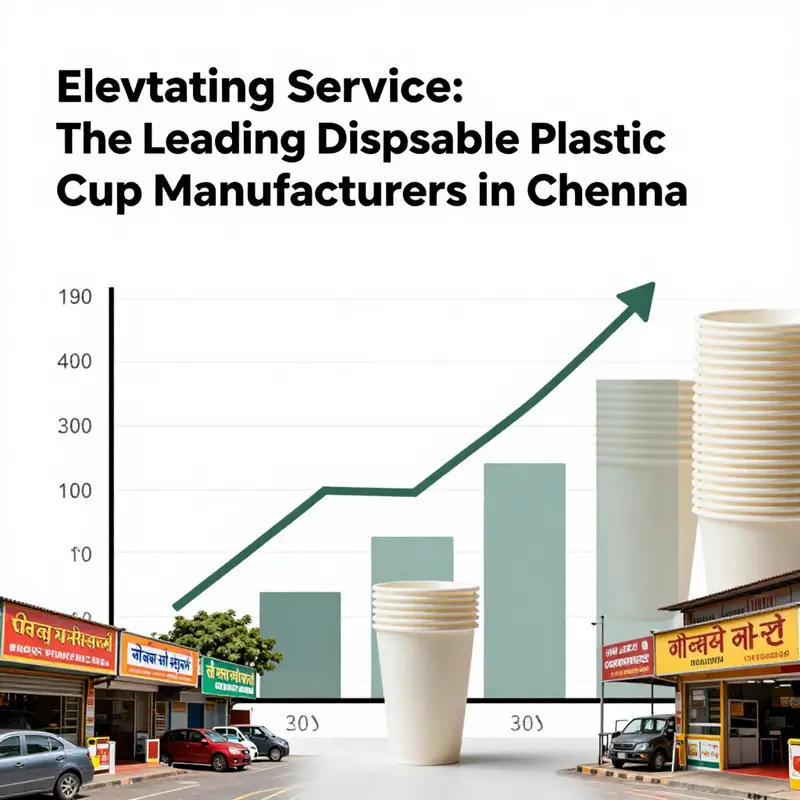
Chennai sits at the crossroads of India’s industrial push and its burgeoning food-service economy, a place where plastic cup manufacturing quietly underpins dozens of daily routines. The city’s factories do more than churn out disposable cups; they drive a complex web of employment, supplier networks, and regional growth that ripples through restaurants, caterers, event organizers, and even the many street vendors that animate the city’s streets. In this chapter, we trace how a specialized segment of the plastic packaging sector has become a substantial contributor to local output and to the broader manufacturing narrative of Tamil Nadu, and how this momentum intersects with evolving norms around sustainability, regulation, and consumer behavior. The story is not just about production lines; it is about a regional economy that uses scale, skill, and proximity to turn a simple, everyday item into a multiplier that touches logistics, services, and innovation.
At the heart of Chennai’s economic impact is employment, which emerges not merely from assembly lines but from an entire ecosystem that supports production, distribution, and sales. The manufacturing units operate across a spectrum of roles—from machine technicians who optimize cycle times to quality assurance specialists who ensure that cups can withstand heat and handling in busy service settings, to sales teams who bring institutional orders from local restaurants and canteens to the factory floor. This breadth of opportunity contributes to local employment rates and offers pathways for workforce development. The presence of a steady demand from the food service sector anchors these jobs, while the youth and skilled workers drawn to the city’s industrial zones sustain the cadence of production. The labour market here benefits from a tradition of practical apprenticeship and a cluster of suppliers who can provide raw materials, tooling, and maintenance services with minimal transit distances. The result is not simply jobs created; it is a more resilient regional labor pool that can adapt to shifting volumes and evolving product specifications without sacrificing efficiency.
Beyond employment, the industrial output generated by disposable cup manufacturing occupies a meaningful slice of the city’s manufacturing sector. The cups serve as a vital link in the supply chain that keeps eateries, catering services, and event operations running smoothly. In a market where speed and reliability can determine a café’s or a canteen’s competitive edge, the consistency of supply becomes a core competitive asset. The production of polypropylene (PP) cups, in particular, has gained prominence due to their heat resistance, durability, and cost efficiency. This material choice supports domestic production that mitigates dependence on imports and creates a more secure procurement environment for local buyers. The accumulation of such output contributes to industrial metrics like regional gross value added, capacity utilization, and regional multiplier effects, reinforcing Tamil Nadu’s standing as a manufacturing hub with export potential, thanks to Chennai’s port access, skilled labor force, and well-established logistics networks.
The customer base for disposable cups in Chennai is notably diverse, spanning restaurants and hotel kitchens to catering firms, event organizers, and the many street food vendors who define the city’s culinary tempo. This diversification matters for the region’s economy because it cushions manufacturing firms against demand shocks in any single sector. When festival seasons and large gatherings drive spikes in food service activity, the cups are not merely consumables; they become a barometer of urban economic vitality. The ability of local manufacturers to meet such spikes with consistent quality and timely delivery strengthens the city’s reputation as a reliable supply partner. It also invites a broader ecosystem to grow around the core manufacturing operation—logistics providers, packaging specialists, and packaging-equipment suppliers—creating a layered economic fabric that supports jobs, investment, and regional resilience.
Quantitatively, industry observers point to robust growth in the Indian disposable tableware market, with projections suggesting a compound annual growth rate exceeding eight percent through 2030. Chennai, leveraging its strategic location and access to coastal and hinterland markets, emerges as a critical node in this expansion. The city’s advantage is not only in the presence of established manufacturers but also in the capacity to attract ancillary services and investment. A steady influx of skilled labor, enabled by vocational training and local institutions, helps maintain a competitive cost structure while enabling product differentiation through design and customization. In a sector where small and medium-sized enterprises add velocity and niche capabilities, Chennai’s SME community contributes by offering tailored design work, short-run production capabilities, and responsive customer service. These SME players often pilot eco-conscious variants and design-specific cups for branded campaigns, further diversifying the city’s product portfolio and strengthening its export readiness.
The production process itself reveals important dynamics about cost structure and supply reliability. PP cups are widely favored for their heat resistance and structural integrity, particularly in hot beverage applications. The durability of PP reduces breakage during handling, transporting, and service in busy environments, which, in turn, lowers waste and returns—an economic benefit for buyers and a logistical gain for distributors. By aligning material choice with performance requirements, local producers support a domestic supply chain that reduces import exposure and helps stabilize prices in a volatile global market. This stability is invaluable for the city’s hospitality and event sectors, where price-sensitive procurement is common and where small shifts in demand can reverberate through the procurement cycle.
Another layer of the Chennai story is the investment in technology and process optimization that accompanies a growing market. The belt-tightening of margins in a competitive landscape has encouraged a tilt toward efficiency gains—shorter cycle times, higher automation for repetitive tasks, and better waste management practices on the shop floor. Such improvements can be observed in the adoption of inline quality checks, more precise dosing of plastics and fillers, and streamlined packaging operations. The cumulative effect is a more reliable product delivered with shorter lead times, which helps large buyers plan production runs with confidence. The combination of reliability and speed strengthens the city’s standing as a preferred manufacturing base, attracting customers from broader regional markets who seek the convenience of local sourcing while maintaining global standards of quality and safety.
As the industry grows, ancillary industries also feel the impact in a chain reaction of investment and opportunity. Raw material suppliers—pellets and resins with defined performance characteristics—benefit from the steady demand. Packaging logistics firms, which handle warehousing, inventory management, and distribution, find scale advantages in Chennai’s dense urban core and its export-linked corridors. Equipment manufacturers, toolmakers, and maintenance services also experience expansion as production lines become more complex and as orders diversify in design and capacity. This multiplier effect translates into broader regional GDP growth, stretching beyond the walls of the factories themselves and into the accounts of vendors, transport fleets, and financial services that support working capital and expansion plans.
A credible thread through this growth is innovation and competitiveness. Chennai’s SME sector, anchored by industrial zones and cluster-driven collaboration, has become a refining ground for niche capabilities. Firms experiment with customized designs, enabling clients to tailor dimensions, wall thickness, and lid configurations to fit specific service contexts. These design-focused efforts help the local industry differentiate itself in a crowded market, while also enabling small customers to access options that were previously the realm of larger suppliers. In parallel, the push toward eco-conscious variants—whether through material substitutions, better end-of-life considerations, or more sustainable packaging heuristics—reflects a broader shift in consumer expectations and regulatory emphasis. While the core product remains a disposable cup, the route to market increasingly rewards design ingenuity and environmental responsibility, positioning Chennai as a forward-looking manufacturing hub that can adapt to global trends while serving local demand.
The regulatory and environmental context adds depth to the economic calculus. Global environmental regulations indirectly shape Chennai’s operations by setting safety and quality benchmarks that the local manufacturers strive to meet. Compliance with safety standards is not merely a legal obligation; it is a differentiator in a market where customers increasingly seek reliable, standardized products. At the same time, there is growing attention to sustainable practices and waste management. The dialog around plastic use, recycling, and alternatives influences investment decisions, supplier selection, and product development. Local manufacturers navigate this landscape by investing in clean production methods, pursuing opportunities for better waste reduction, and exploring co-innovation with suppliers that can offer recycled-content or more recyclable variants. Such alignment with sustainability goals does not negate the economic benefits; rather, it reframes them in a way that preserves long-term viability in a market that is increasingly conscious of its environmental footprint.
Yet, the path is not without challenges. Global and national policy shifts toward circular economy principles can introduce tighter controls, new testing protocols, and evolving labeling requirements. Price pressures from commodity markets for resins, as well as the volatility of logistics costs, test the resilience of local manufacturers. Still, Chennai’s strategic advantages—proximity to ports, a steady stream of skilled workers, established supplier networks, and a track record of quality—provide a robust base for navigating transitions. The city’s manufacturers have shown that they can balance the demand for cost-effective disposables with the need for reliability, safety, and sustainability. In this sense, the economic footprint of Chennai’s disposable cup segment is not simply a function of output; it is a story of adaptation, specialization, and collaboration across industries that sustains a vibrant urban economy.
For readers seeking deeper context on market dynamics beyond the city, industry analyses point to a broader Indian growth trajectory for disposable tableware, where domestic production gains are increasingly insulated from external shocks and where consumer demand for convenient, on-the-go solutions remains robust. In this environment, Chennai’s manufacturing cluster operates not as a set of isolated plants but as a network that links raw-material suppliers, machinery and tooling providers, logistics services, and client-facing teams. This network effect yields lower transaction costs, faster response times, and more predictable delivery—benefits that reinforce customer loyalty and attract new businesses seeking a reliable regional partner. The city’s ability to harmonize scale with customization, while keeping a watchful eye on environmental and regulatory currents, explains why it remains a focal point in discussions about the economic impact of disposable plastic cup manufacturing in India.
As this chapter draws these threads together, it is clear that the economic significance of Chennai’s disposable cup manufacturers extends well beyond the factory gates. The jobs, the output, and the interconnected supplier ecosystems contribute to a regional GDP uplift and to a resilient service economy that supports the daily rhythms of urban life. The story also points toward an industry that is learning to balance cost, performance, and sustainability, using technology and design to stay competitive in a global marketplace. It is a narrative of local industry contributing to national growth, one cup at a time, while preparing to adapt to a future in which circularity, innovation, and responsible stewardship are no longer optional but essential for continued prosperity. For readers exploring practical math and policy implications, the chapter’s insights underscore how a focused manufacturing niche can channel labor, capital, and ingenuity into a broader economic arc that reaches restaurants, events, logistics, and beyond.
Circular Ambitions in Chennai: Sustainability Pathways for Disposable Cup Makers
Chennai sits at a crossroads of tradition and industrial scale, where docks, highways, and a dense network of suppliers converge to feed a growing demand for disposable plastic cups and related items. The city’s manufacturing ecosystem benefits from robust infrastructure, skilled labor, and proximity to ports for material supply and distribution across Tamil Nadu and neighboring states. In this environment, disposable plastic cup makers operate with an eye on speed, cost, and safety, delivering products that must withstand hot beverages, varying service environments, and the unpredictability of events—from street-side stalls to formal banquets. Yet this practical reliability sits alongside a pressing global and domestic question: how can a sector built on single-use plastic reconcile its operational realities with rising environmental expectations?
Among the notable players in Chennai’s cup manufacturing scene, Plastipack Industries, Vishal Plastics & Packaging, and Sri Srinivasa Plastics have established footprints through product versatility, customization, and responsiveness to customer needs. Plastipack is recognized for its broad portfolio that spans cups, plates, and containers, produced with materials such as PET and PP. The emphasis on durable, safe, and dependable products aligns with the hospitality and catering sectors that rely on consistent performance during service peaks. Vishal Plastics & Packaging, by contrast, leans into customization and OEM opportunities, positioning itself to support brand experiences that require uniform appearance, precise sizing, and a clear narrative around packaging safety. Sri Srinivasa Plastics anchors the local market as a high-volume producer of single-use cups that service restaurants, canteens, and festival setups, where price sensitivity and scalability become decisive. Taken together, these companies reveal a market that values flexibility as much as volume—an ecosystem where sustainability is less a constraint than a potential differentiator that can be woven into the existing capability set.
The absence of detailed, Chennai‑specific documentation on sustainability initiatives in these firms should not be read as a lack of interest, but rather as a gap in the published record. The broader Indian context has long highlighted polypropylene (PP) cups for their durability, heat resistance, and recyclability, yet the granular behaviors of Chennai’s manufacturers—how they source resins, manage waste, or optimize energy use—remain less transparent. What is clear, however, is that the region cannot ignore the global shift toward more responsible production and end-of-life management. The regulatory environment, consumer expectations, and the economics of waste management increasingly intersect with the core costs and risks of cup manufacturing. In this sense, sustainability is not simply a compliance box; it is a lens through which firms can reimagine process efficiency, product performance, and market opportunity.
For Chennai’s cup makers, the practical meaning of sustainability unfolds along several plausible trajectories. First, there is the potential to intensify material efficiency and waste valorization within the plant. Trimming scrap, optimizing injection patterns, and reclaiming resin from rejected runs can yield tangible cost savings and environmental benefits. Second, there is the promise of energy stewardship. Even in a climate favorable to solar investment, factories consume electricity across blow-molding, extrusion, and finishing lines; modest improvements—variable-frequency drives, efficient motor matching, and LED illumination—can collectively lower the carbon footprint and operating costs. Third, water stewardship and cooling systems present a meaningful frontier. Industrial plastics processing typically relies on substantial cooling water, and strategies to recycle, reuse, or recirculate can reduce both demand on municipal supplies and effluent load. In regions like Tamil Nadu, where water stress and regulatory scrutiny are mounting, such measures can also shield manufacturers from volatility in resource prices and supply disruptions.
The intersection of materials choice with sustainability deserves careful attention. The Indian market’s lean toward PP cups reflects a balance of safety, thermal performance, and recyclability, but how a Chennai producer translates that balance into sustainable practice depends on access to recycling streams and the ability to integrate recycled content without compromising performance. In a city where informal and formal sectors meet within the same supply chain, establishing a reliable loop for plastics—where cups collected after use are turned back into resin feedstock or into value-added products—requires coordination among resin suppliers, waste handlers, and downstream manufacturers. The question, then, becomes not only whether recycled content can be successfully integrated, but whether the local ecosystem can support the post-consumer pathway with predictable quality, supply, and pricing. In this sense, sustainability could become a market signal. Brands and event organizers who demand high-performance cups yet seek a lower environmental impact may favor partners that demonstrate traceability, certified recycling, and forward-looking material strategies.
A broader, more explicit driver of change lies in consumer and corporate expectations. Chennai’s vibrant hospitality and services sector has historically prioritized reliability and speed; today, those same operators increasingly weigh the environmental implications of their choices. A cup supplier that can couple dependable performance with clear sustainability credentials may capture a larger share of multi-site contracts and high-volume orders. Custom OEM services, as offered by Vishal Plastics & Packaging, become particularly powerful when sustainability considerations are embedded into the design phase. For example, a client might request a cup with a higher proportion of recycled content, optimized weight to reduce material use, and a branding strategy that emphasizes responsible packaging. Such projects require not only technical capability but also collaborative supply chain planning, from resin procurement to end-of-life handling. In cities like Chennai, where the effects of urbanization press on waste management systems, the potential for a coordinated, client-aware approach to packaging can emerge as a defining competitive edge.
Yet the absence of granular data about Chennai’s sustainability practices does not mean absence of progress. It signals an opportunity for industry stakeholders to document, share, and learn. Local associations, academic partnerships, and municipal programs can catalyze pilots that map material flows, quantify energy and water use, and test recycling frameworks tailored to the region’s manufacturing realities. Such pilots could examine questions like: what volume of post-consumer cups can realistically re-enter the supply stream within a defined geographic area? How does the introduction of recycled content affect process stability and consumer safety? What are the life-cycle tradeoffs between traditional PP cups and potential alternatives in the Chennai context? Answers to these questions would yield both environmental and economic dividends, particularly for small and mid-sized manufacturers that often operate on thin margins yet are most exposed to shifts in waste management policy and packaging regulations.
The narrative of sustainability in Chennai also intersects with broader, global standards and practices. While the local scene may not have published, comprehensive sustainability disclosures, the path toward responsible manufacturing is well-trodden elsewhere, offering a useful blueprint. Certifications that emphasize environmental management, energy efficiency, and waste minimization can help Chennai’s producers align with multinational clients and export-oriented demand. The long view suggests a future where carbon accounting, circular economy principles, and transparent sourcing become routine. In practice, this means rethinking how cups are produced, packaged, and disposed of at the end of use. It invites manufacturers to explore partnerships with recyclers, to invest in process improvements, and to engage customers in responsible consumption narratives. It also invites policy makers to consider streamlining compliance, creating incentives for energy and water efficiency, and supporting infrastructure for plastics recovery that matches the scale of Chennai’s output.
In this unfolding landscape, an important but often overlooked dimension is the brand and market perception that surrounds disposable cup manufacturing. The city’s factories sit not only on the production line but also on the frontlines of public conversation about waste, litter, and resource stewardship. A credible sustainability story can be a differentiator in a market where operators are keen to maintain service levels while reducing environmental harm. The challenge lies in translating intent into measurable performance. This requires a culture of data, benchmarking, and continuous improvement, shared openly with customers and suppliers. When a distributor learns that a partner company tracks energy intensity, uses recycled content, and runs closed-loop waste programs, that knowledge can translate into trust, repeat business, and resilience against price shocks in material markets. What emerges is a pragmatic vision: Chennai’s disposable cup manufacturers can pursue sustainability not as a distant ideal but as a practical, incremental program that improves quality, reduces risk, and expands market reach.
To move from intent to impact, Chennai’s manufacturers could pursue several concrete pathways without sacrificing throughput or safety. One is the collaboration with waste management stakeholders to establish collection and sorting streams for used cups, particularly in high-volume venues and city-center clusters. Another is the gradual adoption of recycled-content resins, where available and compatible with end-user requirements, paired with rigorous testing to ensure food-contact safety and performance standards. A third pathway involves process-intensity reductions through energy-efficient equipment and smarter facility layouts that minimize heat loss and optimize material flow. A fourth pathway emphasizes packaging optimization for transport, reducing both weight and volume to lower logistics emissions. Taken together, these approaches would not only expand the sustainability footprint of Chennai’s cup manufacturers but also help them weather regulatory shifts and consumer expectations in the years ahead.
The potential to realize these pathways depends on data, collaboration, and a shared ambition. The absence of Chennai-specific sustainability disclosures in the current research landscape invites a proactive stance from manufacturers, researchers, and policymakers to tell a more complete story. By documenting resource use, material choices, recycling rates, and supplier footprints, Chennai’s industrial community can build a credible, verifiable narrative that resonates with clients and the public alike. Such transparency would also support benchmarking against regional peers and enable targeted investments where they yield the greatest environmental and economic returns. In practical terms, it might mean establishing simple, auditable metrics for energy intensity per kilogram of cups produced, or a transparent accounting of recycled-content levels in finished products. The lessons from India’s broader PP cup landscape—of safety, recyclability, and sustainability potential—should inform local experimentation, not constrain it. The goal is not to imitate elsewhere but to tailor best practices to Chennai’s particularities: its energy grid, its waste handling ecosystem, and its ambitions to be a hub of responsible manufacturing in a densely populated region.
In closing, sustainability for Chennai’s disposable cup makers should be understood as a spectrum rather than a single destination. It is about building capabilities that make plants more efficient, more adaptable, and more aligned with the expectations of customers who want both reliability and responsibility. It is about designing products that perform in heat and service conditions while offering clearer pathways for reuse or recycling after use. It is about cultivating partnerships across the supply chain that turn waste into value, and about policymakers recognizing the role of manufacturing clusters in achieving national environmental goals. If Chennai can translate the promise of its industrial base into a structured, data-driven approach to sustainability, the chapter of disposable cup manufacturing in this city can become a model—not only for India but for other manufacturing hubs seeking to reconcile scale with stewardship. The path ahead invites cautious optimism and practical action, urging stakeholders to document, test, and implement together. And while the current chapter of Chennai’s sustainability story remains under-documented in public sources, the blueprint exists in the collaboration between material science, engineering practicality, and market demand—a blueprint that can be activated through local leadership, industry partnerships, and forward-thinking procurement choices.
For readers seeking a tangible example of how sustainability-oriented packaging is evolving within the broader market, see this resource on eco-friendly paper-based packaging choices and take-out solutions. eco-friendly cold beverage cup with lid.
External resources provide broader context on the potential of PP cups in India, including types, standards, and industry performance. This background supports an understanding of how Chennai’s manufacturers might balance performance expectations with environmental considerations. See the following external link for broader context: https://www.indiastat.com/industries/food-beverage/plastic-cups-in-india/
Final thoughts
The disposable plastic cup manufacturing industry in Chennai is not just a segment of business; it is a dynamic ecosystem that caters to diverse needs while progressively embracing sustainability. As the demand for convenience continues to rise, these manufacturers are at the forefront, innovating and adapting to meet the expectations of their clientele across food and beverage sectors. Through technological advancements and eco-conscious practices, they are reshaping their approaches and contributing positively to the local economy. By choosing to partner with these manufacturers, businesses can elevate their service offerings while supporting a more sustainable future.