
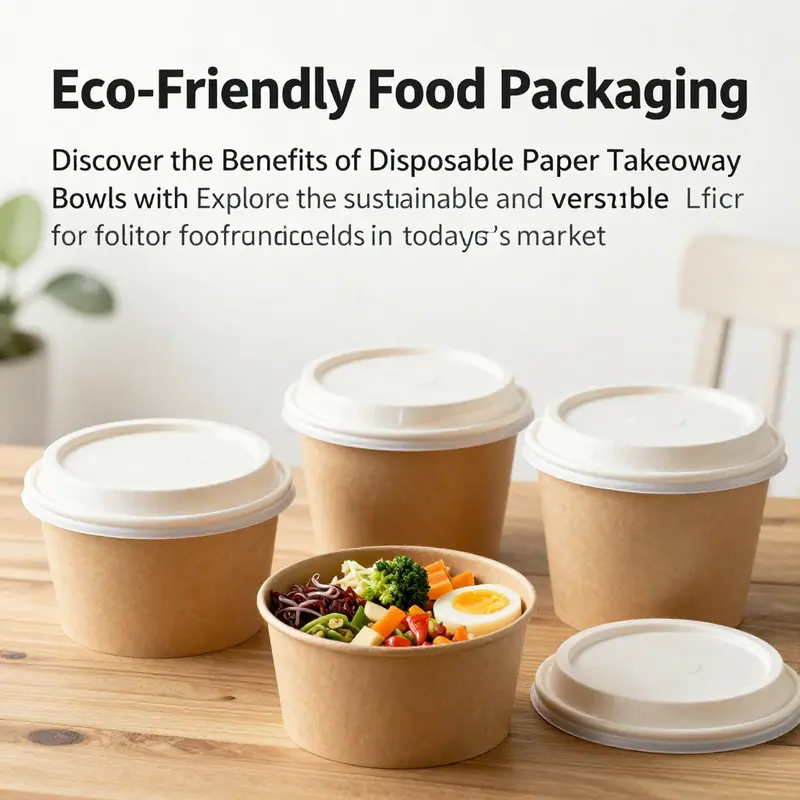
In an era of rising environmental consciousness, businesses are constantly seeking sustainable solutions that do not compromise on quality. One such solution is the rise of disposable paper takeaway bowls with lids, which offer not only convenience but also an eco-friendly alternative to traditional food packaging options. Crafted from biodegradable Kraft paper, these bowls provide excellent heat resistance and, combined with secure lids, ensure that meals remain contained and at the right temperature. This article delves into the multiple advantages of these bowls, focusing on their environmental benefits, market dynamics, and versatile applications across various settings, including bubble tea shops, restaurants, catering services, and corporate events. Each chapter will unpack the critical aspects of this product, reinforcing its relevance in the modern food service industry.
Sustainability in Action: The Green Promise of Disposable Kraft Paper Bowls with Lids
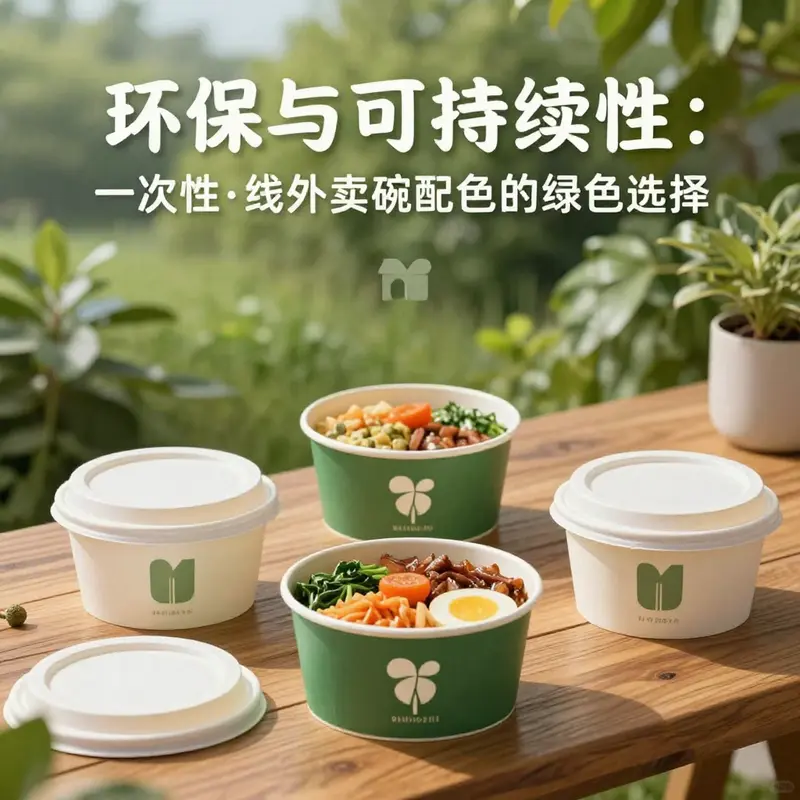
A takeout world is evolving, and the packaging that travels with it is changing as well. Disposable paper bowls with lids sit at a critical crossroad where convenience meets responsibility. They are not mere vessels for food; they are a case study in how material choices, design, and end-of-life options can align with a broader commitment to environmental stewardship. In the marketplace, these bowls have carved out a niche by offering a heat-stable, leak-resistant solution that travels well from kitchen to curbside, from event spaces to office cafeterias. Yet the true value of this packaging lies not only in the surface-level benefits of being sturdy and portable. It rests in the potential to minimize environmental harm through thoughtful material selection and responsible end-of-life pathways. The chapter that follows treats this packaging as more than a convenience item; it treats it as a hub of ecological decision-making, a tangible expression of how modern food service can balance demand with responsibility.
Materials form the most obvious first layer of this story. The dominant options for disposable kraft paper bowls with lids rely on natural plant fibers such as sugarcane pulp, bamboo fiber, and rice husk. These resources are renewable and, compared with petroleum-based plastics, tend to carry a smaller footprint over the lifecycle of the product. When a bowl is labeled as degradable under appropriate conditions, that label reflects a pathway to rejoin the natural cycle rather than linger as lingering waste. In practice, this often means the product is designed to be compatible with industrial composting facilities where microbes, heat, and moisture work together to break down the fiber structure. It is important to note, however, that the pace and completeness of degradation depend on the existence and accessibility of suitable composting infrastructure, as well as the form in which the product actually arrives at the end of its use. A bowl that travels through a well-managed system may yield substantially lower environmental impact than a comparable plastic equivalent, while one that ends up in a landfill or as litter misses those potential gains. The emphasis, then, is on the chain of custody—from production through collection to the composting or recycling stream—and on how the system is designed to support the intended end-of-life outcome.
The technical properties of these bowls also contribute to their environmental story. Many products on the market boast robust heat stability, with a typical performance range that makes them safe for hot takeaway, soups, or stews. While exact temperatures can vary by formulation, the goal remains clear: to keep contents secure and at a usable temperature while preventing leaks and spills during transit. A well-sealed lid is essential here. Whether a transparent lid or a lid that matches the bowl’s color, the seal helps maintain hygiene and reduces the need for secondary packaging, which in turn lowers waste. The lid design also informs user experience. A good lid snaps shut with a tactile feel of reliability, offering reassurance to drivers and diners alike that the contents stay put even when the container is jostled on the way to a meeting or a home kitchen. This is not mere convenience; it is a direct factor in waste reduction—fewer spills mean less contaminated waste and more efficient handling downstream.
Beyond the immediate functional benefits, the environmental value of plant-fiber bowls anchors itself in broader lifecycle thinking. The production phase typically relies on fibers sourced from renewable waste streams or fast-growing crops. By substituting plant-based inputs for fossil-based plastics, the process tends to emit fewer greenhouse gases over its lifecycle, particularly when energy sources and transport logistics favor lower-carbon options. Still, the actual impact depends on multiple factors, including feedstock origins, manufacturing efficiency, and how often the products are utilized for similar or different applications. If the same fiber feedstock would have been discarded as agricultural waste instead of repurposed for packaging, its use in bowls could be viewed as a form of value recovery. If, however, the fiber must compete with other essential uses or a region lacks adequate waste processing, the net benefit can be diminished. Hence, the sustainability of disposable kraft paper bowls with lids is a function not only of material choice but of systemic waste management, regional policy, and consumer participation in recycling or composting programs.
One of the strongest market signals supporting these bowls is the growing policy and cultural emphasis on reducing single-use plastics. Across many jurisdictions, bans or restrictions on plastic packaging have accelerated demand for alternatives that are compostable or recyclable. In this context, fiber-based bowls offer a pathway to compliance with evolving regulations while meeting customer expectations for responsible business practices. The shift is not merely regulatory; it is social. Consumers are increasingly aware of the materials that accompany their meals and are more likely to choose packaging that aligns with their values. For restaurants and event organizers, adopting fiber bowls with lids can be part of a broader strategy to demonstrate sustainability in branding, supplier partnerships, and community engagement. The careful balance is to maintain convenience and reliability while ensuring that the end-of-life story remains coherent with the original environmental rationale.
The lifecycle narrative of these bowls becomes most compelling when it is imagined as a closed loop rather than a linear path from production to disposal. If a system is in place where bowls are collected separately for composting or recycling, the environmental benefits can be magnified. Municipal or industrial composting facilities can convert the fiber into useful compost that supports soil health, thereby returning nutrients to the ecosystem. Recycling remains a possible route for certain fiber-based products, particularly if coatings or barriers are minimized and the fiber can be separated from any non-fiber components. The ideal scenario is one in which consumers, waste collectors, and processors operate in concert to ensure that fiber bowls with lids are routed to the appropriate end-of-life stream. In the absence of such an integrated system, the same product risks becoming another piece of litter or a contaminant in recycling streams. This reality underscores the need for robust waste infrastructure, clear labeling, and consumer education about how to dispose of these bowls properly.
Pricing and scale also shape the sustainability conversation. In the wholesale market, the economics of plant-fiber bowls can be favorable when produced at scale and when fiber inputs are sourced efficiently. A typical size used in takeout and catering is around 750 milliliters, a capacity that balances portion size with transport efficiency. The economics of this size often reflect a sweet spot that aligns with common menu offerings and consumer expectations. In markets with high-volume takeout, suppliers can leverage economies of scale to reduce per-unit costs while maintaining quality and consistent performance. The price is only one dimension of value, however. The reliability of supply, the consistency of heat resistance, and the integrity of the seal all contribute to the overall value proposition. A bowl that maintains its form under heat, resists leaks, and tolerates the rigors of delivery becomes a platform for operational efficiency. Fewer replacements, fewer spill incidents, and more confident handling can translate into tangible savings for restaurants and event organizers, reinforcing the appeal of plant-fiber bowls as part of a sustainable operating model.
To illustrate how this value translates into practical decisions, imagine a kitchen that serves a steady stream of soups, noodles, and salads in packed settings. The team evaluates options not solely on price but on end-to-end performance. They test heat stability for standard menu items, assess how lids perform during rapid transit, and observe how the bowls fare in a variety of environmental conditions—on a hot day, in a cool transport cooler, or during a longer delivery window. They consider the ease of stacking and the space required for storage, since efficient warehousing reduces waste and softens logistical costs. They look at supplier assurances about material composition and certifications, recognizing that verification is essential to ensure that the product aligns with declared degradability and safety standards. In this context, the choice becomes a statement about a restaurant’s or event organizer’s approach to stewardship, a visible commitment that resonates with customers who value responsible consumption. For teams seeking a practical example of a supplier option that lines up with these aims, a widely available model is the disposable kraft paper bowl for food package with lid. disposable kraft paper bowl for food package with lid is representative of a class of products designed to balance portability, safety, and end-of-life potential while remaining adaptable to diverse menus and service formats.
The interplay between material science and consumer behavior is central to the sustainability story. The fiber-based bowl’s success depends not only on the quality of the material but also on how it is perceived and used by diners. If a dining experience emphasizes sustainability alongside flavor and service, customers are more likely to recycle or compost and to support vendors that demonstrate environmental responsibility. In many markets, consumers have learned to associate compostable or biodegradable packaging with a broader commitment to reducing waste. This perception can become a powerful driver for adoption when paired with clear labeling, transparent communication about disposal practices, and consistent performance during use. Brands and operators that communicate these elements effectively can build trust and loyalty, which are essential assets in a competitive takeout landscape.
The environmental narrative of disposable paper bowls with lids is, in itself, a reminder that sustainability is not a single technology or a single decision. It is an ongoing practice that involves material selection, design for end-of-life, policy alignment, and operational discipline. When these elements come together, the result is a packaging option that does not merely replace plastic with another disposable product, but that redefines what it means to take food away from a kitchen with integrity. The bowl becomes a digit in a larger ledger of environmental impact—one piece of a system that can be counted, tracked, and improved over time. The goal is not perfection but progress: to move away from endings that simply accumulate in landfills toward endings that responsibly reinvest in soil, water, and the broader web of life. That is the core promise of sustainable disposable paper bowls with lids, and it is a promise that requires continued collaboration among farmers, manufacturers, waste managers, regulators, and diners alike.
As packaging designers and food-service operators pursue this path, the choice of supplier matters as much as the choice of material. A responsible supplier offers more than the raw bowl; they provide a trusted pathway from sourcing to disposal. They share transparent information about fiber origins, coatings, and any barrier technologies used to protect the contents. They support consistent quality, ensuring that every bowl created meets performance specs for sealing, heat tolerance, and integrity under transport. They invest in clear labeling and disposal guidance to help end users make the right choices. They recognize that the value of sustainability is multiplied when the end-of-life system exists and functions smoothly. In practice, that means selecting bowls that are designed for compatibility with composting or recycling streams, paired with lids that optimize seal and minimize waste. It means partnering with suppliers that can demonstrate environmental attributes through credible documentation and third-party certifications, and it means continuously evaluating the entire chain to identify where improvements can be made. The quest for a truly sustainable packaging solution is not a one-off decision but a continuous journey—one that requires attention to material selection, process efficiency, waste infrastructure, and consumer engagement.
In sum, disposable kraft paper bowls with lids embody a pragmatic, scalable approach to translating sustainability into everyday food transport. They leverage renewable plant fibers, deliver robust performance, and offer meaningful end-of-life potential when collect-and-treat systems exist. They are not a magical solution, and they do not absolve the need for responsible consumer behavior, efficient waste management, or policy progress. Yet they represent a tangible, market-ready path toward reducing the environmental footprint of takeout and catering. They show how a simple vessel can carry a more ambitious promise if designed and used as part of a broader ecosystem of sustainability. For teams charting a course through increasingly strict plastic regulations, shifting consumer expectations, and the operational realities of rapid-service environments, fiber-based bowls with lids offer a practical, scalable means to advance that promise without sacrificing the reliability customers demand. The conversation around these bowls is, at its core, about choosing a route that respects both the earth and the dining experience—a route that makes green choices not only possible but integral to everyday food service.
External resource: To explore a real-world example of degradable fiber bowls and their sourcing context, see the 1688 product listing linked in the research notes. It provides a snapshot of the material and supply chain considerations that accompany these packaging options. https://detail.1688.com/offer/750958413375.html?spm=a2b0e.123123.0.0.6f8a6d4cWvZJwI
Market Currents and Sealed Solutions: Pricing and Supply Dynamics of Disposable Kraft Paper Bowls with Lids
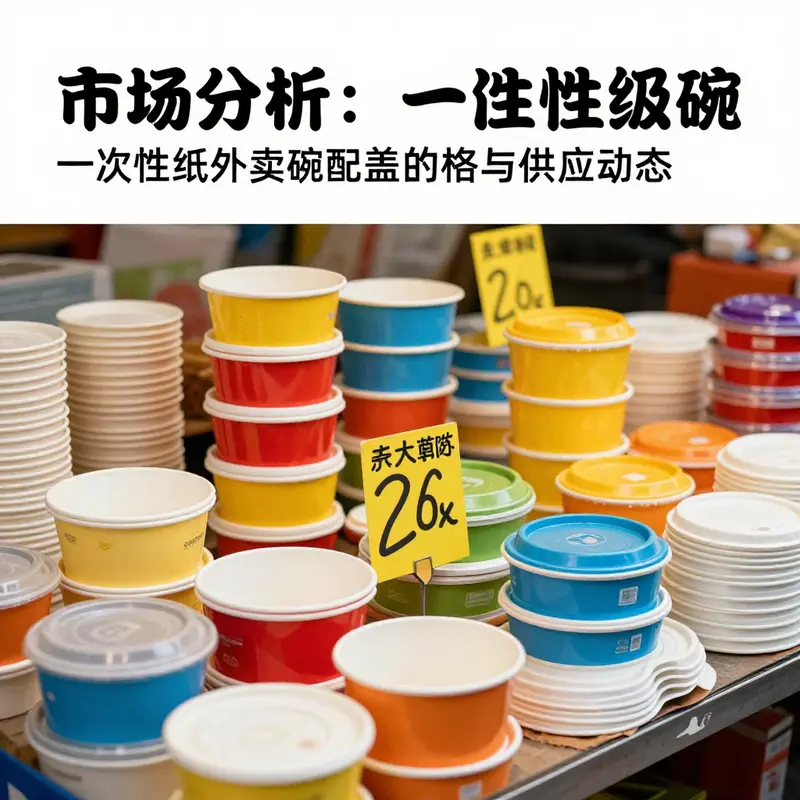
Disposable kraft paper bowls with lids stand at an unlikely crossroads where convenience, hygiene, and sustainability converge. They are not merely a packaging option but a small, portable micro-environment that helps businesses control temperature, minimize leakage, and maintain cleanliness from kitchen to customer. In the rapidly shifting world of takeout and catering, the appeal of a sealed, recyclable or biodegradable disposable bowl is not only about reducing labor in cleanup but about delivering a reliable experience. The lid, often perceived as a simple closure, becomes a trusted seal in transit, a barrier against spills, and a signal of safety. For operators, this combination translates into fewer complaints about soggy or leaking meals, more predictable presentation when the customer unpacks, and the flexibility to plan menus that include sauces and dressings without fear of mess. The practical benefits expand beyond food safety and convenience. When a bowl is paired with a lid, it becomes a transportable unit that can handle hot meals, soups, and dense noodle dishes with a level of temperature retention that supports a consistent consumer experience. As consumer expectations evolve toward quicker service, better packaging aesthetics, and lower environmental impact, the market for these bowls has begun to reflect a broader set of priorities—cost efficiency, material science, and supply chain resilience—while remaining anchored by a core functionality: containment and safety.
The price landscape for disposable paper bowls with lids, particularly those made from kraft paper, is a reflection of both material science and procurement strategy. Market observers tracking the December 2025 to January 2026 window note a pronounced stratification in wholesale pricing. In the most common procurement paths, the per-piece cost can vary widely depending on whether the buyer is sourcing a basic, unprinted model or a customized variation with logos, color accents, or unique lid designs. A typical baseline in major online wholesale channels situates plain, white, thick-walled bowls with lids in a price band that begins just under half a yuan per unit and can rise to roughly eight tenths of a yuan per unit for more premium constructions. The delta is not arbitrary; it is driven by the combination of material grade, flange thickness, seal quality, and the lid’s design—the level of air-tightness, whether the lid is transparent or color-coded to match branding, and the ease with which the lid pops on and off during busy service periods.
Within this spectrum, a differentiating factor is the level of customization. The most economical options tend to be plain, unprinted rounds that assume the kitchen or vendor’s own branding. On the other end of the spectrum, bowls that carry printed logos, specialty finishes like metallic foil accents, or extended functional enhancements—such as heat-retention coatings or two-piece lids designed for high volume lanes—command higher unit prices. This is not merely a cosmetic decision for the buyer. It reflects a broader tactic where brands and venues seek to leverage container aesthetics to support marketing campaigns, seasonal menus, or limited-time promotions. The economics of customization also has a practical counterpart: when a business commits to a certain volume, the per-unit price declines with order size, and the gap between the lowest-cost baseline items and the more elaborate variants narrows as production efficiency and supplier capacity improve. In several cases, vendors present bulk options in per-box or per-case formats that push the per-unit cost even lower. One example cited in procurement data demonstrates that a large box lot could bring the aggregated cost down, a portfolio-worthy tactic for operators who run multiple outlets or serve events where supply continuity matters as much as unit price. The price dynamics, in short, are a negotiation between material cost, production complexity, order quantity, and the degree of branding investment a buyer is willing to undertake.
A recurring theme in the current market is the balance between cost and performance. When a bowl is thick enough to withstand hot contents without warping, yet light enough for easy handling and stacking, it hits a sweet spot that makes it broadly attractive to a wide range of buyers—from small street food stalls to mid-size event organizers and corporate cafeterias. The data reflect this preference for a versatile, all-purpose size: a 750 milliliter capacity remains the most sought-after specification, roughly two-thirds of surveyed orders or inquiries center on this size. This sweet-spot dimension is not just about visual appeal; it aligns with typical portion sizes in many markets, supports a broad menu range—from soups and stews to rice bowls and salads—and offers predictable packaging dimensions that simplify inventory planning and display options in both back-of-house and front-of-house contexts. The practical implications extend to lid design and seal integrity. A reliable seal reduces the risk of leakage during transit, which in turn lowers customer service costs and returns. It also supports branding consistency in takeout windows where the lid is part of the product’s first impression. In certain markets, buyers express a willingness to pay a modest premium for a lid that provides a stronger seal and a universally compatible size, especially when their operations involve high‑volume deliveries or longer delivery windows.
The supply side of this market is characterized by a degree of regional concentration and a trend toward material innovation. The supply chain for these disposable bowls shows a strong clustering in major manufacturing hubs across eastern and central regions, with downstream logistics networks enabling reliable replenishment for hotels, cafes, and event spaces. This clustering brings advantages: shorter lead times, better price stability, and a greater ability to negotiate volume discounts on the part of buyers who consolidate orders across multiple sites. The supplier landscape tends to emphasize a few core capabilities: the ability to produce thick, food-grade coated kraft paper that can resist leakage, a robust lamination process to preserve lid integrity, and a packaging ecosystem that supports both standard and customized runs. Recurrent indicators of supplier performance point to high repeat orders and steady demand, underscoring the importance of reliable production planning and inventory management in maintaining price stability.
Yet a notable shift is underway as policy signals and consumer preferences tilt toward sustainability. Demand for eco-friendly or biodegradable alternatives—especially those leveraging starch-based or plant-derived components—has intensified. In response, some producers have introduced versions of disposable bowls that leverage corn-starch-based composites or other compostable formulations, aimed at reducing end-of-life environmental impact. The market response to these green alternatives has been telling: once-infrequent repeats have begun to become routine, suggesting that buyers view greener options as not only a regulatory compliance matter but a reputational asset that can influence customer choices. A recent benchmark shows a marked improvement in repeat orders for such greener offerings, signaling that the market is gradually prioritizing material performance and end-of-life outcomes alongside price and convenience. These shifts do not come without trade-offs. Green materials can present challenges in heat tolerance, barrier properties, and shelf life, and they might incur higher production costs or require different supply chains. Buyers, therefore, must weigh these factors against potential advantages in branding, regulatory alignment, and consumer perception.
From a procurement perspective, the interplay among material, customization, and scale shapes how buyers structure their sourcing strategy. The data suggest several pragmatic paths. First, for budget-conscious operators who serve simple menus and operate on tight margins, the baseline option—plain kraft bowls with standard lids—offers predictable cost and stable supply. The reliability of supply is particularly valuable in high-velocity environments where stockouts can disrupt service. Second, for businesses pursuing brand consistency or seasonal campaigns, a carefully chosen customization tier can deliver a disproportionate return on investment. A logo, a color-coded lid, or a festive motif can elevate the perceived value of the meal and reinforce loyalty, especially when the packaging becomes part of the unboxing experience. Third, for organizations placing large, recurring orders—corporate events, university cafeterias, or multi-site chains—the economics of bulk purchasing become compelling. In such cases, per-unit costs drop, lead times become a negotiable factor, and the risk profile improves with bulk contracts or supplier partnerships. In all scenarios, the fit between the bowl’s technical performance and the buyer’s operational realities is essential. A bowl that leaks, chips, or fails to seal under typical transit conditions undermines the perceived reliability of the entire service, regardless of how great the food tastes.
The practicalities of choosing a bowl with a lid extend into how businesses handle ordering and inventory. The 750 ml option, by virtue of its popularity, often becomes the anchor in a supplier’s catalog and a reference point for a buyer’s planning. When a kitchen forecasts demand, it must balance peak periods, such as lunch rushes or event-driven lunches, against restocking cycles and supplier capacity. In this calculus, the supplier’s ability to offer flexible packaging options—such as different lid types (transparent versus opaque), cut-edge seals, and even secondary packaging in cases that optimize shelf space—gives buyers a more resilient supply chain. The bottom line is that pricing and supply dynamics are inseparable from quality and reliability. A lower upfront price is attractive only if it does not come at the cost of delayed shipments, inconsistent lid fit, or compromised food safety. A higher-priced, customized option might pay for itself through enhanced brand recognition and a lower rate of product returns, particularly in the context of value-driven promotions or high-end takeout experiences where presentation matters.
The supply dynamics are not static. The market shows growing interest in regionalized production, which reduces transport emissions and supports shorter replenishment cycles. This shift tends to favor buyers who centralize procurement within regional hubs and maintain flexible contracts with suppliers who can scale up or down quickly in response to demand fluctuations. It also incentivizes manufacturers to invest in process improvements that shorten lead times, such as automated cutting, coating, and lid-sealing lines, while maintaining strict quality control. In parallel, the environmental push encourages ongoing R&D into compostable and biodegradable materials that meet regulatory requirements and consumer expectations for sustainability. The upshot for buyers is a more nuanced choice set: they can optimize cost, performance, and environmental impact by aligning their packaging choices with their operational realities and market positioning.
For readers who want a tangible sense of the product category’s breadth without getting lost in the jargon, consider the practical implications of a widely used size and design. The 750 ml capacity remains a workhorse because it accommodates a diverse array of dishes—from hearty noodle bowls to savory rice bowls and substantial salads—while preserving the integrity of the container’s lid seal. The lid choice, whether clear or color-matched, also matters for merchandising and user perception. When a customer receives a meal, the first sensory signal is often not the taste but the sight of a clean, closed package that promises safety and warmth. The lid’s performance—resistance to spillage, ease of reopening, and compatibility with stackable storage—contributes to a smoother takeout experience and lowers the chance of negative reviews centered on packaging mishaps. In that sense, the price and supply dynamics discussed above are not abstract numbers; they map directly onto a restaurant’s ability to deliver consistent service, preserve food quality during transit, and reinforce a brand’s commitment to responsible packaging.
As the market evolves, a practical benchmark emerges for operators and suppliers alike: the best value is not simply the lowest unit price but the combination of reliability, scale, and branding opportunity. The most successful buyers will adopt a hybrid approach—relying on high-velocity, cost-effective plain options for routine orders while reserving a carefully selected customization tier for campaigns and peak periods. They will also plan for supplier redundancy, ensuring that multiple regional producers can meet demand without triggering price spikes or stockouts. Above all, the connector across price, supply, and sustainability is the customer experience. A sealed, well-sealed, aesthetically pleasing bowl that keeps food at the expected temperature and arrives intact embodies a promise that the service is organized, thoughtful, and trustworthy. This is the essence of the market’s current dynamic: a cycle of refinement where functional performance, environmental responsibility, and branding synergy reinforce one another rather than compete for attention.
For readers seeking a concrete example of how this category is presented in practice, consider the following product page that highlights a specific takeout bowl with lid. It offers a tangible reference to the size, packaging, and potential branding opportunities discussed above. 750ml salad bowl with lid. This example illustrates how the same basic container can be adapted for different menus and settings, while maintaining core benefits such as leak resistance, heat tolerance, and ease of handling. It also serves as a reminder that even within a single product family, the options for customization and packaging optimization are substantial and worth thoughtful consideration for any operation seeking to balance cost with value.
As the discussion closes, it is clear that the ongoing evolution of disposable kraft paper bowls with lids is driven by a confluence of market demand, material science, and the practical realities of everyday service. If the initial focus is on cost alone, opportunities may be missed to invest in branding or in materials that align with regulatory trends and consumer values. If the focus is exclusively on sustainability, there is a need to ensure that green offerings meet the same performance standards as traditional options. The balance is delicate, but not elusive. The market’s trajectory suggests that buyers who can articulate a clear preference for performance, environmental responsibility, and brand alignment will secure not only a favorable price but also a stable, trusted supply chain. In this sense, the narrative of disposable bowls with lids is not merely a procurement challenge; it is a strategic element of how a service organization communicates reliability, care, and competence to its customers.
External reference: For broader context on market dynamics, economic factors, and supplier trends in the global disposable packaging sector, you can consult industry data and procurement insights at https://www.alibaba.com.
Lids, Layers, and Local Scenes: The Everyday Versatility of Disposable Kraft Paper Bowls
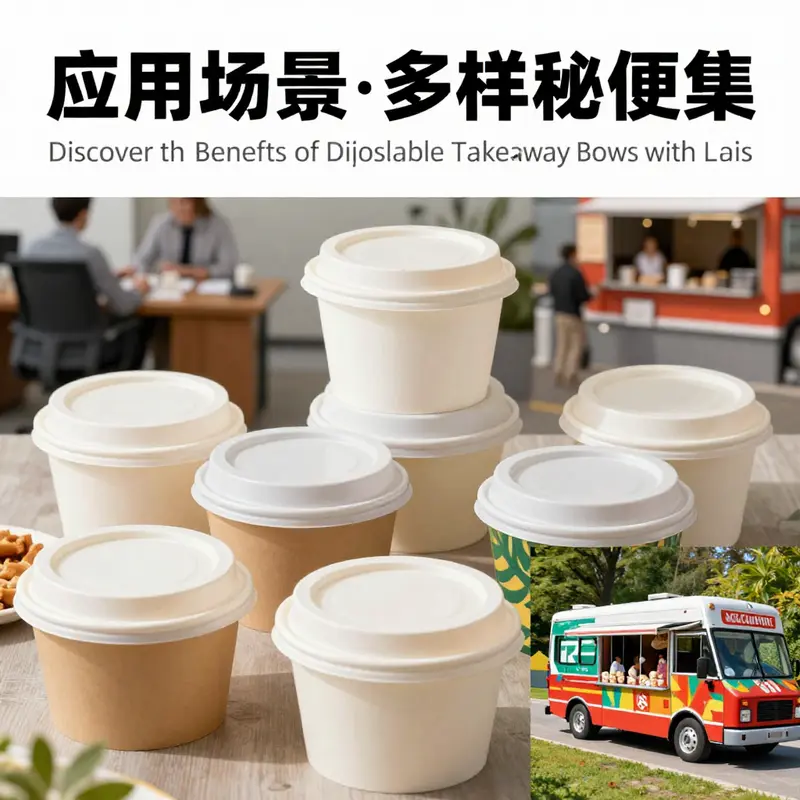
A seal that travels with meals. A vessel that shifts from hot to cold without losing form. A simple, recyclable shell that doubles as a hygienic barrier and a practical vessel. In many ways, the disposable paper takeaway bowl with a lid has quietly become a versatile everyday tool. Its value does not hinge on a single spectacular use case but on a broad, reliable range of scenarios where convenience, cleanliness, and sustainability converge. The lid, the paper’s strength, and the careful pairing of materials work together to turn what might be a fleeting packaging decision into a small but meaningful improvement in daily routines. When we trace the journeys of meals from kitchen to hands, the lided kraft paper bowl reveals its versatility most clearly, not only in the obvious setting of a quick-service context but in intimate home moments, collaborative workplaces, and organized public or semi-public events where hygiene, efficiency, and environmental responsibility matter in equal measure.
At the heart of this versatility is a simple design principle: dimensional flexibility with dependable performance. These bowls emerge in a spectrum of sizes, but a 750ml capacity stands out as a practical sweet spot for everyday meals and snacks. It is large enough to hold a substantial portion, whether it is a generous serving of a hearty dish, a layered salad, or a robust snack medley, yet compact enough to be carried comfortably, stored neatly, and disposed of without overwhelming the user or the environment. The corresponding lid—crafted to adhere securely to the rim and to resist the escape of steam, moisture, or aromas—completes the package by stabilizing temperatures and preventing leaks. The balance between a robust container and a light, easy-to-handle seal matters just as much in a domestic kitchen as it does in a bustling workplace kitchen, a festival venue, or a neighborhood potluck. The practical implications of this balance are felt most intensely at moments when time is scarce, when the risk of cross-contamination looms, or when the environment demands efficient waste management rather than resource-intensive cleanup.
The everyday life of these bowls unfolds across a broad landscape of settings. Within a household, they become more than mere wrappers for leftovers. They are convenient staging vessels for family meals during busy weeknights, when adults juggle work commitments and kids’ activities, and the time saved on dishwashing translates into shared conversations at the table or more moments of relaxed togetherness. For gatherings—whether a casual dinner with friends, a community potluck, or a holiday spread—the bowls simplify the logistics of serving and portioning. Food can be prepared in advance, kept warm under a lid that traps heat, and distributed in a way that preserves presentation. When the weather is cooperative, a tabletop picnic or a small garden party can leverage these bowls as both practical containers and an extension of the table’s aesthetic. The clear or color-matched lids provide a neat, uniform finish that helps maintain the visual appeal of a spread and reduces the chance of food contacting surfaces other than the intended serving ware.
Outdoor occasions illuminate another facet of the product’s utility. A family’s weekend hike that ends at a scenic overlook becomes easier when the meal is ready to go in a single, portable unit. The lid protects contents from wind, dust, or moisture, and the container’s compact profile makes it easier to carry than a stack of rigid bowls and a separate lid. In more expansive settings—like community fairs or local festivals—the bowls offer a sanitary, single-use option that respects local arrangements for food handling while supporting efficient turnover. The containers’ moisture barriers are especially valuable for foods that release steam or humidity, since the lid helps minimize condensation that could otherwise sog up napkins, wraps, or the nearby clothing of attendees. Even in environments that are less forgiving—where wind, heat, or humidity challenge packaging integrity—the choice of a kraft paper bowl with a well-designed lid tends to deliver a predictable, dependable experience.
In an office or classroom, these bowls become tools of everyday practicality. A quick lunch in a break room, a mid-morning fruit or snack service, or a shared dessert during a presentation can all be accommodated without creating a pile of reusable dishes that require washing and storage. The hygienic benefit of a sealed container matters here as well, reducing cross-contamination risks that arise from shared surfaces and utensils. Students and professionals alike appreciate the ability to carry a small, ready-to-consume meal from one part of a campus or office building to another, knowing that the contents remain fresh and the container remains securely closed during transit. The seemingly small design elements—the lids’ snug fit, the strength of the paper’s inner coating, and the overall rigidity—become more consequential in the cadence of daily life when the bowls are used repeatedly in crowded or time-pressured environments.
From a service-provider perspective, these bowls are not a single-use novelty but a scalable, adaptable packaging solution. In fast-casual settings, a single vessel can accommodate multiple menu segments, from hot soups to cold salads to lifted portions of noodles or rice bowls. The presence of a lid is more than a convenience; it is a quality control feature that mitigates leaks during transit, a factor that improves customer experience and reduces the risk of product loss or mess during delivery and handling. In more formal or semi-formal settings, the same vessel can be integrated into catering workflows that require compact packaging, clean presentation, and efficient warewashing or disposal cycles. A robust supply of lids and bowls that match in size and strength supports an operation’s ability to manage peak demand, deliver consistent portions, and maintain brand or event identity through uniform packaging. Even in settings that emphasize sustainability, the ability to reuse or recycle appropriate components aligns with broader goals of waste reduction and resource stewardship. The packaging delivers not only food safety and convenience but also a compatible footprint with environmental objectives, a combination that resonates with modern consumer expectations.
The material science underpinning this practical performance deserves a closer look, even in everyday conversation. Kraft paper, known for its natural strength and texture, is often selected for its durability and its compatibility with various coatings or liners that permit safe contact with foods at a range of temperatures. The lid, commonly crafted from a transparent or color-matched plastic or a sturdy paper-based composite, serves as a seal that guards against moisture migration and heat loss. The temperature resilience of these bowls—often rated for cold storage down to well below freezing and for hot serving up to near the boiling range—enables them to handle a variety of foods without compromising form. The interplay between the paper’s porosity, the inner barrier coatings, and the lid’s seal dictates how well aromas are contained, how the texture of meals is preserved, and how long contents remain visually appealing before consumption. While the precise chemistry varies with the product line, the overarching design aim remains consistent: to deliver a compact, safe, and pleasantly functional container that respects both the food and the environment.
In supply-chain terms, the appeal is also clear. A robust manufacturing ecosystem for these bowls exists in significant production hubs, where scale and quality controls meet the demand of diverse markets. The economic logic behind using a 750ml size centers on a balance between functionality and cost. Bulk production lowers unit cost, enabling affordable pricing that supports widespread adoption across sectors. When purchasers consider their needs—whether for a small family dinner, a campus event, or a neighborhood festival—this size often emerges as the most versatile fit, offering enough capacity for a complete meal while remaining easy to transport. The total environmental impact hinges not only on the raw materials but also on the processing and end-of-life options. Recyclability and compostability, in markets where appropriate waste streams exist, can transform a packaging decision into a step toward circularity. The packaging thus represents not just a practical tool but a link in a broader story about how modern life can be organized more efficiently without sacrificing health, safety, or ecological responsibility.
One practical example that embodies this convergence of design, function, and context is the salad bowl with lid, specifically in the 750ml format. This configuration is particularly well-suited for meals that feature fresh ingredients and layering, where the lid helps preserve crispness and prevent the mingling of flavors during transport. The lid’s tight seal reduces steam escape, which helps maintain the visual appeal of greens and vegetables, while the sturdy construction of the bowl supports a stable transfer from kitchen to table to cart. The same vessel can handle a warm, heartier dish when required, and its resistance to movement during transit contributes to a consistent consumer experience, a factor that matters to both individuals and organizers who rely on reliable packaging for takeout or event service. In a sense, this bowl becomes a microcosm of modern packaging: a small object with outsized influence on daily life, capable of smoothing the rough edges of busy routines while aligning with broader values around cleanliness and sustainability.
As consumers increasingly seek packaging that aligns with responsible consumption, the role of these bowls expands beyond mere containment. They become a bridge between the practical demands of daily life and the aspirational goals of environmental stewardship. The ability to minimize dishwashing, reduce water use, and lower chemical consumption in cleaning processes makes a tangible difference in homes and workplaces alike. When multiplied across countless meals, this effect scales into meaningful cost savings and resource efficiency, even in a world where convenience often competes with environmental considerations. The discussion around these bowls thus touches on a fundamental tension and a corresponding opportunity: how to maintain a high standard of food safety, odor control, and heat retention while steering packaging choices toward materials and practices that are kinder to the planet. The answer, in large part, lies in thoughtful design, careful material selection, and an ongoing commitment to improving the end-to-end lifecycle of the product.
The broader context for these bowls also includes how they integrate with consumer expectations and business operations. Consumers increasingly evaluate packaging not only on price and appearance but also on reliability and environmental impact. A lid that seals securely and a bowl that resists deformation under heat and pressure communicate quality and care, values that underwrite trust in a brand—whether it’s a neighborhood eatery or a larger food-service operation. For operators, the decision to stock a 750ml lid-equipped kraft paper bowl can streamline prep, portion control, and post-meal cleanup, while still leaving room for customization in color, labeling, and branding that may be applied in a compliant, responsible manner without compromising recyclability. The resulting packaging solution thus functions as an operational asset that supports efficiency, satisfaction, and sustainability in tandem.
In shaping the future of takeout and event catering, the narrative around disposable paper bowls with lids is not about replacing traditional ware with simplistic alternatives but about expanding the toolbox available to households, workplaces, and hospitality settings. It is about choosing a container that can gracefully handle a hot soup and a cool salad with the same ease, that can be handed from one person to another with minimal handling, and that can serve as a clean slate for responsible waste management after use. When these elements align, the packaging becomes less a disposable afterthought and more an enabling partner in the daily choreography of meals. That is the essence of the everyday versatility these bowls offer: a reliable, adaptable, and forward-looking option that helps people eat well and live simply in the spaces where meals are prepared, shared, and enjoyed.
For readers who wish to explore a concrete example of how capacity, lid design, and material choice converge in practice, the concept of a 750ml salad bowl with lid can be a useful reference point. It encapsulates the practical balance many operators seek: a sufficient portion size, confident sealing, and compatibility with a range of food types while remaining compatible with common waste streams. This balance is not accidental; it is the result of deliberate design choices that weigh customer expectations, safety standards, cost considerations, and environmental commitments. In daily life, those choices translate into moments when a busy person can collect a hot lunch, know it will arrive intact, and enjoy it without the burden of cleanup logistics weighing on their shoulders. It is a small, practical triumph—one that quietly reinforces the possibility of responsible convenience in a world that is increasingly mindful of how everyday choices accumulate into larger impacts.
As the chapter closes on this landscape of use, the takeaway is not merely that these bowls exist, but that their design and deployment reflect a nuanced approach to modern life. They embody a practical philosophy: create packaging that respects food safety, supports efficiency, and honors environmental considerations without asking people to compromise on taste, texture, or experience. They also highlight a collaborative ecosystem—across manufacturing, distribution, and end-users—that values reliability, adaptability, and continual improvement. In that sense, the everyday scenes in which these bowls appear—from a quiet family meal to a bustling event, from a campus corridor to a park lawn—form a continuous narrative about how simple innovations can help align daily routines with broader, gentler footprints on the world around us. The lids and layers, the sturdy kraft, and the careful handling together tell a story of packaging that serves people and planet alike, turning ordinary meals into small, meaningful acts of mindful practicality.
Internal link reference: For a practical example of a widely used bowl format in real-world applications, see this presentation around a 750ml salad bowl with lid.
External resource for further reading: https://www.360doc.com/content/250414/174309_877011557.shtml
Final thoughts
In conclusion, the increasing popularity of disposable paper takeaway bowls with lids reflects a pivotal shift towards sustainable practices in the food service industry. Their eco-friendly composition, coupled with their versatility across various applications, makes them an essential choice for businesses looking to meet both environmental and consumer demands. By integrating these bowls into your services, you not only enhance your brand’s sustainability efforts but also cater to the needs of your customers who value health and environmental consciousness. Embrace this opportunity to elevate your service offering and position your business as a leader in eco-friendly food packaging.