
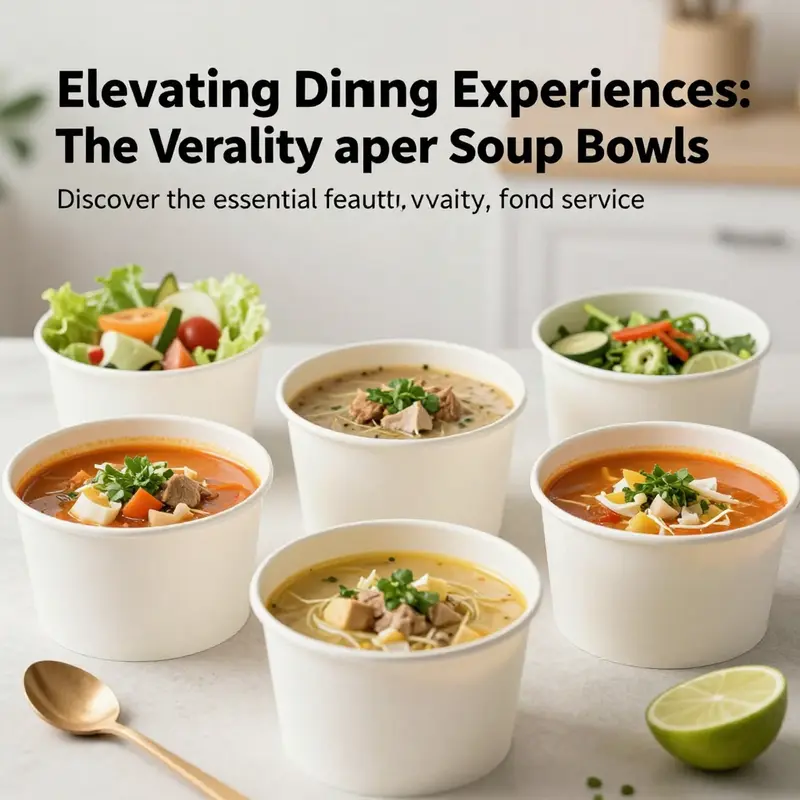
In the dynamic world of food service, the materials we use are crucial for operational efficiency and customer satisfaction. Disposable paper soup bowls have become a staple in industries ranging from restaurants and food trucks to event catering and corporate procurement. Crafted from food-grade paperboard and designed with functional coatings, these bowls offer multiple advantages, including leak resistance and thermal insulation. This article delves into the core features and materials of disposable paper soup bowls, their various specifications and capacities, their wide range of applications, and market insights that highlight their economic benefits and unique design options, such as seasonal themes. Together, we will explore how integrating these bowls into your offerings can enhance service quality and meet growing sustainability demands.
Fiber, Coating, and Containment: The Materials Architecture of Disposable Paper Soup Bowls
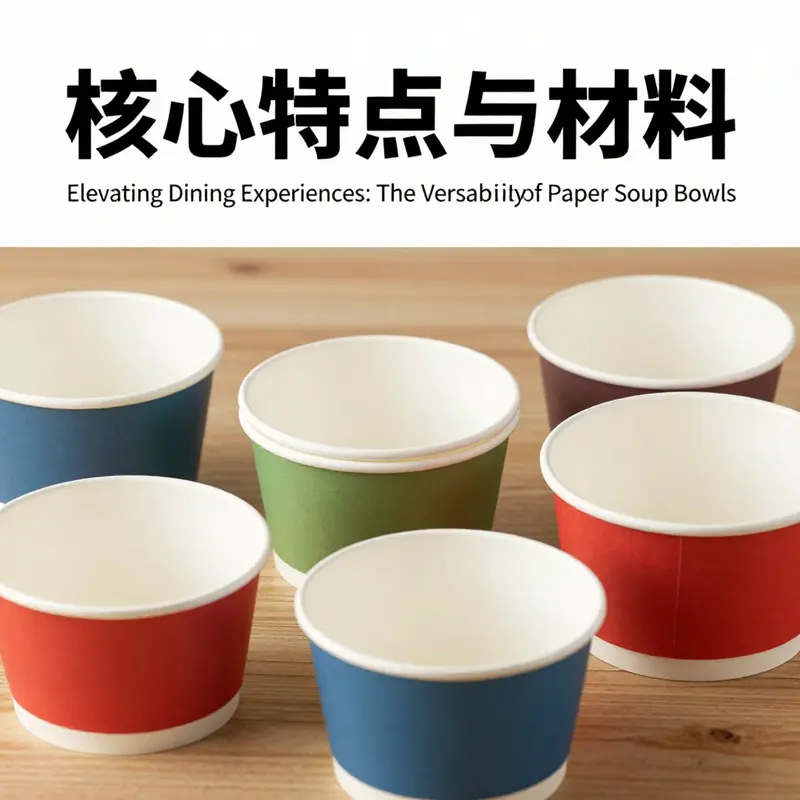
The essence of a disposable paper soup bowl lies not in a single material or a clever shape, but in the careful orchestration of fiber, film, and form. When you lift a bowl from a tray, you touch more than a container; you touch a compact system that must be safe, light, leak-resistant, and capable of performing under heat, all while keeping waste manageable. The chapter of core characteristics and materials unfolds like a design diary where every layer—from the base pulp to the protective film—has a story about safety, practicality, and environmental nuance. What makes these bowls work is the way their materials interact to deliver a singular promise: a convenient, sanitary, and reliable eating experience that travels from kitchen to table with minimal fuss, then leaves little trace beyond a controlled deconstruction of its own components.
Safety is the starting point. Reputable producers insist on food-grade paperboard that has been certified to meet sanitary standards. The avoidance of dubious additives matters as much as the choice of barrier coatings. In practice, that means no fluorescent whitening agents that can migrate under heat, no talc or other unapproved fillers that could pose a risk of contamination. A bowl is a micro-environment for a moment of nourishment, and its safety profile must be uncompromising. The one-time-use nature of these bowls supports a hygiene-centric model: use, dispose, and reduce the risk of cross-contamination that can lurk in reused or poorly cleaned vessels. This sanitary integrity is reinforced not only by the materials but by the production processes that keep each item consistent, clean, and ready for immediate service.
Yet safety alone would not suffice without portability. The lightweight character of paper bowls is not a casual perk but a design necessity. A bowl that refuses to be carried, stacked, or boxed undermines the very efficiency that takes a takeout order from a kitchen window to a doorstep. The paperboard, precisely engineered to balance stiffness and pliancy, becomes a kind of skeletal frame that supports food stability while remaining manageable in bulk. Consider a bustling counter where dozens, even hundreds, of bowls are handled in a short span; the ability to stack, nest, and transport them with ease reduces labor, minimizes breakage, and lowers energy use in warewashing elsewhere. This weight-conscious architecture matters most for busy venues, but it also translates into everyday moments of domestic use where storage space is at a premium.
The third pillar is the ease of use itself: one-and-done, with no cleanup required after the meal. This is not merely about convenience but about a broader return on time and resources. In a world where many households juggle meals, errands, and children, disposable bowls streamline routines without demanding a second act of scrubbing and drying. The consumer benefits extend beyond the plate; the responsible operation benefits too. When a fast-casual kitchen serves hundreds of customers daily, the ability to discard after use reduces the risk of cross-contact and accelerates service, enabling more consistent turnover and cleaner back-of-house workflows. The trade-off, of course, is waste, so the materials science that underpins these bowls must also consider how a bowl contributes to or reduces the environmental footprint of the dining experience.
Heat tolerance is another critical dimension. A well-made disposable paper soup bowl must handle hot liquids and hot foods without immediate deformation or leakage. Thickness, layering, and coating work in concert to resist the softening effects of heat. The interior barrier film, often a PE-based layer, acts as a waterproof shield that keeps liquids from soaking through the paperboard. Some designs also explore bio-based barriers such as PLA, which align with sustainability goals by offering a more renewable profile. Even so, the thermal story of these bowls is nuanced: while they can handle typical hot soups and stews, prolonged exposure to high temperatures or direct flame can compromise the barrier and, in extreme cases, the structural integrity. The result is a careful boundary set by the manufacturer—enough heat tolerance for standard use, but with caveats appropriate to the material’s chemistry and the product’s intended lifecycle.
Coatings, though, are not mere afterthoughts. They define the line between the absorbent risk of soggy, leaky food and the confident containment of steam and gravy. The interior is frequently lined with a thin polymer film that serves as the water and grease barrier. The most common is a polyethylene layer, a robust and well-understood solution that reliably resists liquid permeation. The popularity of PE coatings stems from proven performance, compatibility with food safety standards, and a relatively low cost that makes it feasible for mass production. Yet the industry is increasingly exploring biobased and compostable options such as PLA as part of a longer-term strategy to reduce fossil-fuel dependence and to improve end-of-life outcomes. The challenge lies in ensuring that any transition to bio-based coatings does not sacrifice barrier performance or heat resistance, and that downstream recycling or composting streams remain accessible. In practice, some bowls carry dual messaging: a PE barrier for cost-effective, broad-use applications; and, in more premium or eco-conscious lines, a PLA or PLA-like coating that signals a commitment to sustainability while still delivering reliable performance.
The material palette for disposable paper soup bowls also resists the temptation to overload consumer perception with vague promises of “green” without substance. The base substrate typically derives from wood pulp, bamboo fiber, or other plant-derived fibers. These natural fibers form the structural core that gives the bowl its stiffness, the ability to hold soups upright, and a predictable shape that won’t collapse under modest heat or weight. The base material is selected not only for its safety but for its end-of-life profile: a pathway toward recyclability or compostability that aligns with consumer expectations and municipal waste streams. In practice, a bowl is often marketed as recyclable or compostable, yet the actual fate of the product depends on local facilities. This nuance matters: a sustainably designed bowl can still end up in a landfill if the recycling or composting infrastructure is not in place. The conversation around sustainability, therefore, must be anchored in pragmatic realities as well as marketing promises.
Beyond the raw materials, the manufacturing method shapes the final creature that leaves the factory. The multi-layer composite structure—fiber substrate plus barrier film, plus any supplemental coatings or treatments—must deliver a blend of strength, heat resistance, and water resistance. The engineering mindset here treats the bowl as a small, layered sandwich: a sturdy outer wall, a barrier interior, and a smooth interior surface that prevents food from sticking to the paper while allowing easy release upon consumption. The resulting product must feature a robust enough anti-impact profile to withstand the stress of handling, transporting, and occasional bumps in transit, typically rated at or above a minimal standard such as 0.7 for practical preparations. This specification, though technical, translates into everyday reliability: a bowl that holds a hot broth without buckling, a salad without leaking, and a snack without soaking through over time.
The possibility of customization adds another dimension to the materials story. For brands and venues seeking to reinforce their identity, many manufacturers offer coating options that support branding through printing on the exterior or even include lids as part of a packaging system. Printing on the exterior can be accomplished without compromising barrier properties, and in some cases, customization is achieved through surface treatments that preserve the body’s structural integrity while presenting a vivid brand message. The practical implication is that a bowl becomes more than a disposable vessel; it becomes a small, portable advertisement or a part of a themed dining experience. For brands seeking a packaged option that both insulates and contains the product, consider options that integrate a lid with the bowl itself, thus creating a more controlled and presentable takeout solution. For example, there is a disposable kraft paper bowl for food package with lid, a design choice that merges the protective barrier with an added seal to help maintain temperature and reduce drips during transport. This approach demonstrates how materials science intersects with packaging ergonomics to deliver a product that is not only functional but also market-ready.
A striking dimension of the market is size diversity. The bowl family spans various capacities, often including options around 400 ml, 600 ml, and larger variants like 850 ml. These ranges accommodate different meal contexts—from a modest serving of soup or a hearty portion of chili to a large salad or a multi-component meal with sides. The exact dimensions and weights are calibrated to optimize stacking efficiency, minimize space in kitchen storage, and maintain a comfortable hand-hold for customers. The architectural choice of diameter, height, and lip design also influences how the bowl performs when filled. A taller, more narrow form can reduce the risk of tipping or splashing, especially in mobile settings, while a wider mouth invites easier access to the contents and improves scoopability for thicker foods. In practice, retailers and food-service operators must align the bowl’s size with their served portions, cold or hot, and with the logistics of their distribution chain.
A final thread in the materials narrative is the seasonal and decorative potential. The market has responded to consumer desire for experience-rich events by offering designs that celebrate holidays or themes. One notable instance is themed Halloween variants adorned with skulls, vampires, witches, or pumpkins, crafted to heighten party atmosphere and shareable moments at gatherings. While these designs can enhance consumer engagement and brand storytelling, they also remind us that aesthetic choices must coexist with practical constraints. Some decorative inks may fade or bleed at higher temperatures, underscoring the need for robust colorfastness and careful temperature management when such products are used for hot foods. This tension between visual appeal and performance reinforces a core lesson: the best disposable paper soup bowl is not simply about how it looks, but about how well its materials and coatings play together under real-world conditions.
Within this integrated materials framework, the economic reality of the market becomes visible. The price of disposable paper bowls varies widely, influenced by capacity, order size, and whether the design includes custom printing or special coatings. Historical market data suggest a per-unit range in the lower tenths of a dollar up to a few tenths, with substantial discounts at higher volumes or when customization is involved. For buyers, understanding the economics means recognizing the trade-offs between barrier performance, printer-friendly surface, and the end-of-life story. A bowl with a premium PLA coating may command a modest premium, but if the supply chain can handle industrial composting rather than standard recycling, the overall sustainability impact can be magnified. Conversely, a pure PE-coated option may deliver cost savings and well-established performance, but with a different environmental calculation depending on local waste processing capabilities. In short, the material choice is as much about supply-chain realities as it is about the chemistry that keeps liquids contained and temperatures comfortable.
The narrative of core characteristics and materials is not complete without acknowledging the practical realities of procurement and alignment with broader sustainability goals. Buyers must consider the minimum order quantities, the potential for branding or lid integration, and the logistical demands of warehousing and distribution. The best choice for a given operation depends on a balance of performance, price, and the end-of-life landscape in which the bowls will exist after use. The decision-making process becomes a subtle negotiation among safety, convenience, environmental responsibility, and the realities of supply chains that have to scale with demand.
For readers who want to explore a concrete example of how this material convergence translates into a packaged, heat-conscious, and brand-ready solution, a doorway exists into the broader family of kraft-paper-based bowls: disposable kraft paper bowl for food package with lid. This pathway highlights how a lid-integrated system can enhance containment and temperature retention while keeping the aesthetic aligned with a brand’s sustainability narrative. It is a reminder that the materials story is not abstract but deeply practical, guiding decisions from the workshop floor to the storefront and beyond.
In sum, the core characteristics of disposable paper soup bowls arise from a deliberate layering of material choices. The fiber foundation provides strength and safety, the interior barrier coating guards against leaks and heat transfer, and the exterior treatment offers branding opportunities without compromising performance. The result is a product that answers real dining scenarios with a thoughtful balance of utility and responsibility. As markets evolve toward more sustainable packaging solutions, the materials architecture behind these bowls will continue to adapt—blending traditional, well-understood barriers with innovative bio-based options—without losing sight of the everyday realities of use, disposal, and the dynamic needs of food-service operators. And that ongoing evolution marks the heart of the chapter: an ongoing conversation about how tiny layers of paper and film, when arranged with care, can carry the big responsibilities of modern eating, from the first bite to the final moment of mindful disposal.
External resource for broader safety context: https://www.fda.gov/food-packaging-materials
Capacity in Context: How Size Variations in Disposable Paper Soup Bowls Shape Service, Sustainability, and Experience
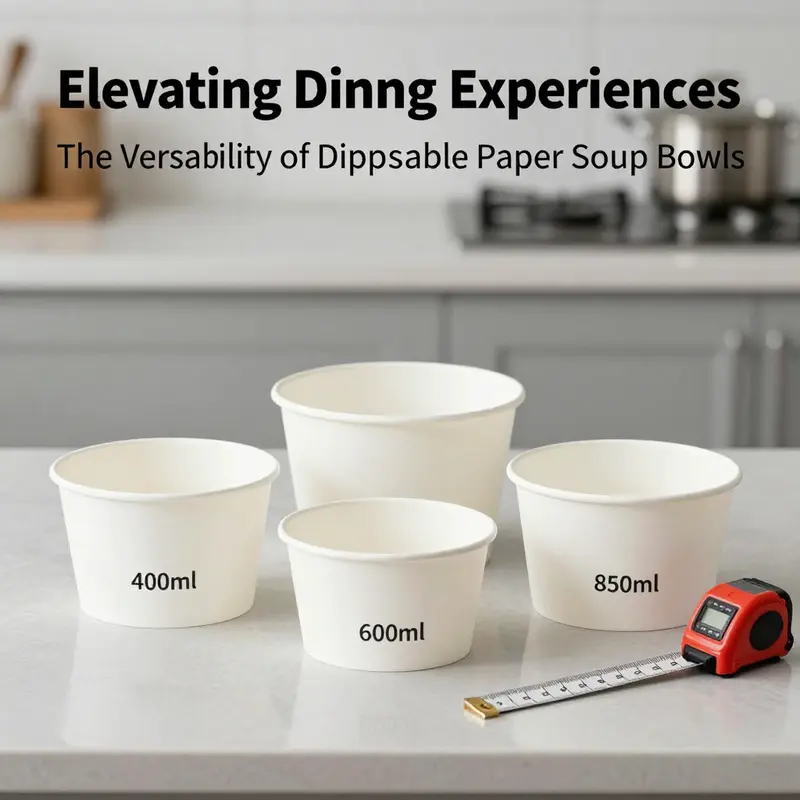
A bowl designed for soup is more than a vessel; it is a quiet choreographer of service, portion control, and customer satisfaction. In the world of disposable paper soup bowls, capacity is the guiding parameter that informs decisions from the back room to the dining table. When a restaurateur or caterer selects a bowl, they are not just choosing a container. They are selecting a tool that influences how heat travels, how guests perceive value, and how a brand communicates itself through packaging. The spectrum of sizes available—from compact singles through to generous, family-size servings—reflects the diversity of dining occasions today. It is this spectrum that enables a single product category to serve intimate meals at home, quick-service outlets, and large gatherings with equal competence.
The most common capacities are arranged in a practical ladder that aligns with how food and drink are experienced. At the smaller end, bowls in the approximate 260 to 390 milliliters range excel as tasting portions, dessert cups, or accompaniment bowls for smaller meals. These mini vessels are not merely scaled-down versions of their larger cousins; they are tuned for portion economics and sensory pacing. A 260 milliliter option, for example, is well-suited to nuanced applications such as a petite serving of frozen dessert or a fruit compote alongside a savory course. The 330 milliliter class, often found in the mid-range family of designs, provides a versatile middle ground that works for modest soups, light salads, or side dishes that accompany a primary meal. In practical terms, this size can reduce leftovers while preserving the integrity of the dining experience, especially in settings where portions are carefully managed to balance cost with guest satisfaction.
Moving up the scale, the middle capacities—roughly 350 to 500 milliliters—constitute the market’s workhorse. This range aligns with the most frequent use cases: a single-serving bowl for hot soups, broth-based noodles, or heartier stews; a standard size for takeaway meals that need to feel substantial without becoming unwieldy in the hand. A common 450 milliliter option, for example, is a natural fit for households that rely on takeout or delivery, delivering enough volume for a satisfying meal while remaining easy to transport. The diameters associated with these mid-sized bowls typically fall in a comfortable corridor that ensures a stable base, predictable stacking, and minimal sloshing during transport. These bowls also often accommodate a lid, an important feature for keeping heat in during transit and for those moments when a customer needs to carry a hot meal across a parking lot or from curbside to desk within a workplace.
At the larger end, 550 milliliters and above are purpose-built for more abundant servings. These bowls are preferred for family meals, casual parties, or outdoor gatherings where guests may expect larger portions or where self-serve setups encourage larger, more forgiving servings. A bowl in the 550 milliliters category typically features a sturdier wall and a reinforced rim, designed to resist bending under the weight of heartier contents like chunky soups, stews with vegetables, or curried dishes. The line advances into the high-capacity zone with bowls rated at 850 milliliters and even up to 1100 milliliters for the most demanding appetites. This tier is not merely about quantity; it is about enabling a service model where guests can build a more complete plate without juggling multiple containers. In many event and catering environments, these larger bowls pair with corresponding lids that help maintain heat and minimize spillage when meals are carried across crowded spaces.
The size story can also be told through the language of diameter. Bowls across the market present a range of diameters that accommodates different food densities and textures. For lighter foods such as delicate soups or broths, noses and rims can taper to prevent heat from escaping too rapidly, while larger diameters support heartier contents that require more surface area to remain evenly heated. Typical diameter bands span from roughly 11 to 14 centimeters, with transitional steps in between. The choice of diameter interacts with the bowl’s thickness, stiffness, and coating to shape thermal performance and handling comfort. A bowl at the 11 to 11.9 centimeter range tends to feel nimble in the hand and pairs well with mid-range capacities for quick-service settings. A 12 to 12.9 centimeter bowl offers a balance that suits many households and takeaway scenarios, while 13 to 13.9 centimeter and 14 to 14.9 centimeter bowls lean into the needs of meals that combine soups with larger portions of vegetables or grains. The pairing of diameter, capacity, and wall thickness creates a stable, confident feel in the hand and on the table.
The design choices extend beyond raw dimensions. Many disposable paper bowls are built with a composite structure: food-grade paperboard reinforced with a water- and oil-resistant coating. The coating, often a polyethylene or a compostable PLA layer, is not merely a barrier to leakage; it is a critical factor in heat retention, aroma preservation, and the overall mouthfeel of the dining experience. The coating helps to prevent fat absorption, reduces moisture within the bowl that can soften the paper, and contributes to a clean, presentable appearance even as steam rises from the surface. From an engineering standpoint, the challenge is to balance rigidity with flexibility. A bowl must resist deformation when full, yet it should not feel like a rigid clamshell that distracts the guest with stiffness. The resulting structure is a product of careful material science: the paperboard thickness, the coating’s barrier properties, and the method of forming the rim and base work in concert to create a container that stands up to practical use.
Coatings themselves deserve attention beyond their protective role. When a PE coating is used, it generally delivers robust water resistance and a familiarity of feel. PLA coatings, marketed as more eco-conscious, promise compostability under the right industrial conditions. However, the actual end-of-life story for any disposable bowl depends on the local waste stream and facilities available. In practice, brands frequently label bowls with terms like “environmentally friendly” or “biodegradable,” yet the real impact hinges on certification, testing standards, and the presence of appropriate composting infrastructure. This nuance matters not only to sustainability-minded consumers but also to operations teams seeking to communicate clear messages to guests about responsible packaging. The materials science behind these bowls is a quiet, essential driver of how well a bowl preserves food quality, how it behaves in cold or hot conditions, and how it contributes to a brand’s sustainability narrative through transparent labeling and consistent performance.
Portion control and branding intersect in meaningful ways within this product family. For establishments that rely on large volumes of takeaway service, the ability to standardize portions through a defined range of capacities brings operational predictability. Training servers to recognize which bowl fits which dish reduces miscommunication and returns, while enabling cooks to portion ingredients more consistently. At the same time, many bowls can be printed or decorated to convey branding or seasonal messaging. The opportunity to customize is not simply cosmetic; it can reinforce what customers already know about a venue’s values and aesthetic. In practice, customization can be achieved through surface printing on the exterior, while the interior remains clean and ready for food contact. The choice to customize is frequently balanced against cost, MOQ, and lead times, but for many businesses it becomes a channel to extend the menu’s story beyond the plate and into the packaging.
A practical takeaway for planners and operators is to consider the full lifecycle of the bowl, from the moment a guest receives it to the moment it is disposed of. The lid, when paired with larger or medium-sized bowls, adds a layer of heat retention and spill resistance that is highly valued in drive-throughs, curbside pickups, or any service where customers are on the move. For cold or room-temperature offerings, the lid still provides containment that protects flavors and prevents accidental drips during transport. The lid’s design matters as much as the bowl’s. A secure fit, a comfortable lip for sipping if needed, and an unobtrusive silhouette all contribute to the user experience. When the need to preserve heat is less pressing, the absence of a lid can streamline access to the contents, reduce condensation on the lid, and simplify the break-down of the packaging after use. In one sense, the choice between lid and no lid mirrors the broader decision between convenience and presentation—each path serving different service models and guest expectations.
The breadth of options in capacity, diameter, and coating is not merely a catalog of possibilities; it represents a flexible product system that supports diverse foodservice realities. A coffee-and-dessert corner that emphasizes small, elegant servings will lean into the 260 to 390 milliliter range with a refined, clean presentation. A family-style takeout counter or a festival stall might rely on the larger 550 to 850 milliliter bowls to offer generous servings with robust packaging to protect the meal during transit. Catering for a festival or a party can also entail a mix of lid-equipped and lid-free bowls, chosen to optimize throughput and maintain warmth or coolness, depending on the menu. The exact proportions of the mix will depend on the expected use patterns, the geographic climate, and the anticipated length of time between purchase and consumption.
In reflecting on the market dynamics of disposable paper soup bowls, price remains a practical consideration that travels alongside capacity. Market data from recent years shows a wide price corridor, rising with capacity, coating complexity, and customization. The economics of large orders can tilt in favor of kilopots and dispatchable quantities, while smaller operations may value the flexibility of a looser MOQ and quicker turnaround. The pricing reality reinforces the importance of informed selection: choosing a bowl is not just picking a size, but choosing a packaging solution that aligns with the menu, the service model, and the guest’s expectations of warmth, convenience, and responsibility.
The journey through capacity and size ultimately returns to the core experience of dining—how a guest feels when interacting with the packaging that carries their meal. The right bowl does not merely hold soup; it conveys care for the guest, confidence in the kitchen, and a clear signal about the sustainability choices a business makes. It is a subtle interface between the food on the plate and the story the brand tells about its packaging. As the range of options continues to expand, the challenge lies in balancing function with form, cost with quality, and speed with stewardship. The capacity spectrum, documented through real-world use in markets around the world, demonstrates that a well-chosen disposable paper bowl can support efficient operations, maintain food integrity, and contribute to a durable, consistent guest experience across diverse service settings. For those seeking practical examples of lid-equipped variants that pair well with larger portions, consider reviewing a representative model that is designed to accommodate both the heft of a substantial meal and the practicality of takeout transport. In practice, a lid-equipped variant like a larger bowl helps ensure warmth and mess-free transport for busy service contexts. https://greendispopack.com/product/disposable-kraft-paper-soup-bowl-with-lid/. In the end, the measure that matters most is not the bowl’s size alone, but how well it integrates with the dish, the service workflow, and the values a business aims to project through its packaging choices.
External resource: https://detail.tmall.com/item.htm?id=758137247444
在便捷与环保之间承载汤香——一次性纸汤碗的应用场景与环保承诺
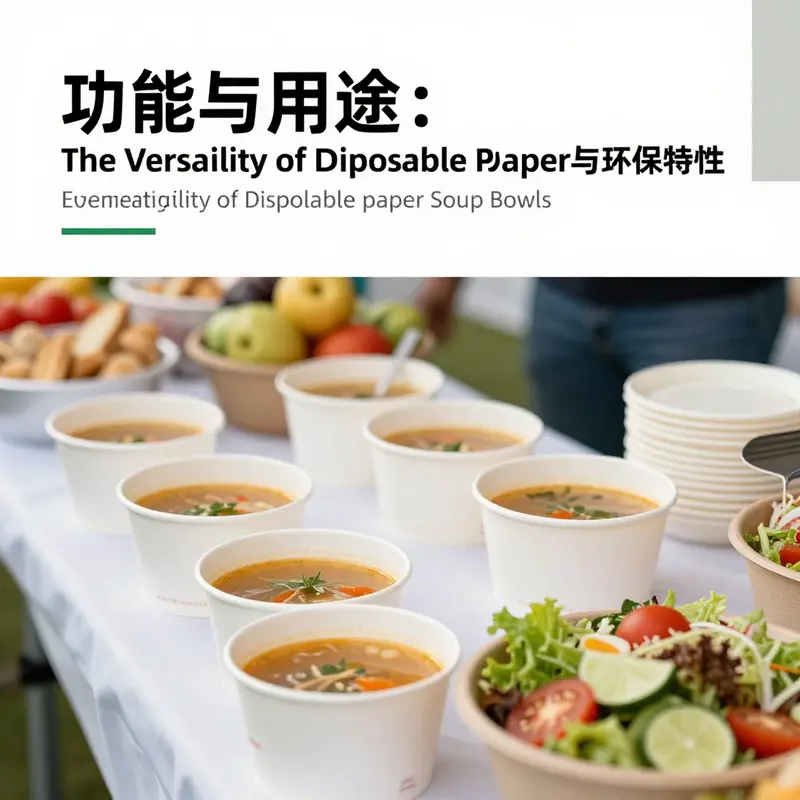
在繁忙的餐饮现场,纸汤碗常常以低调却不容忽视的方式出现在顾客眼前。它们并非单纯的盛装容器,而是连接厨房与前台、门店与家庭、短暂聚会与长期环境目标的桥梁。它们的存在让热汤、炖菜甚至冷食在从炉前到餐桌的旅程中保持清洁、温度与风味的基本条件,同时将一次性用品的便利性嵌入日常生活的节奏之中。对制造商、餐饮业者以及消费者而言,理解这类容器的功能与用途,以及它们背后的环保诉求,意味着在满足即时需求的同时,做出更具可持续性的选择。本文将把目光投向一次性纸汤碗的应用场景及其环保特性,揭示它在现代生活中的独特价值,以及在未来包装实践中所扮演的角色。
从材料与结构的角度出发,这类汤碗通常以食品级纸板为主,被覆以防水、防油的涂层,以确保在盛装热汤或含水液体时不会发生渗漏。常见的涂层材料包括聚乙烯(PE)或可生物降解的聚乳酸(PLA)。涂层不仅提升了容器的耐用性,还赋予其一定的耐热性与保温性。正因如此,这些碗在从家庭餐桌到街头摊位的多种场景中,都能保持汤品的温度与口感,同时降低渗漏带来的风险。容量方面,市场提供多种选择,以适应不同用餐需求。常见的如850毫升、400毫升、600毫升等规格,设计时不仅考虑到一次性使用的便利,还考虑到单人份与多人分享的场景差异。碗的重量、握持感与封口的工艺,都是工程师在提升用户体验时必须权衡的要点。
应用场景的广度,是这类产品最具吸引力的特征之一。对于餐饮行业而言,纸汤碗是快餐连锁店、食堂、外卖服务等场景的理想载体。它们的轻便特性,帮助配送环节高效运转,降低了人力成本与清洗压力。当顾客在路上、办公楼内或校园内需要快速就餐时,开箱即食的便捷体验成为提升用户满意度的重要因素。与此同时,家庭聚会、野餐、露营和节日庆典等户外与家庭场景也依赖这类一次性用品的便捷性。无需携带和清洗大量餐具,配合合适的包装与储运设计,碗具可以在短时间内实现端上桌、分发和清理。此类情境不仅强调便利,更涉及卫生与安全的管理。对于医院、学校、临时搭建的大型活动场地等特殊场所,纸汤碗的使用还能降低重复使用所带来的交叉污染风险,并简化废弃物的清理与处置流程。随着节庆消费的兴起,越来越多的商家也推出带有“福”字、生肖图案或吉祥寓意的节日主题设计,作为增强氛围与提升顾客体验的视觉元素。
环保特性则是这类产品的另一大核心诉求。高质量的纸汤碗多采用食品级原生木浆纸或经过认证的环保甘蔗浆纸作为原材料,这些材料在自然条件或适宜的堆肥环境中更易分解,能够有效降低传统塑料容器带来的环境负担。与此同时,涂层材料的选择也直接关系到回收与降解性能。PE涂层提供良好的防渗和耐水性,但在某些回收体系中并不理想;PLA涂层则更具生物降解潜力,且在一定条件下有望实现堆肥化。不过,消费者层面的理解仍需与区域回收体系的实际能力相匹配,以避免“误投”导致的资源浪费。因此,一些高端或专注于环保的产品会将材料选择、涂层类型以及回收方案清晰标注,帮助餐饮业者和家庭用餐者更好地对接回收链路。
在材料与环保理论之间,市场实践也呈现出多样化的尝试。部分高端系列会探索玉米淀粉基生物塑料作为内衬或涂层,以进一步提升可降解性与食品安全性。这些尝试并非全然替代传统涂层,而是在综合性能、成本与环境影响之间寻求平衡。尽管一次性用品在资源消耗方面天然具备挑战,但通过选择真正可降解或可堆肥的纸制产品,消费者能够在享受便利的同时,最大限度降低对环境的长期影响。换言之,环保不仅仅是最终的处置结果,更是一种从材料选取、生产过程到日常使用的全链条优化思考。行业中的教育与透明信息,也是推动消费者做出更环保选择的重要因素。
在实际采购与使用层面,价格与供货条件也直接影响着企业与家庭的决策。市场数据指出,一次性纸汤碗的价格区间在每只0.029美元到0.305美元之间,受容量、最小起订量(MOQ)、是否定制印刷以及采购数量等因素影响。大批量采购(如数万件级别)常伴随显著折扣,企业可以据此规划长期外包与日常补货的成本结构。在选择时,品牌信誉、材料认证、涂层类型与最终处置方案的清晰度,往往成为比单价更重要的决定因素。许多供应商也提供定制印刷的服务,使企业在包装上实现品牌传达与节日主题的视觉联动。这一环节的设计不仅影响美观度,也关系到消费者对食品安全的信任与认知。
在探讨应用场景与环保特性时,不能忽视设计与使用体验的互动关系。碗的结构设计需要兼顾抗冲击性、密封性与热稳定性。工程角度的关注点包括:单位面积的抗冲击性是否达到或超过特定标准(如≥0.7),密封性是否能有效防止汤液泄露,热稳定性是否足以承受盛汤后的温度变化,以及在运输、分发和就餐过程中的耐用性。纸张与涂层之间的复合结构,是实现强度与功能平衡的关键。与此同时,定制化印刷与极简的品牌标识设计也成为企业在激烈市场中保持差异化、提升顾客记忆度的重要手段。
在具体选型与场景搭配上,外送、自取、宴会和临时活动等场景往往需要不同的解决方案。一些商家倾向于带盖设计,以便外送过程中的密封与保温;另一些场景则要求更强的耐热性与密闭性,以应对汤品在运输过程中的震动与温度波动。无论是以单独的汤碗形式出现,还是与其他包装组件如盖子、托盘、内衬等组合使用,纸汤碗都在提升食品安全与用户体验方面发挥着不可忽视的作用。对于餐饮业者而言,选择具有清晰材料标识、符合区域回收体系的产品,是实现供应链可持续性的重要一环。对于家庭与活动组织者而言,了解现场的废弃物管理流程、以及产品是否具备可堆肥或可回收性,是确保包装环境友好性的关键。
除了常规场景外,市场也在探索如节日主题设计等“情感化包装”的路径。通过在碗身呈现节日元素、吉祥寓意或季节性图案,商家能够将包装转化为场景的一部分,提升聚会的仪式感与互动性。尽管美观性与品牌传播的需求不断提升,但设计团队也需关注高温下墨水的稳定性与色彩保持,以避免在食用前出现褪色或转印的问题。这些挑战促使制造商在印刷工艺、涂层材料的选择以及热管理方面持续改进,以确保在不同场景下都能保持良好的使用体验。
对于消费者而言,一次性纸汤碗带来的并不仅仅是便利。它们在某种程度上也是卫生与安全的象征,特别是在需要快速处理大规模就餐需求的场景。医院、学校、临时活动场地等环境往往对卫生与安全有更严格的要求,纸汤碗的使用可以降低重复使用导致的细菌传播风险,同时简化清洁与消毒流程。然而,这一便利性也要求全链条的合规性与透明度——包括材料来源、涂层成分、回收路径与最终处置方式。把“可持续”作为设计与采购中的核心原则,便能让消费者在享受即时满足的同时,也参与到环保目标的实现中。
在阅读上述要点时,读者可能会注意到一个具体的购买与信息传递案例:某些带盖的纸碗系统在外卖与自取场景中的应用,通常伴随可视化的使用说明与回收指引。此时,企业与供应商的协同显得尤为关键:如果商家清晰标注材质、涂层类型及回收选项,并提供可追溯的供应链信息,消费者就更容易在日常使用中做出符合环保理念的选择。如下文所述的一个实际可行的行业组合,即便在成本层面需要权衡,也能在品牌传播和环境影响之间实现平衡。为了便于实践中的参考与搭配,读者可查看一个可用于包装与外部设计的整合解决方案链接,其中包含面向食品包装的带盖纸碗等产品的说明与采购信息,便于将理论转化为具体操作: disposable kraft paper bowl for food package with lid。
在总结层面,纸汤碗的应用场景与环保特性并非孤立的设计选择,而是一种对现代生活节奏与可持续发展目标共同回应的实践方式。它们以多样的容量、可靠的防渗与热稳定性、以及对材料和回收体系的透明性,支撑着从日常用餐到大型活动的广泛需求。对餐饮业者而言,选择合适的碗,不仅关系到物流效率与食品安全,更影响到品牌形象与顾客信任的建立。对消费者而言,理解包装材料与回收路径,有助于在享受便利的同时,参与到更广泛的环境治理中。未来,随着生物降解涂层、可堆肥材料和回收体系的进一步成熟,这类碗具的环境绩效有望显著提升,成为“可持续包装”框架中的一个更具影响力的组成部分。
外部资源提示:了解食品包装材料的法规与安全性,可参考以下权威机构的公开信息。 https://www.fda.gov/food/packaging-food-contact-substances
Markets in a Disposable Bowl: Economic Realities and Themed Editions of Paper Soup Bowls
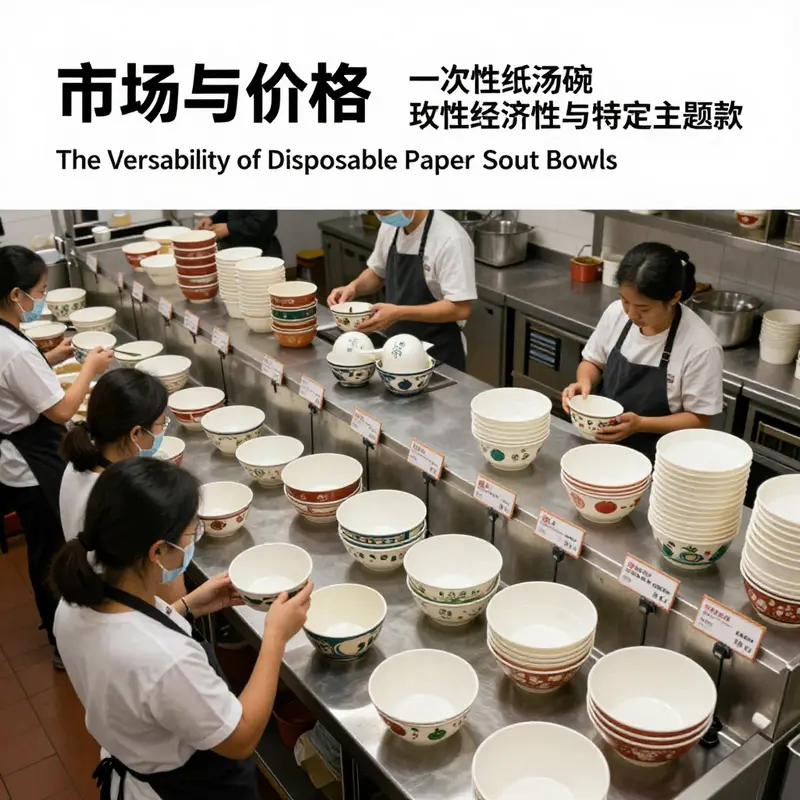
The market for disposable paper soup bowls sits at a curious intersection of practicality, perception, and planning. On the one hand, these bowls are a simple, almost invisible workhorse of modern dining — compact, lightweight, and engineered to bridge the gap between server and sustenance without complicating cleanup. On the other hand, their prices, coatings, and decorative possibilities reveal a rich chain of decisions that affect how restaurants, caterers, and households choose to feed people, one bowl at a time. When you survey the market, you encounter a spectrum rather than a single story. You find base models that emphasize cost efficiency, and you also encounter premium variants that promise enhanced performance, branding potential, and a deeper link to the events or brands they represent. The economics behind this spectrum hinge on several factors: material choice, structural design, order quantity, and the degree to which an institution wants to trade a little extra upfront cost for savings in labor, logistics, and post use handling. The numbers tell the tale in a way that both operators and consumers can understand, especially when we translate them from the language of price tags into the language of decision making at the point of purchase and during event planning.
Across markets, cost is the first driver. In the Chinese market, for example, the per piece price ranges from about ¥0.49 for basic, unembellished Kraft paper bowls to roughly ¥0.82 for thicker, coated varieties that are tailored for soup or noodle applications. These figures are typically quoted in wholesale packaging, such as 50 or 1000 pieces per carton, because large orders unlock the bulk discounts that make these items appealing for busy kitchens. The economics scale quickly with volume. For a fast casual restaurant or festival pavilion serving hundreds of bowls daily, the per unit savings compound, reducing the total cost of ownership when you factor in labor and energy saved by not washing and drying compliant carts and equipment after meals. Outside of these regional price anchors, global platforms like major online retailers reflect a similar logic in dollar terms. A 16 ounce disposable paper bowl on an international marketplace, designed for hot foods and with a reliable leak prevention profile, tends to land in a reasonable price band for bulk purchases, aligning with what operators expect when budgeting for high volume service.
Material choices sit at the heart of the price and performance equation. The base of most disposable paper bowls is a food grade paperboard, which is then coated with a barrier layer to resist liquid seepage and grease. The coatings most commonly cited are polyethylene and polylactic acid. PE coatings are known for robust moisture resistance and heat stability, which translates into reliable performance for hot soups and dense stews. PLA coatings, marketed as a more sustainable, compostable option, appeal to brands seeking to align with environmental promises and consumer expectations around responsible packaging. The tradeoff between these coatings often surfaces in price: PLA treated bowls tend to sit at a premium due to material costs and the processing steps required to meet compostability standards. For operators, the decision is not strictly cheaper is better. It is, in fact, best fit for purpose. A brunch buffet that cycles bowls quickly may prioritize a straightforward leak proof solution with a low chance of oil bloom on the surface, while a festival with a long warming tent might prefer coatings that improve heat retention for a longer period, even if the upfront price is a touch higher.
Capacity and geometry also shape the perceived value of these disposables. A common capacity like 850 milliliters serves as a middle ground for traditional soups and broths, offering enough volume without pushing the outer dimensions too far. Variants in 400 milliliters or 600 milliliters provide options for appetizers, stews that arent broth based, or salads that accompany a hot main. The design philosophy behind these options balances portability, stackability, and insulation. From an engineering perspective, a bowl must withstand normal handling without distortion while preserving its seal against leaks and maintaining a degree of thermal performance. In many cases, a double wall or insulated construction can be found in higher end models that market themselves as suitable for parties and catered events where the user expects a longer heat retention and more comfortable handling. Such features, while they do not always appear in every SKU, influence the final price and the consumers willingness to pay for a sense of reliability and brand alignment.
The market also rewards customization, a factor that can shift the economics in meaningful ways. Customization ranges from decorative prints to full branding, and it is where the business case often becomes twofold: first, it supports marketing and brand recognition; second, it can reinforce a consumer memory of a special event or promotion. The capacity to print or emboss logos, slogans, or seasonal motifs turns a practical eating vessel into a moving advertisement and a tangible reminder of a brand experience. In practice, this means that the same basic bowl can be sold at different price points depending on whether the buyer wants standard, plain packaging or a customized, visually distinctive version for weddings, festivals, or corporate gatherings. The premium tier, which includes handling and print setup for unique graphics, tends to require minimum order quantities that reflect the production shift from a generic run to a dedicated, branded run. In many supplier ecosystems, those MOQs start to compound the discount curve, turning an item with a modest unit price into a strategic investment for a particular event or season.
The demand for special editions, in particular around holidays and culturally meaningful moments, adds another dimension to pricing. The market spawns seasonal and festive iterations such as Halloween inspired themes with dark palettes and ghostly motifs, or red and gold designs meant to evoke good fortune and celebration for lunar new year gatherings. These decorative lines provide a dual value: they elevate the dining experience and give hosts a ready made theme that reduces the planning overhead for décor and tableware. Of course, these thematic bowls carry cautions—inks and dyes must be robust enough to survive serving temperatures, and certain finishes may experience color bleed if exposed to high heat or prolonged contact with liquids. Such caveats remind buyers to balance aesthetic ambitions with practical performance, an equilibrium that defines the overall economic calculus of themed editions.
Beyond aesthetics and material science, the regulatory and safety landscape underpins the cost structure as well. In many markets, including where these bowls are widely used, compliance with food contact materials standards is essential. A bowl that claims to be compostable or biodegradable often carries certifications that validate its claims and potentially expand its usable markets, especially for event planners who want to demonstrate sustainability to attendees and sponsors. From a procurement standpoint, the presence of industry certifications and regulatory approval can reduce risk for buyers and, in turn, support more stable pricing over time. Brands that invest in such compliance are not merely adding value for the end consumer; they also insulate their supply chain from legitimacy concerns and regulatory shifts that could otherwise disrupt a large catering operation during peak seasons.
In practical terms, the economic case for disposable paper soup bowls rests on a blend of simplicity and sophistication. The simplest business model is to stock a basic, low cost line that reliably performs in typical service windows. The more sophisticated model adds a layer of branding and category differentiation through themed designs and custom printing, which can command a higher price and unlock new revenue streams during weddings, corporate events, or seasonal promotions. The decision, again, is not simply about the per unit price but about the total cost of ownership. If a branded bowl reduces the need for separate signage, tableware rentals, or post event cleaning logistics, its incremental cost can be offset by the improvements in throughput and customer perception. Retailers and caterers who rigorously map their service flow will often find that even modest improvements to handling, presentation, and brand coherence translate into meaningful gains in satisfaction, repeat business, and the ability to command a premium for a complete dining experience.
From a consumer perspective, the value proposition often centers on convenience and taste continuity. A consumer who sees a bowl configuration that matches a restaurant’s identity or a festival’s theme may feel a stronger sense of cohesion in the overall experience. The perception of value is not merely about the container’s capacity or its resistance to leaks; it is about how well the packaging communicates care, quality, and a thought through dining narrative. This is where the idea of themed editions becomes more than a marketing gloss. It is a functional signal that a provider is attentive to context, whether the setting is a house party or a large outdoor event. The marketing narrative around these bowls packaging echoes a theme and color story that aligns with the menu, a branding opportunity that is integrated with the service flow, and can justify premium charges that some customers are willing to accept for a more cohesive event footprint.
The procurement strategy for these bowls blends forecasting with flexibility. Operators increasingly plan for variability in demand, especially around holidays and seasonal promotions. This means negotiating MOQs that reflect a balance between the risk of stockouts and the cost of carrying excess inventory. It also means building relationships with suppliers who can provide both standard runs and branded runs with reasonable lead times. In practice, this might translate to a supplier ecosystem where a base line of simple, cost effective bowls ensures day-to-day operations, while a smaller subset of the stock is reserved for high margin, themed runs. The ability to print or customize, and the willingness of suppliers to accommodate modular designs or different coatings, becomes a strategic asset for a business looking to scale up service without compromising the customer experience.
The broader market patterns hint at an ongoing shift toward sustainability without sacrificing convenience. The field is gradually gravitating toward coatings and papers that offer compostability and reduced environmental impact, even as demand for reliable leak protection and heat retention remains high. This tension pushes suppliers to innovate within the constraints of regulatory expectations and consumer preferences. In many cases, the result is a tiered offering: a fundamental, low cost bowl built for everyday use, a mid tier option with improved insulation and leak resistance, and a premium tier that integrates branding, theme specific artwork, and certified sustainability. For a modern operator, the strategy is not to chase a single best option but to assemble a palette that aligns with different occasions, menus, and audiences. In this sense, the disposable paper soup bowl becomes not merely a container, but a flexible tool in the broader orchestration of food service a tool that can be tuned to optimize throughput, brand storytelling, and ecological responsibility as part of a coherent service design.
Within this evolving landscape, one practical pointer stands out for those looking to leverage these bowls strategically: the choice of partner for customization and bulk supply matters as much as the bowl’s technical specs. A supplier with a robust customization pipeline and dependable lead times can make the difference between a successful event and a stressful one. If you are considering branding, you might explore options for logos and decorative motifs that align with your program color scheme and messaging. The branding pathway offers a route to scalable branding while maintaining cost controls. The ability to plan in advance and stage orders across different events can preserve budgetary flexibility and reduce last minute scrambles that drive up costs and risk.
Ultimately, the market for disposable paper soup bowls reflects a sophisticated balancing act. It weighs unit prices against total cost of ownership, it weighs branding and theme against operational practicality, and it weighs sustainability against performance. The most resilient buyers recognize that the right balance changes with context. In a bustling restaurant, reliability and quick turnover may trump elaborate prints. In a mid sized festival, a branded, themed bowl can reinforce the event’s narrative and elevate guest perception. In a family reunion, a simple but sturdy bowl with a festive touch might be enough to create a memorable, shareable moment. Across these scenarios, the core of the decision remains constant: choose a vessel that reliably contains the meal, protects the user, supports the service flow, and resonates with the occasion. The economics then follow, not in isolation but as part of a broader strategy to deliver warmth, efficiency, and meaning through every serving.
External resource: For a regulatory context on food-contact materials and safety standards, see the FDA guidelines on food-contact materials and apparels online at https://www.fda.gov/food/food-contact-materials
Final thoughts
Disposable paper soup bowls represent an innovative solution for food service providers looking to balance quality, sustainability, and customer appeal. As illustrated throughout this article, the core features and diverse applications not only meet practical needs but also cater to the growing demand for eco-friendly options. Understanding their specifications and market dynamics further empowers food operators to make informed decisions that enhance their offerings. By integrating these versatile bowls, businesses can not only elevate the dining experience but also align with consumer preferences for sustainable practices.