
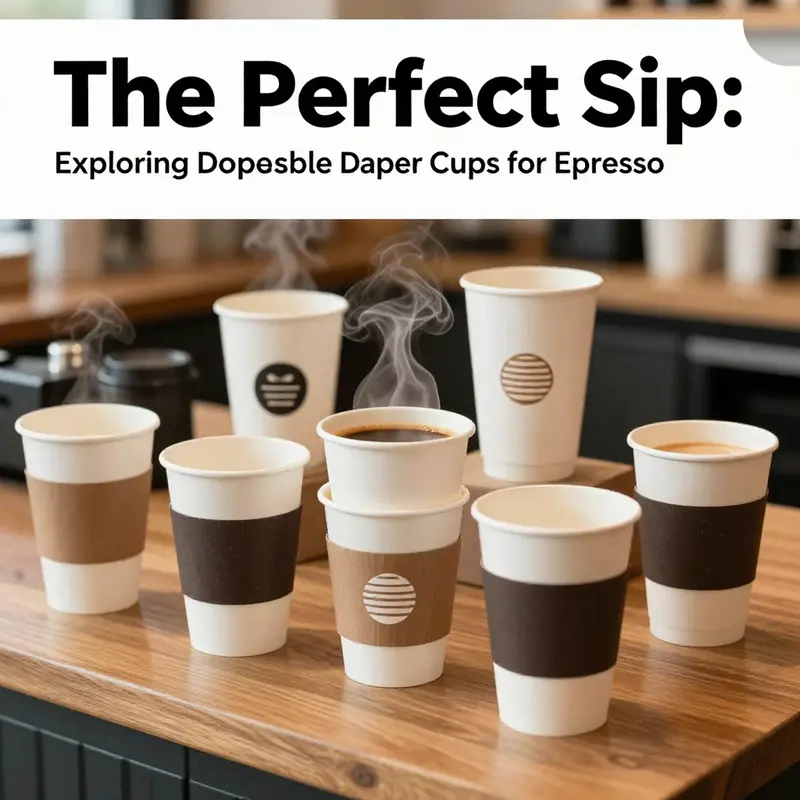
Disposable paper cups for espresso are revolutionizing how beverage industries serve their customers, delivering both convenience and quality in every sip. From bubble tea shops to corporate events, these cups are tailored to meet specific needs while ensuring safety and sustainability. This article delves into the key features that define high-quality disposable paper cups for espresso, explores customization options that enhance brand visibility, examines the sustainability of these cups in today’s environmentally conscious market, analyzes the economic impact of using disposable options, and uncovers the latest market trends driving this sector forward.
Essential Features That Make Disposable Paper Cups Ideal for Espresso Service
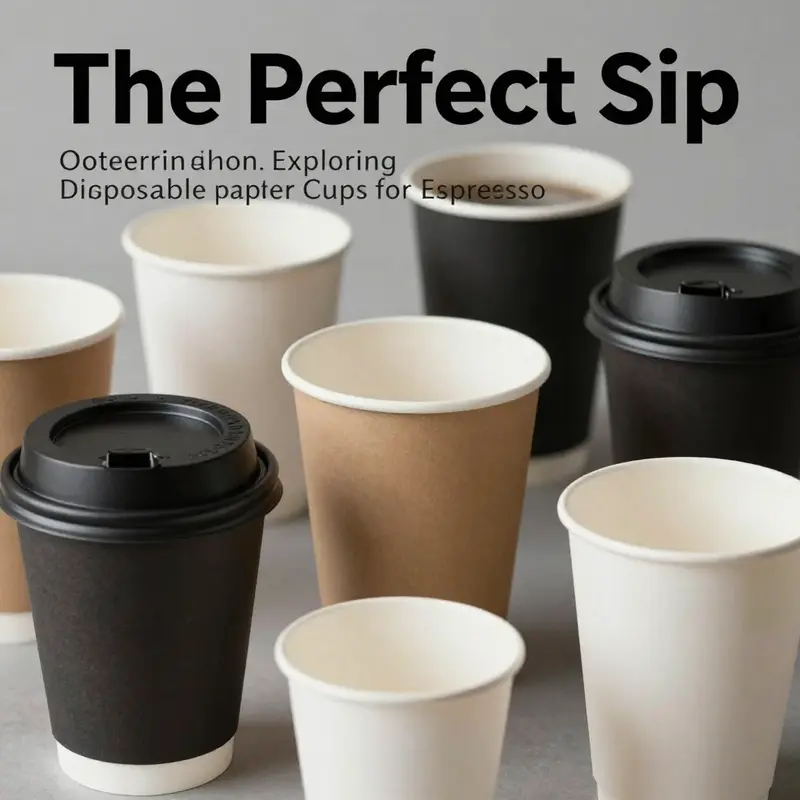
Key performance and design traits determine whether a disposable paper cup works for espresso. A great espresso cup must protect aroma, preserve temperature, feel comfortable in the hand, and support branding and sustainability goals. This chapter explores the features that matter most, explains how they interact, and offers practical guidance for selecting cups that elevate espresso service.
At the core is thermal management. Espresso is served hot and in small volumes. A cup that transfers heat too quickly scalds the customer and loses crema. Double-wall construction and corrugated ripple walls are the most common responses. Both add an air layer that slows heat flow. Double-wall cups sandwich a second paper layer to create insulation without extra accessories. Ripple-wall cups use a textured outer layer that increases the air gap and improves grip. Either approach delivers two benefits: the outer surface stays comfortable to hold, and the espresso inside retains its temperature and taste for longer.
Material safety follows closely. Reliable cups are made from food-grade paper with an internal barrier. A polyethylene (PE) lining is typical and effective at preventing leaks. For venues favoring reduced plastic, there are barrier coatings and compostable linings available that meet food-safety standards. The important point is to choose cups with proven compliance for hot liquids. That avoids flavor tainting and any potential health issues when hot espresso contacts the inner surface.
Ergonomics matter even for small cups. An espresso drinker expects a confident lip feel and spill resistance. Many espresso cups include a tapered lip, or a slightly rolled rim, to encourage controlled sip flow and reduce drips. Cup diameter and rim thickness influence perception of the drink as well. A sturdier rim with a smooth finish feels more premium and supports focused tasting. For takeaway, secure lids that snap on tight are essential to prevent spills during transport.
Durability and leak resistance are practical requirements in busy service environments. Espresso shots are often paired with small serving trays, napkins, or sugar sachets. A cup must hold hot liquid without softening, warping, or leaking during short periods of transport. Manufacturers address this with stronger paper grades and improved sealing at the seam. When ordering, look for cups rated for hot liquids and tested under realistic conditions.
Sustainability now shapes purchasing decisions. Certifications like FSC indicate responsible sourcing of the paper fiber. Compostable options exist, but buyers should check local composting infrastructure. Not all municipal systems accept coated paper cups, even if they are labelled compostable. Recyclability is another consideration: single-wall paper cups with a thin plastic lining can be recyclable in select facilities, while some compostable-labeled cups require industrial composting. Understand the end-of-life options in your area before committing. Choosing a certified supplier and verified certification labels reduces greenwashing risk.
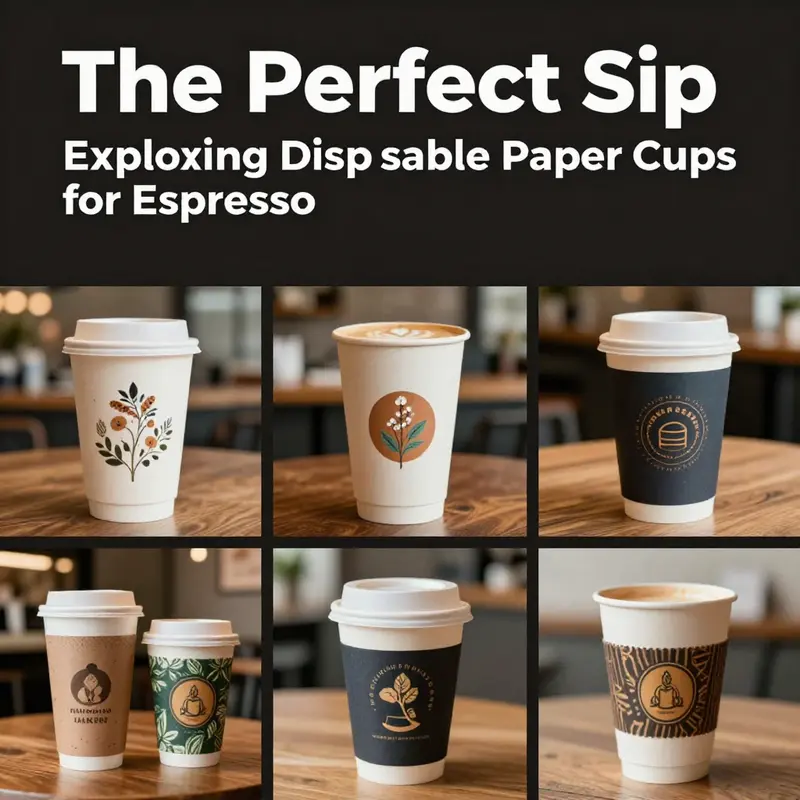
Branding and customization provide a clear business advantage. Espresso cups are a moving billboard when customers walk out. Flexographic printing is commonly used to apply logos and artwork economically at scale. Options include full-wrap prints, spot colors, and foil accents for premium looks. For espresso specifically, smaller sizes—often 6oz to 8oz—are most relevant. Custom printing supports consistent brand presentation across sizes and can be aligned with seasonal campaigns or promotions. For operators who need both visual impact and budget control, ordering pre-printed stock in a corporate color with a simple logo can deliver good results.
Size and portion control are operationally important. Espresso servings are small, and mismatched cup sizes create waste or inconsistent experiences. Common espresso capacities include 3oz to 4oz for single shots, and 6oz to 8oz for shot plus a small addition. Offering the right stock sizes simplifies barista workflow, reduces waste, and enhances customer satisfaction. For mixed beverage menus, stocking two or three sizes covers most needs. Lids and sleeves should match these sizes for a polished service.
Accessories complement the cup. Paper lids designed for hot drinks, recyclable cup sleeves, and molded cup carriers contribute to safety and convenience. Corrugated sleeves add insulation without increasing paper thickness. Biodegradable lids are available, but check fit compatibility with your chosen cup model. Standardized fittings reduce returns and customer complaints.
Cost and procurement scale influence product choice. Cups sold in bulk offer lower unit costs, but lead times and storage needs increase. Purchasing from suppliers that offer a range of sizes and lid options simplifies inventory management. When ordering custom-printed cups, expect minimum order quantities. For many businesses, pre-printed stock plus a small run of custom-branded cups for promotions hits the right balance between cost and brand exposure.
A final and often-overlooked factor is the sensory experience. The tactile feel of the paper, the sound when setting a cup down, and the way the cup presents the espresso visually all affect perceived quality. Thicker paper conveys heft and durability, while a crisp rim supports focused sipping. The color and finish of the cup—matte, gloss, or kraft—also shape perception. Kraft finishes project eco credentials but can limit print vibrancy. White or coated exteriors show graphics vividly but may raise recycling questions.
Selecting the right cup involves trade-offs. If insulation and a premium feel are priorities, double-wall or ripple-wall options are ideal. If recyclability and compostability are more important, choose certified compostable linings and verify local processing facilities. For strong branding, invest in flexible printing options and size consistency. Operationally, match sizes to your menu and coordinate lids and sleeves to reduce errors.
Practical tips for operators: test samples before buying in bulk; request proof of certifications for sustainability claims; check lid compatibility and perform basic heat transfer tests; and align cup sizes with espresso portioning standards. Consider a staged roll-out for custom-printed cups to monitor customer response and material performance.
For a hands-on example of available standard sizes and configurations, suppliers list common espresso-friendly options such as 7oz and 8oz single-wall and double-wall cups. For sourcing and customization references, see an example product listing that showcases custom logo options, multiple sizes, and lid compatibility: https://www.alibaba.com/product-detail/Custom-Logo-Espresso-Coffee-Cup-Design_1600595417503.html
For a ready option that balances cost and environmental considerations, review the supplier page for the best-price 8oz double plastic-free single-wall paper cup and related accessories. This resource can help you compare material choices, lid options, and minimum order quantities to match your espresso service needs: https://greendispopack.com/product/best-price-8oz-double-plastic-free-single-wall-paper-cup/
Choosing the right disposable cup for espresso is not purely technical. It blends hygiene, temperature control, branding, sustainability, and customer experience. Prioritize features that align with your service model, test samples under real conditions, and confirm end-of-life handling to ensure cups support both your coffee quality and operational goals.
Designing a Distinctive Espresso Cup: Customization That Balances Brand and Function
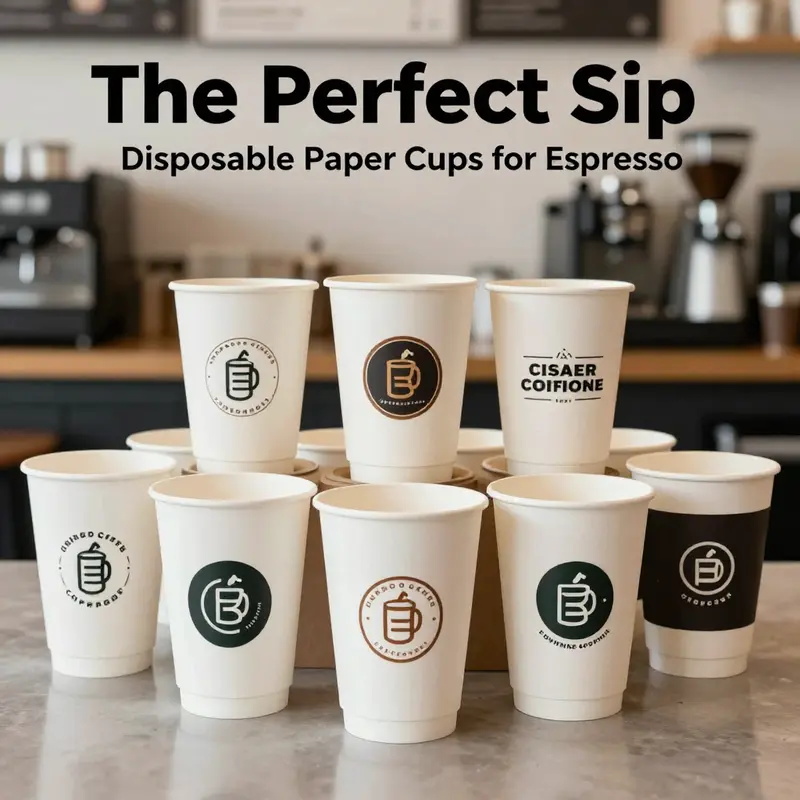
Customization for disposable espresso cups is where brand identity meets practical performance. A well-chosen custom cup does more than carry espresso; it protects the shot, preserves temperature, reduces waste, and advertises your business with every handoff. When planning customization, consider three intertwined priorities: the sensory experience for the drinker, the technical requirements of hot concentrated coffee, and how printed design amplifies your brand. These priorities shape choices for size, material, construction, printing, and packaging.
Start with size and shape. Espresso servings are concentrated and often served in smaller volumes than other coffee drinks. Standard sizes commonly used are 7–9 ounces for single servings and 12 ounces for larger variations. Choosing the right size influences extraction perception, portion control, and waste. A cup too large diminishes crema and mouthfeel; a cup too small limits marketing real estate. Custom molds allow subtle shape changes that improve sipping comfort. For example, a slightly tapered lip or a narrower rim centers aroma toward the nose. Those ergonomic refinements matter for concentrated coffees.
Material selection governs safety and feel. Food-grade paperboard with a polyethylene lining remains the common baseline because it reliably resists leakage and heat transfer. For greater insulation, manufacturers offer double-wall or corrugated (ripple) constructions. Double walls trap air between layers, protecting hands without added sleeves. Corrugated walls add tactile grip and a premium look. Thickness adds perceived quality but also raises material cost and waste. Many cafés balance that by offering double-wall cups for hot drinks and single-wall for smaller, shorter-lived servings.
Coatings and lining types are a vital customization area. Standard PE linings are dependable and recyclable in certain systems. Compostable linings made from plant-based polymers are available too, but they require specific industrial composting to break down properly. If sustainability forms part of your brand promise, specify certifications such as FSC for paper sources and third-party verification for compostability. These credentials can be printed on the cup as a subtle trust cue, helping customers understand your choices.
Printing and finish determine how effectively your brand translates onto the cup. Flexographic printing, commonly used for paper cups, supports multiple spot colors and offers crisp results for logos and patterns. When color accuracy matters, provide Pantone color codes and allow for press proofs. Metallic foil stamping and embossing create striking accents, but these techniques add cost and slow production. Matte and gloss varnishes also change how ink appears and how a cup feels in hand. A matte finish suggests craft and warmth; a gloss finish gives a cleaner, brighter look.
Designing for function means thinking beyond aesthetics. Ensure artwork accounts for practical constraints like the cup seam and lid fit. Leave adequate bleed and safe zones so logos don’t distort when cups are formed. Keep key elements away from seams and ridges. Test design legibility at actual cup scale; small type or fine lines may blur on textured surfaces. Mock-ups and sample runs are essential. Many suppliers offer free or low-cost sample options so you can evaluate print clarity and material performance with hot espresso.
Accessory customization extends usefulness and reinforces brand identity. Lids should match rim dimensions and be tested for secure fit. Consider paper lids or compostable lids if you are avoiding plastic. Sleeves are a visible, low-cost branding opportunity that improves hand comfort for hotter servings. Cup carriers or molded holders are helpful for orders of multiple cups and can be printed or plain kraft for a minimalist look.
Packaging and logistics are often overlooked but crucial for a seamless rollout. Custom outer cartons with your logo protect cups in transit and provide on-shelf visibility. Tailor carton dimensions to palletization and shipping needs to reduce freight costs. Suppliers often offer OEM packaging so boxes arrive ready to display. If you intend to store large volumes, verify shelf life and storage conditions. Humidity and heat can affect paperboard and print finish.
Minimum order quantities and lead times shape practical decisions. Custom printing typically has higher minimums than stock products. Bulk orders reduce per-unit cost but increase inventory risk. If you test a design, use a smaller run or order mixed prints to gauge customer response. Turnaround times depend on complexity: standard single-color prints move faster than full-color flexo with special finishes. Build buffer time for artwork approvals and sampling.
Quality assurance and compliance matter for food service. Request material specifications, test reports, and certifications. Verify that base paper meets food-contact regulations and that linings are suitable for hot liquids. Conduct real-world tests: hold hot espresso in a sample cup for several minutes, check for leaks, and evaluate heat transfer. Note how crema behaves against different cup shapes. Keep records of sample results and supplier communication to ensure consistent production.
Cost considerations often determine feasible customization levels. Color runs, special coatings, double-wall construction, and molded shapes all add expense. Prioritize custom elements that deliver customer-facing value: lid fit, insulation, and visible logo placement rank highly. Decorative upgrades, like metallic stamping, can be reserved for seasonal campaigns or premium product lines.
Finally, think strategically about launch and scale. A pilot program with a single location or an event lets you refine design and logistics. Use cups as tangible marketing at tastings and trade events. Collect staff and customer feedback to make iterative improvements. When satisfied, scale orders to leverage volume pricing and streamline supply.
For a practical starting point, vendors often list ready-made options in common sizes, including 8oz and 12oz models with lid compatibility and double-wall choices. Reviewing a supplier listing can reveal standard MOQ, printing options, and sample policies, helping you plan a realistic timeline and budget. One such resource is the wholesale take-away 8oz–12oz disposable coffee paper cup with lids listing that outlines typical features and order terms: wholesale take-away 8oz-12oz disposable coffee paper cup with lids.
When you are ready to source custom cups, request samples, confirm certifications, provide clear artwork with color references, and allow time for proofs. For additional supplier options and design inspiration, consult the external supplier listing below.
https://www.alibaba.com/product-detail/Custom-Paper-Espresso-Cups-Premium-Eco-Friendly_1600495377418.html
Balancing Convenience and Climate: The Sustainability Equation for Espresso Paper Cups
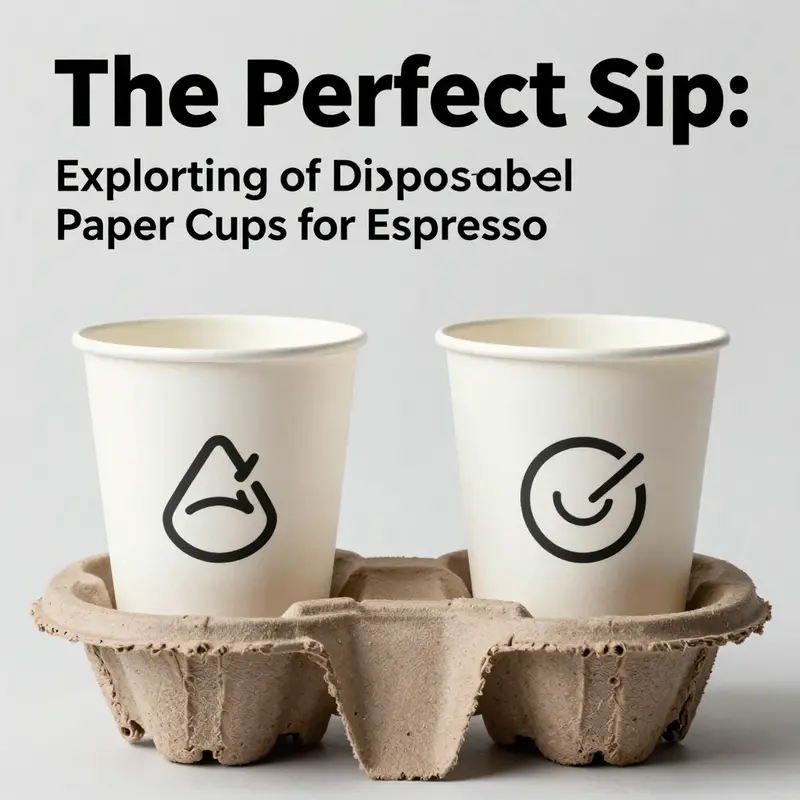
Sustainability and the espresso cup: a unified view
Disposable paper cups for espresso sit at a practical crossroads. They deliver speed, hygiene, and consistent presentation. At the same time, their environmental impact raises complex questions. To navigate these questions, businesses must move beyond slogans. They need to weigh materials, end-of-life pathways, operational habits, and ingredient sourcing together. Only then can a coffee operation choose cups that reduce waste without undermining service or safety.
Most disposable cups are paper shells with a moisture barrier. That barrier keeps a concentrated hot shot from leaking. Traditionally, the barrier is a thin polyethylene (PE) film fused to the paper. It does the job well. But it also complicates recycling. When paper recycling mills encounter PE-lined paper, the plastic cannot separate cleanly. The result is contamination, lower-quality pulp, and often rejection of the material. Many PE-lined cups therefore head to landfill or incineration instead of becoming new paper.
Material innovations attempt to solve that core dilemma. Bioplastic coatings made from polylactic acid (PLA) are one option. PLA comes from plant starches and is industrially compostable. If a cup with a PLA lining reaches a certified industrial composting facility, it can break down under controlled conditions. That is certainly preferable to landfill. Yet industrial composting infrastructure is uneven. If PLA-lined cups are thrown into a regular bin or mixed into paper recycling streams, they cause confusion. Misplaced PLA cups may still end up as waste, or they may contaminate recycling processes that are not PLA-aware.
Other manufacturers are rethinking barrier chemistry entirely. Water-based dispersions and proprietary non-plastic barriers can be applied to paper to create a recyclable single-wall cup. These designs aim to keep the cup within the paper recycling stream. When successful, they close the loop more cleanly than compostable options. The trade-off can be thermal comfort. Single-wall recyclable cups often require sleeves or heavier paper to prevent heat transfer. That extra material changes the environmental calculation. A recyclable cup plus a sleeve may use more resources than a double-wall compostable cup. Life-cycle thinking is essential.
Certifications and labels matter. Look for credible marks that verify the claim behind a cup. Certifications can cover chain-of-custody for the paper, industrial compostability for the lining, and food safety. Without third-party verification, claims can be vague. Certification does not guarantee local processing will exist, however. A cup may be certified compostable, but if local composting facilities are absent, the certification’s practical value is limited. Transparency across manufacture, certification, and local infrastructure is critical.
Consumer behavior is the other half of the sustainability picture. No matter how green a cup is on paper, its benefits vanish if people throw it into the wrong bin. Clear, visible disposal instructions reduce errors. Place labeled bins together and use simple icons to guide customers. Staff training also helps. Baristas can prompt the correct bin at handoff. Small operational nudges like these increase proper diversion rates dramatically.
Waste management partnerships scale that effect. Cafés and event organizers should not assume municipal systems will accept their chosen cup type. Speak with local recyclers and composters before switching materials. If suppliers offer take-back or collection programs, evaluate them. Collaborative programs can create a reliable path to processing for cups that otherwise would be orphaned. Where local processing exists, publicize it. Customers respond favorably when they know their cup will be recycled or composted properly.
Procurement choices shape outcomes as well. Buying in bulk reduces transport impacts, but buying the wrong cup in large quantity locks a business into a poor solution. Start with a trial run. Test a few thousand units in daily service. Monitor customer acceptance, staff feedback, and disposal patterns. Measure costs beyond the unit price. Include staff time for sorting, extra signage, and any fees for specialized waste collection. Factor in brand benefits from communicating responsible choices. A well-executed transition can reduce cleanup time, lower contamination rates, and enhance customer perception.
Design details influence both experience and sustainability. Ergonomic rims ease sipping and reduce spill risk, which in turn reduces waste from discarded drinks. Double-wall options improve heat management, reducing the need for separate sleeves. If a cup performs better, customers are less likely to abandon or discard it prematurely. Custom printing and logos offer branding benefits. But heavy inks, metallic foils, and plasticized finishes can compromise recyclability. Opt for water-based inks and avoid metallic stamping if recyclability is the goal.
Operational realities often force compromise. A downtown café facing frequent rushes needs a durable, insulated cup that won’t leak. In that case, a compostable double-wall cup paired with an industrial composting partnership can be a reasonable choice. In a region with mature paper recycling infrastructure, a single-wall recyclable cup may be preferable. The right decision is local, context-driven, and measurable.
Cost is part of the calculation, too. Eco options can carry a price premium at low volumes. However, bulk purchasing and supplier relationships narrow that gap. Consider total cost of ownership. If a compostable cup requires additional waste hauling fees, the business may end up paying more. Conversely, reduced cleanup time, fewer broken dishes, and faster service can compensate. Track both hard costs and softer operational savings.
Finally, think beyond the cup. A sustainability strategy for espresso service should consider lids, cup carriers, and staff training as part of one system. Cup lids need compatibility with the chosen cup and should match its end-of-life claims. Cup carriers and sleeves must be designed to avoid undermining recyclability. Educate staff and customers consistently. Sustainability works best as a practice, not a single product switch.
A productive next step for any coffee business is a three-point checklist: confirm local processing capabilities, pilot the chosen cup in real service conditions, and measure disposal outcomes. Repeat the cycle annually. Material science and waste infrastructure evolve quickly. New recyclable barriers and improved composting programs appear regularly. Staying informed lets businesses adapt without compromising service.
If you need an example of a plastic-free single-wall option to evaluate during a pilot, consider an 8oz plastic-free single-wall paper cup to test for performance and recyclability. You can review product details and custom options here: https://greendispopack.com/product/best-price-8oz-double-plastic-free-single-wall-paper-cup/.
For further technical context and sourcing examples related to recyclable paper cups, see this external resource: https://www.alibaba.com/product-detail/2-5-oz-Recyclable-Paper-Cups-For-Espresso_1600385594725.html
Margins, Markets, and Mugs: The Economic Ripple of Disposable Espresso Cups

In bustling urban cafés and at large events, disposable cups designed for espresso have become more than containers; they are converging points for supply chains, pricing strategies, and waste-management systems. The economic footprint of these cups ripples through production lines, point-of-sale decisions, and municipal recycling programs, shaping both bottom lines and public policy. As consumer demand for quick, hygienic service grows, so does the pressure to balance cost, quality, branding, and environmental responsibility. That balance is not static. It shifts with shifts in materials, regulatory expectations, and the evolving logistics of global manufacturing. To understand the chapter’s core, one needs to view disposable espresso cups as a microcosm of modern retail logistics: a product that is simultaneously simple in function and complex in its economic afterlife.
Global demand for single-use coffee cups continues to rise, and regions with dense hospitality sectors illustrate the dynamics most clearly. In urban and hospitality-driven markets, operators prize the speed, reliability, and hygiene that single-use cups provide. The UAE, for instance, is projected to grow its disposable cup market at a steady pace through 2030, a trajectory driven by busy workplaces, hotel concierges, and a culture of takeaway coffee. Such growth signals sustained investment in manufacturing capacity and distribution networks. The movement is not isolated to a single geography; it reflects a broader shift toward scalable, branded, and consistent beverage service that can keep pace with high-volume demand while maintaining a clean operational floor.
From a production standpoint, the economics of espresso cups hinge on material choice, manufacturing scale, and the ability to customize at low marginal cost. Most high-quality disposable cups for hot beverages are built with food-grade paper and a heat- or leak-barrier lining, typically a PE layer, to protect both the drink and the consumer. Single-wall and double-wall configurations offer different levels of insulation, impacting not only user experience but also cost structure. Customization—logos, colors, and sizes—adds a further layer of value, especially for brands seeking to extend visibility through takeaway channels. In mass industries, suppliers enable bulk orders beginning at large volumes, which drives down per-unit costs and accelerates procurement cycles for cafés, event organizers, and corporate catering. This bulk-forward dynamic is a key reason why these cups remain an attractive option even as sustainability conversations intensify.
Yet the same scale that fuels affordability also folds in environmental and regulatory cost pressures. As governments and consumers demand greener solutions, many operators shift toward compostable or recyclable options, including PLA-lined cups or other alternative materials. These eco-friendly choices come with higher production costs, driven by material science, compliance testing, and certification processes. The market is increasingly sensitive to sustainability credentials, and businesses are increasingly factoring lifecycle costs into price and branding strategies. The economic calculus now weighs not only the initial purchase price but also the end-of-life handling, which can affect waste management fees, local recycling compatibility, and even consumer willingness to pay for premium experiences.
Alongside material transitions, waste-management costs have become a meaningful line item in the economics of disposable espresso cups. Despite the labeling of many cups as recyclable, the typical PE lining complicates processing in standard facilities. The result is a substantial share of these cups ending up in landfills, a consequence that imposes long-term costs that may indirectly flow to consumers through fees or taxes. Municipalities and forward-thinking operators are responding with deposit-return schemes, or charges for single-use cups, designed to nudge behavior toward reuse while funding necessary infrastructure. This evolving policy landscape creates new revenue streams and incentive structures for retailers and venues while encouraging a broader cultural shift toward reusable options. The interplay of waste policy and product design means the price and availability of espresso cups will continue to be shaped by both market demand and regulatory frameworks.
The economic benefits to high-volume service providers remain tangible in daily operations. When cups are designed for quick, hygienic service, they help reduce cleanup time and turnover friction. In busy settings, a well-designed cup can contribute to smoother drink throughput, consistent presentation, and a reliable customer experience. While such improvements are often framed in qualitative terms, they translate into measurable efficiencies: faster service, fewer spills, and more predictable inventory management. In practical terms, these efficiencies can translate into higher daily sales, improved customer satisfaction scores, and lower labor costs per cup served. The branding potential embedded in disposable cups also carries economic value. Custom designs and logos become portable advertisements, reinforcing a venue’s identity at the exact moment of purchase and potentially driving repeat business for take-away-focused operations.
Manufacturers in regions with established export infrastructure have built capabilities to meet both global brands and local cafés’ demands for customization, volume, and speed. The hub-and-spoke model often centers around large-scale production in cost-efficient environments, with flexible packaging and finishing that allow brands to tailor cups for specific campaigns or events. A crucial factor in this dynamic is the ability to source reliably from suppliers that can scale to hundreds of thousands or millions of pieces while maintaining uniform quality and regulatory compliance. In this context, the supply chain resilience of the disposable cup market becomes a strategic concern. Disruptions in any node—raw paper, lining plastics, printing, or logistics—can ripple through to store-level stockouts or delayed tastings at events. The ongoing challenge is to maintain price discipline without sacrificing the features that operators expect: heat resistance, leak protection, and a comfortable drinking edge.
Branding and packaging strategies add another economic dimension. Custom cups support brand recognition, but they also require careful coordination of design timelines, color-fast inks, and durable finishes that survive hot beverages. The investment in customization is often justified by the added value of brand exposure across large audiences, especially in takeaway channels where cups travel through streets, offices, and event spaces. Retailers and venues thus weigh the incremental cost of higher-end finishes against the revenue uplift from enhanced customer recall and share-of-wallet during the same trip. In many cases, the decision is tempered by sustainability commitments. Consumers increasingly expect brands to align with eco-conscious practices, and operators respond by integrating recyclable or compostable lines alongside traditional options. This pairing allows for a nuanced portfolio that can address varied regulatory environments and consumer segments while preserving margin integrity.
The economics of espresso cups also intersect with broader market trends and policy shifts that encourage innovation in materials and waste management infrastructure. In some markets, local governments are piloting or implementing deposit-return programs that incentivize reuse and litter reduction. These schemes create additional revenue streams and help offset the costs associated with waste handling, providing a financial impetus for venues to invest in reusable cup programs or to optimize the lifecycle of disposable options. For operators, the financial calculus now includes the risk-adjusted costs of compliance, potential penalties for improper disposal, and the attractiveness of circular economy practices. The strategic takeaway is clear: success in this space demands an integrated view that couples procurement, branding, operations, and sustainability—not as separate silos but as interconnected levers that determine profitability and competitiveness.
In this landscape, access to scalable supply lines matters as much as the ability to differentiate through packaging. For those seeking reliable bulk sourcing, wholesale options that cover standard sizes like 8oz and 12oz—and that offer lids and double-wall configurations—remain central to steady operations. The availability of bulk orders enables businesses to plan inventory with confidence, support large events, and maintain consistent takeaway service. For operators evaluating options, it is prudent to consider not only unit price but also the total cost of ownership, including potential savings from reduced breakage, lower cleanup costs, and the branding benefits of customized cups.
For readers seeking a practical takeaway, consider the broader ecosystem that supports these cups: packaging suppliers that offer robust customization and scalability, the packaging design processes that optimize user experience and brand recall, and waste-management partners who can help translate a cup’s end-of-life into a sustainable outcome. The dialogue among these players determines whether the espresso cup remains a cost center or becomes a strategic asset in an environment where speed, quality, and sustainability must coexist. As markets mature, the story of disposable espresso cups will continue to hinge on how well stakeholders align pricing with policy and performance, while preserving the everyday convenience that customers expect.
External resource for broader market context: https://www.researchandmarkets.com/reports/587495/disposable-paper-cup-market-global-industry-analysis-forecast.
Internal reference for practical sourcing: Wholesale take-away 8oz–12oz disposable coffee paper cup with lids. https://greendispopack.com/product/wholesale-take-away-8oz-12oz-disposable-coffee-paper-cup-with-lids/
How Market Forces Are Shaping Disposable Paper Cups for Espresso
Market dynamics are reconfiguring how cafes and service operators choose disposable paper cups for espresso, and those forces are visible in purchasing patterns, product features, and supplier offerings. Demand for on-the-go specialty coffee continues to rise in urban centers and event venues. That demand favors cups that balance thermal performance, compactness, branding potential, and environmental credentials. The global market value for disposable paper cups exceeded twenty-one billion dollars in 2025, and forecasts show persistent growth through 2033. Such scale drives both commodity supply and product innovation.
Sustainability now ranks as a primary purchase criterion for many operators. Consumers increasingly expect packaging that minimizes environmental harm, and procurement teams respond accordingly. This shift has two practical consequences. First, suppliers invest in certified raw materials, such as forest stewardship certification, to demonstrate responsible sourcing. Second, the coatings and linings used to protect cups from leakage are evolving. Compostable or bio-based barrier coatings are replacing conventional plastics in many product lines. When operators choose certified paper and compostable linings, they reduce plastic waste while aligning with local disposal systems.
Customization and brand expression have become essential differentiators. Espresso servings are small, but the cup remains a valuable point of contact between a brand and its customer. Suppliers now offer customizable prints across sizes commonly used for espresso — such as 7oz and 8oz — and on double-wall or ripple-wall constructions. A printed espresso cup communicates quality and extends brand visibility during takeaway. For operators running tastings, pop-ups, or catering, cups can carry promotional artwork, limited-edition designs, or clear product information. The ability to order in large quantities with consistent print reduces cost per unit, making branding accessible even for small chains.
Performance improvements address two linked needs: maintaining beverage temperature and improving user experience. Espresso is served at a higher temperature than many other drinks, and it is consumed quickly. Still, insulating the cup prevents heat transfer to the fingers and preserves crema. Double-wall and corrugated (ripple) constructions deliver efficient insulation without extra sleeves. Ergonomic lip designs reduce drip and improve sipping comfort. Those incremental refinements matter in high-volume settings where speed, comfort, and repeatability affect throughput and customer perception.
Operational efficiency drives procurement choices as much as customer-facing features. Disposable cups reduce dishwashing needs and labor time. In busy environments, switching from reusable to high-quality disposable cups can cut cleanup time significantly. Bulk ordering further reduces cost and ensures supply continuity. Many suppliers target large foodservice accounts by offering pallets or container-sized lots, and they include accessories such as lids and cup holders to create reliable bundles.
Regulatory and disposal systems influence product selection more than before. Cities and regions adopt different policies on composting, recycling, and single-use items. Procurement teams must match cup materials to local waste infrastructure. A compostable-labeled cup is valuable only where commercial composting exists. Conversely, cups that are widely recyclable in standard systems offer broader practical value. Clear labeling and supplier documentation help operators avoid greenwashing risks and align product claims with real-world disposal pathways.
Cost remains a central variable, but it no longer dominates decisions alone. Operators weigh the unit price against soft costs like labor, brand value, and potential regulatory compliance fines. Investing a little more in a cup that reduces heat transfer, carries a recognizable brand, and complies with sustainability claims can yield higher perceived value. For occasions such as coffee tastings or premium takeaway, presentation matters more than marginal cost savings. This is especially true for specialty coffee shops that use packaging to reinforce premium positioning.
Supply chains respond to these mixed demands. Manufacturers diversify product lines to include single-wall, double-wall, and ripple-wall options. They offer multiple sizes and compatible lids. They also provide varying levels of customization and certification. This breadth allows buyers to choose between economical stock designs and bespoke runs. Importantly, reliable lead times and quality control have become selling points. Buyers prefer suppliers who can guarantee consistent print, barrier performance, and timely delivery, especially when ordering branded cups for seasonal promotions.
Smaller shops and large chains adapt differently. Small shops often favor ready-stock designs with limited customization to manage cash flow. They may accept neutral or minimally branded cups that perform well thermally. Large chains negotiate volume discounts and bespoke branding. They also demand supply chain transparency and certifications that match corporate sustainability goals. Between those extremes, mid-size operators often seek hybrid solutions: pre-printed designs plus flexible options for short-run custom prints.
The role of certifications and third-party verification cannot be overstated. FSC certification or equivalent forest stewardship labels provide credibility. Similarly, independent verification of compostability or food safety helps buyers avoid reputational risk. Suppliers increasingly include documentation and test reports with quotes. This trend makes procurement conversations more technical and grounded in compliance, rather than purely aesthetic or price-focused.
Innovation is incremental but steady. New corrugated profiles improve insulation while minimizing material use. Alternative barrier coatings reduce fossil-fuel dependence. Printing technologies allow higher-resolution artwork on textured surfaces. The market’s maturity means innovations rarely disrupt the category overnight. Instead, they accumulate and steer buyer expectations toward more sustainable and better-performing products.
For operators planning procurement strategies, several practical takeaways emerge. First, define the priority—cost, brand impact, or sustainability—and use that to select product families. Second, match materials to local disposal systems and request certification. Third, test one or two cup constructions before a full rollout, focusing on thermal performance and customer feedback. Finally, leverage suppliers that offer bundled accessories and reliable logistics to lower operational friction.
One supplier category to consider for ready-stock, cost-effective options is the line of 8oz double plastic-free single-wall paper cups. These provide a compromise between insulation and simplicity and suit many espresso-serving contexts. They are suitable for daily takeaway and small events where composting infrastructure is present. Operators should assess their waste streams and branding goals when selecting between this and more insulated options. (See an example product that represents typical market offerings: https://www.alibaba.com/product-detail/White-3-oz-Disposable-Paper-Cups-Mouthwash-Paper-Cup_1600284658821.html)
Sourcing decisions will continue to balance usability, sustainability, and branding. The market’s size and projected growth guarantee a steady flow of new product variants. For anyone purchasing disposable cups for espresso, staying informed about certification, local waste policy, and evolving material technologies pays dividends. The cups themselves remain small, but their choices reflect larger shifts in consumer values, supply chain responsibility, and operational priorities.
For an example of a stock eco-friendly option worth evaluating, consider the 8oz double plastic-free single-wall paper cup offered by market suppliers like this one: 8oz double plastic-free single-wall paper cup.
Final thoughts
As the need for convenient and environmentally friendly options continues to grow, disposable paper cups for espresso are leading the way for beverage businesses. With key features that enhance user experience, customization options for branding, and a commitment to sustainability, these cups are shaping the future of drink service across various sectors. By understanding these aspects and embracing current market trends, beverage establishments can not only increase customer satisfaction but also contribute positively to the environment.