
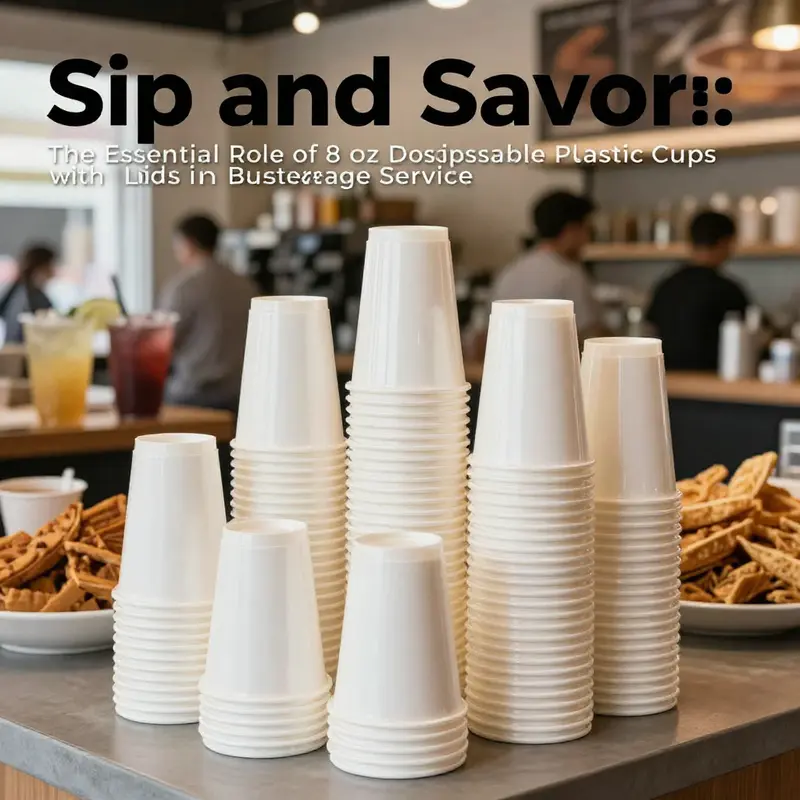
The 8 oz straight plastic cup with lid has carved a niche in the beverage service industry, offering practical solutions for various segments, from bubble tea shops to catering services. Made from food-grade polypropylene, these cups promise durability while maintaining a lightweight and user-friendly design. With the capacity to hold individual servings of beverages, desserts, or snacks, they cater to both casual and formal settings effectively. This article will explore the characteristics and composition of these cups, their diverse applications across different industries, and the latest market trends that reflect their growing importance. Each section aims to equip businesses with insights that enhance customer experience while optimizing operational efficiency.
Sealed Simplicity: The 8-Ounce Straight Plastic Cup with Lid and Its Quiet Power in Modern Beverage Service
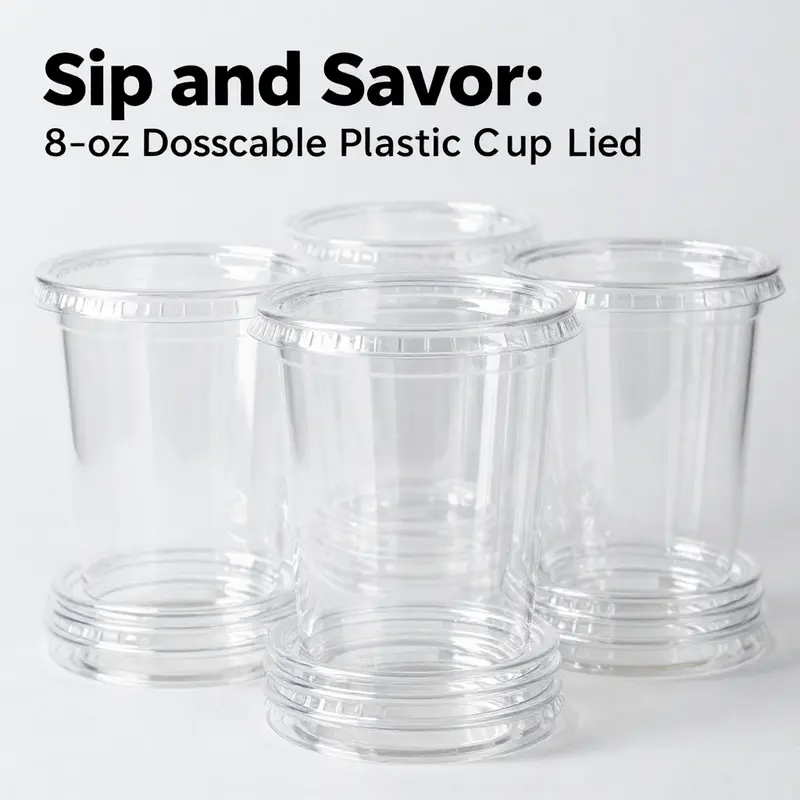
A small, transparent cylinder with a lid may seem unremarkable, yet the disposable 8 oz straight plastic cup with lid sits at a critical crossroads of practicality, safety, and experience in today’s beverage-driven environment. It embodies a design philosophy that prizes predictability, efficiency, and clean presentation over novelty. In parties, cafés, catering events, and fast-service contexts, this cup becomes a workhorse that quietly supports the moment when a drink transitions from a bustling counter to a hand, then to a palate. Its utility rests on three intertwined strands: material choice, geometric form, and a secure lid system that together shape how beverages are served, transported, and enjoyed.
At the heart of this cup is material science translated into everyday use. The most common incarnations of the 8 oz straight cup rely on food-grade polymers, particularly polypropylene (PP) and polyethylene terephthalate (PET). Each material brings a distinct balance of properties. PP is lightweight, resistant to impact, and forgiving with both cold and hot liquids within a practical range. PET, when used for clear cups, excels in transparency and strength, offering a crisp view of the beverage inside and sturdy performance under light handling. This dual-material option allows manufacturers and buyers to tailor the cup to the service scenario—clear display to entice a cold, refreshing drink, or a slightly more opaque version when branding and color control are priorities.
The straight-walled geometry of the cup is more than a mere aesthetic choice. It creates a stable, stackable profile that minimizes wobble when a cup sits on a crowded table or slides into a take-out sleeve. The geometry also communicates a sense of fairness in portioning; the vertical sides offer an unobstructed view of the contents and a consistent dispensing experience. For consumers, this translates to an approachable feel: the intuitive grip, the familiar line of sight to the beverage, and the predictable line from top to bottom as they sip. In high-volume settings, the stackability and uniformity become a logistical advantage, reducing handling time, speeding up service, and lowering the chances of mispours during busy periods.
The flat lid that accompanies many of these cups is more than a cap. It is a designed seal that aims to balance security with usability. A flat lid with a straw hole or drink-opening feature reduces the likelihood of leaks during transport, a critical attribute when customers carry beverages from counter to curb, from food station to seating area, or onto venue floors where movement is the order of the day. The seal must tolerate the temperature and viscosity of a range of beverages—from a thin cola to a thicker milkshake or smoothie—without collapsing or warping under light pressure. In practice, this means the lid and cup form a coherent system, where tolerances in fit, lip thickness, and groove alignment translate directly into reliability. The result is a take-away experience that feels steadier in transit and cleaner at the moment of consumption.
From a safety and quality standpoint, the journey of these cups begins with strict food-safety standards. Reputable manufacturers align with certifications such as FDA compliance for food-contact materials and, in some cases, ISO9001 quality management systems, which indicate a disciplined approach to process control. In more regulated supply chains or premium environments, additional certifications like LFGB (common in European markets) or BRC (often associated with packaging and processing facilities) may be pursued. The underlying purpose of these certifications is to reassure buyers that the cups perform consistently under defined conditions, that finished products are free from contaminants, and that manufacturing facilities maintain hygiene across production lines. Some producers even operate in high-grade cleanroom environments, adopting aseptic packaging lines to minimize the risk of microbial contamination, particularly for cups intended for cold or semi-solid beverages.
In practical terms, the composition and certification stance influence how the cup is used. For one, the PP variant tends to tolerate higher temperatures better, which means it can be used for warm beverages without significant risk of deformation. This is not a call to exceed recommended temperatures, but it reflects a design tolerance that service teams often rely on when offering a hot espresso or a warm chai in a recyclable, single-use format. PET cups, while not ideal for hot liquids, shine in clarity and presentation, making them a preferred choice for cold beverages where the color and texture of the drink—the emerald sparkle of a citrus blend, the ivory swirl of a vanilla milkshake—can entice customers precisely at the point of decision.
The topic of customization also enters the conversation at this stage. Many suppliers offer customization options to align the cup with a brand’s identity or a special event. Printing capabilities, often achieved through flexographic methods, can place up to six colors or a limited palette of brand marks on the cup body or lid. This adds a layer of brand visibility to what is, after all, a disposable item. Yet, the craft of customization must be balanced with considerations of recyclability and overall waste management. A vivid logo or bold color can enhance recall, but it should not undermine the cup’s integrity, hamper stacking efficiency, or complicate end-of-life processing.
Environmental considerations now shape many purchasing decisions around disposable cups. While the primary material is a durable polymer designed for single use, there is a growing emphasis on recyclability and on the broader life cycle of packaging. In some markets, PP and PET cups are accepted by modern recycling streams, provided they are clean and free of contaminants. The question for buyers shifts from “Is it recyclable?” to “Is it righteously recyclable in our local system, and does our use-case justify the convenience and logistics?” This nuance matters because it influences the environmental footprint of a party, a café, or a catering service. It also invites a broader discussion about alternative packaging formats—paper-based or biodegradable options—that may appear in the same category of disposable serveware but carry different end-of-life implications. In this sense, the 8 oz straight cup with lid stands at a crossroads between convenience, performance, and sustainability, inviting service operators to weigh short-term utility against long-term environmental considerations.
The price and packaging dynamics of the 8 oz cup also shape its role in the business landscape. A typical configuration might involve a pack of 50 cups, positioned as an economical solution for high-volume needs. The unit economics of such packs translate into predictable costs for cafés and event planners who must balance guest experience with budget constraints. At a market level, the price point helps to establish a reliable baseline for service standards. It enables operators to offer consistent portion sizes, maintain rising demand during peak hours, and manage inventory without sacrificing the quality of the consumer experience. In addition to price, the packaging approach—simple, compact, and efficient—reduces storage space and simplifies restocking for busy teams. The cumulative impact of these factors is a seamless service flow; guests receive a clean, sturdy vessel that meets expectations for both form and function, while operators preserve margins and ensure repeatability across shifts and events.
A nuanced decision framework emerges when teams consider this cup as part of an integrated beverage program. It is not just a vessel; it is a signal of operational priorities. If speed and reliability define a venue’s service model, then the straight cup with a secure lid becomes a keystone asset—easy to train staff on, quick to deploy, and resilient in the face of the unpredictable rhythm of service. If presentation matters even in a disposable format, clear or subtly colored PET options allow the drink’s appearance to speak for itself, whether the beverage is a layered smoothie or a sparkling tea. If sustainability takes precedence, pros and cons of recycling streams, consumer awareness, and supplier commitments to responsible sourcing must be weighed against the practical benefits of a low-cost, high-volume product.
For those who manage supply chains across multiple outlets or events, the logistical virtues of the 8 oz straight cup with lid are not merely about the cup itself. They extend to compatibility with other components, especially the flat lid. A lid that fits consistently, seals securely, and is easy to remove with minimal effort reduces spillage risk and speeds up service. The user experience—how easily a customer can sip through a straw hole or a modest opening, how cleanly a lid can be resealed for transport if needed, how the lid’s profile interacts with cool or ambient temperatures—matters as much as the taste of the beverage inside. These details accumulate into a reliable, repeatable service pattern: the guest receives a well-sealed cup, the staff can handle many servings with the same ease, and the event organizers or restaurateurs can forecast waste, replenish stock, and scale operations with confidence.
What does this mean for the consumer? It means that the cup is a silent partner to the drink. It helps deliver a sensory experience without distracting from it. The transparency of PET cups, in particular, invites the eye to linger on the color and texture of the beverage, encouraging appetite and anticipation. The prevention of spills through a secure lid supports on-the-move consumption, whether a guest is walking through a busy corridor, standing in a queue, or balancing a plate with a dessert. The straight sides communicate a straightforward approach to portion control, while the uniform height and diameter simplify the stacking and storage that keep a busy venue organized. All these benefits coalesce into a practical, dependable tool that supports a broad spectrum of beverages—from basic sodas to more indulgent options that include yogurt-based drinks or light smoothies—without demanding expensive customization or specialized equipment.
While the specifics of materials and design are deeply technical, the larger story is about how a simple container aligns with daily routines and business priorities. In the end, the disposable 8 oz straight plastic cup with lid becomes a lens through which we view modern food-service ecosystems: quick and clean service, consistent quality, and a balance between convenience and responsibility. The narrative is not about novelty; it is about reliability, safety, and the capacity to scale. It is about ensuring that the moment of serving transitions smoothly to the moment of drinking, and that each step—from manufacturing and packaging to distribution and final disposal—reflects a thoughtful, deliberate approach to everyday consumption.
For readers exploring adjacent categories of disposable service ware, it is useful to acknowledge the broader ecosystem that shapes these cups. There is a spectrum of materials beyond PP and PET—bioplastics, paper-based alternatives, and composite structures—each presenting its own advantages and challenges. Some buyers are drawn to eco-friendly narratives that emphasize recyclability, compostability, or reduced carbon footprints. Others prioritize clarity, strength, or heat resistance, and lean toward options that deliver the best possible presentation and performance in their particular setting. In all cases, the fundamental questions tend to circle back to a few core considerations: does the cup perform consistently under expected use conditions; is the lid secure enough to prevent leaks during transport; can the package be integrated smoothly into existing procurement, storage, and sanitation workflows; and what is the environmental and cost impact of choosing this particular form, fit, and finish over alternatives? When these questions are answered with a measured, data-informed approach, the 8 oz straight cup with lid emerges not as a standalone product but as a trusted partner in the guest experience.
As the supply chain for disposable serveware continues to evolve, so too does the way these cups are perceived by operators and consumers. The best practice is to view the cup as a bundled solution: material, geometry, lid, safety, and end-of-life considerations all interact to determine its effectiveness in a given setting. This perspective helps operators choose the right cup for the right moment, rather than defaulting to a single option across all scenarios. It also encourages ongoing dialogue with suppliers about new developments in materials science, packaging design, and recycling infrastructure. In a world where convenience is highly valued, the 8 oz straight cup with lid remains a consistent ally—capable of delivering solid performance at scale, while leaving room for brands to differentiate through thoughtful presentation and responsible consumption.
From an informational standpoint, the conversation around this cup intersects with broader themes in product packaging and consumer experience. Buyers are increasingly attentive to the balance between cost, performance, and environmental impact. The choice of PP versus PET, the presence or absence of branding, the clarity of the material, and the fit of the lid all influence operational decisions from procurement to point-of-sale presentation. In settings where beverages travel: schools, airports, stadiums, and corporate cafeterias—the demands on reliability and hygiene are high, and the role of a disposable cup becomes part of the overall quality perception of the service. The chapter’s focus on the 8 oz straight cup with lid, therefore, is not merely a technical exegesis of a single item. It is an examination of how a low-profile, mass-produced tool can underpin a smoother, safer, and more satisfying beverage experience across diverse contexts.
Ultimately, the committee of factors that define the cup’s success is not a fixed checklist but a living framework. It evolves as consumer expectations shift, as regulations tighten, and as environmental considerations become more central to procurement strategies. The 8 oz straight cup with lid exemplifies a design that accommodates these shifts: a sturdy foundation in durable, food-safe materials; a pragmatic, stackable form that supports high-volume service; and a reliable lid system that protects the contents during transport while preserving the consumer’s unimpeded drinking experience. In this way, it embodies a balanced approach to modern disposable serveware—one that prioritizes consistent performance, clear presentation, and responsible stewardship without compromising the speed and efficiency that today’s service models require.
For readers who want to explore related packaging formats, it is worth noting that the broader category includes a range of disposable cups and bowls designed for different functions and venues. Some products emphasize eco-friendly attributes, others highlight the customization potential for branding at scale, and still others showcase innovations in lid design to minimize spillage or to support new drinking modalities. Each option speaks to a facet of the same fundamental question: how can a disposable vessel deliver a predictable, pleasant, and safe drinking experience while fitting into a complex flow of production, distribution, and consumption? The 8 oz straight cup with lid answers this question with a practical fidelity that resonates across settings, from intimate gatherings to bustling service lines, reminding us that excellence in small details can elevate the overall guest experience without added complexity for operators.
When considering internal resources to supplement this understanding, one may turn to related product families and packaging solutions that share the same design language and service intent. For instance, the eco-conscious segment of disposable drinkware includes options that emphasize recyclability or compostability, and the discussion around these variants often surfaces questions about disposal streams and local recycling capabilities. While these conversations may lead to different choices, the underlying principles of compatibility, reliability, and safety remain constant. The 8 oz straight cup with lid thus serves as a reference point—a baseline from which to compare performance, to estimate costs, and to anticipate how small but meaningful changes in material or lid geometry could ripple through service operations. In short, it is a touchstone for evaluating how disposable vessels can be optimized to meet the demands of fast-service environments while aligning with broader sustainability and quality objectives.
Internal reference note: for readers curious about broader disposable paper-based alternatives that also feature take-away lids and are designed for easy branding, a related exploration is available here: eco-friendly-printed-logo-single-wall-paper-cup-with-lid. This resource illustrates how brands approach the intersection of visibility, packaging, and environmental considerations in a related, but distinct, packaging category. It reinforces the idea that the basic principles underpinning the 8 oz straight plastic cup with lid—reliability, predictability, and consumer confidence—are transferable across materials and formats, even as the specifics shift with material science and end-of-life infrastructure.
In closing, the 8 oz straight plastic cup with lid is a model of efficiency that quietly enables a broad spectrum of beverage service moments. It is a reminder that the most impactful innovations in packaging often arrive in unassuming forms—not as a dramatic redesign, but as a thoughtful assembly of material, geometry, and closure that, taken together, elevates everyday experiences. Whether a traveler carries a cold drink through a crowded concourse or a café prepares a quick, consistent round of beverages for a lunch crowd, this cup helps ensure that each sip is protected, each serving is swift, and each customer encounter is facilitated with clarity and confidence. The value it delivers lies not in novelty, but in the dependable performance that underpins seamless service, clear presentation of the beverage, and responsible handling from the moment of manufacture to the moment of disposal.
External reference: https://www.alibaba.com/product-detail/A-Technical-Overview-of-8oz-Plastic-Cup1600572344755.html?spm=a2700.galleryofferlist.pimage.4.1f2d3e11kKvqjX&productId=1600572344755
null
null
Under the Lid: Market Currents and Practical Realities of the 8 oz Straight Plastic Cup with Lid
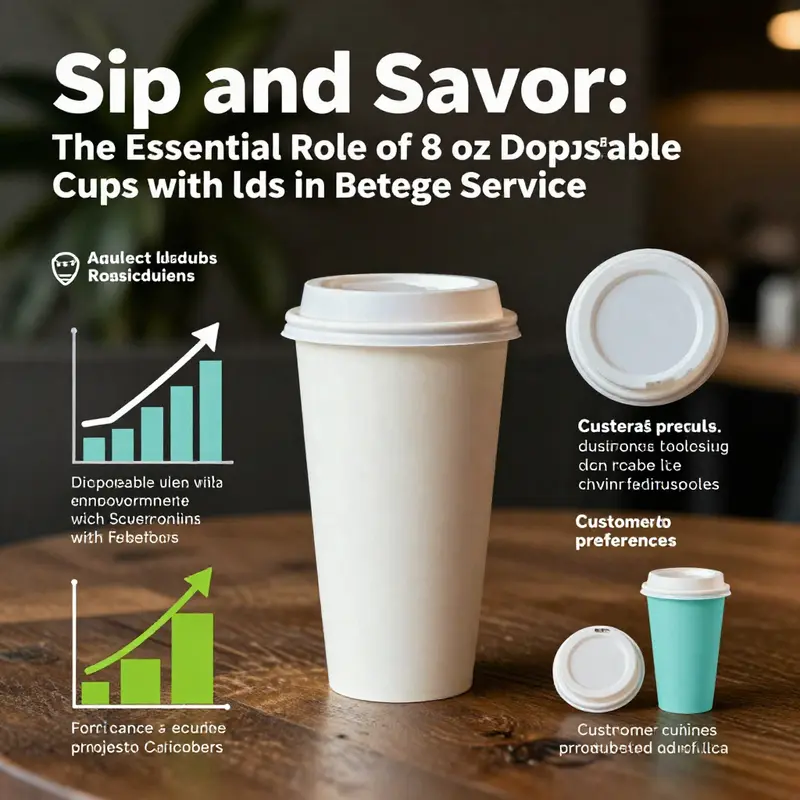
The small, almost unassuming vessel that sits at eye level on a service counter—the 8-ounce, straight-walled plastic cup with a flat lid—has become a quiet engine of efficiency in modern foodservice, retail, and takeaway experiences. Its design is not merely about holding a beverage; it is about shaping the entire customer journey from the moment a guest chooses a drink to the moment they depart with a secure, leak-free container. At its core, this cup is a compact package engineered for reliability. It measures up to 8 ounces, or roughly 237 milliliters, a capacity that hits a sweet spot for personal servings of coffee, milkshakes, smoothies, or dessert-inspired beverages. The straight walls, rather than tapering or bulbous forms, provide a stable grip and predictable stacking, which translates into more efficient storage, fewer spillages during handling, and cleaner, faster service lines. When paired with a flat lid designed for cold beverages, the cup offers a secure seal that supports takeout, catering, and self-serve formats alike. This combination—straight-walled geometry plus a snug, flat lid—speaks to a broader logic of operator-friendly packaging that favors speed, versatility, and predictable performance across a range of service contexts.
The material choice is equally consequential. Food-grade polypropylene, a widely used plastic in disposable beverageware, underpins the cup’s safety profile, resistance to common beverage temperatures, and predictable performance during transport. PP’s rigidity helps the cup retain its shape during stacking and shipment, while its relatively smooth surface supports a clean, pull-ready feel for consumers and easy compatibility with labeling and branding efforts. From a practical standpoint, the 8 oz size is an approachable portion that reduces waste while meeting consumer expectations for a single-serve option. For many customers, the volume is enough for a straightforward drink, yet it remains compact enough to minimize the clutter that can arise with larger takeaway selections. In takeaway and counter-service scenarios, the smaller footprint of the 8 oz cup can contribute to lower disposal burden per item, which can be appealing to operators juggling waste streams and daily throughput. The lid, a key companion in this equation, is not mere ornamentation. Its flat, seal-ready profile is designed to form a reliable barrier against leaks and splashes, particularly for cold beverages that might otherwise threaten a casual dining or grab-and-go experience. In a busy cafe or event setting, the lid’s integrity matters: a secure fit reduces the likelihood of spills during transit, protects table surfaces, and fosters a calmer, more predictable customer encounter. Taken together, the cup and lid embody a practical philosophy of service design—one that values simplicity, security, and speed without sacrificing beverage presentation or user comfort.
From a market perspective, the segment that includes disposable 8 oz straight plastic cups with lids sits at an intersection of growth in the broader disposable cup ecosystem. Market data on related takeaway vessels, particularly lids for coffee and other cold beverages, show a robust expansion trajectory. For instance, assessments of the global disposable coffee cup lid market reveal a strong expected upward path—from a value of several billions in the mid-decade timeframe to a significantly higher figure by the early 2030s. This momentum reflects not only consumer demand for convenient, on-the-go beverages but also the efficiency of suppliers in delivering compatible cup-and-lid systems at scale. The implication for 8 oz straight cups with lids is meaningful: as the lid market grows, the demand for compatible cups remains strong, and the ability to source these cups in predictable volumes becomes an operational asset for foodservice, hospitality, and retail channels.
Geographically, production concentration for these kinds of disposable cups is notable. A large share of plastic cup manufacturing is centered in East and Southeast Asia, with substantial ecosystems in major provinces that host integrated manufacturing and export-oriented facilities. Proximity to key ports lowers freight costs and reduces transit times, which in turn supports high-volume, just-in-time procurement strategies for large operators and distributors. The supply chain advantages are evident in the way suppliers optimize tooling, injection molding, and thermoforming processes to deliver millions of units monthly. While the plastic cup itself can be produced in various configurations, the straight-walled 8 oz format benefits from standardized tooling that accelerates production cycles and keeps unit costs stable even as demand fluctuates. This stability becomes crucial for operators who need uniform performance across thousands of outlets or events, where even a small variance in lid fit or cup diameter could ripple into delays or customer complaints.
Sustainability, however, remains a central tension in this space. The disposability that makes these cups so appealing from an economic and operational perspective also invites scrutiny regarding waste management, litter, and resource use. The life cycle of single-use plastic cups raises questions about end-of-life handling, recycling rates, and landfill burden. In markets where environmental regulations and consumer expectations are tightening, some suppliers are expanding into paper-based or biodegradable alternatives for the outer cup or for companion lids. The data points toward a strategic shift where the stainless-true advantages of PP cups are maintained for certain use cases, while environmentally friendlier lines—such as PLA-based or recycled-content options—are developed to address demand for greener packaging. In practice, this means operators may find themselves choosing between the raw cost and proven performance of classic PP cups and the evolving sustainability profiles offered by next-generation materials. Yet for many venues—a bakery counter, a street-food stall, or a campus cafe—the immediate calculus still privileges reliability, speed, and low upfront investment, which keeps the traditional disposable cup in active service.
Branding and customization also play a meaningful role in how these cups are perceived and chosen by buyers. In a marketplace where differentiation is increasingly driven by consumer experience, suppliers are offering options that let brands imprint logos, colors, and messaging directly onto the cups or on the lids. Customization supports smoother brand recall and can turn a simple beverage into a promotional touchpoint. Even at the 8 oz scale, a branded cup can signal attention to detail and quality, reinforcing the perception of a premium takeout experience. For operators, the decision to pursue customization hinges on several factors: the importance of brand visibility in a competitive retail setting, the volume thresholds that justify setup and run costs, and the anticipated lift in consumer engagement versus the incremental cost per unit. While some suppliers emphasize on-time delivery and scalable customization capabilities, it is important to approach supplier selection with a holistic lens. Beyond price per unit, buyers should weigh production capacity, quality assurance protocols, lead times, and the ability to adapt to evolving design requirements as menus and promotions change across seasons. The capacity to maintain a consistent appearance across tens of thousands of cups becomes a differentiator in a crowded marketplace.
In terms of procurement strategy, the landscape favors a blended approach to sourcing. For organizations with high-volume needs—takeout operations, event catering, or large beverage programs—regionally diversified suppliers can offer resiliency against disruptions in one geography while maintaining competitive pricing. Buyers who prioritize transparency, clear communication, and reliable service will naturally seek partners who can demonstrate consistent performance on delivery timelines, quality control, and the ability to handle both standard configurations and custom runs. The trade-offs between minimum order quantities, unit costs, and the flexibility to scale production in response to demand signals are part of a larger conversation about total cost of ownership, including storage, handling, and waste management considerations. In this sense, the 8 oz straight plastic cup with lid is not merely a passive container; it is a node in a broader supply chain that links product design, consumer expectations, and business economics into a cohesive service experience.
From a consumer behavior standpoint, the appeal of the 8 oz format lies in its familiarity and versatility. Coffee shops, dessert bars, smoothie kiosks, and convenience retailers alike can rely on a familiar vessel that customers recognize as a standard portion. The straight-sided geometry helps with quick filling and consistent portioning, reducing variance across servers and baristas. The flat lid design, aimed at secure coverage for cold beverages, supports a comfortable grip and confident tipping during consumption. In addition, the compact size contributes to efficient takeout packaging, enabling operators to fit more orders per carrier or bag without compromising integrity. The practical benefits ripple through operations as well: storage demands are predictable, because the straight-walled cups stack neatly; inventory management benefits from standardized SKUs; and waste streams can be more easily estimated when portion sizes are uniform. All of these factors, when aligned, translate into smoother front-of-house operations and a more predictable, hassle-free experience for customers who are often balancing time constraints with beverage quality.
Turning to the economics of scale, the pricing model for these cups—pack configurations, typical minimums, and unit costs—reflects a balance between affordability for high-volume buyers and the margins that suppliers require to sustain manufacturing economies of scale. A common packaging convention sees cups sold in mid-sized packs that deliver cost efficiencies while still enabling frequent restocking in fast-paced outlets. For buyers, the per-pack cost translates into a reliable budget line item, especially when forecasting monthly beverage volumes, seasonal promotions, and events that demand a consistent, dependable takeaway container. The affordability of such packs, paired with the robust performance of PP cups and the security of a flat lid, encourages wider adoption across diverse settings—from coffee kiosks in transit hubs to school canteens and corporate cafes. The result is a broad distribution network that helps normalize the use of standard 8 oz cups with lids as a default solution for cold beverages, rather than a premium, one-off option. This normalization, in turn, informs capital expenditure planning, as operators can confidently allocate resources toward compatible disposables without risking misalignment with other packaging components in their supply chains.
In conversations about supplier relationships, the emphasis is increasingly on transparency and collaboration. The procurement journey goes beyond price comparisons and minimum order quantities to include the quality assurance practices that govern production lines, the responsiveness of supplier teams, and the clarity of communication across order placements, production runs, and delivery schedules. In markets where there is intense competition among packaging suppliers, buyers gain a competitive edge by partnering with manufacturers who demonstrate reliable on-time delivery, consistent quality, and the ability to scale—from small pilot runs to mass production. The capacity to adapt, whether it is to accommodate brand-specific branding requirements or to switch to more sustainable materials when requested, becomes a crucial factor in supplier selection. As brands seek to align packaging with broader sustainability and branding strategies, the supplier ecosystem responds by offering more flexible, modular options that allow customers to preserve the familiar ease of use while exploring greener alternatives when feasible. In this evolving context, the eight-ounce straight cup with lid remains a dependable, widely accepted baseline—an anchor around which more complex packaging configurations can be explored without sacrificing the predictable performance that operators and customers expect.
For readers who want to glimpse a practical touchpoint in this packaging narrative, consider the broader ecosystem of takeout and catering packaging where a disposable cup is often just one piece of a larger puzzle. Operators frequently pair their cups with complementary lids, sleeves, and transport solutions to complete a user-friendly, end-to-end experience. In the spirit of practical sourcing and brand consistency, there are many resources that discuss taking a brand’s visual identity from counter display to takeaway packaging, including articles and product pages that illustrate how a logo, color palette, and messaging can be integrated across cup and lid configurations. To explore an example of related packaging resources that illustrate the integration of lids and takeout cups, you can consult related packaging content such as disposable takeaway paper cup with lid. This reference highlights how customization and functional design can be aligned across different container formats, reinforcing the idea that a single consumer touchpoint—the cup with lid—can carry a brand’s visual narrative while delivering dependable performance in real-world service scenarios.
The chapter’s data points and narrative trajectory converge on a practical takeaway for operators and buyers. The 8 oz straight plastic cup with a lid is more than a container; it is an instrument of reliability, an emblem of efficiency, and a conduit for customer experience in fast-moving environments. Its continued relevance depends on a nuanced balance of safety, performance, cost, and evolving consumer expectations around sustainability and branding. The manufacturing ecosystem that supports this product—anchored by large-scale production, proximity to global ports, and ongoing innovations in molding and material science—ensures that supply can keep pace with rising demand while still delivering consistency in size, fit, and performance. In a market that prizes speed and predictability, the unassuming cup with its flat lid has earned its place as a foundational element of modern beverage service, a quiet workhorse that supports retail, catering, and hospitality operations around the world. External and internal dynamics will continue to shape how these cups are produced, marketed, and reused in the years ahead, but their core utility—the practical marriage of form, function, and affordable access—will likely endure as a constant in the busy, beverage-driven cadence of everyday life.
External resource: For broader market context and ongoing trends in disposable beverage packaging, see the market-size and trend analysis available through leading industry data sources, such as the disposable coffee cup lid market report. https://www.statista.com/statistics/1475295/disposable-coffee-cup-lid-market-size-global/
Final thoughts
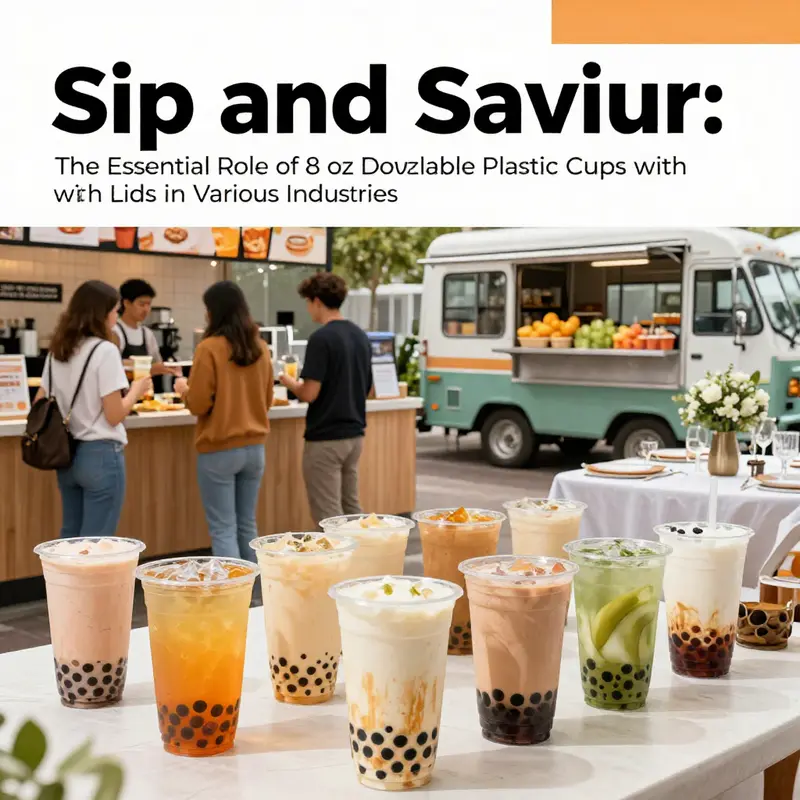
In summary, disposable 8 oz straight plastic cups with lids stand as a fundamental component in today’s beverage service landscape, seamlessly blending functionality with versatility. Their characteristics—sturdiness, design, and material—ensure that they meet high safety and usability standards across various industries. This adaptability, coupled with favorable market trends and cost-effective pricing, makes them an essential choice for bubble tea shops, restaurants, food trucks, catering services, and event planners alike. Investing in these cups not only enhances customer experience but also supports operational efficiency—a win-win for businesses aiming to thrive in a competitive market.