
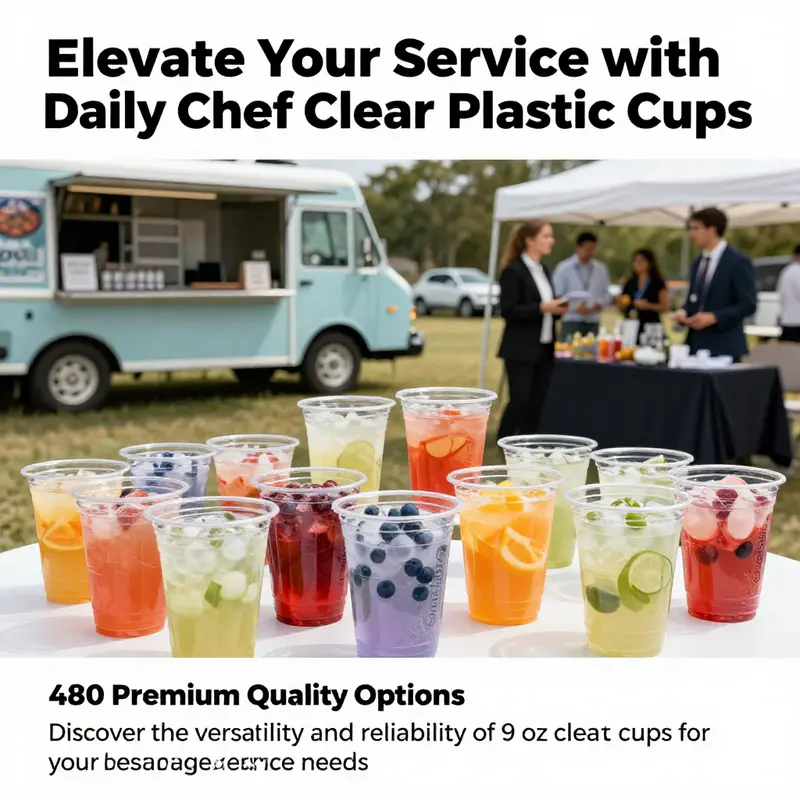
In the bustling world of food and beverage service, choosing the right disposable cups can make a significant difference. Daily Chef Clear Plastic Cups, with a convenient 480-count pack, are designed to meet the multifaceted demands of beverage chains, restaurants, and event planners. This article explores the exceptional features and benefits of these 9 oz cups, their various applications in different settings, important environmental considerations, and insightful market trends. Each chapter contributes to a well-rounded understanding of how these cups can enhance service quality, operational efficiency, and customer satisfaction.
Clear-Cut Convenience: The Features and Everyday Benefits of 9 oz Daily Chef Cups in Bulk
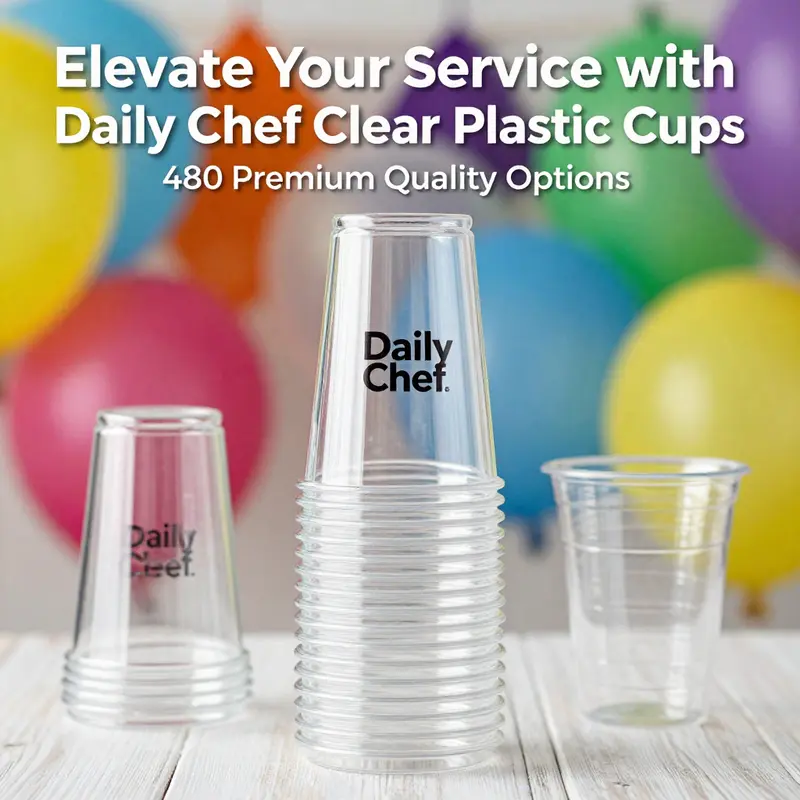
The appeal of a good disposable cup goes beyond its ability to hold a drink. In operations that juggle speed, presentation, and consistency, the right cup becomes a quiet workhorse. The 9 oz Daily Chef clear plastic cups in a 480-count bundle embody that idea. They are not flashy because of clever branding, but they are reliable where it matters: dependable performance, clean aesthetics, and practical value over the long haul. When you need a steady supply for a cafe counter, a catering event, or a bustling home party, those factors matter more than any single feature on a spec sheet. The cups’ standout traits arise from a careful balance of material quality, design clarity, and bulk efficiency. Together, they enable a service experience that feels smooth and professional, even when the pace is rapid and the expectations are high.
To begin with, durability is not an afterthought here. The shatter-resistant nature of these cups is more than a safety feature; it is a practical guarantee. In a bustling kitchen, a busy kiosk, or an outdoor event where surfaces are uneven and handling is quick, the risk of breakage ebbs away. This resilience translates into fewer broken cups on tables, less waste from accidental drops, and fewer interruptions in service. It also allows for safer handling around children and during transport, where spills and accidents can disrupt a flow that already demands precision. The sturdiness does not come at the cost of lightness; the cups retain a convenient weight that customers and staff appreciate. They feel substantial enough for confident grip, but not so heavy that they strain a contact-free service model or intimidate younger guests who might reach for a cup themselves.
The clear plastic design is the other cornerstone of their appeal. A crystal-clear material showcases the beverage inside, letting the color, opacity, and even trickles of condensation do their talking. This transparency is not merely a cosmetic advantage; it is a practical one. For baristas and servers, visibility enables immediate quick checks of fill levels. For customers, the look of a drink—the hue of a freshly poured juice, the translucence of a sparkling soda, the rich depth of a smoothie—becomes part of the perceived quality. In cup-to-table presentation, clarity communicates cleanliness and consistency. A beverage that gleams through a transparent cup reads as fresh and appealing, an impression that can influence a guest’s enjoyment and a server’s confidence in the product being offered.
With a standard 9 ounce capacity, the cups strike a thoughtful balance between portion control and practicality. Nine ounces is a familiar size for many beverages: water, juice, soft drinks, or small sample servings at tastings. This capacity helps prevent over-pouring in high-volume settings while still being generous enough for casual everyday use. In cafés, it can support a streamlined approach to drink sizing where the focus is on consistent dosing and waste reduction. In events, it helps organizers manage expectations and inventory—guests enjoy a comfortable serving without feeling extravagantly capped, while staff can predict how many servings a stock will yield in a given shift. The size also pairs well with a broad range of lids and accessories, enabling a smooth flow from preparation to pickup without unnecessary delays, a factor that often determines whether a service line feels rushed or relaxed.
The bulk packaging—480 cups in a single pack—addresses another practical dimension of daily operations: replenishment planning and space management. In a busy kitchen or catering setup, running out of cups can stall service and ripple into every other process. A bulk supply reduces the frequency of reorders, which translates into fewer supplier touchpoints, fewer packaging layers to manage, and a more predictable stock level. This bulk approach also tends to yield a lower per-unit cost, a meaningful consideration for venues that operate on tight margins or that must absorb seasonal demand spikes without compromising the guest experience. In addition, bulk packaging simplifies logistics. When the front-of-house mindset is focused on speed and reliability, not on hunting down small package shipments, staff can keep attention where it matters most—on the guest experience and the quality of the drinks being served.
Beyond safety and economics, presentation and versatility are naturally linked in a set of cups designed for everyday use. The transparent material highlights the beverage’s color and clarity, transforming even simple waters or lemonades into an appealing visual ensemble. This is not merely about aesthetics; it is about elevating the perceived quality of service. A well-presented drink communicates care and attention to detail, which customers translate into trust. The cups’ versatility is a natural byproduct of their neutrality. They are equally well suited to serving kid-friendly drinks at a birthday party, refreshing fruit-infused waters at a corporate event, or pre-portioned smoothies in a quick-service setting. In each case, the cup remains unobtrusive while supporting a wide range of beverage profiles, from lightly tinted lemonades to bold, color-rich mixed drinks. The clarity also helps in portion control. Hydration goals, refreshment preferences, or event-specific drink ratios become easier to enforce when the container itself acts as a reliable reference point for volume.
One of the subtler, but often decisive, advantages is how these cups simplify cleanup and logistics in busy environments. Being disposable eliminates the necessity of washing, drying, and restacking between cycles. In practice, that can translate into measurable time savings during peak hours or event turnover. It also reduces the risk of cross-contamination or miscounts that might happen with glassware or reusable cups during high-volume operations. Yet, this does not mean the choice is functionally disposable-only; it reflects a broader optimization of labor. Staff can redirect energy toward beverage quality, guest interaction, or speed of service rather than toward cleaning racks or sanitizing tableware. The value proposition extends beyond the end of a shift: when the event or service ends, the cleanup is concise and predictable, enabling teams to transition smoothly to post-event tasks or to prepare for the next round of service with less downtime.
Customers often hold a drink longer than the moment of purchase. In this sense, the cup becomes part of the overall experience. The combination of robust construction and clear translucence helps avoid the mixed feeling of flimsy single-useware that can undermine a guest’s confidence in the product. The cup’s resilience translates into reliable performance in a range of environments, from family picnics to outdoor festivals where surfaces may be uneven or windy conditions complicate beverage service. In outdoor settings, the shatter-resistant quality becomes particularly valuable, reducing worry about dropped cups in grassy or gravel-covered areas where the likelihood of a mishap is higher. The cups’ performances in such contexts reinforce the broader narrative about disposable tableware: durability paired with simplicity can elevate the everyday and remove friction from both the host and the guest.
The potential for customization, while not always the central feature of every disposable cup, is a practical pathway to enhanced branding and guest recognition. A bulk set like this often serves as a blank canvas for a variety of service scenarios. In a café or at a catered event, adding lids, labels, or decorative seals can transform a basic cup into a branded companion that aligns with a specific theme or color palette. The opportunity to pair cups with customized takeaway solutions—such as a lid-friendly design or a logo-accurate sleeve—can help reinforce a cohesive service experience. One practical avenue for enhancement can be found by exploring disposable options that offer custom branding while maintaining the same reliable foundation described here. For example, a disposable takeaway cup designed for custom logos and lids exists as a natural extension of the same quiet efficiency found in these clear cups. disposable-takeaway-paper-cup-custom-logo-kraft-coffee-cup-with-lid. This pairing demonstrates how a simple cup can become part of a tighter ecosystem of service tools, where presentation and practicality work in concert.
In considering the broader lifecycle of these cups, it is useful to acknowledge environmental and waste-management realities. Disposable does not have to equate to excessive waste if usage is guided by clear protocols and disposal pathways. Bulk quantities encourage planning that minimizes over-purchase and overuse, while still ensuring that employees and guests have a reliable supply. In the spirit of responsible hospitality and service, it is prudent to pair disposable cups with clear labeling about recycling options and to stay informed about local guidelines for plastic recycling streams. The clarity of the cup itself can also mirror a company’s commitment to straightforward, transparent operations. When guests see a clean, unambiguous presentation—be it on beverage color, cup branding, or the straightforward flow from serve to sip—it reinforces a sense of trust in the service. This is not about avoiding disposables; it is about using the right tool for the right moment while keeping the guest experience at the forefront.
The breadth of possible applications for the 9 oz clear cups extends into many corners of daily life and business operations. In a coffee shop, they can be the standard small serve for samples or festive cold drinks during warmer months. In a casual restaurant, they support a quick, reliable option for water refills, kid-friendly beverages, or portion-controlled desserts served in small cups. In event environments, they enable a fluid, scalable system for catering to dozens or hundreds of attendees without the friction that can accompany fragile glassware. The bulk supply ensures that a party host, a school function, or a corporate gathering can sustain consistent service without constant restocking or last-minute scrambles. In homes, the cups become a practical ally for daily hydration routines, kids’ activities, and simple celebrations where ease and predictability render the hosting experience calmer and more enjoyable.
To bring these threads together, the Daily Chef 9 oz clear plastic cups in a 480-count pack arrive as a well-considered tool for anyone who wants dependable performance, crisp presentation, and sensible value. They are built to withstand the rhythms of busy kitchens and the unpredictability of outdoor events, yet they retain a quiet elegance that makes the beverage inside feel more intentional. They support portions that help manage costs and inventory, while still leaving room for creativity in how drinks are served and presented. They do not demand a luxury budget or elaborate equipment; they offer a reliable baseline that lets chefs, caterers, and casual hosts focus on the quality of their beverages and the warmth of their hospitality rather than on the mechanics of the service itself. In the end, the cup is one of those small, essential details that, when chosen with care, makes everyday moments feel well orchestrated.
For readers seeking to expand the practical toolkit around these cups, consider how a simple, well-chosen accessory strategy can amplify impact without complicating workflows. Lids, labeling, or thematic color schemes can complement the clear cups to create a cohesive beverage service that travels well from kitchen to table. And for those who value customization, exploring branded options that fit the same size and material profile can offer a route to stronger guest recognition and memory without sacrificing the core advantages of clarity and reliability. The overall takeaway is straightforward: a bulk, durable, crystal-clear cup with a sensible capacity serves as a reliable backbone for beverage service across many contexts. It frees attention for the guest experience, while quietly supporting efficiency, safety, and presentation. The daily rhythm of service benefits from this kind of dependable tool, and it remains a reminder that the best equipment often looks simple—yet performs with a quiet confidence that staff and guests can feel in every sip.
External resource: For more on safety standards for food-contact materials and how disposable containers fit within regulatory guidance, see the FDA’s resources on food-contact materials. https://www.fda.gov/food-contact-materials
Clear, Counted Service: Elevating Beverage Experience with 9 oz Daily Chef Cups Across Settings
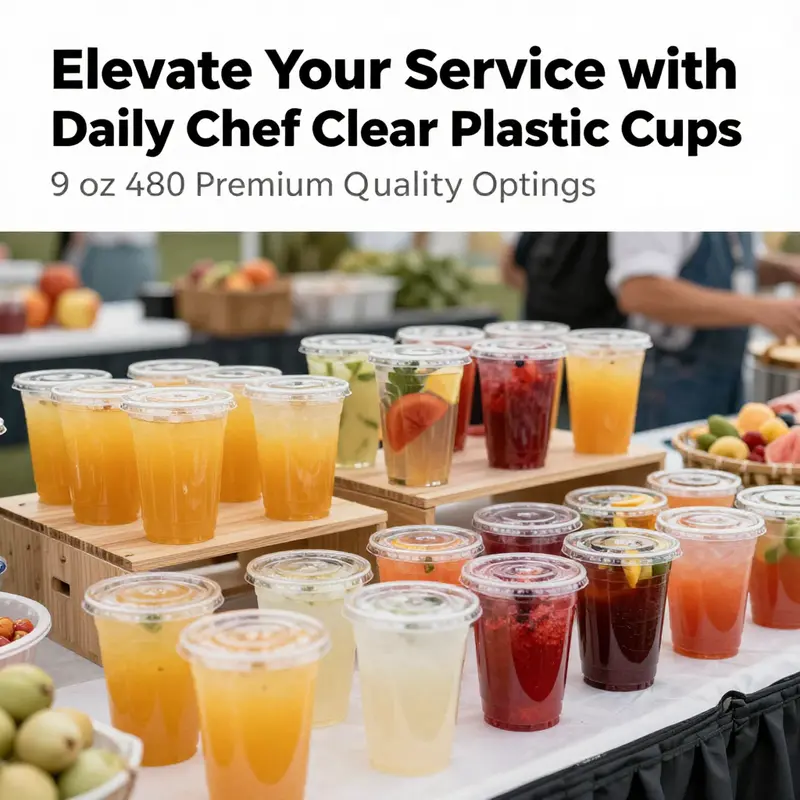
The rhythm of a busy day in food service often hides in plain sight—the way a simple cup can shape perception, efficiency, and the overall guest experience. A 9 oz clear plastic cup, packaged in a generous 480-count bundle, stands as more than just a disposable vessel. It embodies a practical philosophy: combine clarity with durability, economy with performance, and everyday use with a touch of everyday elegance. When service teams learn to see cups as the first step in the guest journey, the small choices begin to ripple outward, affecting portion control, presentation, and even the pace of service. In this light, the Daily Chef 9 oz clear cups become a quiet workhorse, one that quietly underpins a wide range of settings and moments, from the hum of a cafe morning to the orchestrated bustle of a catered affair, and beyond. The cups’ clear plastic material, which resists shattering under the pressures of rapid service, is a critical attribute. It preserves the drink’s visual appeal—the color of a cold brew, the gradient of a layered smoothie, the sparkle of a citrus infusion. Visibility is not merely cosmetic; it informs the guest’s perception of freshness and quality. In a cafe, where customers often judge drinks by appearance as much as by taste, the transparency of the cup becomes an ally. The 9 oz capacity is ideal for a single serving, a size that aligns with portion control protocols while still delivering enough complexity for a well-made beverage. The design’s simplicity is its strength; there are no extraneous features to distract from the drink’s presentation or to complicate the flow of service. A well-balanced cup does not demand attention; it supports it, allowing the beverage to take center stage while remaining sturdy enough to withstand the day’s demands. The practicalities of such a cup reverberate through the rest of the operation, revealing how thoughtful, scalable choices can streamline processes without sacrificing guest satisfaction. In a cafe or coffee shop, the cups routinely shuttle iced drinks—iced tea, iced coffee, fruit-forward beverages, smoothies, and any number of cold concoctions that demand a vessel capable of maintaining integrity from the first pour to the last sip. The 9 oz capacity naturally lends itself to a standard serving that fits well with a menu’s structure, enabling consistent portions and repeatable experiences across shifts. The cups’ thickness and rigidity contribute to a reliable grip, a small but meaningful convenience when customers hold a cold, tall beverage on a crowded sidewalk or a sunlit counter. A customer’s first touch often happens before the drink meets the tongue; if the cup feels solid and clear, it sets a tone of confidence about the beverage inside. The cup’s clarity also makes it a practical teaching tool for staff and guests alike. In many day-to-day operations, color and layering become crucial cues for quality and freshness: a pale lemonade, a vibrant fruit puree, a dark coffee layered with cream, or a foam-topped slush that showcases its texture through transparent walls. The transparent vessel becomes a canvas, turning a simple pour into a visually engaging moment that reinforces the storytelling of a drink. The 480-count package is not just a bulk purchase; it’s a strategic choice that affects inventory discipline and cost management. For busy cafes and fast-paced service environments, restocking rhythm matters. With a sizable pack on hand, teams can operate with fewer interruptions during peak hours, preserving throughput and reducing the risk of stockouts that can disrupt service. The economics of scale come into play here: unit cost per cup decreases with bulk purchases, enabling operators to maintain competitive pricing without compromising quality. The value proposition extends beyond price per cup. When a cafe or catering team uses a dependable, disposable cup that resists breakage, waste is minimized not only by fewer breakages but also by fewer returns or replacements during a single service window. In this sense, durability translates into a smoother operation and a calmer front of house, where staff can focus on the guest experience rather than on handling fragile ware. The versatility of these cups becomes evident as soon as one steps beyond the cafe counter. Catering services, weddings, corporate events, or large parties rely on rapid, orderly beverage service, often under time pressure and with limited serving staff. The 480-pack ensures there is ample supply to service an evening’s worth of toasts, receptions, or casual gatherings without frequent reordering. The cups maintain their clarity and shape under varied conditions—coolers, ice baths, or a quick switch from warm hands to chilled beverages—making them reliable even in high-volume settings. For caterers, the ability to service multiple stations with a consistent vessel fosters uniform presentation across the event. Guests notice coherence: the same cups at the cocktail station, the coffee bar, and the lemonade station create a visually cohesive experience that reinforces a sense of control and professionalism. In fast-food outlets, these cups become part of a system that emphasizes safety and efficiency. Children’s meals often accompany beverages in smaller portions; a compact 9 oz cup aligns with portion controls that support nutrition and waste reduction goals. The shatter-resistant quality reduces hazards around play areas or family-friendly dining spaces where kids may be more inclined to handle cups with exuberance. The design also supports a practical approach to service in these high-energy environments: easy stacking, quick grab-and-go replenishment, and simplified training for new staff members. In home environments, the same cup proves its worth in a different, more intimate way. Families utilize cups for everyday hydration, for portioning snacks, or for organizing condiments and small-quantity items during meal prep and cleanup. The clear walls allow caregivers to monitor contents, ensure appropriate portions, and minimize spills during busy mornings. The cups’ lightweight nature adds convenience for households that juggle parenting duties, personal routines, and social gatherings. Outdoor gatherings—be they a backyard barbecue, a park picnic, or a beach day—offer another dimension of the cup’s utility. Outdoors, the risk of broken glass makes disposable options highly attractive, and the shatter-resistant construction helps prevent accidents and wasted drinks. The reduced weight is a practical advantage when guests must carry beverages across lawns or gravel paths, and the cups remain sturdy under the sun’s glare. In these situations, the absence of a bulky, fragile container is a welcome relief to hosts who want to keep service simple and safe while still presenting beverages attractively. Even in settings that feel more clinical or controlled, such as medical or care facilities, there is a place for disposable cups that prioritize practicality over sterility. While these cups are not designed for sterile medical applications, they can be appropriate for non-critical tasks, such as serving water to residents or eliciting a measured amount of a liquid medication in non-emergency contexts. The capacity and clarity of the cup support careful administration and monitoring, allowing staff to verify liquid levels at a glance and reduce confusion or misdosing. The broader takeaway from these diverse applications is that the cup is not merely a disposable item; it is a pragmatic tool that makes service consistent, predictable, and adaptable. The multi-setting relevance rests on a simple premise: a clear, durable, 9 oz cup can harmonize with a menu, a service style, and an event’s tempo without demanding complicated equipment or specialized handling. This alignment matters because it translates into fewer bottlenecks at the point of service and more time for staff to focus on the customer’s experience—enthalpy in the service world being created through attention to small, reliable details like a well-chosen cup. For operators who want to articulate a consistent brand experience across channels, there is an opportunity to expand the narrative beyond the beverage itself. The visual continuity afforded by a clear cup can be complemented by branded accessories, such as logos or color-coded lids that match the cafe’s design language. A practical way to explore branding without complicating operations is to consider eco-friendly, printed-logo single-wall paper cups as an option for certain campaigns or venues. These are not the same product, but they illustrate how a cohesive beverage program can extend from the cup to the cup’s presentation and packaging. When a venue adopts a branded or coordinated look, the cup becomes a canvas for a subtle, professional identity rather than a plain vessel. For teams looking to explore branding while maintaining operational simplicity, a simple, clean approach—paired with high-clarity cups—often yields the most versatile and scalable result. This marriage of form and function underpins a broader philosophy: the cup is a foundational element of service design. It is the first physical touchpoint guests encounter with a beverage, and its performance reverberates through every moment of the guest experience—from the moment the drink is poured to the last sip that lingers on the palate. The decision to stock a large, reliable batch of 9 oz clear cups, such as the 480-count pack, reflects a strategic awareness of the realities of daily operations. It acknowledges that service is a balance between taste, presentation, efficiency, and safety. It also recognizes that the simplest tools often yield the most meaningful returns. In the grand scheme, such cups contribute to a smoother workflow, helping staff maintain focus on the guest’s needs and the beverage’s flavor profile rather than on the fragility of their vessels. The practical stability they bring to the table is a quiet kind of craftsmanship that underpins memorable service experiences. For operators, future improvements may lie in how these cups are integrated into a broader ecosystem of disposable serving ware. The discussion can naturally extend to lids, sleeves, and complementary packaging that preserve temperature, reduce spills, and support branding. A cohesive program that pairs clear cups with reliable, compatible accessories can enhance efficiency and consistency across multiple locations or events. The point remains clear: when a business chooses a dependable 9 oz cup, it is choosing to invest in a smoother workflow and a more controlled guest experience. The value is not only in the immediate cost savings but also in the longer-term benefits of uniform presentation, predictable portioning, and safer handling. A well-chosen cup, used with intention, helps ensure that a drink’s journey—pour, pour, sip—feels seamless rather than fragmented. Throughout the chapters of this article, the underlying message is consistent: the tool you choose shapes the moment you create for your guests. The 9 oz Daily Chef clear cup, in its quiet reliability, supports a broad spectrum of settings. It is a reminder that everyday objects, when designed with clarity and durability in mind, can elevate ordinary experiences into something that feels deliberate, thoughtful, and well managed. For readers who want to explore similar options and related disposables that support a cohesive beverage program, this chapter suggests looking at related products that align with a brand’s sustainable and practical aims while maintaining the flexibility required by busy operations. The cup’s omnipresence across venues—whether tucked behind a cafe counter, organized for a catering event, or resting on a home kitchen shelf—speaks to a universal truth in hospitality: great service is built on dependable basics executed with care. The 9 oz clear cup is one of those essentials, quietly doing its part so that, when a guest lifts a drink, the experience feels effortless, precise, and enjoyable. External resource: https://www.amazon.com/dp/B07ZPQJF9R. For operators seeking an additional avenue for complementary serving ware that supports branding and sustainability goals, a parallel option to consider are eco-friendly, printed-logo, single-wall paper cups, which illustrate how a cohesive visual identity can extend beyond the beverage and into the cup that holds it. See the example here: eco-friendly printed-logo single-wall paper cup.
null

null
Clear, Counted, and Convenient: Market Currents in 9-Ounce Bulk Clear Plastic Cups
The disposable cup market sits at the intersection of convenience, affordability, and predictable performance. For hosts planning a wedding reception, a family reunion, a school event, or a simple backyard barbecue, the ability to serve drinks quickly without sacrificing visibility or quality has made clear plastic cups a dependable workhorse. In particular, the 9-ounce size—neatly sized for water, juice, lemonade, or soda—has emerged as a sweet spot for everyday use and for bulk buying. The appeal of a compact, single-use container lies not only in the ease of setup and cleanup but also in the flexibility it offers during planning. When a bulk package clocks in at around 480 cups, the math shifts from “how many guests do we expect?” to “how many events can we staff with one shelf-stable supply?” The dynamic is simple on the surface yet nuanced in practice: durability meets portability, and clarity meets control, all within a manageable price per cup that makes large-ticket purchases feasible for families, schools, clubs, and small caterers alike.
What gives the 9-ounce clear cups their distinctive market stance is a combination of physical qualities and distribution realities. On the physical side, the cups are designed to be shatter-resistant, a crucial attribute when used outdoors or in bustling settings where accidental drops are part of the environment. Clear plastic surfaces do more than simply hold a beverage; they allow for immediate product assessment. In a crowded event space, a guest can glance at the cup and instantly gauge the liquid level, the color, and the overall appeal of the drink without removing the lid or opening the container. This visual hygiene matters for beverage-heavy occasions, where guests are selecting from several offerings and the perceived freshness of a drink can influence satisfaction and perceived value. In practical terms, the 9-ounce format also contributes to portion control. For households managing hydration goals, parents organizing kids’ parties, or venues serving beverages with measured accuracy, a bulk supply can support consistent serving sizes, reducing waste and helping organizers maintain inventory discipline.
Distribution is the other half of the story. The reach of these bulk cups through major e-commerce marketplaces signals a robust, scalable supply chain that small buyers can leverage with confidence. Availability on large retail platforms translates into predictable stock, straightforward reordering, and the possibility of last-minute procurement without the friction of specialty suppliers. In a market where convenience can trump marginal gains from minor price differentials, the ability to add a 480-count case to an online cart and receive it rapidly is a strong differentiator. For buyers, this accessibility reduces the risk that a planned event will be derailed by an out-of-stock scenario. The online distribution narrative also aligns with the rise of micro-fulfillment for households and small businesses. In practice, this means a bulk option can be stored in a pantry or storage closet and deployed when needed, rather than requiring a dedicated trip to a restaurant-supply warehouse. Such flexibility is particularly valuable for families coordinating school projects, clubs running weekly meetups, or local community organizations hosting outdoor movie nights.
From a pricing perspective, the market shows that bulk cups in the 9-ounce segment sit in a competitive space that rewards volume and consistency. A comparative mindset helps buyers estimate cost per cup and total cost of ownership for large-scale usage. For example, a popular benchmark in the bulk-cup category—another 600-count option of a similar 9-ounce range—has been observed at a price point around $36, yielding roughly six cents per cup when calculated strictly on unit cost. Extrapolating from that logic, a 480-count package would likely fall into a roughly $25–$30 range, depending on the seller, current promotions, and any bundled shipping charges. This pricing landscape underscores a broader truth about disposable tableware: the market prizes the aggregation of small savings into a larger reduction in cost per use. For event planners and households, the savings compound when purchases are planned for multiple gatherings or when a single bulk buy serves a long stretch of activity without requiring frequent reorders.
Yet price is only one facet of value. For the buyer who wants reliability, the combination of durable construction and clear presentation makes a tangible difference at the point of service. Ambience and practicality go hand in hand: a shatter-resistant cup reduces the risk of breakage-related incidents, a factor that translates into fewer cleanup headaches and less replacement cost during the event itself. Clarity, meanwhile, supports quick beverage identification in busy service lines, enabling smoother flow for servers and even for self-serve stations where guests pour their own drinks. The 9-ounce capacity is a practical compromise that accommodates a wide range of beverages while keeping the volume manageable for guests who may want to sample multiple options. For families, this size is particularly convenient for portioning drinks for children, while for venues it provides a standard unit that can be paired with universal lids to minimize the need for mismatched sizes.
Behind the scenes, the distribution channels also shape the consumer perception of value. Listing such cups on large marketplaces broadens accessibility and signals a standardization that buyers often rely on when evaluating procurement options. The presence on reputable platforms helps establish a baseline trust: buyers know what to expect in terms of product specs, return policies, and shipping reliability. This is not simply about a single purchase; it is about building a predictable procurement pattern that keeps events on track and budgets intact. For suppliers, this visibility supports forecasting and inventory planning. The ability to scale from a handful of units to hundreds of cases aligns with the seasonal rhythms of the industry—graduation season, summer picnics, back-to-school events, and holiday gatherings—all of which tend to spike demand for disposable beverageware.
Within this ecosystem, consumer segments reveal themselves in nuanced ways. Household buyers may view the 9-ounce clear cup as a practical, durable everyday tool for hydration and portion control. They appreciate shrink-wrapped bulk packaging that travels well in a car trunk and stacks neatly in a pantry shelf. Event-oriented buyers—people organizing parties, picnics, fundraisers, or classroom activities—value the combination of volume and reliability. They are drawn to bulk counts that minimize the frequency of reorders while still delivering consistent performance. For these buyers, the feature set expands beyond the cup itself to include compatibility with widely available lids, whether they exist as flat, hinged, or textured variants. The market for bulk cups is, in essence, a demand-driven ecosystem: buyers seek a balance of quality, convenience, and cost-per-use, and sellers respond with scalable packaging options that align with those priorities.
From a sustainability lens, the chapter of this product category is far from closed. The environmental narrative surrounding disposable tableware has grown increasingly urgent. While clear plastic cups deliver undeniable convenience, they also contribute to waste streams if used indiscriminately or discarded without recycling. A mature consumer base now expects, or at least strongly prefers, products that can be recycled in standard municipal programs or that are composed of materials positioned for enhanced landfill-diversion or compostability where feasible. The market responds with a dual strategy: emphasize durability to maximize reuse in larger events and promote recycling or recycling-compatible design in single-use contexts. Even as the immediate 9-ounce cups remain a staple for bulk buyers seeking efficiency, there is a parallel wave of innovation around compostable equivalents and clearer labeling to ease end-of-life processing. This dual trajectory—rock-solid performance on one hand, and sustainability-forward options on the other—defines the current market cadence. Buyers who anticipate long-term needs do well to monitor both the price-performance trade-offs of traditional plastics and the evolving materials landscape that could alter cost structures and procurement choices in the near future.
Operationally, the decision to purchase in bulk is often rooted in storage discipline. A 480-count package, when stowed properly, fits within standard supply closets and garage bays without overwhelming space. For larger operations, the bulk option improves forecasting accuracy and reduces the risk of stockouts during peak demand. The logistics of bulk cups also intersect with other disposableware categories, such as lids, straws, napkins, and cleaning supplies. A well-coordinated procurement plan can align the delivery schedule of all these components to support a smooth, uninterrupted service line. For organizers who juggle multiple priorities, the ability to standardize on a single cup size streamlines inventory control, reduces the cognitive load on staff, and minimizes the chance of service missteps that can occur with a more fragmented assortment of cup types.
In terms of consumer perception, there is a subtle but meaningful storytelling element at play. The choice to serve drinks in a clear, uniform cup sends a message about consistency and reliability. Guests see that the host has selected a standard, easy-to-track system rather than a haphazard mix of cup sizes and styles. This can influence impressions of organization, value, and attentiveness to guest experience. For sellers, the narrative is equally important: the product is marketed not merely as a container but as a tool that supports clean handling, straightforward portion control, and reliable performance across indoor and outdoor environments. The marketing emphasis on shatter resistance, clarity, and bulk convenience resonates with a broad audience, from budget-conscious families to planning committees tasked with orchestrating large events on limited timeframes.
The broader market implications emerge when we step back and consider how these cups fit into the evolving world of disposable tableware. We live in an era where convenience is measured not only by speed but by predictability and waste-management pragmatism. The 9-ounce bulk clear cups represent a practical answer to the needs of countless everyday situations while also operating within a larger conversation about sustainability, recyclability, and circular economy strategies. Buyers who plan for repeated use—such as school cafeterias, community centers, or recurring events—will weigh the upfront cost against long-term use and end-of-life considerations. Those who prioritize a lean procurement profile may focus more on price per cup and the reliability of supplier stock, while still keeping an eye on environmental impact and potential future lines of compostable disposables. In short, the market for these cups thrives because it successfully fuses the essential requirements of everyday hospitality with the scale and efficiency demanded by bulk purchasing.
For readers who want to explore related options that sit adjacent to this category, a quick comparison to another bulk-disposable option can be useful. A related supplier page that highlights value-driven pricing in the broader cup segment can offer a helpful frame for buyers assessing the trade-offs between slightly different formats and materials. This reference point can guide a practical decision about whether to lock in a bulk plastic option now or to continue monitoring emerging sustainability-driven alternatives that may increasingly enter mainstream procurement conversations. Best-price 8oz double-plastic-free single-wall paper cup offers a complementary perspective on how vendors position bulk disposables in a market that prizes both cost control and environmental stewardship, even though it features a different material approach.
In sum, the market for 9-ounce clear plastic cups in bulk is resilient because it aligns with the core needs of a broad spectrum of buyers: dependable performance, straightforward handling, scalable supply, and value-driven pricing. While evolving environmental expectations and competition from newer materials will shape the future, the current landscape rewards the practical combination of clarity, durability, and convenience. As buyers look ahead to a calendar filled with gatherings big and small, the appeal of a bulk-packaged, center-of-table companion—one that stores easily, serves reliably, and cleans up with minimal fuss—remains strong. The ongoing challenge for manufacturers and retailers will be to preserve this value proposition while responding to the accelerating demand for more sustainable packaging options that can coexist with the practical realities of daily life and event planning. The story of these cups is, at its heart, a story of how ordinary products can enable extraordinary moments—one smooth pour, one easily managed stack, one well-planned event at a time.
External resource: https://www.amazon.com/Daily-Chef-Plastic-Cups-9-oz/dp/B0BQVXZJZD
Final thoughts
Daily Chef Clear Plastic Cups offer a blend of quality, versatility, and value that is essential for various beverage service operations. Whether it’s a bustling restaurant, a trendy bubble tea shop, or a dynamic catering event, these cups provide the reliability that businesses can trust. Their environmental considerations also align them with the growing trends towards sustainable practices. By choosing Daily Chef, you are not only enhancing the customer experience but also aligning with modern market demands for quality and responsibility.