
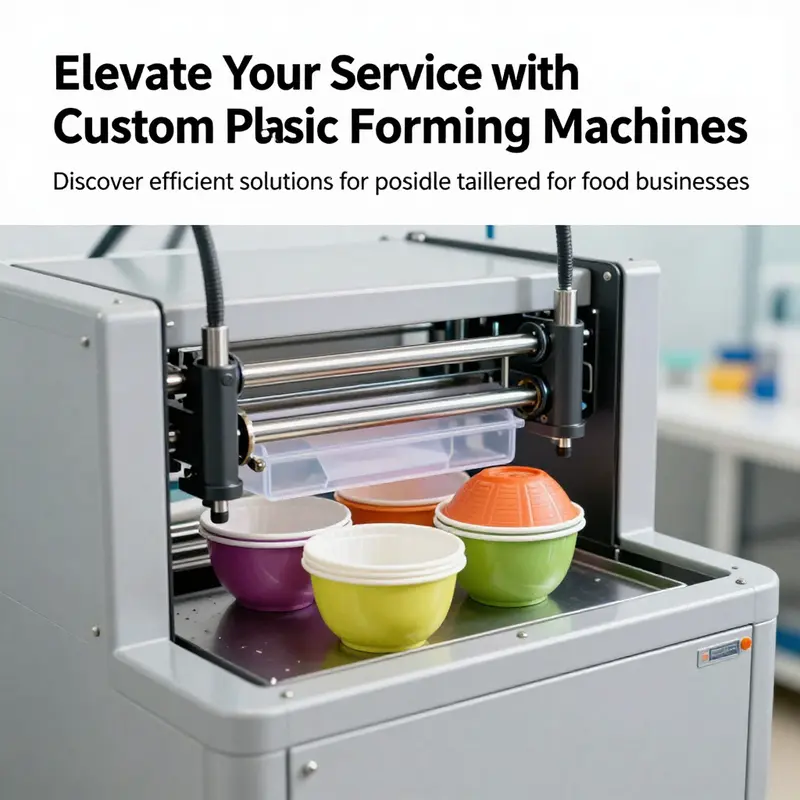
In the rapidly growing food service industry, the need for reliable and efficient disposable packaging has never been more critical. For bubble tea shops, beverage chains, restaurants, food trucks, and catering services, custom plastic forming machines designed specifically for disposable bowls can streamline operations and enhance service delivery. With a focus on high-speed automation, integrated efficiency, and versatility in forming capabilities, these machines are essential investments that address the unique demands and challenges faced by businesses in the food sector. This article explores the benefits and features of custom plastic forming machines, offering insights on how they can significantly improve your production processes and meet the evolving market needs.
Custom Plastic Forming Machines for Disposable Bowls: Navigating High-Speed Automatic Solutions
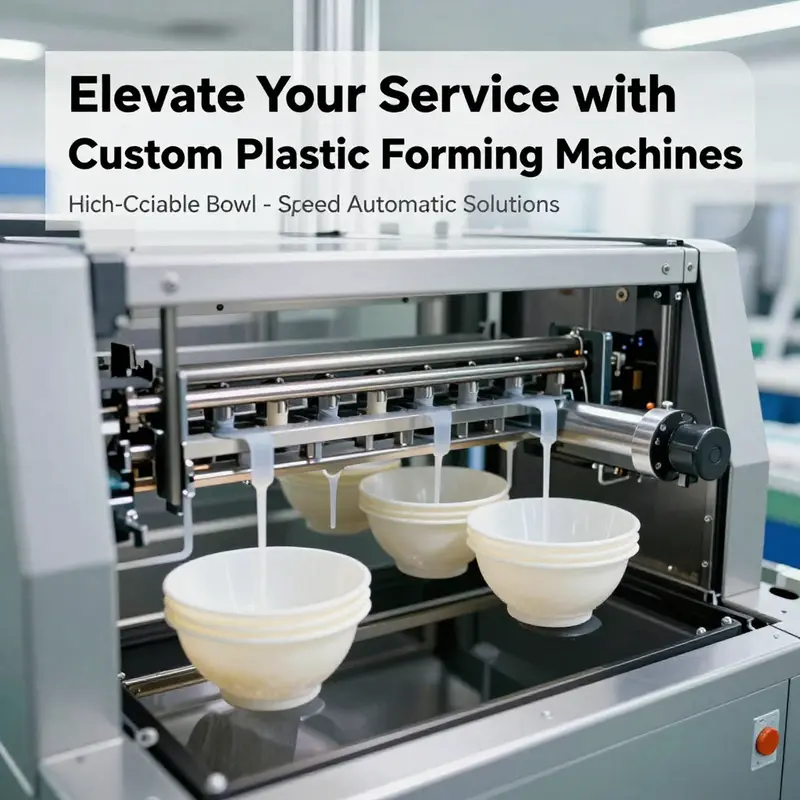
Custom plastic forming in the context of disposable bowls is less about a single machine and more about a coherent system that can be tailored to evolving market needs. In many facilities, the demand for lightweight, food-safe containers with consistent wall thickness and precise base geometry has pressed engineers to design lines that blend rigidity with flexibility. The goal is not merely to push more bowls through a machine, but to orchestrate a workflow where material characteristics, mold design, and automated controls align to deliver reliable outputs with minimal waste. When a company seeks a custom thermoforming or forming line for disposable bowls, it looks for a platform that can be tuned to multiple formats, accommodate different resins, and adjust to changing packaging requirements without sacrificing cycle times or part quality. The consequence of this approach is more than throughput; it is a capability to respond to shifting menus of product sizes, coatings, and barrier needs while maintaining consistent production metrics across shifts and seasons. In this context, high-speed automatic solutions are not a mere speed boost. They are a strategic enabler, enabling factories to scale up or down in response to demand without renegotiating the entire process, while also achieving stringent hygiene standards and predictable costs per unit.
At the heart of any custom forming line for disposable bowls lies a careful alignment of machine architecture with the physical realities of thermoforming. A typical setup includes unwinding or feeding systems for raw sheet stock, preheating modules that bring the sheet to the precise temperature window, and forming stations that use a combination of vacuum and pressure to shape bowls, lids, or nested combination parts. A plug-assist mechanism often works in concert with the forming die to ensure sharp corners, even thickness distribution, and minimal thinning at curved regions. The trimming or flashing station follows, removing excess material with clean edges before parts enter the stacking and conveying area. Finally, a downstream station stacks, resolves dynamic balance issues, and prepares parts for downstream packaging lines. In a well-designed custom line, each station is connected by a controlled transfer system that minimizes dwell time and prevents part misalignment. This chain is not static; it is modular by design to support rapid tooling changes and quick format shifts, a capability that is essential when the product family expands to include bowls of several capacities or variations in lid designs.
Material compatibility defines the envelope within which a forming line can operate. Disposable bowls are often made from a spectrum of resins that balance cost, clarity or opacity, heat tolerance, and barrier properties. Polypropylene and PET are common choices for their rigidity, heat resistance, and suitability for food contact. Some operations explore polystyrene or recycled content polymers when cost pressures and sustainability goals intersect. Each material brings different viscosity and forming behavior, which in turn affects preheating temperatures, dwell times, and the force required at the forming station. A sophisticated line must accommodate these differences without requiring a full redesign. That means adjustable heater zones, controllable platen temperatures, and a mold concept that offers tunable gap, pressure, and vacuum profiles. When line designers plan for multiple resins, they frequently employ modular tooling and plate thickness variations, enabling a single platform to produce bowls ranging from delicate dessert receptacles to sturdier soup bowls. The result is a line that remains relevant as raw material costs swing or as consumer expectations shift toward better heat resistance, crisp edges, and reliable stacking for automated packaging.
Tooling and mold design sit at the practical core of the forming process. The geometry of the mold determines how the sheet transforms into a bowl, how uniform the base is, and how efficiently flash can be removed. Precision in mold design translates into uniform wall thickness, fewer rejects, and smoother downstream handling. Modern lines emphasize the use of servo-driven clamps and synchronized actuation to ensure repeatability across tens of thousands of cycles. The mold must also accommodate durability demands—bowls are trimmed and stacked, then moved along in a continuous loop that requires precise alignment to avoid part-to-part collision. Integrated cooling channels, where applicable, help maintain dimensional stability during forming. The ability to tune the mold temperature profile, adjust the vacuum level, and modify the plug-assist force becomes essential when switching between bowl sizes or changing from a rounded profile to a more squared-off form. In practice, this translates into a tool set that can be swapped quickly, with a predictable requalification process for process engineers who must validate that new formats still meet the same quality gates. The upshot is a tooling philosophy that emphasizes repeatability, minimal downtime, and a design that anticipates future format changes rather than reacting to them after each shift.
Automation depth defines how far a line can push toward lights-out operation while preserving product integrity. A high-speed automatic forming line relies on a network of servo-controlled axes, PLC-driven logic, and intelligent sensors that monitor temperature, position, and part quality in real time. The servo systems contribute to tighter cycle control, reducing variation in thickness, surface finish, and overall geometry. The automation layer brings together the preheating profile, the forming cycle, and the trimming sequence so that parts exit the line with consistent quality regardless of subtle shifts in ambient temperature or resin batch. Sensor arrays and inline vision checks serve as the eyes of the operation, catching deviations early and routing suspect parts to a reclaim or rework path before a full batch is produced. This level of automation is not merely about speed; it is about stabilizing the entire process so that downtime is minimized, energy use is optimized, and machine wear is predictable. For facilities that must meet high demand with limited operator intervention, the integration of automated loading, part sorting, and stack formation becomes a decisive advantage.
A meaningful throughput figure, such as 15–30 cycles per minute, provides a practical gauge of a line’s capacity while revealing the constraints that limit further gains. In high-volume environments, the cycle time is the crystallization of multiple design choices: the time to warm the sheet to the forming temperature, the dwell time during forming, the time to trim, the sorting overhead, and the time to buffer finished parts for downstream handling. Achieving a steady 15–30 cpm often requires a careful balance between aggressive forming pressure and controlled cooling, ensuring that the parts do not distort or warp as they exit the machine. It also implies reliable upstream and downstream interfaces: the sheet feed must be consistent, the preheater must deliver uniform temperature across the entire width of the sheet, and the downstream stacker must accept the finished parts at a pace that matches the forming cadence. When a line is designed with flexibility in mind, the same machine can operate at lower speeds with longer cycles to accommodate a new product family or run smaller batches without replacing the core equipment. This adaptability is particularly valuable in markets where seasonal flavors, limited-time packaging designs, or co-branded products demand quick format changes.
Quality control becomes a design priority when the objective is not just speed but also precision and repeatability. Inline quality checks, such as edge inspection and thickness mapping, help detect issues that could lead to reject rates rising above acceptable thresholds. In many forward-looking lines, cameras or laser-based sensors measure wall thickness and rim geometry in real time, triggering adjustments to heater zones or forming pressure if a deviation is detected. Scrap handling is a separate but essential facet of the same system. The scrap path and regrind loop for flash or rejected bowls should be designed to minimize energy use and maintain clean, hazard-free operation. A robust approach to quality also considers environmental hygiene—cleaning cycles must be efficient, and the machine should withstand frequent washdowns without compromising insulation or electrical safety. In practice, this means selecting materials and seals that tolerate repeated cleaning and corrosion-resistant components that preserve performance after multiple cycles in a humid production line. The end result is not only fewer defects but also a more stable process that reduces the variability introduced by human operators and environmental factors.
Flexibility emerges as a strategic attribute in the best custom lines. A facility may begin with a narrow bowl portfolio but often expands to a broader family of products—varying diameters, different lip shapes for sealing lids, and even nested configurations. A modular line design makes this possible by enabling rapid tool changes and format swaps, while keeping the core automation platform intact. The mechanical architecture should support quick alignment checks, straightforward tool installation, and software-driven requalification procedures so that format changes do not become project delays. The human element should also be considered; operators benefit from intuitive interfaces, clear fault codes, and simple preventive maintenance schedules that fit within production calendars. When lines are designed with this degree of flexibility, they are not merely machines; they become platforms for growth, enabling a brand to respond with speed to new market entries, collaborations, or regulatory shifts around packaging formats.
From a procurement perspective, the promise of a custom high-speed line rests on a blend of performance, service, and total cost of ownership. Suppliers are increasingly evaluated not just on the machine’s raw speed, but on what happens after the sale: the availability of spare parts, the strength of service networks, the speed of remote diagnostics, and the vendor’s ability to provide trained technicians who can perform on-site or remote troubleshooting. Downtime is expensive, and so is the risk of quality drift when large-format changes are attempted without adequate validation. For buyers, this means a preference for a platform that offers a well-documented changeover protocol, modular components that can be upgraded as new sensors or controls become available, and a track record of stability across multiple resin families. While cost remains a factor, total value emerges when a line design minimizes loss from scrap and rework, reduces energy consumption, and speeds time-to-market for new products. In that sense, a truly customized line is an investment in resilience as much as in speed.
The environmental and sustainability dimension also shapes modern equipment choices. Recyclability of the final product is a clear driver for many brands, but the form itself must align with the recycling stream and the resin’s lifecycle. Lines that can handle lower-grade recyclates with predictable outcomes help preserve material value and reduce feedstock volatility. Designers consider energy efficiency in heating and cooling circuits, as well as waste minimization in trimming and flash handling. By prioritizing modularity and serviceability, manufacturers can extend equipment life, avoid premature obsolescence, and lower the environmental footprint of the packaging line. In practice, this means choosing components with long service intervals, ensuring that control software supports remote updates to improve efficiency, and building in diagnostics that alert operators to wear or drift before they affect product quality. The result is a system that not only meets today’s performance targets but also adapts to evolving sustainability standards and the longer-term goals of the business.
When the discussion turns to concrete evidence of what a high-performance automatic line can achieve, it is common to cite a resource that describes a high-speed, automatic plastic forming solution that targets bowls, cups, and similar items. The cited model emphasizes full automation and an advanced servo control system, illustrating how modern lines pursue both throughput and precision. It is important to note that the value comes not from a single feature but from the integration of multiple capabilities—precise temperature control, synchronized actuation, reliable trimming, and robust downstream handling—that collectively enable consistent performance in demanding environments. While exact configurations vary, the underlying principle remains: a well-conceived custom line should deliver repeatable parts at a predictable rate, with the flexibility to adjust to new product formats and resins without sacrificing quality or uptime. The practical takeaway for designers and buyers is clear. Start from a well-defined product family, articulate the range of allowable formats, and then design or specify a line that can accommodate that range through modular tooling, scalable automation, and intelligent process control. In doing so, manufacturers can meet current market demands while retaining the agility needed to explore new packaging concepts.
The broader lesson extends beyond any one line. For the disposable-bowl segment, the synergy between material science, mold engineering, automation strategy, and downstream packaging is the engine of competitiveness. A custom forming line that decouples format changes from downtime, that stabilizes cycle times across a variety of bowls, and that integrates inline quality assurance becomes a platform for growth. It reduces the risk of bottlenecks caused by format changes, minimizes the variability that leads to rejects, and lowers the total cost of ownership by delivering long-term reliability and easier maintenance. In a market where margins can be tight and time-to-market is a critical differentiator, the ability to respond with speed to design changes, regulatory updates, or new consumer preferences is not a luxury—it is a competitive necessity. The industrial context is evolving toward smarter lines that communicate across the plant floor, share process data, and support predictive maintenance. A properly designed custom forming line for disposable bowls thus stands at the intersection of materials engineering, mechanical design, and digital automation, offering a pathway to higher productivity, better sustainability, and more resilient manufacturing operations.
External resource: https://www.alibaba.com/product-detail/High-Speed-Automatic-Plastic-Cup-Bowl-Box_1600537248798.html?spm=a2700.190359.0.0.5c7f3a4eWYpRkK
Precision in Motion: Integrated Custom Plastic Forming for Disposable Bowls
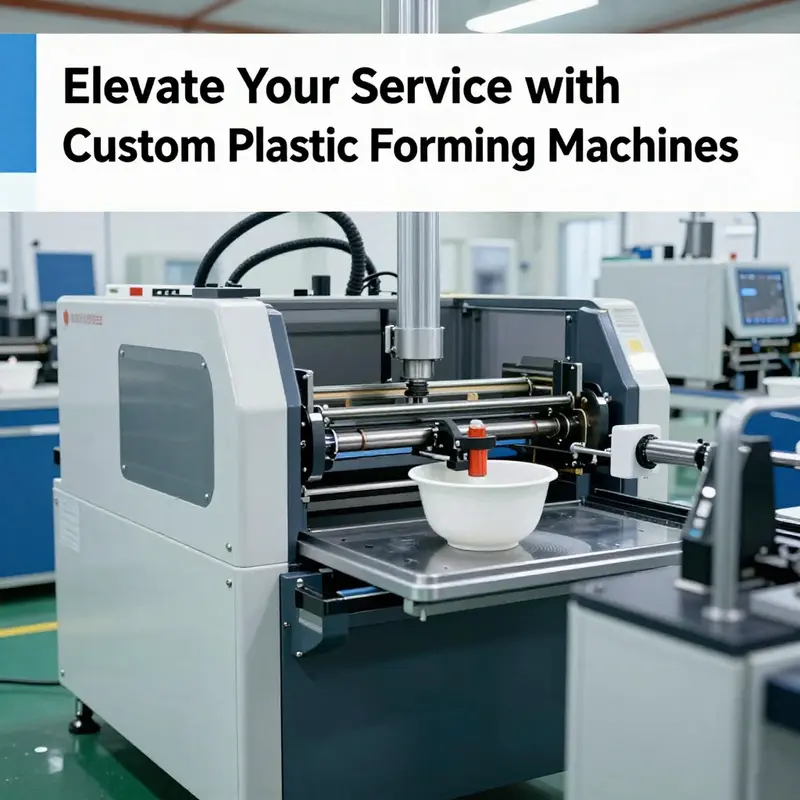
In the landscape of modern packaging, the demand for disposable bowls sits at the intersection of reliability, safety, and efficiency. The core of meeting that demand lies in the machines that shape, form, and finish these containers. A truly integrated custom plastic forming machine for disposable bowls is not merely a collection of individual steps; it is a cohesive, multi-station system that harmonizes feeding, heating, thermoforming, drawing, punching, cutting, and conveying into a single, synchronized workflow. When these steps flow together, the result is a production line that minimizes labor, reduces the potential for human error, and lowers the risk of contamination. The consequence for manufacturers is not only higher throughput but also a steadier supply of consistent, high-quality products that meet the stringent expectations of food safety and consumer trust.
From the moment raw material enters the system, the design philosophy of these machines emphasizes seamless transition between stages. Material feeding is engineered to deliver the correct quantity with minimal dwell, ensuring that each cycle begins with predictability. Heating and forming are tightly coupled so that the thermoplastic sheet reaches the precise viscosity and malleability needed for uniform draw and accurate mold filling. The thermoforming stage, often called drawing or forming, is calibrated to create the bowl geometry with dimensional fidelity. This is followed by an on-board punching and cutting process that shapes the rim, finishes any edge details, and removes flash in a single pass. Finally, the product is conveyed downstream in a controlled sequence to stacking or packaging stations. The integration is not a matter of convenience; it is a strategic approach to hygiene and efficiency. By eliminating separate post-processing steps, such as manual punching or transfer between machines, every contact point with the product is engineered to minimize contamination risk and maintain sterility while also reducing cycle times and labor costs.
The versatility of these integrated systems is essential in today’s market, where a single line may be tasked with producing a family of containers suitable for hot or cold foods, different portion sizes, and varying product shapes. The machine architecture supports an array of thermoplastic materials including PET, PS, PVC, and PP, each with its own processing window and performance considerations. PET’s stiffness and clarity, PS’s cost-efficiency, PVC’s toughness, and PP’s chemical resistance all influence mold design, heater profiles, and cycle timing. The ability to switch among materials without a fundamental redesign of the line is a hallmark of a truly customizable solution. In practice, this means a line that can be adapted to produce not only disposable bowls but also related food-contact containers such as coffee cups, yogurt cups, snack boxes, and clamshell packaging. The production leverage gained from a flexible machine is tangible: faster response to shifting demand, lower capital expenditure per product family, and a supplier ecosystem capable of supporting ongoing product diversification.
One of the most consequential benefits of this integrated approach is precision control. Modern integrated forming systems employ servo-driven mechanisms that manage mold clamping, material feeding, and synchronized movements with a precision that was once the realm of high-end aerospace or automotive tooling. Positioning accuracy within a few tenths of a millimeter translates into consistently shaped bowls, uniform wall thickness, and reliable stacking behavior. This precision is supported by robust pneumatic subsystems that provide rapid actuation for trimming, ejecting, and edge finishing, while maintaining repeatable force and response over millions of cycles. The lifecycle performance of these pneumatics is essential in a high-volume environment, where even small variances can compound into waste or downstream defects. In parallel, on-board programmable logic controllers and human-machine interfaces deliver real-time visibility into each cycle, enabling operators to adjust temperature, dwell time, part ejection, and cycle speed without interrupting the flow. The result is a production line that not only runs with high efficiency but can also be tuned quickly to meet evolving process windows, seasonal demand, or new product specifications.
Precision and automation extend beyond the machine’s core forming station. The capacity to manage batch codes, lot traceability, and quality checkpoints directly on the line supports the increasingly stringent regulatory and consumer requirements for food safety. Optional ink-jet printing for batch coding is integrated into the line, ensuring that every bowl bears traceable information without requiring separate handling steps. This kind of traceability is not merely a compliance feature; it also enhances quality management. When a defect is identified, the data captured at the source allows for rapid root-cause analysis and targeted adjustments to the process, rather than a broad, slow recall of products. The integrated system thus becomes a data-enabled asset that feeds into broader factory analytics and continuous improvement initiatives.
The practical implications of integration are most visible in throughput and footprint. A capable line can sustain 15 to 30 cycles per minute, depending on product geometry, wall thickness, and material. This rate, achieved through tight synchronization and optimized cycle timing, enables manufacturers to meet growing demand for disposable food containers while preserving margins. The line’s footprint is often more favorable than a patchwork of standalone machines because fewer manual transfers and fewer auxiliary handling devices are required. The reduced complexity not only lowers capital cost and energy consumption but also simplifies maintenance planning. When a single vendor delivers the full system, the maintenance and service experience becomes more straightforward: one point of contact, unified spare parts, and a coherent preventive maintenance schedule that minimizes unexpected downtime.
Safety and compliance form a core part of the design and operation of integrated plastic forming systems. The closed-loop control and automation reduce operator exposure to hot surfaces and moving parts. Cleanliness is enhanced by the elimination of manual post-processing steps that could introduce contaminants or require additional handling. Enterprises that aspire to meet international quality standards—such as CE and ISO certifications—will find that integrated lines align well with these expectations. A well-documented control architecture, clear changeover procedures, and consistent process validation become natural features of the system. With automation, the line also supports safer, more predictable shift handoffs and a smoother transition between different products without sacrificing hygiene or speed.
From a materials and design perspective, the integrated approach privileges a holistic view of product performance. The machine is aware not only of the geometry being produced but also of the material’s behavior under heat, draw forces, and cooling rates. This awareness influences mold design, heater zone segmentation, and the sequencing of forming and trimming actions. The result is bowls whose base and walls have uniform thickness, a meaningful factor in heat transfer during packaging, insulation properties for hot foods, and overall user experience in terms of grip and stackability. The broad material compatibility also enables manufacturers to repurpose lines for related packaging formats, such as yogurt cups or clamshells, with minimal downtime. The industry trend toward modular design supports this adaptability: machines are configured with swappable stations, quick-change tools, and standardized interfaces so that a line can switch from one product family to another within a short maintenance window.
The market pull toward automation and flexibility also intersects with sustainability objectives. An integrated line reduces scrap by improving material usage, because precise forming minimizes flash and ensures predictable trim waste. Energy efficiency is addressed through intelligent heat management and optimized cycle timing, reducing energy consumption per part. Waste handling and recycling streams can be integrated as well, aligning with environmental targets and cost control. In addition, because the process is closed and highly automated, the potential for human error that leads to waste is mitigated. The holistic view of the line—across feeding, heating, forming, punching, cutting, and conveying—encourages engineers to optimize the entire workflow rather than sub-optimizing individual steps.
In practical terms, manufacturers consider several factors when adopting an integrated forming solution. First, the line must be capable of handling the variability inherent in consumer demand, including product sizes and shapes. A robust control system, capable of rapid changeovers and reliable operation, becomes a competitive differentiator. Second, the line should support a clear path to scalability. High-speed performance in compact lines, coupled with the ability to plumb into larger automation ecosystems, allows facilities to ramp up output without reconfiguring the entire plant. Third, supplier support is crucial. A credible partner offers not only the equipment but also installation training, on-site commissioning, and ongoing after-sales service to sustain performance and uptime. These considerations align with the broader goal of returning value to the bottom line: improved productivity, reduced labor costs, minimized waste, and a predictable route to regulatory compliance.
It is also worth noting how the packaging ecosystem influences device choices and downstream compatibility. As packaging mixes become more sophisticated, lines may need to address eco-friendly alternatives and paper-based components, alongside traditional plastics. This context underscores the importance of compatibility across the entire packaging chain. For example, manufacturers may work with fiber-based bowls or composite formats in a multi-material strategy that pairs favorable heat handling with sustainable signaling on the package. The integrated forming machine supports such experimentation by offering modularity and the option to add or reconfigure stations without a full plant rebuild. In this sense, the technology becomes an enabling platform rather than a fixed asset. A company contemplating this path might explore how a broad family of containers can be produced on a single line, enabling faster response to market shifts while maintaining consistent quality and traceability across product families. For additional context on packaging formats and related consumer expectations, see the broader material ecosystem described in the industry blog resource on kraft paper bowls and their market use, which provides practical insight into how paper-based options are evolving alongside plastic solutions.
For readers who want to explore related packaging formats, one practical reference is a product page featuring disposable kraft paper bowls for food packaging with lids. This example demonstrates how packaging materials beyond plastics are shaping what manufacturers must be ready to support in their lines. You can learn more here: disposable kraft paper bowl for food package with lid. This link illustrates the broader context in which plastic forming lines operate, highlighting the need for adaptable, digitized, and traceable manufacturing environments that can handle a diverse range of container formats while preserving efficiency and quality on the line.
The final takeaway is that the value of an integrated custom plastic forming machine for disposable bowls lies in its ability to convert a sequence of mechanical operations into a single, disciplined flow. It is not merely about speed; it is about reliability, consistency, and the intelligence of the process. When a line is designed with end-to-end control, robust quality gates, and a clear path for changeovers, the organization gains a durable advantage. The production of disposable bowls—once a patchwork of discrete machines and manual interventions—can become a streamlined, automated, data-rich operation. In such a system, every cycle speaks to the larger goals of modern manufacturing: safety, efficiency, traceability, and the capacity to adapt quickly to a fast-changing market.
External resource: https://www.alibaba.com/product-detail/Custom-Disposable-Cap-Hot-Drink-Bowl-Coffee_1600382915887.html?spm=a2700.15577463.0.0.6d2c5b47oKsLQZ
Expanding Capacity: Large-Format Thermoforming for Versatile Disposable Bowl Production
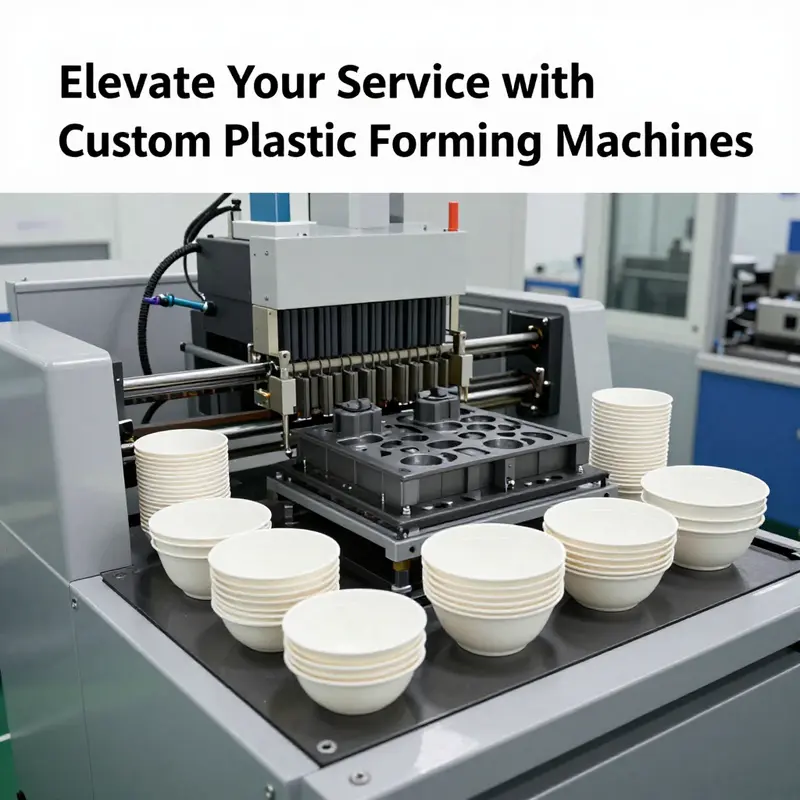
Producing disposable bowls at scale demands equipment that balances area, speed, and material flexibility. A large forming area is central to this balance. It increases output by allowing larger molds or multiple cavities. That, in turn, reduces cycle time per finished piece. But a broad forming platform alone is not enough. A machine must integrate reliable sheet handling, precise heating, robust forming and trimming, and flexible compatibility with common food-grade plastics. Together these capabilities create a production line capable of meeting diverse bowl sizes, shapes, and functional requirements.
A large forming area unlocks design freedom. Manufacturers can produce deep bowls, wide trays, or panels with complex geometry. With a mold size near 750×420 mm, for example, a single stroke can yield a larger bowl or multiple smaller bowls side by side. This reduces per-unit labor and improves material yield. Engineers can plan nest layouts that optimize film usage and minimize scrap. The result: higher throughput and lower material costs. When businesses face fluctuating order sizes, that flexibility is valuable. One tool can handle a small bespoke run or a continuous high-volume schedule without major changeovers.
Versatility also arises from material compatibility. Disposable bowls are commonly formed from PP, PS, PET, and HIPS. Each resin behaves differently in the heating, forming, and cooling phases. PP requires higher temperature and dwell control for deep draws. PET needs careful temperature control and stretch forming to maintain clarity and strength. HIPS offers impact resistance, while PS is easier to thermoform into thin-walled shapes. A truly versatile machine provides adjustable heating zones, variable clamp force, and programmable forming profiles adapted to each polymer. That adaptability reduces setup time and ensures consistent wall thickness and edge definition for food-safe containers.
Automation is necessary to exploit a large forming area efficiently. Manual feeding and unloading create bottlenecks and waste. Fully automated sheet handling systems feed film accurately across wide spans, maintaining tension and preventing misalignment. Automated demolding, trimming, and stacking complete the cycle. An integrated servo-driven conveyor keeps pace with the forming station. Precision robotics can pick delicate bowls without distortion. Sensors and metrology systems verify each part before packaging. When automation ties into a central PLC and HMI, operators can monitor production in real time and switch between product programs with minimal downtime.
Thermoforming techniques differ, but the principle remains the same: heat a thermoplastic sheet until it becomes pliable, shape it over a mold, then trim and finish. For a large forming area, the heating system must ensure uniform temperature across the entire sheet. Uneven heating leads to localized thinning, weak corners, or incomplete draws. Infrared heaters with zoned control, or forced convection systems, accomplish even spread across broad widths. Some machines employ pre-stretch or plug-assist forming to control material flow into corners and deep sections. The combination of large mold area and controlled pre-stretch yields deep, uniform walls in bowls with minimal thinning.
Mold design and tool-changeability determine how quickly a line can switch products. For a supplier serving multiple customers, rapid mold exchange reduces downtime. Large-format molds require precise alignment features and secure clamping. Quick-release systems and standardized mounting plates speed tool swaps. Cooling channels built into the mold dissipate heat rapidly, enabling shorter cycle times even for deep draws. Additionally, modular inserts permit minor shape or size variations without swapping the entire tool. For manufacturers offering various bowl profiles, this modularity proves cost-effective.
Waste reduction is another benefit of a larger forming area when managed properly. Smart nesting algorithms position multiple cavities to minimize scrap. Perimeter and webbing designs conserve material between parts. When paired with roll-to-sheet or continuous-sheet systems, large-format machines can optimize film feed to match nest patterns precisely. Regrinding and recycling trimmed webbing onsite reduces disposal costs and supports sustainability goals. In markets increasingly sensitive to plastic waste, offering efficient material use and recycling capability becomes a market differentiator.
Quality control scales with production area and speed. Large molds magnify forming errors, so inline inspection is essential. Vision systems detect flash, incomplete forms, and dimensional deviation. Wall thickness gauges verify structural integrity. Leak testing verifies bowl seals for liquid or soup applications. When these checks are performed inline, defective parts are removed before packaging. This reduces returns and maintains customer trust. Data collected by inspection systems also feed statistical process control. Over time, machines learn optimal process windows for each material and mold, reducing setup variability and improving yield.
Operator ergonomics and maintenance access deserve attention in large-area machines. Wide clamping areas mean heavier parts and larger fixtures. Designers place control panels and tool-change access points within comfortable reach. Lift assists and hydraulic or electric hoists ease handling of heavy molds. Maintenance-friendly layouts expose wear parts, such as bearings, belts, and heaters, for quick replacement. Remote diagnostics and modular control components reduce mean time to repair. A machine that minimizes downtime enhances overall equipment effectiveness and preserves the advantage a large forming area provides.
Energy use scales with forming area and cycle rate. Heating large sheets consumes significant power. Efficient heater design and insulated chambers reduce heat loss. Recovering waste heat from process exhaust or using lower-mass heated elements can cut operating costs. A machine that balances heating power with rapid forming and cooling achieves lower energy per part. For manufacturers competing on price, these savings compound quickly. In addition, modern controllers manage energy demand by staggering heating zones and matching power draw to production needs.
Safety remains a priority when automating large machines. Wide moving platens and powerful clamps can pose risks. Guarding, interlocks, and light curtains protect personnel without impeding throughput. Emergency stop systems and fail-safe braking are standard. Safety features must integrate seamlessly with automation so that production stops predictably without part damage. Training and clear maintenance procedures reduce human error during tool changes and servicing. A safe workplace reduces incidents and supports continuous operation.
Scale often brings new opportunities in product variety. A machine with a 750×420 mm mold area supports a wide product mix. Restaurants and food delivery businesses require bowls for salads, soups, and hot meals. Packaging designers can iterate shapes for display or stackability. Makers of multi-compartment bowls can use inserts or multi-cavity molds to create combined portions in one pass. For customers prioritizing branding, deeper areas can accept embossed logos or different textures. Versatility in forming area encourages creativity in product design and opens additional revenue streams.
Supply chain considerations shape equipment selection. A large-format thermoforming machine should fit into existing material handling and finishing lines. Compatibility with standard film widths and roll diameters reduces material sourcing complexity. Local service availability and spare parts logistics also influence the choice. Suppliers offering training, installation, and commissioning support accelerate ramp-up. For companies expanding capacity, machines that integrate with robotic palletizers and downstream packaging are easier to build into larger automated facilities.
Regulatory and food-safety compliance is non-negotiable. Finished bowls must meet migration and hygiene standards for food contact. Machines designed for food packaging often feature stainless-steel contact points, smooth surfaces for easy cleaning, and closed systems to reduce contamination risk. Traceability features, such as batch codes and production logs, help manufacturers respond to audits. Material compatibility with approved food-grade polymers ensures compliance across markets.
Choosing a large-area, versatile forming machine means evaluating long-term value. Upfront cost is only part of the picture. Consider throughput per shift, changeover time, energy consumption, scrap rate, and maintenance costs. A machine that lowers labor and reduces scrap can pay back faster than a cheaper, smaller alternative. Flexibility in mold design and material handling protects the investment against future product changes. When capacity scales with demand, businesses can respond quickly to new contracts without buying additional equipment.
To illustrate practical capabilities, reference designs of high-speed, fully automatic thermoforming lines show how large mold areas translate to real-world benefits. These systems often support a 750×420 mm mold size, accept PP, PS, PET, and HIPS, and include automated trimming and stacking. They combine zoned heating, servo-driven sheet handling, and modular tooling. Such configurations handle bowls, cups, and containers in a single platform. When combined with recycling and inline inspection, they offer a complete production solution.
Investing in a large forming area and versatile thermoforming line positions manufacturers to serve an expanding disposable bowl market. The machine becomes a tool for innovation, enabling new shapes, faster cycles, and lower costs. Successful operators pair the equipment with optimized molds, effective nesting strategies, and robust automation. They also factor maintenance, safety, and regulatory compliance into procurement decisions. The result is a manufacturing capability that delivers high-quality bowls across materials and formats, with repeatable performance and predictable economics.
For manufacturers considering this path, exploring equipment specifications and real-world case studies provides clarity. Look for machines with controlled heating zones, reliable sheet handling, modular tooling, and integrated automation. Evaluate supplier support and parts availability. Test runs with your chosen polymer and mold design reveal process windows and expected yields. With a well-chosen large-format thermoforming system, disposable bowl production scales efficiently while preserving flexibility and quality.
For a relevant example of market-ready disposable bowls that align with thermoformed product use cases, consider a custom disposable kraft paper bowl with PET lid, which demonstrates crossover demand for sturdy, food-safe containers across materials: https://greendispopack.com/product/custom-disposable-kraft-paper-bowl-take-away-kraft-paper-salad-bowl-with-pet-lid/.
For further technical reference on high-speed automatic thermoforming machines designed for cups, bowls, and boxes, consult detailed manufacturer listings that include mold size and material compatibility: https://www.alibaba.com/product-detail/High-Speed-Automatic-Plastic-Cup-Bowl-Box_1600835247915.html.
Final thoughts
Custom plastic forming machines for disposable bowls present a significant opportunity for food businesses aiming to enhance their operations. With high-speed automatic capabilities, integrated processes that maximize efficiency, and the versatility to mold various sizes and shapes, these machines cater to the unique demands of bubble tea shops, restaurants, food trucks, and catering services alike. By investing in such technology, businesses can not only increase their production efficiency but also ensure they meet customer expectations for quality and sustainability. As the industry continues to evolve, embracing these advanced solutions will equip operators with the tools necessary for success in a competitive marketplace.