

Custom logo paper cups are more than just a vessel for beverages; they play a pivotal role in the branding strategy for bubble tea shops, restaurants, food trucks, catering services, and event planners. These cups not only enhance brand visibility but also create memorable experiences for customers. In this discussion, the significance of material considerations, innovative printing techniques, certification standards, and cost-effectiveness will be examined. Each chapter aims to provide insights into how investing in custom logo paper cups can elevate brand identity while maintaining functionality and sustainability.
Material Mastery Behind Custom Logo Cups: From Coatings to Craft for Brand Impact
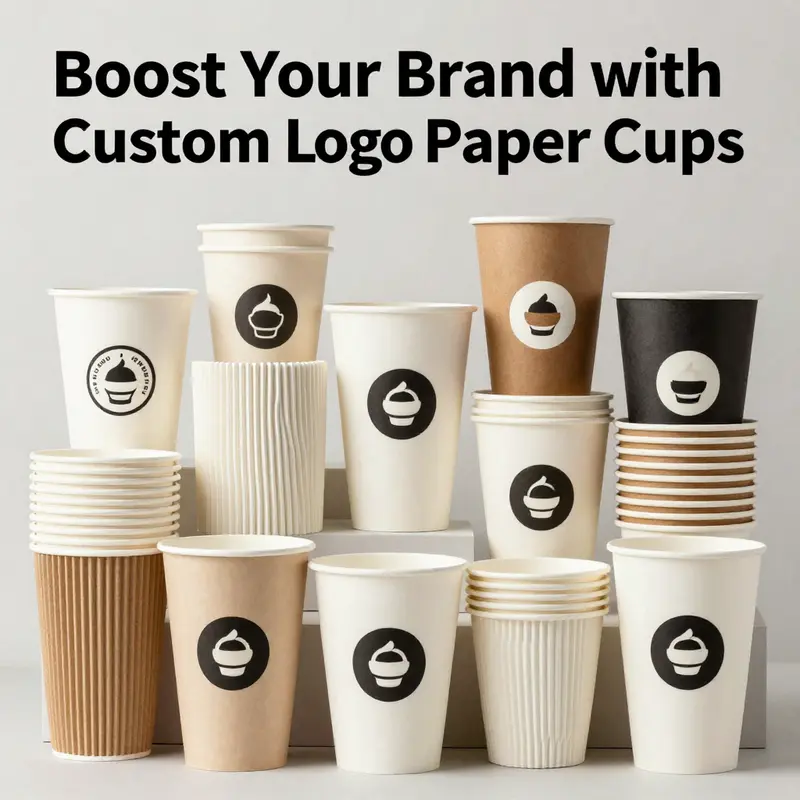
A custom logo on a paper cup is more than a mark of branding; it is a tactile promise that a beverage, moment, and company share a single, cohesive identity. The material choices behind that cup—coatings, walls, finishes, and the very grain of the paperboard—shape how the logo appears, how the cup performs, and how a consumer experiences a brand during a short, daily ritual. When a business sets out to imprint its logo on a cup, it is negotiating a triad of considerations: cost, functionality, and visual impact, all within the constraints of sustainability. The resulting product must stand up to heat, moisture, handling, and time, while presenting a crisp brand image that endures from first glance to the final sip. This is where material science meets design philosophy, and the path to a successful custom-logo cup lies in understanding the delicate balance among structure, surface, and soul of the cup.
Coated paperboard is the workhorse of most custom logo cups. The coating, often a polyethylene barrier, serves essential practical roles. It creates a reliable moisture seal, prevents leakage, and keeps the inner lining hygienic during use. Without a robust coating, a cup would sag under the pressure of hot liquids, and logos would blur with ink migration. Yet this very barrier complicates recycling. PE-coated paperboard requires specialized facilities to separate plastic from fiber, complicating end-of-life processing for brands that champion circularity. This recycling challenge does not negate the value of coatings but reframes decisions about coatings, surface finishes, and aftercare. In this space, many manufacturers blend performance with responsibility. They explore coatings that provide moisture resistance while remaining compatible with existing recycling infrastructure. This includes delving into alternative barrier technologies or using coatings that reduce barrier mass without sacrificing integrity. The result is a cup that performs where it must—maintaining structure and hygiene—while offering a more straightforward path for waste streams that prioritize reuse and recovery.
For branding, the surface finish is as influential as the ink itself. The outer surface must be printable with high fidelity and long-lasting color, even under conditions of heat and moisture. Water-based inks have become a common choice for many manufacturers because they align with environmental values and offer clean, vibrant color expression on coated stock. The choice of finish—gloss, semi-gloss, or matte—can change how a logo reads in a quick interaction. Gloss surfaces tend to enhance color brightness and make line work pop, while matte finishes can diffuse glare and impart a premium, tactile feel that some brands associate with sustainability or craft. Texture adds another dimension; premium kraft or white-coated papers can be paired with subtle textures that catch light and invite touch, elevating a logo’s perceived quality. Gold or silver foil accents, though less common than standard printing, can signal luxury and craft when used sparingly and with careful color management. The printing process itself matters as much as the pigment. Six-color printing enables a broader color gamut, better skin tones in photography-inspired logos, and more faithful reproduction of brand palettes. However, achieving sharp, durable edges requires a controlled printing workflow, precise ink adhesion, and compatible coatings that resist cracking or feathering when the cup is handled or stacked.
The grade of the paperboard also plays a critical role in how a logo lands on the eye. Higher-grade stock supports crisper ink adhesion, delivering sharper lines and deeper color saturation. The surface polish interacts with the chosen ink system; even with high-end inks, suboptimal stock can yield muddy edges or soft contrasts. For brands that rely on precise color matching across multiple touchpoints, the choice of stock becomes part of the brand’s color story. A bright white liner can offer higher contrast for logos with intricate detail, while a natural or kraft exterior can impart warmth and sustainability cues that resonate with eco-conscious consumers. The inner lining, too, must be food-safe and durable, forming a clean barrier against the liquid while remaining compatible with the outer graphics. The interplay between inner and outer surfaces is not merely technical; it is an integrated design decision that influences perceived value, readability, and the consumer’s willingness to choose that cup again.
Thermal performance cannot be separated from branding when hot beverages are involved. Double-wall constructions, which feature an air gap between two layers, deliver superior heat retention and a barrier that protects hands from hot surfaces. This insulation supports longer, comfortable holds, which is meaningful for busy cafes, office settings, or events where customers linger. In such contexts, a brand’s logo benefits from repeated exposure as cups are handled and passed along. In contrast, single-wall cups offer cost-effective simplicity and are well-suited for cold drinks or quick-service scenarios where cost per unit is a decisive factor. A brand aiming to project reliability and value may opt for double-wall variants to align with a premium positioning, while a budget-conscious campaign might favor single-wall options with bold, saturated graphics that still convey a strong identity. Either approach must harmonize insulation performance with surface treatment to protect the logo during temperature changes and handling.
Beyond structure and insulation, the chemical language of the cup—the coatings, inks, and adhesives—speaks to a brand’s ethics as much as to its aesthetics. Many modern formulations emphasize low-migration inks and food-safe coatings, a commitment to consumer health and regulatory alignment. The coating choice—whether traditional PE, PLA-based alternatives, or other barrier chemistries—carries implications for recyclability and compostability. While PLA coatings may offer some compostability advantages in specific facilities, they are not universally compatible with all recycling streams. Consequently, when a brand designs for sustainability, it must map its intended end-of-life path and select materials and finishes that align with that pathway. Certifications and standards—such as those that verify environmental responsibility and food safety—become part of the selection criteria. A product that carries an assurance mark from a recognized standard can bolster consumer trust and support broader corporate sustainability goals. In practice, this means choosing stock, coatings, and inks that not only look good on the shelf but also align with transparent supply-chain standards and responsible processing.
The conversation about material choices also embraces cost, scalability, and vendor reliability. Bulk projects demand tiered pricing, often with substantial discounts at scale, which can influence the material mix brands choose. Large orders require consistent supply chains, predictable lead times, and the ability to tailor dimensions—ranging from small 2.5-ounce cups to larger 16-ounce variants—without compromising image fidelity or performance. The capacity to pair cups with matching lids, consistent color management across runs, and reliable color-to-ink matching becomes essential for a seamless consumer experience. In this domain, the material decision is not isolated from production realities; it echoes through the supply chain, affecting packaging efficiency, waste reduction, and the ability to meet tight delivery commitments. The best material strategy, therefore, balances cost with the sustainability profile, functionality, and the vividness of the brand’s logo.
The path to an exceptionally branded cup also entails thoughtful supplier selection and ongoing collaboration. Brands increasingly demand transparency about where materials come from, how coatings are applied, and how end-of-life processing is accommodated. Certifications such as FSC or equivalent standards help ensure that the raw stock comes from responsibly managed forests and that the manufacturing process adheres to defined environmental and ethical practices. The interplay between branding and sustainability has grown into a core consideration; a strong logo loses some of its impact if the cup fails the consumer’s expectations for responsible sourcing and environmental stewardship. In this sense, material choices become storytelling tools. Each layer—the paperboard, the coating, the inks, and the inner lining—tells a part of the brand’s story about quality, care, and regard for the environment. The color you see is not only a design flourish but a testament to a chain of decisions that starts with the raw material and ends with a consumer experience.
For readers who want a concrete example of sustainable, logo-ready cups in action, consider exploring the broader ecosystem of eco-conscious disposables that combine custom branding with responsible design. This path emphasizes not just the look of the logo, but the lifecycle narrative that surrounds it. The branding potential grows when the material conversation is integrated with printing strategy, surface finishing, and end-of-life considerations. A brand that can articulate its choices—why it selected a particular coating, how it ensures ink durability, and how it plans to handle recycling—builds trust with customers who value both aesthetics and accountability. The result is a cup that communicates efficiency in form and integrity in function, a tiny yet powerful ambassador for the brand at every sip.
External resource: https://www.paperworld.com/international-paper-cups-guide-applications-types-practical-uses-engineering/
Internal resource: For brands seeking an option that aligns with eco-friendly printing and packaging goals, see this practical overview of disposable eco-friendly custom paper coffee cups with lids. eco-friendly custom paper coffee cups with lids.
From Plate to Palette: Mastering the Printing Techniques Behind Logoed Paper Cups
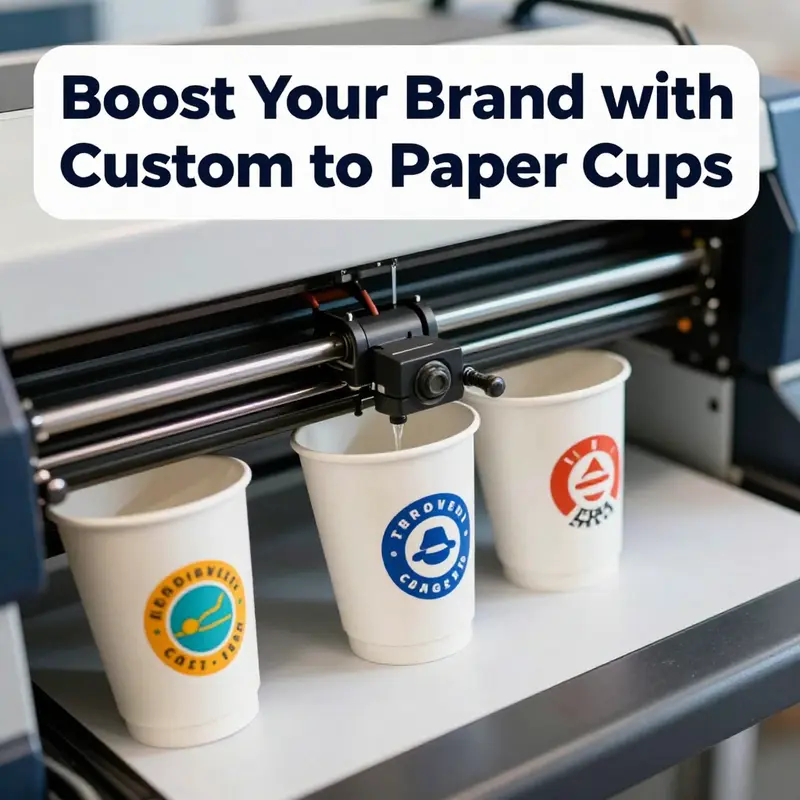
Logoed paper cups are more than vessels for beverages; they are moving billboards that ride the flow of a customer’s day. The printing technique chosen to affix a brand’s logo to a disposable cup determines not only how vivid and durable the image appears, but also how reliably the cup can withstand heat, moisture, and handling through thousands of cycles in a bustling cafe or event hall. In this chapter we explore the technical choreography that turns a simple sheet of paper into a high-performing, brand-bearing surface. We look at the three primary printing methods that dominate the market today—flexographic printing, digital printing, and offset printing—and we consider how each method aligns with different business needs, from mass production to bespoke, short-run campaigns. Along the way, we reveal how ink chemistry, coating choices, and structural cup design interact with these processes to deliver logos that stay sharp, colors that stay true, and surfaces that remain safe for hot drinks and cold beverages alike. The story of logo printing on cups is really a story about balancing art and engineering, aesthetics and practicality, speed and fidelity.
Flexographic printing is the workhorse of high-volume cup production. Its long history and relentless efficiency make it the default choice when tens of thousands, or even hundreds of thousands, of cups must roll off a press every day. Flexography operates with flexible rubber or photopolymer plates that transfer fast-drying inks onto the curved, cylindrical surface of a cup. The inks are typically formulated to be food-safe and quick-drying, and in practice many producers favor soy-based or water-based formulations for both performance and environmental considerations. The real strength of flexo lies in its ability to reproduce solid blocks of color and intricate logos with remarkable consistency across a full run. Registration—the precision with which every color layer lines up from cup to cup—is essential, and modern flexo presses use automated controls to maintain alignment as substrate tension shifts across a long run. The result is a uniform image that remains legible and visually compelling across tens of thousands of units, a critical quality for brands that count on everyday visibility.
But the technology is not without its constraints. Because the ink sits on the cup’s outer surface and the substrate flexes with each rotation, ink spread and bleed can occur if the coating layer does not provide an optimal barrier. This is where substrate science meets print engineering. Cup walls may use different thicknesses or coatings to prevent ink migration, and many producers employ barrier layers that resist the wicking of ink into the paper fibers. The choice of coating—such as PLA or other biodegradable or compostable films—can influence not only print fidelity but end-of-life outcomes for the cup. In practice, a brand that wants bold, saturated colors on a large-scale cold or hot-drink cup will often opt for flexography because it delivers speed, cost-per-unit advantages, and dependable color reproduction. The trade-off is that ultra-fine gradients or highly detailed photographic imagery can be more challenging to reproduce with perfect fidelity on a curved surface at scale, and special finishes may add complexity to the process.
Digital printing has emerged as the flexible alternative to flexo, especially for short runs, customization, and rapid prototyping. Unlike flexo, digital printing does not require printing plates. Instead, it deposits ink directly from digital data onto the cup surface, a capability that opens doors to personalization, seasonal campaigns, and localized branding without the risk of inventory write-downs. The technology is well suited to small batches and dynamic designs, including gradients, fine lines, and complex imagery that can be difficult to achieve with traditional flexo. One notable advantage is the speed-to-market potential. In an era where a design can be mocked, approved, and produced within days or even hours, digital printing provides a nimble option that aligns with the modern demand for customization.
However, digital printing has historically carried a cost-per-unit disadvantage for large orders. In practice, the economics have shifted as printing equipment has evolved, with improvements in ink formulations, curing methods, and feed systems that push the per-unit price lower and the print quality higher. The inks used in digital cup printing are often UV-curable or water-based, selected for safety and regulatory compatibility with food contact materials. Digital printing truly shines when the design requires intricate color transitions, soft gradients, and high-resolution logos. The ability to deliver a personalized look on demand—such as a custom event logo, a promotional pattern, or a localized color scheme—can transform a standard disposable cup into a targeted marketing channel. In a growing number of cases, brands are pairing digital print runs with on-demand design tools that allow customers or partners to tailor graphics while still maintaining brand integrity through pre-approved color libraries and templates. A practical takeaway for marketers is to balance the perceived luxury of a custom design with the practical realities of production costs, lead times, and the intended consumption scale.
Offset printing—though less common for standard paper cups due to its higher setup costs and longer lead times—still has an important role when the highest possible image fidelity is required. Offset’s advantage lies in its exceptional detail, color richness, and smooth gradations, which can produce photographic-quality imagery on cup surfaces. In premium or specialty cups where the design must reproduce near-perfectly, offset can be a compelling option. The process begins with transferring ink from a metal plate to a rubber blanket and then to the cup surface. Because of the geometry of a cup and the need for precise registration across multiple colors, achieving flawless alignment can demand meticulous prepress work and dedicated machinery. For marketers who demand a near-seamless photographic presentation, offset offers a level of fidelity that can be hard to achieve with flexo or digital alone. The trade-off, once again, is cost and turnaround time: offset remains best suited to limited runs or high-end presentations where the image’s fidelity justifies the overhead.
Beyond the method itself, successful logo printing on cups hinges on a careful alignment of ink chemistry, substrate preparation, and surface engineering. Food-safety considerations demand inks that do not leach harmful substances when in contact with hot beverages. Soy- or vegetable-oil-based inks have gained traction because they satisfy both safety concerns and sustainability targets. The coating on the cup—whether a standard barrier coating or a more modern PLA-based layer—plays a pivotal role in ensuring that the ink remains crisp and legible over the cup’s surface lifetime. Some cups employ double-wall or ripple-wall constructions to improve insulation, and these complex structures require the printing system to accommodate varying wall thickness without compromising image integrity. A modern production line often integrates prepress testing to assess color vibrancy, bleed resistance, and edge sharpness on the actual cup substrate, mitigating surprises in high-speed production.
The end-to-end process also includes a growing suite of value-added services that assist brands in visualizing and controlling the final appearance. Many suppliers offer a robust prepress workflow: logo files are prepared with color management in mind, and a 3D preview can be generated in a matter of hours or days to allow designers to see how the logo will wrap around a cup’s curvature before printing even begins. Finishes such as gloss, matte, or metallic foil stamping are now commonly available, allowing brands to elevate a logo’s presence without departing from core print methods. The ability to preview a logo on a curved surface helps avoid misalignment or color fatigue that can occur when the design is bent over a cylinder. In some cases, the same base design can be tested across multiple finishes to determine the most effective combination for the brand’s narrative—whether it’s a bold, high-contrast mark for a coffee cup or a subtle, refined impression for a premium single-serve product.
From a design perspective, color management remains a critical discipline. While digital workflows have tightened color control, the transfer of a design from screen to cup still requires careful calibration. Pantone or CMYK workflows may be used, but the final decision often rests on print trials conducted on the actual cup stock. The curvature of the cup and the presence of a lip or seam introduce opportunities for color shifting or misregistration, so brands frequently commission pilot runs or small-batch tests to confirm how the logo behaves in real production conditions. This is where the practical artistry of packaging meets the discipline of manufacturing: the designer’s intention must survive the translation from digital file to physical product, across thousands of identical surfaces. It is precisely this translation that turns a simple logo into a consistent consumer experience.
For brands wrestling with the decision matrix, the choice of printing method should align with scale, speed, and the desired branding impact. If the objective is mass awareness with near-constant availability, flexography’s efficiency and reliability offer a clear path to broad distribution. If the goal is a highly personalized event or product line with rapidly changing designs, digital printing provides the flexibility to produce limited runs with high fidelity and quick turnarounds. If the highest possible image clarity is non-negotiable for a premium line, offset printing may justify the extra lead time and cost. In practice, many programs blend approaches, reserving digital or offset for limited editions or pilot programs while maintaining large-volume production with flexography for core designs.
As a practical takeaway for teams architecting a logo program, consider exploring a modular approach to design elements. A strong, bold logomark can be carried across all methods, while secondary elements adapt to the print process and stock constraints. The material choice—single-wall, double-wall, or ripple-wall—will influence how colors render and how the ink adheres under heat and moisture. The coating and barrier layers should be paired with the chosen ink system to avoid bleed and ensure longevity, especially in hot beverages where the cup surface faces more intense stress. If you are testing the waters with a new brand impression, a short-run digital print with a proofed, color-accurate prototype can confirm that the final appearance aligns with brand expectations before moving into larger flexographic production.
For teams seeking a concrete path to action, one may begin with a small pilot: upload your logo, select a few stock cup sizes, and request a run across a couple of printing methods to compare outcomes. The ability to preview a 3D rendering within a few hours and to review a handful of finished samples can save weeks of revisions later. When the design is locked, you can scale production through a single method or distribute across two methods to optimize cost and speed. The key is clear communication between the design studio, the prepress team, and the production line, ensuring that color, coverage, and finish reflect the brand’s intent on every cup that leaves the plant floor.
For readers seeking to explore concrete options beyond this narrative, consider a practical example of a supplier that specializes in customized disposable cups. An accessible way to experience the process is to browse a catalog and, if possible, request a sample set of printed cups before committing to a full run. A direct link to a supplier’s offering of custom-printed disposable logo cups can illustrate how a logo design translates into real-world results across sizes and finishes: custom-printed-logo-disposable-6oz-8oz-9oz-paper-coffee-cup. This example can help teams visualize the practical implications of each printing method in terms of color fidelity, edge sharpness, and the tactile feel of the coating.
The broader takeaway is that printing techniques are not a single choice but a spectrum of options that must harmonize with product design, brand storytelling, and operational realities. The cup’s function—holding hot or cold beverages—demands inks and coatings that endure moisture, temperature swings, and repeated handling without compromising safety or visual identity. The cup is a tiny stage for branding, and its success hinges on a well-cast collaboration between designers, prepress technicians, and production engineers who understand how the plate, the ink, and the substrate speak to one another under real-world conditions. When these voices align, the logo on a paper cup becomes more than a mark; it becomes a memorable part of the customer’s experience, a consistent cue of quality and personality that travels from the coffee bar to the street, and into the broader narrative of a brand’s presence in everyday moments.
External resource for further reading: https://www.packagingdigest.com/paper-cup-printing-technologies
How Certification Shapes Safe, Sustainable Paper Cups with Custom Logos
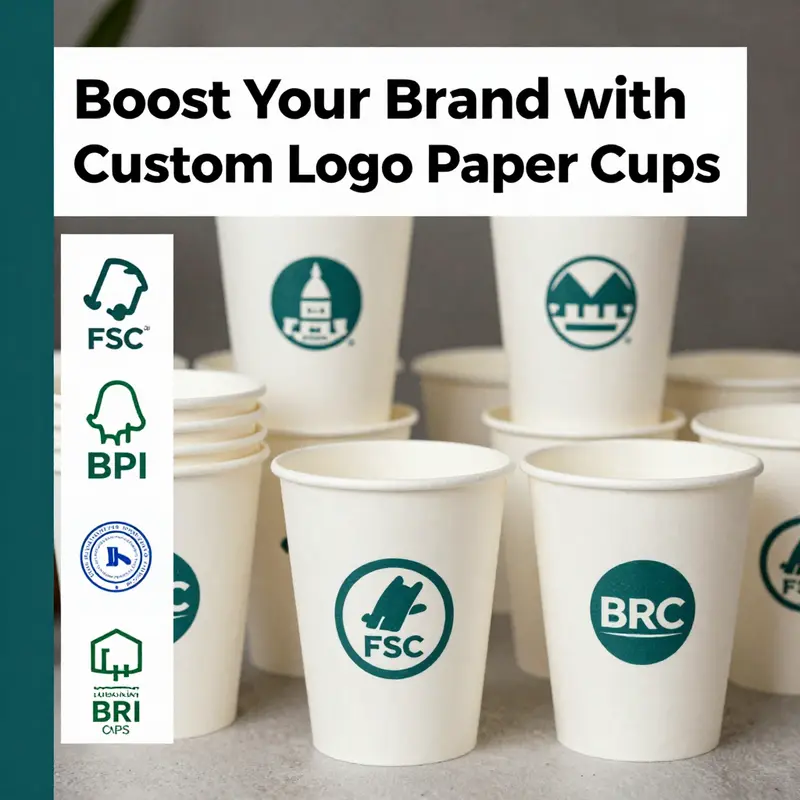
Certifications define more than compliance; they shape market access, customer trust, and the lifecycle of a custom logo paper cup. For any business that prints a logo on disposable cups, certifications are the backbone that connects material choice, printing processes, and end-of-life handling to real-world expectations. They prove a cup is safe to hold a hot beverage, that inks won’t migrate into food, and that environmental claims are credible. They also unlock sales channels and simplify procurement for corporate customers with strict standards.
A paper cup’s compliance journey begins with food-grade safety. Regulatory marks from authorities such as the U.S. food regulator and established European food-safety frameworks confirm the materials, coatings, and inks are safe for contact with food and beverages. These certifications require specific migration testing and chemical screening. Testing looks for contaminants, heavy metals, and plasticizers in coatings and inks. It also verifies that any barrier layers—whether polyethylene (PE) or compostable polylactic acid (PLA)—meet thresholds for migration and do not break down into harmful compounds at typical service temperatures. Documents from accredited test labs provide traceable evidence that the printed cup meets these safety limits.
Beyond basic safety, retailers and event organizers increasingly ask for independent third-party verification. Audit and inspection reports from recognized testing bodies reassure buyers that claimed standards were validated under controlled conditions. They also show a supplier’s quality-management systems are robust enough to keep production consistent. The value to a brand is twofold: consumers get a safe product, and procurement teams gain paperwork that eases risk assessments.
Environmental certifications translate sustainability statements into measurable criteria. Extended Producer Responsibility (EPR) schemes, especially in Europe, require manufacturers and importers to support the end-of-life management of packaging. When a cup is marketed as recyclable or compostable, EPR alignment shows that the product’s lifecycle has been considered, and that obligations for waste collection and processing are accounted for. For compostability claims, third-party industry standards demand testing for biodegradation under defined conditions, verifying that materials break down in industrial composting environments without leaving ecotoxic residues.
Forest and fiber sourcing also matters. Certification from a recognized forestry standard confirms the paper fibers come from responsibly managed sources. That standard gives buyers confidence that the raw material choices for their branded cups support sustainable forestry practices. This is particularly important for companies that emphasize ethical sourcing and need consistent messaging across product lines.
Quality and safety go hand in hand with international regulatory marks. Conformity assessments for markets in the European Economic Area or inspections required for import into certain countries serve two roles. First, they ensure the product meets local regulatory thresholds. Second, they reduce the administrative friction of cross-border sales. For sellers targeting multiple territories, these marks are gateways. They reduce the need for repeated tests and support faster shipping and distribution.
Printing and finishing add another certification layer. High-resolution prints, metallic foils, and specialty varnishes can all introduce chemical components. Responsible manufacturers run checks specific to printed items. These include migration tests of inks and varnishes, assessments for allergenic compounds, and evaluations of how heat affects barrier layers when a cup holds boiling liquids. Certificates that specifically reference food-contact suitability of inks and coatings are vital when logos use metallic effects or full-color transfers.
Certifications matter operationally as well. Factories that carry international social compliance or quality-management standards demonstrate systemic controls. These audits examine supplier traceability, worker conditions, and product consistency. They reduce reputational and supply-chain risk for brands ordering custom cups in bulk. When a supplier can combine production volume with documented audits, a buying brand spends less time verifying downstream compliance and more time refining their visual identity.
Selecting the right certifications begins with understanding where cups will be used and sold. Cups intended for domestic retail in one region only need to meet local food-contact rules. But if cups will be exported or used in multi-national campaigns, a layered certification approach is wiser. Start with core safety certifications, add environmental proof points for markets that enforce recycling or composting, and include quality-system audits that buyers expect from large-scale suppliers.
Due diligence is practical, not theoretical. Brands should request full certificate copies and recent lab reports before placing an order. Ask for batch-specific test summaries when production ramps up. Confirm certificate scope and expiry dates. Watch for certificates whose scope is limited to raw materials rather than finished products. Finished-product certification is what matters for branded cups, since printing and finishing can change compliance profiles.
Sampling and independent testing are smart steps. A supplier can provide certificates, but on-site tests of final samples simulate real use. Labs can run hot-fill tests, migration panels, and compostability trials if required. Independent sampling also guards against certificate misuse. This practice keeps liability low and builds a defensible record should compliance questions arise later.
Traceability complements certificates. Accurate paperwork should link pulp sources, coating types, ink formulations, and production batches. Traceability allows rapid investigation if a problem appears. It also helps brands make incremental improvements, such as switching coatings to reduce plastic content, or selecting inks certified for food contact that are free of certain restricted substances.
Practical label disclosures matter. Where law requires it, cup sleeves, lids, or packaging should carry recycling and disposal information. Clear labeling helps end users make the right choice and reduces contamination of recycling streams. It also aligns with regulated marketing claims: a validated compostability claim should be paired with disposal guidance that steers cups toward industrial composting facilities.
Certification decisions influence design choices. For hot beverages, double-wall or corrugated cups require barrier layers and adhesives that meet the same safety criteria as single-wall cups. If a brand wants a kraft aesthetic, they must ensure the unbleached fibers and chosen coatings meet food-contact and environmental standards. Metallic foil accents may look premium, but they can complicate recyclability and compostability. Design teams should work with compliance specialists to find finishes that balance visual impact with certified performance.
Finally, certification strategy supports pricing and procurement. Certified products may command higher per-unit costs, but they reduce long-term risk. They expand market access and often shorten approval timelines for corporate contracts. Volume discounts and reliable factory relationships can offset higher unit prices. The goal is to select certified solutions that match a brand’s sustainability messaging and distribution ambitions.
For brands aiming to balance visibility with responsibility, certification is a design constraint and an opportunity. It ensures logos appear on cups that customers can trust. It simplifies vendor onboarding for large buyers. It clarifies end-of-life messaging for consumers. And most importantly, it creates a transparent record that links raw materials, manufacturing methods, and lab-verified performance. When evaluating suppliers, request finished-product test reports, check certificate scopes, and insist on traceability from fiber to finished cup. For a practical example of an eco-friendly accessory that supports certified recycling streams, see the eco-friendly cup holders provided by this supplier: eco-friendly recyclable pulp 2/4 cups coffee take away cup holder.
For technical reference on how food-safety and environmental standards apply to printed paper cups, consult established guidance on quality and standards for paper cups at this resource: https://www.mypapercups.com/quality-standards.
Brand on a Cup: The Economics of Sourcing Custom-Logo Paper Cups

Branding lives on a cup as surely as it does on a storefront façade. A custom-logo paper cup is more than a container; it is a moving billboard that travels from the coffee bar to the commuter’s hand, across desks, events, and lobbies. The power of this small packaging piece lies not just in its surface print but in its ability to reinforce memory, shape perception, and extend a brand narrative into everyday rituals. Yet the promise of branding on a disposable vessel comes with a deliberate calculus: the focus must be on cost effectiveness without compromising quality, safety, or sustainability. In this chapter, we explore the economics of sourcing custom-logo paper cups as a decision framework that reconciles price with performance, vendor reliability with environmental responsibility, and branding impact with procurement practicality. The argument rests on a simple premise: the cheapest unit price rarely yields the best long-term value if it undercuts durability, print fidelity, or supplier continuity. As brands scale up campaigns or steady their day-to-day service, the true measure of cost effectiveness is the total cost of ownership across the cup’s lifecycle, not the price tag printed on a single unit today.
At the heart of cost effectiveness is volume. Economies of scale fundamentally reshape unit costs. When orders reach tens or hundreds of thousands, suppliers increasingly offer tiered pricing that makes large-scale procurement distinctly economical. It is not only the per-unit price that improves; lead times and production planning also become more predictable, which reduces stockouts and rush fees for urgent campaigns. A typical bulk scenario might see the base material and construction rate drop as volume climbs, while the printing workflow can be streamlined in ways that minimize waste and defects. The strategic advantage is clear: align branding with a calendar that supports bulk purchasing, such as seasonal campaigns or annual refresh cycles, and you unlock pricing that would be impractical at smaller scales.
Material choices sit at the intersection of cost, performance, and sustainability. The spectrum ranges from single-wall cups to double-wall and ripple-wall designs. Single-wall cups are the most economical and are well suited for cold beverages or cost-sensitive applications where insulation demand is modest. In contrast, double-wall cups deliver superior heat retention and a premium hand feel, which can elevate the guest experience for hot beverages and longer service times. Ripple-wall designs bring both insulation and a textured, premium impression that many brands favor for upscale settings or event atmospheres. Each option carries a price delta that must be justified by use case. For instance, a busy coffee shop may justify double-wall or ripple-wall cups for longer beverage dwell times and perceived quality, while a fast-casual counter that primarily serves cold drinks may opt for single-wall to maintain lean costs.
Beyond the core wall construction, eco-friendly coatings and substrates help shape the overall value proposition. Coatings such as PLA or PE balance performance with environmental responsibility, yet they also affect end-of-life recyclability and compostability. PLA, derived from renewable resources, offers compostability under industrial conditions but is not universally accepted by all recycling streams. PE coatings improve moisture resistance and print compatibility but can complicate recycling in some jurisdictions. For brands with a strong sustainability narrative, these trade-offs matter. The cost implication of eco-friendly coatings is often modest per unit, but when scaled to hundreds of thousands of cups, the difference becomes material. Consumers increasingly reward brands that demonstrate environmental stewardship, which can translate into higher perceived value, enhanced loyalty, and willingness to pay a premium in some markets. In this way, sustainability is not merely a compliance checkbox but a strategic investment that supports brand equity and long-term customer relationships.
Printing quality defines how faithfully a logo translates to the cup, and it is a major determinant of perceived value. Modern production lines can handle high-resolution, multi-color printing, frequently up to six colors, enabling vibrant and crisp branding on curved surfaces. The interaction between ink and the cup substrate matters; high-gloss finishes on white-coated or premium kraft stock can make colors pop, while textured finishes add tactile interest that can elevate the unboxing experience. For some campaigns, gold or silver foil accents provide a luxurious touch, increasing the perceived premium level of the cup. However, each added color or decorative effect raises unit costs and can complicate color management across batches. The key is to distinguish branding needs from print complexity. Simple, strong logos in a single or few colors often deliver the best balance of legibility, impact, and cost, particularly when the cups must be produced at scale and across multiple sizes.
Customization complexity is a subtle but potent driver of price. Designing for a cup’s curved surface introduces layout challenges, such as logo seam alignment and color bleed risks. Intricate logos with many fine details can require more precise setup, closer color matching, and tighter quality control. In practice, standardizing designs to a few color blocks or simplifying elements can dramatically lower reprint rates and rejects, reducing overall waste and production delays. A practical tactic is to lock in a few core design variations that fit across several sizes, then tune only the most visible elements—like a wordmark or primary emblem—for different campaigns. This approach preserves brand identity while reducing the complexity and cost of production, especially during peak demand periods when presses run at maximum speed.
Size variety presents both flexibility and cost considerations. Cups commonly range from 7oz to 16oz, and offering multiple sizes can align with different beverage offerings and consumer segments. However, maintaining a standardized size framework across a menu or event lineup helps control inventory and simplifies print templates, coatings, and lid compatibility. When a brand insists on a wide range of sizes with bespoke elements for each, the incremental costs accumulate quickly through additional tooling, setup, and potential material substitutions. A measured strategy is to standardize around a core size for most regular orders, with a carefully curated subset of sizes reserved for special promotions or limited-time campaigns. This reduces the risk of mismatched lids, inconsistent insulation performance, and unnecessary stock that sits unsold.
Lids and accessories deserve attention as well, because they influence user experience and the overall cost package. Matching lids, sleeve options, and printed sleeves can be bundled to improve heat retention, spill resistance, and brand continuity. While lids add a modest per-unit increment, the value they bring in terms of user convenience and perceived quality can justify the expenditure, particularly in high-traffic or on-the-go environments. Bundling these components with printing and material choices can yield a more coherent product offering and simplify procurement workflows. In practice, many buyers find that negotiating a bundled package—cups with lids, prints, and sleeves—often lowers handling costs and reduces the risk of miscounts or misfits during production and fulfillment.
Certifications and third-party validations contribute to risk reduction, assurance, and trust. Reputable manufacturers frequently carry certifications such as forest stewardship, social compliance, and product-safety standards that extend beyond the immediate cup to the supply chain. Certifications signal to buyers that the production process respects environmental, health, and ethical benchmarks. For brands with global aspirations or that cater to markets with strict procurement criteria, these credentials can unlock opportunities and reduce the risk of supply interruptions. While certifications may introduce additional administrative steps and occasional cost, the value they deliver in risk mitigation and brand integrity is compelling for organizations seeking consistent supply and long-term partnerships.
Sourcing strategy emerges from balancing all these factors—volume, material, insulation, print, customization, size range, seals, sustainability, and compliance. A practical approach is to pursue bulk procurement with disciplined design constraints, standardize on core sizes and prints, and select suppliers that can demonstrate consistent quality, scalable capacity, and transparent pricing. Platforms that connect buyers directly with factories can offer favorable terms, especially when combined with sample approvals and clear production SLAs. Still, price transparency matters as much as capability; hidden costs such as expedited shipping, color mismatch rework, or late deliveries can erode any unit-price advantage. When evaluating suppliers, consider their production lead times, quality control practices, and willingness to share pre-production proofs or samples that confirm color accuracy, finish, and lid compatibility. The objective is a robust, repeatable procurement loop that minimizes surprises and aligns with marketing calendars and consumer demand.
For buyers intent on capitalizing on volume without sacrificing certainty, exploring bulk stock options is often wise. Consider wholesale in stock options where you can source a range of sizes with a custom logo at scale. Wholesale in stock custom logo disposable 7oz-8oz paper cup gives a practical starting point to evaluate baseline pricing, lead times, and design constraints before committing to a longer-term supplier relationship. This path can be particularly effective for events, sponsorships, or seasonal campaigns where demand is predictable and uniform across locations. It also helps to establish a repeatable process for artwork validation, color proofs, and print-timing synchronization with production cycles.
Price discovery at scale benefits from a disciplined approach to design and packaging. For example, when the design is simplified to essential marks and a limited color palette, the printer’s setup is quicker, and the risk of misprints drops markedly. On the other hand, more elaborate designs, multi-color gradients, or metallic foils require tighter calibration and higher waste thresholds, which can increase costs. The optimal path blends branding clarity with production pragmatics: a bold logo in strong contrast that remains legible at small sizes, integrated into a cup stock that holds ink well and resists smudging through hot or cold beverages. In this way, the marketing payoff—the logo visible to hundreds or thousands of customers—remains compelling while the per-unit cost stays within a predictable band aligned with budget expectations.
Real-world budgeting often culminates in a lifecycle perspective. A brand may invest more upfront to secure a premium feel, assured by sustainable sourcing and proven color accuracy, knowing that the resulting loyalty and word-of-mouth quality can justify the higher cost. Others may pursue a leaner path, choosing a simple logo and standard stock to maximize reach and frequency. The appropriate stance depends on strategic aims: whether the cup is a conversion driver in a flagship store, a giveaway token at events, or a daily touchpoint in a coffee program where margin is tight but brand presence is critical. The central discipline remains the same: continuously align procurement decisions with the campaign cadence, environmental commitments, and the broader narrative the cup carries. The goal is not merely a low price but a coherent package of value that customers can taste in every sip and recognize in every glance.
External resource for broader context on materials and sustainability can be consulted here: https://www.alibaba.com/product-detail/Bamboo-Resource-Vending-Paper-Cup-Disposable_1600593478411.html?spm=a2700.15337359.0.0.7d9b1c7aXHnLJF
Final thoughts
Investing in custom logo paper cups is a strategic choice for businesses looking to enhance their brand identity while catering to customer needs. The careful selection of materials, innovative printing techniques, adherence to certification standards, and understanding cost implications can significantly impact a brand’s visibility and customer perception. By integrating these elements into your branding strategy, you will not only meet current market demands but also create memorable experiences that resonate with your customers.