
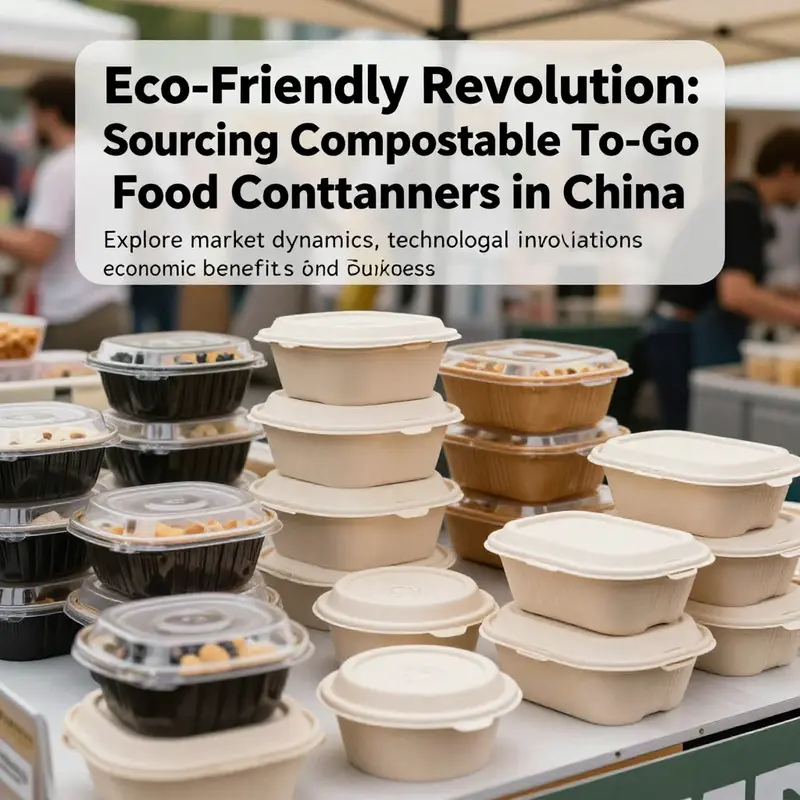
As eco-conscious consumers demand greener options, the food service industry is pivoting toward sustainable packaging solutions. Compostable to-go food containers are not just a trend; they represent a significant shift in how businesses approach environmental responsibility. For beverage chains, restaurants, food trucks, catering services, and event planners, sourcing these products from wholesalers in China provides an opportunity to meet consumer expectations while adhering to new regulations. This article delves into the market dynamics influencing the compostable container landscape, the cutting-edge technologies that power their production, and the economic implications of sourcing these products from China. Together, these factors illustrate why investing in compostable solutions is both a responsible choice and a smart business strategy.
Sustainable Supply Chains and Scale: Charting the Market Dynamics of China’s Compostable To-Go Container Wholesalers
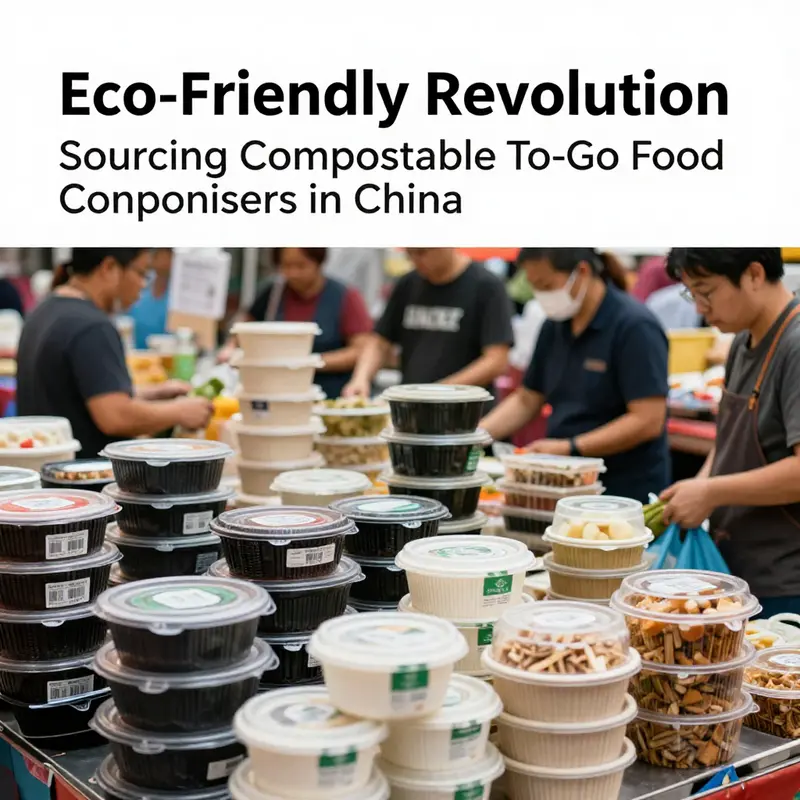
The shift toward compostable to-go containers has become a defining feature of modern food service, reshaping how eateries, caterers, and quick-service brands approach packaging. In a global economy hungry for greener choices, Chinese wholesalers occupy a pivotal position, knitting together a supply chain that spans renewable materials, automated production, international standards, and evolving consumer expectations. This chapter follows that thread from the factory floor to international markets, tracing how scale, technology, policy, and culture interact to shape a market that is at once local in its manufacturing heart and global in its reach. The story begins with the obvious driver: environmental awareness. Across cities and towns, consumers, regulators, and brands increasingly judge packaging by its end-of-life impact. Compostable alternatives—built from plant-based materials like bagasse and other renewable feedstocks—offer a credible pathway to reduce the long-term accumulation of waste typical of single-use plastics. The appeal is not merely ecological; it is also practical. Compostable containers often deliver the necessary stiffness, heat tolerance, and barrier properties required for a range of foods, from steaming noodles to cool salads. In China’s wholesale landscape, this convergence of environmental purpose and functional performance has created a demandable rhythm that wholesalers can tune with precision. The country’s manufacturing clusters—especially in the provinces that anchor the supply chain—provide more than just scale. They offer a deep, specialized understanding of eco-friendly materials, resin alternatives, and processing technologies that preserve biodegradability while ensuring reliable performance. Where these regions converge—the scale of Guangdong, the agility of Fujian, and the logistics networks of Zhejiang—wholesalers can respond quickly to both domestic and international buyers. The Guangdong hub, in particular, functions as the epicenter of mass production and continuous improvement. Here, producers leverage automated lines and long-running process optimization to bring down unit costs while maintaining quality. The result is a pricing elasticity that can meet mass-market expectations without sacrificing the environmental promise of compostable materials. In this context, the economics of production reveal a compelling logic: when a factory operates at high volumes with consistent throughput, the variable costs associated with renewable raw materials can be offset by efficiency gains. The same dynamic makes the region attractive to overseas buyers who seek predictable pricing and steady supply. Yet price is only one part of the story. The value proposition of Chinese compostable take-out containers rests on a broader set of capabilities that wholesalers can offer. Reliability in supply, clear documentation, and the ability to service a wide range of orders—both large-scale and customized—are essential in a market where clients are increasingly risk-averse and compliance-conscious. As the global push against single-use plastics intensifies, many buyers look for suppliers who can demonstrate robust quality control, traceability, and packaging certifications. In response, Chinese manufacturers have invested in integrated quality systems, from raw material inspection to finished-product testing, to ensure the biodegradability promise holds under real-world conditions. The technical backbone of these operations often centers on sugarcane bagasse and other plant-based substrates, materials that are renewable and compostable, yet compatible with the rigors of food-contact use. The versatility of bagasse-based packaging matters more than its novelty. It supports a range of forms—from clamshells and bowls to lids and sleeves—by offering a balanced mix of rigidity, heat resistance, and moisture management. This triad is essential for to-go applications, where containers must withstand the journey from kitchen to consumer without compromising the integrity of the contents. The production lines that turn these materials into finished packaging are themselves a study in modern manufacturing. Advanced machinery can form, cut, and print with great precision, while automated quality checks detect even minor deviations in thickness, surface finish, or seal integrity. Such controls are not cosmetic; they ensure that every piece performs as expected in a busy food-service setting, where a failure can mean compromised food safety and dissatisfied customers. The interplay of technology and sustainability here is not just about the machinery; it is about an integrated mindset that ties product design to environmental outcomes. Materials researchers work in tandem with process engineers to optimize formulations that maintain compostability without sacrificing performance. That collaboration is key to producing containers that perform in the field, degrade predictably in composting environments, and meet the evolving expectations of international customers who are increasingly scrutinizing end-of-life outcomes. The market’s dynamic is further shaped by policy and regulation, both at home and abroad. In China, as elsewhere, a growing chorus of rules has begun to tilt consumer and business behavior away from disposable plastics toward greener alternatives. Local governments and industry bodies have implemented measures that incentivize the use of compostable packaging and, in some places, restrict the use of certain non-biodegradable materials. The practical effect for wholesalers is a more stable demand signal, where customers want not only innovative products but also consistent compliance with local rules. This regulatory push dovetails with a broader global trend: consumer and corporate buyers are increasingly mindful of the sustainability profile of their suppliers. For wholesalers, that means a built-in demand impulse, as brands seek partners who can demonstrate not only economics but also reliability and responsibility. The supply chain these wholesalers help maintain is not simply a matter of moving goods from factory to port. It is a complex, cross-border system that must absorb potential disruptions, recalibrate designs for different markets, and maintain a steady cadence of innovation. Geopolitics enters this equation as a real, though nuanced, force. Trade dynamics, tariff regimes, and certification standards can influence the cost and availability of compostable take-out containers. Wholesalers thus orient themselves toward building durable relationships with buyers who operate across multiple markets, while also maintaining flexibility to adjust to regulatory changes. The result is a market that rewards adaptability. A key indicator lies in price ranges that buyers encounter on the ground. For instance, the availability of 100% compostable clamshell containers in certain segments can fetch a price in the vicinity of a few hundredths of a dollar per unit, with minimum order quantities that reflect the scale of the operation. Such pricing reveals the premium associated with true compostability, while also illustrating the leverage created by large-volume production in these regional hubs. The ability to offer both standardized offerings and customized solutions further enhances the market position of wholesalers. Clients ranging from large casual-dining chains to smaller, sustainability-focused cafes demand product lines that can be tailored to branding, size, and performance requirements without sacrificing compostability. In practice, this means that wholesalers invest in the capability to deliver a spectrum of container forms—folded, hinged, or simple take-away shapes—so that customers can match packaging to menu items, portion sizes, and service models. The procurement path for these buyers is increasingly mediated by trusted online platforms that verify supplier credentials and provide pricing transparency. Platforms that curate verified producers can dramatically shorten the time needed to source reliable containers, enabling buyers to compare options and place orders with confidence. The accessibility of such platforms also supports a growth arc for wholesale operators who want to diversify their client base beyond domestic markets and into international trade. The narrative above helps explain why the sector is expanding in China: there is a confluence of scale, speed, and sustainability that makes the country an attractive hub for compostable to-go packaging. Yet scale does not negate the importance of customization or the need for a robust value proposition. A wholesale business succeeds not only by selling a product at a competitive price but by pairing that product with a service ethos that includes reliable lead times, clear communication, and post-sale support. This is especially true for international buyers who must navigate language barriers, different business practices, and customs requirements. To meet these needs, wholesalers often invest in multilingual customer service teams, detailed product specifications, and flexible logistics arrangements. They also emphasize sustainability storytelling, helping clients communicate the environmental benefits of their packaging to end-users. The cultural dimension matters here. In China, environmental stewardship has gained significant traction in public discourse and corporate policy. This cultural shift dovetails with consumer expectations in many markets where buyers seek partners that reflect their own sustainability commitments. The wholesalers thus operate at an intersection where environmental values, business pragmatism, and digital efficiency meet. One tangible expression of this intersection is the range of sourcing options available to buyers. Verified suppliers on international-facing platforms can provide a spectrum of compostable packaging solutions, from basic forms to more advanced configurations that combine strength with compostability. For buyers, the choice is not merely about the container’s appearance or cost; it is about a broader narrative of environmental responsibility, supply consistency, and alignment with regulatory expectations in destination markets. The future trajectory of this market seems clear: continued growth driven by ongoing innovations in plant-based and home-compostable materials, ongoing investments in automated production, and a growing network of global buyers who value both price and principles. The supply chains will evolve, but the core dynamics will remain anchored in scale, reliability, and sustainability. For wholesalers, that translates into a disciplined approach to market access. It means maintaining a robust pipeline of product variants that cover a wide range of food-service needs, while staying mindful of evolving compostability standards and regional customization demands. It also means recognizing the importance of cost containment without compromising environmental objectives. In practical terms, this means aligning raw material sourcing with process efficiencies and quality systems that can withstand scrutiny from customers and regulators alike. The market’s resilience will hinge on the degree to which wholesalers can consistently deliver on promises of performance and decomposition timelines, while also staying ahead of policy shifts and consumer expectations. The chapter’s economic canvas is thus painted with both opportunity and risk. On one hand, the rapid expansion of eco-friendly packaging can create new margins for wholesalers who can efficiently blend production, procurement, and distribution. On the other hand, global trade tensions, currency fluctuations, and evolving certifications can introduce volatility. The most durable players will be those who invest in supply chain visibility, diversified supplier bases, and transparent communication with customers about the life cycle of their packaging. The narrative would be incomplete without acknowledging the role of documentation and traceability. Buyers increasingly demand materials provenance, factory audit results, and clear end-of-life instructions. Wholesalers who can offer robust documentation—materials composition, compostability certifications, and recyclability notes—gain credibility with brands that must demonstrate accountability to regulators and consumers. In the end, the market dynamics of compostable to-go containers in China reflect a larger, global truth: sustainability is not a niche attribute but a core competitive driver. The wholesalers who can translate environmental intent into reliable product performance, predictable supply, and compelling partnership propositions will find themselves at the center of a burgeoning ecosystem. The practical takeaway for buyers is straightforward. Look for suppliers who can deliver consistency in form and function, and who can demonstrate a coherent program of material stewardship from feedstock to end of life. Seek partners who can navigate regulatory landscapes and offer transparent pricing and lead times. And consider the broader packaging ecosystem—how forms, finishes, and branding opportunities align with sustainability goals and customer expectations. For those exploring options beyond domestic markets, the landscape is increasingly navigable thanks to verified online channels and comparative sourcing platforms. One can sample a wide spectrum of 100% compostable containers, compare unit costs, and assess minimum order quantities with relative ease. This accessibility is not merely a convenience; it is a signal of market maturation. It means that wholesalers can meet the needs of large-scale operators while also serving smaller clients who are serious about reducing their environmental footprint. The narrative also invites a practical, grounded question: how does one choose among the many packaging configurations that a compostable materials portfolio can offer? The answer lies in aligning product selection with the actual food service workflow. A stable supply of containers must integrate with service design, from how orders are packaged to how leftovers are managed. This alignment reduces waste, supports efficient operations, and reinforces the sustainability story for customers. In this sense, the market dynamics are not simply about containers but about a holistic approach to reduce plastic waste, improve compostability outcomes, and deliver reliable service in a world where every choice matters. For readers who want a concrete entry point into this world, consider the practical path of exploring a range of packaging options that emphasize compatibility with common restaurant workflows. A practical example for wholesalers and their clients is the selection of durable, compostable forms that can be customized in branding while maintaining end-of-life simplicity. The conversation around packaging aesthetics often centers on how the container communicates brand values as well as its performance. In this sense, material science and design converge: the lighter, stronger, and more compostable a form can be, the more versatile it becomes for different menus and service styles. The future of China’s compostable to-go container market will likely be shaped by continued investment in process automation, further optimization of bagasse-based resins, and ongoing collaboration between material scientists and manufacturing engineers. As global supply chains adjust to post-pandemic realities, wholesalers who can demonstrate reliability, compliance, and environmental integrity will be particularly well positioned to expand both domestic and international business. In closing, the market’s momentum rests on a simple foundation: the demand for packaging that protects food, respects the planet, and respects the time and costs of the operators who rely on it. The wholesale channels in China—bolstered by regional clusters, capable factories, and digital marketplaces—offer a compelling pathway for buyers worldwide to access sustainable packaging solutions at scale. The ripples of this change extend beyond the container itself; they touch how brands tell their stories, how cities regulate waste streams, and how consumers perceive the choices they make when they pick up a meal. For those who wish to explore hands-on options and verify supplier credibility, verified suppliers on trusted platforms remain a practical starting point, offering transparent pricing and documented capabilities. A tangible, close-to-home reference for packaging choices—such as the disposable octagonal box packaging that pairs kraft paper with a sturdy, compostable profile—illustrates how design and material selection can come together to support a sustainable service model. disposable octagonal box packaging with kraft paper. As the market continues to evolve, buyers and wholesalers alike should stay attuned to shifts in material science, regulatory climates, and consumer behavior. Those who maintain a focus on end-of-life performance, supplier transparency, and logistical reliability will help ensure that compostable to-go containers become not just a trend but a durable standard in the global foodservice supply chain. For a broader view of how sourcing options are evolving in this space, see external resource: https://www.made-in-china.com/products/100-Compostable-Clamshell-Take-out-Food-Containers-Eco-Friendly-Box.html
From Bagasse to Bistro: The Technological Odyssey of China’s Compostable To-Go Containers
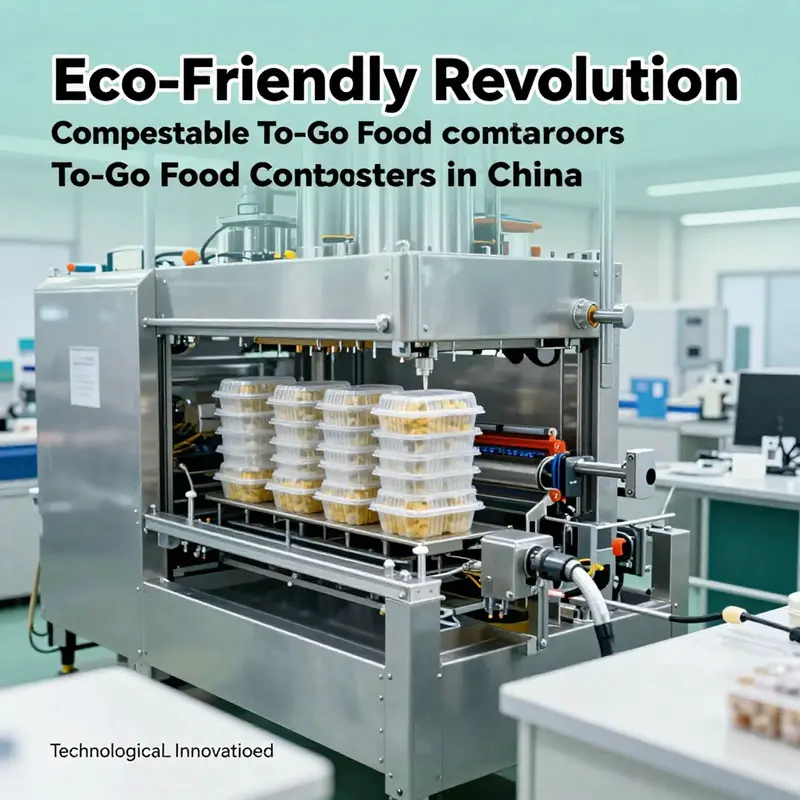
A quiet but rapid shift is underway in the way the world carries its meals, and China sits at the crossroads of material innovation, manufacturing efficiency, and sustainability policy that makes this shift possible. The chapter you are about to read traces more than a trend; it traces a carefully engineered path from renewable feedstocks to reliable to-go packaging that can compete with traditional plastics on performance, price, and perception. At the center of this journey are wholesalers who knit together farms, mills, mills-to-machines, and markets, ensuring that a dinner pickup, a street stall, or a corporate catering order arrives in packaging that is not only functional but responsibly sourced and end-of-life oriented. The journey begins with the raw materials—biodegradable polymers and plant-based fibers—and moves through the sophisticated manufacturing lines that shape them, through the quality regimes that certify them for international markets, and into a supply chain shaped by policy, consumer values, and the realities of global trade. While one can point to a single shining technology, the real story is the synthesis—how material science, process engineering, and logistics converge in a Chinese wholesale ecosystem to deliver compostable containers that can meet the rigorous demands of modern food service without surrendering the convenience customers expect.
In this ecosystem, a leading Chinese packaging machinery and materials landscape demonstrates both breadth and depth. A prominent manufacturing cluster in Shandong, for instance, exemplifies how a single region can host the end-to-end capability to transform renewable wastes into durable, heat-tolerant, compostable containers. The focus here is not merely on producing a bagasse-based or PLA-based cup or box; it is on creating a reliable stream of products that can be scaled, certified, and customized for diverse food service operators—from quick-service chains to boutique cafes. This requires more than clever chemistry. It demands the kind of investment in precision tooling, real-time quality control, and process transparency that wholesale distributors expect when they commit to mid- to long-term partnerships with food service clients around the world. In practice, wholesalers act as the connective tissue: they translate technical feasibility into market readiness, ensuring that a plant-based packaging solution can travel across borders, meet local composting standards, and withstand the rough-and-tumble realities of high-volume takeout service.
Material choices anchor the technological story. Plant-based polymers, especially polylactic acid (PLA), have become mainstream due to predictable biodegradability and feedstock compatibility with established fermentation streams. Sugarcane bagasse—an abundant by-product of sugar production—adds another layer of sustainability, turning a residue into a resource. Bamboo fiber and wheat straw broaden the palette, each contributing distinct properties that suit different product formats and performance expectations. When these materials are combined with modern design and processing, containers can decompose under industrial composting conditions within roughly three months to six months, a window that aligns with many municipal composting infrastructures. The environmental calculus here is nuanced: while these materials reduce reliance on fossil feedstocks and lower the long-term persistence of waste, they also require appropriate disposal infrastructure to realize their end-of-life benefits. The chain from raw material to compostable end product thus hinges on both material science and waste management realities, a truth that wholesale players internalize as they curate a portfolio of options for food service operators across markets.
Performance is the practical test of any packaging solution. In the lab, a bagasse- or PLA-based container might prove its worth in terms of stiffness, lid seal integrity, and barrier properties. In the busier world of takeout, those properties translate into meals that stay hot without leaking, sauces that stay contained, and containers that resist deformation during stacking and transit. The best designs balance strength with form, and heat resistance with lightness, delivering a product that can carry steaming soups or heavy noodle dishes without warping. Real-world tests stretch beyond the oven or the test bench. They consider how a container fares under repeated handling, how it resists moisture and oil, and how it performs in a cold-hold scenario or during a quick cooldown. Manufacturers have responded with nuanced engineering: layered structures that blend bio-based polymers with fibrous fillers to maintain rigidity, and barrier coatings that repel water without compromising compostability. Water-resistant coatings—often built from natural waxes or cellulose-based films—emerge as a practical compromise, preserving performance while ensuring the coating remains compatible with the composting stream. These coatings are not mere finishes; they are integral to the product’s suitability for a broad range of foods and service styles.
From the perspective of production, the industry has moved beyond simple mixing and molding toward what many call smart manufacturing. Modern extrusion and molding lines, driven by real-time sensors, feed-forward control, and inline quality monitoring, enable a level of consistency previously unattainable in high-mix, low- to mid-volume manufacturing environments. The result is tighter tolerances, reduced scrap, and traceable process data that wholesalers and retailers can rely on when they commit to compliance standards and certifications. Energy-efficiency is another pillar of the production story. The adoption of advanced extrusion technologies reduces waste heat and curtails the energy footprint per kilogram of finished product, a small but meaningful gain in the broader push toward sustainability. These technical improvements are not cosmetic; they translate into real-world advantages for clients who require predictable performance week after week, shipment after shipment.
The wholesale landscape is particularly well suited to harness these technological advances because it functions as both a supplier and a consultant. A wholesaler’s value proposition rests on consistency, flexibility, and the ability to source from manufacturers who can deliver multiple formats—cups, bowls, boxes, and lids—made from a family of renewable materials. The Chinese context adds another layer: scale, supply chain discipline, and access to a broad network of cooperatives and mills help achieve cost efficiencies that can shelter buyers from unpredictable price swings in global polymer markets. Yet the economics are nuanced. While production costs for bio-based materials may be higher than those for conventional plastics in some cycles, the wholesale advantage lies in logistics and volume efficiency, the capacity to bundle orders with different SKUs, and the ability to offer customization at a level of speed and reliability that large-brand buyers demand. In this sense, the wholesaler is not merely a conduit for product; it is a facilitator of a sustainable procurement model that aligns environmental objectives with operational realities.
Geopolitics and policy shape the incentives that drive both investment and adoption. As nations worldwide tighten restrictions on single-use plastics and incentivize compostable alternatives, wholesalers in China find a steady, if evolving, demand landscape. Regulatory frameworks influence product design choices, labeling, and the level of certification required to access specific markets. Certification programs—though varying by jurisdiction—underscore the importance of material provenance, compostability criteria, and the end-of-life pathway. Operators seek assurance that a container labeled as compostable will actually break down within a municipal facility or industrial composting stream, and they value traceability that confirms a material’s bio-based content and its compliance with recognized standards. This is where the intersection of technology and governance becomes decisive. The laboratory work that proves a material behaves as promised must be complemented by robust factory-floor practices that maintain product performance across thousands of production cycles. In other words, success requires a synchronized system: design and materials research, scalable manufacturing, stringent quality assurance, and a logistics framework capable of reproducing results at a global scale.
On the social side, consumer expectations are quietly reshaping the competitive landscape. People increasingly connect the act of taking food away with environmental stewardship. The narrative around compostable containers extends beyond waste management into corporate responsibility, brand reputation, and community engagement. Wholesalers that integrate sustainability into their business model—through transparent sourcing, recycling partnerships, and education campaigns—build trust with operators and end-users alike. The result is a market where customers are willing to pay a premium for packaging that aligns with their values, provided the product delivers on performance and reliability. This consumer factor is not incidental; it feeds back into material choices and design priorities. For instance, operators confronted with frequent complaints about soggy or leaky to-go boxes will demand coatings and barrier layers that preserve moisture control without compromising compostability. The feedback loop between consumer experience and material science becomes a driver of continuous improvement across the supply chain.
One of the practical advantages that wholesalers in China can leverage is the breadth of their supplier base. From mills that convert agricultural residues into pulps suitable for molded shapes to facilities that extrude bio-based polymers into films and molded forms, a diversified supplier ecosystem reduces risk and expands the possibility for customization. The ability to mix formats—from hot-serve soup bowls to wrap-and-go salad containers—also makes it possible for wholesalers to respond quickly to shifting restaurant concepts and seasonal menus. Operators increasingly seek to streamline procurement, and a well-curated catalog of compostable options helps them to standardize packaging across outlets, ensuring consistency in customer experience and waste management practices. These capabilities matter because they directly influence the carbon footprint of a food service operation. A portfolio that reduces reliance on virgin plastics, lowers energy intensity per unit produced, and supports efficient end-of-life processing is not merely a competitive differentiator; it is a practical instrument for meeting sustainability targets under growing corporate and municipal accountability regimes.
Thus, the technological odyssey in China’s compostable to-go container space is not simply about switches in materials or clever coatings. It is about integrating materials science with process engineering, quality assurance, and market-facing strategy in a way that allows wholesalers to deliver consistent, certified, and customizable solutions at a scale that international buyers require. The end-to-end perspective—from raw sugarcane fiber in a field to a dining table in a distant city—rests on the reliability of each link in the chain. That reliability, in turn, rests on the capacity to monitor and control every stage of development: from the feedstock supply chain to the extrusion line, from the molding station to the packaging and labeling, and finally to the logistical network that moves containers across borders under the watchful eye of compliance and traceability systems. This is why the wholesale model, in this particular sector, is more than a distribution channel. It is a platform for responsible innovation, a conduit through which green chemistry and green logistics meet the practical realities of global food service.
The narrative would be incomplete without a nod to the road ahead. In the near term, the industry can expect continued refinements in material science—higher-strength bio-based polymers, improved moisture barriers, and more efficient coatings that preserve compostability while expanding the range of usable foods. In manufacturing, digital twins, predictive maintenance, and energy recovery systems will further optimize production, cutting waste and energy use in ways that matter for cost structures and environmental performance. For wholesalers, the imperative is clear: maintain a robust network of vetted suppliers, align product design with regional waste-management capabilities, and invest in the data management needed to demonstrate compliance and environmental performance to customers and regulators alike. As cities and countries evolve their waste systems, the containers that serve the takeout economy must evolve with them—without sacrificing the simplicity and reliability that customers expect. The chemistry may be plant-derived, and the process may be highly engineered, but the real value lies in how well a wholesale partner can translate those advances into everyday packaging that keeps meals intact, vendors satisfied, and the planet a little healthier.
To deepen this understanding and to explore the latest developments in compostable packaging technology, researchers point to scholarly assessments that map the trajectory from laboratory breakthroughs to market-ready products. The study linked to ScienceDirect offers a rigorous examination of material testing standards, certification paradigms, and the broader implications of deploying compostable packaging at scale. It is a reminder that while material choices and manufacturing innovations are essential, the ultimate measure of success is how these containers perform in real-world supply chains, how waste managers receive them, and how consistently they deliver on the promises of sustainability that consumers increasingly demand. For practitioners in wholesale and manufacturing roles, the lesson is to maintain an evidence-based approach that couples performance data with transparent environmental disclosures. The path from bagasse to the plate is a complex one, but with careful design, robust production, and responsible distribution, it becomes not only feasible but preferable for a world in which takeout remains essential and waste reduction remains non-negotiable. The journey is ongoing, and the end is not a single milestone but a continuous process of improvement across materials, methods, and markets.
For those seeking a concise reference to the broader science underpinning these developments, a detailed examination is available in the external literature that analyzes packaging technology, material testing standards, and certification processes. This resource complements the practical insights shared here and frames the ongoing evolution of compostable packaging within a global standards context. It serves as a reminder that the quest for better, greener, and more reliable containers is a collaborative enterprise that spans laboratories, manufacturing floors, regulatory authorities, and the wholesalers who connect them to food service operators and consumers around the world.
disposable octagonal box kraft paper packaging, a representative example within the wholesale portfolio, illustrates how a single packaging format can embody the alliance of renewable materials, design ingenuity, and scalable logistics that define this chapter of industrial ecology. The container’s round-trip story—from renewable fiber to landfill diversion—embodies a larger narrative about how modern economies can decouple growth from pollution through careful material selection, process optimization, and market design that rewards responsible choices. In this sense, the chapter on technological innovations behind compostable to-go containers wholesalers in China is not just about a set of clever plastics alternatives; it is about a system that is learning to behave in ways that align commerce with environmental stewardship, day by day, order by order, across continents.
External reference: https://www.sciencedirect.com/science/article/pii/S096195342300378X
null
null
Final thoughts
In a world increasingly burdened by plastic waste, the transition to compostable to-go food containers is essential for businesses looking to uphold environmental integrity while meeting customer demands. Engaging with wholesalers in China offers not only a chance to access these innovative products but also economic advantages that can boost competitiveness in the market. As food service providers, embracing this shift not only aligns with sustainability goals but also enhances your brand’s reputation and strengthens customer loyalty. The time to act is now; eco-friendly solutions are no longer just an option—they are a necessity for the future of the industry.