
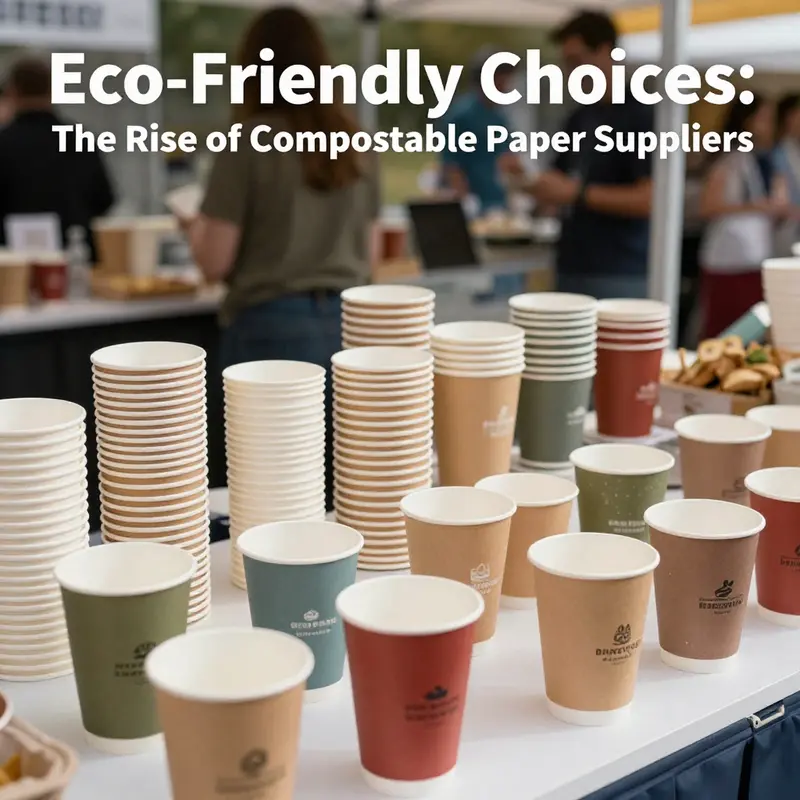
With the hospitality industry making a significant shift towards sustainable practices, compostable paper cups are at the forefront of this movement. Catering to Bubble Tea Shops, Beverage Chains, Restaurants, Food Trucks, Catering Services, Event Planners, and Corporate Procurement Teams, these products offer an eco-friendly solution that resonates with consumers’ growing environmental consciousness. This article will explore the current market landscape of compostable paper cups, delve into sustainability and material innovations driving the industry, analyze pricing trends that influence purchasing decisions, and highlight consumer preferences shaping the future of compostable paper cup suppliers. By the end of this article, readers will see the profound impact these suppliers can have on their operations as they align with global sustainability goals.
Navigating the Global Circuit of Compostable Cup Supply: Opportunities, Standards, and Sourcing Strategies
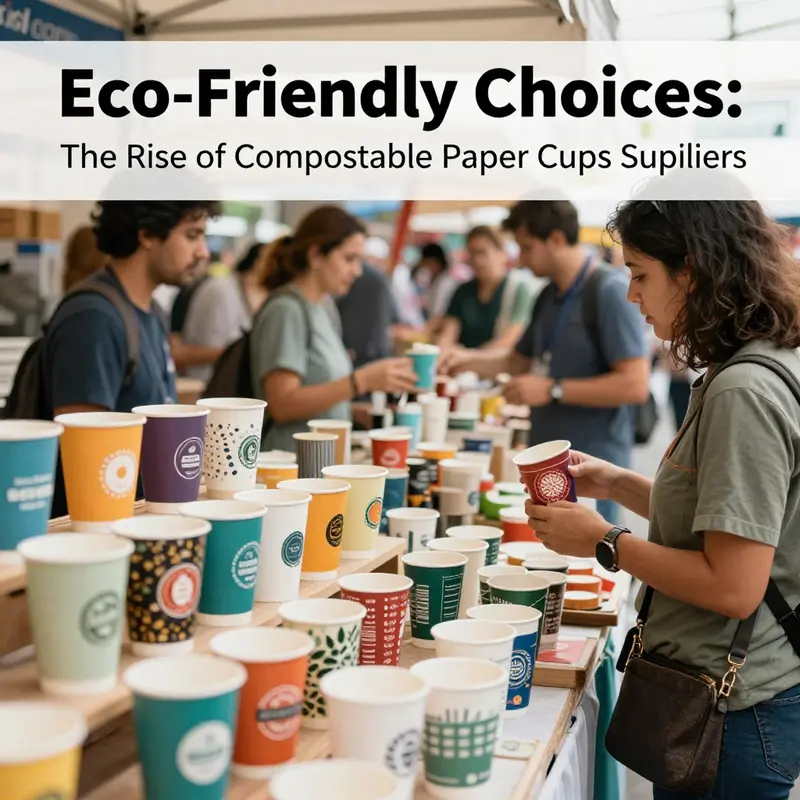
The global circuit of compostable paper cup supply is increasingly braided with sustainability goals, regulatory pressures, and the evolving expectations of consumers who value traceable environmental performance as much as product quality. In this chapter we follow that braid from the factory floor through international marketplaces to the end user’s table, tracing how a growing demand for plastic-free, plant-based, and fully compostable packaging has reshaped the competitive landscape. The arc begins with a simple but powerful driver: environmental awareness. In many regions, plastic waste has become a visible, solvable problem only when packaging choices are redesigned to fit circular economy models. Businesses in food service, hospitality, and retail have recognized that sustainability is not merely a policy box to check but a lever to differentiate brand values, reduce waste, and align with consumer expectations for greener operations. This broader awareness has pushed the market toward compostable cups that use recycled papers and plant-based coatings, avoiding petroleum-based linings that can hinder compostability. The result is a supply ecosystem that emphasizes full-life-cycle benefits rather than short-term convenience. Within this ecosystem, the regulatory backdrop matters as well. Governments around the world are tightening rules around single-use plastics, introducing extended producer responsibility, and incentivizing materials that can contribute to organic waste streams rather than lingering in landfills. The shift creates a dual pressure: manufacturers must meet compostability standards, while buyers must establish supply chains that can demonstrate compliance and reliability across borders and over time. The market therefore leans not only on product performance but also on the credibility of certifications and the robustness of traceability. Certifications such as OK Compost and TÜV OK Biobased serve as north stars in this space, signaling to buyers that a cup has been tested for disintegration in industrial composting environments or verified for a biobased content that aligns with recognized sustainability benchmarks. For a buyer seeking confidence, such credentials are as essential as the cup’s ability to hold a hot beverage or maintain a lid’s seal through a busy service period. The interplay between certification and real-world performance is a central theme in supplier selection. It’s not enough to claim compostability; the supplier must demonstrate consistent material behavior under varied conditions, from a long day of service at a bustling cafe to a quick-serve venue that moves thousands of cups daily. In manufacturing terms, this often translates to the use of 100% compostable materials—recycled paper stock paired with plant-based coatings that avoid plastic liners entirely. The absence of a plastic lining is a decisive attribute for sustainability-minded buyers, as it helps ensure compatibility with standard composting streams and reduces the risk of mixed waste contamination. The market insight here is clear: the most credible suppliers are those who can offer a transparent material proposition, including the source of paper fibers, the nature of coatings, and verifiable compostability certifications. Beyond the material science, the supply landscape has matured in its global reach. China remains a central manufacturing hub for compostable paper cups, buoyed by sophisticated production infrastructure, scalable capacity, and well-developed export channels. The advantages are practical: cost competitiveness, the ability to tailor outputs to an array of sizes and finish options, and access to a robust network of mills and converters that can deliver at scale. Guangdong’s industrial centers—Shenzhen and Guangzhou, among them—illustrate how regional clusters can streamline logistics, quality control, and supplier collaboration, enabling buyers to source from verified manufacturers with established export workflows. This geographic concentration does not eliminate risk; rather, it invites buyers to perform due diligence with the same rigor used in any cross-border procurement. The most successful buyers work with suppliers who can provide not only a data sheet but also real-world performance proof, such as consumables tests that demonstrate heat resistance, moisture management, and structural integrity during handling. In practice, this means engaging with suppliers who can supply 100% compostable cups that are free from plastic liners and that can be certified by recognized bodies. The supply side has also become more dynamic and innovation-driven. Chinese suppliers increasingly differentiate themselves through customization options that address a broad spectrum of customer needs. Full-color printing on the cups, specialty coatings designed for particular beverage profiles, and a variety of cup sizes—from hot to cold to tea, jelly, and universal formats—allow buyers to craft a packaging experience that aligns with brand identity while remaining environmentally responsible. For premium brands seeking distinctive aesthetics, these printing and coating capabilities provide a way to communicate provenance, sustainability claims, and product compatibility in a single, highly visible asset. Conversely, bulk buyers with large procurement budgets value the predictable, transparent pricing that accompanies mass production. The market has shown that pricing remains competitive, with base costs for bulk orders often anchored by economies of scale. While sheet rates, minimum order quantities, and customization levels influence the per-piece price, the overall trajectory has trended toward accessibility. In this regard, the market has also benefited from established B2B marketplaces that connect international buyers with verified manufacturers. Platforms like Alibaba serve as a critical bridge, providing buyers with the ability to compare specifications, certifications, and real-time pricing from multiple suppliers. The practical benefit for a sustainability officer or procurement lead is the ability to build a supplier roster that balances cost, compliance, and reliability. When evaluating suppliers, buyers tend to prioritize a handful of criteria: consistent material quality, verified compostability credentials, the capacity to scale, and a well-documented supply chain. The ability to provide samples and a consistent lead time for large-volume orders often seals a supplier’s credibility. In this context, a growing range of suppliers offer flexible production options to meet diverse needs, including the option to supply hot- and cold-use cups, as well as cups with lids designed for secure transport. The combination of material integrity, credible certification, and customization options provides a compelling value proposition for customers who want to do more with less environmental impact. For buyers who value practical, actionable choices, one accessible option in the current lineup is a price-competitive, plastic-free, single-wall cup that can be procured at scale with predictable lead times. The choice is not merely about cost; it is about alignment with a broader sustainability program. A practical way to explore options is to examine a representative product category that highlights the balance between price, performance, and environmental claims. For instance, a best-price 8oz double plastic-free single-wall paper cup offers a straightforward path to coupling affordability with compostability credentials. This option embodies a broader trend: buyers seeking scalable solutions that are compatible with municipal composting streams and that avoid the complexity of plastic linings. It also serves as a reliable entry point for teams building a compostable packaging strategy, particularly when paired with a supplier who can provide clear documentation of coating materials, fiber origin, and disposal guidance. The procurement decision in this space is rarely about a single attribute; it is about an integrated package. Suppliers that excel in this environment are not just manufacturers; they are partners who can provide technical data sheets, COAs, and certifications, while also offering practical assistance with packaging design, printability, and compatibility with cup dispensers and lids. The synergy between design flexibility and sustainability discipline adds up to a compelling proposition for large-scale operators who must balance customer experience, cost discipline, and environmental stewardship. As buyers assemble their supplier rosters, they frequently lean on cross-border networks and trading hubs that can streamline due diligence, risk assessment, and quality assurance. The ability to verify a supplier’s claims—such as a 100% compostable composition and a confirmed certification through recognized agencies—becomes a proxy for operational resilience. This is particularly important for organizations that plan to deploy compostable cups across multiple outlets and markets. The sourcing process, then, is as much about governance as it is about materials. Buyers should request and review third-party test results, supply chain transparency, and a documented environmental management system. The most credible suppliers are those with robust traceability practices, including batch-level material testing, clear labeling for end-of-life handling, and a commitment to ongoing product improvement in line with evolving compostability standards. For teams building a sourcing plan, it is helpful to frame their search around three core questions: How will the cups perform in service, and can the supplier demonstrate that performance under peak demand? How credible are the compostability claims, and what certifications validate those claims? How scalable and reliable is the supply chain, especially when orders scale into tens or hundreds of thousands of pieces? The answers to these questions shape not only a satisfactory purchase but also a lasting collaboration that supports a company’s sustainability story. In summary, the market for compostable paper cups is expanding as buyers demand certified, plastic-free options delivered with consistency and transparency. China remains a central hub for manufacturing and export, driven by cost efficiencies, specialized capabilities, and strong trade networks. Yet the market’s strength lies in the blend of credible certifications, supplier innovation, and the capacity to tailor solutions to brand and application. The winning strategy for buyers is to engage with suppliers who can couple technical rigor with practical support—providing design guidance, production scheduling, and post-purchase assurance that the cups you buy today will perform tomorrow in a waste stream that values compostability as a core attribute. For further exploration of specific product categories and supplier profiles, readers can review a representative product listing that captures the essence of 100% compostable, plastic-free cups and the kinds of documentation that back up such claims: https://www.alibaba.com/product-detail/100-Compostable-Paper-Cups-Plastic-Free-Disposable1600583497969.html?src=shop&albtype=product&spm=a2700.15002525.0.0. Integrating this knowledge into a sourcing plan means prioritizing certifications, maintaining clear communication with suppliers about batch variability, and ensuring that the chosen cups align with local composting infrastructure and waste-handling capabilities. In doing so, a business not only reduces its environmental footprint but also strengthens its brand narrative around responsible packaging choices, elevating the conversation from compliance to collaboration with sustainability partners. The journey from raw material to customer-facing packaging is no longer a linear path; it is a networked chain of value that depends on credible testing, reliable delivery, and a shared commitment to circularity. Internal linking note: for teams looking to compare cost-effective options that maintain compostability, consider the practical entry point offered by the aforementioned option, which you can explore here: Best price 8oz double plastic-free single-wall paper cup. This link provides a concrete example of how a supplier can present a balanced blend of price, performance, and environmental attributes that many buyers seek in early-stage deployments of compostable packaging. External reference: for additional context on global market dynamics and certification credibility, see the external resource at Alibaba that aggregates supplier information and product specifications, including compostability claims and third-party testing results: https://www.alibaba.com/product-detail/100-Compostable-Paper-Cups-Plastic-Free-Disposable1600583497969.html?src=shop&albtype=product&spm=a2700.15002525.0.0
From Fiber to Footprint: Crafting a Circular Future with Compostable Paper Cups
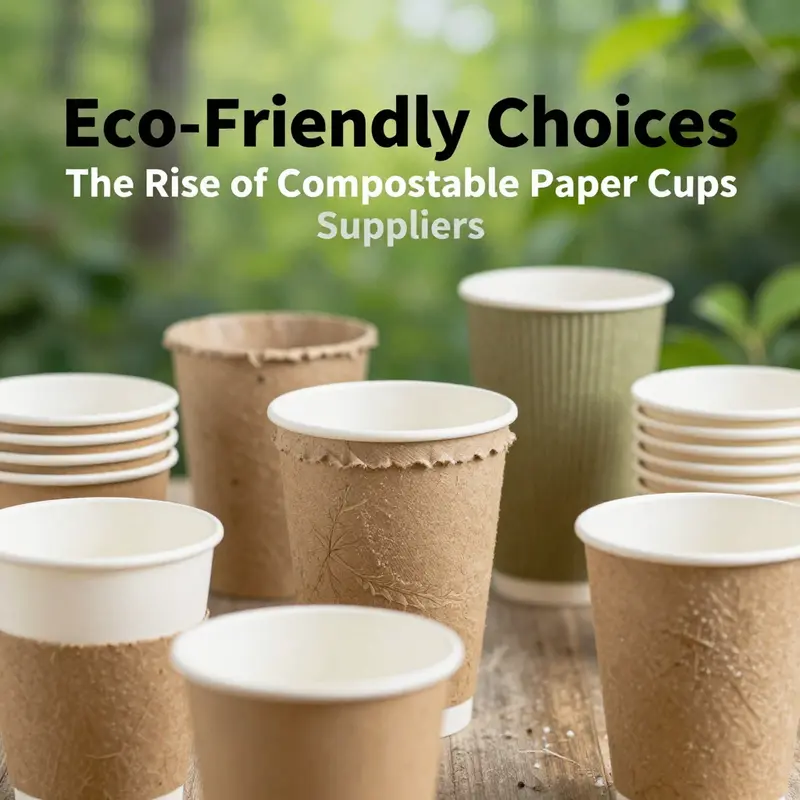
The shift toward compostable paper cups sits at the intersection of consumer expectations, waste management realities, and material science. In a world saturated with disposable packaging, beverage operators increasingly seek solutions that minimize long-term environmental footprints without compromising the user experience. Compostable paper cups, designed to replace plastic-lined equivalents, offer a pathway to decouple consumption from persistent waste. The conversation surrounding these cups moves beyond mere disposal options; it embraces the full lifecycle, from how the paper is sourced to how the product is finally treated after use. This broader view acknowledges that sustainability is a systems problem as much as a material choice, demanding collaboration among suppliers, waste processors, regulators, and end users who want to see measurable reductions in environmental impact.
At the heart of compostable paper cups is a careful orchestration of materials. Typically, renewable paper fibers form the primary matrix, drawn from responsibly managed forests or combined with recycled paper streams. The barrier that holds liquids without leaking is most commonly a plant-based biopolymer coating, most often polylactic acid (PLA). Derived from renewable resources such as corn starch, PLA creates a moisture barrier that keeps hot beverages hot and cold beverages from soaking through while preserving the product’s compostability under industrial conditions. Unlike traditional cups that rely on polyethylene as a liner, these compostable designs aim to minimize fossil-fuel-derived content in the final waste stream, aligning with broader goals to reduce plastic pollution and to advance circularity in packaging.
The environmental rationale for PLA coatings rests on a simple but powerful insight: water resistance is essential for consumer confidence and product performance, yet the same barrier must break down in a controlled composting environment. When processed in an industrial facility with the right temperature and microbial conditions, PLA-to-biopolymer blends and the paper base can decompose into organic matter. The outcome is a materially different end-of-life story than poly-coated paper cups, whose persistence in landfills presents a long-tail pollution challenge. The advantage, when properly managed, is a shorter overall residence time in the waste stream and a move away from plastics that resist decomposition for decades. It is not a universal maxim that all compostable cups will decompose identically, however, because the pace and completeness of degradation depend on the specific feedstock, coating formulations, and the processing infrastructure available in a given region.
This practical reality drives ongoing material innovations. Researchers and manufacturers have been probing stronger, more heat-resistant paper bases that can hold up under hot beverage service without leaking. They have been refining PLA formulations to improve moisture resistance and barrier performance, ensuring stability across a range of beverage types—from steaming hot coffees to chilled iced drinks. Beyond PLA, exploratory work explores alternative bio-based materials, including cellulose nanofibers and sugarcane bagasse, as potential components that could enhance strength, reduce weight, or improve compostability while maintaining a compost-friendly profile. The challenge remains to balance performance with end-of-life outcomes, because improvements in one domain must not compromise the other. In a market that values reliability as much as sustainability, such trade-offs are carefully weighed through life-cycle assessment, performance testing, and certifications that verify compostability claims.
Certifications play a pivotal role in translating technical claims into credible assurances for buyers and waste managers alike. Notable programs and organizations verify that cups meet specific standards for compostability and that the materials break down under defined industrial conditions without leaving toxic residues. Among the recognized validators, bodies that assess biodegradability, disintegration, and ecotoxicity provide the confidence needed for retailers, foodservice operators, and municipal composting facilities to work with these products. When a cup carries a certification, it signals that it has passed standardized tests and that its end-of-life pathway is designed to align with the waste-management infrastructure that can handle composting at a commercial scale. This is particularly important in regions that rely on centralized composting facilities to process large volumes of cups from foodservice channels.
The practical implications of certification extend into the realm of labeling and consumer understanding. Clear guidance about compostability, disposal, and the appropriate facilities is essential if the cups are to deliver real environmental benefits. Misconceptions—that any compostable item will decompose in a home compost heap, for instance—can undermine environmental gains by contaminating batches of compost with non-compostable materials. As such, part of the value proposition for compostable cups lies in transparent communication about disposal pathways, service provider compatibility, and the conditions necessary for optimal degradation. The result should be a cohesive narrative that connects product design to collection, sorting, processing, and ultimately to the creation of new soil amendments or other beneficial residues.
From a business perspective, the materials story intersects with market dynamics and supply-chain realities. A growing segment of the supplier landscape is based in regions with well-developed industrial composting networks, and these suppliers emphasize 100% compostable designs without plastic linings. Such offerings align with sustainability programs that aim to reduce plastic in packaging and to shift toward circular materials. For buyers, this often means balancing cost considerations with compatibility with local waste infrastructure, lead times, and minimum order quantities. Prices can be competitive for bulk orders, reflecting the scale advantages of large-volume procurement, while still requiring thoughtful planning around the downstream processing capabilities that will handle disposal and composting.
A practical dimension of choosing a compostable cup lies in performance under real-world conditions. Consumers expect cups that hold up under long service periods in coffee shops, airports, or event tents. The interplay between a sturdy paper substrate and a reliable biopolymer coating is central to this performance. Manufacturers strive to optimize the bond between the coating and the paper so that the barrier remains intact during use but does not hinder the breakdown process later. This fidelity between use-phase performance and end-of-life outcomes underscores the importance of rigorous materials testing, accelerated aging studies, and real-world field trials that mimic the stresses of crowded service environments. In this sense, material innovation is not a one-off leap but a series of calibrated improvements that respond to user feedback, processing realities, and evolving environmental standards.
The educational dimension should not be overlooked. Businesses that invest in compostable cups frequently accompany their product stewardship with consumer education, labeling campaigns, and partnerships with local waste facilities to improve recycling and composting behavior. The goal is not merely to replace one material with another, but to cultivate a culture of responsible disposal and a supported infrastructure that can absorb the increased flow of compostable packaging. When customers understand which facilities can handle the cups, and when operators participate in label-driven communication about proper disposal, the environmental benefits multiply. In this sense, the transition to compostable cups is a collective effort that requires clear messaging, reliable product performance, and a robust waste-management ecosystem to realize a tangible reduction in environmental burden.
For readers exploring procurement strategies, the landscape also reveals a growing emphasis on plastic-free barrier solutions. Some buyers are drawn to the promise of fully plastic-free designs that still meet the necessary performance criteria for hot and cold beverages. The notion of a barrier that does not rely on conventional plastics broadens the design possibilities and narrows the long-term dependence on fossil-fuel-derived materials. When evaluating options, it is useful to consider not only the material composition in the cup itself but also the compatibility of the entire packaging system with the available composting infrastructure and any relevant certifications that can validate the product’s environmental claims. The goal is a cohesive, end-to-end approach where the cup, the waste stream, and the processing facility work in harmony toward a cleaner, more sustainable outcome.
In this evolving space, one practical reminder stands out: compostability is a pathway, not a guarantee. It requires alignment across product design, manufacturing practices, consumer behavior, and waste-management capabilities. The most effective solutions are those that anticipate and accommodate the realities of industrial composting environments while still delivering the reliability required by high-volume beverage service. When these elements converge, compostable paper cups become more than a green badge. They become a core component of a circular economy strategy that reduces reliance on conventional plastics, lowers environmental footprints, and encourages both producers and consumers to participate in responsible waste management.
For those seeking further technical grounding, a recent deep dive into compostable packaging provides detailed specifications, performance data, and applications that illuminate how these materials behave in varied contexts. The resource offers a comprehensive overview of the technical landscape and can serve as a practical companion to the concepts discussed here. Disposable Eco-Friendly Printed Logo Single Wall Paper Cup is one example of how the market is translating the sustainability narrative into tangible product choices, with attention to end-of-life conditions and consumer perception. As this chapter has suggested, the true value lies in choosing designs that integrate with the local waste-stream realities and the broader aims of circularity.
Ultimately, compostable paper cups typify a sophisticated material response to a complex waste problem. They embody a philosophy that values renewable feedstocks, responsible fabrication, and post-consumer stewardship. The ongoing innovations—whether in stronger base paper, advanced moisture barriers, or alternative bio-based materials—signal a future in which single-use cups can be made with a smaller, more manageable footprint. The best outcomes will emerge where design, certification, and disposal infrastructure converge to deliver consistent performance in service and predictable, benign outcomes after use. This is how compostable packaging moves from novelty to necessity, becoming an indispensable instrument in the toolkit for sustainable food and beverage service.
External reading for deeper technical insight can be found in an expansive study on compostable paper products, which examines technical specifications, grades, and applications across a range of contexts. This resource offers a rigorous, domain-specific look at how compostable materials perform under different stressors and how industry standards evolve to reflect real-world usage and disposal patterns: https://www.researchgate.net/publication/398765432ACompleteInsightintoCompostablePaperIceCreamCupsTechnicalSpecificationsGradesandApplications
Riding the Price Wave: Economics, Scale, and Sustainability in Compostable Paper Cup Supply
The market for compostable paper cups is expanding as businesses pursue packaging that aligns with environmental goals and consumer expectations. Demand surges in the food and beverage sector, as well as in events, campuses, and take-away concepts that prize sustainability as a core brand value. Yet demand is only one side of the equation. The price of a compostable cup reflects not just the raw materials, but the entire life cycle—from paper sourcing and plant-based coatings to manufacturing precision, packaging, distribution, and finally end-of-life processing. In this system, price signals reliability, standardization, and alignment with regional waste infrastructure, making cost competitiveness less about the sticker price and more about the likelihood that a cup can be composted after its use. When these signals converge, a business case for switching from conventional or plastic-lined alternatives often emerges.
Pricing trends reveal a landscape shaped by scale and competition. The market has drawn more players, including several manufacturers situated in large production hubs in China, who offer customization at competitive unit costs while maintaining essential certifications. Data drawn from widely used sourcing platforms show that for bulk orders used in hot beverage applications, unit costs can fall into a remarkably low band—approximately US$0.003 to US$0.013 per piece. The wide band reflects differences in cup size, coatings, printing, and whether the cup is single-wall or double-wall. It also indicates that improvements in process efficiency and supply chain logistics are delivering savings that can be passed along to customers who commit to high-volume orders. At the same time, buyers should be mindful that the lowest price often comes with trade-offs in lead times, minimum order quantities, and the breadth of certification coverage.
From an economic perspective, the viability of a compostable cup program rests on more than the per-unit price. A 2026 study emphasizes that financial sustainability hinges on the ability to integrate the system across the supply chain and to ensure end-of-life processing aligns with the cup’s compostability. If a municipality or facility does not have access to industrial composting or if compostable packaging is diverted to standard landfills, the environmental benefits are diminished, and the total cost of ownership can rise. Businesses must consider the full lifecycle: upstream material costs, factory waste, transportation emissions, and the downstream costs or savings associated with composting programs. The latter can be influenced by regulatory incentives, rebates for sustainable packaging, or carbon-credit schemes tied to waste management and packaging choices.
Certification matters deeply here. Verified certifications such as OK Compost and TÜV OK Biobased do more than signal compliance; they reduce the risk of mislabeling and reassure customers and partners that the cup will perform as advertised in real-world waste streams. For buyers, this assurance translates into lower risk of product recalls or reputational damage, which in turn stabilizes demand and helps justify the capital outlay needed to switch packaging for an entire operation. Producers, in turn, invest in quality control, batch traceability, and robust supplier audits to sustain trust across a growing and increasingly global customer base. The market’s trajectory toward sustainability is not merely a trend; it is co-dictated by the availability and reliability of composting infrastructure in diverse markets around the world.
Business decision-makers should also recognize the strategic value of scale. Economies of scale do more than reduce the per-unit price; they enable more predictable budgeting, standardized packaging formats, and easier integration with supplier ecosystems. For organizations planning a transition, a phased approach helps manage risk. Starting with a pilot in a limited geographic area allows teams to measure compostability performance, consumer acceptance, and actual end-of-life outcomes. Such pilots must be paired with a clear plan for waste collection and processing, ideally anchored by local recycling and composting partners. In this context, the cost advantages of bulk procurement may be accompanied by the need to coordinate with distributors who can handle the logistics of large, uniform orders. The balance between capital expenditure, operating costs, and the environmental gains becomes a central metric for success.
Another critical facet is the customization and design process. While green packaging narratives often celebrate the absence of plastic liners, many buyers still require brand-specific printing or color matching. The industry has learned to accommodate these needs without compromising compostability, but it can influence pricing. Custom-designed cups, logos, or sleeve-compatible dimensions may carry higher unit costs or longer lead times, especially if certifications must be renewed for every variation. For buyers seeking portfolio-wide consistency, a common-size, standard-coated cup can deliver most of the environmental and functional benefits while preserving predictable pricing. In such scenarios, suppliers that maintain tight control over material sources, coatings, and certifications often offer more stable terms and fewer surprises in the ordering process. For readers exploring practical price options, a convenient example is the page best-price-8oz-double-plastic-free-single-wall-paper-cup, which illustrates how price points can be maintained during growth while keeping the product firmly within compostability standards.
Pricing, however, is not the sole determinant of value. The total cost of ownership includes the costs of changes in procurement and waste management, the potential need for staff training on disposal directions, and the administrative burden of ensuring supplier compliance with evolving certifications. The broader market context remains essential. Suppliers that can demonstrate steady supply, transparent pricing, and consistent performance under real-world conditions become preferred partners for enterprises that require reliability as they pursue sustainability goals. Conversely, buyers exposed to volatile pricing or inconsistent material quality may struggle to justify long-term commitments, even when unit costs are low. The economic equation, therefore, rests on aligning price with predictable performance, dependable delivery, and a waste system that actually processes the cups as intended.
Supply-chain resilience also comes into play. The COVID-era lessons continue to echo through today’s procurement choices: a sustainable packaging program must be resilient to disruptions in raw material markets, transport bottlenecks, and policy changes across regions. Compostable cups rely on recycled paper feeds or plant-based coatings, both of which can fluctuate with feedstock prices and environmental regulations. A supplier’s ability to source responsibly and to maintain stable margins in the face of price swings is a qualitative advantage that can translate into more favorable terms for buyers who commit to long-term relationships. In practice, this means evaluating a supplier’s sourcing map, their certifications, and their capacity to scale with demand without sacrificing quality or compostability. It also means recognizing the role of third-party logistics partners in ensuring timely deliveries to diverse locations while maintaining the integrity of the compostability claim throughout transit.
Finally, readers should be mindful of how government policy can alter the economics of compostable cups. Regulations that encourage composting, ban certain types of plastic packaging, or offer carbon credits for sustainable packaging can significantly shift the cost-benefit calculus. When policy support aligns with consumer demand for greener packaging, the price gap between compostable cups and their conventional counterparts can narrow further. Yet policy remains uneven across regions, so the economic viability of a compostable cup program may be highly context dependent. In this sense, businesses must conduct scenario planning, evaluating best-case, base-case, and worst-case outcomes in terms of cost, waste management capabilities, and regulatory incentives.
Across these dimensions, the central message is that the pricing landscape for compostable paper cups is both competitive and complex. The price per unit may fall in striking ranges in bulk, reflecting efficiency gains and scale, but the real decision for organizations is how to align those prices with a durable end-to-end system that supports composting, rather than landfill disposal. The opportunity lies in partnerships that integrate supply and waste streams, ensuring that every cup used contributes to a closed-loop or near-closed-loop system. As buyers become more adept at evaluating supplier capabilities, the market should continue to refine pricing, reduce friction in procurement, and expand access to certified, compostable options that meet both brand standards and environmental commitments. External reference: https://www.linkedin.com/pulse/biodegradable-paper-cups-market-2026-2033-trends-analysis
Rising Demand, Rising Standards: Navigating the Compostable Paper Cup Supplier Market in a Circular Economy
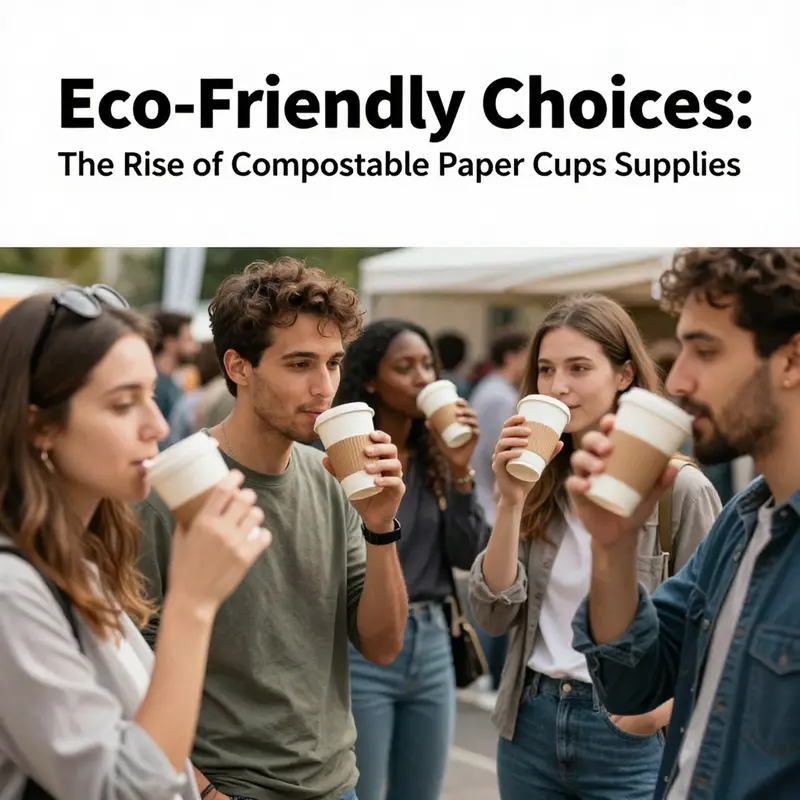
A shift is quietly taking shape across the global food and beverage landscape. Consumers who once considered packaging an afterthought are increasingly aware of its environmental footprint. They want products whose life cycle starts with responsible sourcing and ends with a legitimate end-of-life outcome. In response, brands are rethinking how they package drinks, how they source materials, and how they communicate the environmental story to customers. The chapter that follows traces a single, essential thread through this complex matrix: the market for compostable paper cups and the suppliers who make them possible. It is a story of opportunity, challenge, and continual adaptation, all framed by the practical realities of production, regulation, and consumer behavior. At its core, the market is not just about a cup. It is about the promise that packaging can be both functional and sustainable without sacrificing cost efficiency or consumer convenience.
The landscape of compostable paper cup suppliers has matured notably in recent years. A growing cohort of verified providers has emerged, many based in China, and these suppliers now reach buyers worldwide via digital platforms that aggregate options at scale. What defines legitimacy in this space is clear: cups that are 100% compostable, without a plastic lining, and capable of breaking down in appropriate industrial or municipal composting streams. Materials matter here as much as manufacturing processes. A core trend is the shift toward recycled paper stock combined with plant-based coatings, such as polylactic acid (PLA), which helps maintain structure and performance for both hot and cold beverages while avoiding the plastics that complicate end-of-life disposal. These design choices reflect a broader alignment with circular economy principles that emphasize waste avoidance, resource efficiency, and transparent material provenance. In practice, this means cups that can perform under the rigors of daily service and then be composted in facilities that accept food-grade packaging.
A practical look at product specifications helps buyers separate wishful thinking from credible capability. The typical offering spans sizes suitable for hot drinks—where insulation and structural integrity are paramount—and cold beverages, where lid compatibility and splash resistance matter. The absence of a plastic lining is a defining criterion; without it, compostability standards must still be met. The plant-based coatings, often certified biodegradable, complement recycled fiber cores to deliver stiffness, print quality, and barrier performance. In markets with stringent compostability expectations, suppliers pursue certifications from recognized bodies to reassure customers about end-of-life outcomes. Two such benchmarks—OK Compost and TÜV OK Biobased—send a powerful signal that a product adheres to compostability criteria and that its biobased content meets verifiable standards. While certification does not automatically solve every disposal challenge, it does establish a credible baseline that enables buyers to communicate value to regulators, retailers, and end users.
Pricing dynamics in this segment have shifted as demand scales and production technologies improve. Competitive rates, often cited in bulk scenarios, begin at relatively modest unit costs when orders run into tens of thousands of pieces. The economics hinge on more than unit price, however. Leading buyers negotiate for minimum order quantities that provide predictable supply while maintaining flexibility to adjust to demand swings. A mature supplier network enables cost efficiencies gained from longer production runs, standardized specifications, and streamlined logistics. These efficiencies, in turn, help keep total cost of ownership in line with traditional single-use options—an important consideration in price-sensitive sectors like quick-service restaurants and caterers facing tight margins.
For many procurement teams, credibility hinges on a transparent chain of custody and verifiable credentials. This is where environmental certifications and third-party tests become more than marketing hooks; they are operational signals that a supplier understands the regulatory environment and the practical realities of end-of-life management. It is not enough to claim compostability; buyers seek documentation detailing the conditions under which a cup will compost, the type of facility needed, and the expected time frame for degradation. The more clearly a supplier demonstrates compliance with international standards such as ASTM D6400 and EN 13432, the more likely buyers are to invest in longer-term contracts and larger program deployments. These standards, while not identical, share a common objective: to ensure that materials break down into non-toxic components in a responsible manner and within a reasonable timeframe, reducing landfill burden and the environmental impact of packaging.
This market reality aligns closely with shifting consumer expectations. In North America and Europe, regulatory signals have become louder and more precise. Legislatures and local governments are enacting or tightening rules that restrict single-use plastics and incentivize compostable alternatives. Public sentiment in these regions favors products that align with circular economy principles and that come with a credible end-of-life plan. Brands operating in these markets thus face a dual imperative: they must source compostable cups that perform in-day-to-day use and, just as important, they must communicate to customers that those cups will actually integrate into a sustainable waste system after consumption. The end-to-end narrative—how the cup is made, what it is made of, how it should be disposed of, and where it should go after use—has become part of the product’s value proposition.
Against this backdrop, suppliers are expanding capacity with an eye toward scalability. Plant-based coatings and certified compostable fibers are no longer niche innovations but core elements of product portfolios. The push for improved materials speaks to a broader need for end-of-life solutions that are technically feasible and logistically simple for waste streams to handle. This implies not only manufacturing investments but also partnerships with waste management operators and municipalities to ensure that compostable cups can be recovered and processed efficiently. Moreover, the supply chain must demonstrate transparency at every step—from fiber sourcing and coating formulation to the finished cup’s packaging and shipping. Buyers increasingly expect documentation that traces materials to their origins and confirms that processing facilities conform to recognized standards. In practice, this means doing business with suppliers who can provide certificates of conformity, bill-of-materials, and third-party testing results.
The ongoing evolution of the supplier market also brings a set of challenges that buyers cannot overlook. First, standardization remains uneven across regions. While ASTM D6400 and EN 13432 frame global expectations, actual acceptance criteria and composting infrastructure vary by country and city. To navigate this landscape, brands must assess the compatibility of their chosen cups with local waste streams and recycling or composting facilities. Second, there is a real risk of greenwashing. As packaging becomes a more salient topic for investors and customers, some players may overstate a product’s environmental credentials. Here, independent certification and rigorous documentation matter more than glossy marketing. Third, the supply chain must be transparent enough to withstand audits and regulatory checks. This transparency extends beyond the cup itself to the supplier’s factory practices, labor standards, and environmental performance. Buyers who demand such transparency often find that it strengthens supplier relationships and reduces risk over the long term.
A sustainable procurement framework for compostable cups also needs to address life-cycle considerations. For example, the performance of a compostable cup under heat and agitation, its barrier properties against liquids, and its compatibility with lids and sleeves—all influence customer satisfaction and product adoption. Importantly, the end-of-life story cannot be an afterthought. Municipal composting programs vary in terms of acceptance criteria, processing times, and residual contamination thresholds. Some regions may require pre-processing or specific composting conditions that are not universally available. In effect, the market must balance performance expectations with realistic disposal infrastructure. This balance has practical implications for designers, manufacturers, and buyers who integrate cups into broader sustainability strategies, such as packaging optimization, waste reduction campaigns, and supplier diversity initiatives. In a matured market, the best practice is to couple robust product specifications with clear, actionable disposal guidance that customers can follow in real life.
From a procurement perspective, the path to resilience lies in strategic partnerships, rigorous supplier evaluation, and sustained investment in supply chain visibility. Buyers should seek producers who can demonstrate a credible track record of on-time delivery, quality control, and compliance with compostability standards. Most importantly, they should request and review documentation that confirms the product’s compostability, the materials used, and the facility requirements for end-of-life processing. This approach reduces the risk of misalignment between product claims and real-world outcomes, a misalignment that can undermine consumer trust and corporate credibility. It also sets in motion a more stable supply network, where manufacturers, waste management partners, and retailers work in concert to deliver not only a cup but a credible, scalable solution that aligns with broader sustainability objectives. In this sense, the supplier market for compostable paper cups is less about selling a one-off item and more about delivering a reliable, end-to-end service that supports circular economy goals across industries.
For buyers who want practical entry points into this market, credible pricing is still a factor, but it must be weighed alongside reliability, transparency, and regulatory alignment. A comprehensive sourcing strategy includes supplier audits, sample testing under real-use conditions, and clear agreements on certificates of compostability, lifecycle data, and post-consumer waste handling. It also benefits from a procurement mindset that views packaging as an infrastructure element—an enabler of brand experience and environmental stewardship rather than a standalone cost line. In this sense, the compostable cup market mirrors broader shifts in supply chain resilience: invest in material science, invest in traceability, and invest in the relationships that keep the entire system moving smoothly from production line to composting facility.
To explore a practical example within this framework, buyers can consider options that balance cost with ecological credibility. For those weighing price and performance, a widely accessible option exists that emphasizes minimal plastic content and straightforward disposal pathways. best-price-8oz-double-plastic-free-single-wall-paper-cup offers a reference point for how scale, material choices, and supplier rigor translate into tangible value for operators managing daily volumes. The emphasis here is on alignment with compostability standards, clear end-of-life guidance, and predictable supply chains. Incorporating such choices into a broader sourcing program enables brands to map procurement decisions to environmental claims, waste-management partnerships, and customer-facing communications without compromising operational efficiency.
External perspectives provide further context on where this market is headed. A recent industry overview highlights anticipated growth through 2033, driven by regulatory clarity, consumer demand, and continued material innovation. The analysis underscores the importance of harmonizing standards, expanding end-of-life infrastructure, and maintaining transparent supply chains to preserve consumer trust as the market expands. For readers who want to explore one external viewpoint that complements these themes, see the LinkedIn article on the Biodegradable Paper Cups Market trajectory through 2033. It provides broader market dynamics, competitive landscape insights, and growth projections that can inform strategic planning across brands and suppliers.
External resource: https://www.linkedin.com/pulse/biodegradable-paper-cups-market-2026-2033-7b5a8/
Final thoughts
In summary, as the demand for eco-friendly products continues to escalate, compostable paper cups suppliers are uniquely positioned to cater to the needs of a wide range of businesses in the beverage industry. The market for these sustainable options is robust and evolving, driven by innovations in materials and a commitment to sustainability. By understanding pricing dynamics and consumer preferences, businesses can not only align with environmental goals but also enhance their brand image. Partnering with reliable suppliers of compostable paper cups offers an opportunity to make a meaningful impact on the environment while meeting consumer demand. Embracing these solutions leads to a brighter, more sustainable future for the beverage sector.