
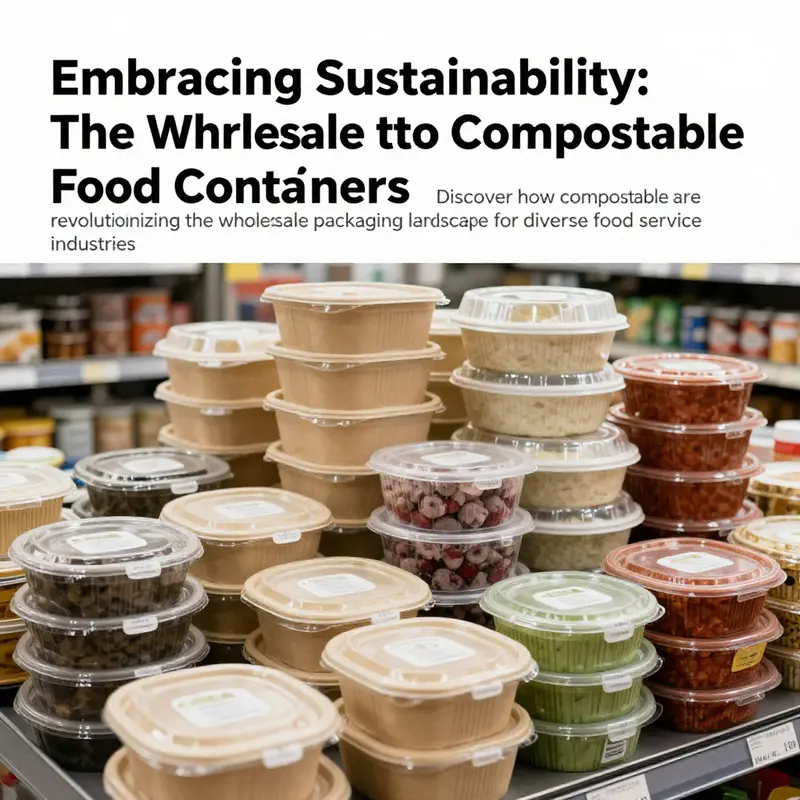
As the global dialogue around environmental responsibility intensifies, businesses in the food service sector are increasingly pressured to rethink their packaging solutions. Compostable food containers have surfaced as a leading sustainable alternative, enabling restaurants, food trucks, corporate caterers, and beverage chains to meet customer expectations while minimizing their ecological footprints. This shift isn’t merely a trend—it’s a significant market force driven by consumer demand and regulatory changes. This article explores the market dynamics shaping the wholesale compostable food container sector, delves into the sustainability standards ensuring product integrity, and analyzes the economic implications of adopting these eco-friendly solutions in today’s competitive environment. Each chapter contributes critical insights, enabling readers to make informed decisions that align with both sustainability goals and operational efficiency.
From Mill to Market: The Wholesale Dynamics of Compostable Food Containers
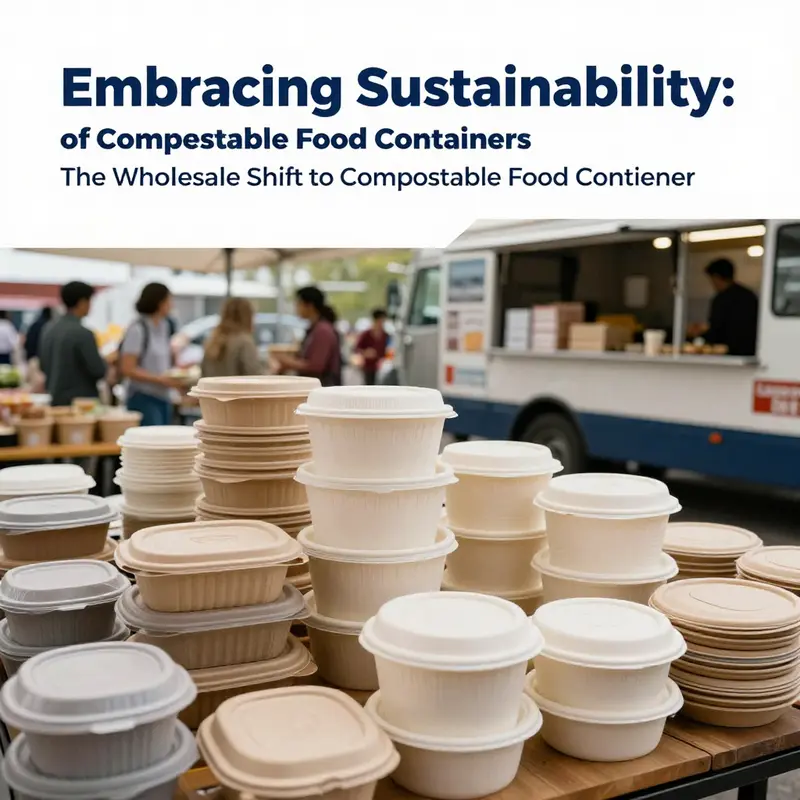
Compostable food containers have moved from a niche option to a strategic pillar in wholesale packaging, where enterprise-scale purchasing, regulatory pressure, and evolving consumer expectations converge. The dynamic is not simply a matter of choosing a more eco-friendly shell for food; it is about aligning a business’s operational design with a material science frontier, a global manufacturing network, and a municipal waste framework that can actually close the loop. At the heart of this shift is a family of renewably sourced, plant-based materials—sugarcane bagasse, bamboo fiber, wheat straw, and molded fibers drawn from recycled paperboard. Each of these materials carries distinct performance traits, cost profiles, and end-of-life implications. In wholesale, where orders exceed tens of thousands or even hundreds of thousands of units, suppliers must balance heat resistance, moisture management, leak protection, and stackability with the realities of logistics, minimum order quantities, and the price pressures that follow global demand curves.
The market trajectory mirrors a global pivot away from petroleum-based plastics toward compostable solutions that disarm the friction between environmental compliance and practical service in kitchens, cafeterias, catering operations, and food-service chains. The broader market outlook is telling. The global compostable foodservice packaging sector—driven by regulatory curbs on single-use plastics and rising corporate sustainability mandates—has grown rapidly. In 2022, estimates place the market in the vicinity of US$17.29 billion, with projections suggesting a climb toward roughly US$23.27 billion by 2028. North America, in particular, is forecast to exhibit robust expansion, with a CAGR hovering around 4.2%. These figures translate into tangible opportunities for wholesale buyers: scale matters in both price discipline and customization capabilities. As orders become larger, the economics of material choice—bagasse versus PLA, for example—often hinge on regional costs, supply reliability, and the ability to certify true compostability under industrial conditions.
The wholesale journey begins with material selection and continues through design optimization, certification, and finally the logistics of large-volume fulfillment. Sugarcane bagasse, for instance, has emerged as a preferred core for many 100% compostable options because it yields a sturdy, heat-tolerant product that can perform in microwave scenarios and during longer storage than some alternatives. Bamboo fiber and wheat straw rounds out the portfolio, offering different aesthetic and mechanical profiles, while molded fiber products—derived from recycled paperboard—bring a leaner, often more economical approach to bulk packaging. The modern wholesale ecosystem makes these choices available across a spectrum of shapes: clamshells, meal boxes, trays, and even integrated cutlery sets, all designed to meet hot- and cold-food requirements. These formats are not merely containers; they are adaptable canvases for branding, operational efficiency, and consumer experience.
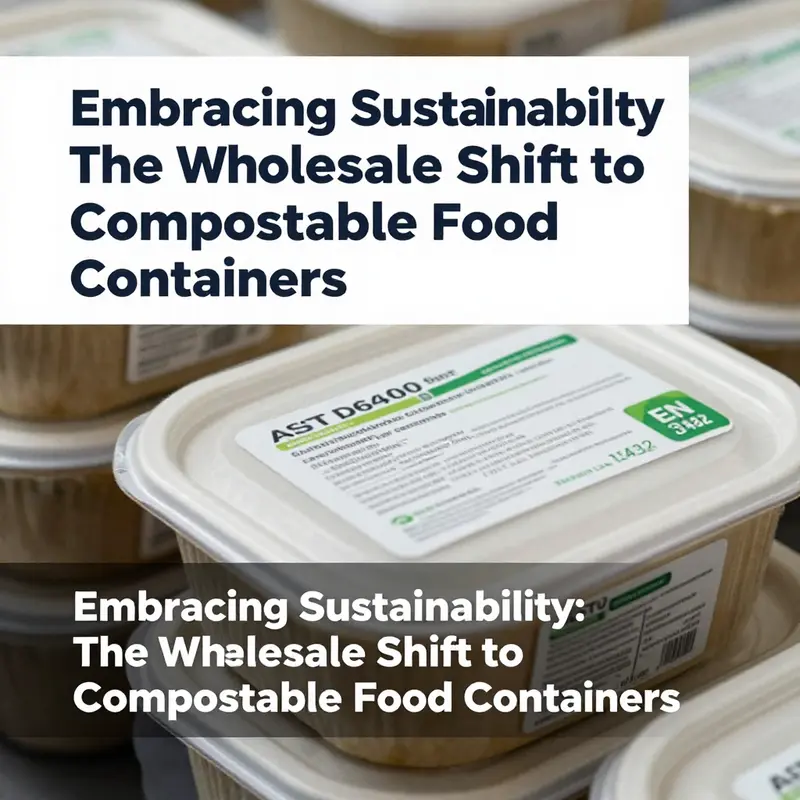
What differentiates wholesale compostable packaging from consumer-facing sustainability chatter is the rigorous infrastructure behind true compostability. Certifications such as ASTM D6400 in the United States and EN 13432 in Europe confirm that a product will biodegrade and disintegrate within declared industrial composting conditions, typically within a window of 90 to 180 days. This distinction matters profoundly in procurement discussions. A product may be marketed as “biodegradable” or “plant-based,” but without certification that guarantees performance in an industrial facility, a buyer cannot reliably claim compostability as a waste-management outcome. For wholesalers and their customers, the proof of third-party certification reduces risk and builds trust with end users who must meet local composting standards or municipal procurement requirements.
The supply chain for wholesale compostable containers most often routes through an established global manufacturing spine located in China, a hub renowned for its scale, mature processing technologies, and sophisticated export logistics. The advantages are clear: large-volume production, competitive unit costs, and the capacity to tailor materials to performance needs and price targets. The regional specialization that has developed across industrial clusters—where sugarcane bagasse, bamboo, PLA, and other materials are optimized—helps buyers choose solutions that align with their brand, kitchen workflow, and local logistics footprint. For wholesale buyers, this translates into more nuanced sourcing strategies. They can prioritize material performance for specific use cases, such as hot-meal service with oil resistance or cold-chain integrity for prepared foods, while maintaining a watchful eye on total cost of ownership.
The market’s expansion is thus a composite of policy momentum, consumer awareness, and material science breakthroughs. Regulatory activity, particularly in North America and Europe, continues to tighten the leash on single-use plastics and polystyrene, nudging operators toward compostable alternatives that can participate in circular economy programs. This regulatory push is not merely a constraint; it is a driver of investment. It incentivizes producers to push the envelope—developing stronger, more heat-resistant, and aesthetically versatile containers that still align with composting standards. In response, suppliers invest in process improvements, from sourcing cleaner fibers to refining molding and finishing techniques, and in developing streamlined packaging and labeling that clearly communicates compostability to end users.
For wholesale buyers, the decision set includes consideration of branding and customization. In today’s market, it is possible to tailor dimensions, shapes, and branding elements to align packaging with brand identity and customer expectations. This is not a cosmetic preference. Branded packaging can drive recall and deliver a premium consumer experience, while standardized formats can unlock significant savings at scale. Customization is increasingly managed through certified suppliers who can provide prototype runs, batch testing, and documentation that supports compliance in downstream recycling or composting streams. The ability to converge branding with environmental stewardship is a powerful value proposition in wholesale procurement.
In parallel with material choices and certification, the wholesale channel must navigate the realities of price and logistics. A robust price range exists, often contingent on order volume, material type, and the time of year when feedstock costs shift. For bulk sugarcane bagasse-based containers, buyers may observe competitive per-unit pricing, with bulk discounts that improve at higher volumes. The economic calculus for wholesalers also includes handling and storage considerations—shelf life, moisture sensitivity, and climate control in transit and warehousing. The bulk nature of wholesale orders amplifies savings from efficient packaging, reduced breakage, and lower per-unit transportation costs when shipments are optimized for full-truck or container loads. In many cases, suppliers in major exporting regions offer real-time pricing and flexible shipping options to support global campaigns, ensuring that large buyers can secure steady supply without destabilizing cash flow.
A practical reminder for wholesale teams is the necessity of aligning disposal infrastructure with product choice. Industrial composting facilities provide the heat, microbial activity, and residence time required for a container to break down into non-toxic organic matter. Home composting, by contrast, rarely attains the temperatures or microbial conditions necessary for complete decomposition. This distinction has important implications for brand messaging, customer education, and municipal partnerships. When a restaurant or catering operation markets itself as waste-stream-conscious, it must accompany packaging choices with clear disposal guidance, staff training, and customer-facing communication. The potential for contamination in recycling or compost streams rises when misinformed customers misclassify packaging as recyclable or compostable without understanding local facility capabilities. A thoughtful approach to education can fortify sustainable outcomes and protect the integrity of waste-management programs.
For buyers seeking direct engagement with credible suppliers, the wholesale landscape is increasingly augmented by digital platforms and B2B marketplaces. These channels offer access to verified suppliers and real-time pricing, alongside documentation packages that streamline due-diligence processes. While platforms can significantly reduce lead times and broaden the pool of potential partners, the prudent buyer remains anchored in a few core practices. First, demand transparent certifications and traceable sourcing so that the story behind the product—where and how fibers are grown, harvested, and transformed—can be reliably communicated to customers. Second, verify that the product is truly compostable under industrial conditions, not merely marketed as biodegradable or plant-based. Third, ensure staff and customers receive disposal guidance that minimizes contamination, and that the packaging aligns with local composting infrastructure. Fourth, assess whether a supplier’s logistics network can sustain your volume targets while maintaining consistent quality and certification compliance.
An important dimension of wholesale decision-making is the need to understand the total lifecycle beyond the plate. Sustainability in packaging is not a one-off credit; it is a continuous optimization problem that touches material sourcing, manufacturing energy intensity, waste-management partnerships, and brand storytelling. For many buyers, the path toward scale involves balancing material choices against overall emissions, water use, and end-of-life outcomes. In regions where bans on single-use plastics are already in place, wholesale buyers gain a dual advantage: they meet regulatory requirements and address customer demand for greener service. This alignment can be instrumental in onboarding new clients such as large-scale food-service chains, event organizers, and nonprofit food programs that rely on predictable, compliant packaging supply.
To illustrate how these dynamics translate into real-world procurement, consider the lifecycle of a typical wholesale order. A kitchen manager or procurement lead begins with a specification sheet that defines material, shape, and performance criteria—heat tolerance, leak resistance, and whether the container is microwave-safe. In parallel, the team weighs region-specific logistics considerations: port access, lead times, and the potential for local repacking or re-sourcing during peak seasons. As the order moves from specification to factory floor, quality assurance processes verify that each batch meets ASTM D6400 or EN 13432 requirements, that the container’s surface finish is uniform, and that the packaging aligns with branding guidelines. Documentation travels with the shipment, including COAs, third-party certification attestations, and any labeling required for compostable claims in host markets.
Once in distribution, the containers integrate into the broader supply chain ecosystem. Wholesale buyers often coordinate with foodservice distributors who can bridge the gap between manufacturer and end-user. These distributors coordinate inventory, handle cross-docking, and offer consolidation services that minimize handling steps for large accounts. The compatibility of these channels with compostable packaging is critical: distributors must understand disposal workflows and support their clients with clear guidance on how to sort packaging into the appropriate streams. This is where education becomes a core service offering, not merely a value-add. When teams invest time in training chefs, catering staff, and front-of-house personnel on disposal best practices, they reduce contamination risk and improve the environmental outcomes of the packaging program.
The wholesale market is not static, and recent developments show how suppliers, buyers, and policymakers iteratively shape the field. Material-science breakthroughs continue to push the envelope on durability, heat resistance, and moisture management, while manufacturing innovations raise throughput and unit economy. In addition, the dynamic of customization is moving toward plug-and-play solutions that let brands specify exact cap colors, logo placements, and sizing while preserving compostability credentials. The result is a packaged experience that meets brand standards and functional requirements without compromising end-of-life performance. For buyers, this fusion of design flexibility and sustainability is a potent driver of value, enabling stores, restaurants, and caterers to differentiate themselves in crowded markets while still presenting a coherent environmental narrative to customers who increasingly expect responsible packaging choices.
To ground these insights in a tangible example, consider a wholesale pathway that emphasizes a few core decisions: selecting a primary material with proven performance credentials, aligning with a recognized compostability standard, and coupling this with ready-to-market branding options. A buyer might prioritize sugarcane bagasse for its robust heat tolerance and neutral oil resistance, complemented by a branded, microwave-safe clamshell or meal box. The procurement team would verify that the chosen product has third-party certification, and would coordinate with a supplier capable of delivering in bulk—ensuring that minimum order quantities and lead times fit their own distribution calendars. They would also evaluate whether the supplier can provide customization without compromising compostability, and whether the packaging can be integrated with the company’s waste-management partnerships.
For ongoing efficiency, buyers will typically negotiate long-term supply agreements that secure price stability and volume commitments, while retaining the flexibility to adapt to shifting feedstock costs or regulatory updates. They will also monitor regional waste-management capabilities, since a high-performance container that cannot decompose in the local facility undermines the sustainability claim and risks contamination in the compost stream. In practice, this means close collaboration with municipal programs, facility operators, and certification bodies to ensure alignment between product specifications and local end-of-life infrastructure. When done well, wholesale procurement becomes a powerful lever for corporate sustainability goals, brand differentiation, and risk management across the supply chain.
A practical, down-to-earth touchpoint for readers is the real-world availability of wholesale formats that support bulk buying while maintaining consistent quality. For readers looking to explore concrete packaging formats that can be scaled quickly, see the following example: disposable octagonal box for kraft paper packaging. This page demonstrates how a wholesale-proven format can be designed for efficient stacking, reduced breakage, and straightforward disposal messaging while still enabling brand customization. disposable octagonal box for kraft paper packaging.
As markets evolve, the wholesale compostable container sector remains anchored by a mosaic of policy signals, consumer behavior, and technology. The policy drum—whether in the form of bans, plastic-reduction targets, or packaging stewardship schemes—creates a predictable demand pull for compostable alternatives. Consumer demand, meanwhile, is guided by a growing awareness of plastic pollution and a willingness to pay a premium for responsible packaging when it clearly aligns with a brand’s environmental commitments. These forces incentivize manufacturers to optimize material use, improve process efficiency, and deliver packaging that balances performance, aesthetics, and end-of-life outcomes. The result is a wholesale landscape that rewards suppliers who can combine scale with rigorous standards, and buyers who can translate these standards into reliable, brand-aligned packaging programs.
In sum, the wholesale market for compostable food containers is at once technical and strategic. It requires an integrated view that honors material science, manufacturing capabilities, certification integrity, and waste-management realities. It rewards those who can navigate the intersection of cost, performance, and brand storytelling, all under the umbrella of true compostability within industrial facilities. As the market grows toward the stated trajectory, the opportunity for wholesale buyers to influence both packaging practices and environmental outcomes expands correspondingly. The ongoing challenge is to maintain rigorous standards while embracing the flexibility needed to scale, customize, and educate—so that compostable packaging genuinely becomes a standard, not a premium, in the competitive world of food service.
External resource for deeper reading: MarketsandMarkets highlights the growth trajectory and regional trends shaping the global compostable foodservice packaging market. https://www.marketsandmarkets.com/Market-Reports/compostable-foodservice-packaging-market-188815527.html
From Standards to Shelves: Navigating Sustainability in Wholesale Compostable Packaging
The wholesale market for compostable food containers sits at a crossroads where material science regulatory intent and practical logistics converge. For buyers and suppliers alike sustainability standards are not abstract labels but a shared agreement about how a container behaves across its life cycle. The standard, predictable performance promised by a certified compostable container is the backbone of trust in wholesale channels. It allows restaurants, caterers and retailers to commit to greener packaging without compromising on safety, functionality, or cost. In this context the essential questions are not only whether a product can degrade but how, where, and under which conditions it will do so; what residues it leaves behind; and what responsibilities fall on manufacturers, distributors, and end users to uphold a true compostable value chain.
At the heart of credible compostable packaging standards are two widely recognized frameworks that anchor most certification programs: the American ASTM D6400 and the European EN 13432. These standards describe, with technical specificity, the conditions under which a material can be considered compostable in an industrial composting facility. They are not mere checklists; they are statements about process, environment, and outcome. A container that claims compostability under these standards must demonstrate that, when exposed to the high heat and moisture conditions typical of industrial composting — temperatures around 58 C, sufficient humidity, and controlled aeration — it will break down to form part of the compost, without leaving behind toxic residues or persistent fragments. The performance criteria are stringent: a minimum threshold for biodegradation and disintegration within a defined period, typically up to 180 days, and the absence of heavy metals or harmful compounds in the final compost. Such criteria are not static; they reflect evolving scientific understanding, regulatory expectations, and the maturity of composting infrastructure in different regions.
These standards are complemented by test methodologies and certification processes that provide the market with a verifiable audit trail. For wholesale buyers, the value of third party verification cannot be overstated. A product that bears a recognized certification label offers assurance that its compostability has been tested against standardized conditions and third party oversight. In practice this means suppliers must demonstrate not only the raw materials compostability but also its performance in end use packaging formats such as clamshells, meal boxes, trays and even cutlery sets, while considering coatings, inks, and labels that can either enable or impede disintegration. This is particularly important as many compostable materials rely on plant based fibers such as sugarcane bagasse, wheat straw, bamboo, or molded fiber derived from recycled paperboard. Each of these materials presents its own set of challenges and opportunities for compostability, including moisture resistance, heat tolerance, and how they interact with adhesives coatings and printing inks.
For wholesalers the regulatory impetus behind adopting compostable packaging is increasingly clear. In the European Union the Single Use Plastics Directive nudges the market away from non recyclable or non degradable options toward compostable and recyclable substitutes. Across the Atlantic, state level and local initiatives in the United States alongside growing consumer demand for greener options shape procurement choices in major urban centers and their supply networks. California and other states that follow suit demonstrate a tiered approach: minimize non compostable packaging, encourage compostable alternatives, and require traceability and transparency in sourcing and production. The practical effect for wholesalers is straightforward: to remain compliant, competitive, and credible, it is prudent to seek products backed by robust third party certifications and transparent supply chains rather than relying on vague eco labels that may mask uncertain performance.
The credibility of compostable claims rests not only on the material itself but also on the entire system surrounding it. Industrial composting facilities are designed to process specific feedstocks and formulations under controlled conditions. The effectiveness of composting depends on factors such as the ratio of organic matter to moisture, the presence of contaminants, and the facility has the ability to achieve and sustain the required temperatures. If a container requires industrial composting to perform as intended, then the local infrastructure matters as much as the intrinsic properties of the material. Wholesalers operating in regions with limited industrial composting capacity may need to weigh the feasibility of alternative solutions or invest in community partnerships to expand local organics infrastructure. This lifecycle awareness recognizes that a product end of life is inseparable from regional capabilities and is a core aspect of responsible sourcing in the wholesale arena.
Beyond the standards and the facilities there is a growing emphasis on certification labels that are meaningful to buyers and end users alike. While the D6400 and EN 13432 standards provide the framework for compostability certification marks from bodies such as TÜV Austria or the OK Compost Industrial program translate that framework into practical guarantees about manufacturing processes, product performance, and even lifecycle considerations like carbon footprint and resource use. For wholesalers these credentials are valuable risk mitigants. They reduce the likelihood of misrepresentation and help customers distinguish truly compostable options from products that are merely marketed as such. The stakes extend to labeling and packaging itself: inks, coatings, and adhesives must also be compatible with composting streams. Incompatibilities can cause contamination of the final compost or impede breakdown, undermining claims of sustainability. The feedback loop here is crucial: a robust certification system incentivizes suppliers to optimize not just the base material but every element of the packaging before it ever reaches the wholesale channel.
Amid these technical and regulatory dimensions the practicalities of sourcing must be addressed with careful consideration of supply chain transparency and market dynamics. The wholesale market typically favors volumes and price points that reflect the economics of mass production. However, cost pressures cannot override the obligations of honesty and compliance. A disciplined procurement approach involves verifying that the product compostability claims are supported by verifiable third party certifications and that the supplier maintains traceability from the feedstock to the finished container. In addition to certifications buyers should request documentation that highlights the product lifecycle impacts including energy use, water consumption, and waste generated during manufacturing. This broader view aligns with emerging standards in sustainability reporting and positions wholesalers as informed stewards of the circular economy rather than simply buyers of a greener appearance.
A practical example emerges in the form of a widely used category in wholesale markets: plant based fiber derived trays and clamshells designed for both hot and cold offerings. While the specific product names and brands should not be the focus here the underlying logic remains consistent. These containers illustrate how a single specification system can address performance end of life management and regulatory compliance across diverse use cases. They demonstrate that a well structured compostable packaging program is built on traceable materials validated processes and clear disposal guidance that resonates with customers and aligns with municipal waste programs. For wholesalers the takeaway is to pursue a holistic approach: cultivate supplier partnerships grounded in verified compostability align product design with end of life capabilities and embed education for staff and customers into every packaging solution.
In practical terms this means building procurement criteria that go beyond price per unit. It means requiring a current verifiable certificate of compostability from a recognized body, a documented bill of materials that reveals all additives and coatings and a declared carbon footprint for the product. It also means asking for the supplier s current production process details including water usage energy sources and waste management practices. A transparent supplier relationship helps wholesalers anticipate potential disruptions in the supply chain such as shifts in industrial composting capacity and equips them with alternatives that maintain sustainability objectives without compromising service levels. The market s evolution toward credible compostable options is not simply about compliance it is about delivering consistent value to customers who rely on packaging to support their own sustainability commitments.
To connect theory with everyday practice consider a practical reference in the wholesale ecosystem that demonstrates how compostable design features can be showcased to buyers while preserving simplicity of choice this example link underscores a class of products designed for reliable performance compatible with industrial composting and suitable for bulk orders. It also highlights how suppliers communicate the product s compostability through certifications and lifecycle data enabling wholesale buyers to compare options on a like for like basis. The anchor text is intentionally descriptive linking to an instructional point within the broader ecosystem where compostable design regulatory alignment and wholesale logistics intersect.
As the market continues to mature the synthesis of standards certification and practical procurement will increasingly define the lead time cost structure and reputational value of a wholesale compostable packaging program. The standards themselves do not replace good business practices they enable them. They provide a common language that helps wholesalers assess suppliers calibrate product specifications and communicate the sustainability story clearly to customers who expect transparency and accountability. In this sense the chapter on sustainability standards is less about a static checklist and more about a dynamic framework that supports responsible growth. The wholesale channel benefits when manufacturers invest in verifiable processes when distributors align portfolios with compliant certified products and when retailers and foodservice operators understand disposal pathways and the role packaging plays in a circular economy. The result is a packaging system that not only reduces waste during use but also minimizes environmental impact across the entire value chain from feedstock to final compost and beyond.
External resources ground this discussion in a broader context. For a technical reference on the standard that has become a cornerstone of compostable plastics see the official information on ASTM D6400. This resource provides the formal definition and performance criteria that inform both certification bodies and manufacturers. It is a crucial point of reference for anyone evaluating compostable options in the wholesale market. https://www.astm.org/Standards/D6400.htm
Green at Scale: The Economic Implications of Wholesale Compostable Containers for the Restaurant Industry
The move toward compostable containers is not merely a matter of doing the right thing for the planet; it is a strategic economic decision that unfolds across a wholesale ecosystem and into the daily economics of restaurant operations. When many restaurants rely on takeout, delivery, or meal-prep services, the packaging they choose does not simply contain a meal; it also signals a brand story, affects waste streams, and shapes the total cost of serving food to customers. In wholesale terms, compostable containers do not exist in isolation. They are part of a broader system in which material science, regulatory environments, consumer expectations, and municipal waste infrastructure all interact to determine long-term value or cost. The economics of this segment, therefore, hinge on scale, policy alignment, and the ability of suppliers and buyers to forecast and manage a portfolio of trade-offs that blend compliance with profitability.
From the outset, the most explicit financial question centers on price. On a per-unit basis, compostable containers have historically carried a higher upfront cost than traditional plastics or PS (polystyrene) options. This premium is a function of material inputs, processing complexity, and the relatively lower production volumes that often characterize early-stage sustainable packaging. Yet the wholesale market has shown a consistent pattern: as volumes rise, per-unit costs fall, and the value proposition shifts from merely being able to claim sustainability to delivering tangible bottom-line benefits through efficiency, waste handling, and consumer-driven demand. The practical reality for a restaurant buyer is that the decision is rarely about unit price alone. It is about the total cost of ownership across a cycle that includes procurement, storage, usage, disposal, and any potential fees or penalties tied to waste streams and regulatory compliance. In many regions, these other components can swallow several cents per unit of price difference when evaluated across thousands of meals served monthly.
A crucial dimension of this economics is price momentum in the wholesale market, which tends to follow regulatory and consumer trends. A number of jurisdictions have begun to regulate or heavily tax non-compostable packaging, effectively widening the cost gap between compostable and non-compostable options. A widely cited regulatory arc is the European Union’s Single-Use Plastics Directive, which has materially reduced the availability and appeal of conventional plastic packaging in foodservice contexts. The consequence for restaurants operating within or supplying to markets influenced by these rules is twofold. First, non-compliant packaging faces higher disposal costs, potential fines, and reputational risk. Second, compostable alternatives become the default choice, especially for operators seeking to maintain business continuity in the face of tightening constraints. The upshot is a gradual reshaping of procurement expectations in which sustainability is not a niche preference but a baseline requirement for competitive viability.
In parallel, consumer preferences have shifted in ways that compound the financial calculus. A 2023 study by NielsenIQ found that more than six in ten consumers globally are more likely to support brands with strong sustainability commitments. This is not merely a feel-good trend; it translates into willingness to pay a premium, higher loyalty, and a greater likelihood of repeat business for enterprises that demonstrate credible environmental stewardship. When restaurants align their takeout packaging with these expectations, they may realize revenue advantages that partially offset higher unit costs. Brand value, therefore, becomes a measurable economic asset rather than an intangible virtue. In a marketplace where reputation can be as decisive as price, the ability to consistently deliver on a sustainability promise can convert into higher patronage and improved margins over a multi-quarter horizon.
Beyond consumer sentiment, municipal incentives and waste-management economics can materially influence net costs. Many cities offer benefits—such as tax relief, reduced disposal fees, or subsidies for businesses that participate in industrial composting programs. The financial uplift from these incentives can be meaningful, particularly for operators with high volumes of compostable packaging. When a restaurant network participates in a municipal composting stream, waste handling costs can decline over time as the waste-to-compost ratio improves and standard processing efficiency increases. These savings contribute to a more favorable total cost of ownership for compostable containers, reinforcing the case for wholesale procurement as part of a broader environmental and financial strategy. The interplay between policy-driven benefits and consumer-driven demand helps explain why many foodservice operators are willing to accept a higher upfront price in exchange for longer-run economic certainty and a stronger sustainability narrative.
From a supply-chain perspective, the economics of compostable packaging is increasingly a story of scale. The global market for compostable packaging has shown robust growth, with market analyses projecting sustained expansion as manufacturers expand output and optimize processes. This scale effect reduces per-unit material costs and unlocks more favorable terms in wholesale contracts. As production volumes rise, suppliers can offer more flexible pricing structures, longer-term contracts, and bulk discounts that improve predictability for restaurant groups. The scaling dynamic is not merely about raw material costs; it also encompasses the efficiency gains from standardized packaging formats, improved shelf stability, and predictable performance under the heat and moisture conditions typical of takeout and delivery environments. In other words, scale helps convert sustainability into a more predictable, governable expense category rather than a volatile, premium add-on.
In the broader macro context, market research suggests that the trajectory of compostable packaging is upward and stabilizing. A 2024 analysis by a leading market research firm estimated a compound annual growth rate (CAGR) of around 12.5% from 2024 to 2030 for the compostable packaging segment. That level of growth signals not only rising adoption but also increased competition among suppliers, which generally benefits consumers in the form of better pricing, more diverse product families, and improved service levels. Wholesale buyers can leverage this vendor competition to secure better terms, negotiate longer repayment windows, or obtain integrated packaging solutions that streamline procurement across multiple product lines, from clamshells to bowls and lids. The bottom line is that the wholesale economics of compostable containers benefits from both macro growth and an intensifying supplier landscape, creating a more favorable environment for restaurants to transition away from less sustainable packaging in ways that were unthinkable a few years ago.
Of course, any financial analysis must account for the risk dimension embedded in the transition. The most salient risk relates to infrastructure readiness. Industrial composting facilities—where these materials typically achieve optimal disintegration—are not evenly distributed. In regions with limited composting capacity, the environmental and financial benefits of compostable packaging may be delayed or compromised by disposal challenges. Contamination remains a perennial concern: if compostable items are treated as recyclables or end up in landfill due to customer behavior or facility limitations, the anticipated waste-cost savings and environmental impact may not materialize. For restaurant operators, a prudent approach involves aligning packaging choices with local or regional composting capabilities, providing clear disposal guidance to customers, and working with suppliers who can certify the compostability of products under recognized standards. In practice, this means choosing containers that are truly compostable under industrial conditions (not merely marketed as biodegradable), and investing in staff training and customer education to minimize contamination in the compost stream.
Operationally, the transition also has to marry packaging performance with cost control. Compostable containers are designed to handle a spectrum of food products, temperatures, and service formats. For hot foods, leak resistance and heat retention matter as much as structural integrity. For cold, oily, or saucy items, the barrier properties and moisture management become critical to maintain quality and to prevent consumer complaints about soggy meals or leaks. Bulk procurement can help ensure consistency across a restaurant’s network, reducing the variability that often accompanies ad hoc sourcing. Suppliers in the wholesale market are responding to these realities by refining materials—often combining bagasse from sugarcane, bamboo fiber, wheat straw, or molded-fiber composites—to deliver stronger, more versatile options that can withstand microwave heating, when appropriate, and maintain form during transit. While these materials are renewable and generally compostable, their performance is still shaped by the design of the packaging, including closures, venting, and anti-leak features. The economics thus become a balancing act: higher-performing, more reliable packaging may entail higher upfront costs but yields savings in customer satisfaction, return business, and reduced waste handling costs.
Strategic sourcing plays a central role in optimizing these trade-offs. Businesses are increasingly prioritizing suppliers who offer transparent certifications and traceable sourcing, ensuring that what they buy is genuinely compostable and that the supply chain meets recognized standards such as ASTM D6400 or EN 13432. This reduces the risk of greenwashing and strengthens the credibility of the sustainability story that a restaurant communicates to its customers. A close collaboration with suppliers can yield more than just favorable pricing; it can unlock bundled solutions, where compostable containers are paired with compatible cutlery, lids, or even packaging accessories that streamline operations and reduce the cognitive load on staff and customers alike. The value of such integration should not be underestimated, as it contributes to a more seamless consumer experience and lowers the risk of misalignment between packaging materials and disposal infrastructure.
From a practical vantage point, the business case for wholesale compostable containers also rests on the ability to integrate into a broader waste-management strategy. For example, if a restaurant network participates in a municipal composting program, it can position itself to realize waste disposal savings that compound into net benefits over time. In this setup, the packaging choice becomes part of a holistic approach to resource management, aligning food presentation with environmental outcomes. It is not merely about reducing plastic usage; it is about contributing to a circular system in which organic matter returns to the soil rather than lingering in landfills. When restaurants pursue this path, they gain a dual advantage: they mitigate regulatory and reputational risk while also locking in a stable, long-run cost structure that scales with business growth.
In the realm of practical procurement guidance, a few principles consistently guide successful implementation. First, select suppliers who provide transparent certifications and traceable sourcing. Second, verify that the product is truly compostable under industrial conditions and not merely labeled as biodegradable or plant-based. Third, educate staff and customers about proper disposal to prevent contamination of compost streams or recycling streams. Fourth, assess local composting infrastructure before committing to a solution so that the packaging choices align with what is available to customers and communities. Fifth, consider the total cost of ownership rather than the unit price alone. This perspective encompasses waste-management fees, potential tax incentives, and any operational efficiencies gained from standardized packaging across a multi-unit operation. Finally, maintain flexibility in procurement agreements to accommodate evolving regulatory requirements and technological improvements in packaging materials. The wholesale market is evolving rapidly, and the most resilient operators will structure agreements that capture the benefits of scale while remaining adaptable to regulatory and market shifts.
To illustrate how these dynamics play out in a real-world procurement mindset, imagine a restaurant group evaluating a transition to compostable containers across its entire network. The group would weigh the higher initial price against the predictable waste costs saved through industrial composting, the enhanced brand image that could drive customer loyalty, and the potential for wholesale discounts tied to volume and contract terms. They would monitor regulatory developments in their markets and seek suppliers with proven compliance histories and robust certifications. They would also measure customer receptivity, potentially testing on select menus or regions before full rollout. If the tests show improved customer retention and a favorable disposal footprint, the economics reinforce the strategic decision to scale up. In short, the financial logic of wholesale compostable containers is less about a one-time price delta and more about a lifecycle calculus that rewards efficiency, compliance, and customer alignment with sustainability values over time.
For readers seeking a concrete anchor in the wholesale landscape, one can consider the range of options that exist for bulk purchases, including standardized packaging formats and their associated pricing structures. The cost dynamics are evolving, with bulk quantities commanding lower unit costs and buyers gaining leverage through multi-year supply arrangements. In addition, the growing array of compostable materials and formats means operators can tailor packaging to specific service models—whether hot, cold, or microwaved—without sacrificing the environmental benefits that are central to the strategic rationale. The fusion of material science advances, regulatory catalysts, and consumer expectations is steadily transforming compostable containers from a niche option to a standard component of a restaurant’s operational and financial playbook. It is a shift that, when managed deliberately, yields a durable competitive advantage and aligns an organization with a broader movement toward responsible stewardship of resources and the environment.
For readers who want to explore the wholesale packaging landscape further, a catalog of kraft paper packaging options illustrates how design, function, and sustainability converge in a single product family. These options, widely used in takeout and dine-out settings, demonstrate how form follows function, while still delivering on the promise of renewability and compostability. By examining a range of shapes, sizes, and closure configurations, buyers can identify formats that minimize waste, simplify service, and enhance the customer experience. The ongoing refinement of these packaging families—driven by material science and consumer feedback—will continue to influence the cost structure and value proposition for wholesale compostable containers in the restaurant industry. kraft paper packaging options for octagonal take-out boxes.
In sum, the economic story of wholesale compostable containers in the restaurant sector is best understood as a convergence of cost discipline, policy navigation, and brand-positioning. The upfront price premium is increasingly offset by compliance-driven advantages, consumer willingness to pay for sustainability, and material-scale efficiencies. The integration of these factors creates a compelling value proposition for restaurants that are willing to align procurement, waste-management planning, and customer communication into a cohesive strategy. The result is not merely a green credential, but a coherent economic plan that leverages scale, supports regulatory compliance, and strengthens long-run profitability in a market where sustainability is increasingly a core driver of customer choice and competitive advantage.
External resource for broader market context: https://www.grandviewresearch.com/industry-analysis/compostable-packaging-market
Final thoughts
Transitioning to compostable food containers is more than just a response to consumer demand; it’s a strategic move towards sustainable operations and compliance with increasing regulations. Businesses at the forefront of this shift are not only enhancing their market appeal but also contributing to a healthier planet. As the wholesale market continues to expand, embracing compostable packaging can lead to significant operational efficiencies and cost savings in the long term. The insights presented in this article can empower food service professionals to adapt proactively to these changes, ensuring that they remain competitive while upholding sustainability commitments.