
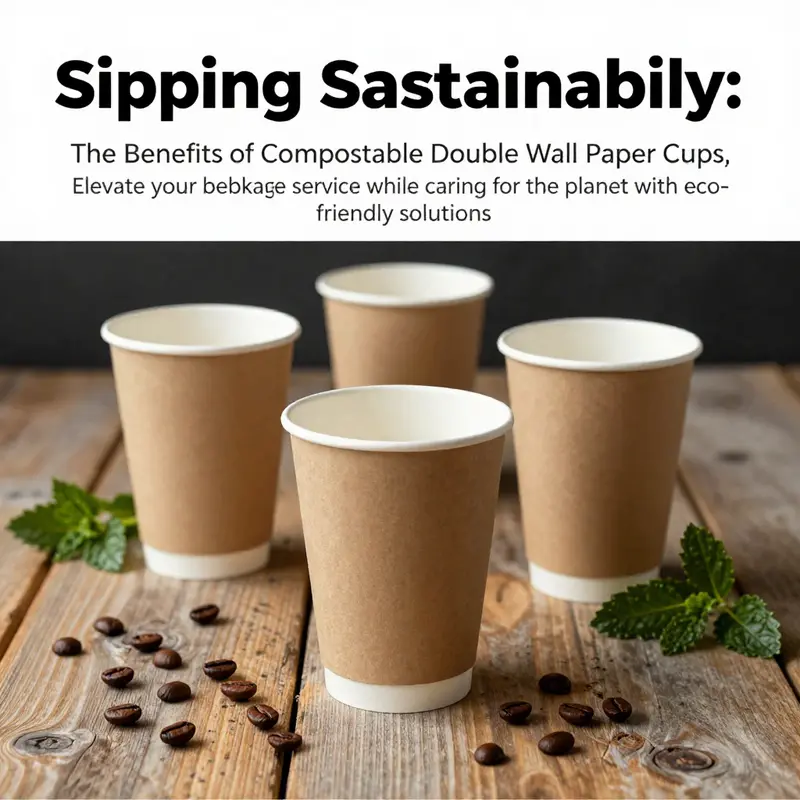
Compostable double wall paper cups combine practicality with ecological responsibility, providing a remarkable solution for businesses serving beverages. Their innovative design not only enhances insulation for hot or cold drinks but also ensures a minimal carbon footprint. As consumer awareness around sustainability grows, especially in the food and beverage industry, choosing eco-friendly packaging has become paramount. This article delves into the environmental impact, materials, and market trends surrounding compostable double wall paper cups, alongside the broader implications of consumer perceptions and societal benefits. Each chapter will build a robust understanding of how these cups can play a crucial role in promoting sustainability and efficiency in your beverage service offerings.
Measuring the Real-World Environmental Impact of Compostable Double-Wall Paper Cups
Compostable double-wall paper cups promise a cleaner future for single-use hot beverages. Their design replaces petroleum-based linings with plant-derived polymers, and it uses layered paper to provide thermal comfort. Those design choices matter, but the true environmental impact depends on how these cups are made, used, and disposed of. This chapter follows the cups from raw materials to final fate, so that businesses and consumers can see where benefits are real and where they may be overstated.
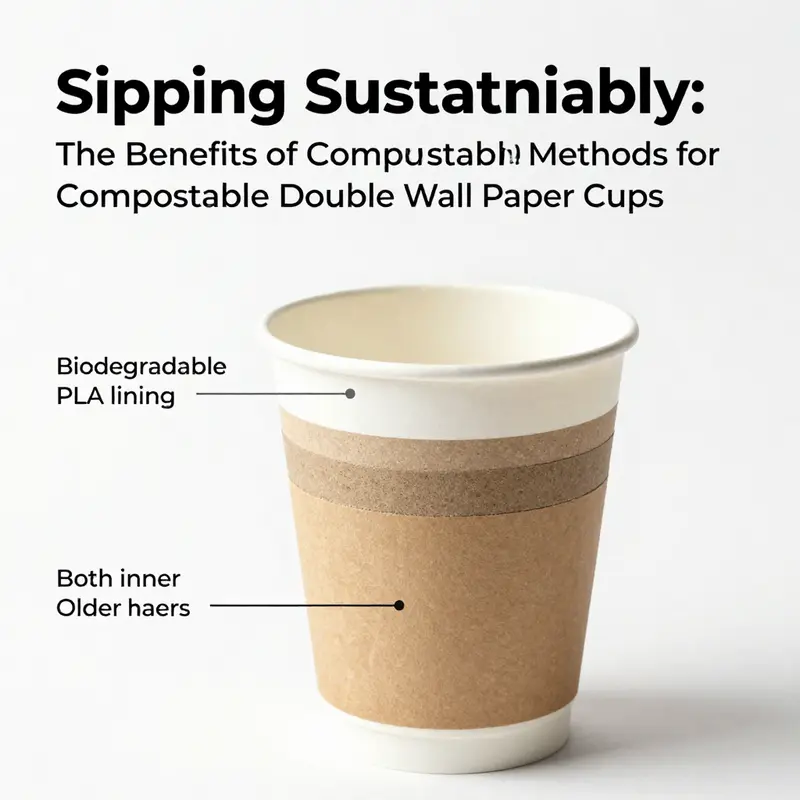
A compostable double-wall paper cup begins with fiber. Paperboard sourced from virgin or recycled pulp forms the inner and outer walls. Between these walls, an air gap or corrugated layer improves insulation. Instead of polyethylene, the inner surface is often lined with a compostable polymer such as PLA (polylactic acid). PLA is derived from renewable feedstocks like corn or sugarcane and is certified compostable in industrial facilities. The result is a cup that functions like a traditional paper cup for hot drinks, while theoretically becoming part of the natural cycle after use.
The environmental advantages are straightforward in theory. Removing fossil-derived plastics reduces dependence on nonrenewable resources. Paper fibers are renewable and, when sourced responsibly, can carry lower embodied carbon than plastics. A compostable lining that breaks down under the right conditions prevents long-lived synthetic residues from entering landfills and the broader environment. Moreover, double-wall construction can eliminate the need for separate cardboard sleeves, trimming material use while preserving user comfort. For many cafés and event operators, these benefits are compelling: the cups deliver functional performance with a more appealing environmental story than plastic-lined alternatives.
Yet the practical performance of compostable cups depends heavily on systems beyond the cup itself. Compostable materials require specific conditions to break down efficiently. Industrial composting facilities provide sustained high temperatures, controlled moisture, and the microbial communities needed to convert biopolymers and paper into humus. In those facilities, certified compostable double-wall cups can decompose within 90 to 180 days, returning nutrients to soil and reducing landfill volume. However, most municipal waste streams do not include industrial composting, and many consumers do not have easy access to compost drop-off points. When compostable cups are sent to landfill, they face anoxic, cold conditions that slow or halt biodegradation. In landfills, even plant-based polymers can persist for years while producing methane if organic breakdown occurs without methane capture.
This mismatch between product design and waste infrastructure is the single largest factor that limits environmental gains. A cup that is technically compostable will only realize lower environmental impact if it reaches an appropriate composting pathway. Otherwise, its advantages relative to plastic-lined cups are diminished. As a result, assessing impact requires looking at both product composition and the local waste management context.
Material complexity adds another layer. Compostable double-wall cups combine paper with a biopolymer lining and sometimes inks, coatings, or foils for branding. While many manufacturers use food-grade, compostable inks and avoid problematic additives, variations exist. Biopolymers such as PLA are not inherently compostable in a backyard heap; they necessitate industrial conditions. If a collection system mixes compostable cups into conventional paper recycling, the presence of PLA and other compostable coatings can contaminate the recycling stream. That contamination complicates operations and can force entire batches of recyclables to be rejected. Consequently, the best environmental outcome depends on clear material selection and compatible end-of-life channels.
Life-cycle thinking helps put emissions and resource use in perspective. Compared to petroleum-based alternatives, the production of compostable cups often results in lower fossil fuel inputs and lower life-cycle carbon emissions. Producing PLA consumes agricultural feedstocks and energy, and it can involve land use and fertilizer impacts. Yet when balanced against the extraction and refining of oil for plastic linings, emissions for a compostable cup can be lower. A full life-cycle analysis ideally includes raw material extraction, manufacturing energy, transport, and end-of-life treatment. In regions where composting is available, a compostable cup’s full-cycle emissions and waste impacts generally compare favorably to conventional lined cups. Where composting is absent, that advantage narrows.
The consumer dimension is pivotal. Labels and claims such as “compostable” or “biodegradable” can easily mislead if not paired with disposal instructions. A well-intentioned consumer may toss a compostable cup into a general waste bin, unaware that it needs industrial composting. Clear signage, on-cup instructions, and in-store disposal options can increase diversion rates. Businesses that invest in visible compost bins and staff training typically see higher correct disposal. Education campaigns should emphasize the difference between industrial and backyard composting, and they should suggest local drop-off points. This behavioral layer often determines whether a compostable cup reduces landfill burden or simply adds a confusing stream to the waste system.
For foodservice operators, the choice to adopt compostable double-wall cups involves both ethics and logistics. These cups offer branding opportunities and meet rising consumer demand for sustainable options. They can also reduce reliance on plastic suppliers. However, businesses must think beyond procurement. Establishing collection contracts, organizing on-site signage, and coordinating with municipal or commercial composters are essential steps. When cafés offer compost bins beside clearly labeled waste streams, they control the disposal outcome. Without that integration, the environmental value of the cup is largely theoretical.
Policy and certification play important roles in maintaining integrity. Independent certifications set standards for compostability, ensuring that a product will break down within a defined timeframe in certified facilities. Look for third-party validation when comparing options. Policy instruments such as compostable material collection mandates and funding for infrastructure expansion are powerful levers. Jurisdictions that invest in industrial composting create market pull for certified products. Conversely, where regulations are unclear, operators and consumers struggle to redirect waste effectively.
A final piece of the puzzle concerns circular outcomes. Industrial composting returns nutrients to soil and helps close a loop if the resulting compost is actually used in agriculture or landscaping. This outcome depends on contamination rates and the demand for compost products. High-quality source separation supports production of usable compost. When compost is put to productive use, it offsets synthetic fertilizers and contributes to soil health. That end-of-life benefit lifts the environmental profile of compostable cups beyond mere waste reduction.
To capture real benefits, a few practical recommendations are essential. First, pair compostable cups with collection systems that funnel waste to industrial composters. Second, choose products with clear certification and minimal material complexity. Third, invest in consumer-facing education and staff training to improve diversion rates. Fourth, track outcomes: measure how much compostable material is collected and where it ends up. Finally, consider local conditions: in areas lacking compost infrastructure, weigh alternatives like reusable systems or recyclable single-material options.
Compostable double-wall paper cups are not a panacea, but they are a useful tool in a broader sustainability strategy. When matched with infrastructure and clear communication, they can reduce plastic dependence, shorten material lifecycles, and return organic matter to land. In the absence of proper systems, their theoretical benefits can be lost. The path to meaningful impact requires coordination among manufacturers, businesses, municipalities, and consumers. Together, those actors can ensure that a cup’s compostable claim becomes a real environmental victory rather than a missed opportunity.
For businesses exploring compostable options, consider reviewing compatible products such as custom double-wall hot paper cups with lids to ensure the design aligns with your disposal strategy. For additional information on certification standards and composting infrastructure, see the Composting Council: https://www.compostingcouncil.org/.
From Forest to Fixture: The Materials and Manufacturing Path of Compostable Double-Wall Paper Cups
The journey of a compostable double-wall paper cup begins long before its first pour of coffee or tea. It starts with a deliberate choice of materials and a manufacturing sequence that balances function with end-of-life stewardship. In this chapter, we trace that path from the forest to the cup in a way that reveals how each material decision and processing step echoes through sustainability performance, consumer experience, and the broader system of waste management. The double-wall design is more than a technical trick for insulation; it is a carefully engineered feature that enables hot beverages to be held comfortably while keeping compostability firmly in view. The materials and methods discussed here illuminate how a single disposable item can align practical utility with ecological responsibility when every link in the chain is selected and controlled with intent.
At the core is the primary material: food-grade paperboard. Suppliers commonly source this paperboard from forests managed to recognized sustainability standards, such as those certified by well-known forest governance programs. The board must meet stringent food safety requirements to prevent any migration of substances into beverages. This is not merely about avoiding toxins; it is about providing a stable base that can endure wet and thermal exposure without degrading its structural integrity. The board’s composition and finish also influence moisture resistance, draft-proofing of seams, and the ability to receive a downstream coating that remains compatible with composting. When the paperboard comes from forests managed for long-term yield and biodiversity, the production chain begins in a context that values regeneration, responsible harvesting, and traceability. The supply chain’s transparency is essential because it informs downstream stakeholders—bakeries, cafés, event organizers, and waste management facilities—about the cup’s true environmental footprint.
If the paperboard forms the skeletal frame, the inner coating forms the skin that preserves function. For compostable cups, coatings are deliberately plant-based, designed to stand up to hot beverages yet to break down under industrial composting conditions. Polylactic acid, or PLA, dominates as the primary compostable coating in this category. PLA is derived from fermented plant starch, typically corn or sugarcane, and offers a heat‑resistant barrier against leakage and moisture while remaining compatible with composting streams at the required end of life. Alongside PLA, some formulations explore starch-based films. These materials are engineered to form a thin, continuous barrier on the inner surface that resists liquid permeation and minimizes the risk of components separating or delaminating under thermal stress. The result is a cup that can safely contain hot coffee or tea without experiencing the rapid weakening that might accompany bilayer leakage. The critical point here is that the coating materials are chosen not for their novelty but for their coherence with industrial composting processes. They are designed to disintegrate in controlled conditions rather than persist in landfills or ecosystems.
The insulation feature of the double-wall cup is visible in its most practical form: an air gap between two layers of paperboard. This air pocket acts as a natural barrier to heat transfer, reducing the outer surface temperature and making the cup comfortable to hold even when the beverage is scorching hot. The double-wall geometry also contributes to volume stability and handling durability. Its effectiveness hinges on precise fabrication: the inner and outer walls must be formed with an accurate seam and an exact, stable air gap. The manufacturing equipment is set up to fold and seal the board into a cup body that preserves this gap while resisting puncture, crushing, and humidity-induced deformation. The air layer’s performance is not just a matter of geometry; it is a function of material thickness, adhesive integrity, and the compatibility of the inner coating with the paperboard, all of which must be orchestrated in a continuous process that minimizes waste and variance.
Adhesives and inks play a quieter yet critical role in the sustainability story. In this ecosystem, adhesives must be compostable and food-safe, forming reliable joints without introducing substances that could contaminate compost streams. The printing phase—whether branding, color, or messaging—leans on water-based inks or other non-toxic options that stay compatible with the compostable base while offering durable print on the curved surface. The synergy between coating, board, and adhesives determines not only the mechanical durability of the cup but also the integrity of the composting process. When inks and adhesives are chosen with end-of-life in mind, the entire product becomes a more predictable participant in the composting facility’s stream rather than a potential contaminant. The challenge lies in balancing print fidelity, regulatory compliance for food contact, and the need for clean separation in recycling or composting systems. The result is a cup whose decoration does not compromise its compostability.
Transitioning from materials to methods reveals a tightly choreographed set of production steps that sustain both performance and sustainability. The journey begins with paperboard manufacturing. The base board is produced from high-quality, food-grade pulp, which may be reinforced with moisture-resistant treatments to withstand handling and transport before the coating is applied. This preparatory stage sets the stage for a consistent feed into the coating line. The coating application itself is a pivotal moment: a uniform, thin layer of compostable polymer—most often PLA—is applied to the inner surface. Achieving consistent coverage is essential; any thin spots could compromise leak resistance or create weak points where the board could delaminate during use or biodegradation. Once coated, the board is dried and conditioned to a stable moisture content, a prerequisite for reliable forming and seam sealing in the subsequent cup-making process.
Forming the cup is a sophisticated operation that embodies both precision engineering and material science. Circular blanks derived from the coated board are transformed into a cup shape via dedicated cup-forming machinery. This step is where the double-wall structure becomes a tangible three-dimensional object. The inner and outer walls are formed in tandem to craft the air gap, with seams sealed to prevent leakage and maintain structural integrity under pressure and thermal stress. The equipment is calibrated to maintain seam tightness and uniformity across large runs, avoiding micro-cracks that could permit seepage or compromise insulation. In many facilities, the same line that forms the cup can also prepare it for branding by applying printed designs either before or after the forming step. When branding occurs before forming, the inks must withstand the mechanical stresses of shaping and the heat exposure during subsequent curing steps; when after forming, the ink must still adhere to a curved, multi-layer surface without flaking. Either approach requires inks that are compatible with compostable substrates and do not introduce contaminants into compost streams.
Quality control operates as a continuous feedback mechanism rather than a batch gate. From the earliest stage of coating through final forming, each operator checks for leakage, wall thickness consistency, and seam integrity. Modern facilities employ automated inspection systems that scan for visual defects, measure thickness uniformity, and detect any coating discontinuities. These checks are not mere quality rituals; they protect consumer safety, ensure reliable insulation, and confirm compliance with compostability standards. Once a run passes rigorous checks, the cups are packaged for distribution with careful attention to minimize damage and preserve the pristine condition of the coating and wall geometry. Packaging decisions also consider end-of-life recoverability, avoiding laminates or additives that could complicate composting or recycling in facility streams.
Certification and standards provide the external compass guiding material and process choices. A credible producer will subject their compostable cups to tests that verify industrial compostability within a defined timeframe, typically around 180 days, under established conditions. Standards such as ASTM D6400 and EN 13432 offer frameworks for evaluating biodegradation, disintegration, and the absence of toxins in the resulting compost. The adherence to these standards signals to customers and waste managers that the cup will behave as intended in industrial facilities and will not leave behind persistent plastics or hazardous residues. This certification is not a marketing flourish; it is a measure of systemic compatibility—an indicator that the product can be integrated into composting infrastructure with predictable results. The collaboration among material suppliers, coating developers, and cup manufacturers makes this certification possible, reflecting a shared commitment to lifecycle thinking rather than a product-centric view alone.
Beyond the technical and regulatory layers, material choices influence supply chain resilience. Access to responsibly sourced paperboard and plant-based coatings depends on agricultural cycles, regional processing capacity, and the stability of compostable resin supply chains. Sustainability-minded operations often seek diversified sources to mitigate disruptions and to reduce the environmental footprint associated with long transport routes. The use of FSC- or PEFC-certified paperboard communicates not only compliance with forest stewardship principles but also a willingness to engage with suppliers who invest in responsible land-use practices and worker welfare. Similarly, the procurement of PLA or starch-based coatings involves considerations of feedstock origins, geographic variance in production capacity, and end-of-life infrastructure readiness. A robust system recognizes these dependencies and designs contingency plans, from stockpiling compatible materials to coordinating with waste facilities that can accept compostable cups alongside other organics. In this way, the simple cup becomes a node in a network of sustainability that encompasses forestry, agriculture, manufacturing, logistics, and waste management.
The entire production narrative culminates in a product that fulfills two seemingly competing demands: it must perform as a reliable disposable cup and, at the end of its use, it must be responsibly handled by composting facilities. The success of this balance rests on the integrity of the paperboard, the compostable inner coating, the insulation strategy, and the compatibility of adhesives and inks. When all elements align, the cup delivers warmth and comfort to the user while contributing to a broader system in which organic waste is recaptured and transformed rather than discarded. It is a practice that honors the aesthetic and functional expectations of cafes, restaurants, and event services without compromising the goals of environmental stewardship.
For readers who want a tangible glimpse into how these cups come to life, consider the practical implications of a product line that highlights both insulation performance and compostability. A well-designed double-wall cup can be produced in multiple sizes, with branding options that reflect a café’s identity, all while remaining compatible with industrial composting streams. The design choices—such as the thickness of the walls, the depth of the air gap, the type of coating, and the ink system—must be harmonized through cross-functional collaboration. Engineers, formulators, and packaging designers work together to ensure that the final cup preserves its insulating properties during use, resists leakage under pressure, and ultimately breaks down in composting facilities within an acceptable period. The story of these cups, then, is not only about materials and machinery; it is about the integrated decisions that enable a disposable object to participate responsibly in the circular economy.
To connect this material and method narrative with practical procurement and branding, one can explore how suppliers present options for customization while maintaining compostability. An example of the broader market approach is the availability of wholesale, custom-printed, kraft double-wall cups that offer branding opportunities without compromising the compostable pathway. These options typically include a range of sizes, print capabilities, and finish choices, all designed to preserve the cup’s functional and environmental properties. When selecting a partner, purchasers weigh not only price and aesthetics but also certification status, ink compatibility, and the supplier’s track record in managing sustainable feedstocks and end-of-life commitments. In the end, the choice of materials and the precision of production methods become the defining factors that transform a simple beverage container into a responsible accessory for modern dining and event experiences.
For further context on the market and production infrastructure, see the dedicated product page that highlights wholesale, printed, double-wall kraft cups designed for customization while preserving compostability. This resource offers a practical view of how the design and production decisions described here translate into real-world products that can be integrated into food-service operations without compromising sustainability goals. double-wall kraft paper cup.
External standards and technical guidance continue to shape the industry. Standards bodies provide ongoing updates on testing protocols, post-use performance, and composting facility compatibility. As technologies mature and waste-management systems evolve, manufacturers and buyers alike benefit from clear criteria that reduce ambiguity around end-of-life outcomes and environmental impact. This alignment between material science, manufacturing discipline, and policy frameworks strengthens the case for compostable double-wall cups as a pragmatic component of sustainable food service.
External resource: ASTM D6400 and related guidance offer comprehensive criteria for industrial compostability, helping practitioners evaluate whether a given cup design meets established expectations for breakdown, non-toxicity, and lifecycle performance. See: https://www.astm.org/Standards/D6400.htm
Green Insulation, Greener Profits: Market Trends and Economic Realities of Compostable Double-Wall Paper Cups
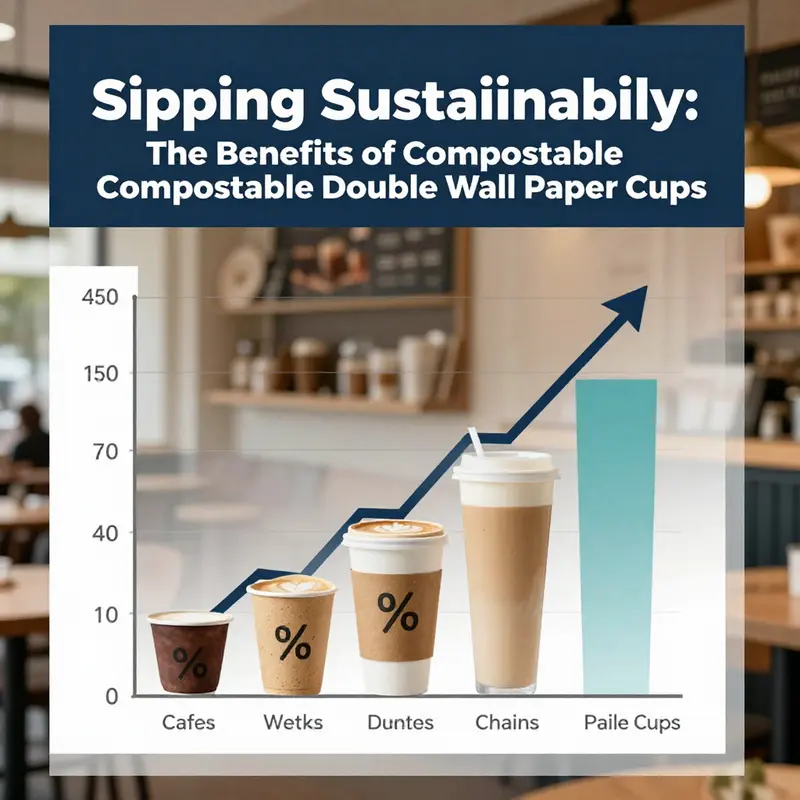
When a disposable cup offers not just a vessel for caffeine but a reliable shield against heat and a path to a cleaner planet, you can begin to sense the momentum behind compostable double-wall paper cups. This is more than a design tweak; it is a shifting calculus about what packaging should do, how it should perform, and what price point makes sense for a world increasingly asking for responsible choices. The market narrative around these cups has sharpened into a clear story: consumers want insulation, sustainability, and minimal fuss, and businesses want a reliable, scalable solution that aligns with regulatory trends and brand promises. The financial arithmetic is evolving in tandem with these expectations, making the sector not only environmentally coherent but economically viable at meaningful scales. A recent synthesis of market intelligence puts a crisp lens on this dynamic. A global assessment of double-wall paper cups valued the market at about USD 3.21 billion in 2024, with projections showing a compound annual growth rate of roughly 7.2 percent from 2026 through 2033. Those numbers are not a footnote; they signal a robust demand trajectory that has real implications for producers, distributors, and venue operators alike. They also imply a level of maturity in the supply chain that previously required more time to achieve. The double-wall segment, in particular, has emerged as the fastest-growing within the biodegradable cup category. This is the result of a compelling combination: improved thermal performance that enhances user comfort, and a full-aligned sustainability profile that does not compromise performance. In practical terms, customers can trust that a hot beverage remains hot for longer, while the cup itself degrades in a suitable composting stream. For retailers and event organizers, this translates into fewer handling issues, less waste, and a clearer path to building a circular-economy narrative around a brand’s on-site packaging. The market’s price-and-scale dynamics reinforce this through competitive unit costs that continue to fall as volumes rise. Suppliers sometimes offer customized compostable double-wall coffee cups with lids at prices around 0.015 USD per unit for large orders, such as 50,000 pieces. That price point is meaningful: it demonstrates that sustainable options are not only technically feasible but economically competitive with conventional single-use alternatives at scale. The economics are underpinned by several structural advantages. First, the double-wall construction inherently reduces heat transfer, enabling better temperature control for both hot and cold beverages. This translates to consumer satisfaction and reduced risk of burns—an important safety consideration for service staff and for brand reputation. Second, the interior can be lined with a biodegradable barrier such as a PLA-based coating rather than traditional petrochemical plastics. This material choice supports industrial composting pathways and aligns with broader waste-management goals that many municipalities are adopting or mandating. Third, the production process benefits from established paper-fiber supply chains and scalable converting technologies that accommodate rapid throughput and customization. The industry has moved past early-stage experimentation toward standardized, repeatable manufacturing workflows that handle varying sizes, print patterns, and optional features like lids, gold foil accents, or all-black premium finishes. The convergence of these factors helps explain why investment in this segment—whether through capacity expansion, patenting activity, or export-oriented strategies—has gained traction. In this context, the market’s trajectory isn’t random; it reflects an ostensibly coherent alignment of consumer demand, regulatory pressure, and the practicalities of modern manufacturing. The regulatory environment, particularly in regions phasing out conventional plastic cups, has accelerated the shift toward compostable alternatives. A growing body of policy measures across jurisdictions aims to reduce single-use plastic waste, encourage composting infrastructure, and require clearer labeling for end-of-life disposal. In turn, producers of compostable double-wall cups have to navigate standards for compostability and safety, ensuring the materials are suitable for contact with beverages and stable under typical storage conditions. These standards—while rigorous—also foster consumer trust. When a cup is described as compostable, it carries an implicit promise that it will break down responsibly in an industrial facility, given the correct conditions. Yet this promise is not universal. Some markets distinguish between industrial composting and home composting, a nuance that has important implications for labeling, consumer education, and waste-stream infrastructure. The best-performing providers in this space are those who recognize the importance of clarity around disposal pathways and who invest in certifications that help end-users differentiate between feasible composting routes and less reliable outcomes. On the economics side, the field benefits from scalability. The same production lines that can churn out standard sizes—often in 8 oz to 20 oz ranges—also support smaller, customized runs, albeit at higher unit costs. This scalability is complemented by a competitive supplier landscape, where manufacturers with export experience and patent portfolios tend to offer more predictable lead times, better supply security, and a readiness to meet diverse branding needs. In many respects, the market’s financial pulse is shaped by a blend of value propositions: functional performance, environmental credentials, and the opportunity for brands to differentiate through design. The aesthetic dimension, once considered a luxury add-on, has become a meaningful driver of choice in environments where customer perception matters as much as product performance. Premium finishes—such as foil stamping or distinctive colorways—can be deployed without sacrificing compostability, provided the inks and coatings comply with food-safety standards. From a business planning perspective, this blend of performance and branding expands the addressable market. Cafés, restaurants, and event organizers seeking to minimize waste while delivering consistent beverage experiences find in compostable double-wall cups a credible platform for sustainable storytelling. The affordability trend also matters for small and mid-sized operators who face tighter margins yet still want to demonstrate responsible practices. The data points in recent market research indicate that price competitiveness is no longer the sole gatekeeper for adoption; total cost of ownership, including waste management savings, labor efficiency, and brand equity, weighs more heavily. For operators considering a switch, several practical considerations emerge. First, the total lifecycle cost should account for the end-of-life scenario. If a facility cannot process compostable cups efficiently, the anticipated environmental benefit may be compromised. This reality underscores the importance of aligning packaging choices with local waste-management capabilities and future infrastructure plans. Second, the product’s compatibility with existing serving systems matters. The double-wall design must work seamlessly with existing lids, sleeves, and branding templates, to avoid operational friction during busy service periods. Third, the ability to customize and scale is a strategic advantage in a market where many buyers are seeking to reinforce brand identity. The opportunity to print logos, choose sizes, and even select premium finishes enables a holistic packaging approach that integrates with marketing objectives. To illustrate how such choices can play out in practice, consider a supplier page featuring a range of options for double-wall cups with lids and various branding capabilities. The link below points to an example category where buyers can explore customization and premium finishes while maintaining compostability credentials. disposable-double-wall-gold-foil-stamping-coffee-cups-with-lid This internal link helps readers imagine how design decisions translate into market appeal without sacrificing environmental commitments. It is a reminder that the economics of these cups are not just about the raw material cost but about how design, packaging, and end-of-life outcomes converge to create value for operators, consumers, and waste-management ecosystems alike. Of course, the path forward is not entirely smooth. The market faces ongoing challenges that can influence timing and scale. The availability and reliability of industrial composting facilities remain critical constraints in many regions. If facilities are underdeveloped or unevenly distributed, the environmental gains promised by compostable products may be delayed or diluted. Certification processes, while essential, can also impose lead times and additional costs for manufacturers, which may ripple through to buyers seeking shorter procurement cycles. Another nuanced challenge concerns consumer education. While many customers recognize that compostable is better than conventional plastic, they also need clear instructions on disposal. Without effective labeling and accessible waste streams, even well-intentioned customers may place cups in the wrong bin, undermining downstream composting efforts. These realities imply a strategic implication for brand teams and operations leaders: successful deployment hinges on an ecosystem approach. Packaging choices should be accompanied by clear disposal guidance, partnerships with local waste-management providers, and consistent consumer messaging across channels. In this light, the economic viability of compostable double-wall cups rests on more than unit price. It rests on the reliability of the supply chain, the maturity of composting infrastructure, and a company’s willingness to invest in end-to-end waste stewardship. The synergy among insulation performance, material composition, and end-of-life processing is what distinguishes leaders in this space from companies that merely replace a plastic cup with a compostable alternative. The industry’s path forward will be shaped by continued advances in biodegradable barrier materials, more efficient manufacturing processes, and broader adoption of standards that help tighten the alignment between product claims and actual outcomes in real-world waste streams. As the market expands, opportunities for branding and customization will grow in parallel with the demand for responsible disposal. Operators who plan ahead—by mapping supply chains, securing scalable capacity, and coordinating with waste facilities—are likelier to realize favorable economics and robust environmental performance. In sum, the market signals a compelling blend of growth and viability. The double-wall format, when married to compostable materials and industrial-scale production, offers a practical route to reduce waste while preserving performance. The trend toward sustainability, reinforced by policy shifts and consumer expectations, creates a durable demand trajectory. For readers seeking an external lens on these shifts, recent industry analysis underscores the same growth narrative and highlights the global scale of the opportunity. External resource: https://www.linkedin.com/pulse/global-double-wall-paper-cups-market-size-trends-2025-7-22/
How Consumers Value Compostable Double-Wall Paper Cups: Practical Appeal and Wider Social Gains
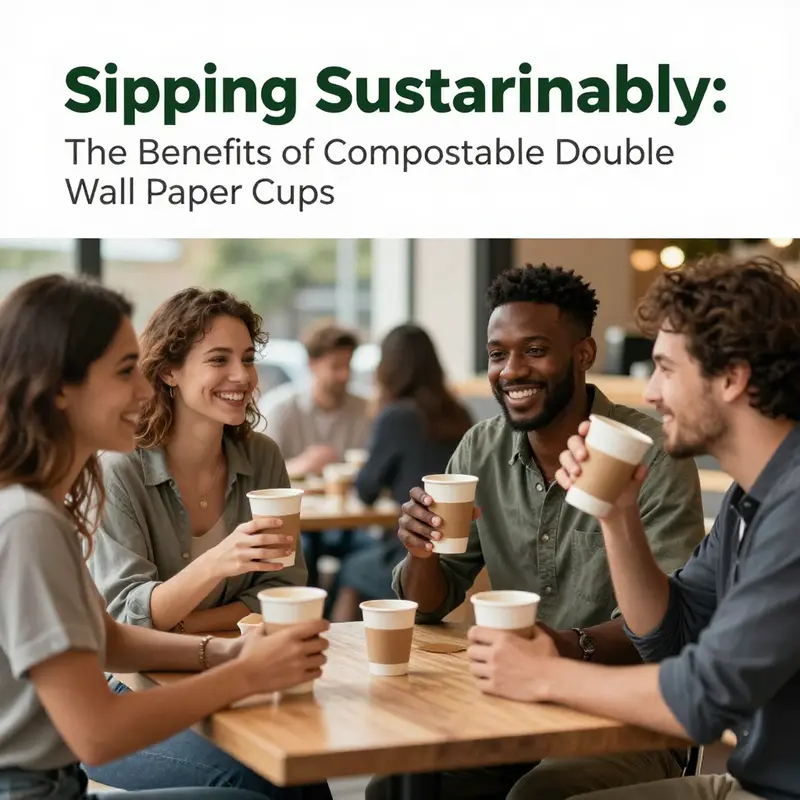
Consumer and Societal Impact
Compostable double-wall paper cups occupy a unique position at the intersection of everyday convenience and environmental responsibility. They perform a simple job well: provide insulated, disposable service for hot and cold drinks. But their true appeal runs deeper. For many consumers, these cups signal a choice. They reflect a preference for products that combine comfort with lower environmental harm. The double-wall design keeps hands cool and drinks warm. The compostable lining, made from plant-based polymers, removes the visible stigma of plastic. Those two facts together change how people view single-use cups.
For the person buying coffee, the cup is part of a ritual. It must feel good in the hand. Double-wall construction provides a tactile sense of quality. The air gap between layers reduces the need for extra sleeves. That saves cost and reduces waste. Consumers notice the difference. They also notice messaging. A clear claim—compostable, plant-based lining, food-grade paper—builds trust. When products avoid chemical-laden bleaches and use food-safe inks, they appeal to buyers who care about health as well as the planet.
Perception of environmental benefit hinges on credibility. Consumers today are skeptical of vague sustainability claims. They want specifics. Saying a cup is compostable matters most when the claim is backed by a clear explanation of how and where it breaks down. Industrial composting facilities provide the right heat and microbial activity. Under those conditions, cups lined with polylactic acid can break down into organic matter within roughly 90–180 days. When that information is communicated simply, consumers can make informed choices rather than rely on green-sounding labels.
Convenience and aesthetics also matter. Compostable cups are available in many sizes and finishes. They can carry custom prints, brand logos, and premium touches like foil stamping. That versatility helps businesses present a consistent identity while switching to greener materials. Consumers respond to attractive design. They equate good design with quality and responsibility. In many markets, offering a compostable double-wall cup signals that a café or event organizer cares about detail. That perception can translate directly into loyalty and repeated purchases.
Price sensitivity remains a key factor. Compostable double-wall cups are often slightly more expensive than their PE-lined counterparts. For some consumers, that price difference is negligible. For others, it is decisive. As demand grows and production scales, however, costs tend to decline. Manufacturers invest in better materials and streamlined processes. That downward pressure on price improves accessibility. When bulk prices fall, businesses can adopt compostable cups across operations. Consumers then encounter them as the default choice, not a specialty item.
Beyond individual transactions, societal benefits emerge when use shifts at scale. Diverting single-use cups from landfills and incinerators reduces long-term waste. In industrial composting settings, organic breakdown returns carbon and nutrients to soil. This process reduces methane emissions that otherwise arise when organic materials decompose anaerobically in landfills. The result is lower greenhouse gas output for the waste stream linked to disposable beverages.
A broader shift creates secondary gains. Increased adoption of compostable cups stimulates investment in composting infrastructure. Municipalities and private operators are likelier to build collection systems, processing sites, and logistics tailored to compostable foodservice waste. Those facilities create skilled jobs—from operations technicians to waste planners. They also foster new services, such as commercial compost pickup for businesses and event operators. Over time, a supportive infrastructure makes compostable packaging more practical for consumers and companies alike.
Policy and procurement practices play a catalytic role. When public institutions prioritize compostable or otherwise compostable-compliant materials, the market responds. Bulk buyers, such as universities and healthcare systems, can require compostable packaging in contracts. Those large orders provide predictable volumes. Predictable volumes encourage manufacturers to invest. That investment improves product quality and drives down unit costs. The policy shift thus creates a virtuous cycle: demand creates supply improvements, and supply improvements make the products more attractive to buyers.
Social equity is another important dimension. Communities frequently burdened by waste facilities are often the same ones that incur health and environmental harms from landfill operations. When cities adopt composting and reduce reliance on landfills and incineration, benefits can include improved local air quality. Composting operations, when properly managed, produce fewer pollutants. They also generate compost that can be used in urban greening projects. These projects improve soil health, reduce urban heat, and support local food initiatives. Compostable cups, therefore, can contribute indirectly to healthier urban environments.
Yet challenges remain. One major hurdle is contamination. Compostable cups need to be separated from regular recyclables and conventional waste. If compostable items end up in recycling streams, they can compromise material quality. Conversely, if non-compostable plastics contaminate composting loads, they can derail processing and increase sorting costs. Clear labeling, consumer education, and practical collection points are essential. Retailers and event planners must design waste stations that make correct disposal intuitive. Signage, color-coded bins, and staff training help reduce errors.
Consumer education must be straightforward. Simple messages—where to dispose of the cup, why industrial composting is required, and how long breakdown takes—make decisions easier. Point-of-sale communication helps. Staff who can answer questions turn curiosity into compliance. When people see that their action contributes to something tangible, they are more likely to follow through. That behavioral reinforcement matters more than technical messaging alone.
Another issue is compostability standards and certification. Consumers favor products that carry recognized verification. Certifications assuage doubts and provide third-party confirmation of claims. When manufacturers adhere to accepted compostability standards, they strengthen consumer trust. Over time, standardized labels will likely become part of the normal assessment for foodservice packaging, similar to nutrition labels for food products.
Businesses also gain financially and reputationally from switching. Using compostable cups can differentiate a brand. It signals alignment with sustainability goals. Organizations can tell a compelling story about reducing plastic waste and supporting circular systems. That story can be monetized through loyalty, partnerships, and even cost savings if waste handling becomes more efficient. Event planners and large venues find that compostable systems simplify waste management when paired with on-site compost collection.
The environmental benefits scale further when supply chains adopt circular thinking. If compost produced by industrial facilities returns to local farms and green spaces, the system shortens nutrient loops. That circulation reduces reliance on synthetic fertilizers. It supports soil regeneration. It also builds local resilience against climate extremes. Compostable cups represent one component of this cycle, but they can be a visible, everyday touchpoint for broader change.
Finally, social norms evolve. As compostable double-wall cups become more common, consumer expectations shift. What once was novel becomes ordinary. That shift creates peer effects: people feel social approval when choosing sustainable options. Businesses respond to those signals by making greener choices the default. Over time, the aggregate of these choices yields measurable reductions in pollution and waste.
Adoption is not accidental. It requires coherent strategies across product design, communication, infrastructure, and policy. It also depends on continuous innovation to improve materials and lower costs. When these elements align, compostable double-wall paper cups can offer both the immediate comfort consumers expect and the systemic benefits societies need.
Further reading on how compostable paper cups fit into the future of sustainable beverage packaging is available from a detailed overview at the Sustainable Packaging Coalition: https://www.sustainablepackaging.org/compostable-paper-cups-the-future-of-sustainable-beverage-packaging/
For businesses considering procurement options, one practical product reference is the disposable custom double wall hot paper coffee cups with lid available from suppliers. The listing details sizes, customization choices, and lid compatibility at https://greendispopack.com/product/disposable-custom-double-wall-hot-paper-coffee-cups-with-lid/.
Final thoughts
The adoption of compostable double wall paper cups represents a significant stride towards sustainable practices within the beverage industry. As businesses embrace eco-friendly alternatives, they not only enhance customer satisfaction but also contribute meaningfully to environmental preservation. By understanding the environmental impacts, innovative materials, market trends, and the increasingly positive perceptions of consumers, businesses can align their values with sustainable practices. In doing so, companies can ensure they are part of the solution in combating climate change while elevating their brand image and appealing to environmentally conscious customers.