
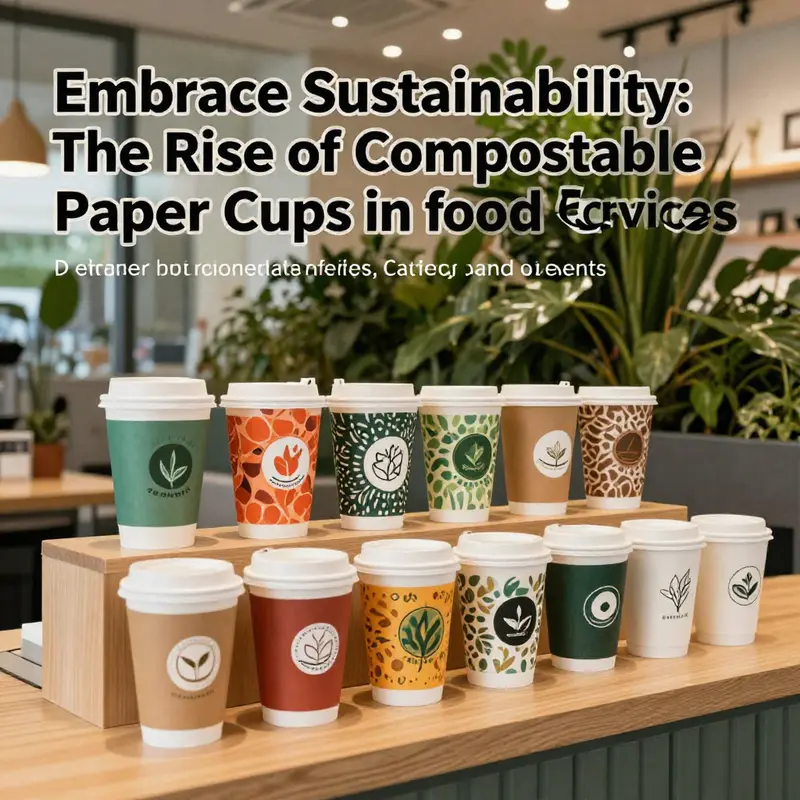
With increasing awareness of environmental issues, businesses in the food and beverage industry must adapt to sustainable practices. Compostable paper cups are an innovative solution that aligns perfectly with this trend, offering an eco-friendly alternative to traditional plastic-lined cups. The adoption of these cups not only contributes significantly to waste reduction but also resonates with the growing consumer demand for sustainable products. This article will navigate through three crucial aspects: understanding the sustainability and environmental impact of compostable cups, exploring their material composition and technical specifications, and examining current market trends and adoption rates among food services. Each chapter builds a comprehensive view of how these innovative cups function as a vital part of your sustainable service strategy.
Beyond the Green Promise: Navigating the Real Environmental Footprint of Compostable Paper Cups
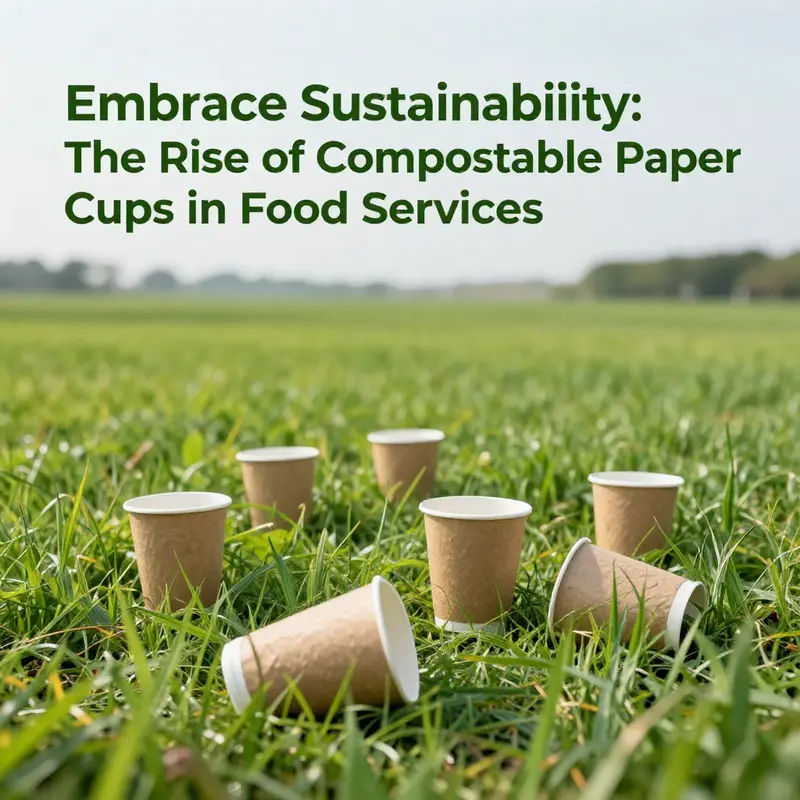
The idea of compostable paper cups has, in many settings, achieved a kind of moral gloss. They promise a simple switch: replace plastic-coated cups with a plant-based alternative and suddenly the daily ritual of coffee on the go becomes a step toward a cleaner planet. Yet behind that promise lies a network of practical realities that shape whether compostable cups truly reduce environmental impact or merely shift problems from one disposal stream to another. This chapter threads together the intentions behind compostable cups with the constraints and consequences that emerge when they enter real-world waste systems. It asks not whether compostable cups are inherently good or bad, but how their performance depends on the system that handles them—from the farm fields where the raw materials grow to the industrial facilities that process the waste, and finally to the everyday choices of consumers and businesses. The journey is as important as the material itself, because the ultimate sustainability of these cups rests on a coordinated choreography between production, waste management, and behavior.
Compostable cups are usually pitched as a more virtuous option than conventional paper cups with plastic linings. They are often credited to renewable plant-based inputs—materials such as bamboo, sugarcane bagasse, or recycled paper—and they are lined with biodegradable materials like polylactic acid, commonly sourced from corn starch or sugarcane. The decomposition narrative attached to these components centers on industrial composting facilities that create controlled conditions—stable high temperatures, adequate oxygen, microbial activity—that accelerate decay. Under those conditions, the cups are said to break down into water, carbon dioxide, and organic matter within a span typically estimated at 90 to 180 days. The math sounds straightforward: replace fossil-fuel–dependent plastics with compostable polymers, pulse the waste stream with nutrients, and close the loop. However, turning that math into meaningful environmental benefit requires more than a claim of home compostability or a lab-grade statement of biodegradability.
One of the most consequential realities is the uneven distribution of industrial composting infrastructure. In many regions, facilities capable of handling compostable paper cups at scale are simply not available. The research highlights a paradox: the cups are designed for a facility that may not exist nearby, or that exists but is overwhelmed by volumes and inconsistent contamination. When there is no suitable facility, compostable cups can end up in landfills. In landfills, the very conditions that these cups rely on for efficient decomposition—oxygen and optimized microbial activity—are scarce or absent. The result is slow, incomplete degradation, and in some cases the environmental benefits anticipated from compostability are undermined. This is not a hypothetical risk but a documented limitation that makes the effectiveness of compostable cups highly contingent on local waste management realities. A regional failure to provide composting capacity can neutralize a technology designed to reduce plastic burden, effectively converting a potential environmental improvement into a missed opportunity.
The resource footprint of making compostable cups further complicates the picture. The lifecycle of these cups begins with agricultural inputs—water, energy, land, and fertilizer used to grow the crops or to produce the plant-based materials that become the liner or the wrapper. The cultivation of corn or sugarcane for biobased components can entail land use changes, water consumption, and greenhouse gas emissions that rival or exceed those associated with conventional paper cups if managed unsustainably. Even the use of recycled paper as a base material does not automatically eliminate these concerns; energy and water enter the process at several stages—from pulping and processing to finishing and shaping. In short, the environmental math of compostable cups is not a simple substitution of one resource for another. It is a sequence of trade-offs that depends on agricultural practices, energy sources, and the efficiency of the manufacturing supply chain.
Another layer of complexity comes from contamination and the integrity of the composting stream. Compostability does not guarantee that a cup will contribute positively to a composting batch. Non-compostable contaminants, whether they are plastics, non-degradable adhesives, or other materials, can derail the entire process. If sorting systems are lax or consumer education is weak, cups labeled as compostable may be misrouted into facilities that cannot process them, or may escape the proper streams altogether. When contaminated, batches can fail or require additional processing to separate materials, increasing costs and reducing the overall effectiveness of composting programs. The real-world consequence is that the environmental benefits of compostable cups are not only a matter of material science but also a matter of behavioral and infrastructural alignment—how well products are labeled, how well people sort waste, and how efficiently facilities operate.
The end-of-life reality also calls for a nuanced view of biodegradability versus compostability. The concept of biodegradation often carries a reassuring intuition—that the material simply disappears. But biodegradation is not universal; it depends on temperature, moisture, oxygen, and the presence of specific microbial communities. In controlled industrial composting, those conditions can be met, and cups can disintegrate as intended. In the environment, in ordinary landfills, or in home composting setups, the material may not degrade at a meaningful rate. And even when cups do break down, the residue—the compost itself—must be suitable for soil amendment and must avoid releasing persistent substances. The presence of biodegradable polymers raises questions about how the resulting compost interacts with soil health and crop productivity, and whether any residuals could accumulate over time. These questions fuel ongoing debates among scientists and policymakers about what constitutes a truly sustainable end-of-life pathway for compostable packaging.
The sustainability calculus for compostable cups is thus inherently systemic. It rests not on a single material choice but on an ecosystem of decisions: the agricultural model that supplies raw inputs, the manufacturing efficiency and energy mix of producers, the certification and labeling that guide consumer choices, the availability and quality of municipal or industrial composting facilities, and the diligence of waste-hauling networks that keep streams clean and separate. When municipalities pursue zero-waste goals, compostable cups can be a valuable tool in a broader strategy that pairs packaging design with robust composting programs, consumer education, and consistent regulatory expectations. Yet without parallel investments in infrastructure and behavior, the likely outcome is a partial victory—a reduction in some types of plastic pollution, but not a wholesale transformation of waste systems.
The research highlights a pragmatic path forward for businesses and communities alike: recognize the conditional benefits of compostable cups and align procurement with local capabilities. In places where industrial composting is mature, these cups can contribute meaningfully to waste diversion and resource recovery, particularly when paired with strong labeling, clear disposal guidance, and convenient drop-off points. In places lacking composting capacity, the decision to adopt compostable cups should be weighed against the potential for higher treatment costs, the risk of misrouting, and the possibility that the cups may simply end up in landfills with limited degradation. This is not a binary choice between “eco” and “not eco”; it is a decision about optimizing the waste system, balancing material properties with the reliability of end-of-life options, and coordinating supply chains to ensure that compostability translates into real environmental gains.
To illustrate the practical implications, consider the lifecycle of a typical compostable cup from a coffee shop to a processing facility. The journey begins with the raw materials—plant-based fibers or recycled paper, shaped into a cup with a biobased liner. The manufacturing stage consumes water, energy, and sometimes chemicals to create a sturdy, heat-resistant cup suitable for hot beverages. The cup then travels through distribution networks to individual outlets, where it is used for minutes, then discarded. If the local waste system offers industrial composting with appropriate temperature and aeration controls, the cup can enter the compost stream and, after a few months, contribute to soil enrichment as part of a mature compost product. If the local system lacks such facilities, the cup is more likely to end up in a landfill. There, without oxygen and controlled microbial activity, the cup degrades only slowly, if at all, and its end-of-life impact may resemble that of traditional counterparts in terms of volume and persistence.
The consumer’s role cannot be overstated. Sorting behavior, awareness of what is compostable, and adherence to local guidelines are pivotal. Labels that clearly distinguish compostable cups from non-compostable plastics help, but they are only effective if customers recognize and follow the directions. Misplaced cups contaminate compost streams, lower the quality of the final compost, and can trigger higher processing costs or batch rejections. Education efforts, user-friendly disposal cues, and consistent messaging across venues—cafes, schools, offices, and public events—strengthen the odds that compostable cups contribute positively to the circular economy rather than simply representing a well-intentioned but imperfect substitute for plastic.
Businesses face a related set of incentives and challenges. On the one hand, compostable cups can support brand narratives around sustainability, especially when coupled with transparent supply chains and verified certifications. On the other hand, the cost of materials, the need for reliable composting partnerships, and the risk of mismatched disposal infrastructure can complicate procurement decisions. Companies may respond by investing in staff training for waste sorting, partnering with local composting facilities, or offering customized cups that align with the local waste system. For instance, a restaurant may choose to source cups that align with a nearby municipal composting program and to communicate clear disposal guidance to customers. In some cases, this means embracing a broader packaging strategy that includes not only cup materials but also lids, sleeves, and other components that are compatible with a single, well-supported composting stream. A practical approach is to view compostable cups as one element in an integrated waste strategy rather than a standalone feature in a sustainability portfolio.
The broader policy landscape also shapes how these cups perform in the real world. Certification schemes, labeling standards, and regional regulations influence whether a product can be claimed as compostable and how reliably it will be treated at end-of-life. Policymakers and industry groups are increasingly aligned around the idea that compostability should come with robust infrastructure and clear disposal pathways. Without this alignment, well-meaning packaging can drift into a gray zone where “compostable” becomes a label that signals intent but not real-world impact. In communities that actively pursue zero-waste targets, compostable cups can be part of a credible strategy when facilities exist, when there is reliable sorting, and when the public is educated about how to use them properly.
From a design perspective, there is room to rethink how cups are made and used. The materials science behind plant-based liners, coatings, and confirmable compostability is evolving, but the practical gains depend on aligning material choices with end-of-life capabilities. For example, a cup designed to decompose in a mature composting facility might still fail to deliver benefits if the facility cannot handle the packaging’s specific polymer or if adhesives complicate the batch separation process. Better outcomes come from standardized materials, consistent certification, and simpler, more forgiving end-of-life pathways. In parallel, businesses and municipalities can minimize contamination by adopting clear sorting practices, labeling that communicates both compostability and proper disposal, and investment in community education campaigns that explain how to participate in an urban composting program. The goal is not merely to replace one material with another but to ensure that the entire value chain—from field to facility to farm field—operates within a coherent, circular framework.
The broader conversation about compostable cups thus centers on systems thinking. A cup is not an isolated product; it is a node in a network that includes agriculture, manufacturing, logistics, waste processing, and citizen behavior. The sustainability payoff emerges when each node is optimized in concert with the others. This means selecting materials that are genuinely compatible with available end-of-life options, investing in the infrastructure that makes those options accessible, and cultivating consumer practices that steer waste toward the intended streams. In practice, that could involve municipal investment in composting facilities, business partnerships that ensure reliable material streams, and consumer education that reduces confusion around disposal. The net effect is a packaging ecosystem where compostable cups contribute to resource recovery, soil health, and a reduction in plastic pollution, rather than simply substituting one form of waste for another.
For readers seeking a concrete, actionable sense of how these dynamics play out in the real world, consider the practical link to a broader ecosystem of eco-friendly packaging offerings that align with sustainable waste practices. This resource highlights how businesses are approaching compostable and recyclable packaging in a cohesive way that supports waste diversion goals while maintaining usability and cost-effectiveness: eco-friendly, printed-logo cold beverage cups with lids. This example illustrates how the same considerations—certification, disposal guidance, facility compatibility, and consumer education—shape product design and procurement decisions across markets.
In closing, the environmental footprint of compostable cups hinges on more than the materials themselves. It hinges on a system—an intricate, interdependent set of conditions that must align to deliver the promised benefits. When infrastructure, policy, and behavior cooperate, compostable cups can contribute meaningfully to reducing plastic pollution, conserving fossil resources, and returning nutrients to the soil. When they do not, the same cups risk becoming another form of waste that occupies space and consumes resources without delivering clear environmental dividends. The path forward invites collaboration among material scientists, waste-management professionals, policymakers, business leaders, and the consuming public. It invites us to design packaging that fits the local waste landscape, to invest in the facilities and processes that can process compostable streams, and to educate communities about how to participate in a truly circular system. Only by embracing this integrated approach can the compostable cup fulfill its ecological promise and avoid becoming a symbol of well-intentioned but incomplete sustainability.
External resources: For a broader policy and materials-management perspective on paper and paperboard, see the EPA Sustainable Materials Management guidance. https://www.epa.gov/smm/paper-and-paperboard-2023
Material Make-Up and Performance: The Science and Standards Behind Compostable Paper Cups
The transition from plastics to plant-based, compostable cups has become a defining thread in how the foodservice industry talks about waste, responsibility, and materials performance. In practice, the story of a compostable paper cup begins with its core that carries the drink, but it is defined by the careful engineering of layers that work together to keep hands dry, beverages hot, and ecosystems healthier. At the heart of these cups lies a simple yet transformative truth: the environmental privilege of renewable fibers must be matched by barrier properties, thermal endurance, and a disposal path that actually completes the cycle. The chapter that follows threads these ideas into a coherent weave, showing how material make-up and technical specifications translate into real-world benefits and responsibilities for cafes, caterers, and institutions that aim to reduce their footprint without sacrificing performance.
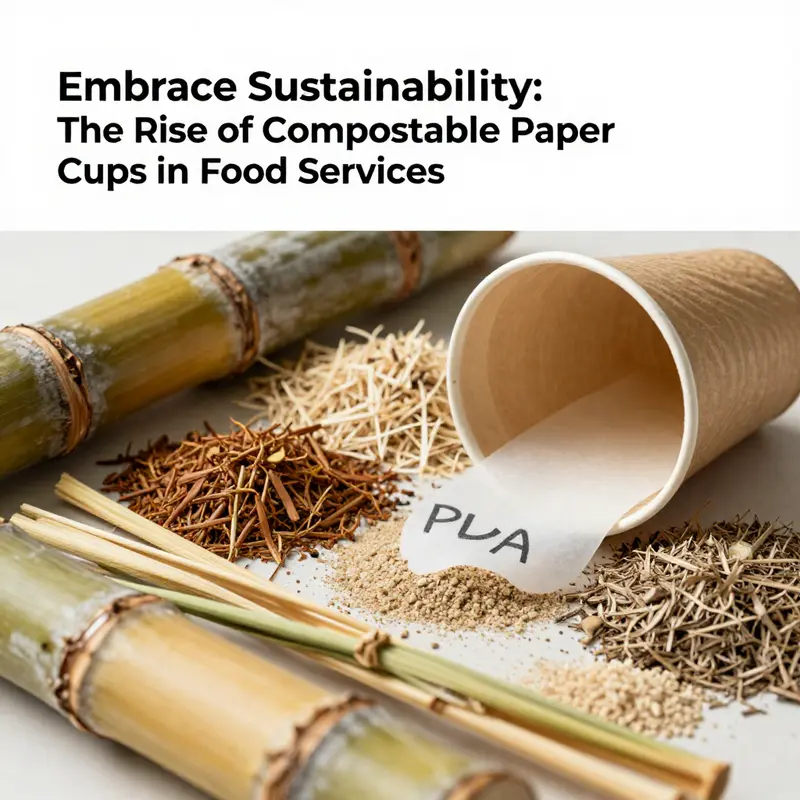
The base of a compostable paper cup is its sheet of paper, but the paper is not just any paper. It is typically formed from sustainably sourced wood pulp, which may come from responsibly managed forests, or from agricultural residues such as sugarcane bagasse. Bagasse adds a renewable, often locally sourced dimension to the material mix, balancing rigidity with a lighter environmental footprint. The paper layer provides the structural backbone: a crisp, foldable, printable surface that can be shaped into a reliable cup with a smooth interior. This interior surface is crucial because it dictates how liquids interact with the cup wall, and it directly influences the user experience—whether a latte remains hot enough to sip without scalding the fingers or a chilled beverage remains at its intended temperature without sweating through the sleeve. The strength of the paper layer is calibrated to withstand normal handling in a bustling cafe: quick pours, the occasional drop, and the steady rustle of a busy counter. Yet it remains intrinsically weaker than a laminated plastic shell, which is why the other layers matter so much.
Lining the paper cup is where the modern, compostable shift becomes visible. A plant-based biopolymer provides a barrier against liquids, a requirement that would otherwise be difficult to meet with paper alone. The most common lining is polylactic acid, or PLA, a bioplastic derived from fermented plant sugars such as cornstarch or sugarcane. PLA serves a dual purpose: it seals the cup against leakage and grants the cup a glossy, smooth interior that preserves the drinking experience. PLA is designed to be compostable under industrial conditions, meaning it works in concert with the composting process rather than resisting it. This liner does more than block moisture; it helps the cup retain its form during use, preventing sogginess and helping avoid deformation when hot liquids are poured. In some variants, manufacturers experiment with cellulose-based coatings or modified starches. These alternatives can adjust moisture resistance, heat tolerance, or composting performance, but they share the same overarching goal: to keep liquids contained while ensuring the whole assembly breaks down as intended in the right environment.
But the plant-based lining is not a silver bullet, and its efficacy hinges on the context in which the cup is disposed. Compostability is not a general property of any PLA-coated cup; it is a certified claim that must meet recognized standards. In the United States, compostable products are expected to satisfy ASTM D6400, while in Europe, EN 13432 is the common benchmark. These standards specify that under industrial composting conditions—typically high temperatures around 55–60°C and a moist, oxygen-rich atmosphere—a cup should disintegrate and bioify within a defined window, commonly up to 180 days. The idea is straightforward: the cup should break down into water, carbon dioxide, and biomass without leaving behind harmful residues. The reality, however, is more nuanced. The certification process considers not only the material components but their interactions, processing conditions, and end-of-life logistics. A cup that is certified as compostable in a facility may not degrade as intended in a home composting setup or, worse, when landfilled without proper temperature and moisture, where anaerobic conditions can stall decomposition or reduce efficiency. These caveats are central to how the industry frames the environmental value of compostable cups: they are a pathway to reduce fossil fuel dependence and plastic pollution, provided that disposal infrastructure and consumer behavior align with the intended end-of-life scenario.
The technical specifications that accompany these cups extend beyond the core materials to define how they withstand daily use. Temperature resistance is a practical constraint: most compostable cups are designed to handle hot beverages up to about 90°C (194°F) and remain suitable for cold drinks as well. Exposures beyond these limits can compromise structural integrity or cause the liner to soften, potentially leading to leaks or deformation under prolonged heat. This limitation underscores why certain environments—such as coffee shops with high-volume, rapid service or events with extended display times—need careful product selection aligned with the expected usage pattern and waste-processing capabilities. The moisture barrier provided by the PLA or alternative coatings is essential for maintaining performance during service. It prevents the interior from soaking through to the outer layers, reducing the risk of sogginess and soggy sleeves, and helps sustain a clean feel for the customer from the first sip to the last drop. Yet the barrier is as much a function of how the cup is used as it is of how it is made. A cup that sits for hours in a warm line or gets submerged in a hot beverage station may experience different performance than one used for a brief coffee run.
Durability and handling form another axis of design. Compostable paper cups are optimized for standard handling in cafes, offices, and event environments. They must withstand the jostling of handoffs, the occasional pinch at the rim, and the ergonomic expectations of comfort and steadiness. Compared to conventional plastic-lined cups, compostable variants generally offer less long-hold durability; their strength is balanced against sustainability and end-of-life outcomes. In practice, this means cup designers and suppliers work to ensure enough rigidity for a safe grip and a leak-resistant interior while acknowledging that the material stack is more delicate than a fully plastic-coated alternative. The result is a pragmatic compromise: the cup performs well in everyday service and is compostable when properly handled at the end of life.
One of the most important realities for adoption is the disposal pathway. Compostable cups deliver their environmental promise only when they reach an industrial composting facility that can provide the necessary temperatures, humidity, and microbial activity to accelerate breakdown. If cups are discarded in regular trash or left in natural environments, the environmental advantages can fade. In some urban and suburban contexts, municipal programs or private facilities are growing to accommodate compostable packaging, while in others, the infrastructure remains limited. This mismatch between product capabilities and waste systems is a central reason why the success of compostable cups hinges on a coordinated approach: product design, consumer education, and local waste-management capabilities must align. The broader point is not merely about choosing a cup with a biopolymer lining, but about integrating this choice into a waste framework that prioritizes separation, collection, and processing in the right facilities.
From a lifecycle perspective, the environmental benefit of compostable cups depends on several levers beyond the liner’s chemistry. Agricultural feedstock choices influence the total energy balance and greenhouse gas footprint. Paper fibers from responsibly managed sources help ensure that the raw material supply aligns with forest stewardship goals. When bagasse or other agricultural residues are used, there can be a secondary benefit of valorizing waste streams that might otherwise be burned or discarded. The production process itself—how the paper is formed, how the PLA is extruded or coated, and how the final cup is dried and packaged—also shapes energy use and emissions. In a mature market, the most sustainable outcomes are reached when manufacturers optimize each step for efficiency and minimize the environmental impact of the finishing processes, while simultaneously ensuring that the package remains functional, safe, and compostable under the right conditions.
A practical implication of these specifications is the importance of standardization and verification. For businesses, the certification serves as a clear signal that the product’s performance has been tested and verified under defined criteria. It helps buyers compare options with confidence, rather than relying on marketing claims that may be ambiguous or inconsistent across suppliers. For the broader ecosystem, standardization reduces confusion among waste-haulers and composters, who must assess whether the packaging they receive is compatible with their processes. It also supports policy dialogue around zero-waste goals and regulatory expectations. The alignment between product design and standards, coupled with robust disposal infrastructure, creates the conditions where compostable cups can contribute meaningfully to a circular economy rather than simply replacing one waste stream with another.
In the field, many operators find value in thinking of compostable cups as part of a larger system rather than as standalone products. The system includes the supply chain that provides sustainably sourced paper and bio-based linings, the equipment and processes that convert raw materials into finished cups, the businesses that use them in daily service, and the facilities that receive, sort, and process used cups after consumption. The system also includes consumer education about why, when, and how to dispose of these cups properly. End users who understand the disposal requirements—separating compostable cups from other recyclables or trash where appropriate—help ensure that the cups fulfill their intended end-of-life path. Providers of compostable packaging, meanwhile, bear a responsibility to offer clear labeling, robust certifications, and practical guidance on how to integrate their products into customers’ waste streams. Taken together, the material composition and the technical standards create a framework that supports real environmental gains when the whole chain operates with clarity and coordination.
To bring this intricate balance to life in a tangible way, one catalog entry illustrates the breadth of design choices that manufacturers navigate while still preserving a compostable end-of-life story. In the broader landscape of eco-friendly, round-the-world packaging solutions, this entry demonstrates how a paper-based cup can be engineered with a plant-based barrier, a certification-driven claim, and a practical use-case—hot drinks, cold beverages, and everything in between—without abandoning the values of sustainability and responsible disposal. See the catalog reference eco-friendly-take-away-odm-oem-round-kraft-paper-bowl for a representative example of how a similar material strategy translates into a tangible product family. This cross-pollination between cup and bowl lines reflects a broader trend: packaging suppliers increasingly standardize the language of sustainability, so buyers can measure performance, cost, and end-of-life potential with comparable criteria across different product formats.
As the industry continues to evolve, the conversation around compostable cups will keep circling back to materials, standards, and the practicalities of disposal. The science of the cup—the choice of fiber, the chemistry of the barrier, the conditions required for industrial composting, and the limits of heat and moisture—will guide better product development and smarter procurement. It will also shape policy discussions about waste management and the investments needed to build resilient infrastructure that can actually close the loop on compostable packaging. The goal is not merely to replace plastic with bioplastics but to create a reliable, accessible path to compostability that sits at the intersection of science, logistics, and behavior. In the chapters that follow, readers will see how these principles extend to broader packaging ecosystems, influencing choices around cups, lids, sleeves, and related serviceware, and how all of these elements contribute to a more sustainable hospitality and food-service world.
For those who want to explore the standards more deeply and verify compliance, the official certification framework remains a critical compass. ASTM D6400 provides the U.S. benchmark for compostability, outlining the criteria under which products degrade to water, CO₂, and biomass within a defined period in industrial facilities. The standard offers a rigorous, measurable way to compare packaging claims and to understand the processing requirements operators must meet. It is a tool for designers, manufacturers, and buyers alike as they align product development with environmental goals and the practical realities of waste management. While standards alone cannot guarantee environmental outcomes, they establish a clear baseline that helps the industry move toward consistent, verifiable performance across regions and applications.
In sum, the material make-up and technical specifications of compostable paper cups reflect a careful compromise between function and responsibility. The paper core supplies the strength and form, while plant-based linings protect against leaks and enable compostability under the right conditions. Standards ensure that the environmental promise is real and traceable, and they guide both product development and waste-management practices. When these elements converge, compostable cups become more than a clever alternative to plastic; they become a practical instrument in the broader effort to redesign packaging for a circular economy. As the next chapters unfold, the conversation expands from the cup itself to the ecosystems that can support its end-of-life journey—and to the business strategies that make sustainable packaging an achievable, scalable choice for operators who seek both performance and stewardship.
External resource for further standards and verification can be consulted at ASTM D6400: https://www.astm.org/Standards/D6400.htm
Market Momentum and Policy: Driving Adoption of Compostable Paper Cups in Food Service
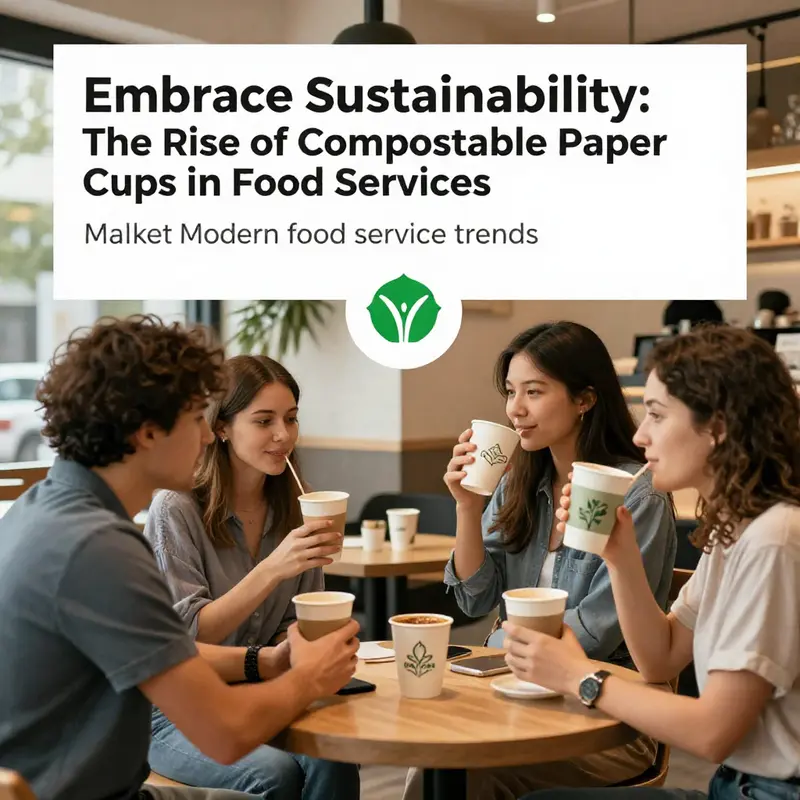
The market for compostable paper cups is moving from a niche sustainability experiment to a mainstream packaging choice for food‑service operators. Recent research shows the global biodegradable cup market valued at roughly USD 8.2 billion in 2025 and growing at an annual rate of about 9 percent. This growth is fueled by three converging forces:
- Consumer demand – Shoppers increasingly expect disposable drinkware to be environmentally responsible and are willing to choose brands that provide clear compostability cues.
- Corporate commitments – Large restaurant chains and quick‑service brands are embedding zero‑waste targets into their procurement policies, making compostable cups a preferred vendor requirement.
- Regulatory pressure – In North America and Europe, legislation is phasing out single‑use plastics and mandating clear labeling for compostable products, creating a predictable market environment for suppliers.
Adoption patterns differ by region. In North America, major retailers have launched pilot programs that integrate compostable cups with industrial‑composting collection systems, reducing landfill diversion rates by up to 30 percent in participating stores. In the EU, the Circular Economy Action Plan has set explicit standards for biodegradable packaging, prompting a surge in investment in industrial composting infrastructure and certification schemes such as EN 13432.
The technology behind these cups balances performance with end‑of‑life considerations. They typically combine renewable fibers—bamboo, bagasse, or recycled paper—with a biodegradable barrier layer made from polylactic acid (PLA) or similar biopolymers. Under industrial composting conditions, the cups break down within 90‑180 days, returning carbon‑neutral organic matter to the soil. However, the environmental benefit hinges on proper disposal; if cups end up in municipal landfill or the natural environment, degradation slows dramatically.
For operators, the key success factors are:
- Supply reliability – Consistent availability of cost‑competitive cups that meet certification requirements.
- Clear labeling – Visible compostability symbols and QR codes that guide consumers to the correct waste stream.
- Education – In‑store signage and staff training that reinforce proper disposal practices.
When these elements align, businesses report higher waste‑diversion rates, stronger brand perception, and a measurable reduction in their carbon footprint. The trajectory suggests that compostable paper cups will become a standard offering across the food‑service sector, supported by expanding composting capacity, tighter regulations, and an increasingly eco‑conscious consumer base.
Final thoughts
The future of the food and beverage industry is undoubtedly intertwined with sustainable practices, and compostable paper cups are at the forefront of this movement. By understanding their environmental benefits, material composition, and market trends, businesses in the food service sector can align with consumer preferences for eco-friendly options. The integration of compostable cups not only supports waste reduction efforts but also connects brands with their environmentally conscious clientele, potentially enhancing customer loyalty. Embracing compostable paper cups isn’t just a trend—it’s a step towards a more sustainable future, and it’s time for your business to join this pivotal journey.