

In today’s fast-paced beverage sector, clear premium plastic cups have become a staple for operators from bubble tea shops to full-service restaurants. Their combination of clarity, durability, and customizable options makes them ideal for showcasing beverages while supporting efficient service. This guide explores standard and jumbo cup formats, sustainability considerations in production, and practical cost and trend insights to help your business choose the right cups for any occasion.
Crystal Clarity in Motion: The Versatility and Real-World Applications of Standard Clear Premium Plastic Cups

Clear premium plastic cups offer a combination of aesthetic appeal and practical performance. This chapter introduces how transparency, material safety, and durable design support a wide range of beverage-service scenarios. From quick-service to premium tastings, the clear cup helps showcase color, texture, and layering while maintaining reliability in handling and transport. Readers will consider material choices such as PS and PP, safety standards like BPA-free formulations, and finishes that enhance perceived quality. The discussion also touches on sizing, branding potential, and sustainability considerations, providing a practical framework for selecting and using standard clear premium plastic cups across venues.
Crystal Canvases: Jumbo Clear Premium Plastic Cups as Branding Platforms
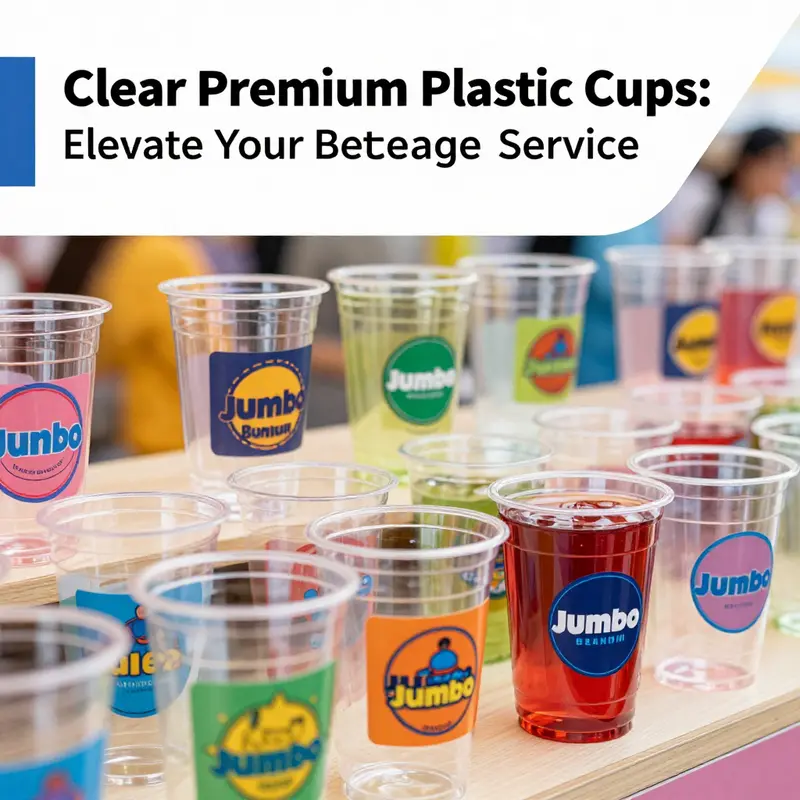
Jumbo clear premium plastic cups present a rare blend of function and form, offering an expansive, uncluttered surface that both showcases a beverage and carries a brand’s message with equal clarity. Their substantial size and crystal-clear transparency transform them from mere vessels into intentional canvases. When a drink is poured into one of these cups, the liquid becomes a moving element of the brand story, its color, viscosity, and even foam contributing to a cohesive, multisensory impression. The materials chosen for jumbo variants—typically high-quality polystyrene (PS) or high-density polyethylene (HDPE)—are selected for their safety, durability, and ability to retain clarity even under the rigors of outdoor events or high-traffic settings. These plastics are engineered to be lightweight yet sturdy, resisting flex and sustainment of a crisp edge that matters when cups are stacked for service or displayed on branded kiosks. The result is a dependable platform that elevates the perceived value of an event, a campaign, or a tasting experience without imposing logistical burdens on the host.
From a design perspective, the jumbo format invites a deliberately restrained or boldly expressive approach. In practice, brands can opt for full-color digital or screen printing to achieve sharp, professional logos and graphics that demand attention from across a room. The transparency of the cup amplifies the impact of the color palette and typography, allowing a dark liquid to form a dramatic contrast against a white or light label, or letting a vibrant hue—perhaps a signature cocktail or a cold brew—be the focal point of the presentation. The printing process itself is a balance between fidelity and practicality: digital printing delivers high-resolution imagery that reads cleanly even at the small sizes included on a large surface, while screen printing offers enduring color blocks and reduced setup costs when producing large volumes. Either method capitalizes on the fact that the cup’s clear surface acts as a built-in frame, heightening legibility and ensuring that branding elements remain legible at a glance, whether a guest is holding the cup at arm’s length during a reception or leaning in to study a tasting note.
The relationship between the beverage and the branding surface is more than aesthetic; it’s strategic. In tasting events, where color, clarity, and viscosity convey critical sensory information, the clear canvas allows the drink to communicate brand values as much as the logo does. A craft distillery or brewery can leverage the natural hues of its beverages to reinforce identity—an amber-toned ale, a ruby kölsch, or a lemonade with a precise citrus tone—while the capstone branding remains visible and pristine. This transparency also supports sponsorships and collaborations, because sponsor logos and partner messages can be placed with confidence, knowing they won’t be obscured by opaque packaging. The durability of jumbo clear cups, designed to withstand both cold and hot beverage presentations, ensures that the message remains intact from the first pour to the last sip, even as participants refill and interact with multiple brands across a single event.
Beyond aesthetics, practical considerations anchor these cups in real-world use. Straight rims, engineered for stability during pouring and handling, reduce spill risk during service and maximize stacking efficiency for transport. In catering environments, where space is at a premium, the ability to stack large quantities without compromising cup integrity is a critical efficiency gain. The sturdiness of PS and HDPE in jumbo formats also translates to a reliable customer experience at outdoor festivals, trade shows, and corporate gatherings where the pace of service can be brisk. A cup that feels premium in the hand—smooth to the touch, with a convincing weight that signals quality—amplifies the impression that the event is well planned and thoughtfully executed. When guests notice this coherence between beverage quality and glassware, the entire brand experience feels more cohesive, and that perception often translates into stronger recall long after the event edge has faded.
Customization, therefore, is not merely an embellishment; it is a core component of a strategic communications plan. Brands can pursue diverse printing approaches to match different settings and budgets. Full-color digital printing supports complex logos, gradients, and intricate brand marks, opening the door to gradient-driven color schemes that resemble the sophistication of a printed label on a premium glass. Screen printing, with its robust ink deposition, can deliver solid color fields and high-contrast branding that holds up under continuous use and repeated washing in some contexts, though jumbo cups are ordinarily intended for single-use scenarios. The design language chosen for jumbo clear cups should harmonize with the beverage’s own presentation. For instance, a minimalist, sculpted logo in a single tone on a transparent field can evoke luxury and understatement, while a bold, multicolor motif can convey energy and festival atmosphere. The interplay between the beverage’s color profile and the branding’s color strategy is a delicate balance; when executed with intent, it elevates perception and contributes to the overall narrative of the brand at the event. For practitioners exploring cross-category branding, the idea of branding on paper cups can be a useful parallel, offering a concrete example of how logos and color blocks translate across formats. See a practical instance of paper-cup customization here: custom-logo-disposable-6oz-8oz-9oz-paper-coffee-cup.
Distribution strategy is equally important as the craft of the print. Jumbo clear cups are well suited to controlled environments such as trade fairs and product launches, where the audience is concentrated and the branding can be reinforced through signage, lighting, and curated beverage servings. In corporate events or community outreach programs, the cups can serve as memorable giveaways—clear, reusable reminders of the sponsor’s or organizer’s commitment to quality. The long-term value of this approach lies not in a single moment of exposure but in the cup’s continued display of the brand through reuse, gifting, or secondary uses after the event. Even when the cups are discarded, the branding experience has often already been absorbed by attendees who take photos, share on social platforms, or recount their impressions in conversations with peers. In this sense, jumbo clear cups function as extended advertisements, extending the reach of the campaign beyond the event floor.
From a procurement perspective, the decision to choose jumbo clear cups hinges on a careful assessment of volume, durability, and print durability under typical service conditions. Buyers must consider the tradeoffs between PS and HDPE, two materials that offer distinct advantages. PS tends to provide heightened clarity, a more glass-like appearance, and crisp print fidelity, which is highly desirable for premium events. HDPE, conversely, often delivers superior drop resistance and impact strength, a practical benefit for outdoor settings or venues with high guest turnover. In many cases, the best choice is one that aligns with the beverage program’s temperature range, service pace, and the desired aesthetic—an approach that blends form and function into a cohesive, brand-forward experience.
The narrative around jumbo clear cups also intersects with sustainability considerations. While these cups are designed for single-use events, many manufacturers emphasize BPA-free construction and recyclability. The appeal of a premium, crystal-clear cup is heightened when brands can articulate a clear environmental stance and offer recycling guidance at the point of service. Clear cups can be paired with recyclable lids and compostable or recyclable sleeves to complete a packaging ecosystem that respects both consumer expectations and logistical realities of waste management. In this way, the choice of cup becomes part of a broader conversation about responsible branding and lifecycle thinking, rather than a standalone design decision.
Finally, it’s worth noting how the jumbo format can support storytelling in marketing campaigns. A well-executed design can convey brand attributes—precision, elegance, innovation, or approachability—by using negative space, typography alignment, and color psychology. Guests may not read every word on a cup, but they will notice the balance of imagery and whitespace, the legibility of the brand mark, and the way the composition holds up under varied lighting conditions at an event. The visibility of the beverage through the cup also adds a layer of experiential storytelling: the color and clarity of the liquid participate as live elements of the brand experience, inviting attendees to connect with the product on a sensory level. As events evolve, jumbo clear cups can be adapted for seasonal campaigns and limited-time promotions, turning every pour into a moment of brand reinforcement.
For practitioners who want to explore cross-format branding while keeping the emphasis on premium clarity, this logical framework—combining material choice, printing method, design strategy, and distribution planning—serves as a practical guide. The aim is not simply to print a logo on a cup, but to craft a coherent brand moment that travels from hand to eye to palate, leaving a lasting impression that graduates beyond the event itself. External readers may seek a broader buying guide to align their expectations with industry standards and real-world applications; for further reading on the subject of custom plastic cup selection, see the external resource: https://www.plasticcup.com/custom-plastic-cup-buying-guide.
null
null
The Economics of Clarity: Pricing Structures and Bulk Sourcing for Clear Premium Plastic Cups
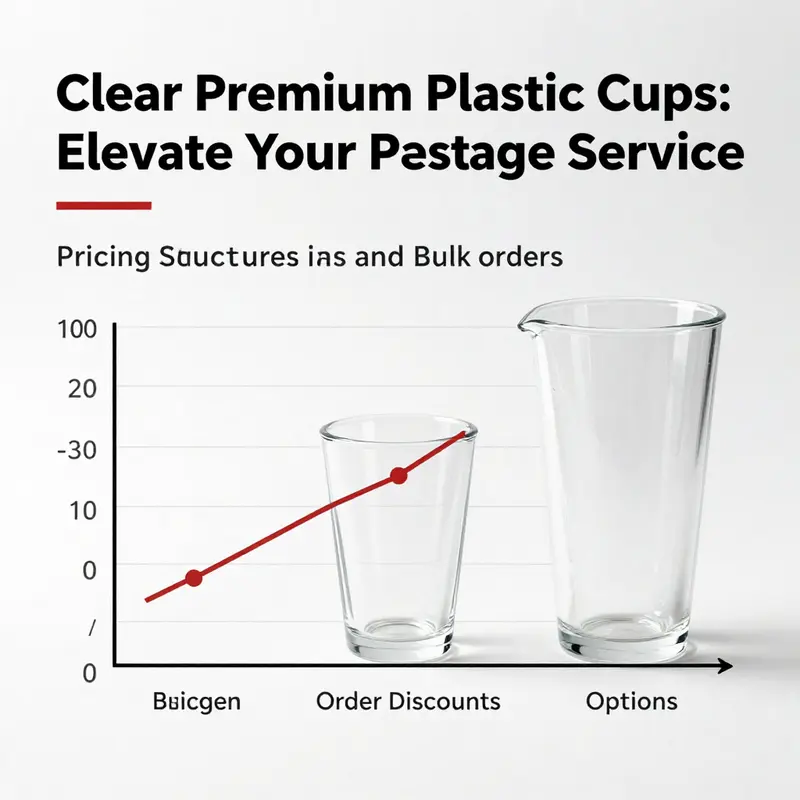
Choosing clear premium plastic cups is rarely a matter of taste alone. In the planning room, the price tag attached to a seemingly simple, crystal-clear cup can ripple through every facet of event budgeting, product sampling, and brand experience. The economics of clarity hinge on a blend of material science, manufacturing complexity, and scale. When a buyer weighs hot versus cold use, weighty impact versus portability, and the desire for a pristine, interruption-free view of a beverage, price emerges as the most practical compass. The core truth is straightforward: the same design language—transparency, rigidity, elegance—can be delivered at very different price points, depending on the material, size, and the extent to which a buyer seeks to optimize for bulk efficiency or premium presentation. As with any sourcing decision, the path to cost efficiency starts with clarity about the options and then a careful mapping of those options to the event’s exact needs.
Material choice is the primary driver of unit cost, and it also governs performance. Polypropylene often underpins hot-beverage use thanks to its heat resistance, while polystyrene and PET dominate cold-drink applications and are typically more economical in bulk. Bioplastic or PLA offers an eco-friendly narrative, appealing to sustainability goals, but it can sit at a higher price band due to material costs and processing. In concrete terms, PP cups commonly range from roughly six to ten cents per unit in bulk, with premium, double-walled or sleeved versions nudging up to about eight to fifteen cents. By contrast, PS and PET cups can dip toward two to three cents in large-volume orders, albeit with limitations on heat tolerance and potential differences in feel and opacity. The eco-friendly bioplastics sit around six to fifteen cents, depending on supplier and order size. These ranges create a practical framework: if the goal is a premium interim experience with tactile insulation and a glow of sophistication, a buyer may justify a higher per-unit cost for specific designs; if the aim is a straightforward service of cold beverages at a broad public event, the lower-cost materials may win on overall budget.
The size of the cup amplifies or moderates price as well. Small cups, such as those in the seven- to ten-ounce range, are the most economical because they use less material and are easier to manufacture at high volumes. In typical bulk scenarios, a seven-ounce clear cup might hover around ten cents per piece, while a ten-ounce variant lands in a similar range, slightly up or down depending on the exact geometry and any insulation features. Medium and large cups inherently require more plastic and often more complex molding. A sixteen-ounce crystal-clear cup with a lid can fall into the range of roughly seventeen to nineteen cents per unit, a reflection of additional material and the value placed on secure, spill-resistant presentation. When the size jumps further to thirty-two ounces—often used for smoothies, bulky servings, or shared beverages—the per-unit cost can stay within a similar corridor if the design is optimized for bulk handling, though it may skew higher if a lid, handle, or specialized stacking is added. In all cases, the incremental cost of a premium appearance—sheen, rigidity, and clear visibility of the liquid—must be weighed against the incremental value such clarity enables in sensory evaluation, color assessment, and consumer perception.
Beyond material and size, the economics of scale reveal themselves in bulk ordering dynamics. Minimum order quantities vary by supplier, but bulk buyers frequently encounter MOQs in the low thousands to tens of thousands of units. For instance, certain wholesale channels formalize an MOQ around ten thousand cups for standard polypropylene variants, with unit prices in the two-to-three-cent range for very large orders, a striking illustration of how scale compresses cost. Packaging also matters: cups are often sold in cases or cartons, with typical case pack sizes in the hundreds or thousands. Ordering full cartons can improve per-unit economics, sometimes reducing cost to well under five cents per cup for base materials when the buyer ships a full load. Freight and logistics—whether the shipment is freight-on-board (FOB) or delivered—play a crucial role in landed costs. For factory-direct arrangements, buyers commonly see per-cup costs of roughly one-and-a-half to three cents when the cartons are large and the supplier can tolerate extended lead times. The subtle but meaningful nuance is that the per-unit price reported in a catalog frequently assumes a specific packaging unit, a set of preferences for lids and sleeves, and a certain level of order certainty. In real-world procurement, negotiating the MOQs, packaging, and delivery terms can unlock additional savings and improve price predictability over time.
Customization and accessory options add another layer of cost-structure complexity. Small branding incursions—such as a simple logo or a color cue on a sleeve—can push unit prices up by fractions of a penny to a few cents, depending on the scale. A fully customized logo on a cup, paired with a matching lid, typically begins around the four-hundredths of a dollar per piece mark when orders reach sizes around five hundred thousand to a million units. Lids alone can contribute roughly two to five cents per unit, depending on the lid’s design, material, and whether a seal or vent feature is included. When a brand requires a combination of logo, lid, and sleeve, the total cost per cup rises, but the premium end of the experience can translate into stronger brand recognition and a more cohesive on-site presentation. The upside is not purely aesthetic; if the event or tasting culture prizes clarity and consistency, a more disciplined approach to customization can raise the perceived value while still preserving a competitive total cost of ownership over time. It is also worth noting that reputable suppliers frequently offer refund or guarantee policies that reduce the financial risk of bulk purchases, especially when orders involve new materials or new production runs.
Market dynamics also shape the price landscape. In recent cycles, demand for sustainable options—especially bioplastics and recyclable materials—has nudged prices up in some segments. Yet economies of scale continue to offer relief for buyers who commit to longer-term relationships and predictable purchase patterns. A practical illustration is seen in a case where monthly volumes rose from eight thousand to fifteen thousand units while maintaining a stable unit price near six cents, thanks to consistent bulk ordering and optimized sourcing. The takeaway is that long-term planning and reliable procurement channels can offset elasticity in the input materials market. This is particularly relevant for events with recurring cycles, tastings, or ongoing product launches, where predictable costs support budgeting accuracy and supply continuity.
As buyers weigh these options, it is helpful to consider packaging alternatives that can deliver a similar premium impression while offering different cost-to-value dynamics. For brands exploring packaging ecosystems that still emphasize clarity and presentation, options such as paper-based double-wall cups with lids can provide an aesthetic that communicates sophistication and care without always mirroring the plastic cup’s cost structure. These possibilities open strategic pathways for branding teams to craft a consistent look and feel across formats, from disposable cups to other service ware. For instance, the option of a custom disposable double-wall ripple-wall paper cup with lid represents an avenue where premium feel meets practical cost management. custom-disposable-double-wall-ripple-wall-paper-cup-with-lid can be a meaningful reference point when evaluating alternative materials, insulation performance, and the overall sensory experience of a beverage in a premium setting. The decision to extend beyond clear plastic cups to elegant, sustainable alternatives should be guided by the event’s audience, the desired narrative, and the total cost of ownership over a season or year.
All these considerations lead to a practical synthesis for buyers focused on clear premium plastic cups. The most cost-effective approach for standard needs tends to be bulk ordering of the base polypropylene or polystyrene variants, especially when the goal is large-volume service with consistent performance. With MOQs around ten thousand units and freight terms that favor bulk shipping, the per-unit cost can fall into the two- to three-cent range for basic cups. For higher-value experiences—where heat resistance, insulation, or a stronger premium feel matters—investing in double-walled or sleeved PP variants, or adding a lid, can still offer compelling value if the volume justifies the incremental price. Long-term planning, consistent supplier relationships, and a clear sense of the event calendar enable buyers to lock in favorable pricing and ensure reliability when demand spikes. In the world of clear premium plastic cups, a disciplined approach to material selection, sizing, customization, and supplier negotiation translates into measurable savings and a consistently elevated consumer impression.
External resource: https://www.alibaba.com/product-detail/Factory-Wholesale-Premium-Quality-PlasticCupTransparent_Takeaway.html?spm=a2700.191851.0.0.3b4d7c9aKJZuVw
Seeing Through Change: Market Currents and Innovations in Clear Premium Plastic Cups
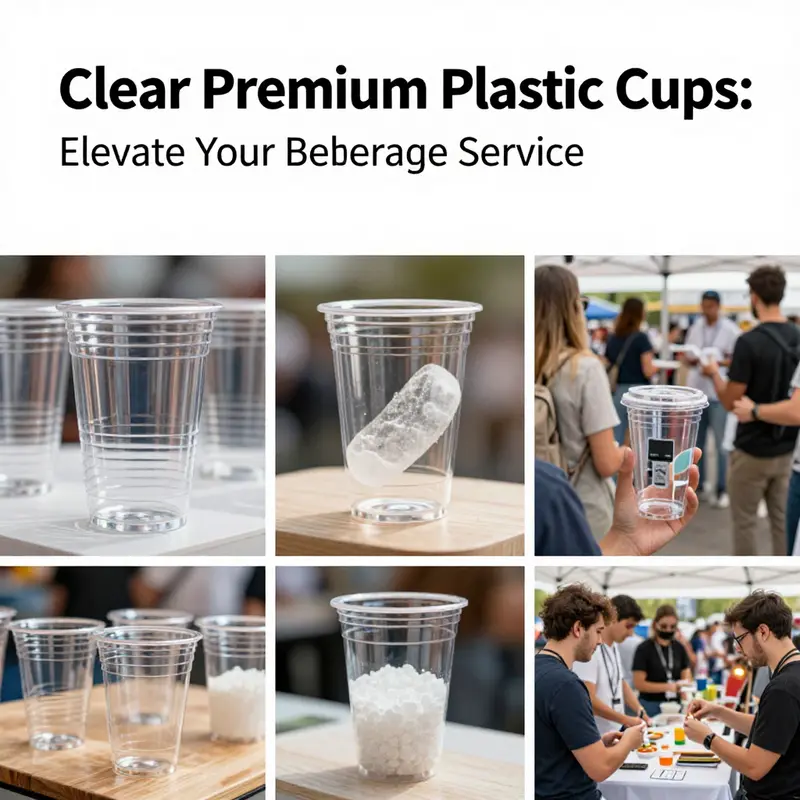
Clear premium plastic cups sit at a sophisticated crossroads where visual appeal, functional reliability, and responsible production meet. Their crystal clarity does more than showcase a beverage; it invites an assessment of color, viscosity, and texture that matters in tasting, presentation, and consumer perception. Yet behind every transparent wall lies a complex equation: how to balance safety, durability, and cost with a growing sense of duty toward the environment. The evolution of this category is not a straight line of better clarity or stronger walls; it is a fluid narrative of shifts in consumer preferences, material science, and design thinking that together shape what the cup can do and how it is perceived in both everyday and premium contexts. In this chapter, the focus is on those currents that push the market forward, while keeping the cup’s core strengths—visibility, portability, and reliability—intact and enhanced for diverse settings, from casual gatherings to high-end tastings and branded experiences.
One of the most influential currents in recent years has been a sharpened consumer appetite for sustainability. Eco-conscious choices extend beyond the product category itself and into the broader ecosystem of how items are sourced, manufactured, and disposed of. For clear premium cups, that translates into a push toward materials and processes that minimize environmental impact while preserving the high level of performance customers expect. Biodegradable and compostable alternatives have moved from niche experiments to viable options for short-term use, and there is a growing emphasis on enhancing recyclability throughout the supply chain. Manufacturers are exploring closed-loop systems, traceable sourcing, and cleaner manufacturing practices that reduce waste, energy use, and emissions. This environmental narrative does not merely appeal to the end consumer; it resonates with event planners, venues, and operators who must manage materials responsibly at scale. The result is a clearer alignment between aesthetics and ethics, where a cup’s beauty does not stand apart from its footprint but is part of a broader statement about care for the environment.
Linked to sustainability is the broader demand for clean-label products. Consumers increasingly seek transparency around what goes into the items they use, including the cups that hold their beverages. Clean-label expectations in this context encourage minimal chemical additives and clear information about sourcing. While the physics of a premium cup’s performance remains paramount—rigidity to resist leakage, clarity to showcase the drink, and stability during handling—these attributes are increasingly coupled with assurances about safety and minimal additives. The clean-label mindset nudges manufacturers to refine polymers and processing methods to deliver not only a pristine appearance but also confidence that the cup aligns with health-conscious, wellness-oriented choices. The practical effect on design and production is a steady push toward materials and finishes that deliver dependable clarity and crisp presentation without compromising safety or the ability to recycle or compost where appropriate.
Innovation in materials stands at the heart of these shifts. Advances in material science have produced new clarity benchmarks and stronger performance profiles for plastics used in cups. High-clarity polymers, including refined variants of polystyrene and polyethylene terephthalate, are now deployed to deliver exceptional light transmission, rigidity, and resistance to leakage under typical beverage service conditions. These materials are particularly well-suited to applications that rely on visual evaluation of contents—whether it is a crafted cocktail, a layered mousse, or a vibrant juice—where the appearance becomes part of the sensory experience. Beyond transparency, manufacturers are optimizing the structural geometry of the cups to support heavier pours and event-ready handling. Design improvements include uniform rims that enhance pouring stability and reduce stress points during stacking and transport, as well as walls with clearer, more level profiles to assist portion control and display the contents evenly. Flat lids, when used, are crafted from compatible, recyclable plastics to optimize user experience and operational efficiency in busy service environments.
The market’s continued emphasis on aesthetics and function keeps clear premium cups as a staple in a broad spectrum of venues. In coffee shops, food trucks, catering services, and office break rooms, these cups offer a reliable platform for branding, presentation, and service efficiency. Customization remains a powerful lever for buyers who want to translate a beverage program into a tangible brand impression. Logos, color accents, and printed designs can be integrated in ways that preserve the cup’s clarity and structural integrity while enhancing perceived value. This blend of branding flexibility and practical performance is central to why these cups endure in competitive settings. Consumers notice the purity of the liquid and the sleek lines of a well-made cup; operators notice the ease of use, the speed of service, and the ability to maintain consistent portion control and inventory management. In this sense, the cup is not merely a passive vessel but an active participant in hospitality and retail experiences.
Even as the industry pushes forward, it remains mindful of the lifecycle of its products. Sustainable manufacturing practices, robust recycling streams, and innovations in lid design and accessory compatibility are shaping how cups fit into a broader circular economy. Designers and engineers consider not only the cup itself but also the downstream systems that collect, process, and repurpose used material. It is not unusual to see flat, recyclable lids paired with compatible bases that maximize recovery value and minimize waste. In keeping with this, the market increasingly rewards solutions that help operators streamline operations, reduce handling friction, and improve waste segregation at the point of use. The outcome is a more seamless alignment between the consumer’s desire for a visually appealing, premium presentation and the operator’s need for reliability, efficiency, and environmental stewardship.
In this evolving landscape, a practical sign of progress is how suppliers address branding and customization without compromising the cup’s core attributes. A notable manifestation is the availability of eco-friendly, printed-logo options for cups and related cardboard or paper-based accessories that complement the beverage presentation in eco-conscious venues and events. For instance, there are offerings that enable printing on kraft paper cups with lids, reflecting a broader trend toward sustainable branding solutions that still honor the premium look and feel of the service. This intersection of sustainability, customization, and performance demonstrates how manufacturers are listening to market demands while preserving the elegant, high-clarity presentation that defines the category. As consumer expectations continue to evolve, the ability to tailor branding and presentation while maintaining material integrity becomes a critical differentiator in a crowded market. See the related eco-friendly printed-logo option for kraft paper cups with lid as an example of how sustainability and branding converge in the packaging ecosystem: eco-friendly-printed-logo-disposable-kraft-paper-cups-with-lid.
Pricing and scalability also shape the market’s trajectory. While the premium attributes of clarity and design carry value, buyers increasingly weigh long-term costs, including the implications of customization and bulk ordering. In many cases, bulk programs can deliver meaningful cost efficiencies, allowing premium performance to be paired with competitive unit prices at scale. The ongoing interplay between customization, sustainability features, and mass production capabilities means that buyers can select configurations that balance impact, experience, and budget. This balancing act is especially relevant for operators who manage high-volume service periods, seasonal peaks, or branded campaigns where perceived value matters as much as practical service features.
As the market matures, these cups are likely to see further refinement in both materials and process technology. Advances in polymer science may yield even clearer, more rigid, and chemically resistant compositions, expanding the range of beverages, temperatures, and service styles that the cups can support. Simultaneously, design thinking will continue to optimize user experience—further reducing spillage during transport, simplifying stacking for storage, and enhancing compatibility with a wider array of lids and accessories. In essence, the trajectory is toward cups that deliver an even crisper presentation and a more seamless operational footprint, all while aligning with evolving expectations for safety, sustainability, and transparency. The result is a category that remains indispensable across casual and premium contexts, capable of elevating the visual drama of a beverage while delivering the consistent reliability that professionals depend on.
For readers seeking a broader external frame on how these market dynamics fit into the global plastic cup landscape, additional industry analysis offers a pointed look at price trajectories, regional variation, and the role of innovations in shaping long-run demand: https://www.marketsandmarkets.com/Market-Reports/plastic-cup-market-145789492.html
Final thoughts
Clear premium plastic cups stand as an essential element in the beverage service industry, offering not just functionality but an array of benefits that cater to both casual gatherings and upscale events. With options ranging from standard cups to jumbo varieties, businesses can leverage these cups for versatile applications and unique branding opportunities. The emphasis on environmentally friendly materials and efficient manufacturing processes further solidifies their place in contemporary service strategies. As consumer preferences evolve and sustainability becomes paramount, adopting clear premium plastic cups will not only meet but exceed customer expectations. Ultimately, selecting the right cup can enhance both service quality and brand image, leading to a more memorable experience for your patrons.