

In the competitive beverage industry, offering quality products while maintaining operational efficiency is crucial. Clear plastic cups with lids from Dollar Tree provide a fantastic solution for beverage-centric businesses ranging from bubble tea shops to catering services. These cups, especially popular during seasonal events, cater to various needs, including convenience, presentation, and cost-effectiveness. This article explores the detailed offerings of Dollar Tree, the diverse usages during seasonal events, and the economic advantages of sourcing these cups, highlighting how they can enhance your service at events, restaurants, and food trucks alike.
Clear Choices, Easy Cleanup: The Practical Allure of Lidded Clear Cups from a Budget Retailer
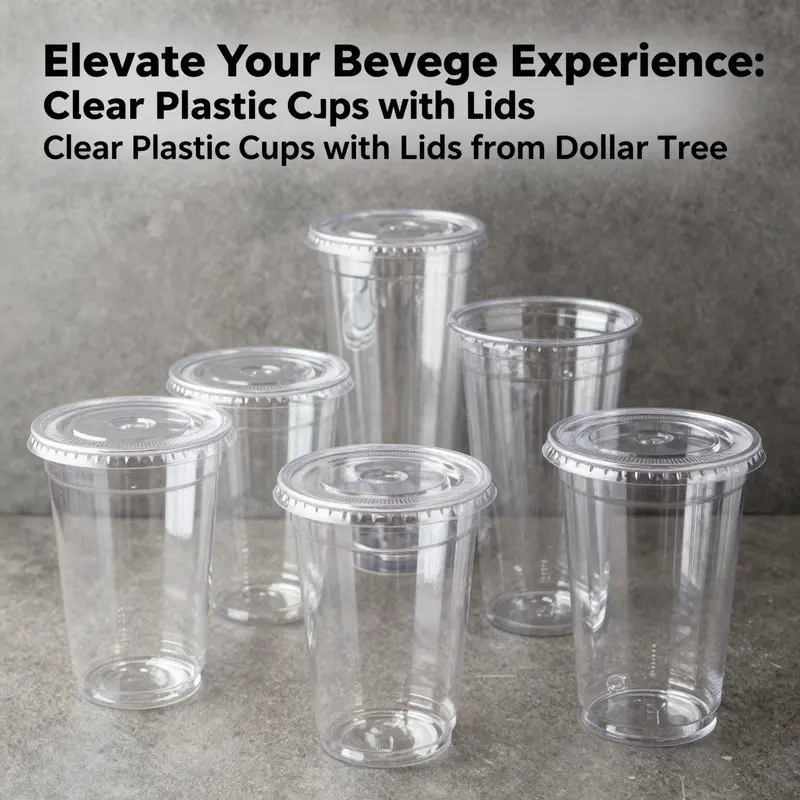
What makes a simple disposable cup more than a mere vessel for a drink? In everyday hosting, school events, or quick errands, the answer lies in a small fusion of design and practicality: a clear plastic cup with a lid that stays put, travels well, and discreetly showcases the beverage inside. At a well-known budget retailer, such cups come in bulk, ready to tackle everything from a casual family picnic to a time-crunched work meeting. The 24-ounce clear cups with strawless sip-lids, packaged in sizable multiples, have become a staple not because they shout for attention, but because they quietly deliver on expectations. They sit on pantry shelves and storage racks with the calm assurance of a tool that works whenever called upon. This is not merely about drinking vessels; it is about a small alignment of inventory, workflow, and social ritual that makes life a little easier when planning, serving, and cleaning up after a gathering.
The first thing a host notices when evaluating these cups is their capacity. Twenty-four ounces is a generous standard for cold beverages, offering enough volume to reduce refill frequency without turning the cup into a bulky obstacle. In a party setting, the 50-pack quantity feels like a built-in courtesy, a silent assurance that a host can focus on the moment rather than fret over supplies. The packaging is a practical reminder that the business of celebration and hospitality can stay efficient and affordable without sacrificing presentation. The cups themselves are crafted from a material that balances durability and lightness. They maintain their form when filled with water, iced tea, lemonade, or a frosty mocktail, yet they are easy to dispose of after use. This duality—rigid enough to uphold shape, soft enough to handle and recycle in many communities—helps rationalize why these cups have become a go-to option for many households and event planners alike.
The design, at a glance, is elegantly simple. The cups feature a sleek, transparent profile that allows the color and clarity of the beverage to shine. When you pour, the liquid becomes part of the display, a small stage for the drink’s own character. In social settings, that visual clarity can matter just as much as the flavor. It is why beverages presented in clear cups can look more inviting at a buffet, a lemonade stand, or a casual wedding reception. The lids, described as strawless sip-lids, offer more than a cosmetic feature. They are engineered to provide a secure fit that reduces the risk of leaks during transport. Depending on the context, a well-fitted lid can be the difference between a spill-prone scene and a smooth, on-the-move service. In a setting where guests may be moving between rooms, carrying cups along with plates, a reliable lid becomes a practical safeguard against accidents. Those sip-lids also minimize the chance of accidental splashes—an especially welcome trait when kids are involved or when the cups must ride in a car cupholder on the way home from a gathering.
Beyond the flagship 24-ounce option, there are smaller cup variants widely available in bulk packs. The 16-ounce and the 7-ounce sizes present a flexible lineup for diverse needs. The 16-ounce variant can serve as a mid-sized option for family meals, school events, or casual tastings where guests may want a shorter drink or a more compact footprint on a crowded party table. The 7-ounce cups, often sold in sizable bulk quantities, are handy for samples, dessert beverages, or children’s drinks. A careful shopper will note that lids are not always included with the smaller sizes unless explicitly listed in product descriptions. This nuance matters for planning, because a party with a mix of sizes may require a quick inventory check and a bit of coordination to ensure every cup has a corresponding lid when needed. Such subtleties reinforce the value of reading product listings closely and considering how a planned line-up of cups will align with the event’s flows and the serving logistics.
Price is a central part of the appeal. These cups are typically positioned to align with a low-cost pricing model, which resonates with families, teachers, and small volunteers who must stretch every dollar in the run-up to a holiday party or school fundraiser. The affordability does not come at the cost of durability or user-friendly features. Rather, it reflects a design philosophy focused on practicality and everyday usability. When you add the convenience of bulk purchasing to the equation, the result is a toolkit that supports both impromptu gatherings and well-planned events without forcing a choice between quality and budget. In a world where disposable tableware can become a source of stress—concerns about waste, cleanup time, and cost—these cups offer a dependable middle ground. They give hosts the freedom to focus on the interaction with guests, the aesthetics of the beverage display, and the flow of an event rather than the mechanics of refilling and mopping up after.
Availability, as with many disposable items, tends to ebb and flow with seasonality and demand. A holiday rush, back-to-school periods, or a popular party theme can tighten stock quickly. The practical response is straightforward: plan ahead. Checking local store inventory or visiting the retailer’s online listings can save a host from a last-minute scramble. A proactive shopper understands that stocking up before the peak season not only ensures that enough cups and lids are on hand but also helps lock in a favorable price point at a moment when promotions or bulk discounts are most common. The rhythm of stocking up is itself a small ritual of preparedness—an act that reduces anxiety and ensures a smoother serve-and-cleanup cycle for the host.
When thinking about where these cups fit within a broader shopping strategy, it helps to see them as part of a larger ecosystem of disposable serveware. In the same family of products, one may find other containers and lids designed to handle cold beverages, to-go services, and simple, single-use cleanup. The cups’ versatility extends beyond ordinary home use. They are equally at home at birthday parties, baby showers, school functions, and office gatherings, where the emphasis is on simplicity and clean-up efficiency rather than on ornate tableware. For many event organizers, the ability to offer a straightforward, predictable service model—easy to transport, easy to refill, and quick to discard—translates into more time spent engaging with guests and less time managing inventory and breakage.
The social and cultural dimensions of using such cups should not be overlooked. A clear cup with a lid becomes almost a neutral stage on which beverages of many kinds can perform. It accommodates everything from a basic lemon-water blend to a more creative mocktail with layered colors and garnishes, all while preserving the drink’s integrity and temperature during transport. In holiday settings, where a theme might call for color-coordinated beverages or playful twists on conventional drinks, the transparent surface helps beverages shine. It can also inspire DIY activities—children mixing citrusy sips, for instance, or families assembling punch bowls in a staged setup where the final presentation is as important as the taste. The cups enable these moments without imposing a heavy burden on the planner.
From a practical standpoint, storage and handling are worth noting. The bulk-pack approach is efficient but requires mindful storage: keep the cups and lids in a dry, cool space away from direct sunlight to prevent any warping or discoloration. When time comes to set up, a quick count and a lightweight carry to the serving area can streamline the routine. The simplicity of the design—crystal-clear plastic with a secure cap—also makes it suitable for a range of environments. A kitchen counter, a school cafeteria, or a community center all benefit from a reliable, no-fuss solution. And because the system is modular—cups in bulk, lids in compatible assortments—an organizer can curate a setup that minimizes waste while maximizing convenience.
For those who wish to explore options that mirror the logic of these cups but lean toward alternative materials, there are paper-based and other eco-friendly choices that feature lids and cold-beverage compatibility. In this vein, a related category of products emphasizes sustainability and branding. If your event or venue wants to emphasize eco-friendly messaging or customize to a theme, consider the broader family of cold-beverage containers that carry logos or brand marks while still prioritizing ease of use and disposal. See resources that discuss eco-friendly, printed options designed for cold beverages and lids to suit various cups. This is not just a matter of personal preference but a strategic choice that can align with event goals, marketing considerations, and the lifecycle of single-use items. A note on user experience matters as well. The sip-lid design aims to simplify the user journey from a sip to a seal, helping guests avoid spills while holding a crowded cup. The feedback from many hosts is that the lids stay in place during light motion, which is critical when serving at a casual outdoor event or passing cups among a crowd. The combination of a clear cup and a secure lid makes the entire process feel seamless: pour, seal, hand to guest, and move on. That cadence invites a sense of organization amid the bustle of entertaining, which in turn elevates the overall experience. In sum, the decision to stock clear plastic cups with lids at a budget retailer is a decision about balance. It balances cost and function, convenience and presentation, reuse and disposal, planning and spontaneity. It reflects a practical philosophy: equip the space with tools that are easy to procure, easy to use, and easy to dispose of with minimal fuss. For hosts who want a straightforward path to a neat, presentable beverage service—one that travels well, minimizes spills, and supports a range of beverages and event types—these cups offer a reliable, everyday solution that aligns with both budget considerations and the social realities of modern gatherings. They are not the be-all and end-all of serveware, but they are a robust option that has earned its place in many homes and venues by delivering consistent performance and real value. A closing note: for readers curious about alternatives or complementary products that venture into different materials or branding opportunities, a related resource outlines eco-friendly paper-based options that also come with lids for cold beverages. It is worth exploring these options as a way to tailor the serving solution to specific event goals or sustainability targets. eco-friendly-printed-logo-cold-beverage-cup-paper-cup-with-lid. This reference offers a pathway to consider how different materials and presentation styles can work together to achieve a cohesive event aesthetic while maintaining the ease of service that customers have come to expect from bulk, budget-friendly retail options.
null

null
Clear, Affordable, and Disposable: The Economics of Buying Clear Plastic Cups with Lids at a Budget Retailer
A single clear plastic cup with a lid might look like a simple, almost trivial purchase. Yet when you step back and watch how it moves through a budget retail environment, it becomes a revealing case study in modern consumer economics. The cup sits at the intersection of convenience, price discipline, and logistics, a tiny item that helps explain how large retail ecosystems allocate costs, drive traffic, and shape everyday behavior. The appeal is straightforward: a predictable, low-cost solution for cold drinks, to-go orders, and a variety of improvised uses from party planning to DIY organization. But beneath the familiar sight of a transparent cylinder with a snap-on lid lies a complex set of decisions about sourcing, pricing, inventory, and the subtle art of turning small, frequent purchases into steady revenue streams for a broad customer base. The economics of this product illuminate how a budget retailer crafts a price point that feels almost inevitable to the shopper, while still preserving margins, flexibility, and the ability to respond to changing patterns of demand.
At the heart of the matter is a price architecture built around fixed, consumer-friendly units. The model emphasizes a narrow assortment of high-demand items, each offered at a low, stable price. This approach reduces decision fatigue at the point of purchase and accelerates checkout, which in turn supports high traffic and rapid inventory turnover. From a consumer perspective, the decision is almost automatic: if you need a cold beverage carrier or a spill-proof option for a quick event, a single fixed price makes the choice easy. From the retailer’s perspective, that same fixed price is a lever. It concentrates demand on a small number of skus, allows for tight negotiation with suppliers, and supports a predictable margin structure across hundreds or thousands of stores. The upshot is a per-unit price that feels like a bargain for the average shopper, even if the true profitability hinges on scale, turnover, and cross-category traffic that the fixed price drives.
This pricing logic does not float in isolation. It rests on a deeply integrated supply chain that prizes efficiency and reliability. The retailer’s success with these cups depends on direct sourcing from low-cost manufacturers and on a logistics network designed to move enormous volumes with minimal friction. Orders are placed well in advance of peak demand, but replenishment occurs rapidly as sales data flow back from shelves to sourcing hubs. The result is a cadence of restock cycles that keeps shelves stocked with the same consistent appearance, cup size, and lid fit. In practice, this means a supplier base that can produce, package, and ship large quantities quickly, while a distribution system that can receive, sort, and deploy these units to hundreds of stores with a minimum of handling. The cost structure that makes this feasible hinges on several levers: raw plastic resin costs, energy consumption during manufacture, labor productivity, packaging efficiencies, and freight terms that favor predictable, high-volume shipments. Each element, in turn, compresses unit margins but adds resilience to stock availability, which is a core promise of the budget retailer.
The materials story behind the cup and lid is instructive in its own right. Cups are typically produced in standard sizes and shapes optimized for stacking, shelf stability, and compatibility with common beverage formats. The lids are designed to snap securely, seal effectively during transit, and avoid spillage in a crowded shopping environment or a crowded car. The materials choice—whether PET or PP plastics, or variations on thickness and transparency—drives a spectrum of costs, performance characteristics, and end-of-life considerations. While a shopper may not dissect these choices, they influence durability, clarity, and the perceived value of the package. In aggregate, the economics of materials, mold tooling, and quality control feed into a price point that seems almost self-evident to the consumer yet is the product of a lengthy procurement and production chain. The retailer’s ability to maintain consistency in this small but essential item is a reflection of disciplined supplier management, accurate forecasting, and careful inventory planning.
For individual purchasers, the $1.25 per unit threshold is more than a price tag. It is a practical ceiling that aligns with everyday budgets and budgeting habits. At this level, a family hosting a casual gathering or a student group organizing a campus event can count cups in tens or hundreds without triggering sticker shock. The convenience of bulk availability—often with a ready-to-use lid that fits the same size across many occasions—reduces the administrative load of event planning. This is not merely a matter of saving a few cents per cup. It is about reducing the cognitive load associated with shopping for consumables and about shortening the time from decision to checkout. In a culture that prizes speed and predictability, such fixed-price, high-turnover items become dependable building blocks for larger plans. The budget retailer, by offering these cups at a single, predictable price, helps customers convert vague intentions into concrete purchases and then into ready-made solutions for serving, storing, and transporting beverages.
In the background, a separate economic logic operates for those who seek deeper savings through bulk procurement or direct wholesale purchase. The consumer price point at the shelf is not the all-in cost for a large-scale operation. For buyers who need hundreds or thousands of units, negotiating with manufacturers directly—often in high-volume production hubs—can unlock substantial per-unit discounts. Price per cup falls as order size rises, and freight costs can be spread across many units. The economics of scale come into play here in a way that is invisible to the casual shopper but essential to businesses, schools, or events planning large-scale service. The qualitative differences between retail and wholesale outcomes are marked: retail prices deliver simplicity and speed, while wholesale arrangements deliver optimization and leverage for bigger budgets.
But the story here also has a counterweight. The fixed-price model, while efficient for traffic and volume, concentrates costs elsewhere in the system. The retailer must manage a narrow assortment without sacrificing replenishment speed or shelf life. If demand shifts or a new competitive option emerges, the agility to pivot can be constrained by a fixed SKU set and a vendor base optimized for stability rather than radical change. There is a subtle risk that the very predictability that attracts customers can suppress experimentation that might yield even greater savings or environmental gains. For example, if resin prices spike or if new manufacturing efficiencies emerge, the retailer must decide how quickly, and to what extent, to reflect those changes at the shelf while preserving the customer’s sense of value. This balancing act—between price constancy and adaptive procurement—defines much of the daily economics of budget retailing and shapes how customers perceive the value of disposables.
From a consumer usage perspective, the prevalence of clear cups with lids in a budget setting is tied to the broader realities of to-go culture. Cold drinks, snacks, and simple meals are increasingly consumed away from home, and the need for a secure, portable container is widespread. The lid reduces the risk of spills in transit, the clear material helps showcase color and branding in environments where presentation matters, and the uniform cup shape supports standardized cup holders in cars, on desks, and at event stations. The appeal to organizers is clear: predictable sizing means easier inventory tracking, and consistent lid compatibility reduces the chance of misfit closures that could disrupt service. These benefits translate into real-world efficiency for millions of micro-decisions—decisions about how many cups to stock, when to reorder, and how to allocate storage space for disposables across multiple seasons.
Yet these advantages coexist with considerations about waste and environmental impact. A disposable cup is, by design, a single-use item, and the cumulative effect of such consumption on waste streams has become increasingly visible. The economic model thus encounters a sustainability constraint: if price remains incredibly low, it can obscure the longer term costs associated with disposal, recycling, and landfill space. In response, manufacturers and retailers are expanding options that blend low cost with higher recyclability or compostability where feasible. Consumers are also influenced by policy and local recycling capabilities, which can vary widely across regions. While the fixed price facilitates access and convenience, it does not automatically translate into a sustainable outcome. The most thoughtful consumer behavior in this space couples the affordability of the cup with a preference for disposal alternatives that align with local practices, or with a shift toward reusable options when circumstances permit. In other words, price is not the sole determinant of value; awareness of environmental tradeoffs matters as well.
For readers who are planning events or managing small budgets, a few practical guidelines emerge from this economic tapestry. Start with a forecast not only of the number of attendees but also of the duration of the event and the likelihood of drink refills. A small error in headcount can cascade into waste if too many cups are stocked and unused. Next, map out the procurement path with attention to seasonality. The same shelf price that seems reliable in ordinary weeks can tighten during holiday surges or end-of-season clearances. If large volumes are anticipated, create a separate procurement track that explores bulk options, supplier terms, and logistics. This reduces the risk of stockouts or last-minute price hikes that can erode savings. Finally, maintain flexibility by considering alternatives that fit prices with environmental goals. A link worth noting for readers exploring eco-conscious packaging options is this resource on a page dedicated to eco-friendly printed-logo cold beverage cup with lid. It demonstrates how suppliers are aligning budget-friendly choices with sustainability commitments, an alignment that could influence future purchasing decisions and product development: eco-friendly printed-logo cold beverage cup with lid.
For those who want to ground their understanding in a real world reference, the official pricing and availability of items in this category can provide context on how fixed-price models operate at scale. While the exact line items vary by retailer and season, the underlying principle remains consistent: a narrow, reliable assortment at a steady price point drives traffic, supports planning, and sustains margins through volume. External resource access can illuminate current practices and help shoppers compare how price signals translate across different channels. External resource: Official pricing and availability details can be found here: https://www.dollartree.com
Final thoughts
Clear plastic cups with lids from Dollar Tree not only meet the practical needs of beverage-serving businesses but also provide significant advantages in terms of cost and presentation. As you explore seasonal opportunities or manage daily operations, these cups can enhance your service while ensuring customer satisfaction. Engaging with a well-rounded product selection from Dollar Tree can make a meaningful impact on your event or business operations, setting you apart in the bustling beverage market.