

Clear plastic cups have become a staple in the beverage industry, offering a practical and attractive solution for serving drinks from bubble tea to cocktails. Their popularity stems from their versatility, durability, and potential for customization, making them ideal for a range of businesses including bubble tea shops, restaurants, food trucks, and event planners. This article will delve into the extensive product variety and applications of clear plastic cups, explore the materials used and environmental considerations, and highlight the customization and branding options that can elevate your beverage service. Through this exploration, you will gain a comprehensive understanding of how these cups can enhance your offerings and connect with your customers.
Clear Vessels, Broad Horizons: Roles of Transparent Cups in Service, Branding, and Sustainability
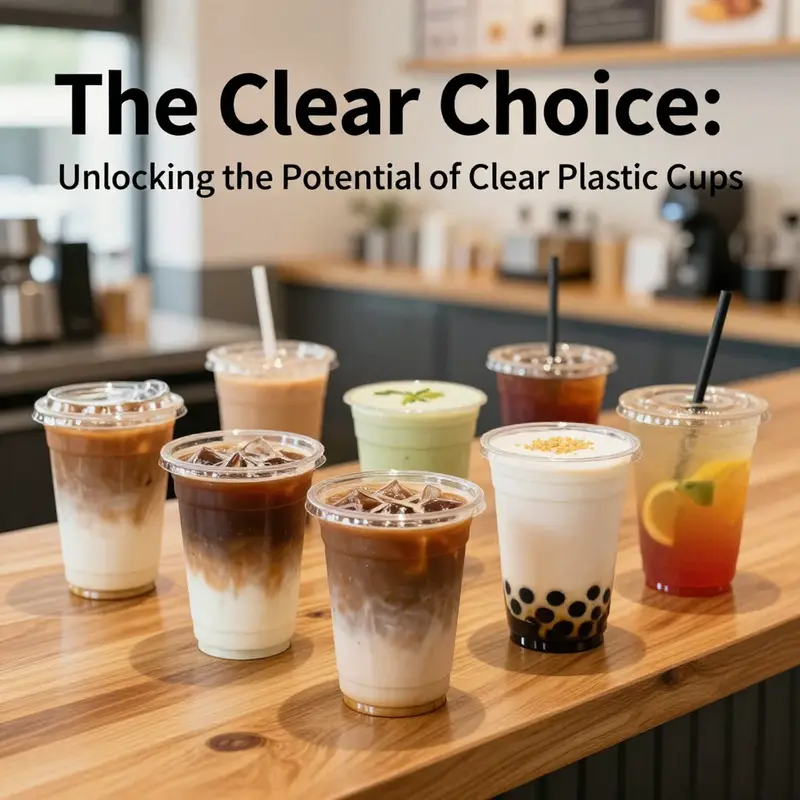
Clear plastic cups do more than hold beverages; they frame the drink in view, influence customer perception, and support efficient service. Their transparency showcases color, texture, and layering, turning a simple beverage into a visual experience. In cafes, catering events, and pop-ups, the cup becomes a small stage that couples presentation with practicality.
The cups come in common sizes such as 10 oz, 16 oz, and 24 oz, with lids designed to resist spills while preserving aroma and temperature. Materials like PET and PP balance clarity with durability, and many cups are designed to withstand a range of temperatures for hot or cold drinks. Custom printing lets brands extend their identity onto the cup, from logos to seasonal messaging, often at a premium for branded lids.
Sustainability considerations push toward recyclable or compostable options and transparent labeling to aid waste management. Suppliers emphasize capacity, lead times, and QA as part of a reliable supply chain for high-volume events. Ultimately, the clear cup is part of a broader packaging ecosystem that supports brand storytelling, service efficiency, and environmental responsibility.
Clear Choices, Hidden Footprints: Material Realities and Environmental Trade-offs of Transparent Disposable Cups
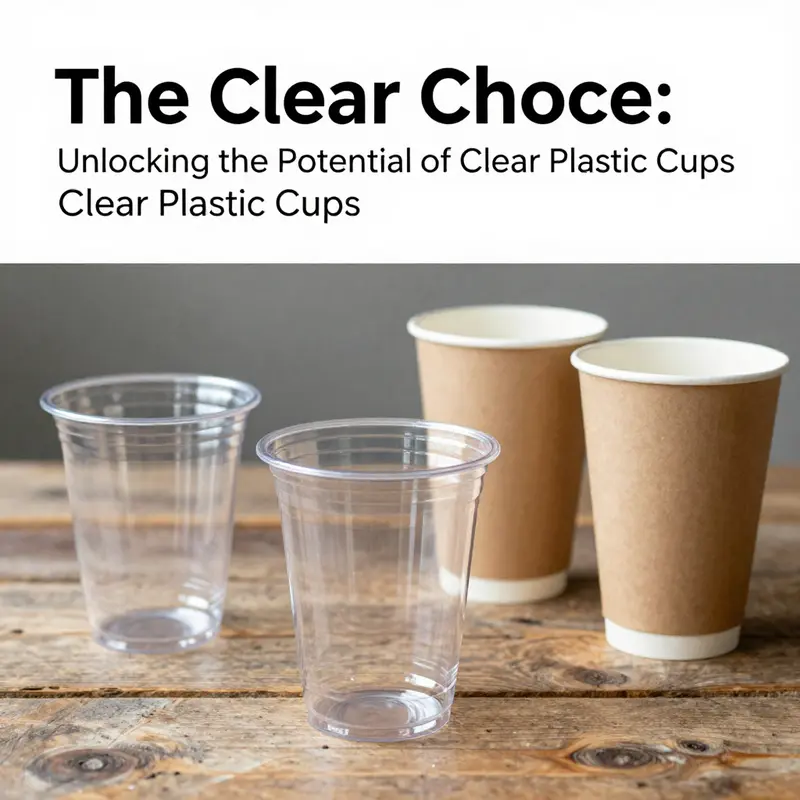
Transparent disposable cups sit at a curious crossroad between everyday practicality and systemic environmental questions. They are the kind of product you reach for without a second thought when a crowd gathers, a drink is poured, or a festival needs a quick, clean round of servings. Their popularity rests on a simple equation: clarity, low cost, and swift disposability. In practice, that equation is powered by a mix of materials whose properties make the cups light, sturdy, and inexpensive, yet whose end-of-life paths are less simple than their initial convenience. The most common formulations are polypropylene, polystyrene, and polylactic acid. Each material brings a different balance of transparency, strength, heat tolerance, and lifecycle complexity. Polypropylene and polystyrene are petroleum-based polymers that resist shattering, preserve shape, and perform across a broad temperature window. They are prized for being tough in the face of cold beverages and for holding up under the heat of a hot drink, though the specific formulations vary in stiffness, clarity, and barrier properties. Polypropylene, in particular, has a solid track record for reuse in some contexts and for high-clarity display when molded into cups that need to stay transparent through hours of service. Yet even these durable plastics embody a persistent challenge: they do not biodegrade in natural environments, and their persistence can stretch across hundreds of years if not properly managed. The other familiar option, polystyrene, shares the same long-term persistence but is often chosen for its crisp clarity and ultra-light feel. In practice, polystyrene’s rigidity and its foam derivatives made for other applications have driven its wide use in the disposable cup sector. PLA, a biodegradable polymer derived from renewable resources like corn starch or sugarcane, presents a different kind of promise. It hints at a lower carbon footprint in the production phase and, crucially, a pathway to more sustainable outcomes when disposed of properly. PLA can be composted in industrial facilities, a process that accelerates breakdown under controlled conditions. But industrial composting is not universal. Many communities lack the infrastructure to process PLA at scale, and the presence of PLA in a mixed waste stream can contaminate traditional recycling streams. The exceptions to the rule highlight the core tension: a material can be more sustainable in one respect, yet less practical in another depending on local waste systems, collection rates, and consumer behavior. The environmental implications of clear plastic cups go far beyond the material alone. The production of PP and PS draws on fossil fuels, entails energy use, and emits greenhouse gases at every stage of manufacture, transport, and processing. When these cups reach the end of their service life, the story does not end with a neat recycling symbol; it ends in a chain that can be broken by contamination, inefficient collection, or misaligned sorting. The lifecycle of these cups often includes multiple hands—from the factory to distributors, to food-service operators, to consumers, and finally to waste-management facilities. Each handoff carries the risk of material loss, mis-separation, or downcycling, where the material becomes a less valuable product and thus a less favorable option for recovery. In this system, even a well-intentioned recycling program can struggle with low contamination thresholds and inconsistent sorting practices, particularly for items that are commonly contaminated with leftover beverage residues or food debris. The narrative is further complicated by the presence of biodegradable options like PLA. PLA’s environmental narrative is compelling on the surface because it positions itself as a renewable, compostable alternative. Yet its advantage depends on the availability of industrial composting facilities. Home composting is rarely sufficient to break PLA down, and if PLA ends up in a mixed recycling stream, it can create contamination that reduces the quality of the recyclate. The result is a paradox where a product marketed as more sustainable can still hinder overall recycling performance if disposal pathways are not aligned with local infrastructure. These material choices also influence how microplastics and fragmenting plastics enter ecosystems. The erosion of plastic items into microplastics is not just a problem for oceans and rivers; it is a concern for soils, sediments, and even the air in certain circumstances. Fragmentation can begin at mismanaged disposal sites, in landfills, or through improper incineration. The microplastic shed of clear cups has many dimensions; the small fragments can travel through water systems, accumulate in aquatic life, and eventually become part of the food chain. The cumulative effect of billions of cups used every year is not merely a volume metric but a signal about how consumer cultures interact with waste streams. If a society relies on a continuous cycle of single-use items, even the most well-intentioned materials can contribute to pollution, energy use, and landscape-level waste management challenges. The environmental burdens are spread across production, logistics, consumer use, and waste processing. In the production phase, refining fossil fuels to produce polymer feedstocks requires energy, emits greenhouse gases, and generates other pollutants. The transportation of resin pellets, films, and finished cups adds to the carbon footprint via fuel use and infrastructure demands. During service, clear cups fulfill their function with minimal refractive interference, enabling beverage marketing and product visibility that can drive demand. The clarity of PP and PS cups is a practical advantage, one that dietary and event planners often rely upon to showcase colors, branding, and the attractiveness of beverages. But clarity has a trade-off: it is achieved by choosing transparent polymers that preserve a visual appeal throughout their short-lived utility. The disposal phase adds another layer of complexity. Although many municipalities have recycling programs for certain plastics, contamination from drink residues and food fats impairs recyclability. Sorting streams must separate cups from other plastics, from metal lids, and from other waste categories. In practice, recycling rates for clear plastic cups remain low in many regions, partly due to stream contamination and the economic realities of recycling operations. This reality has become even more acute in parts of the world where waste management systems struggle to scale with consumption. Regions with high disposable cup usage often face waste management bottlenecks, making it harder to translate material advantages into actual environmental benefits. A telling example emerges in a country that has actively pushed waste sorting and recycling enhancements. The context underscores a key point: even when a material is technically recyclable, the practical outcome hinges on how well waste systems are designed, funded, and incentivized to collect, sort, and reprocess these items into a closed loop. The broader environmental considerations extend into energy consumption and carbon emissions across the life cycle. The energy intensity of producing resin, converting it into cups, and completing the packaging cycle adds to the product’s cradle-to-grave footprint. If a product is used briefly and discarded rapidly, these emissions compound, especially when the resulting waste fails to complete a circular loop. Beyond the material and lifecycle considerations, policymakers and manufacturers are increasingly focusing on improving design for recyclability, increasing recycled content, and expanding the availability of end-of-life options. For instance, the push toward recycled-content plastics can help reduce the need for virgin feedstocks and the associated emissions. In some markets, there is also growing interest in plant-derived polymers or cellulose-based alternatives that promise reduced reliance on fossil fuels while aiming to minimize long-term environmental damage. These innovations, however, must be matched with robust collection and recycling infrastructure, standardized specifications, and credible certifications to avoid greenwashing and confusion among consumers. The rise of compostable or biodegradable options adds another layer to the conversation. Compostable clear cups, when certified, can offer a viable end-of-life path in facilities designed to process them. The caveat is that certifications must be credible and that facilities exist to carry out the composting. Without these, compostable products may end up in landfills or be mis-sorted into recycling streams, undermining the intended sustainability goals. For businesses and consumers seeking lower environmental footprints, several practical recommendations emerge. First, favor products that clearly indicate certified compostability or high post-consumer recycled PCR content. Second, prioritize materials and designs that facilitate recycling. This includes avoiding multi-material laminates or complicated lid assemblies that hinder sorting. Third, support and participate in local waste-management initiatives that expand access to recycling and composting. These steps are not standalone actions; they form part of a broader shift toward sustainable packaging systems. A growing segment of the market is exploring alternatives to single-use cups altogether. Reusable cup programs, deposit-return schemes, and durable beverage containers offer a different model for reducing waste. In contexts where users can reliably return or reuse containers, these programs can dramatically reduce the volume of disposable cups in landfills. Yet such systems require infrastructure, incentives, and consistent behavior from consumers. The choice between a disposable clear cup and a more sustainable alternative cannot be boiled down to a single metric. It hinges on local waste-management capacity, consumer behavior, regulatory frameworks, and the availability of credible sustainability certifications. It also depends on the total life cycle of the product: the energy used to produce a single cup, the number of times it can be reused if designed for multiple uses, and the ease with which it can be recovered and recycled after its service life ends. In practice, many operators in catering and events face a pragmatic calculus: cost, convenience, and compliance with health and safety norms. Clear plastic cups offer clear advantages in terms of heat resistance, transparency, and barrier properties that support beverage presentation. But the environmental narrative is not a peripheral footnote. It sits at the center of how organizations plan procurement, manage waste, and communicate with customers about sustainability commitments. This is where the conversation naturally extends to the broader ecosystem, including the emergence of policies that require better labeling, standardized recyclability indicators, and the encouragement of materials with higher post-consumer content. The industry’s response to these pressures is not monolithic. Some manufacturers invest in improving resin quality, purity, and compatibility for recycling streams. Others explore next-generation polymers that promise enhanced compostability without sacrificing the performance that users expect. Some seek to combine recycled content with biobased feedstocks to reduce fossil fuel dependence. In all cases, the success of these innovations depends on clear signaling to consumers and robust alignment with municipal waste management. As researchers and practitioners map the environmental trade-offs, the need for transparent, credible information becomes evident. Consumers benefit from clarity about what is truly recyclable, what requires industrial composting, and what is best avoided in a given locale. Businesses benefit from robust supplier standards, reliable labeling, and consistent performance across supply chains. The conversation also invites a cultural shift toward rethinking how we service beverages. The beauty of a clear cup in a busy setting lies in its ability to present a product’s color and texture with minimal distraction. Yet that same beauty must be balanced against the responsibility we bear for the ecosystems we share. The path forward is not a single silver bullet but a suite of coordinated actions: better materials science, smarter design for recyclability, stronger enforcement of waste-management practices, and a consumer culture that recognizes the value of recovery. In many ways, this chapter is a map of a broader transition. It charts the material realities behind a common disposable item and threads them through the environmental stories that shape policy, industry, and daily behavior. It reminds us that a cup’s clarity is not just about visuals; it is about a system-level clarity—how well we can retain value from materials, minimize loss to the environment, and design processes that honor both convenience and care for the planet. For those who plan events, operate cafes, or manage food-service outlets, the implications are practical and strategic. The decision to source a certain cup should consider not only price and performance but also end-of-life infrastructure and the local potential for recycling or composting. This approach ensures that the act of serving a cold drink does not become a step in the unwinding of a fragile environment. It also invites a broader conversation about how to translate circular-economy aspirations into everyday choices—an ongoing dialogue that requires collaboration among manufacturers, waste managers, policymakers, and consumers. The journey toward sustainable packaging is iterative. Early efforts must address the most measurable impact areas first: improving recyclability in cup designs, increasing recycled content, and expanding access to appropriate disposal facilities. As technology advances, new materials and processes will offer improved performance with lower environmental costs. Yet the central insight remains: material selection, end-of-life pathways, and system-level management determine the real environmental footprint of clear plastic cups. In the meantime, informed choices at the point of purchase can help accelerate a shift toward packaging that meets the needs of today while preserving resources for tomorrow. The chapter’s exploration of material properties, economic drivers, and waste-management realities underscores a simple, practical takeaway: when selecting disposable drinkware, stakeholders should consider not just the cup’s immediate function but the full chain of impact from cradle to cradle. This perspective aligns with broader industry trends toward recyclability, sustainability certifications, and responsible sourcing. It also aligns with socially responsible business practices that recognize how small decisions ripple through communities and ecosystems. The objective is not to demonize one material or to proclaim a universal solution. It is to cultivate a more nuanced understanding of trade-offs, to encourage transparent labeling and credible certifications, and to support the development of infrastructure that can translate innovation into real environmental gains. In the end, clear plastic cups will continue to be part of the beverage landscape. Their future will be shaped by how well stakeholders can align design, waste management, and consumer behavior to reduce environmental footprints while maintaining the performance that makes them so useful in service settings. The challenge is substantial, but the opportunities for meaningful progress are tangible. As the industry experiments with new polymers, improved recyclability, and better end-of-life pathways, the cup becomes more than a disposable item. It becomes a symbol of a packaging system that weighs utility against responsibility and seeks a balance in which transparency—both literal and ecological—remains a guiding principle. Internal link to related sustainable packaging insights can be useful for readers seeking practical alternatives that align with the environmental considerations described here. For those exploring more eco-conscious options, see the following resource: disposable eco-friendly custom paper coffee cups with lid.
External reading for deeper context on material choices and waste management strategies can be found here: https://www.sciencedirect.com/science/article/pii/S135943112500467X
Brand on the Rim: Customization and Branding Through Clear Plastic Cups
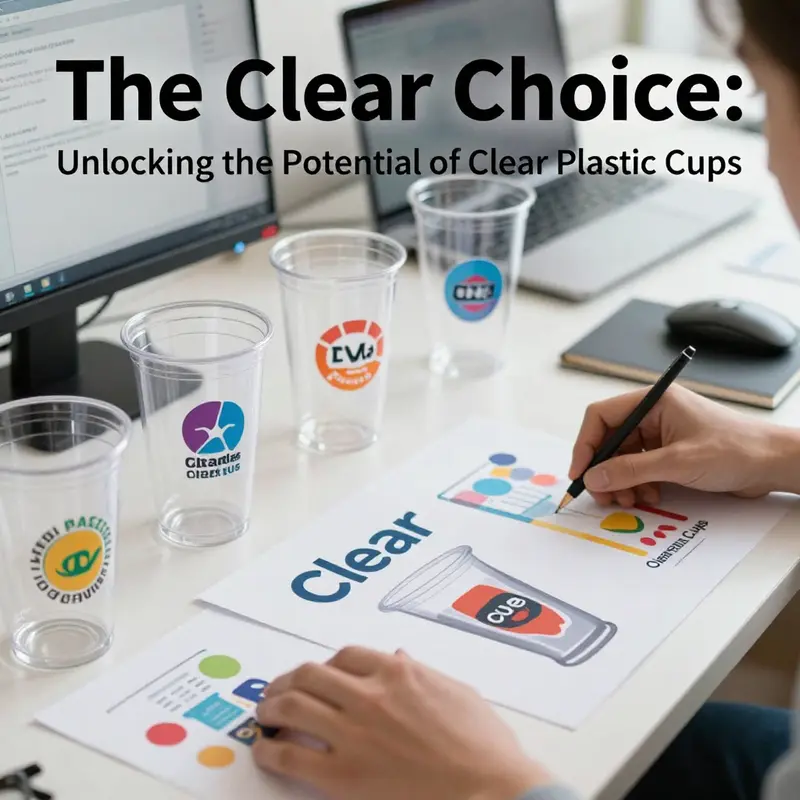
Clear plastic cups have long been viewed as simple, functional vessels for beverages. Yet when a brand treats a cup as a canvass rather than a container, it unlocks a quiet, persistent form of marketing. The customization and branding options for clear plastic cups turn an ordinary, disposable item into a portable billboard, a tactile touchpoint that travels from event to event, from counter to table, and from the hands of a customer to the memories they carry. In this chapter, the conversation moves beyond the basic utility of a transparent cup and into the realm where design, material science, and a marketer’s timing converge to create a small, circulatory piece of brand storytelling. The idea that a cup can be both practical and promotional is not new, but its execution—how the cup is branded, what surfaces are used for branding, and how the brand remains legible and compelling when wrapped around a curved, glossy form—has evolved with advances in printing, material choices, and sustainability expectations. The result is a family of clear cups that are not merely vessels but recurring reminders of a brand’s voice in every sip and every social post that features the cup in use.
At the heart of customization is a simple truth: clarity is a platform for color, logo, and messaging. Clear plastic cups are typically made from polypropylene (PP) or polyethylene terephthalate (PET). PP brings durability and heat resistance, while PET emphasizes clarity and a premium feel. Both materials offer a transparent surface that invites a brand’s colors to sit directly against light, creating a high-impact display that compresses a marketing message into a quick visual moment. The transparency is not a limitation but an opportunity: a logo can punch against the glassy surface, a brand name can breathe with ample white space, and even a small, well-chosen color palette can become immediately recognizable. Custom printing on these cups — most commonly via screen printing — enables logos, designs, or slogans to be applied directly onto the cup’s exterior. The result is a single, mobile canvas that travels through crowds, feeds social feeds, and becomes a talking point at gatherings where beverages are shared, sampled, or gifted.
The range of customization options is impressive, and it matters. Suppliers offer clear plastic cups in multiple capacities—16, 20, and 24 ounces are common—each with material choices like PET or PP. The options are not only about size but about how the brand wants to occupy space on the cup. Screen printing is a mature, reliable method that can render bold logos, crisp type, and simple graphic elements with a degree of durability appropriate for cold and, with the right design and lid, hot beverages as well. The ability to add a custom logo or branding message on the cup surface can elevate a routine purchase into a branded experience. For marketers, that is the key value: a cup that reinforces brand identity at multiple touchpoints, from impulse buys at a counter to a staged tasting at an event.
The practical realities of customization are also worth noting. The printing process, color options, and surface geometry impose constraints that shape design decisions. Most manufacturers support up to six colors for cup prints. This limitation is not merely a budgetary constraint; it is a controlled framework that often yields cleaner, more legible branding. A six-color palette can cover a brand’s core colors and offer contrast for legibility on curved surfaces, ensuring that logos remain recognizable from a distance and under various lighting conditions. Designers must plan how the artwork wraps around the circumference of the cup, how it aligns with lids and handles at the point of sale, and how it reads in the moment of consumption when a customer swallows a glimpse of the design on the cup. The wrap-around print, in particular, can be a powerful tool when used thoughtfully, as it creates a near-continuous brand experience from the first glance to the last sip.
Beyond the surface print, customization can extend into the choice of materials and ancillary components. PET cups bring a level of clarity that allows brands to showcase color with near-pristine brilliance, making logos and brand marks pop against the liquid beneath. PP cups, while perhaps slightly less translucent than PET, offer robustness and heat resistance, which supports hot beverages and more vigorous handling in busy service environments. Some suppliers even offer bespoke shapes or shapes that maintain a consistent print surface while conforming to specific marketing campaigns or event needs. In practice, this means a brand could commission not only logos and slogans but also unique visual cues—color-coded bands, branded measurement indicators, or small graphic motifs—that align with seasonal promotions or event themes. Packaging is another dimension; cups sold with matching lids, color-coordinated straws, or custom sleeve branding can extend the brand experience from the cup itself to the packaging ecosystem that accompanies it.
Cost remains a pragmatic driver of decision making, and here the numbers provide clear guidance on how brands should approach customization. Standard clear PP disposable cups, produced in bulk, can be as low as a few hundredths of a dollar per unit, depending on size and volume. The economics become especially favorable when brands commit to larger quantities, such as 50,000 pieces or more, which most manufacturers require for the most favorable unit pricing. For larger cups suited to iced beverages, pricing tends to be slightly higher, reflecting the more substantial surface area available for branding and the additional design considerations required to maintain print integrity on bigger cylinders. Custom printed cups with lids, a common pairing for beverage programs, start at a modest premium over non-customized cups but still present a compelling value when the marketing impact is considered across a campaign, a festival, or a series of venues. The broader trend toward eco-friendly disposables also shapes the cost landscape. Biodegradable PET cups or PET variants designed with sustainability in mind offer an alternative that aligns with corporate social responsibility goals, often with cost differentials that reflect material choices and manufacturing processes.
Sustainability sits at the core of many brands’ future plans for disposable tableware, and clear plastic cups are no exception. Eco-conscious options, including biodegradable PET variants, are increasingly available for businesses seeking to reduce plastic waste. These options respond to a growing industry demand for more responsible disposables without sacrificing the optical clarity and reliability that make clear cups so appealing for branding. The shift toward sustainable disposables does not simply import a greener footprint; it also shapes messaging opportunities. Brands can highlight eco-friendly commitments directly on the cup through print, signaling a shared value with customers who care about packaging and waste. This synergy between branding and sustainability can amplify campaign resonance in contexts ranging from corporate events to everyday retail displays, turning a simple cup into a small but meaningful assertion of a brand’s environmental stance.
All these customization options feed directly into the practical realities of procurement and production. Leading manufacturers—many based in Asia—report long-standing experience and capacity that support global distribution, fast turnaround, and robust quality assurance systems. The best suppliers operate large facilities with disciplined processes that ensure consistency across tens of thousands of cups per order. They also offer services like rush orders and sourcing assistance, helping brands meet tight deadlines for campaigns, product launches, or seasonal promotions. For marketing teams, the ability to align production schedules with event calendars and supply chains can be the difference between a successful rollout and a missed opportunity. The integration of customization into the broader product ecosystem—cups, lids, sleeves, and related packaging—further strengthens the brand narrative by presenting a cohesive, branded experience across touchpoints.
In talking through the practical applications of these options, it becomes clear how customization and branding on clear plastic cups extends beyond aesthetics. It is about consistency, legibility, and emotional resonance. A consumer in a queue may see a bold logo on a cup, and that single glance can spark recognition, memory, and affinity. The cup then becomes a portable ambassador for the brand, traveling through conversations, social media posts, and event galleries. The value of this approach lies not only in the immediate visibility of the brand but also in the way the cup becomes a long-tail touchpoint. A well-branded cup can spark conversations, trigger word-of-mouth sharing, and serve as a tangible reminder of a brand’s equity long after the beverage has been consumed. This is marketing in a compact, efficient form—where design, material science, and consumer behavior intersect on a curved, glossy surface.
For readers seeking a concrete example of customization capabilities and potential supplier collaboration, consider exploring a sample offering that highlights custom logo printing and lid integration. This resource demonstrates how branding elements translate onto a clear plastic surface and how a standardized print workflow can support diverse campaigns while maintaining quality and clarity across thousands of units. custom-printed-logo-disposable-6oz-8oz-9oz-paper-coffee-cup. While the link points to a paper cup example, the page illustrates the practical considerations that accompany any customized drinkware program—art direction, print constraints, color selection, and packaging alignment—that are equally applicable to clear plastic cups.
The business case for customization and branding, then, rests on a blend of design discipline, material choice, and operational discipline. It is not enough to print a logo on a cup; the print must survive the service environment, align with the product’s handling, and tell a consistent brand story from the moment a beverage is chosen to the moment it is consumed and photographed for social media. The choice between PET and PP, the decision to use a lid, and the option to wrap a design around the cup all interact with the campaign’s goals. If the objective is high visibility at a festival, a wrap-around design on a 24-ounce cup might offer the best impact. If the goal is a refined, premium feel at a coffee bar or a corporate lounge, a clear PET cup with a restrained, high-contrast logo and a matching lid may be more appropriate. If sustainability messaging is central to the brand promise, selecting a biodegradable PET option and printing with six or fewer colors can help balance environmental considerations with brand clarity. In every scenario, the brand is choosing not just a container, but a storytelling tool that travels through the consumer’s day and becomes part of the memory people share online and offline.
To support the decision-making process, brands should also consider the broader ecosystem of options, including packaging alignment and cross-category consistency. A cohesive set of branded cups, lids, and sleeves can form a unified visual language that reinforces the brand identity across all channels. This holistic approach strengthens recognition and fosters trust, especially when a campaign spans multiple events, locations, or distribution points. It is not merely about printing a logo; it is about crafting a durable, adaptable visual system that can be scaled, refreshed, and updated in line with marketing objectives. In this sense, customization is not a one-off production choice—it is a strategic element of a brand’s communication architecture, designed to maximize impact while respecting the realities of manufacturing, cost, and sustainability.
As brands consider their options, they should engage with suppliers who offer clear pathways from artwork to approved proofs to mass production. A reliable partner will provide design guidance, color matching, tolerance allowances for curved surfaces, and clear timelines for proofs and production. They will also respect sustainability goals and be transparent about material properties, print durability, and compatibility with lids and sleeves. The right supplier becomes part of the brand’s creative team, translating a two-dimensional logo into a three-dimensional experience that remains legible and impactful in the hands of customers. When this partnership is well managed, customization on clear plastic cups becomes a repeatable, scalable capability that supports ongoing campaigns, seasonal promotions, and bespoke event programs without sacrificing quality or brand consistency.
External reference for further technical and supplier context can be found here: https://www.alibaba.com/product-detail/Custom-Logo-Transparent-PET-Plastic-Cups-with-Lid_1600375938167.html?src=google&src=google&albigo=y&productType=1
Final thoughts
Clear plastic cups are more than just serving vessels; they are versatile tools that can enhance your beverage service and brand presence. By understanding the variety of applications and the materials that drive their use, along with the customization options available, businesses can make informed decisions that resonate with their customers. As sustainability continues to be a key concern, opting for eco-friendly materials further positions your brand as responsible and forward-thinking. Embrace the versatility of clear plastic cups to elevate your offerings and engage your audience.