
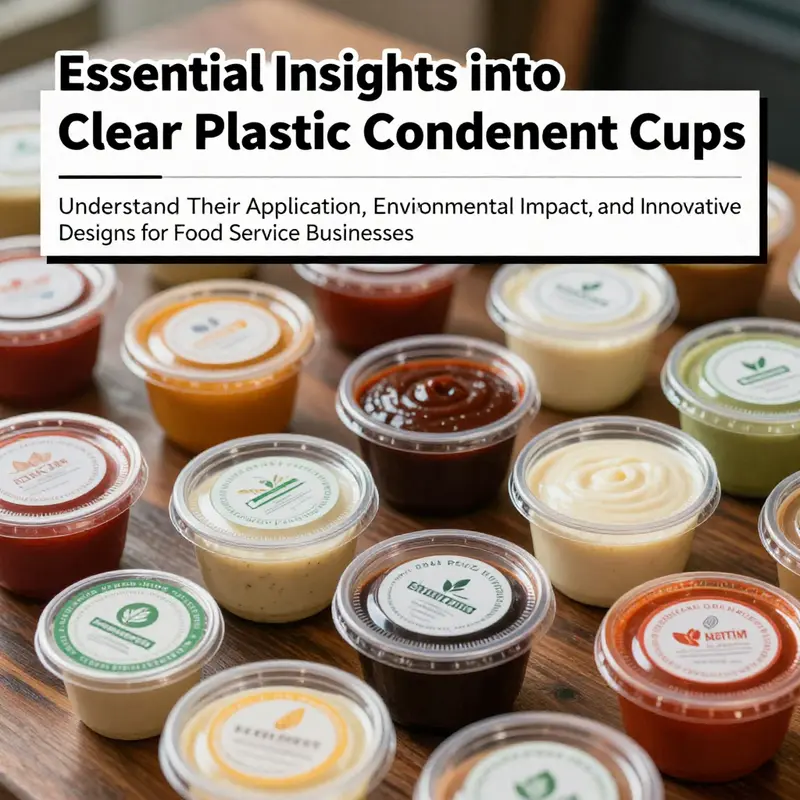
Clear plastic condiment cups are often unsung heroes in the food service industry, playing a pivotal role in elevating customer experiences across various settings. Whether you are running a bubble tea shop, a bustling restaurant, a mobile food truck, or coordinating large events, these cups provide convenience, safety, and aesthetic appeal. The first chapter delves into their versatile applications in commercial environments, highlighting their role in portion control and food safety. Next, we explore the environmental considerations surrounding these disposable items, emphasizing the balance between convenience and sustainability. Lastly, we look at the latest innovation and design trends in clear plastic condiment cups, revealing how they adapt to modern consumer preferences and eco-friendly practices. Together, these insights will illuminate your understanding of this essential food service product.
Seeing Through Service: The Quiet Efficiency and Hygiene of Clear Plastic Condiment Cups in Commercial Kitchens

Clear plastic condiment cups occupy a quiet, indispensable niche in the orchestration of modern food service. They are small by appearance, almost incidental in the rush of a busy kitchen or a bustling buffet line, yet they perform a crucial function: they translate the chef’s and server’s intention into precise, reliable, and hygienic portions. The transparent walls do more than expose the contents; they serve as a real-time interface between food preparation, presentation, and the customer’s perception of cleanliness and control. In a world where speed and accuracy can determine a serving’s success and a business’s reputation, these cups are a practical, scalable solution that blends safety with accessibility, portability with protection, and simplicity with sustainability considerations that matter to operators and guests alike.
From a materials perspective, clear plastic condiment cups are typically molded from food-grade polymers such as polypropylene, high-density polyethylene, or polyethylene terephthalate. Each material brings its own balance of rigidity, clarity, impact resistance, and chemical compatibility with sauces, dressings, marinades, and semi-solid toppings. The choice of material is not merely a technical detail; it shapes a kitchen’s daily rhythms. HDPE, for instance, delivers sturdy, shatter-resistant performance during high-volume service and transport, while PET offers exceptional clarity that makes the relationship between the sauce’s color and the customer’s expectation immediately legible on a tray or buffet line. In either case, the emphasis is on safety, not just because these cups are for direct contact with food, but because the reliability of their seams, lids, and seals matters as soon as a sauce travels from kitchen to guest and back again through handling and reuse cycles.
The clarity of these cups is a deliberate design choice with multiple practical benefits. In front-of-house settings, the see-through walls allow both staff and customers to identify flavors, portions, and even potential contamination at a glance. This reduces miscommunication during line service and speeds up decision-making for guests choosing from a palette of sauces and dressings. In back-of-house operations, clear visibility supports accurate portioning, which translates into consistency on every plate. When a server can verify the amount of a sauce or marinade simply by glancing at a cup, the potential for under- or over-application diminishes, contributing to cost control and a more predictable guest experience. Transparency is not a luxury here; it is a practical control that aligns with the industry’s broader focus on consistency and waste reduction.
Hygiene, a perennial concern in any food environment, is another central virtue of these cups. The design typically emphasizes a secure lid that seals to guard against leaks during transit and storage, an essential feature for catering operations that orchestrate complex logistics—moving from kitchen prep to service stations, to buffets, to mobile carts. A reliable lid protects the contents from airborne particles and accidental spills, reducing cross-contamination risks across condiment stations and buffet lines. In high-speed contexts like fast-food counters or mobile food services, where multiple customers may handle containers in rapid succession, the lid acts as a barrier that helps preserve the integrity of sauces and prevents drips from dirtying packaging or clothing. This protective aspect is not merely about preserving the sauce’s appearance; it safeguards hygiene across every touchpoint—from line cooks to servers to guests at a buffet table.
A further layer of value emerges in the form of labeling and branding opportunities traditionally associated with clear caps and sides. In practice, many suppliers offer UV-printed labels that adorn the exterior of the cups. These visuals serve more than decorative purposes; they enhance operational clarity in the busiest service environments. A tangy tomato, a chili motif, or a simple color cue can encode flavor families, heat levels, or dietary notes at a glance. This is particularly useful in settings that rely on quick visual cues to reduce order errors and accelerate throughput. In practice, a server can identify a sauce by color and label rather than by memory or a memorized station map, which minimizes confusion during peak service periods. The synergy between transparency and labeling supports both speed and accuracy, creating a user experience that feels effortless to guests while being carefully engineered for reliability in the back end.
The practical advantages of these cups extend beyond individual servings. In high-volume environments such as food trucks or delivery-focused operations, the portability, light weight, and leak resistance become even more pronounced. The compact form factor supports efficient stacking and compact storage without compromising the integrity of the contents. For mobile kitchens and field service, being able to transport sauces securely is not a luxury but a baseline requirement. A cup with a sealed lid becomes a compact, tidy solution that reduces spillage risks during transport, preserves the sauce’s consistency, and minimizes cleanup for the hosting team. This reliability feeds directly into customer satisfaction, since guests experience consistent flavors and clean presentation regardless of where the service encounter happens.
The breadth of applications for clear plastic condiment cups also reveals a versatility that stretches across different service models. In restaurants and casual dining concepts, these cups serve as practical vessels for dressings, sauces, dips, and marinades to accompany prepared bowls, salads, and shared platters. In buffet and salad-bar environments, the cups often appear in multi-compartment holders. These holders separate different condiments clearly while keeping each item organized—an arrangement that simplifies inventory checks and replenishment tasks. By keeping condiments in labeled, transparent compartments, staff can monitor stock levels more accurately, reducing the risk of running out during service and enabling timely restocking that keeps lines moving and guest experiences consistent. The organizational clarity granted by such systems supports seamless flows on busy shifts, where every second saved translates into improved service speed and customer satisfaction.
The effectiveness of these systems is often rooted in how they are integrated with broader packaging strategies. Clear plastic condiment cups are not isolated tools; they are components of a cohesive service ecosystem that includes lids, dispensers, and, where relevant, multi-compartment solutions designed for specific display contexts. For example, a salad-bar setup might pair transparent cups with a labeled, clear segment system to present distinct toppings without cross-contact. This kind of arrangement fosters a sense of control at the point of service, a perception customers associate with careful handling and professional discipline. It is a practical illustration of how form and function converge: the user-facing openness of the cup invites trust, while the behind-the-scenes engineering—tight seals, compatible lids, and well-designed holders—delivers performance reliability that kitchen teams rely on every day.
From a standards and compliance perspective, the contemporary market often emphasizes safety and sustainability. Reputable suppliers scout the landscape for offerings that are FDA-compliant and BPA-free, among other certifications. In today’s regulatory and consumer environment, these attributes are not optional; they are expected. The assurance of food-grade materials, coupled with clear indications of compliance, helps food-service operators avoid regulatory pitfalls and reassure guests about the safety of the products they serve. The emphasis on certifications also intersects with broader sustainability goals. Many cups are designed to be paired with recycling streams or responsibly disposed of in accordance with local waste-management practices. The choice of material and the design for disassembly—cups, lids, and any labeling—play a role in how easily a consumer can separate components for recycling. In this sense, the cups become part of a larger conversation about responsible packaging in a world increasingly mindful of environmental footprints.
The chapter’s themes extend into the corporate practice of inventory management and standard operating procedures. Clear cups, when used with consistent lid types and labeling schemes, enable a streamlined approach to stock control. Pre-measured portions help enforce standardized serving sizes, reducing the likelihood of variance that can affect cost targets or guest expectations. For catering services and event operations, this standardization means predictability—whether a kitchen is serving a wedding buffet or a corporate luncheon, the same measurement logic and presentation standards apply across tables, trays, and stations. In this sense, the cups contribute to a reproducible guest experience that underpins brand reliability, even as staff members rotate through shifts or locations. The result is a service model that balances the flexibility needed for diverse menus with the discipline required to deliver uniform quality.
The practical beauty of clear plastic condiment cups also lies in their adaptability to evolving service formats. As the industry experiments with new display methods and self-serve stations, the cups adapt to changing expectations around portion control, cleanliness, and speed. A well-designed lid system reduces leakage during rapid service and makes it feasible to offer customers self-serve options with less risk of mess. In a buffet line, the combination of clear cups and labeled compartments supports both aesthetic appeal and functional efficiency. Guests can easily see what is available and select with confidence, while staff can maintain a tidy, professional presentation that aligns with overall venue standards. The cups’ role is understated yet essential: they enable a visually clean, consistent, and hygienic condiment experience that feels both straightforward and thoughtful to the observer.
As readers consider the broader packaging landscape, it becomes clear that clear plastic condiment cups do more than hold sauces; they help craft a service narrative. They tell a story of meticulous care—from the moment a sauce is prepared and portioned, to the moment it is enjoyed by a guest who can see, sense, and trust what they are about to taste. In this sense, the cups become ambassadors of hygiene, efficiency, and clarity. They support fast-paced work environments where accuracy and speed are the currency of success, while also accommodating the demands of guests who expect clean, transparent, and organized presentation. In short, their value lies not in novelty but in dependable everyday performance—the quiet backbone that keeps service smooth, predictable, and courteous across a wide range of commercial settings.
For operators seeking to broaden their packaging options without sacrificing the benefits described above, a coherent approach to selection and presentation matters. Choices about cup diameter, height, lid compatibility, and whether to pursue multi-compartment configurations are not cosmetic decisions; they influence workflow, shelf space, and service dynamics. A well-chosen cup system can simplify line management, facilitate rapid replenishment, and reduce the potential for cross-contact between condiments—an outcome that matters as much to kitchen hygiene as to guest perception. Involving procurement teams early in conversations about approved materials, certification statuses, and end-of-life considerations helps ensure that the entire supply chain aligns with a venue’s standards and sustainability commitments. The result is a cohesive packaging strategy that supports guest confidence and staff efficiency, while maintaining the flexibility required to adapt to changing menus and service formats.
From a customer experience standpoint, the visible quality of the condiments—matched with the clarity of labeling and the reliability of the seals—contributes to a sense of care and professionalism. When guests encounter a well-organized condiment station, or a neatly displayed lineup of sauces at a self-serve station, they interpret the environment as one where hygiene and order are prioritized. The practical implications are real: faster service, fewer mistakes in sauce selection, and less mess on trays and tables. In a world where dining choices are frequently made in crowded spaces or during time-limited events, such impressions can tip the balance in favor of a smooth, enjoyable experience. The cups, in their unadorned usefulness, symbolize a broader commitment to quality control and service reliability that customers notice, even if they do not articulate it as a strategic priority.
To ground this discussion in practical terms, consider the everyday workflow of a busy service day. Prep staff portion sauces into clear cups with lids, labeling each cup with its intended flavor family or heat level. The cups are then organized in a tidy, multi-compartment server station or placed in a display case that makes them easy to reach during peak hours. When a guest selects a sauce, the server can confirm flavor identity quickly by glancing at the label, reducing the need for prolonged verbal explanations and minimizing the chance of mix-ups. The cups travel through service with minimal risk of leaks, contributing to a cleaner dining area and a lower burden on cleaning crews after service. And because portions are pre-measured, the kitchen can enforce consistent taste profiles across shifts and locations, a subtle but powerful form of brand integrity that guests appreciate even if they do not articulate it as such.
In closing, the everyday utility of clear plastic condiment cups in commercial settings is a testament to the power of smart design in practical contexts. They embody a balance of visibility, protection, and efficiency that makes sauces, dressings, and other condiments easier to manage, more hygienic to serve, and more consistently presented to guests. They are not the most visible element of a dining operation, but their influence runs through every plate and every tray. They enable staff to work faster without sacrificing safety, and they help guests feel confident in the care that goes into each serving. In the evolving landscape of food service packaging, these cups demonstrate how a simple, well-executed tool can support a broader commitment to quality, efficiency, and responsible practice. For those who are curious about compatible take-out packaging and related disposable solutions, a broader range of options exists within the packaging ecosystem, including related take-out materials such as kraft paper bowls designed for same-day service and clean handling. For a closer look at such related packaging solutions, see this example: disposable kraft paper bowl for take-out packaging.
External resource: https://www.amazon.com/dp/B0C8XZ3K7V
Clear Cups, Compounded Footprints: The Environmental Realities of Single-Use Condiment Cups
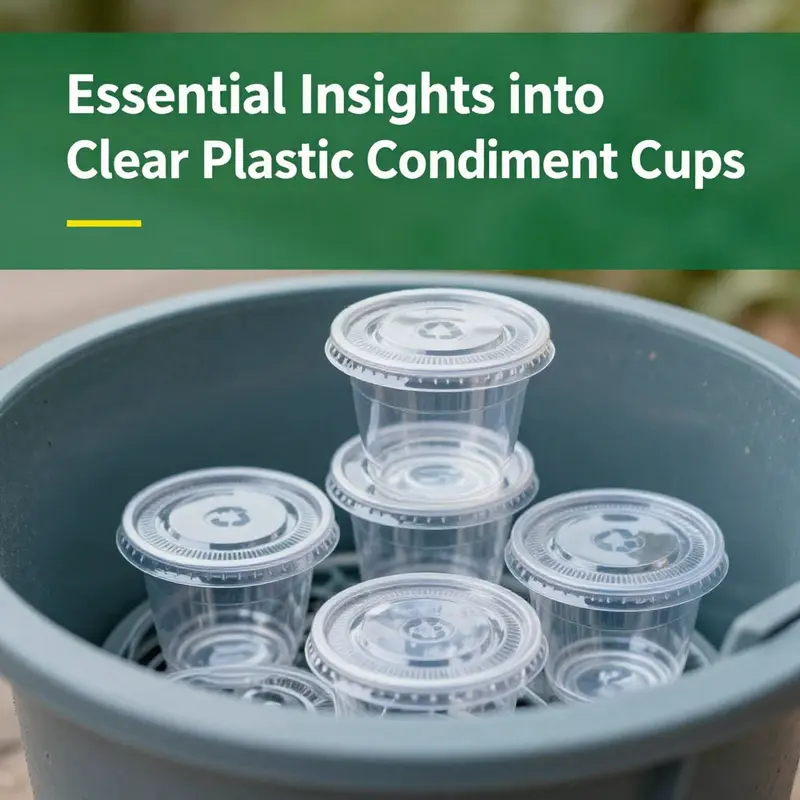
Clear plastic condiment cups occupy a small but important spot in the food system. They enable precise portioning and hygienic service, but their end-of-life fate raises questions about waste and pollution. Made mainly from polypropylene (PP) or high-density polyethylene (HDPE), these cups can be recycled in many places, yet contamination, small size, and regional limits often hinder the circular economy. When not recycled, they contribute to landfills or litter, and their persistence in the environment can be harmful to wildlife. The future of these cups rests on better recycling infrastructure, consumer sorting, and design choices that favor higher recycled content or compostable alternatives where appropriate.
Clarity in Action: Durable, Sustainable, and User-Centric Clear Plastic Condiment Cups

The story of clear plastic condiment cups begins with a simple idea: transparency as a feature, not an afterthought. In kitchens, buffets, and event spaces a clear cup acts as a micro interface between a chef plan and a guest experience. The goal is not only to hold a sauce but to convey cleanliness, precision, and reliability at a glance. A clear cup is a small stage where portion control, safety, and presentation converge. The lid, the seal, the geometry, and even the surface texture work together to keep a dressing from leaking in transit, to preserve color and viscosity, and to allow a guest to identify the flavor without leaning in. The evolution of clear cups mirrors a broader trajectory in packaging: clarity paired with competence, aesthetics aligned with ethics, and convenience fused with accountability.
As service formats become more demanding self service buffets catering grab and go and compact bento setups, the emphasis on leak proof sealing and durability becomes essential. The modern cup must perform under stacking in transport, tilting on a crowded pass, and repeated handling by different hands without compromising contents. The most advanced lids do more than snap or twist; they embody a commitment to freshness and hygiene. A secure closure resists accidental openings in transit and reduces cross contamination risk, a concern in high volume environments where a small leak can cascade into a cleanup. The interplay between lid design and cup geometry matters as much as material clarity because reliability at the moment of seal influences a guest trust.
Durability is only one axis. The shift toward sustainability reshapes what clear means here. Research explores smart materials that balance transparency with strength and biodegradable options that do not compromise the user experience. Plant based polymers and advanced bio resins are engineered to deliver optical clarity and impact resistance similar to traditional plastics while offering a path to reduced environmental footprints. Lifecycle analysis tracks energy use, water consumption, and end of life outcomes. This transparency is part of a broader demand from operators who want to show responsibility to customers who care where packaging ends up. The move toward sustainable plastics is less about a single breakthrough and more about building a system that supports responsible consumption without sacrificing practicality.
The geometry of the cup has become a canvas for customization that matches how food is served and displayed. Clarity remains the most valuable feature because it lets staff and guests see contents clearly. A colorless window into the cup helps ensure accuracy in portioning and prevents confusion at a glance, especially in settings where many dressings share space. Visibility is not only about the viewer; it informs user interaction with the product. In a busy service line the ability to confirm the amount of sauce quickly boosts speed and accuracy. Designers respond with ergonomic textures for grip, channels or spouts that encourage controlled pouring and shapes that stack efficiently while resisting buckling under pressure. Each attribute is a response to a real use challenge and a nod to human scale in everyday service.
Labeling also plays a pivotal role in the design language of clear cups. The transparency of the cup creates a stage for branding, aroma cues, and flavor identification. Technologies such as UV printing enable vibrant visuals on lids or rims, turning a simple container into a small billboard that communicates flavor profiles at a glance. Labels can convey heat tolerance, allergen information, and portion size without cluttering perception. The trend toward label customization supports consistency in presentation across locations, ensuring that a guest sees a familiar package regardless of where they purchased it. The visual language of the cup becomes a differentiator, a way to tell a brand story without words.
Regulatory and safety dimensions shape practice. Standards that govern food contact materials provide a framework within which designers and manufacturers operate. Certifications that meet recognized standards give buyers confidence that the cup is suitable for direct food contact and that performance stays consistent across batches. BPA free formulations address consumer concerns about chemical migration and reinforce trust. Beyond chemistry, broader certifications concerning quality management, environmental stewardship, and supply chain responsibility signal a commitment to reliability. In practice buyers weigh these certifications as part of a holistic assessment that includes clarity, leak resistance, and suitability for high volume workflows. The result is a market where compliance is not a checkbox but a living assurance woven into the product narrative.
The design language now favors flexibility. Clear cups are no longer locked to a single diameter or fixed depth. Manufacturers offer a spectrum of sizes and shapes for distinct uses such as spice stations, salad bars, or industrial kitchens, while preserving easy readability and quick recognition of contents. Flexible tooling enables custom labeling options, aligning packaging with store branding while maintaining readability. The outcome is a toolkit for efficiency that respects the pace of modern food service where speed and accuracy must co exist with presentation and hygiene.
From a consumer perspective the appeal lies in simplicity and predictability. A cup that pours smoothly seals reliably and remains clear after repeated washing earns trust. A thoughtful design reduces cognitive load for the user; no guessing, no fumbling, no surprises. In professional settings clarity translates into efficiency helping staff maintain consistent portioning and uphold food safety standards. A single well engineered cup can influence the pace of an entire service line and the perceived quality of the experience.
The ecological dimension shapes practice as well. The shift toward sustainable convenience is practical and ambitious. Biodegradable plastics, compostable resins, and plant based polymers are tuned to preserve brightness while offering better end of life. Material science aims to reduce time to breakdown in industrial composting while maintaining rigidity for stacking and transport and ensuring inert behavior with acidic sauces. Lifecycle tracking empowers brands to communicate energy use, emissions, and waste diversion providing a narrative arc from raw material to disposal. This transparency supports a market where customer preference for sustainability guides future products rather than becoming a grievance.
Looking ahead, personalization and sustainability can converge further. Think lids with micro venting for specific sauce viscosities or cups designed to optimize stacking in automated warewashing. Imagine labeling systems that use color coding or simple icons to reduce error in busy lines. And as circular economy concepts mature cups designed for easier collection sorting and recycling could become standard. The practical impact is concrete: it influences how servers plate, how guests experience a product, and how a hospitality operation frames its commitment to quality and responsibility in a single glance.
To close, sustainable convenience captures the marketplace ethos. Packaging that fades into the dining experience while delivering clarity reliability and stewardship defines the next generation of serving solutions. The cup remains a small object yet it becomes a proxy for broader questions about how we feed ourselves with speed and care in a world that values both efficiency and environmental responsibility. The ongoing refinement of materials, lids, seals, labeling and ergonomics all contribute to a single objective: support a serving system that is conscientious as it is convenient.
For further exploration of packaging strategies that complement clear condiment cups consider related eco conscious design in broader take away categories. The idea is to weave branding with sustainability a principle that resonates with the goal of keeping contents visible while minimizing impact. External research and market observations show that customers evaluate packaging as part of a holistic experience that reflects how a business treats its guests and its planet. This chapter about innovation and design trends in clear plastic cups is in essence a study of how simple tools can enable more predictable and satisfying food service.
External resource reference: https://www.amazon.com/dp/B0C5KZQXJL
Final thoughts
In summary, clear plastic condiment cups are more than just functional servings; they embody the intersection of convenience, safety, and evolving consumer preferences. As you navigate the demands of the food service industry, consider how these cups can enhance your offerings while also taking into account their environmental implications. By embracing innovative designs and sustainable practices, you can provide an exceptional customer experience that aligns with modern values. Stay ahead in the competitive marketplace by integrating these practical insights into your business strategy.