
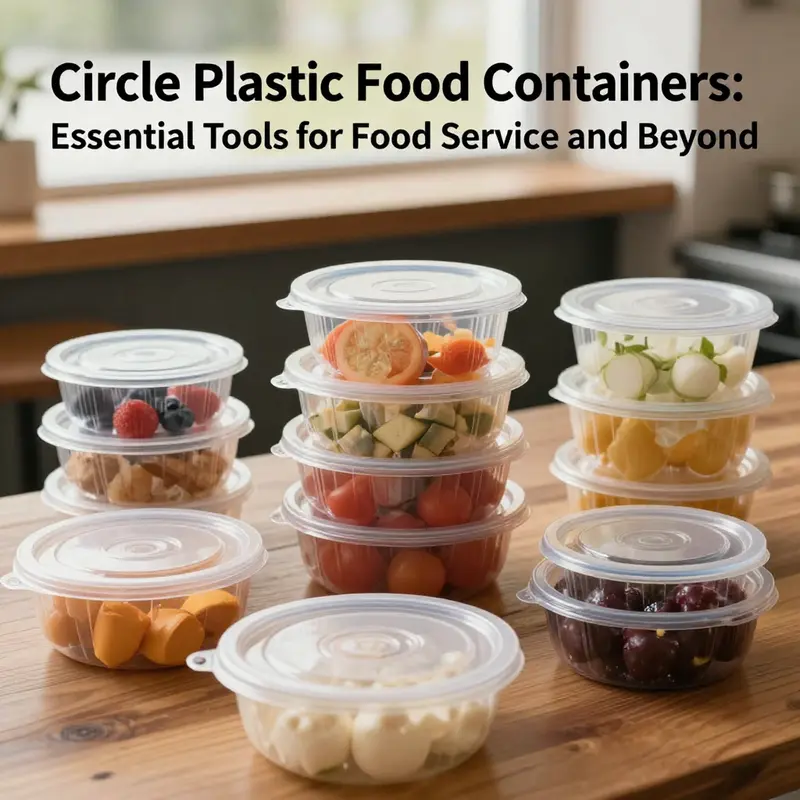
Circle plastic food containers are more than just storage solutions—they’re essential assets for businesses ranging from bubble tea shops to catering services. Their unique design offers efficient heat distribution and safety for various food applications, while their versatility aligns with the diverse needs of today’s food industry. In this article, we delve into the design and functionality of these containers, their material composition and safety standards, and the evolving market trends and consumer preferences. Each chapter contributes to a comprehensive understanding of how these containers support food management and enhance service across multiple sectors.
Circles of Preservation: The Design, Performance, and Practical Impact of Round Plastic Food Containers
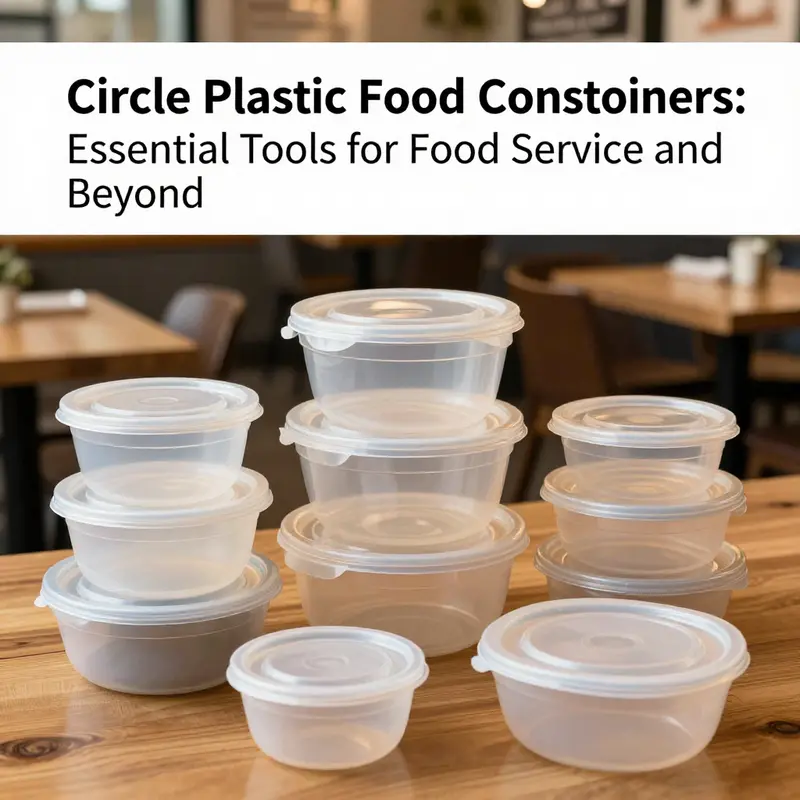
The round plastic food container is more than a simple receptacle for leftovers or a take-home solution after a meal. Its circular geometry embodies a balance between engineering precision and everyday practicality, a harmony that supports food safety, efficient storage, and user convenience across home kitchens and commercial operations alike. When we look closely, the design choices behind a circle container reveal how form and function intertwine to influence heat transfer, sealing integrity, stacking behavior, and even the way a brand tells a story to a consumer who is more informed and intentional than ever before. In this sense, the circle is not a stylistic preference alone but a deliberate choice that reflects a deep understanding of how food moves, warms, rests, and travels from kitchen to table, and from kitchen to service line. The circular form has a modularity that feels almost natural, echoing the way kitchens themselves are organized around work zones, cold storage, and rapid, repeatable processes that demand reliable performance from every tool and vessel involved.
One of the most striking advantages of the round container lies in its mechanical behavior under load. A circle distributes pressure evenly around its circumference, a property that translates into superior resistance to deformation when containers are stacked, transported, or nested during storage. In the realm of bulk storage, where thousands of units may be handled in quick succession, this uniform distribution helps minimize surface denting and maintains the integrity of the seal between lid and body. The result is a lineage of containers that can be piled with confidence, saving space on shelves, pallets, and in transit without sacrificing performance. The same symmetry that provides structural resilience also simplifies handling in time-pressed environments. Humans are dexterous, but in fast-paced kitchens and distribution centers the fewer awkward edges a container has, the quicker and more predictable the workflow becomes. The round silhouette, with its absence of corners, becomes easier to grip, stack, and retrieve, even when damp, greasy, or gloved hands are involved. In practice, this translates into fewer misaligned lids, fewer dropped containers, and a smoother cadence from prep table to cooler and back again.
Beyond the physical sturdiness, the geometric maturity of circular containers offers tangible advantages in heat distribution. In processes such as pasteurization, reheating in a microwave, or controlled cooling, the round shape fosters more uniform exposure to heat or cooling currents. As heat penetrates the surface, the symmetry of the container’s form helps minimize hot spots and cold pockets. For foods that require careful handling—think sauces, stews, grains, or pre-cooked meals that need even warming—this uniformity supports consistent texture and temperature, reducing the risk of overcooking in some zones while others lag behind. The outcome is not only better food safety but also improved flavor and mouthfeel, because heat is delivered more evenly and predictably. In a professional kitchen or a catering operation, that consistency matters when turning bulk batches into consistent plated portions or when ensuring that a refrigerated display case retains uniform chill across a curated assortment of dishes.
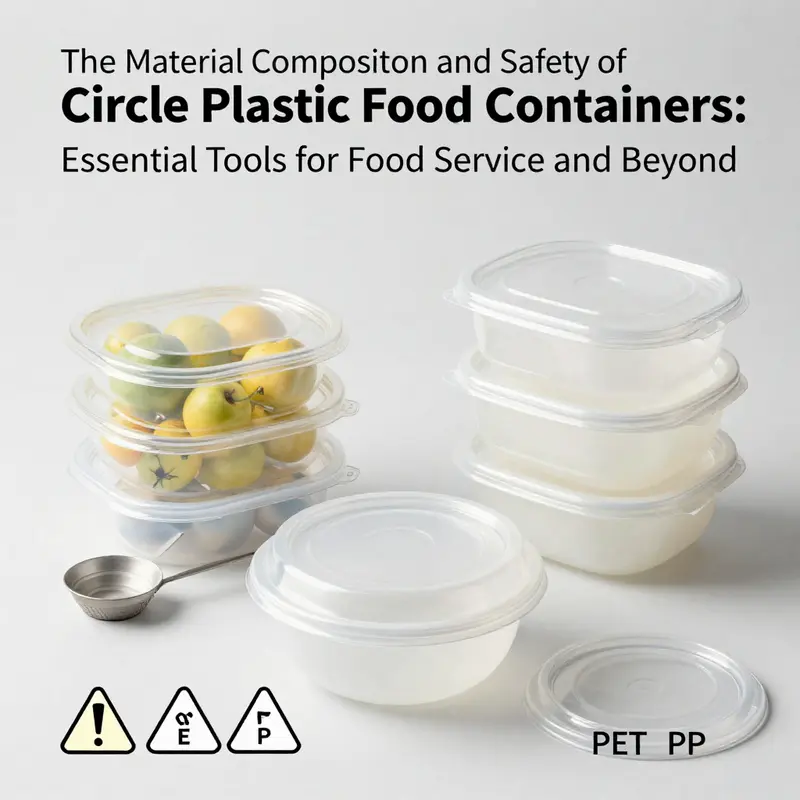
Material choice is the other side of the circle’s functional equation. Most circle containers used for food storage and transport rely on food-grade plastics such as polyethylene terephthalate (PET), polypropylene (PP), or high-density polyethylene (HDPE). Each material brings a set of properties that complement the geometry. PET is prized for its clarity and moisture resistance, which makes the contents easily visible without opening the lid. This is more than a convenience; it reduces the number of times a product is opened, thereby limiting exposure to air and contaminants and helping to preserve freshness. PP, with its robust heat resistance and chemical stability, is often favored for containers intended to tolerate microwaving or hot filling. HDPE offers a blend of toughness and chemical resistance, which suits bulk storage and transport in more demanding environments. The choice among these polymers is rarely about a single attribute but about a balance of clarity, rigidity, barrier properties, and ease of cleaning. The round form supports this balance by providing a uniform surface that cooperates with standard molding techniques to produce consistently thick walls, smooth interiors, and reliable closures.
In the context of safety and hygiene, the closure system is inseparable from the container’s design language. A round container typically pairs with a lid or cap that seals with silicone gaskets, threads, or snap-fit mechanisms, creating a dependable barrier against leaks and contamination. The seal is the gate between rest and reheating, refrigeration and transport, and between a product and the consumer’s kitchen. A tight, tamper-evident closure can deter tampering and extend shelf life by preventing microbial intrusion and moisture exchange. The seamless, curved interior is also a boon for cleaning and sanitizing. There are no sharp corners to trap residues, and smooth, continuous surfaces are easier to scrub, rinse, and sanitize. This cleanliness is essential not only for household reuse but for the rigorous hygiene standards that govern commercial kitchens, cafeterias, and catering services where turnover is rapid and the stakes for food safety are high.
The aesthetic dimension of round containers should not be dismissed, either. In a market saturated with disposable packaging and reusable storage options, the circle offers a timeless, approachable silhouette. The form is friendly to branding through simple color choices, clear labeling, and minimalistic visuals that communicate contents and portion sizing at a glance. In incorporated dividers within larger round containers, the circle can host practical organization systems, segmenting items without sacrificing the clean lines of the exterior. This capacity is particularly appealing for meal prepping, where individuals or families plan and portion meals for the week. The round shape accommodates multi-item configurations within a single vessel, enabling cooks to separate sauces, sides, or proteins while preserving order and reducing cross-contamination. The practical implications extend beyond the home kitchen; in a workplace cafeteria, a well-designed circular container with internal dividers can streamline service and reduce waste, as people opt for well-portioned choices that stay neatly separated from one another.
To understand the broader context of these advantages, it helps to consider the lifecycle of a circle container from production to disposal. Manufacturing round containers involves plastic resin in a mold with careful control of temperature, pressure, and cooling rates to ensure uniform wall thickness and surface smoothness. The circular geometry facilitates efficient mold filling and ejection, contributing to high yields in production lines and consistent dimensions across large runs. The straightforward geometry supports stackability, reducing space requirements in warehouse storage and distribution centers. This efficiency directly touches the bottom line: lower handling costs, better space utilization, and fewer damaged units in transit. Yet the lifecycle does not end with the first use. Reusability and recyclability are central to responsible packaging narratives today. A well-made round container can withstand multiple cycles of use in the home or a commercial setting, with lids designed to survive repeated openings and closings. When it finally reaches end-of-life, the same material family can often be recovered and reprocessed into new products, preserving value within a circular economy framework. The round form, paired with appropriate material choices and design for disassembly, becomes an ally in sustainability, balancing practical performance with responsible resource use.
In practice, the versatility of circular containers emerges most clearly when we trace their footprint across different environments. In home kitchens, the familiar round glass-like clarity of PET containers allows quick content identification, a small but meaningful time-saving detail during busy mornings or hectic meal prep sessions. The transparent interior invites trust: you can see whether a lasagna or a remaining portion of rice and vegetables is still fresh, reducing the guesswork that often accompanies leftovers. In a family setting, the lightweight nature of these round containers makes them easy to transport to picnics, work lunches, or school trips. The lids—often with a simple snap or twist mechanism—provide a secure seal that keeps odors contained and prevents spills when a lunch bag is jostled in a backpack or tote. In a professional kitchen or catering operation, the same shape translates into uniform stacking on cold shelves, easy portioning during service, and rapid reconfiguration of prep lines as menus shift. The predictable geometry supports automation in some facilities, where robotic systems or conveyer-based sorting benefit from regular, symmetrical shapes that feed smoothly into handling stations.
The adaptability of circle containers also intersects with the dynamic world of consumer preferences and brand storytelling. Shapes that appear sturdy, clean, and modern can convey competence and reliability, which are valuable signals in markets where product safety and freshness are paramount. The circle’s timeless appeal provides a neutral stage for labeling, color coding, and graphic customization. When a brand wants to emphasize freshness or simplicity, the round form acts as a canvas that supports clear typography and legible nutrition or ingredient information. When a brand seeks to highlight premium quality, the interior clarity of PET combined with a flawless seal communicates a sense of care and precision. The container thus becomes more than a storage vessel; it becomes a touchpoint in the consumer journey, aligning with expectations for convenience, hygiene, and consistent performance.
In the broader ecosystem of packaging choices, round containers sit at a compelling intersection of economy, functionality, and user experience. They provide a practical alternative to more angular shapes that may require more space for storage or create complexities in sealing and stacking. The circular approach often pairs well with multi-piece sets that allow for a range of portion sizes, from single-serving meals to family-sized servings, while preserving a coherent design language. For businesses, this coherence matters: a well-chosen circle can reduce the cognitive load on staff who are selecting vessels for specific tasks, matching lid types to containers in a predictable, repeatable manner. The geometric consistency also helps in inventory control, as standardized dimensions facilitate easier forecasting and reorder planning, decreasing the probability of mismatched lids or ill-fitting closures that can compromise safety and efficiency.
As we consider the future of circle plastic food containers, certain developments loom large. Advances in material science continue to push the boundaries of barrier performance, enabling even thinner walls without sacrificing rigidity or heat tolerance. This can yield lighter, more cost-effective, and more sustainable options that still deliver the same level of performance when heated or frozen. At the same time, innovations in seal technology—such as improved silicone gaskets or novel interlocking lid designs—promise even more reliable leak resistance and tamper evidence, reinforcing food safety in a world where on-the-go meals and rapid delivery demand robust packaging solutions. In parallel, the push toward clearer recycling streams and better end-of-life outcomes challenges manufacturers to design containers with recyclability in mind, selecting polymers and colorants that do not hinder recycling processes and ensuring that every part of the container, including lids and vents, can be separated efficiently when necessary. The circle, already adept at harmonizing strength, space, and usability, stands to gain from these material and process improvements, continuing to serve as a dependable backbone for food storage, transport, and preparation across countless settings.
The conversations around circle containers cannot ignore the social and logistical realities of scale. In large-scale food service and catering operations, the ability to source round containers in bulk, with predictable performance and a consistent supply chain, becomes essential. While the example landscape of suppliers is diverse, the underlying principle remains constant: reliable geometry paired with dependable closures reduces waste, speeds throughput, and enhances safety. For small eateries, meal prep enthusiasts, and home households alike, the round container offers a humane, intuitive design that echoes the way people think about food organization—sections that are easy to view, easy to reach, and quick to reassemble in a fridge or freezer. In that sense, the circle’s popularity is not merely about tradition or aesthetics; it is the cumulative effect of a design that respects efficiency, hygiene, and the everyday rhythm of eating and sharing.
To gain a deeper technical lens on the material and mechanical properties that underpin these advantages, researchers point to a broad spectrum of composition and performance data. An informed view emphasizes how the combination of polymer type, wall thickness, lid geometry, and surface finish shapes outcomes in real-world use. For those who want to explore the science in more detail, an external resource provides a thorough overview of best practices in round plastic container composition, mechanical properties, and applications. This reference offers a rigorous grounding for engineers, product developers, and sustainability officers who seek to optimize both performance and environmental impact while staying aligned with regulatory expectations. Link and additional reading can be found at the end of this discussion for those who wish to connect the practical considerations outlined here with a deeper technical foundation.
The circular form is thus a unifying thread across design, performance, and experience. It embodies a systems thinking approach to packaging: a shape that supports aggregate efficiency, aids safety through stable heat transfer and secure closures, and interfaces with customers in a manner that feels natural and reassuring. In a field where margins, hygiene, and speed matter, the round container remains a dependable ally. It is not merely the silhouette of a product but a carefully engineered interface between food and those who prepare, store, transport, and consume it. As the conversation about plastic packaging evolves—balancing convenience with environmental responsibility—the circle stands as a robust default option that can adapt to new materials, new processes, and new expectations without losing its core strengths. The result is a practical, durable, and user-friendly packaging solution whose identity is inseparable from the everyday acts of meal preparation, sharing, and nourishment.
For readers who want to connect the practical implications discussed here with a broader technical framework, a comprehensive external resource delves into how circular containers balance composition, mechanical properties, and real-world applications. This resource complements the narrative above by providing empirical context that informs design decisions in both product development and procurement strategies. Ultimately, the circle’s enduring appeal rests on its ability to simplify complexity: a geometry that supports efficient storage, reliable heating and cooling, straightforward cleaning, and clear communication of contents and quality. In this way, the circle becomes not just a vessel but a dependable partner in the daily and recurring task of feeding people well.
Internal link reference: wholesale-custom-print-kraft-paper-food-storage-salad-noodle-bowl
External resource: https://www.plasticsindustry.org/2025/12/23/overview-of-best-round-plastic-container-composition-mechanical-properties-and-applications/
null
null
Rounding Trends: Market Momentum, Material Innovation, and Consumer Preference in Circular Plastic Food Containers
The circle is more than a shape in the evolving world of food packaging. It is a compact statement about how households and businesses want storage that is efficient, reliable, and flexible enough to cross the boundaries between cold stalls and hot kitchens, between a prep counter and a dishwasher cycle. As consumer preferences tilt toward convenience without compromising safety or sustainability, circular plastic food containers stand at a crossroads where design meets utility, and where material choice aligns with a broader ecological conscience. The market signals a confident trajectory: a steady expansion driven by the dual forces of everyday practicality and a shifting mindset about what it means to package, store, and transport food in a way that reduces waste and preserves quality. The numbers reinforce the narrative. Global insights into plastic food containers point to a compound annual growth rate around ten percent from 2026 through 2033. That momentum does not unfold in a vacuum. It mirrors a global demand for packaging that can endure the full cycle of use—from immediate service in homes and offices to bulk storage in commercial settings—and then return to a nearby disposal or recycling stream without losing its essential properties. In short, the circle is adapting to bigger responsibilities, not just bigger volumes.
The round form offers a set of tangible advantages that resonate across users and contexts. Structurally, a circular bowl or tub distributes pressure and stress more evenly than many alternative shapes. In practice, this means greater stacking durability and less deformation under load when containers are nested or piled for transport and display. The uniform curvature reduces weak points, which translates into longer service life in busy kitchens and more reliable performance in consumer pantries. This is not merely a matter of aesthetics: a rounded silhouette supports predictable handling during manual sorting, automated filling lines, and even automated washing cycles. The geometry also plays a decisive role in heat management. When heating or reheating—whether in consumer microwaves or industrial steam processes—the circular cross-section encourages more uniform heat penetration. The absence of corners eliminates hot spots in many circumstances, helping to maintain food safety standards and preserve flavor and texture. In environments where precise temperature control matters, the round container can be a quiet ally that reduces the risk of uneven cooking, scorching, or chilling.
Material science has kept pace with these design advantages. The most common choices—food-grade plastics such as PET, polypropylene, and high-density polyethylene—provide clear advantages in clarity, barrier properties, and resilience. Clarity remains a valuable feature; it allows quick content identification in crowded pantries, deli counters, and retail displays. Yet clarity cannot come at the expense of safety. Materials must resist staining, odor absorption, and chemical migration, particularly when containers are used across the cold and hot spectrum or come into contact with sauces, oils, or acidic foods. In response, manufacturers have intensified the use of recycled content where feasible, exploring recycled PET and other sustainable formulations that retain the integrity of barrier properties and mechanical strength. The push toward greener production is not merely a marketing impulse; it is increasingly a regulatory and consumer-driven imperative. As a result, circular designs are becoming a testbed for testing durable, recyclable packaging without compromising performance. The drive toward recyclability is particularly pronounced in regions with established recycling infrastructures, where more post-consumer plastics can be reintegrated into the supply chain as rPET or other recycled resins.
This convergence of form and function sits alongside a broader consumer shift toward sustainability. People want packaging that aligns with responsible consumption: containers that can be reused, reused again, and recycled at the end of life with minimal loss in performance. This has spurred demand for containers that withstand freezer cycles, safe reheating, and dishwasher use, while also offering clear content visibility and reliable seals. The presence of silicone seals and leak-proof lids in many circular designs underscores a combined emphasis on convenience and integrity. When a lid forms a dependable seal, the risk of leaks—whether during transport, in a crowded fridge, or during a busy catering run—drops substantially. That reduction in waste is not just practical; it translates to cost savings and reduced environmental impact. The market thus rewards containers that master the trifecta: durability, safety, and recyclability. Even when prices fluctuate, consumers and operators prefer formats that minimize spoilage and extend shelf life, maximizing the value of every meal, ingredient, or batch prepared.
The market segments for circular plastic containers reveal a spectrum of needs that often converge around the same core attributes. In home kitchens, individuals and families prize containers that fit neatly into standard shelves, stack securely, and tolerate repeated cycles of cooling, refrigerating, reheating, and cleaning. In commercial kitchens, the cycle is more intense and more tightly managed: containers must withstand high-volume use, survive rough handling during transport between prep areas and service lines, and maintain consistent performance across a wide range of temperatures. Catering and event services extend this demand into portable scenarios where containers may be used for cold service, hot holding, or insulated transport. The retail and grocery sector uses these containers not only for storage but also for display, merchandising, and brand storytelling—though this latter point often runs against the grain of brand visibility, with many producers prioritizing neutral designs that place emphasis on content rather than container decoration. In fast-service contexts, the equation tightens around speed, efficiency, and predictability. Disposability is a factor here, yet even disposable options are steering toward recyclability and lower overall environmental costs through improved material choice and manufacturing efficiency.
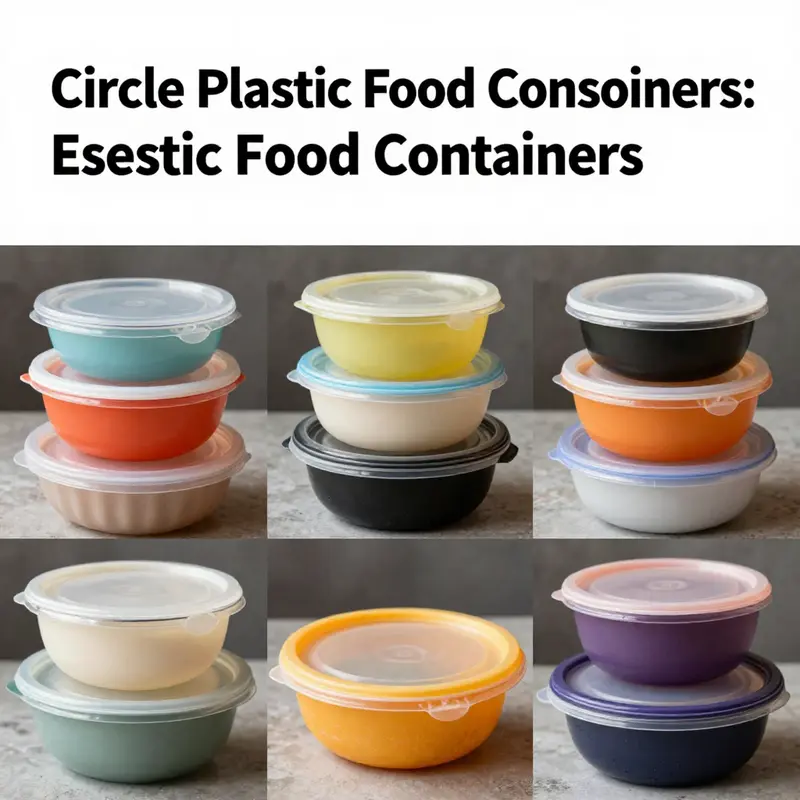
The consumer’s eye also seeks consistency in color and design, driven by a growing appetite for aesthetically pleasing, yet pragmatic, packaging. The round shape lends itself to contemporary display standards because it reads well from multiple angles in store fixtures and on kitchen shelves. A circular profile can be more visually balanced when arranged in stacks, which helps retailers optimize shelf space and improve product visibility among competing items. While color and design choices vary by brand and market, the fundamental preference for materials that tell a story of sustainability—whether through recycled content, recyclability, or biodegradability—grows louder with each new collection. In practice, this translates into a marketplace where the most successful circle plastic containers are not simply about containment; they are about enabling a circular life cycle. They survive the journey from consumer use to recycling or repurposing, ideally without becoming a constraint on the subsequent stages of the materials loop. That is the aspirational edge that many manufacturers aim to reach: a container that is not only useful but also harmonizes with the broader environmental system.
From a supply-chain perspective, this market dynamic carries implications for raw materials, processing technologies, and waste-stream integration. The push toward recycled plastics prompts a reexamination of barrier properties that protect food quality. Recycled content must meet stringent food-contact safety standards while maintaining clarity, rigidity, and resistance to wear and tear. This is not a trivial balancing act. It requires advances in polymer science, refining processes, and sometimes the introduction of barrier-enhancing additives that do not compromise recyclability. The adoption of more sustainable materials also drives process innovations, such as more efficient extrusion and molding techniques, as well as improvements in seal technology to reduce leakage without complicating end-of-life handling. In this sense, the circle becomes a test case for how manufacturers translate evolving consumer expectations into practical, scalable production that respects safety guidelines and environmental goals. The result is a marketplace that rewards materials and processes capable of delivering consistent performance, while also delivering measurable improvements in waste reduction and energy use.
Policy and standard-setting play a subtle but consequential role in shaping these trends. Consumers today are more attentive to what their packaging is made of and how it is disposed of, and many jurisdictions are refining labeling, recyclability criteria, and end-of-life requirements. Containers that can be clearly identified as food-grade, recyclable, and safe across a range of temperatures become more valuable, especially in a global supply chain where products cross many regulatory landscapes. Manufacturers who align their design decisions with evolving standards—without sacrificing functionality—position themselves to meet a broader set of market demands, from family kitchens to large-scale food service operations. In addition, the drive toward standardization—such as uniform lids and intercompatible stacking patterns—can reduce waste and simplify logistics. When round containers share predictable dimensions and reliable seals, warehouses and fleets become more efficient, and the likelihood of product damage during transit declines. The cumulative effect is a packaging ecosystem that is more resilient and better suited to the demands of modern consumption.
As consumer sentiment tilts further toward eco-conscious choices, secondary considerations become more salient. The life cycle of a circular container—from manufacturing through use to recovery—must ultimately pass through a disposal stream that minimizes environmental impact. Recyclability is a cornerstone, but so is the potential for reuse and the feasibility of refurbishing or repurposing containers for new applications. In markets where reuse is feasible, round containers can support multiple cycles with minimal loss of performance, enabling a cost-effective, sustainable loop that aligns with consumer preferences and corporate responsibility goals. The concept of a circular economy is no longer a distant ideal; it is a practical framework for product development, packaging design, and end-of-life management. The ongoing dialogue among designers, manufacturers, retailers, and waste managers propels the industry toward solutions that respect both the bottom line and the planet. This is the operating environment where circular plastic containers will continue to evolve, guided by data, demand, and a shared commitment to sustainable convenience.
To readers seeking a tangible entry point into these shifts, consider how the round form interfaces with broader packaging ecosystems that are increasingly oriented toward sustainable materials and responsible design choices. The round container does not exist in isolation. It interacts with the devices and processes around it—from automated filling lines to vacuum or steam-assisted sealing, from stacked shelves to recyclable-macrosystems that sort and reprocess post-consumer plastics. Each interaction can influence performance, cost, and environmental impact in meaningful ways. The market’s emphasis on even heat distribution and robust seals reinforces the practical value of circular designs; at the same time, the push for recycled content and more recyclable materials expands the conversation beyond mere function to responsibility. In this sense, a circular container becomes a platform for innovation—an arena where engineers, product designers, and sustainability specialists collaborate to push boundaries without compromising safety or usability.
For practitioners who are charting a course through these trends, the roadmap is shaped by several core commitments. First, prioritize round designs where the geometry supports durability, efficient heat transfer, and stacking stability. Second, lean into materials that deliver the right balance of clarity, safety, and recyclability, while exploring opportunities to increase recycled content. Third, design for end-of-life as a core criterion, ensuring that both the container and its lid are easy to recycle or repurpose within existing waste streams. Fourth, maintain a focus on consumer convenience—reliability of lids, leak resistance, and the capacity to withstand a variety of household and professional-use scenarios. Fifth, monitor and engage with standards bodies and regulatory developments to anticipate change and remain ahead of compliance concerns. When these elements converge, circular plastic containers can sustain growth while supporting a more responsible packaging ecosystem.
The conversation around circle plastic containers also touches consumer education. Clear labeling about material composition, safe heating guidelines, and end-of-life options helps shoppers make informed choices. In a marketplace that often rewards low price points and quick turnover, transparent information about durability, reusability, and recyclability can strengthen trust and loyalty. Consumers are increasingly willing to pay a premium for products that demonstrate genuine environmental stewardship and functional advantages. The challenge is to translate sustainability into tangible benefits without sacrificing the reliability that users rely on every day. The result, when achieved, is packaging that feels inevitable: a round container that is sturdy, easy to use, and respectful of the broader world in which it is employed.
In closing, the market dynamics around circular plastic food containers reveal a disciplined trend toward more resilient, efficient, and sustainable packaging. The round design, with its inherent structural and heating advantages, continues to prove its value across home and commercial environments. Material evolution—from traditional plastics to higher recycled content and more recyclable formulations—tracks a growing consumer expectation that packaging should perform while reducing environmental impact. The integration of leak-proof sealing, stackability, and clear content visibility, all within the context of a circular life cycle, positions circular containers not just as a storage solution but as a platform for responsible packaging innovation. As the sector navigates supply-chain realities, regulatory landscapes, and evolving consumer preferences, the circle remains a unifying shape—one that embodies simplicity in form and sophistication in function. The next chapters will explore how these macro trends crystallize into specific design choices, manufacturing practices, and retail strategies that shape everyday experiences with food, from refrigerator shelves to delivery carts, and back again to the consumer’s kitchen table. A circle, after all, can carry a lot more than leftovers; it can carry the promise of efficiency, safety, and sustainability into the daily rituals that define modern eating.
For readers who want to explore related packaging options that share the sustainability mindset described here, a practical resource is a collection of kraft paper bowls and related take-away packaging options available online. You can learn more about these recyclable and compostable packaging alternatives here: disposable kraft paper packaging options.
Further reading can deepen understanding of the standards and properties that underpin food container plastics. A comprehensive external resource detailing the standards, properties, and industrial applications provides a robust framework for evaluating circular plastics in real-world contexts: https://www.plasticsnews.com/article/20260223/understanding-food-container-plastics-complete-guide-to-standards-properties-and-industrial-applications
Final thoughts
In conclusion, circle plastic food containers stand out as essential tools for food storage and transport across various sectors, from cafes to large catering services. Their efficient design ensures safety and reliability, while emerging market trends highlight customer preferences for aesthetics and functionality. With diverse applications and material safety, these containers are integral to operations aiming for excellence in food service. Making thoughtful choices in packaging can not only enhance food safety but also elevate customer experience.