
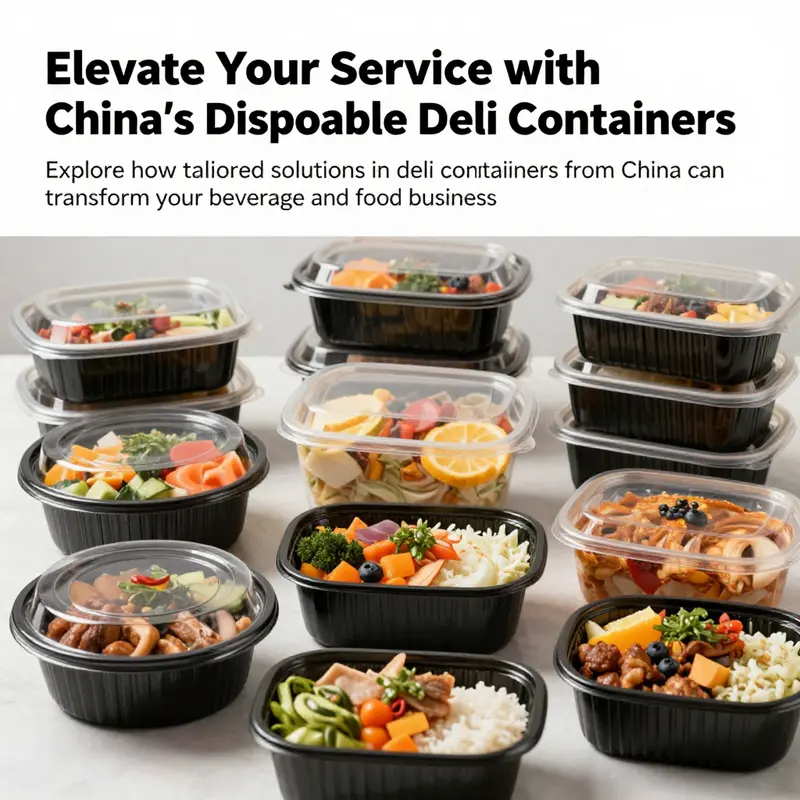
The demand for reliable, efficient, and visually appealing packaging solutions continues to soar among food service operators, from bubble tea shops to catering services. At the center of this growth are disposable deli containers, which present a practical solution for multiple beverage and food service needs. These containers, primarily manufactured in China, offer diverse functionalities and aesthetic options that can enhance customer experiences. This article explores the market landscape, delves into material specifications, examines customization trends, and assesses the environmental impact of these products. Each chapter reveals how China’s disposable deli containers can help your business thrive in an increasingly competitive marketplace.
China’s Deli Container Market: Transitioning from Convenience to Sustainable Packaging
Market Landscape and Trajectory
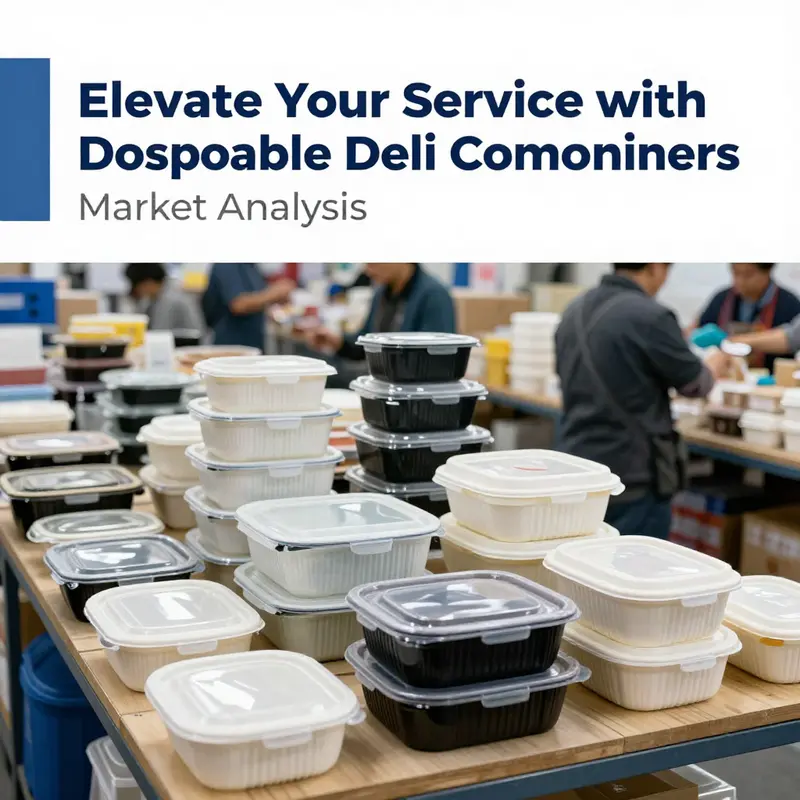
China’s disposable deli container sector sits at the intersection of massive demand and rapid transformation. Once driven primarily by the need for low-cost, durable packaging for restaurants and delivery, the market now pivots under regulatory pressure, shifting consumer values, and material innovation. The result is a complex landscape where established plastics remain important, yet renewable and compostable alternatives are gaining ground quickly.
Growth continues as urban dining and food delivery expand. Consumers expect leak-proof, hygienic containers suited for soups, salads, and mixed dishes. Standard sizes — from small sauce cups to 32-ounce soup tubs — remain essential for meal-prep, catering, and takeout. At the same time, environmental policy and corporate commitments force manufacturers to adapt. Single-use plastics still deliver strong performance, but their non-degradable nature spurs prohibitions and taxes. Firms that produce food-grade polypropylene (PP) and polyethylene terephthalate (PET) containers must now balance cost, safety, and compliance with evolving rules.
Material trends define the market’s near-term path. Traditional plastics lead in cost-effectiveness and reliability. They perform well under refrigeration and moderate heat, and they offer clarity useful for product display. Nevertheless, biodegradable pulps, PLA, and fiber-based composites are expanding rapidly. These alternatives address both regulatory bans and consumer demand for greener choices. Some newer composite containers combine a molded fiber body with a thin food-safe barrier for oil and moisture resistance. Others use specially formulated food-grade polymers that claim higher heat tolerance and recyclability.
Manufacturers are responding with a wider product palette. Injection-molded deli tubs now often include silicone gaskets and locking features for leak resistance. Lids are designed to snap securely and maintain an airtight seal, reducing spills during transport. For liquid foods and dressings, these seals are a practical must. At larger sizes, structural rigidity matters; reinforced rims and thicker walls prevent deformation when stacked or carried. On the renewable side, pulp-molded bowls and kraft paper containers with integrated lids offer an appealing look and compostability when processed correctly. For brands seeking visible sustainability, the kraft aesthetic can be a selling point, and options like a kraft paper bowl with lid provide both functionality and greener messaging.
Geography and manufacturing density shape competitiveness. Production clusters concentrate in eastern and southern provinces, where logistics and supply chains are most efficient. These clusters benefit from access to polymer suppliers, equipment makers, and export ports. Large domestic manufacturers and many small dedicated factories coexist. The smaller enterprises often supply regional clients with flexible order sizes and fast turnaround. Larger operations provide economies of scale and invest more readily in automation and material R&D.
Pricing and minimum order quantities remain central to buyers’ decisions. Low-cost production allows exporters to offer competitive per-unit prices at high volumes. Typical minimum orders can be substantial, but many suppliers accommodate tiered MOQs that favor scaling businesses. Customization for logos, colors, and bespoke shapes is widely available, although print runs increase lead times and costs. The trade-off is usually justified: branded packaging improves customer recall and reinforces a food service brand’s identity in a crowded delivery market.
Regulation exerts a decisive influence. National and regional bans or restrictions on certain plastics push foodservice operators to seek compliant alternatives. Waste-management infrastructure and municipal composting programs also determine whether a product labeled biodegradable will truly break down in practice. As rules tighten, manufacturers face the dual task of demonstrating material safety and ensuring end-of-life pathways. This dynamic elevates suppliers who can provide certified compostable materials, clear labeling, and documented performance across refrigeration, freezing, and microwave use.
Quality control and food safety are non-negotiable. Food-contact approvals, migration testing, and temperature tolerance reports are standard documentation for international buyers. Suppliers that invest in food-grade certifications and third-party testing gain an advantage in export markets. Containers must withstand handling and stacking without cracking, warp or leaching. For microwave compatibility, many firms recommend removing lids before heating, even when the bowl itself is rated for microwave use. Freezer-safe designs avoid brittle failures at low temperatures with thicker walls and resilient polymers or properly treated fiber bodies.
Functional innovation now complements green credentials. Multi-compartment trays, vented lids for steam release, and tamper-evident seals meet new use cases such as ready-meal distribution and multi-item combos. Suppliers are also introducing hybrid designs that combine a compostable outer shell with a thin, recyclable inner coating. These combinations aim to merge performance with environmental claims, yet they complicate disposal streams. Brands choosing hybrids must educate customers on proper disposal to avoid contamination of recycling or composting streams.
Supply chain resilience is a growing priority. Raw material price volatility affects margins and product selection. When polymer prices spike, demand shifts toward fiber-based or alternative polymer products. Manufacturers hedge by diversifying material sources and investing in recycling streams that convert in-house scrap back into usable feedstock. Lead times can fluctuate with seasonal demand peaks. For exporters, coordinated logistics and reliable port access determine overall competitiveness. Firms that maintain inventory buffers and flexible production schedules handle demand surges more effectively.
Market segmentation is clear. Low-cost, high-volume buyers such as large delivery kitchens continue to source traditional plastic tubs for their reliability and unit economy. Mid-market operators increasingly prefer compostable or kraft-based bowls that signal sustainability to consumers. High-end food brands look for customization, premium feel, and presentation, often opting for rigid or coated materials that resemble ceramic or porcelain in look while remaining disposable. Each segment requires different supplier capabilities, from fast-turn small-batch runs to high-volume, consistent production.
Opportunities for investors and entrepreneurs concentrate on three areas. First, material R&D remains vital. Lowering costs and improving performance of biodegradable polymers will increase adoption. Second, circular business models can reduce waste and create new revenue streams. Shared reusable container programs and efficient collection systems have shown promise in pilot cities. Third, production intelligence and automation improve margins. Advanced molding techniques, in-line printing, and robotics reduce labor costs and improve repeatability.
Risks deserve attention. Regulatory shifts can create stranded inventory for non-compliant materials. Consumer perception can change rapidly, and greenwashing accusations damage brand trust. Recycling and composting infrastructure lags in many regions, so even well-intended compostable products may not decompose properly in practice. Finally, international trade friction can affect export channels and increase tariff-related costs.
For foodservice operators considering suppliers in China, practical sourcing considerations include material certifications, documented performance claims, and transparent supply chain practices. Request sample batches and third-party test reports. Verify shipping timelines and contingency plans for raw material shortages. Confirm printing and branding capabilities, along with minimum order quantities and unit pricing at different volumes. Ask about end-of-life guidance so customers dispose of packaging correctly.
As the market evolves, success will favor firms and buyers who integrate sustainability with functionality. Containers must be leak-proof, stackable, and safe. They must also align with regulation and real-world waste systems. Those who invest in material science, improve logistics, and educate end users will capture the shifting demand. The sector will not discard convenience; instead, it will reinterpret convenience through a sustainability lens, offering solutions that perform while reducing environmental impact.
Manufacturers and brands that act now can leverage policy trends and consumer shifts. Effective strategies include diversifying material offerings, adopting certificated compostable options, and developing clear disposal messaging for end users. Strategic investments in automation and quality control provide a further edge. These moves will prepare businesses for a market where environmental compliance and consumer trust are as essential as price and performance.
For a data-driven look at regulatory forces and growth forecasts behind these dynamics, consult the recent industry analysis here: https://www.chinacx.com/industry/19715.html
For suppliers offering fiber-based options and kraft designs that match the market’s sustainability trend, consider exploring a representative product such as a disposable kraft paper bowl with lid to understand current design approaches and consumer appeal. https://greendispopack.com/product/disposable-kraft-paper-bowl-for-food-package-with-lid/
Material Performance and Specifications: Choosing the Right China-Made Deli Container
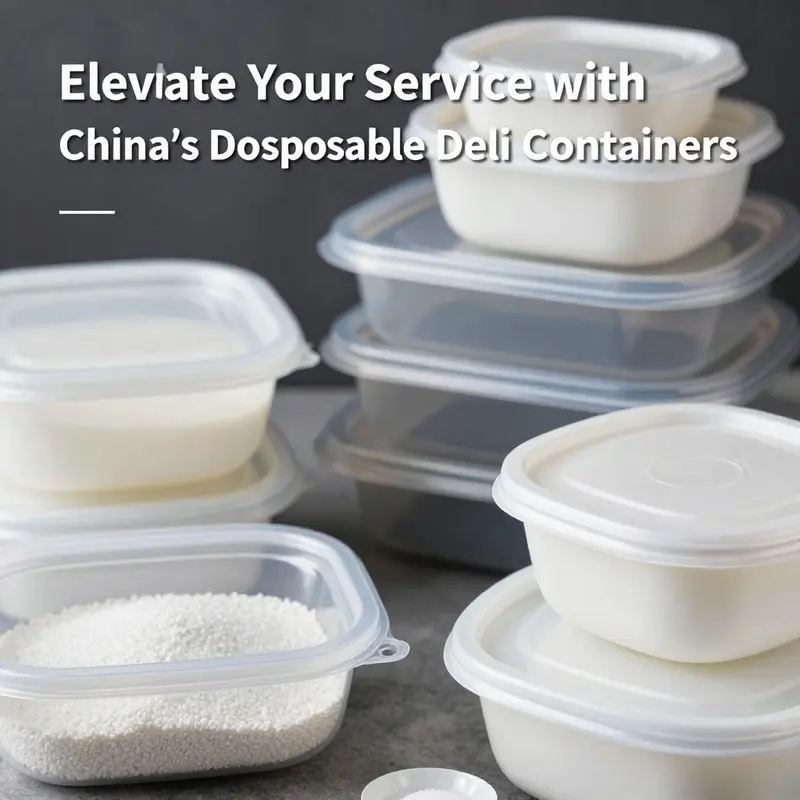
China manufactures a vast range of disposable deli containers built to meet distinct foodservice needs. Choosing the right material requires understanding how composition, temperature tolerance, seal integrity, and regulatory compliance translate into real-world performance. This chapter explains the material specifications most commonly used in Chinese production, contrasts strengths and trade-offs, and offers practical guidance for food businesses sourcing containers for takeout, meal prep, catering, and retail.
Polypropylene and crystalline PET dominate the market because they balance cost with performance. Polypropylene, commonly abbreviated as PP, delivers a flexible and durable option for everyday use. It handles hot fillings, reheating, and cold storage with confidence. Typical food-grade PP formulations in China are rated up to about 200°F (93°C). That rating makes PP suitable for microwave reheating when lids are removed, hot food service, refrigeration, and freezer storage. PP is chemically resistant and does not readily absorb food odors or flavors. It is also recyclable where local systems accept it. In practice, PP containers are often manufactured with airtight lids and stackable rims. Many designs include clear or semi-transparent walls to display contents and facilitate inventory checks. Standard PP sizes run from small sauce cups through 150ml and 300ml portions, up to larger 1500ml deli tubs. For example, a typical 300ml PP container weighs roughly 15–20 grams and incorporates a tight-sealing lid engineered to prevent leaks during transit.
Crystalline PET, or CPET, occupies the premium niche where high-temperature performance matters. CPET is processed to remain stable across a broad thermal range. It can move safely from frozen storage at around -40°F (-40°C) to oven-ready temperatures up to approximately 400°F (204°C). That remarkable stability makes CPET the preferred choice for ovenable ready meals, commercial catering packs, and applications requiring high-temperature finishing. CPET parts are more rigid than PP and tend to be heavier. The material is more costly, but its ability to withstand direct oven heat and retain structural integrity justifies the premium in many use cases. Manufacturers often use CPET for tray-style formats or containers that must survive convection ovens and high-heat transport systems.
Beyond these two plastics, eco-conscious buyers will find paperboard bowls with biodegradable linings and PLA-coated options. These alternatives use kraft paper or molded fiber as the structural material, and a thin biodegradable film or PLA lining for moisture resistance. Such constructions reduce conventional plastic use and appeal to sustainability-minded consumers. However, they come with limits. Paperboard containers typically handle cold and room-temperature foods well. Their heat resistance is lower than PP and CPET, making them unsuitable for repeated microwave heating or oven use. The lining also affects compostability and recycling; PLA linings require industrial composting conditions, and mixed-material containers can complicate recycling streams. For businesses exploring greener packaging, paperboard options can work for salads, cold sides, and dry foods. A relevant example and supplier detail for kraft paper bowls is available for those comparing formats: disposable kraft paper bowl options.
Design features play a major role alongside raw material choice. A container’s rim geometry, lid fit, and gasket specification determine performance beyond the polymer chemistry. Many Chinese manufacturers produce lids with silicone gaskets or precision snap fits that create leak-resistant seals. These systems reduce spills of soups, sauces, and dressings during delivery. Stackability is a second design priority. Containers intended for bulk shipping or catering often have reinforced stacking ribs and nesting tolerances to minimize deformation under load. Transparent walls remain popular for retail display and order-accuracy checks. Where clarity matters, PET and some clear PP grades deliver excellent optical properties.
Thermal behavior and dimensional stability deserve careful attention. PP softens near its upper service temperature. Tubs with thin walls may warp if used repeatedly for very hot contents. Buyers should request part drawings, wall thickness data, and thermal deflection ratings. CPET, by contrast, retains rigidity at higher temperatures but requires different forming and trimming processes during manufacture. When ordering CPET trays or tubs, confirm that tooling tolerances accommodate tight lid mating. A mismatched lid or slight shrinkage in transit can compromise seal integrity and result in leaks.
Food safety and regulatory compliance are non-negotiable. Leading manufacturers in China provide documentation that demonstrates compliance with international food contact standards. Relevant regulations include the U.S. FDA food-contact rules, EU Regulation 1935/2004 on materials intended to come into contact with food, and China’s GB standards such as GB 4806.7. Certification typically appears as test reports for overall migration, specific migration of regulated substances, and total metal content where applicable. Impact-resistant plastics destined for hot-fill applications may also be tested for thermal stability and volatile compounds. When vetting suppliers, request full product datasheets detailing dimensions, weight tolerances, seal performance tests, and certification copies. These documents clarify manufacturing tolerances and expected variability across production runs.
Customization is widespread among Chinese suppliers, and it matters for branding and supply chain efficiency. Common customization options include printed logos, tamper-evident lids, custom shapes, and specified wall thicknesses. Printed inks and surface coatings must themselves be food-safe. Buyers should confirm ink and label compliance and request migration test results where printing contacts food. Minimum order quantities (MOQs) often start at several thousand pieces for custom sizes or prints. Transparent lead times and mold costs should factor into procurement planning, especially for seasonal campaigns or limited-run products.
Performance testing is an essential step before large orders. Field tests should simulate actual use conditions: hot fillings, chilled transport, stacking loads, and microwave reheating cycles when relevant. Leak testing under agitation reproduces delivery scenarios. Thermal cycling between freezer and microwave reveals weaknesses that lab numbers might miss. For high-volume programs, consider pilot batches to validate tooling and material consistency. Confirm batch traceability and defect rates in writing.
Recyclability and end-of-life handling influence both sustainability claims and operational logistics. PP and CPET are mechanically recyclable where infrastructure exists. However, mixed-material assemblies such as paperboard containers with plastic windows or PLA linings complicate recycling. Many foodservice operators must balance marketing claims against local recycling capabilities. If a chain positions itself on circularity, align material choices with the recovery systems available to customers. Where recycling is limited, investments in compostable formats may be meaningful, but only when industrial composting access is confirmed.
Cost and supply-chain considerations cannot be separated from technical specifications. PP runs offer the lowest purchase price per unit for many standard sizes, providing favorable unit economics for high-turnover operations. CPET commands a premium due to specialized processing and higher resin cost. Paperboard and PLA-lined containers often carry intermediate pricing, with the environmental value reflected in margins. Buyers must factor in minimum order quantities, freight costs, and any custom tooling expenses. Chinese suppliers frequently provide FOB pricing and can advise on packaging cube, palletization, and protective packaging to reduce transit damage.
Manufacturing quality control practices ensure that specifications translate into reliable product performance. Ask suppliers about their in-house testing regimes, including dimensional checks, visual inspections, and seal integrity testing. Request process capability indices for critical dimensions when placing large orders. A supplier that can produce consistent parts with verified tolerances reduces the need for frequent inspections on arrival and lowers the risk of returns.
Finally, match material selection to specific use cases. For hot, oven-ready meals and catering trays, CPET is the clear choice. For everyday soups, salads, dressings, and reheatable portions, PP balances cost and usability. For cold salads, dry snacks, or brands emphasizing compostability, paperboard with a biodegradable lining is a viable option. In every case, validate seal designs, request regulatory documentation, and perform real-world testing. Work with suppliers to align wall thickness, lid gasket materials, and printing inks to meet both functional and brand needs.
For deeper technical details and verified specifications for polypropylene deli containers, consult the technical specifications document provided by industry sources. This resource lists dimensions, weights, packaging details, and cube measurements that reflect common Chinese manufacturing practices: https://www.scribd.com/document/502818759/Deli-PDF
How Customization Is Reshaping China’s Disposable Deli Container Market
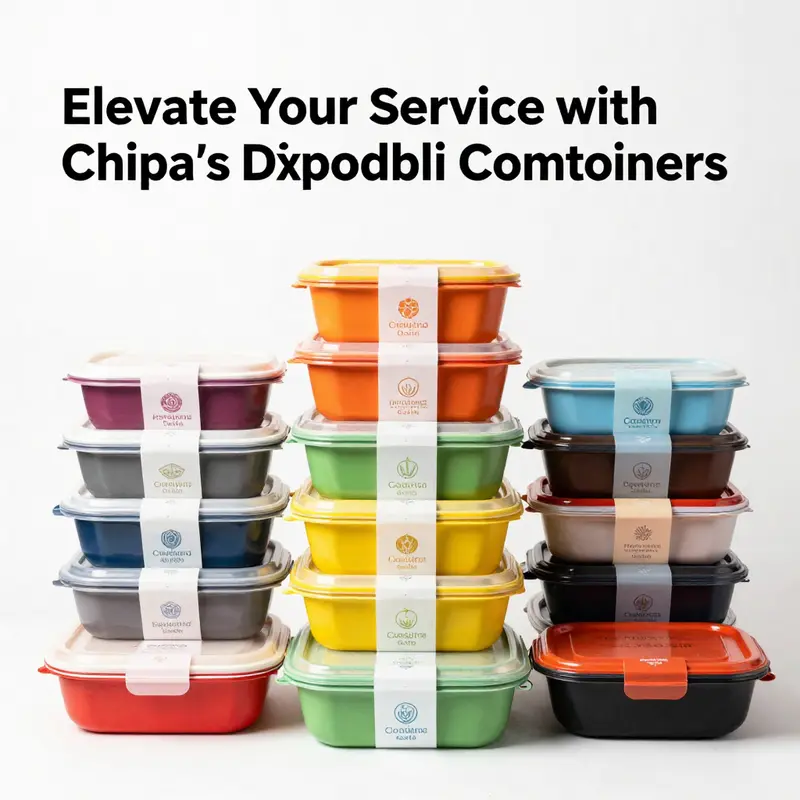
Customization has moved well beyond simple logo printing. In China, disposable deli containers now serve as active extensions of brand identity and product function. Suppliers offer printing methods from basic screen work to full-color digital processes. They also provide structural modifications and material swaps. This shift lets food businesses match packaging to menu needs, environmental goals, and customer expectations. It has changed purchasing decisions across catering, retail, meal kits, and food delivery.
Customization in this sector covers five tightly linked dimensions: visual identity, functional structure, material selection, production agility, and regulatory compliance. Each dimension influences the others. Visual choices affect material needs. Structural changes alter tooling and cost. Material choices demand specific certifications. Agile production enables testing of novel concepts. Taken together, they form a holistic approach that buyers must understand to source containers effectively.
Visual customization is rarely cosmetic alone. Brands want containers that tell a story at first glance. Options include single-color logos, metallic stamping, and edge-to-edge digital prints. Suppliers can print QR codes that link to menus or traceability data. Full-color digital printing supports photographic artwork and seasonal campaigns. These finishes support different price points and lead times. Simple silk-screen work remains economical for high volumes. Digital printing shines for smaller runs or frequent design changes. Buyers balance cost, volume, and brand impact when choosing a printing route.
Function-driven design has become a major selling point. Containers are no longer generic tubs and lids. They are engineered for specific dishes and service models. Examples include deep round bowls sized for noodle dishes, wide shallow trays for salads, and partitioned boxes for mixed meals. Lids now offer vents for hot foods, silicone gaskets for leak resistance, and tamper-evident features for delivery. Stackability and nested packing are built into geometry to save space during shipping and storage. Small structural tweaks often yield big improvements in usability and customer satisfaction.
Material customization carries both marketing and operational value. Clear polymers such as PET and PP remain popular for visibility and microwave compatibility. For eco-conscious brands, bagasse and PLA are viable alternatives. Some manufacturers blend fibers and coatings to achieve grease resistance while remaining compostable. Recycled-content plastics, often called PCR, also feature in offerings. Each material choice has trade-offs. Clarity and heat tolerance differ. Compostability requires appropriate waste streams. Certification demands testing. A close match between material attributes and end-use is essential.
Environmental compliance increasingly shapes material decisions. Many buyers insist on compostable or biodegradable options. Suppliers in China now support materials certified to international standards. Certifications align with ASTM, EN, and other criteria for industrial composting. However, certification alone does not ensure local composting availability. Buyers should evaluate end-of-life options in target markets. Paper-based bowls with waterproof coatings can reduce plastic use but still need correct disposal channels. The real sustainability win comes from pairing material choices with practical waste solutions.
Small-batch customization is a growing commercial strategy. Agile factories in China can run pilot orders without heavy upfront tooling costs. This agility helps startups and established brands test new concepts. Low minimum order quantities allow rapid iteration of design and artwork. Suppliers leverage modular tooling and digital printing to reduce setup time. That flexibility drives experimentation with limited-edition packaging and seasonal collections. For buyers, this reduces risk and accelerates time-to-market for differentiated products.
Pricing and lead time remain central considerations. Custom prints, specialty materials, and complex molds add cost and extend lead times. Buyers should plan design approval, sample runs, and regulatory testing into project timelines. Clear prototypes help avoid misalignment between brand expectations and final products. Many suppliers offer pre-production samples and short pilot runs. These steps ensure the final batch meets functional, aesthetic, and compliance requirements before full-scale manufacturing begins.
Quality control and food safety are non-negotiable. Custom inks and coatings must meet migration and food-contact standards. Suppliers typically provide material safety data and test reports. Buyers often require third-party lab testing for specific markets. Traceability through batch codes and QR-enabled tracking helps manage recalls and quality issues. Strong quality processes give buyers confidence in consistent performance across multiple runs and different manufacturing sites.
Designing for real-world service matters as much as aesthetics. Containers must perform in delivery, refrigeration, freezing, and reheating. Lids must stay secure during transit and prevent leaks. Containers often need to resist steam, oils, and acids without deforming. For breakfast, lunch, and hot soup items, vented lids and heat-resistant polymers are common. For chilled salads and desserts, clarity and condensation control are priorities. Designers and buyers should test fit, seal, and stack performance under expected handling conditions.
Brand interaction through packaging has become a subtle art. Labels, QR codes, and short messages can drive engagement and repeat business. Packaging can include instructions for reheating, allergen info, and disposal tips. Building these features into the print or mold reduces separate labeling costs. QR codes enable dynamic content, loyalty sign-up, and supply-chain transparency. Thoughtful placement of brand elements maintains readability while keeping costs manageable.
Sourcing strategies are adapting alongside customization trends. Many buyers adopt a hybrid approach. They standardize core SKUs while customizing a subset for promotions or targeted channels. This model balances cost efficiency with the ability to test new designs. Others pursue full customization for premium offerings, accepting higher costs and longer lead times. The right mix depends on brand positioning, sales volume, and the complexity of the menu.
Regulatory variations across export markets require careful planning. Compostability claims must align with recognized standards. Ink and additive approvals differ by region. Some markets require specific food-contact declarations. Working with suppliers who understand export compliance reduces risk. Detailed material specifications and pre-shipment testing are essential to avoid delays and rework.
Sustainability claims also demand documentation. Buyers should obtain certificates of compostability or recycled content. They should verify chain-of-custody documentation when specifying PCR content. Packaging audits and third-party sustainability assessments strengthen market credibility. Transparent communication about end-of-life and local waste infrastructure helps manage consumer expectations.
Choosing a supplier is both technical and relational. The best partners combine design support, flexible production, and regulatory know-how. They advise on material trade-offs, printing techniques, and structural features. A collaborative supplier can recommend cost-efficient design adjustments that preserve brand impact. Clear communication, timely samples, and proven testing protocols accelerate successful customization projects.
Customization is reshaping the competitive landscape for disposable deli containers. It supports brand storytelling, improves function, and aligns products with sustainability goals. For buyers, the challenge lies in matching customization ambition with practical constraints like cost, lead time, and local waste management. When managed thoughtfully, customization multiplies the value of packaging. It makes containers more than mere vessels. They become brand touchpoints, operational enablers, and sustainability statements all at once.
For examples of suppliers offering integrated customization services, see a manufacturing reference at the following link: https://www.quanzhouyiqiang.com/ .
You can also explore related customizable paper-based options, such as a custom print kraft paper salad bowl, to compare material aesthetics and end-of-life differences: custom print kraft paper salad bowl.
From Takeout to Circular Systems: Environmental Costs and Sustainable Shifts in China’s Disposable Deli Containers
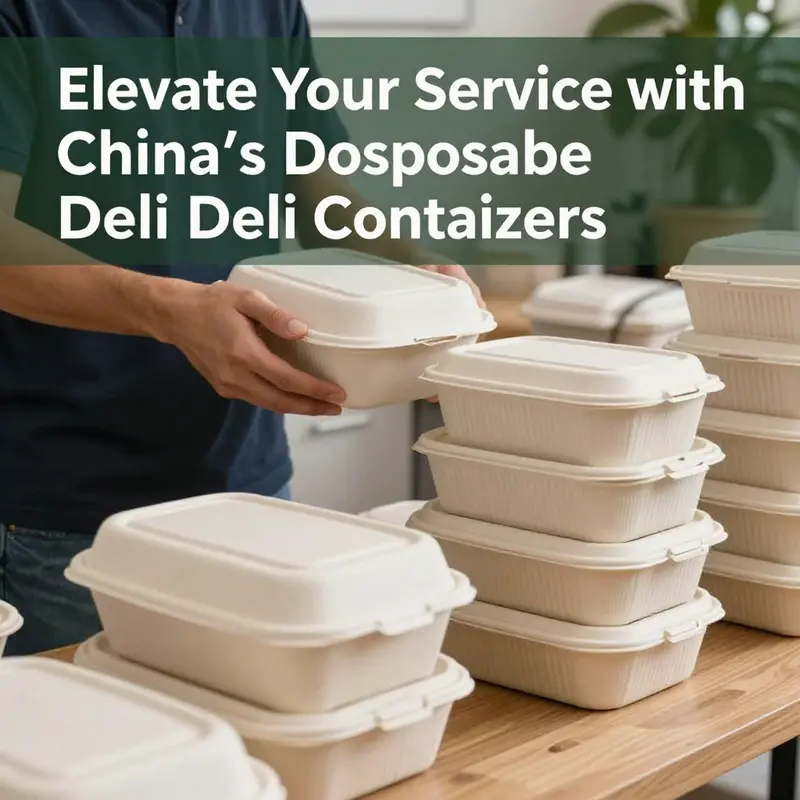
China’s disposable deli containers sit at the intersection of convenience, commerce, and environmental consequence. The nation’s vast takeout ecosystem drives enormous demand for single-use packaging. Disposable containers made from polypropylene, PET, coated paper, and molded pulp are ubiquitous in markets, restaurants, and delivery platforms. Their performance suits cold salads, hot soups, dressings, and sauces. Yet scale multiplies impact. When millions of meals are delivered every day, even small inefficiencies create large environmental burdens. This chapter examines those burdens, explores the emerging alternatives, and outlines practical pathways toward lower-impact deli packaging.
The environmental footprint of disposable deli containers begins with raw materials. Plastic resins are derived from fossil fuels. Their production emits greenhouse gases and consumes energy. Coated paper bowls require pulp processing and chemical coatings. Those coatings can hinder recycling and composting. Molded pulp uses recycled fiber but can involve energy-intensive drying. Across these material choices, two themes repeat: resource extraction and end-of-life complexity. The question is not only which material is chosen. It is how that material flows through supply chains, use cycles, and waste systems.
Waste volumes tell a stark story. Urban food delivery has exploded, and packaging waste rises with it. Single-use foodware and accessories generate high daily tonnage in dense cities. Disposable chopsticks, paper wraps, lids, and containers all add up. The cumulative emissions from producing such items translate into measurable climate impact. Moreover, much packaging ends up in landfills, incinerators, or poorly managed streams. Leakage into rivers and oceans remains a risk when collection systems are overloaded.
Material mix complicates recovery. Containers combining paper and plastic layers present a recycling challenge. Clear PET clamshells are straightforward in some recycling streams. By contrast, paper bowls with plastic liners often require separation or end up as contamination. Lids of different polymers further hinder sorting. Contamination from food residues is another barrier. A greasy container can spoil an entire bale of recyclable paper. These operational realities mean that well-intended materials do not always become recycled materials.
Policy and producer responsibility can change those flows. Extended Producer Responsibility programs are gaining traction in China. Pilot schemes have already shown measurable waste reductions. When producers share responsibility, packaging design and supply chains adapt. Producers begin to prefer mono-materials, reduce excess packaging, and invest in take-back systems. A clear price signal from EPR encourages innovation and reduces overall waste intensity per packaged meal.
Alternative materials and system-level shifts are emerging in parallel. Biodegradable kraft paper bowls made from renewable fiber are being produced at scale. When designed without plastic barriers, these bowls can be composted in industrial facilities. Some suppliers now offer paper bowls with plant-based liners that improve grease resistance. Molded fiber and pulp containers are also improving in durability and thermal performance. Where local composting exists, these materials close loops more readily than oil-based plastics.
Reusables offer the largest per-order climate advantage. Life-cycle assessments demonstrate that reusable container systems can cut emissions dramatically. A reusable program that cycles containers between customers and foodservice providers reduces per-use impact. Key enablers include durable containers that survive many cycles, efficient logistics for pickup and return, and robust cleaning protocols. Urban pilots show that reusables succeed where trust, convenience, and incentives align.
Yet reusables require coordination. They depend on standardized containers, reliable collection, and affordable laundering. For restaurants and cloud kitchens, space for storage and cleaning can be limited. For delivery platforms, routing and reverse logistics add complexity. Incentive designs must be attractive to both customers and merchants. Deposit systems, discounts, or platform credits have proven effective in pilot programs. When paired with clear hygiene standards, reusable systems can scale without compromising food safety.
Design for recyclability deserves emphasis. Choosing mono-materials, avoiding composite layers, and simplifying closures make recycling practical. Clear labeling that indicates material type and recovery route reduces consumer confusion. Lids and containers that share polymer types eliminate separation hurdles. When paper bowls are engineered for recyclability, factories can accept them more easily. Certification and third-party verification of compostability or recyclability help buyers choose credible options.
Supply chain choices matter for importers. Buyers sourcing disposable deli containers from China should assess materials, certifications, and end-of-life claims. Verify whether paper goods use compostable liners or polyethylene coatings. Request certificates for compostability where claimed. Ask suppliers about recycled content percentages and available post-consumer recycled content. Lower minimum order quantities enable trials of sustainable alternatives without locking in excessive volume. Packaging that balances performance and recoverability often offers the best net benefit.
Infrastructure and local context will determine outcomes. A compostable bowl is only compostable where industrial composting exists. A recyclable plastic tray requires a local plastics stream. In many cities, mixed-waste sorting is still evolving. Investment in municipal recycling and composting facilities is therefore as important as material innovation. Partnerships that connect producers, cities, and waste operators create the best chance of closing material loops.
Behavioral factors also influence results. Consumers need simple cues and conveniences. Clear disposal instructions, color-coded bins, and platform nudges can reduce contamination rates. Merchants benefit from straightforward sorting protocols that fit kitchen workflows. Training delivery staff to handle returns or separated waste improves recovery rates. When behavior aligns with infrastructure, the recovery rate rises and contamination falls.
Economic levers accelerate change. Differential pricing can reward low-impact materials. Subsidies for industrial composting or recycling infrastructure lower operating costs. Procurement policies that favor higher-recovery materials create predictable demand for sustainable suppliers. Conversely, surcharges on unrecyclable or heavily coated packaging make mono-materials comparatively cheaper. Such fiscal nudges can shift purchasing decisions rapidly.
Transparency in environmental claims protects integrity. Greenwashing undermines trust in sustainable alternatives. Detailed life-cycle data, third-party verification, and transparent reporting of end-of-life pathways are essential. Buyers and policymakers should require evidence, not just labels. Verified compostability, recycled content certification, and chain-of-custody documentation reduce the risk of misleading claims.
Manufacturing innovation from China is responding. Many factories now offer kraft paper bowls and molded fiber solutions with improved grease resistance. Some provide mono-material lids that ease recycling. Others incorporate post-consumer recycled content. Product portfolios are evolving to include both recyclable and compostable options. This transition reflects both domestic policy pressures and growing international demand for lower-impact packaging.
Despite progress, trade-offs remain. Biodegradable materials may require energy-intensive processing. Compostable products need appropriate facilities. Reusables demand logistical systems and repeated transport. No single solution eliminates all impacts. A portfolio approach is more resilient. By combining reduced material use, smarter design, investment in recovery infrastructure, and behavior change, the sector can lower cumulative impacts substantially.
For buyers, practical steps can make a tangible difference. Prioritize mono-material containers that match available waste streams. Choose paper bowls or molded fiber items when industrial composting or appropriate recycling exists. Where recycling is reliable, opt for recyclable PET or single-polymer PP systems. Explore reusable container trials with partners to evaluate feasibility. Negotiate packaging take-back agreements to close supply chains. Require evidence for compostability claims and check for recycled content standards.
For policymakers and platform operators, incentives must be predictable. Implementing EPR across packaging categories provides clarity for producers. Rewarding reuse trials with logistical support encourages scale. Investing in sorting technology and composting capacity unlocks the value of material innovation. Public education campaigns reduce contamination and support correct disposal.
In cities where policies, infrastructure, and market demand align, meaningful reductions already appear. Pilot programs show measurable declines in waste when producer responsibility and reusable trials are paired. Scaling those pilots requires coordinated action across industry and government. The result is not only smaller landfills and lower emissions. It is a shift toward circular systems that preserve resources while sustaining convenience.
Practical options for restaurant operators and foodservice companies include choosing certified compostable bowls, adopting standardized lids, and engaging in reusable container pilots. Importers working with Chinese manufacturers can request samples and certifications. They can evaluate logistics for returning reusable containers. They can work with local waste operators to map end-of-life pathways before committing to a material. These pragmatic steps ensure packaging decisions align with local recovery capabilities.
The packaging landscape around disposable deli containers is changing. Materials are evolving. Policies are tightening. Systems thinking is becoming mainstream. The path to lower impact is not a single technology or product. It is a coordinated effort that aligns design, supply chains, consumer behavior, and municipal infrastructure. Where those pieces come together, the environmental footprint of deli packaging can shrink significantly.
For more detailed analysis of reuse benefits and comparative life-cycle outcomes, consult the peer-reviewed review on reuse and packaging strategies at the National Center for Biotechnology Information: https://www.ncbi.nlm.nih.gov/pmc/articles/PMC7520997/. For a practical supplier option that demonstrates compostable paper bowl design with lids, see the disposable kraft paper bowl with lid product page offered by a sustainable packaging provider.
Final thoughts
As the food service industry evolves, selecting the right packaging solutions becomes paramount for operational success and customer satisfaction. China’s disposable deli containers offer an array of choices that cater to the specific needs of various businesses—from bubble tea shops to catering services. With their optimal material specifications, customization possibilities, and growing sustainability initiatives, these containers not only maintain the quality of the food but also bolster brand presence. Embracing these innovative packaging solutions is essential for enhancing service delivery while contributing to environmental sustainability.