
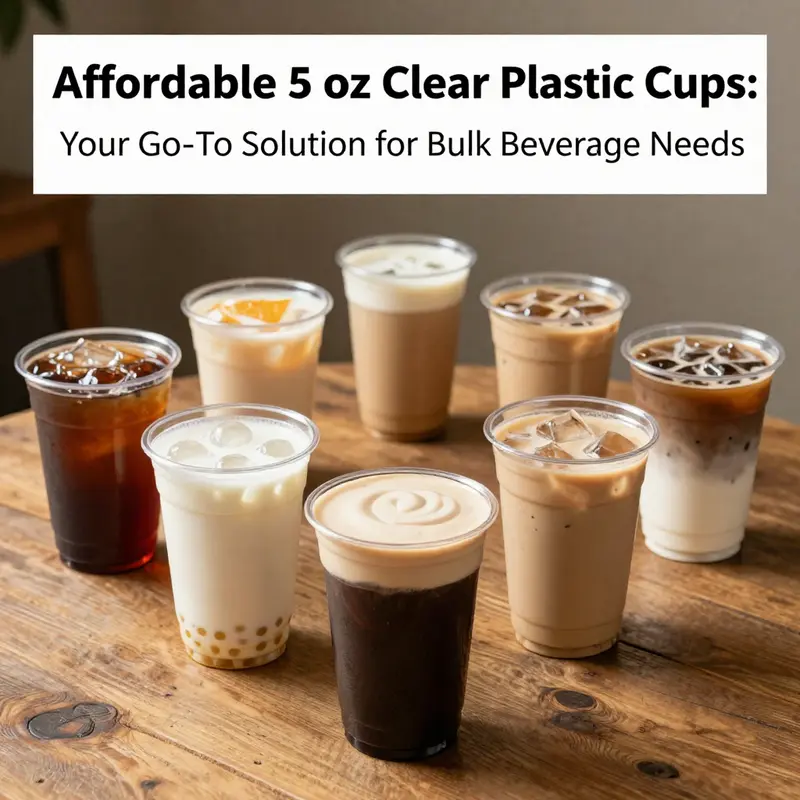
When it comes to serving beverages or snacks, clarity and convenience are key, especially for businesses like bubble tea shops, restaurants, and catering services. Enter the 5 oz clear plastic cups, a practical and economical choice. As consumers increasingly seek reliable solutions for sipping drinks, these transparent cups not only showcase the vibrant colors of beverages but also offer functionality for various scenarios. In this exploration, we’ll delve into where to source these cups affordably in large quantities, their manufacturing processes, and the economic benefits they present to your business. Each chapter provides unique insights, ensuring you understand how these cups can enhance your operations while keeping costs low.
Clear Advantage: Sourcing Cheap 5 oz Clear Plastic Cups in Bulk for Cafés, Events, and Retail

When a business grows beyond the single-box purchases of weekend projects, the practical question becomes how to secure inexpensive, reliable, and readily available 5 oz clear plastic cups in large quantities. The need is familiar to cafés, boba shops, event planners, catering outfits, and retailers who offer samples or small dessert portions. These cups, typically made from a durable, lightweight polymer, must strike a balance between cost and performance: they must be transparent enough to showcase the beverage or dessert, sturdy enough to withstand the rigors of service, and compatible with a range of lids and accessories. The most compelling answers to this challenge often lie in bulk procurement through major wholesale channels that connect buyers with factories and distributors willing to handle large orders. In this context, the journey from a handful of cups to tens of thousands of units hinges on understanding the economics of volume, the realities of global supply chains, and the practical steps to vet suppliers and manage risk.
At the core of bulk sourcing is a straightforward economics lesson: price per unit tends to fall as order quantities rise. Small businesses can often negotiate significant discounts as they move from a few hundred to several thousand pieces. The same principle applies when the objective is to stock a café’s weekly throughput or to outfit a large event with uniform serving ware. The 5 oz scale sits in a sweet spot for many operators because it is small enough for samples and petite servings, yet large enough to accommodate popular drinks like milk tea, iced coffee, and cold fruit beverages. The material most commonly used for these cups is polypropylene, a versatile thermoplastic known for clarity, rigidity, and relative chemical resistance. The BPA-free attribute is increasingly viewed as essential by buyers, who want to reassure customers about safety while maintaining a clean, pristine appearance of the cup’s walls. Clarity is not merely cosmetic; it affects how a drink is perceived by the customer, and it can influence perceived value, especially for beverages with layered colors or whipped toppings.
The appeal of purchasing in bulk is not confined to the price per cup. Large orders unlock various practical benefits that are especially relevant to operators who must manage inventory and ensure continuity of supply. For one, bulk orders often come with more predictable lead times. When a café runs promotions or hosts events, the ability to count on a steady cadence of deliveries reduces the risk of stockouts that could disrupt service. Bulk shipments also tend to ship in more economical packaging configurations, such as pallets or large cartons designed for café or event use, which streamlines receiving, storage, and restocking. Such arrangements can also support a consistent standard for branding if a business is exploring logo or color integrations on the cups and lids, though customization typically adds to the cost and may affect minimum order quantities and lead times.
To navigate bulk procurement effectively, it helps to think in terms of a supply chain that begins with raw material sourcing, moves through manufacturing, and ends with logistics and delivery. In the case of clear 5 oz cups, the raw material is a type of plastic resin that polymerizes into a transparent, rigid form suitable for cold and, with certain design features, hot beverages. The cups’ durability arises from a combination of wall thickness, rim rigidity, and the compatibility of the cup with lids and straws. A reliable supplier will routinely verify that the cups are BPA-free and meet the relevant safety standards for food contact in the jurisdictions where the product is used. Customers who plan to sell beverages in multiple countries must also consider certifications and traceability, ensuring that the cups’ manufacturing processes align with those markets’ expectations. In a global marketplace, these assurances are less about vision statements and more about verifiable documentation and testing results that can accompany a large order.
From a buyer’s perspective, the decision to select one supplier over another hinges on several factors that extend beyond unit price. Minimum order quantity, or MOQ, is the most immediate constraint. Some listings will allow a one-piece start, appealing to early-stage businesses or test runs, while others require tens of thousands of units to unlock wholesale pricing. The sweet spot, for many operators, lies in a tiered pricing structure: a modest initial commitment to bridge the gap between experimentation and scale, followed by substantial discounts as volumes climb. This tiered approach lets a buyer calibrate between cash flow, storage space, and demand forecasts, ensuring that the cost per cup does not become a liquidity bottleneck while still delivering the savings that bulk purchasing promises.
What makes the market for 5 oz clear cups particularly dynamic is the capacity of suppliers to offer not only the cups themselves but a range of compatible add-ons. Lids, sleeves, and accessories such as dome lids or straw slots extend the usability of these cups, and some vendors present bundled options that optimize the workflow of a café or event team. The availability of ready-made bundle options simplifies ordering: a business can secure cups and lids in a single SKU, reduce logistical complexity, and accelerate the checkout process. However, bundling often comes with its own trade-offs, especially when customization is involved. A brand that merely wants a clean, transparent cup for a standard beverage won’t pay for nonessential branding elements, while a business seeking a uniform look across a seasonal menu might prefer a customization option that adds branding on the cup surface. Any such customization will typically require higher MOQs and longer lead times, so it’s wise to separate the essentials from the bells and whistles when planning a bulk purchase.
Beyond the price and product attributes, the procurement journey also touches on the credibility and reliability of the supplier. A major wholesale marketplace—whether it operates through a platform that aggregates manufacturers and distributors or a direct-from-factory model—serves as a gateway to a global manufacturing ecosystem. Buyers should expect to see a range of quotations, samples, and the ability to conduct due diligence through documented certifications, production capabilities, and quality assurance protocols. In practice, this means requesting product samples, checking the wall thickness tolerance, inspecting the rim finish for comfort and durability, and confirming lid compatibility. It means verifying that the cups perform under the anticipated temperature range, whether for hot beverages that require heat-retention properties or cold drinks where condensation and clarity must be preserved. It also means reviewing the supplier’s shipping options and packaging methods to ensure that large orders arrive in excellent condition and in a timeframe that aligns with the buyer’s approval cycle and event planning schedule.
These considerations are not merely theoretical. The practical reality is that a bulk order can be a stockholding exercise that intersects with the rhythm of a business’s operations. For a café, stockouts during peak hours or holidays are a risk that can erode customer trust and yield missed revenue. For an event organizer, the ability to deliver on a promise of consistent serving ware across dozens of stations can affect the event’s overall success and the operator’s reputation. Therefore, many buyers adopt a disciplined approach to bulk sourcing: they compare multiple suppliers, solicit samples to verify translucence and strength, and evaluate the consistency of batch-to-batch performance. They also establish quality-control criteria, such as plastic clarity under different lighting conditions, absence of clouding or specks, uniform wall thickness, and the absence of odors that might transfer to beverages. In the end, the most reliable purchases are the ones backed by transparent documentation and straightforward return or replacement policies in cases of defect or non-conformance.
One practical aspect of evaluating suppliers in bulk purchases is the ability to forecast demand and align it with the supplier’s production cycles. Some manufacturers have long-standing relationships with logistics partners and can guarantee lead times even during busy periods, such as spring and summer promotional campaigns or year-end retail surges. Others might operate with shorter production runs and variable shipping windows, which can introduce planning risk unless a buyer buffers by ordering earlier or negotiating flexible terms. The balance between risk and reward often comes down to communicative alignment: both sides should articulate production capacity, potential bottlenecks, and the steps taken to mitigate risk, such as alternative manufacturing lines or backup suppliers. Because the packaging ecosystem is global, it also helps to understand how disruptions—whether geopolitical, climatic, or related to transportation—might impact the flow of inventory. A well-structured supply plan will include contingency options, ensuring that a café’s service remains uninterrupted and customers experience consistent quality.
The decision to source via a wholesale platform often includes contemplating the broader packaging ecosystem and the lifecycle of the product. For example, as consumer interest in sustainability grows, buyers may weigh the environmental footprint of plastic cups against disposable paper alternatives. Some operators may explore recyclable options, while others will consider compostable or biodegradable variants for select events. In many cases, a mixed approach makes the most sense: plastic cups for fast, high-throughput service and paper or paper-based alternatives for longer-form tasting experiences or environmentally sensitive settings. This broader framework helps a business design a packaging strategy that aligns with its brand values, customer expectations, and operational realities. It also invites ongoing dialogue with suppliers about material science, certification, and end-of-life handling, which can become a differentiator in crowded markets.
Of course, the purchasing journey is not purely transactional. It is also educational. Buyers learn to interpret product descriptions that emphasize clarity, durability, and heat tolerance, while keeping an eye on the practicalities of stacking, storage, and waste management. They study the interplay between cup thickness, wall rigidity, and lid fit, recognizing how even small differences can affect the user experience—whether a customer can comfortably sip through a straw, whether the lid seals securely enough to prevent leaks, or whether the cup’s surface remains pristine after multiple uses or during transit. In many markets, a robust bulk purchase also includes a plan for quality assurance on arrival: random sampling from the shipment, inspection for defects such as small cracks or cloudy areas, and a quick feedback loop with the supplier to address any issues promptly. This ongoing QA discipline helps sustain cost efficiency and protects brand reputation by ensuring that every servingware item meets the same baseline of reliability.
From a narrative perspective, bulk sourcing is as much about logistics as it is about design. The way cups are stacked, boxed, and shipped determines how quickly a café can receive and deploy them. Palletized shipments reduce handling costs and the risk of damage, while protective packaging minimizes breakage during transport. The packaging choice also affects waste and sustainability goals, which many operators now prioritize as part of a broader corporate social responsibility strategy. Buyers who take a holistic view—considering not only the upfront price but also the downstream implications of packaging waste, secondary packaging, and the ease of recycling—often achieve a more resilient supply arrangement that supports customer satisfaction and operational efficiency.
In the end, choosing a supplier for cheap 5 oz clear plastic cups in bulk is a blend of arithmetic and judgment. The arithmetic is straightforward: quantify demand, assess MOQs and tiered pricing, and calculate the landed cost per cup given shipping and duties. The judgment comes in evaluating the supplier’s reliability, the quality of the cup, and the compatibility of the entire serving system, including lids and branding options. It also involves a strategic look at how bulk procurement fits into a brand’s storytelling. A café that leans into a minimalist aesthetic may favor cups with near-perfect clarity and a clean rim; a boutique shop may seek branding opportunities through subtle logo embossing or coordinated packaging. The bulk purchase, when done thoughtfully, can become a keystone of service reliability and customer experience rather than a simple cost center.
For those who want a concrete point of departure, a major wholesale listing can offer a direct window into what’s possible at scale. The product pages in these marketplaces often present clear indicators of the scope of the offer: bulk purchasing options, minimum quantities, and sometimes indicative unit prices across quantity tiers. They also provide the mechanisms buyers rely on to compare, sample, and ultimately commit to a supplier—an important workflow that translates into reliable supply over months or years. If a reader follows through with a real-world inquiry, the path typically unfolds as a sequence of steps: confirm the exact size and material, request a sample to validate clarity and fit, compare MOQs and lead times across alternative suppliers, and then negotiate a price that reflects anticipated demand. As the buyer grows more confident, the relationship with the supplier deepens, and the procurement process becomes more streamlined—freeing up time and capital to focus on product quality, customer experience, and business growth.
For readers who are exploring alternatives or evaluating a broader packaging strategy, it’s worth considering the packaging landscape beyond clear plastic cups alone. As one part of a diversified offering, disposable kraft thick paper cups for hot drinks illustrate how different materials serve distinct service contexts. A related resource that outlines these options, and which can be consulted to compare performance characteristics and use cases, is the disposable kraft thick paper cup for hot drinks page. This internal reference can help teams think more holistically about how to pair servingware with beverage concepts, ensuring that the right vessel is chosen for the right moment. The broader takeaway is that bulk procurement is not merely a cost optimization exercise; it is a strategic lever that, when coordinated with product design, marketing, and operations, can elevate the overall guest experience while preserving margins.
External market information remains essential for informed decision-making. The landscape of 5 oz clear plastic cups in bulk is shaped by factors such as raw material pricing, exchange rates, manufacturing capacity, and transport costs. Buyers who stay informed about industry dynamics—without overcommitting to one supplier or one shipping route—are better positioned to respond to volatility. A widely used reference point in this space is the wholesale 5 oz clear plastic cups durable product listing, which exemplifies how a bulk offer is framed and what buyers should expect to receive in terms of product specifications and pricing. Prospective purchasers should examine the listing details, confirm material safety data, and assess whether the expected performance aligns with their beverage service requirements. The practical upshot is straightforward: when the total cost of ownership, including storage, handling, and potential waste, is weighed against the revenue earned from higher service levels and more consistent beverage experiences, the value proposition of bulk purchasing becomes compelling for businesses that serve beverages across multiple channels.
As buyers move from curiosity to commitment, the last mile of the procurement journey often involves aligning internal stakeholders, securing budget, and establishing expectations for delivery timelines. A well-defined order plan may include a schedule for reordering based on consumption rates, a forecast for seasonal demand spikes, and a contingency plan for supplier contingencies. The ability to adapt—while maintaining a consistent standard of product quality and service delivery—defines a robust bulk-sourcing approach. In this light, the decision to pursue a bulk purchase of cheap 5 oz clear plastic cups is not simply a purchase; it is a strategic alignment of supply chain resilience, customer experience, and cost efficiency that can sustain growth and competitiveness in a crowded market.
External resource: https://www.alibaba.com/product-detail/Wholesale-5-oz-Clear-Plastic-Cups-Durable_1600432874991.html
Understanding the Manufacturing Process of Cheap 5 oz Clear Plastic Cups in Large Quantities
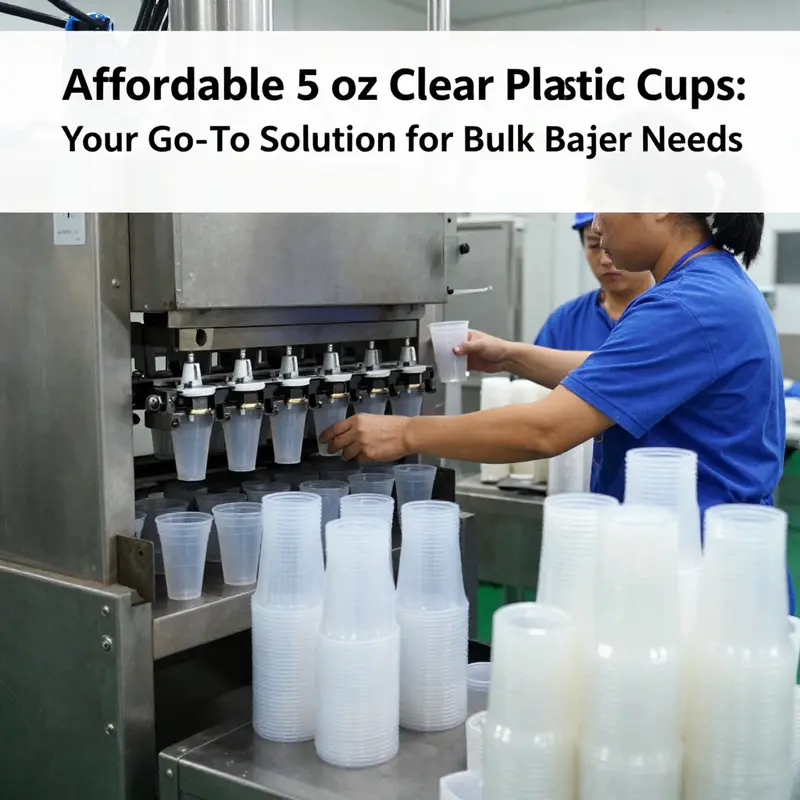
The journey of a cheap 5 oz clear plastic cup from raw resin to the hands of a distributor or a bustling beverage counter is a story of precision, scale, and highly automated systems. In the world of bulk supply, where thousands or even tens of thousands of units flow through a single day, every step is designed to minimize waste, maximize speed, and preserve the crisp clarity that customers expect from a cold drink served in a small, disposable cup. The process is not a single machine event but a tightly choreographed sequence that stretches from raw material selection to final packaging and dispatch. While the specifics can vary by plant, regional specialization, and the exact resin chosen, there is a common thread that binds the major producers: a deliberate alignment of material science, tooling, process control, and logistics to deliver consistent, cost-effective cups at scale. The core idea behind cheap 5 oz clear cups is simple in principle and sophisticated in execution: use automated, continuous production to convert inexpensive resin into a translucent, sturdy vessel that performs reliably for cold beverages, hot beverages within a narrow tolerance, and even small snacks, all while staying within tight budget margins.
Raw material choice is the foundational decision in this equation. In most large-volume operations, the resin families most commonly considered are adapted for low cost, high clarity, and compatibility with the desired beverage range. Some producers lean toward polystyrene for its superb clarity and stiffness, especially when the cups must hold chilled drinks without noticeable flex. Others favor polyethylene-based formulations or certain polypropylene blends for their resistance to cracking, ease of molding, and favorable economics when produced in high throughput lines. A central concern, regardless of the exact resin, is ensuring the resin is BPA-free and suitable for food contact. This is not merely a regulatory checkbox but a practical signal of consumer safety and brand reliability that can influence buying decisions even in very price-sensitive markets.
The initial feeding of resin into a production line is where modern manufacturing begins to look like a well-tuned orchestra. In many facilities, the resin arrives as pellets or preforms that are fed into an extrusion or injection setup. The choice between injection molding and thermoforming depends on factors such as wall thickness uniformity, the need for precise rim geometry, and the expected production volume. In a high-rate environment, injection molding is often the preferred route for a cup of fixed geometry. The molds themselves are a critical asset: they are typically custom-designed in-house or in a dedicated tooling department, enabling rapid iterations as demand patterns or material suppliers shift. This internal tooling capability reduces lead times for design tweaks when a client requests a new lid fit, a marginally different wall thickness to optimize material cost, or a slightly altered lip profile to improve sealing with a cap or lid system. The result is a suite of cup molds that can be swapped or adjusted with minimal downtime, a capability that translates directly into lower unit costs for bulk orders.
As the molten resin takes shape, the molding step is where speed and precision come together. In synchronous production environments, each machine operates with cycle times measured in seconds. A well-tuned line can produce tens of thousands of cups per hour, and the best facilities are engineered for near-continuous operation by employing multiple parallel lines, automated part handling, and integrated quality checks. The cooling phase is not merely about solidification; it is about achieving dimensional stability. Temperature, dwell time, and cooling pressure are controlled as tightly as possible so that the cups emerge with uniform wall thickness and a clear, glass-like appearance. Even small deviations in cooling can lead to warps, flash buildup around the rim, or areas of diminished transparency. That is why high-throughput plants rely on constant feedback from sensors and inline inspection cameras that scan each part as it is ejected. A single batch that contains even a handful of defects will disrupt downstream packaging and shipping, so adherence to strict quality gates at this stage is essential for maintaining overall yield.
Once the cups have been formed and ejected from the molds, the process moves into a realm where automation shines. Each unit progresses through automated handling that stacks, aligns, and prepares them for downstream packing stations. In large-scale operations, human labor remains indispensable, but the routine, repetitive tasks are largely automated to minimize labor costs and to preserve consistency. The stacks of cups may be transferred into secondary operations, such as the application of lids or the integration of tamper-evident features, depending on customer needs. Even at this stage, quality control persists. Automated optical inspection (AOI) systems scrutinize each cup for defects like flash, inconsistent wall thickness, or faint surface blemishes that might reveal as glare when light passes through the cup. Any cup that fails the AOI is diverted from the main line, reducing the risk that substandard pieces will reach the warehouse floor or the customer’s receiving dock.
Packaging and logistics complete the transformation from resin to product ready for global markets. In plants designed for bulk fulfillment, cups are automatically counted, stacked, and packed into cartons or layered into multi-wall crates that optimize shipping density. The aim is to minimize breakage while maximizing the number of units per pallet or per container. To protect the cups during transit, packaging often includes internal dividers or protective liners that distribute impact across the bundle. This attention to packaging is not just about protecting value; it also reduces damage-related waste and returns, which would erode the price advantage that large buyers seek when ordering in the tens of thousands of units at a time.
Geography plays a pivotal role in the economics of large-scale cup manufacturing. In the context of cheap 5 oz clear cups, Chinese industrial zones—especially those in the Pearl River Delta and the surrounding coastal regions—have established a well-documented advantage in resin supply, tooling capabilities, and continuous, high-velocity production. Guangdong and Fujian, for instance, have long been recognized as hubs where the flow of raw materials, design of molds, production capacity, and logistics intersect to create a streamlined value chain. The proximity of resin suppliers, local mold-makers, and port facilities reduces lead times significantly, enabling plants to offer competitive lead times alongside low per-unit costs. The interplay of these factors translates into a production cadence that can reliably deliver 15 to 30 days from order confirmation to delivery for international buyers, depending on order size, customization, and the particular port of destination. In practical terms, this means a buyer can place a large order and anticipate a predictable window for arrival, a critical consideration for event planners, beverage chains, or retailers that rely on a steady supply of cups to maintain service continuity.
The economics of scale in this space are tightly knit to the automation stack and to the choices made at the design phase. The more lines a manufacturer can operate in parallel, the more it spreads fixed costs across a higher volume of units. The result is a lower average cost per cup as monthly production increases. These efficiency gains do not come without trade-offs, however. High-volume plants must maintain rigorous process controls to ensure that throughput does not erode product quality. That means a constant balancing act: pushing line speeds to the limit while keeping hydrate and lubrication schedules for machinery, calibrating robot arms to deal with delicate cups without causing deformation, and maintaining a stable supply of clean, dry air and consistent electricity quality. In practice, this balance tends to favor facilities with robust maintenance programs, spare-part inventories, and well-trained operators who can intervene quickly if a machine veers from target parameters.
From a buyer’s perspective, understanding this manufacturing choreography helps explain the pricing and lead times that characterize bulk purchases. On the price side, the retail-looking sticker price per thousand units masks a complex calculus. The base material cost, roughly aligned with resin price swings, represents a significant portion of the total. Then there are capital investments in molds and machinery, ongoing energy consumption, maintenance, and the salaries of the skilled technicians who keep lines running. Add to that the cost of advanced quality control systems and the efficiency gains yielded by automation, and it becomes clear why large orders often achieve cost reductions not just through unit volume but through long-term supplier relationships and consistent demand that justifies the upkeep of multiple high-speed lines. International buyers typically see a price range that reflects the level of customization and the exact cup specification—things like wall thickness, transparency, and the presence or absence of lids. In widely reported industry terms, bulk orders for standard 5 oz clear cups can be priced in a way that translates to competitive ranges per 1,000 units, with additional discounts for longer contract terms or larger, ongoing commitments. The combination of scale, automation, and reliable logistics is what makes affordable options possible for large-scale beverage operations and event organizers who require tens of thousands of cups to meet demand within tight windows.
The logistical piece of the equation deserves careful attention as well. Plants that sit near major ports can capitalize on reduced shipping times and lower inland distribution costs, which further enhances the price-to-performance equation for buyers who need rapid replenishment cycles. In the southern China corridor, where port access is abundant and the supply chain is deeply integrated, manufacturers can offer shorter lead times and flexible shipping options. This is especially valuable for hospitality chains and large catering outfits that schedule seasonal promotions or multi-city deployments, where a reliable, bulk supply of cups is an operational backbone. A typical international shipment might travel by sea, with standard transit times in the range of weeks rather than days, but the predictability of those windows helps planners coordinate inventory, staffing, and promotions without the risk of a sudden supply gap. In short, the manufacturing footprint—combined with the region’s logistics infrastructure—plays a decisive role in the overall cost and reliability of large-quantity cups.
The end-to-end story is not just about how resin becomes a cup; it is about how a modern supply chain converts a raw, inexpensive material into a consistent, consumer-facing product that can be shipped worldwide with confidence. There is a feedback loop at work: customer demand informs mold design and process tuning, which in turn influences yield, quality, and ultimately price. The best suppliers treat this loop as a living system, continually refining every link from resin sourcing and mold maintenance to line speeds and packaging configurations. Such attention to detail matters when the goal is cheap cups in large quantities, because every tenth of a cent saved at one stage may compound into meaningful cost reductions across hundreds of thousands of units. It also matters for reliability and consistency, which are the invisible value drivers that turn cost-conscious purchases into dependable everyday essentials for beverage shops, event venues, and large-scale catering operations.
In essence, the manufacturing process of cheap 5 oz clear plastic cups in large quantities is a story of orchestration. It is a choreography of resin chemistry, precision tooling, automated handling, and disciplined quality assurance, all tuned to deliver a product that is clear, strong enough for its intended use, and affordable when purchased by the thousand. The geographic clustering of suppliers, the scale of investment in automated lines, and the long-standing adaptability of processes to accommodate different resin families all combine to create an ecosystem in which price and performance align. For buyers, the practical upshot is straightforward: understanding the production sequence helps explain why bulk pricing can be surprisingly favorable and why lead times can be reliably managed with the right supplier relationships. It also underscores the importance of selecting a partner who can offer consistency across orders, maintain quality at high volumes, and support the flexible shipping arrangements that large-scale operations require. As demand for economical, clear, single-use cups continues to grow in tandem with events, quick-service restaurants, and large gatherings, that aligned combination of material science, tooling, automation, and logistics remains the backbone of a cost-effective supply that can scale with confidence.
External resource for further reading on the machinery and price considerations that underpin this ecosystem can be found here: https://www.alibaba.com/product-detail/Understanding-Cheap-Plastic-Cup-Making-Machine_1600487558137.html
Clear Savings, Large-Scale Impact: The Economic Logic of Sourcing 5 oz Plastic Cups in Bulk
The appeal of cheap 5 oz clear plastic cups in large quantities rests on more than just their price tag. In busy beverage operations, the right cup is a quiet workhorse: it protects the drink, showcases its color and texture, and travels from station to customer without a spill or a leak. When you scale up purchases, the economics shift in a way that can reshape a business model. The math behind bulk sourcing reveals why many operators at fast-casual eateries, food trucks, delivery kitchens, and event catering treat these small vessels as a strategic asset rather than a mere cost of doing business. The simplest way to think about it is to translate volume into margin. If a cup that holds a cold drink can be produced at a fraction of a dollar per unit when bought in thousands, the cumulative impact on daily sales adds up quickly. A single store might not notice the difference, but a network of outlets, a high-volume cafe, or a regional event operation will feel the lift in the bottom line when the per-unit cost drops from a few tenths of a dollar to mere pennies.
What makes the economics compelling is the price structuring that accompanies bulk orders. In wholesale channels, the per-unit price falls as order quantity rises. In practical terms, that means a supplier can offer one price for a single cup and a dramatically lower price for five thousand or ten thousand units. The numbers from contemporary sourcing discussions help illuminate the landscape: bulk orders for 5 oz clear plastic cups with lids can be arranged at very favorable unit costs, with discounts that make each cup a smaller fraction of a cent more affordable as the bill of materials scales. While specifics will vary by supplier, packaging, and shipping terms, the principle remains constant: large-volume procurement unlocks leverage. The per-unit cost can dip to the vicinity of six or seven cents when orders run into tens of thousands, which translates into meaningful savings when multiplied across dozens or hundreds of thousands of cups in a year. It is no accident that operators who run a high-volume operation are particularly drawn to these opportunities. The difference between a marginally profitable week and a strongly profitable one can hinge on a few percentage points of the cost of disposables, amplified across every drink sold.
From a cost-structure standpoint, disposable cups carry a favorable profile for bulk buyers. The initial outlay is typically dominated by one-time capital costs such as the cup itself, the lid, and any required packaging or labeling. In many scenarios, these costs are predictable, especially when orders are managed with a reliable supplier network. For some operators, even the perceived extra expense of a disposable cup is dwarfed by the ongoing labor, water, and energy investments needed to maintain reusable service ware. In fast-paced service models, the cost of cleaning, sanitizing, and replacing damaged durable cups can quickly exceed the marginal cost of a disposable cup. When you add the predictability of an if-then supply chain—the ability to forecast demand, negotiate bulk discounts, and time orders to align with peak seasons—the case for bulk purchasing becomes a straightforward financial decision. The economic calculus is not merely about the sticker price at checkout; it is about the predictable, repeatable process that families a store’s daily throughput with consistent margins. In other words, the bulk cup strategy lowers the omnipresent friction in beverage service: the cost of serving more customers reliably, with fewer interruptions or price shocks.
The material story behind these cups reinforces the economic rationale. The cups are usually formed from clear, lightweight thermoplastics such as PP or PET. In practice, polypropylene (PP) is a common choice for 5 oz clear cups with lids because of its solid balance of clarity, rigidity, and cost. The clear appearance matters because product visibility drives perceived quality; noticeable scratches or cloudiness can erode consumer confidence and reduce the perceived value of the beverage inside. The material choice also supports portability and durability. A well-engineered PP cup features reinforced walls, a tight lid, and a structure that resists deformation when filled with both hot and cold beverages. For hot drinks, the cup’s wall thickness and rim design help minimize heat transfer to the consumer’s hand, while the lid’s secure fit reduces the risk of leaks during transit. These characteristics are essential for a category that thrives on impulse buys and convenience—the kind of consumption pattern that makes every saved cent at scale feel substantial.
From a safety and regulatory perspective, the emphasis on BPA-free and food-grade specifications is not merely a marketing gloss. In many markets, customers expect clear cups to be certified for food contact. The ability to demonstrate compliance—through standards and testing—reduces risk for operators who place thousands of cups into circulation weekly. A credible supplier will often provide documentation that the cups meet relevant food-safety requirements, alongside information about the resin type, the color of the clarity, and the presence or absence of additives that might affect flavor, odor, or leachables. In a high-volume environment, even a small issue—such as a marginal leakage or a bottle neck in the supply chain—can cascade into customer complaints, returns, or reputational damage. Thus, the reliability of the supply chain is just as important as the unit price. A well-chosen supplier network can deliver consistent product quality, predictable lead times, and scalable stock levels that align with weekly demand, seasonal peaks, and promotional events.
The sourcing journey often begins in a global context. China stands out as a central hub for plastic cup manufacturing, supported by a robust ecosystem of suppliers, mills, and finishing services. The global trade environment has made platforms that connect buyers with manufacturers a practical way to find competitive pricing, especially when buyers are prepared to conduct due diligence. A typical buying process might begin with a broad search, followed by targeted requests for samples, certifications, and minimum order quantities. Many suppliers are flexible on order size, offering options as modest as a single piece for testing purposes and extending to tens of thousands for full-scale campaigns. The advantage for buyers is the ability to compare not just price, but also packaging options, compatibility with lids, available colors, and any customization opportunities. The real power of bulk purchasing comes from combining a favorable price per unit with stable quality, reliable shipping, and clear communication about expectations. In times of rising raw material costs or freight constraints, having a few trusted suppliers can be the difference between meeting demand and facing stockouts that disrupt service.
Yet bulk procurement is not a passive exercise. It requires a disciplined approach to supplier selection, quality verification, and ongoing vendor management. The most prudent buyers treat the process as a multi-step partnership rather than a one-off transaction. They request product samples to verify clarity, wall thickness, and lid fit, and they seek documentation that confirms food-grade status and BPA-free composition. They also look for packaging compatibility: do the cups pair consistently with a standard lid, and does the lid seal securely enough to prevent leaks during typical delivery scenarios? The best suppliers can demonstrate consistent performance across lots and offer flexible terms such as lead-time management, partial shipments, and reorder points aligned with sales forecasts. In practice, this means developing a preferred vendor list, documenting specifications in a clear purchasing brief, and establishing a cadence of reviews to account for product enhancements or shifts in resin pricing. This is not a rigid contract; it is a dynamic alliance that seeks to preserve quality while maintaining the scarcity discipline that makes bulk sourcing cost-effective.
Another dimension of the bulk equation is the market growth that keeps the economics favorable over time. The disposable cup market has shown resilience and expansion as disposable-driven consumption persists in many regions. For example, in Brazil, the disposable cup market alone has been projected to grow from roughly 254.6 million USD in 2022 to about 392.0 million USD by 2032. Such projections underscore how a rising volume for single-use cups can erode unit costs further through economies of scale, logistics optimization, and improved manufacturing efficiency. The pattern is not limited to one country; as manufacturing capacity expands and supply chains mature, buyers can standardize products across geographies while maintaining centralized procurement controls. This creates a powerful cost-management engine for enterprises that operate across multiple locations or franchises while seeking to maintain consistent customer experiences. The implication for procurement teams is clear: scale can be the ally of price discipline when accompanied by careful governance and ongoing supplier collaboration.
In operational terms, large-scale procurement of affordable 5 oz clear cups is a strategic financial decision that touches every corner of a beverage operation. It influences menu planning, packaging design, and even the cadence of promotions. For teams that balance a heavy lunch and dinner service with an emphasis on quick service, the cup becomes a reliable, predictable input. When the daily headcount rises, the ability to forecast cup consumption with a high degree of confidence translates into better stock management, fewer last-minute emergency orders, and reduced shipping costs per unit. This predictability is especially valuable in catering or event settings where the logistics chain must carry the same product through a variety of environments, from a fixed venue to a temporary pop-up. In these contexts, the uniform compatibility of cups and lids simplifies operations and reduces the risk of mismatches that could otherwise inflate labor costs or lead to waste. It is the cumulative effect of steady demand, stable pricing, and consistent quality that elevates bulk cup procurement from a tactical task to a core strategic capability for beverage-focused businesses.
The environment, of course, remains a live concern in any discussion of disposable products. Consumers and regulators increasingly scrutinize the lifecycle of single-use plastics. Operators who rely on bulk disposable cups must navigate this landscape with a clear stance on recycling, waste reduction, and responsible packaging choices. The conversation is not about shrinking the cup footprint alone but about aligning procurement with broader sustainability goals. For many operators, this means selecting cups that are recyclable and partnering with local recycling programs or responsible waste haulers. It also means presenting customers with honest information about disposal options and the relative environmental impact of different cup materials. Balancing cost, performance, and sustainability requires a thoughtful procurement approach that recognizes the realities of high-volume beverage service while exploring every opportunity to minimize waste and maximize recovery. In practice, this might involve coupling bulk purchases with standardized, recyclable packaging and a disciplined approach to inventory rotation so that older stock is utilized before newer batches reach expiry in storage.
Ultimately, the procurement of cheap 5 oz clear plastic cups in large quantities is a decision about efficiency, resilience, and strategic focus. It is about recognizing when a disposable option offers the best combination of performance and price, and then designing a supply chain that preserves quality at scale. It is about choosing a material that is safe and reliable, and a design that travels well—from the cup to the customer’s hands without compromising appearance or usability. It is about building a partnership with suppliers who can deliver consistent results, keep promises on lead times, and support a business as it grows. And it is about acknowledging that the market itself is moving toward greater scale and sophistication. As manufacturers refine their processes and as global trade channels mature, the cost advantages of bulk sourcing can become more predictable and easier to manage, even in the face of fluctuating resin costs or transportation challenges. The strong takeaway is that, for many beverage-focused enterprises, bulk purchasing of 5 oz clear plastic cups is not just a way to save money; it is a deliberate strategy to enable reliable service, maintain price competitiveness, and sustain growth in a crowded marketplace.
For readers who want to dig deeper into the technical specifications and industrial applications of these cups, the broader literature on clear plastic cups provides useful benchmarks. Detailed technical guidance, including composition, clarity, wall thickness, and lid compatibility, helps buyers compare options and set precise acceptance criteria for supplier selection. In practice, teams use this information to draft testing protocols, run pilot orders, and establish quality gates before committing to a production-scale rollout. The cumulative effect is a procurement process that is both efficient and rigorous, ensuring that every bulk order delivers the intended value without sacrificing safety, performance, or customer satisfaction. As the market evolves and new materials and designs emerge, the core principle remains constant: bulk purchases, when executed with diligence, can unlock meaningful savings while maintaining the reliability that customers expect from a trusted beverage experience.
External reference for further technical specifics and applications: https://www.epackagesupply.com/clear-plastic-cups
Final thoughts
Selecting the right packaging can dramatically impact customer experience and operational efficiency. The 5 oz clear plastic cups available through platforms like Alibaba not only meet aesthetic and functional needs but also support budgetary considerations through competitive pricing. Understanding the sourcing channels and manufacturing processes empowers businesses to optimize their inventory and cost management strategies. By integrating these affordable cups into your beverage service, you are set to create an inviting presentation for your customers while sustaining an efficient, cost-effective operation.