
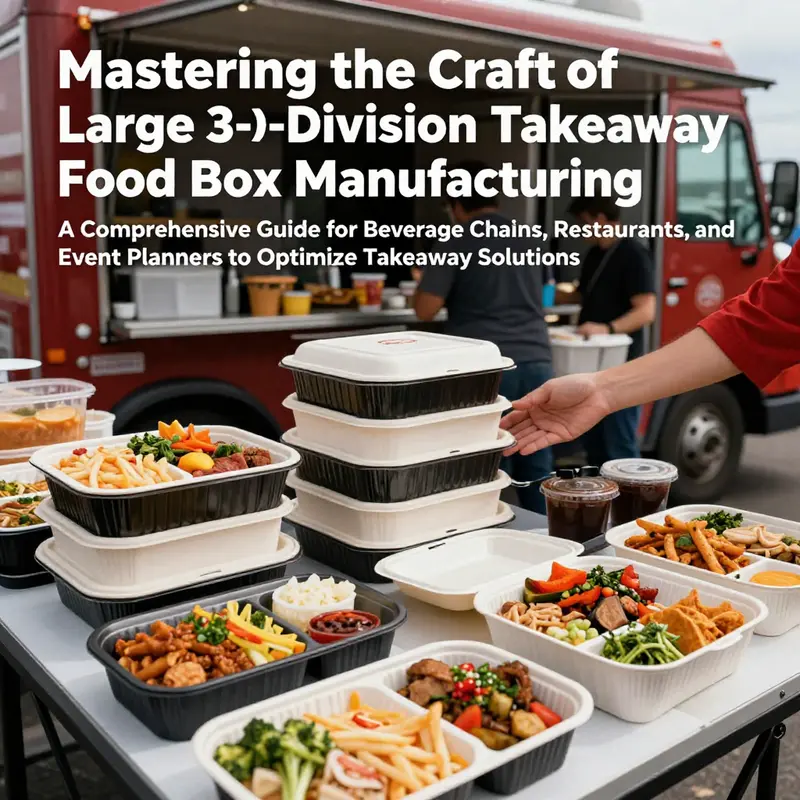
In a world where takeout is increasingly essential, finding the right packaging can significantly influence customer satisfaction and operational efficiency. This is particularly true for businesses like bubble tea shops and catering services, which require versatile and quality packaging solutions. Large 3-division takeaway food boxes have emerged as a popular choice, allowing for diverse food item placements while maintaining presentation quality. This guide will provide valuable insights on sourcing directly from manufacturers, identifying key regions in China known for quality production, and evaluating supplier capabilities to ensure your packaging aligns with your brand’s values. We’ll explore reliable platforms for procurement, and highlight the importance of sustainability in packaging to meet consumer expectations. With a strategic approach, businesses can thrive in today’s competitive foodservice market.
Direct Factory Sourcing for Large 3-Division Takeaway Boxes: Elevating Quality, Price, and Pace
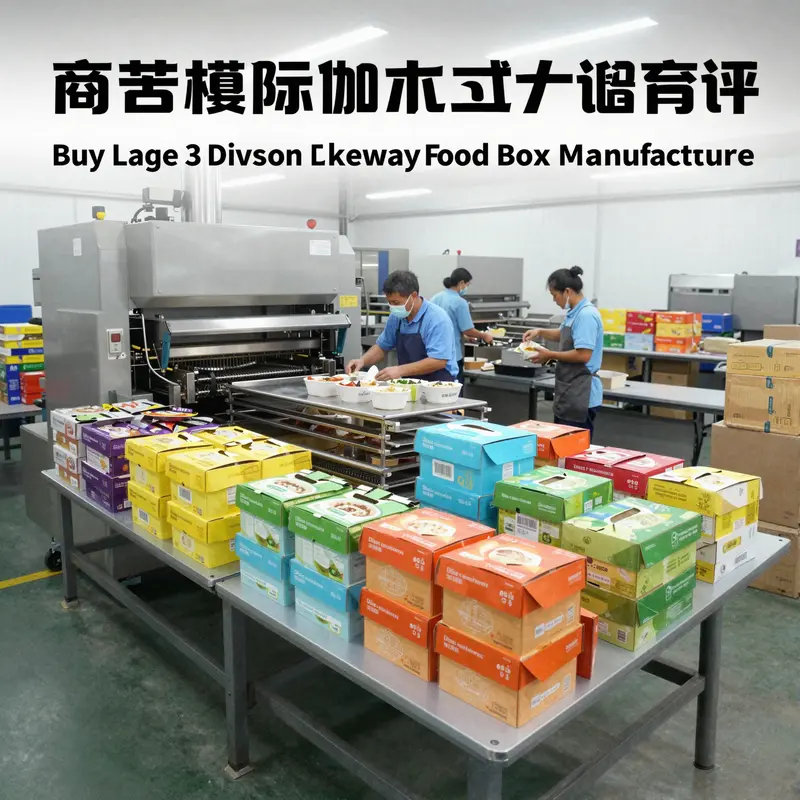
Direct factory sourcing for large 3-division takeaway boxes offers a decisive path through a market built on volume, speed, and branding demands. When a brand seeks a dependable, microwave-safe, multi-compartment container that can handle fried chicken, sides, and sauces in a single package, the choice of supplier becomes as crucial as the packaging design itself. Direct sourcing is about transparency, consistent quality, and the ability to scale while preserving product integrity.
A 2026 strategic sourcing perspective highlights that factories with verifiable footprints exceeding 10,000 square meters and a workforce above 100 provide a tangible signal of capability. Such scale suggests mature processes, stable raw-material supply, and the discipline required for rigorous quality control—attributes that matter most when margins can tighten under high-volume orders or when customization becomes a differentiator.
The geographic canvas for direct sourcing in China is well-defined and pragmatic. Guangdong Province stands out because it remains the backbone of disposable food-container manufacturing. Its integrated ecosystem—where resin suppliers, tooling, printing, and assembly lines converge near major ports like Shenzhen and Guangzhou—delivers economies of scale that translate into meaningful price advantages. In practice, buyers often observe price differentials in the 10–15% range compared with other regions, thanks to cluster synergies and shorter lead times. This advantage, however, comes with the expectation of solid supply continuity and robust quality oversight, particularly when production runs into tens or hundreds of thousands of units per month.
Beyond Guangdong, Zhejiang and Shanghai offer a complementary set of capabilities. These coastal provinces are known for their emphasis on automation, high-precision printing, and the ability to support high-mix, low-volume orders with rapid prototyping. For brands experimenting with proprietary graphics, eco-friendly materials, or unique window placements, the trade-off is often worth it: slightly higher per-unit costs for faster iteration cycles, superior finish, and a smoother transition from concept to shelf. The presence of advanced automated lines can also reduce human error in packing and labeling, a subtle but meaningful factor when every carton bears a brand mark that customers associate with reliability.
The Anhui and Fujian corridor rounds out the picture with a focus on scale and evolving green packaging capabilities. In this tier, factories typically excel at high-volume production with cost efficiency and a growing repertoire of sustainable materials. For brands seeking to demonstrate environmental stewardship while preserving price competitiveness, these regions can offer a compelling balance. It is essential, however, to vet green-material claims through credible certifications and to request samples that confirm both performance and compostability or recyclability claims under real-world conditions. The effort invested in due diligence here pays dividends in the form of consistent supply, stabilized costs, and a branding message that resonates with sustainability-minded customers.
When evaluating supplier capabilities, the lens should extend beyond capacity to the substance of a factory’s operation. Compliance with international standards—such as FDA and EU Food Contact Material (FCM) guidelines, as well as LFGB where applicable—remains non-negotiable. The ability to produce containers that are microwave-safe, durable, and capable of withstanding the rigors of cold-chain and hot-fill scenarios matters just as much as aesthetics. In addition, a growing set of buyers seeks packaging produced from sustainable inputs like sugarcane bagasse or recycled paperboard. The capacity to deliver prototypes quickly, followed by iterative refinements, can be the difference between a successful launch and a costly misstep.
Fast prototyping, then, is not a luxury but a core rationalization for direct factory sourcing. It shortens the gap between design intent and physical product, allowing decision-makers to approve a kitchen-ready box within days rather than weeks. This speed is particularly important for brands rolling into seasonal campaigns, limited-time menus, or promotional bundles where the packaging must be as dynamic as the food inside. In practice, a factory with robust design support will offer multiple iteration cycles, precise tolerances for wall thickness and lid fit, and a library of standard sizes that can be adapted for 3- or 4-compartment variants without compromising containment or leakage resistance.
To navigate this landscape with confidence, buyers typically triangulate three pillars: region, capability, and verifiable quality control. Region-wise, the Guangdong ecosystem remains the most cost-competitive for large-volume orders, provided the supplier demonstrates strong process discipline and reliable access to food-grade polypropylene (PP) resins. Zhejiang and Shanghai add the advantage of advanced automation and capable print houses, which can be decisive when brand differentiation hinges on print fidelity, color matching, and the ability to conduct on-demand customization. Anhui and Fujian offer cost efficiency and a growing green packaging narrative that aligns with sustainability goals, especially when a brand seeks to signal responsibility without sacrificing price competitiveness.
Capability-wise, the focus should be on three outcomes: compliance, sustainability, and support. Compliance means proof of certifications, traceability, and a system for batch-level testing. This includes not just the micro-level safety tests but material composition audits, packaging integrity assessments, and readiness for cross-border shipments where regulatory demands may differ. Sustainability is no longer a niche commitment; it is a channel strategy. The market rewards containers that optimize material use, minimize waste, and hold up in microwave environments without releasing unwanted odors or degrading under heat. The support element is the practical onboarding experience—from sample approval, color and print proofs, to logistics planning and post-purchase service. A factory capable of rapid prototyping paired with continuous improvement mechanisms becomes a strategic partner rather than a vendor.
The procurement journey typically begins with a technical brief and a request for samples. Buyers should ask for representative test packs that capture the full spectrum of use cases: bulk orders for fried chicken with side combos, sauces and gravies that require robust leakage resistance, and vented lids that avoid condensation while maintaining heat. This phase is where design flexibility meets manufacturing reality. The more the supplier can translate design intent into manufacturable tooling without sacrificing the integrity of branding elements, the more likely the partnership will endure volatile demand without quality drift. MOQs are important signals here. For established brands with ongoing demand, a factory that can accommodate moderate MOQs alongside scalable lines reduces the risk of overstock, obsolescence, or slow-moving inventory.
Direct factory sourcing also interacts with how a brand communicates value to customers. Price is not the sole determinant; the total cost of ownership matters. A lower unit cost can be attractive, but if a supplier’s lead times fail to meet a campaign calendar or if quality inconsistencies lead to increased returns, the apparent savings vanish. In contrast, direct factory relationships that emphasize transparent pricing, predictable delivery windows, and stable quality performance contribute to a more confident market presence. This is especially true when brands aim to standardize packaging across multiple SKUs or markets, where deviations in container performance can undermine a unified food-service experience.
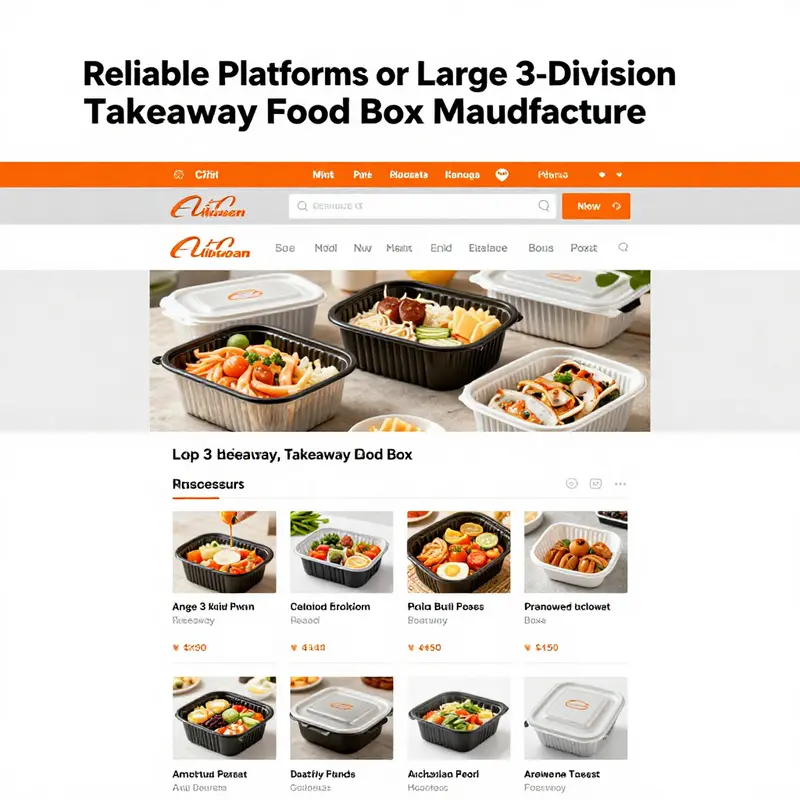
As a practical reminder, the search for direct factory partners often unfolds on major sourcing platforms that connect buyers with verified manufacturers. The core strategy is to filter for factories with documented audits, certifications, and the capability to handle customized size, color, and printing specifications. It is worth noting that platform listings vary in depth; some vendors emphasize their process controls and material science expertise, while others highlight price and speed. Buyers should triangulate assessments by requesting third-party quality reports, factory floor tours via video conferencing, and trial shipments that allow independent testing by QA teams. In conjunction with sample approvals, establishing a clear timeline for design finalization, tooling sign-off, and production ramp-up reduces surprises during mass production.
For a concrete pathway toward direct-sourced packaging while keeping a tight eye on branding, consider a packaging option that closely aligns with contemporary design language. An example of related options can be explored through the octagonal kraft paper packaging family, which demonstrates how form, function, and sustainability can converge in a single offering. See more at this related packaging page: octagonal kraft paper packaging.
Ultimately, the objective is to secure a direct factory supplier who can deliver a stable stream of large 3-division takeaway boxes, with consistent tolerances, material performance, and print quality that reinforces a brand promise. The most successful buyers develop a multi-step evaluation routine that combines audit-ready certifications, factory capacity verification, and a realistic plan for prototyping and scale. They also commit to ongoing collaboration, recognizing that packaging, like food, is a living part of the customer experience. As volumes grow and consumer expectations evolve, a well-chosen direct manufacturer becomes a partner in creative problem solving—pushing for packaging that not only protects and transports food but also speaks to the values and identity of the brand. For those ready to explore direct factory sourcing as a core strategy, platforms that connect buyers with verified factory listings remain a valuable starting point. A practical, current reference for direct factory options can be found through a widely used sourcing showroom that specializes in large, multi-compartment takeaway boxes: https://www.alibaba.com/showroom/large-3-compartment-takeaway-food-boxes.html
External resource for further context: https://www.alibaba.com/showroom/large-3-compartment-takeaway-food-boxes.html
Jiaxing’s Scale Advantage: Navigating Zhejiang’s Sourcing Core for Large 3-Division Takeaway Boxes
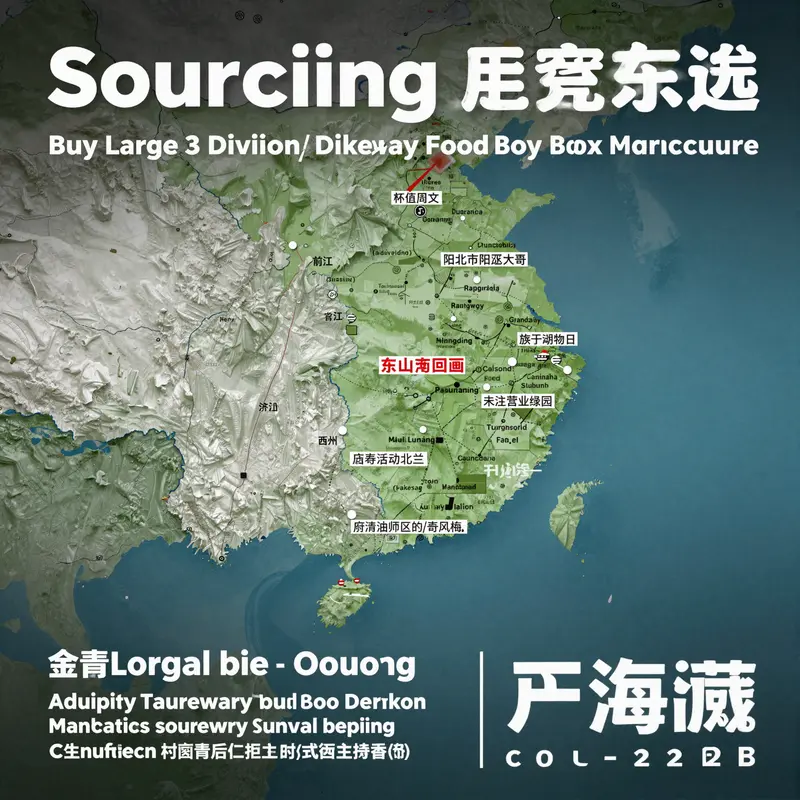
Choosing where to source large 3-compartment takeaway boxes is less a search for a single supplier than a strategic map of regional capabilities, supply chain maturity, and alignment with a brand’s environmental and operational goals. In the current landscape, Zhejiang Province—particularly the city of Jiaxing—emerges as a pivotal node for high-volume, high-quality packaging production that can reliably support the demands of modern takeaway service. The case framing comes from a 2026 Project Environmental Impact Assessment Report that highlights a major packaging facility in Jiaxing with an annual production footprint of about 10 million square meters of high-end packaging boxes. This datum is more than a number; it signals the scale, efficiency, and integrated capabilities that buyers crave when they require dependable, repeatable performance at a large order volume. The Jiaxing hub sits within the broader Yangtze River Delta ecosystem, where logistics networks, ports, and a mature materials supply chain converge to reduce lead times and stabilize prices. For buyers who need large 3-division takeaway boxes—containers engineered to hold a balanced mix of entrees, sides, and sauces while maintaining integrity during transit—that regional concentration of capability translates into tangible advantages: stable cyclic production, clearer traceability, and easier collaboration on design iterations through fast prototyping and design support. Yet the decision landscape is nuanced. The evidence places Jiaxing front and center for large-scale, high-end packaging, but it does not exist in isolation. It sits alongside other regions that contribute critical angles to a well-rounded sourcing strategy. Guangdong Province, for instance, remains a global epicenter for disposable food containers, housing more than sixty percent of China’s major producers. The region’s logistics—proximal access to major ports and well-established supplier networks—translate into cost advantages grounded in economies of scale. The literature suggests prices in Guangdong are typically 10–15% lower than in other regions, a differential that can be decisive for high-volume, price-pressured menus or promotions. However, the Jiaxing-based dynamic emphasizes reliability, customization, and the ability to scale with quality controls that align with global standards. In practical terms, this means that a brand can pursue aggressive scale in Jiaxing while leveraging Guangdong’s cost structure for certain peripheral components or components that benefit from location-specific supplier ecosystems. Beyond these two anchors, the provinces of Zhejiang and Shanghai present complementary strengths tied to automation, design flexibility, and the ability to handle low-volume, high-mix runs. Zhejiang’s ecosystem supports more advanced automation lines and a broader spectrum of customization, allowing a brand to iterate on shape, materials, and printing with shorter cycles. Shanghai, with its own network of logistics and design services, reinforces access to advanced manufacturing practices and supplier collaboration frameworks that speed time to market. Anhui and Fujian round out the spectrum with a focus on cost-effective, high-volume production and growing green packaging capabilities; this is where innovations like biodegradable and compostable solutions are taking root, offering pathways for brands seeking to align packaging choices with sustainability commitments. Taken together, the regional mosaic creates a flexible sourcing architecture rather than a single-point solution. It is in this context that a buyer can design an approach that leans into Jiaxing’s core strengths for primary production while discretely tapping into Guangdong’s cost efficiencies and Zhejiang/Shanghai’s design finesse. The practical implication for buyers is clear: begin with a direct manufacturer mindset, avoid the friction of intermediaries, and establish a clear plan for supplier capability verification, prototype support, and quality governance. Direct manufacturers provide the most transparent pricing, the earliest access to process innovations, and the fastest routes to scale. In Zhejiang and Jiaxing, the evidence points to an ecosystem capable of delivering not only large volumes but also the sophistication needed for three-compartment configurations that require precise edge sealing, even wall integrity, and reliable microwave performance. The regulatory environment matters as well. Buyers should screen suppliers against international standards such as FDA, EU FCM, and LFGB to ensure compatibility with global markets and consumer safety expectations. The materials conversation is equally important. A robust sourcing plan will consider traditional food-contact plastics such as polypropylene but also the growing interest in sustainable materials like sugarcane bagasse or recycled paperboard. The ability to prototype quickly—test-fit designs, compare wall thicknesses, and evaluate sealing methods under microwave conditions—can shave weeks off product development cycles and reduce the risk of costly reworks. In Jiaxing and its surrounding districts, factories often boast integrated capabilities that support rapid design iteration, from CAD-driven mockups to pilot runs on short-run production lines. This is a critical advantage when brands pursue a three-compartment layout that must keep sauces separated, prevent cross-contamination, and maintain heat distribution. The supply chain implication is straightforward: the closer you align with a region that emphasizes automated, scalable manufacturing, the more predictable your lead times and the more stable your capacity planning become. Yet geography is not destiny; it is a compass. An informed buyer should approach sourcing with a structured diligence framework. Start by confirming a supplier’s factory operations and capacity—ideally a facility of substantial footprint and a workforce sufficient to support sustained production without bottlenecks. Next, verify compliance with the relevant food-safety standards and the ability to produce containers that withstand typical service conditions, including microwave use, stacking loads, and dishwasher or microwave cleaning considerations. Material versatility matters as well. The growing appetite for sustainable packaging means that suppliers capable of working with recycled content or compostable blends offer longer-term value, especially as regulatory and consumer expectations tighten around environmental impact. Across the Zhejiang corridor, the strongest opportunities emerge where design and manufacturing agility intersect. This alignment of capabilities supports the rapid conversion of menu concepts into packaging formats that reinforce brand identity, enabling a kitchen-to-counter experience that feels cohesive rather than fragmented. In practice, a buyer can navigate this landscape by using direct sourcing platforms, such as widely used global procurement portals, to identify verified suppliers with demonstrated capacity for large-volume, customized packaging. The approach typically involves filtering by region, certifications, and customer reviews, then initiating direct conversations about production capacity, lead times, and quality controls. A pragmatic example of the kind of packaging that can be scaled in this ecosystem is a large 3-compartment box designed to keep items neatly separated while enabling efficient stacking for delivery fleets. For readers who want to see tangible packaging formats in action, consider exploring options such as the disposable octagonal box for restaurant food packaging, which illustrates how modern designs translate into functional takeout solutions. This kind of example helps bridge the gap between procurement thinking and product reality, demonstrating how shapes and wall configurations affect stability, heat retention, and the customer’s unboxing experience. To facilitate direct connections with manufacturers, buyers often turn to established sourcing platforms and search for terms like “eco-friendly,” “biodegradable,” or “customizable” to surface options that align with sustainability goals and branding requirements. The ultimate goal is to secure supply that is scalable, traceable, and consistent across campaigns, seasonal peaks, and geographic markets. In this context, the Zhejiang-Jiaxing axis offers a robust foundation for large-volume, high-quality large 3-division takeaway boxes. It supports the time-sensitive demands of modern foodservice while offering opportunities to experiment with green materials and design innovations that can differentiate a brand in a crowded market. The journey from idea to consistent supply is iterative: early prototyping, supplier collaboration, and continuous improvement cycles all contribute to a packaging program that not only protects food but also communicates brand values and commitment to quality. As you move from insight to action, remember that the most resilient sourcing strategies balance the predictability of Jiaxing’s scale with the adaptability offered by Guangdong’s price advantages and Zhejiang/Shanghai’s design capabilities. This balanced approach provides a path to secure, sustainable, and scalable packaging that supports large 3-division formats without compromising performance or brand integrity. Internal link reference to a tangible packaging option can help teams visualize how a box design translates into production reality: disposable-octagonal-box-restaurant-food-kraft-paper-packaging. From there, teams can map procurement steps to the broader sourcing framework, ensuring alignment with regulatory expectations, material choices, and the iterative design process that underpins successful packaging programs. For anyone seeking authoritative context on regional packaging capabilities, the Zhejiang provincial government site offers extensive documentation and official data that situates Jiaxing’s production landscape within the province’s broader development agenda. External reference: https://www.zj.gov.cn/
Vetting the Makers: How to Assess Capabilities for Large 3-Compartment Takeaway Boxes at Scale
Choosing the right supplier for large 3-compartment takeaway boxes is a decision that blends engineering discipline with strategic sourcing. The goal is not merely to find a factory that can print a label on a box, but to identify partners who can reliably produce durable, microwave-safe, food-safe packaging at large volumes, while also offering flexibility for custom designs and sustainable materials. In practice, this means looking beyond price to a constellation of capabilities that determine long-term operational success. The most efficient path starts with a direct manufacturer approach, because transparency, accountability, and tighter communication loops are easiest to maintain when there is a single point of responsibility for both design and production. The market landscape in this space is shaped by regional strengths, where large-scale factories cluster in specific provinces and leverage different differentiators. Guangdong, for example, has evolved into a global hub with integrated supply chains, where many major producers operate at scale. The significance of such regions lies not only in current capacity but in the surrounding ecosystem: the proximity to ports, mature material flows, and a network of ancillary suppliers that can shorten lead times and stabilize pricing during demand spikes. A factory footprint exceeding 10,000 square meters and a workforce surpassing 100 employees often signals a production line that can absorb high B2B throughput, absorb variability in demand, and sustain consistent output over weeks and months. When a supplier demonstrates these fundamentals, it becomes feasible to discuss large orders with confidence that delivery schedules will be met and that the output will remain within specification bands even as volumes rise. It is this scalability that distinguishes a capable partner from a one-off producer running a few lines here and there. In the evaluation, capacity is never an isolated metric; it is a proxy for the stability of the whole operation. If a plant can grow with a brand, it can absorb new runs, accommodate design changes, and respond to shifts in packaging strategy without sacrificing service levels. A reliable supplier will not only talk about capacity but will quantify it with on-time delivery metrics, production run data, and clear escalation paths when constraints arise. In this context, the source region matters because it informs how the supplier manages flow. Guangdong’s dense production landscape, including Dongguan, Shenzhen, and surrounding cities, benefits from an established ecosystem of thermoforming lines, efficient logistics, and an experienced labor pool. The outcome is a higher probability of meeting stringent delivery windows and maintaining consistent quality across large shipments. An understanding of the regional capabilities lets buyers calibrate expectations for cost, lead time, and customization options. The other end of the spectrum lies in regions known for innovation and flexibility. Zhejiang and Shanghai, with their emphasis on automation and design support, are ideal for brands pursuing bespoke shapes, printed branding, and advanced material choices. In these centers, suppliers often provide full-service solutions that cover packaging design, CMYK printing, and even mold development. This is particularly valuable for brands seeking a distinctive market presence without sacrificing efficiency. Even at low volumes, the ability to iterate quickly is a meaningful differentiator, enabling experimentation with new formats or materials while keeping a lid on unit costs. For companies exploring more sustainable packaging, Anhui and Fujian offer cost-effective, high-volume production environments with growing green capabilities. The regional emphasis here is not merely on cheaper outputs; it is about a pathway to biodegradable and compostable solutions that align with evolving environmental regulations in Western markets. The ability to source boxes made from a mix of materials—food-grade polypropylene, bioplastics, molded fiber, and bagasse—expands the design space and reduces risk of material shortages when a single supply stream is disrupted. When evaluating the capabilities of a potential supplier, certifications become a critical evidence trail. Food-safety standards such as FDA, EU FCM, and LFGB are not mere checkboxes; they reflect a culture of compliance that translates into robust internal processes. A supplier who can present certificates, test reports, and third-party analyses provides assurance that the product will meet safety requirements across borders. The conversation about materials is paired with a conversation about testing. Durability under typical use, leak resistance, microwave compatibility, and structural integrity under real-world conditions are not theoretical concerns; they are operational realities. A credible supplier should offer samples, and be willing to fund or share third-party test results that validate these performance claims. Transparency in QA processes—ranging from incoming materials inspection to in-line monitoring and final packaging checks—helps a buyer build confidence that the same standards will be upheld across thousands of units. Customization and design flexibility are often the deciding factors for brands that want to stand out in a crowded market. Leading manufacturers in the space provide end-to-end support, from packaging design to mold development and printing. The capacity to support high-mix, low-volume runs without signaling a quality deficit is a mark of mature automation and agile project management. In practice, this means not just offering a standard box but engaging in an integrated development cycle: concept sketches, CAD modeling, prototype samples, iterative testing, and final tooling built to order. The best partners approach customization with a structured method, yet retain the speed needed for market testing. Logistics and lead times are another pillar of capability. Proximity to major export hubs and established freight corridors reduce transit times and help keep project schedules intact. Guangdong’s export infrastructure, for instance, is designed to handle large, repetitive orders with reliable throughput, which matters when a brand operates on tight procurement calendars. The lead-time conversation is never abstract; it translates into concrete commitments, with defined acceptance criteria and minimum stock levels that guard against stockouts. A supplier’s performance metrics and track record illuminate how a partner behaves under pressure. Long-standing relationships with global foodservice buyers, clear reference points, and a demonstrated ability to meet demanding operational standards are strong indicators of reliability. It is not enough to win a single large order; consistency over time matters. Buyers routinely seek suppliers with high on-time delivery rates and responsive customer service. When a supplier can respond within a couple of hours to design questions or schedule changes, the project maintains momentum rather than stalling at the worst possible moment. This reliability extends to post-sale support, where issues with batches, packaging defects, or regulatory changes must be managed quickly and openly. In practice, evaluating supplier capabilities becomes a holistic exercise: you look for operational scale that supports growth, material versatility that aligns with sustainability goals, compliance that reduces regulatory risk, design flexibility that unlocks differentiation, and logistics efficiency that keeps production in step with demand. It is equally important to confirm that the supplier can operate openly and honestly, providing samples, test results, and documented quality control practices that establish trust. A practical approach to due diligence begins with a factory visit and a formal quality-system audit. It continues with a controlled sample program, where a buyer can verify packaging performance across heating, cooling, and transportation conditions. Requests for certifications, material specifications, and supplier QA data should be part of the standard package. In parallel, buyers should consider the value of a design-and-technical collaboration. If a potential partner can offer more than mass production—a collaborative approach to mold development, branding, and packaging optimization—the relationship can evolve to co-creation, which reduces time-to-market for new formats and entries into different markets. For readers who want a practical starting point in this sourcing journey, a credible route is to engage with a vetted supplier network that emphasizes direct manufacturing relations, transparent pricing, and verified capabilities. This aligns with the strategic choices discussed here and supports the broader aim of securing high-quality, scalable, and sustainable packaging that meets both operational needs and brand values in today’s competitive foodservice market. For further context on identifying and connecting with such manufacturers, consider exploring a leading sourcing platform that provides verified listings and performance data, and that can facilitate direct negotiations with facilities that meet the criteria described above. As you review potential partners, remember that the most effective supplier will be able to articulate a practical path from concept to scale, balancing cost, quality, and speed while preserving the integrity of your packaging program. If you want to see an example of how a packaging category is discussed in a sourcing context, you can visit dedicated product pages that showcase various formats and materials. The category that includes a range of large, recyclable packaging options offers a window into what a capable supplier can deliver in terms of design flexibility, material choice, and production discipline. disposable-octagonal-box-restaurant-food-kraft-paper-packaging. This kind of reference helps illustrate how a supplier supports both performance and branding in a single offer. External resources can also provide broader guidance on supplier verification and risk management, complementing the internal criteria outlined above. External resource: https://www.alibaba.com
null
null
From Footprint to Fork: Building a Truly Sustainable Large 3-Compartment Takeaway Box System
Sustainability in the manufacture of large 3-compartment takeaway boxes has moved from a virtue to a baseline expectation. Consumers increasingly judge brands by the environmental story behind their packaging as much as by the food itself. In this context, procurement and production choices surrounding a large 3-division box ripple through a company’s reputation, supply chain resilience, and operational cost structure. The shift is not merely about substituting one material for another; it is about orchestrating a system where materials, energy, design, and logistics align to minimize harm while maximizing performance. When a buyer stands at the intersection of design ambition and production reality, the decisions made in sourcing become a blueprint for how a brand will be perceived in crowded marketplaces.
The evolving landscape favors packaging that is predictable in its end-of-life behavior, traceable in its origins, and efficient in its use of energy and materials across the entire lifecycle. In practice, this means manufacturers are increasingly offering options that guarantee controlled leakage resistance, food safety, and strong branding potential without sacrificing ecological benchmarks.
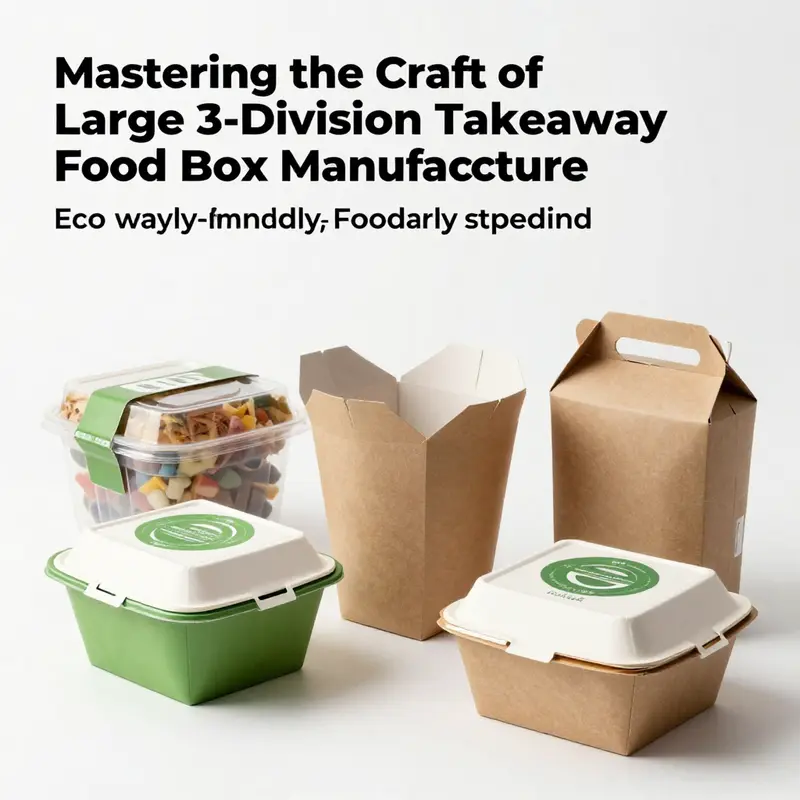
A core leap forward is the embrace of biodegradable and compostable materials that can stand up to the demands of a large, robust takeaway box. Molded pulp, often derived from responsibly sourced recycled or agricultural fibers, has gained momentum as a central option. When paired with plant-based coatings such as polylactic acid (PLA), these substrates can deliver reliable barrier properties against moisture and grease. They also position products for industrial composting streams, where the material can break down within a matter of months under proper conditions. This combination—biodegradable cardboard and plant-based coatings—addresses two crucial goals: a strong functional performance in the shop and a clearer end-of-life story for consumers who want to dispose of packaging responsibly.
Across the industry, this pairing represents a mainstream shift rather than a niche choice, signaling that sustainability has become a design constraint as much as a material preference.
Certification matters. Buyers increasingly require proof that the products come from responsibly managed sources and meet recognized ecological standards. The forest and fiber supply chain is where that credibility begins, with labels such as FSC signaling responsible stewardship of forest resources. In the composting domain, OK Compost certifications and related schemes provide assurance that products will perform as advertised in appropriate facilities. Independent verification by third parties—such as TÜV Austria or other reputable bodies—adds another layer of confidence for brands, particularly when scale is a consideration.
In short, the sustainability story of a large 3-division box rests on the credibility of its materials and the rigor of its certification framework, both of which translate into tangible consumer trust and reduced risk in the supply chain.
Alongside materials and certifications, the energy footprint of production itself is a decisive factor. Advanced plants in regions known for high automation demonstrate how smart manufacturing can curtail energy use per unit and improve raw-material utilization. Modern lines leverage precision control, lean scheduling, and real-time quality feedback to minimize waste and optimize throughput. These facilities often integrate cleaner energy sources, waste heat recovery, and water-conservation measures that collectively shrink the lifecycle emissions of each box. The result is a packaging option that not only performs technically but does so with a lighter environmental touch. For buyers, this creates an opportunity to align procurement with broader corporate sustainability targets and to report progress with credible data rather than generic statements.
Transparency in sourcing is the keystone of sustainable procurement. Buyers should seek suppliers who can map the journey of materials from feedstock to finished box, ideally with a clear account of recycled pulp inputs and certified renewable resources. Recyclability and compostability labels must be explicit, with no opaque layers that hinder end-of-life separation. The most robust supplier relationships provide lifecycle assessment (LCA) data, enabling purchasers to quantify emissions, energy consumption, and waste across the product’s entire life. This data, when integrated with supply-chain dashboards, empowers brands to identify hotspots, benchmark improvements, and set meaningful reduction targets. It also helps in communicating a credible sustainability story to customers, who increasingly expect data-backed assurances rather than marketing slogans.
Sustainability is also a matter of supply chain design. Localized production and shorter logistics chains can dramatically cut transport emissions and reduce the risk of disruptions. While it is true that large-scale manufacturing in hubs like Guangdong can offer cost advantages through economies of scale, it is equally true that the most sustainable option in many cases is to balance regional production with flexible, high-mix capabilities from Zhejiang or Shanghai. The ability to switch quickly between designs, sizes, and finishes without incurring prohibitive changeover costs supports brands that pursue customization without sacrificing sustainability. For brands that demand rapid prototyping and close supplier collaboration, these regions offer a combination of automation, skilled workforces, and robust material ecosystems that streamline both design iteration and mass production.
The regional landscape also includes Anhui and Fujian, where cost-effective, high-volume production is expanding alongside growing green packaging capabilities. This diversification matters because it creates options for procurement that align price and ecological criteria with manufacturing throughput. The ability to source from multiple regions reduces single-point risk and enables a more resilient supply chain. In addition to cost considerations, these areas are increasingly recognized for their capacity to adopt greener packaging solutions—whether through sourcing recycled pulp inputs, adopting compostable coatings, or implementing energy-saving initiatives within plants. A buyer who can navigate these regional strengths can build a supply chain that is not only affordable but also aligned with environmental standards and brand commitments.
For procurement teams, the criteria extend beyond the box itself. The packaging must clearly indicate how it should be disposed of and whether it is suitable for composting or recycling streams. Ambiguity around disposal undermines the intended environmental benefit and can create consumer frustration. Clear, consistent labeling helps ensure the end user selects the correct waste stream, which in turn supports the distribution network of recycling or composting facilities. A well-designed label strategy complements the material choice, reinforcing the sustainability narrative with practical, actionable guidance for consumers. When brands combine credible materials with transparent labeling, the public perception shifts from viewing packaging as a disposable burden to seeing it as a responsible choice that supports healthier communities and ecosystems.
In selecting suppliers, buyers increasingly demand a pathway to continuous improvement. This means prioritizing manufacturers who offer not only a successful current product but also a credible roadmap for further reductions in energy use, improvements in material efficiency, and progress toward more ambitious certifications. It also means looking for partners who can provide design support, fast prototyping, and co-creative development. The ability to simulate how a specific box design affects material usage, sealing performance, and end-of-life outcomes is a powerful differentiator in a market where margins are tight and consumer expectations are high. A supplier who can demonstrate a track record of iterative innovation, backed by transparent data, becomes a strategic ally rather than a one-off supplier.
To illustrate how these principles translate into practice, consider a buyer exploring eco-friendly packaging options: they might review a catalog of sustainable 3-compartment boxes and compare them on a matrix that includes material composition, certification status, energy intensity, and end-of-life pathways. The buyer may favor molded pulp with FSC-certified inputs and a PLA-based coating, supported by OK Compost validation. They will ask for LCA results that quantify emissions reductions relative to conventional petrochemical-based plastics and request evidence of waste reduction achieved through improved material utilization and smarter production scheduling. They will also evaluate the supplier’s ability to localize production or at least decouple logistics from prolonged international import cycles. The overarching aim is to assemble a packaging solution that reliably meets functional needs—leak resistance, microwave safety, and branding impact—while delivering a clear, verifiable statement about environmental performance to customers and stakeholders.
Ultimately, sustainability is not a separate initiative but a defining quality of the product and the process that delivers it. When brands align their packaging design with responsible material sourcing, transparent certification, energy-efficient production, and thoughtful end-of-life guidance, they create value that resonates with customers who care about the planet as much as they care about convenience. The integration of these elements—material choice, certification credibility, efficient manufacturing, clear labeling, and supply-chain transparency—transforms a large 3-compartment takeaway box from a simple container into a tangible expression of a company’s commitment to sustainability.
Final thoughts
As the demand for efficient and appealing takeaway solutions continues to grow, investing in high-quality large 3-division food boxes becomes crucial for food service establishments. By sourcing directly from reputable manufacturers, evaluating capabilities methodically, and leveraging reliable platforms for procurement, your business can ensure a competitive edge. Additionally, prioritizing sustainability not only meets consumer expectations but also contributes positively to the environment. With the right strategy and resources, you can optimize your packaging solutions to enhance customer satisfaction while promoting your brand’s values.