
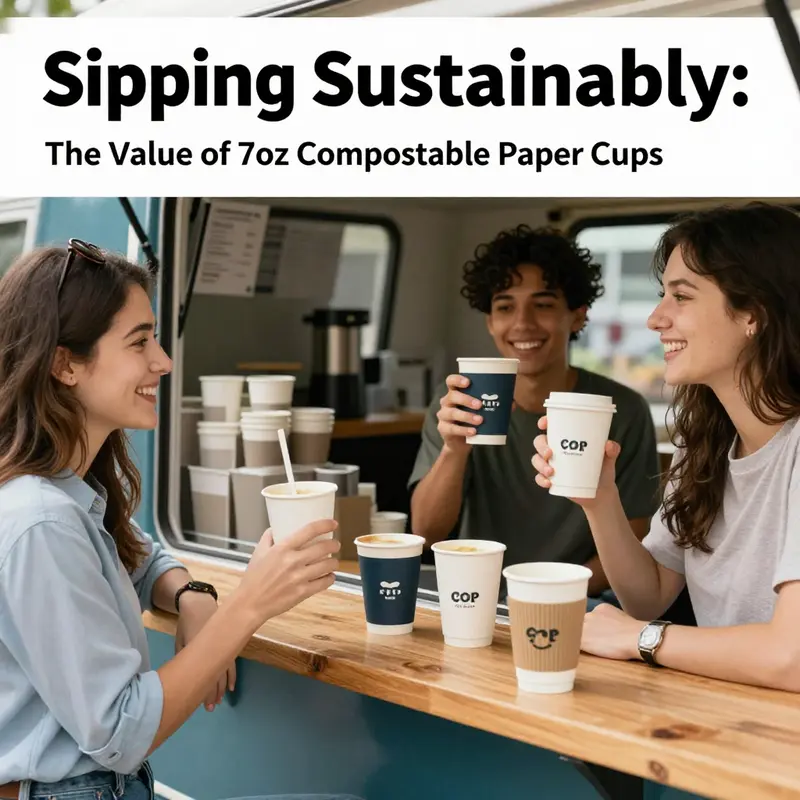
As consumers increasingly prioritize eco-friendly choices, beverage businesses are turning to sustainable options, such as 7oz compostable paper cups. These cups not only cater to the growing demand for green products but also enhance customer satisfaction across various settings, including bubble tea shops, restaurants, and catering services. Key features like their design, market availability, and environmental benefits will be discussed to help you understand why investing in these cups is a smart move for your business. In the following chapters, we will explore the essential features that make these cups stand out, delve into the market availability and pricing, and highlight their positive environmental impacts that align with today’s sustainability goals.
Small Cups, Big Commitments: How 7oz Compostable Paper Cups Align Brand, Comfort, and Conscience
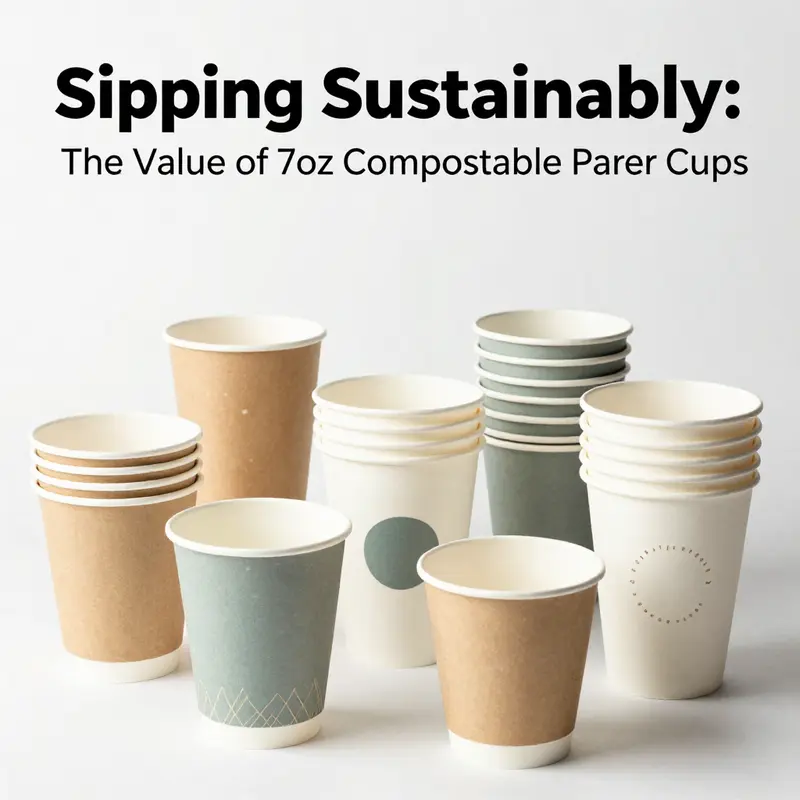
A single sip can carry a broader message than the beverage it holds, especially when the vessel itself signals a company’s values. The decision to choose a 7oz compostable paper cup sits at the intersection of practical utility and principled responsibility. For many cafés, caterers, and event organizers, this size is intimate enough to serve as a personal handhold for hot drinks, breakfast rituals, or after-meal indulgences, while the compostable nature of the cup amplifies a commitment to a healthier planet. In markets increasingly tuned to sustainability, small choices take on outsized weight. The 7oz format is particularly versatile: it accommodates single servings of espresso and macchiatos with room for a delicate crema, yet it is robust enough for a quick cold brew or a small iced tea. The cup becomes a micro-stage for a brand’s environmental promise without demanding costly add-ons or complicated logistics.\n\nThe materials behind these cups are chosen with clarity and care. They typically rely on natural pulp or plant-based fibers, steering away from petroleum-based plastics. The emphasis on renewable resources means brands can claim a cradle-to-grave narrative that aligns with consumer expectations about responsibility and transparency. Some cups feature a PLA coating to maintain structural integrity when liquids are inside, especially for hot beverages; others forego coatings to emphasize a simpler, readily compostable profile. Either way, the emphasis remains on a product that can be disposed of through standard composting channels rather than contributing to long-lived waste. This is not mere rhetoric about biodegradability. The underlying technology—whether single-wall or double-wall construction—directly informs how users experience heat, grip, and comfort during a drink that might otherwise threaten to scorch a waitstaff’s fingers or a customer’s patience. Double-wall designs, in particular, keep the beverage from transferring heat to the hand, enabling a longer, more relaxed sipping experience without a sleeve or extra protection.\n\nA critical dimension of this category is the practical feasibility of scale. The market recognizes a spectrum of production options, with minimum order quantities often starting near a thousand pieces. The economics of scale, however, is where the value proposition truly shines. Bulk orders—tens of thousands—can drive unit costs to a fraction of a cent. When a business compares the cost of a disposable cup against the broader costs of branding, waste management, and customer satisfaction, the economics increasingly favor compostable options that still meet the daily demands of busy service environments. The initial price per unit is not merely a number; it is a lever that allows operators to balance branding, customer experience, and sustainability in a single, tangible item. Even at modest volumes, the total impact is meaningful—both in terms of waste averted and the clarity of a brand’s environmental stance.\n\nCertification and safety sit at the core of consumer trust. Suppliers typically offer materials that align with food-safety standards, ensuring that the cups are safe for direct contact with liquids, including hot beverages. In many markets, compliance with FDA regulations is a baseline expectation, reinforcing confidence that the cups won’t leach harmful substances into a customer’s drink. Beyond safety, the compostability certification—often aligned with industrial composting standards such as ASTM D6400—provides a clear, verifiable pathway for end-of-life disposal. This is not just about reducing waste; it is about standardizing what happens after the cup has fulfilled its single-use life. For brand owners, having a certified product supports marketing claims and assures partners in hospitality and events that the cup can be disposed of responsibly without compromising safety or performance during use. The design and materials work together to maintain the integrity of the cup during service, so a guest experiences a reliable vessel that keeps its shape, holds heat appropriately, and presents a clean, crisp surface for branding or message display.\n\nThe practical design nuances of the 7oz size deserve close attention. Single-wall variants are lean, favoring a straightforward, recyclable packaging approach. Double-wall iterations, on the other hand, deliver enhanced insulation, making them especially suitable for beverages served at a brief pause in the day’s rhythm or during cooler seasons when a warm drink invites a longer moment of pause. Some models include a built-in handle, which raises the bar for user comfort and ergonomics, particularly in out-of-home settings where customers may be juggling bags, keys, or a busy workday. The built-in handle also broadens the audience reach to include users who may appreciate easier carrying or a more secure grip when their hands are damp or gloved. Conversely, plain, cut-and-printed cups can become blank canvases for branding, transforming a routine beverage into a memorable marketing touchpoint. The choice between coated and uncoated surfaces affects not only the look and feel but also the performance in different service contexts. Coatings can help maintain integrity for thicker beverages or longer hold times, while uncoated papers may appeal to brands prioritizing simplicity and straightforward compostability. In every case, the cup’s geometry and surface texture play a silent but essential role in the user’s moment of consumption, from the tactile grip to the ease with which the beverage can be sipped and enjoyed without distraction.\n\nCustomization remains a powerful feature of this cup category. Printing capabilities allow brands to imprint logos, color schemes, and taglines directly onto the cup, turning each disposable vessel into a portable advertisement and a reaffirmation of sustainability credentials. In practical terms, customization helps a business stand out in a crowded landscape, enabling a consistent brand experience across channels—from a café counter to a conference breakout session. In addition to branding, customization can also communicate practical information, such as composting instructions or the cup’s suitability for hot liquids, which can reduce user uncertainty and improve disposal behavior after use. The design conversation often converges on the balance between bold branding and environmental stewardship; many operators seek a look that reflects their ethos without compromising the cup’s ecological narrative. The result is a product that not only serves a function but also conveys a message—every time a customer holds the cup, a quiet, shared commitment to sustainability is reinforced. For brands exploring branded compostable cups with eco-friendly materials in bulk, the page eco-friendly-recyclable-pulp-2-4-cups-coffee-take-away-cup-holder offers detailed options that align with these goals and can help inform supplier selection and customization decisions. The link leads to a resource that highlights how design, material choice, and printing strategy come together to support a sustainable branding program while maintaining practical usability.\n\nIn practice, decision-makers weigh price against performance, reliability against supply-chain risk, and marketing impact against end-of-life responsibility. The procurement process often begins by evaluating supplier credibility, including the ability to provide consistent quality over time, transparent material declarations, and documentation of compliance with relevant safety and environmental standards. Buying decisions are rarely about a single metric; they are about a constellation of factors that, when aligned, produce a product that performs reliably in the hands of customers and contributes positively to waste reduction goals. The 7oz format offers a particularly attractive blend of intimacy and scalability: it is small enough to feel personal, yet standardized enough to support consistent ordering, storage, and distribution across multiple locations. When a café chain or event organizer considers this option, they are, in effect, choosing a vessel that reflects broader organizational priorities. They are selecting a tool that facilitates an efficient service flow, a predictable cost structure, and a clear environmental narrative that resonates with a growing segment of conscious consumers.\n\nThe storage and handling aspects, often overlooked in discussions of product features, deserve careful planning. Lightweight, compact packaging makes these cups easy to stock and transport, reducing warehouse footprint and enabling more flexible inventory management. Facility managers and procurement teams appreciate how straightforward it is to forecast demand and to anticipate seasonal fluctuations in beverage service. The ability to scale up or down without excessive logistic complexity is a critical advantage for events, pop-up shops, and seasonal coffee programs. When combined with the environmental and branding benefits, the operational convenience helps persuade stakeholders that sustainability is not an add-on but an integral component of everyday business practices. In this sense, the 7oz compostable cup becomes more than a container—it becomes a strategic asset that aligns daily operations with longer-term commitments to responsible consumption and waste reduction, while still delivering the warmth, aroma, and satisfaction that define the beverage experience. The coherence between product design, material choice, and brand messaging helps ensure that every serving reinforces a company’s broader sustainability narrative rather than undermining it through incongruent packaging decisions.\n\nAs markets continue to recognize the environmental advantages of plant-based packaging, suppliers frequently highlight a combination of favorable MOQs and cost structures that enable widespread adoption. The economics support not only large cafes and chains but also smaller venues, community events, and non-profit functions that must balance impact with affordability. The scalability of production—paired with durable performance in both hot and cold scenarios—creates a reliable pathway to rolling out a compostable program across multiple locations or events. The practical experience of service teams confirms that the right cup can reduce handling time, minimize spill risk, and improve customer satisfaction simply by providing a comfortable, familiar, and trustworthy vessel. In this way, the 7oz compostable cup functions as a conduit for consistency: a consistent customer experience, a consistent environmental message, and a consistent brand story that travels beyond the drink itself. The cup thus becomes a touchpoint for a broader culture shift toward responsible consumption, one single-serving vessel at a time.\n\nFor those seeking to explore options firsthand, consider the broader ecosystem of sourcing platforms where these cups are cataloged and compared. While price and MOQs vary by supplier, the underlying value proposition remains clear: a well-designed, responsibly manufactured cup can support both the practical needs of beverage service and the ethical commitments that modern customers increasingly expect. The conversation around these products also invites consideration of the full lifecycle—from sourcing and manufacturing to end-of-life disposal. Businesses that align their procurement with clear sustainability criteria position themselves to meet growing demand for transparent, accountable packaging choices. The result is not only a more sustainable operation but also a stronger relationship with customers who value action and integrity as much as taste and service.\n\nExternal resource: https://www.alibaba.com/product-detail/7oz-Compostable-Paper-Cups-Disposable-White_1600859722187.html?spm=a2700.19130484.0.0.1d3c3b9aJxjYqZ
Finding the Green Pocket: Availability, Pricing, and Practical Decisions for 7oz Compostable Paper Cups
A growing part of the coffee and casual dining landscape is choosing a cup that aligns with both performance and conscience. The 7oz compostable paper cup has emerged as a practical micro‑size for single‑serve experiences, from a midday pick‑me‑up to a small tasting flight at a café event. Buyers enter a market that feels surprisingly diverse for a seemingly simple item: a disposable cup that can carry hot or cold drinks, and that is designed to break down more readily than traditional plastics. Yet that practicality comes with layers of decision. The price you pay for a batch of 7oz compostable cups is not a fixed number locked to your need for a simple beverage vessel. It reflects a relationship between order volume, chosen construction, surface treatment, and the certifications that reassure customers about safety and environmental impact. What unfolds is a nuanced market where small teams can access cost efficiency through volume, while still preserving the branding and sustainability story that customers are increasingly seeking. For someone planning a purchase, it helps to picture not just the unit price but the broader economics of the supply chain, the practicalities of usage, and the responsibilities that come with committing to a compostable product line.
In the pricing landscape, the numbers can appear dramatic when viewed from a single angle. A ballpark range from suppliers places the unit cost of a 7oz compostable cup between about 0.01 and 0.09 dollars. Those figures, however, do not stand alone. For very large orders, such as 50,000 pieces, prices can dip toward the lower end of that range, roughly 0.01 to 0.06 per cup. The incentive is straightforward: the more you buy, the tighter the margins tend to become, as manufacturers spread setup costs and logistics over a larger volume. Conversely, smaller minimums—say around 20,000 pieces—tend to land closer to the mid‑range, with prices typically around 0.02 to 0.06 per cup. In practice, a supplier may offer a bulk price, for example, 0.06 per cup with a minimum order of 50,000 pieces. A few promotional or sample‑oriented offers might advertise 0.01 per piece, but those are often designed to attract attention and may not reflect the ongoing commercial pricing for a real order. These price signals underscore a simple truth: bulk buys yield savings, while smaller orders come with a premium that acknowledges the costs of set‑up, tooling, and logistics.
The market availability of 7oz compostable cups is broad, reflecting a long tail of buyers across hospitality, retail, and event sectors. A typical catalog includes single‑wall and double‑wall designs, plain white finishes, and the option for branding through printed designs. Some cups feature a PLA coating to improve grease resistance and hot‑liquid retention, while others come uncoated to emphasize compostability in line with certain waste streams. The choice between single‑ and double‑wall construction speaks to insulation needs and handling comfort. Double‑wall cups are favored where customers want to keep hands comfortable as beverages remain hot, particularly in casual settings where servers may pass steaming cups across tables. Single‑wall cups, simpler and lighter, are common where branding or cost control takes precedence and where customers expect a shorter dwell time with their drink. The decision to add a handle or to forgo it is more than a stylistic choice; it affects grip, warmth transfer, and the perception of the cup’s sturdiness during transport and at the point of service. In terms of aesthetics, buyers can lean toward plain white surfaces—subtle and versatile—or opt for printed designs that carry a brand’s color identity and messaging into the cup itself. The ability to print on cups supports a cohesive packaging story for cafés and events alike, turning a disposable item into an extension of the brand experience.
From a regulatory and safety perspective, the materials and the finishes matter. Reputable suppliers emphasize that these cups are suitable for direct contact with beverages and that their materials meet food‑safe standards. Certifications help buyers manage risk—especially when serving hot drinks. The interplay of compostability and safety is not trivial. Some compostable cups rely on plant‑based fibers and bio‑based finishes that can degrade in industrial facilities under controlled conditions. Others use coatings that are more friendly to composting processes, but the local waste stream may influence whether the cups actually contribute to a greener end‑of‑life. In practice, buyers should consider the facilities available in their area and the waste consortium they participate in. A cup may be labeled compostable, but if the local municipal system does not accept compostable packaging, the environmental benefit can be diminished. This is where transparency from suppliers about certifications and the intended composting pathway becomes essential. The best buyers ask about the lifecycle of the cup—from the moment it is pressed in the factory to the moment its remnants are returned to soil or reused as part of a municipal program. The goal is to ensure that the eco‑benefits promised by compostability translate into real outcomes for customers and communities.
Practical considerations extend beyond materials and branding into the rhythm of daily operations. A business planning to use 7oz compostable cups must think through ordering cadence, inventory management, and the cadence of reorders with suppliers. The lead times vary with construction and customization. A plain white, unprinted cup in large quantities is typically easier to stock and quicker to replenish than a fully branded, printed version that may require longer production windows. The economics of ordering also interact with storage costs. If a venue operates seasonally, it may prefer to purchase larger batches before peak periods, balancing the savings from lower unit costs against the risk of stock aging or becoming obsolete in fast‑moving menus and promotions. On the other hand, smaller cafés that test a new drink concept can begin with moderate quantities, see how customers respond to the branding and the cup’s tactile feel, and then scale up. This dynamic highlights another core truth: the 7oz size is not just a measurement of volume; it is a lever that influences menu planning, service speed, and the alignment of packaging with the customer’s perception of the drink’s quality and the business’s values.
The topic of branding and customization deserves particular attention when thinking about 7oz compostable cups. For cafés that want to cement their identity in every part of the consumer journey, printed cups can become a portable billboard. The printing process has its own economics, often tied to minimums for color runs, print area, and color fidelity. A simple one‑color print may carry a lower MOQ and shorter lead times than a full, multi‑color logotype. The result is a spectrum of possibilities: brands can preserve the clean, neutral look of a white cup with a restrained logo, or they can deploy vibrant branding that travels from the cup through the sleeve and into the packaging ecosystem. The ability to tailor the cup to a brand reduces the distance between product and message. It can convert a disposable item into a branded touchpoint that reinforces customer experience, loyalty, and recall. Buyers who pursue customization should, however, anticipate a longer runway for art proofs, sample cups, and color approvals. The flow from design to production is a microcosm of the broader trade‑off between immediacy and impact, where the fastest path may not always deliver the strongest branding payoff.
In comparing the economics of different strategic choices, it helps to anchor the discussion in the realities of usage. A coffee shop that serves a steady daily volume may negotiate robust pricing for a single‑wall, unprinted cup at a high‑volume tier, while also investing in a compact, double‑wall model for customers who want extra insulation during colder mornings or the winter season. A bakery or event‑centric business might lean more heavily on printed options to reinforce event branding, but with careful attention to the order size required to justify the design costs. For these buyers, the supply chain becomes an integrated system: choosing a cup that matches insulation needs, choosing between PLA‑coated or uncoated options based on composting access, and selecting a printing strategy that aligns with brand storytelling while remaining within the floor of favorable pricing. The result is a business‑savvy approach where packaging decisions are inseparable from operations, marketing, and sustainability goals.
A practical step for buyers is to map anticipated daily usage against available MOQs and pricing bands. If a café estimates a daily need of roughly 600 cups, and the supplier’s MOQ sits at 20,000 cups, the buyer faces a decision: absorb the higher per‑cup price associated with a smaller run, or embrace a larger purchase and allocate the surplus to future campaigns, catering, or wholesale channels. In parallel, the buyer should evaluate logistics costs, including freight and handling, which can be a meaningful share of the total cost when ordering small batches. The economics of scale extend beyond the price per unit; they shape the total cost of ownership for packaging across a season or a year. The most successful buyers are those who view their cup purchases as a strategic lever—one that affects not only the bottom line but also how a business communicates its environmental commitments and delivers a consistent customer experience.
The market also presents opportunities for buyers to diversify risk by working with more than one supplier. A diversified supplier base can help with continuity during supply shocks, seasonal demand shifts, or changes in regulatory expectations around compostability labeling. It can also enable access to a mix of cup styles—some for front‑of‑house service and others tailored for catering or events—while maintaining a coherent sustainability narrative. When risk is spread across several trusted partners, a business can maintain service levels and flexibility without compromising the core values that define its brand. In conclusion, the market for 7oz compostable cups is large enough to offer competitive pricing and varied construction options, yet intimate enough that thoughtful choices about volume, design, and waste pathways can yield meaningful advantages for a business’s operations and its environmental story. The right combination of MOQs, wall construction, coating, and branding is not just about cup selection; it is about designing a packaging approach that supports steady service, clear branding, and responsible waste practices over time.
For teams prioritizing bulk procurement and branding, there is a practical path worth considering: wholesale take-away cups with lids. This option reflects a learning from many operators who want to streamline ordering, reduce the friction of individual item decisions, and maintain a consistent customer experience from the moment a drink is handed over the counter to the moment a person leaves the shop. The ability to bundle a cup with a lid can improve portability and spill resistance, which in turn supports off‑premises service and event catering. The added value is not just in convenience; it also reinforces a cohesive packaging solution that can be customized and scaled alongside other eco‑friendly packaging choices. In navigating this landscape, buyers should remember that plastic‑free and compostable options are not miracles; they are part of a broader commitment to environmental responsibility that requires alignment with the local waste infrastructure, honest labeling, and transparent communication to customers. The balance between cost, performance, and sustainability remains central to a successful buy‑decision for 7oz compostable cups.
External resources can offer helpful guidance as buyers compare options and interpret certifications. For a broader understanding of how packaging choices align with food safety and waste management, consider consulting a reputable external source on food packaging and labeling standards. This can help ensure that your selection not only meets your budget and branding goals but also aligns with regulatory expectations and community composting capabilities. For further reference, see the external resource at the end of this discussion.
As the market continues to evolve, the core message remains consistent: the 7oz compostable cup is not simply a cost item; it is a conduit for brand values, customer experience, and responsible waste management. It offers a practical size for a broad range of drinks, a spectrum of material and construction choices to suit diverse settings, and a pricing landscape that rewards scale. Whether a café is testing a new seasonal beverage, a corporate event is aiming for a cohesive eco‑story, or a small bakery is expanding into take‑out service, these cups provide a tangible way to align daily operations with broader commitments to sustainability. The best purchasing decisions emerge when buyers combine careful planning with a clear vision of how packaging supports service quality, brand perception, and environmental responsibility over time. And as markets continue to respond to consumer expectations for greener products, the 7oz compostable cup stands out as a practical, adaptable, and increasingly common component of a modern, responsible beverage experience.
Internal link for practical procurement considerations: Wholesale take-away cups with lids.
External resource: https://www.fda.gov/food-packaging-labeling
From Footprint to Footprint: Navigating the Environmental Promise of 7oz Compostable Paper Cups
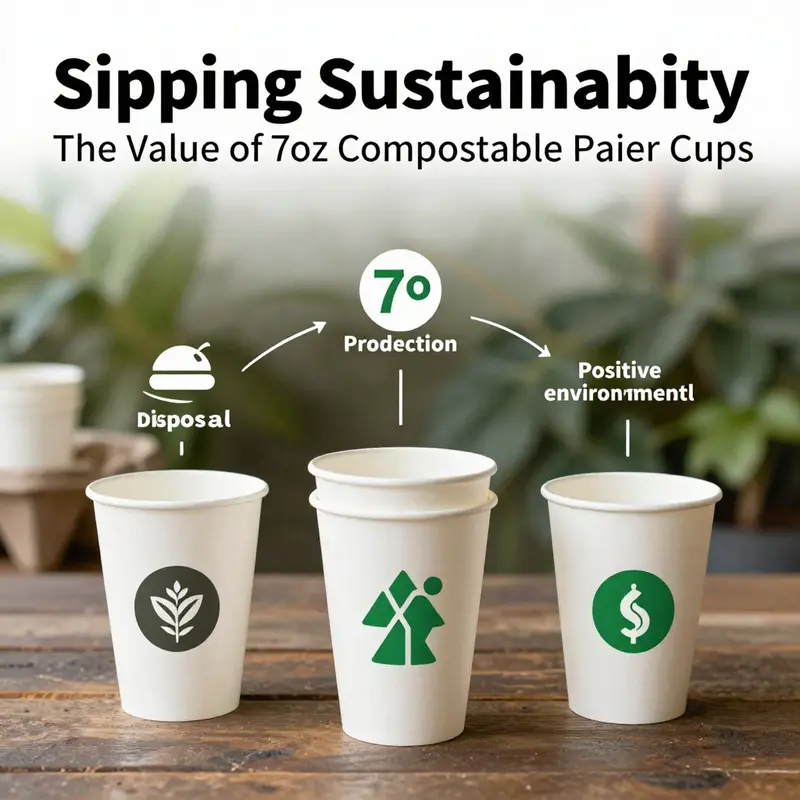
The shift away from disposable plastics has placed compostable paper cups at a crossroads of convenience, performance, and environmental accountability. Designed to hold hot and cold beverages in a compact 7oz size, these cups invite operators to rethink waste streams, supplier choices, and customer expectations. When a business chooses these cups, it signals a commitment to renewable resources, composting infrastructure, and a model of resource recovery that connects service to soil and farmers.
At the core is material science: plant-based, renewable feedstocks with a pulp backbone and, in many cases, a PLA lining derived from cornstarch. Under appropriate industrial conditions, the cup can break down into organic matter and water rather than persisting as long-lived plastic in landfills. This contrasts with traditional polyethylene-coated cups that resist degradation. Compostability is not a cure-all; it requires end-of-life management that is part of product design and business planning. The goal is to re-enter natural cycles rather than lock materials in waste streams.
The lifecycle begins with feedstock choice and responsible sourcing to ensure that pulp comes from well-managed resources. Energy and water use during pulping, forming, and lining processes matter because they shape the environmental footprint. The PLA lining provides heat resistance and barrier properties for hot beverages while still enabling compostability under proper conditions. The chemistry is practical: delivering performance today while preserving broader environmental aims of compostability.
End-of-life infrastructure matters most. In industrial composting facilities, controlled heat, moisture, and microbes can accelerate degradation to months. The cup becomes organic matter and nutrients for soil. The caveat is clear: effectiveness depends on proper disposal and access to appropriate facilities. Misrouted waste can undermine benefits, so consumer guidance and municipal capabilities are essential.
A broader circular-economy view connects waste to new growth through composted residues used as soil amendments. Reliable access to composting, clear labeling, and cross‑chain coordination across packaging producers, retailers, waste haulers, and facilities are prerequisites for success. When these conditions align, a 7oz cup acts as a small but meaningful link in a local soil economy.
Performance and safety drive purchasing choices as much as environmental goals. Cups must handle hot drinks without leaking or collapsing. PLA linings help maintain form, while single-wall designs offer lightness and value for quick-service contexts; double-wall designs improve insulation and user comfort. Branding and customization can be integrated on the exterior to communicate environmental values while preserving performance.
Economically, bulk purchasing can lower per-unit costs at scale, and the broader financial picture includes waste-disposal costs, environmental reporting, and brand reputation. A sustainability-focused value proposition may attract eco-conscious customers and allow for premium pricing in some markets. The procurement reality is that volume-based savings can be reinvested into broader sustainability initiatives.
Governance and standards underpin credibility. Certifications for food safety and material compliance reassure customers that sustainability runs with rigor and accountability. When packaging meets defined standards and compostability claims, retailers and operators can include it in responsible-sourcing programs and green procurement policies. This alignment matters as sustainability becomes a core objective rather than a peripheral duty.
From the consumer perspective, offering a compostable option invites conversations about waste, soil health, and the end of a product life. Clear disposal guidance helps guide behavior and supports composting streams, reinforcing a narrative that compostable cups can perform reliably in busy service environments. Local education about composting can amplify benefits and build trust in the product’s environmental story.
The practical path to scale requires alignment with service models, disposal logistics, and branding strategies. Small venues may favor single-wall cups for cost and simplicity, while larger operations may prefer double-wall designs for heat management. When a city or region has a mature industrial composting network, the route from service to compost can be efficient; otherwise, partnerships with private waste processors or targeted consumer education may be necessary. Embedded environmental storytelling in the customer experience helps reinforce brand identity while supporting greener packaging solutions.
The research landscape emphasizes flexibility and transparency. Some cups come in plain white for broad compatibility, while others enable customization without sacrificing safety or compostability. Bulk purchasing can yield meaningful per-unit savings, especially for high-volume operators. However, compostability is not universal; success depends on infrastructure and consumer behavior that supports proper end-of-life outcomes.
This chapter points toward a practical path that blends material science, consumer education, and system-level collaboration. The journey from cup to compost is a partnership among pulp suppliers, coating and lining manufacturers, composting facilities, waste networks, and service operators. When aligned, these partnerships magnify environmental benefits and help ensure that each cup contributes to a cleaner environment, healthier soil, and a consumer culture that values waste as a resource.
For further guidance, explore practical resources such as industry standards and supplier information that explain end-of-life outcomes and accountability. The materials and standards landscape is not just theoretical; it guides producers, waste managers, and consumers toward clearer expectations and reliable results.
Final thoughts
Investing in 7oz compostable paper cups is more than just a purchasing decision; it is a commitment to sustainability and customer satisfaction. With their numerous features, affordability, and positive environmental impact, these cups are an ideal choice for businesses looking to align with consumer values. By providing a green alternative to traditional plastic cups, you’ll not only support eco-friendly practices but also enhance your brand’s reputation. Explore the options available, and take the first step toward more sustainable beverage service today!