
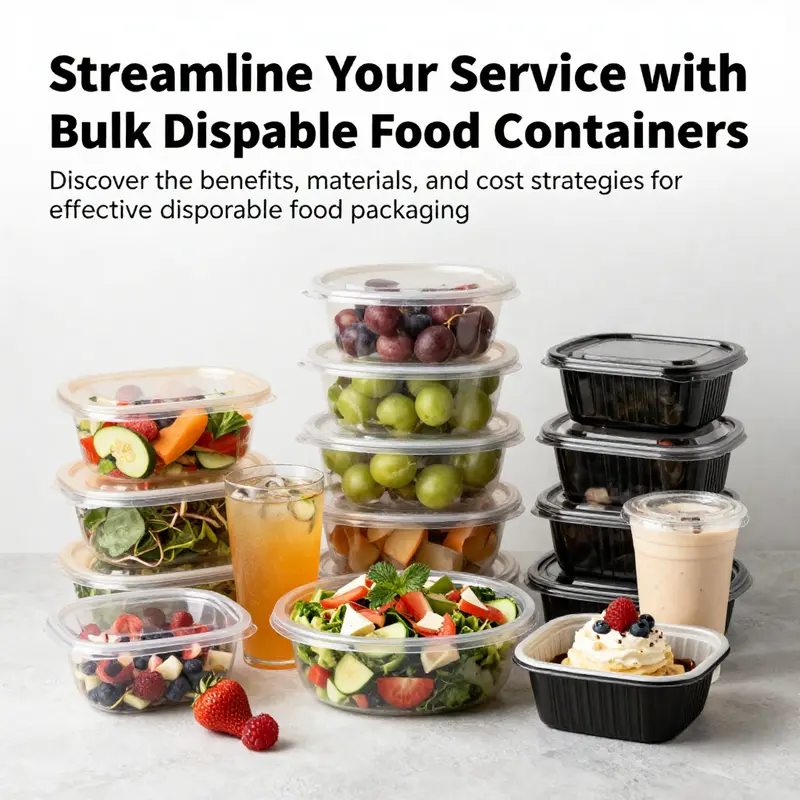
Bulk disposable food containers play a vital role in the smooth operation of businesses ranging from bubble tea shops to catering services. With the increasing demand for efficient, hygienic, and cost-effective packaging, it’s essential to understand the options available. The first chapter dives into the versatility of multi-compartment containers, emphasizing their role in enhancing food presentation and minimizing waste. Next, we explore the various materials used in these containers, highlighting their unique properties and suitability for different food types. Lastly, we’ll look into the economics of bulk purchasing, examining cost effectiveness and reliable supplier options that cater to your business’s needs. Together, these insights will equip you with the knowledge to optimize your disposable packaging strategy.
Organized Meals at Scale: The Versatility and Practicality of Multi-Compartment Bulk Disposable Food Containers
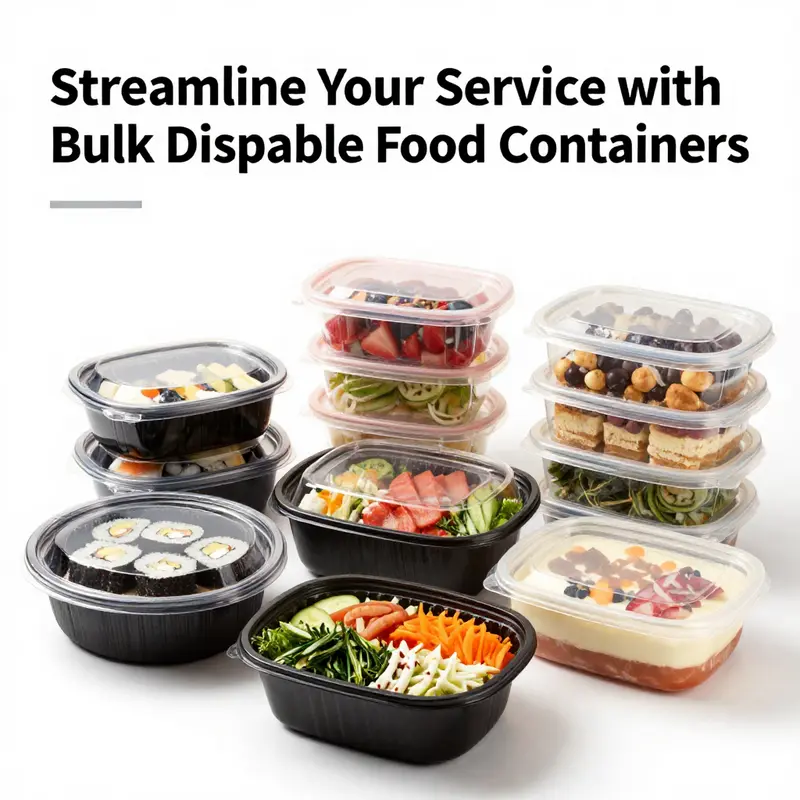
In modern food service, bulk needs require packaging that can keep pace with volume and precision. Multi-compartment bulk disposable food containers provide a single unit capable of holding several components without mixing flavors or temperatures. This design preserves quality from kitchen to customer and supports consistency, speed, and safety during peak service. For high-volume operations like schools and catering, compartmental systems streamline portion control and reduce waste. When a meal includes rice, a saucy entree, a crisp salad, and dressing, the container keeps each element distinct and ready for reheating or serving. The modularity spans from 1-, 2-, to 4-compartment configurations, enabling kitchens to map menu structure to packaging. Polypropylene (#5) balances safety, durability, and heat resistance, allowing microwaving, refrigeration, and freezing within recommended guidelines. PP-based trays help prevent leaks and cross-contamination while offering clear contents for quick identification. Compared with EPS or PS, PP often performs better at higher temperatures, making it suitable for hot meals. In practice, a single bulk container reduces the need for secondary packaging and speeds up workflow, contributing to safer handling in transit and service. Customization options such as branding, coatings, or color-coding can aid inventory and service differentiation while still leveraging a single container family for multiple meals. Sustainability is increasingly important, with recyclable or compostable substrates and FSC-certified materials gaining traction. Buyers should weigh total cost of ownership, including waste reduction and logistics, against upfront material costs. In operation, these containers support end-to-end workflows: preparation, assembly, transit, and reception, with attention to portion integrity and simplified cleanup. Storage benefits include consolidated space and easier inventory management. From a safety perspective, selecting appropriate materials and supplier certifications helps ensure compliance with regional guidelines. In sum, multi-compartment bulk containers offer a scalable, reliable solution for high-volume service. For teams seeking eco-friendly options, bamboo fiber or plant-based plastics are plausible alternatives, though they may involve trade-offs in cost or microwave compatibility. The decision framework remains clear: prioritize heat resistance, leak prevention, compatible configurations, and total cost of ownership, while considering sustainability goals. External resource: https://www.alibaba.com/showroom/multi-compartment-disposable-food-containers.html
Material Alchemy in Bulk Packaging: From Polypropylene to Biodegradable Futures for Disposable Food Containers
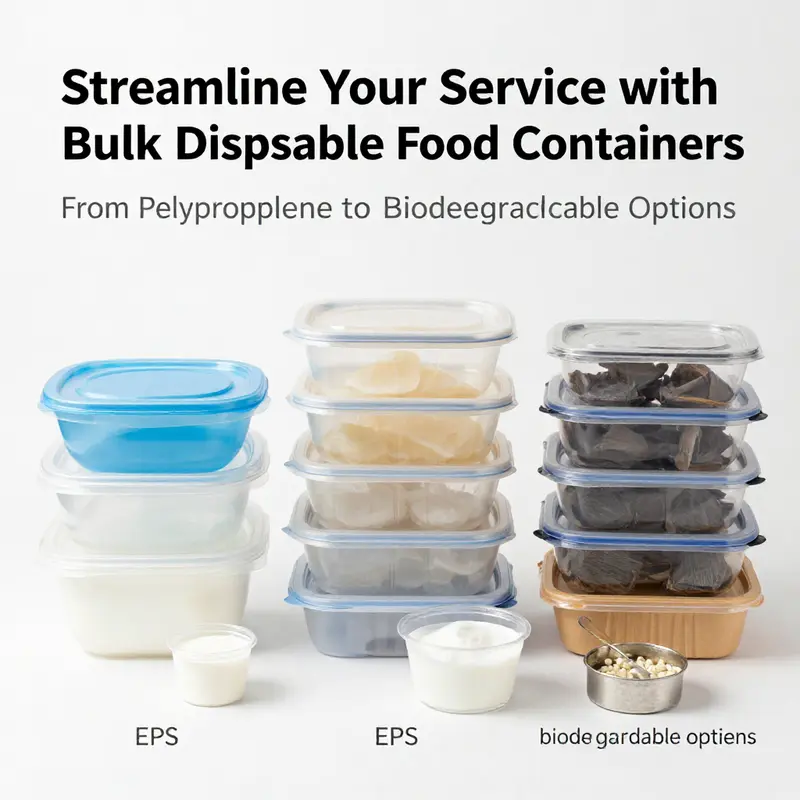
Choosing the right material is to choosing the future of bulk disposable food containers. The decision sits at the intersection of performance, safety, cost, and the environmental footprint of a business that serves meals at scale. For kitchens, cafeterias, caterers, and delivery services that rely on high-volume packaging, material selection is not just a technical detail; it is a strategic lever that shapes shelf life, waste streams, and even brand perception. The materials most commonly deployed in bulk packaging—polypropylene (PP), polystyrene (PS), paperboard, and emerging biodegradable alternatives like bagasse and bamboo fiber—each carry a profile of strengths and tradeoffs. Understanding these profiles helps operators align packaging choices with the specific food types, service models, and post-consumer outcomes they seek. In bulk environments, where containers may be reheated, refrigerated, or stored for hours before consumption, the compatibility between food and container is more than a matter of convenience; it is a matter of safety, quality, and cost control over the life cycle of a menu item or a meal program.
Polypropylene stands out as a workhorse material in bulk orders. Its durability, light weight, and resistance to moisture and heat make PP containers reliable for both cold storage and hot foods. The common experience of many kitchens is that PP can be microwave-safe and, when labeled accordingly, dishwasher-safe. This dual resilience supports the typical workflow of bulk operations: prepare, portion, hold, reheat, and serve with minimal container failure. Yet, no material is without limits. PP can absorb odors over time, a phenomenon that becomes more noticeable in high-volume operations where multiple foods share containers in quick succession. It can also warp under prolonged exposure to very high heat, though for everyday hot foods and standard reheating temperatures the performance is generally satisfactory. From an environmental perspective, PP is recyclable, but the material’s environmental footprint remains tied to the broader challenges of fossil-fuel-based feedstocks and end-of-life infrastructure. In bulk procurement, this means tying supplier selection to both technical conformity and recycling compatibility within the jurisdiction where the containers are used.
Polystyrene, including the expanded foam variety that has long been favored for its excellent insulation and cost efficiency, occupies a different niche. EPS foam excels at keeping hot foods hot and cold foods cooler for longer periods, a property that appeals to takeout and catering services that prize temperature preservation during transport. However, the environmental and waste-management realities surrounding PS, particularly EPS, are challenging. Many municipal programs do not recycle EPS, and the material presents significant environmental hazards when discarded. The policy and public sentiment landscape around PS has shifted in recent years, prompting many operators to re-evaluate its role in bulk packaging, especially for single-use contexts where disposal and litter are concerns. In practice, PS remains common in some segments of bulk takeout, but its use is increasingly weighed against alternatives that offer similar performance with improved end-of-life outcomes.
Paperboard-based options, including corrugated and laminated composites, offer a distinctly different sustainability profile. Paperboard containers can be sourced from recycled fibers or FSC-certified virgin pulp, providing advantages in terms of renewability and lower carbon emissions during production relative to plastic converts. They are well suited to cold foods and dry items, such as salads, sandwiches, and snacks, where moisture and grease can be managed with coatings or barrier laminates. The key tradeoff when using paperboard in bulk packaging is moisture and grease resistance. Wet or oily foods can compromise the integrity of uncoated paperboard, leading to sogginess or structural instability. Modern coated or laminated coatings address this gap, but coatings can influence recyclability and compostability, depending on the material and local waste streams. For brands prioritizing compostability, paperboard options paired with appropriate coatings can align with industrial composting systems, albeit at a higher per-unit cost and with supply-chain considerations that affect MOQs and lead times.
The most intriguing space in contemporary bulk packaging is the emergence of biodegradable options. Bagasse, a byproduct of sugar production, and bamboo fiber are at the forefront of a shift toward compostable, fiber-based disposables. Bagasse and bamboo fibers can deliver solid structural rigidity and competitive thermal insulation, making them viable for hot and cold meals in a single-use context. These materials are designed to be composted under industrial conditions, which can significantly reduce landfill burden when industrial composting infrastructure is available. The rise of molded-fiber products—an area where Guangdong Province in China has become a hub for rapid prototyping and export readiness—highlights how regional manufacturing ecosystems can scale sustainable options with flexibility around MOQs and production timelines. Lead times of roughly 20–35 days for molded fiber items illustrate how sustainability and practicality can converge in bulk supply chains: you can push toward eco-friendly choices without sacrificing responsiveness to large orders.
A thoughtful material strategy must also consider the specific food type and service model. Temperature, acidity, and fat content all influence how a container behaves. PP’s heat resistance, quoted as tolerating temperatures around 100°C to 120°C for extended periods, makes it a reliable choice for hot foods and occasional microwave reheating. But performance is not solely about heat tolerance. The interaction between food and container—whether the food is acidic, salty, or fatty—can affect material integrity, odor absorption, and potential chemical migration. The Hong Kong–based study conducted by the Food and Environmental Hygiene Department and Consumer Council in 2005 provided an important early benchmark: properly used plastic disposable containers from reputable sources do not pose significant food safety risks when they are matched to the appropriate food type and temperatures. That kind of evidence underscores what bulk buyers must do in practice: ensure supplier legitimacy, verify material compatibility, and maintain clear labeling about temperature limits and intended uses.
In practice, bulk buyers often manage the tension between cost per unit and end-of-life outcomes by investing in a mixed-material portfolio. A typical approach might combine PP for hot meals and temperature-sensitive items with paperboard for cold or dry components, and reserve biodegradable options for segments where the logistical network supports industrial composting. The decision framework becomes more nuanced when brand and customer expectations enter the picture. Eco-conscious brands increasingly emphasize biodegradable or bagasse-based options, not only for the end user’s perception of sustainability but also to align procurement with commitments to responsible sourcing and waste reduction. However, these choices must be balanced against price, MOQs, lead times, and the capacity of the customer base to participate in composting programs. From a procurement standpoint, the market now presents a spectrum rather than a binary choice: durable PP for repeated-use contexts and high-temperature applications; PS where cost and insulation are critical but disposal concerns are managed through recycling; coated or laminated paperboard where cold and dry foods dominate; and biodegradable fibers where industrial composting infrastructure closes the loop.
For operators who want to integrate branding with sustainability, there is a practical, if nuanced, path forward. Kraft-based or brown-paper composites can be engineered to deliver a rugged, recyclable or compostable solution with a natural aesthetic that aligns with many restaurant and meal-kit concepts. A discreet but strategic option is to explore bulk packaging that combines a branded, coated paperboard with a barrier layer designed to resist grease and moisture. This approach can deliver the required performance while maintaining a more favorable end-of-life profile than conventional plastics. In many markets, the packaging ecosystem is increasingly designed to support such choices, with suppliers able to customize MOQs and offer economies of scale that bring down unit costs even as the sustainability profile improves. For businesses that want to take a more integrated approach to sustainability across packaging and waste management, exploring fiber-based options with strategic partners who can handle industrial composting becomes a practical route to achieving both operational efficiency and environmental objectives.
Throughout this material decision journey, the ability to tailor packaging to the operational reality is crucial. Multi-compartment disposable food boxes, widely used for meal kits, bento-style meals, catering trays, school lunches, hospital meals, takeout orders, and office meals, exemplify how design can help reduce cross-contamination, minimize spillage, and improve storage efficiency in households and institutions alike. The compartmentalization itself affects material choice: fiber-based, molded solutions can be engineered with internal dividers that maintain integrity and reduce leakage, while laminated paperboard can provide barrier properties without the bulk of a traditional plastic tray. The overarching message is clear: material selection is not an isolated decision at the factory; it is part of a holistic system that includes design, food safety, logistics, end-of-life, and brand storytelling.
In this broader context, several practical takeaways emerge for bulk buyers. First, match the container to the food type and service model, especially when temperature and moisture are critical. Second, evaluate end-of-life expectations early—whether recycling, industrial composting, or landfill elimination aligns with local waste infrastructure. Third, consider regional supply-chain dynamics: in major manufacturing hubs, MOQs and lead times can swing significantly based on the material choice, with biodegradable options sometimes requiring longer lead times due to supply-chain maturation. Fourth, when feasible, explore a mixed-material strategy that leverages the strengths of each option while managing total cost and environmental impact. Finally, leverage the growing ecosystem of standards and guidelines to ensure compliance and consistency across suppliers and jurisdictions. For further technical specifications and material standards, refer to the China Food Packaging Association’s guidelines on disposable container materials. (Access: https://www.cfpa.org.cn/standards/disposable-container-materials.html)
To illustrate a practical example of how a consumer-facing link can fit into a materials discussion without derailing the narrative, consider a packaging choice that blends sustainability with branding and performance. In contexts where branding and compostability are both valued, operators can look at kraft-based options designed to hold up under typical reuse and disposal scenarios. A commonly used form is a disposable kraft paper bowl with a lid for hot or cold contents; its visual appeal and barrier performance can be tuned through coatings and sizing while preserving a relatively straightforward end-of-life path. The internal link to a product in this space can serve as a reference point for readers who want to see how such a solution is positioned in a bulk catalog, providing a concrete connection between theory and supply-chain practice. For readers who want to explore a representative option, the internal link to a disposable kraft paper bowl with lid can be found here: disposable kraft paper bowl for food package with lid.
As this chapter moves toward tying material choices to real-world implications, it is important to maintain a view that the best solution is context-driven. There is rarely a single best material for every situation. The most resilient procurement strategies blend technical suitability with economic pragmatism and a clear-eyed plan for end-of-life. Operators who invest in that kind of holistic thinking are better positioned to navigate the evolving landscape of bulk disposable packaging, where performance, safety, cost, and environmental stewardship must operate in concert rather than in isolation. The path from PP to biodegradable options is not a straight line; it is a spectrum that reflects the diversity of foods, service models, and waste-management capabilities that characterize modern foodservice ecosystems. In each order, in every application, the right choice is the one that keeps meals safe, maintains quality, reduces waste, and aligns with the operational tempo of the business.
External standards and technical guidelines continue to evolve as packaging ecosystems mature. For those seeking a more formal framework that anchors material decisions in recognized standards, consult the China Food Packaging Association’s guidelines on disposable container materials. This resource helps translate the practical insights described here into concrete specifications that suppliers and buyers can reference during procurement negotiations and product development conversations. https://www.cfpa.org.cn/standards/disposable-container-materials.html
Bulk Buy, Clear Margins: Navigating Costs, Quality, and Suppliers in Disposable Food Containers
Bulk purchasing of disposable food containers changes the cost equation from unit price to total cost of ownership. Centralized purchasing can lower unit costs but requires strict quality controls, dependable delivery, and accurate total cost of ownership modeling that includes storage, handling, performance under heat, and regulatory risk.
Scale matters: at high volumes, small unit-price differences compound into meaningful cash flow shifts. Long-term supplier relationships, standardized specifications, and demand forecasting can improve terms and supply stability. The cheapest price per unit is not always the best over time; breadth of supplier base and multiple quotes help mitigate risk.
Quality—materials like polypropylene (PP) versus alternatives and their heat tolerance, leakage resistance, and compatibility with cleaning and reuse—drives lifecycle costs beyond upfront price. Biodegradable options may have higher upfront costs and different performance profiles. Supplier partnerships, service levels, warranties, and clear acceptance criteria help with performance predictability.
Customization and branding add value but increase minimum orders, lead times, and setup costs; weigh branding gains against total cost of ownership. Sustainability considerations are integral: eco-friendly materials can align with regulation and consumer expectations but may require trade-offs in cost and performance.
Operational efficiency comes from standardized container geometries, lids, and labeling, improving inventory management and throughput. Use a disciplined decision process: specify functional requirements, quantify TCO, build a supplier panel, test pilot orders, and embed sustainability goals with practical trade-offs.
Platforms enabling bulk procurement provide access to a broad supplier base but require rigorous supplier evaluation. The ultimate objective is a reliable supply chain that preserves margins while enabling scale and a consistent customer experience. For context, industry resources and marketplace examples can guide supplier selection and benchmarking.
Final thoughts
In conclusion, understanding the various facets of bulk disposable food containers is crucial for enhancing operational efficiency in your food service business. The versatility of multi-compartment options allows for creative food presentation while ensuring safety and reducing cross-contamination. Material choices impact not only functionality but also your commitment to sustainability, with biodegradable options making strides in the market. Finally, by leveraging bulk purchasing strategies, businesses can achieve significant cost savings, foster supplier relationships, and streamline their operations. Embracing these insights will position your business to meet the demands of today’s dynamic food service landscape.