
In a competitive food service landscape, choosing the right packaging is crucial for maintaining food quality and delivering exceptional customer experiences. As Bubble Tea Shops, Restaurants, Food Trucks, and Event Planners evaluate their packaging needs, understanding the materials used in plastic containers becomes paramount. This article delves into the advantages of Polypropylene (PP) and Polyethylene (PE) in food packaging, discusses considerations for Polyethylene Terephthalate (PET), and offers best practices for selecting food-grade containers, ensuring every choice enhances safety and convenience in food service operations.
The Quiet Strength of Polypropylene: How PP Shapes Safe, Heat-Ready Food Containers
Polypropylene sits quietly at the core of modern food packaging, guiding how meals travel from kitchen to table with safety, reliability, and convenience. In the crowded landscape of plastics used for packaging, PP earns its place not by flashes of novelty, but through a steadfast balance of properties that matter most to both manufacturers and consumers: safety, durability, temperature tolerance, chemical resistance, and a practical lifecycle. When a container needs to withstand hot fillings, endure the rigors of the freezer, survive the microwave, and keep contents fresh without imparting flavors or toxins, polypropylene is often the material chosen for the job. This chapter traces the ways in which PP translates those demands into tangible advantages for the widest spectrum of ready-to-eat and ready-to-heat foods, while also considering how PP fits within the broader ecology of best plastic containers for food packaging.
Durability is the first word many people associate with polypropylene. Containers made from PP exhibit high tensile strength and rigidity that protect delicate foods during storage, handling, and transport. The physical form of PP—its ability to resist stretching, tearing, and puncturing—translates into practical reliability. A bag that carries grains or a rigid container that cradles a prepared meal must endure the bumps of a journey from the store shelf to the consumer’s home, and PP’s inherent toughness reduces the risk of leaks, contamination, and product loss. This resilience is especially valuable in the segment of single-serve and multi-serve meal boxes, where containment matters as much as the presentation of the food inside. The result is fewer surprising compromises at the shelf edge or in transit, which in turn supports a more confident waste-and-returns story for retailers and a better consumer experience for households.
The temperature story of polypropylene is central to its wide use in food packaging. PP’s high melting point—well above typical cooking and reheating temperatures—enables it to withstand hot processes without deformation or hazardous leaching. This heat resistance is not limited to a single application; it spans hot fill operations, pasteurization steps in some production lines, and microwave heating by end users. For ready-meals and dairy products, containers need to perform reliably when hot foods are poured in or when meals are reheated, and PP delivers. The material also holds up well at low temperatures, maintaining structural integrity through freezing and thawing cycles. In practice, this means a single PP container design can cover a broad temperature envelope, enabling manufacturers to streamline their lines and retailers to offer versatile products without swapping materials for different temperature regimes.
Chemical compatibility is another key advantage. Polypropylene is non-reactive with a wide range of foods, including many acidic and basic formulations, and it resists degradation and leaching across common culinary conditions. That chemical inertness helps preserve the taste and safety of the food inside. It also underpins regulatory confidence: PP is widely recognized by global authorities as safe for contact with food, a designation that underpins product labeling, consumer trust, and international distribution. In practical terms, this means PP containers can hold tomato sauces, citrus-based dressings, dairy products, and baked goods with less risk of flavor interference or contaminant migration—an important consideration for brands that aim to maintain the integrity of their recipes across usage scenarios.
A notable feature of polypropylene is its autoclavable potential in certain industrial settings. The ability to withstand repeated sterilization under high heat and pressure makes PP a go-to option for sectors where hygiene is paramount, including medical-adjacent food packaging and high-hygiene food applications. While this autoclavable capability is more commonly leveraged in specialized contexts, its existence underscores PP’s durability under stress and its capacity to meet rigorous sanitation standards without compromising material performance. For producers aiming to minimize microbial risk in packaging lines or to offer containers that can be repeatedly sanitized in controlled environments, PP’s sterilization tolerance is a meaningful advantage that sets it apart from others that may require more limited heat exposure.
Safety and sustainability are inseparable considerations in modern packaging decisions. Polypropylene’s safety profile is reinforced by regulatory recognition from major bodies such as the U.S. Food and Drug Administration and the European Food Safety Authority. This alignment with safety standards gives manufacturers a solid foundation for compliant product design and straightforward market entry across regions. On the sustainability front, PP is commonly recyclability-minded and offers a practical pathway to circular economy goals. While no plastic is perfect in terms of environmental impact, PP’s recyclability and comparatively lower environmental footprint relative to some alternative materials contribute to a packaging strategy that aims to balance performance with responsible resource use. In an industry increasingly driven by consumer expectations around sustainable packaging, PP’s combination of safety, recyclability, and cost-effectiveness positions it as a pragmatic choice for long-term product stewardship.
From a design perspective, polypropylene’s properties open a wide design space for rigid container systems and closures. Its rigidity enables precise forming and robust sealing systems, which in turn help create reliable leak resistance and dependable containment. The material’s compatibility with common manufacturing processes—especially injection molding—supports efficient, scalable production and consistent performance across large product families. This translates into design consistency for brands that want uniform fit, predictable heat performance, and easy stacking during shelf life and distribution. The end result is a packaging solution that not only protects food but also aligns with the operational realities of production lines, cold-chain management, and consumer use.
In the broader ecosystem of the best plastic containers for food packaging, PP often sits alongside polyethylene (PE) and, in some cases, PET. Each material brings its own strengths to specific use cases: PE—especially HDPE and LDPE—offers excellent chemical stability, flexibility, and durability in different forms; PET provides clarity and strength for certain applications but carries temperature and reuse limitations. PP’s niche is where a strong combination of heat resistance, rigidity, chemical compatibility, and sterilization potential intersects with the demand for reusable or reuse-adjacent packaging solutions. This is where the decision tree becomes a practical engineering exercise: if a container must endure microwaving and hot filling while preserving the taste and safety of its contents, PP often emerges as the most sensible material choice. If the packaging must be exceptionally flexible or achieve a high level of pliable wrapping for perishables, LDPE might be favored; if a rigid, robust bottle or jar is required for long-term storage, HDPE could be the partner of choice. Linking these material traits to specific product categories clarifies why PP dominates many mainstream food containers and why its role remains central as packaging technology evolves.
A further consideration is the consumer experience tied to PP containers. For households, the feeling of confidence that a container will hold up through microwaving, refrigeration, and transport translates into fewer concerns about spillage or flavor contamination. The ability to reheat a meal directly in its container reduces the number of dishes and simplifies meal prep, a factor that many busy households value highly. From retailers’ and brands’ perspectives, the durability and heat tolerance of PP translate into fewer damaged products and returns, which in turn supports a more efficient supply chain and a better bottom line. These downstream benefits—reduced waste, improved safety, and easier handling—echo the core goals of modern packaging: to protect, preserve, and present food in a way that enhances the consumer experience while aligning with sustainability targets.
To close the loop between material science and practical packaging decisions, it is essential to emphasize the practical labeling cues that help ensure safe use. Containers that rely on PP should be clearly marked as suitable for food contact, with a recycling symbol typically indicating the material code for PP (often recognized as #5). Consumers should be mindful of the warning signs about high-temperature reuse for materials that aren’t designed for repeated exposure or for applications beyond their tested range. While polypropylene provides a broad envelope of heat and chemical tolerance, it is not an excuse to ignore the guidelines for safe culinary practice. By paying attention to labeling and following manufacturer recommendations for heating and reuse, users can maximize the safety and performance benefits PP offers. In short, the material’s technical strengths translate into everyday practicality, and that is the essence of its value in best-in-class plastic containers for food packaging.
For readers seeking a deeper technical dive into polypropylene’s material properties and its industrial uses in screw-top containers, a detailed technical resource offers a comprehensive overview. This external reference complements the narrative above by anchoring the discussion in concrete data about PP’s mechanical performance, thermal stability, and process compatibility. https://www.plasticcontainers.com/technical-details-polypropylene-screw-top-containers
PE’s Quiet Backbone: How Polyethylene Shapes Safe, Flexible, and Durable Food Packaging
Polyethylene is the quiet workhorse of modern food packaging. Its presence is so ubiquitous that it often goes unnoticed, yet it underpins the safety, convenience, and resilience of countless everyday containers. From rigid tubs that hold ready-to-eat meals to flexible wraps that seal freshness around delicate produce, PE’s chemistry lends itself to direct food contact with minimal risk of interaction. This foundation matters most when readers consider the best plastic containers for food packaging because the choice isn’t just about a container’s shape; it’s about how the material behaves under real-world conditions—food contact, cleaning, stacking, transport, and even warming or chilling. In routine retail and home kitchens alike, PE materials deliver a combination of safety, performance, and cost-effectiveness that few other plastics can match across a broad spectrum of applications. The result is a material that quietly supports the broader goal of preserving taste, texture, and nutrition while keeping packaging affordable and scalable for producers and retailers alike.
Within the PE family, two forms—Low-Density Polyethylene (LDPE) and High-Density Polyethylene (HDPE)—stand out for distinct roles in food packaging. HDPE and LDPE share a common chemical backbone, but their physical structures diverge enough to create different performance profiles. HDPE is renowned for rigidity, stiffness, and remarkable resistance to impact. In the world of food packaging, this translates into sturdy, reusable, and resealable containers that can withstand the rigors of transport, stacking, and consumer handling without cracking or deforming. Think of rigid tubs, deli containers, and bulk-storage modules where there is a premium on shape retention and stackability. LDPE, by contrast, is softer and more flexible. This form of polyethylene excels in applications where conformability and elongation matter: stand-up pouches for fresh produce, flexible wraps that cling to irregular surfaces, squeeze bottles that must be easily pressed, and bag-like packaging that protects perishables while maintaining a light, consumer-friendly feel. By offering these two poles of performance, PE provides a packaging ecosystem where rigid, protective packaging and flexible, efficient packaging can coexist in a single material family, each tailored to a specific role while sharing safety credentials.
A core advantage PE brings to food contact is safety that aligns with consumer expectations. PE is chemically inert enough to minimize the risk of migration of additives or residual monomers into foods under normal use, a factor that weighs heavily in safer packaging choices. It can be produced and processed to be odorless and tasteless, crucial when packaging tastes and aromas must remain true to the food inside. The safety profile is reinforced by the absence of certain controversial additives associated with other plastics, which helps reassure both retailers and consumers during handling, storage, and reuse. The emphasis on safety is not a single checkpoint but part of a broader system of material selection that includes food-grade labeling and adherence to recognized standards. In many markets, polyethylene containers used for food contact are explicitly designed and certified to meet these expectations, ensuring that performance does not come at the expense of safety.
Barrier performance is another dimension where PE earns its keep. Moisture resistance is a standout feature, particularly for LDPE-based wraps and films that seal in freshness and slow the ingress of water vapor. For many perishable items, moisture control is as important as the barrier against oxygen or other gases, as it helps preserve texture, prevent dehydration, and extend shelf life. While LDPE excels in flexible packaging that marks the boundary between air and food with a light touch, HDPE contributes moisture and chemical resistance from the other end of the spectrum. The rigid HDPE containers commonly used for snacks, ready-to-eat meals, and deli items offer reliable protection against slight leaks, contamination, and external moisture while remaining relatively impermeable to many oils and fats. In combination, these properties support a packaging strategy that minimizes spoilage and waste, which is a central concern for manufacturers seeking to optimize shelf life without compromising safety.
The relationship between PE and food types extends into the realm of fats, oils, and other challenging constituents. PE’s chemical resistance makes it a good match for many foods containing lipids, acids, or spices, where other polymers might experience swelling, staining, or taste transfer. HDPE’s rigidity helps maintain the integrity of containers that must stand up to stacking pressure and regular handling in retail settings, while LDPE’s flexibility accommodates bags, wraps, and pouches that closely hug the contours of fruits, vegetables, and ready-to-eat items. The ability to resist permeation by certain substances without requiring complex barrier laminates translates into simpler, safer packaging designs. In practice, this means manufacturers can rely on PE to provide a dependable base layer or complete packaging solution that remains food-safe under typical use patterns, including chilling, short-term freezing, and refrigeration, as well as the occasional direct contact with surface-treated foods where applicable.
Of course, heat handling represents a practical boundary in consumer and commercial contexts. While polypropylene (PP) is often singled out for microwave-safe and high-heat applications, PE materials generally require caution when exposed to high temperatures. HDPE can tolerate modest heat up to certain limits when used in rigid containers, but it is not typically the material of choice for direct, repeated heating in microwaves. LDPE’s lower softening point makes it less suitable for hot-fill or reheating scenarios. For this reason, the best plastic containers for versatile daily use often deploy a combination approach: PE provides robust moisture barriers, mechanical strength, and flexible packaging options, while PP or other heat-tolerant plastics handle warming or hot-fill tasks. This collaborative approach lets retailers and consumers enjoy the advantages of PE—safety, barrier protection, and cost-effectiveness—while ensuring convenience and safety during reheating or hot handling.
Beyond performance, recyclability is a vital dimension that shapes the long-term value of PE containers. HDPE is typically marked with the recycling symbol #2, while LDPE appears as #4, and PP is #5. These codes guide waste management and recycling streams, influencing how packaging is collected, processed, and reintegrated into the economy. In many regions, PE is considered moderately recyclable, which means that container design and local infrastructure strongly influence sustainability outcomes. For consumers and brands aiming to reduce environmental impact, this often translates into selecting PE-based packaging that aligns with local recycling capabilities, ensuring that the moisture barrier, rigidity, and flexibility do not come at the cost of missed recycling opportunities. It also explains the growing emphasis on post-consumer collection rates, proper cleaning, and careful separation from other materials in mixed streams. PE’s relatively straightforward recycling path, compared to some multi-material laminates, can make it a practical choice for brands seeking scalable, defensible packaging solutions that support circularity where infrastructures permit.
The regulatory backdrop anchors these material advantages within a framework of safety and quality. In international practice, standards and guidelines shape the acceptable composition, processing methods, and food-contact performance of PE containers. A notable example comes from China, where a national standard plan for blow-moulded polyethylene containers for packaging of food stuffs has been developed under the leadership of TC397SC6 and overseen by the China National Light Industry Council. This ongoing initiative aims to harmonize quality, safety, and performance across the industry, providing confidence to manufacturers and consumers that PE packaging meets stringent requirements for direct food contact. The existence of such standards highlights how the PE-focused approach to packaging is embedded in a broader system of oversight and continuous improvement. It also underscores the importance of staying informed about evolving guidelines, especially for brands that operate across borders or seek to innovate within regulated markets. For readers, this means recognizing that the safety and reliability of PE containers derive not only from the material’s intrinsic properties but also from the governance structures that define acceptable use and performance.
For practitioners in manufacturing, distribution, and retail, the practical takeaway is straightforward: select HDPE when the need is for rigid, durable containers that can be sealed and reused with confidence; opt for LDPE when flexibility, lightness, and close conformity to irregular shapes are prime requirements. Always verify that containers are labeled as food-grade and check the recycling symbol to ensure compatibility with local waste streams. If high heat or reheating is anticipated, plan for a material strategy that leverages PP or another heat-tolerant option in conjunction with PE-based components. The decision framework thus becomes less about a single winner and more about an intelligent mix that uses the best attributes of each material within an integrated packaging system. In this light, PE’s role is not as a solitary hero but as a dependable backbone that supports diverse packaging architectures while maintaining safety, performance, and economic viability.
The broader narrative around the best plastic containers for food packaging therefore positions polyethylene not as a flashy standout but as a dependable, versatile, and consumer-friendly choice. Its two main forms—HDPE for rigid, protective containers and LDPE for flexible wraps and bags—offer complementary strengths that accommodate a wide range of foods, from dry snacks to fresh produce and ready-to-use meals. The material’s inertness and safety credentials align with growing consumer demand for packaging that minimizes risk while delivering predictable barrier performance and ease of use. The fact that PE can be designed to resist fats and oils, protect moisture, and endure routine handling without compromising food safety makes it a cornerstone of modern packaging design. At the same time, recognition of regulatory standards and recycling realities ensures that PE packaging remains adaptable to evolving environmental expectations and infrastructure capacities. The result is a material story that resonates with manufacturers seeking scalable solutions, retailers aiming to protect product integrity, and consumers looking for convenience without compromising safety.
As the conversation about plastic containers for food packaging continues to evolve, polyethylene’s enduring relevance becomes clearer. It is not merely about choosing a plastic; it is about choosing a material that supports safe storage, efficient distribution, and responsible end-of-life handling. The best PE-based packaging combines the right form with the right performance: HDPE’s rigidity, LDPE’s flexibility, inertness that preserves flavor, resistance to oil and moisture in appropriate contexts, and a clear signaling system through widely recognized recycling codes. When layered into a packaging strategy that respects heat limitations and consumer use patterns, PE emerges as a resilient, cost-effective solution that meets today’s demands for safety, quality, and sustainability. For readers and practitioners mapping the landscape of the best containers for food, recognizing the central role of polyethylene helps illuminate why certain shapes, closures, and formats endure across markets and time, even as new materials and standards push for ongoing improvements.
External resource: For regulatory context and detailed standards governing polyethylene food packaging containers, see the official draft of the Chinese standard: https://std.samr.gov.cn/gb/
PET in the Packaging Puzzle: Assessing Its Strengths, Boundaries, and Path Toward a Circular Future
Polyethylene terephthalate, or PET, occupies a central place in the catalog of plastics used for food packaging. It is celebrated for its inertness and safety in direct contact with food and beverages, a baseline requirement for any material that touches what people eat and drink. Its barrier properties are a core reason for its continued prominence. PET offers strong resistance to the diffusion of gases, water vapor, oils, and odors. In practical terms, that means products can stay fresher longer, with less spoilage and less flavor transfer between the container and its contents. The clarity of PET is another asset; its transparency lets consumers inspect the product inside, lending trust and appeal without additional labeling or design tricks. This combination of safety, visibility, and barrier performance helps PET stand out among the options for certain segments of the market, especially where sustained freshness, shelf presence, and lightweight packaging are priorities. Yet barrier performance is not merely a matter of initial spec sheets. In the real world, the performance of PET also hinges on how the material is formed, its thickness, and the sealing methods used. A container that relies on PET can be engineered to withstand a range of storage conditions—from refrigeration to ambient temperature, and in some cases to processing environments where mild heat is involved. The material’s mechanical strength further reinforces its suitability for rigid or semi-rigid packaging formats. PET’s impact resistance, for example, can be significantly higher than that of many alternative films, contributing to durability during handling, transport, and stacking in retail settings. In a packaging landscape that prizes product integrity and consumer confidence, this combination of transparency, strength, and barrier behavior helps PET play a meaningful role, even as other materials are favored for different applications. The temperature range PET can tolerate is notable. Long-term stability up to around 120°C is within reach for many PET formulations and applications, and short-term exposure can extend even further, up to about 150°C. This makes PET a viable option for certain hot-fill or pasteurization-like processes, though it is not universally suitable for high-heat, repeated-use scenarios. It is precisely this nuance that makes PET a material of choice in some contexts and a candidate for careful evaluation in others. The inertness of PET also translates to chemical resistance. It stands up well to dilute acids, bases, and most common solvents encountered in foodstuffs and their storage. While not immune to all chemical challenges, PET’s resistance profile reduces the likelihood of interactions that could compromise product safety or flavor. Those properties—barrier performance, clarity, mechanical resilience, and chemical inertness—combine to create a compelling case for PET in applications where these traits are decisive. However, PET’s strengths must be weighed against its limitations, particularly when the packaging system emphasizes repeated use or exposure to high heat. PET bottles for beverages, widely used in single-use contexts, illustrate one end of the spectrum. They perform exceptionally well for liquids that are consumed within a single or few uses and stored under refrigeration or room temperature. Yet when the same material is pressed into containers intended for long-term storage, hot-fill processing, or repeated thermal cycling, the risk profile can shift. Repeated exposure to aggressive heat or aggressive contents may increase the potential for material fatigue, deformation, or surface interactions that could, over time, affect clarity or barrier performance. This is where the chapter’s focus on PET as part of the broader packaging puzzle becomes essential: PET remains attractive for its core strengths, but it is not a universal remedy for all packaging challenges. The recycling story for PET reinforces this nuance. PET is widely recognized as recyclable and is often lauded as one of the more sustainable plastics available today. Mechanical recycling, which involves shredding, washing, drying, and reprocessing into new containers or fibers, remains the backbone of how PET is reintroduced into the value chain. Yet the path toward true circularity is not trivial. Contamination from labels, adhesives, and residual contents can complicate sorting and processing, reducing the efficiency and quality of recycled PET. This is not a trivial logistical hurdle; it is a practical barrier that shapes the economics and environmental outcomes of PET recycling programs. Emerging chemical recycling approaches, such as methanolysis, are under active investigation as potential methods to break down PET waste that is contaminated or mixed with other plastics. If scaled, these technologies could enable higher-quality repolymerization and expand the range of materials that can be reintroduced into the PET stream or turned into high-value products. The regulatory landscape is an important driver in this space. The European Union has set ambitious targets, including a mandate that PET bottles contain at least 25% recycled content by 2025. Germany has implemented similar standards, underscoring how policy can direct investment and innovation toward closed-loop systems. These regulatory signals have galvanized the industry to push for more efficient sorting, cleaner feedstocks, and better integration of recycling infrastructure. Companies and institutions, exemplified by industrial-scale recyclers and packaging equipment developers, are advancing systems capable of processing large volumes of PET annually—tensions between throughput, purity, and energy use increasingly shaping the investments, designs, and business models of packaging manufacturers. It is within this regulatory and infrastructural context that PET’s role is continually renegotiated. A direct consequence of these advances is the emphasis on material quality and design efficiency. Lightweighting PET containers—reducing the amount of material needed without sacrificing performance—becomes an important strategy, not only to cut raw material use but also to lower energy and emissions across the packaging life cycle. This design thinking dovetails with end-of-life considerations, encouraging packaging systems that are easier to sort, recover, and reprocess. The value of recycled PET extends beyond single products. Recycled PET fibers, for instance, can be transformed into textiles and other materials, illustrating the broader potential of PET recovery in the circular economy. The fact that a single PET bottle can seed multiple recycling streams—into fibers, new containers, or other products—helps illuminate why PET is often seen as a promising pathway toward closing material loops. Yet the scale of achieving truly circular PET remains a work in progress. The industry’s reliance on clean streams, effective labeling removal, and robust decontamination processes underscores how essential it is to align packaging design with recycling realities. Contamination from adhesives on labels and imperfectly removed residual contents pose ongoing challenges that can reduce the quality of recycled PET and, in some cases, limit its reuse. The push for advanced sorting technologies, including optical sorters and chemical coating removal processes, promises to reduce these barriers and lower recycling costs by a meaningful margin in the years ahead. An important dimension of PET’s story is the interplay between material properties and consumer expectations. Transparent PET gives shoppers visibility into the product, enabling trust through appearance alone. The material’s rigidity supports sturdy, stackable packaging that protects products during transport and on shelves. Yet consumers increasingly equate recyclability with environmental responsibility, so manufacturers face the dual task of delivering performance while ensuring that PET is collected, sorted, and processed in a way that yields real environmental gains. This balancing act is central to the ongoing dialogue about best practices in plastic packaging. PET’s role in hot-fill or thermal processing spaces is nuanced. While PET can handle certain heat exposures, it is not universally suited to all high-heat applications. In contexts where heat exposure is frequent or intense, other materials—such as polypropylene (PP) or certain grades of HDPE—may present more reliable avenues for long-term packaging resilience. The choice, then, becomes less about a single “best” material and more about material selection aligned with the specific product, use case, and end-of-life strategy. The ecosystem perspective matters as well. Recyclers and brand owners are increasingly collaborating to design packaging that minimizes contamination risk, optimizes yield in recycling streams, and communicates clearly to consumers about proper disposal. In doing so, they push PET toward solutions that preserve product integrity while still embracing the circular economy. The research landscape underlines a pragmatic takeaway: PET remains a top option for many food packaging scenarios due to its fundamental performance characteristics. Its safety profile, barrier performance, clarity, and mechanical robustness give it a strong platform for a range of rigid and semi-rigid packaging formats. At the same time, the limitations—particularly around repeated use, high-heat exposure beyond moderate levels, and the complexities of achieving circularity at scale—remind us that PET is not a universal solution. The future of PET packaging appears most promising where it is integrated into well-designed systems that prioritize cleanliness in recycling streams, efficient collection, and consumer education. The regulatory push toward higher recycled content provides a powerful incentive to invest in cleaner sorting, advanced recycling technologies, and more efficient packaging design. It becomes clear that the next generation of PET packaging will hinge on coordinated action across design, manufacturing, logistics, and policy. As this alignment deepens, PET can continue to contribute significantly to safer, more transparent, and more sustainable packaging options. For researchers and practitioners, the key is recognizing PET’s strengths and matching them to applications that maximize safety and performance while minimizing environmental impact. In settings where high heat, repeated use, or extreme chemical exposure are critical factors, alternatives and hybrid approaches may offer superior long-term outcomes. But in contexts where barrier properties, clarity, and recyclability are the priority, PET remains a central figure in the packaging dialogue, driving ongoing innovation and informing the broader discussion about how best to package, protect, and recover food and beverages in a way that respects both consumer needs and planetary boundaries. For further reading on the chemistry and applications of PET in food packaging, see the detailed overview linked at the end of this chapter: https://www.researchgate.net/publication/348624338PolyethyleneTerephthalatePETAnOverviewontheChemistryandApplicationsinFood_Packaging.
Smart Choices at the Container Aisle: A Practical Guide to Selecting Food-Grade Plastic Containers
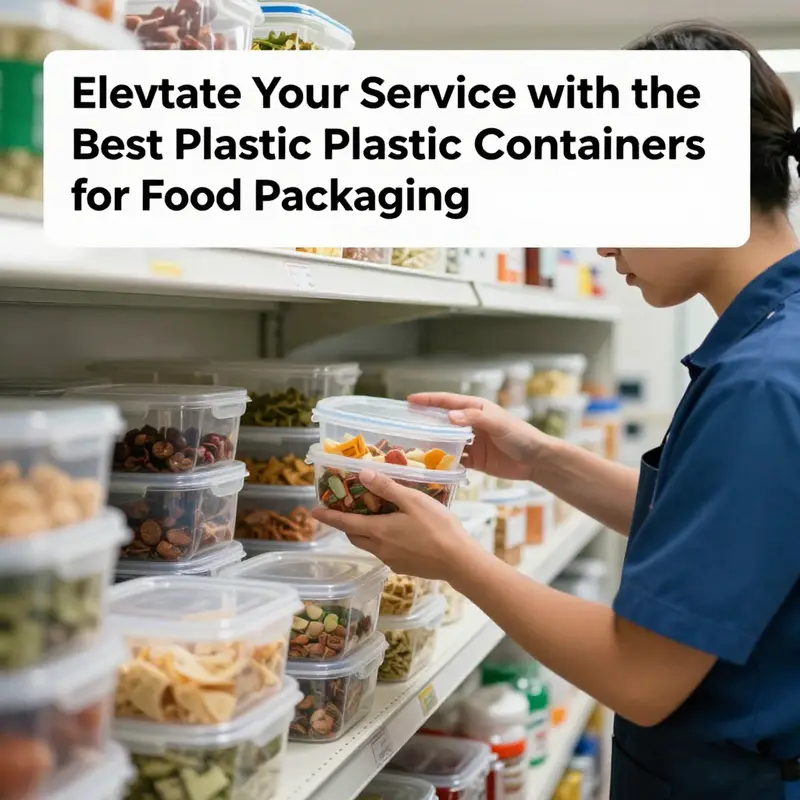
Choosing the right plastic container for food is not merely about size or color. It is about reading the materials, certifications, and the intended use with an eye for safety, durability, and practicality. In kitchens, meal-prep stations, and retail displays, the best options emerge when a decision follows a method grounded in material science and common-sense design. This chapter threads together what industry standards and laboratory insights say about three plastics that dominate food packaging—polypropylene and the broad family of polyethylene—while also clarifying why other plastics are less suited for repeated use or high-heat applications. The aim is to move beyond slogans and toward a roadmap you can apply whether you are stocking a home cabinet, equipping a school lunch program, or planning a small-scale food service operation. Central to this approach is the recognition that not all plastics are created equal in the kitchen, and the choice you make depends as much on how the container will be used as on what it is made from.
Polypropylene, commonly known by its resin code, is often the first material that comes to mind for those seeking a reliable, reusable solution. Its safety profile is strong, and it is renowned for heat resistance that makes it a practical option for containers that will face the microwave and the dishwasher. In homes where lunch boxes and batch meals travel from fridge to microwave to table, the ability to heat food safely and evenly is not a luxury—it is a baseline expectation. PP’s heat resistance stems from a relatively high melting point, typically near 160°C, which means that ordinary household reheating does not push it into unsafe territory. This characteristic, combined with excellent impact resistance, helps PP containers withstand daily wear and tear—knocks, drops, and the occasional rougher handling in busy kitchens. For users who emphasize longevity and repeated use, PP becomes a natural default, provided the container is clearly labeled as food-grade and carries the appropriate safety certifications. In practice, you will find PP in many standard, microwave-safe containers designed for meal prep, kid-friendly lunch boxes, and durable storage options that survive regular cleaning in home or commercial settings. A key detail here is the labeling: look for a clear “food-grade” indication and verify the resin code #5 on the bottom, which signals polypropylene and aligns with mainstream recycling streams in many regions. This is not just a matter of compliance; it is a practical signal that the container was manufactured with safety-conscious standards in mind and is designed to minimize chemical migration under normal use. The importance of this cannot be overstated when you are packing hot foods or leftovers that will later be reheated in the same vessel. The material’s stability, combined with robust sealing mechanisms, helps protect the flavor and integrity of the contents while reducing the risk of odors and stains from lingering foods.
The polyethylene family also plays a central role in safe food packaging, but it is not a monolith. HDPE and LDPE each bring distinct properties that make them fit different roles in the family of reusable and disposable containers. High-density polyethylene is a rigid, hard, and highly resistant material. It is celebrated for chemical stability and robust impact resistance, attributes that suit rigid, durable containers such as those used for milk, juice, and various solid or semi-solid foods. HDPE’s rigidity translates into long-lasting containers that resist crushing or deformation, which helps prevent leakage and keeps contents secure during transport. It is commonly used for drinking bottles, jugs, and sturdy food-storage vessels. Importantly, while HDPE is excellent for safety in direct contact with food, its heat tolerance is more limited than PP’s; it is generally not considered microwave-safe. This limitation means you should reserve HDPE for cold or room-temperature storage or for foods that will be reheated in a separate vessel rather than in the HDPE container itself. The resin code #2 on HDPE signals its identity to manufacturers, recyclers, and consumers alike, guiding proper disposal and recycling in many municipal programs. In kitchens and classrooms that favor durability over the occasional heat episode, HDPE stands as a workhorse for sturdy storage and transport containers that carry heavy or briny contents without fear of warping or chemical migration.
LDPE, with its lower density and greater flexibility, broadens the spectrum of safe contact plastics in food packaging, especially where wrap-like properties are needed. This form of polyethylene is softer and more pliable, attributes that make LDPE ideal for plastic wraps, bags, and pouches used to package fresh produce, baked goods, and other perishables. LDPE’s flexibility also provides a certain resilience against tearing or punctures in everyday handling, which can be a valuable feature when bags or pouches are opened and reclosed multiple times. Because LDPE tends to be softer and more permeable to light and odors than HDPE or PP, it is generally intended for contact with foods at ambient temperatures or during short-term storage rather than for long-term, high-heat applications. The resin code for LDPE is #4, a reminder to users and recyclers alike of its place in the plastics ecosystem and the appropriate disposal path in communities that accept LDPE or LDPE-derived products. When you combine LDPE for wrapping and HDPE for rigid containers with PP for heat-ready components, you create a versatile toolkit for food packaging that covers a broad spectrum of use cases—from short-term storage to simple reheating scenarios that stay within safe material boundaries.
While PP and the broader PE family form the backbone of safe, reusable packaging, it is equally important to understand the limitations and the contexts where other plastics are less suitable. PET, known by its resin code #1, is ubiquitous in single-use beverage bottles and certain short-term packaging applications. PET is lightweight and highly transparent, which makes it appealing for consumer markets that prize visibility. However, PET is not typically recommended for repeated use or for high-temperature applications. Repeated cycles of washing or exposure to heat can lead to deformation, and under higher temperatures some substances may migrate from PET into food, raising concerns about long-term safety. PET’s strength lies in cold or room-temperature storage and single-use applications rather than as a durable, reusable storage vessel. This caveat matters in environments where containers must endure a cycle of washing and repurposing without compromising safety and quality.
Another material worth mentioning—though often avoided for direct food contact at high temperatures—is polystyrene, coded as #6. Polystyrene is known for its clarity and rigidity, which has made it popular for some fast-food cups and takeaway boxes. Yet, many forms of PS are not heat-tolerant, and some types, particularly the foam variants, can permeate heat more readily and may release substances when exposed to hot foods or microwaves. Because of these concerns, PS is generally discouraged for hot meals or reheating, and its use for repeated contact with food is increasingly scrutinized in favor of safer, more stable alternatives. Likewise, PVC, with resin code #3, has fallen out of favor for direct food contact in many markets because of potential health and environmental risks. The trend in modern packaging is toward PP and PE-based solutions for their favorable balance of safety, durability, and recyclability.
Once you have a sense of the material profiles, the next step is translating those profiles into practical selection criteria. The label on a container should say “food-grade,” but that is only the first cue. Certifications from recognized authorities—such as the United States Food and Drug Administration (FDA) or the European Food Safety Authority (EFSA)—provide a more rigorous assurance that the material has been evaluated for contact with food under defined conditions. In practice, this means looking for explicit mentions of compliance with relevant standards and a clear indication that the container is safe for the intended use, whether that involves reheating, freezing, or long-term storage. The temperature range printed or implied by symbols on the container is another critical clue. A PP-based container often carries symbols indicating microwave suitability and dishwasher compatibility, along with cold or freezer-use icons. A storage-oriented HDPE vessel may emphasize sturdiness and leak resistance but omit heat-related icons, signaling that it is not designed for microwave heating. A LDPE wrap or bag will typically advertise flexibility and short-term use, rather than heat tolerance. Reading these cues with an informed eye is essential for preventing misapplication that could compromise safety or performance.
In addition to certifications and symbols, the practical design features of a container should align with how you intend to use it. A good food-grade container should offer a reliable seal to prevent odors, keep moisture in or out as needed, and resist staining from common foods. The best-sealing lids frequently incorporate a gasket to limit air exchange and retard microbial growth or oxidation that can spoil flavors. For users who transport meals or store them in stacks, the design should support stable nesting and secure stacking. Interlocking bases and lids prevent tipping during transit and enable efficient shelf or fridge space. The overall geometry matters too: rigid PP and HDPE containers should maintain their shape under packed weight, while LDPE pouches and wraps should protect produce without tearing when carried in a bag or lunch box. In short, the choice of material sets the safety and heat-handling boundary, but the container’s geometry, sealing system, and compatibility with cleaning methods define the day-to-day reliability and longevity.
A decision framework emerges when you align material strengths with your real-world routines. If you routinely reheat in the same vessel, PP becomes the leading candidate, thanks to its higher heat tolerance and robust dishwasher compatibility. If you need a hard, impact-resistant storage option that will see frequent handling, HDPE’s rigidity and chemical resilience make it a strong choice, provided you do not intend to microwave it. For flexible packaging, wraps, or bags used to protect perishables during quick trips to the market or pantry organization, LDPE brings the right balance of conformability and safety. The overarching rule is to select containers with clear food-grade labeling and to respect the material’s intended use window. Do not repurpose a container beyond its design range, such as heating food in an HDPE vessel or relying on LDPE wrap for long-term, high-heat storage. And always consider the life cycle of the packaging: prioritizing containers that balance durability with recyclability helps close the loop toward more sustainable consumption.
A practical, user-facing summary emerges from all these points. For most households or small operations that emphasize repeated use and moderate heat exposure, polypropylene remains the top recommendation. It provides a reliable blend of heat tolerance, mechanical strength, and compatibility with common cleaning methods, including dishwashing. When the application calls for rigid, heavy-duty storage that will not be heated, HDPE is a natural fallback due to its chemical stability and resilience to physical wear. For applications where flexibility and lightweight transport are the primary needs, LDPE offers a safe, pliant option, especially for packaging fresh produce or baked goods that will be consumed within a short window. In all cases, the container should carry the label of a food-grade material and the corresponding resin code to guide safe use and recycling. It is equally important to avoid older or non–food-grade plastics that may look similar but could pose health risks through additive migration. By combining material knowledge with thoughtful design and clear labeling, you can assemble a packaging system that not only keeps foods safe and appetizing but also respects broader considerations of waste and sustainability.
The best practice, then, is not a single material choice but a disciplined approach to material selection that places safety, use-case alignment, and end-of-life considerations at the center. When shopping, prioritize PP for heat-ready, reusable containers (#5), HDPE for sturdy, non-heating storage (#2), and LDPE for flexible wraps and bags (#4). Always verify the “food-grade” claim and check that the container’s temperature guidance aligns with your planned use. In doing so, you transform packaging decisions from guesswork into a predictable, repeatable process that protects food quality, promotes safety, and supports a more sustainable packaging ecosystem. For those seeking a concise reference on how resin codes relate to durability and safety in practice, the following external resource offers a focused overview: https://www.foodsafety.gov/blog/2026/01/plastic-resin-codes-durability/.
Final thoughts
Choosing the right plastic containers for food packaging is essential for ensuring food safety, quality, and customer satisfaction. Polypropylene and Polyethylene offer numerous advantages tailored to diverse food service needs. By understanding the roles of these materials and adopting best practices in selection, businesses can enhance their service and protect their offerings. With informed choices, food service operators can elevate their brand image and operational efficiency, leading to a better experience for both staff and customers.