
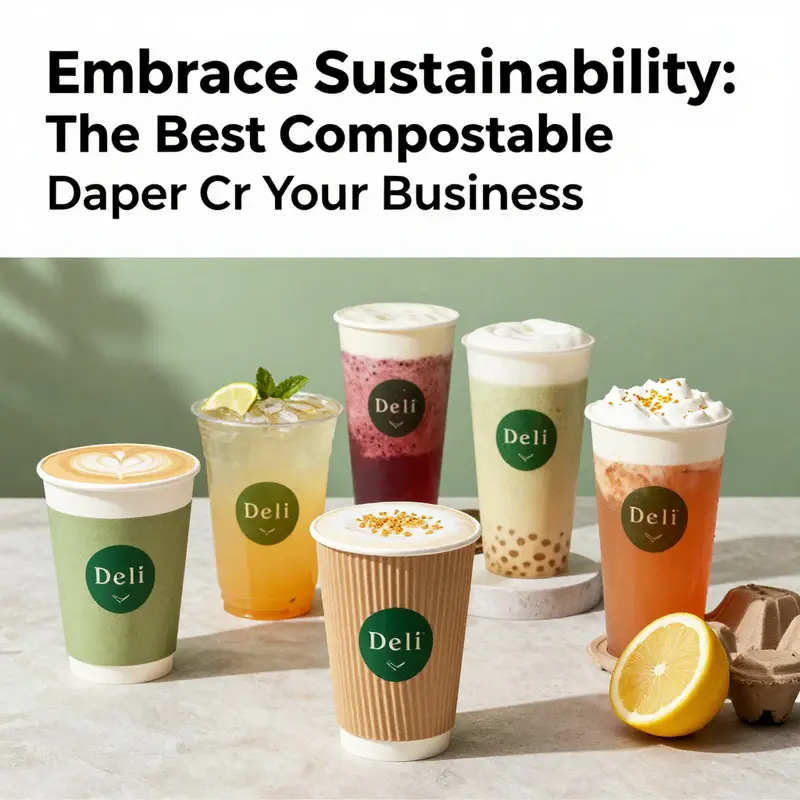
In a world increasingly focused on sustainability, choosing the right disposable cups for your business is pivotal. As experts in the beverage industry, bubble tea shops, restaurants, food trucks, catering services, event planners, and corporate procurement teams must look beyond functionality to embrace ecological responsibility. This article delves into the benefits of compostable paper cups with a focus on Deli’s innovative bamboo fiber cups. Each chapter explores various dimensions of these cups, from their unique material composition and performance features to the economic and societal implications of adopting eco-friendly solutions. Get ready to elevate your environmental footprint while maintaining the quality and service your customers expect.
The Bamboo Frontier: Redefining Eco-Friendly single-use Cups Through Fiber and Certification
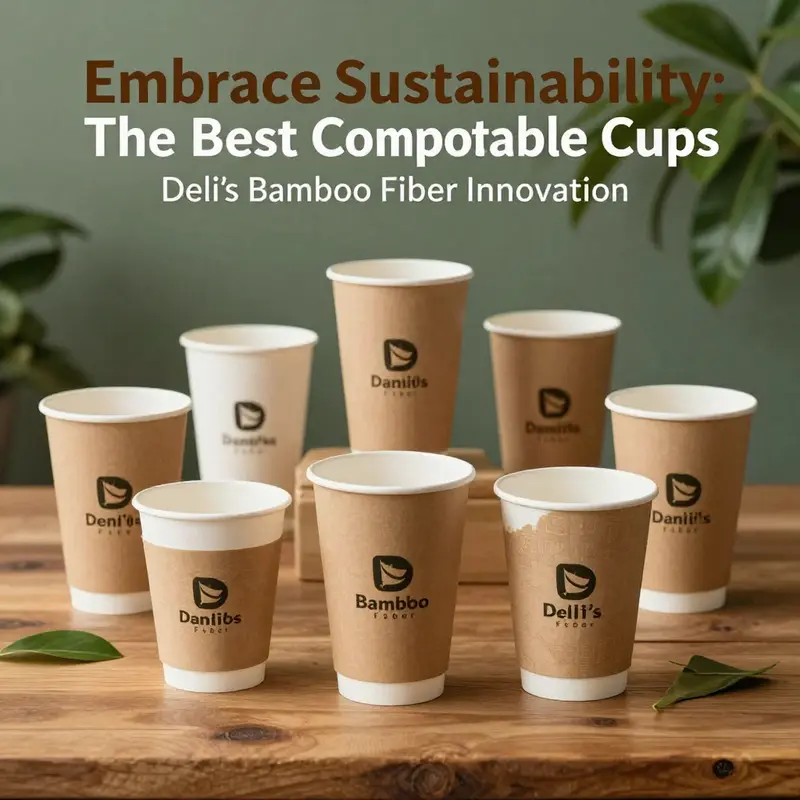
A broad shift is quietly remapping how businesses think about single-use drinkware. Compostable paper cups have emerged from the margins of sustainability into the mainstream of everyday service—cafes, offices, events, and curbside takeout alike. At the heart of this shift is a material choice that reframes the lifecycle of a disposable cup: bamboo fiber. This fast-renewing resource offers a compelling alternative to conventional paper cups that rely on plastic liners. In practical terms, bamboo fiber cups can be designed to break down in industrial composting streams with far less lingering impact than traditional polyethylene (PE)-lined counterparts. The result is not merely a greener end of life, but a cleaner path from production to waste management. As businesses seek to minimize their environmental footprint without sacrificing reliability or customer experience, bamboo fiber cups have become a focal point for innovation and authenticity in sustainable packaging. They embody a philosophy that aligns material science with waste stewardship, a combination that matters to suppliers, operators, and consumers alike.
The material itself carries meaningful advantages beyond the broader narrative of renewability. Bamboo grows rapidly and with relatively modest inputs, which translates into a smaller ecological footprint compared with many other woody sources. The fibers derived from bamboo can be processed into a sturdy cup body without the heavy reliance on petrochemical components. This is more than a technical preference; it signals a commitment to reducing plastic pollution at the source. When these cups are designed for industrial compostability and certified accordingly, they offer an end-of-life option that is as responsible as the front end is efficient. In many markets, this combination of fast growth, structural integrity, and certified biodegradability is what causes a shift in procurement decisions. Brands that prioritize environmental performance increasingly favor bamboo fiber for its potential to decouple consumption from long-term waste implications.
The performance narrative is not just about how long a cup lasts in a hand or a heat test under a barista’s gaze. It also encompasses the design language that makes a compostable cup practical in real-world settings. A leading bamboo-fiber cup line often features a high-precision forming process, sometimes described as a high-pressure screw-thread technique, which yields a body that resists leaks even when filled with hot liquids. This matters because a cup’s physical reliability is inseparable from its environmental story. If a cup leaks or deforms easily, it undermines both customer trust and the perceived value of a sustainable alternative. Equally important is the packaging profile. A collapsible, fold-flat design can dramatically reduce storage and transportation costs for cafés, catering outfits, and event organizers. By lowering logistical friction, such cups become not just greener but more economical to deploy at scale, amplifying the impact of sustainability investments.
Beyond raw material and form, the lifecycle narrative hinges on clear, credible standards. Industrial compostability is not a vague promise; it is backed by recognized certifications. Bamboo-fiber cups that carry certifications from bodies like the Biodegradable Products Institute (BPI) and that comply with ASTM D6400 demonstrate that the product can break down in defined commercial facilities within a predictable time frame. This assurance matters for buyers in both regulated and self-imposed sustainability contexts. It also clarifies expectations for waste processors and municipal programs. The outcome is a cleaner separation of organic waste from other streams, which reduces contamination in compost facilities and supports consistent downstream results. When a cup reaches the end of its life, the goal is to leave behind water, carbon dioxide, and organic matter, not microplastics or persistent residues.
The sourcing and supply chain story for bamboo fiber cups also shapes their real-world viability. Bamboo’s reputation as a sustainability-friendly fiber is matched by practical considerations about where and how these cups are produced. The strongest production ecosystems tend to cluster in regions with mature paper-conversion expertise and existing green manufacturing incentives. In these hubs, the combination of scale, technical know-how, and environmental governance can yield products that meet stringent compostability criteria while remaining cost-competitive with traditional alternatives. A growing portion of the supply landscape emphasizes not only the material’s performance but also the ability to offer customization and branding through neutral or natural aesthetics. The color palette—uncoated white, matte neutrals, and gentle hues—supports minimalist branding while keeping the emphasis on environmental integrity. This pairing of functional performance with thoughtful design is crucial for brands aiming to convey a credible sustainability message to customers who weigh both product experience and ecological impact.
For buyers who want both reliability and transparency, there is a broader ecosystem of information and options to explore. The bamboo-fiber approach is not a one-size-fits-all solution; it invites comparisons across factors such as density, insulation, heat tolerance, and compatibility with branding strategies. Trade-offs exist: some designs optimize insulation for hot beverages, while others emphasize stackability and branding spaces for logos and colorways. Which path a buyer chooses depends on the intended use context, the expected lifecycle of the serviceware, and the venue’s waste-management capabilities. A critical insight is that compostability certifications do not merely signal end-of-life performance; they also reflect a commitment to a responsible supply chain, from raw fiber sourcing through to end processing. When a business aligns with suppliers who operate under robust certification regimes, it improves the odds that its sustainability claims will withstand scrutiny and resonate with discerning consumers.
An increasingly salient consideration for procurement teams is the balance between cost, performance, and environmental benefit. Bamboo fiber cups offer a compelling value proposition, yet price dynamics, minimum order quantities, and long-term supplier commitments shape purchasing decisions just as much as the material’s environmental calculus. The economies of scale available in coastal manufacturing corridors, reinforced by green business incentives and a mature paper-converting industry, can help close the gap between sustainability ideals and practical price points. This affordability is essential for widespread adoption in high-volume venues such as coffee chains, university campuses, and large-scale events where the number of cups used can be substantial. The goal, then, is not only a product that performs well and decomposes cleanly, but also one that fits within the budgeting realities of organizations striving to minimize waste without compromising service quality.
Branding and consumer-facing design play a subtle but important role in the adoption of bamboo-fiber cups. Neutral, naturally finished cups offer a canvas for logos, messaging, and seasonal campaigns, while maintaining a modest and authentic aesthetic. The material’s appearance and tactile qualities can reinforce a consumer perception of sustainability that goes beyond mere reuse or reduction; it becomes a tangible demonstration of a company’s values. In this sense, the choice of bamboo fiber connects product engineering with storytelling, enabling brands to communicate a coherent narrative about environmental responsibility, responsible sourcing, and end-of-life stewardship. Consumers increasingly expect such coherence, and when it is present, it reinforces trust and encourages more mindful consumption. This is not simply about swapping one material for another; it is about aligning every touchpoint—threaded lids, sleeve packaging, and even the microwave-safe convenience—with a broader commitment to the circular economy.
For those who want to examine the practical side of sourcing, it helps to look at specific examples of how supplier ecosystems frame these choices. Some manufacturers emphasize the ability to offer eco-friendly, printed-logo versions on single-wall cups, a feature that supports corporate branding without compromising compostability. The existence of such options illustrates how the market is moving toward composition-aware customization. It also highlights the role of supplier-led innovation in extending the usefulness of compostable cups across different service models. To learn more about one such supplier page that demonstrates this approach, you can explore the disposable-eco-friendly-printed-logo-single-wall-paper-cup resource. disposable-eco-friendly-printed-logo-single-wall-paper-cup
Looking ahead, the bamboo-fiber path points toward a future in which the environmental benefits of compostable cups are reinforced by rigorous industry standards, scalable production, and clear consumer value. As the market matures, decision makers will increasingly favor material choices that demonstrate verifiable sustainability, practical performance, and resilient supply chains. The challenge will be maintaining a transparent dialogue among producers, waste managers, and end users so that compostability is understood not as a marketing gimmick but as a credible, measurable outcome. When these elements converge—fast-renewable bamboo, robust manufacturing processes, credible certifications, and design that emphasizes end-of-life clarity—the result is a packaging option that aligns with the escalating demands of a circular economy. This is more than a trend; it is a structural shift in how disposable cups can and should be treated within a sustainable foodservice ecosystem.
External resource: For a broader industry perspective on global compostable-cup sourcing and pricing, see the following external reference: https://www.alibaba.com/product-detail/Compostable-Cup-Suppliers-from-China-Verified_1600534275383.html?src=shop&productType=1
Bamboo Advantage: Rethinking the Best Compostable Paper Cups Through Material Innovation and Design
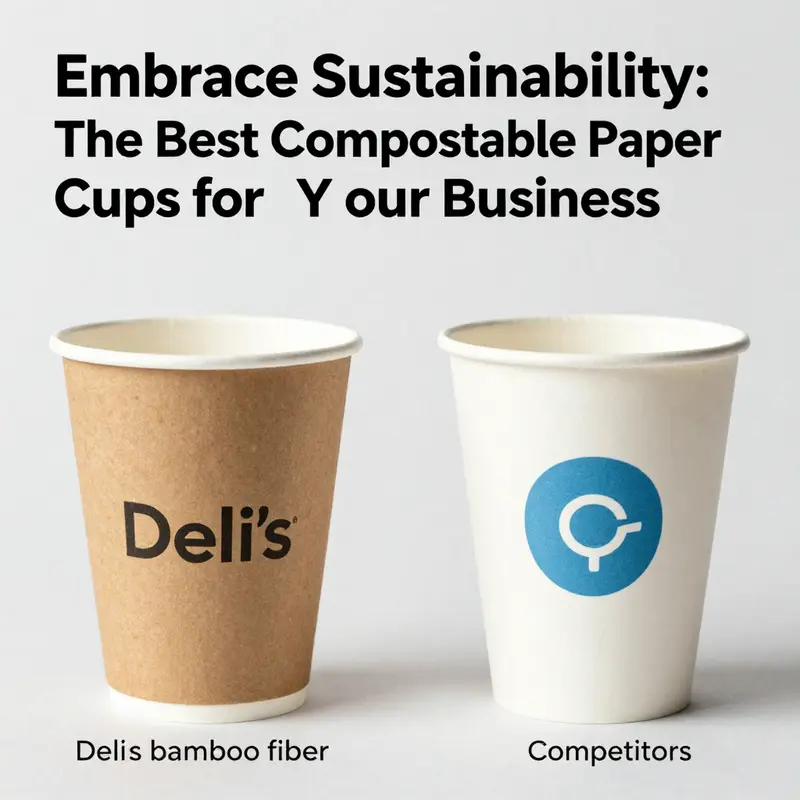
The shift toward compostable paper cups has moved beyond mere marketing claims and into a field shaped by material science, manufacturing realities, and end-of-life outcomes. In this evolving landscape, a bamboo-fiber cup emerges as a compelling example of how the choice of raw material can influence both performance and environmental impact. The bamboo fiber option is not simply a different fiber mix; it embodies a philosophy that prioritizes renewability, reduced chemical load, and a natural pathway toward compostability. For end users and buyers alike, this material choice translates into a cup that is more than a container—it is a statement about how products can be designed to respect natural cycles while still delivering a consistent experience during use. When we examine the market through that lens, the bamboo-fiber cup often stands out as the most coherent solution for those seeking true compostability without sacrificing reliability in everyday service. Material choice matters because it anchors the entire lifecycle: sourcing, manufacturing, usage, and ultimate breakdown in a composting stream. If a cup fails to break down in a reasonable time or leaves trace residues that complicate industrial composting, then its environmental promise becomes hollow, regardless of other clever features. Bamboo fiber, as the anchor of this approach, brings a combination of rapid renewability and cellular structure that can support both sturdiness and biodegradability. The fiber’s natural properties help create a cup that resists deformation under typical handling while maintaining a profile that composting facilities can recognize as a favorable input. In an era when consumers increasingly demand transparency about what goes into a product and what comes out of it, bamboo fiber provides a narrative that aligns with many sustainability criteria. Yet material alone cannot carry the day. The practical viability of a compostable cup rests on the interplay between material science and thoughtful design, including how the cup is formed, how it interacts with hot liquids, and how it can be reliably disposed of after use. The development story behind a bamboo-fiber cup often centers on a manufacturing process that prioritizes a strong, leak-resistant body without resorting to plastics or other long-lived inputs. One notable approach involves a high-pressure screw-thread process that strengthens the cup body, delivering a robust structure capable of resisting collapse or seepage when filled. This design choice is not merely about durability during use; it also contributes to post-use outcomes, since a sturdier cup is less likely to fail in transit to a disposal stream, reducing the risk of spillage that can complicate cleaning protocols at collection points. In practice, this means that a well-executed screw-thread design creates a reliable vessel for beverages that many customers expect to be both convenient and safe to handle. The marriage of bamboo fiber with a precision threading technique thus represents a convergence point where sustainability and user experience reinforce each other. Smarter design reduces the likelihood of leakage, which in turn supports a cleaner, more predictable composting process. This is not an abstract benefit: it translates into fewer contaminated streams, easier sorting at facilities, and a higher probability that the cup will re-enter a biological cycle rather than linger in a landfill. The material’s inherent properties and the sturdy construction together influence how well such cups perform in real-world settings—from casual coffee breaks to bustling event environments. As consumers, we notice the tactile feel, the warmth retention, and the absence of condensate on the exterior; as operators, we notice the uniformity of production, the consistency of lid compatibility, and the predictability of end-of-life outcomes. The market landscape for compostable cups often highlights a spectrum of features, with water and oil resistance, microwave safety, and temperature tolerance rarely far behind the core claim of being compostable. In many product lines, sizes range from compact 8-ounce servings to larger 12, 16, and even 22-ounce capacities, with some options marketed in milliliter equivalents like 230 ml or 340 ml. These capacities matter because they map to different usage scenarios—from quick-service beverages to premium or on-site catering needs. The ability to handle hot liquids without risking burn-through or deformation is frequently tied to wall thickness, insulation strategy, and the precise materials selected for construction. Double-wall insulation, when present, adds a layer of thermal protection that enhances comfort for the user and reduces the exterior heat transfer, albeit with additional material and production considerations. The design scope also extends to lids, which must align securely with the cup body while supporting a user-friendly experience for quick-handed service. A well-integrated system of cup and lid contributes to leak resistance, a critical factor for both customer satisfaction and the containment of liquids within a composting facility’s workflow. On the environmental credential side, buyers increasingly look for credible certifications that attest to compostability rather than relying on vague or unverified claims. Certifications such as OK Compost or certified BPI status provide independent validation that the product can break down under standardized industrial composting conditions. Buyers should also seek transparency about material sourcing and manufacturing practices, including evidence of reduced or avoided plastic content, the use of kraft-based packaging, and clarity about whether any coatings or barrier layers compromise compostability. The absence of a universal standard can complicate decision-making, but a rigorous approach—checking for certifications, requesting test reports, and seeking manufacturers with transparent supply chains—helps ensure that the chosen cup aligns with both consumer expectations and environmental goals. Despite the clear advantages of bamboo fiber paired with a robust design, the market presents a variety of options that claim compostability, often with differing levels of performance and price. Some competitors emphasize thickness and structural resilience, which can improve spill resistance and hot drink handling, yet may introduce trade-offs in composting performance if additives or coatings are used. Others highlight extreme temperature resistance or specialized use cases, such as microwaveability or certain food-contact certifications, while still marketing themselves as fully compostable. In evaluating these options, one must balance the immediate consumer experience with long-term sustainability outcomes. The absence of direct, published comparative analyses between a bamboo-fiber cup and rival products in the public domain does not render such comparisons impossible; it simply requires a careful synthesis of what is known about material properties, manufacturing practices, and end-of-life pathways. This is a narrative that invites buyers to look beyond color and texture to the lifecycle implications of their choices. If the bamboo-fiber option is pursued, the path toward responsible selection involves verifying the specific material composition, confirming the presence of an appropriate coating or absence thereof, and validating the packaging approach that accompanies the cup. The customer journey becomes more meaningful when buyers can articulate that the cup’s compostability is not an afterthought, but a core feature supported by credible testing, a clear route to industrial composting facilities, and a supply chain that minimizes environmental compromise. In practice, this means a decision framework that integrates three pillars: material integrity, performance during use, and environmental end-of-life outcomes. Material integrity is about the bamboo fiber’s ability to withstand everyday handling, maintain structural integrity during hot beverage service, and resist leakage when subjected to typical stacking and transport. Performance during use encompasses both user experience and operational realities, including lid compatibility, insulation quality, and the cup’s ability to maintain temperature without excessive exterior heat or condensation. Environmental end-of-life outcomes focus on whether the cup truly conforms to compostability standards and can be processed efficiently in commercial composting streams. It is here that the absence of universal data becomes a signal rather than a weakness: buyers should request certification proof, independent test results, and a transparent bill of materials. The market is moving toward standardization in some regions, with several jurisdictions implementing or recognizing compostability certifications that help align consumer expectations with processing realities. In this context, the bamboo-fiber cup’s appeal extends beyond its immediate advantages. It embodies a broader trend toward bio-based and rapidly renewable materials that can contribute to a circular economy when properly managed. For practitioners in hospitality, events, and foodservice, the practical implications are clear: a cup that combines renewability with reliable performance and a credible composting pathway can support a brand’s sustainability narrative while preserving the guest experience. Yet it remains essential to navigate the landscape with diligence. Because the chapter’s objective is not to exalt one option over all others but to illuminate how material and design choices shape compostability, buyers should adopt a methodical evaluation approach. They should examine the raw material supply chain, assess the packaging and coatings’ compatibility with composting, verify certification claims, and confirm the provider’s ability to support ongoing stewardship from production through disposal. In the absence of a single, definitive benchmark, a well-constructed appraisal process offers a pragmatic pathway to identify a cup that truly aligns with sustainability ambitions without compromising usability. For readers seeking a concrete example of related product ecosystems, consider exploring a packaging range that emphasizes eco-friendly, single-wall cups with lids as a reference point for how a supplier can integrate design efficiency with green claims. This kind of resource can help buyers visualize how the practical attributes discussed here translate into real-world choices, especially when evaluating options from multiple manufacturers. See this related product page for an illustration of an eco-friendly, printed-logo single-wall cup with a lid in a packaging system that emphasizes sustainability and clarity of messaging while maintaining usability in fast-service contexts. eco-friendly printed-logo single-wall paper cup with lid. Beyond this, the broader market has a number of suppliers offering compostable, plastic-free alternatives across a range of sizes and configurations, including both hot- and cold-beverage options, as well as packages designed for food service use and event settings. The price spectrum typically mirrors material and process complexity, with costs influenced by scale, customization potential, and required certifications. In practice, buyers should weigh the value of a disclosed life-cycle story against the price per piece and a supplier’s capacity to provide consistent supply and reliable post-sale support. The interplay of material science, production engineering, and environmental policy is increasingly important for any organization seeking to reduce its plastic footprint while maintaining a high standard of service. While no singular product appears in the public record as the unequivocal best across all contexts, the bamboo-fiber option encapsulates a compelling combination of renewability, sturdiness, and end-of-life compatibility that aligns with contemporary sustainability priorities. For teams planning large-scale deployments, this alignment can translate into meaningful reductions in plastic use, clearer branding around sustainability claims, and a simpler compliance picture when certified compostability is part of procurement requirements. The narrative is not about chasing a universal standard of “best”; it is about recognizing how a material choice, paired with careful design decisions, yields a cup that behaves well in consumption and disposability alike. As the market continues to evolve, buyers will benefit from ongoing transparency, independent verification, and product innovations that reduce weight, lower energy intensity in manufacturing, and simplify the logistics of end-of-life processing. In this light, the bamboo-fiber cup stands as a focal point for a thoughtful, lifecycle-aware approach to packaging in a world increasingly attentive to sustainability, waste reduction, and consumer trust. External resources and comparative insights can help to ground decisions in established practices and testable outcomes, ensuring that the path toward better compostable cups remains anchored in both performance and responsibility. External resource: https://www.alibaba.com/product-detail/Compostable-Kraft-Paper-1-4oz-Sauce-Cups-with_1600734892878.html
Plant-Powered Performance: How Bamboo Fiber and Biopolymers Shape the Best Compostable Paper Cups
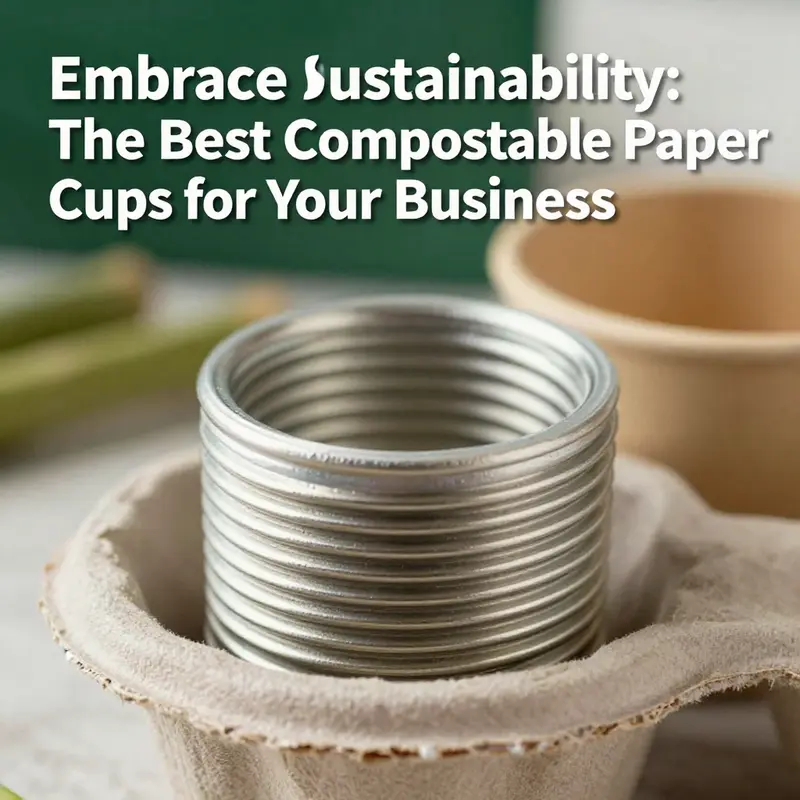
The shift from plastic-lined disposables to compostable paper cups marks a decisive turn in how food and beverage providers think about waste, branding, and the practical realities of daily use. The best cups in this growing category balance three core imperatives: effective liquid containment, consumer-friendly handling, and an ecological footprint that aligns with rising expectations for responsible packaging. At the heart of this balance lies material innovation. On one side, plant-based barrier systems replace traditional polyethylene linings, using biopolymers like polylactic acid, or PLA, derived from renewable resources such as cornstarch or sugarcane. On the other side, the increasingly common option of bamboo fiber as the substrate points to a deeper, ongoing rethinking of what ‘paper’ can be made from. Taken together, these choices create a cup that can perform reliably in real-world settings—hot coffee, cold beverages, and everything in between—while offering a path to disposal through industrial composting streams or, in some cases, home-based systems where conditions permit. The result is a product that is not merely less wasteful than its predecessors but distinctly more aligned with modern sustainability narratives, where the entire lifecycle of a cup—from raw material to final fate—gets a careful accounting.
Material composition and coating technology drive much of this shift. The core move is to reduce or eliminate petroleum-based linings that once guaranteed moisture resistance but created persistent waste. In place of these layers, plant-based biopolymers provide a barrier that can resist water and oil long enough to transport beverages to the consumer and support a range of temperatures. PLA, in particular, has become a standard due to its renewable origins and its behavior under controlled composting environments. PLA-decorated or PLA-impregnated coatings can form a continuous, predictable shield that keeps flavors from seeping into the paper and prevents the cup from losing its integrity when a hot drink is poured in. The surface may also feature coatings based on cellulose or other bio-based polymers that add stiffness and printing compatibility without compromising compostability. The interplay of these layers is critical: a cup must hold up during the moment of use and then degrade predictably when it reaches the appropriate composting facility.
Beyond the barrier itself, the structural design of the cup matters just as much as the chemistry. The most robust options in this category use higher-grade paperboard—often kraft or bleached board—paired with thoughtful geometry. A double-wall construction is increasingly common for hot beverages, providing a comfortable grip and an insulating barrier that helps keep hands cool while preserving beverage temperature. Yet these cups still face limits. PLA’s heat resistance, while suitable for most coffee and tea applications, is not equivalent to that of traditional PE-coated cups when exposed to microwaves or extremely high-temperature scenarios. This constraint is rarely a deal-breaker in typical service contexts, but it informs where and how these cups are best deployed. The overall performance, therefore, rests on a careful choreography: the inner barrier must seal effectively against liquid and oil, the outer wall must resist deformation under thermal load, and the entire assembly must withstand routine handling without leaking or collapsing.
Material choices also influence the environmental profile in meaningful ways. Bamboo fiber, for example, offers a rapid-renewal feedstock with lower input demands in some growing conditions than other wood-based fibers, while contributing a distinctive natural character to the cup’s texture and appearance. For operators, this translates into a compelling narrative: a cup that signals a genuine commitment to sustainability without sacrificing everyday practicality. When combined with PLA-based barriers and well-engineered wall construction, bamboo fiber cups support credible responsibility claims that can resonate with customers who seek products that align with broader ecological goals.
The market for these cups has evolved to reflect both consumer expectations and the operational realities of businesses that depend on them. Many eateries, event organizers, and workplaces are choosing compostable cups because they want to project a forward-looking image and because customers increasingly view composting as a responsible end-of-life option. The branding opportunity is clear: a cup that communicates sustainability at a glance can reinforce broader commitments, from sourcing to waste management. This is where design features become more than technical details; they become communication tools that help people understand how an organization treats resource use and waste. Print quality, surface smoothness, and the ability to carry branded messaging without compromising the barrier or the biodegradation profile are all part of the equation. A smooth surface not only makes for vivid logos and information but also supports even application of coatings that protect the cup during use and digestion during composting.
In practice, the best compostable cups are designed to perform across a range of beverages, including hot coffees and cold teas alike. The thermal realities demand a balance: the cup must resist liquid penetration even when a hot drink is held for several minutes, while the barrier materials should not degrade or alter the beverage’s flavor. For cold beverages, the barrier should prevent condensation from weakening the cup’s integrity and help minimize leaks or structural failures during transportation. The evolving designs also consider the end stage of use. The absence of synthetic plastics means the entire cup can be composted in certified industrial facilities, reducing landfill burden and lowering the carbon footprint associated with disposal. Where home-compostable options exist, they are marketed with clear expectations about their conditions and timelines, which helps users manage expectations and participation in composting schemes. The net effect is a packaging option that supports sustainable sourcing, reliable performance, and a clear path to disposal that aligns with a kitchen’s or venue’s waste streams.
A growing segment of suppliers now offers disposable eco-friendly custom paper coffee cups with lid, which aligns with the above performance and sustainability targets. These options allow operators to integrate branding while maintaining the integrity of the compostable barrier and the structural design. Such offerings demonstrate that composition and design are not just about the cup’s function in the moment of use but also about how well the entire package translates into responsible waste management downstream. This is especially relevant for spaces that host frequent coffee breaks, catering events, or busy office settings, where the volume of cups in circulation makes the disposal question particularly salient. The ability to deliver consistent quality in printing and color depth helps ensure that a brand’s environmental message is not diluted by subpar packaging aesthetics. In this sense, the packaging choice becomes part of a broader communication strategy, signaling to customers that sustainability is embedded in the operation’s values.
For readers who want to explore supplier options that emphasize the eco-friendly, custom-printed, and practical dimensions of these cups, a close look at the available catalogues can be revealing. The emphasis on a clean surface for branding, coupled with the barrier performance and the material’s life cycle, suggests that the best options are those that balance aesthetic flexibility with a robust compostability story. In parallel, standardization plays a crucial role. Certifications such as industrial compostability marks provide third-party assurance that a cup will break down in appropriate facilities within a defined timeframe. These standards help brands and their customers move beyond vague green claims toward accountable, verifiable outcomes. The convergence of material science, thoughtful design, and credible certification marks a clear path forward for both manufacturers and users seeking responsible packaging.
External technical resources can deepen understanding of the technical landscape, including the nuanced behavior of compostable cups in various environments. For readers seeking additional detail on specifications, grades, and practical applications, a comprehensive technical overview is available through a dedicated technical resource: https://www.benjaminross.com/compostable-paper-ice-cream-cups-technical-specifications-grades-applications/.
Additionally, many suppliers emphasize practical deployment considerations. They highlight the importance of standardization in dimensions, lids, and sleeve compatibility to avoid misfits that could undermine performance or user experience. With coils of paperboard engineered to maximize strength while preserving biodegradability, the alignment of lid design with cup geometry becomes a simple yet critical factor in leak prevention and overall reliability. The broader takeaway is that the best compostable cups emerge from a holistic view that treats materials, coatings, construction, certification, and branding as integrated elements rather than isolated choices. When a supplier can demonstrate a coherent story across these dimensions—from bamboo fiber sourcing to a PLA barrier and from double-wall design to credible third-party certification—the result is a packaging option that can genuinely support sustainable operations while maintaining high standards for everyday use.
For internal readers looking to compare product lines and propagate best practices within their teams, an accessible entry point into the broader ecosystem is the range of eco-friendly, customizable paper cups with lids offered by suppliers who clearly articulate the lifecycle benefits of their products. Such offerings illustrate how the material and structural choices translate into tangible advantages for service providers and end users alike, reinforcing that sustainability and performance are not mutually exclusive. The emphasis remains on choosing a cup that holds up under pressure, delivers on its barrier performance, and participates in a credible end-of-life pathway. In this way, the best compostable cups become more than a packaging choice; they become a practical expression of a company’s commitment to responsible operation, a feature that customers recognize and appreciate across foodservice, hospitality, and events.
External resource: https://www.benjaminross.com/compostable-paper-ice-cream-cups-technical-specifications-grades-applications/
Bamboo-Fiber Cups and the Economics of Sustainability: Why the Best Compostable Paper Cups Make Sense
The shift toward compostable paper cups is more than a simple preference for greener branding. It represents a careful recalibration of how a business treats materials, waste, and the end-to-end life cycle of a product. Among the options that sit at the intersection of performance and responsibility, a bamboo-fiber disposable cup emerges as a standout. Its core advantage lies not just in the environmental virtue of bamboo but in a design and manufacturing approach that makes compostability genuinely practical for daily use. When a cup is made from bamboo fiber, the material breaks down more readily in industrial composting streams, reducing residual waste and aligning with increasingly strict regulations that curb single-use plastics. This is not a theoretical claim; it translates into real-world advantages for operators who serve coffee, tea, or hot beverages in bulk during events and in bustling service environments. The bamboo-fiber cup projects a philosophy of sustainability through its very composition, signaling a clear commitment to the circular economy to customers who increasingly expect brands to avoid opaque claims about green credentials.
Beyond material choice, the physical resilience of the cup matters as much as its compostability. A specific production approach—the high-pressure screw thread process—yields a cup body that is sturdy, reliable, and far less prone to leaks during service or transit. This design nuance matters in two critical ways. First, it preserves a positive user experience: a leak-proof cup reduces the kind of customer friction that can erode trust and lead to waste in the form of spills. Second, and perhaps more subtly, it reduces waste and disposal complications at the end of life. A robust cup that maintains integrity during consumption is less likely to be damaged in the disposal stream, which can otherwise complicate sorting and composting processes. In the context of a sustainability program, reliability and recyclability or compostability must go hand in hand; a product that is easy to use and simple to dispose of is a more effective ambassador for responsible practices.
Within the broader landscape of compostable cups, bamboo-fiber options occupy a distinctive niche. They are often highlighted in discussions of eco-friendly new choices that are gaining traction as customers seek out packaging that supports low-impact waste streams. In practice, this means that venues, retailers, and event organizers can offer a credible, compostable option without sacrificing the reliability customers expect from a premium cup. The story here is not solely about material purity but about the transmission of environmental values through every touchpoint, from the moment a beverage is poured to the moment the cup is deposited into an industrial composting stream. In an era when consumers increasingly evaluate brands by how they handle packaging, such a cup communicates a tangible commitment to sustainability without compromising performance.
The economic dimension of adopting premium compostable cups is compelling and multi-layered. For businesses in the food service and events sectors, choosing a top-tier bamboo-fiber cup can elevate brand perception and foster loyalty. Consumers are increasingly willing to pay a little more or choose a venue that demonstrates environmental stewardship. The result is not a trade-off but a potential for enhanced sales and longer-term customer retention. The reputational benefits flow into several channels: word-of-mouth advocacy, stronger social media engagement, and a perception that the brand acts with responsibility beyond the checkout counter. This reputational lift can translate into repeat visits, higher average order values, and more favorable comparisons with competitors who lag on sustainability.
Regulatory and municipal dynamics also shape the financial calculus. As single-use plastics regulations tighten, municipalities and waste management facilities are investing in industrial composting infrastructure. Cups that are certified for industrial composting help ensure that the disposal stream remains clean and efficient, reducing contamination in recycling streams and easing the burden on landfills. For businesses, this translates into more predictable waste management costs and, in some jurisdictions, incentives or tax breaks tied to sustainable packaging choices. The alignment of packaging with local waste systems can also improve compliance risk management, since certified compostable solutions reduce the likelihood of penalties stemming from greenwashing or misrepresented disposal expectations. In other words, selecting a bamboo-fiber cup is not only an environmental decision but a prudent risk-management strategy as regulatory landscapes evolve.
Sourcing plays a pivotal role in the economics of these cups. Procuring from reputable suppliers that adhere to international standards—such as ASTM D6400 for compostability or EN 13432 for packaging recovery—provides a predictable path to compliance and reliability. These certifications do more than signal eco-friendliness; they establish a baseline of performance that helps avoid the cost of regulatory penalties and reputational damage tied to non-compliant claims. In a market where quality and consistency are prized, certified products minimize supply-chain risk and simplify audits, a valuable factor for food service operations and large events that must maintain smooth, compliant operations across thousands of servings.
As production scales and supply chains mature, economies of scale begin to push premium compostable cups toward greater affordability. The sustainability premium, once a barrier for some buyers, is increasingly offset by the broader availability of bamboo-fiber options and tightening production efficiencies. This evolution matters for both small businesses piloting green programs and large operators seeking to standardize sustainable packaging across multiple locations. The financial argument for premium compostable cups, then, rests on a combination of cost parity over time, waste-management savings, and the intangible but powerful advantage of aligning with public and regulatory expectations for responsible packaging.
For those contemplating practical procurement choices, consider how a bamboo-fiber cup performs across the spectrum of use. A reliable, leak-resistant cup that also dissolves well in industrial composting streams reduces the need for post-purchase waste management interventions. It supports a cleaner recycling environment by minimizing contamination and provides a clear signal to customers about the business’s sustainability priorities. For a practical example of an affordable, plastic-free option, see this product: best-price-8oz-double-plastic-free-single-wall-paper-cup. The link points to a representative option that demonstrates how accessible these choices have become while maintaining the core values of compostability and performance. This kind of product, while not naming any single brand in this narrative, encapsulates the direction the market has taken: practical, certified options that enable a responsible packaging narrative without sacrificing service quality.
It is also worthwhile to consider the broader policy and financing ecosystem that supports such shifts. In contemporary sustainability programs, grant options and green financing are increasingly tied to demonstrable performance in waste reduction, landfill diversion, and lifecycle analysis. When a business adopts compostable cups built from bamboo fiber and backs them with credible certifications and solid supplier partnerships, it positions itself to qualify for incentives that recognize environmental performance as part of broader CSR and ESG reporting. The dividends come not only in cost savings over time but also in eligibility for programs that reward forward-looking packaging strategies, including potential access to grants or favorable financing terms designed to encourage sustainable procurement. The net effect is a reinforcement loop: improved waste outcomes strengthen public and stakeholder support, which in turn enhances market competitiveness and resilience in a sustainability-conscious economy.
To close the loop, the chapter’s thread ties back to the material and the method. Bamboo fiber, when combined with thoughtful design and robust standards, delivers a cup that is not only genuinely compostable but also trustworthy in the hands of consumers and efficient in waste streams. The high-pressure screw-thread construction reinforces the connection between form and function, ensuring that performance does not lag behind environmental claims. In a marketplace that increasingly rewards transparency and demonstrable impact, the most compelling option for many operators is a bamboo-fiber cup that performs well, aligns with certified standards, and fits within the evolving logistics of composting infrastructure. In short, choosing this type of cup is a strategic act—one that touches product quality, waste management, regulatory compliance, and the long-term economic health of a sustainable service operation.
External resource: https://www.anhuinature.com/ultimate-guide-to-compostable-paper-cups/.
Turning the Cup Into Culture: How Compostable Paper Cups Shape Habits, Waste, and Community
Every everyday choice has a quiet ripple, and the simple act of choosing a compostable paper cup is one of those seemingly small decisions that can redraw a local landscape over time. When a city, a café, or a corporate campus commits to cups made from bamboo fiber and designed for efficient composting, the impact extends far beyond the sink and the trash can. It becomes a shared commitment to waste reduction, a nudge toward more mindful consumption, and a catalyst for community-level systems that can process what we discard more responsibly. This is not merely about a product; it is about how a material choice aligns with how we live, work, and interact with the spaces we inhabit. In this light, the best compostable options elevate ordinary routines into opportunities for ecological accountability and social cooperation that ripple through households, streets, and business districts alike.
At the heart of a compelling compostable cup is its material truth. Bamboo fiber, as a primary component, embodies a principle that many environmental readers have long sought: renewability paired with a lower downstream impact. Bamboo grows rapidly, requires relatively modest inputs, and yields a cellulose-rich fiber that can be processed into a strong, functional cup without the same petroleum dependence that marks many conventional single-use options. The result is a cup that not only performs well in the moment of use—holding a hot or cold beverage without leaking or compromising grip—but also serves a longer-term environmental narrative when it enters the end-of-life system. The ecological promise of bamboo fiber cups rests on a straightforward logic: if the feedstock is renewable and the manufacturing process respects efficiency and safety, the disposal phase can be steered toward organic recovery rather than persistent waste.
Design matters as much as material. A high-quality compostable cup must resist the temptations of sloppy construction: leaks, structural failure, or slow breakdown that leaves residues in the environment. The packaging ecosystem rewards cups that achieve a dependable form through thoughtful engineering. A notable design approach is the use of a high-pressure screw thread process in forming the cup body. This method can yield a sturdy exterior that maintains integrity during handling, pouring, and cooling, while still remaining compatible with composting streams. The combination of robust form and compostable content helps reduce the misfit between consumer expectations and disposal realities. When a cup performs reliably during use and then breaks down efficiently after, the consumer experience becomes less about compromise and more about a trusted environmental choice. In practical terms, this reduces the temptation to substitute with non-compostable alternatives at moments of peak demand and stress, when convenience sometimes overrides conscience.
Beyond technical performance, the social context in which these cups appear is equally significant. When a business adopts compostable cups that align with broad sustainability goals, it signals a deeper cultural shift. Customers notice. Employees notice. Vendors notice. The visibility of eco-friendly choices—especially in cafeterias, event spaces, and hospitality settings—tells a story of shared responsibility. This is not about shaming consumption; it is about creating a reliable norm. As more venues standardize compostable cups, people begin to internalize a simple routine: choose the paper cup for its end-of-life potential, then place it in the appropriate stream for organic recovery when available. That small behavioral cue, repeated across dozens or hundreds of daily interactions, compounds into a broader habit—the habit of considering waste as a resource rather than as an expendable afterthought.
This behavioral shift is not an isolated social happenstance; it interacts with local infrastructure and policy frameworks. The growth of compostable cup usage often tracks the maturation of municipal or cooperative composting programs. As demand for compostable cups rises, waste management networks respond with expanded processing capacity, clearer sorting guidance, and improved facility throughput. This is the infrastructure dimension of culture change: a feedback loop where better materials incentivize better systems, and better systems, in turn, normalize better materials. When communities invest in facilities that can handle compostable paper cups at scale, the likelihood of achieving meaningful diversion from landfills increases. Conversely, without compatible end-of-life options, even the most well-intentioned products can fall short, leaving businesses with a confusing array of disposal questions and consumers with uncertainty about what should be recycled or composted. The best outcomes arise where product design, consumer education, and waste management logistics are co-developed to support a shared objective: keep organics out of landfills and turn them into valuable soil input.
The economic thread of this story weaves through local jobs, supplier networks, and the everyday costs that come with greener choices. As compostable cups gain traction, there is a natural opportunity for local manufacturing and regional recycling or composting facilities to expand. The demand creates jobs—from production lines to facility operators to quality assurance roles that ensure end-of-life performance remains reliable. The economic upside is not merely employment; it is the potential for resilient supply chains that are less vulnerable to single-use plastics or import-dependent materials. Communities with robust composting ecosystems can realize cost offsets in waste management, while small businesses can differentiate themselves with transparent sustainability credentials that resonate with increasingly environmentally literate customers. The social contract broadens as shoppers, workers, and business owners collaborate to sustain a loop that begins with a bamboo-fiber cup and ends with healthy soil and fewer polluting residues in the environment.
Engagement at the local level also translates into civic energy. Initiatives that promote composting literacy—what qualifies for compost, how to prepare a collection bin, where to drop-off for processing—generate participatory action. People feel empowered when they understand the lifecycle of a product they use daily. Schools, neighborhood groups, and municipal programs often become stages for such literacy efforts, turning routine consumption into a platform for discussion about materials science, waste management, and climate action. In this sense, the cup becomes a doorway to broader environmental conversations that extend into urban design, food systems, and community health. The narrative shifts from a simple preference for a greener cup to a broader conviction that local choices can shape the environmental future of a place.
The potential for such a cultural pivot is heightened when businesses present a coherent, well-supported option that is both credible and accessible. A cup that is not only compostable in theory but performs reliably in practice—withstanding the everyday rhythms of busy cafés, office kitchens, and event venues—helps remove one of the most stubborn barriers to widespread adoption: doubt about end-of-life outcomes. When customers encounter a cup that is clearly labeled as compostable, accepted by local facilities, and designed to minimize leakage and mis-sorting, they are more likely to extend that mindset to other purchases. The cumulative effect is a consumer landscape that increasingly prioritizes materials that offer genuine end-of-life value. In such environments, green labeling becomes less of a marketing tactic and more of a shared cultural standard, a reference point for decision-making that guides both personal behavior and organizational procurement.
To make this trajectory tangible, consider how a single institution might implement a comprehensive program. It begins with a materials assessment: selecting bamboo-fiber cups that align with robust compostability standards and that are structurally reliable for varied service contexts. It continues with staff training and consumer education, ensuring clear messaging about the product’s lifecycle and the correct disposal pathways in place. It also involves partnering with local waste managers to verify the feasibility of organic recovery and to identify any gaps that could hinder proper processing. Finally, it requires monitoring and feedback loops—collecting data on usage, disposal rates, and community sentiment—to refine the program and demonstrate tangible outcomes over time. When executed thoughtfully, such programs exemplify how a simple product choice can spark a multi-layered, collaborative approach to sustainability that transcends any single organization.
For readers seeking a practical avenue to explore these concepts, there is an option to learn more about eco-friendly, custom paper coffee cups with lids, which illustrate how design, branding, and end-of-life considerations can converge in everyday purchases. This resource highlights how an organization can align its visual identity with its environmental commitments without sacrificing function. By embracing such options, businesses can reinforce a coherent message that sustainable material choices are compatible with recognizable branding and reliable service. In this spirit, the conversation extends beyond the cup itself to the broader ecosystem of products and services that support responsible consumption and robust waste management.
External context reinforces the value of these shifts. When small daily choices accumulate, they contribute to meaningful climate outcomes. The connection between everyday cups and climate impact is a reminder that collective action starts with individual decisions, scaled through institutional and infrastructural support. The literature on climate-smart behaviors emphasizes that visibility, convenience, and social reinforcement are powerful drivers of sustained change. The compostable cup, as a tangible object within daily routines, can serve as a reliable cue to act more thoughtfully about materials, packaging, and waste. As this practice becomes more common, it gradually reframes consumer expectations and business models toward circular principles, where resources are kept in use longer, and the environmental costs of waste are reduced.
In sum, adopting compostable cups that leverage renewable fibers and proven manufacturing processes creates a platform for cultural and systemic transformation. It invites communities to reimagine the disposal phase as an opportunity for soil-building rather than a final, inert end. It challenges businesses to align product design with end-of-life realities and to articulate these choices in ways that customers understand and trust. And it invites individuals to participate in a shared, ongoing project: turning everyday cups into catalysts for healthier environments, resilient economies, and a culture that treats waste as a resource rather than a byproduct of convenience. The journey from cup to culture is not instantaneous, but the trajectory is clear: with every compliant end-of-life stream and every informed consumer, the ecological and social dividends compound in ways that matter for current and future generations.
For a concrete, industry-relevant example of how this approach translates into real-world procurement and branding, explore the option of eco-friendly custom paper cups with lids. These cups demonstrate how sustainability and branding can coexist, encouraging stakeholders to adopt greener purchases without compromising identity or performance. eco-friendly custom paper coffee cups with lids.
External resource for further reading: How small daily choices play a huge role in climate change (ScienceDirect) https://www.sciencedirect.com/science/article/pii/S235248472030016X
Final thoughts
As more businesses seek to align their practices with sustainable values, embracing Deli’s bamboo fiber disposable cups presents an opportunity to make a significant positive impact. Not only do these cups offer superior performance and leak resistance, but they also embody a commitment to environmental responsibility and societal progress. The choice to opt for compostable solutions resonates well with consumers who prioritize eco-friendly practices, and thus enhances brand loyalty and market competitiveness. By choosing the best compostable paper cups, your business not only makes a sound economic choice but also contributes to a healthier planet for generations to come.