
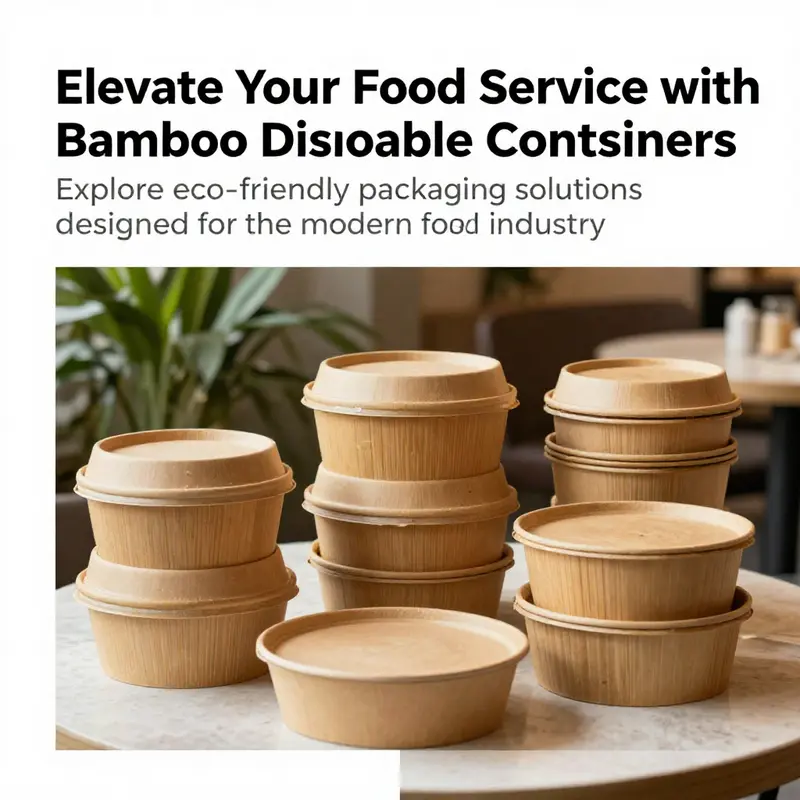
In an era where sustainability is not just an option but a necessity, bamboo disposable food containers have emerged as a favored choice for food service businesses. Catering to the needs of bubble tea shops, restaurants, food trucks, and event planners, these eco-friendly packaging solutions are gaining traction for their numerous advantages. From their remarkable durability and versatility to their biodegradable nature, bamboo containers offer an excellent way for businesses to align with modern sustainability goals while enhancing customer satisfaction. This article will explore the key features and advantages of bamboo disposable food containers, their common applications in various sectors, leading suppliers and marketplaces, and the positive environmental impact they offer.
Strength in Sustainability: Unpacking the Key Features and Advantages of Bamboo Disposable Food Containers
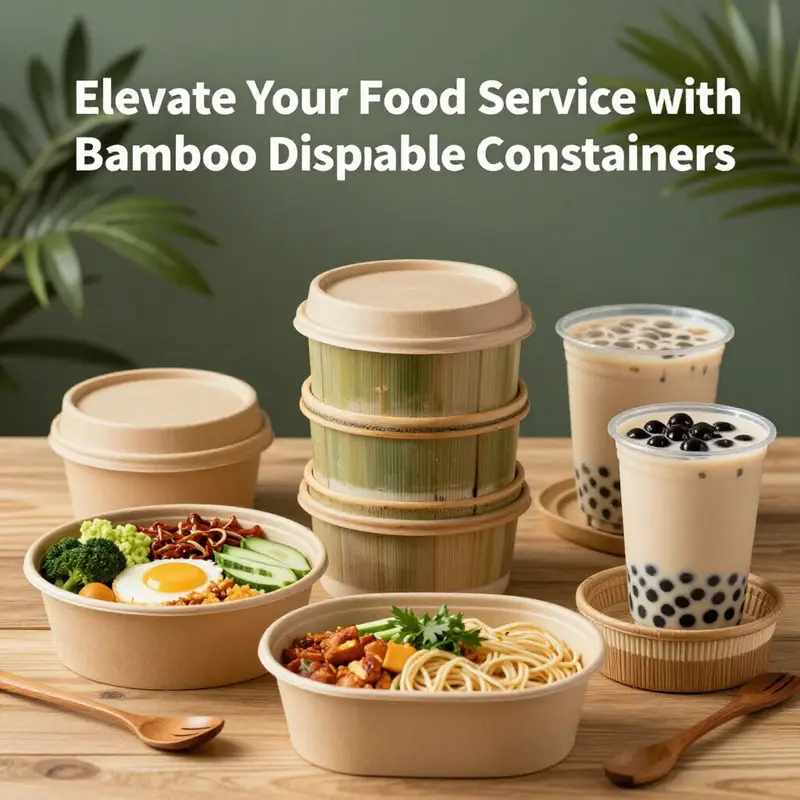
Bamboo disposable food containers emerge from a simple idea with far-reaching implications: packaging can be both functional and kind to the planet. When you look at the material through the lens of long-term impact, bamboo is more than a renewably sourced fiber. It represents a practical pathway to reduce plastic dependency without compromising the eating experience. The chapter ahead explores how the distinctive properties of bamboo translate into real-world advantages for takeout, catering, meal-prep, and brand storytelling. It is not a catalog of features but a narrative about how those features cohere to form a packaging option that serves diners, businesses, and the environment alike.
At the heart of bamboo’s appeal is its status as a rapidly renewable resource. Bamboo grows with remarkable speed, often without the need for pesticides or excessive irrigation, and it regenerates after harvest. This rapid growth translates into a steady supply that can keep pace with demand for sustainable food containers. When bamboo fibers are combined with natural resins or other biodegradable binders, the resulting material becomes inherently compostable in industrial or home composting systems. The consequence is clear: containers designed from bamboo can help divert significant volumes of waste from landfills, reducing the persistent problem of plastic pollution and the microplastic contamination that accompanies it. The end-of-life story matters as much as the performance during use, and bamboo containers deliver a more circular lifecycle by design. In practice, that lifecycle aligns with consumer expectations for responsible choices, without forcing compromises in convenience or presentation.
A second and equally important feature is heat and moisture resistance. The natural structure of bamboo—its dense fibers and carefully engineered coatings—has been shown to repel moisture and hold up under temperature stresses that come with hot meals, soups, gravies, and saucy dishes. This resistance is not about mere tolerance; it is about staying intact during transport and serving. A well-made bamboo container resists softening, leakage, or delamination that can plague cheaper alternatives, enabling a reliable handoff for diners who expect their food to arrive as described. This robust performance reduces the need for double packaging or protective liners, simplifying the packaging ecosystem and cutting down on excess material usage.
Safety sits beside strength in bamboo packaging. Reassuringly, bamboo containers are typically free from widely scrutinized substances such as BPA, phthalates, and PVC. This non-toxicity is not just a consumer comfort; it is a business concern. When a brand communicates that its takeaway packaging is safe for both hot and cold items, it reinforces trust with customers who are increasingly attentive to how their meals are stored and transported. It also lowers the risk of chemical migration into foods, a consideration that matters to health-conscious diners as well as to food-service operators who want to minimize liability.”
Although many bamboo containers are marketed as microwave- or dishwasher-safe, the truth is nuanced. Microwave compatibility often depends on the specific product design and coatings, and dishwasher viability varies by model and construction. The upshot is practical: before reheating or cleaning, readers should consult the manufacturer’s instructions. This caveat is not a drawback but a cue to mindfulness—consumers and operators who pay attention to product guidance can reap the full benefits without compromising safety or performance. When used as directed, bamboo containers offer a convenient, low-effort path to reheating meals, saving time for both households and professional kitchens.
Durability remains a hallmark of bamboo packaging, despite its natural origins. Modern bamboo containers are engineered to be lightweight yet strong, capable of withstanding the weight of substantial meals and the rigors of transport. The balance of lightness and resilience is not accidental. It supports efficiency in delivery fleets, reduces fatigue for drivers who carry multiple orders, and enhances the user experience by preventing crumple under pressure or leaks from fatty sauces. In many lines, designers also incorporate multi-layer or coated structures that bolster leak resistance, preserving the integrity of sauces, dressings, and gravies. This durability makes bamboo containers a credible alternative to heavier corrugated or plastic options, especially for single-use applications where reliability is essential.
Beyond raw performance, there is an aesthetic dimension that matters in a market increasingly oriented toward experience and values. The natural wood grain and warm tones of bamboo convey a premium, understated look that aligns with minimalist and eco-conscious lifestyles. This visual appeal matters because packaging is part of the brand narrative. In many contexts, the container itself communicates environmental stewardship, signaling to customers that the business cares about more than immediate costs or convenience. The tactile and visual cues of bamboo—its texture, color, and organic pattern—can elevate a simple takeout moment into something that feels thoughtful and responsible.
The environmental rationale for bamboo packaging extends into the broader considerations of sustainable supply chains. Bamboo grows swiftly, often reaching maturity in a matter of years, and it typically requires less water than many other woody crops. Harvesting can occur without permanent forest disruption, and the material’s renewability supports a reduction in virgin plastics used for food-contact applications. These attributes contribute to a lower carbon footprint across the product’s lifecycle, from raw material extraction through production, distribution, use, and end-of-life disposal. When brands choose bamboo, they often pair this choice with a commitment to responsible sourcing, sometimes evidenced by third-party certifications that verify forest stewardship and material safety. Such credentials offer a tangible signal to customers who are evaluating the environmental sincerity of a brand’s packaging strategy.
The advantages of bamboo containers extend into waste management and consumer behavior. As fully compostable options, they enable a streamlined disposal story. Restaurants and catering services can position themselves as leaders in waste reduction by offering a clearly biodegradable alternative to plastic or foam. The practical implication is straightforward: when patrons can confidently discard containers with their food in compost streams or household waste channels, the post-meal experience becomes less burdensome and more aligned with sustainable living. This alignment is part of a larger shift in consumer expectations, where the packaging that accompanies a meal is considered a continuation of the dining experience rather than an afterthought to be discarded with indifference.
From a business perspective, bamboo packaging can bolster brand image in meaningful ways. The willingness to choose a renewable, renewable-friendly material communicates a values-driven stance that resonates with a broad audience of environmentally aware diners. This resonance translates into customer trust, repeat business, and positive word of mouth. It also helps differentiate offerings in crowded markets where countless options vie for attention. For brands that prioritize transparency, data on material composition, biodegradability, and lifecycle impacts can be woven into storytelling and marketing communications, turning packaging choices into a strategic asset rather than a mere logistical decision.
In terms of versatility, bamboo containers cover a broad spectrum of use cases. They arrive in multiple designs, including simple bowls, multi-compartment boxes, and insulated variants that help maintain temperature during longer transport. The ability to configure different shapes and sizes for various meals—from main courses to sides and desserts—makes bamboo a flexible backbone for diverse menus and service models. This versatility is particularly valuable for meal-prep and catering operations, where consistency in portioning and ease of assembly influence efficiency, accuracy, and customer satisfaction. The decorative yet understated look of bamboo can harmonize with other eco-friendly packaging layers, reinforcing a cohesive sustainability narrative across a brand’s entire packaging ecosystem.
A final, practical dimension concerns standards and responsibility. The strongest bamboo packaging options are often accompanied by certifications that attest to safe food contact and responsible material governance. Standards such as forest stewardship qualifications and food-safety regulations provide reassurance to chefs, operators, and consumers that the product meets high expectations for safety and environmental accountability. When these credentials are visible, they contribute to consumer confidence and partner trust, supporting collaborations that extend beyond a single transaction.
For readers who want to explore the commercial side of bamboo packaging more concretely, many suppliers and marketplaces offer a range of bamboo-augmented disposables alongside traditional paper-based options. These channels can support businesses of varying scales—from single-location eateries to multi-unit brands—by offering customization options, bulk pricing, and compatibility with existing takeout workflows. It is worth noting that, while bamboo provides a strong foundation, successful use depends on selecting the right design for the application. A multi-compartment box for a curry and rice meal, for example, may deliver better portion control and less cross-contamination than a single-compartment alternative. In contrast, an insulated bamboo container might preserve temperature for deliveries that risk delays. The key is to align the container design with the meal type, the logistics chain, and the brand’s sustainability promise.
To connect this general understanding to concrete reading, consider how a typical business might weave bamboo packaging into its operations. A restaurant prioritizing eco-conscious messaging can introduce bamboo containers as part of a broader waste-minimization plan, highlighting how every element of the takeout experience—from packaging to napkins to straws—contributes to a cohesive environmental commitment. Catering services can emphasize the reusability aspect in event settings, offering multi-use options or compostable serving ware that reduces the overall footprint of large gatherings. For meal-prep services, the modular nature of bamboo containers supports portion control and customer-friendly reheating while maintaining a consistent brand aesthetic. Across these scenarios, the material’s combination of strength, lightness, and compostability remains central to the value proposition.
In pursuit of practical reference points, readers can explore related packaging options on supplier platforms that emphasize eco-friendly, compostable materials and flexible customization. For example, a related product page on a sustainability-focused supplier site demonstrates how a disposable, lid-equipped paper bowl can serve as an accessible complement or alternative to bamboo, reinforcing an overarching strategy of reducing single-use plastic while maintaining convenience and presentation. The link is provided here for convenience: disposable kraft paper bowl for food package with lid. This example illustrates how a bamboo-based approach can coexist with other sustainable formats in a brand’s repertoire, enabling a more nuanced and resilient packaging strategy.
As with any material choice, it is prudent to consider end-of-life options and the broader policy context. Certifications and regulatory frameworks help ensure that the packaging not only performs well in use but also aligns with safety and environmental expectations across markets. For readers seeking a broader understanding of sustainable material certifications and responsible forestry practices, exploring established standards organizations can be informative. For further reading on credible stewardship and material safety, refer to external resources such as the Forest Stewardship Council (FSC) at https://www.fsc.org/. This resource offers insight into how verified standards can shape the credibility of packaging claims and reassure customers who value transparent supply chains.
In sum, bamboo disposable food containers offer a compelling combination of performance, responsibility, and aesthetic appeal. Their strength is not only physical but also relational: by enabling reliable hot and cold handling, reducing waste, and signaling a commitment to sustainability, they become more than packaging. They become a tangible expression of a brand’s promise to customers and the planet. The result is a practical, stylish, and sustainable choice for a world that increasingly prizes packaging that serves the meal and the future alike.
From Takeout to Tasting Nights: The Wide-Ranging Applications of Bamboo Disposable Food Containers
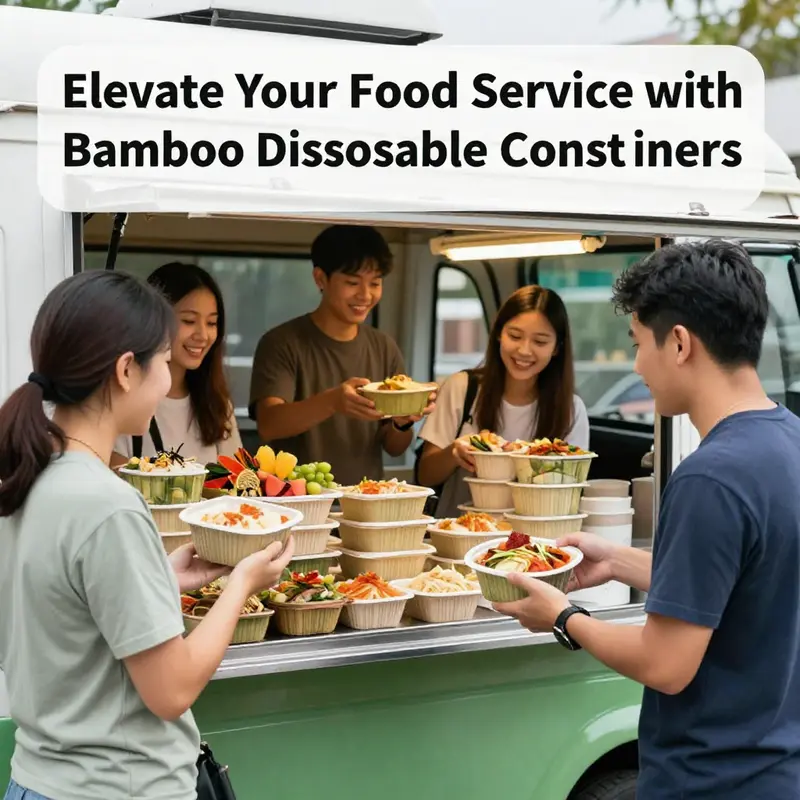
Bamboo disposable food containers have moved from a niche sustainable option to a mainstream tool for kitchens and brands that want to pair convenience with care for the planet. They are welcomed not merely as an alternative to plastic or foam, but as a packaging choice that can gracefully adapt to a wide range of occasions, formats, and consumer expectations. The logic behind their growing use is simple: bamboo fiber or pulp can be shaped into sturdy, leak-resistant vessels that perform in everyday settings while carrying a clear environmental message. The practical reality, however, extends far beyond the initial impression of eco-friendliness. These containers are engineered to meet real-world needs, from the quick-serve counter to the formal buffet line, and they do so without compromising food safety or the customer experience. When seen as part of a broader packaging strategy, bamboo containers reveal a spectrum of applications that matter to operators, diners, and the brands that want to tell a coherent sustainability story.
In the realm of food service and takeout, bamboo containers have proven their worth by balancing heat retention with clean design. They handle hot sandwiches, fries, baked goods, and dry snacks with a confidence that reduces the risk of soggy or leaky outcomes. The heat resistance is complemented by a focus on safety: a food-grade coating or layer helps maintain integrity even when sauces or gravies are part of the dish. This is essential for kitchens that offer daily specials or rotating menus where the same container must accommodate a variety of textures and temperatures. The ability to stand up to the rigors of a busy service environment—whether it’s a bustling brunch window or a late-night food truck run—contributes to a smoother operation, fewer disruptions, and happier customers who don’t worry about messy packaging.
For home use and meal preparation, bamboo disposable containers excel in a different, equally important way. They are microwave-safe and certified food-grade, which makes reheating leftovers or packing a ready-to-go dinner straightforward and safe. The longevity of the material in domestic settings matters as much as its compostability in commercial waste streams. People who cook in batches appreciate containers that can hold a complete meal, separate components, or even suit a plan for portioned lunches across the week. The multi-compartment designs that some bamboo options offer give households a practical route to keeping ingredients separate until mealtime, preserving texture and flavor. This attention to user experience—the simplicity of reheating, the reliability of the seal, and the assurance that the container won’t release unwanted flavors into the food—fuels repeat use and builds trust with eco-conscious shoppers who see sustainability as a daily practice rather than a one-off act.
Catering and events present a distinct set of expectations for packaging. In these contexts, bamboo containers marry durability with premium presentation. Large gatherings, corporate events, and weddings require containers that can carry substantial portions without compromising on elegance. The aesthetic appeal of bamboo—its natural warmth and tactile quality—elevates the unboxing moment and reinforces a brand narrative centered on stewardship and quality. At the same time, these containers must be dependable under the logistical pressures of catering: they should resist leaks from sauces, hold up during transport, and stack efficiently for inventory and service crew efficiency. When a caterer selects bamboo packaging, they are signaling a brand position that values responsible sourcing and a refined guest experience. The outcome is a cohesive experience where the container reinforces the food’s story, rather than competing with it.
Retail and gifting applications also illustrate the versatility of bamboo packaging. Eco-conscious brands that emphasize natural aesthetics and sustainable values often choose bamboo containers to package organic foods, beauty items, or specialty gifts. The natural texture and understated elegance of bamboo contribute to a premium unboxing moment, which can be a critical factor in gift purchases or product launches. In these scenarios, branding becomes a co-star in the packaging narrative. Custom printing and labeling are common offerings from suppliers, allowing brands to imprint logos, slogans, or seasonal artwork directly onto the container. This capability aligns well with marketing campaigns that aim to reinforce a sustainable lifestyle while keeping the packaging visually compelling. The choice to use bamboo in retail packaging is rarely about a single advantage; it’s about layering multiple benefits—appearance, durability, and the environmental message—into a single, coherent proposition.
On-the-go consumption is perhaps where bamboo containers demonstrate their everyday practicality most clearly. Students, professionals, and busy households seek packaging that travels well, preserves food quality, and does not create the post-meal cleanup burden. Bamboo containers answer these needs with reliable leak resistance and sturdy construction that can withstand rough handling, stacking in backpacks or lunchbags, and quick service at campuses or office cafeterias. The combination of practical performance with a lighter environmental footprint makes bamboo an appealing option for retailers who want to offer convenient meals that align with sustainability commitments. In markets where plastic waste is a public concern, the visibility of bamboo packaging can also reassure customers that their daily choices contribute to a broader environmental effort, reinforcing loyalty and encouraging repeat orders.
The range of sizes and shapes is another practical advantage that supports diverse menus and service formats. Whether a compact 450 ml container for sides or a generous 1000 ml box for mains and shareables, bamboo packaging can accommodate different dish types and portion sizes. Rectangular, square, and round designs each offer a different visual and functional footprint, supporting everything from fast-casual bowls to multi-entrée platters. The versatility extends to compatibility with accessory ecosystems—lids, separators, and optional coating layers that enhance leak resistance and heat retention—so operators can tailor a packaging solution to a specific dish profile without overhauling their workflow.
The sustainability story is not simply about materials; it is also about the entire lifecycle and the signals packaging sends to customers. Bamboo is a rapidly renewable resource, and many suppliers emphasize certifications that attest to responsible sourcing and safety compliance. FSC certification and EU Regulation (EC) No 1935/2004 compliance are common assurances that the materials meet both environmental and food-safety standards. These certifications matter to operators who serve food in formal or semi-formal settings where expectations for traceability and responsible sourcing are high. They also reassure consumers who are increasingly scrutinizing the supply chain behind their meals. The packaging choice becomes part of a larger narrative about how a business treats people, products, and the planet—an integrated message that can influence brand perception long after the wrap is discarded.
Customization is another thread that weaves bamboo containers into many different business models. Restaurants may print logos or seasonal artwork for promotional campaigns, while catering teams might opt for neutral designs that emphasize the event’s theme. Branded packaging can reinforce a brand’s identity without adding extra steps to the service workflow. When customers see a familiar emblem on a sturdy, attractive container, the connection between the food and the brand strengthens, which can bolster repeat business and word-of-mouth recommendations. For marketing teams, the container becomes a mobile billboard of sorts, traveling from kitchen to curbside to conference room, carrying the store’s sustainability promise into diverse environments.
In practice, this spectrum of applications is supported by a strategic approach to sourcing. Operators weigh several factors: the expected temperature range of the menu, the likelihood of leaks or spills, the desired visual impact, and the total cost per unit. They also consider the ease of integration with existing packaging lines and whether the container can be customized to align with branding goals. The decision is rarely binary; most teams look for a packaging family that can cover takeout, dine-in leftovers, and catering portions with a consistent design language and predictable performance. When these elements align, bamboo containers enable a cohesive, scalable packaging program that travels well—from a single storefront to a multi-venue event footprint.
An illustrative takeaway for teams considering bamboo packaging is that the container type becomes a conduit for operational and customer-experience improvements. The right container reduces the risk of spills, protects food integrity, and supports heating or cooling needs without compromising safety. It also contributes to a cleaner dining environment, since reliable sealants minimize mess during transport. In turn, that reliability translates into fewer refunds, better online reviews, and stronger loyalty among diners who value sustainability as part of their everyday choices. The combination of functional performance, environmental stewardship, and branding flexibility makes bamboo disposable containers a strategic asset rather than a mere alternative to traditional packaging.
For teams exploring practical procurement options, it helps to scan a range of supply sources and compare how they handle customization, coatings, and compliance. The market offers a variety of configurations, from simple, single-compartment vessels to advanced multi-compartment designs that keep sauces, grains, and vegetables separate. Several suppliers highlight that these containers can withstand the microwave and freezer stages, which broadens their applicability from hot takeout to chilled meal kits. The emphasis on food safety, along with environmental credentials, supports a more transparent conversation with customers who want to understand how their meals are packaged and disposed of after use. In this context, bamboo packaging is not just a practical choice; it is a statement about how a business operates and what it values.
To see a concrete example of how packaging choices are translated into product offerings, consider the takeaway packaging options that align with a family of eco-friendly containers, such as the takeaway food kraft rectangular square salad paper bowl. This example illustrates how brands pair sustainability with branding and practicality, showing that even when the container is a simple vessel, it can carry a powerful message. takeaway food kraft rectangular square salad paper bowl. It’s a reminder that the packaging ecosystem is not static; it evolves with consumer expectations, culinary trends, and the logistics of service. Each application area—takeout, meal prep, catering, retail gifting, and on-the-go use—benefits from a packaging strategy that emphasizes reliability, safety, and a clear environmental commitment.
For readers seeking a broader perspective on the technical and engineering dimensions of bamboo containers, a comprehensive guide is available online. It delves into applications, types, and practical uses, providing a deeper understanding of how these containers perform under different conditions and how materials and coatings contribute to their functionality. External resource: https://www.alibaba.com/product-detail/Disposable-Bamboo-Container-Complete-Guide_1600789999298.html
From Factory Floors to Takeout Trays: Navigating the Global Market for Bamboo Disposable Food Containers
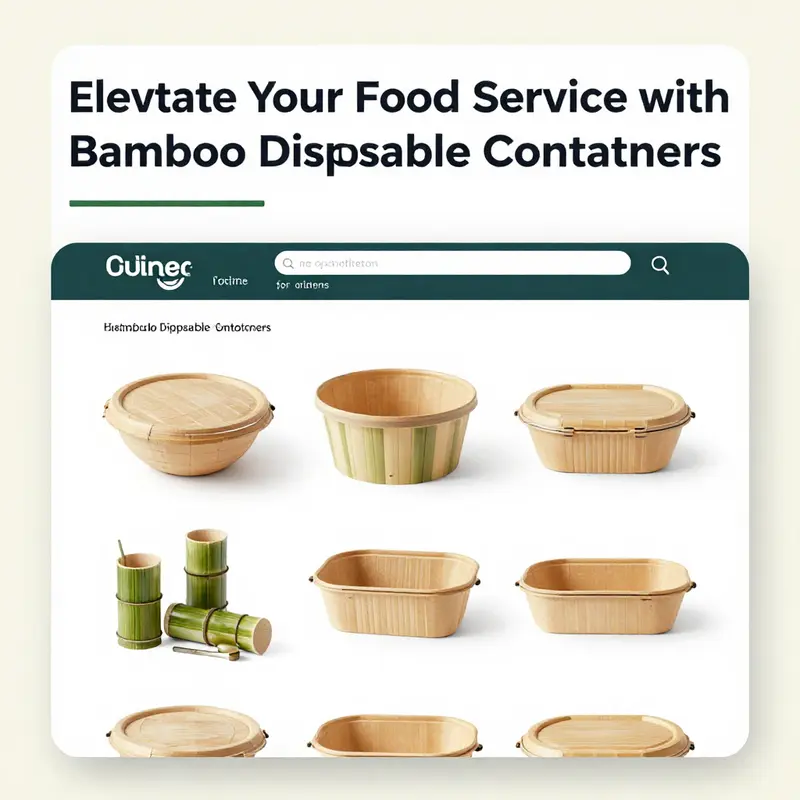
Sourcing bamboo disposable food containers requires a map of a global supply chain that blends sustainability, scale, and precise food-safety standards. Buyers—from ambitious start-ups to established chains—are increasingly looking beyond simple packaging choices. They seek containers that perform under heat, resist leaks, align with eco-conscious branding, and come with verifiable safety assurances. In this landscape, the macro trend toward renewable materials intersects with the practical realities of manufacturing, certification, and logistics. Bamboo is more than a green label; it is a material choice with specific processing routes, performance characteristics, and supplier ecosystems that can determine the success of a takeout program, a catering service, or a multi-city meal-prep operation.
China stands out as a dominant engine of production for disposable food containers, especially for high-heat applications such as soups, noodles, and curries. The country’s manufacturing backbone, access to raw materials, and advanced processing technologies make it a logical source for bulk orders. The most active production clusters are concentrated in four provinces: Fujian, Guangdong, Shandong, and Zhejiang. Each region contributes distinct strengths to the bamboo packaging story. Fujian often leads in fiber systems and process optimization, blending bamboo fiber with complementary, biodegradable additives to create sturdy liners and bodies that hold up under saucy dishes. Guangdong’s ecosystem, with its dense supplier networks and logistics channels, facilitates rapid sourcing for restaurants and food trucks that need reliable turnarounds. Shandong and Zhejiang bring strengths in coating technologies, quality control, and customization capability, enabling brands to tailor branding, print, and functional features such as moisture barriers and heat resistance. Together, these clusters create an integrated pipeline—from raw bamboo material and pulping to extrusion, forming, coating, and finishing—that supports both small pilots and multi-container, multi- SKU programs.
For buyers seeking to connect with suppliers, one of the most influential pathways is through global marketplaces that link restaurants and food-service brands with verified manufacturers. These platforms streamline supplier discovery, enable bulk pricing, and offer customization services—from logo printing to special coatings—under standardized terms. The model works well for buyers who know their specifications but want to test multiple options before committing to a long lead time. Importantly, certifications and safety documentation are a critical part of this process. Reputable suppliers commonly provide documentation and testing results that address food-contact safety, heavy metals content, and compliance with international standards. While the exact certifications can vary by product line, signs of strong compliance typically include recognition under food-safety and environmental standards such as FDA- or LFGB-related assurances, SGS testing records, and clear declarations around FSC-backed or otherwise certified forestry or fiber credentials. These credentials help buyers confirm that the packaging not only performs well but also aligns with corporate sustainability goals.
A significant principle in selecting a supplier is to look beyond price alone and consider the material’s performance envelope. Bamboo-based containers are often described as heat resistant within a practical operating window, typically capable of withstanding temperatures from subfreezing levels up to well over hot meals. Many options are engineered to hold sauces and gravies without seepage, thanks to food-grade surface coatings or multilayer barriers that balance moisture resistance with recyclability or compostability. Understanding the coating chemistry, the layers involved, and whether the product remains recyclable in local waste streams is essential for stakeholders who manage corporate social responsibility (CSR) reporting and waste diversion metrics. As with all food-contact packaging, it is crucial to verify the safety of coatings and adhesives used in the final product, particularly when items are intended for microwaving or frozen storage.
The spectrum of container formats available from bamboo-centric suppliers mirrors the diversity of food service needs. Boxes and bowls come in a range of sizes—common capacities like 450 ml, 600 ml, 850 ml, and 1000 ml—from rectangular, square, to round designs. For catering and meal-prep operations, multi-compartment boxes that keep ingredients separate can simplify service and presentation, while single-compartment options may suit compact meals or snack assortments. The shapes and sizes are more than cosmetic differences; they influence portion control, heat retention, stacking efficiency, and the customer’s dining experience. An added dimension is customization. Many suppliers offer branding services, allowing a restaurant or brand to imprint logos, color schemes, or messaging directly onto the outer surface. This is not merely aesthetic; in a crowded market, packaging that reflects a brand’s sustainable promise can reinforce customer loyalty and support a premium perception. Customization often comes with higher MOQs or longer lead times, so thoughtful planning is essential for operators with seasonal promotions or variable demand.
To navigate this landscape, many buyers begin their outreach through marketplaces that connect them with the right factories. A well-structured supplier search typically involves vetting capabilities that extend beyond the product itself. Prospective partners should be prepared to discuss minimum order quantities, lead times, quality-control procedures, and the ability to provide samples for testing. They may also inquire about the range of products offered in bamboo fiber versus bamboo-pulp blends, as different formulations can influence stiffness, heat tolerance, and leak resistance. In addition to product performance, buyers frequently assess the supplier’s capacity for customization, packaging options, and the logistics arrangements for FOB or CIF terms, which influence landed cost calculations. A comprehensive supplier conversation should address whether the facility operates under recognized environmental or social governance standards and whether there are traceability measures for the raw materials used in the bamboo fiber.
Within the supplier landscape, a practical starting point for many buyers is to explore a catalog-oriented path that highlights packaging options designed for takeout and catering. One accessible entry point features octagonal, kraft-paper-style bowls and packaging that blends rustic aesthetics with functional performance. These designs appeal to brands aiming for a natural, eco-friendly vibe while delivering reliable containment and heat performance. The idea is to pair a visually appealing shell with a robust interior that can handle moisture and oils without compromise. By examining these product families, buyers can glean how a supplier balances form and function—how the outer shell communicates sustainability, how the inner layers resist leaks, and how printing or branding can be integrated without sacrificing engineering integrity. A practical strategy is to review a sample set that includes the outer configuration, inner barrier, and any coatings, then evaluate how well the parts fit together in real-world use. This hands-on assessment is key to avoiding surprises in large orders.
For those who want to see a broader array of options in one place, a curated entry such as a dedicated octagonal-box and kraft-paper packaging category can be a helpful reference point. Access to such catalogs enables a quick comparison of dimensions, shapes, and branding possibilities, and it serves as a practical jumping-off point for conversations with factories that specialize in bamboo-based solutions. When engaging with suppliers, it is wise to request printed samples, heat-and-leak testing demonstrations, and a clear articulation of the coating and barrier system used in each container. A transparent dialogue about performance helps ensure that the chosen packaging will hold up under the restaurant’s specific menu items—especially those with rich sauces, gravies, or oil-heavy dishes.
As buyers build their supplier shortlists, they must also weigh the logistical realities of production and shipping. The bamboo container market is global, and lead times can vary with seasonality, demand spikes, and the capacity of the chosen facilities. Early engagement with suppliers can help align production calendars with marketing campaigns, promotions, and new menu launches. In addition to standard shipping terms, buyers should explore options for packaging and labeling that comply with regional regulations and labeling requirements. This is particularly important for operators who want to maintain a consistent brand voice across markets while ensuring that all regulatory boxes are checked before rollout.
A practical takeaway for those building a supplier list is to treat the process as a collaborative design brief rather than a pure procurement exercise. Share your menu profiles, expected volumes, and any branding requirements so that suppliers can propose tailored solutions. In return, expect a transparent discussion about production capabilities, potential trade-offs between cost and performance, and the feasibility of timescales for larger campaigns. It is common for eco-friendly packaging manufacturers to present multiple material options—bamboo-fiber-only formulations, blends with pulp or agricultural byproducts, or fully compostable variants—each with its own advantages and trade-offs. The selection hinge is often how well the material aligns with a restaurant’s operational realities and sustainability commitments, including how waste streams are managed in partner venues and customers’ households.
To illustrate how a buyer might translate these considerations into a concrete sourcing path, imagine initiating conversations with suppliers through a global marketplace that emphasizes verified production facilities and transparent documentation. You would review product breadth—carefully noting the range of shapes, sizes, and multi-compartment configurations—then request samples to validate heat resistance and leak control. At the same time, you would confirm the availability of branding options, such as logo placement, color-matched inks, and the feasibility of batch-specific packaging designs. The goal is to identify a partner who can deliver consistent quality at scale, while offering flexibility to meet evolving menu needs and seasonal campaigns.
In the broader ecosystem, safety and sustainability credentials remain non-negotiable. The most trusted suppliers typically provide documentation that demonstrates compliance with global food-safety standards, reliable testing for heavy metals, and verifiable chain-of-custody for the bamboo materials. For brands with strict CSR targets, it is important to verify whether the supplier sources bamboo fiber from forests certified as sustainable by recognized certification bodies, or whether the material is sourced from certified pulp streams. Certifications such as forest stewardship or third-party testing add credibility and reduce the risk of non-compliance in diverse markets. The result is a packaging solution that not only protects food but also reinforces a brand’s commitment to responsible sourcing and environmental stewardship.
As with any strategic packaging decision, the choice of supplier and marketplace should be revisited periodically. Market dynamics, new processing techniques, and evolving regulatory expectations can shift which partners best meet a brand’s requirements. An ongoing relationship with a trusted supplier can translate into better pricing, priority production slots, and earlier visibility into new materials that improve performance or sustainability outcomes. For the reader seeking a tangible starting point, a practical exploration into the octagonal and kraft-paper packaging family can illuminate how form, function, and branding intersect in bamboo-based packaging. See a representative example here: disposable-octagonal-box-restaurant-food-kraft-paper-packaging.
The pathway from factory floors to takeout trays is not merely about finding a supplier. It is about building a resilient, scalable packaging program that supports a brand’s values, enhances the customer experience, and aligns with careful waste and safety considerations. For teams that manage multi-location or multi-menu operations, the right partner can simplify procurement, reduce risk, and provide a platform for co-creating packaging solutions that evolve with the menu and with consumer expectations. The bamboo option, when paired with the right materials, coatings, and testing regimes, can offer a balance of performance and responsibility that many operators are seeking in today’s competitive landscape. As markets continue to mature, the focus will increasingly shift toward transparency, verifiability, and the capacity to demonstrate environmental impact alongside food safety and quality.
External resource for broader context on supplier directories and market access: https://www.alibaba.com/showroom/disposable-bamboo-food-containers.html
From Leaf to Landfill: Tracing the Environmental Footprint of Bamboo Disposable Food Containers
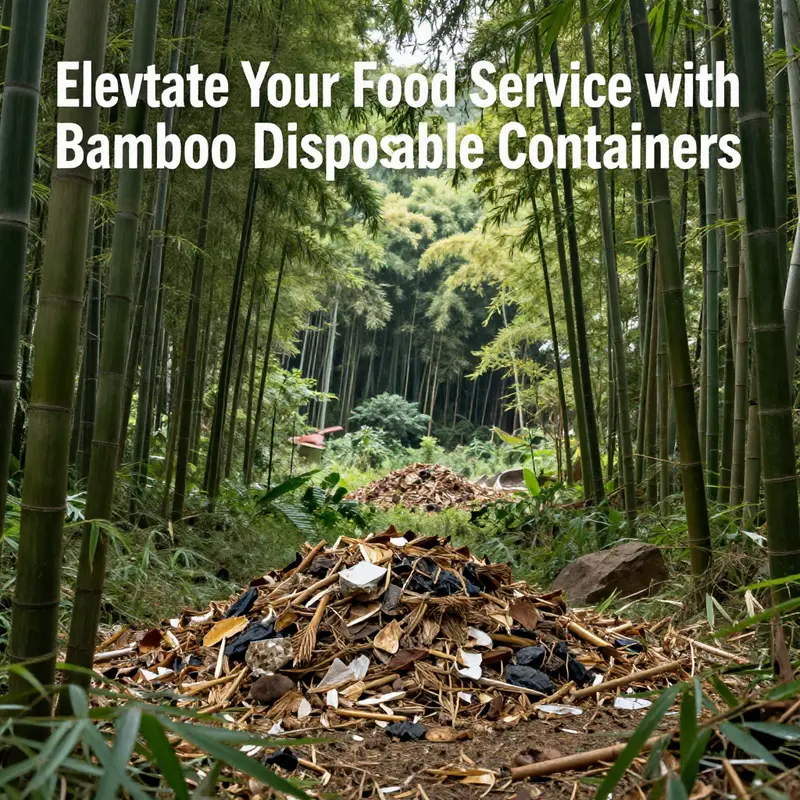
Bamboo disposable food containers have emerged as more than a trend in packaging. They sit at the intersection of appetite for convenience and a growing demand for responsible materials. The environmental narrative that surrounds these containers is not a single-note chorus but a nuanced composition that plays out across cultivation, manufacture, use, and end-of-life. To understand their place in a sustainable system, it helps to trace what happens from the moment a stalk of bamboo is harvested to the moment the container returns to the soil, or at least to a compatible waste stream. In that arc, bamboo packaging offers meaningful benefits, but it also comes with responsibilities that businesses and consumers share. The most compelling benefit is the material’s potential to reduce long-lived waste. Bamboo fibers and pulp can be naturally biodegradable and, under appropriate conditions, compostable. In practical terms this means a container can break down into organic matter rather than persisting as a pollutant in landfills. That potential aligns with a broader shift away from plastics that linger for centuries. Yet the path from biodegradable to truly beneficial depends on how the product is designed, manufactured, and disposed of, and it hinges on what happens after disposal—whether the waste stream provides the right conditions for decomposition or whether coatings and adhesives interfere with that process.
Bamboo’s strength as a material is closely tied to its biology. It is a fast-growing grass, not a tree, and some species can reach impressive growth rates. The rapid replenishment cycle matters because it affects the overall lifecycle assessment of the packaging. When bamboo is harvested, the plant often regenerates from its root system, reducing the need for replanting and allowing multiple cycles of harvest from the same plantings. This regenerative characteristic helps keep the raw material within a lower carbon loop compared with slower-growing timber. Moreover, bamboo requires relatively little or no pesticide input during growth, which reduces chemical load in farming landscapes and lowers the energy demands associated with crop protection. The net effect is a lower embodied energy in the plant’s cultivation compared with many traditional wood sources. When these fibers are processed into containers, energy use, water management, and the efficiency of conversion techniques all contribute to the final carbon footprint. The story becomes more favorable when producers optimize processes and apply clean, non-toxic methods that preserve the material’s safety for food contact while minimizing emissions.
At the same time, the environmental profile of bamboo containers cannot be celebrated in isolation from how they are manufactured. The processing step is a gateway for environmental performance. To convert bamboo into durable, food-safe packaging, manufacturers often employ treatments that improve strength and water resistance. Some of these treatments involve high-pressure steam, coatings, or the use of adhesives. When these steps rely on harsh chemicals or form hard-to-decompose composites, they can complicate end-of-life outcomes. The result can be a container that behaves well in the kitchen but loses some of its environmental edge in the disposal phase if coatings hinder biodegradation or if inkings and glazes introduce contaminants during composting. This is not a universal verdict; many producers strive to minimize or reformulate these additives, pursuing non-toxic, food-grade finishes that align with safety standards and environmental goals. The key is transparency about processing methods and the presence of any non-biodegradable layers that might limit compostability.
Certifications and standardized safeguards offer a practical compass for evaluating environmental claims. Reputable bamboo packaging often bears certifications such as FSC—indicating responsible forest management—or compliance with EU Regulation (EC) No 1935/2004, which governs materials in contact with food. These assurances do not automatically guarantee a perfect ecological footprint, but they provide critical traceability and accountability. They also signal that producers are paying attention to the social and environmental dimensions of their supply chains, including how bamboo is grown, harvested, and transformed. In many cases, the most meaningful environmental gains come from a combination of factors: choosing a material with strong regenerative potential, selecting processing methods that minimize chemical use, and designing containers that maximize efficiency in use (for example, multi-compartment boxes that reduce packaging waste) while ensuring safety and performance.
Another layer to the lifecycle is the end-of-life pathway. Bamboo containers are marketed for their biodegradability and compostability, but real-world outcomes depend on local waste infrastructure. In industrial composting facilities, high heat and controlled moisture can enable bamboo-containing products to break down within months. In home composting settings, microbial activity is often less predictable, and the rate of degradation can slow dramatically. Coatings and adhesives can further influence whether a product will break down in a given environment. A container that looks compostable on the shelf might behave differently in a municipal compost stream if the finishing layers resist breakdown or if the product is too thick to integrate with the compost matrix. For consumers and waste managers alike, this reality emphasizes the importance of disposing bamboo packaging in the appropriate stream and of selecting products whose decomposition performance aligns with the available infrastructure.
The carbon story for bamboo packaging also deserves careful listening. Because bamboo grows quickly, the baseline capture potential for carbon in the plant is favorable relative to slower-growing materials. If the production process is efficient and powered by clean energy, the overall cradle-to-grave emissions can be comparatively low. When companies optimize design for minimal material use, maximize recyclability or compostability, and shorten supply chains through regional sourcing, the climate benefits can multiply. Yet it is essential to acknowledge the trade-offs. Processing bamboo into a durable container may require energy input, steam, or adhesives that carry their own carbon costs. In some cases, the emission savings from avoiding conventional plastics can be substantial; in others, the benefits may be more modest. The healthiest conclusion is a balanced one: bamboo packaging reduces dependence on petrochemical plastics, but the magnitude of its environmental advantage grows when producers implement rigorous environmental management practices, minimize non-toxic coatings, and pursue end-of-life pathways that align with local waste systems.
A critical, often overlooked piece of the ecological equation is the presence of any synthetic glues or coatings that accompany the bamboo fibers. If a product relies on non-biodegradable adhesives, or if a barrier coating incorporates plastics, the decomposition may be incomplete. In such cases, the claimed compostability can be undermined by residues that resist breakdown or contribute to contamination in compost streams. That is why the field has increasingly favored formulations that avoid heavy synthetic additives or substitute them with bio-based, non-toxic alternatives. It is also why third-party validation and clear labeling matter—consumers and businesses can better gauge whether a given container will perform as advertised in an end-of-life setting. The path toward environmentally responsible bamboo packaging is a continuous improvement process, one that compels manufacturers to share data about materials use, chemical treatments, and lifecycle outcomes.
The broader sustainability conversation also touches social dimensions. Ethical sourcing, fair labor practices, and community resilience in bamboo-growing regions matter as much as embodied energy and end-of-life mechanics. When growers and processors operate within transparent supply chains that emphasize worker safety and fair compensation, the environmental benefits of bamboo packaging are more robust. The lifecycle lens thus expands beyond the bagasse of material science into the realm of social responsibility, recognizing that sustainable packaging is, in the end, a holistic system.
Practically, what should a responsible restauranteur, caterer, or home chef do with this knowledge? First, look for products that emphasize non-toxic processing and avoid heavy coatings that impede compostability. Second, seek certifications that verify responsible forestry practices and food-safety compliance. Third, evaluate how the packaging aligns with your waste management reality. If your city hosts robust industrial composting, bamboo containers can shine as a compostable option; if not, you may still benefit from reduced plastic use and a lower overall environmental footprint, particularly when the solution is used to minimize oil-based leaks and fuel consumption associated with heavier, non-biodegradable packaging. Fourth, consider the entire system: can your supplier support customization that reduces material use, allows for better stacking and transport efficiency, or aids in brand storytelling around sustainability? Customization can be a double-edged sword; while branding helps promote environmental responsibility, excessive or non-functional design choices can undermine efficiency and waste reduction. A thoughtful balance, guided by performance and lifecycle thinking, is essential.
For those who want to explore practical examples and related packaging options, a deeper look into related product categories can illuminate how different materials compare in real-world settings. In particular, a cross-reference to a versatile, disposable kraft paper bowl used for food packaging and serving can illustrate how alternative sustainable options behave in terms of cost, performance, and end-of-life outcomes. The linked product page captures how design choices—such as shape, lid compatibility, and print options—affect usability and consumer perception while remaining aligned with eco-conscious values. By comparing these options side by side, businesses can make informed decisions that optimize both user experience and environmental performance. [disposable kraft paper bowl for food package with lid] (https://greendispopack.com/product/disposable-kraft-paper-bowl-for-food-package-with-lid/).
In sum, bamboo disposable food containers present a meaningful, real-world opportunity to curb single-use plastic pollution without sacrificing convenience or food safety. The environmental impact of these containers is heterogeneous, shaped by cultivation practices, processing technologies, the presence or absence of coatings and adhesives, and the effectiveness of end-of-life systems. When producers pursue regenerative growth, non-toxic finishes, and transparent certifications, the overall lifecycle tends to move toward a more favorable balance. Consumers and businesses, in turn, shoulder responsibility for disposal choices and for supporting suppliers who demonstrate commitment to sustainable processing and responsible sourcing. The result is not a flawless solution, but a pragmatic, compelling option that can significantly reduce the footprint of takeout, catering, and prepared meals when incorporated with care into a broader ecological strategy. For those curious about the scientific and policy dimensions guiding bamboo packaging, a deeper technical review provides a broader context for evaluating materials claims and lifecycle data. See the Sustainable Packaging Coalition’s discussion of bamboo packaging impact for a comprehensive frame of reference: https://www.sustainablepackaging.org/bamboo-packaging-impact/.
Final thoughts
Bamboo disposable food containers offer a unique blend of sustainability, versatility, and functionality, making them an ideal choice for businesses ranging from bubble tea shops to catering services. Embracing these eco-friendly packaging solutions not only elevates your brand’s image but also contributes positively to the environment. With a variety of options available, partnering with the right suppliers can help streamline your operations while promoting an eco-conscious message to your customers. By choosing bamboo, you’re not just opting for a product; you’re making a commitment to sustainability and customer satisfaction.