
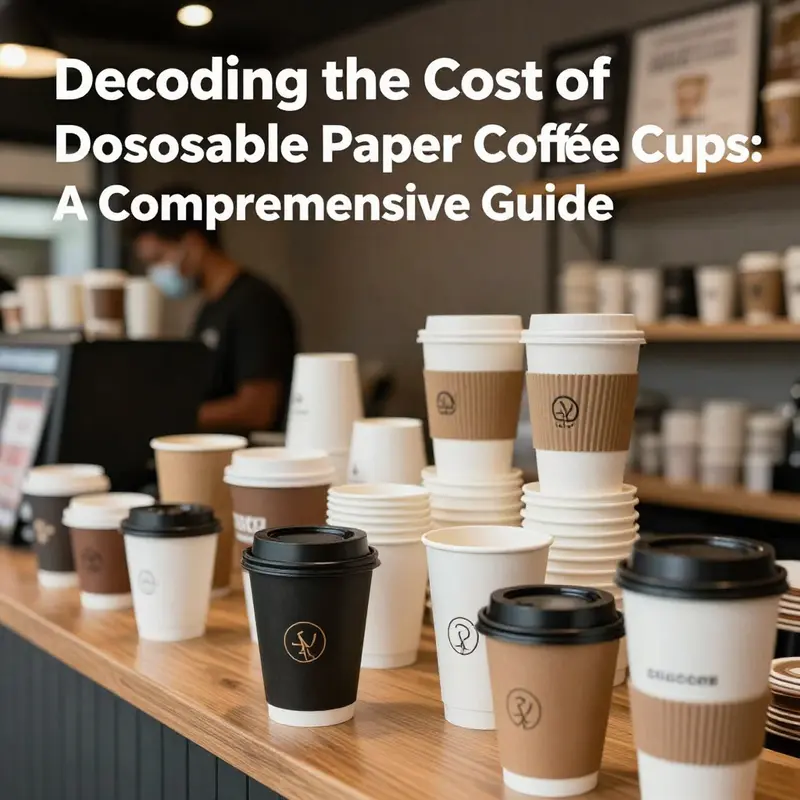
Navigating the world of disposable paper coffee cup prices can be a complex task, particularly for businesses like bubble tea shops, restaurants, food trucks, and catering services. Understanding average pricing is essential for effective budgeting, procurement strategies, and enhancing customer satisfaction. Prices vary widely based on bulk purchasing, cup size, quality, and even customization. This article explores crucial aspects of disposable cup pricing across five comprehensive chapters, designed to give you a holistic overview of your expenditure and enable informed decisions for your business.
From Scale to Brand Impact: Unraveling the Real Costs of Disposable Paper Cups in Bulk
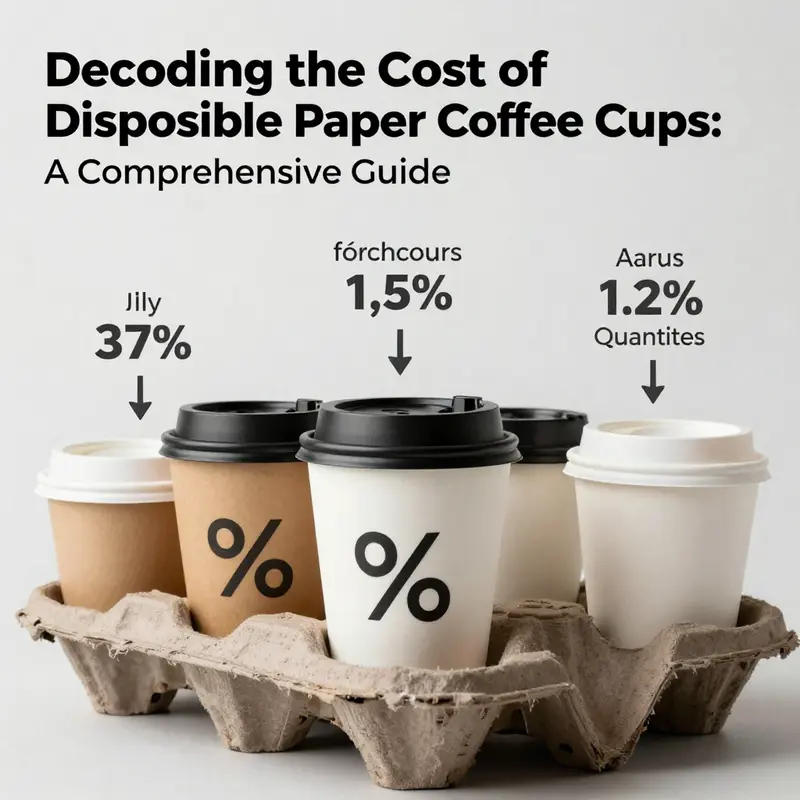
The price of a disposable paper cup rarely sits in a single line item. In bulk, cost is shaped by order volume, cup size, wall construction, whether a lid is included, and any branding or customization. This chapter explains how those variables translate into real costs when the purchase strategy relies on bulk rather than a one off retail buy. The starting point is simple: the base unit price is often low at scale, but that low base is a result of volume, not a standalone bargain. Small buyers may pay a premium that erases much of the perceived savings, while large buyers unlock discounts that can matter even for tiny per unit improvements when multiplied across millions of cups.
For bulk pricing, the rule is tiered pricing. The lowest per unit costs appear when order volume climbs into the hundreds of thousands. When volume crosses common bulk thresholds, price per cup tends to drop in noticeable steps rather than in a smooth curve. In very large runs, the unit price can approach fractional pennies. For example, orders around two hundred thousand to nearly half a million cups have been quoted as low as a few hundredths of a cent per cup. Orders beyond half a million units can fall further, as low as a few one hundredths of a cent per unit. These figures reflect pricing discipline plus the efficiencies from tooling, production planning, and logistics that only high volume can justify. A few extra dollars saved on one order may not seem large, but scaled to millions, those savings compound into meaningful cash preservation for a cafe group or catering operation.
Specification matters. A simple single wall cup is typically the most economical and may start around one tenth of a cent per piece, while insulated double wall or ripple wall designs carry a higher band. In bulk, double wall options often land in the range of two and a half hundredths to three and a half hundredths of a dollar per cup. The margin difference per unit grows with scale.
Customization and sustainability influence price further. Waterproof coatings or branding add cost, with prices broadening from roughly two and a half cents to ten cents per unit depending on the level of customization and material choices. Biodegradable or compostable options can push price upward but may align with sustainability goals brands want to tell customers. Lead times, minimum order quantities, and payment terms accompany price as decision drivers. Typical MOQs run in the narrow range of ten thousand to fifty thousand units, a commitment that is manageable for some buyers and strategic for others. Payment terms may include advance wiring, letters of credit, or platform payments, reflecting the financial discipline required for large orders.
For smaller buyers, bulk economics rarely apply the same way. A pack of fifty standard cups might cost several dollars, while branded or premium options can be higher. But bulk buying is not only about the per unit price. It also covers supply reliability, design alignment with user experience, and the logistics of keeping cups, lids, and sleeves in stock across multiple locations or events. The goal is to optimize total cost of ownership, including shipping, handling, procurement cycle time, and supplier risk, alongside the per unit price.
Sizing the Price: A Seamless Look at How Size, Material, and Volume Shape Disposable Coffee Cup Costs
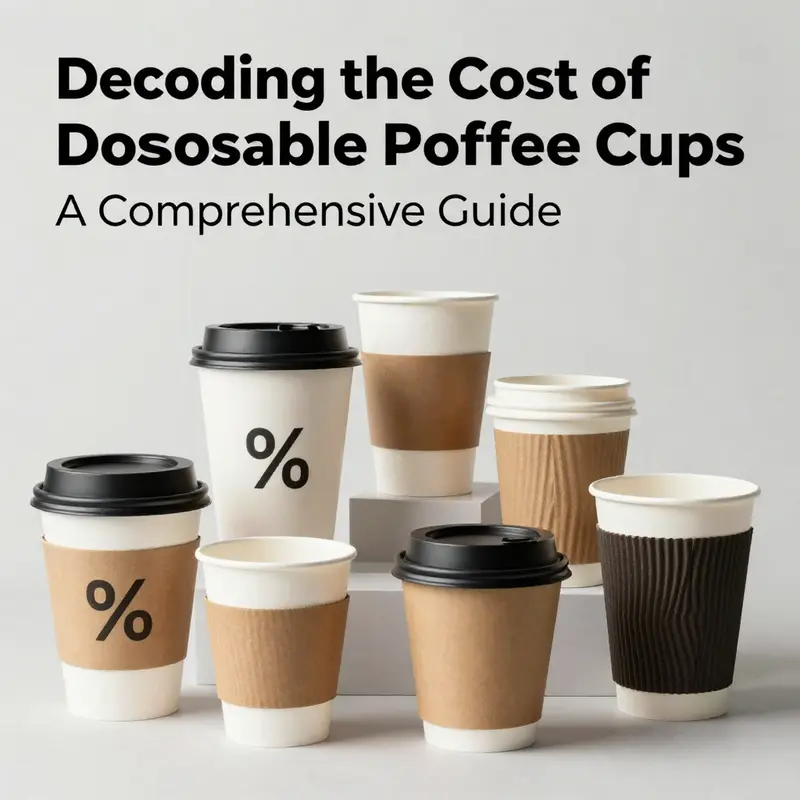
The price tag on a disposable paper coffee cup is rarely a single figure that accurately represents what a café, office, or event pays. Instead, the cost unfolds as a tapestry woven from size, coating, material quality, and the scale of the order. For anyone assessing the market, this means shifting from asking simply “What is the price of a cup?” to asking “What is the price for the specific cup I need, at the quantity I can buy, with the coating and branding I require?” In practical terms, buyers encounter a spectrum. On the low end, bulk purchases can drop per-unit costs into a few cents, while small orders or retail-style packs often fall in the upper range of a dime or more per cup. This wider frame is essential for budgeting, menu planning, and sustainability goals. It also matters for the consumer who expects consistent quality, heat retention, and an ecologically mindful option, all at a reasonable price. The chapter that follows stitches these threads together, moving from size-driven differences to material and customization factors, and finally to the economics of scale that truly determine the average price a buyer should anticipate.
Size is the most intuitive driver of cost. The physics of paper and wax or polymer coatings means that larger cups demand more material, more glaze or barrier layers, and sometimes thicker walls for insulation. When you zoom into concrete figures, the price per cup tends to rise with volume, not just with volume of material. For instance, the smallest standard size often comes in the range of a few hundredths of a dollar per unit when purchased in bulk. In many market calculations, 8-ounce cups hover around the mid to upper single digits of a cent per unit in bulk terms, with single-wall PE-coated variants delivering the most economical figures. If a buyer is simply comparing sizes, the 8-ounce option offers the best efficiency per milliliter of beverage carried, but the trade-off is reduced heat retention and less insulating capability. Conversely, larger cups do more work, so the per-unit cost climbs where added features like double-wall insulation or biodegradable materials are involved.
Material choice compounds the effect of size. Basic PE-coated paper cups, which are non-biodegradable, consistently anchor the lower end of the price spectrum. When evaluating costs, retailers often see price ranges from roughly 0.01 to 0.03 dollars per unit for standard, non-biodegradable cups. The environmental value of compostable or PLA-based cups adds a premium. Plant-based or biodegradable variants typically run higher, in the ballpark of 0.013 to 0.048 dollars per cup, depending on the exact formulation and MOQs. These options appeal to brands seeking sustainability and to customers who value the ecological footprint of their takeout experience. Insulation adds another layer of cost: double-wall cups, designed to keep beverages hotter longer and to reduce burn risk, tend to sit in a 0.02 to 0.05-dollar range per unit for bulk orders. The materials themselves drive these increments. A standard single-wall cup might be very economical, while a double-wall or ripple-wall design, especially when paired with eco-friendly materials, nudges the price upward even before customization enters the calculation.
Coating remains a pivotal factor. The coating on a cup influences durability, feel, and compatibility with hot beverages. PE coatings are common and economical, but more sustainable choices, such as PLA or bamboo fiber-based coatings, carry a price premium. For instance, a PLA-coated or bamboo-fiber cup, while still competitive in bulk contexts, typically costs more per unit than a conventional PE-coated cup, reflecting the bio-based materials and sometimes more complex manufacturing processes. In practical terms, this translates to a widening price gap as environmental performance becomes a purchasing criterion. The market’s current trajectory shows a growing premium for eco-friendly coatings, driven by consumer demand, regulatory considerations, and corporate sustainability targets. Yet even within eco-friendly categories, the price can vary significantly based on thickness, barrier properties, and whether the cup is fully compostable in industrial facilities or home-compostable—an important distinction for buyers aiming to align with local waste management realities.
Customization is the wild card that can dramatically shift per-unit costs, especially for small to mid-sized orders. Custom printed cups with logos or branding add value for marketing and customer experience, but they also push the price per unit higher. In general terms, customization can push costs from the basic range up to a broader spread, often between 0.015 and 0.15 dollars per unit, depending on color complexity, print resolution, and the volume of the order. Large, multi-color, high-resolution branding tends to compress unit costs as volumes rise, thanks to economies of scale, but still leaves a premium above non-customized cups. This is a critical consideration for small businesses that weigh branding opportunities against the immediate demands of their budget. When you combine size, material, coating, and the probability of custom printing, the price landscape becomes a patchwork that requires careful vendor comparison and a clear sense of how the cup will be used and displayed.
The economics of volume complete the framework. The principle is straightforward: larger orders unlock lower per-unit prices as manufacturers spread fixed costs across more units. In wholesale contexts, prices can plummet to a few cents per cup at very high volumes. The flip side is that small orders or retail packs command a much higher per-unit cost. Some common retail-style purchases, such as packs of fifty or one hundred cups, reveal per-unit prices that are notably higher than bulk quotes, often ranging from roughly 0.09 to 0.15 dollars per cup, depending on the combination of size, coating, and whether it’s a basic or premium product. This discrepancy between bulk and retail pricing reflects not only material and labor costs but also the logistics of packaging, shipping, and order processing. The market still rewards bulk efficiency, but it also reveals a durable segment of consumers and operators who value price predictability and immediate availability for smaller runs.
To translate these ranges into a practical budgeting tool, consider a hypothetical scenario: a café plans to switch to a fully recyclable, PLA-coated 12-ounce cup with a light branding mark for a month-long promotional period. If the shop buys in bulk, the per-unit cost may land in the 0.018 to 0.02 dollar range, assuming a 30,000 to 50,000 unit MOQ and minimal or no customization beyond a standard print mark. If the same café opts for a double-wall insulated variant for high-volume cold drinks, the price could rise to 0.02 to 0.05 dollars per unit, again depending on MOQs and the supplier’s capabilities. Now, if the café wanted a multi-color, high-resolution logo on a 16-ounce cup, the unit price could peak around 0.045 to 0.15 dollars, with the lower end representing larger orders and the upper end representing smaller runs or more complex printing. This mental model helps decision-makers compare apples to apples and understand how each design choice affects the overall bill.
A practical reminder for buyers who are navigating the market is that small packs and retailer-oriented offerings do not exist in a vacuum. They are part of a continuum that includes wholesale pricing, supply chain dynamics, and seasonal demand. The market has shown resilience in manufacturing capacity, in part because production facilities can adapt to different cup sizes and coatings. For larger facilities that need hundreds of thousands of cups per year, the price can become highly favorable as the volume grows, even when sustainability features are added. For smaller operators, the challenge is not only to find the lowest price but also to balance quality, customer experience, and waste management goals. The consumer-facing takeaway is that the “average price” per cup is not a fixed fact but a moving target that reflects what you actually buy, how you buy it, and how you intend to use and dispose of it.
In the end, the best way to understand the true average price is to map your precise needs to the market’s ranges. If your business is prioritizing heat retention, you might lean toward double-wall cups, accepting a higher unit cost for improved user comfort. If your priority is sustainability, you may choose compostable variants and plan for a modest price premium, understanding that bulk orders will still offer meaningful savings. If branding is essential, you’ll factor in the cost of customization but will seek higher-volume suppliers to bring that price down per unit. And if you’re evaluating a new supplier, a careful comparison of MOQs, lead times, and material disclosures is essential. A single, simple question—what is the price per unit for my required size, coating, and quantity—becomes the key to a trustworthy purchase plan that aligns with both budget and brand values.
For readers seeking a concrete snapshot of price examples that illustrate these principles, a wholesale reference point can be found here: Wholesale take-away 8oz-12oz disposable coffee paper cup with lids. This example helps ground the discussion in real-world numbers, showing how the same product category can span a broad spectrum of per-unit costs depending on the order size and customization. To further contextualize the market landscape and to explore current production capabilities, a verified external source offers real-time pricing and MOQ details for ripple-wall and other specialty designs. For a direct pricing snapshot, see the Alibaba listing linked in the sources below.
External resource for further reading: https://www.alibaba.com/product-detail/Hot-Selling-Ripple-Wall-Double-Wall-Disposable_1600359158814.html?spm=a2700.gallery-merchant-20175232.2.3a5f3d9aKZbYcB
In sum, the average disposable paper cup price is not a single number but a function of size, material quality, coating, customization, and, crucially, volume. Buyers who focus on total cost of ownership—considering waste, branding impact, and customer experience—will navigate the price landscape more effectively. When price is analyzed through the lens of quantity and purpose, the market reveals a consistent pattern: bulk buys minimize unit cost, while smaller, customized, or sustainability-forward choices carry a premium. Understanding these dynamics helps businesses budget with clarity and select options that best fit their service model and environmental commitments.
The Volume Effect: How Buying More Rewrites the Price of Disposable Paper Coffee Cups
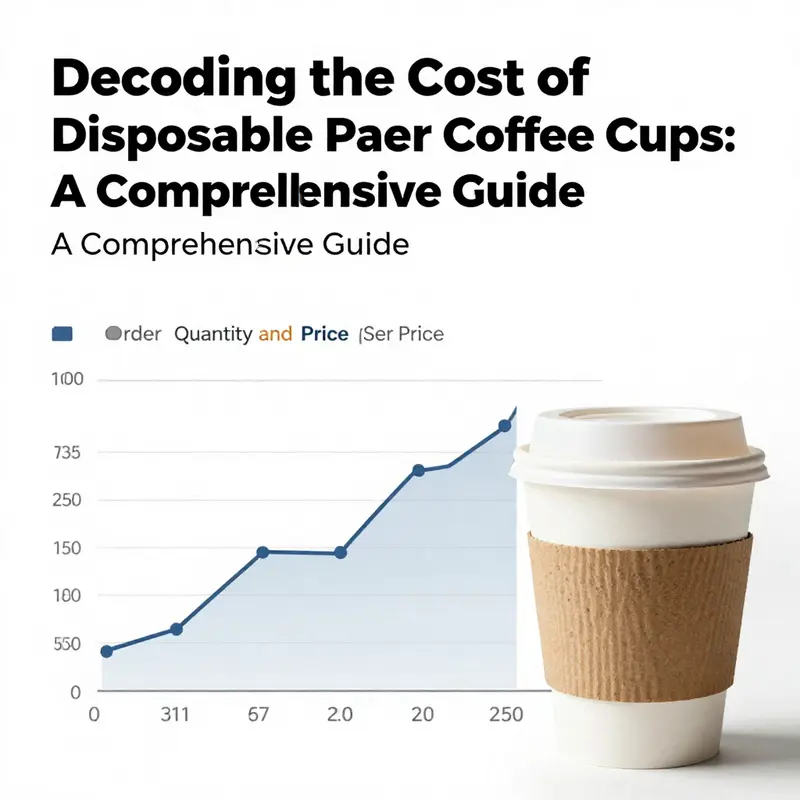
Pricing for disposable paper coffee cups is rarely a flat line. It bends with volume, quality, and the logistics of turning raw materials into finished products. When a supplier can run a cup line at steady, high throughput, the fixed costs that shadow every order—setup, design, plates, packaging adjustments, and testing—are spread across more units. The result is a per-unit price that declines as order quantity climbs. This isn’t a mere theoretical observation; it is the practical arithmetic behind bulk procurement in a market that treats cups as a commodity with variable features. In a world where a single factory can cycle through thousands of cups per hour, quantity becomes the most powerful friend of the buyer, and the relationship between MOQs and unit cost becomes the central hinge on which purchase decisions swing.
Data from recent market activity paint a clear picture. For large orders—think tens of thousands up to hundreds of thousands of cups—pricing for common sizes and standard materials can dip into the pennies per cup. A representative figure notes 8oz, 12oz, and 16oz kraft paper cups available at about US$0.03 per piece when the order crosses 100,000 units or more. Even more striking, a quotation for 500,000+ pieces of 12oz disposable milk-tea cups lists pricing as low as US$0.0156 per unit. These quotes reflect the combined effects of bulk material procurement, efficient use of machine time, lower packaging costs per unit, and the ability to amortize setup over a very large number of cups. The scale advantage here is not abstract; it translates into real dollars saved per cup when a buyer plans around volume.
The same principle applies, though with different magnitudes, to smaller purchases. For retail or limited wholesale purchases, the per-unit price is higher because fixed costs—such as the cost of individual packaging, smaller production runs, and more frequent changeovers—are spread over far fewer units. A typical pack of 50 standard cups or a set of 100 premium cups can run in the low dollars per cup, often between $0.09 and $0.15, depending on size, material, and whether the order includes branding or specialized features like lids. Put differently, the economics bend toward bulk, but the premium for convenience remains a reality for smaller buyers who cannot, or do not, commit to a long-range supply plan.
Size, too, shapes the math in meaningful ways. In bulk, the smallest end of the range (3–7 oz) can benefit from low fixed costs paired with moderate material use. The mid-range (9–12 oz) tends to sit in the middle of the bulk-price band, while the largest standard cups (14–16 oz) hover higher per unit in bulk than the smallest sizes, given the increased material requirements and sometimes thicker walls. Yet even these larger cups see substantial savings when MOQs rise into the tens or hundreds of thousands because the production and logistics systems are optimized for scale. Meanwhile, specialty cups—such as those with accent textures, unique edges, or premium finishes—tend to occupy the higher end of the bulk-price spectrum, and the per-unit discount from scale may be smaller, but it remains present as long as the order size justifies the customization and production setup.
The topic of customization is inseparable from quantity. For small batches, logos and color printing can dramatically inflate the bill because printing plates, color matches, and proofing add overhead that is not price-dominant at high volumes. As volumes grow, however, those one-time or per-design fees become more palatable as their cost is amortized. In practical terms, bulk buyers often receive a more economical per-unit rate for cups that carry a brand or design than a small business would for the same feature on a handful of cups. The upshot is simple: volume unlocks not only lower base costs but a more generous framework for branding without paying a steep premium on every cup.
The procurement challenge, then, is less about whether bulk pricing exists and more about aligning usage with supply capability. MOQs—minimum order quantities—are not just thresholds; they are planning instruments. A buyer who forecasts steady consumption over a year can position themselves to ride the bulk pricing curve by negotiating MOQs that reflect expected usage. The strategic choice is to balance the desired price tier with the cash flow and storage realities of holding large quantities. In markets that support bulk production, a supplier may offer tiered discounts that increase with quantity, and the buyer earns even more leverage by scheduling deliveries to align with anticipated demand, a tactic that reduces carrying costs and the risk of obsolete stock.
Another practical angle is the interplay between price and logistics. Large-volume purchases often entail longer lead times and more complex freight arrangements, but they also unlock advantages in shipping efficiency. Consolidated orders, regionalized distribution, and batch manufacturing all contribute to lowering the per-unit freight cost when the volume is large enough to justify the coordination. The result is a multi-faceted savings equation: the price per cup decreases with volume, while the total cost of ownership—the sum of the cup price, printing, packaging, and logistics—can shrink even more when the buyer optimizes order timing and delivery cadence.
For buyers who are ready to pursue bulk options, it helps to anchor the search in concrete tiered pricing rather than hypothetical discounts. A snapshot of market data shows how tiered quantities translate into real savings: quotes for 100,000+ cups can reach roughly US$0.03 per piece, while quotes for 500,000+ cups drop to around US$0.0156 per piece. This is not universal across all suppliers, but it demonstrates the magnitude of the volume effect and why some businesses plan around annual consumption rather than per-order spending. To put it in perspective with more everyday packaging needs, smaller retailers and event organizers often work within $0.09 to $0.15 per cup when buying in tens or low hundreds; the gap between those figures and bulk pricing is the purchase decision in a market that prizes scale.
The decision calculus extends beyond raw price figures. The quality and features of the cup—whether it is basic single-wall or double-wall, whether it includes a reliable lid, or whether it uses a more sustainable coating—determine the baseline cost. While bulk pricing can still reduce unit costs even as these features add to the bill, the overall trend remains: the more you buy, the more you save per cup, provided you manage the timing, storage, and cash flow that come with large inventories. The higher initial investment in bulk is offset over time by lower unit costs and the ability to deliver a consistent brand experience across locations or events. For buyers seeking a clearer path, aligning with a supplier who can deliver a reliable cadence of shipments—paired with a forecast that smooths demand—often yields the most meaningful reductions in the price per cup.
In the end, the volume effect offers a pragmatic framework for budgeting and procurement. The average price of a disposable paper coffee cup is not a single datum but a spectrum shaped by size, material quality, customization, and, most powerfully, quantity. The lower end of the spectrum lives in the realm of tens of thousands to hundreds of thousands of units, where prices can dip into the pennies per cup. The higher end—where a buyer is purchasing smaller lots or testing a new design—reads in the fractions of a dollar per cup. Understanding where within that spectrum a buyer lives is essential for cost control, branding consistency, and operational reliability.
To connect this discussion to the concrete choices a business can make, consider the value of planning around tiered pricing structures and MOQs. If a company can forecast usage with reasonable accuracy and coordinate deliveries to minimize storage risks, bulk purchasing becomes a strategic lever rather than a reactive purchase. This approach translates into steadier unit costs, predictable branding outcomes, and a tighter alignment between packaging expenditures and the company’s growth trajectory. It also invites attention to the broader market signals—material costs, labor, and logistics—that influence pricing in ways that can shift with macro trends but tend to follow the same volume-driven logic.
For readers seeking to inspect a concrete bulk option without getting lost in sales pitch, see the bulk-toward-8oz-12oz-16oz categories and related pages at the supplier’s site. For bulk options and packaging details that align with a company’s needs, this link offers a representative bulk assortment: wholesale-take-away-8oz-12oz-disposable-coffee-paper-cup-with-lids.
External resources can provide a broader market lens and the latest MOQs. For real-time pricing and MOQs, suppliers on platforms like Alibaba frequently reflect rapid changes in the market, especially for large orders. Readers can follow those listings to gauge current conditions and spot timely price deltas as demand fluctuates. This dynamic context is essential for teams that rely on lean budgeting and flexible inventory strategies, particularly when the organization plans to scale. As volume increases, the price per cup tends to fall, while the complexity of logistics and storage increases—another reminder that the best decision emerges when quantity, timing, and needs align.
In sum, quantity is the keystone of price for disposable paper coffee cups. It dictates not only the unit cost but the broader economics of branding, delivery, and inventory management. The data illustrate a clear pattern: greater MOQs unlock significantly lower prices, and even modestly larger orders can meaningfully reduce the per-unit cost when matched to demand. The practical takeaway is straightforward. Businesses should map out consumption, identify meaningful MOQs that match that forecast, and negotiate terms that reflect a multi-quarter plan. When done well, the volume effect becomes a steady driver of affordability, reliability, and brand consistency across markets.
Price Currents in the Disposable Coffee Cup Market: How Size, Volume, and Customization Steer the Real Cost
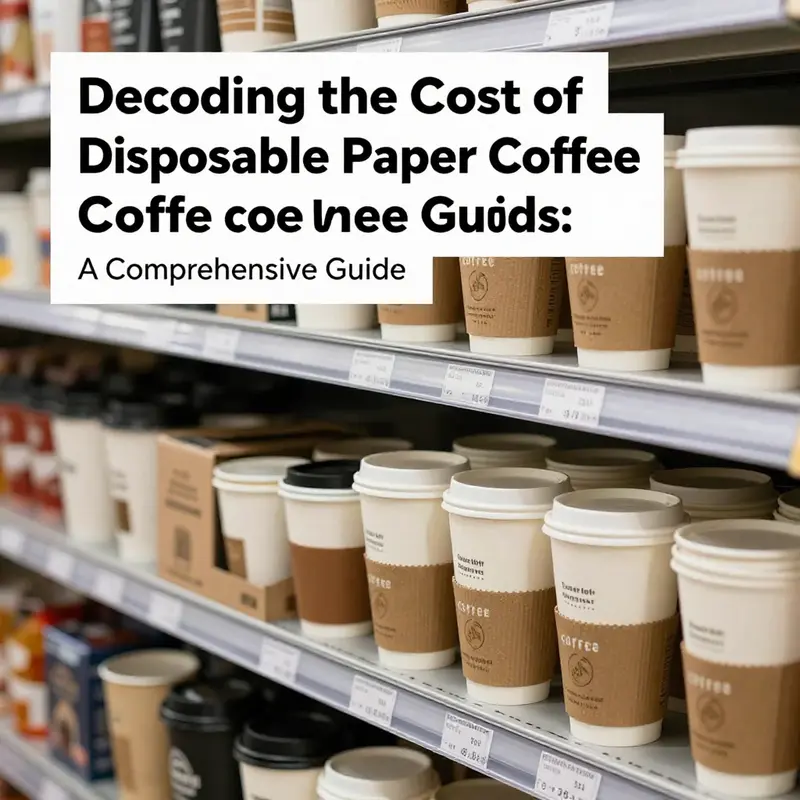
The question of what a disposable paper coffee cup costs is not a single figure but a web of decisions that ripple from factory floor to front counter. When you pull the thread you see how size, material, coatings, and customization all tug the price in different directions. The overall picture that emerges from current market data is not a flat line but a spectrum: bulk buyers enjoy low unit costs, while smaller purchases for retail or quick-serve are higher. In other words, the average price you hear about depends on who is buying, in what quantity, and with which features wrapped into the cup itself. A practical way to think about it is to imagine a ladder with several rungs, each representing a common purchasing scenario, and then to recognize how easy it is to slide up or down that ladder depending on the buyer’s needs. On the bottom rungs, bulk supply chains drive per‑cup costs toward a few pennies or less, while the higher rungs reflect standard retail and branded or feature-rich options that add value—often at a price that makes sense for a cafe’s branding, a delivery service’s volume, or a corporate event.
For anyone budgeting for a chain or a campus concession, the most important driver is scale. The data consistently show a dramatic price decay as order volume climbs. Large orders, often in the tens of thousands or more, push per-unit costs into the range of mere cents. In one end of the spectrum, the lowest bulk prices can slip into the mid to low pennies per cup, depending on size and features. Very small cups, in the 3 to 7 ounce range, can begin as low as five to seven hundredths of a dollar per cup when produced in bulk. Moving up to the more common 9 to 12 ounce size, the bulk price typically sits in the ten- to twelve-cent area, and larger, 14 to 16 ounce cups settle higher—roughly seventeen to twenty-three cents per cup in bulk deals. Specialty or premium cups, such as those with high-end finishes or unique structural features, can reach about forty cents per cup, though those cases are usually tied to specialized marketing or materials rather than everyday service. For a consumer or a small business making a handful of dozens of cups, the cost remains relatively modest but noticeably higher than bulk, often around nine to fifteen cents per cup when rounding to practical purchase units. This cluster of numbers is not an accident; it reflects the underlying economics of scale, the material mix, and the additional value that customization can bring.
The retail or small-quantity reality diverges from bulk pricing in predictable ways. Pack sizes and purchase frequency matter a great deal. A typical pack of 50 standard cups may run somewhere in the low single digits per cup, roughly four to seven dollars depending on the vendor, the cup size, and any simple branding. A set of 100 premium or branded cups can still be a bargain at the right time, but it translates to a higher per-cup cost than wholesale, as the economies of scale that drive bulk prices are not fully leveraged when ordering smaller quantities. In these scenarios, the average per-cup price typically sits in a range that’s roughly nine to fifteen cents when calculated on a per-cup basis for the consumer or small business buyer. The practical implication is simple: if you operate a single cafe or a small catering outfit, looking for bulk options through a wholesale channel can yield substantial savings, but the daily needs and cadences of a single location usually push you toward standard or branded cups that carry a small premium for convenience and consistency.
When the data are parsed more granularly, a clearer truth emerges about the cost structure. The detailed results show a very wide band at the low end when min orders are large: custom biodegradable 4-ounce cups can be priced at about $0.01 to $0.05 per cup with minimums around five thousand pieces. A 300 milliliter cup with a PLA coating is often quoted at $0.01 to $0.03 per cup with minimums of ten thousand. A 12-ounce wave-wall cup might fall between $0.01 and $0.04 per cup, again with a ten-thousand-piece minimum. The pattern repeats across other standard sizes, with custom 8, 12, or 16-ounce cups showing similar low-price bands when total volume reaches the hundred-thousand-piece threshold. At this tier, the combined effect of bulk procurement, supply chain efficiency, and material choice is dramatic. It is not unusual to see these ultra-low unit costs only when the buyer is willing to lock in large quantities and the supplier can amortize setup and production costs across many hundreds of thousands of units.
Between bulk and ultra-bulk pricing sits the mid-range reality that most everyday buyers experience. Mid-range pricing often appears in the form of standard, non-custom cups that are common in many shops and food service operations. For typical 12-ounce cups intended for everyday use, wholesale pricing might range from roughly ninety cents to a dollar fifty per hundred cups, which translates to about nine to fifteen cents per cup. In the same family, a 4-ounce cup can be priced in the single cent range, roughly three to four cents per cup, depending on the exact material and the quantity purchased. A 300 milliliter single-wall cup used in many cafés for hot beverages might be priced similarly to the bulk categories, sometimes dipping into the one-cent area if ordered in very large quantities. These mid-range figures reflect a market in which suppliers balance the cost pressures of materials and manufacturing with the need to maintain stock and meet the demand of a wide customer base, from small independents to mid-size operators.
The price landscape gets even more nuanced when special features and materials enter the equation. Customization—whether it’s a printed logo, a unique color, or a premium finish like gold foil stamping—pushes unit costs upward, but it can still be economical if spread across larger orders. Custom printed 12-ounce cups, for example, typically sit in the two to eight hundredths of a dollar range above base prices, depending on the complexity of the design and the minimum order volume. Gold foil stamping, while visually striking, tends to sit at the higher end of the customization scale, often adding a few hundredths to a few tenths of a cent per cup depending on the design intricacy and production runs. Then there are the materials themselves: bamboo fiber cups or other alternative fibers can be priced in the one to two cent range per cup when produced at large volumes, reflecting the higher material costs and the specialized manufacturing capabilities required. Yet even with these premium materials, the price per cup can remain deceptively low if the buyer commits to a substantial order.
The practical takeaway for planners is that a cup’s price is rarely about the cup alone. It is the sum of the cup, the lid, the coating, the production method, and the level of customization, all scaled by the order size. A non-custom 12-ounce cup with a lid, purchased in large quantities, can be surprisingly economical—sometimes as low as eight to nine tenths of a cent per cup in bulk when considered per carton and with a favorable packaging configuration. This emphasizes that the injection of value often comes from the packaging ecosystem as a whole, not merely from the cup shell. It also underscores how shipping, logistics, and minimum order quantities can alter the final out-the-door cost in ways that look small on a line item but accumulate meaningfully in a business’s quarterly spend.
To illustrate how a buyer might navigate this landscape, consider a wholesale option that combines price, convenience, and branding. A buyer placing a sizable order might look for bulk pricing on standard sizes, then layer in simple branding to gain recognition without inflating the unit cost. An internal supplier resource that often proves useful is a wholesale catalog that highlights minimal order quantities, price bands by size, and the incremental cost of customization. For readers of this chapter, a practical starting point is to explore wholesale options that align with your volume and branding needs. For example, you can browse wholesale take-away cups with lids in common sizes and determine whether the incremental cost of a logo or color is justified by the projected increase in customer loyalty and perceived value. The right choice balances price, aesthetics, and the operational realities of production and delivery. A single page from a supplier catalog can reveal how much of the cost comes from the cup itself and how much from printing and finishes, helping you forecast annual procurement costs with greater confidence. Wholesale take-away 8oz-12oz disposable coffee paper cup with lids.
Pricing dynamics are not static. Market competition and overcapacity continue to shape the actual bids suppliers present to customers. Economies of scale remain the primary lever for cost reduction, but shifts in material costs, consumer demand for eco-friendly options, and the growing interest in bio-based coatings and fibers will gradually tilt the price structure. The market has already demonstrated that customization and premium materials can be accommodated at a price point that still makes sense for large operators, especially when the long-run value of branding, customer experience, and sustainability is factored into the decision. For buyers, the lesson is clear: align the choice of cup with the scale of operations, the desired customer experience, and the strategic priority of sustainability. When these align, the chapter on pricing transforms from a ledger of per-unit costs into a story about how a simple cup becomes a lever for growth, consistency, and brand equity across a busy service environment.
External resources can offer broader context on packaging economics and the materials market that underpins these price ranges. For a broader market overview, see external resource: https://www.statista.com/topics/4211/packaging
What Sits Behind the Price Tag: How Disposable Paper Coffee Cups Find Their Value in a Global Market
The average price of a disposable paper coffee cup is not a fixed number, but a spectrum shaped by size, quality, order quantity, and the extent of customization. When a business or a consumer peers at a bulk quotation versus a retail pack, the difference in the per unit price is noticeable. In bulk, especially for very large orders, the unit cost can shrink to fractions of a dollar. The range often cited in industry data shows bulk prices as low as five cents per cup and as high as about forty cents for specialty features. The lowest end is typically associated with small, standard cups in very large runs, while the upper end reflects cups with premium finishes, advanced coatings, or distinctive forms. For smaller purchases, the per cup price climbs quickly because the fixed costs of tooling, setup, and minimum production run must be absorbed across a much smaller quantity. In everyday terms, a consumer buying a handful of cups might see roughly nine to fifteen cents per cup, while a business ordering dozens or hundreds may negotiate closer to single digits, provided the order size justifies it. This is not merely a curiosity of arithmetic; it reveals the underlying forces that push prices up or down in real markets. The numbers in the current market data show a practical pattern: bulk wholesale for the smallest cups can dip toward five to seven cents per cup, mid-range standard cups hover around ten to twelve cents, while larger cups rise to roughly seventeen to twenty-three cents per cup. When a cup becomes a statement piece—whether through a unique edge design, an elegant finish, or a special coating—the price can approach a quarter of a dollar or more per unit. In a retail setting, the arithmetic shifts again. A common bundle of fifty standard cups might carry a price between about four dollars and seventy cents and seven dollars ten cents, depending on size and retailer policies. If a business opts for premium or branded cups, the per-unit cost tends to settle higher, even for a modest quantity, reflecting both the extra value delivered by branding and the incremental costs of the design or colorfast inks. This bifurcation between bulk affordability and consumer-facing premium pricing underscores a simple truth: the market rewards efficiency and scale, but also taxes sustainability, branding, and customization with higher unit costs. The research materials point out that the bulk price advantage rests on several intertwined levers, starting with the raw materials at the heart of every cup. Paper cups rely on virgin pulp or recycled paper, and the coating inside the cup—the wax or a PLA lining—protects contents from leaks and maintains structural integrity. The cost of these inputs moves with the global prices of timber, pulp, and energy, as well as with the volatility of transportation costs and the health of supply chains. When demand grows in urban centers or when new regulations favor compostable or recyclable components, manufacturers may shift to more expensive coatings or certified sustainable materials. Those changes tend to bubble up into retail price, particularly for consumers seeking eco-friendly options. The rise of biodegradable linings such as PLA, for example, often pushes production costs higher than traditional plastic-based alternatives. This is not merely a cost increase; it represents a commitment to end-of-life outcomes that aligns with evolving regulatory and consumer expectations. The scale at which a cup is produced is another decisive factor. Large manufacturers can amortize fixed costs across immense production volumes, squeezing per-unit costs through faster machinery, more precise automation, and streamlined waste management. In contrast, smaller or regional producers face the challenge of maintaining efficiency with smaller runs, higher per-unit labor costs, and potentially more variable material sourcing. The result is a price spectrum that reflects not only the physical cup but the entire ecosystem that makes it. Automation extends beyond the forming of the cup body. Modern lines often incorporate inline quality control, which reduces waste and returns. The improved precision translates into less material waste, fewer defects, and a tighter feed of finished goods to distributors. These efficiency gains, while technologically driven, are ultimately a direct driver of price realization for buyers who shop by the case or by the pallet. In the broader market, environmental regulations exert a powerful influence. Governments increasingly regulate single-use disposables, encouraging alternatives or imposing fees. When regulatory regimes favor certified compostable or recyclable options, manufacturers must invest in compliant materials, certification processes, and new supply chains. Each added compliance step contributes to the final price, but it also drives a broader market toward sustainability—an outcome many buyers value. Consumer demand reflects this duality. While urban centers and coffee-loving demographics propel consumption of disposable cups, a growing segment of buyers seeks more sustainable choices. The market thus supports a dual path: affordable standard cups for budget-conscious customers and higher-priced sustainable options for those who prioritize environmental impact. This duality keeps price tiers robust and somewhat persistent, even as material costs shift. Logistics cannot be overlooked. The journey from a factory floor to a store shelf often travels across vast geographies, with costs tied to shipping, warehousing, and storage conditions. Longer supply chains typically add to the per-unit price through freight, insurance, and potential spoilage risk in transit. Regional suppliers may offer lower prices by virtue of proximity, reducing transport expenses and enabling faster replenishment cycles. The cumulative effect of these forces—material costs, production efficiency, regulatory compliance, demand patterns, and logistics—manifests as the seemingly simple question of what is the average price of a disposable paper coffee cup. The answer is never a single number, but a lattice of price points keyed to choice. If a buyer is focused strictly on bulk cost per unit, the story often tilts toward sub-ten-cent prices for the most common, small-size cups when the order is substantial. For those seeking mid-range consumption, expect roughly ten to twelve cents per cup in bulk purchases that justify the factory setup and quality expectations. For larger or specialty cups, prices climb; a 14 to 16 ounce cup may be priced around twenty cents or more, and premium designs with distinctive finishes can push toward forty cents per cup in specialized segments. When the decision is made at the retail level, the price per cup rises, sometimes substantially, as the buyer bears not only the cup itself but the costs of packaging, branding, and point-of-sale presentation. A pack of fifty standard cups may land in a range that reflects both the inherent cost of manufacturing and the retailer’s margin. Similarly, a set of one hundred premium or branded cups will be higher, reflecting the added value of customization or branding rather than a straightforward container. The overarching pattern remains consistent: scale creates savings; sustainability adds cost; and consumer expectations shape the willingness to pay. Businesses that navigate these dynamics successfully often adopt a mixed sourcing strategy, leveraging bulk purchases for standard, non-branded cups while reserving premium options for marketing campaigns, seasonal promotions, or venues that emphasize sustainability. The reference points from the research indicate that even in basic configurations, per-unit pricing tends to stay within a narrow corridor for bulk purchases, and that consumer pricing is more variable due to packaging, branding, and the perceived value of eco-friendly features. For readers evaluating supplier options, a practical approach is to compare price per cup across sizes and coatings, while also considering the total cost of ownership, including minimum order quantities, lead times, and the potential for customization to influence perceived value. For those exploring wholesale paths, wholesale-take-away-8oz-12oz-disposable-coffee-paper-cup-with-lids can provide a concrete example of how price breaks unfold as volume increases and product features align with customer expectations. Such information helps buyers calibrate their procurement strategy to the realities of the market rather than rely on a single, static figure. In sum, the average price of disposable paper coffee cups emerges from a confluence of material science, manufacturing discipline, regulatory landscapes, and consumer psychology. The precise number a buyer sees at the register or in a quote sheet is the product of multiple tradeoffs: the choice of cup size and quality, the degree of customization, the scale of production, and the speed with which the supply chain can deliver. As sustainability becomes a central business imperative, these tradeoffs will continue to shape price trajectories across market segments, ensuring that price remains a signal of value as much as a metric of cost. External context from the broader market supports this view, illustrating how macro trends in materials, regulation, and consumer preferences interact with the micro dynamics of factory efficiency and wholesale pricing. For a broader market context, see the external resource below.
Final thoughts
Understanding the average price of disposable paper coffee cups is crucial for beverage-related businesses, informing procurement strategies and budget allocations. By analyzing bulk purchasing, size and quality variations, quantity impacts, retail trends, and market factors, operators can make well-informed decisions to enhance customer experience and manage costs effectively. The knowledge gained from this overview can empower businesses in the coffee shop and beverage industry to select the right products tailored to their needs.