
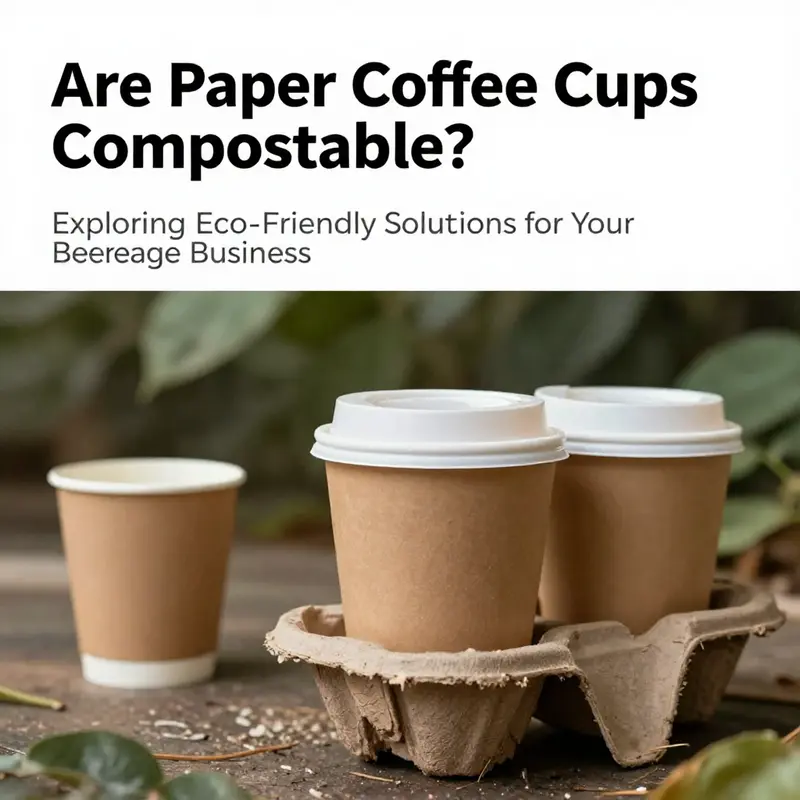
As sustainability becomes increasingly essential in food and beverage industries, understanding the compostability of paper coffee cups is vital. Beverage chains, coffee shops, food trucks, and event planners encounter various cup options, often aiming to balance functionality and environmental responsibility. In this guide, we delve into the implications of materials used in paper coffee cups, the role of coatings, the importance of compostability certifications, and the distinctions between industrial and home composting. Each chapter provides insights specifically tailored for your operational needs, helping you make informed and eco-conscious decisions.
Lining the Truth: Material Implications for Compostable Paper Coffee Cups
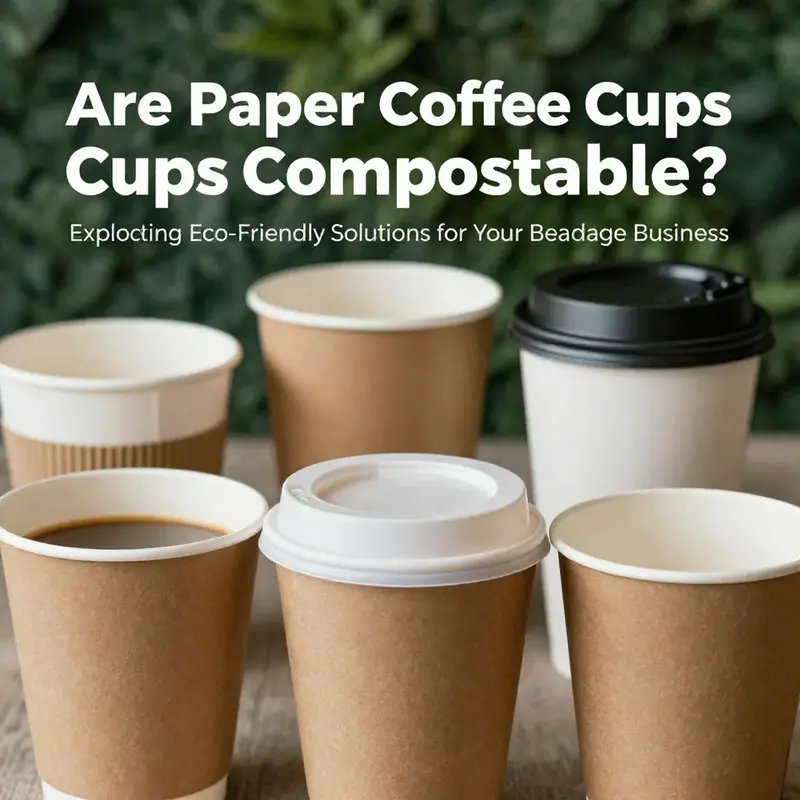
A cup of coffee is often more than a beverage; it is a moment held in a disposable vessel that promises convenience and, increasingly, environmental responsibility. Yet the simple act of pouring into a paper cup belies a complex material story. The crux of whether a paper coffee cup is truly compostable depends less on the paper itself and more on what keeps that paper watertight and intact during use. In practice, the decisive factor is the lining or coating that shields the pulp from hot liquids. Traditional cups typically rely on a thin plastic layer—polyethylene or PET-based coatings—that creates a barrier to leaks and moisture. While this makes the cup functional, it also means the cup is not readily compostable in typical industrial or home composting environments. The plastic barrier can persist in composting facilities, contaminating the compost and resisting the breakdown that compostable claims promise. This is not merely a technical footnote; it is a practical obstacle to the circular economy that many brands and communities strive to achieve when they commit to compostable packaging.
The material implications begin with the recognition that not all paper cups are created equal. A cup’s potential to biodegrade hinges on its inner workings. If the cup is lined with a conventional plastic such as polyethylene, the paper itself cannot be considered truly compostable under standard industrial conditions. The polymer layer resists breakdown, and the combined product can linger in the composting stream, undermining the quality and safety of the finished soil amendment. Yet the same system that makes traditional cups non-compostable also spurs innovation. Researchers and manufacturers have pursued alternatives that preserve performance while enabling compostability. Among the most prominent of these are plastic-free designs and PLA-coated options. The former relies on paper pulp without a plastic lining, relying on the inherent barrier properties of the paper plus sometimes a plant-based sealant to keep moisture at bay. The latter uses polylactic acid, a bioplastic derived from renewable resources like cornstarch, to form a coating that can break down in industrial composting facilities. Each approach has its own implications for how the cup behaves in the real world: how hot beverages affect the coating, how long the breakdown takes, and under what conditions the material can volitionally decompose.
Plastic-free paper cups represent a clear step toward a more straightforward end-of-life story. Without a petrochemical lining, these cups align with growing consumer expectations for materials that re-enter the ecological cycle rather than accumulate as waste. They are designed to function with hot beverages and with cold beverages alike, while remaining compatible with composting streams that are tuned to accept plant-based inputs. The practical reality is that plastic-free does not automatically equate to universal compostability; it requires an appropriate disposal infrastructure capable of processing plant-based fibers and ensuring that no udnerlying residues persist. For brands, this creates a dependency on local waste-management ecosystems and on clear consumer guidance about proper disposal. The composting facility landscape varies by region, with some facilities equipped to handle plant-based coatings efficiently and others still catching up. This means that a properly manufactured plastic-free cup can only realize its compostable potential if the waste is directed to a facility designed to process it.
PLA-coated cups introduce another layer of nuance. PLA is a biodegradable polymer sourced from renewable resources, and it is engineered to decompose under industrial composting conditions. In practice, this often means high-temperature environments and controlled moisture levels that speed the breakdown of PLA while the paper fibers convert into organic matter. However, PLA is not home-compostable in most cases. In a backyard compost pile, without the elevated temperatures that industrial facilities provide, PLA-coated cups may not break down efficiently. The timing can vary, but the takeaway is clear: the compostability claim of PLA-coated cups is condition-specific. For businesses and institutions that pursue certified compostable products, the key is to align with standards that define industrial compostability and to ensure that disposal streams exist to reach those conditions. Certifications such as TÜV OK Compost, BPI Compostable, and ASTM D6400 play a central role here. They establish measurable criteria for how quickly an item should break down and what residues, if any, may remain. When a cup bears these certifications, it signals a corroborated pathway to compost, provided the consumer and waste-handler adhere to appropriate disposal practices.
The chain of reasoning around certification is not merely pedantic; it is essential for preserving the integrity of compostable claims. For a consumer, seeing a seal on a cup can offer assurance that the product has undergone rigorous testing and meets defined industrial standards. For a business, certification reduces risk in marketing and supply-chain management. It also helps avoid inadvertently contaminating the compost stream with non-degradable plastics. The presence of a coating or the absence of one must be matched with the right certification and, crucially, with the right disposal infrastructure. In this sense, the material Implications of coating choices extend beyond the cup’s immediate use—they shape the entire post-consumer lifecycle and influence the waste systems that cities and campuses invest in.
The practical implication for shops and cafeterias is orientation around the end-of-life story. If a venue markets itself as eco-friendly, it must not only switch to compostable cups but also guide customers to the correct disposal path. Visual cues on packaging are helpful, yet they are not sufficient on their own. Staff training, clear signage, and partnerships with local composting facilities can help ensure that cups do what they promise. The supply chain must also be mindful of certifications and the realities of the local composting ecosystem. For instance, if a facility can process PLA-coated cups but not certain other plastics, the cups chosen by a business should be vetted against what the facility accepts. Misalignment between product certification and local capacity can undermine the perceived environmental benefit and complicate waste management for the entire campus or neighborhood.
The research material points to several concrete directions for decision-makers. First, verify the cup’s construction and their liners. If the aim is true compostability, look for products that are specifically designed for composting rather than merely marketed as “eco-friendly.” Second, scrutinize the certification. BPI, TÜV OK Compost, and ASTM D6400 define standards that help distinguish claims from reality. Third, assess the disposal pathway. Are there industrial composting facilities in the community that can handle the material? Do they accept PLA and plant-based coatings? Do they disallow conventional plastics in the same stream? These questions determine whether a seemingly compostable cup will actually disappear into the compost rather than the landfill.
Within this framework, a single design decision—whether to use a plastic lining at all—can determine the cup’s fate after use. The mirror image of this truth is the reality that many markets still rely on traditional, plastic-lined cups simply because alternatives were not previously available or because the local waste infrastructure has not adapted to the new materials. The transition from plastic-coated to plastic-free or PLA-coated cups is not simply a substitution of one material for another; it represents a shift in the waste-management ecosystem, a recalibration of consumer behavior, and an alignment of product development with standardized certifications. When these elements align, the compostable cup becomes a viable option for institutions that seek to reduce their environmental footprint without compromising performance or customer experience.
For those who design, procure, or operate venues serving hot beverages, the opportunity lies in choosing materials that harmonize with the specific composting realities of the community. A cup that performs brilliantly in a controlled industrial facility but fails to decompose in the local system is not a win for the circular economy. Conversely, a truly compostable cup—whether plastic-free or PLA-coated—can contribute meaningfully to soil-building processes if managed correctly. The pathway to these outcomes is paved not just with better materials but with better alignment of standards, disposal practices, and educational outreach to customers. In the end, the material implications are not abstract. They shape the environmental impact of routine daily choices and determine whether the act of sipping coffee can be part of a closed loop rather than a one-way journey to a landfill.
As consumers become more attuned to the realities of composting, the demand for trustworthy, certified products will continue to push manufacturers toward clearer labeling and more robust testing. In the absence of such clarity, the risk remains that “compostable” becomes a marketing term rather than a lifecycle promise. To navigate this landscape, it helps to engage with a spectrum of perspectives—from the science of polymers and pulps to the practicalities of waste-management infrastructure. This integrated approach offers a sturdier basis for decision-making and a more reliable path toward true compostability. It is a reminder that packaging choices are part of a broader environmental system, and their real value emerges only when the end-of-life story is as sound as the on-shelf performance.
For readers seeking tangible options that echo this shift, consider exploring plastic-free options that pair solid performance with a clearer end-of-life narrative. For instance, there are plastic-free, single-wall cups designed to deliver a comparable experience to traditional cups. These products often come with the reassurance of certification and the compatibility with composting streams that are prepared for plant-based inputs. In the context of an evolving waste landscape, such choices help bridge the gap between consumer convenience and ecological accountability. If you are curious about specific product configurations that emphasize plastic-free design and competitive pricing, a representative option available in the market today highlights how a plastic-free, single-wall cup can be positioned as both practical and principled. Best price 8oz double-wall plastic-free single-wall paper cup.
Despite the momentum toward compostable cups, a caution remains: never assume that a product is compostable simply because it is marketed as eco-friendly. The most reliable route is to verify the certification and to confirm that your local composting infrastructure can receive the material. When these checks align, the cup’s material implications translate into tangible environmental benefits. The combination of plastic-free designs and PLA-based coatings, when implemented with proper disposal pathways, can advance a circular approach to packaging that reduces contamination and accelerates the return of nutrients to the soil. In this sense, the material story behind paper coffee cups is not merely about the coating; it is about the broader systems that enable compostability to be real, measurable, and scalable. It is about a future where the simple ritual of drinking coffee leaves a resource rather than a residue, where every coffee break becomes a potential step toward a more sustainable economy rather than a solitary moment burdened by waste.
External resource for further reading and verification of compostability claims can be found at the Biodegradable Products Institute. This organization provides guidance and a catalog of certified products, helping to distinguish those that truly biodegrade under industrial composting conditions from items that merely appear environmentally friendly. For researchers, policymakers, and practitioners, engaging with such standards remains essential to ensure that claims hold up under scrutiny and that waste-management practices keep pace with material innovation. External resource: https://www.bpiworld.org/.
Coatings That Decide: Unraveling the Compostability of Paper Coffee Cups
The question of whether paper coffee cups are compostable seems deceptively simple at first glance. Peel back a layer of everyday convenience, and the truth becomes more nuanced: the inside coating is what mostly determines whether a cup can join the circular flow of organic waste. Paper itself is biodegradable, but the barrier that makes a cup leak-proof and durable under heat can disrupt composting processes. This chapter follows that thread from the surface of the cup to the heart of industrial composting, showing how coatings—whether legacy plastics or plant-based alternatives—shape the fate of a used cup long after the coffee is gone. In doing so, it links practical considerations for consumers and services with the science and standards that govern compostability, and it grounds the discussion in the real-world conditions that either make or break a cup’s environmental promise.
Most traditional disposable paper cups rely on a thin plastic lining—often polyethylene (PE)—to keep liquids from seeping through the paper and to maintain a barrier against heat. That plastic layer is the core reason many such cups cannot be composted in ordinary settings. It resists decomposition, persists through the composting cycle, and challenges both home and municipal facilities that aim to convert waste into nutrient-rich soil. The result is a cup that, despite its paper origin, behaves more like a landfill item in most real-world scenarios. The presence of PE or similar coatings complicates recycling too. Even if the outer paper fiber is suitable for recycling, the inner plastic film usually requires separation techniques not available in many curbside programs. The combined effect is that traditional cups, with their PE liners, drift away from true compostability and into a gray area of waste management where neither recycling nor composting is consistently reliable.
The turning point in this discourse comes with plastic-free or alternative-coating cups. In many cases, manufacturers have replaced PE with plant-based coatings that are designed to break down under industrial composting conditions. The most commonly discussed option is polylactic acid, or PLA, a bioplastic derived from renewable resources such as cornstarch. PLA coatings are not inherently compostable in every setting; they require the right environment—typically the controlled heat, moisture, and microbial activity found in industrial composting facilities—to reach the necessary transformation into water, carbon dioxide, and biomass within a predictable timeframe. When these cups are disposed of in facilities equipped to handle them, the coating can degrade in a matter of weeks to a few months, leaving behind only the original paper and the composted material. That distinction—industrial compostability versus home compostability—matters a great deal. PLA may not behave the same in a backyard compost heap or municipal green-waste program that fails to reach the thermal thresholds needed for conversion. In such environments, PLA can persist longer than hoped or may require pre-treatment steps that aren’t widely available.
It is also worth noting that plant-based or other innovative coatings extend beyond PLA. Research and industry discussions highlight a range of bio-based coatings that are certified compostable under relevant standards. These coatings are designed to cooperate with the composting process rather than hinder it. They aim to provide the same liquid barrier and heat resistance as traditional plastics while dissolving or breaking down into benign organic matter under the right conditions. The outcomes of these coatings depend on their certification, the composting facility’s capabilities, and the lifecycle assessment of the entire cup assembly—including the fiber base and any inks or printing used on the surface.
What does it take to determine whether a cup is truly compostable? Certification is the compass. Independent standards bodies publish criteria that go beyond a single claim of “compostable.” A cup should meet a recognized industrial composting standard, such as ASTM D6400 in the United States, EN 13432 in many other markets, or equivalents that specify the rate and extent of decomposition, the final residue, and tests under controlled conditions. In North America, the Biodegradable Products Institute (BPI) is a leading authority that assesses and certifies products as compostable for industrial facilities. Certification signals that the product has been tested and verified to break down within a defined period without leaving toxic residues. There is also TÜV OK Compost INDUSTRIAL certification, which similarly attests to industrial-scale compostability. These marks matter because they distinguish marketing language from verifiable performance. If a cup claims to be compostable but lacks credible certification, those claims warrant skepticism. The nuance is critical: a cup can be labeled “home compostable” or “industrial compostable,” but only the latter usually carries assurance that it will break down in a typical industrial facility that operates at the right temperature and humidity.
The distinction between home and industrial compostability further clarifies the practical realities of waste management. Home composting, which many people imagine when they hear the word compostable, operates at lower temperatures and different microbial communities than industrial facilities. PLA and other plant-based coatings may not reach the same rates of decomposition in a home setting. Even if a coating is labeled as “home compostable” in some markets, it is essential to verify that label against the stated standard and the facility conditions you have access to. In contrast, industrial composting facilities are designed to handle higher heat and moisture, with tailored aeration and controlled agitation that accelerate biodegradation. For cups intended for use in quick-service environments, the ideal outcome is a cup that can be accepted by municipal or private industrial composting programs, reducing the burden on landfills and providing a useful end-of-life pathway for the packaging.
From a design and policy perspective, the move toward compostable cups is not simply a matter of switching coatings. It intersects with supply chains, recycling streams, and regional composting infrastructure. If a facility that accepts compostable cups cannot separate the cup from other compostable streams or cannot maintain the temperature and humidity thresholds, the benefits can be undermined. Conversely, when a region develops robust industrial composting networks, compostable cups with certified plant-based coatings can fulfill their promise, turning used cups into nutrient-rich compost instead of refuse. In this context, the coating is not a cosmetic feature but a functional one that determines whether a cup’s journey ends in soil restoration or a landfill.
For businesses aiming to optimize their waste programs, the decision often hinges on the availability of compatible disposal pathways and the reliability of certifications. A plastics-free cup might be an easier sell if local facilities are equipped to process it, and if the coating has a clear, certified pathway to composting. This does not discount the importance of comprehensive life-cycle thinking. Even when the coating is compostable, the production phase, agricultural inputs for the plant-based materials, and end-of-life logistics all contribute to the overall environmental impact. A robust assessment considers the energy and resources required to grow, harvest, process, and transport the fluted fiber and the coating materials, as well as the energy balance of the composting process itself. Facilities and municipalities increasingly publish guidance to help businesses navigate these decisions, but confusion remains where multiple standards and marketing phrases collide.
In practical terms, even with certified compostable coatings, the cup’s ultimate fate depends on how it is disposed of and where it ends up. Consumers can play a decisive role by selecting cups that bear credible, third-party certifications and by participating in local composting programs that are equipped to handle such packaging. Businesses can support these efforts by training staff to recognize proper disposal streams, providing clearly labeled containers, and sharing information about the facilities that accept compostable packaging. The presence of a certified, plastic-free cup in a cafe or workplace does not automatically guarantee that every batch will be composted. The surrounding system—collection, transport, processing, and end-use management—must align with the cup’s design, coatings, and certifications. This alignment is where policy, industry standards, and everyday practice converge to determine whether a coffee cup becomes compost or simply another item in the waste stream.
To illustrate the practical implications of coatings without naming specific product lines, consider the broader category of plastic-free, coated cups available in the market. A cup designed with a PLA or other plant-based coating can be a viable option for facilities that mandate industrial composting. For those who need a tangible example of a plastic-free approach in action, a widely used design shows how a cup can maintain its barrier properties with a coating that dissolves under controlled, elevated temperatures. When evaluating such offerings, buyers should look for explicit statements about the coating material, the intended composting standard, and the facility type that supports the end-of-life pathway. Clear documentation helps avoid the misalignment that leads to cups ending up in landfills despite a compostable claim.
In the end, the ecosystem around compostable cups is as important as the coating itself. The base paper biodegrades, but without a compatible coating and an appropriate industrial composting process, the cup’s end-of-life outcome can fall short of sustainability goals. Consumers, facilities, and manufacturers must work together to ensure that certifications are meaningful, that disposal streams are clearly defined, and that the infrastructure exists to honor the promise of compostable packaging. The journey from cup to compost is a collaborative one, dependent on materials science, certification rigor, and the practical realities of waste-management systems. When these elements align, plastic-free cups with certified compostable coatings can deliver on the ecological hope that many packaging reforms aspire to, turning a disposable object into a resource rather than a burden.
For readers seeking a more concrete illustration of plastic-free cup options and their place within a composting framework, the following example represents a category that emphasizes plastic-free construction while maintaining user-friendly performance: plastic-free, single-wall cups designed for hot beverages. These cups showcase how coatings can be engineered to coordinate with composting requirements, while still delivering the leak resistance and heat tolerance customers expect. The broader implication is clear: the future of coffee cup sustainability hinges on coatings that are proven to pair with industrial composting standards, paired with infrastructure that can process them effectively. With such alignment, the daily ritual of a coffee break can become a small but meaningful act of resource stewardship.
External resource: For a standards overview and certification details, see the Biodegradable Products Institute (BPI) at https://www.bpiworld.org/.
Internal link note: To explore plastic-free cup options that align with composting goals, see this example category of plastic-free, single-wall cups: plastic-free, single-wall paper cups.
Lining the Way to Compostability: How Certifications Decide If Paper Coffee Cups Truly Break Down
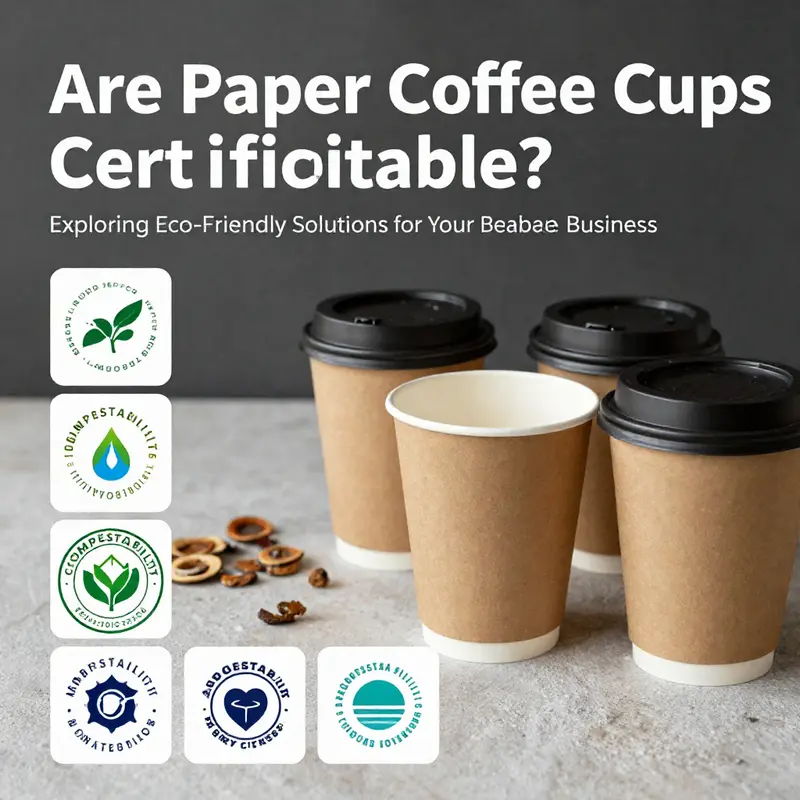
The question of whether a paper coffee cup can be truly compostable invites a closer look beneath the surface of everyday convenience. People often assume that because a cup is made of paper, it will simply surrender to composting and disappear into organic matter. But the truth is more nuanced. A cup’s journey to compostability hinges not on the paper alone but on what is inside its walls, what coats its exterior, and how the end-of-life system is structured to receive it. In the conversation about waste reduction, certifications act as the compass that helps buyers, operators, and policymakers distinguish between products that merely seem eco-friendly and those that behave as promised under controlled conditions. This chapter explores why certifications matter, how coatings and linings influence the fate of a cup in composting facilities, and what this means for businesses and individuals seeking real environmental benefits rather than well-intentioned but misplaced hopes.
Traditional paper cups often rely on a thin plastic lining to repel liquids and keep beverages hot. That waterproof barrier—commonly polyethylene, a fossil-fuel-derived plastic—helps the cup perform in a cafe, but it also blocks the heat and microbial action needed for composting. Even when the paper itself is renewable, strong barriers can render the entire cup non-compostable in both home and many industrial composting settings. It’s easy to overlook this layer when the focus is on the visible material—paper—yet the lining is the gatekeeper of the cup’s ultimate destiny in a circular economy. This is precisely why the growing market for compostable cups is not simply about substituting one material for another; it is about orchestrating a system where the entire cup, including coatings, can break down without leaving behind persistent residues.
The move toward plastic-free, plant-based linings marks a deliberate shift in design philosophy. PLA, or polylactic acid, is among the most commonly cited plant-based coatings used in compostable cups. Derived from renewable resources such as cornstarch, PLA is designed to be biodegradable and, under appropriate conditions, industrially compostable. The chemistry differs from traditional PE in ways that, at scale, can align with industrial composting infrastructure. It’s important to note, though, that not all PLA-coated cups are automatically suitable for every composting facility. The capabilities of composting streams—temperature, time, moisture, and microbial activity—vary by region and by facility. Some plant-based coatings are engineered to degrade at the temperatures achieved in industrial facilities but may not break down as readily in home compost bins or in facilities with less stringent conditions. This is where certifications step in as benchmarks of performance, offering a standardized way to verify that a cup is designed to behave as claimed when subjected to real-world composting processes.
To navigate this landscape, it helps to know which certifications actually matter. The leading marks you’ll encounter include TÜV OK Compost, ASTM D6400, and BPI certification. TÜV OK Compost is widely recognized in Europe and points to compatibility with industrial composting facilities that operate under specific temperature and time regimes. ASTM D6400 is the U.S. standard for industrial compostability, establishing benchmarks for disintegration, biodegradation, and the absence of toxic residues within defined time frames. The Biodegradable Products Institute (BPI) provides certification that a product meets stringent criteria for compostability in North American facilities. Each of these certifications is more than a label; it is a transparent signal that a cup has undergone formal testing and meets criteria designed to protect both the consumer and the composting stream.
Timing matters, too. The projected window for complete breakdown under industrial conditions typically falls within roughly 90 to 180 days, depending on the standard and facility. This timeframe does not imply rapid disposal in a home compost pile. Home composting operates at lower temperatures and often insufficiently replicates the conditions that industrial facilities provide. Consequently, even certified compostable cups may not perform as intended in a backyard compost setup. The implication is clear: the efficacy of compostable cups is tightly coupled to whether the waste infrastructure supports industrial composting streams and whether consumer and business practices direct cups to appropriate facilities. A mismatch between labeling and disposal infrastructure can undermine the environmental benefits developers and users hoped to achieve.
The certification landscape serves a vital stewardship role, but it also underscores a practical truth about modern packaging. The market is shifting from a binary “paper equals compostable” assumption to a more nuanced model in which cups are designed for a specific end-of-life pathway. This requires alignment among materials science, certification processes, waste management infrastructure, and consumer behavior. When a cup is described as compostable, it should carry verifiable certification that confirms it will break down into water, carbon dioxide, and biomass within a controlled timeframe. Without such certification, a “paper” cup may indeed contaminate compost streams or simply persist in the environment as a pollutant. Certifications function as guardrails that prevent greenwashing and encourage investment in products that deliver measurable environmental performance.
In practice, the decision to adopt certified compostable cups is often driven by a broader sustainability strategy that weighs trade-offs and ambitions. A cup designed for industrial composting is not a universal fix; it is a component of a defined waste-management system. Municipal realities differ: some jurisdictions offer robust industrial composting facilities, while others rely primarily on mixed-waste collection or recycling streams that cannot accommodate compostables. For this reason, the real-world impact of certified cups depends on local disposal options and how communities educate and organize residents and businesses around composting programs. A city with a well-supported organics program can divert a sizable portion of compostable cups away from landfills, while a region without such infrastructure may see limited environmental gains. In such contexts, the choice between compostable and non-compostable cups becomes a question not only of materials and coatings but of system design and communal participation.
To help readers translate certification into action, consider the practical steps that accompany a shift toward compostable cup usage. First, understand whether your goal is industrial composting or backyard composting. If the facility in your area is equipped to handle industrial compostables, you can more confidently select cups bearing appropriate certifications. Second, scrutinize packaging and labeling. The presence of a compostable claim should be matched by a credible certification mark. In the absence of clear certification, proceed with caution. Third, recognize that even certified products may require separation and proper sorting; contamination by non-compostable components—such as PET films or certain adhesives—can compromise the integrity of the compost stream. Fourth, support infrastructure development and supplier transparency. Businesses can foster trust by sharing information about the certifications they rely on and the disposal options they support in their service areas.
The design of a compostable cup often extends beyond the lining to encompass the entire packaging ecosystem. Some suppliers offer plastic-free cups that rely on plant-based coatings to deliver waterproof performance without the use of conventional fossil-based plastics. Such innovations are designed to align with the growing demand for cradle-to-cradle thinking, where products are engineered to re-enter biological cycles. Yet even with plant-based coatings, the question remains whether a given facility can process the cup as intended. In such cases, again, certifications are essential to verify that the entire product—paper plus plant-based lining—meets the required industrial standards for disintegration and biodegradation.
For readers seeking a concrete example of the sourcing landscape, consider the range of options available from packaging providers that emphasize compostable and eco-friendly designs. A representative option is a disposable takeaway cup assortment that includes a custom logo and kraft paper composition. While the exact material details can vary, the emphasis on compostable design often accompanies explicit certification claims. If you encounter a product like this, you can verify its status by looking for the standard certifications and, where possible, confirm the facility types with which the product is compatible. In practice, many cafes and food-service operations are beginning to adopt a two-track approach: offer a compostable option for customers with access to certified facilities while maintaining conventional cups in other contexts where composting infrastructure is not readily available. This pragmatic approach helps communities move toward more sustainable waste streams without creating false expectations about universal compostability.
A key takeaway for readers is to treat compostability as a property that emerges from a chain of decisions—materials science, testing protocols, disposal infrastructure, and consumer habits. A cup is not inherently compostable merely because it is made of paper. It is compostable because it is designed to break down under specific conditions and because those conditions exist in the systems where the cup will ultimately be disposed. Certifications translate that design intent into verifiable, auditable performance. They also illuminate the boundaries of what is possible. In some places, the most meaningful step may be to maintain a robust recycling program or to invest in reusable cup systems, while in others, certified compostable options paired with industrial facilities can significantly reduce the environmental footprint of single-use beverages.
For practitioners and buyers who want to explore concrete examples without wading through dozens of product pages, it can be helpful to connect with suppliers who openly discuss the materials and coatings used in their cups and who can point to independent certifications. When evaluating options, look for the clear presence of a recognized standard such as TÜV OK Compost, ASTM D6400, or BPI. The absence of such certification should prompt skepticism, as the claim may reflect marketing rather than verified performance. And because the landscape continues to evolve with new coatings and processing methods, staying current with standards bodies and regional waste-management guidance is essential for anyone aiming to align packaging choices with real-world environmental outcomes.
In sum, the path from paper to compost is not a straight line but a carefully navigated route through materials science, standards, and waste-infrastructure realities. Certifications function as the map and compass on that route. They help consumers and businesses avoid mislabeling and misaligned expectations, and they encourage ongoing investment in coatings and designs that actually meet industrial composting criteria. As the market continues to innovate, the collaboration among manufacturers, certification bodies, waste facilities, and communities will determine how much of today’s cup waste can safely re-enter natural cycles tomorrow. If you are a business weighing a switch to compostable cups, the most responsible starting point is straightforward: demand verifiable certifications, understand your local disposal options, and communicate clearly with customers about what happens to cups after use. Only then can the promise of compostability translate into tangible improvements for soils, waterways, and the broader human ecosystem.
Internal link reference for readers exploring cup options: disposable-takeaway-paper-cup-custom-logo-kraft-coffee-cup-with-lid. This provides context on how suppliers are presenting compostable or eco-friendly cup designs in the real market while reminding readers to verify those claims with credible certifications.
External resource: for a detailed overview of compostability standards and certification processes, see the Biodegradable Products Institute’s official site at https://www.bpiworld.org.
Between Industrial Heat and Home Compost: The Real Story of Compostable Paper Cups
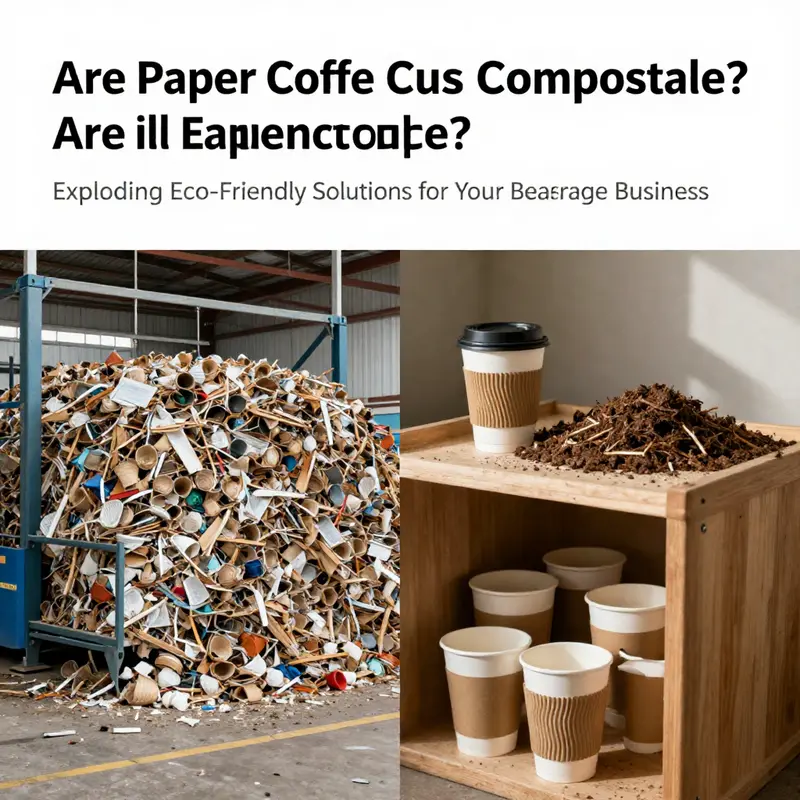
Paper cups have become a familiar part of daily life, a small convenience that travels with take-out coffee from shop to desk, car, and back again. Yet the term compostable attached to many of these cups is not a guarantee of a simple, home-composted end of life. The truth rests on a spectrum of materials, coatings, and processing conditions that rarely align with every home composting setup. To understand whether a paper coffee cup is truly compostable, we must look beyond glossy claims and look at what the cup is made from, how it is lined, and where it is intended to be processed. The conventional wisdom is appealing: a paper cup that dissolves into soil, ready for the compost pile. Reality, however, is messier. Most traditional paper cups are coated with a thin layer of plastic—usually polyethylene—to resist liquids and keep beverages from leaking. That plastic lining acts as a barrier to decomposition, so those cups are not compostable in either home or industrial settings. The result is a paradox: a cup designed to hold hot liquid ends up locked into a life cycle that many composting systems cannot handle. The discipline of packaging design has, in response, introduced alternative coatings that seek to reconcile leakage resistance with compostability. Bioplastics like PLA—polylactic acid—are derived from renewable resources such as cornstarch and are marketed as compostable under controlled conditions. Other plant-based coatings aim to break down when subjected to industrial composting temperatures and timelines. In this context, the compostability of a cup becomes a matter of whether the coating, lining, or entire structure is certified to break down according to recognized standards. It is not enough to declare a cup “compostable” based on a general sense of natural materials; certification is the key to credibility. Standards such as TÜV OK Compost, BPI (Biodegradable Products Institute) Compostable, and ASTM D6400 exist to verify that a product will volatilize into organic matter within a defined timeframe under industrial composting conditions. These certifications signal that the cup has been tested to meet specific criteria for disintegration, stabilization, and non-toxicity. They are not, however, universal marks of compatibility with home composting. The distinction between industrial and home composting illuminates a crucial divide in practice and perception. Industrial composting facilities operate at elevated temperatures and with tightly controlled moisture and aeration. They are designed to accelerate the breakdown of materials that are certified as compostable. In this environment, materials like PLA-coated cups can complete the composting process within weeks. Home composting, by contrast, generally occurs at cooler temperatures and with more variability in moisture, time, and microbial activity. A credential that matters in a plant’s industrial composting line may be of little use to a backyard compost heap. This divergence helps explain why a cup labeled as compostable might never reach a beneficial end-of-life outcome in a given system. The practical implication for individuals, businesses, and municipalities is sobering. If a consumer places a compostable cup into a home pile, the chances of thorough decomposition drop sharply, and the cup may linger for months or years. If a municipal or industrial facility is not equipped to accept compostable cups—or if the streams for separate organics are weak or poorly organized—these cups may wind up in landfill or a different waste stream altogether. The broader picture is reinforced by recent reporting. A 2026 Guardian article highlighted a sobering statistic: in the United Kingdom, only about 1% of compostable coffee cups actually end up being composted. The barrier is not primarily the material itself but the infrastructure and behavior surrounding waste. The system has not kept pace with the introduction of compostable cups, and consumer confusion about disposal options compounds the challenge. This is not merely an issue of clever marketing or lab-tested materials; it is a problem of waste management policy, infrastructure capacity, and the lived realities of households and businesses. In practical terms, this means that a cup’s compostability is conditional on two sets of factors: the material and coating, and the processing environment. Where a cup uses a certified compostable coating, its industrial fate may be favorable; where it is still lined with conventional plastic, or where the facility network does not segregate organics effectively, the cup may never reach a composting stream at all. From a design perspective, producers have begun to favor materials that can fit into existing waste streams while aligning with environmental claims. Some cups use plant-based or cellulose coatings certified as compostable, while others rely on barrier materials that minimize leakage without necessarily enabling breakdown in all contexts. The critical takeaway is to read the certification claims with care. Reach for the marks that specify industrial compostability and confirm that the product adheres to standards like ASTM D6400 or equivalent international criteria. TÜV OK Compost and BPI Compostable marks provide a recognized basis for confidence when a cup is intended for industrial facilities. Crucially, these marks do not automatically imply home compostability. Consumers who compost at home should temper expectations and look for guidance on whether a product is suitable for their particular pile, worm farm, or community compost site. The gap between certification and practical disposal also invites a broader conversation about collection systems and consumer education. Even when a cup is certified for industrial composting, success hinges on the existence of an accessible and properly managed organics stream. Without robust collection, sorting, and processing, compostable cups can become a missed opportunity. In many places, the burden falls on households or businesses to sort correctly, to rinse cups and lids, and to deposit them in the right bin. Where such practices are inconsistent, the rate of advanced decomposition declines, and the environmental benefits associated with compostability are diminished. This is why policy discussions and community programs matter as much as the mechanical properties of coatings and linings. The discrepancy between ideal conditions and real-world practice underscores a simple but powerful point: compostability is not a universal end-of-life guarantee. It is a claim that carries with it a set of prerequisites—coatings that break down under specified conditions, processing facilities that can reach those conditions, and a waste network that actually collects and stewards the material. To navigate this landscape, readers can consider practical steps for assessing their local options. Look for cups with clear, verifiable certifications and documentation that explain the intended disposal pathway. If the packaging or supplier does not provide transparent information about the coating, the lining, and the processing standard, treat the cup as a potential non-compostable item in most home settings. When in doubt, prioritize cups that advertise plant-based coatings with explicit certifications that match your region’s industrial composting standards, and support facilities that advertise reliable organics collection. Consumers can also participate in broader, systemic improvements. By choosing services and programs that invest in dedicated composting streams and by encouraging clearer labeling and standardized certification, the market can move toward a consistent, verifiable composting story. In this context, product designers, retailers, and municipalities need to collaborate to align labeling with real-world disposal options. An internal step that helps consumers is to seek context beyond the label. For example, some packaging options are designed not just for compostability but for compatibility with recycling streams as well. This intersection—recyclable pulp or other fiber-based designs—offers a pathway that, depending on local infrastructure, can support a more circular approach to single-use items. If you’re exploring practical cup options that support composting and recycling together, consider looking at packaging options that emphasize eco-friendly, recyclable pulp materials. For instance, this approach demonstrates how a cup can be designed for take-away use while remaining aligned with the broader goals of waste reduction and resource stewardship. You can explore related packaging options here: eco-friendly recyclable pulp cup holder. (Internal link) This kind of choice reflects a growing awareness that the end-of-life outcome is a system-level outcome, not a property of the cup alone. It also highlights the importance of choosing products with clear sustainability credentials and transparent communication about processing conditions. When communities invest in robust organics collection, and when consumers embrace correct disposal practices, the potential impact of compostable cups increases. Yet even with improved systems, the collaboration between material science, certification bodies, waste management, and consumer behavior remains essential. In short, not all paper cups labeled as compostable are equal in practice. Some are designed for, and will only perform as intended in, industrial facilities equipped to process them under controlled conditions. Others may degrade only within home composting in certain climates or may not degrade as quickly as hoped in typical backyard setups. The Guardian’s 1% figure underscores a fundamental reality: the designation alone is not enough. The real test is whether the local waste system can separate and process compostable streams, and whether consumers actively participate in that system. This realization invites ongoing attention to policy development, infrastructure investment, and education. It also suggests a prudent pragmatism for individuals and organizations seeking to reduce waste. Where possible, prioritize products with certified industrial compostability and invest in stronger organics programs that can manage these materials. Support for standardized labeling and better public information helps reduce the guesswork that leads to contamination, mis-sorted streams, and discouraged participation. In the longer term, the dream is a world where paper cups—coated or not—appear on the market with clear, actionable directions for end-of-life. The science of coatings and materials will continue to advance, offering coatings that balance barrier performance with compostability. The policy and infrastructure landscape, meanwhile, must evolve to create reliable streams for compostable items, ensuring that the promise of compostability translates into tangible environmental benefits. The journey from cup to soil depends on a chain of decisions—from manufacturing and labeling to collection and processing to consumer practice. Until the chain is consistently strong, “compostable” will remain a qualified claim that requires careful interpretation and responsible action from everyone involved. External factors, like local composting capacity and household habits, will continue to shape the practical outcomes of these products. The dialogue around compostable cups thus remains essential, not as a marketing slogan but as a real-world question about how to align design, certification, and waste management with the goal of reducing landfill burden and promoting soil health. For readers who want to dive deeper into the topic, a broader examination of waste infrastructure and consumer disposal choices provides useful context. The Guardian’s report on UK waste infrastructure offers a timely reminder that technology alone cannot solve the problem. The link below provides further perspective on the challenges and opportunities in moving toward truly effective composting of coffee cups. The Guardian report on compostable coffee cups
Final thoughts
Understanding the compostability of paper coffee cups is no longer optional for beverage-related businesses on the path to sustainability. It is essential to recognize the implications of material choices, the impact of lining coatings, and the significance of relevant certifications. Awareness of these factors empowers your business to implement environmentally friendly practices effectively. Together, we can reduce environmental footprints and contribute to a more sustainable future for beverage service.