
The demand for eco-friendly practices in the food and beverage industry continues to rise, prompting business leaders at bubble tea shops, restaurants, food trucks, and event planning firms to consider the recyclability of their packaging choices. Clear plastic cups with lids are popular in the beverage sector, but are they recyclable? Understanding the materials that comprise these cups, the recycling process, local guidelines, sustainability standards for events, and the awareness of consumers is essential. This article explores each of these aspects, providing actionable insights that help businesses navigate the recycling landscape while embracing sustainability effectively.
Crystal-Clear Recycling: Understanding Whether Clear Plastic Cups with Lids Are Recyclable
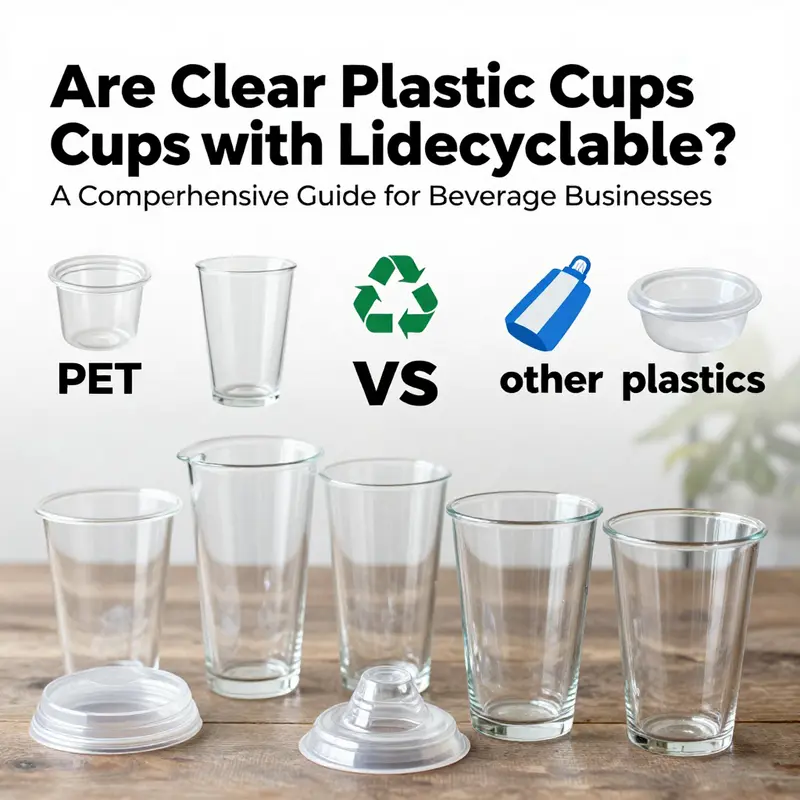
When people ask whether clear plastic cups with lids are recyclable, the answer is not a simple yes or no. It hinges on the exact materials used, how those materials are labeled, and how local recycling programs handle them. In many cases, the cups and lids you encounter in everyday use are made from PET, or polyethylene terephthalate. PET is a widely accepted, widely recycled plastic in municipal programs around the world. When both the cup and its lid are formed from PET and the items are clean, many facilities will process them through the same stream as other PET containers. This compatibility is why some consumer products bear explicit recyclable claims for PET and why certain guidelines for events and venues emphasize consistent material choices. Yet the landscape is not uniformly friendly to recycling, and a few crucial nuances determine whether a given clear cup with lid actually earns a second life rather than ending up in a landfill or a waste-to-energy stream.
The most straightforward path to recyclability comes when the cup and lid are both PET. In this scenario, the material identity is shared, the resin code on the item’s bottom or lid is clearly marked as #1 PET, and the item aligns with a standard recycling stream that is prepared to handle clear PET plastics. Clear PET is often preferred by recycling facilities because its purity minimizes the need for expensive separation and sorting. Food-grade PET adds another layer of assurance that the resin is suitable for contact with beverages and edible contents, which in turn supports a smoother, cleaner recycling process. When these conditions align, the cup can travel through the recycling system with relatively little fuss, provided it is emptied, rinsed, and not contaminated with substances that would complicate processing.
But the reality runs deeper than the label on a bag or a product page. Not all clear cups and lids are pure PET, and not all lids share the same resin as the cups. It is common for a lid to be made from a different plastic than the cup, such as polypropylene (PP) or polystyrene (PS). When the lid’s resin differs from the cup’s resin, some recycling streams may still handle the combination, while others require the items to be sorted into separate streams. In more complex systems, a single facility may be equipped to process only one resin type, or it may lack the capacity to separate mixed plastics effectively. These distinctions matter because they directly affect whether the combination of a clear cup and its lid is accepted in a given city or town. The bottom line is that a cup labeled as recyclable does not automatically guarantee that its lid is equally recyclable where you live. The local program may accept the cup but reject the lid, or it may insist on removing the lid before disposal. This is why understanding local guidelines is essential, not just relying on a universal rule.
Additives and production details further complicate the picture. Some cups and lids carry coatings, colorants, or printing that can introduce contaminants into the recycling stream. Even if a cup is PET, an opaque print, a metallic finish, or a unusual liner can render it more difficult to process. In some instances, adhesive labels or shrink bands may create separation challenges during sorting. The result can be a container that technically carries a recyclable resin code, yet in practice is refused at the curb or at a municipal facility that enforces stricter purity standards. This is an important reminder that recyclability is not only about the material identity but also about the manufacturing choices and the post-consumer handling in a given community.
To navigate this complexity, a practical approach is to check the resin identification code, usually embossed or stamped on the bottom of the cup or lid. Look specifically for #1, PET, as a reliable signal of recyclability in many programs. However, even with #1 PET, it is wise to confirm with local guidelines because acceptance can vary by location. A quick call to the city’s waste management department or a glance at the municipal recycling guidelines page can reveal whether your program accepts PET cups with lids and whether the lids are treated as part of the same stream.
For events or venues that require clear serviceware, guidelines often specify that only recyclable PET items are permitted. In such settings, organizers may emphasize mixing less recyclable components with compostables to preserve program integrity. The emphasis here is not merely on labeling but on practical compliance. If your event aims to maximize diversion of waste toward recycling, you will want to select cups and lids that are explicitly labeled as recyclable PET and confirm that the venue’s program accepts #1 plastics in both the cup and lid streams. If you’re uncertain, err on the side of simplicity and choose items that meet the local program’s stated acceptance criteria.
The decision tree grows more intricate when considering the broader ecosystem of plastic serviceware. Reverse logistics and single-stream recycling trends have influenced how facilities sort and process items. Single-stream programs sometimes accept a wide range of plastics, but the contamination risk rises with mixed materials. A clear cup with a lid can end up contaminated if it still holds beverage residues or if food particles cling to the interior surface. Contaminants can degrade the quality of recycled PET, necessitating more aggressive cleaning or resulting in more material being diverted to energy recovery rather than manufacturing reuse. For this reason, rinsing cups and lids before disposing of them—though seemingly simple—plays a meaningful role in whether the item can re-enter the production cycle.
Beyond the practical handling, there is a design and choice question rooted in sustainability goals. Manufacturers and designers have begun to prioritize recyclability through material selection and labeling clarity. When the goal is to maintain a clean recycling stream, many producers prefer PET for its recyclability profile and its relative transparency, which aligns with consumer expectations for a clear product. Yet the push toward circularity also invites experimentation with mono-material structures, where possible, and with labeling that reduces confusion at the sorting line. Clear communication matters. If a cup or lid explicitly states recyclable PET and if the local program accepts PET #1, the path to recycling is straightforward. If not, the decision to reuse or recycle becomes less certain, and potential waste could be the result rather than a recovered resource.
All these considerations underscore a central reality: recyclability is highly place-based. It depends on the exact material composition, the presence or absence of mixed materials, and the capabilities and rules of the local recycling facility. For consumers aiming to close the loop, this means cultivating a habit of verifying local guidelines before assuming that a clear PET cup with a lid is recyclable in their community. One practical step is to look for explicit wording on the label that the item is recyclable PET and to verify acceptance of #1 plastics where the disposal occurs. If there is any doubt, many communities offer guidance online, or a quick phone inquiry can save a mixed result at the curb. The wider point is a shift from generic statements about recyclability to precise, community-specific practices that honor the realities of local waste systems.
For readers who want to explore options that align with broader ecological aims beyond PET cups, there is a growing category of eco-friendly alternatives designed to be recyclable or compostable in specific systems. These alternatives often emphasize mono-material construction, thoughtful labeling, and clear pathways for end-of-life management. Such design strategies reflect an industry response to the real-world sorting challenges discussed above. If you are evaluating choices for a cafe, event, or venue, consider not only the cup’s resin code but also the overall end-of-life plan, the facility’s capabilities, and the likelihood that the entire serviceware package will be sorted correctly and processed into a new product rather than ending up as waste.
In this broader context, one practical resource to consult describes eco-friendly, recyclable pulp-based cup holders and related single-use ware. This example points to options that are designed to be compatible with recycling or composting streams in specific settings, illustrating how other material families address similar sustainability goals. For readers who want to explore this avenue, the linked resource offers a concrete starting point for understanding how alternative serviceware can align with circular economy objectives while staying mindful of local program constraints. See eco-friendly-recyclable-pulp-2-4-cups-coffee-take-away-cup-holder for additional detail.
Ultimately, the question remains: are clear plastic cups with lids recyclable? The honest answer is nuanced. If the cup and lid are PET, clearly labeled #1, and the local program accepts PET in both components, then recycling through standard streams is feasible. If any of these conditions fail—mixed materials, non-PET lids, or local program limitations—recycling may not be possible in practice. The best path forward combines careful product selection with verification of community guidelines and a commitment to rinsing and sorting correctly. This approach respects both the environmental promise of PET and the practical realities of municipal recycling systems. And it invites designers, manufacturers, event planners, and everyday consumers to participate in a more transparent, well-managed recycling culture.
External resource for further reading and context: https://www.alibaba.com/product-detail/Recyclable-Clear-Plastic-Cup-Lids-PET1600378245736.html?spm=a2700.galleryofferlist.px-1.9.5d3c6e69KJmL6x&urlShowDesc=true
Crystal Clarity, Complex Recyclability: Unpacking Whether Clear Plastic Cups with Lids Are Truly Recyclable
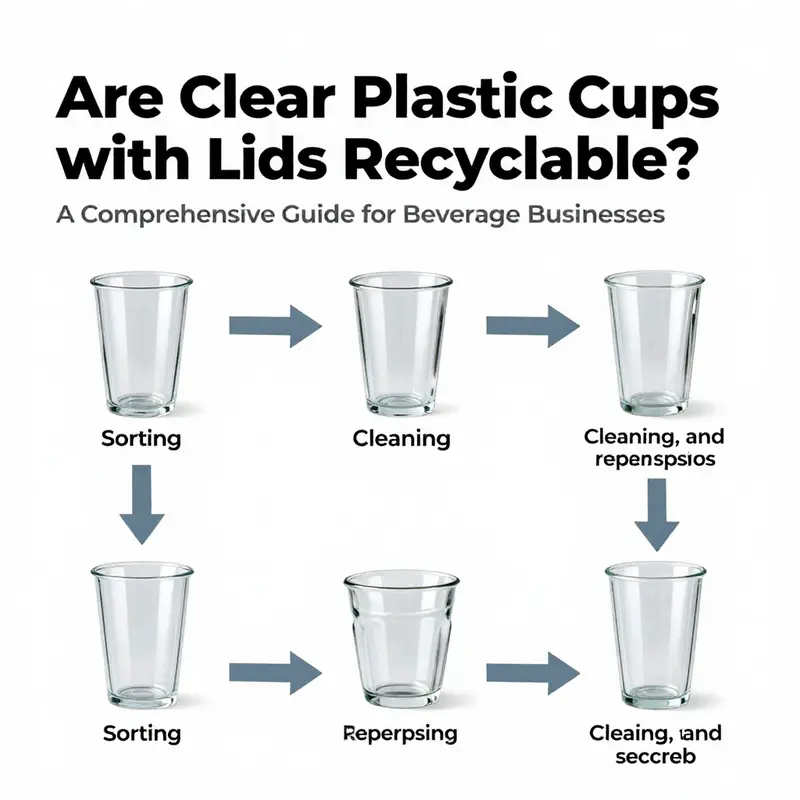
Clear plastic cups with lids often appear to be the perfect blend of practicality and transparency. They let contents be seen, they keep beverages contained, and they’re a staple at events, venues, and takeout counters. Yet when we shift from what they do to what happens next, the picture becomes considerably more nuanced. At the heart of the question lies material choice and the way modern recycling streams are designed. Most clear cups and their lids are made from either PET (polyethylene terephthalate) or PP (polypropylene). Both plastics are technically recyclable. In a world where recycling systems exist, that would be enough to declare them broadly recyclable, right? The short answer is: not quite. The truth depends on how the cups are constructed, what other materials come into contact with them, and what a given community’s recycling facility can or will accept.
In theory, PET is widely accepted by many municipal programs. It is the same resin type used for many clear beverage bottles, which means lots of recycling streams are configured to recover it. PP, too, is recyclable in many places, and it is common for lids to be made from PP while the cups themselves are PET or PP. The practical challenge, however, is not the chemistry alone but the way the pieces interact in the real world. Many clear cups are not a single-material package. A PET cup paired with a PP lid creates a mixed-material bundle that is harder to separate at the recycling facility. Even when a facility has the capability to recover both resins, the separation step in many programs is not straightforward or economical. The result is that these seemingly recyclable items may end up in landfills or require specific processing that is not available in every community.
Another persistent hurdle is contaminant control. Food residue, oily sauces, and even moisture itself can degrade the quality of recycled PET or PP. Clean streams yield higher-quality recycled resin, but households and event venues often struggle with the burden of rinsing, sorting, and shipping contaminated items to the right destinations. In practice, curbside programs frequently reject cups with residual food or liquids, or they treat mixed-material lidded cups as non-recyclables. The upshot is a mismatch between what the science says about recyclability and what ends up happening in the vast network of recycling facilities across the country. For many municipalities, the result is a recycling feedstock that contains too much contamination to meet quality standards, leading to higher processing costs and lower overall yield of reusable material.
The dialogue around recyclability is further complicated by the existence of compostable alternatives. Polylactic acid, or PLA, cups have gained traction for single-use applications where sustainability is prioritized. PLA is derived from renewable resources like corn starch and is designed to break down under industrial composting conditions. When these cups are properly disposed of in an industrial composting facility, they can degrade into carbon dioxide and water without leaving toxic residues. The caveat is that PLA does not belong in a standard recycling stream. It requires plants with the right composting infrastructure to function as intended, and home composting setups or typical curbside programs will not reliably process PLA cups. This creates a distinct disposal pathway that must align with local capabilities and municipal guidelines. In short, even though PLA is a legitimate alternative from an environmental standpoint, its effectiveness hinges on the existence of appropriate composting facilities and consumer participation in those programs.
All of this points to a central takeaway for consumers and event organizers alike: recyclable in theory does not automatically translate into recyclable in practice. The label may say recyclable, but the logical next step—separating materials, removing contaminants, and routing to the appropriate recycling facility—depends heavily on local infrastructure. The system works best when users understand the limits of their programs and when manufacturers provide clear labeling about material composition and disposal guidance. For example, when a cup is truly recyclable in local streams, it should carry unambiguous indicators such as recyclable PET with a clear identification code and labeling that the lid is compatible with that same recyclability stream. Even so, the facility’s capacity to process mixed-material constructs remains a critical determinant of actual recyclability on the ground. The implication for designers of single-use serviceware is clear: where feasible, pursuing uniform, mono-material constructions and minimizing adhesives or coatings that complicate separation can significantly improve the odds of true recyclability.
In this context, guidance from sustainability standards at events highlights another important dimension. Some event organizers impose rules that restrict serviceware to items made from recyclable plastics or to compostable alternatives for particular settings. These guidelines emphasize that containers, including clear cups, should be chosen with the end-of-life pathway in mind. If a venue cannot guarantee appropriate sorting and processing, it may require compostable options instead of conventional recyclables. The practical implication is that sustainability success depends not only on the container itself but on a well-integrated waste management plan that includes clear signage, accessible disposal stations, and collaboration with waste haulers who understand the local recycling and composting landscape. In other words, the journey from cup to recycled resin is a collaborative process that requires alignment across manufacturers, facilities, and consumers.
For readers who are exploring products and options, it helps to look for explicit material labeling. Seek cups and lids labeled as recyclable PET and confirm that your local facility accepts #1 PET plastics. If there is any doubt about a particular item’s compatibility with your municipal program, reach out to the waste management authority or the facility’s customer service to confirm. As a practical rule, rinsing cups lightly to remove food residues, separating lids from cups where required, and ensuring that liquids do not spill during collection can make a meaningful difference in preserving material quality. This approach is not a guarantee of universal recyclability, but it does improve the probability that the material will be handled correctly and given another life.
For readers who want a tangible reference that echoes these considerations while offering a related exploration of disposal choices, consider this example set of options that emphasizes the broader landscape of cup-lid configurations and their disposal consequences. While many of these examples are not identical to clear PET or PP cup-and-lid systems, they illuminate the same core principle: the end-of-life outcome hinges on material composition, separation feasibility, and local facility capabilities. In practice, a cup that is technically recyclable may still be diverted to landfill if it arrives at a facility ill-equipped to process mixed materials or contaminated streams. Conversely, a well-designed mono-material cup that is properly disposed of through certified channels can participate in a circular economy by re-entering the manufacturing loop as recycled resin or through a compatible composting pathway where appropriate.
Within this broader narrative, the most actionable strategy for individuals and organizations is to prioritize reusables whenever possible. Reusable cups dramatically reduce the burden on recycling and composting systems and diminish the overall environmental footprint of beverage service. When single-use cups are necessary, selecting products that align with local disposal capabilities and that minimize material complexity enhances the likelihood of successful recycling or composting. Event planners, retailers, and households alike can benefit from asking key questions: What materials are used in the cup and lid? Is the product mono-material or a true multi-material blend? Does the local program accept this resin and its lid combination? Are there dedicated recycling or composting facilities nearby that can process these items? And, perhaps most importantly, what is the most practical disposal path for this specific context?
For readers who want to see a practical example of the kinds of products available that intersect with these conversations, a close look at options that combine visually clear cups with lids while emphasizing eco-friendly branding can offer useful contrasts to traditional plastics. For readers exploring paper-cup options with lids and their environmental claims, see this example: eco-friendly-printed-logo cold beverage cup with lid. This linked example, while not identical to a transparent plastic PET or PP cup, helps illustrate the broader ecosystem of disposable beverage packaging where disposal pathways, labeling, and end-of-life options are front and center in decision making.
Ultimately, the question remains whether clear plastic cups with lids are recyclable in a way that aligns with the goals of a circular economy. The evidence suggests that the label alone is insufficient. Real-world recyclability depends on material compatibility, contamination control, and the capacity of local infrastructure to separate and process diverse streams. Compostable alternatives, like PLA, offer a different route but demand industrial-scale facilities and proper disposal habits. Reusables remain the gold standard for reducing waste over the long term. The practical path forward blends informed selection, responsible disposal, and an emphasis on reducing reliance on single-use plastics whenever feasible. As communities invest in better sorting, higher-quality processing, and clearer labeling, the gap between theoretical recyclability and actual recovery narrows. Until then, the choice of cup and lid should be guided by local realities, thoughtful design, and a clear plan for the journey after it leaves the consumer’s hands.
External resource for further reading: For official guidelines on plastic recycling and disposal, see the Environmental Protection Agency’s Plastic Recycling and Disposal Guidelines. https://www.epa.gov/sustainable-management-plastics/plastic-recycling-and-disposal-guidelines
Beyond the Bin: Navigating Local Guidelines for Recyclability of Clear Plastic Cups with Lids
Recycling a clear plastic cup with a lid depends on local infrastructure and the materials involved. While some cups are PET (#1) and widely accepted in many programs, lids may be made from polypropylene (PP) or polystyrene (PS) and may not be accepted together in your curbside stream. To determine recyclability, check your local program’s guidelines and look for products labeled recyclable PET for both cup and lid when possible. PLA or other bio-based compostable cups require industrial composting facilities, which are not universally available. Always rinse cups, separate components if required by local rules, and refer to the EPA Recycle search tools for program specifics. In short, recyclability is a system property, not a material property alone, and local guidelines should drive disposal decisions.
Clear Choices, Clean Streams: Navigating the Recyclability of Clear Cups with Lids at Events
The challenge of managing waste from events is increasingly framed by what happens to everyday disposables after the last guest leaves. Clear plastic cups with lids sit at the intersection of convenience and sustainability, inviting a nuanced examination of recyclability rather than a blanket assumption that all plastic serviceware can be recycled. The reality is that recyclability hinges on a complex mix of material composition, local processing capabilities, and the behavior of waste streams. At its core, the question is less about the cup’s translucence and more about the resin that forms it, how the cup is used, and how people dispose of it. In many places, the path from the discard bin to a recycled product is paved or blocked by practices that either support or undermine recovery rates. A practical understanding begins with materials and then expands to contamination, lids, and the broader waste ecosystem that events inhabit.
Some clear cups and lids are made from PET, a resin widely accepted in municipal programs. PET, or polyethylene terephthalate, is commonly labeled as recyclable, and many products declare themselves as recyclable PET, signaling that they are designed to fit into established recycling streams. Yet, this ideal has caveats. The recyclable designation often assumes that the item is clean, properly separated, and accepted by local facilities. Not all clear serviceware lives up to that standard, and the presence of mixed materials or additives can complicate processing. In practice, the recyclability of a clear cup with a lid is a function of both its material origin and the readiness of the local recycling stream to accept and properly sort it.
Across many event settings, guidance from sustainability standards emphasizes the importance of material composition. While PET is frequently touted as recyclable, a broader landscape shows a spectrum of options and limitations. Some disposable clear cups are made from polystyrene (PS) or polypropylene (PP). Both PS and PP are technically recyclable in some regions, but their actual recyclability depends on the sophistication of a community’s curbside programs and drop-off facilities. The discrepancy between “recyclable in theory” and “recyclable in practice” becomes a central concern for event organizers who want to minimize waste and maximize legitimate recovery. The distinction matters because PS and PP streams often share processors with other plastics, and improper mixing can disrupt sorting equipment and reduce the efficiency of recycling systems.
Contamination looms as a decisive factor in practice. Even a cup that is clean in a kitchen environment may carry food residues or liquids after use, and that residue can make a recyclable item non-recyclable in the real world. The same holds for lids, which are frequently crafted from a different plastic than the cup itself. If the lid is not separated from the cup at disposal, or if the combined item enters a single-stream recycling stream, it can complicate sorting and degrade the quality of the recovered material. This is not merely a theoretical concern; it translates into higher disposal costs and lower recovery yields for municipalities and events that lack rigorous disposal guidance and staff to enforce it. The interaction between cups and lids, and the potential for straws or other accessories, can further diminish sustainability outcomes when materials are not harmonized across the same resin family.
From a broader waste-management perspective, the discourse around clear cups and lids includes considerations beyond pure recyclability. Straws, often made from non-recyclable plastics or multiple materials, add another layer of complexity. When such add-ons accompany a cup, the overall environmental performance can decline, even if the cup itself is technically recyclable. In this light, many organizers consider redesigns that minimize accessories or switch to alternatives that align with recycling streams. The aim is to simplify the waste mix so that a single resin family dominates the cup and lid, reducing confusion for the consumer and friction in the processing facility.
Given these realities, event planners and venue managers face a set of practical recommendations rooted in material science and waste-system dynamics. First, prioritize cups and lids made from a single, widely accepted resin. PET (often labeled as #1) and PP (labeled as #5) emerge as the most compatible pairs in many recycling programs because they tend to travel together in end-to-end streams with fewer cross-contamination risks. Second, verify local acceptance. It is not enough to see a “recyclable” label on packaging; the local facility must actively process those plastics. Event organizers are well-served by consulting municipal guidelines or waste-management partners to confirm what is accepted in their jurisdiction and what preparation steps are required. Third, pursue cleanliness and separation as operational practices. Clean cups with minimal residues are significantly more likely to be recycled. Clear disposal stations, staff guidance, and consumer education can dramatically reduce contamination, especially at high-traffic events where waste streams are fastest moving.
Where the conversation shifts from theory to practice, compostable alternatives begin to surface. Some brands offer compostable designs, frequently using plant-based polymers such as PLA. These materials can break down under industrial composting conditions, but they require specific facilities and are not universally supported. The takeaway is that sustainability is not a single decision about one product; it is a system choice involving procurement policies, venue infrastructure, and the availability of suitable composting or recycling streams. If a venue cannot guarantee industrial composting or appropriate recycling, it is often more responsible to opt for single-resin, recyclable designs and invest in waste-education programs that align with local capabilities.
The broader policy and practice landscape also guides choices at events. To achieve credible environmental outcomes, some event standards encourage material selection that simplifies the waste stream and minimizes contamination opportunities. In this vein, choosing clear cups and lids that belong to a familiar resin family reduces the chances of sorting errors in facilities designed to recover PET or PP. It also helps that many guidance documents emphasize the need for reliable labeling and consumer education. When attendees understand which items are recyclable and how to dispose of them properly, the likelihood of fielding contaminated cups and lids decreases markedly. The result is a cleaner recycling stream and a more transparent audit trail for event organizers who want demonstrable proof of their sustainability commitments.
For readers who want to explore practical examples of compatible cup families in the market, there are options that emphasize single-resin compatibility and ease of processing. One approach is to look for eco-friendly, recyclable pulp-based cups and cup holders when the circular economy is a priority. These alternatives illustrate how a cup ecosystem can be designed to align with recovery infrastructures while still meeting the functional needs of events. For a practical example of recyclable cup families that are designed with single-resin compatibility, see the eco-friendly recyclable pulp cups and cup holder. This resource reflects a growing interest in packaging that reduces the barriers to recycling while preserving the convenience event-goers expect.
Overall, the quest to make clear plastic cups with lids sustainable at events is about more than labeling. It requires a careful alignment of material choices, facility capabilities, and consumer behavior. There is value in choosing products that clearly indicate their recyclability within the local system and in providing clear disposal guidance so attendees can participate in the recovery process. It is also prudent to recognize that even the best options benefit from complementary practices, such as minimizing simultaneous use of non-recyclable accessories and ensuring that staff are trained to guide attendees toward correct disposal. When these elements converge, an event can move toward a waste footprint that is smaller, more predictable, and more accountable to the communities that host it.
In the end, the sustainability of clear cups with lids at events is not an absolute verdict but a matter of context. It depends on the integration of material science, municipal capabilities, and human behavior. The chapter’s findings underscore a practical truth: recyclability is a relationship between product design and the systems that receive and process those products. By choosing cups and lids that share a resin with proven recovery pathways, enabling robust cleaning at point of use, and educating attendees about proper disposal, events can improve their recycling outcomes even as they maintain the convenience that guests expect. For those who want to explore a related pathway, see resources and examples of recyclable cup families and single-resin designs that support cleaner, more efficient recovery streams.
External resource: https://www.epa.gov/smm/sustainable-materials-management-events
Clear but Complicated: Understanding the Recycling Realities of Transparent Cups with Lids
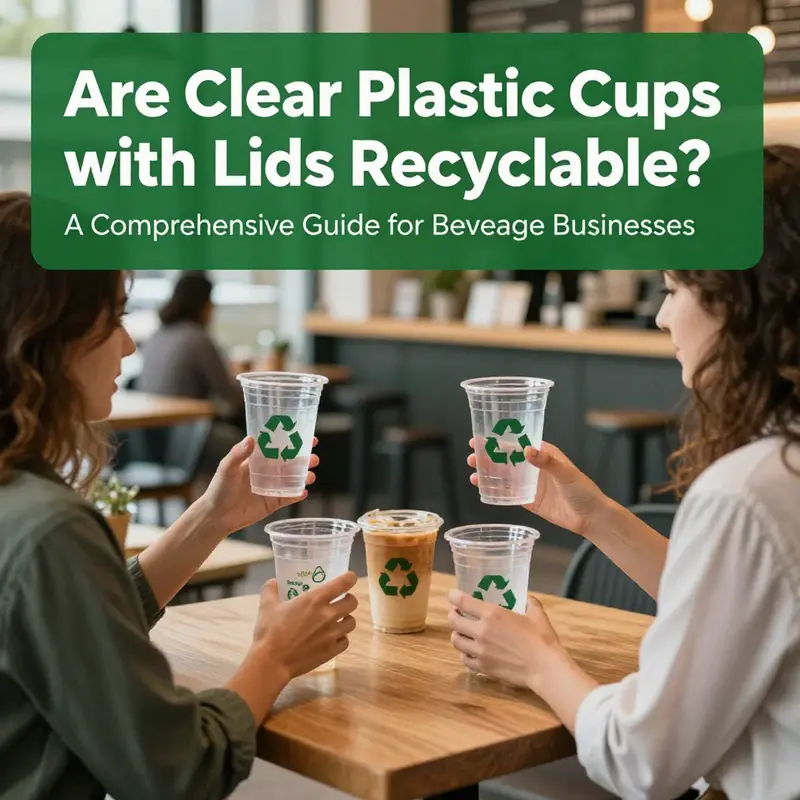
When a consumer tosses a seemingly simple clear plastic cup with a lid into a recycling bin, the act can feel straightforward. Yet the truth behind recyclability is rarely so clean. The material composition of these cups and lids plays the decisive role, and that composition varies enough to create real differences in what actually happens after disposal. In many communities, a cup is not automatically recyclable simply because it is transparent or made of plastic. The label on the item, the resin code stamped on the surface, and the local recycling infrastructure all influence whether a given cup qualifies for a curbside program or must be diverted to a more specialized stream. In practical terms, the word “clear” does not guarantee recyclability. To understand what happens to these cups after use, it helps to follow the material trail from production to processing, and finally to the waste stream that accepts or rejects the item. This path reveals why clear cups with lids can be recyclable in some places and problematic in others, and why events and businesses increasingly treat them as a design and logistics challenge rather than a simple recycling win.
The most common materials used for clear cups and their lids are polypropylene (PP), PET (polyethylene terephthalate), and, in some cases, polylactic acid (PLA), a bioplastic derived from renewable resources. Each material carries its own recycling story. PET is widely recognized for its recyclability and is commonly labeled as #1 PET in resin codes. In a well-functioning municipal system with established PET processing, clear PET cups and lids can be accepted and efficiently converted into new products. In many guidelines, PET’s recyclability is framed as a legitimate public good, contributing to a circular use of a resource that would otherwise be waste. Yet even with PET, the practical outcome depends on whether the local facility handles small rigid plastics effectively and whether the entire packaging stream remains uncontaminated by non-PET plastics.
PP, on the other hand, is designated as #5 and is technically recyclable in many programs. It presents a different set of challenges in practice. Many curbside systems do not routinely accept small rigid plastics like cups and lids, especially when they arrive as a mixed batch with other items. Sorting machinery, the risk of contamination from food residue, and the sheer volume of mixed plastic streams can complicate recycling efforts. In some areas, PP cups end up in the recycling bin only when the facility has a dedicated process for rigid plastics or when a local collection program explicitly includes take-back or drop-off schemes. The upshot is that even though PP is technically recyclable, the local reality may be far more nuanced, and individual households face the risk of assuming recyclability that their program does not honor.
PLA represents a different philosophy of materials. As a bioplastic derived from renewable resources like corn or sugarcane, PLA is designed to be compostable in industrial facilities under specific conditions. Industrial composting can transform PLA into stable end products, often with a shortened time horizon compared with traditional composting options. The crucial caveat is that PLA does not break down in home composts or in standard landfills. If PLA cups are mixed with traditional plastics in the recycling stream, they can contaminate the batch, complicating processing and potentially rendering entire runs unrecyclable. As a result, PLA cups demand a separate disposal pathway—industrial composting where available—and careful segregation at the consumer level. In communities without certified industrial composting infrastructure, PLA cups may be best treated as compostable waste, rather than recyclable, to avoid polluting the recycling stream.
The practical implications of these material differences become especially apparent at events, where organizers face high volumes of cups and limited space for waste streams. Event sustainability guidelines often make a clear distinction: only clear cups and lids made from recyclable plastic should be permitted in recycling streams, while other serviceware must be compostable or otherwise diverted. This practice highlights a core truth for venue managers and organizers: “clear” is not a proxy for recyclability. Before planning any serviceware menu, it is essential to verify the resin type markings, confirm acceptance with the local recycling facility, and understand the rules of the waste contractor. The need for clarity extends beyond the bin. It reaches into purchasing decisions, labeling practices, and even the design of the event itself. By aligning product selection with local capabilities, events can minimize the risk of contamination and maximize the likelihood that cups are handled appropriately.
From a consumer standpoint, the most reliable path to proper disposal starts with material identification. Subtle as it may seem, the resin code on a cup or lid—commonly marked as #1 for PET or #5 for PP—serves as a critical compass. In some contexts, product labeling may be insufficient for general awareness; residents may confuse any transparent plastic with recyclability, or they may encounter lids and cups that mix materials in ways that complicate separation. The key practice is explicit identification: if the cup bears a PET code or clearly states recyclable PET, there is a reasonable expectation that a system capable of receiving #1 plastics will process it. Conversely, if a cup is labeled PLA, the appropriate course is to route it toward industrial composting when such a facility exists. Absent the infrastructure, even a well-intended disposal can be misdirected. Awareness, therefore, becomes a central duty of households, offices, and venues that seek to reduce plastic waste without sacrificing the reliability of waste processing.
Beyond the resin codes and facility capabilities, the street-level reality of recycling is shaped by how cups and lids are handled at the point of disposal. Some programs accept both cup and lid as a single item, while others require separation because mixed streams complicate sorting and can degrade material quality. Food residue, even a thin layer of liquid, can contaminate the batch, triggering additional processing steps or rejection. The more robust and consistent the source separation, the higher the probability that the material will re-enter the production cycle. This is not merely an environmental ideal; it translates into tangible outcomes for recycling facilities, municipal budgets, and future product design. When people separate cups from lids, when they ensure cups are as clean as possible, and when they do not contaminate the stream with non-recyclable components, the recycling system can perform with greater efficiency and lower downstream risk.
Design consideration also enters the conversation. Clear cups arise from a long line of decisions about what will be used, how it will be processed, and how the end-of-life path will be traced. Makers who aim to support recycling often highlight the importance of material homogeneity and curbside-appropriate labeling. The simplest path is to select materials that are widely accepted by a given jurisdiction, and to minimize the chance of cross-contamination by avoiding mixed-material constructions whenever feasible. In practice, this can mean choosing a recyclable plastic that is known to be accepted in the community’s curbside program and avoiding coatings, adhesion layers, or composite laminates that would complicate separation. It also means clear, legible labeling so that consumers can act confidently at home. The result is a more predictable lifecycle for the cup—one that moves steadily from use to recycling, rather than ending in a gray area where the fate of the item remains uncertain.
For organizations aiming to reduce waste and simplify recycling, the challenge is not only the material but the ecosystem in which that material exists. A beverage service operation might prioritize PET if the local stream is designed to process it, while a venue with limited recycling capacity could still manage to collect PLA for industrial composting. The decision becomes strategic: invest in training staff and educating patrons, or switch to alternative serviceware that aligns more closely with current capabilities. In either case, clear communication with attendees, clear labeling on cups, and explicit guidance in bin signage can significantly improve disposal accuracy. When attendees understand what can be recycled, what requires composting, and what should go to trash, they contribute to a smoother flow that reduces contamination and improves overall recycling performance. In the broader sense, this aligns with the growing emphasis on design for circularity—creating packaging that is legible, separable, and aligned with the infrastructure in place rather than assuming a universal solution.
As an illustration of broader packaging thinking, consider a related approach to sustainable beverage containers that emphasizes compatibility and clarity in disposal. For readers interested in packaging alternatives that emphasize eco-friendly labeling and easy end-of-life sorting, a related resource explores design options and labeling strategies. This example demonstrates how packaging design can influence consumer behavior and, by extension, recycling outcomes. For a practical glimpse into such packaging considerations, you can explore the concept at this resource: eco-friendly-printed-logo-single-wall-paper-cup-with-lid.
Ultimately, the central takeaway is that recyclability is a local, material-specific, and behavior-dependent phenomenon. A cup’s transparency does not guarantee a liberal recycling policy; a resin code does not guarantee acceptance in every municipality; and a PLA cup, even if marketed as compostable, will not deliver environmental benefits if industrial facilities are not available nearby. The prudent path for households and institutions is a three-part approach: know the material, know the facility, and act accordingly. Check resin codes and local guidelines, seek clear labeling that reflects real disposal pathways, and align procurement choices with what the local system can handle. When in doubt, err on the side of separation and correct routing. The moment you add a little extra scrutiny—checking the code, clarifying acceptance with the local waste processor, and educating users about proper disposal—you tilt the balance toward genuine recycling rather than misdirected waste.
For additional context on broader plastics recycling guidelines and to verify what your local program accepts, consult the U.S. Environmental Protection Agency’s recycling resource, which provides official guidance and current program details: https://www.epa.gov/recycle. This resource complements the practical steps described above and reinforces the principle that clear does not automatically mean recyclable. It invites readers to engage with local realities and to participate in a system that depends on informed choices, accurate labeling, and conscientious disposal practices. By embracing these principles, communities can improve recycling performance, reduce contamination, and move closer to a circular economy where materials circulate rather than accumulate. The journey from cup to curbside is not a straight line, but with careful material selection, clear communication, and deliberate consumer action, it becomes a more reliable path toward sustainability.
Final thoughts
As the trend toward sustainability grows in the food and beverage industry, understanding the recyclability of clear plastic cups and lids becomes critical for businesses. Awareness of materials, recycling processes, and local guidelines will empower beverage shops, restaurants, and event planners to make informed decisions aligned with customer preferences and environmental responsibilities. Embracing these practices not only enhances brand reputation but also contributes to a healthier planet.