
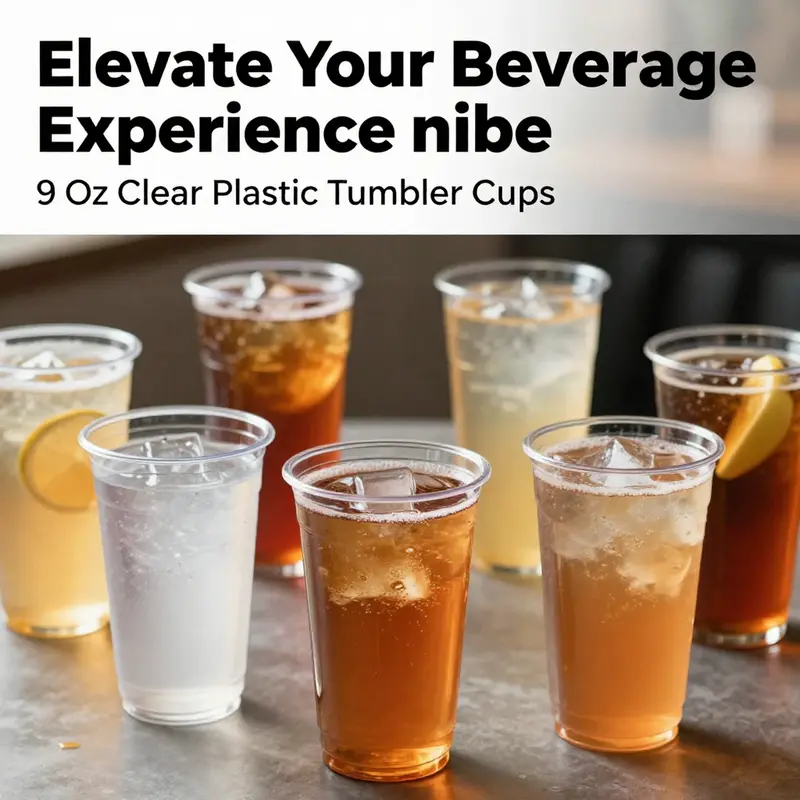
In the dynamic food and beverage industry, presentation and practicality go hand in hand. The 9 oz clear plastic tumbler cup is an outstanding choice for businesses serving various cold drinks, including bubble tea, cocktails, and juices. Its sleek, transparent design not only enhances the drink’s visual appeal but also speaks to modern consumers’ preferences for safety and convenience. This article will explore the materials used in producing these cups, their applications in a range of events, and the environmental considerations that shape their use. Together, these chapters will paint a comprehensive picture of why 9 oz clear plastic tumblers are a must-have for any beverage-focused business.
Clear By Design: The Materials Behind 9-Ounce Clear Plastic Tumblers
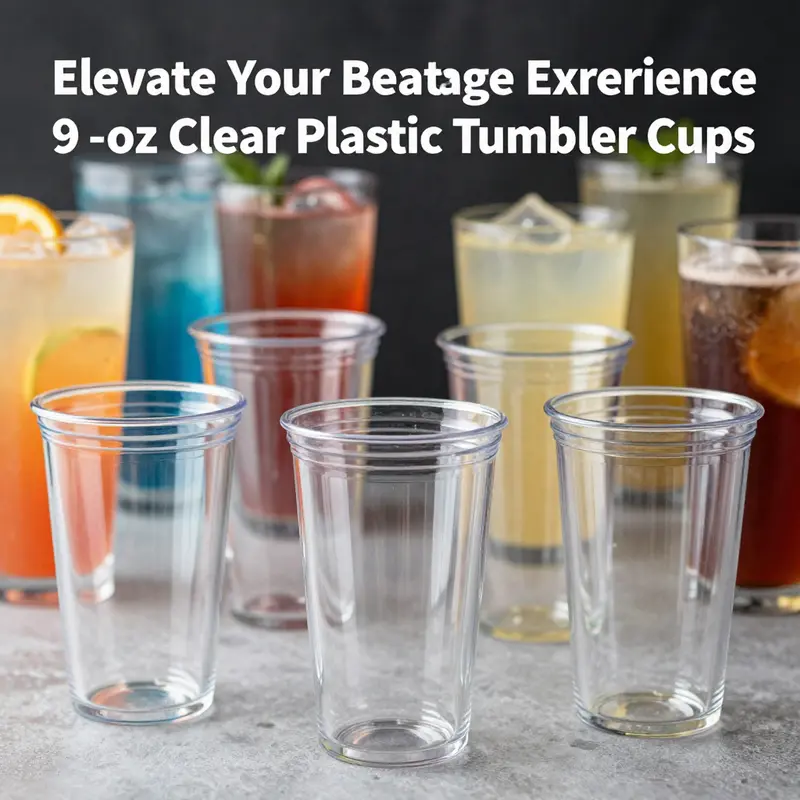
The 9-ounce clear plastic tumbler has become a quiet workhorse in the modern dining landscape. It sits at the intersection of elegance and practicality, offering a glass-like clarity that preserves the visual appeal of beverages while delivering the safety and convenience that events, households, and food service demand. To understand why this particular size and form are so enduring, one must start with the material itself. The dominant polymers that compose these cups are heavy-duty, BPA-free, food-grade plastics. That trio of descriptors—heavy-duty, BPA-free, and food-grade—appears time and again in product specifications because it anchors both safety and performance in a single, comprehensible promise. When a consumer picks up a 9-ounce clear tumbler, what they feel in the hand, what they see through the cup, and how the cup behaves over the course of a party all trace back to the chemistry and engineering choices baked into the plastic. The narrative begins with this material choice and then threads outward to shape, use, and stewardship in everyday life.
One foundational thread in the material story is the choice of resin. The cups most commonly rely on polymers like polystyrene or PET, each bringing distinct advantages to the table. Polystyrene, when formulated for food contact, can yield a superbly clear and rigid cup that embodies the crisp, glass-like appearance many people instinctively associate with a premium event experience. Its rigidity helps preserve the illusion of a solid, premium glass even when the cup is empty, which matters when guests handle empty vessels or skim a tray for a refill. PET, on the other hand, is renowned for its combination of light weight, strength, and clarity. PET’s molecular structure provides a balance of transparency and toughness, reducing the chances of cracking or deforming under normal handling. Both materials are well suited to the 9-ounce capacity, where a balance between a comfortable grip, a stable base, and a slender, elegant rim matters as much as the beverage inside.
A central selling point across these products is safety. BPA-free plastic is not merely a buzz term; it reflects a commitment to minimizing exposure to endocrine-disrupting chemicals that some consumers want to avoid in everyday items that touch food or drink. In the context of clear tumblers, BPA-free is paired with the broader standard of 100 percent food-grade plastic. This pairing signals that the material and the manufacturing process have been vetted for direct contact with consumables, with an emphasis on purity from contaminants that could affect taste, aroma, or safety. The practical effect for the user is immediate: a cup that can hold a variety of beverages without imparting off flavors or concerns about leaching. The assurance extends to the product’s journey from factory to table, with strict adherence to food-contact regulations that are designed to protect consumers across countless meals and gatherings.
Beyond safety, durability is a non-negotiable in today’s event epidemiology of cups. Heavy-duty construction means that the walls have enough thickness and resilience to resist accidental drops, knockovers, or the simple wear-and-tear of a busy service environment. The shatterproof nature of these cups is perhaps the most tangible advantage over traditional glass. In a party or outdoor setting, the risk of breakage is not merely inconvenient; it can lead to safety hazards and cleanup challenges. Plastic, by its nature, remains a safer option in crowded spaces, and the 9-ounce format provides a practical balance: not too large to become cumbersome, yet ample enough for a satisfying sip. The liquid’s temperature interacts with the plastic in predictable ways. For cold beverages, the cups retain their shape and clarity without becoming too brittle. For hot beverages, the margins narrow; some formulations tolerate warmth, but manufacturers typically design these cups primarily for cold or cool-to-warm drinks. The wearer’s finger comfort—the way the cup feels around the rim and along the body—also matters, and careful thickness design helps prevent heat transfer that could scald or discomfort a guest. In short, durability in this context means a lightweight, resilient vessel that stands up to the rigors of service while still feeling refined in the hand.
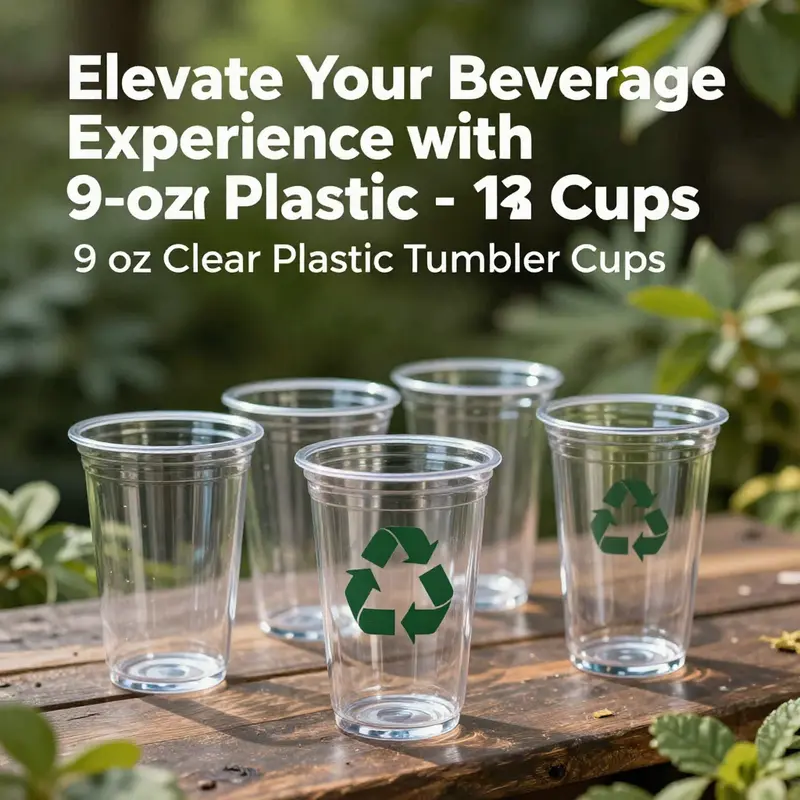
A related topic is the lifecycle of these tumblers from a sustainability perspective. Recyclability is a feature that resonates with modern buyers who weigh environmental impact alongside performance. The materials used can be recycled within appropriate programs, but the actual recyclability of any given cup depends on local facilities and the resin type. PET generally enjoys broad recycling channels in many regions, although the exact process is not universal. Polystyrene recycling, while available in some locales, is less ubiquitous and can depend on regional capabilities and market demand for post-consumer resin. The conversation around recyclability is not simply a matter of the cup’s composition; it is also about the end-to-end system that collects, processes, and reuses the plastic. In practice, the best outcomes come from choosing cups that clearly indicate their recyclability and from consumers who dispose of them in appropriate streams. The environmental benefits of reusing options when feasible are reinforced by the same safety and performance standards that guide the initial material choice. Even as single-use cups play a major role in serving hundreds of gatherings, the emphasis on recycling and responsible waste management remains essential to the broader story of these products.
The practical implications of material choice extend to the experience of hosting and consumption in meaningful ways. For instance, the eye is drawn to the crystal clarity of the cup, which preserves the appearance of the beverage—an iced coffee’s amber glint, a fruit juice’s pale green or ruby tones, the shimmer of a mixed cocktail when illuminated by party lights. That optical quality is not incidental; it reflects the design intent to deliver a visually appealing presentation without the fragility or cost of glass. The rim design and lip thickness contribute to the overall drinking experience, guiding the way the liquid flows into the mouth and how comfortable a guest feels when taking a sip. A well-engineered rim reduces discomfort and minimizes spillage, while a stable base helps prevent tipping. All of these physical attributes are, at their core, functions of the material selection and the downstream processing that shapes the cup. The manufacturing tolerance—the uniform wall thickness, the consistent diameter, and the precise edge finish—also plays a quiet but significant role in customer satisfaction. When uniformity is achieved, the cups stack neatly, nest securely for transport, and align well on trays and at tables. The absence of rough seams or warping translates into a smoother user experience that professionals and home hosts alike recognize and value.
A nuanced dimension of the material story involves customization and branding, which has become a familiar feature at weddings, galas, and corporate events where the aesthetic message matters as much as the beverage. Many producers offer customization capabilities that allow logos, event branding, or color accents to be printed or applied to the surface of the cup. This is not simply a decorative flourish; it is a way to extend the event’s design language to the drinking vessels themselves, reinforcing a cohesive experience from invitation to table setting. In practice, these customization options hinge on the compatibility of the surface with printing methods, adhesives, or labeling, rather than on the fundamental material properties. The material must accept ink or labeling without compromising safety or finish, and it must maintain legibility and color integrity in the beverage’s environment. A well-executed branding approach can elevate a guest’s perception of quality without altering the essential function of the cup.
From a consumer’s perspective, the material choices underpin confidence in a simple purchase. The assurance that a cup is BPA-free and food-grade, the sense that it will not crack under normal handling, and the knowledge that it can be responsibly disposed of through appropriate recycling channels together create a coherent value proposition. The 9-ounce volume is not arbitrary; it reflects a sweet spot that aligns with a range of beverages—from a long, cold brew to a small, atmospheric cocktail—without forcing guests into over-portioning or under-portioning. The size supports efficient service and comfortable holding, while the material supports safety and aesthetics in equal measure. In households and venues that host occasional gatherings or frequent events, this combination translates into measurable benefits: reduced breakage, clearer beverage presentation, and a level of predictability that simplifies inventory decisions and service planning.
It is also worth acknowledging that consumer expectations continue to evolve as health and safety narratives grow more nuanced. The emphasis on materials that are free from bisphenol A is part of a broader trend toward transparency in product composition. More than a checklist item, this trend reflects a culture of informed choice where accessibility to information about what is in a cup becomes part of the purchasing decision. Manufacturers respond to this interest by articulating not only the absence of certain chemicals but also the presence of safety-tested standards and clear usage guidelines. They may highlight that the plastic is designed to resist flavor transfer, is suitable for beverages at typical serving temperatures, and does not impart undesirable odors or tastes under normal use. In the end, the material story of a 9-ounce clear tumbler is not just about what the cup is made of, but what it promises in terms of safety, reliability, and a refined sensory experience.
For those who plan events with a sustainability lens, the material choices also serve as a starting point for evaluating broader packaging strategies. While a single cup contributes a small fraction to overall waste, the aggregate impact at scale matters. In practice, this translates into choosing options that maximize recyclability where possible, encouraging guests to participate in proper disposal, and considering alternatives when the event calls for longer-term reuse or more durable service. The conversations around material selection thus move beyond a technical checklist and into the realm of event design, guest perception, and the delicate balance between convenience and responsibility. It is in this context that the 9-ounce clear tumbler earns its place, not simply as a disposable vessel but as a thoughtfully engineered component of the beverage experience.
In closing, the materials used in 9-ounce clear plastic tumblers crystallize a pragmatic philosophy: combine safety with performance, maintain visual appeal without compromising practicality, and recognize the broader responsibility that comes with serving people. The heavier, BPA-free, food-grade plastic forms a foundation that makes the cup viable for a wide range of beverages and settings. The choice between PS and PET offers a spectrum of properties that can be tuned to the event’s needs, from the tactile feel of the cup in the hand to the ease of recycling after the last toast. The result is a vessel that is at once simple and sophisticated, durable yet disposable in the right contexts, and always aligned with the modern expectations of safety, cleanliness, and environmental awareness. As gatherings continue to evolve, the 9-ounce clear tumbler remains a reliable canvas on which beverages can be presented with clarity and care, a small but meaningful detail that enhances the overall experience without drawing attention away from the moment itself. For those who examine the lifecycle of a party—from the first pour to the last cleanup—the material story of this cup offers a succinct guide: select heavy-duty, BPA-free, food-grade plastic; prioritize clarity and fit for the event; consider recyclability and end-of-life options; and appreciate the quiet elegance of a vessel designed to disappear when it truly matters—the beverage, the moment, the memory.
External resources for further reading on consumer-grade clear plastic tumblers can be found at: https://www.amazon.com/dp/B08LZJ3Q4K
Crystal Clarity on the Tables: The Subtle Role of 9 oz Clear Plastic Tumbler Cups in Event Design
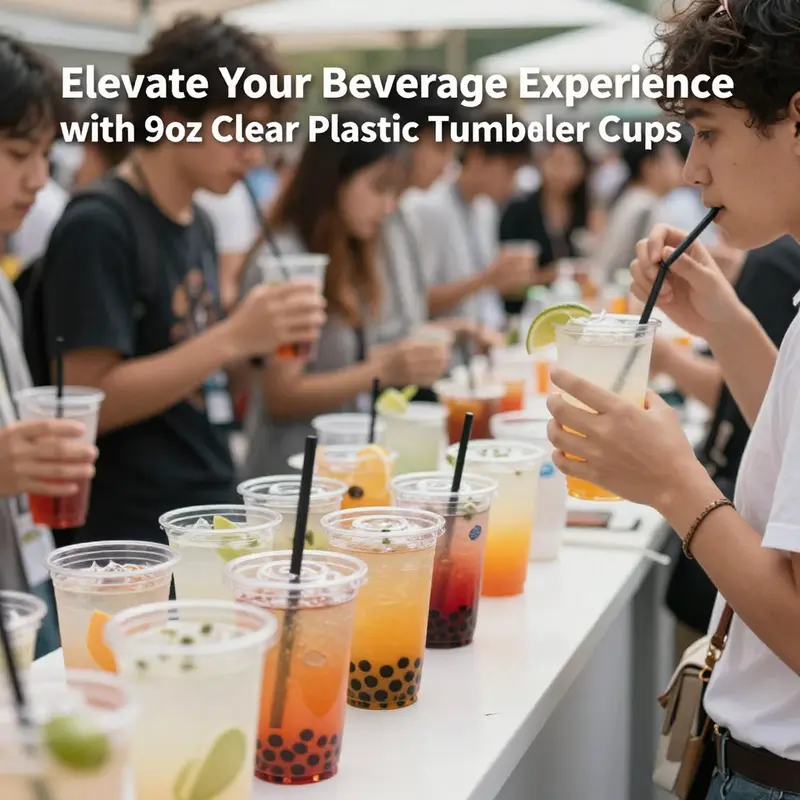
Crystal clarity is more than a visual trait. In the rhythm of an event, it functions as a quiet choreographer, guiding guests’ perception of what sits before them and how much attention a host has paid to the smallest details. The 9 oz clear plastic tumbler cup embodies this delicate balance of practicality and aesthetic discipline. It is a vessel that looks almost invisible on the surface, yet its presence influences service flow, conversation, and the overall tone of the gathering. This is not merely about a disposable cup; it is about how a simple bold choice supports a sophisticated social choreography. The glass-like transparency offers guests an immediate cue: what you pour is equally important as how you present it. When a guest peers into the cup, they see through the liquid to the light above, and the light itself seems to respond to the cup’s precise diameter and smooth lip. The effect may be subtle, but it matters. It allows vibrant cocktails to glow, juice to appear more enticing, and even water to sparkle with a quiet, refreshing sheen. In settings that prize elegance—weddings, receptions, anniversary dinners, or formal holiday gatherings—the capacity to maintain a refined visual table while avoiding the fragility of glass becomes a strategic advantage. The cup’s 9-ounce capacity, roughly 267 milliliters, sits at an ideal point: it is large enough to convey a sense of generosity without inviting excessive pours. It supports a balanced visual plate of food and drink, a crucial factor in the careful composition of a table where every dish and glass has a role. Yet the same size proves versatile enough for a cocktail hour, a wine-tasting moment, or a mocktail session during a program’s intermission. The cup becomes a stage light for color, an unobtrusive prop that strings together mood, pace, and ceremony without stealing attention from the event’s focal moments. The choice of material reinforces this subtle stewardship. These tumblers are typically produced from food-grade polystyrene (PS) or polyethylene terephthalate (PET). Each polymer carries its own character: PS can feel crisp and crispness-enhancing to the eye, while PET delivers extraordinary clarity and a glass-like feel in a lighter, more shatter-resistant form. Both materials are selected for their compatibility with cold beverages, a common requirement in social settings where ice, fruit, and chilled mixes abound. The claim is not merely about safety or convenience; it is about how the composition of the cup supports a guest’s sensory experience. The absence of brittle edges when the rim is touched by lips matters, as does the edge’s smoothness during hand-to-hand passing across a crowded table. Even the sound of a closeable lid or a gentle clink as cups are set down can influence the mood—an intimate, confident resonance that says guests are in a space curated for celebration rather than hurried consumption. Health-conscious attendees arrive with expectations that extend beyond taste and appearance. Modern consumers often seek packaging and serviceware that minimize health concerns while maximizing convenience. In this context, the 9 oz clear tumbler is frequently advertised as BPA-free, a point that resonates with public health discourse about potential chemical migration from plastics into beverages. The conversation around safety is not about alarm but about assurance; it guides a host in choosing materials that align with contemporary standards for consumer protection. The design also anticipates the practical realities of live events. The lightweight form reduces the burden on staff during setup and service. In a garden party, a charity gala, or a corporate reception held in a pavilion, the ease of stacking and transporting these cups translates into tangible time savings. Storage becomes efficient, a critical factor when space is at a premium and multiple venues or shifts are involved. The cups’ stackability means a caterer can consolidate dozens or hundreds of units into neat, compact piles that slide into a cart or storage closet with minimal fuss. This efficiency underpins reliability. When an event timeline hinges on timely beverage service, the last thing planners want is fragile glass shattering underfoot or guests waiting for a replacement cup. The plastic tumbler’s durability under the typical strains of a reception—the occasional knock of a tray, the brisk pace of a buffet line, the gusts of an outdoor venue—reduces risk without sacrificing the sense of care that attendees expect. The interplay of form and function becomes even more apparent in settings designed to scale. Weddings and receptions often require high-volume serving without compromising the visual coherence of the table. A uniform, transparent surface across all glasses helps to unify a table’s look, letting the color of the drinks themselves become the primary visual accent. A white tablecloth, a silver or gold rim in some variants, or even a subtle tint can complement the crystal-like clarity of the cup without creating visual clutter. In this sense, the 9 oz tumbler acts as a reliable canvas, a non-obtrusive platform on which the process of toasting, serving, and savoring unfolds with restraint and grace. The capacity’s practical sweet spot also plays into the logistics of multi-course menus and staged beverage service. For a cocktail hour, smaller pours encourage guests to sample a range of options without committing to a single, heavy glass. For wine pairings or a tasting progression, the 9 oz size ensures that guests can explore aromas and flavors while maintaining portion control that prevents overindulgence. In non-alcoholic formats, iced tea, lemonade, or artisanal sodas can be served with the same ease, their brightness and clarity enhanced by the cup’s pure ice-white or colorless profile. The cups’ surface, while designed to be robust, also invites contemplation of aesthetics. The smooth cylindrical body and the near-perfect circular rim create a silhouette that reads as orderly and refined when arranged in a row along a reception table. When a host uses a set of the same cups across a long buffet, the symmetry becomes a quiet form of hospitality, signaling that every guest is invited to partake in a moment of shared celebration. The idea of customization expands this logic beyond mere function. Many events call for branding and identity reinforcement—part of the larger strategy to translate a moment into memory. While the core product here is a plastic tumbler, the broader ecosystem of disposable drinkware includes opportunities for imprinting logos or messages, color accents, or site-specific motifs. The practical upshot is a dual purpose: the cup serves the immediate beverage needs while also acting as a portable keepsake. Even without explicit branding, the visual language of the cup can be leveraged through coordinated color schemes, coordinated napkins, and tableware choices that echo a theme or corporate color. In many venues, this presents a relatively economical path to elevate the overall event design. The absence of heavy, glass-like weight reduces the risk of injuries during crowded moments and makes cleanup more efficient. The mental load on guests and staff alike is eased when the cups perform consistently—when ice remains contained, when beverages stay within their vessel, and when the glasses do not obstruct movement or conversation. The environmental footprint, however, remains a continuing consideration for planners who aim to reconcile elegance with sustainability. There is growing attention to materials and end-of-life options. Some 9 oz clear tumblers are produced from PET, which is recyclable in many municipal programs, while others stem from PS, which may be more challenging to recycle in certain locales. The choice between these materials can reflect a host’s environmental policy, regional recycling capabilities, and the event’s broader sustainability narrative. In the contemporary event landscape, sustainability often intersects with the concept of reuse or responsible disposal. For some hosts, the focus is on reducing single-use waste by encouraging guests to reuse cups or to opt for compostable or recyclable alternatives when possible. For others, the priority is to maintain a high standard of presentation during the event itself, with a clear preference for durability and safety. This is where the 9 oz tumbler earns its quiet advantage: it sits comfortably at the intersection of formality and practicality. It can be integrated into a broader table-scape that includes cloth napkins, coordinated stemware for wine or champagne, and accent lighting that makes the table glow with subtle warmth. The cups’ crystal clarity ensures that the beverage color remains the focal point, not the container. When used in larger public events—such as proms, school gatherings, or church functions—the cups provide consistency across a broad guest list, a factor that simplifies logistics for volunteers and staff. In such venues, the reliability of a common vessel alleviates coordination challenges and reduces the potential for service delays that might arise from varying glassware availability. The social dynamic at these events also shifts the conversation toward inclusivity and accessibility. A sturdy tumbler is easier to handle for guests of diverse ages and abilities, from younger attendees at a school function to seniors at a community gathering. The simple, familiar profile invites a sense of ease, even in bustling environments. The design’s universal appeal helps ensure that guests focus on the experience rather than the mechanics of the service. To that end, a practical, well-chosen tumbler can become a quiet ally to event planners who aim to create spaces that feel both polished and welcoming. The conversation about customization, too, is evolving. Disposable drinkware, including these tumblers, can be adapted for a variety of purposes that align with an event’s goals. A host might choose to incorporate a subtle color accent or a rim detail to echo a theme, or consider a minimalist approach that emphasizes the beverage’s color as the centerpiece. The possibility of branding—while mindful of sustainability considerations—offers vendors a route to extend an event’s reach beyond the venue through take-home memories. Even in contexts where branding is desirable, the choice of container should always serve guest experience first. It should not overwhelm the beverage or distract from the social moment. In practice, the decision often comes down to the specifics of the event: the level of formality, the expected guest count, the climate and venue, and the overall design language being pursued. A formal wedding, for example, will prioritize a coherent table aesthetic, perhaps favoring clear cups against a muted palette, while a festival or outdoor concert may emphasize durability, portability, and ease of disposal. The 9 oz clear tumbler thus becomes a flexible instrument—one that can play a supporting role in a refined setting or stand up to the demands of a high-volume, transient environment. The broader packaging ecosystem that surrounds these tumblers—from lids and sleeves to labeling and branding options—mirrors the complexity of the events they serve. Event planners increasingly appreciate that a well-chosen cup does not exist in isolation. It is part of a chain of decisions about how a beverage is served, how staff operate, and how guests move through a space. A cohesive approach to the cups, the ice, the beverages, and the service protocol yields an experience that feels seamless and intentional. In the end, the cup’s value is not merely in its clarity or its safe, lightweight construction. It lies in its contribution to a sense of continuity: a predictable, dignified instrument through which people gather, mingle, toast, and remember. The power of such a simple object rests in its ability to vanish as a device and reemerge as a signal—of hospitality, efficiency, and attention to detail. It is a small, everyday artifact that, in the right context, helps to elevate a gathering from ordinary to memorable. To understand its place in events, one must see it not as a disposable afterthought but as a deliberate component of a larger design language. The choice is never merely about the moment of pouring a drink; it is about supporting the rhythm of a celebration, maintaining safety and comfort, and enabling guests to focus on connection rather than the logistics of service. As the event industry continues to explore the balance between elegance and practicality, 9 oz clear plastic tumbler cups will likely remain a staple. They embody a philosophy of form meeting function: a vessel that looks clear, acts sturdy, travels easily, and helps to transform a gathering into a shared experience—one where clarity extends beyond the liquid and into the atmosphere itself. For further contemplation within the wider ecosystem of disposables, see the linked resource on disposable, eco-friendly printed logos. disposable eco-friendly printed logo single-wall paper cup. External readers seeking broader safety considerations can consult established guidelines on food-contact materials, such as resources available from regulatory authorities. External resource: https://www.fda.gov/food/packaging-labeling-food-contact-substances-fcs
null
null
Final thoughts
As we’ve explored, the 9 oz clear plastic tumbler cup presents a winning combination of style, safety, and environmental impact, making it an essential choice for any beverage service provider. Its high transparency and elegant design enhance the presentation of cold drinks, while its materials guarantee durability and compliance with safety standards. With an eye towards sustainability, these cups meet modern expectations without compromising quality or usability. By incorporating 9 oz clear plastic tumbler cups into your service offerings, you not only enhance customer experience but also strengthen your brand’s commitment to environmentally responsible practices.