
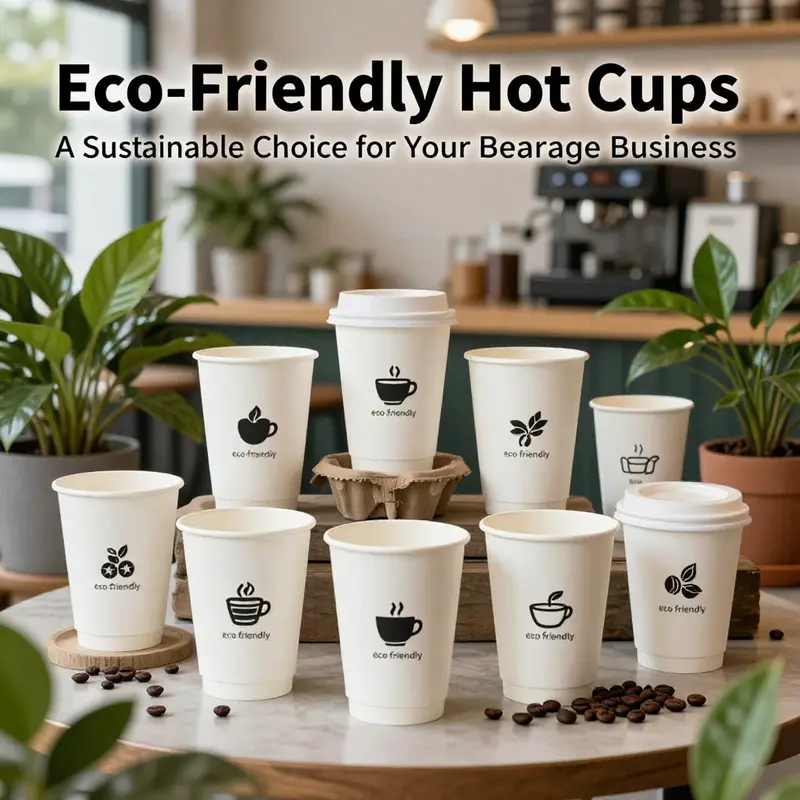
With the growing emphasis on environmental sustainability, businesses in the beverage industry must adapt to meet eco-conscious consumer demands. 8oz custom printed eco-friendly white paper hot cups are revolutionizing the way brands serve their hot beverages while promoting a greener planet. As we dive deeper into this innovative product, we will explore custom printing options that emphasize branding, material composition and environmental impacts that align with sustainability goals, market demand and applications that demonstrate versatility, and a thorough cost analysis along with supply chain considerations to make informed decisions. This comprehensive understanding will empower beverage shops, catering services, event planners, and more to choose an eco-friendly solution that does not compromise on quality or visual appeal.
Branding That Breathes: Custom Printing for 8oz Eco-Friendly White Paper Hot Cups
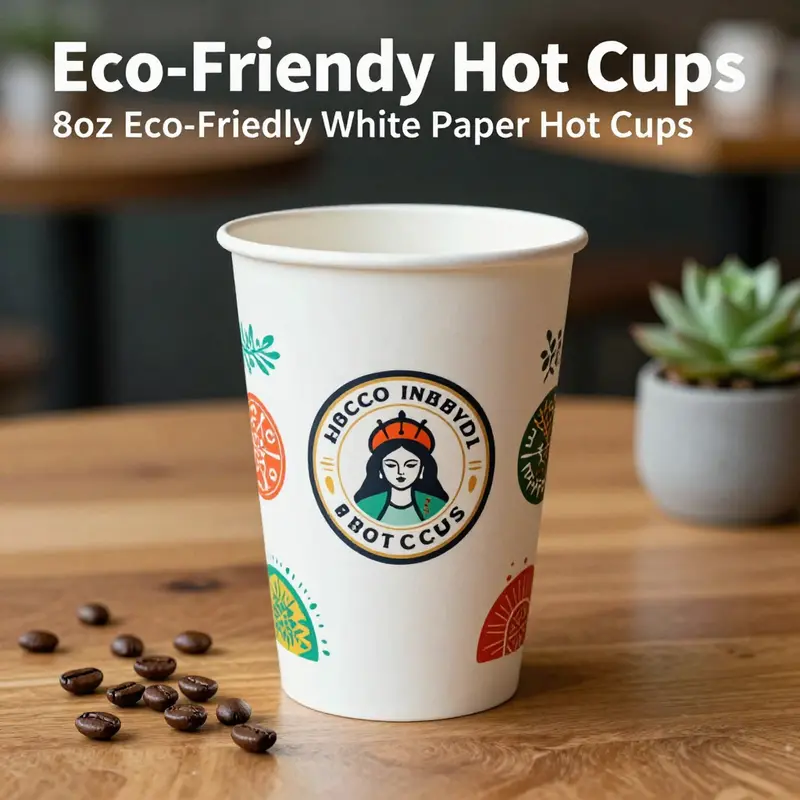
Across the coffee bar and into guests’ hands, the 8oz eco-friendly white paper hot cup becomes a moving canvas. Its surface is where branding, storytelling, and purpose converge. This chapter explores how custom printing transforms this everyday item into a compact ambassador for a brand’s ethos—eco-conscious, visually compelling, and reliably functional. The journey begins with material science and graphic design, then flows through printing technology, color control, and production scale. It ends with a perspective on how these cups fit into sustainable branding strategies that extend beyond a single sip into a lasting impression.
The cups themselves are constructed from high-quality, food-grade white paper with a fluorine-free or minimal-ink surface. The coating, a biodegradable option such as PLA, shields the inner paper from moisture and heat, ensuring beverages stay at temperature and that ink adheres with fidelity. Single-wall designs offer heat resistance and lightness while a sleeve is optional but not required. When a business chooses these cups, it is choosing a platform that can carry a message—confident and cohesive—without compromising practical demands of hot drinks.
Printing options are a key language for brands. For 8oz cups, flexographic printing supports a range from one to six colors. Flexible, fast, and suited to mid-to-large runs, flexo uses food-grade inks that form a safe, durable layer on the cup’s surface. This allows precise logos, brand colors, or sequences of graphics that tell a story as the cup is held, sipped, and displayed. A two- or three-color layout can keep a crisp logo legible while avoiding visual clutter; a six-color option enables detailed patterns and gradients on a curved surface. The goal is balance: legibility, brand voice, and the realities of wraparound printing.
Color management on a curved surface demands care. A clear color plan from Pantone references or brand swatches translates into print-ready curves and ink densities. Prototypes and proofs reduce risk before production. Designers learn to think in three dimensions, anticipating wraparound placement and seam interruptions. Printers translate that vision into precise plate layouts, color keys, and a schedule that preserves consistency across tens of thousands of units.
Customization goes beyond color. Size, style, and placement can be negotiated within a structured production plan. The 8oz format offers a compact canvas for a bold logo, multilingual copy, or subtle branding. Placement decisions—facing outward, wrapping around the body, or aligning with a wraparound motif—affect shelf impact and recall. Single-wall cups pair well with printed sleeves or can be used bare for a statement. The design process becomes an exercise in holistic branding rather than decoration alone.
From procurement to sustainability, economics matter. Low minimum orders enable cafés, pop-ups, or events to experiment with branding without large investments, while bulk orders reduce unit cost and support uniform branding across locations. OEM/ODM capabilities allow suppliers to meet exact specifications from concept to finished product, ensuring a cohesive look across touchpoints such as kiosks and catering stations. A reliable supply chain supports experimentation while delivering predictable quality.
The eco profile matters as well. Materials are recyclable or compostable where possible, and coatings support moisture resistance with minimal environmental impact. Food-grade inks provide safety for hot beverages. Transparency about coatings, recyclability, and end-of-life options invites conversation with customers about responsible consumption. A cup that communicates care for the planet reinforces a brand’s values.
In practice, the production cycle includes proofs and sampling rounds to confirm how a design translates to the physical object. For seasonal campaigns or events, proofing speed and flexibility can determine whether branding meets its moment. The best partners offer varied lead times and QA frameworks that track color accuracy, registration, and ink deposition. When managed well, print becomes a living medium that speaks to brand integrity, consumer trust, and environmental accountability.
Cultural and multilingual considerations broaden resonance. Typography must stay legible on a curved surface, and motifs should be chosen with sensitivity and relevance. The integrated design approach—graphics, color, typography, and material choice—creates a cohesive brand experience across channels, not just on the cup.
Sustainability storytelling matters. Clear messaging about coatings and recyclability can appear on signage or packaging, inviting dialogue about responsible consumption. A well-printed cup that communicates care for the environment becomes a portable ambassador for a brand’s prudence and quality.
Beyond the cup, brands can build a coordinated ecosystem with lids, sleeves, and carrying solutions in the same color language. A unified packaging system reduces visual clutter and strengthens recognition.
External reference for further reading: https://www.alibaba.com/product-detail/Eco-Friendly-White-Paper-Cup-Single-Wall-8oz_1600743929433.html
From Forests to Foam-Free Futures: Material Composition and Environmental Impact of 8oz Eco-Friendly White Paper Cups
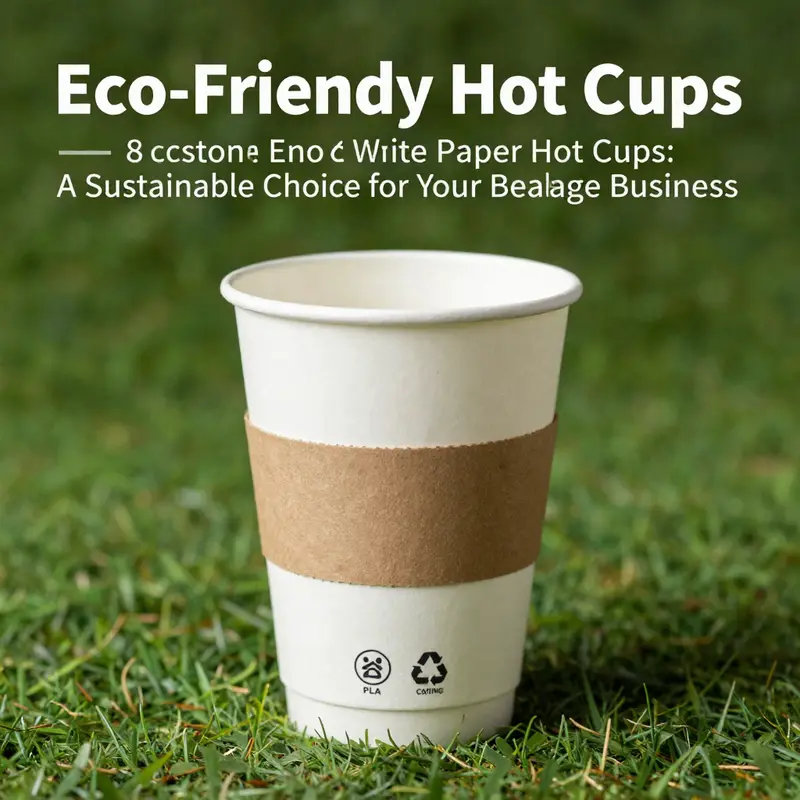
The 8oz eco-friendly white paper hot cup sits at a nuanced intersection of comfort, branding, and responsibility. For cafes, event organizers, and quick-service operations that want to serve hot drinks with a lighter footprint, these cups offer a compelling blend of performance and purpose. They are designed to hold beverages at near-boiling temperatures, while their materials and coatings strive to minimize environmental impact. The chapter that follows traces how their material composition—paper type, inner lining, and coatings—translates into environmental performance, why those choices matter for end-of-life options, and what that means for brands seeking to align flavor, functionality, and green promises in a single, disposable vessel.
The core of the cup is simple in concept but complex in execution: a single-wall structure built from food-grade paper that provides meaningful heat resistance without the thick, energy-intensive construction of double-wall designs. The choice between kraft paper and virgin bleached paper reveals a trade-off between appearance, strength, and the environmental narratives that brands often want to tell. Kraft paper is celebrated for its natural, earthy aesthetic and durability, which makes it a practical base for cups that must resist deformation under heat and handling. Virgin bleached paper, by contrast, offers a stark, bright white surface that can deliver crisper, more vivid printing for logos, multilingual text, and cultural motifs. The decision between these paper types is rarely about one factor alone; it is a balancing act between branding goals, cost considerations, performance requirements, and the broader sustainability story a business wants to tell.
But the observable paper surface is only one layer of the story. The inner lining—what keeps hot liquids from seeping through and weakening the cup’s structure—plays a decisive role in the cup’s environmental profile. In most modern 8oz cups intended for hot drinks, the inner lining is a biodegradable bioplastic layer, commonly based on polylactic acid, or PLA. Derived from renewable resources such as corn starch or sugarcane, PLA reduces reliance on fossil fuels and can improve the overall compostability of the cup in appropriate facilities. Yet the presence of a PLA lining also introduces important caveats. PLA behaves differently from traditional petroleum-based coatings in recycling streams. While it can aid composting in well-equipped industrial facilities, it may complicate recycling if it ends up in standard curbside programs that are not designed to separate bioplastics from conventional paper fibers. This nuance underscores a central truth about sustainability in disposable cups: improvements in one dimension can require careful attention to end-of-life infrastructure to realize the full environmental benefit.
The combination of paper choice and inner lining feeds directly into the cup’s environmental impact, which must be weighed against conventional disposable options. Traditional foam or plastic-lined cups often rely on materials that resist decomposition, contribute to landfill mass, and complicate recycling streams. In contrast, the eco-friendly white paper cup’s design aims to align with a more circular approach. The paper component is intended to be recyclable, and in many cases, the overall packaging is marketed as biodegradable or compostable, subject to the presence of the right facilities. Certification schemes such as industrial compostability standards help clarify what “biodegradable” can mean in practice. When a cup is certified or aligned with recognized standards, it signals that, under specific conditions in a controlled industrial composting environment, the cup can break down within a defined timeframe. These certifications are not mere marketing claims; they provide a framework for assessing performance under real-world industrial conditions.
A crucial dimension of the environmental calculus is the sourcing of the paper itself. Sustainable forest management matters because it shapes the long-term availability of the raw materials and the ecological footprint of the cup. Reputable supply chains often seek to source paper from forests certified by bodies such as the Forest Stewardship Council (FSC) or the Programme for the Endorsement of Forest Certification (PEFC). These certifications aim to ensure responsible forestry practices, protecting biodiversity, reducing soil erosion, and maintaining the ecosystem services that forests provide. For brands, this means that each cup can carry a narrative about responsible sourcing, extending the value proposition beyond taste and convenience into the realm of environmental stewardship.
In addition to the origin story of the paper, the manufacturing process itself contributes to the environmental balance sheet. The fabrication of kraft or virgin bleached paper requires energy, water, and chemical inputs. If the factory employs efficient pulping and bleaching methods, along with water-reduction strategies and recovered heat, the overall footprint can be minimized. The coatings and inks used to print branding and information also influence the life cycle. In particular, food-grade inks optimized for low migration and non-toxicity reduce potential concerns about leaching and human exposure, reinforcing the cup’s suitability for serving hot beverages in hospitality settings. The printing step is not merely cosmetic; it is intrinsic to a cup’s brand value while simultaneously intersecting with sustainability goals. Custom printing, whether via offset or flexo, must balance fidelity and durability with the need to maintain recyclability and minimize the introduction of extraneous non-paper components.
The environmental impact narrative is nuanced further by the coatings themselves. PLA, while drawn from renewable resources, is a bioplastic that behaves differently in composting infrastructure than conventional plastics. In industrial composting facilities, PLA can degrade in a matter of weeks to months, but in home composting or standard recycling streams, the outcomes are less predictable. This is why many programs emphasize the importance of appropriate facilities. The objective is clear: to reduce plastic persistence in the environment, avoid microplastic pollution, and reclaim paper fibers through recycling when possible. The reality is that a cup’s end-of-life fate depends as much on local waste-management infrastructure as on the cup’s own materials. In regions with robust industrial composting networks, the PLA lining and paper can contribute to a near-complete return to organic carbon or raw material streams. In other areas, sharing a more cautious narrative helps prevent over-promising a green outcome that cannot be realized without compatible facilities.
The chapter’s environmental lens also considers the broader lifecycle, extending beyond disposal. Transportation efficiency is a small but meaningful lever in the overall footprint. The lightweight design of a single-wall cup reduces material mass and fuel use during distribution. When combined with recyclable or compostable materials, the cup contributes to a circular economy if the downstream system can reabsorb its components. The interaction between design and logistics matters: a cup that is easy to stack, ship, and handle minimizes emissions across the supply chain while preserving heat resistance and structural integrity. A cup that supports branding through customizable, food-grade inks enables businesses to communicate environmental commitments without adding extraneous layers of packaging or wrappers that would undermine the sustainability claims.
From a brand perspective, the choice of cup becomes part of the storytelling. Custom printing is not merely an aesthetic; it is a vehicle for communicating environmental values and corporate responsibilities. When brands select a cup with certified sustainable sourcing, compatible composting options, and minimal packaging impact, they create a coherent message: the drink experience is paired with a responsible material choice. The balance between cost and sustainability becomes a strategic decision. Some suppliers offer attractive pricing for bulk orders, with low minimum order quantities and scalable customization options. That affordability helps smaller operators participate in sustainability narratives that previously required heavier investment, allowing a broader range of businesses to reflect ecological values in their day-to-day customer interactions.
This integrated approach—paper choice, inner lining, coatings, printing, and end-of-life considerations—shapes the true environmental impact of the cup. It is not enough to claim that the cup is “eco-friendly”; the claim must be grounded in a lifecycle perspective, considering sourcing, production, distribution, use, and disposal. When this lifecycle perspective is embraced, the cup becomes a practical tool for reducing overall environmental burden while preserving the performance consumers expect from a hot beverage vessel. The engineering decisions behind the cup’s construction are, in effect, statements about how a company sees its role in the world: as a facilitator of daily rituals that do not compromise future generations’ ability to meet their own needs.
For readers seeking a practical reference point in the market, one can examine supplier pages that illustrate the kinds of options available for 8oz cups designed with eco-friendly principles in mind. The focus on lightweight design, biodegradable inner linings, and recyclable or compostable pathways demonstrates how suppliers translate sustainability aspirations into tangible products. The presence of consistent design language—single-wall construction, food-grade inks, and opportunities for branded customization—also reflects a broader industry trend toward combining function with responsibility. Yet the most meaningful guidance comes from evaluating the specific certifications and certifications’ applicability to local waste streams. TUV OK Compost INDUSTRIAL and BPI certifications, among others, provide external validation that cups can behave as promised under appropriate conditions. When businesses align with these standards, they can confidently tell a story about their packaging that stands up to scrutiny from customers, partners, and regulators alike.
The practical takeaway for decision-makers is to look beyond initial impressions and examine the compatibility of the cup with their local waste-management ecosystem. A well-designed cup that relies on renewable feedstocks and carbon-conscious manufacturing is only as sustainable as the system that handles it after use. In regions where industrial composting is widely available, PLA-lined cups may return organic matter to commercial composting streams efficiently. In areas where recycling remains the dominant end-of-life path, choosing a paper type and coating that facilitate fiber recovery and minimize contamination becomes vital. The goal is to maximize the beneficial outcomes of each stage—from the forest to the factory, from the hand to the bin—so that each cup becomes a small but meaningful contributor to a more sustainable foodservice landscape.
Within this context, the digital branding afforded by offset or flexo printing enhances the cup’s value without compromising its material integrity. The inks used for branding must meet food-safety criteria, be compatible with the cup’s coatings, and minimize the risk of migration. When these conditions are met, a brand can tell a compelling sustainability story through color and typography as easily as through a logo. The combination of branding and environmental performance creates a marketing proposition that resonates with conscious consumers who value both taste and stewardship in equal measure. The resulting equation is simple in intent but nuanced in execution: high-quality, heat-resistant performance paired with responsible materials and responsible disposal routes.
For readers who want a concrete touchpoint in the marketplace, a representative reference point is a supplier page that highlights the practical economics and material choices for 8oz cups designed to minimize plastic exposure and support single-wall performance. See the page described by the label best-price-8oz-double-plastic-free-single-wall-paper-cup to explore how pricing and design choices intersect in real-world procurement decisions. This page exemplifies how suppliers balance affordability with environmental considerations, a balance that matters to businesses that must maintain margins while advancing sustainability goals. best-price-8oz-double-plastic-free-single-wall-paper-cup
The dialogue around material composition and environmental impact is ongoing, and it benefits from continued attention to evolving standards and waste-management capabilities. The cups discussed here embody a pragmatic approach: prioritize renewable feedstocks where feasible, minimize non-paper additives that complicate recycling, and align brand promises with credible certification programs. In doing so, the everyday act of pouring coffee or tea becomes part of a broader effort to reduce plastic dependence, lower carbon intensity, and support a more circular economy. The reader is invited to consider not only the cup’s immediate performance but also how the broader packaging ecology—consumption patterns, waste infrastructure, and consumer education—can magnify the benefits of choosing eco-friendly cups. Only through such integrated thinking can brands, operators, and consumers co-create a future in which the cup truly becomes a small but significant step toward a more sustainable planet.
External reference: For a practical external resource that addresses material composition and certification standards in the context of biodegradable hot paper cups, see the detailed discussion on industrial compostability and fiber-based packaging that aligns with recognized certifications. https://www.alibaba.com/product-detail/8oz-10oz-16oz-biodegradable-eco-friendly_1600435992716.html?spm=a2700.1.x.1
From Brand Impressions to Everyday Practice: Market Demand and Versatile Applications of 8oz Custom Printed Eco-Friendly White Paper Hot Cups
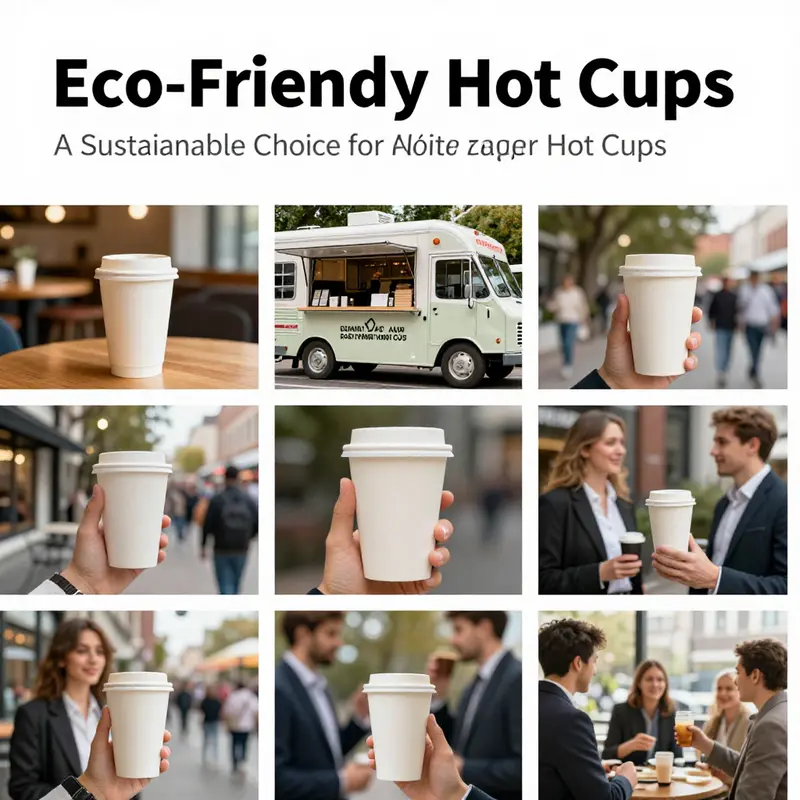
The market for 8oz custom printed eco-friendly white paper hot cups sits at the intersection of practicality, responsibility, and brand storytelling. In a world where consumer choice increasingly hinges on how a product is packaged as well as what is inside, these cups have emerged as more than mere vessels for hot drinks. They are a tangible expression of a brand’s commitments to sustainability and to clear, memorable messaging. As cafes, retailers, event organizers, and even healthcare and gifting sectors seek to balance efficiency with purpose, these cups offer a rare combination: reliable performance for hot beverages and the flexibility to convey identity through print. When a cup doubles as a tiny mobile billboard, the stakes for its design, material choice, and print quality rise correspondingly. The result is a demand curve that reflects both functional needs—holding up under heat, not leaking, remaining comfortable to hold—and aspirational needs—being part of a greener supply chain and reinforcing a brand’s narrative with every serving. The 8oz size, in particular, tends to be a sweet spot for single servings, quick-service formats, and promotions, which amplifies the volume and velocity with which cups move through kitchens, cafés, and event spaces alike.
At the core of this market, the single-wall construction of these cups provides robust heat resistance while maintaining a lightweight footprint. From a user experience standpoint, this means a cup that feels sturdy in the hand, resists warping under a hot surface, and offers predictable insulation for the beverage inside. Yet the usefulness of the format goes beyond heat management. The absence of an inner sleeve or double-wall complexity translates into leaner production cycles and streamlined logistics—a meaningful advantage for operators who must serve high volumes with precision. The simple architecture also leaves more room for design and branding without complicating the user’s interaction. When a café prints its logo, a seasonal motif, or multilingual text on the cup itself, the branding travels with the drink, turning each serve into a moment of brand reinforcement. This is especially valuable in multicultural environments, where a well-thought-out print can convey hospitality and accessibility at a glance.
Printing capabilities are a major driver of market appeal. The availability of customizable offset or flexo printing using food-grade inks means brands can achieve high-impact visuals that hold up under typical beverage temperatures and handling. The ability to print in multiple colors, to use high-resolution logos, and to incorporate cultural motifs or instructional text creates opportunities for differentiation that go beyond the drink. For businesses running seasonal campaigns or limited-time offers, the chance to adjust the print design quickly and affordably enables a responsive marketing approach. The print layer also serves a practical purpose: it communicates important information, such as multilingual beverage instructions or brand storytelling, without requiring the customer to search for a receipt or a card. In a world where first impressions are often formed at the point of sale, a well-printed cup can set the tone for the customer experience and convert a fleeting moment into a lasting impression.
Material choices are central to the eco-credentials of these cups. They are crafted from 100% recyclable and biodegradable kraft paper, and coated with a biodegradable layer (PLA or PE). These coatings balance the need for moisture resistance and barrier performance with a commitment to end-of-life recyclability. The industry-wide shift toward compostable or recyclable packaging aligns with global standards for responsible packaging, making these cups attractive to brands that want to demonstrate environmental stewardship without compromising performance. The debate between coatings—PLA versus PE—often centers on compostability timelines, regional recycling infrastructures, and end-of-life processing capabilities. While PLA-coated cups tend to appeal to markets prioritizing compostability, some regions with strong paper recycling streams may prefer PE-coated variants for their barrier performance. Either choice can be appropriate when suppliers clearly communicate disposal expectations and certifications. The key for buyers is transparency about the cup’s lifecycle, including how it should be disposed of or recycled, and how that disposal fits within local municipal guidelines. The eco-friendly attribute becomes not only a material promise but a facilitation of responsible behavior among consumers and businesses alike.
On the demand side, the appetite for these cups is shaped by a few converging forces. First, consumer preference for sustainable packaging continues to grow. People want brands that reflect their values, and packaging is a visible, everyday proxy for those values. Second, foodservice operators seek to balance the costs of premium packaging with the benefits of brand differentiation. Custom printing adds value by enabling operators to convey identity, reinforce loyalty, and communicate messages that resonate with local audiences—whether a café’s heritage, an event’s theme, or a multilingual note designed for diverse patrons. Third, there is an operational appeal: these cups are designed for hot drinks, which means a streamlined supply chain for a format that is universally familiar to both staff and customers. The single-wall construction supports quick fill-and-serve cycles, a feature that is particularly attractive during peak hours at busy cafes, mobile carts, or large gatherings.
From a market perspective, the 8oz cup also fits neatly within pricing and MOQ realities that matter to businesses of varying sizes. Suppliers often offer MOQs as low as 50,000 pieces, with pricing that can range from roughly one cent to a few cents per unit in bulk. That cost profile makes sustainable branding options accessible to smaller operators and growing brands alike, enabling them to experiment with design and messaging without committing to prohibitively large orders. The economics of a custom printed cup extend beyond the unit price. When a brand’s design is strong enough to spark social media buzz or word-of-mouth attention, the cup becomes part of a broader marketing mix, including in-store experiences, take-away campaigns, and event activations. In a real sense, the cup helps close the loop between a customer’s perception of a beverage and the brand story that surrounds it, turning an ordinary purchase into a note in the brand’s ongoing narrative.
To illustrate how market supply translates into practical choices, consider the published realities of online marketplaces and supplier catalogs. Articles and product pages frequently highlight low MOQs and accessible unit costs that empower small and mid-sized enterprises to adopt sustainable packaging without sacrificing quality or aesthetics. The range of capabilities—customizable printing, reliable heat resistance, recyclable materials, and clear disposal guidance—converge to create a compelling value proposition for operators who must balance speed, cost, and conscience. For buyers exploring options, a useful gateway is to examine how a supplier packages the economics: the per-piece price, the impact of printing on bulk costs, and the incremental savings tied to larger runs. The availability of offset and flexo printing also means brands can choose between traditional print quality, color richness, and long-run consistency, depending on the scope of the campaign and the desired shelf or in-store impact. In this context, the 8oz custom printed eco-friendly white paper hot cup is more than a physical container; it is a platform for storytelling, a device for differentiating a beverage offering, and a practical solution for sustainable service.
The versatility of these cups extends beyond hot beverages. They are increasingly used for cold beverages, food packaging, and even as components in gift or pharmaceutical packaging lines. In markets where multi-use packaging is valued, the same cup can be adapted with different lid designs, sleeve options, or branding layers to suit a range of product categories, from coffee and tea to soups and frozen beverages served in takeaway settings. This adaptability is especially relevant in event contexts. Festivals, conferences, and corporate gatherings rely on packaging that can be customized to reflect the event theme, sponsor logos, or multilingual information. The cup becomes an advertising surface that travels with attendees, extending a brand’s reach beyond the venue and into the daily routines of participants.
Brand managers and procurement teams often weigh the benefits of customization against the practicalities of distribution and use. The customization options—logos, event details, cultural motifs, multilingual text—must maintain legibility and visual impact across varying lighting conditions and handling scenarios. The print method choices influence color fidelity, edge definition, and the durability of the design through the cup’s lifecycle. Operators may prefer more forgiving print processes for high-volume runs or opt for premium finishes for flagship products. Either path supports a narrative of quality and responsibility that meets contemporary consumer expectations: packaging that looks good, performs well, and respects the planet.
As the market evolves, these cups can become integral to brand storytelling in a broader ecosystem of sustainable packaging options. The ease of disposal, the potential for recycling streams, and the transparency around material composition contribute to a consumer experience that feels coherent from purchase to post-use. For brands, the cup is a touchpoint that reinforces trust and consistency—an item seen by customers repeatedly across different settings, whether during a quick coffee stop, a late-night study session, or a corporate event. The repeated exposure helps embed brand recognition while aligning with a consumer shift toward responsible consumption patterns. It is this alignment—between material science, design capability, and consumer values—that defines the current and future trajectory of 8oz custom printed eco-friendly white paper hot cups.
For readers seeking concrete examples of market dynamics and practical pathways to procurement, the landscape offers a spectrum of options. The economic reality is that high-volume bulk orders unlock the most favorable per-unit costs, which means small and mid-sized operators often start with modest runs while evaluating the impact of customization on customer engagement. The best-practice approach is to test a limited design in a single market or store format, measure customer response, and then scale up based on proven appeal and operational fit. In this testing mindset, the cup becomes an instrument for learning as much as for serving beverages. The flexibility of print and the clarity of eco-friendly credentials enable brands to iterate quickly, refining messages and visuals to match evolving consumer moods and seasonal campaigns.
Even as consumer directions change, the fundamentals of demand—quality, responsibility, and branding—remain stable. The cups’ suitability for a wide range of environments—from intimate coffee houses to bustling stadiums—ensures they stay relevant across multiple channels. They are not a niche product but a versatile packaging option that supports a sustainable economy while giving brands a reliable instrument for communication. This alignment of practicality and principle is the essence of the current market: a growing appetite for packaging that holds up physically, communicates clearly, and honors the planet with every checkout. In this sense, the 8oz custom printed eco-friendly white paper hot cup is a small but potent artifact of how modern consumer culture is reimagining everyday rituals around coffee, tea, and connection.
For readers who want to explore concrete supplier options and the economics of these cups, consider the following perspective: MOQs and unit costs on major online marketplaces often show that bulk orders of tens of thousands can bring per-unit prices into a range that makes sustainable branding affordable for many operators. The key is to couple the print strategy with a clear disposal plan and to communicate those expectations to customers. When a cup carries both a striking design and a transparent commitment to recyclability, it becomes more than packaging—it becomes a touchpoint for responsible behavior and a signal of brand integrity. In short, market demand for these cups continues to grow because they deliver value along multiple axes: performance, branding, sustainability, and scalability. The compelling combination makes the 8oz size a practical choice for many operators and a strategic channel for brands looking to shape perceptions through packaging that travels with customers in everyday life.
To illustrate how a brand might approach this opportunity in practice, imagine a café that wants to balance a distinctive identity with responsible messaging. The shop could deploy a limited-edition print run on 8oz cups tied to a seasonal campaign, featuring a bold color palette and multilingual phrases that speak to a diverse customer base. The design would appear on all standard hot beverages, ensuring consistent visibility across the service period. The café would coordinate with its supplier to ensure the print is durable enough for daily handling and that the cup materials align with the venue’s sustainability commitments. The result would be a cohesive customer experience: a memorable first sip, a clear brand signal, and a footprint that aligns with environmental values. And when the campaign ends, the packaging continues to reinforce the message that the brand is mindful about how products are packaged and how waste is managed—a subtle but powerful advantage that can influence consumer loyalty over time.
In sum, the market demand for 8oz custom printed eco-friendly white paper hot cups is driven by a confluence of practical performance, branding potential, and environmental responsibility. Operators benefit from an efficient, single-wall cup that travels well from kitchen to customer, while brands gain a versatile canvas for storytelling and multilingual communication. The ability to print with food-grade inks, select coatings that balance barrier properties with recyclability, and source at MOQs that suit mid-sized businesses makes this packaging option accessible and attractive across sectors. The cups’ broad applicability—from cafés and quick-service restaurants to events and even gift or pharmaceutical packaging lines—ensures they are not simply a containment solution but a strategic asset in the ongoing effort to harmonize business growth with environmental stewardship. As consumer expectations evolve, these cups offer a practical, scalable way to respond with style, substance, and sustainable impact. For a sense of current pricing and supplier practice, one can review market listings that highlight competitive per-piece costs and customization options, which demonstrate how sustainability and branding can be achieved without sacrificing quality or affordability. And as brands navigate this landscape, the path forward remains clear: lean on strong print capabilities, emphasize transparency about disposal, and leverage the cup’s design potential to tell a compelling brand story with every serving. For readers who want to see a concrete example of current market economics and packaging choices, a representative supplier profile illustrates how the best-price 8oz double plastic-free single-wall cup can be positioned at the intersection of value, performance, and sustainability. best-price 8oz double plastic-free single-wall paper cup.
External resource: https://www.alibaba.com/product-detail/Custom-Printed-Eco-Friendly-8oz-Hot-Drinking1600527999794.html?src=share&src=share&source=productdetail_page&spm=a2700.gallery-merchant-10000001.1.1735541216652RqVbHwJ
Value in a Green Sip: Cost, Supply Chains, and Sustainability in 8oz Custom Printed Eco-Friendly White Paper Hot Cups
Every sip begins with a choice that stretches beyond the cup itself. In the world of hot beverages, the 8oz custom printed eco-friendly white paper hot cup sits at a critical intersection of cost, supply chain reliability, and environmental responsibility. The decision to select a particular cup is never merely about a sticker price or a design; it is a strategic judgment that shapes brand perception, customer experience, and the carbon footprint of an entire event, store, or product line. When a business leans into custom printing on a cup that is both functional and eco-conscious, it bets on a narrative that travels with every drink—from the barista’s counter to a guest’s recycling bin. That narrative is built on three intertwined pillars: cost dynamics, the complexities of the supply chain, and the practical realities of sustainability and compliance. Understanding how these pillars interact helps buyers optimize not only the initial outlay but the total lifecycle value of their cold, hot, and ambient beverage offerings.
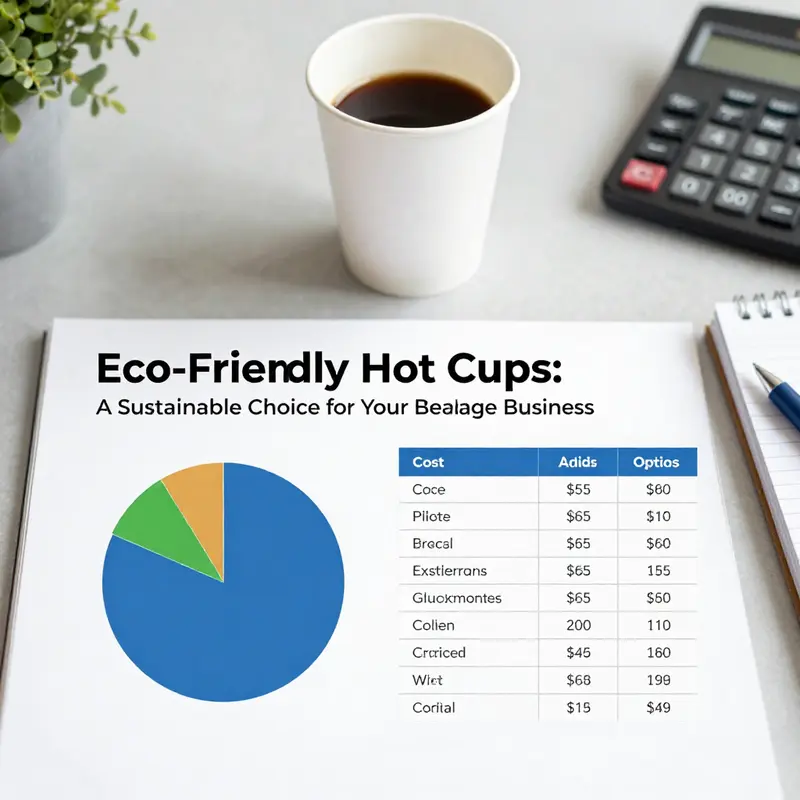
Cost analysis is the first frame through which the decision must be viewed. At a glance, price per cup appears straightforward, yet the true picture emerges only when considering the material choices, the degree of customization, and the scale at which production occurs. The baseline cost for 8oz cups that use a standard single-wall PE coating—often chosen for its affordability and robust performance with hot liquids—tends to lie in a broad band of roughly $0.008 to $0.013 per unit when order volumes reach around 50,000 pieces. In practice, this range reflects the economies of scale that many manufacturers rely upon, plus the efficiency of flexo or offset printing for basic branding. As soon as a brand requests higher-end ecological performance—specifically PLA coating, which is compostable under certain conditions—the unit cost typically shifts upward, landing in the vicinity of $0.02 to $0.038 per cup. That delta is not incidental; it captures the premium materials and the environmental benefits that come with renewable feedstocks and more stringent end-of-life claims.
Material choice matters as much for cost as it does for environmental impact. PE-coated cups, while economical and dependable, do not meet certified compostability in most regions. They tend to be recyclable where local systems exist, but that recycling stream has its own limitations and complexities. PLA coatings, derived from renewable resources such as corn starch, align with the growing consumer and regulatory emphasis on compostable or at least more sustainable packaging. Yet the premium attached to PLA reflects both material sourcing and the additional downstream processing required to ensure the cup can be composted industrially. For a business weighing costs and credentials, the material decision becomes an exercise in lifecycle thinking rather than a simple price comparison.
Beyond the coating, the physical form of the cup shapes the cost structure. Single-wall cups are less expensive than double-wall insulated designs, which deliver superior heat resistance and improved user comfort but entail more material and production steps. For hot beverages, double-wall cups can reduce the need for external sleeves, thus offering a potential behavioral and experiential advantage at the point of sale. However, this benefit comes with a price tag that must be weighed against the brand’s sustainability story and the customer’s expectations. The choice between a lighter cup with a sleeve and a heavier, built-in insulation framework is often resolved by examining the intended use case: a quick-service scenario where speed and cost dominate, or a premium setting where heat retention and tactile comfort are part of the value proposition.
Customization costs ride along with material choices and cup form. Printing can be accomplished through flexo or offset processes, using food-grade inks designed to withstand the heat and humidity of a hot-drink environment. The complexity of the design directly affects the price. A simple one-color logo printed on a standard cup will be markedly cheaper than a full-color, high-definition branding treatment that requires multiple ink stations and more precise color matching. In practice, a brand’s willingness to invest in design fidelity is often a proxy for how aggressively it wants to leverage the cup as a marketing vehicle. The more colors, gradients, and finishing touches—such as matte lamination or subtle textures—the higher the unit cost, especially when the order size is not yet in the large-scale range. The alignment between the printed message and the cup’s physical performance matters as well; inks must be food-safe and able to endure heat without degrading, migrating, or imparting off-flavors.
When sales teams discuss price, they inevitably confront the role of minimum order quantities (MOQs) and supplier geography. The economics of scale mean that orders in the vicinity of 50,000 units or more yield the lowest per-piece costs, a reality that often rewards procurement teams that can forecast demand with reasonable accuracy. Geography adds another layer: many cost-efficient production hubs are in proximity to large-scale manufacturing ecosystems in Asia. While this proximity enables favorable base prices and robust production capacity, it also introduces longer lead times, more complex freight planning, and potential customs friction. Lead times can span two to six weeks for bulk orders, depending on the level of customization, the supplier’s capacity, and the chosen shipping method. It is a reminder that price is only one dimension of total cost; reliability, predictability, and the ability to meet tight promotional deadlines can have a larger practical impact on a project’s profitability and timing.
Shipping costs, not included in the base unit price, represent another critical vector in total cost analysis. Sea freight is the economical choice for high-volume shipments, but it comes with slower transit times and dependency on port throughput. Air freight speeds delivery but imposes a substantial premium. For brands coordinating pop-up events, seasonal campaigns, or nationwide rollouts, these choices must be synchronized with marketing calendars, event dates, and product launches so that inventory arrives when it is needed and not before or after a window of opportunity. Packing efficiency and density inevitably affect freight costs as well. Double-wall cups, due to their increased bulk and weight, typically take up more space in containers than single-wall designs, compounding shipping expenses even further. The financial calculus, therefore, extends beyond the unit price to encompass the full logistics bill, including handling, insurance, and the risk of port delays or customs inspections that can ripple through a campaign schedule.
With that economic landscape in view, sustainability and compliance emerge as a second, equally critical axis. The market for eco-friendly cups has matured beyond mere green branding; it now demands verifiable standards and clear end-of-life pathways. Certifications and compliance stamps—such as FDA food-contact approvals and EU regulations—anchor consumer trust and retailer acceptance. PLA-coated cups, for instance, are frequently marketed as compostable, but their end-of-life performance depends on industrial composting facilities that may not exist in all regions. In the absence of such infrastructure, real-world disposal often reverts to conventional waste streams, undercutting the intended environmental benefits. This is not a contradiction so much as a logistical reality: the forest and field of sustainability require a network of facilities, regulations, and consumer behavior aligned to realize the full benefits of a compostable option.
Industry best practice now emphasizes an integrated packaging system. Rather than buying cups alone, brands increasingly consider complementary elements that reinforce a sustainable narrative. Matching sleeves and lids crafted from recycled fibers can complete the loop, reducing landfill impact and improving overall recyclability and compostability. The synergy between cup material and packaging components matters: sleeves that are compatible with the cup’s fiber and coating help maintain structural integrity while enabling more efficient recycling streams. The end-to-end system also influences how a brand is perceived. Consumers increasingly notice whether a business has considered the lifecycle of its packaging, and they reward or penalize based on perceived responsibility. In this light, the cost of sustainability is not a mere add-on; it becomes an essential component of brand equity and customer loyalty.
From a strategic perspective, buyers can pursue several practical paths to optimize both cost and sustainability. First, leverage bulk ordering to push unit costs down, especially when the portfolio includes a consistent demand profile that can justify steady production. Second, perform a lifecycle cost assessment that weighs disposal infrastructure, recycling or composting availability, and brand value against upfront price. This broader lens helps avoid the trap of choosing the cheapest cup at the expense of long-term brand goodwill and customer satisfaction. Third, tailor the material mix to the intended use case. For a hot beverage program that emphasizes speed and convenience, a well-chosen single-wall cup with a lightweight sleeve may strike the right balance. If the brand prioritizes heat retention and premium feel, a double-wall eco-friendly option, even at a higher upfront cost, could deliver a superior customer experience that supports higher margins. Fourth, partner with suppliers who offer transparent terms, robust documentation, and verified compliance. The most reliable partners provide clear production timelines, detailed material specifications, and traceability data that helps buyers plan contingencies for demand surges or supply disruptions.
In practical terms, the single most impactful decision may be to design the packaging ecosystem around a consistent set of performance criteria and a realistic forecast. For example, a program that commits to PLA-coated, 8oz cups with a double-wall structure might command a premium but deliver a more durable and appealing product for on-site consumption where customers linger and savor their beverages. In such a scenario, the accompanying sleeves and lids should be sourced from recycled materials that align with the same environmental narrative, ensuring a cohesive sustainability statement across packaging touchpoints. The procurement team’s ability to negotiate terms—such as MOQs, production lead times, and freight arrangements—will often determine whether a brand can maintain a steady cadence of promotions, seasonal campaigns, or store openings without compromising margin or environmental commitments.
The practical implications of these choices extend to governance and risk management as well. Suppliers with high reliability ratings and transparent logistics histories can mitigate the risk of production delays that would otherwise ripple into stockouts or missed marketing windows. Given the global nature of many cup supply chains, it is prudent to build contingencies around alternate suppliers, alternate routes, and buffer stock. Alongside this, brands can explore green financing options or supplier sustainability programs that incentivize eco-friendly practices and reward suppliers that meet or exceed environmental KPIs. These financial and relational strategies, when aligned with a well-structured packaging specification, create a resilient supply chain capable of delivering consistent quality and eco-credentials even in the face of market volatility.
As with any supply chain calculus, one must balance the ideal against the practical. The most sustainable path may hinge on local infrastructure and consumer behavior in a given market. In regions with robust composting facilities, PLA-coated cups can fulfill their promise with confidence. In others, a shift toward high-recycling-grade PE-coated cups or a hybrid approach that uses PCR fibers for sleeves may yield a better real-world sustainability outcome. The goal is not perfection but progress—a carefully designed system where materials, design, and logistics work in concert to minimize waste, maximize reuse or recycling, and reinforce the brand’s environmental commitments. Even the most compelling marketing message is strengthened when it rests on a credible, verifiable lifecycle of materials and processes that customers can recognize and trust.
For readers seeking concrete examples of how these principles play out in practice, consider the one-link case of an eco-conscious beverage program that consistently pairs PLA-coated 8oz cups with recycled fiber sleeves and lids. The program emphasizes a transparent statement of compliance, including food-grade inks and clear disposal guidance for customers. It documents estimated lifecycle savings, connects with local recycling or composting streams where available, and communicates the brand’s sustainability story through consistent packaging cues. While this approach requires upfront planning and investment, it yields a cohesive experience that reinforces the brand’s voice—one that customers not only taste but also feel as they dispose of the cup with intention. The lesson across the board is clear: the cost and the supply chain are not merely operational concerns; they are a strategic platform for signaling responsibility, building trust, and differentiating a beverage program in a crowded market.
To bring the discussion full circle, buyers should treat the 8oz custom printed eco-friendly white paper hot cup as a conduit for a broader packaging narrative. The cup becomes a touchpoint where cost discipline, supply chain reliability, and sustainability commitments converge. The most successful programs are those that acknowledge the trade-offs frankly and design a packaging ecosystem that supports both business goals and environmental stewardship. In this context, the cup is not a standalone item; it is a component of a carefully choreographed supply chain, a tangible piece of a broader sustainability strategy that resonates with customers who value both quality and responsibility. And while every chapter of a procurement journey cannot predict every market twist, a disciplined approach—one that anchors decisions in lifecycle cost, supplier credibility, and end-of-life feasibility—offers a robust path to achieving cost control, reliable delivery, and meaningful environmental impact.
For readers who want a practical touchstone on how this approach translates into real-world packaging choices, consider exploring a reference that frames eco-friendly, printed packaging within a broader supply chain and lifecycle context. This resource highlights the intricacies of material choices, print processes, and the interplay of logistics with sustainability goals, offering a grounded perspective on how the economics and operations align with branding and consumer expectations. It serves as a reminder that the cup’s story is part of a larger narrative about how businesses communicate responsibility and quality through tangible packaging decisions.
Internal link note: A relevant example of an eco-friendly printed logo single-wall paper cup can illuminate how printing constraints, material limitations, and sustainability claims converge in a practical product choice. See this reference for a concise illustration of how branding and packaging design intersect in the single-wall format: eco-friendly printed logo single-wall paper cup. This link is provided to offer a pragmatic example of how branding, material selection, and logistics cohere in a real-world packaging scenario while keeping the discussion rooted in generic, non-brand-specific terms.
External reference: To ground the discussion in real-world considerations of compostability, coatings, and delivery timelines, an external resource on PLA/PE-coated biodegradable cups can be consulted. See the following detailed specification and logistics note for further context: https://www.alibaba.com/product-detail/Custom-Made-Hot-Paper-Cup-PLA-PE-Coated_1600478479882.html?spm=a2700.12061072.0.0.7f9d1b2eXZjVxJ. This external source provides practical notes on freight and delivery time estimations that complement the lifecycle and cost discussions in this chapter.
Final thoughts
Embracing 8oz custom printed eco-friendly white paper hot cups not only sets your beverage business apart but also aligns with the growing environmental consciousness of today’s consumers. Each chapter discussed the craftsmanship behind the custom printing options, the sustainable and durable materials ensuring longevity and safety, the increasing market demand showcasing versatility and application, and the competitive cost analysis guiding effective supply chain decisions. By incorporating these cups into your service offerings, businesses can effectively enhance their brand visibility while contributing positively to the environment.