
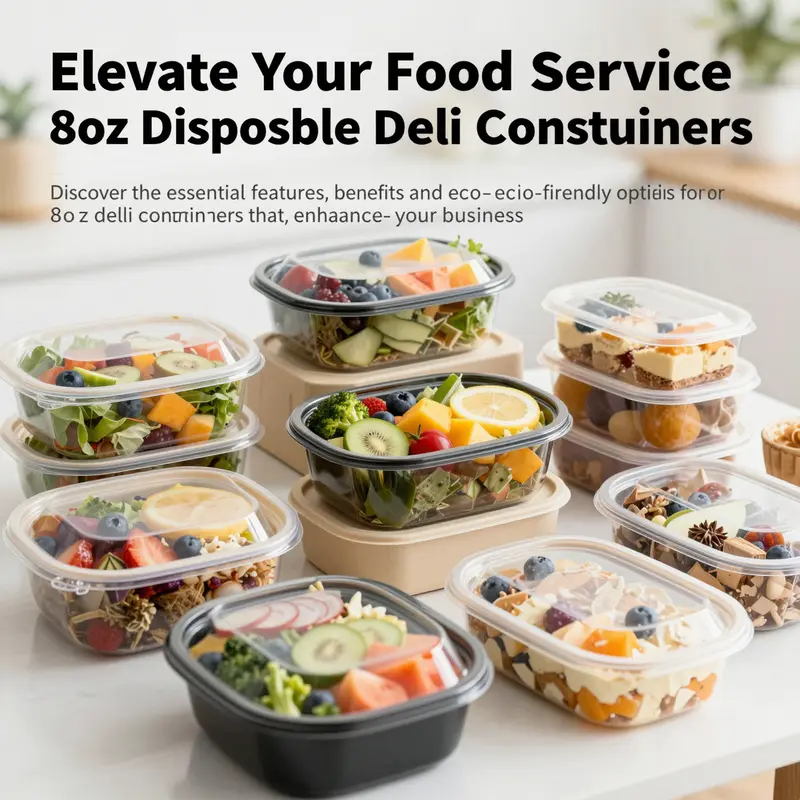
In today’s competitive food service landscape, choosing the right packaging can significantly impact the success of your business. 8oz disposable deli containers have emerged as a go-to solution for a diverse range of establishments, including bubble tea shops, beverage chains, restaurants, food trucks, and catering services. These versatile containers cater to the growing need for single-serving portions while promoting convenience and sustainability. In the chapters ahead, we will explore the key features and benefits that make these containers indispensable, delve into the various materials available, examine common applications, highlight customization and branding opportunities, and address the environmental considerations that come with using disposable deli containers. By understanding the full scope of advantages these containers offer, you can make informed choices that align with your brand’s goals and values.
Small, Safe, and Savvy: Exploring the Key Features and Everyday Impact of 8oz Disposable Deli Containers
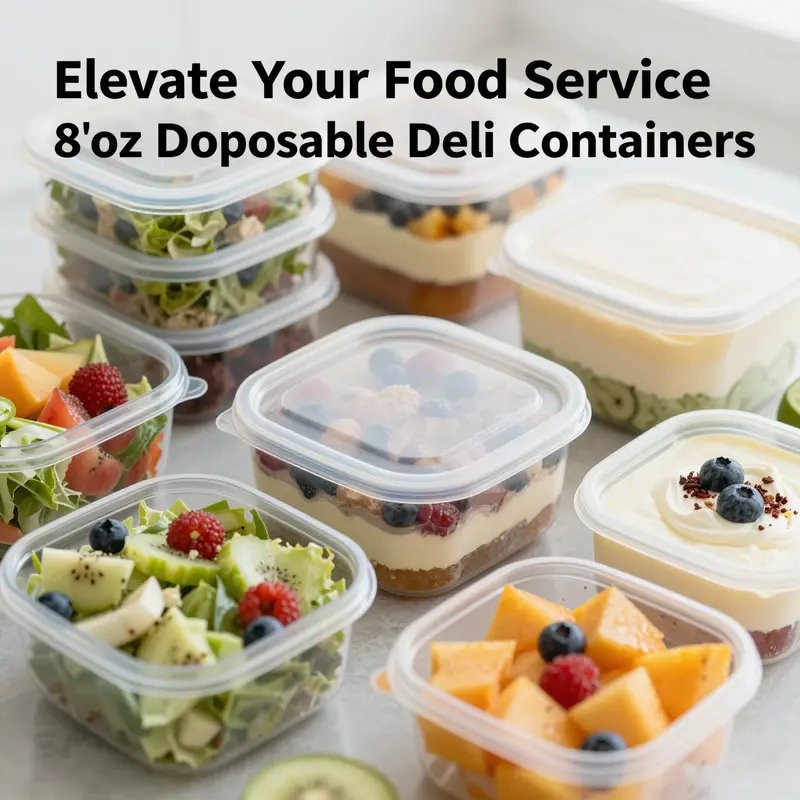
The rise of single-serve packaging in today’s food landscape has turned compact, practical containers into everyday workhorses. Among these, the 8oz deli container occupies a special niche. It is the small, dependable workhorse that fits neatly into a busy kitchen workflow while offering a surprisingly wide range of uses for staff and customers alike. In many ways, this modest enclosure embodies a balance between form and function. It is large enough to hold a meaningful portion—whether a modest salad, a dip, a dessert, or a baby-food sample—and small enough to streamline storage, transport, and portion control. The result is a packaging solution that reduces waste, simplifies inventory, and helps brands deliver consistent, attractive servings across in-store counters, catering events, and delivery routes. At the heart of its effectiveness is a blend of materials, closures, and design choices that make the 8oz container adaptable to fast-paced foodservice realities without compromising on safety or presentation.
The most common 8oz deli containers are built from food-grade plastics, notably polypropylene and, in some cases, clear PET. Polypropylene brings enduring clarity, strength, and resilience against cracking or warping when foods are handled, stacked, and moved through kitchens and delivery networks. Its lightweight yet sturdy character means the container maintains its shape even when packed with heavier items like hearty salads or soups. Clear PET adds an opportunity to present the contents with remarkable visibility. The transparency invites visual appeal; customers can assess freshness at a glance, which can influence ordering decisions and perceived quality. The choice between PP and PET often hinges on the intended use: PP is a reliable all-rounder for hot or cold servings that may require reheating, while PET’s crisp clarity shines when the appearance of the food is part of the customer experience.
Integral to any storage and transport scenario is the lid. The 8oz family typically features a leak-proof, airtight lid designed to lock in moisture and prevent spills during transit. This secure seal is not merely about keeping a container from leaking; it is about preserving texture, aroma, and freshness. A well-engineered lid minimizes exposure to air and contaminants, helping soups stay hot, dips stay thick, and delicate desserts retain their shape. Locking mechanisms and precise fit reduce the chance of accidental opening, especially during crowded service periods or multi-stop deliveries. For operators, the lid’s reliability translates into fewer customer complaints and lower returns due to compromised packaging.
With an 8oz capacity, these containers offer versatility that supports a broad spectrum of culinary formats. They are ideal for small portions of dressings, dips, or nut blends; for single-person salads, fruit cups, or yogurt desserts; and for baby-food samples or snack packs at cafes or health stores. The size aligns with portion-control strategies in restaurants and meal-prep services, helping teams standardize serving sizes and simplify nutritional labeling. Beyond hospitality, the 8oz format caters to retail or-at-home usage where customers appreciate a compact option for on-the-go consumption. This flexibility—from deli counters to home meal kits—illustrates why the same container can traverse so many stages of the food value chain without requiring a change in packaging.
A key facet of the 8oz container’s appeal is its temperature versatility. Many models are designed to be microwave-safe and freezer-safe, enabling cooks to prepare, portion, freeze, and reheat directly in the container. This capability reduces the number of dish transfers, minimizes cleanup, and supports time-saving workflows for both professional kitchens and busy households. The convenience matters most when meals are planned for busy weekdays or last-minute catering jobs, where every minute saved translates into improved service and fresher-tasting results. The ability to reheat in the same vessel also helps preserve the food’s original texture and moisture levels, provided that lids are used as intended and care is taken with microwave times. In effect, the container becomes an all-in-one vessel for preparation, storage, transport, and reheating.
Alongside durability and temperature resilience, sustainability considerations have become a decisive factor for many operators. Consumers and businesses alike increasingly seek eco-conscious options. Biodegradable and compostable alternatives, such as plant-based polymers and sustainably sourced fibers, are gaining traction. Materials like PLA, derived from corn starch, and bamboo-based fibers are being explored as alternatives to traditional plastics where feasible. Some producers are pursuing certifications and programs that align with Extended Producer Responsibility (EPR) standards in regions like Germany and France, aiming to improve end-of-life outcomes and recyclability. While not every 8oz container category can be entirely biodegradable in all waste streams, the industry’s emphasis on responsible disposal informs product development, labeling, and consumer guidance. In practice, this means brands can balance performance with environmental stewardship by selecting models that pair reliable containment with a clear path toward recycling or composting in appropriate facilities.
The business side of the 8oz container story extends beyond raw materials to encompass customization and branding. The clear or neutral-looking shells provide a canvass for logos, labels, and product information, turning every single-serving cup into a potential promotional piece. Custom printing can reinforce brand identity, communicate ingredients, or display care guidance—elements that strengthen trust with customers and enhance recall. In a marketplace where packaging often competes with the visual appeal of the food inside, being able to showcase a brand message directly on the container adds significant value. For many operators, this transformable surface turns ordinary packaging into a strategic marketing asset that travels far beyond the front counter.
From an operational perspective, the 8oz container is designed for efficiency. A single-wall construction keeps the footprint compact, which is advantageous for storage on crowded shelves, backroom crates, or delivery totes. Stacking capability is a practical feature that supports efficient inventory management and reduces handling time during busy service windows. For environments that emphasize speed, such as high-volume salad bars or catering buffets, the ability to pre-pack and cold-chain items without excessive space demands is a genuine logistical benefit. When combined with securely fitting lids, these containers enable a smooth flow from prep to pickup, allowing staff to assemble portions quickly while maintaining consistent quality across dozens or hundreds of portions.
Sourcing considerations also play a meaningful role in the overall value proposition of 8oz deli containers. Suppliers offer a spectrum of options, from pure plastics to paper-based alternatives. For operators who prioritize eco-friendliness or a particular aesthetic, there are mentions of brown kraft paper variants that emphasize an earth-toned, rustic presentation. When evaluating options for a business, it helps to consider MOQs, pricing scales for bulk orders, and opportunities for samples to assess fit with menu items and handling equipment. Some products even include double-wall insulation as an added feature to improve temperature control, which can extend the perceived freshness of perishable items by a notable margin. While this feature adds cost, it can translate into better customer satisfaction, especially for hot soups or chilled dips shipped across longer distances.
Sourcing guidance often points toward broad marketplaces that host multiple suppliers, enabling buyers to compare materials, lids, and compatible sizes quickly. For instance, buyers may explore options that pair a transparent, durability-focused plastic cup with a matching lid designed to lock in moisture and prevent leaks during transit. The benefit of such configurations is a cohesive, reliable package that supports consistent performance from kitchen to customer’s door. When a brand needs to scale quickly, the availability of bulk options, customizable branding, and sampling processes becomes a crucial part of the decision-making workflow. In practice, this means planning for both the immediate needs of a season and the longer-term goals of menu refreshes, seasonal promotions, or new service formats.
In practical terms, many kitchens and caterers find value in pairing the 8oz container with a compatible, eco-conscious packaging ecosystem. An example pairing is the disposable kraft paper bowl with a lid, which can create a cohesive presentation especially for cold items or lighter sauces. The pairing can be a strategic choice for venues aiming to blend a rustic or natural aesthetic with reliable containment. For operators exploring this route, an accessible reference is the product page that illustrates such a pairing within a broader line of take-away packaging: disposable-kraft-paper-bowl-take-away-kraft-paper-salad-bowl-with-pet-lid. This link demonstrates how a coordinated set can maintain visual harmony while delivering performance, leaving the food inside the star of the show.
Ultimately, the appeal of the 8oz disposable deli container rests in its simple yet powerful combination of visibility, protection, and adaptability. It protects the integrity of a wide array of foods, supports efficient service models, and aligns with evolving consumer expectations around sustainability and brand presentation. While the utility of the container is evident in daily operations, its broader impact emerges through careful material choice, thoughtful design, and responsible end-of-life considerations. As foodservice continues to evolve toward more flexible, on-demand formats, the 8oz container stands as a compact but versatile anchor for portioned meals, snackable treats, and curated tasting experiences.
External reference for deeper technical context: https://www.alibaba.com/product-detail/A-Technical-Overview-of-8oz-Deli_1600593218844.html
Clarity, Compostability, and Convenience: Material Choices for 8oz Disposable Deli Containers
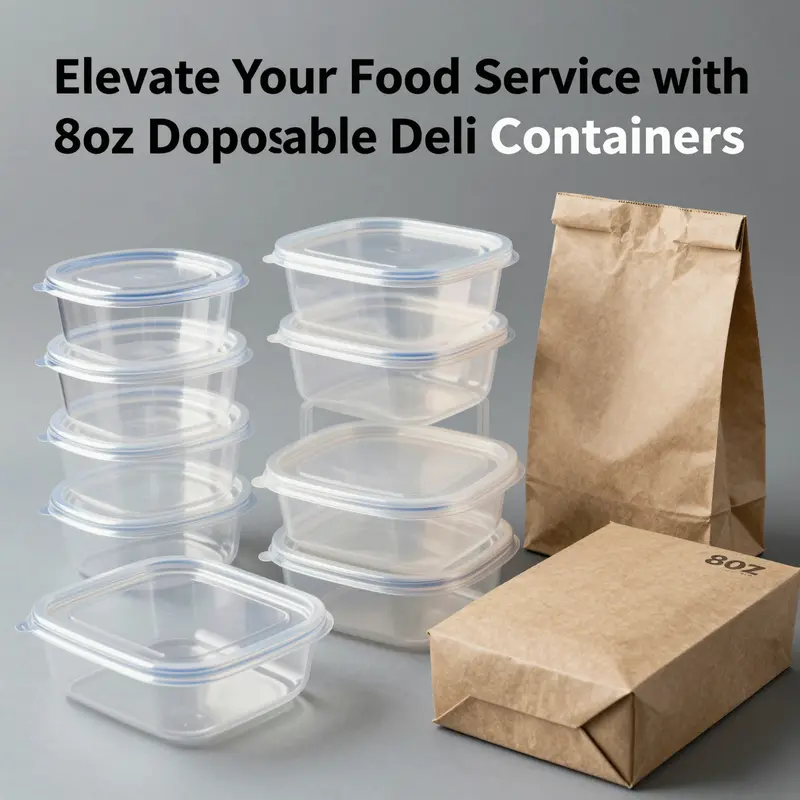
When vendors and foodservice operators choose an 8oz disposable deli container, they are often balancing a spectrum of needs that go beyond immediate cost and convenience. The 8oz size is a reliable workhorse in quick-service lines, salad bars, and catering events, delivering a single-portion experience that preserves freshness, showcases the contents, and travels without mess. The material chosen to house that portion—whether clear plastic, sturdy plastic, or a more eco-friendly alternative—shapes not only the user experience but also the business’s sustainability profile and regulatory compliance. In practice, three core dimensions guide decision making: performance under temperature and handling conditions, environmental impact across the product’s life cycle, and the ability to reinforce brand identity through visibility, resilience, and presentation. Each material category—polypropylene, PET, compostable bagasse, and hybrid premium options—brings a distinct blend of strengths and trade-offs, and the best choice often depends on the specific item being served, the mode of service, and the expectations of the customer base. PP, with its balance of heat resistance and durability, remains a workhorse for both hot and cold applications, while PET offers the crystal-clear visibility that makes a berry-topped yogurt cup or an acai bowl look as appealing as it tastes. Compostable bagasse-based options respond to the growing demand for sustainability, even as they require careful consideration of heat tolerance and end-of-life processing. Hybrid containers, sometimes pairing food-grade PP with metal or aluminum lids, push the envelope on freshness retention and branding, and they arrive with certifications and branding opportunities that can elevate a restaurant’s or event’s presentation. The consumer and business landscape is increasingly shaped by Extended Producer Responsibility programs in parts of Europe, which encourage better recyclability and a cleaner life cycle for disposable packaging, a trend that careful procurement teams are watching closely as they plan menus and logistics for a given season. The practical implications of material choice show up in everyday shop floor decisions: the container must be robust enough to withstand a brisk carry to a customer, seal securely enough to prevent leaks during transit, and still be visually appealing when displayed on a counter or a takeout shelf. The lid, often designed to lock in place and provide a reliable seal, becomes as critical as the base container. A well-fitting lid protects the integrity of a product that might travel across town in warm weather or sit under bright kitchen lights while a customer decides from a lineup of healthy options. In this sense, the material backbone of an 8oz deli container is not merely a shell for food; it is an active participant in the dining experience. One practical route to maximize both performance and sustainability is to consider the full life cycle of the container. Polypropylene, for example, has long been favored for its clarity, strength, and resistance to cracking. It holds up in the face of everyday transport, resists crushing, and remains a familiar choice for cold items and warm foods when designed for such use. Premium versions that feature double-wall insulation further broaden the performance envelope by improving temperature control and reducing the rate at which items lose heat in the hands of a customer on the move. This makes a notable difference for foods that are sensitive to temperature, such as certain dips, cheeses, or desserts with delicate textures. On the other hand, PET’s lightweight profile and superior transparency make it a strong option when showcasing ingredients is part of the selling point. A transparent container turns a bowl of acai or a bright fruit salad into a visual invitation, inviting impulse purchases and communicating freshness at a glance. PET’s recyclability domains in many facilities align with a brand’s sustainability narrative, particularly when the downstream waste management network supports local recycling streams. Yet, PET’s heat tolerance, while adequate for many cold and moderate-hot items, can be surpassed by the demands of hot foods, which is where PP’s heat resistance can shine, offering a margin of safety against deformation and leaks. Compostable bagasse-based containers present another, increasingly important option. Derived from sugarcane byproducts, bagasse is a traditional staple in sustainable packaging conversations because it is compostable, renewable, and often marketed to environmentally conscious consumers who want to minimize landfill impact. The trade-off, however, is clear: bagasse generally offers lower heat resistance and can be prone to faster breakdown under high-temperature conditions. For soups or cold items, compostable kraft options can be a powerful narrative—consumers see a container that aligns with their values, and a business signals its commitment to responsible waste management. When a brand wants to push both performance and brand identity, hybrid and premium solutions provide another path. Some containers fuse PP with aluminum lids or secure-lock mechanisms, creating a synergy of temperature retention and barrier performance that helps items stay fresh longer. These premium choices often come with branding options such as custom-printed, secure-lock lids that keep the contents pristine as they travel from kitchen to customer. The branding potential is not merely cosmetic. When lids or containers carry logos, color cues, or even embossed textures, the unboxing experience becomes more cohesive and memorable, reinforcing trust and recognition for a business that relies on repeat orders or high-volume catering. In markets where regulatory frameworks increasingly emphasize recyclability and responsible disposal, the material conversation moves beyond the bench and into compliance rooms. Extended Producer Responsibility schemes in Germany and France, for example, push suppliers and buyers toward containers that are easier to recycle, with clear labeling and standardized materials that facilitate end-of-life processing. This regulatory dimension is not just bureaucratic; it translates into real-world decisions about supplier selection, warehousing, and the speed with which a business can adapt its packaging to meet evolving standards. The practical implications for foodservice operators include more than just choosing a base jar or lid. They must assess compatibility with existing lids, the availability of insulation options for temperature management, and the reliability of seals during transit. A double-wall design, for example, can extend freshness and reduce condensation that can otherwise result in soggy textures or weaker perceived quality in salads or desserts. But this feature also carries a weight and cost implication that must be weighed against volume and price points. For many operators, a single 8oz vessel that balances transparency, strength, and a reliable seal is ideal for everyday use, while a subset of products benefits from premium packaging for specific menus, such as grab-and-go salad kits or premium dessert assortments. The decision is rarely a simple binary choice; it’s a nuanced mix of use-case profiles, customer expectations, and operational realities. Beyond performance, the branding and sustainability story attached to the packaging often tips the scale. Some operators seek clear differentiation in crowded deli cases by leveraging transparent PET for visibility and pairing it with a branded lid or sleeve that communicates a message of freshness and care. Others embrace kraft or bagasse-based containers for a more rustic or eco-forward aesthetic, using natural textures and unbleached tones to convey sustainability at first glance. For businesses that want to align with a broader sustainability narrative without sacrificing functionality, a careful blend of materials can be employed. A season might see closer usage of PP with double-wall insulation for hot items in the morning rush, while afternoons demand PET or kraft options for cold or room-temperature foods. In practice, sourcing strategies reflect this complexity. Many suppliers offer a portfolio that spans PP, PET, and compostable options, with customization capabilities and flexible MOQs that help operators scale across seasonal demand shifts. For those who prefer a hands-off approach to discovery, platforms that present a wide range of packaging options can simplify procurement while keeping sustainability and performance in view. The conversation about material options would be incomplete without acknowledging the practical realities of distribution and consumer expectations. The 8oz size is often used in salad bars, deli counters, meal delivery services, catering events, health food shops, and on-the-go food service. The container must survive a short ride, fit a variety of lids that lock in place, resist leaks, and still present the food attractively when opened. A product that combines clarity with durability, and that can be dispatched in bulk without sacrificing quality, becomes a reliable backbone for a customer experience that feels effortless. For businesses exploring more eco-conscious paths, a nod toward compostable or bagasse-based options can communicate a serious commitment to sustainability, while still delivering on the practicalities of transport and display. A simple but meaningful step is to pair the right container with the right lid and to consider the end-of-life story for the packaging. Clear labeling about recyclability, compostability, and the material composition helps educate customers and contribute to a smoother post-consumer journey. The selection process is ultimately about alignment: alignment between product type, service model, and consumer expectations; alignment between supplier capabilities and regulatory environments; and alignment between branding narratives and packaging performance. When a business makes the right choices, the 8oz container becomes more than a functional vessel; it becomes a storytelling device that communicates care, quality, and responsibility to every customer who picks up a meal or dips into a snack. For readers exploring practical sourcing routes, consider a kraft option that can support a warm, appealing presentation while offering a compostable story. A suitable example in this space is disposable kraft paper bowl for food package with lid, which resembles the aesthetic and performance of traditional deli containers while signaling a commitment to sustainability. disposable kraft paper bowl for food package with lid. For broader sustainability references and best-practice guidelines on packaging, an external resource on packaging and materials governance offers deeper context to complement these choices. External resource: https://www.epa.gov/smm/packaging
Small Vessels, Big Impact: How 8oz Deli Containers Shape Portioning, Preservation, and Presentation
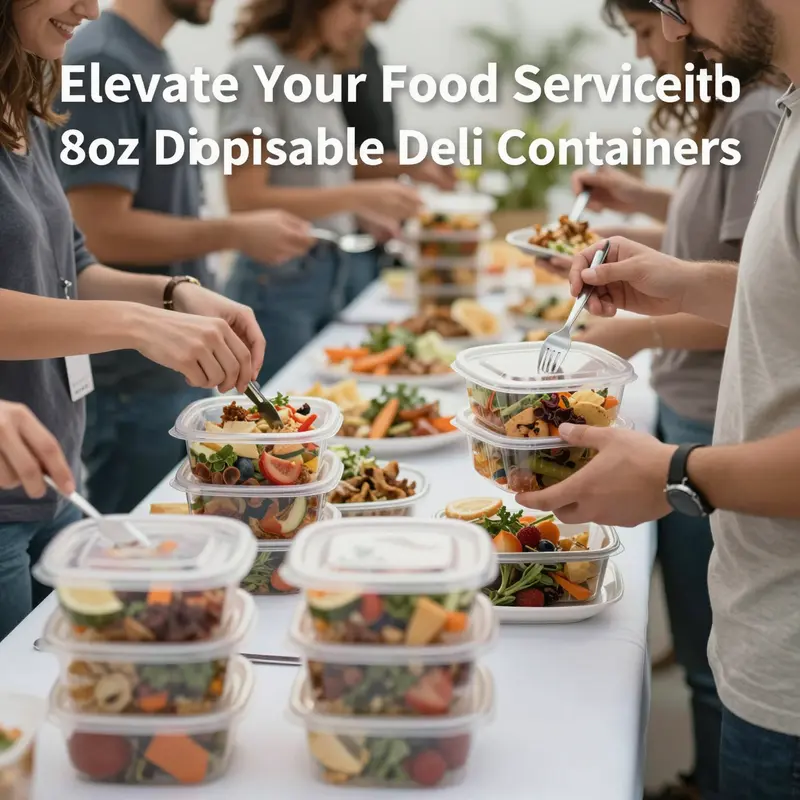
In kitchens, cafes, and event spaces where speed, accuracy, and presentation matter, a modest tool often goes unnoticed until it changes the workflow: the 8oz disposable deli container. Its compact 8-ounce capacity makes it ideal for a spectrum of small portions—dips and dressings, desserts, baby foods, snacks, and side items that guests want to scoop and carry with minimal fuss. What begins as a simple vessel becomes a pivotal element of how food is portioned, stored, and transported. The container’s shape, weight, and lid design influence everything from line speed to customer perception, and these factors compound in the decisions that lie behind every successful bite taken from a disposable package.
Material choice sits at the heart of how these containers perform in real-world service. Transparent PET plastic often wins favor for its clarity and durability. When customers want to see the contents clearly—whether a vivid acai bowl with fruit or a bright, layered salad—the see-through lid invites trust and anticipation. PET’s strength is not just in visibility; it holds up under a range of temperatures, which makes it suitable for cool items and, in some configurations, for warm foods as well. On the other side of the spectrum, food-grade PP, or polypropylene, tends to be lighter and heat-tolerant. Its versatility supports a reusable-style disposable approach, pairing durability with ease of handling when staff need a quick grab-and-go solution. Then there is the paper alternative—brown kraft or other finished papers—carrying an eco-conscious message as much as a practical one. These paper-based options are designed for cold items or for environments prioritizing compostability and reduced landfill impact. Each material brings its own balance of clarity, strength, moisture control, and end-of-life considerations, and the choice often reflects a business’s values as much as its menu.
Lid compatibility is not a trivial afterthought. The best 8oz deli containers pair with secure lids that seal tightly enough to prevent leaks during transport, while also allowing easy access when a customer arrives at the table or at a catering station. A reliable seal reduces the likelihood of spills that undermine presentation and waste precious product. The lid’s design—whether clear to showcase the contents or opaque to conserve freshness—affects how staff assemble orders and how customers perceive reliability. Transparent lids, in particular, can streamline the service flow by letting staff confirm the contents at a glance without opening the container. In a fast-paced service setting, such details contribute to accuracy and speed, and they become little but meaningful advantages in a crowded line.
Beyond immediate functionality, these containers offer a spectrum of customization options that can align packaging with branding goals. Suppliers frequently provide custom printing and labeling on the containers or lids, enabling a brand to carry its color, logo, or taglines even in a single-portion format. The ability to imprint a logo or a short message can enhance recognition and recall, especially in takeout and delivery scenarios where the container is perceived as a mobile billboard. This branding potential is paired with practical considerations such as stackability and nesting behavior, which influence how efficiently a kitchen can stock, rotate, and reuse containers in high-volume environments. A well-branded container can convey quality, care, and attention to detail, signaling to customers that the business values presentation as much as the dish inside.
In recent years, there has been growing emphasis on sustainability within disposable packaging, and this carries into the 8oz deli container category as well. Eco-friendly options are expanding, and some containers are designed with Extended Producer Responsibility, or EPR, considerations in mind. In certain European markets, for instance, standards are evolving to improve recyclability and to support more robust end-of-life pathways. Businesses that choose these options not only align with environmentally minded consumer preferences but also position themselves to navigate regulatory and industry expectations as they evolve. The trade-off between performance and environmental impact remains a central consideration: a container must protect its contents and preserve freshness while also respecting disposal realities. When a supplier can deliver a PET or PP option with a clear recycling pathway, or a kraft-based alternative that emphasizes compostability, buyers gain a resilience that helps sustain operations in today’s waste-conscious climate.
Insulation and temperature control can further differentiate these small vessels. Some configurations boast double-wall insulation, a feature that helps maintain product temperature during short transport windows. In practical terms, this insulation can help keep dips cooler, salads crisper, and desserts firmer, thereby extending the perceived freshness of a single serving. While the most dramatic claims—such as extending shelf life by a sizable percentage—will always depend on the overall product and handling, the principle is clear: a well-insulated, well-sealed container preserves texture and moisture more effectively than a single-layer option. For operators who deliver meals or host buffets, such capabilities translate into fewer complaints about sogginess or heat loss and into customer experiences that feel thoughtfully managed from the first glance at the package to the final bite.
The practical applications of the 8oz container extend across a broad spectrum of service contexts. In restaurants and delis, these containers excel at presenting condiments, dressings, and small sides with a level of clarity and security that supports efficient service. A well-sealed container reduces the mess that can occur during pickup or transport and helps staff keep orders exact. In meal prep services and delivery platforms, single-serving portions simplify assembly lines and enable customers to customize their meals at home. The containers make it feasible to portion sauces and garnishes separately from main dishes, preserving texture and allowing for a more personalized dining experience upon arrival. At the consumer level, home kitchens benefit too: leftovers, snacks, and healthy ingredients can be portioned into clean, clearly labeled units that negate the need for frequent washing after busy days when time is tight.
Event and catering contexts demonstrate another facet of these vessels. Hygiene and ease of cleanup are key advantages, especially when hundreds or thousands of guests must be served with minimal waste and quick turnover. The option to choose eco-friendly materials resonates with organizers who want to minimize environmental impact without sacrificing practical convenience. For businesses seeking to emphasize sustainability in both message and practice, packaging choices that reduce waste and support recyclability or compostability can become a meaningful dimension of the overall guest experience.
The versatility of the 8oz deli container also intersects with broader sourcing considerations. Operators often navigate a landscape of bulk ordering, minimum quantities, and sample programs to trial materials and formats before committing to a long-term packaging solution. The ability to source containers in bulk, while also receiving samples to confirm fit with a menu and workflow, helps culinary teams and operations managers optimize both cost and performance. The compact size makes them a logical choice for a wide array of offerings, from grab-and-go snacks at cafés to pre-portioned ingredients for home meals that families can customize during the week. The result is a packaging ecosystem that supports speed, accuracy, and customization without overburdening storage spaces or budgets.
For readers exploring eco-conscious packaging options, one practical path is to examine designs that pair functionality with sustainability. A notable option is to explore newer kraft-based designs that combine sturdy construction with compostable or recyclable pathways. In particular, a newer rectangle takeaway kraft octagonal paper bowl with a lid represents a thoughtful blend of form, function, and environmental consideration. Such a design demonstrates how packaging aesthetics can align with practical needs—easy handling, reliable sealing, and a presentation that still invites the diner to focus on the contents inside. This path toward greener choices is compatible with the realities of modern food service, where speed, safety, and sustainability must all work in harmony. For a visual reference to this type of packaging, see the corresponding product listing: new-design-rectangle-takeaway-kraft-octagonal-paper-bowl-with-lid.
As buyers compare options, a final consideration centers on where to source containers that meet specific operational needs. Online wholesale marketplaces connect buyers with a wide range of suppliers, enabling bulk purchases and the opportunity to request samples before a larger commitment. The breadth of options can be daunting, but the right choice aligns with both the menu and the workflow. The container must hold up to the demands of the kitchen’s pace, preserve the integrity of the contents during transport, and communicate a brand story through its design. In short, the 8oz disposable deli container is not merely a receptacle; it is a strategic element of portion control, quality preservation, and brand experience. It supports the idea that good packaging is part of the dining experience, shaping how guests perceive freshness, care, and convenience as they encounter food on the move.
For readers seeking more technical detail about material safety and environmental standards, a comprehensive external resource offers a technical overview of 8oz deli container plastic materials and their properties. This reference can help teams assess whether a given option aligns with internal safety protocols and external regulatory requirements: https://www.alibaba.com/product-detail/A-Technical-Overview-of-8oz-Deli_1600723459813.html
Small Vessels, Big Impressions: How 8oz Deli Containers Become Brand Builders
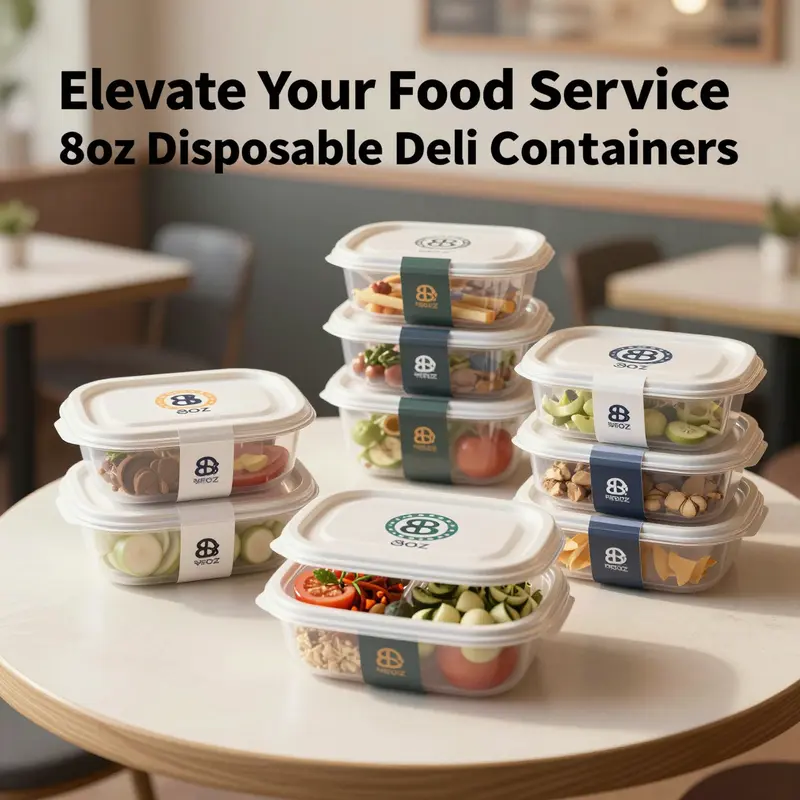
The 8oz disposable deli container is more than a practical vessel for a light meal or a tempting dessert. In the hands of a thoughtful brand, this modest single-portion package becomes a compact billboard for values, style, and promise. The size is ideal for dips, small salads, appetizers, or desserts, offering a pre-made canvas that is legible and unobtrusive.
Printing methods turn that potential into real visibility. Silk screen printing provides durability and a tactile finish; heat transfer supports more elaborate color work; full-color digital printing can achieve high fidelity on clear PET. Each method has trade-offs in cost, lead time, and minimums, but together they enable branding from minimal marks to full visual stories that catch the eye in a display case.
Material choice amplifies branding. Clear PET offers visibility and freshness, while kraft and other natural finishes project an eco-conscious identity. Some brands pair clear panels with kraft bodies to balance visibility with sustainability. Design choices such as lid color, container shape, and wall thickness contribute to a cohesive look across a menu and product line.
Brand consistency matters. OEM services help keep typography, color, and motifs uniform across containers and lids, reducing decision friction for customers and simplifying inventory planning. The 8oz format also supports seasonal campaigns and limited-time promotions without clutter, maintaining legibility and brand personality.
The narrative power of the 8oz container extends beyond aesthetics. A well-branded lid acts as a mini-advertisement in displays and social feeds. The packaging system—material, print, and finish—speaks to a brand’s values, reinforcing trust and loyalty. When alignment is achieved, the 8oz deli container becomes a small but meaningful stage where flavor, ethics, and design converge.
For brands exploring practical examples, a cohesive design system can extend across cups, bowls, and sleeves, enabling visual recognition with minimal cognitive load. The 8oz format remains an adaptable anchor within a broader packaging strategy, expressive yet restrained in a single serve context.
Smaller Servings, Bigger Responsibility: Environmental Considerations for 8oz Disposable Deli Containers
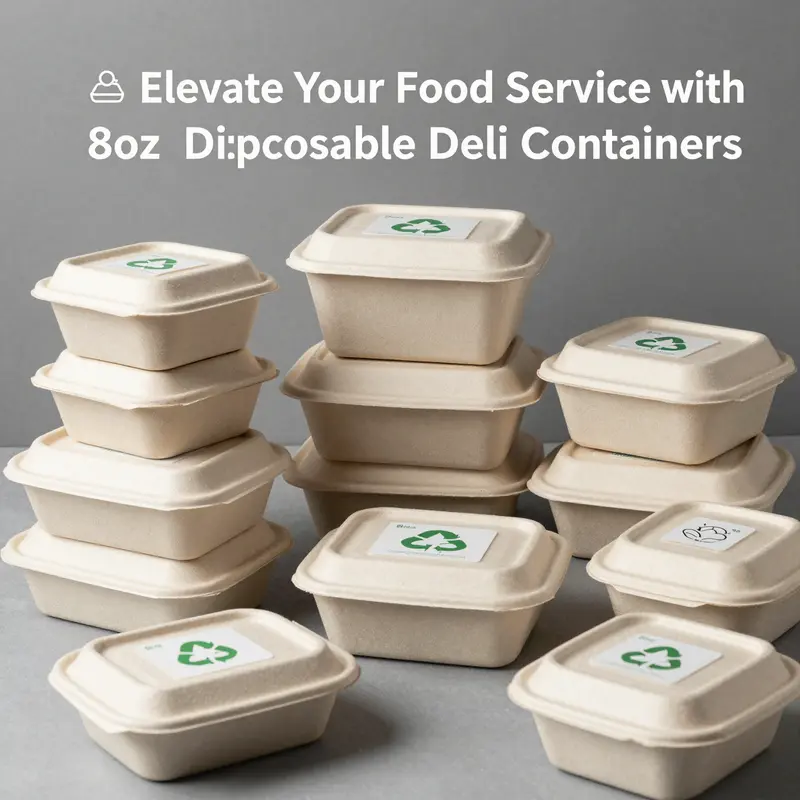
Every day, millions of 8oz disposable deli containers move through kitchens, cafés, and catering operations. They are small by volume, but their collective impact stretches across the supply chain—from material extraction and production to transport, use, and end-of-life. The story of these containers is not just one of convenience; it is also a narrative about how a single-serving format can align with or challenge a more sustainable food system. When a business serves a modest portion, it can still think big about environmental stewardship. The choice of material—PET plastic, PP, or paper-based options—sets the baseline for recyclability, compostability, and the potential for a circular lifecycle. Each material carries its own balance sheet of benefits and caveats, and those tradeoffs ripple through energy use, emissions, and the waste stream that ultimately receives the packaging at the end of a meal’s journey. In practice, the decision is rarely about a single factor. It is about how a container performs in real-world conditions, how easily it can be sorted and recycled, and how well it aligns with regional waste systems. In this light, the 8oz size becomes a lens through which to examine design, policy, and consumer behavior together rather than as an isolated packaging choice. A thoughtful approach to this size can simultaneously protect product quality and reduce environmental footprints, creating a more resilient pathway for small-portion foods to travel from kitchen to consumer without becoming an unnecessary burden on landfills or ecosystems. This is the kind of packaging mindfulness that elevates a routine purchase into an example of responsible sourcing and practical sustainability.
Material choices sit at the heart of environmental performance. Food-grade PET offers a compelling mix of durability and recyclability. It is light, which lowers transportation emissions compared with heavier materials, and it can provide excellent visibility for product appeal. Yet PET is not biodegradable. Its life cycle depends heavily on effective curbside recycling systems and consumer participation in proper sorting. When these conditions hold, PET’s footprint—per container—can be modest, but the benefits hinge on a reliable downstream recycling stream. Conversely, PP (polypropylene) blends light weight with heat resistance, making it a popular choice for containers designed to double as or resemble reusable-style disposables. PP’s resilience supports cold and hot foods, and its compatibility with standard recycling streams in many regions reinforces its appeal. Still, the ultimate environmental outcome depends on how many cycles a PP container undergoes and whether it is recovered after a single-use event or returned for a longer lifecycle. Both PET and PP demonstrate that durability and recyclability are not mutually exclusive; rather, they are features that must be matched to local waste infrastructure and consumer behavior.
The paper-based route, including brown kraft options, opens a different conversation altogether. Compostable or biodegradable variants coated with plant-based films (such as PLA) are designed to break down under industrial composting conditions. In theory, they can lower the carbon footprint compared with conventional plastics, particularly when disposal streams support composting rather than landfill. In practice, however, the story is more nuanced. Industrial composting infrastructure remains unevenly distributed, and if these materials end up in landfills, their decomposition can stall, reducing the anticipated environmental advantage. Uncoated paper containers, which avoid chemical coatings, offer a minimalistic approach with fewer processing requirements, though they may be better suited for dry foods than for soups or sauces. The design must clearly reflect the intended use; a container that performs well with one type of product may underperform with another, potentially undermining sustainability goals by encouraging wasteful disposal or mismanaged end-of-life processing.
An important dimension of environmental performance lies in the practical design features that influence freshness and waste. Double-wall insulation, for example, can extend the shelf life of temperature-sensitive items like dips, yogurts, or refrigerated salads. By maintaining quality and reducing spoilage, such design choices can cut food waste—a major environmental concern—while still serving the practical needs of grab-and-go culture. It is a reminder that sustainability is often achieved not by eliminating disposability, but by making disposability smarter and more efficient. At the same time, a secure lid system and thoughtful venting can prevent spills during transport, further reducing waste and the likelihood of consumer dissatisfaction. When a container is reliable in transit, it supports consistent portion quality and helps prevent the needless disposal of product that has otherwise remained safe to eat.
Beyond material science and engineering, certifications and policy frameworks shape the real-world impact of 8oz deli containers. Extended Producer Responsibility, or EPR, emerges as a critical governance mechanism. EPR requires producers to take responsibility for the end-of-life management of packaging, encouraging better design for recyclability and facilitating the creation of closed-loop or more efficient recycling streams. In regions with mature EPR systems, producers are incentivized to minimize material use, select recyclable or compostable formats, and invest in clear labeling and disposal guidance for consumers. This alignment between product design and post-consumer processing can help reduce landfill waste and support more sustainable consumption patterns over time. The regulatory backdrop matters because it communicates expectations to manufacturers, distributors, and buyers, nudging the market toward more responsible packaging ecosystems. When a package carries credible EPR-related claims, it signals a commitment to environmental standards that extend beyond a single-use moment and invites buyers to consider lifecycle implications as part of procurement decisions.
Branding and consumer communication also play a pivotal role. Customization, once primarily a marketing tool, increasingly becomes a conduit for environmental accountability. Brands can communicate their packaging choices and disposal guidance directly on the container, helping customers understand how to recycle or compost correctly. In this sense, the packaging becomes a learning device as well as a vessel for food. When disposal instructions are clear and actionable, consumers are more likely to participate in responsible waste management, which in turn strengthens the overall effectiveness of recycling or composting programs. The more a container tells a coherent story about its environmental role, the greater the potential for alignment between business ethics and customer expectations. This is especially important in a landscape where green claims are scrutinized, and where misalignment between promised sustainability and actual end-of-life outcomes can erode trust.
From a sourcing perspective, responsible procurement involves more than selecting a material with favorable properties. It requires assessing the container’s entire journey—from raw material extraction to end-of-life fate—within the context of regional waste infrastructure and consumer behavior. For buyers, this means asking pointed questions: Which material aligns with local recycling streams? Are there certifications or third-party verifications that quantify recyclability or compostability? How is the container designed to minimize spoilage and waste during transport and use? And how will the brand communicate disposal expectations to customers? When buyers treat packaging as a system rather than a standalone product, they contribute to a more resilient and environmentally coherent food service operation.
These considerations ripple into the daily choices of small-portion packaging. The 8oz size is a practical tool for offering controlled portions, but its true environmental value depends on design intent and system alignment. A PET container that travels efficiently through a capable recycling stream may outperform a heavier alternative in a region with weak waste management. A compostable paper option can be beneficial where industrial composting is available, but it may perform poorly where it is not. The reality is that responsibly sourced and well-designed packaging can reduce both waste and emissions, but that outcome requires thoughtful alignment among material choice, product use, end-of-life infrastructure, and consumer behavior. In practice, that alignment often begins with clear, credible information about how the container is meant to be disposed of and what happens to it afterward. When a brand communicates that information effectively, the container becomes a steward of sustainability rather than a one-way vehicle for food service activity. To explore a practical exemplar of packaging choices with disposal in mind, consider a kraft-paper bowl with a lid designed for takeout and ready for regulated end-of-life processing; such options illustrate how a simple container can unify portability, performance, and environmental responsibility. For more on this type of packaging, see the option described at this resource: disposable-kraft-paper-bowl-for-food-package-with-lid.
The broader policy context reinforces that the path to sustainable 8oz deli containers is not a single revolution but a series of small, deliberate improvements layered over time. Regulation, industry standards, and consumer expectations are not isolated forces; they intersect to shape product design, manufacturing practices, and waste management habits. As the environmental agenda sharpens, companies increasingly seek packaging that is recyclable or compostable by design, with clear labeling and robust support for end users. In this environment, a container’s environmental story becomes part of a brand’s trustworthiness and a predictor of long-term viability in a market that is gradually moving toward more sustainable norms. While no material is perfectly virtuous in every context, a thoughtful combination of recyclable or compostable materials, verified certifications, design choices that reduce waste, and transparent consumer guidance collectively advances the goal of a gentler footprint for small-portion packaging. It is a pragmatic approach that respects the realities of today’s foodservice operations while actively shaping the conditions for a more sustainable tomorrow.
External reference for further reading on environmental governance related to packaging: https://www.umweltbundesamt.de/en/topics/environmental-policy/extended-producer-responsibility
Final thoughts
In summary, 8oz disposable deli containers stand out not only for their practical use in food service but also for their versatility across various applications. From serving fresh salads and desserts to enhancing branding efforts through customization, these containers are an vital asset to any food service operation. Moreover, with the increasing focus on sustainability, it’s vital to choose products that align with environmental goals. Adopting 8oz deli containers that come in eco-friendly materials will certainly resonate with conscious consumers. As you move forward in your business endeavors, consider how these elegant and efficient containers can elevate your service standards while meeting modern demands. Remember, the right packaging can be a game-changer for your brand, helping you to stand out in a crowded market.