
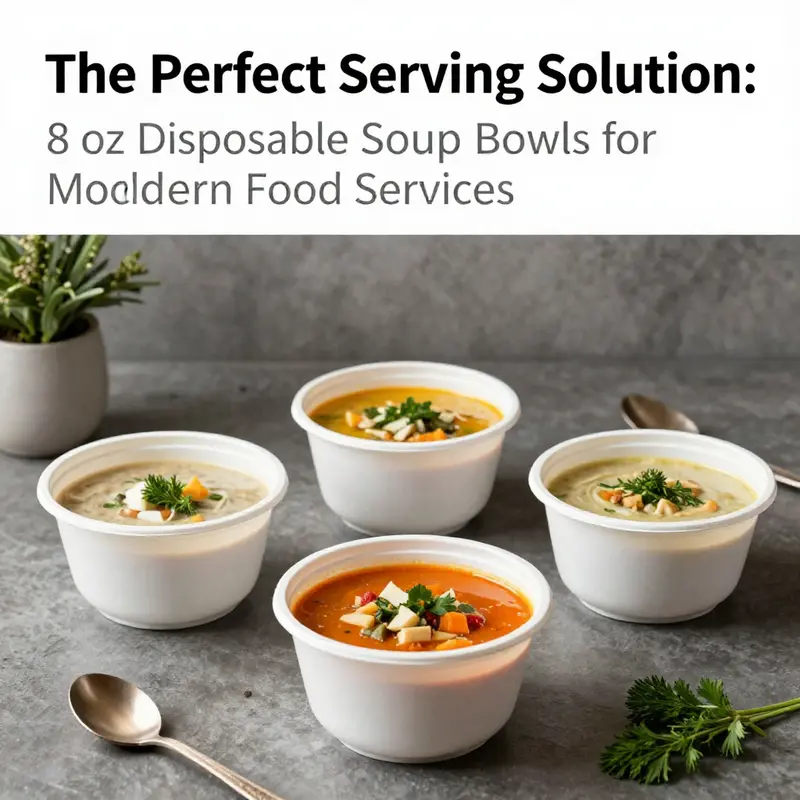
The culinary landscape is ever-evolving, particularly in the realm of food service packaging. At the forefront of this shift are 8 oz disposable soup bowls, a versatile choice beloved by restaurants, food trucks, and catering services alike. These small yet powerful containers not only effectively house a variety of hot liquids but also align with consumer trends towards convenience. This article examines the current market trends and consumer preferences driving their popularity, the environmental impact of these bowls, and the innovative designs enhancing their functionality. Understanding these facets provides valuable insights into leveraging 8 oz disposable soup bowls for superior food service offerings.
Compact, Leak-Proof, and Sustainable: Unpacking Market Trends and Consumer Demand for 8 oz Disposable Soup Bowls
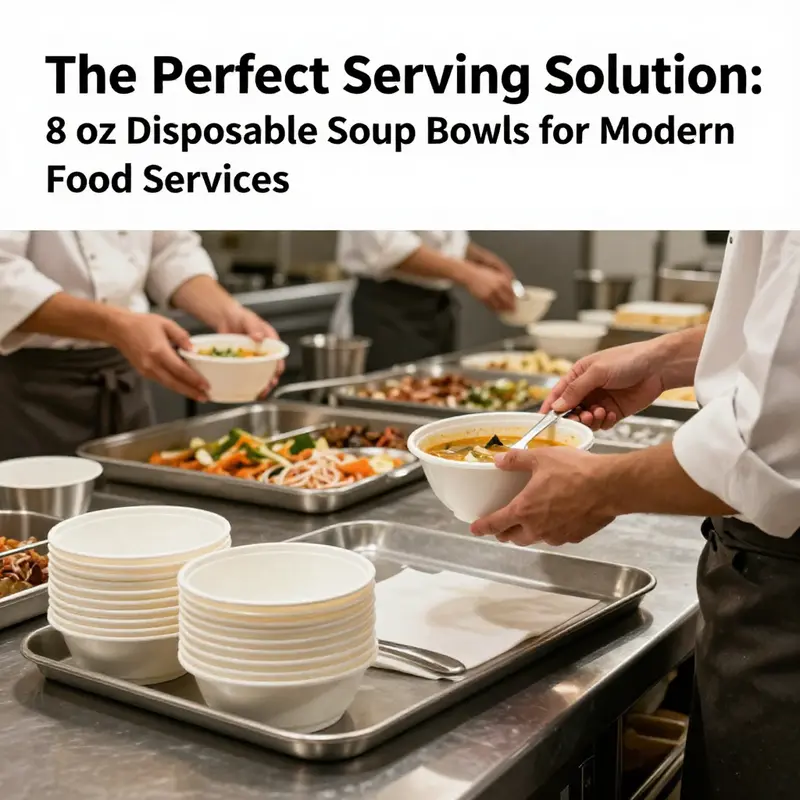
The eight-ounce disposable soup bowl sits at a crucial crossroads in modern food service. It is not merely a container but a carefully engineered solution to the rhythms of urban life, where meals need to travel as reliably as people do. The small volume belies a broader purpose: to hold hot, liquid-based foods—from broths and ramen to stews and porridge—with minimal risk of leaks, deformities, or temperature drop during short commitments of transport. As a design proposition, the 8 oz size is versatile enough to function as a standard portion or a compact side, enabling brands to calibrate menus around portion control without sacrificing the immediacy that on-the-go consumers demand. In practice, this means reinforced walls, sturdy bases, and secure lids that snap or press into place, preserving freshness and minimizing spill events that would otherwise dampen the dining experience in a car, on a bus, or at a work desk. The strength of these bowls comes not only from their geometry but from the choices that go into their construction. They are engineered to resist deformation when held by a hot hand, to maintain their shape when nestled in a carry tote, and to tolerate the sometimes brutal realities of delivery logistics. This is where the seemingly small becomes strategically meaningful: the right lid design, a robust sealing method, and a reliable barrier between hot contents and the outside world can be the difference between a satisfied customer and a sour, leaking episode that erodes trust in a brand. In many ways, the 8 oz disposable soup bowl is a microcosm of contemporary packaging strategy—balancing performance, practicality, and perception in a single, economical unit. The market rewards those who invest in the subtleties: how a lid fits over a rim, how a seam holds against steam, how a surface finish mitigates condensation, and how a laboratory-tested barrier prevents seepage during transit. In fast-casual settings, where speed and consistency are non-negotiable, these bowls are part of a broader system. They work in concert with lids that seal tightly, with tamper-evident features that reassure consumers about hygiene, and with exterior printing that communicates brand promise even before a single bite occurs. The design philosophy also accounts for the broader ecosystem: lids that vent, sip tabs that reduce splashes, and resale-friendly packaging that travels well from kitchen to curb to consumer doorstep. Beyond the mechanics of containment, the narrative of the 8 oz bowl is rooted in reliability and efficiency. A dish that travels well is a dish that can scale, whether it’s for a food truck sprint between neighborhoods or a corporate dining hall serving dozens or hundreds of people in rapid succession. Operators rely on predictable yields: a bowl that doesn’t leak, a lid that doesn’t warp under heat, and a container that doesn’t collapse under pressure when the vehicle hits a bump or a door opens to a draft. These operational assurances matter in both the moment of service and the long arc of customer satisfaction. The reliability factor also feeds into inventory and waste considerations. When a bowl maintains its integrity from kitchen to consumer, the likelihood of return or complaint decreases, and the need for excessive packaging or internal cushioning is reduced. This translates into lower total cost of ownership for the operator and a more seamless user experience for the guest. While the core function remains straightforward, industry players understand that the most effective 8 oz bowls do more than hold soup; they help sustain a brand’s quality narrative, contribute to a calm and confident dining ritual, and reinforce a perception of thoughtfulness around packaging. In this light, material choices become a form of storytelling. The most common configurations combine food-grade paper with a protective coating that keeps liquids from seeping outward while still allowing recyclability or compostability in eco-conscious programs. Among the material families, options range from conventional polyethylene-coated paper to more sustainable alternatives such as plant-based fiber composites. Each material choice carries implications for barrier performance, heat tolerance, moisture management, and end-of-life options, all of which feed back into the purchase decision for operators who balance cost, performance, and environmental responsibility. The consumer who picks up a hot bowl at a takeout counter also weighs the sensory cues that accompany it. A crisp, clean exterior, a lid that feels secure to the touch, and a label or emblem that looks professional contribute to the overall perceived value. In a highly competitive landscape, visual appeal matters. A well-printed lid, a coordinated color story, or a logo embedded into the surface can reinforce a sense of quality and reliability. This is not merely decoration; it is the visible manifestation of a brand’s promise—an assurance that the product inside will meet expectations for temperature, texture, and taste. The capacity of eight ounces is particularly resonant with portion control trends and meal-prep habits that are increasingly common in urban living. Consumers and corporate feeders alike look for predictable sizes that fit into daily routines: a quick lunch, a starter portion, a reliable broth for a cold winter commute. The 8 oz bowl also aligns with the broader shift toward modularity in the kitchen, where chefs and home cooks mix and match bowls, lids, and sleeves in a way that supports multi-item orders or tray-based service without sacrificing efficiency. The capacity supports a range of menu concepts—from classic soups and broths to modern, layered items that might include toppings that keep separate until eating begins. This versatility underwrites demand across a spectrum of channels: dine-in, takeout, delivery, and office catering. In a world where a meal can be ordered from a smartphone and consumed on a sidewalk, the packaging must perform multiple roles simultaneously. It must contain heat and moisture, preserve aroma, project brand aesthetics, and offer straightforward disposal or recycling options. The consumer’s willingness to pay a premium for packaging that is clearly safe and responsibly sourced reflects a broader cultural emphasis on health, hygiene, and environmental stewardship. Across geographies, this preference translates into an appetite for materials that comply with food-safety standards, that minimize chemical exposures, and that maximize consumer confidence in the integrity of the product. The market emerges at the meeting point of safety, convenience, and sustainability, and it is shaped by the conversations among suppliers, operators, and consumers who care about a straightforward, honest user experience. As such, the 8 oz disposable soup bowl becomes more than a vessel. It is a signal of an ecosystem that values speed without sacrificing reliability and air-tightness without compromising environmental considerations. The onus falls on manufacturers to deliver packaging that is consistently leak-resistant, heat-stable, and compatible with a variety of lids, while also offering options that appeal to eco-conscious buyers. The pursuit of this balance has spurred growth in several material classes. Paper with food-grade coatings remains popular for its balance of cost and performance, while alternative materials like bagasse pulp and recycled fiber blends offer compostable or recyclable pathways that speak to sustainability goals. Each option carries trade-offs. Compostable materials often require specialized waste streams to realize their environmental benefits, while traditional plastic-coated papers provide strong barrier properties but pose challenges in end-of-life management. The evolving regulatory landscape and consumer expectations push suppliers to innovate in both product design and process. In practice, this has meant a growing catalog of customization options. Logos, colorways, and packaging marks can be embedded into the product through printing processes that support CMYK or Pantone color systems. This capability is more than cosmetic; it helps brands project a consistent image across channels and strengthens consumer recognition, especially in quick-service contexts where a single glance can drive a choice among many competing options. Such customization also enables operators to differentiate their offerings, aligning the packaging with seasonal campaigns or dietary themes—spicy lanes for cold weather, light and clean visuals for fresh soups, or bold, graphic language for promotional items. The economics of customization are nuanced. Suppliers often set minimum order quantities that reflect the scale of production needed to achieve cost efficiencies. In many cases, MOQs start at tens of thousands or higher, depending on design complexity and material choice. This reality shapes market entry dynamics for startups and smaller brands, who may partner with manufacturers capable of scalable runs or seek co-designs that fit within their budget while preserving the desired aesthetic. The scaling narrative is complemented by the logistics of delivery terms and lead times. For large players and new entrants alike, the ability to forecast demand and secure production capacity becomes a determinant of success. Typical terms may include EXW, FOB, or CIF arrangements, with shipping windows that stretch from several weeks to well over a month, depending on the supplier and the complexity of customization. In such a landscape, the 8 oz bowl functions as a strategic asset. It is a product feature that can be aligned with broader brand and supply chain strategies, enabling operators to maintain service levels across channels while wielding cost discipline. The decision to adopt a particular material system—PE-coated paper, bagasse, or recycled fiber—often reflects a synthesis of cost, performance, and sustainability goals rather than any single criterion. The market has begun to segment around these priorities. Some operators prioritize maximum barrier performance for hot, oily, or highly viscous soups and gravies, while others prioritize compostability to align with corporate sustainability commitments or municipal waste programs. Consumers themselves reveal a clear preference for packaging that communicates safety and trust. They are more likely to engage with brands whose packaging openly conveys contents, heat tolerance, and end-of-life options. In this sense, the 8 oz bowl is a vehicle for storytelling as much as it is a container. A product that clearly signals its compliance with food-safety standards, its suitability for hot liquids, and its environmental profile tends to perform better in crowded marketplaces, particularly in urban settings where takeout and delivery are norms rather than exceptions. The interplay between consumer demand and supplier adaptation can be observed in the rise of compostable and recycled options. Sugarcane bagasse, a byproduct of sugar production, has emerged as a noteworthy alternative to traditional forest-based papers. Its fibrous structure offers natural strength and a favorable barrier profile, making it a compelling choice for hot and medium-viscosity foods. Bagasse-based bowls are often marketed with explicit compostability credentials, which can attract buyers who are integrating packaging into broader sustainability programs. Recycled fiber options appeal to buyers who value circularity and reduced virgin content, though they may require refinishing to achieve the same heat and moisture resistance as some coated papers. The environmental narrative extends beyond materials. End-of-life considerations, such as compostability, recycling, or the potential for energy recovery, influence purchase decisions and retailer partnerships. The consumer is increasingly likely to assess the packaging in terms of lifecycle impact rather than a single attribute like price or appearance. This shift supports a trend toward more transparent labeling and verified third-party certifications. For operators and brands, there is also a strategic impulse to manage packaging as part of the customer experience. The packaging becomes the first physical touchpoint in a multi-channel journey, and its quality can shape perceptions of the food inside. The modern buyer appreciates packaging that looks cohesive with a brand’s identity, feels sturdy in the hand, and presents clear information about contents and disposal. This has implications for design, printing, and even color play. A color palette that reflects warmth can augment the perception of a hot, comforting product, while a clean, minimalist surface might telegraph freshness and modernity. At the same time, the supply chain remains a practical constraint. The market’s growth trajectory is supported by suppliers who can scale production to meet rising demand without sacrificing consistency. Platforms that connect buyers with producers can help bridge the gap between MOQs and the realities of smaller brands testing the market. Logistics considerations—merchandizing, shipping times, and load optimization—matter as much as the material science, because a packaging solution that works in theory must also withstand the rigors of daily commerce. The interplay of these factors has a direct bearing on how quickly a new concept can reach market and how reliably it can sustain a growing program. In short, the story of the 8 oz disposable soup bowl is a narrative about balancing needs: safety and hygiene, performance under heat, environmental responsibility, brand alignment, and supply chain resilience. It is a story of how a seemingly modest container can underpin ambitious business models—whether a neighborhood food truck, a campus dining operation, or a national quick-service platform—by providing predictable performance, adaptable aesthetics, and responsible material choices. The growth outlook remains healthy, supported by ongoing interest in eco-friendly packaging, the expansion of direct-to-consumer food services, and the continued demand for convenient, reliable solutions that help food and beverage offerings travel well while protecting the consumer experience. The market’s trajectory toward more sustainable, customizable, and efficient packaging is not a trend but a structural shift in how food is imagined, delivered, and enjoyed. As companies refine their packaging ecosystems, the eight-ounce bowl will likely remain a constant with evolving capabilities—more sustainable coatings, stronger barrier formulations, and even smarter lids that better manage heat and aroma. Operators who anticipate these developments gain a critical edge, enabling them to deliver hot, comforting meals with less waste, less risk of leakage, and a stronger alignment with consumer values around health and sustainability. For those who want to explore practical examples of compatible packaging ecosystems, a detailed look at kraft-paper-based solutions with lids can be informative. A useful reference point is the disposable kraft paper bowl with lid option, which demonstrates how branding, safety, and performance can converge in a single, portable package. This approach not only satisfies the immediate needs of customers but also reinforces a broader commitment to responsible packaging. When evaluating suppliers, buyers should consider not only unit cost but also total cost of ownership, including breakage rates, returnability, and end-of-life options. The best choices integrate robust functional performance with clear environmental positioning and scalable production. In doing so, they support a value proposition that resonates across dining occasions—from quick-service rotations to office catering and home meal prep—and help sustain the growth of a category that remains essential to how people eat on the go. Internal link reference: disposable kraft paper bowl with lid. This anchor points to an option that embodies the balance between reliability, branding, and sustainability, illustrating how the category adapts to evolving consumer expectations while remaining practical for operators who must deliver warmth, taste, and convenience in one compact package. For further reading on global market dynamics and supplier capabilities, see the external resource: https://www.alibaba.com/product-detail/Disposable-Soup-Cups-For-On-the-Go-Meals_1600755248875.html
From Convenience to Stewardship: Tracing the Environmental Footprint of 8 oz Disposable Soup Bowls and the Rise of Sustainable Alternatives
The humble 8 oz disposable soup bowl sits at a surprising crossroads of appetite, economy, and the environment. On the surface, it creates a simple bridge between hot, comforting food and a clean, efficient service model. In practice, that convenience carries a footprint that extends far beyond a single meals’ worth of steam. These bowls are designed to hold liquids at high temperatures, containing steam and preventing leaks while riders of the takeout economy rush between kitchen, courier, and customer. Yet their enduring material reality—whether made from traditional plastics, foam, or coated paper—means they do not disappear when the last spoonful is consumed. They persist, shape landscapes, and challenge communities to reconsider what “single-use” should truly mean in a world where waste and resource use are scrutinized more than ever before.
The core tension begins with the material makeup. In many conventional variants, durability and heat retention are achieved through plastics and foams such as polystyrene and polypropylene. These materials deliver strength, barrier properties, and the reliability needed for hot soups, broths, and stews. They perform well in the moment, but their end-of-life story is less forgiving. They are not biodegradable in any practical sense, and their persistence in soil and water can span hundreds of years. The environmental consequences extend beyond mere presence; they intersect with ecosystems and human health through the potential release of contaminants during production, use, and disposal. In addition, the production processes for these plastics commonly involve energy-intensive manufacturing and the use of additives that can influence environmental quality when materials are released or mismanaged.
A closer look at the lifecycle reveals a sequence that amplifies every decision a brand makes about this 8 oz vessel. Raw materials are extracted, transported, and processed into the final cup and its lid. Each stage consumes energy and water, creates emissions, and carries the risk of leakage of chemicals into air and water. Then comes use: a brief but intense phase where heat and containment are essential. After the food leaves the bowl, the waste stream must navigate facilities that can accept and process it. If the local waste system lacks robust recycling or industrial composting infrastructure, the bowl’s fate becomes a landfill destination where degradation is slow and where physical and chemical residues can leach into soil and groundwater. In other words, the environmental cost is not just about the bowl’s production but about the entire system that governs how society handles post-consumer packaging.
The durability that makes these bowls so serviceable is a double-edged sword. On the one hand, the material resists heat and maintains integrity during transit and handling. On the other, it resists natural breakdown in the environment. Not only does long-term persistence threaten soils and waterways, but it can contribute to microplastic pollution that travels through ecosystems and accumulates in the food chain. This trajectory is not purely hypothetical; it has been documented in various settings where improper disposal, inadequate sorting, and limited composting opportunities allow plastics to weather and fragment. The environmental contaminants associated with plastics—including potential additives and eroding polymers—have raised concerns among scientists, policymakers, and public health advocates. While the precise health implications can vary by material, exposure routes, and concentration, the overall message is clear: durable packaging choices need to be matched with responsible end-of-life strategies.
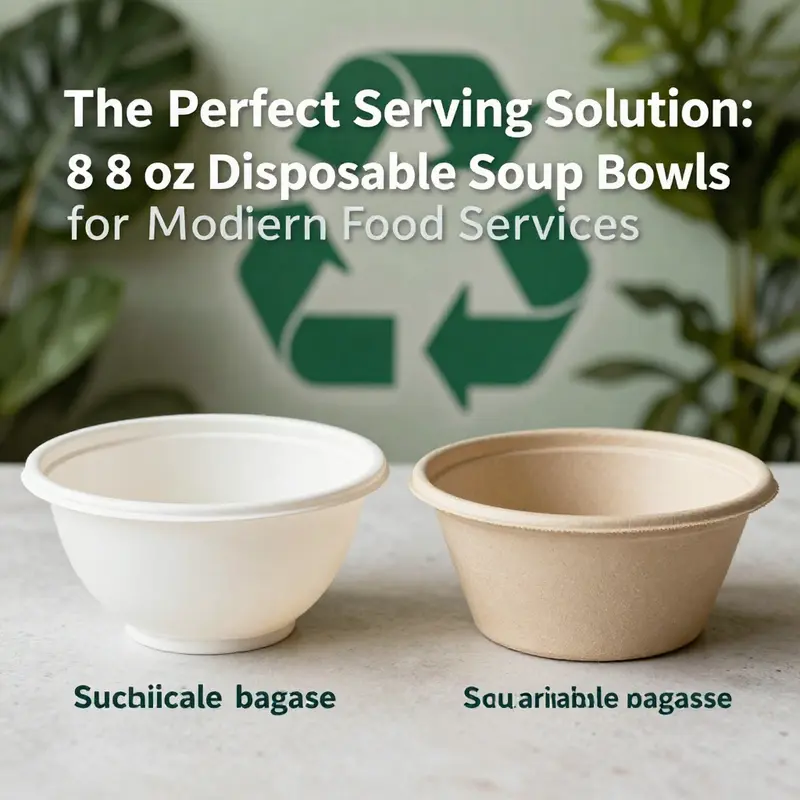
The sustainability conversation, however, is not a fatalistic one. It is a field of active design choices and market responses. In response to consumer concerns and regulatory pressure, many suppliers have become more attentive to the full lifecycle of 8 oz bowls. A shift toward biodegradable and compostable alternatives reflects a broader movement toward circular economy principles—where products are designed with their end of life in mind and where materials can re-enter the production cycle rather than linger in landfills. These sustainable options often rely on renewable resources rather than fossil-derived feedstocks. Sugarcane bagasse, bamboo fiber, and recycled paper pulp are among the materials gaining traction, offering a different environmental profile than conventional plastics.
One of the most compelling advantages of these eco-friendly bowls lies in their renewability and end-of-life performance. When designed for industrial composting conditions, many of these bowls can decompose within a matter of weeks to months. The 90-day benchmark widely cited for industrial composting reflects a practical pathway to turning a household waste stream into useful compost in a controlled facility. This contrasts sharply with the centuries-long persistence of some traditional plastics. By aligning materials with composting infrastructure, businesses can contribute to a reduction in overall greenhouse gas emissions and resource use. It also helps address concerns about litter and environmental contamination, particularly in urban areas where single-use packaging can be most visible and problematic.
The shift toward compostable and biodegradable options is not without caveats. The effectiveness of compostability hinges on facilities capable of industrial composting. Home composting is rarely sufficient to achieve complete degradation, and mislabeled products can contaminate compost streams. Proper certification and transparent labeling play critical roles in ensuring that the chosen bowls live up to consumer expectations and regulatory standards. In practice, this means that businesses need to partner with suppliers who can provide credible documentation about compostability, performance under heat, and compatibility with their lids and packaging ecosystem. When done well, compostable alternatives can fulfill a dual promise: maintaining service quality while reducing environmental burden.
The market dynamics around 8 oz disposable bowls are evolving in parallel with consumer expectations and policy developments. A growing chorus of voices—from consumers to lawmakers—advocates for replacing non-biodegradable plastics with biobased and compostable alternatives. By 2026, industry trends projected by researchers and analysts point toward more brands committing to phasing out traditional plastics in favor of materials rooted in renewable resources. This shift is not simply about substituting one material for another; it is about rethinking the entire packaging system—from sourcing and production to end-of-life processing and messaging to customers. Companies embracing these changes often frame packaging choices as a reflection of corporate social responsibility. They aim to build trust with customers who care about the environmental footprint of what they eat and how it is packaged.
The structural design of these eco-friendly bowls often accompanies a thoughtful approach to lids and closures. Some configurations pair dual-layer or coated papers with compostable lids, creating a coherent package that can be disposed of in compost streams. Others explore the use of plant-fiber composites that maintain heat resistance while offering a different final fate than plastics. The lids themselves can be a focal point of sustainability, with designs that minimize material use while preserving seal quality and freshness. In many cases, suppliers offer customization options, enabling brands to align packaging with their visual identity while staying committed to environmental goals. This can include color-matched designs, logo imprints, and clear environmental messaging that helps guide consumer behavior and composting decisions at the point of disposal.
For businesses seeking concrete options that balance performance and environmental responsibility, the landscape includes several practical pathways. A common tea-light approach is to adopt a compostable sugarcane bagasse bowl with a PLA coating and a compatible lid. While PLA-coated bowls are advertised as compostable, the caveat remains that proper industrial composting is essential for the material to break down efficiently. In some cases, multi-material constructs are used to achieve required heat resistance, moisture control, and mechanical stability. The net effect is a packaging system engineered not only for function but for a reduced environmental footprint over time. The critical piece is alignment: the chosen material must match the available waste-management infrastructure, consumer expectations for compostability, and the business’s supply chain realities.
From a practical standpoint, the decision to adopt sustainable bowls also involves economic considerations. Compostable options may come with higher per-unit costs or different minimum order quantities. Yet, when one factors in waste disposal costs, potential waste-diversion credits, and the positive reputational impact of sustainability commitments, the economic calculus can tilt in favor of greener choices. For operators that manage large volumes of hot soup and other liquids, the reliability of heat management and leak protection remains essential. The packaging must do its job during the customer journey—from grab-and-go to delivery—without compromising food safety or user experience. In this context, the choice of material often becomes a balancing act: do you prioritize the lowest upfront cost, or do you invest in a material pathway that better aligns with environmental goals and consumer values?
The broader industry narrative also intersects with consumer education and labeling. Consumers increasingly want to know how their takeaway packaging is disposed of and whether it truly blooms into compost under the right conditions. Clear, accurate labeling reduces confusion and improves recycling and composting outcomes. It also helps prevent cross-contamination of streams that could undermine recycling programs or compost facilities. Brands that communicate these messages effectively contribute to a culture of responsibility, encouraging customers to participate in proper disposal practices and to understand the role packaging plays in a sustainable system.
Beyond individual choices, the regulatory and policy context continues to shape the market for 8 oz bowls. Governments and agencies are scrutinizing packaging materials, setting standards for recyclability and compostability, and encouraging manufacturers to reduce reliance on non-biodegradable plastics. This policy environment reinforces industry trends toward renewable resources and circular models. It also prompts ongoing innovation in material science and product design to deliver packaging that not only meets consumer demands but does so with minimized environmental impact. In this sense, the debate around 8 oz disposable soup bowls becomes a case study in how a simple product can illuminate the complexities of modern packaging systems and the opportunities for meaningful improvement.
For those seeking tangible examples of how these ideas translate into market offerings, the landscape includes a spectrum of configurations. Some bowls are designed to be compatible with snap-on or press-fit lids, and some lids are engineered with venting features to handle steam while maintaining integrity during transport. Others emphasize beauty and branding while delivering functional benefits, such as moisture resistance, stackability, and cold- and heat-hold performance. In every case, the central thread is the tension between the desire for a clean, efficient customer experience and the obligation to steward natural resources and public health. This tension does not generate a single answer; it invites ongoing dialogue among suppliers, restaurateurs, delivery platforms, and regulators about what constitutes responsible packaging in a high-velocity food service environment.
The chapter’s core reminder is pragmatic: the environmental performance of 8 oz disposable soup bowls is best improved when the entire lifecycle is considered. Design decisions should anticipate end-of-life realities and be responsive to local waste-management capabilities. Collaboration across supply chains—from raw-material suppliers to waste-treatment facilities—creates the conditions for meaningful change. When businesses integrate transparent labeling, credible compostability certifications, and consistent messaging, they enable customers to participate in sustainable outcomes. And, critically, they can deliver the same level of service that soups and stews demand while reducing the environmental footprint of a simple, everyday package.
In practical terms, there is a clear path forward for organizations that aim to balance comfort, speed, and responsibility. The path starts with material choice and extends through manufacturing, logistics, and customer engagement. It calls for a willingness to invest in the right infrastructure, to partner with responsible suppliers, and to educate consumers about disposal practices. It invites ongoing measurement of environmental impact, with an openness to adjust formulations, coatings, and packaging architecture as better solutions emerge. The end goal is not to abandon convenience but to reframe it within a stewardship mindset—where the convenience of a quick meal does not come at the expense of clean air, clean water, and thriving ecosystems. When this alignment is achieved, 8 oz disposable soup bowls can still serve their essential function while becoming a more sustainable part of modern food service.
Internal link: To see a practical example of a kraft-paper bowl design for take-away that aligns with sustainable goals, you can explore this product category: disposable kraft paper bowl take away kraft paper salad bowl with pet lid. This option demonstrates how packaging can be shaped to support both function and environmental responsibility, while remaining compatible with existing lid systems and branding opportunities.
External resource: To deepen understanding of the environmental implications and certification pathways for biodegradable plastics, see the EPA’s guidance on Biodegradable Plastics. https://www.epa.gov/sustainable-management-plastics/biodegradable-plastics
A Delicate Balance: The Design, Use, and Sustainability of 8 oz Disposable Soup Bowls in Modern Food Service
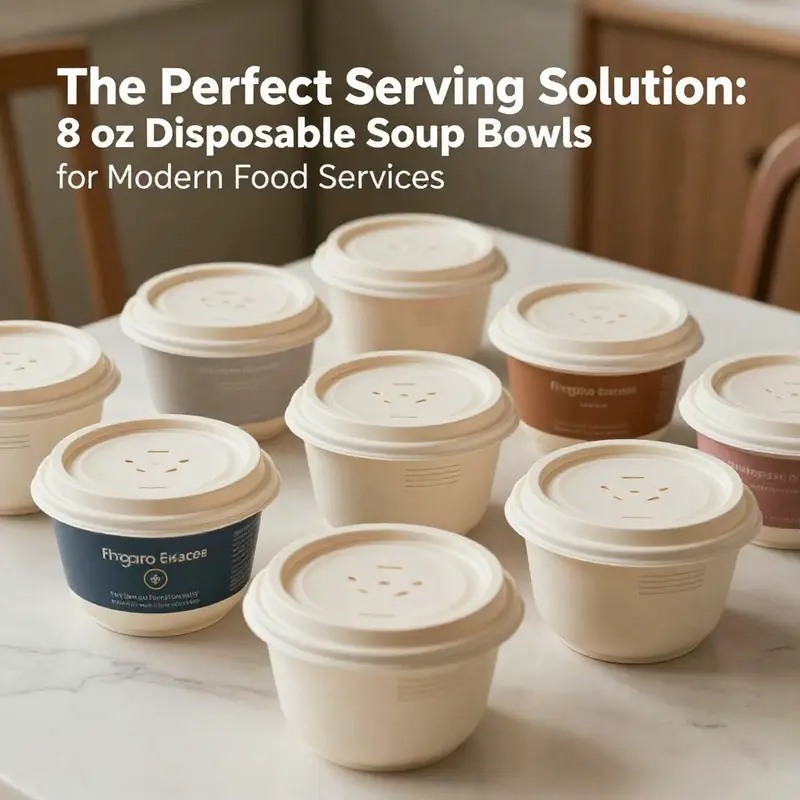
The 8 oz disposable soup bowl stands at a quiet intersection of form, function, and footprint. In a landscape where speed, hygiene, and presentation shape a guest’s experience, these compact vessels carry more weight than their modest size might suggest. They are not merely receptacles for hot liquids; they are a small but pivotal part of a larger system that handles food safely from kitchen to customer, often in transit, sometimes in a rush, and always with a mind toward cost, waste, and convenience. The eight-ounce capacity, roughly 237 milliliters, has become a practical standard in many food service settings. It aligns with typical portioning for soups, broths, chili, sauces, and even some side dishes, enabling quick, grab-and-go service without forcing customers to overorder or under-serve. The standardization of this size—small enough to remain portable and large enough to remain satisfying—helps kitchens stabilize portions, pricing, and yield while reducing confusion during busy service periods. In this sense, the 8 oz bowl is less a niche item and more a workhorse in the back of the house and in the field. The design challenge, then, revolves around delivering reliable performance in a single-use format without sacrificing safety, hygiene, or the ability to maintain heat and containment during transport. The choices made by manufacturers in material composition, structural geometry, and packaging compatibility shape everything from how long a bowl can hold a hot liquid without softening to how easily it can be stored, lid-sealed, and disposed of after use. The result is a carefully engineered product that serves the practical needs of kitchens and the evolving expectations of customers who demand cleanliness, predictability, and minimal waste, even when they are eating on the go.
Material choices sit at the heart of how these bowls perform. The spectrum runs from sturdy plastics like polystyrene and polypropylene to paper-based formats that rely on coatings to meet leak resistance. Polystyrene and polypropylene options have long been favored for their heat retention and structural integrity. They hold their shape under pressure, resist cracking when carried in hands or bags, and tolerate the thermal shock that comes with transferring from a hot stovetop to a cold car seat. Yet these materials pose environmental challenges when disposed of, particularly in markets with limited recycling streams or where composting infrastructure is incomplete. The tension between performance and end-of-life impact is palpable in many operators’ decision-making. On the other end of the spectrum, paper-based bowls—especially kraft paper varieties with a polyethylene coating—offer excellent leak resistance and a more renewable perception. The coating line between moisture resistance and compostability becomes a nuanced negotiation: the same coating that helps liquids stay contained can complicate disposal in municipal compost programs unless industrial facilities are available to process it. Still, if a business is aiming for a more sustainable narrative, these paper formats enable a credible bridge between everyday usage and environmental responsibility. They are often paired with secure-fitting lids made of another polymer, typically polypropylene, to form a system that minimizes spills and preserves food quality during transport. The presence of vented or sip-enabled lids can further refine the user experience, letting customers manage steam and temperature without sacrificing form or function. Moreover, many of these paper-based bowls are designed to be microwave-safe under the right conditions, a feature that aligns with the growing trend of reheating meals for later consumption. The balance between heat tolerance and material safety is delicate; it requires careful testing and clear consumer guidance about microwaving and disposal. In addition to these mainstream options, there is a growing cadre of biodegradable and compostable alternatives built from renewable fibers such as sugarcane bagasse, bamboo, or recycled paper fibers. These eco-friendly versions address a broader set of sustainability goals, appealing to operators who want to highlight their environmental commitments while maintaining the same level of reliability in containment and heat performance. The challenge remains that compostable materials often rely on industrial facilities for proper degradation, which means the environmental benefits may vary by location and infrastructure. Nevertheless, for operations prioritizing a strong sustainability narrative, these options offer a tangible path forward and demonstrate a willingness to align packaging choices with broader corporate or organizational values.
From a usability standpoint, the design of an 8 oz bowl is also about how it integrates with the surrounding packaging ecosystem. Packaging designers increasingly think about not just the bowl, but the lid, the seal, the box or sleeve that carries the combination, and the way branding communicates with the consumer. Lids are not just deterrents against spills. They preserve temperature and aroma, protect against air exposure that could dry out soups and broths, and support hygiene through tamper-evident features. The most common lid standard is snap-on or press-fit designs, chosen for quick assembly in busy kitchens and rapid handoffs to drivers or customers. Some lids include small venting features to manage steam, reducing the risk of heat-related burns or pressure buildup when containers are nested among other items in a delivery bag. The option of tamper-evident seals adds another dimension of safety, assuring customers they are receiving food that has not been opened en route. These features contribute to trust and consistency in the guest experience, which matters as much as the contents of the bowl itself.
Supply chains for 8 oz bowls reflect a broader pattern in modern food service: the convergence of efficiency, customization, and responsibility. The same bowl that can withstand a hot pour and remain intact during transit can also be tailored to reflect a brand, with printing in CMYK or Pantone hues on the outer surface. This kind of customization supports quick recognition and a sense of care in presentation, both of which are valued in takeout and delivery contexts. Suppliers often offer a range of pack sizes, from modest bundles to larger cases, with the potential for logo placement or color accents that reinforce a business’s identity. For operators who want a more tailored look, it is possible to coordinate lid color and bowl color to reinforce a cohesive package that aligns with a restaurant’s interior design or seasonal campaigns. The production side of this customization is not merely about aesthetics; it can also influence reliability, as compatible materials and thicknesses must be specified to ensure the entire system remains leak-proof and heat-stable under expected usage conditions. In practical terms, this means a careful alignment of material choice, lid design, and printing approach to guarantee that branding does not compromise performance.
To the degree that a business leans into sustainability, the conversation often extends to compostability and recycling. Compostable or renewable-material options align with environmental goals and can enhance a restaurant’s public image, particularly among conscious consumers who prioritize ecological responsibility. However, compostability is not a universal cure for the packaging lifecycle; it depends on consumer behavior, the availability of appropriate facilities, and clear labeling that guides proper disposal. Paper-based bowls with coatings designed for compostability may still require specific industrial composting conditions to break down efficiently. For some operators, the most practical path involves using recyclable or compostable packaging that is clearly labeled and collected through established waste streams. The idea is to minimize confusion at the point of disposal and maximize the likelihood that the container ends up in an appropriate processing stream. In addition, ongoing research in alternative materials seeks to expand the range of options that deliver heat tolerance and leak resistance without compromising the ability to recover or compost the product after use.
Beyond the raw performance, the 8 oz bowl serves as a tool for operational flow. In fast-casual settings, cafeterias, buffets, and food trucks, the bowl’s size and weight make it easy to handle during high-volume service. In delivery scenarios, its compatibility with secure lids and safe stacking within bags or boxes reduces spill risk and supports better temperature retention. For meal-kit providers or office catering, the same vessel can be used to portion soups or sauces neatly, with minimal risk of leakage during transport. The consistent 8 oz volume helps standardize inventory planning and pricing, enabling more predictable cost control. When a kitchen designs its packaging line, the bowl becomes a modular element that interacts with containers for different components of a meal or with other packaging in the same shipment. This modularity is advantageous in settings that frequently rotate menus or adjust portion sizes to match demand or dietary considerations.
In contemplating the lifecycle of an 8 oz disposable soup bowl, it is important to acknowledge the broader cultural and economic context that shapes packaging choices. Urbanization and the growth of quick-service concepts drive demand for disposable options that are hygienic and easy to handle. The reduction of contact between hands and food during service is an ongoing priority, and single-use bowls with tight lids contribute to that aim. At the same time, consumers increasingly scrutinize packaging waste and are drawn to brands that demonstrate responsibility through sustainability initiatives. In response, suppliers have broadened the portfolio to include eco-friendly and compostable options that align with green-building, corporate responsibility reports, and consumer expectations about waste reduction. The trade-offs between moisture resistance, heat tolerance, and end-of-life options are not simple; they require thoughtful decisions that consider the specifics of a given operation, its geographic location, and the capabilities of local waste streams. The end result is a packaging system that is adaptable enough to support varied contexts while maintaining core competencies: reliable containment, safe handling, and an acceptable environmental footprint.
A practical takeaway for operators is to view the panel of choices as an ecosystem rather than a single decision. The interaction among bowl material, lid design, and disposal options determines how well the product performs in real-world conditions. The capacity to customize branding without compromising function adds another layer of value, helping to distinguish a business in a crowded market. The design challenge is to harmonize these elements so that the user’s experience remains straightforward, even when the setting is fast-paced, the weather is hot, or the customer is in motion. This is where the 8 oz bowl proves its worth: it is small enough to be ubiquitous, versatile enough to support a range of food items beyond soup, and adaptable enough to meet evolving preferences for safety, convenience, and sustainability. The choices operators make regarding materials, lids, printing, and disposal pathways ripple outward, influencing kitchen workflows, delivery protocols, and end-of-life outcomes. In other words, the 8 oz disposable soup bowl is a microcosm of modern packaging decisions—an ordinary object that carries the weight of efficiency, hygiene, and responsibility in today’s food service environment.
For those seeking concrete references on practical usage and branding opportunities, a helpful example of the branding-ready, lid-compatible kraft-paper bowl can be explored through an internal resource: disposable kraft paper bowl for food package with lid. This page highlights the kind of integration between form and function that operators value when building a cohesive takeout experience. It demonstrates how a supplier can offer a bowl that not only performs under heat and pressure but can also carry a customized appearance that reinforces a business’s visual identity without compromising safety or sustainability goals.
Ultimately, the journey of the 8 oz disposable soup bowl is about balancing competing priorities to meet the needs of modern food service. It is about delivering dependable containment for hot liquids, enabling efficient service in high-volume environments, and offering pathways to reduce environmental impact where possible. It is about recognizing that small choices—material selection, lid design, printing options, and disposal methods—combine to shape a customer’s perception of cleanliness, reliability, and brand accountability. In many ways, the eight-ounce bowl embodies a practical philosophy: lean, capable, and adaptable packaging that can support a wide range of culinary offerings while contributing to responsible business practices. The result is a packaging solution that works as hard as the people using it, turning a simple container into a trusted partner in delivering warm, comforting meals to people wherever they are.
External resource for further reading on manufacturing options and product specifications can be found here: https://www.alibaba.com/product-detail/Lvsheng-8oz-26oz-PE-Coating-Kraft-Paper1600543934656.html?spm=a2700.galleryofferlist.normaloffer.d_title.2e5c5a34wBbN6T
Final thoughts
In an age where convenience and sustainability are paramount, 8 oz disposable soup bowls serve as an exemplary choice for food service providers. The trends highlight not just consumer preferences for practical, hygienic options but also a growing inclination towards environmentally responsible materials. As the demand for innovative design and eco-friendly alternatives expands, these bowls are set to remain a staple in catering and restaurant industries. Embracing these insights will undoubtedly enhance service offerings and align with consumer expectations, creating a more efficient and satisfying dining experience.