
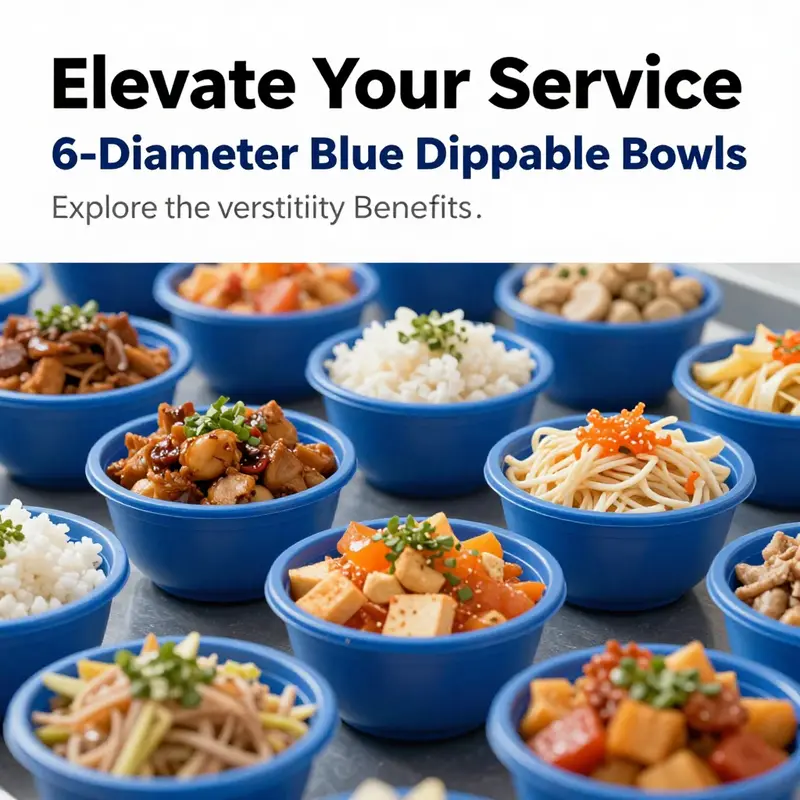
In today’s dynamic food service industry, selecting the right tableware is crucial to maintain quality and enhance customer experience. Among these essentials, 6 diameter blue disposable plastic bowls stand out for their versatility and practicality. Catering to a diverse clientele, from bubble tea shops to catering services and corporate procurement teams, these bowls are suitable for various occasions. This article explores several aspects of these bowls, including their technical specifications, material comparisons, applications, economic considerations, and environmental impacts, offering a comprehensive view of why they are an excellent choice for your business needs.
null
null
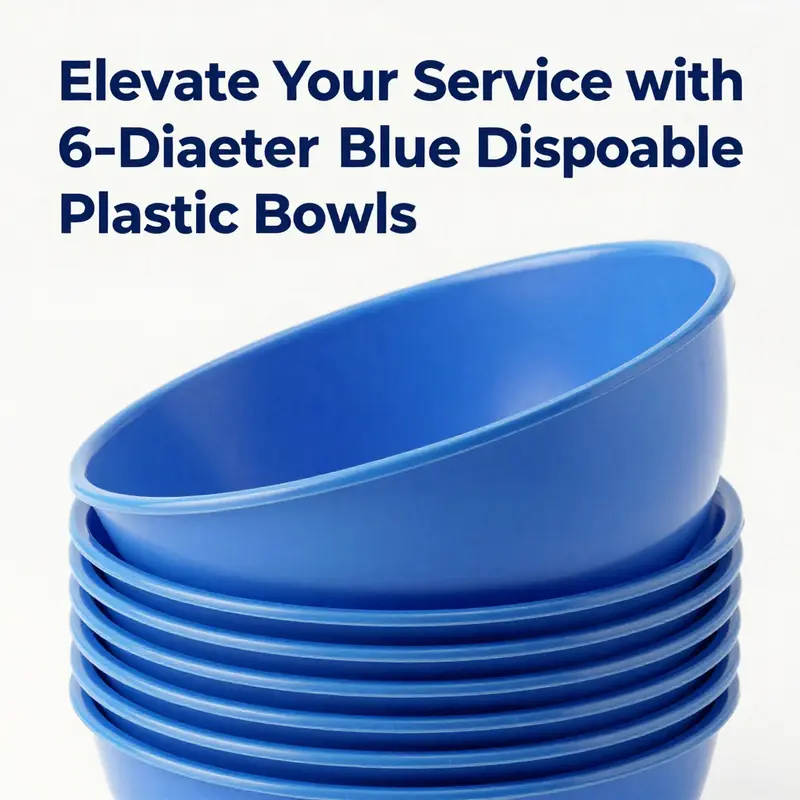
Blue Brief, Big Impact: Material Realities Behind 6-Inch Blue Disposable Bowls for Everyday Service
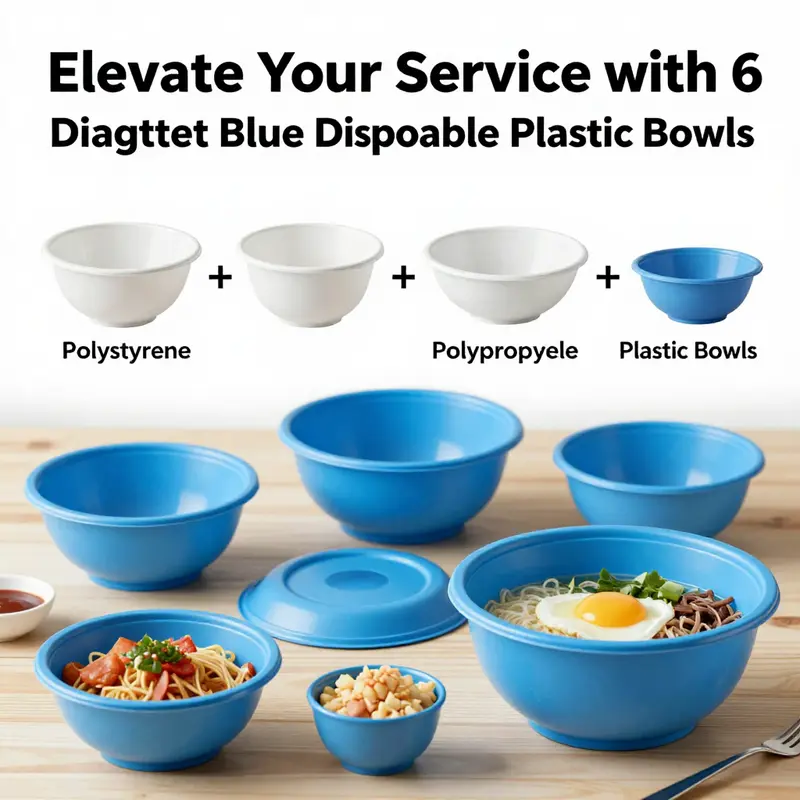
Choosing a 6-inch blue disposable bowl is rarely just about size and color. The diameter sets a predictable portion footprint at the buffet line or the catered table, but the material behind that blue shell determines whether the bowl will perform, survive, and be remembered by guests for better or worse. In many ways, the color is a cue for mood, but the real work happens in the polymer that carries, holds, and protects the contents. Three polymers dominate this space for 6-inch blue bowls: polystyrene, polypropylene, and high-density polyethylene. Each brings a distinct blend of cost, performance, and end-of-life considerations, and the choice often reflects the balance a venue seeks between speed, safety, and sustainability.
Polystyrene offers a clear path to affordability. In many catalogs, PS can be dyed to a vivid blue while keeping the material relatively light. The advantage is simple economics: the material is inexpensive, the molding process is fast, and the supply chains for mass-market disposable bowls are well established. For events where the meals are cold or room temperature, PS bowls can perform adequately and keep ticket prices low. The flip side, however, is hard to ignore. Polystyrene has limited heat resistance; beyond about 100 C, the risk of softening, warping, or distortion increases. A bowl meant for cold salads or fruit may keep ice at bay and foods cool, but it does not tolerate hot dishes or reheating. The fragility of PS is also a practical concern. A 6-inch bowl spends a lot of time stacked in a service tray, shuffled through transport, and nudged by tongs. Thin walls can crack under pressure or during a brief fall. And perhaps most consequential for organizers mindful of waste and responsibility, polystyrene is not easily recycled in many municipal programs, and foam variants add an even heavier burden on litter and decomposition.
Polypropylene, by contrast, offers a more versatile profile. PP handles heat much better, making it safe for microwave use in many systems and safe for freezer storage when needed. This opens up hot sauces, warm sides, or even prepared meals that need gentle reheating, all within a single-use bowl that can still travel well from kitchen to table. PP is also sturdier, more resistant to cracking when stacked or dropped, which matters for larger events where lots of bowls move across floors, into bins, and onto buffet lines. For users who want a robust blue bowl that can survive repeated handling or multi-day service with minimal deformation, PP is a natural fit. There is a caveat: durability and heat resistance come with a price tag. Production costs for PP are higher than PS, and the material’s slightly higher density translates to a heavier bowl. Yet many caterers view that extra cost as a worthwhile hedge against leaks, spills, and unsightly warping that can undermine service quality. In addition, PP is widely recognized as food safe and BPA-free in well-regulated supply chains, which reassures food service operators who must balance safety with presentation.
HDPE segment presents another set of strengths, especially where temperature swings are common. With excellent impact resistance, HDPE bowls resist cracking from accidental bumps and can offer superior leak protection, a crucial attribute when sauces or gravies travel from kitchen to banquet hall. The material’s insulating properties also help maintain cooler temperatures for cold items, and its chemical resistance makes it a reliable choice for liquids and acidic foods. However, HDPE’s transparency is typically lower than PP or PS, and in practice many blue HDPE bowls lean toward a blue-tinged opacity rather than a crystal finish. They also do not tolerate microwaving, so reheating in the bowl is off the table. For operations that emphasize shelf-stable or refrigerated items and require ruggedness for long service life in non-sterile environments, HDPE can be a strong match, even if it sacrifices some visual clarity.
Color and branding matter. Colorfastness matters. A true blue that remains vibrant after exposure to light, steam, and repeated washing or handling signals a well-engineered pigment system. In this segment, the blue is not just cosmetic; it helps guests quickly identify portions and can align with branding across a catered event. The dyeing process varies by resin type, and while PS accepts color well, PP and HDPE often require more robust pigment systems to achieve a consistent, deep blue that stays uniform from the first scoop to the last. The result is more than an aesthetic choice; it is a practical matter of guest perception and food safety, as a consistent color helps staff recognize bowls that have aged or degraded and should be retired from service.
Operational considerations go beyond material alone. The geometry and wall thickness influence performance. Uniform wall thickness reduces thermal gradients that can warp the container when hot foods are introduced. Stackability and rigidity matter in lines where many bowls are moved, cleaned, or recycled. Temperature excursions—ice in the middle of a buffet, a hot sauce at lunchtime, or a chill from a cold dessert—interact with the polymer to determine how long a bowl can hold its shape and resist deformation. Operator preference often follows the intended service pattern: for high-volume cold buffets, a lighter PS bowl may suffice; for mixed-dish service with occasional reheating or microwave use, PP offers a safer margin; for frozen desserts or heavy liquid use, HDPE presents the toughest combination of leak resistance and insulation. In all cases, the end-of-life question looms large. Recyclability varies by resin type and by municipal programs, and while all three materials have some pathway to reuse, the practical reality is that many disposable bowls still end up in landfills or the general waste stream. This is a reminder that even a blue bowl of modest diameter carries responsibilities beyond the table: packaging choices, waste reduction strategies, and consumer education about disposal.
Cost dynamics and value enter the equation as events scale. The cheapest options are often PS, followed by HDPE and PP, but the overall cost picture shifts when performance is considered. A slightly more expensive PP bowl can reduce losses from warping, leaks, and fraying edges, which translates into fewer replacements, cleaner bins, and happier guests. In many settings, the calculation is practical: what level of risk for spills is acceptable, what is the maximum temperature the bowl will encounter, and how important is a crisp, color-fast blue to the visual merchandising of a station? Buyers also weigh lifecycle costs: the extra weight of PP and HDPE might demand stronger packaging and different storage, affecting overall logistics. These factors tilt decisions toward PP when microwaving is involved or toward HDPE when durability and insulation are prioritized at scale. The ongoing conversation among buyers is how to balance price with performance and how to align these with sustainability goals, acknowledging that even a disposable bowl contributes to a broader waste system.
Safety and standards underpin all material choices. Across PS, PP, and HDPE, the expectation remains food-grade compliance and clear labeling. The bowls should be free of harmful additives and suitable for the temperatures they will face in real service. The manufacturing process, typically injection molding for precision and consistency, helps ensure uniform wall thickness, smooth inner surfaces, and a reliable seal against leaks. This is not merely a quality concern but a safety one, as a bowl with uneven thickness can create hotspots or weaknesses under load. For event planners, this means relying on suppliers who can provide material specifications and assurance around safety declarations. If hot or reheated dishes are on the menu, polypropylene emerges as the more reliable option; if the focus is strictly cold service, polystyrene may be a cost-conscious choice; if frozen desserts or heavy liquids are standard, HDPE offers durable performance with lower breakage risk during transport.
Putting these strands together suggests there is no one-size-fits-all answer for a 6-inch blue disposable bowl. The material decision should be guided by the menu, the service style, and the environmental framework of the event. For simple cold service and price-sensitive contexts, polystyrene remains viable, provided the bowls are not exposed to heat. For venues that require versatility hot and cold, single-use yet reliable, polypropylene stands out as the balanced choice. For operators who anticipate frozen desserts, heavy sauces, or particularly rough handling during service and transport, HDPE provides the most durable solution with strong resistance to impact and leaks. Across all choices, selecting a BPA-free and food-safe option remains essential, as does ensuring the color remains stable under heat and light and that the packaging and disposal practices align with local recycling schemes. In the end, the best approach is often a measured one: stock different bowls suited to different line items or service stations, matched to the expected temperature profile of each dish and to the guest experience the event intends to deliver. The six-inch blue bowl thus becomes a small but telling piece of the larger puzzle of modern food service: a simple, uniform diameter carrying a spectrum of performance profiles that shape how guests perceive value, safety, and care at the table.
As the discussion moves toward broader packaging choices, it is worth noting how these material decisions echo larger trends in sustainability, design, and supply-chain resilience.
External reference for deeper reading: https://www.plasticbowlguide.com/material-comparison-for-disposable-plastic-bowls/
Blue Circles on the Table: The Subtle Versatility of 6-Inch Blue Disposable Bowls in Food Service and Event Settings
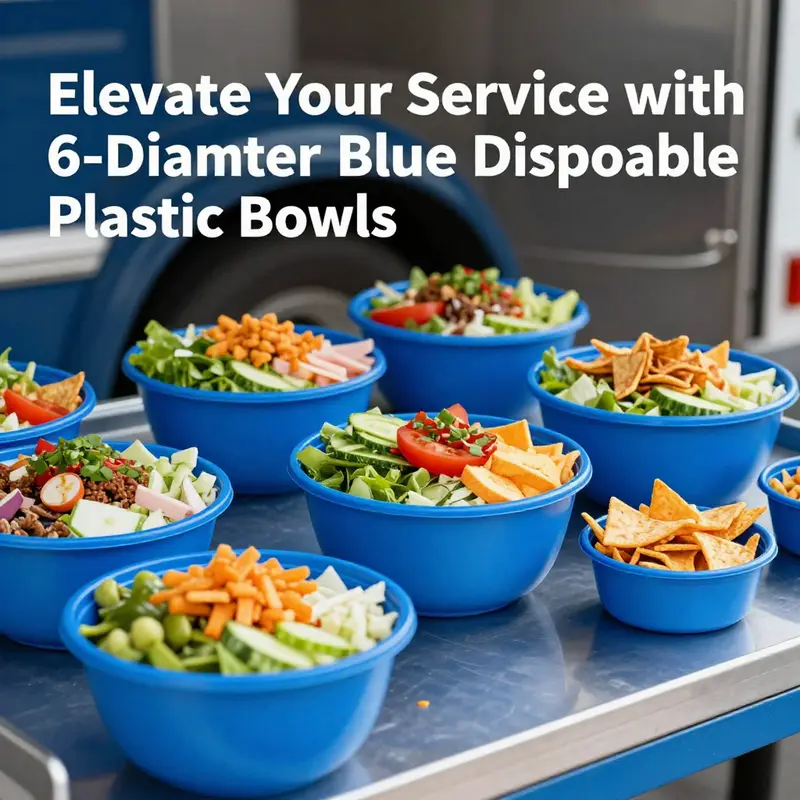
In catering and fast-food contexts, these bowls serve a practical dual purpose: they showcase food in an inviting way while remaining light enough to pass from hand to hand during a buffet line. Salads benefit from the broad surface area that a six-inch circle provides, allowing greens, vegetables, and dressing accents to appear vibrant rather than mounded into a mound. The same size works well for fruit platters and modest portions of desserts, where the bowl’s shape helps with neat, presentable servings. Even when items are pre-portioned in advance, the bowl’s surface supports a clean, appealing presentation, which is a quiet driver of guest satisfaction. In fast-casual settings, the ease of stacking means back-of-house teams can merchandize multiple color-coded options in compact storage, reducing clutter while keeping the dining area neat and efficient. While a blue tone is a visual cue that often connotes calm and approachability, the choice of blue also serves a functional role—ease of identification in large crowds, rapid recognition of dish types, and a cohesive color language across a station that can speed up service during rush periods. It is this combination of readability, portability, and presentation that reinforces the value of the six-inch blue bowl as a standard workhorse in many service models. For those who emphasize portion control and speed, the bowl becomes an ally rather than a mere receptacle, enabling staff to portion accurately and guests to identify the right item at a glance. The macro-level impact is subtle but meaningful: quicker turnover at stations, fewer mix-ups, and a more organized dining experience overall. The materials behind these bowls—polystyrene and polypropylene—shape how they behave under busy, sometimes imperfect service conditions. Polystyrene offers rigidity and a crisp rim, which helps the bowl maintain its form when filled with cooler items such as salads or fruit. It can be dependable for single-use service where the guest experience centers on a clean hold and a sturdy feel in the hand. Yet polystyrene’s performance can waver with heat and extended contact with oily or sauce-rich foods, and its environmental footprint remains a critical consideration as operations evaluate waste streams and recycling options. Polypropylene, by contrast, typically delivers better heat resistance and oil resistance, broadening the range of dishes that can be served with confidence, including warmer salads or items with light sauces. PP bowls often hold up well when reheating is anticipated within a takeout flow, and their tougher structure can withstand the rigors of transit on shared delivery racks. In practice, many operators choose a PP-based option for menus that encounter temperature variability, while PS-based bowls may still find a place in cold-item service or events where the budget or the need for rigid presentation takes precedence. Injection molding, the common production method for these bowls, ensures consistent rim thickness, a reliable circumference, and predictable stacking height. This consistency is essential when inventory is handled in bulk, when catering staff must portion tens or hundreds of bowls without hesitation, and when warehousing or transport relies on compact stacking to maximize space. Consistency reduces the chance of misalignment that can occur with thinner, irregular walls, especially during rapid restocking or spill-prone moments when cups and bowls are moved from truck to banquet line to guest table. The end-user experience is shaped by this precision: a bowl that sits evenly on the table, nests cleanly with others for easy transport, and holds its shape under a range of cold and room-temperature foods. In environments where guests expect quick service and predictable performance, those subtle engineering choices translate into measurable gains in efficiency and satisfaction. Beyond physical performance, the broader conversation about these bowls must acknowledge safety standards and waste considerations. Disposable serving ware is evaluated on food-contact safety, absence of harmful additives, and the ability to meet regulatory expectations for single-use items. At the same time, operators are increasingly mindful of environmental footprints. Lightweight design aids transport efficiency and reduces material usage per unit, but it also concentrates emphasis on end-of-life options. Some venues favor recycling streams that accept certain plastics, while others redirect to alternative disposal pathways. The balance between cost, performance, and eco-conscious practices continues to guide procurement decisions, with many buyers seeking a pragmatic compromise that preserves food integrity and guest experience while aligning with organizational sustainability goals. The informal nature of events and the speed of service further underscores why status quo diameter norms endure; they minimize the need for special stacking racks, reduce breakage risk in crowded service zones, and ensure staff can move swiftly without pausing to adjust or reconfigure their ware. In venues that blend formalities with casual hospitality, the six-inch blue bowl offers a versatile platform for a wide array of foods while maintaining a consistent, approachable aesthetic that fits neatly with varied decors and themes. It becomes a canvas for food presentation, a reliable piece of the operational puzzle, and a subtle signal of hospitality that guests often notice more than they consciously acknowledge. For those who plan menus, layout stations, and choreograph service, the bowl’s dimensions, color, and material can be as decisive as the recipes themselves. Consider the choreography of a buffet line: guests approach the station, identify the blue bowls at a glance, pick a dish, and move along. The color pairing with white linens or dark tablecloths can emphasize freshness, while the sturdy profile of the container helps keep desserts intact as crowds move through. The practical value is as much about human behavior as it is about material science. In this sense, the six-inch blue disposable bowl encapsulates a balanced approach to modern dining: a reliable shape, a vivid but non-intrusive color, and material choices that provide a spectrum of performance options across cold, room-temperature, and light-hazard foods. It is not merely a container; it is a facilitator of efficient service, a visual cue for guests, and a dependable component in the complex system that defines contemporary food experiences. As packaging designers and event managers collaborate to craft streamlined workflows, this bowl often rises unobtrusively to the occasion, supporting speed, safety, and satisfaction without dominating the table’s narrative. Related considerations, such as alternative disposables and lids, are discussed in broader packaging conversations, where you can explore related take-away ware designed to complement this class of bowls. For a related disposable option in take-away ware, see this disposable kraft paper bowl with lid. disposable kraft paper bowl with lid. An external reference also provides a broader context for dimensions and use cases of similar bowls, illustrating how common diameters align with typical portions and service workflows. External reference: https://www.amazon.com/dp/B0C7RZQJLX
Balancing Cost, Performance, and Scale: The Economics of 6-Inch Blue Disposable Plastic Bowls
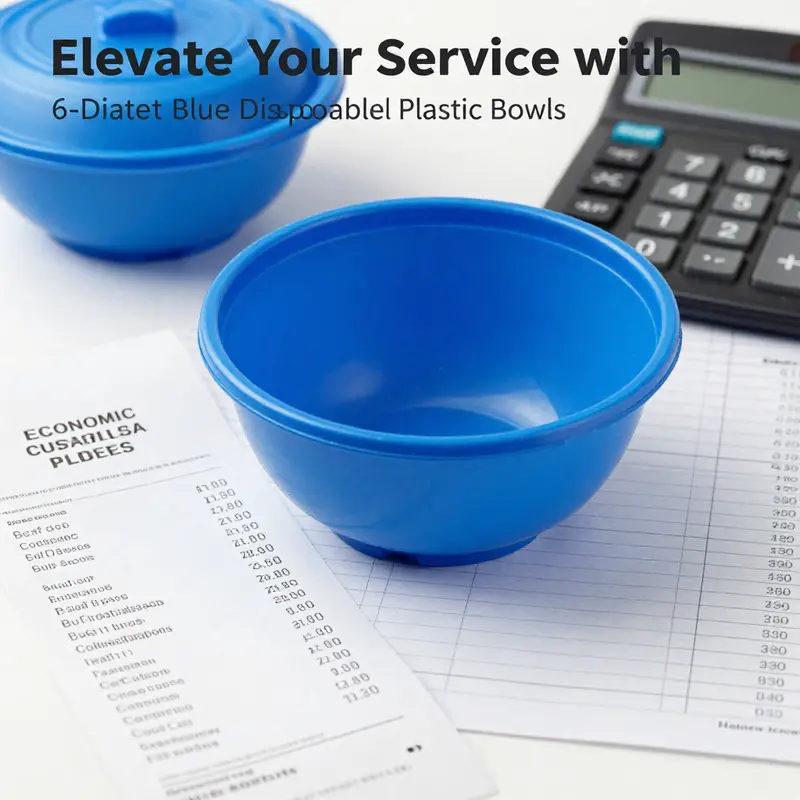
Choosing six-inch diameter blue disposable plastic bowls requires a clear view of cost drivers and operational impacts. These bowls are inexpensive on a per-unit basis, but assessing their true economic value means looking past sticker prices. Decision-makers must weigh material choices, manufacturing methods, logistics, labor effects, presentation value, and end-of-life costs. When integrated, these factors reveal how a simple bowl can influence budgets, margins, and brand perception across catering, food service, and events.
Material selection is the first economic lever. Polypropylene (PP) and polystyrene (PS) are the common resins. Both offer low raw material cost and reliable formability. PP tends to be slightly more flexible and is better at resisting heat, while PS can produce crisper edges and a shinier finish. The price gap between them is narrow at scale, but performance differences matter in application. For hot preparations and repeated handling, PP reduces failure rates. Lower breakage reduces waste and reorder frequency. That translates directly into lower total cost of ownership (TCO), not merely lower purchase price.
Manufacturing method impacts unit economics. Injection molding, the standard process for these bowls, creates consistent dimensions and strong seams. High initial tooling costs are amortized over large runs. For businesses purchasing hundreds of thousands of units annually, the per-unit tooling share becomes negligible. This is where economies of scale show their greatest benefit. Larger orders unlock lower per-unit prices, faster lead times, and priority production slots. For suppliers, consolidated runs reduce changeovers, cutting production labor and downtime. Buyers that can forecast demand and consolidate purchases gain predictable pricing and supply reliability.
Standardized six-inch sizing simplifies many cost centers. Stackable geometry reduces cubic storage space, lowering warehousing fees. Efficient palletization means more units per shipment, reducing freight per bowl. Standard dimensions also simplify in-house inventory practices and result in faster setup times during service. When staff spend less time finding or arranging servingware, labor costs fall. These labor savings are often undercounted when decision-makers focus only on material costs. For high-volume operations, time saved during setup and cleanup compounds into significant annual savings.
Visual appeal matters in customer-facing settings. A vibrant blue bowl can enhance presentation without a premium price tag. Colorants add little to raw resin cost when ordered in bulk. The perceived value boost may increase customer satisfaction and can support higher price points for menu items. For events and themed services, color consistency is important. Reliable color batches reduce the need to mix different production lots, which simplifies inventory use and avoids mismatched displays that can undermine perceived quality. A modest investment in color consistency control adds measurable value in brand presentation.
Durability and quality control reduce hidden costs. Bowls that resist cracking under filling or stacking avoid on-site waste and customer complaints. Suppliers who maintain tight tolerance controls and conduct regular quality checks reduce the incidence of defective units. For buyers, establishing acceptance criteria and testing samples before large purchases prevents costly returns and disruptions. A seemingly small improvement in first-pass quality can reduce overall procurement spend by lowering waste, labor rework, and emergency procurements.
Supply chain efficiency ties many of these elements together. Disposable bowls simplify logistics compared to reusable dinnerware. There is no need for washing facilities, breakroom allocation, or high-temperature sanitation equipment. Eliminating these infrastructure and labor costs often makes disposables the lower-cost option for certain operations. However, the savings depend on transaction volume and operational model. Facilities with large, centralized dishwashing systems may still find reusable ware more cost-effective. For decentralized or mobile services, disposables usually win on total cost grounds.
Scalability and purchasing strategy can reduce unit cost significantly. Contracting with manufacturers or approved distributors for volume commitments unlocks tiered pricing. Consolidated procurement across multiple sites provides bargaining power. Flexible ordering models, such as scheduled replenishment, smooth cash flow and avoid rush-order premiums. Reverse logistics, such as organized collection of post-event waste for recycling, can create additional savings when offset by recycling credit or reduced disposal fees. These strategies require planning but yield durable cost benefits.
Waste management and regulatory compliance affect the bottom line. Disposal costs vary by region, and contamination of recycling streams can increase fees. Educating staff on proper disposal practices minimizes contamination and can lower landfill costs. In some jurisdictions, extended producer responsibility rules place additional handling costs on suppliers and buyers. Factoring anticipated disposal fees and compliance costs into procurement decisions produces a more accurate TCO comparison with reusable alternatives or with different disposable materials.
Lifecycle thinking reframes the conversation from unit price to lifecycle cost. This includes upstream material sourcing, manufacturing energy, transport emissions, and end-of-life handling. For operations that prioritize sustainability alongside cost, lifecycle analysis clarifies trade-offs. For example, a slightly higher per-unit cost for a PP bowl that withstands warming and reduces food waste may be offset by savings from fewer replacements and less product loss. Lifecycle models also support investment decisions in recycling collection or composting programs that reduce disposal fees and improve brand environmental credentials.
Packaging and logistics are practical levers for cost optimization. Shipping nested bowls in high-density packaging reduces freight spend and carbon footprint. Using reusable or compact outer packaging lowers ongoing procurement of packing materials. Smart pallet configurations and cross-docking arrangements cut storage needs. Buyers who coordinate deliveries to match peak demand windows minimize onsite storage and reduce inventory carrying costs. These operational efficiencies are especially helpful for businesses that run seasonal events or pop-up services.
Supplier relationships and procurement governance influence price stability and risk. Long-term partnerships encourage suppliers to invest in consistent color matching, improved material batches, and priority scheduling. Clear contract terms for lead times, minimum orders, and quality tolerance protect both parties from sudden cost spikes. Diversifying supply sources mitigates single-source risk. At the same time, concentrating spend with a primary supplier can secure better rates. A strategy that balances these goals minimizes volatility in cost structures.
Comparing alternatives highlights the place of blue plastic bowls in a balanced offering. Paper bowls with waterproof coatings, molded fiber options, and ceramic or melamine reusables each carry different cost profiles. Paper alternatives may score higher on compostability but can carry higher unit costs and lower heat resistance. Reusables reduce per-use cost over many cycles but require washing infrastructure and labor. Integrating a mix of options for different use cases often produces the best economic outcome. For instance, reserving reusable ware for dine-in service and disposables for takeout minimizes overall cost while meeting customer expectations.
Practical recommendations emerge from the combined analysis. First, model TCO rather than unit price. Include procurement, storage, labor, disposal, and failure rates. Second, negotiate volume-based contracts and predictable replenishment plans. Third, prioritize PP when heat resilience and lower failure rates matter. Fourth, invest in supplier quality assurance to avoid hidden operational costs. Fifth, explore recycling and reverse logistics options to reduce disposal fees and add sustainability value. Finally, consider a mixed-material approach tailored to service channels and customer expectations.
Strategically applied, six-inch blue disposable plastic bowls deliver measurable cost and operational benefits. They offer efficient packaging, favorable unit economics, and presentation advantages. Managed poorly, they introduce hidden waste and compliance costs. With careful procurement, quality control, and lifecycle awareness, these bowls become an asset rather than an expense. For further insight into lifecycle cost analysis and reverse logistics strategies, see this study on economic and environmental performance: https://www.mdpi.com/2071-1050/13/18/10249. For those exploring compostable or paper alternatives, a useful supplier option is the custom printed kraft paper soup bowl available from the company’s product line: disposable wholesale custom logo printed kraft paper soup bowl.
Beyond Blue Convenience: The Environmental Cost of 6-Inch Disposable Plastic Bowls and Smarter Paths Forward
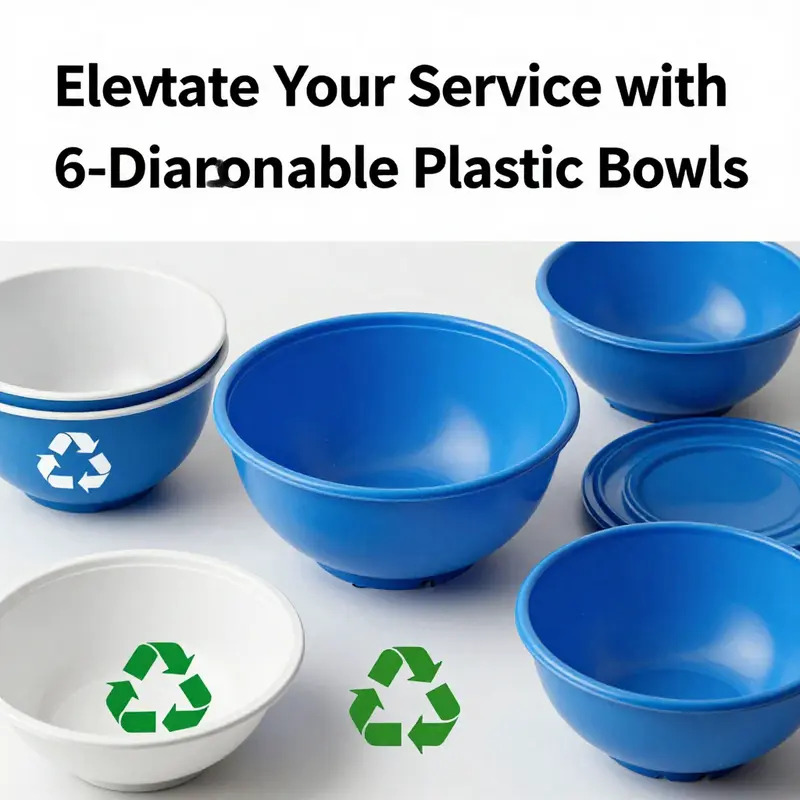
Material realities and lifecycle consequences
A 6-inch blue disposable plastic bowl looks simple. It serves salads, sides, and snacks. Its surface, color, and shape suggest ease. Yet that single-use convenience hides a full lifecycle of environmental costs. Most of these bowls are made from polypropylene (PP) or polystyrene (PS). Each material brings specific impacts from extraction to disposal. Understanding those impacts clarifies why choices matter for households and businesses alike.
Polypropylene carries the resin identification code #5. Technically, PP can be recycled. In practice, only a small portion is captured by recycling systems. Food contamination, mixed materials, and low collection rates reduce actual recycling rates. As a result, many PP bowls follow a short path from use to landfill or litter. In landfills, PP decomposes very slowly. Over decades it fragments into microplastics that move through soils and waterways. Those particles persist and accumulate across ecosystems.
Polystyrene, often encountered as the foam variant, compounds the problem. Municipal recycling systems rarely accept PS. Lightweight and brittle by design, it fragments easily. A dropped foam bowl can scatter pieces that travel far from the original disposal site. In marine and freshwater systems these fragments become a continuous source of ingestion and entanglement for wildlife. Studies show every level of the food web, from small invertebrates to large mammals, is affected by plastic debris. PS fragments also act as vectors for toxic chemicals, which can transfer into organisms that ingest them.
Both PP and PS derive from fossil feedstocks. Their production depends on oil and gas extraction, refining, and petrochemical processing. Those upstream activities emit greenhouse gases and use significant energy. When evaluated as a complete lifecycle, a small plastic bowl represents more than the material it contains. It carries embodied emissions from raw material extraction, transportation, manufacturing, and disposal. Repeated production of single-use items multiplies those emissions across countless events where reusable alternatives would avoid repeated manufacture.
The visible waste is only part of the issue. Microplastics, formed when items fragment, infiltrate soil and water. They affect nutrient cycles, soil structure, and microbial communities. In waterways they accumulate in sediments and the bodies of filter feeders. Microplastics also carry adsorbed pollutants. That amplifies harmful exposures for organisms that ingest them. Over time, microplastic contamination becomes effectively irreversible at human timescales, underscoring the long-term nature of the impact from everyday disposable bowls.
Social and regulatory dynamics are changing the landscape. Policymakers in many regions identify single-use plastics as a major source of marine litter. Regulations restricting certain items, extended producer responsibility schemes, and bans on specific single-use types are becoming more common. These actions reflect evidence that single-use items are more likely to reach natural environments than their durable counterparts. Social campaigns call for reducing reliance on disposable items and support shifts to circular solutions. For businesses, responding to these trends can reduce regulatory risk and align with customer expectations.
At the same time, sustainability claims demand careful scrutiny. Not all alternatives labeled as “compostable” behave the same across real-world disposal systems. For example, bowls made from polylactic acid (PLA) may break down under industrial composting conditions. They are unlikely to biodegrade in a home compost pile or in a landfill. Plant-fiber options such as sugarcane bagasse or bamboo often decompose more readily, but their end-of-life benefits depend on local collection and processing infrastructure. A bowl that is compostable only in certified industrial facilities is still problematic if such facilities are unavailable.
Selecting better options requires lifecycle thinking. A reusable ceramic or stainless steel bowl reduces waste through multiple uses. But reusables also carry environmental costs in manufacture and transport. The important comparison is the number of uses required to offset those initial impacts. For many situations, reusables achieve a lower footprint after a modest number of uses. When reusables are impractical, certified compostable or well-sourced paper-based bowls can be a better short-term choice. Plant-fiber products made from sugarcane or molded pulp often have lower embodied emissions and decompose more quickly than PP or PS in appropriate facilities.
Procurement decisions by event planners, caterers, and foodservice managers strongly influence outcomes. Choosing materials that match local waste management capabilities is vital. If industrial composting is not accessible, a “compostable” option may end up in landfill, negating its intended benefits. Conversely, investing in reusable systems for events or implementing collection and composting programs can markedly reduce environmental burdens. Spot checks, supplier audits, and clear labeling help ensure materials enter the proper disposal stream.
Design matters too. A thicker disposable bowl resists breakage, reducing litter and spill-related waste. However, increased material can raise production emissions and disposal mass. Colorants and varnishes complicate recycling and composting. Plain, uncoated plant-fiber bowls simplify processing. When color is necessary for branding or aesthetics, choosing water-based dyes or pigments that don’t interfere with recycling is preferable. Design for reuse—stackability, durability, and easy cleaning—encourages repeated use and lowers per-use impact.
Waste management infrastructure remains a limiting factor. Many municipalities have robust paper recycling but lack industrial composting. Others accept certain plastics but not PS. Understanding collection, sorting, and processing options in a given region allows better material choices. Businesses can advocate for expanded services or partner with waste haulers to pilot new collection streams. Clear signage and staff training improve on-site sorting. Small changes, such as separating food-soiled disposables for composting, yield significant reductions in landfill waste.
Behavioral nudges amplify technical solutions. Encouraging customers toward reusable deposits or discounts for returning bowls reduces single-use consumption. Training staff to avoid defaulting to disposables helps. Visible commitments—such as offering reusable alternatives at events—signal values and reduce waste. Over time, behavior change near the point of service can create durable shifts that complement systemic improvements in materials and infrastructure.
Finally, transparency and continuous improvement matter. Track material choices, disposal outcomes, and carbon implications. Use this data to refine procurement and waste policies. Engage suppliers on material sourcing and end-of-life pathways. When compostable items are chosen, verify certifications and local acceptance. When plastics are used, prioritize high-quality, recyclable materials and design without problematic additives. These steps narrow the gap between intention and impact.
For those seeking a practical alternative now, plant-fiber bowls and molded pulp options offer a clear path. One resource that covers regulatory context and the broader push away from single-use plastics is available from the European Commission. It provides guidance on reducing reliance on disposable plastics and transitioning to circular models: https://ec.europa.eu/environment/waste/sup/
For an option that aligns with compostable or fiber-based solutions, consider exploring offerings like biodegradable eco-friendly round kraft paper bowls. They illustrate how alternatives combine utility with improved end-of-life performance. https://greendispopack.com/product/biodegradable-eco-friendly-take-away-odm-oem-round-kraft-paper-bowl/
The environmental story of a 6-inch blue disposable plastic bowl is complex. It links material choices, disposal systems, and human behavior. By aligning choices with local infrastructure, prioritizing reusables where possible, and selecting genuinely compostable or fiber-based disposables when needed, users can sharply reduce the long-term impacts of everyday dining ware.
Final thoughts
Choosing the right disposable bowls, especially the 6 diameter blue disposable plastic bowls, can significantly enhance customer satisfaction while aligning with operational efficiencies. These bowls’ technical robustness, suitable material options, and versatile applications make them an ideal choice for bubble tea shops, restaurants, food trucks, and event planners alike. As businesses navigate economic considerations and strive for sustainability, the popularity of these bowls continues to reflect their value in the market. Prioritizing smart choices in disposable ware is essential for staying competitive and catering effectively to your audience.