
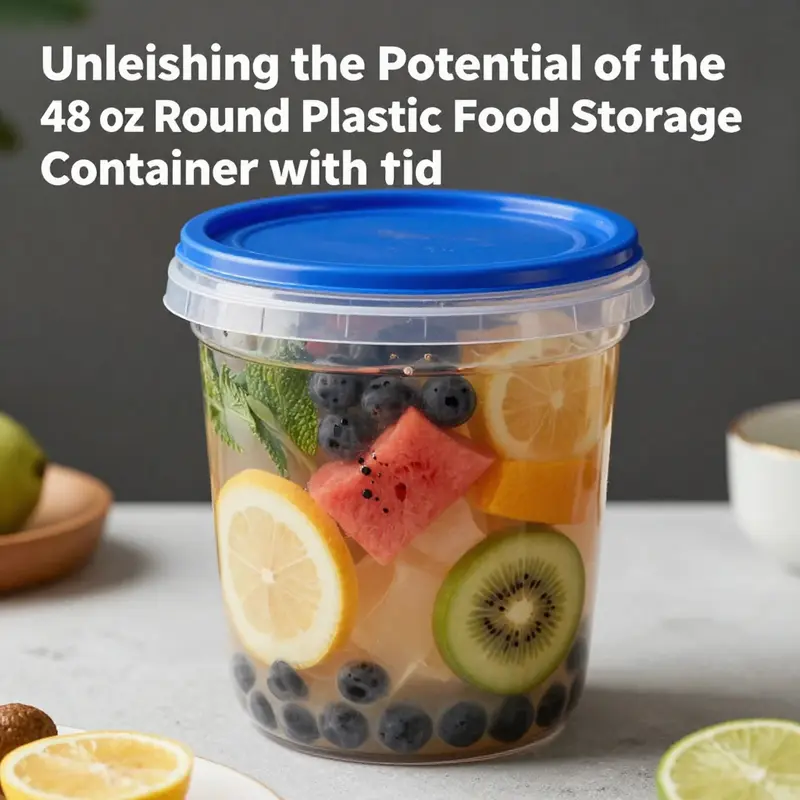
In the food service industry, storage solutions must be efficient, practical, and versatile to elevate service standards. The 48 oz round plastic food storage container with a blue lid stands out as a remarkable choice for bubble tea shops, restaurants, food trucks, catering services, event planners, and corporate procurement teams. This article explores its importance in food service operations, the current market trends influencing its use, and the environmental impacts that shape sustainable practices. By the end of our discussion, readers will gain valuable insights into why this container is a game changer in optimizing food storage and delivery, all while adhering to sustainability goals.
Clarity, Capacity, and Compliance: The 48-Ounce Round Plastic Storage Container with a Blue Lid in Modern Meal Prep and Market Dynamics
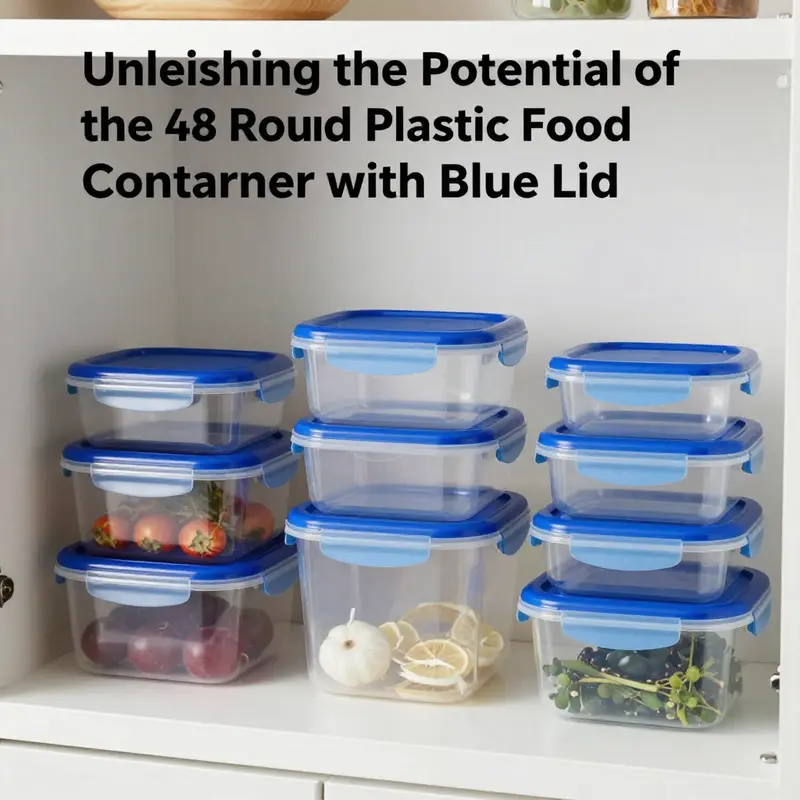
In the quiet cadence of everyday cooking and planning, a single storage vessel can become a steady companion. The 48-ounce round plastic storage container with a blue lid embodies that kind of companion: it is large enough to hold substantial portions for families, sturdy enough to survive busy days, and straightforward enough to integrate into both home kitchens and professional service settings. Its shape and size—round, with a generous 1.4 liters of capacity—strike a practical balance between spaciousness and maneuverability. It is large enough to cradle hearty portions of salads, quinoa bowls, roasted vegetables, or a couple of grilled protein portions, yet compact enough to be stacked with other containers in a fridge or pantry. For households that practice meal prep, this container becomes a reliable workhorse, a vessel that can be filled with a week’s worth of lunches, reheated, and returned to the fridge or freezer without a tedious transfer from pot to dish. Its design carries a quiet efficiency that aligns with a modern rhythm of cooking: batch preparation, portion control, and time-saving reheating without extra cleanup. The blue lid, more than a simple color, serves as a practical anchor in a crowded kitchen or a busy commercial catering operation. In a room full of similar vessels, the distinctive blue lid functions as a quick visual identifier. You can assign a color to different meals, dietary plans, or menu items, preserving clarity in a system that relies on speed and accuracy. In homes where multiple people share prep duties, the lid color becomes a simple language that reduces mixups and keeps meal plans on track during hectic weeks. The lid also carries a seal that, when closed, forms an airtight barrier against air and moisture. Freshness hinges on this seal: it slows the ingress of air that can accelerate spoilage and helps maintain textures and flavors for longer windows. This is especially valuable for batch-prepped salads that might sit in the refrigerator for several days, or for soups and stews that are portioned out for quick weeknight meals. Together, the container and its lid create a compact, reliable system for preserving meal quality with minimal waste. The micro-architecture of its use is as telling as its macro benefits: easy to grasp, easy to operate, and easy to store. The user experience centers on convenience, but it also extends into broader considerations—safety, durability, and environmental impact—that shape how such containers fit into the modern food landscape. The microwavable property is a practical touchstone for daily routines. For many households, reheating directly in the container reduces the steps involved in turning leftovers into a fresh meal. The ability to go from fridge to microwave to table without pouring into another vessel saves time and reduces the risk of cross-contamination during transfers. This feature—paired with a gasketed seal—also keeps leftovers moist and appetizing, which can help minimize food waste. In a marketplace saturated with disposable and reusable options, a container like this one offers a compelling middle path: a durable, reusable option that supports quick service and home meal prep alike, while maintaining a clear line on safety and hygiene. The practical advantages extend beyond time savings. The airtight seal helps extend shelf life by limiting the exposure of food to air and humidity fluctuations. In a world where planning and efficiency increasingly govern food choices, extending shelf life translates into less spoilage, fewer trips to the grocery store, and a reduction in waste—a trio of outcomes that resonate with both budget-conscious households and sustainability-minded businesses. The packaging logic behind the container is simple yet significant: protect, preserve, and perform. The round, rigid silhouette resists dents and keeps its contents well-contained during storage and transport. The material’s strength reduces the risk of cracking or shattered containers when bumped in a busy kitchen or a crowded cold case, a practical advantage for catering events or takeout operations that require robust, reliable equipment. The long-term value proposition here is not only about what the container can hold, but how it supports a broader system of food management that values efficiency, safety, and mindful consumption. Regulatory and safety considerations sit at the core of this discussion. When a container is designed for direct contact with food and for use in the microwave, it must meet established specifications that ensure it is safe for such use. A common framework for these assurances comes from food-contact material guidelines, which set forth criteria for mechanical resistance, chemical stability, and thermal performance. The 48-ounce round container aligns with these expectations by offering a shatter-resistant body, a reliable seal, and a lid that can withstand basic microwave reheating in ordinary home kitchens. In practice, this means that users can rely on the container to maintain its integrity under typical household temperatures and handling conditions. Yet the environment in which these containers operate is not static. Public health authorities and regulatory bodies continually evaluate the safety features of food-contact plastics, including potential leachates and the effects of repeated heating and cooling cycles. Industry practice has increasingly favored materials and designs that minimize risk and maximize user confidence. In this light, the choice of materials matters. The container typically uses a clear or translucent plastic that is durable and easy to inspect for cleanliness and residue. Durability does not come at the expense of safety; modern formulations often aim to strike a balance between mechanical performance and food-contact safety. Users benefit from a product that resists cracking or crazing when dropped, while still maintaining a level of chemical inertness when used for reheating or storing different types of meals. Another facet of safety involves cleaning and sanitation. A well-sealed container reduces the likelihood of leaks that could contaminate other foods in the fridge. The ability to wash easily without interior nooks or gaps that trap residues makes routine cleaning less burdensome. This, in turn, supports a hygienic kitchen environment and helps extend the life of the container by limiting the growth of bacteria in hard-to-reach corners. In commercial settings—restaurants, catering, and food delivery—these containers contribute to a predictable standard of service. They are chosen not just for their capacity but for their compatibility with existing workflows: the ease of labeling, stacking, and reusing across multiple service occasions. The stackability of a 48-ounce round form means it can be nested with other similar vessels or stored in a compact footprint in a cooler or prep area. This helps maximize storage density in environments where space is at a premium and where operations must scale quickly to meet demand. The blue lid, in its quiet way, supports this spatial efficiency. Its color-coded identity across a shelf makes it easier for staff to locate the right container quickly during high-volume service. In a bustling kitchen or a busy break room, such visual cues save seconds that accumulate into hours over a work week. The color dimension also supports inventory management; staff can designate certain colors to particular recipe families, ensuring that the most commonly used items are readily accessible and easy to identify. The broader implication of this design, however, extends into the sustainability conversation that has come to define contemporary packaging discourse. While single-use plastics attract growing regulatory scrutiny and consumer concern, modes of reuse gain traction as practical alternatives. In this context, the container’s value is not merely in its reuse potential but also in its adaptability to evolving waste-reduction strategies. This is where clear-eyed material choices converge with lifestyle choices: a durable, reusable container that, with proper care, can serve many meal cycles before disposal. It is also worth acknowledging that the landscape of plastic materials continues to diversify. Some variants of round storage containers designed for food contact are marketed as BPA-free or as using safer formulations to minimize potential concerns about chemical exposure. For households who prioritize health-conscious choices, verifying such properties becomes part of an informed purchase decision. Yet the overarching narrative remains anchored in practical outcomes: safer handling, longer shelf life, easier reheating, and the peace of mind that comes from a container built to endure the daily rhythms of modern life. In a marketplace that grew to enormous scale in 2023, food containers became more than simple vessels. They became enablers of home cooking and professional service, supporting the rise of meal-prep culture, home-delivery models, and streamlined catering operations. The market data from that period underscored a shift toward convenience items that still delivered on safety and reliability. The disposable plastic segment, long a staple for value-driven consumption, continued to occupy a substantial niche even as manufacturers faced intensified environmental scrutiny. The numbers pointed to a robust demand for practical, reusable alternatives that still deliver on the convenience that customers expect. This dynamic was not merely about volume; it was about aligning product features with evolving consumer needs—freshness, ease of use, and responsible disposal. In this sense, the 48-ounce round container with a blue lid can be read as a case study in how a single packaging solution can reflect larger trends. It embodies the tension between convenience and sustainability, between everyday practicality and the standards that govern safe food handling. As the market charted a trajectory toward more sophisticated safety and sustainability features, containers of this size remained relevant because they address a broad spectrum of use cases. They accommodate family meals and bulk meal prep, support commercial operations that require durable, reusable ware, and participate in a broader ecosystem that values organization, efficiency, and waste reduction. The conversation about packaging strategy often circles back to a few core questions: How can containers protect food quality while simplifying handling? How can they be reused many times to lower environmental impact? How do they integrate with the workflows of households and food businesses alike? These questions are not abstract; they influence product design choices that determine how well a container blends into daily routines. It is precisely at this intersection—between function, safety, and sustainability—that the 48-ounce round plastic storage container with a blue lid earns its place in the discussion. Its capacity and form support a spectrum of use scenarios from home meal prep to restaurant take-out streams, while its seal and reheating capabilities address core consumer expectations for freshness and convenience. The container’s design encourages mindful consumption by reducing spoilage and enabling portion control, two behaviors that align with contemporary goals around food waste reduction and more efficient everyday living. In a broader sense, this kind of container helps illustrate how packaging can be both practical and responsible. It demonstrates that the decisions we make about what we buy—and how we use it—reverberate beyond the kitchen. They echo into supply chains, recycling streams, and public health policy. In markets where regulatory oversight intensifies and consumer demand for safer, more sustainable options grows, such vessels chart a course that blends durability with a thoughtful approach to food safety and waste. Ultimately, the 48-ounce round container with a blue lid is more than a receptacle. It is a practical tool that fosters planning, reduces waste, and supports smooth transitions between storage, reheating, and serving. It offers a tangible example of how packaging can be engineered to handle real-world tasks without creating unnecessary friction in daily routines. It stands as a reminder that the simplest tools—an adequately sized container, a reliable seal, and a lid that stands out enough to be remembered—can have outsized effects on how people manage meals, how businesses operate, and how communities move toward more sustainable habits. For readers who want to explore complementary packaging options and sustainability narratives beyond the kitchen, there is a relevant resource that focuses on eco-friendly, logo-bearing disposable options in a similar category. The linked example illustrates how brands and operators translate environmental commitments into tangible, reusable or recyclable choices that still meet the demands of fast-paced service. disposable eco-friendly printed logo single-wall paper cup. This cross-pollination of packaging insights—between durable, reusable ware and efficient, branded disposables—highlights a broader ecosystem where function, safety, and environmental responsibility intersect in everyday choices. As consumers and professionals alike seek better ways to store, transport, and reuse food, the conversation inevitably circles back to fundamental principles: clarity of purpose, reliability under pressure, and a commitment to doing more with less waste. With this container serving as a practical anchor, the chapter now threads into larger market dynamics and regulatory expectations that shape what is possible in the world of food storage. For authoritative information on food safety standards and material compliance relevant to such containers, refer to the U.S. Food and Drug Administration’s guidelines. The official resources provide a framework for evaluating how these products should perform under typical cooking, reheating, and storage scenarios: https://www.fda.gov/food/food-contact-materials/food-contact-materials-and-regulations. In sum, the 48-ounce round plastic storage container with a blue lid is not merely a vessel. It is a lens through which we can observe how design decisions respond to real kitchen needs, how safety requirements sculpt product choices, and how market forces push packaging toward more sustainable, efficient, and user-friendly forms. It stands at the confluence of meal planning convenience, professional reliability, and responsible consumption, inviting both home cooks and service professionals to consider how each day’s leftovers might become tomorrow’s ready-to-eat meals, with less waste and more clarity along the way. For readers seeking additional perspectives on sustainable packaging strategies and comparable product categories, the broader packaging landscape offers further context that complements these ideas. disposable eco-friendly printed logo single-wall paper cup. This cross-reference helps ground the discussion in concrete examples of how color-coded, reliable containers can align with branding, service efficiency, and environmental stewardship, reinforcing the notion that even small choices in storage ware can ripple through kitchens, households, and supply chains alike.
How Sustainability, Safety and Smart Design Drive Demand for 48 oz Round Plastic Containers with Blue Lids
Sustainability, Safety and Smart Design Drive Demand for 48 oz Round Plastic Containers with Blue Lids
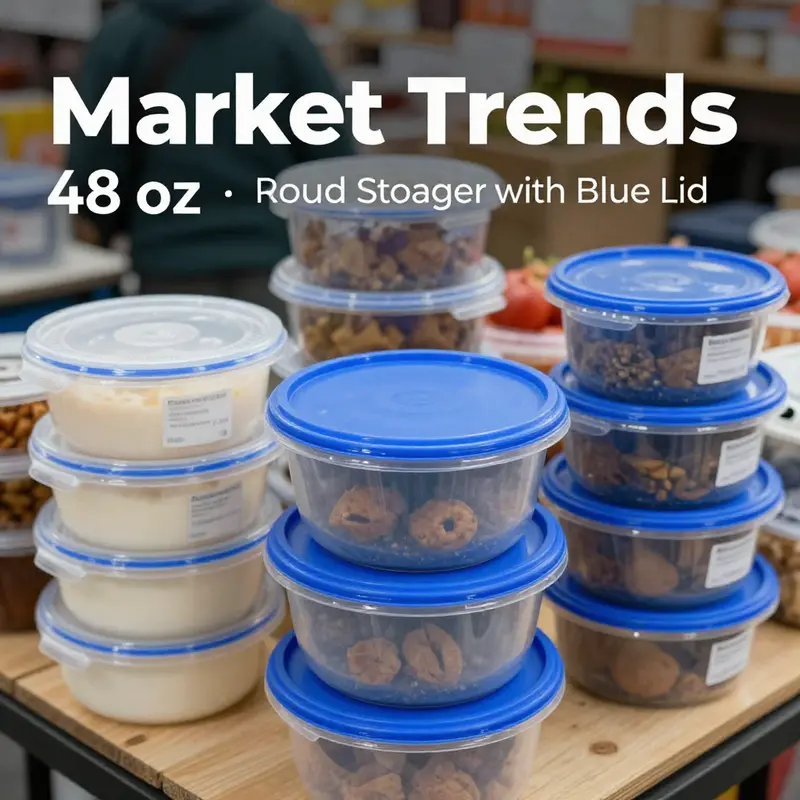
The market for 48 oz round plastic food storage containers with blue lids sits at the intersection of practical utility and shifting expectations. These containers have long served meal prep, leftover storage, and commercial takeout needs. Today their role is changing because buyers, regulators, and foodservice operators want more than convenience. They expect safety, environmental responsibility, and features that simplify daily workflows. That trio of demands—sustainability, food safety, and functional innovation—shapes product choices and design priorities for the 48 oz container category.
Sustainability has moved from optional to central. Consumers and procurement teams now evaluate packaging based on life cycle impact, recyclability, and content sourcing. For a round plastic container with a colored lid, sustainability affects material selection, production methods, and end-of-life handling. Traditional plastics remain widely used because they are inexpensive, durable, and easy to mold. However, their environmental footprint encourages manufacturers to explore alternatives. Recycled content, certified-resin feedstocks, and compostable blends are all part of current product roadmaps. Some suppliers prioritize post-consumer recycled (PCR) resins to reduce virgin polymer demand. Others invest in polymers designed for industrial composting or in bio-based alternatives that cut carbon intensity.
The push for greener options does not eliminate practical constraints. Cost, supply chain stability, and regulatory compliance still influence material choices. PCR resins often carry price volatility and supply variability. Compostable materials require specialized manufacturing and consistent labeling to avoid contamination in recycling streams. In many markets, the most viable near-term approach is hybrid: increase the share of recycled content while designing for reuse. That pathway preserves the functional benefits of plastic containers while reducing their net environmental impact.
Aesthetic choices also feed sustainability messaging. The blue lid commonly used on 48 oz containers provides rapid visual sorting. Color-coding aids inventory rotation and waste reduction. Kitchens can assign colors to food types, days, or allergen-free zones. That simple design decision can cut cross-contamination risks and reduce food spoilage, indirectly improving sustainability by lowering waste volumes. Packaging that supports waste reduction often resonates more with buyers than packaging that simply claims biodegradability.
Food safety sits alongside environmental concerns. Containers must meet food contact regulations and behave predictably under typical use. Buyers look for evidence of regulatory compliance, stable migration performance, and resistance to staining and odors. Clear labeling and certifications reassure purchasers. Compliance with established food-contact regulations is particularly important for commercial customers and institutional buyers. Materials selected for a 48 oz container need to withstand repeated use, temperature changes, and cleaning cycles without degrading.
Testing and certification practices matter as much as material choice. Migration testing, thermal stability assessments, and endurance testing under microwave and dishwasher conditions are routine for quality-conscious manufacturers. Certifications demonstrating compliance with food-contact rules and migration limits are decisive for many buyers. For procurement teams, a documented safety profile reduces risk and administrative burden. It also enables containers to move across markets with fewer legal hurdles.
Design and functionality remain core purchase drivers. The 48 oz size hits a sweet spot for many consumers and foodservice operations. It is large enough for family-sized portions and meal kits, yet compact enough to stack efficiently. Stackability is more than convenience. Efficient stacking optimizes storage in cold rooms and display cases. It lowers transportation volume during distribution. Airtight lids extend shelf life and prevent spillage during transit. Clear bases and colored lids combine to produce visually organized storage systems that speed service.
Heat resistance and microwave safety are other practical demands. Reheating directly in a container eliminates transfers and saves time. To meet this need, polymer selection and lid design must account for thermal expansion and steam release. Lids that lock securely under heat yet allow pressure release prevent warping and leaks. In commercial kitchens, these features translate into faster service and fewer customer complaints.
Durability and reuse are increasingly prized. Buyers often prefer containers designed for repeated use over single-use disposables. Reusable containers reduce per-use costs and environmental burdens when paired with sound cleaning protocols. Manufacturers respond by enhancing material thickness, reinforcing rim geometry, and improving seal mechanisms. These engineering changes drive up initial cost but lower total cost of ownership for regular users.
Aesthetic and branding effects matter in a crowded market. Blue lids on round containers provide instant recognition. Retailers and meal-kit services use color to reinforce brand identity and simplify handling. A recognizable color speeds employee training and reduces errors. It also offers marketing value for operators who want consistent presentation across channels. For consumers, a pleasing design improves perceived value and encourages reuse.
Market forces also influence packaging formats and purchasing patterns. Bulk buying options, such as packs of many containers, attract catering services, cafeterias, and large households. Bulk packaging reduces per-unit costs and logistics complexity. Suppliers that can offer consistent quality at scale win contracts with institutional buyers. Meanwhile, smaller retailers and direct-to-consumer sellers often choose flexible pack sizes and mixed assortments to attract diverse customers.
Material innovation in the broader disposable container market informs designs for the 48 oz container. Earlier years saw dominance by a few polymer families. Today, producers mix polymers with additives to enhance performance while meeting environmental targets. Polycarbonate and some polyolefins deliver strength, clarity, and heat resistance. Emerging blends aim for improved oxygen and moisture barriers to extend shelf life. Barrier performance is particularly relevant when containers serve for prepared foods that require longer refrigerated storage.
Governance and regulation are reshaping development paths. Increasing restrictions on single-use plastics in many jurisdictions drive urgency around alternatives. Policymakers often focus on the most visibly polluting items. Foodservice packaging is becoming part of those regulatory conversations. Where bans or fees apply, producers must pivot quickly to compliant materials or to reusable systems. Businesses that anticipate regulatory shifts have a competitive edge, especially when they secure supply for alternative materials early.
Transparency also influences buying decisions. Traceability of polymer sources, verification of recycled content, and disclosure of additives all play roles. Buyers favor suppliers that provide test reports, chain-of-custody documentation, and clear end-of-life guidance. That transparency simplifies corporate sustainability reporting and supports claims verification under consumer protection laws.
The economics of these containers remain central. Cost sensitivity persists across the value chain. For high-volume foodservice operations, small per-unit savings aggregate into large budget impacts. New materials and certifications usually increase price. The market balances these costs with perceived gains in safety and sustainability. Many buyers accept modest cost premiums when they see measurable benefits, such as lower spoilage, reduced waste fees, or stronger customer preference for greener packaging.
Supply chain dynamics matter too. Availability of recycled resins, access to compostable polymer suppliers, and logistic costs influence what ends up in the marketplace. Global disruptions can inflate material costs and delay product launches. To mitigate risk, manufacturers diversify suppliers and invest in flexible production lines. That agility helps maintain steady supply for bulk pack buyers.
Operational integration defines long-term success. Foodservice operators must adapt workflows to new container types. Training staff on proper seal techniques, stack configurations, and cleaning practices prevents failures. Procurement teams coordinate with their waste managers to ensure products reach appropriate end-of-life streams. When compostable containers enter a system lacking industrial composting, contamination can result. Therefore, practical viability depends on local infrastructure and operator readiness.
Marketing and retail strategies have evolved around these realities. Sellers highlight features that match buyer priorities: recycled content, regulatory compliance, microwave safety, airtight seals, and color-coding. Clear, verifiable claims perform better than vague green messaging. Demonstrating real-world benefits—such as longer shelf life, reduced leakage, or proven reusability—helps convert cautious buyers.
Alternative formats also present opportunities. For some applications, fiber-based bowls and molded pulp containers offer credible eco-friendly options. These products are easy to compost and have lower perceived environmental impact. They do not always replace plastic containers, though. For liquid-containing meals or repeated microwave reheats, plastics still often dominate. Cross-category strategies work best: offer fiber bowls where compostability is practical, and durable plastic containers where longevity and heat resistance are necessary. One relevant example of a sustainable alternative is the biodegradable eco-friendly take-away round kraft paper bowl, which can complement plastic options in mixed-service settings. https://greendispopack.com/product/biodegradable-eco-friendly-take-away-odm-oem-round-kraft-paper-bowl/
Looking ahead, the 48 oz container will likely become more modular. Expect to see greater use of reusable deposit-return programs, improved recycled-content standards, and smarter lids with improved barrier function. Manufacturers will also push innovation in polymers that balance recyclability with heat resistance. Certifications and testing will continue to be critical, and companies that provide robust compliance documentation will capture institutional business.
For purchasers, the practical approach combines careful material selection with operational readiness. Evaluate containers on performance metrics relevant to your use case. Test seals, reheating behavior, stackability, and longevity under your cleaning protocols. Verify regulatory compliance and request migration and endurance test data. Consider total cost of ownership across expected reuse cycles. Factor in local waste infrastructure when choosing compostable or recyclable options.
Manufacturers should prioritize design for recycling and reuse. That means avoiding mixed-material constructions that hinder processing. It also means choosing pigments, labels, and adhesives that do not contaminate recycling streams. Clear guidance for end-users increases correct disposal and reduces contamination rates. Transparent supply-chain practices and pre-validated testing reports build trust with both retail and institutional buyers.
Retailers and foodservice operators can use color strategically. The blue lid is practical for categorization and branding. Use color-coding to reduce waste and simplify inventory control. Pair containers with clear labeling systems to speed handling and avoid cross-contamination. Training staff to use containers consistently yields quick gains in efficiency and waste reduction.
The combined pressures of regulation, consumer expectation, and operational need will keep driving product evolution. The 48 oz round plastic container with a blue lid will not disappear, but it will evolve. Expect more recycled content, better documentation, and smarter design features. The winners in this market will be those who balance practicality with sustainability, and who can deliver verified performance where it matters most.
For regulatory reference, manufacturers and buyers often consult official food-contact guidance when validating materials. A primary source for U.S. food-contact polymer regulations is available for review and citation.
https://www.ecfr.gov/current/title-21/chapter-I/subchapter-C/part-177/subpart-B/section-177.1520
Reusing and Recycling: The Lifecycle of a 48-Ounce Round Plastic Storage Container and Its Blue Lid in a Sustainable Future
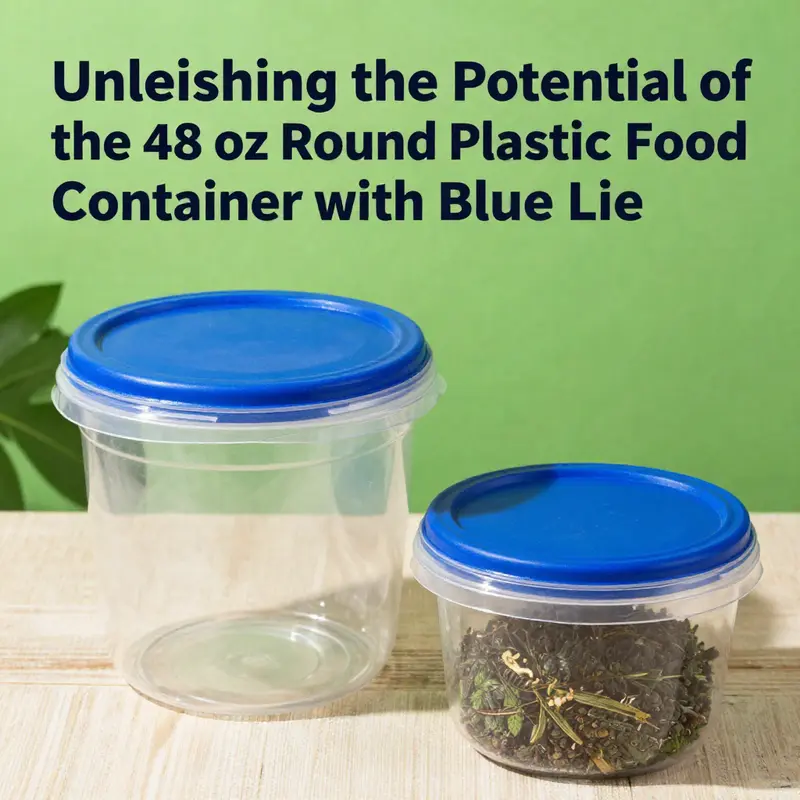
The everyday plastic storage container—a simple, round vessel with a blue lid—often disappears from the foreground of our kitchens and into the background of our routines. Yet its lifecycle reveals the intricate balance between convenience and responsibility that frames modern sustainability practices. This chapter follows that balance, tracing how a single, seemingly ordinary container becomes a touchpoint for design choices, consumer habits, and policy shifts that together determine its true environmental footprint. In looking at the 48-ounce round workspace companion, we see not just a vessel for keeping leftovers fresh, but a case study in how material selection, reuse potential, and end-of-life pathways shape a broader conversation about responsible packaging in a world that increasingly prizes safety, efficiency, and resource stewardship over disposable convenience alone. The container’s prominence in settings ranging from home kitchens to take-out operations makes it a fitting exemplar for how durable, reusable design can coexist with the economic realities that drive fast, reliable packaging in modern supply chains. Its blue lid—a simple visual cue—serves as a reminder that aesthetics, usability, and sustainability can align to encourage wiser consumption patterns without sacrificing practical performance.
Material choice sits at the heart of this alignment. The ecological footprint of any storage solution hinges on the chemistry of its plastic, how long it lasts, and how it can be reclaimed at the end of use. Containers built from polypropylene (PP) or similar BPA-free resins are often highlighted as safer and more sustainable choices because of their resistance to degradation and their potential for longer reuse cycles. The logic is straightforward: if a container can survive more cycles of washing, refilling, and stacking without losing performance, it replaces multiple shorter-lived items in the household or kitchen fleet. In addition, PP’s recyclability in many municipal programs makes it a practical bridge between durability and end-of-life management. For contexts that demand extra durability and clarity without compromise to safety, premium variants—sometimes described in industry notes as Tritan™-type copolyesters—offer a combination of high impact resistance and chemical stability while maintaining BPA-free status. These materials are designed to endure regular dishwashing and daily handling, reducing the probability of micro-damage that can accumulate with cheaper, disposable-grade plastics. They also help maintain food safety by limiting interactions between contents and container surfaces, a factor that matters when the goal is to minimize any chemical exposure over repeated use.
At the same time, durability does not automatically translate into lower environmental impact if the container’s entire life cycle is not considered. Shatter resistance is a valuable asset in a storage system, reducing the likelihood of breakage and failure that would otherwise lead to premature disposal. Yet durability must be balanced with the energy and water used in cleaning, as well as the downstream realities of recycling streams. The practical result is a design philosophy that emphasizes not only the resilience of the material but also the efficiency of the reuse routine. In kitchens where containers are washed frequently in household dishwashers or commercial machines, the resilience of PP- or Tritan-based options can translate into fewer replacements over a multi-year horizon. In such scenarios, the overall environmental burden may tilt toward the positive side, provided that the energy and water inputs for cleaning are kept within reasonable bounds and the container remains in good condition for extended use.
Another crucial vector in this assessment is how the container is produced and what it contains in terms of recycled content. The trend toward incorporating recycled materials into plastics used for food contact is advancing, though it is not universal. When recycled content is used, it needs to meet safety standards that assure the absence of contaminants and the integrity of the material in contact with food. Certifications such as the Global Recycled Standard (GRS) help ensure traceability and independent auditing across the supply chain, signaling that the recycled materials used in these containers come from verified streams. The combination of recycled content with BPA-free safety assurances helps close the loop in a practical sense: materials can re-enter the economy through recycling without compromising consumer health or product performance. In some manufacturing contexts, compliance with U.S. FDA standards for food contact materials—such as the 21 CFR 177.1520 clause—guarantees that the product adheres to the safety expectations that allow it to be reused with confidence. When brands or manufacturers pursue these standards, they respond to a growing consumer emphasis on safety and sustainability and, in doing so, help to organize supply chains around more responsible material choices.
The container’s design also plays a pivotal role in environmental stewardship. A well-thought-out form—airtight sealing, a snug lid, and a shape that maximizes stackability and storage efficiency—offers practical consequences beyond freshness. Airtightness preserves food longer, reducing spoilage and the amount of waste that must be disposed of, which, in turn, lessens the demand for new packaging to replace spoiled produce. Stackability lowers the space required for storage in homes, restaurants, and food-service operations, decreasing the energy intensity associated with warehousing and transportation. In the broader picture, when a storage solution is designed for durable, repeated use, it becomes part of a system that rewards reusability over disposability, nudging consumers and businesses toward choices that accumulate smaller, incremental environmental benefits over time.
But sustainability is not achieved by durability alone. The end-of-life path for these containers is a complex landscape shaped by municipal recycling infrastructure, consumer behavior, and the materials’ inherent recyclability. Polypropylene and other common food-contact plastics can be recyclable in many jurisdictions, but the practicality of that recyclability depends on local programs’ capabilities, the purity of the material stream, and the avoidance of contamination. Even when recyclable, the actual recovery rate hinges on consumer participation and the availability of efficient sorting and processing facilities. Contamination—such as mixing with non-recyclables or residual food residue—can undermine the efficiency of recycling streams and lead to greater waste or downcycling. This makes consumer responsibility more than a courtesy; it becomes a vital component of the container’s environmental story.
To strengthen the sustainability case for a reusable container, manufacturers and regulators alike are exploring production practices that reduce reliance on virgin plastics. The adoption of recycled content can lower the carbon footprint of new containers, provided the content comes from verifiable streams and is processed under conditions that maintain safety for food contact. Traceability and verification through standards like GRS help ensure that recycled inputs are not only present but properly managed across the supply chain. Suppliers are increasingly mindful of life-cycle analyses, seeking designs that optimize material use and extend the product’s usable life. This forward-looking approach aligns with the broader market trajectory toward more sustainable packaging that blends convenience with environmental responsibility.
Consumer behavior is a compelling determinant of the container’s environmental impact. The shift from single-use, disposable containers to reusable options—driven by rising awareness of plastic waste and by policies that favor extended producer responsibility—transforms the practical math of the container’s footprint. Reuse has the potential to dramatically reduce the total number of units entering the waste stream, especially in settings with high volumes of take-out or meal-prep activities where many users would otherwise rely on disposables for each meal. When households and commercial kitchens embrace a regular washing and refilling routine, the cumulative effect is a meaningful decline in the need for new packaging and a corresponding decrease in the associated energy, water, and material demands. Yet this shift depends on the container’s durability over many cycles, its resistance to staining or odor retention, and the ease of cleaning. A poorly performing product can generate frustration and quick replacement, undermining the environmental intent.
Policy and market dynamics also shape the container’s lifecycle. The 2023 global market analysis points to a robust, growing sector for food storage containers, with particular momentum driven by the rise of take-out culture, e-commerce deliveries, and the demand for practical, low-cost packaging. By 2032, projections suggest substantial growth as the market consolidates around safety, sustainability, and functionality in new forms. These trends create a paradox: while demand for practical, disposable options remains strong in many segments, there is an accelerating push toward products designed for reuse and recyclability. The tension between convenience and sustainability amplifies the importance of design thinking that seeks to balance the user experience with environmental responsibility. In this context, even a simple round container with a blue lid becomes a microcosm of how packaging designers, manufacturers, retailers, and customers negotiate this ongoing transition.
Within this complex ecosystem, the end-of-life narrative for a typical 48-ounce round container with a blue lid calls for clear, actionable guidance. Consumers are encouraged to rinse and dry containers before recycling to minimize contamination. In jurisdictions where PP or similar polymers are widely accepted, placing the cleaned container into the appropriate recycling stream supports higher recovery rates. The potential for repurposing a durable container beyond its original purpose—such as using it as a storage vessel for bulk pantry items, or repurposing it for non-food uses—offers additional avenues to extend its life. This kind of repurposing embodies the circular economy ethos by converting a once-disposable object into a durable, reusable asset that serves new needs, delaying or potentially avoiding the need for recycling altogether. The social dimension should not be overlooked: households, schools, and small businesses alike benefit from practical, long-lasting containers that reduce waste, lower costs over time, and encourage responsible habits. When combined with clear labeling, straightforward cleaning guidance, and accessible recycling options, such products help build a culture of mindful consumption that resonates beyond a single product.
As we consider the broader landscape, it becomes clear that sustainability is not a single decision but a sequence of informed choices across the product’s life. The container’s material family, the predictability of its reuse life, the quality and reliability of its sealing mechanism, and the efficiency of its end-of-life pathways together determine its true environmental performance. The 48-ounce size, with its generous capacity, is particularly relevant in contexts where bulk storage reduces per-unit packaging needs and where the quantity of leftovers matters in daily routines. The color of the lid—a bright blue—reinforces the idea that design can be both practical and inviting, signaling to users that this is a product meant for reliable reuse rather than quick disposal. This synergy of form, function, and responsibility is not a coincidence; it is the outcome of deliberate design thinking and industry alignment with sustainability principles that seek to harmonize consumer convenience with ecological prudence.
How do we translate this understanding into real-world practice? First, by recognizing that choice of materials matters beyond initial cost or aesthetics. A PP- or Tritan-based container may cost more upfront than a cheaper, disposables-focused option, but the long-term savings in replacement costs, reduced waste, and compatibility with recycling streams can offset the initial investment. Second, by embracing a reuse-first mindset that treats containers as assets in a household or operation rather than throwaway items. This mindset encourages careful handling, thorough cleaning, and timely meals planning to maximize the container’s usable life. Third, by supporting end-of-life pathways that align with local infrastructure and consumer behavior. When recycling is viable and contamination is minimized, recycling is a meaningful option; when it is not, repurposing or long-term reuse are valuable alternatives that avoid creating unnecessary waste.
For readers seeking practical ways to connect these themes to everyday practice, consider exploring packaging solutions that explicitly emphasize reuse and recyclability without sacrificing performance. The broader literature and supplier guidance in this field increasingly highlight a continuum—from durable, reusable containers that reduce the total number produced to materials and processes that enable recovered content to re-enter the economy with preserved safety standards. In this sense, the simple round container with its blue lid can be viewed as a node in a wider network of sustainable packaging practices, a tangible example of how thoughtful materials, intelligent design, and responsible end-of-life choices converge to reduce environmental impacts while preserving the benefits of modern food storage.
As the market evolves, we can expect continued emphasis on safety, durability, and circularity. Innovations in materials science may yield plastics with lower embodied energy and higher recyclability, while advances in product design can further optimize stackability, sealing, and cleanability. The policy environment will likely continue shaping these developments, with regulations increasingly favoring products that demonstrate verifiable recycled content, long service life, and robust end-of-life pathways. In that light, the 48-ounce round container with a blue lid becomes more than a household utensil; it stands as a practical benchmark for how manufacturers, retailers, and consumers can collaborate to promote sustainable consumption patterns without sacrificing the convenience that defines modern living. This is not merely a theoretical framework but a living pattern—one that will inform the next generation of packaging and the choices we make about what we keep, how long we keep it, and how we responsibly part with it when the time comes.
For further exploration of sustainable packaging options and to see how related eco-friendly packaging products are positioned in the market, you can explore examples in the broader category of sustainable containers and takeaway packaging, including the nuanced approaches to recycled content and life-cycle considerations. This broader context helps illuminate how the lifecycle of a single storage container reflects larger shifts in how societies produce, use, and ultimately reintegrate packaging materials into the economy. By examining these patterns, practitioners and consumers alike gain a clearer sense of where improvements are most impactful and where policy levers or consumer behavior changes can accelerate progress toward a more circular packaging system.
Internal reference: eco-friendly options in paper-based packaging can complement plastic storage solutions in a sustainability strategy. For readers interested in one practical example of an eco-friendly packaging alternative that aligns with the reuse mindset, see this resource on disposable eco-friendly custom paper cups with lids, which offers a perspective on how paper-based and plastic-based packaging can coexist within a sustainability framework: eco-friendly custom paper cups with lids.
External resource for broader context: a comprehensive overview of the 48-ounce plastic container with lid and its place in material and end-of-life systems is available through industry documentation and supplier references, which provide detailed considerations for safety, recycled content, and regulatory alignment. External reference: https://www.alibaba.com/product-detail/Overview-of-48-Oz-Plastic-Container-With-Lid_1600532959635.html?spm=a2700.1.women.1&src=1&scm=1007.13007.21084.0&search=true
Final thoughts
The 48 oz round plastic food storage container with a blue lid encapsulates practicality while playing a significant role in food service efficiency. As trends favor convenience and sustainability, embracing such containers can enhance operational efficiency and cater to evolving consumer preferences. Understanding the interplay of market dynamics and environmental considerations is essential for businesses aiming to thrive in the food service sector. By making informed choices about storage solutions, businesses can not only optimize their operations but also contribute positively towards a more sustainable future.