
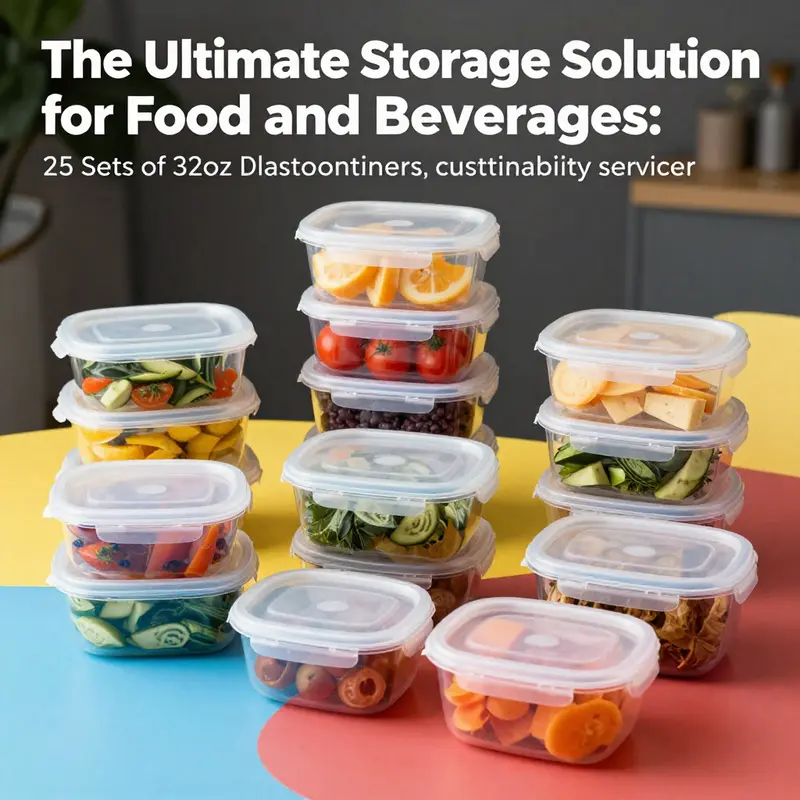
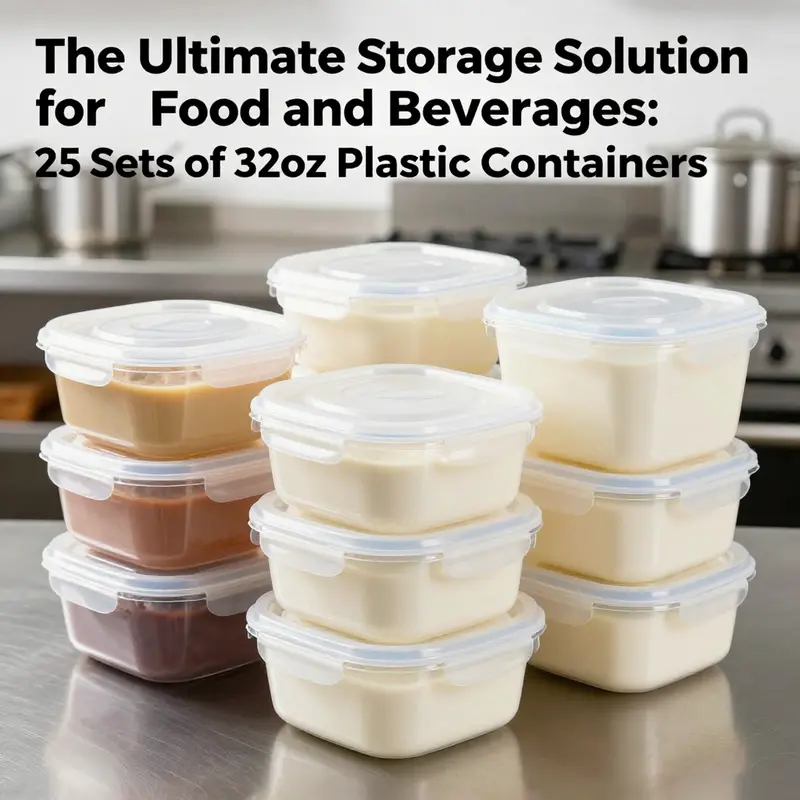
In the competitive realms of bubble tea shops, restaurants, food trucks, and catering services, selecting the right food storage option is crucial. The 25 sets of 32oz plastic food containers with lids not only boast remarkable durability but also offer a range of functionalities for preserving and transporting food items. This article delves into how these containers enhance usability, serve economic needs, support eco-friendly practices, and meet evolving consumer preferences. By exploring each chapter, professionals in the food service and event planning sectors will gain a comprehensive understanding of why these containers are essential for their operations.
null
null
Calculating Value: How Buying 25 Sets of 32‑oz Plastic Food Containers Delivers Savings and Flexibility
When a buyer weighs the cost of packaging options, the purchase decision must balance short‑term price, long‑term value, and operational fit. Buying 25 sets of 32‑ounce plastic food containers at once changes the economics in ways that matter for households and businesses. The rationale is straightforward: bulk buying reduces unit price and spreads fixed costs across more uses. Beyond that, the containers’ material and features determine how many times each piece can be reused, how it performs in routine tasks, and how it affects waste handling and regulatory exposure.
Start with the basic arithmetic. A single purchase packet containing 25 pairs — container and lid — offers immediate economies of scale. The sticker price per set divides into a low per‑unit cost when compared with buying individual containers. For meal prep businesses and restaurants, low unit cost improves margins. For households, the same advantage appears as reduced cost per use. But price alone is not the full story. Durability, regulatory compliance, and convenience influence replacement cycles and the total cost of ownership.
Material quality matters. Containers made from virgin polypropylene deliver heat resistance and food‑grade safety. Those qualities mean the containers tolerate regular microwaving, repeated dishwasher cycles, and deep freezing. Each tolerance characteristic reduces the chance of premature warping, cracking, or odor retention. Long usable life lowers replacement frequency. If a container performs well over dozens of cycles, the very low upfront cost per set becomes a meaningful ongoing saving. Put simply, buying a bulk pack of durable containers is an investment in an extended service life that shrinks average cost per meal stored.
Businesses will especially notice how consistent, reusable packaging reduces variable costs. A takeout kitchen that switches from single‑use paper to sturdy plastic that customers can reuse benefits from lower recurring supply orders. The reduced labor in packaging and the minimized breakage or leakage also improve efficiency. For commissaries and meal delivery services, the predictable dimensions of standardized 32‑oz containers streamline portion control, caloric calculations, and inventory forecasting. That predictability turns into operational savings: fewer mistakes, less food waste, and simpler checkout or labeling processes.
The freezer and microwave compatibility of these containers is an economic multiplier. Foods can be prepared in bulk, frozen, and reheated in the same container. This reduces transfers between vessels. Fewer transfers mean less time, fewer utensils to wash, and less chance of contamination. These factors translate into labor savings. For institutional kitchens that must manage staff hours carefully, the cumulative time saved across hundreds of meals becomes significant.
Bulk purchase also helps logistics and storage planning. A single shipment with 25 sets reduces shipping costs per item. There are fewer purchase orders to manage, fewer envelopes to store, and less administrative burden. Smaller businesses can reduce the frequency of supplier interactions. For larger operations, standardized bulk orders enable better vendor negotiations and predictable cash flow planning. Financially, grouping purchases into fewer, larger transactions simplifies accounting and lowers transaction fees.
Consider the environmental economics too. Conventional plastic has a reputation for long persistence in landfills. That persistence can translate into external environmental costs that society eventually absorbs. Yet reuse and recyclability change the calculus. Containers that are repeatedly used and then recycled reduce lifecycle impacts. Comparing the total number of uses before disposal shows how a reusable plastic container can outperform single‑use paper alternatives in raw resource terms. For businesses that brand themselves as sustainable, using durable, reusable containers supports green messaging while still controlling costs.
Regulatory context plays a role as well. Some jurisdictions levy fees or bans on certain packaging types. Where single‑use plastics face surcharges or restrictions, choosing reusable plastic containers can avoid additional charges. Compliance with food safety standards also reduces the risk of fines. Containers manufactured to recognized quality systems give procurement managers confidence. That compliance, while possibly adding to initial cost, can prevent expensive recalls or penalties.
Yet environmental tradeoffs remain. Biodegradable or fiber‑based bowls may offer lower end‑of‑life impacts. However, their higher price and sometimes-limited durability can increase lifecycle cost when used repeatedly under heavy conditions. For buyers who want to balance environmental goals and budgets, combining strategies can work. Use reusable plastic for regular, repeatable operations, and reserve compostable options for short‑duration or one‑time events. Businesses can also provide incentives for customers to return containers, further reducing waste and encouraging reuse.
Tax and procurement advantages are sometimes overlooked. For registered businesses, purchasing packaging in bulk can be tax‑deductible as a cost of goods sold. That immediate fiscal relief improves cash flow. Volume purchases also often come with better supplier terms, including longer payment windows or discounted shipping. For organizations with seasonal demand, buying ahead when prices are favorable locks in savings and helps hedge against supply disruptions.
Comparative cost analysis helps clarify decisions. Calculate the break‑even point by estimating average uses per container. If a container costs a modest amount and lasts for dozens of cycles, the cost per use becomes negligible. Factor in the avoided costs of replacements, reduced food spoilage, and labor savings from simplified handling. Include waste disposal fees or potential packaging surcharges. Once tallied, the advantages of a bulk set frequently outweigh the modest initial outlay.
Practical use patterns also increase economic value. Standardizing menu portion sizes to fit the 32‑oz volume controls ingredient costs tightly. When every portion fits the same container, inventory becomes easier to predict. Branding and labeling become simpler. For meal prep companies that sell subscriptions, consistent packaging enhances customer satisfaction and reduces complaints. In retail or wholesale contexts, buying 25 sets means rotating inventory is straightforward, and damaged units can be replaced from the same batch, preserving quality consistency.
Storage efficiency further saves money. Nestable and stackable container designs reduce warehouse footprint. That effect lowers storage costs per unit. Less space equals lower rent or storage fees. Smaller storage needs also speed internal operations because staff spend less time handling and searching for packaging components.
Maintenance and cleaning strategies preserve value. Adhering to dishwasher‑safe instructions and avoiding abrasive cleaners protects containers. When lids and bases maintain tight seals, food waste from spills or freezer burn drops. It pays to train staff or household members on best practices. Proper care extends service life and keeps unit costs low.
Finally, supplier selection influences overall economics. Choose vendors with transparent quality standards and good return policies. A supplier that offers consistent performance and quick replacements reduces downtime. Warranties or satisfaction guarantees mitigate risk. Long‑term relationships can unlock further discounts as volume increases.
For buyers considering alternatives, it helps to compare full lifecycle costs. A slightly higher initial spend on certified, reusable containers often yields a lower total cost than cheaper, single‑use options. When environmental reputations matter, combining reusable plastic with selective compostable products may offer the best balance. For readers evaluating options, a relevant comparison is available for those exploring paper‑based choices, such as a disposable kraft paper bowl for food package with lid.
For direct product details and current pricing, refer to the original product listing at the retailer’s site:
https://www.walmart.com/ip/25-sets-32oz-plastic-soup-food-container-with-lids-YW/678298239
Counting the Cost: Environmental Consequences of 25 Sets of 32oz Plastic Food Containers and Smarter Paths Forward
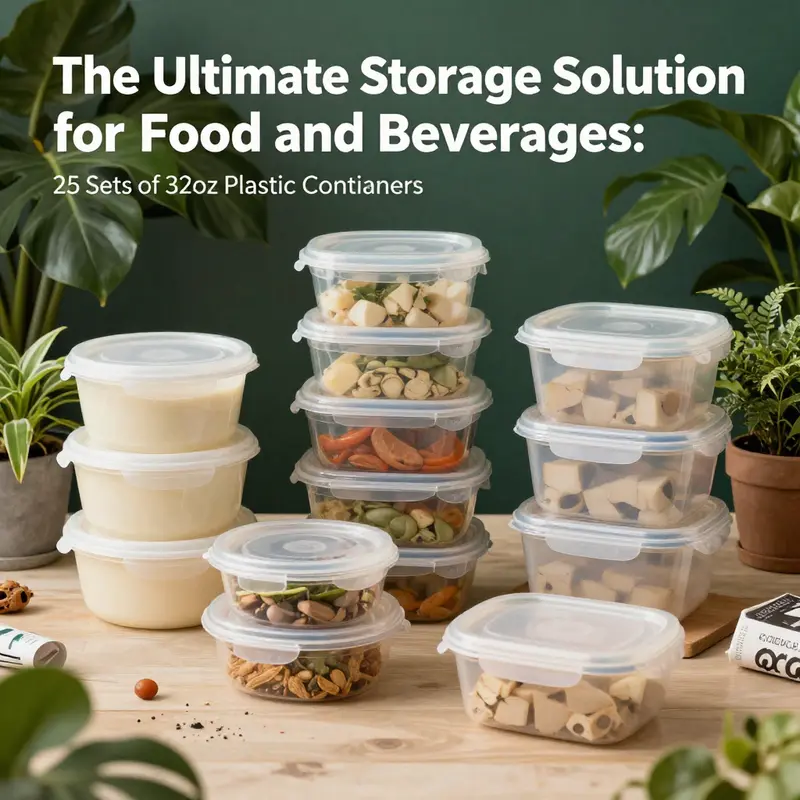
The environmental picture around sets of 32oz plastic food containers is complex, but clear. These containers are lightweight, durable, and convenient. They also introduce long-lived material into systems that struggle to manage plastics. Understanding what those materials are, how they behave, and what practical choices reduce harm will help households and small food operations make better decisions.
Most widely used takeaway and storage tubs are made from thermoplastics such as polypropylene or polystyrene. These plastics offer useful properties. They resist heat. They withstand repeated handling. They seal well. However, those same chemical structures resist natural degradation. In soil or water they can persist for very long periods. Small fragments may last for centuries. Over time, broken pieces move through ecosystems and food chains.
Production of these containers draws on fossil fuels. Polymer production, molding, and transportation require energy. That energy often comes from carbon-intensive sources. Emissions occur at every stage, from resin production to final packaging. When multiplied across hundreds or thousands of units, the cumulative greenhouse gas contribution becomes significant. The embodied carbon in a set of containers is therefore not trivial. It matters when thinking about the full environmental footprint of using disposables versus reusables.
End-of-life behavior further complicates the picture. While many thermoplastics are technically recyclable, real-world recycling suffers from contamination, inconsistent collection, and limited markets for recycled resin. Food residue and mixed materials often lead recycling facilities to reject items. As a result, a large share of used containers ends up incinerated, landfilled, or dispersed into the environment. Global figures underline the scale of the challenge: only a small share of all plastic produced has been recycled into new products. That systemic failure increases the long-term environmental cost of single‑use or poorly reused containers.
Physical harm to wildlife and ecosystems is another direct consequence. Containers and fragments drifting into waterways cause entanglement and ingestion problems for marine life. Microplastic formation creates a persistent pollutant that moves through food webs. Microplastics have been detected in water, soil, and organisms across regions. Those particles also carry additives and absorbed pollutants. The health and ecological implications of this contamination remain an active area of research.
Faced with these realities, purchasing choices and handling practices can make a measurable difference. First, consider how many times a container will be reused. Repeated use distributes production impacts over many meals and lowers per-use emissions. Durable plastic or glass containers designed for multiple cycles often outperform single-use items on lifecycle metrics. Simple habits improve longevity: wash promptly, avoid high-temperature dishwashing if the item warns against it, and check for cracks that can harbor bacteria. When a container remains serviceable for months or years, the environmental return is substantial.
Second, be mindful of end-of-life options. Rinsing to remove food residues increases the likelihood that a facility will accept a product for recycling. Yet local recycling rules vary widely. Some municipalities do not accept certain types of plastic. Knowing the local program reduces the chance that an item will be rejected and landfilled. If recycling is not a realistic option, consider donation or reuse. Community kitchens, shelters, and small businesses sometimes accept clean, undamaged containers for reuse.
Third, substitute where practical. Compostable paper bowls and other certified compostable packaging can reduce persistence in the environment. These alternatives require proper collection and access to industrial composting systems. Without those systems, compostables may not break down as intended. Still, in communities with compost infrastructure, certified paper-based bowls are a compelling alternative. For situations that demand disposability but also sustainability, these products close the loop more effectively than conventional plastic.
For reusable-minded consumers, glass and high-quality rigid plastics remain attractive. Glass resists staining and retains quality across many cycles. It is inert and performs well for storage, freezing, and reheating. Reusable rigid plastics, chosen for their proven microwave and freezer properties, also work when treated with care. The key is consistent reuse over a long lifespan. When an item replaces hundreds of single-use containers, the environmental benefits become real.
Operational practices in food service also matter. Bulk purchasing of containers that are designed for multiple uses reduces packaging demand. In packaging decisions, prefer containers with fewer mixed materials. Single-material containers are easier to recycle than compositions combining plastic, paper, or metal. When lids are separate and match multiple container sizes, fewer unique parts go to waste. These simple design choices support both reuse and recycling.
Improving household behavior is part technical and part cultural. Keep a set of reusable containers handy for leftovers. Encourage customers to bring their own containers where regulations and health codes allow. Store containers compactly to extend their usable life and reduce the temptation to discard. Label containers with purchase or first-use dates to manage rotation and avoid accidental waste. Small operational changes accumulate into meaningful reductions in plastic throughput.
Policy and system-level measures complete the solution set. Better collection systems, clearer labeling, and robust markets for recycled materials all raise recycling rates. Extended producer responsibility programs can shift costs and incentives toward more recyclable or reusable designs. Local composting facilities expand the viability of compostable alternatives. In communities where infrastructure improves, the overall environmental impacts of food packaging drop.
Comparative lifecycle thinking helps make choices clearer. A single durable reusable container used regularly often outperforms multiple disposable units in carbon and waste metrics. But the comparison depends on realistic use patterns. A reusable that is lost or seldom used can be worse than a biodegradable single-use item. Thus, purchasing decisions should reflect how items will be used, cleaned, and stored in real life. For institutions with predictable reuse patterns, investing in robust reusables or washable serviceware is especially effective.
Design and material innovation also create opportunities. Some manufacturers are experimenting with materials that blend recycled content and improved recycling compatibility. Clear labeling for recycling type, heat tolerance, and compostability improves end‑user choices. Product designs that reduce the total amount of polymer per container reduce both production impacts and waste loads. These innovations matter most when paired with better collection and market development.
Practical steps for households and small businesses include: prioritize long-term reuse, inspect containers regularly, rinse and sort recyclables per local rules, and seek out certified compostable alternatives when composting is available. When disposal is unavoidable, try to consolidate waste so that collection services can handle it efficiently. If replacement is needed, select containers with clear recycling codes and with lids that match other containers to reduce part waste.
For those interested in compostable paper alternatives, consider options designed for food service and industrial composting. A typical product marketed as a compostable kraft paper bowl with lid works well in commercial compost streams. Such bowls break down under proper conditions and reduce persistent plastic pollution. For more information about this kind of product and its specifications, see a supplier listing for a disposable kraft paper bowl for food package with lid.
Finally, keep perspective. No single action solves plastic pollution. Yet cumulative changes in purchasing, reuse habits, and support for better infrastructure make a measurable difference. By choosing materials thoughtfully and committing to reuse where feasible, households and small-scale operators can cut the environmental cost of storing and serving food. That collective shift will reduce landfill loads, lower emissions, and limit the long-term spread of microplastics across our ecosystems.
For broader context on single-use plastics and their environmental consequences, consult this recent analysis from a global forum on the topic: https://www.weforum.org/agenda/2023/06/single-use-plastics-environmental-impact/.
Capacity-Driven Preservation: The Case for Twenty-Five 32-Ounce Containers with Lids
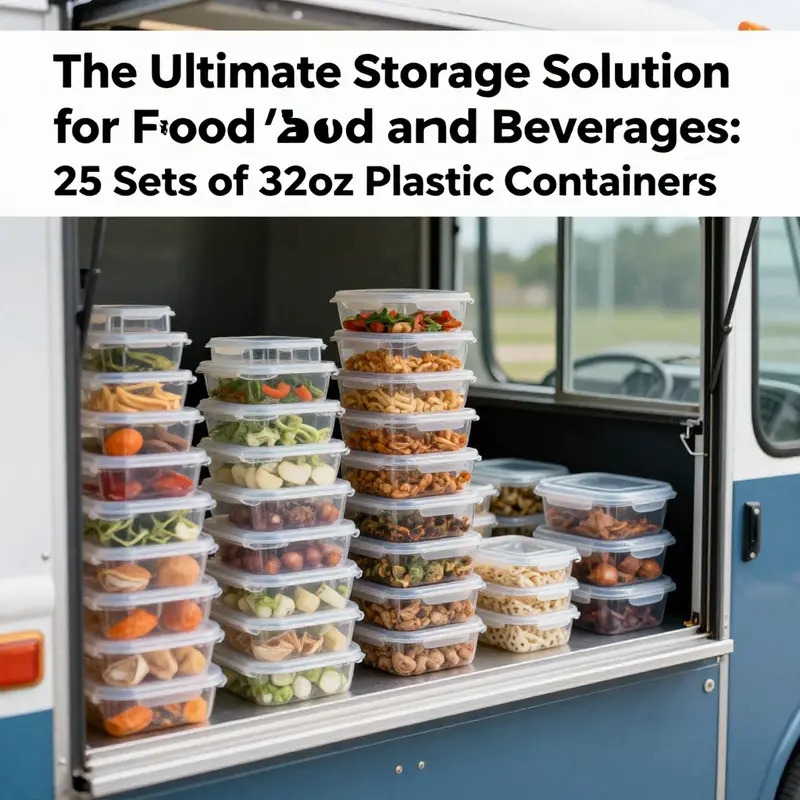
In kitchens where time, space, and waste are constant conversations, the simplest tools often yield the loudest outcomes. A sturdy set of 32-ounce containers with lids, bundled as twenty-five complete sets, can quietly reorganize the way a home or small kitchen thinks about food storage. This is not about keeping soup warm or a leftover casserole from yesterday intact. It is about building a reliable system for meal planning, batch cooking, and responsible consumption that scales with a busy life and a cautious wallet. The heart of this approach rests on a combination of durability, practicality, and transparent design—three traits that emerge when containers are designed to perform under real-life pressures: hot foods, cold foods, and everything in between. When you lift a 32-ounce unit and see the contents through clear walls, you are reminded at once of the potential to cut waste, save time, and reduce the daily decisions required to keep food safe and appealing.
The core material–durable, BPA-free polypropylene–powers this practicality. In a world where plastics are scrutinized for their safety and environmental footprint, polypropylene offers a careful balance. It resists cracking under impact, maintains clarity so contents stay visible, and holds up through repeated cycles of use. The BPA-free guarantee translates into everyday confidence: you can store a wide range of foods, from soups to stews and salads, without the concern that lingers around certain additives. This is not about a single use or a temporary convenience; it is about a durable workhorse that belongs in the daily rhythm of a kitchen, ready to be filled, heated, emptied, washed, and reused.
Capacity matters. Each container holds 32 ounces, a size that fits bulk batches of grains, soups, sauces, and roasted vegetables, but also the more delicate turn of a week’s worth of leftovers. The volume is generous enough to handle a family’s lunch portions, yet compact enough to slide neatly into most standard refrigerators, freezers, and even dishwasher racks. The flexibility is enchanted by the lids—the companion piece that turns a mere container into a sealed, transportable system. When a lid seals securely, it becomes more than a cover; it becomes peace of mind. Leaks are prevented, and the risk of flavor transfer between containers is minimized. The lid is the small hinge on a big idea: keeping food fresh, minimizing odor creep in the fridge, and making it easy to grab a meal on the go without the fear of spillage. Transparency completes the trio; clear walls mean you don’t have to peel back time to see what’s inside. A quick glance tells you whether you are grabbing a tamale, a container of chili, or a tofu stir-fry. This immediate recognition reduces the temptation to over- or under-prepare—two behaviors that often swirl around weekend meal prep and weekday lunches alike.
In practice, this 25-set collection is more than a shelf full of containers. It becomes a framework for how to think about food through the week. For meal prep, the containers become the builders of a routine: you select a handful of proteins, a couple of starches, and a handful of vegetables, cook them, and portion them into 32-ounce servings. The sizes are generous enough to keep portions honest but compact enough to avoid overwhelming the fridge. For those who shop in bulk, this approach translates bulk purchases into ready-to-reheat meals that preserve flavor and texture. And because the containers are safe for the microwave, heat applications become a simple scan-and-serve proposition rather than a ritual of reheating in ad hoc, improvised vessels. The same is true for freezing; the ability to store items down to -40F opens opportunities for long-term preservation. You can freeze soups and stocks in single-portion or family-sized amounts, label them, and know that on any busy night a ready-made meal can emerge from the freezer with minimal risk of freezer burn or texture loss. It is the quiet confidence of a kitchen that runs on a predictable, repeatable process rather than improvisation.
This is also where waste reduction becomes tangible. Food waste often grows from a lack of visibility and a lack of practical options–items fall to the back of the fridge, forgotten, and then thrown away. Clear containers, combined with secure lids, address both ends of this problem. The contents are instantly recognizable, which means you’re less likely to forget something that’s already been prepared. If you’re portioning for a week, you know precisely how many lunches you have in the lineup. If a recipe yields more than anticipated, you can either reblend and repackage or repurpose the leftovers into a new dish, all the while preserving the original flavors. The avoidance of single-use packaging is an equally important thread. A twenty-five-set investment pays for itself over time as it displaces countless disposable containers. The economic logic is straightforward: a durable, reusable system costs less per use as the years pass, especially for households and small kitchens that feed a busy family.
From a design perspective, the stacking potential elevates organization from a routine practice to an efficient discipline. When containers nest and lids align with predictability, you gain additional vertical space in the refrigerator, freezer, and pantry. Space efficiency matters. It reduces energy use by making it easier to locate and access what you need, which in turn reduces the time range of the energy-soaked ritual of ingredient hunting. And because each piece is part of a cohesive set, replacements and expansions are straightforward. If your family grows or you take on a meal-prep routine for a club or a small team, more containers or lids can be added without the friction that sometimes accompanies ad hoc storage solutions. The continuity of design—clear bodies, consistent dimensions, secure lids—translates into a kitchen workflow that feels almost automatic: wash, fill, seal, label, stack, store, and repeat. The result is a sense of rhythm rather than chaos—an important, often overlooked benefit of practical storage.
In the broader arc of sustainable living, these containers align with a shift toward durable, reusable packaging options that perform across multiple environments—home, school, the workplace, and beyond. They complement other eco-conscious choices by demonstrating how a well-chosen set of storage vessels can support practical, everyday stewardship of resources. The combination of durability, safety, and versatility makes them a strong ally for families, caregivers, and anyone who negotiates the balance between convenience and responsibility. To that end, the simple act of choosing a twenty-five-set collection becomes a statement: that thoughtful design can reduce waste, save money, and simplify daily routines without sacrificing quality or convenience. It is a reminder that the longevity of our groceries, our meals, and our time ultimately hinges on the small decisions we make as we pack and store food.
The practical implications extend into real-world scenarios that many households encounter. A busy weekday often begins with thoughtfulness about what to cook, how to pack lunches, and how to store leftovers so they remain appetizing the next day. A 32-ounce container is well-suited to hold a hearty portion of soup, a vibrant batch of curry, or a robust salad with dressing on the side. The lid locks in moisture and keeps aromas contained, a small but meaningful detail when you are trying to preserve the integrity of a dish over several days. For parents packing school lunches, the containers offer a reliable solution that stands up to the hustle of the morning routine and the jostling of backpacks. The dishwasher-safe property adds an extra layer of ease, letting busy households reclaim time that might otherwise be spent scrubbing or hand-washing multiple containers. And when the week ends, the containers go back into rotation, ready for another cycle of storage, heating, and service. It is a cyclical, sustainable pattern that respects both nutrition and the resources that enable it.
As with any storage strategy, there is value in connecting the practical with the reflective. The twenty-five sets of 32-ounce containers not only serve as a storage device but also as a reminder to think ahead about meals, leftovers, and how to minimize waste. The act of planning becomes almost a habit; the habit becomes a lifestyle, and the lifestyle begins to reshape grocery choices, cooking frequency, and even the way you think about portion sizes. This is why a set like this can feel transformative. It does not demand ceremonial changes or dramatic overhauls. Instead, it invites a quiet reorganization of daily routines around a more mindful approach to food. The containers are the vessels that carry that approach from concept to daily practice, turning an ordinary kitchen into a space where efficiency and care converge.
For readers who wish to explore related packaging ideas within a broader sustainability frame, this chapter offers a bridge to related resources that discuss durable, reusable options and their role in modern kitchens. You can learn more about a complementary approach to eco-friendly, reusable take-away packaging here: eco-friendly-recyclable-pulp-2-4-cups-coffee-take-away-cup-holder. This link provides a perspective on how durable, reusable materials extend beyond home storage to the take-away and hospitality sectors, reinforcing the idea that responsible packaging choices can be interconnected across contexts.
For readers seeking specific product details and user perspectives, the general public can refer to the listing on a major retailer platform that serves as a widely accessible reference point. This external resource offers a sense of how the market describes and positions these containers, along with practical notes gleaned from consumer experiences: Walmart listing. For more details, you can view the listing here: https://www.walmart.com/ip/25-Sets-32oz-Plastic-Soup-Food-Container-with-Lids/123456789. The page provides context for how a bulk-pack solution fits into broader kitchen storage strategies, including material safety notes, usability considerations, and the value proposition of a bundled set that supports home organization and waste reduction over time. The combination of durability, safety, and flexibility remains central to the story of how such containers can become a backbone of everyday routines, enabling families to cook in bulk, preserve flavors, and approach meal planning with a calm, organized method rather than a daily scramble. While the specifics of a retailer’s listing may vary, the underlying pattern remains constant: a reliable storage system reduces the friction of daily life and the chance of mismanaging food, both of which contribute to healthier eating and lower waste. The narrative is not about a single product, but about how durable, safe, and easy-to-use containers can reshape the kitchen ecosystem over weeks, months, and years.
How Buyers Choose 25-Set, 32oz Food Containers: Sustainability, Function, and Value
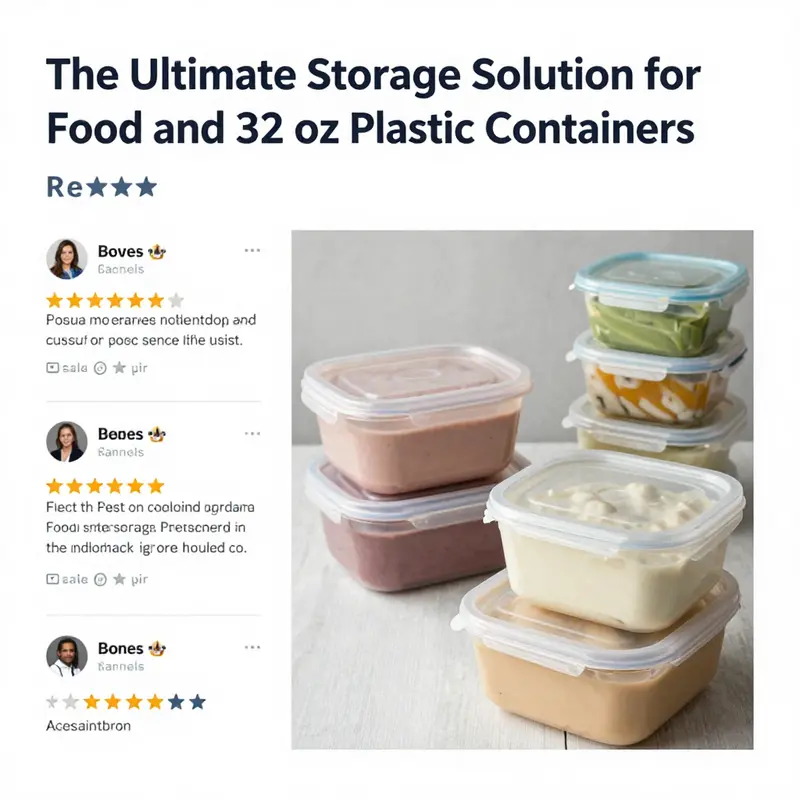
How buyers choose 25-set, 32oz food containers: sustainability, function, and value
Consumer demand for bulk food storage solutions is shaped by two main forces: practical needs and values. For a pack of twenty-five 32-ounce containers, these forces converge around durability, safety, convenience, and environmental responsibility. Buyers range from busy households and meal-prep fans to restaurants, caterers, and delivery services. Their preferences reveal consistent patterns, and those patterns explain why certain design and material choices dominate the market.
Material safety and sustainability now top many shopping lists. Buyers want materials that are food-safe and free from worrisome additives. Labels like BPA-free and food-grade plastics reassure shoppers that stored meals remain uncontaminated. At the same time, interest in compostable and biodegradable options continues to rise. Hybrid constructions, such as containers with a substrate of durable plastic and a plant-based coating, attract attention for balancing longevity with lower environmental impact. Certifications and standards play a decisive role here. FDA approval, ISO9001, and similar marks reduce the friction of purchase decisions. They allow buyers to quickly trust safety claims without deep technical knowledge.
Beyond raw materials, functional performance drives repeat purchases. A 32-ounce capacity suits single meals, hearty portions, and family leftovers. But capacity alone does not satisfy buyers. People prioritize leakproof lids and airtight seals first. A reliable closure prevents messes during transport, and it extends food freshness in storage. Containers designed to stack efficiently are also favored. Stacking reduces the storage footprint in kitchens and delivery vans alike, and it lowers costs for small food businesses with limited space.
Versatility is another crucial attribute. Containers that go from fridge to microwave to freezer offer a single-solution advantage. Microwave-safe materials that withstand reheating simplify daily routines. Freezer-safe plastics that tolerate extreme cold prevent cracking and protect food quality. For many buyers, thermal resilience down to low temperatures is as important as microwave tolerance. Dishwasher-safe construction rounds out the convenience package. Consumers want containers they can reuse frequently without warping, staining, or degrading.
Durability creates long-term value. Buyers compare the per-piece cost when evaluating bulk sets. A lower price per container resonates with businesses that purchase at scale. Yet price is rarely the only criterion. When cost savings compromise durability, buyers notice. The most attractive offers pair an affordable price with robust materials that survive repeated use. This calculation leads many purchasers to accept standard plastics over fragile compostable options for long-term reuse, unless compostability aligns with brand messaging.
Customization and branding are decisive for commercial buyers. Foodservice operators see packaging as free advertising. Printing logos or messaging onto container lids or sides converts functional items into promotional tools. The trend extends to custom-printed compostable bowls and cups, showing demand for eco-friendly branding. Businesses that focus on takeaway or meal delivery increasingly ask for bespoke solutions that reflect their identity. Customization often affects ordering decisions more than marginal price differences.
Convenience-oriented features also influence consumer choices. Containers with comfortable rim designs are easier to open and close. Clear or translucent materials enable quick content recognition, saving time during busy service periods. Lightweight but rigid construction balances portability with stack strength. Some buyers prefer textured lids that resist slipping during handling. Small design details like these compound into a superior user experience.
Waste reduction informs purchasing patterns. Reusable containers reduce reliance on single-use disposables. For households, a 25-set offers a reusable solution that supports weekly meal prep. For businesses, sets in bulk reduce the frequency of reordering. However, buyers concerned about end-of-life disposal often look for recyclable materials or compostable liners. The market response has been hybrid solutions and increased labeling to clarify proper disposal methods. Clear instructions about recycling and compostability reduce confusion and help buyers align purchases with values.
Regulatory considerations and food safety protocols affect institutional buyers. Catering companies, cafeterias, and healthcare kitchens must adhere to strict standards. Food-contact certifications and supplier quality controls therefore influence purchasing decisions. Reliability in material composition, plus consistent sealing performance, reduces risks of contamination or spillage. This reliability becomes a selling point for suppliers targeting regulated sectors.
Price transparency and unit economics shape large orders. Buyers compare per-unit costs, shipping efficiencies, and storage logistics. Bulk sets often reduce packaging costs and simplify inventory management. Sellers who offer predictable pricing and clear unit breakdowns win repeat business. Procurement managers also evaluate lifecycle cost: how many uses before replacement, and whether the container supports reuse cycles in their operation.
Aesthetics and perceived quality matter. Clean lines, uniform color, and a professional finish suggest reliability. Even small restaurants position elegant yet practical packaging as part of the dining experience. When containers look sturdy and well-made, they enhance perceived value and justify a slightly higher price point.
Consumers are also attentive to hazard avoidance. Containers designed to resist staining and retain odor-neutral qualities score higher in satisfaction surveys. Buyers dislike packaging that absorbs flavors over time. Easy-clean surfaces and non-porous materials increase a product’s perceived lifespan and hygiene.
Supply chain considerations have become more prominent. Buyers prefer suppliers with consistent availability and rapid fulfillment. Large sets packaged efficiently for transport reduce handling costs. Transparent lead times and dependable restocking policies matter to businesses that operate on tight schedules. For small buyers, accessible retail channels and affordable shipping create buying convenience.
Alternative materials influence cross-shopping behavior. Some buyers compare plastic bulk sets with paper-based options for takeaway service. For catering or short-term use, specially coated kraft paper bowls offer compostable appeals and custom printing options. Those seeking a greener disposable alternative often review these paper solutions for single-use applications. For businesses interested in branded compostable bowls, consider exploring customized kraft paper options such as the custom logo printed kraft paper soup bowl.
Marketing messages increasingly emphasize a product’s practical benefits alongside its sustainability claims. Buyers weigh both when choosing packaging. Clear claims about leak resistance, temperature tolerance, and lid fit are as persuasive as eco-labels. Photographs and technical specs reduce buyer uncertainty. Third-party reviews and certifications add credibility.
Ultimately, purchase decisions for 25-set, 32oz containers emerge from a balance of factors. Buyers evaluate safety, convenience, and cost while aligning with environmental values. Sellers who offer documented material safety, functional reliability, and flexible customization stand out. Combining affordable unit pricing with clear disposal guidance increases appeal. For many, the ideal product blends everyday usefulness with responsible material choices.
https://www.walmart.com/ip/Alpacasso-Deli-Containers-with-Lids-25-Set-32-oz-BPA-Free-Leakproof-Microwave-and-Freezer-Safe/186755482
Final thoughts
The 25 sets of 32oz plastic food containers with lids emerge as a quintessential choice for bubble tea shops, restaurants, food trucks, and catering services. Their durability, economic viability, environmental impact, versatility, and alignment with consumer trends make them a strategic selection for optimizing food storage and preservation. Investing in these containers not only enhances operational efficiency but also supports sustainable practices in the food and beverage industry.