
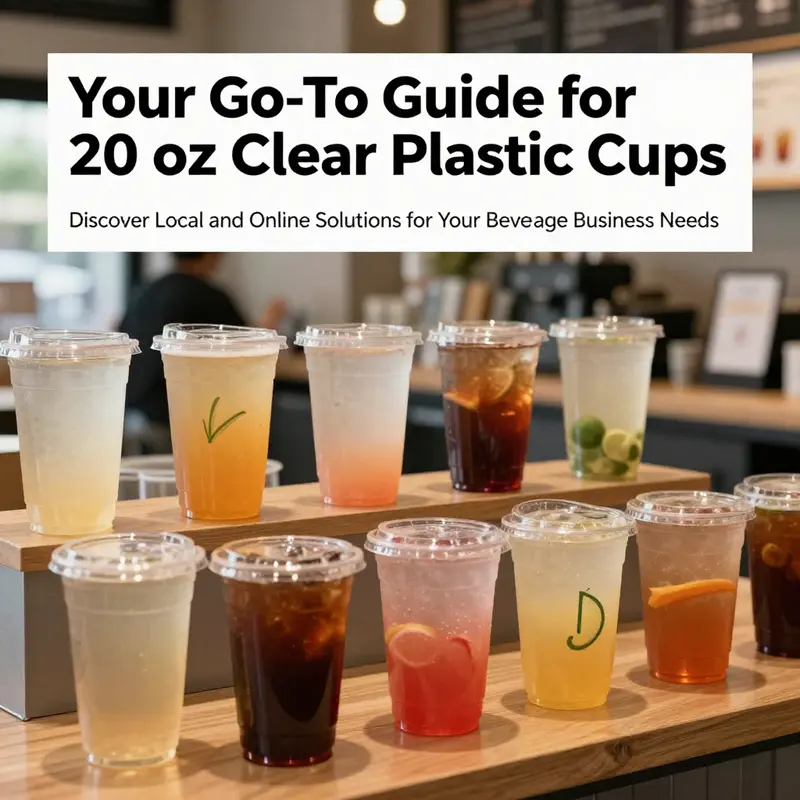
As beverage businesses, the right serving solutions can greatly impact your service and customer satisfaction. Whether you’re running a bubble tea shop, restaurant, food truck, or event, high-quality disposable cups are essential. Today, we explore how to find the best 20 oz clear plastic cups near you, focusing on online resources, specifications, commercial applications, and strategies for local sourcing. By the end, you’ll have a comprehensive understanding of how to efficiently procure these cups to meet your needs.
Beyond the Aisle: Navigating Online Resources for 20 oz Clear Plastic Cups
Finding the exact 20 oz clear plastic cups near you can feel like chasing sunlight through a store aisle that’s constantly rearranging itself. Local shelves are often sparse, inventory moves quickly, and the hours of a nearby shop may not align with your own. In these moments, the online landscape becomes less of a convenience and more of a strategic workspace. The goal is not merely to locate a cup in a neighboring zip code; it is to understand a broader ecosystem where size, material, safety, customization, and delivery timelines all intersect. When you look past the nearest storefront, you begin to see how suppliers frame a product like a 20-ounce clear cup within a larger supply chain—one that stretches from raw materials to packaging design to final delivery at your door. The result is not a simple purchase but a careful orchestration of options that balance practicality with branding potential, reliability with speed, and cost with quality.
In the online sourcing world, 20 oz clear plastic cups with lids occupy a distinct niche. They are designed for cold beverages, often required to be crystal clear to showcase a drink’s color, and typically made from food-grade plastics that satisfy safety standards. The capability to customize is a critical differentiator. Vendors offer UV printing or labeling, letting you brand a cup with logos, seasonal graphics, or promotional messages. For businesses planning events, pop-up shops, or restaurant takeaway, this feature can translate into stronger brand recall and a more cohesive customer experience. Yet the same feature also carries considerations of lead times, minimum order quantities, and setup fees. The path to securing a reliable supply is less about finding a single perfect listing and more about comparing streams of options across platforms that serve both small-scale purchases and large-volume orders.
A practical starting point in this journey is recognizing the core criteria that shape fit and finish. Food-grade PET, often cited in reputable listings, guarantees a level of safety suitable for cold beverages. This material choice also tends to offer clear visibility of the drink inside, which customers perceive as premium compared with tinted or opaque alternatives. Standards aligned with food safety—such as FDA oversight—provide an added layer of confidence, especially for businesses that offer take-away drinks or catering services. The ability to export or import these cups across borders, if needed, also hinges on clear documentation and transparent supply chains. Even with the best materials and safety marks, the picture is never complete without considering practical logistics. Lead times, shipping methods, and the minimum quantities required to unlock bulk pricing all come into play. A supplier may advertise fast delivery, yet peak demand periods, customs checks, or production backlogs can narrow the window between order and arrival. Understanding these dynamics helps prevent surprises that disrupt events, menus, or promotions.
The online marketplace landscape expands opportunities in several directions. Bulk suppliers can offer lower unit costs for large orders, while consumer-facing platforms may cater to smaller quantities with a quicker turnarounds. Some listings emphasize customization possibilities, including branded printed designs that travel with the cup itself. In contrast, other options foreground standard, ready-to-use cups that are ideal for immediate needs and one-off events. The spectrum invites a buyer to weigh the benefits of flexibility against cost sensitivity. If your business is hosting a high-profile event or running a promotional campaign, the appeal of branded cups with durable print can outweigh the added complexity of working with a printer or a factory that can handle specialized runs. Conversely, for a simple refill station or an informal gathering, a straightforward clear cup with reliable lids might be perfectly adequate. The key is to map your current needs to the best available online configurations rather than relying solely on what a local shelf stores on a given day.
A central thread in evaluating online resources is the balance between reliability and speed. Not all online listings are equally informative, and some pages offer only partial glimpses of what a supplier can deliver. It is worth looking for listings that spell out material specifications, safety certifications, and packaging options. A credible page will often stress that the product is made from food-grade plastic and highlight any regulatory compliance marks. It may also note the availability of samples, which can be essential when you are weighing several options for branding or event use. The possibility of samples matters particularly when the cups will be used in a public setting or in high-traffic environments, where a cup’s appearance, lid security, and structural stability can influence customer experience. In this context, the online search geography broadens your options beyond the closest store. You gain access to suppliers whose production scales, lead times, and customization capabilities align with your operational realities—whether you are ordering for a one-day pop-up or planning a multi-month program.
Of course, there is a cautionary side to the online sourcing landscape. The very breadth that makes online procurement attractive also demands due diligence. Verifying supplier credibility, reading customer feedback, and confirming return policies become essential steps. When the product is a disposable item tied to a brand or an event, the margin for error narrows. A mismatch in plastic type, lid compatibility, or print quality can derail a campaign or lead to unsold stock at the end of a season. While platforms vary in how they enforce trust, a prudent approach is to request samples first, especially if you intend to adopt a specific design or if unique packaging is part of your branding. Samples can reveal subtle differences in clarity, edge smoothness, lid fit, or seal integrity—factors that are not always evident from a product description alone. Communication with the supplier also matters. Clear inquiries about lead times, minimum order quantities, and fulfillment options reduce the risk of misalignment. A responsive supplier who can provide technical specifications, packaging options, and production timelines tends to be a healthier long-term partner than a listing with glossy pictures but little operational clarity.
The broader packaging ecosystem around 20 oz clear cups is worth noting as well. The decision tree for a single cup often intersects with broader decisions about take-away ware, lids, sleeves, or even alternate materials such as recyclable or compostable options. For event organizers or restaurants exploring sustainability, the question becomes not only how to source a cup that looks right and functions well, but also how to present a packaging story that aligns with environmental goals. Some buyers tilt toward eco-conscious options, seeking recyclable or recyclable-compatible vessels, even if these choices involve trade-offs in cost, rigidity, or clarity. In this light, online resources serve as a comparative laboratory: you can assess not only the primary product but also related packaging components and their lifecycle implications. The search expands from a cup to a network of compatible accessories, each choice contributing to a cohesive customer experience while influencing waste streams and reconciliation with sustainability targets.
As you navigate these online avenues, a compact strategy emerges. First, articulate your essential specs: size, clarity, compatibility with standard lids, food-safety certifications, and whether branding is necessary. Second, define your quantity bands to understand price ranges and fulfillment options. Third, identify a few credible suppliers who offer sample orders or pilot runs, enabling you to test print quality and cup rigidity without committing to a full-production run. Fourth, evaluate logistics: shipping costs, carrier reliability, and whether the supplier can meet your event or business calendar. Fifth, consider the broader context of your packaging ecosystem, including how the cups align with your branding and sustainability goals. By combining these steps, you transform a potentially overwhelming search into a disciplined process that yields reliable results, even when local inventory proves elusive.
In the spirit of broader resources, a related content strand explores sustainable packaging alternatives and the logistics of disposable ware. For readers curious about eco-friendly options that sit alongside clear plastic cups, the following resource offers a practical glimpse into related take-away packaging. disposable-700ml-kraft-paper-bowl-take-out-octagonal-rectangle-paper-bowl. This internal resource provides a sense of how brands balance convenience, presentation, and environmental considerations across different product families, reinforcing the idea that the cup is just one piece of a larger packaging narrative. By examining nearby packaging choices, you can envision a more integrated and resilient approach to event planning and hospitality supply, ensuring that every component—from cup to lid to sleeve—contributes to a consistent, memorable experience.
For those who prefer to see concrete sourcing examples from established marketplaces, it helps to consider the broader online marketplace context. A reputable listing on a global supplier platform highlights the core attributes buyers look for: clear material specifications, safety certifications, customization options, and the promise of timely delivery. These pages underscore that, when handled with a clear brief and a measured approach to risk, online channels can outperform traditional local shopping in terms of variety, speed, and the ability to tailor packaging to a brand story. They remind us that the modern supply ecosystem is not a single storefront but a network of partners who together can fulfill complex needs—whether you are stocking a pop-up with a temporary menu, outfitting a restaurant’s take-away program, or running a promotional campaign that hinges on consistent, on-brand presentation.
In closing, the journey from “near me” to “near market reach” is about expanding perception as much as it is about expanding inventory. It is about recognizing that the best option for your business might live beyond the immediate block, yet still be accessible through a thoughtful, slower, more deliberate online process. By prioritizing safety, reliability, and branding potential, and by embracing the broader packaging ecosystem, you can secure 20 oz clear cups that not only meet functional needs but also reinforce your brand’s story wherever your drinks travel. The online search becomes not a workaround but a strategic phase in building a robust supply chain that supports growth, efficiency, and a consistent customer experience across venues and occasions.
External resource: https://www.alibaba.com/product-detail/20-oz-custom-clear-plastic-cup-made-in-the-USA_1600473978526.html
Specs, Sourcing, and Local Availability: Navigating 20 oz Clear Plastic Cups in Your Area
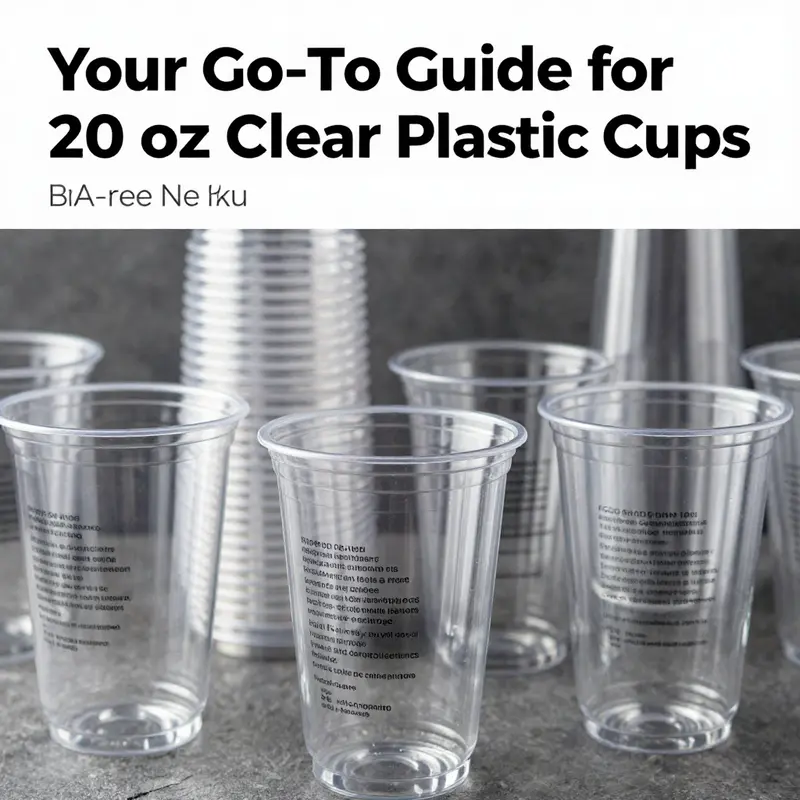
Finding the right 20 oz clear plastic cups in your vicinity is more than a quick aisle scan; it is a careful reconciliation of material science, safety standards, and practical logistics. In many cases, the phrase near me signals a desire for immediate access—local pickup, same-day delivery, or a supplier within reasonable travel distance. Yet the reality is often more complex. Availability can hinge on regional distributors, seasonality, and the specific configurations a buyer needs—whether the cups are plain, dome-lidded, or designed to accommodate bubble tea or promotional branding. What follows is a cohesive look at the core considerations that shape every decision, from raw materials and durability to the nuanced ways in which local sourcing can align with online options without compromising safety or quality.
At the heart of any choice about a plastic cup is the material. The most common food-contact plastics for disposable cups are PET, or sometimes PP, chosen for clarity and rigidity. PET, when produced to food-grade standards, offers excellent transparency, which makes the liquid within easy to read and appealing for beverages that benefit from visual appeal. The second material, PP, provides a bit more heat resistance and stiffness, which can be valuable for hot drinks or more robust, disposable designs. Across responsible suppliers, the critical requirement is that the material be suitable for direct contact with food and beverages. In many jurisdictions, this translates into FDA-approval designations, ensuring that the plastics meet safety criteria for packaging and serving.
Beyond the basic materials, the safety profile matters as much as the appearance. A clear cup that looks pristine is only as trustworthy as its internal composition. The standards you want to see commonly include BPA-free formulations, non-toxic additives, and compatibility with a wide range of beverages—cold, carbonated, or even hot, depending on the grade of the plastic. Local sellers often emphasize these assurances to reassure buyers at cafés, events, and catering operations that use disposable cups for a variety of drinks. Internationally, other frameworks such as EU food-contact regulations may apply, but in practical terms, a consumer-facing supplier will highlight FDA compliance and related safety certifications to establish credibility with buyers who must meet strict regulatory expectations.
If you zoom in on the dimensions, the 20-ounce capacity typically corresponds to roughly 591 milliliters. In practice, you will encounter height measurements in the neighborhood of 15 to 18 centimeters, with a top diameter around 8.5 to 9 centimeters and a base that sits at roughly 6.5 to 7 centimeters. Wall thickness can vary across manufacturers, often spanning a range from about 0.35 to 2.5 millimeters, depending on the intended use—whether it is a straightforward cold beverage, a carbonated drink, or a hot-fill scenario. These tangible numbers are not merely technical trivia; they determine how well the cup stacks, fits under dispensers, and accommodates lids and branding. In a local context, you may encounter slight deviations in these specs from one supplier to another, and that is where sampling becomes a sensible step before committing to a bulk order. The most reliable local distributors will provide precise measurements for the exact line they carry and will be ready to confirm compatibility with the lids and branding elements you plan to use.
Speaking of lids, a major element of the design conversation is how the cup pairs with closures. A clear plastic cup often ships with a dome lid for beverages that benefit from visibility and presentation, a snap-on lid for straightforward sealing, or a specialty lid designed for bubble tea and other specialty drinks. The lid choice interacts with the cup’s geometry and with your branding strategy. If your event or storefront relies on a clear, uninterrupted view of the drink, you’ll want a lid that minimizes visual obstruction and maintains a clean, professional appearance. In contrast, for grab-and-go service, a secure snap-on or vented lid may be preferable to reduce spills during transport. Local suppliers will frequently offer several combinations and can advise on the most compatible options based on your volume and packaging line constraints.
Branding and customization introduce another axis of comparison. The market has evolved beyond plain, generic cups to a landscape where UV printing and flexo printing enable vibrant logos, messages, and artwork directly on the cup surface. UV printing is particularly valued for durability and color richness, which helps promotional campaigns and brand recognition as products move through events, catering, and hospitality settings. Flexo printing can support multi-color branding, often up to three colors, with the understanding that design complexity can influence minimum order quantities and lead times. When you are orienting toward local sourcing, inquire not only about the print capability but also about color matching, cure times, and any limitations on ink adhesion with the chosen plastic material. The ability to deliver customized cups with sharp, durable visuals can be a decisive factor for venues that rely on consistent branding across a vendor network.
The performance profile extends to temperature tolerance and everyday resilience. For cold drinks, most clear cups perform well down to near freezing. For hot beverages, the material grade matters: some cups can withstand temperatures approaching 80–90°C, while others are optimized for cooler servings only. The practical takeaway is straightforward: confirm the intended beverage range with your supplier and request guidance on the maximum safe temperature for the specific cup you are considering. Durability is equally important—cups should resist leakage and deformity during transport, stacking, and use in busy service environments. Local stock, with the option to see and touch the cups, can provide a quick sense of stiffness, edge quality, and overall feel, which is harder to gauge from online images alone.
From an environmental standpoint, the disposable nature of these cups raises questions about recyclability and waste management. PET cups are typically recyclable in many municipal systems, recognized under recycling code #1, while PP cups carry recycling code #5 in many regions. However, the local recycling landscape varies, and some communities accept only certain formats or require different sorting rules. A growing number of suppliers also offer eco-friendly variants—biodegradable or compostable options—though these alternatives often come with trade-offs in cost, strength, and end-of-life processing. When you are shopping near you, consider not only the immediate purchase but also how the cups will be disposed of after use. If your event or venue emphasizes sustainability, you can align with local waste streams by selecting cups whose materials map cleanly to your municipality’s recycling infrastructure or by choosing a certified compostable option if the local program supports it. A thoughtful approach to end-of-life helps ensure your choice reflects both practical needs and environmental responsibilities.
The manufacturing and production story behind these cups also shapes what you should expect in local markets. In high-volume settings, thermoforming is a common process for shaping clear cups, using precise forming tools and controlled forming conditions to achieve consistent geometry. Suppliers often report machine specifications, such as forming area, cycle speed, and pressure, to illustrate the efficiency and repeatability of their operations. Certifications play a central role in establishing trust. ISO, HACCP, and SGS-style audits are typical references that indicate an adherence to quality and safety standards across the supply chain. When you’re evaluating near-me options, asking for documentation or cert verification becomes a practical step in reducing risk, especially for restaurants and event planners who must demonstrate compliance to health inspectors or corporate procurement teams.
All of these threads—material choice, safety compliance, dimensional accuracy, lid compatibility, customization potential, performance under temperature stress, and environmental considerations—come together in the decision to source 20 oz clear plastic cups locally. The balance you strike depends on your immediate needs, budget, and logistical constraints. If you are operating a cafe, a festival, or a conference, local procurement may offer advantages in delivery speed, freshness of stock, and the ability to inspect quality firsthand. In many cases, local distributors can provide samples, arrange for on-site pickups, and offer flexibility on order quantities to help you scale up or down with your event calendar.
Even as you prioritize local access, keep an eye on the broader market landscape. Online marketplaces and B2B platforms can present a broader range of options, including manufacturers that produce in the USA with fast lead times and robust certifications. The tension between local convenience and online breadth is not a problem to be solved with a single rule. Rather, it is a practical workflow: compare price, confirm material safety and temperature tolerance, verify lid compatibility, assess branding potential, and evaluate delivery timelines. If your search yields a near-me result that checks all boxes—local stock, ready pickup, or small-batch shipments—great. If not, an informed pivot to online sources can still deliver the same assurances when you request samples, verify certifications, and confirm the supplier’s ability to meet your regulatory and branding requirements.
For readers exploring related packaging options, the marketplace ecosystem often reveals adjacent categories that can fulfill similar roles in a brand’s display and user experience. If your focus extends beyond cups to other single-use beverage vessels, you may encounter opportunities to compare materials and designs that affect downstream waste streams and customer perception. The practical message remains consistent: clarity in material, transparency in safety and certification, alignment with your branding strategy, and a practical plan for end-of-life disposal are the pillars that keep a local sourcing decision anchored in reliability rather than impulse. In a market where the phrase near me can signal urgency, having a well-structured set of questions ready makes it easier to translate that sense of proximity into a responsible and timely purchase decision.
Internal link: for considerations around eco-conscious single-use packaging, you may find useful context in discussions about eco-friendly, printed-logo single-wall paper cups, which illustrate how branding and sustainability intersect across packaging formats. See: eco-friendly printed-logo single-wall paper cup.
External resource: the following listing provides a concrete example of a 20 oz clear plastic cup with FDA-compliant materials and USA production, illustrating the alignment between product specs and safety standards discussed above. External resource: https://www.alibaba.com/product-detail/20-oz-custom-clear-plastic-cup-made-in-USA_1600473978526.html?spm=a2700.190359.0.0.5f3a6c35VvLqXH
From Shelf to Spotlight: The Commercial Power of 20 oz Clear Plastic Cups and Local Sourcing

The mundane presence of a clear plastic cup on a coffee bar, kiosk, or festival stand often hides a quiet, powerful economic logic. A 20 oz clear plastic cup is more than a vessel; it is a tool of perception, throughput, and branding that can tilt a business model toward faster service, stronger customer recognition, and more efficient operations. When restaurants, event planners, and retailers think about what to stock, they weigh clarity against cost, durability against waste, and customization against simplicity. In this light, the question of where to source these cups becomes not a logistical afterthought but a strategic move. The simplest reality to acknowledge is that you do not need to be located in a major metropolis to access this kind of packaging. The broader market is structured to reach a wide radius—from regional distributors to global suppliers—so that small cafés and large venues alike can secure the right quantity with reasonable lead times. Yet the “near me” aspect matters, because proximity often translates into shorter delivery windows, lower freight costs, and the possibility of quick, agile restocking during peak seasons. The practical implications cascade from the moment you decide on a 20 oz clear cup as your standard size. It means choosing a design that makes beverages look inviting, a single-use option that can speed up line capacity, and a packaging choice compatible with a range of lids, sleeves, and branding opportunities. In many service environments, the appeal of a transparent cup is immediate: it allows the drink’s color, texture, and level to be visible at a glance. The eye is drawn to the vivid hue of a smoothie, the gradient of a layered iced coffee, or the festive sparkle of a fruit tea. Because customers can see what they are about to receive, the expectation of quality rises, and the perceived value of the beverage increases even before a single sip is taken. This subtle visual advantage supports pricing strategies and promotes a sense of transparency that many guests now expect in fast-casual and street-food contexts. Yet clarity is not purely aesthetic. It also functions as a quality signal. A well-made, clear, 20 oz cup often reflects attention to sanitary standards, uniform wall thickness, and reliable stacking and handling properties. In environments that move quickly, a cup that feels flimsy in the hand or cracks under cold beverage pressure undermines the entire service experience. For operators, the choice of a PET-based clear cup combines lightness with a toughness that keeps breakage rates down in day-to-day use. Those operational benefits are critical when you consider the throughput needed at crowded times or during promotional events, where every second shaved from service times compounds into meaningful revenue gains. The same clarity that heightens appeal also invites customization, and customization has become one of the most compelling avenues for turning an ordinary cup into a moving advertisement. The capacity to print logos, slogans, event dates, or seasonal artwork via UV or digital print methods transforms cups from disposable stock into portable marketing collateral. Branded cups travel beyond the counter, catching the eye of passersby in queues, in transit, and in user-generated photos posted on social platforms. The impact of branding on cup design extends beyond aesthetics. It aligns with a broader retail and hospitality strategy that seeks to build recognition and recall across multiple touchpoints. The same cup that serves a refreshing drink at the counter can become a canvas for a limited-time promotion, a loyalty program message, or a venue’s signature color identity. This is where the economics of scale begin to shine. For any operator planning to serve thousands of beverages weekly, the ability to purchase in bulk reduces the per-unit cost and stabilizes supplier relationships. The math of bulk purchasing is straightforward: higher orders frequently unlock lower unit prices, better freight terms, and predictable delivery schedules. Of course, this requires clear planning—estimating monthly beverage volume, accounting for seasonal fluctuations, and anticipating demand spikes around holidays, graduations, or local events. A well-calibrated forecast helps ensure that a retailer does not overcommit to stock that may expire or sit unused, nor underbuy so that shortages interrupt service. In this sense, the procurement decision for 20 oz clear cups becomes a balance between price, reliability, and the flexibility needed to respond to changing demand. Suppliers in this space often offer a range of options that cover different lead times and minimum order quantities. Some buyers may require rapid delivery for last-minute campaigns, while others may optimize for cost over longer horizons. The reality is that supply chains in the packaging sector have matured to accommodate both ends of that spectrum. Local distributors can shorten lead times and simplify returns, while national or international suppliers may offer broader customization capabilities or more favorable unit prices at higher volumes. The near-me dimension, then, becomes a logistic variable as much as a geographic one. It influences inventory decisions, determines when a restock is practical, and shapes the risk profile of a promotional run. A well-run sourcing approach considers not just the cup itself, but the entire ecosystem in which it exists: lids that seal securely, sleeves that insulate and brand, and the case counts that fit neatly onto pallet racking in a warehouse. It also considers compatibility with equipment used to fill, seal, and present beverages. In many venues, a coordinated approach across cups, lids, and closures reduces the likelihood of mismatches at the point of sale, thereby speeding service and minimizing waste. There is a practical elegance to aligning these components so they “talk” to each other in a way that keeps lines moving and customers satisfied. If you walk through contemporary beverage operations, you will notice that the cup is often the first point of contact with the customer that is truly mass-produced yet highly personalized. The same transparency that allows a consumer to gauge the drink’s color also invites the operator to leverage storytelling: a bright blue smoothie can be marketed as a tropical treat; a pale tea can be framed as a refreshing, health-forward option. This interplay between product visibility and narrative gives the cup its marketing leverage. It is not an overstatement to say that a well-chosen 20 oz clear cup can become a subtle but powerful ambassador for a venue’s brand across countless transactions. To harness this potential, operators increasingly examine the procurement paths available in their region. The question of “near me” goes beyond mere geography; it is about the ability to build a resilient supply chain that can respond to the ebb and flow of business. In practice, this means evaluating suppliers on several axes: reliability of delivery, consistency in wall thickness and clarity, resistance to cracking under cold beverages, and the capacity to support branding efforts through reliable print quality and color fidelity. It also means weighing the flexibility of order quantities against cost. In today’s market, even small cafes that sell a few dozen cups daily may find benefits in partnering with local distributors who can provide samples, flexible payment terms, and face-to-face service. Those interactions matter, because a quick on-site visit or a phone call can demystify minimum order quantities, allow for a sample run, and support the decision to adopt a standard cup across multiple outlets. As with any packaging choice, sustainability considerations increasingly shape the conversation around 20 oz clear cups. Operators are not merely buying performance and price; they are also mindful of end-of-life outcomes and recycling options. PET, when properly recycled, offers a circular path for plastic cups, though recycling infrastructure and consumer participation vary by locale. The near-me strategy thus encompasses not only availability and speed but also the feasibility of recycling programs, local waste management policies, and consumer expectations about environmentally responsible packaging. In practice, this translates into conversations with suppliers about material composition, print compatibility, and the inclusion of lids or sleeves that maximize recyclability. It also invites operators to explore options for compostable or recyclable lid variants and to think strategically about reducing overall packaging mass while maintaining performance. Across industries—from coffee bars to juice bars to event vendors—the 20 oz clear cup emerges as a flexible, high-value tool. It supports not only the immediate need to serve a cold beverage smoothly but also the longer-term objectives of branding, operational efficiency, and environmental stewardship. The decision to source these cups near you combines practical, day-to-day considerations with strategic planning for growth and brand equity. When you align your cup choice with your service flow, your branding ambitions, and your supply-chain realities, you create an ecosystem where the cup becomes a quiet driver of throughput and recognition, rather than a mere afterthought. If you are exploring options for a particular branding effort or a seasonal campaign, consider how a branded or semi-branded cup could amplify your message in spaces where people linger—on lines, in photos, and in social streams. For teams weighing the trade-offs between standardization and customization, a 20 oz clear cup offers a compelling middle ground: the clarity and capacity that customers expect, paired with the possibility to imprint a distinctive look that travels with every drink. For operators seeking to bridge the gap between a local footprint and scalable supply, the near-me approach is less about competing on a single price point and more about building a reliable, repeatable ordering pattern that aligns with your store hours, promotional calendars, and customer expectations. In this sense, the cup becomes a neutral platform upon which a brand story can be consistently told, across days, weeks, and seasons. To support decision-makers who are shaping their purchasing maps, a related resource on customized takeaway cups with branding options offers a practical lens on how packaging can carry a brand narrative beyond the beverage itself. See this related guide: disposable-takeaway-paper-cup-custom-logo-kraft-coffee-cup-with-lid. This reference helps illuminate how branding considerations interface with packaging choices, even when your primary focus is a different cup format. External reference for broader product specs and supplier options can also enrich the search process and provide a sense of the market scale for 20 oz clear cups. External resource: https://www.alibaba.com/product-detail/20-oz-custom-clear-plastic-cup-made-in-the-USA_1600473978526.html
null
null
Final thoughts
Finding the right 20 oz clear plastic cups is pivotal for any beverage-focused business. By utilizing both online and local resources, understanding the specifications and commercial applications, and having effective sourcing strategies, you can ensure that your operation runs smoothly. The quality of your serving products translates into customer satisfaction and business success. Now is the time to invest in the right disposable cups to make every drink experience special.