
Navigating the world of disposable cups can often feel overwhelming, especially when it comes to choosing the right compostable options for your business. With the increasing demand for eco-friendly products, understanding how price varies across different purchasing methods is crucial. This guide sheds light on the pricing dynamics of 16oz compostable paper cups, specifically tailored for beverage entrepreneurs, whether you run a bubble tea shop, a food truck, or manage a restaurant chain. From bulk orders to medium-sized purchases and retail options, each chapter will provide insights into how you can optimize your purchasing strategy while keeping sustainability at the forefront of your business model.
Economies in Play: Navigating Bulk Pricing and Cost Drivers for 16oz Compostable Paper Cups
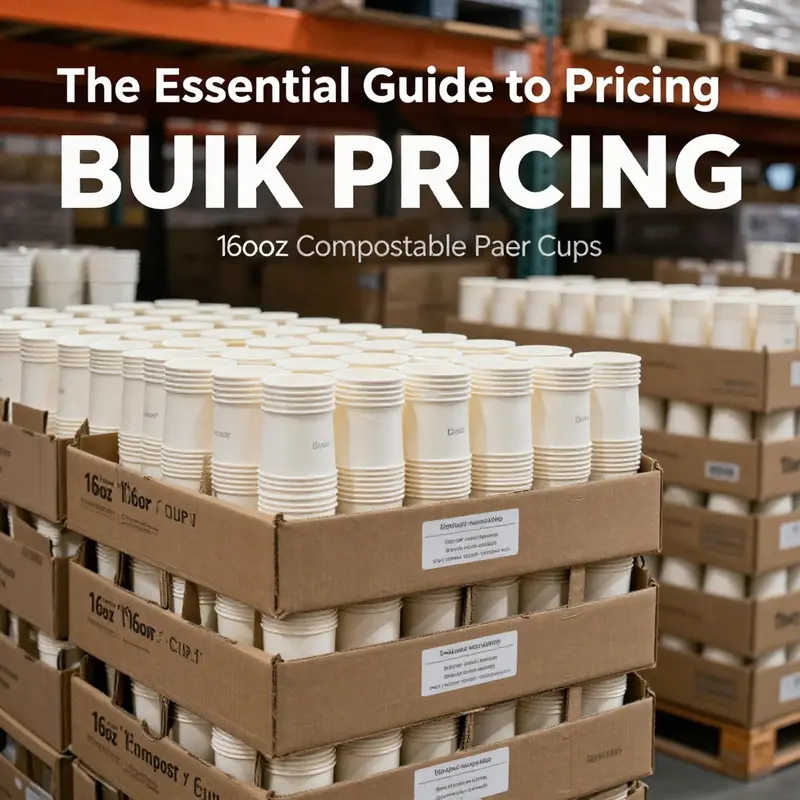
Pricing for 16-ounce compostable paper cups at scale reveals a landscape where unit price often drops as volume climbs, but freight, customization, and certification can swing landed costs just as much as raw material. In this chapter, we explore the real economics behind bulk purchases, moving beyond sticker prices to understand how MOQs, printing, lids, packaging, and logistical terms shape the final bill of goods for any business that relies on sustainable cups. The aim is to connect the numbers you see in catalogs with the decisions you must make in planning, procurement, and brand strategy, so that price is not a single line on a spreadsheet but a dynamic force that reflects your operational needs and your sustainability commitments. This journey through bulk pricing is not about chasing the cheapest cup but about understanding how price bands form and how to navigate them to meet demand with reliability and environmental responsibility.
At a high level, the pricing story breaks into a few distinct bands that roughly mirror order size and service level. At the smallest end, consumer packs and small-business bundles tend to sit in the mid-to-high forty-cent range per cup, once lids and branding are factored in. Move into the mid-size range, around tens of thousands to a hundred thousand units, and price per cup begins to fall, with the potential to dip well below a dime in highly optimized scenarios, provided the order includes essential criteria such as no heavy branding and minimal packaging. The very largest orders, commonly measured in tens of thousands of packs or hundreds of thousands of units, unlock the steepest price concessions, sometimes pulling unit costs into the low single digits when the supplier can amortize tooling, printing plates, and logistics across a vast volume. It is important to note that these figures are not predictions carved in stone; they are indicative of the pricing dynamics seen across multiple channels and suppliers, contingent on the specifics of the order and the terms of sale.
The cost architecture behind a 16-ounce compostable cup is a layering of material science, product design, and commercial logistics. The core material—paper with a compostable lining—constitutes the base price. Differences in liner type, barrier performance, and certification can nudge the material cost up or down. A ripple or reinforced wall adds structure and heat retention, but it also carries a small premium compared with a plain, smooth-walled cup. Then there is the lid, which can be a separate accessory or integrated into the packaging chain as a bundled item. A dome lid, flat lid, or a sleeved lid option can shift per-unit costs by a few tenths of a dollar, a meaningful delta when margins are tight and volumes are high. Branding adds another layer. Simple, no-print cups are far cheaper than cups that carry custom logos, color-work, or serial batch information. If you want a consistent, brand-aligned presentation across your outlets, the cost of printing—whether via digital, screen, or offset processes—must be reconciled against your distribution scale and lead-time expectations.
The bulk pricing picture you see in supplier listings typically reveals three structural levers: minimum order quantities (MOQs), shipping terms, and product customization. MOQs are more than a sales threshold; they are a signal of the supplier’s capacity and the economics of setup. A supplier quoting prices for 50,000 cups or more is signaling a production setup that is optimized for large runs. The headline unit price may be a lot lower in those circumstances, reflecting amortized costs and efficient logistics, but the total landed cost must include freight, insurance, and any duties if the goods cross borders. In many cases, the quoted price on a bulk order is an FOB figure—free on board. That means the buyer takes responsibility for freight from the factory and bears the shipping risk and cost from that point onward. FOB pricing creates a negotiation knot: you can push the price downward by increasing the order size, but you also shoulder more of the transport and handling burden. When a company can align procurement with a reliable freight forwarder or with a domestic supplier, landed costs can sometimes be stabilized, reducing the volatility that often accompanies offshore manufacturing.
The numbers you will encounter in price references reflect these tensions. A widely cited bulk price for very large quantities, for instance, can be as low as a few cents per cup under certain conditions. A price point around zero to one cent per cup is often reported in discussions of bulk offshore production with very high MOQs, where the order is large enough to justify heavy amortization of tooling and the cost of conforming to international standards. In practice, those ultra-low prices are not the typical starting point for most businesses, and they come with significant caveats around lead times, minimums, and the risk profile of importing. In other cases, bulk suppliers offer a more modest but still favorable price ladder, such as ranges that hover around seven to eight cents per piece for volumes in the 50,000 to 499,999 unit band. Those price points reflect a practical balance between manufacturing efficiency and the buyer’s need for consistent supply and reasonable lead times. It is crucial to recognize that a quoted price can be a best-case figure for a specific configuration and location, and real-world landed costs can differ by country, port charges, and inland freight.
Across online marketplaces and bulk suppliers, the pricing mosaic can appear inconsistent only on the surface. A consumer-pack or small-batch purchase, with 50 cups or a few dozen, will naturally be priced much higher on a per-unit basis. A multi-pack set, say 320 cups in a bulk order, may be priced at a level that translates to roughly a quarter per cup when shipping and packaging are considered, though the cup itself likely represents a portion of the total cost. This is consistent with the law of large numbers: as you aggregate more units, the fixed costs of production, setup, and quality control are distributed over a greater number of items, pulling the effective unit price downward. For businesses that operate in a predictable cadence of service, the ability to forecast demand and lock in price through a standing order can be a prudent financial move—provided the supplier’s terms align with your operational requirements.
What do these price bands mean in practical terms for a café network, a catering operation, or a consumer-facing brand that wants to push sustainability as a differentiator? It means that you should not rely on a single price quote when you plan a large rollout. Instead, run a tiered scenario analysis that factors in MOQs, the need for branding or customization, the number of SKUs (including lids and sleeves, if used), and the logistics plan. A typical decision framework starts with a base case: a standard, unprinted cup with a basic lid, delivered on a predictable schedule, with a certain tolerance for stockouts. Under that baseline, you can compare a few alternative scenarios: adding branding and color, selecting a ripple-walled cup for enhanced user experience, or bundling lids with cups to reduce handling steps. Each option will push the unit price up or down in different ways, but the overarching goal remains clear: secure a reliable supply chain at a cost that aligns with your pricing strategy and your commitment to sustainability.
One practical way to navigate the pricing maze is to consider the total landed cost rather than the unit price alone. Landed cost incorporates the per-unit price, the freight or shipping charges, duties if applicable, insurance, and any handling fees at the destination. When you calculate landed cost, a lower per-unit price achieved via an offshore supplier can evaporate if shipping times are long, if there are port delays, or if the freight terms impose heavy surcharges for peak seasons. Conversely, a domestic or near-shore supplier with a slightly higher per-unit price may offer a more predictable schedule, fewer disruptions, and simpler compliance checks. For organizations with high service level requirements—like coffee shops that compete on speed and reliability—the value of a more predictable delivery window can outweigh a small premium on the cup itself. This is especially important when cups are part of a broader packaging and service ecosystem, including lids, sleeves, and branding materials that must align across every outlet.
To illustrate how these price dynamics translate into real-world decisions, consider three representative scenarios that a growing business might encounter. In the first scenario, a mid-sized chain anticipates steady, daily demand and seeks cost efficiency through bulk procurement of an unprinted 16-ounce cup with a simple dome lid. The supplier quotes a tiered price: tens of thousands of cups at a rate just below a dime each, with lower prices available for even larger commitments. The business weighs the potential savings against the risk of stockouts and the capital lockup required to fund such a large order. In the second scenario, a brand plans a nationwide rollout with extensive branding across every cup. The price per unit will certainly rise due to color printing and the need for consistent color matching across production batches. The decision here hinges on the anticipated lifetime value of the customer, the strength of the brand narrative, and whether the incremental branding cost can be recouped through pricing or marketing impact. In the third scenario, a small café network wants a one-off promotional campaign featuring a ripple-wall cup with a branded lid. The unit price may be substantially higher than the bulk baseline, and the organization may choose to reserve these cups for limited campaigns rather than for every day part. Each scenario demonstrates how the price per cup is just one piece of a broader cost and value equation.
A practical step in acquiring accurate pricing is to engage directly with suppliers to obtain current quotes for the exact configuration you need. While marketplace listings and catalog figures provide useful benchmarks, they rarely capture the full complexity of your requirements. For example, many buyers benefit from requesting a formal pro forma invoice that itemizes per-unit price, MOQs, the number of units by SKU, the presence or absence of branding, the type of lid, and the packaging configuration. It is also advisable to ask for a breakdown of any applicable fees—such as freight, insurance, and handling charges—so you can compare landed costs across multiple suppliers. The exercise of collecting several quotes can reveal price ladders that are not obvious from a single listing. In some cases, suppliers are willing to negotiate a tiered discount as demand grows, offering more favorable per-unit costs for higher commitments.
From a sourcing perspective, the geography of production matters. Offshore suppliers may offer the steepest unit discounts, but the trade-off includes longer lead times, higher risk of delays, and more complex import logistics. Domestic suppliers, while sometimes higher on the per-unit price, can deliver on shorter lead times, simpler regulatory compliance, and a more predictable supply chain. The choice between offshore and domestic production should be guided by your operating model: if you run a fast-paced network with frequent restocking needs, a more predictable domestic supply often yields dividends in uptime and customer satisfaction. If you are building a large, long-term supply contract and can absorb longer lead times in exchange for significant price reductions, offshore manufacturing can still be attractive, provided you have robust inventory and logistics capabilities.
In the spectrum of practical considerations, a few additional factors warrant attention. The form of the cup—whether ripple-walled, double-wall, or plain single-wall—can influence cost not only due to material use but also due to the tooling and quality control required for each wall configuration. If you require a cup that communicates environmental values through certifications, the price will reflect the cost of third-party testing and verification. Certifications that demonstrate compostability in local or regional facilities add another dimension of cost, but they also unlock access to markets and partnerships that prioritize sustainability. Ink and branding introduce further variability: full-color branding across thousands of units requires high-precision printing processes and color management, which increases the per-unit price but can be offset by higher blend adherence to branding guidelines and improved consumer recognition.
As you conclude the sourcing cycle, the negotiation phase becomes critical. It is prudent to secure at least three quotes and to test the supplier’s reliability with a small, non-binding trial order before making a long-term commitment. The trial order helps verify the supplier’s ability to deliver consistent quality, adhere to labeling and composting standards, and maintain supply during peak periods. Quality control checks at the supplier’s facility, combined with third-party testing where applicable, can reduce post-purchase surprises. If you operate a multi-unit chain, establishing a preferred supplier relationship can yield additional benefits such as priority production slots, favorable shipping terms, and standards alignment across the network.
In addition to the quantitative considerations, bear in mind the qualitative value that a sustainable cup brings to a brand. The environmental narrative—whether you emphasize compostability, post-consumer recyclability, or reduced plastic usage—can influence customer behavior and purchase decisions. A well-executed sustainability message enhances brand loyalty and can contribute to a price premium that is acceptable to customers who value responsible sourcing. While price is a critical factor, it is not the sole determinant of value. The total experience—from the ease of ordering and the reliability of supply to the alignment of packaging with a company’s environmental claims—shapes long-term economic outcomes. When evaluating price, therefore, consider how well the cup supports your brand promise, supply resilience, and customer experience goals.
To put the options into a concise, memorable frame, imagine three cost considerations as you plan: first, the baseline cost of a simple, unprinted cup with a standard lid in bulk; second, the incremental cost of branding and special wall design; and third, the premium for faster lead times and domestic supply. Each layer adds value in different ways, and the optimal choice depends on your business model, your growth trajectory, and your sustainability commitments. In the end, bulk pricing for 16oz compostable cups is less about a single number and more about the strategic alignment of quantity, quality, and cadence with your market ambitions. The numbers available in current channels give you guardrails, not a fixed price; the art of procurement lies in translating those guardrails into a dependable supply that supports your brand and your customers’ expectations.
For readers who want a concrete starting point, a useful reference point is the range observed for very large orders in reputable bulk channels: a price ladder where orders from fifty thousand cups up to nearly half a million cups can dip into the seven to eight-cent per cup range, with the condition that the configuration is straightforward—no branding, standard ripple-free walls, and standard packaging. When you compare that with mid-sized orders of a hundred thousand or more with branding or color work, you may see per-unit costs rise into the low-tens of cents. For retail-friendly bundles as small as a few dozen cups, prices hover in the forty- to fifty-cent zone per cup, driven by printing, packaging, and the convenience of ready-to-use sets for end customers. The relationship between price and scale is not linear; it is a layered function of manufacturing efficiency, packaging optimization, and the precise requirements of the buyer. The takeaway is simple: to secure favorable pricing, you must design your procurement around quantity, configuration, and cadence, while maintaining flexibility to adapt to supply conditions and market shifts.
One practical path forward is to balance the lure of the lowest unit price with the realities of delivery and total cost. In many cases, it makes sense to establish a two-tier procurement approach: a long-term bulk agreement for base cups with standard packaging and a separate, smaller run for branded or promotional cups tied to specific campaigns. This approach protects you against price volatility in the core SKU while allowing you to execute brand-driven promotions with targeted inventory. It also helps manage cash flow, because bulk commitments can be structured with staggered delivery windows and forecast-based orders, reducing the risk of overstock and obsolescence. In addition, creating a repository of supplier evaluations—covering lead times, quality consistency, and post-sale support—can smooth the negotiation process and reduce the time spent reconciling inconsistent quotes across channels.
The landscape described above is not static. It evolves with changes in material science, consumer preferences, and regulatory environments. As more businesses adopt sustainable packaging practices, the demand for high-quality, compostable cups is likely to increase, along with the need for reliable certification and traceability. In response, suppliers are continually refining their processes to balance cost, performance, and environmental integrity. The result is a pricing ecosystem that rewards efficiency at scale and demands vigilance from buyers who must navigate MOQs, shipping terms, and branding requirements. The practical implication for procurement leaders is clear: price is a living parameter, best addressed by structured analysis, competitive bidding, and a well-planned sourcing strategy that aligns with both business goals and sustainability commitments.
To deepen practical understanding, consider the broader context of 16-ounce compostable cups as part of a broader packaging strategy. The price you pay is not just about the cup itself but about the entire ecosystem it supports. If your operation puts a premium on speed, reliability, and branding, you may accept a higher per-unit price in exchange for shorter lead times and higher consistency. If you prioritize the lowest possible unit cost and can tolerate longer lead times and a more complex supply chain, offshore production may deliver the best value. Either path requires robust demand planning, sound supplier relationships, and a willingness to invest in the systems that keep inventory in sync with customer demand. The most successful deployments balance price with performance, ensuring that every cup that leaves your facility not only meets your sustainability standards but also helps protect your margins and your brand reputation.
For readers who want a quick point of reference while negotiating or planning, a common practical step is to collect quotes for three configurations: (1) a standard, unprinted 16-ounce cup with a basic lid, (2) a branded version with a limited color palette and pre-printed batch information, and (3) a ripple-wall variant with branding and a lid. Compare the quotes on a landed cost basis, including freight and any duties, to determine which combination yields the best balance of price, reliability, and branding impact for your business model. As you gather data, remember to request sample runs before committing to a full order. Small-scale trials can reveal subtle differences in cup integrity, lid fit, and printing quality that might otherwise go unnoticed until mass production begins. This diligence is especially important in a market where environmental claims and consumer expectations are closely watched, and where the smallest quality lapse can influence customer trust and repeat business.
In summary, the bulk pricing of 16-ounce compostable cups is a multifaceted equation. The lowest unit prices are typically associated with very large MOQs and offshore manufacturing, but landed costs can erase those gains if logistics are not carefully managed. Mid-range orders offer meaningful savings through economies of scale, particularly when customization is minimal and packaging is standardized. Small batches or retail-like bundles command higher unit costs, driven by branding, packaging, and the convenience of ready-to-use formats. The key is to translate these ranges into a practical procurement strategy that aligns with your shop’s cadence, your brand narrative, and your sustainability commitments. When you pair disciplined quantity planning with careful consideration of packaging design, printing strategy, and logistics, you can unlock competitive pricing without compromising on reliability or environmental integrity.
If you are ready to explore concrete options, there is a widely used product category that aligns with the bulk-considerations discussed here and can serve as a practical reference point for your procurement team. You can explore a commonly used option for 16-ounce cups with paper lids via this product page, which illustrates how a standard configuration and packaging can be integrated into a broader plan for sustainable takeout packaging. It provides a tangible example of how the elements discussed—size, barrier performance, lid type, and branding options—translate into a purchasable bundle. This reference can help anchor your internal cost models and supplier conversations as you navigate the pricing landscape for 16-ounce compostable cups.
For further reading on the broader materials and standards that underpin compostable packaging, see an external resource at the end of this chapter.
Internal link (an example of a relevant product page): 16oz kraft single-wall to-go coffee cups with paper lid
External resource for broader context on compostable materials: https://en.wikipedia.org/wiki/Compostable
Mid-Scale Pricing Realities for 16oz Compostable Paper Cups: Balancing Bulk, Branding, and Certification
Pricing for 16oz compostable paper cups sits at a complex intersection of quantity, customization, and the underlying sustainability claims that lead many businesses to adopt them in the first place. In the middle ground between small retail purchases and massive industrial orders, buyers confront a spectrum of options that can feel as porous as the compostable material itself. The numbers you encounter aren’t just about the price tag on a single cup; they reflect decisions about lead times, packaging, branding, and the degree to which a supplier can match your sustainability narrative with tangible product features. The market intelligence compiled from multiple sources paints a clear picture: when orders move into the medium range, the per-cup price decreases rapidly as volume grows, but there are tradeoffs that deserve careful consideration. The core factors—quantity thresholds, whether a lid is included, and whether printing or branding is part of the package—tend to dominate the pricing conversation in this band.
To appreciate why mid-scale pricing behaves the way it does, it helps to start with the baseline you might see on a pricing page or in a supplier quote. On a wholesale level, bulk pricing can drop to astonishing lows. Reports from B2B platforms show 16oz compostable cups priced as low as $0.01 per unit when the minimum order quantity hits the order of 50,000 units. That kind of price point is the result of economies of scale, optimized supply chains, and often shared tooling across large orders. When you shift from a 50,000-unit batch to something larger, like 120,000 units, you’ll still see a favorable per-unit price, but the spread tightens to a range where $0.018 to $0.09 per cup becomes a typical band. These figures are the product of the intersection between manufacturing efficiency, material costs, and the inclusion of added services that brands often want—custom printing, packaging, or special sleeve treatments.
In contrast, the mid-scale segment frequently features bundled packages that take into account branding and packaging. It is common for suppliers to offer not just the cup but a complete ensemble: the cup, a matching dome lid, possibly a sleeve, and sometimes a printed design that carries a brand message. The pricing in this middle zone tends to bifurcate by the presence of lids and by the extent of customization. A typical consumer-facing package might include a box of 50 or 100 cups with a black dome lid and a sleeve, or it might mix in a white dome lid and a different sleeve style. The specific combination has a direct impact on price, and the research data clearly reflects this dynamic. For instance, a mid-size order featuring white dome lids on 16oz compostable cups might price around $11.95 for the whole package, whereas the same cup with black dome lids and sleeves can run higher, around $17.95. These numbers illustrate how a relatively small design choice can swing the overall cost when your volume is in the thousands rather than tens of thousands.
The practical takeaway is straightforward: in mid-scale purchasing, you should expect to pay more per cup when you add components like colored lids or branded sleeves, but you’ll also gain by locking in a predictable supply, faster lead times, and a consistent branding message. The exact quantities behind these price points aren’t always stated in public listings, which means buyers should reach out to suppliers for a precise quote that includes the number of units per carton, the total cost, and the shipping terms. A key recommendation that emerges from the data is to treat mid-scale pricing as a negotiation zone rather than a fixed ladder. By engaging several suppliers and clarifying whether you’ll receive a uniform package or a mix of styles, you can gauge which combination of features offers the best value for your brand.
A central factor in this pricing landscape is the dichotomy between the physical cup materials and the accessories that accompany them. Compostable cups, by their very nature, come with additional costs tied to certified materials and the processes used to ensure end-of-life compostability. Some suppliers provide cups made from certified compostable pulp that meets specific standards, while others may offer slightly different formulations. For buyers, this means you need to inspect the certification claims and understand how they translate into cost. If your brand intends to communicate a green, responsible image, you may be tempted to push for the most robust certification and the most thorough branding. The price tag for that assurance, especially at a mid-scale, will be higher than for a bare cup without branding or with less extensive certifications. Yet the market data shows that even with higher certification or branding, there are still opportunities to secure favorable per-unit pricing as long as you’re willing to commit to a set of defined specifications in a single supplier relationship rather than juggling many small purchases across multiple vendors.
Another driver in the mid-scale pricing equation is the role of printing and customization. The data indicates that mid-scale orders often include printing services, which is a natural expectation for many brands looking to maximize impact at events, in-store promotions, or take-out experiences. The value proposition of branding must be weighed against the incremental cost. A simple one-color imprint might keep the per-cup add-on modest, while multi-color, full-wrap designs or special finishes can push the line item higher. The balance you strike here depends on your project goals. If a brand launch or seasonal campaign hinges on strong visual identity, the incremental cost of printing can be justified by heightened recall and a clearer signal of sustainability in action. Conversely, for operators who need a reliable, consistent supply without the burden of heavy customization, choosing a more understated option can dramatically reduce the mid-scale price per cup while still delivering compostable performance.
An often overlooked but crucial element in the mid-scale pricing conversation is packaging and logistics. The same cup sold in a branded sleeve can be shipped in bulk cartons, or in smaller, more frequent shipments depending on lead times and storage constraints. If your operation centers on pop-up events or seasonal venues that require frequent replenishment, the flexibility to reorder smaller lots quickly can be worth a premium because it preserves cash flow and reduces obsolescence. On the other hand, if your event calendar is predictable and you have space to store larger stock, negotiating a larger quantity with a single supplier can maximize the savings, especially when the price per unit drops as volume increases after certain thresholds. The balance of inventory risk versus unit cost is a classical supply-chain decision that becomes particularly acute in the compostable cup market where certifications, branding, and unique packaging can complicate predictability.
From a strategic standpoint, the mid-scale market demands a careful reading of the supplier’s value proposition beyond the per-unit price. A lower stated price might come with longer lead times, higher minimums, or a less flexible revision policy, while a higher price could reflect a more robust service package that includes faster fulfillment, easy re-ordering, and more consistent quality control across batches. In practice, the smartest buyers build a tiered evaluation framework. They set a target cost per cup for the mid-scale range, then assess whether the supplier can guarantee a specific lead time, a fixed number of days for production and shipping, and a consistent color and print match across a defined range of orders. They also verify the reliability of supply by asking about the supplier’s production capacity, their contingency planning for supply disruptions, and their ability to offer alternatives should a particular item become temporarily unavailable. In an industry where the product is both a physical item and a message about sustainability, reliability becomes a brand asset in itself.
The internal dynamics of pricing also reveal a broader truth about the market: the sophisticated buyer recognizes that price is only one dimension of total cost. The total cost includes not just the unit price, but the cost of customization, the cost of branding alignment with the audience, the cost of ensuring your packaging communicates the right sustainability story, and the cost of potential waste at the event or venue. When mid-scale orders are involved, the per-unit savings you secure by increasing volume can be offset by the need to purchase more inventory than you can use within a given timeframe or the incremental cost associated with storing lids, sleeves, or printed designs. For many organizations, the optimal path lies in a careful blend of volume, service level, and branding alignment. A supplier who can provide a reliable forecast, consistent quality, and a streamlined re-ordering process will often justify a slightly higher base price because the total cost of ownership is lower. Buyers who embrace this broader lens tend to secure mid-scale deals that deliver both economic and reputational returns.
With respect to the specific mid-scale itemization in the dataset, the price points for 16oz compostable cups with white dome lids, and those with black dome lids plus sleeves, offer a concrete snapshot of the decision matrix. The white-lid option at $11.95 represents a relatively straightforward ensemble: one cup type plus a lid. The two-part combination with a black lid and a sleeve at $17.95 introduces a visible upgrade that may support branding or event aesthetics. The incremental jump here is not only about the lid color but also about the perceived value and the ease with which a brand can present a cohesive experience. If a brand is seeking high-contrast visuals for photography, for example, the black lid with a sleeve might deliver a stronger portfolio-ready look, which can translate into broader marketing worth that justifies the higher per-unit cost in the mid-scale zone. For operational teams, the tradeoffs are practical: if you’re running a high-volume café or an event series where quick turnover and uniform presentation are essential, the cost difference must be weighed against the benefits of faster service, reduced confusion among staff, and a consistent customer experience.
An important practical matter in mid-scale purchasing is how to verify that the price you’re seeing corresponds to the exact item you’ll receive. The catalog-style listings often present the price for a specified item configuration, which may include the cup, a dome lid of a given color, and sometimes a sleeve. When evaluating quotes, it is essential to confirm the number of cups per package, the total count per carton, and the number of such packages per shipment. The absence of precise quantity details in some listings should prompt a direct inquiry. With mid-scale orders, suppliers sometimes offer a choice between “standard” and “premium” configurations, where the premium tier might feature more durable lids, smoother surface finishes, or enhanced sleeve textures. Each increment in the specification circle has the potential to alter the price and the perceived value of the overall package. For buyers, the lesson is to move beyond headline numbers and examine the total package—unit cost, packaging, branding, certifications, and lead times—before deciding which combination offers the best compromise for their use case.
Linked to the branding question is the pragmatic reality of marketing and sustainability alignment. A growing segment of consumers expects companies to provide clear signals about how packaging is disposed of or composted. The compostable promise, while powerful, comes with an implied commitment from the brand to educate customers about proper disposal. In the mid-scale framework, brands can leverage this opportunity by pairing the packaging with signage, in-store messaging, or QR-enabled information that explains what qualifies as industrial composting and what happens if cups end up in a standard trash stream. The value proposition for mid-scale buyers expands beyond the physical product to include storytelling about sustainability. If you can demonstrate that your cups are compostable within a certified program and that your customers understand how to dispose of them properly, you create a competitive advantage that can justify a premium price in an otherwise price-sensitive segment. The pricing conversation thus morphs into a conversation about experience, education, and trust—elements that are highly valued by environmentally conscious consumers and event organizers alike.
To bring the discussion back to practical steps, consider this approach if you are navigating mid-scale purchases for 16oz compostable cups. First, define the minimum viable package: decide whether you need lids, whether you prefer white or black dome lids, and whether sleeves are necessary for your branding strategy. Second, quantify your branding expectations: determine whether you require a simple one-color imprint or a full-wrap design, and request a mock-up. Third, establish a lead-time tolerance: if you are timing a campaign or a seasonal promotion, your production time may be as important as the unit price. Fourth, compare across multiple suppliers, but do so with the same specifications to avoid apples-to-oranges comparisons. Finally, calculate the total cost of ownership: price per cup, cost of the lid and sleeve, freight charges, and any potential storage costs or spoilage risk. When you assemble these elements, you’ll likely discover that the price per cup is a moving target, but one that can be optimized through deliberate choices about volume, customization, and supply reliability.
In the spirit of practical decision-making, it is worth examining an illustrative example of a mid-scale decision that aligns with the real-world data available. If a brand is planning a medium-duration campaign or a balanced pattern of take-out service with occasional events, choosing a white-dome-lid configuration priced at $11.95 per package could be an efficient baseline. If a stronger brand presentation is essential for flagship events or for a venue that earns visual impact from high-contrast design, the black-lid with sleeve option at $17.95 becomes a sensible upgrade. The incremental cost, in this case, should be weighed against the expected uplift in brand perception, customer recall, and social sharing that the more visually striking packaging might generate. This line of thinking reinforces the broader insight that mid-scale pricing is not simply about reducing dollars paid per cup. It is about optimizing the mix of product features and services to maximize the brand’s impact and the end-user experience while staying within budget constraints.
To ensure an actionable path forward, buyers can also leverage the wealth of related resources available through supplier catalogs and product pages. For instance, a relevant example product to explore in more detail is the 16oz kraft single-wall to-go coffee cups with a lid, which aligns with the mid-scale tier in terms of both material composition and branding flexibility. This item, represented by the catalog entry disposable-16oz kraft single-wall to-go coffee cups with paper lid, offers a practical reference point for evaluating whether a mid-scale configuration in your own project should lean toward a simpler, cost-effective presentation or a more premium setup that signals a stronger sustainability and design story. The choice should hinge on your business goals, the audience you serve, and the amount of time you expect to devote to acquiring and managing these assets across a campaign lifecycle. You can explore this specific option and gauge its relevance to your own project within a supplier’s catalog to see how the included features align with your mid-scale needs.
From a broader perspective, mid-scale pricing for 16oz compostable cups is inseparable from the sustainability narrative that surrounds them. The push toward compostable materials is partly about reducing waste and partly about communicating a commitment to a circular economy. This dual mission shapes how businesses approach purchasing decisions. On the one hand, the cost dynamics drive the procurement strategy; on the other hand, the marketing and educational potential of compostable packaging can contribute to customer loyalty and brand trust. When a mid-scale order is framed as part of a larger sustainability initiative, the incremental cost of branding or enhanced certifications can be justified by the audience’s willingness to support a brand that demonstrates transparency and responsibility. In practice, this means that mid-scale buyers should consider not only the immediate price per cup but also the long-term value of aligning packaging with corporate values, especially when the cups are used in high-visibility settings such as events, pop-ups, or flagship stores.
Finally, it is important to acknowledge how this mid-scale pricing conversation will likely evolve as the market changes. Supply chains, material costs, and regulatory requirements for compostable products all influence the price trajectory. If demand grows for certified compostable cups and stricter verification becomes standard, suppliers may bundle more services into mid-scale packages, elevating the perceived value but adjusting the base price. Conversely, as new manufacturing processes mature and competition intensifies, price per unit could continue to drop at the same pace observed in the larger wholesale tiers. For buyers, staying informed about these dynamics—through supplier conversations, industry reports, and trade associations—helps maintain a purchasing posture that is both financially sound and strategically aligned with sustainability objectives. The mid-scale zone will frequently function as the testing ground where brand, cost, and environmental messaging converge into a repeatable, scalable practice.
In closing this exploration of mid-scale pricing for 16oz compostable cups, the lesson is clear: the lowest per-unit price is rarely the sole objective. The most successful mid-scale decisions balance the economics of volume with the marketing value of branding, the practicality of shipping and handling, and the authenticity of sustainability claims. By treating price as part of a broader portfolio of value—where lid choices, sleeve treatments, and certification assurances interact with procurement timelines and inventory considerations—buyers can craft mid-scale strategies that optimize both cost and impact. This nuanced approach will serve as a bridge to the next stage in the article, where we examine how small-business operators and event organizers translate mid-scale insights into concrete procurement playbooks, and how large-scale programs can scale their practices without sacrificing the quality or ethics that compostable packaging aspires to embody.
For readers who want to explore a concrete example of how mid-scale packaging configurations can influence branding, consider reviewing a representative product in the supplier catalog that corresponds to the 16oz cup with lid combination. The option featuring a white dome lid can provide a baseline for cost, while the black dome lid with a sleeve demonstrates how visual contrast and sleeve texture can elevate perceived value. The choice between these configurations should reflect your brand’s priorities and the contexts in which the cups will be used, ensuring that the packaging not only protects the product but also communicates the sustainability story you want customers to carry forward with them. If you would like to review a hands-on example of such a configuration, you can access the detailed product page linked in the internal resources for a related 16oz cup and lid package.
disposable-16oz kraft single-wall to-go coffee cups with paper lid
External reading for broader context on composting and waste management can deepen your understanding of the lifecycle considerations that accompany compostable packaging. For a comprehensive overview of composting practices and certifications, see https://www.epa.gov/recycle/composting.
Pricing Pathways for 16oz Compostable Paper Cups: From Bulk Supply to Retail Shelves
When a business shifts to more sustainable serveware, the question that sits most stubbornly at the crossroads of ethics and economics is often price. The 16-ounce compostable paper cup sits squarely in that crossroads. It is a product born from a promise to cut waste and to offer a compost-friendly alternative to traditional foam or plastic-lined cups. But the price tag attached to that promise is not a fixed line drawn in the sand. It moves with volume, with the exact configuration of the cup, with whether the cup comes with a lid, with whether branding or custom printing is added, and with the logistics of where the order ships from and how quickly it is needed. To understand what a business can expect when it budgets for this category, it helps to walk through the typical pricing pathways that sellers and buyers navigate. The numbers that surface in wholesale catalogs and online marketplaces reveal a spectrum that stretches from pennies per cup to several times that amount for smaller, branded, or more feature-rich options. At the outer edge of the spectrum there is the promise of bulk efficiency. When a company places an order on a very large scale, the per cup price can plunge toward a few hundredths of a dollar. For a minimum order quantity in the tens of thousands — a common threshold in B2B environments — the per-unit price can fall into the single-digit cents. In one widely cited scenario, suppliers on major B2B platforms quote prices starting at as low as one cent per cup for a 50,000-piece minimum order. That means a total bill of roughly five hundred dollars for fifty thousand units. Such numbers are real enough to reshape a procurement plan for a business that expects consistent demand and can absorb the inventory in its operations. They illustrate how high-volume purchasing can dramatically suppress the unit cost, transforming a sustainability initiative into a cost structure that is competitive with conventional disposables when the scale is right. Yet these very figures are tethered to a set of stipulations. The one-cent price often comes with the caveat that the order is purely base stock, with little to no customization. It is a price that assumes the cup, the liner material, and the standard lid options, all without branding or special finishes. It also usually implies a long lead time, a large total commitment, and a willingness to accept the supplier’s standard terms and conditions. In practice, a buyer who needs branding, a particular lid type, or a specific sleeve or color will see the unit price creep upward. The economics then become a study in price tiers. For mid-volume orders, say around 120,000 cups, the price per cup typically ranges from a few cents to under ten cents, depending on the exact specification and the supplier. The cited range spans roughly $0.018 to $0.09 per piece. This bracket captures a broad reality: the more features a buyer adds, the more the unit price climbs. The cost to print a logo, a brand message, or a color scheme is not a fixed overhead you pay once and forget. It is a spread across the units that often requires a setup fee, a run fee, or a per-digitized color surcharge. It is also affected by the complexity of the artwork, the number of colors, and the size of the run. These printing considerations are why the mid-volume tier can still be cost-effective for branding, so long as the run length justifies the setup charges and the incremental costs per unit do not overwhelm the anticipated sales lift. For first-time buyers who want a more immediate move from concept to customer, retail or small-batch options provide a different set of economics. The market for 16-ounce compostable cups at the consumer level is crowded with bundled packs that contain smaller quantities but deliver quick, predictable pricing. A typical package might include 50 cups with a lid, such as a black dome lid, and these packages are widely sold through retailers and online marketplaces. The price per cup in this segment tends to be higher than the bulk industrial pricing, typically landing in the range of about four to six tenths of a dollar per cup, depending on whether the cup is sold with a domed lid or a flat lid, the color and finish, and whether branding is present. A representative example shows a 50-pack of cups with a black dome lid priced at around $25.95, which translates to roughly $0.52 per cup. If a buyer prefers a white flat lid, a 50-pack might be priced at about $21.99, or approximately $0.44 per cup. There are also smaller specialty packs, such as a ripple-textured eco-friendly cup offered in a 25-pack for about $11.99, which works out to roughly $0.50 per cup. These retail or small-batch configurations are designed for cafés, pop-up shops, or event organizers who require on-hand supply and quick fulfillment. They offer a different risk profile than bulk orders: less capital tied up in inventory, faster restocking cycles, and the ability to test consumer response to branding and material choices before committing to a longer supply agreement. The most explicitly branded or premium retail option cited in the chapter results is a 320-pack of 16-ounce compostable coffee cups, priced at about $76.99 for a one-time purchase. That breaks down to roughly $0.24 per cup, a price that sits between the ultra-low bulk price and the typical one-off retail pack. The value proposition here is clear. With a modestly larger package, a café or caterer can achieve a relatively low unit cost while still delivering a branded experience for customers. The provision of branding, color, and sleeve options is a lever that many buyers use to transform a sustainable disposable into a recognizable part of the brand story. It is important to note that the cited numbers come from a mix of sources, including wholesale catalogs and consumer-facing online listings. They reflect a snapshot of current market conditions and the particular parameters of each listing, including the presence of lids, the style of the lid, whether a sleeve is included, whether the cup carries a specific pattern or texture, and whether the cup is sold as a plain stock item or a branded solution. Retail buyers often face a tension between the desire to minimize costs per unit and the need to deliver a consistent brand experience on every cup handed to a customer. This tension is not purely a financial one. It ties directly into the supply chain, the speed of fulfillment, and the level of customization a buyer is prepared to absorb. In more practical terms, the economics of 16-ounce compostable cups hinge on several key drivers. One driver is the exact lid type. A domed black lid might be included in a retail pack and priced accordingly, while a white flat lid can alter the per-unit cost by a few tenths of a dollar depending on packaging and the quantity. Another driver is the sleeve or insulation feature, which adds grip and heat protection. A cup with a sleeve — even a simple, unprinted sleeve — can shift the overall cost structure because it changes the per-unit packaging requirements and the assembly steps in fulfillment. A third driver is the surface finish and color. A white cup with a colored interior or exterior finish, or a ripple texture, will cost more than an untextured, natural kraft cup. The cost impact of printing and branding cannot be overstated. A base cup that is unprinted will be cheaper than a cup that carries a full-color logo, gradient, or pattern. The setup fees for screen printing or digital printing, the print run length, and the number of colors all contribute to the per-unit price. For a company evaluating different suppliers, it is often worthwhile to consider the per-unit cost at multiple volume tiers and to examine how many colors the artwork requires. The economics of compostable cups also intersect with the claims that accompany sustainability. Most suppliers explicitly label their cups as compostable, and many go further by noting compatibility with industrial composting facilities or even home composting where appropriate. Buyers must understand the constraints of these claims. Not all compostable cups break down in all environments, and the availability of appropriate composting infrastructure varies by region. The footprint of the packaging, the sourcing of the pulp, and the inks used in branding can all influence whether a cup qualifies for a given composting stream. For a buyer seeking to emphasize environmental responsibility, these claims become a factor in total cost. Certification costs, third-party testing, and the potential premium for greener materials can add to the unit price. In some cases, the raw material composition and the manufacturing process align with a supplier’s sustainability commitments, enabling a premium that may still yield favorable life-cycle costs when waste management is considered. In the broader marketplace, the supply chain is not uniform across regions. The prices quoted in one country or on one marketplace may differ from those available to a business in another. The freight costs, import duties, and currency fluctuations can swing the landed cost of a bulk order. A 50,000-unit order might be listed at a base price of one cent per cup on a platform, but the true landed price, once packaging, shipping, insurance, and duties are included, can shift as demand changes or as the supplier adjusts to commodity price swings for the pulp, the inks, and the poly-coated liner. These factors help explain why buyers who plan for sustainable packaging must look beyond the headline per-unit price. They must develop a total cost model that accounts for all elements of procurement. A robust model considers the cost per unit across different volume bands, the potential setup and printing charges, the cost of lids and sleeves if required, and the incremental cost of shipping. It also accounts for the time value of money. A supplier may offer a deeply discounted per-unit price for a large order, but the buyer must weigh this against the risk of tying up capital in inventory and the possibility of obsolescence if demand patterns shift. The decision framework often favors a staged approach. A business may start with a smaller trial order to validate performance, branding impact, and consumer reception. If that test is successful, the next order can be scaled up, applying the learned efficiencies and negotiating leverage gained from demonstrated demand. That staged approach also helps manage the risk of supply disruption. In today’s market, the ability to source compostable cups with a reasonable cadence is a crucial capability. When events, promotions, or seasonal demand surge, the difference between a reliable supplier and a fragile supply chain becomes tangible in price fluctuations and lead times. The numbers cited in the literature illuminate a spectrum rather than a single blueprint. A buyer who has access to a large, dependable supplier can secure a highly favorable per-unit price at a high volume, with the luxury of time to plan and the option to customize. A smaller operator, or one that prioritizes rapid fulfillment, may opt for retail packs or smaller bulk orders with faster shipping and simpler customization, even if the per-unit cost is higher. In either case, the financial calculation should include not just the price per unit, but the full cost of ownership across the life of the order. That includes the investment in branding, the potential savings from reduced waste management costs, and the impact of the packaging’s end-of-life story on customer loyalty. When considering branding, the decision is not merely about a logo on the cup. It is about a coherent packaging ecosystem that connects the cup to the brand experience. A well-executed branding plan can justify a higher per-unit price because it enhances perceived value, informs consumer choice, and reinforces a sustainability narrative the business can stand behind. The practical impact of this is where a lot of the legwork happens in procurement. Buyers should prepare clear specifications for the supplier, including the exact cup size, the lid type, whether a sleeve is needed, the color or texture options, and the required sustainability certifications. They should also specify the print area and color limits, the desired lead time, and the desired MOQs for different run lengths. Creating a transparent, detailed request for proposal helps ensure that suppliers quote on an apples-to-apples basis, reducing the risk of misaligned expectations and costly changes down the line. In any stage of the process, it helps to keep a finger on the pulse of the market. Market conditions drift, and the price ladder can shift with changes in raw material costs, manufacturing capacity, and geopolitical dynamics. Buyers who track these factors can time their orders for favorable pricing windows or renegotiate terms when the market is soft. They can also leverage the possibility of blending product configurations to optimize both cost and branding impact, using a mix of stock unprinted cups for routine use and a separate batch of branded cups for campaigns or flagship promotions. For a practical example of how these dynamics play out in the real world, imagine a mid-sized café chain planning a sustainability-themed rebranding. It might start with a pilot program in a handful of stores, using a small batch of branded, compostable cups with sleeves and a distinctive color palette. The pilot would establish demand patterns, test the fit with existing POS and supply processes, and measure the marginal impact on customer perception and waste diversion. If the pilot proves successful, the chain would negotiate a larger order with a supplier, possibly including a color expansion or additional branding elements. The price per cup would reflect both the scale and the added features, but the total cost would likely be favorable enough to justify the branding investment, particularly if the cups can be integrated into a broader sustainability narrative across all locations. The pricing landscape outlined here underscores a broader truth about compostable cups: price is not just a function of material and manufacturing. It is a function of volume, customization, branding, and logistics. A purchase decision becomes a synthesis of cost, speed, and storytelling. The end user — whether a corporate cafeteria, a boutique café, or a catering operation — benefits when procurement teams adopt a continuum approach, moving between bulk stock and consumer-grade packs as needed. This flexibility enables organizations to scale responsibly, align costs with demand, and deliver an environmental message that resonates with customers. For readers who want a quick reference to practical purchasing options while preserving the capacity to negotiate effectively, consider this approach: start with a base stock cup in an unprinted form to confirm functional performance and supply reliability. If the brand experience is a priority, layer in a branded option in a controlled, scalable way. A mid-volume order with branding may provide the best compromise between unit cost and the branding payoff, while still maintaining a reasonable lead time. For those who place emphasis on immediate fulfillment or seasonal campaigns, small retail packs are indispensable, even though they carry a higher per-unit cost. These packs safeguard agility, minimize inventory risk, and support rapid responses to market opportunities. In sum, the pricing pathways for 16-ounce compostable cups are not a single ladder with a single rung. They are a network of routes that intersect at volume, customization, and logistics. The most economical paths are available to those who can think in terms of total cost of ownership rather than purely unit price. This perspective aligns procurement strategy with corporate sustainability goals and customer expectations, creating a pathway that can scale from pilot projects to enterprise-wide adoption while keeping cost discipline in view. The practical implication for buyers is to engage suppliers with clear, detailed requirements, to compare apples to apples across quotes, and to recognize that the most attractive per-unit price often accompanies a larger commitment to volume, longer lead times, and deeper customization. The upside of this approach is a robust, resilient supply chain that can deliver not just a cup, but a brand experience that reinforces a commitment to sustainable practices. For those seeking a concrete glimpse into how consumer-ready designs can couple with modest price points, a useful example lies in the category of disposable single-wall cups with lids. These are designed to combine convenience with a straightforward brand display, making them a practical option for a quick rollout of a sustainability program while keeping costs reasonable. To explore related consumer-ready designs and to see how a practical lid and sleeve combination can elevate the user experience without inflating costs, readers can refer to resources that catalog such configurations. For a direct look at a relevant internal product example with a lid, consider the following internal link: disposable single-wall kraft cups with lids. This reference provides a sense of how an uncomplicated, sturdy design can deliver a strong branding platform without introducing disproportionate price pressures. The broader takeaways remain consistent across sources: price is a function of volume, customization, and logistics, and smart procurement hinges on balancing these forces with a clear view of the brand’s sustainability promise. External market information continues to be essential for staying current. For readers who want a snapshot of current listings and MOQs for 16-ounce compostable cups on a widely used international marketplace, the following external resource offers a detailed listing and context: https://www.alibaba.com/product-detail/16oz-Biodegradable-Container-Kraft-Paper-Cup_1600482471971.html
Final thoughts
The price of 16oz compostable paper cups can significantly impact your operational costs and sustainability initiatives. By understanding the three main purchasing avenues—bulk, medium-sized orders, and retail options—you can make informed decisions that align with both your budget and eco-conscious values. Adopting compostable cups not only benefits your customers but also positions your brand as a leader in environmental responsibility. Engage with suppliers and explore the most suitable pricing options for your unique business needs.