
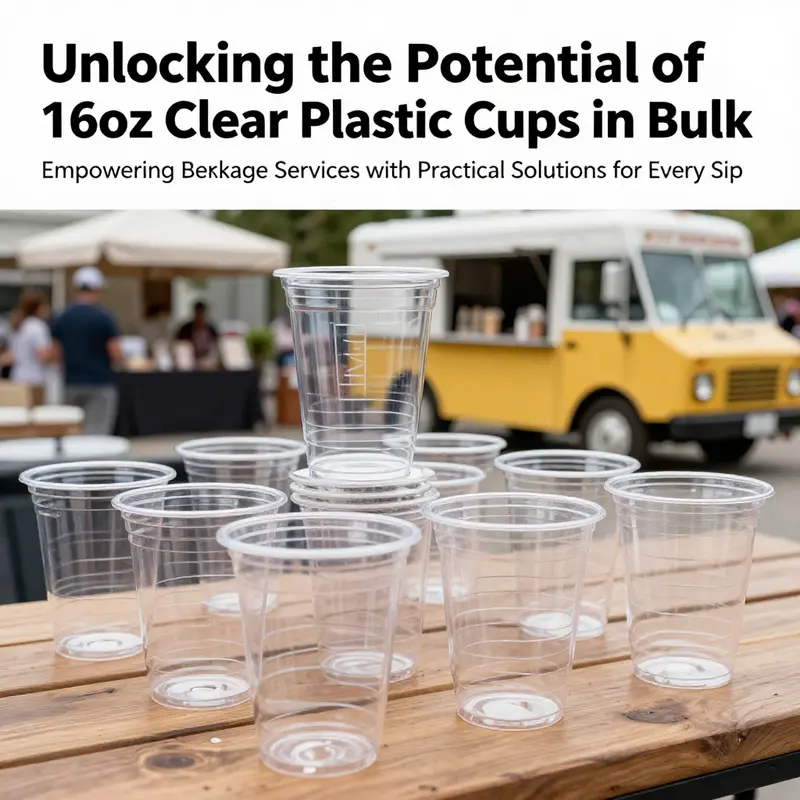
The use of 16oz clear plastic cups in bulk has transformed the beverage service landscape. Key players like bubble tea shops, restaurants, food trucks, and event planners increasingly rely on these versatile cups to enhance customer experience while addressing practical needs. This article delves into market dynamics, specifications and materials, and the environmental impact of these cups, illuminating their role in safe, convenient, and eco-conscious service. Each chapter intertwines to reflect the core significance of clear plastic cups, ensuring informed decision-making for businesses in food and beverage industries.
Clear Signals, Complex Currents: Navigating the Bulk Market for 16oz Transparent Cups
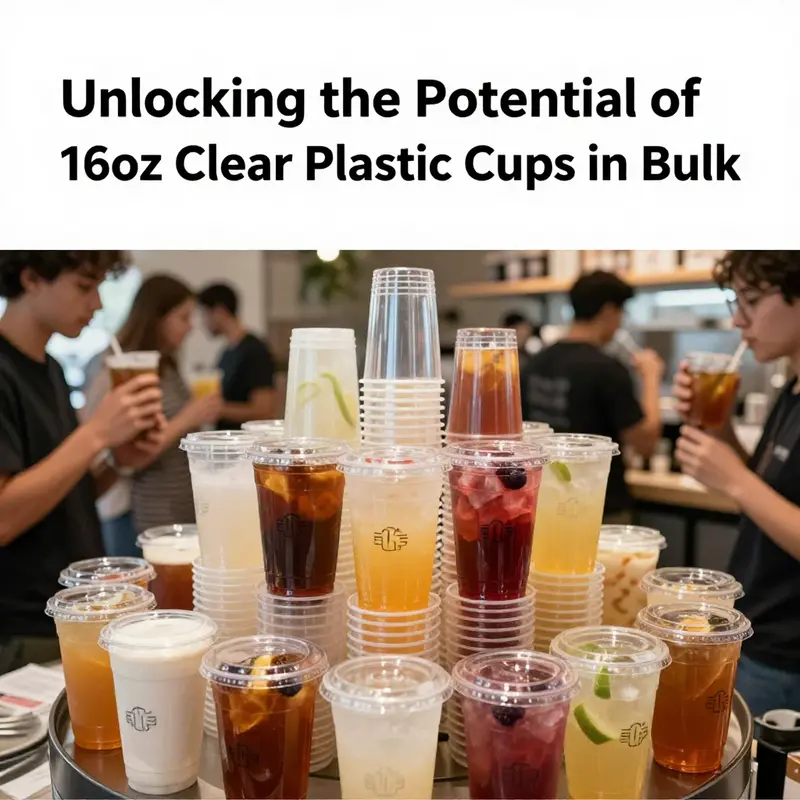
The market for 16-ounce clear plastic cups sold in bulk sits at the intersection of rapid takeout growth, visual appeal, and a shifting sustainability frontier. These cups have long relied on the core strengths of transparency, light weight, and dependable stacking to serve busy cafes, fast-casual spots, event venues, and convenience retailers. Yet behind the glimmer of their clear walls lies a dynamic landscape where material choices, regulatory scrutiny, and evolving consumer expectations shape not only what gets bought, but how it gets bought, by whom, and at what scale. The ongoing momentum of takeout culture—driven by on-the-go consumption, the rise of delivery platforms, and large gatherings that demand reliable, low-cost serving ware—continues to anchor demand for bulk quantities. Shops and brands must balance daily turnover and inventory risk with the need to present beverages in a way that communicates quality and cleanliness at a glance. In such a setting, the choice between PET and PP cups is never merely a material decision; it is a strategic choice about durability, clarity, compatibility with cold beverages, and how a brand can project its identity through a simple, disposable vessel.
But the narrative extends beyond material performance. The market is increasingly influenced by environmental considerations that shape procurement priorities. PET and PP cups remain popular for their clear appearance, resistance to impact, and cost efficiency, yet buyers are recalibrating their expectations toward more sustainable options. PLA cups, derived from renewable feedstocks and engineered to be biodegradable or compostable under industrial conditions, are moving into broader consideration sets. This shift is not just about end-of-life disposal; it ties to regulatory environments, corporate sustainability goals, and consumer education about what “eco-friendly” means in practice. Certifications such as FDA recognition for safe contact with food, and broad acceptance standards like LFGB and EU 10/2011, are becoming practical prerequisites for many buyers who must defend their supply choices against audits and regulation. The presence of these certifications helps businesses avoid last-minute compliance snags during inspections or promotions, especially when cups are used for mixed beverages that may include syrups, citrus, or carbonated elements.
In practice, many buyers pursue a balance: they rely on the stalwarts—clear, rigid or semi-rigid cups made from PET or PP for their well-known performance with ice, carbonation, and cold fills—while experimenting with or gradually incorporating PLA-based alternatives for certain SKUs, events, or promotional campaigns. The incremental transition is natural, given the different manufacturing timelines, supply chain realities, and MOQs that accompany new material families. Suppliers in the bulk space emphasize not only material properties but also the breadth and flexibility of customization, which has become a more decisive differentiator as brands seek to extend their reach at events, venues, and retail shelves without sacrificing efficiency. In this context, customization can range from printed logos and color accents to unique shapes that optimize stacking, reduce space in bulk shipments, or accommodate precise branding guidelines. The ability to tailor these elements is not a luxury; for many buyers, it is a necessary component of maintaining a recognizable presence at crowded venues, where a cup’s appearance can reinforce a marketing message as effectively as the drink inside.
The supply chain for bulk 16-ounce clear cups has matured into a globally interconnected system, with production clusters in China offering scale, speed, and an expanding menu of material and finish options. Guangdong, Zhejiang, Sichuan, and Jiangsu stand out as hubs that combine mature tooling, robust supply networks, and downstream capabilities for customization and finishing. This geographic concentration translates into efficient lead times, favorable MOQs for large orders, and the ability to coordinate color-matched branding across a wide range of consumer-facing requirements. For buyers, however, the advantage of proximity to a production powerhouse must be weighed against the realities of global logistics, currency fluctuations, and tariff considerations. The bulk sector has become adept at negotiating these risks through flexible payment terms, staged production schedules, and the option to request free samples before committing to a full order. It is common for suppliers to accept T/T payments with initial deposits and to offer terms that accommodate USD transactions, a practical arrangement for buyers who require currency stability and predictable budgeting. The practice of providing samples—often at no cost—remains a critical step in quality assurance, even as buyers shoulder the costs of shipping to validate fit, clarity, and seal integrity in their own environmental conditions.
As buyers navigate these currents, the decision framework extends beyond unit price. The pricing spectrum in bulk is wide, reflecting the material choice, customization degree, and order volume. Standard PET or PP cups can be procured in bulk at relatively modest unit costs when orders exceed the thousands. In contrast, customized offerings that feature printed logos, branded colorways, or unique geometries can push unit prices upward, sometimes into premium tiers, particularly when MOQs scale into tens of thousands or more. This pricing dynamic is not merely a function of material science; it mirrors the logistics of branding, screen or pad printing processes, and the requirement for consistent color reproduction across parallel production runs. For procurement leaders, the challenge lies in aligning a clear price-per-unit with a reliable supply schedule, contemplating long lead times for customized runs, and balancing the need for immediate stock with the strategic value of branded packaging for future campaigns.
The market’s forward motion is also shaped by evolving consumer expectations around convenience and safety. In cafes and fast-food venues, the cup is more than a receptacle; it is a communications channel. A clean, transparent cup allows customers to visually assess beverage quality, ice levels, and carbonation, reinforcing perceptions of freshness and care. At events, bulk cups become a canvas for sponsor recognition, event branding, and color-coded signaling for venues that manage large crowds. The convenience factor—where staff can quickly retrieve, fill, cap, and display beverages—remains a constant, especially in high-volume service days. Yet as sustainability narratives gain traction among consumers, even casual buyers are asking for evidence that the cups they select align with broader environmental goals. The PLA option, while appealing for its renewable origin and compostability, introduces considerations about industrial composting infrastructure, municipal recycling policies, and the realities of waste separation in busy service environments. In practice, buyers often weigh the total lifecycle of the cup—from source material to end-of-life handling—against the perceived risk of regulatory changes, disposal infrastructure gaps, and evolving expectations at point of purchase.
One of the most tangible developments in the bulk market is the expansion of branding and customization capabilities through OEM and ODM pathways. Suppliers increasingly offer end-to-end solutions that include not just the base cups but a suite of branding services, enabling operators to deliver a cohesive brand experience across beverages, lids, and sleeves. This capacity is particularly valuable for operators that host events, run seasonal promotions, or maintain a network of coffee shops under a shared brand umbrella. By leveraging customization, businesses can foster recognition, loyalty, and recall—efforts that compound as customers encounter the cups repeatedly across different touchpoints, from the counter to the takeaway bag. The result is a greater willingness to invest in higher-visibility packaging when it translates into stronger brand equity, event-specific aesthetics, or streamlined operations that reduce mis-picks, mis-prints, and quality complaints.
In this environment, buyers also contend with the practicalities of supplier relationships and terms. Flexible payment terms, such as T/T with deposits, and the availability of USD-based ordering, provide a degree of financial predictability that is highly valued in procurement planning. The willingness of suppliers to provide samples, albeit with the buyer assuming shipping costs, remains a crucial mechanism for risk reduction. It offers a snapshot of how the finished product will perform under real-world conditions—the clarity of the material during light exposure, resistance to impact when stacked with other containers, and the seal integrity of cups intended for cold beverages that may travel in hot or humid environments. The ability to verify these attributes before committing to large buy-ins reduces the probability of costly restocking or returns and helps buyers maintain consistent beverage quality across their locations.
From a strategic standpoint, the bulk market for 16-ounce clear cups is most robust when it remains sensitive to the interplay between cost efficiency and sustainability. The ongoing transition toward more eco-friendly solutions is not a binary choice but a spectrum on which businesses can position themselves according to their market, regulatory climate, and consumer expectations. For example, PLA-based options, while promising, require careful consideration of their end-of-life handling and the fidelity of composting programs in a given region. The growth of certifications and safety validations reflects a broader trend toward responsible packaging; buyers increasingly perceive such certifications as risk management tools that support long-term supply reliability and reputational strength. This is especially true for operators that aim to present a polished brand image at festivals, corporate events, and other large-scale gatherings where the visual impact of the packaging is amplified by the sheer volume of cups in circulation.
The dynamic landscape is also punctuated by the reality that alternatives exist and are evolving. While the bulk market currently leans heavily on PET and PP cups for their clarity, rigidity, and proven performance, a growing segment of customers is exploring substitutes that emphasize compostability, recyclability, or reduced fossil-fuel intensity. The market’s trajectory suggests a gradual diversification of the material portfolio, enabling buyers to tailor their choices to specific use cases. For routine takeout and everyday beverage service, PET and PP will likely remain the default due to their established performance and cost efficiency. For events and campaigns that prioritize sustainability credentials, PLA and other bio-based options may secure a larger foothold, provided that the supply chain can guarantee proper disposal pathways and regulatory compliance across their deployment geography.
As buyers assess the total package, it is essential to consider the broader ecosystem in which bulk 16-ounce clear cups operate. Brands contemplating long-term procurement should map out not only the immediate price per unit but also the supplier’s reliability, lead times, and capacity to scale with demand spikes. The ability to source consistently during peak seasons—such as summer festivals, holiday promotions, or high-traffic weekends—depends on a well-managed relationship with producers who can absorb fluctuations in order size and maintain quality across thousands of units per order. In such scenarios, turnkey solutions that integrate cups with lids, sleeves, and compatible accessories can streamline operations and reduce the administrative burden on busy procurement teams. The practical benefits of integrating components—like a uniform lid system or a sleeve design that complements the cup’s diameter and stacking profile—can translate into faster service, fewer misfills, and improved second-visit experiences as customers retrieve ready-to-use beverages from a well-coordinated ecosystem.
The narrative above underscores a core insight: the bulk market for 16-ounce clear cups is not solely about a disposable product. It is about how a simple, transparent vessel participates in a broader system of beverage serving that is shaped by consumer expectations, sustainability considerations, and the realities of manufacturing and logistics. The cups act as a bridge between brand presentation and product performance, becoming a tangible reflection of a business’s values, efficiency, and adaptability. In practice, the most successful buyers are those who calibrate their approach to material choice, regulatory alignment, and supply chain readiness while preserving the simplicity and speed that define bulk purchasing. They recognize that price is not the only lens through which to view value; instead, they weigh total cost of ownership, ease of integration into existing operations, and the capacity to pivot when sustainability narratives or consumer preferences shift.
For readers seeking a practical frame to evaluate options, the bulk 16-ounce clear cup market offers a model of how form and function intersect with policy and culture. Clarity remains a status symbol in the cup itself, signaling cleanliness and confidence in the beverage. Yet the durability of the supply chain, the clarity of messaging around sustainability, and the reliability of the vendor ecosystem are equally vital. As markets evolve, buyers will continue to balance legacy performance against emerging eco-friendly alternatives, weighing MOQs, color and branding capabilities, and the prospect of future regulatory shifts. The end result is a market that rewards buyers who think in terms of lifecycle value rather than immediate unit price alone—a mindset that positions brands to deliver consistent beverage experiences while aligning with responsible packaging paradigms.
To illustrate how broad the ecosystem is, consider the broader options that rival packaging channels present. While cups of this size are optimized for cold beverages and short-duration use, the packaging landscape also includes paper-based bowls and other recyclable or compostable formats designed for takeout contexts. In many cases, operators discover that a mixed portfolio—keeping bulk purchases of clear cups for everyday service while reserving eco-friendly paper or bioplastic alternatives for promotional events—offers the most flexible approach. This strategy supports both cost control and brand storytelling, enabling a restaurant or venue to adapt to the occasion without sacrificing efficiency. The decision framework thus embraces not only the arithmetic of price and MOQs but also the strategic alignment of packaging choices with customer perception, environmental commitments, and operational constraints. In the end, the bulk market for 16-ounce clear cups is best understood as a living system that thrives when participants listen to the signals of demand, respond thoughtfully to sustainability pressures, and invest in suppliers and processes that deliver dependable performance at scale.
For readers who want to explore related packaging options and further optimize their selection, a broader look at eco-conscious alternatives can be useful. For example, some operators have found that pairing clean, recyclable cup options with sustainable lid solutions and responsible sleeve designs streamlines waste separation and improves post-use handling. This approach does not eliminate the need for careful material stewardship, but it does create a more coherent and navigable path toward responsible packaging within high-volume operations. The conversation around bulk cups is thus part of a larger dialogue about how businesses steward resources, how they communicate values through everyday objects, and how they manage supply chain risks in an era of rapid change. In that context, the 16-ounce clear cup remains a focal point—a practical tool that, when chosen and deployed wisely, supports both business performance and a growing commitment to sustainable packaging practices.
Internal link reference: Readers who are exploring eco-friendly packaging alternatives may find value in a related offering that emphasizes printed branding on sustainable, paper-based cup solutions. Learn more about eco-friendly printed-logo cold beverage paper cup with lid, which provides a concrete example of how branding and sustainability goals can intersect in a bulk packaging environment. eco-friendly printed-logo cold beverage paper cup with lid
External resource: For a broader industry context on materials and market dynamics in the plastic cup space, see the external reference that profiles bulk PET cup applications and market considerations: https://www.alibaba.com/product-detail/500ml-PET-Plastic-Cups-16oz-Clear_1600492278925.html
null
null
Seeing Through Bulk: The Practical Fabric of 16oz Clear Plastic Cups and the Environmental Choices Behind a Simple Drink
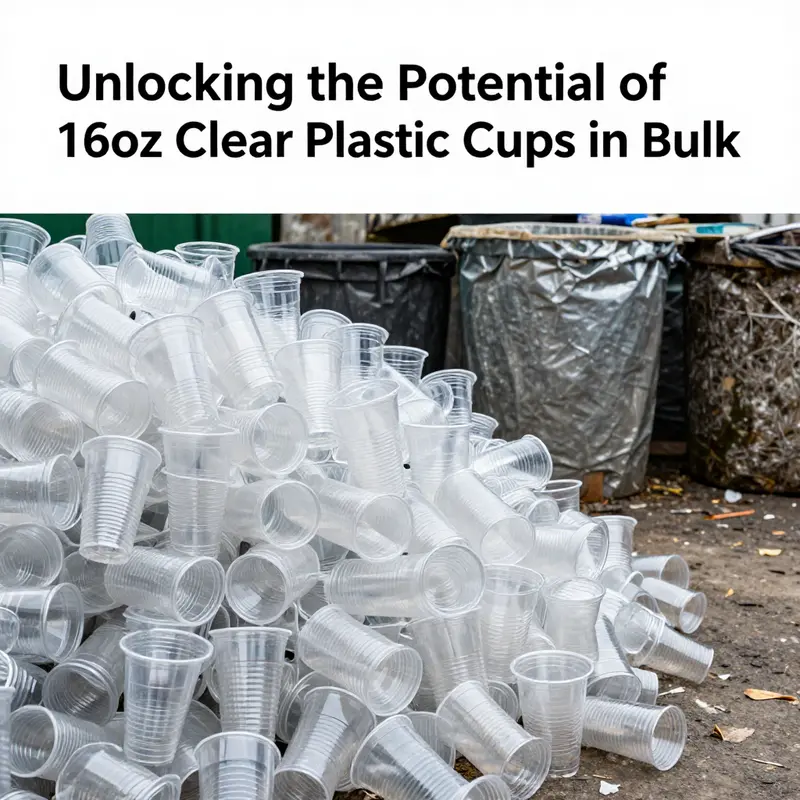
In the world of beverage service, the 16-ounce clear plastic cup stands as a quiet workhorse, a vessel whose value is often measured not by flashy features but by reliability, versatility, and the quiet efficiency it brings to a busy day. When conversations turn to bulk purchases and large-scale operations, these cups reveal how a simple design—clear, stackable, light—can transform both back-of-house logistics and front-of-house presentation. The appeal rests on tangible, practical benefits. The cups’ transparency invites customers to assess the drink’s color, texture, and freshness at a glance, which is not merely an aesthetic advantage but a confidence builder in fast-service environments. In bulk, that clarity translates into a smooth workflow: fewer returns, fewer complaints about misseen contents, and more predictable portioning. Yet the story of these cups extends beyond the immediate cash register and into the broader arc of materials science, waste streams, and the evolving definitions of responsible design in the era of mass consumption.
At the heart of the discourse are two or more polymer families that dominate this category. PET, short for polyethylene terephthalate, and PP, polypropylene, are the most common choices for clear, single-use cups. Each brings a distinct balance of properties that shape how a venue uses them. PET is celebrated for its exceptional clarity, which makes beverages look enticing and vibrant, and for its durability in handling ice and cold liquids. It’s surprisingly sturdy for a disposable item, a factor that reduces the likelihood of breakage during transport or table-service mishaps that would otherwise generate waste through damage. This durability also translates into storage efficiencies; stackable designs make bulk storage feasible in cramped kitchens or crowded event spaces. PP, by contrast, offers a different mix of characteristics. It supports a slightly higher resistance to heat, holds up well under extended use in takeout or outdoor service, and provides a degree of flexibility in lid compatibility that some operators value for leak prevention and ease of disposal. Together, PET and PP form a duo that aligns with the fast-paced routines of cafes, food trucks, and catering crews.
A particularly notable segment within this broad category is the bulk market—where orders are commonly placed in large lots, often with a minimum order quantity that reflects both the economics of manufacturing and the realities of stocking for consistent service. The industry data highlight a standard capacity of 500 milliliters, which approximately translates to 16 ounces. This capacity is a touchstone because it aligns with portion norms in many beverage programs: large enough to feel generous, yet not so large that it undermines price integrity or waste management. In bulk scenarios, customers often seek a predictable unit count per shipment, reliable packaging that minimizes damage in transit, and options for branding or customization that do not compromise the integrity of the cup’s form or the performance of its lid. The consumer-facing advantages—visibility of the beverage, perceived portion value, and the ability to present a consistent brand image through branding on the cup or lid—coalesce to support a practical, scalable approach to beverage service.
The environmental narrative that accompanies these cups varies with material choice and the systems available to a given operation. PET cups are widely recognized for their high recycling compatibility, a feature that encourages a circular approach in regions with robust curbside programs and material recovery facilities. When PET cups are recycled, the material can re-enter the economy as new bottles or fibers, extending the life cycle of the polymer and reducing the demand for virgin resin in a market that prizes resource efficiency. The safety profile of PET is also a major consideration; it is widely deemed food-grade and BPA-free, addressing consumer concerns about potential contaminants. The downside, of course, remains the broader challenge of plastic pollution when post-consumer streams are not properly treated. Even in systems designed to recover PET, the energy requirements and logistics of recycling can be substantial. The environmental calculus thus requires not only a choice of material but an honest appraisal of a business’s end-of-life handling, whether through recycling, collection for energy recovery, or other recovery pathways.
PLA, or polylactic acid, offers a different sustainability narrative. Derived from plant-based sources such as corn starch, PLA cups are marketed as compostable under industrial conditions, appealing to brands and consumers who want a more explicit reduction in landfill burden. In practice, however, the environmental benefits of PLA hinge on access to certified industrial composting facilities. Home composting or standard municipal landfills do not reliably facilitate PLA’s breakdown, and many regions still lack the infrastructure to process compostable plastics on a meaningful scale. The performance envelope for PLA also presents trade-offs. While it offers good clarity and a favorable safety profile, its resilience under hot beverages or long-term storage can be less robust than PET. For operations that prioritize compostability as a strategic value, PLA can be a persuasive option—but only when waste streams are designed to support it, and when the composting pathway is accessible to customers. The take-home message for procurement teams is clear: sustainability requires a systems view. When choosing PLA, an industrial composting pathway or a verified certification becomes a meaningful differentiator, helping align supply choices with regional waste management capabilities.
Beyond the technical properties and the end-of-life considerations lies the broader narrative of how bulk cups fit into the flows of a commerce-driven world. The design of a cup is, in many respects, a negotiation between function and responsibility. A cup must perform in the daily rigors of service: it must hold liquids without leaking, resist cracking when subjected to cold drinks, tolerate the occasional bump during a crowded shift, and stack neatly for efficient storage. At the same time, it carries branding potential through engraving, printing, or labeling that can reinforce a business’s identity across thousands of servings. The ability to customize is a notable advantage in the bulk market, where events, campaigns, or seasonal menus benefit from a consistent, recognizable emblem on a disposable vessel. Customization options—ranging from color-tinted accents to full-bleed branding on the cup or lid—can elevate promotional impact, especially in crowded settings like weddings, festivals, or product launches. The practical value of customization emerges not as a mere aesthetic flourish but as a strategic tool for visibility, customer recall, and experiential marketing. Yet customization must be balanced against production costs and the material’s performance envelope. A cup that looks great but cannot withstand the rigors of service or deterioration under heat or friction will inevitably undermine the brand’s credibility.
From a procurement standpoint, the bulk purchase of 16-ounce clear cups involves assessing more than per-unit cost. It requires evaluating the interplay of minimum order quantities, lead times, packaging integrity, and the availability of compatible lids. For many buyers, a minimum order quantity—often expressed in thousands of units per shipment—limits the financial risk of manufacturing while ensuring that inventory levels align with demand. In practice, the bulk market rewards a straightforward, repeatable supply chain. Buyers favor packaging that minimizes breakage during transit, which means designs that maximize stackability and secure containment within cartons. Palletization, wrap integrity, and shrink-film protection all contribute to reducing loss, especially for event organizers and large-scale food service operators who move cups across long distances. The logistics dimension of bulk purchasing cannot be understated; it reduces downtime during peak service periods and ensures a predictable supply chain when demand spikes, such as summer travel seasons or festival weekends.
In this environment, the environmental and logistical considerations converge with the consumer’s expectations around safety and hygiene. The cups’ food-grade certification and BPA-free status address a core requirement of modern beverage service: consumer trust. This trust is reinforced when the supply chain makes proven performance and safety a visible feature of the product story. It becomes a matter not only of the cup’s physical performance but of the governance around how it is produced, stored, transported, and disposed of. In practice, buyers increasingly seek visibility into certifications and production standards, including third-party verification that the materials meet food contact regulations and that any additives or surface treatments do not compromise safety. The narrative shifts from “can this cup hold a beverage?” to “can we responsibly manage this cup from sourcing to end of life without compromising safety or our sustainability commitments?”
The interplay between consumer expectations, sustainability goals, and practical service demands invites a nuanced approach to the lifecycle decisions around these cups. For brands and operators who wish to minimize environmental impact while preserving the benefits of bulk efficiency, there are several actionable pathways. One is a pivot toward recycled PET (rPET) cups that close the loop by reusing post-consumer streams to produce new cups. This approach avoids the friction of extracting virgin resin and supports a circular economy, provided the recycling stream is robust in the region where the cups are used and collected. The second pathway centers on PLA with verified industrial compostability, paired with active participation in local composting programs. When a business can offer customers convenient disposal pathways—such as clearly labeled composting bins and accessible facility information—the compostability promise becomes a tangible part of the brand narrative. The third pathway emphasizes a reduction in the total environmental footprint by integrating refillable or returnable packaging in contexts where it makes sense. While returnable systems may seem more aligned with reusable containers, the underlying principle remains consistent: the best way to minimize waste is to rethink the need for disposables in high-volume settings, especially when logistics and customer habits allow for alternatives that still meet service standards.
Even as these considerations guide responsible choices, the bulk market continues to innovate in subtle but meaningful ways. Developments in cap-and-lid systems, improved barrier properties for longer beverage integrity, and advances in traceability for supply chains all contribute to a more resilient market for clear cups. The emphasis remains on practical performance: leak resistance, color neutrality, and predictable compatibility with widely used lids. These features are not merely commercial assurances; they are operational necessities that affect the speed of service, the reliability of deliveries, and the consistency of the customer experience. When a café or a caterer can rely on a steady supply that arrives undamaged and matches the expected performance, the daily routine becomes more predictable, which in turn supports better training, scheduling, and cost control.
The moral of the bulk cup story, then, emerges from a synthesis of materials science, waste management, and organizational discipline. The choices made by a buyer at the outset—whether to prioritize PET, PP, or PLA, whether to pursue rPET or industrial compostability, and whether to emphasize branding or unfettered, neutral clarity—shape outcomes across the product’s lifetime. In regions with strong recycling infrastructure, PET cups can perform exceptionally well as part of a closed loop, especially when paired with clear labeling and a well-communicated disposal plan. In markets where composting capacity exists and is accessible to customers, PLA can function as a forward-looking option that aligns with broader environmental goals. In places where infrastructure remains limited, the most responsible approach may center on improving recycling rates, investing in consumer education about disposal, and considering materials that maximize recyclability without compromising performance.
Operationally, the decision tree also includes considerations around customization and branding in bulk contexts. For event planners, large venues, and promotional campaigns, a cup that doubles as a brand ambassador offers intangible value. The right cup design can reinforce a message as customers hold their drinks, share photos, or post social updates that extend the event’s reach. Yet branding must be balanced against cost, regulatory considerations, and the practical realities of mass production. The most successful programs treat branding as a value-add that does not overshadow the cup’s primary function of safe, convenient beverage delivery. In many cases, this balance is achieved through selective branding on lids or sleeves, while keeping the cup body neutral to ensure compatibility across a broad range of beverage types and temperatures.
As the conversation about bulk clear cups continues to evolve, it remains essential to anchor decisions in a thorough understanding of both the practical and environmental dimensions. The cups’ fundamental role is to provide a reliable, safe, and visually appealing container for beverages, while the broader story invites stewardship and innovation. For procurement teams, the path forward lies in aligning material choice with local waste-management realities, consumer behavior, and the business’s own sustainability commitments. In this sense, the bulk 16-ounce clear cup becomes more than a disposable item; it becomes a node in a larger network of choices that influence waste generation, resource use, and the cultural expectations customers bring to the act of enjoying a cold drink. The best outcomes arise when supply chains are designed to be transparent, when customers understand disposal pathways, and when materials are chosen not only for their immediate utility but for their compatibility with a solid, long-term environmental strategy.
For readers seeking alternatives that broaden the packaging conversation beyond plastics, a related branch of packaging discussions highlights paper-based, customizable options that still offer branding potential and reliable performance for cold beverages. For example, one such path explores eco-friendly printed logos on cold-beverage paper cups with lids, illustrating how ink, paper, and lid configurations can convey a strong brand message while remaining mindful of end-of-life implications. This approach underscores a broader principle: the best packaging choices are those that fit a specific context, audience, and infrastructure. In venues where composting infrastructure is robust and customer participation is high, paper-based or compostable options can be a powerful complement to traditional plastics, expanding the spectrum of responsible procurement and enabling a more nuanced conversation about environmental impact across different settings.
To close, the bulk 16-ounce clear cup embodies a pragmatic blend of form, function, and responsibility. The choice of material—PET for clarity and durability, PP for versatility, or PLA for compostability—carries implications that ripple from kitchen operations to waste streams and consumer perception. Customization and branding add strategic value, but only within a framework that respects safety, cost, and end-of-life realities. In markets with strong recycling systems, PET cups can close their loop effectively; where industrial composting is accessible, PLA offers a credible path to reduced landfill burden; and across all scenarios, a clear-eyed approach to disposal education, labeling, and infrastructure investment can amplify the positive environmental outcomes of seemingly ordinary products. As more buyers recognize the importance of system-level thinking, the bulk supply chain for 16-ounce clear cups will continue to evolve, balancing demand, cost, and sustainability in ways that keep beverages flowing and communities moving forward.
External resource: https://www.alibaba.com/product-detail/500ml-PET-Plastic-Cups-16oz-Clear1600492278925.html?src=productDetail&spm=a2700.galleryofferlist.pproduct_detail&productId=1600492278925
Internal reference for broader packaging considerations: eco-friendly-printed-logo-cold-beverage-cup-paper-cup-with-lid
Final thoughts
The increasing reliance on 16oz clear plastic cups in bulk signifies a shift towards practical, eco-friendly solutions in the food and beverage industries. As beverage services expand and evolve, the demand for versatile and sustainable packaging options grows, highlighting the importance of informed procurement decisions. Companies seeking to enhance their service can reap the benefits of these cups — both in terms of operational efficiency and customer satisfaction, paving the way for a green future.