
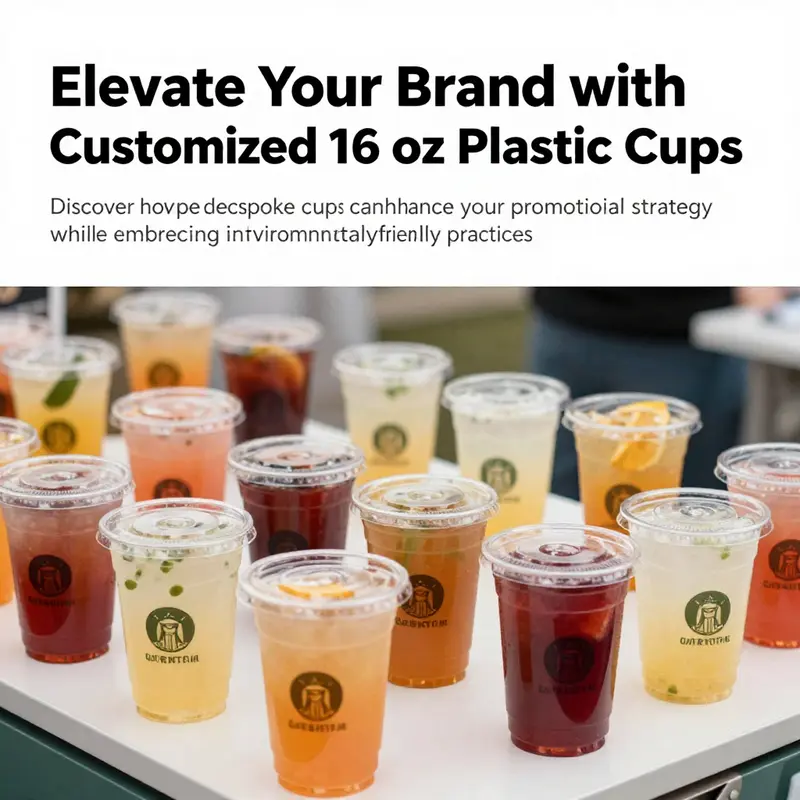
Customizing 16 oz clear plastic cups with your logo provides an excellent avenue for branding in the beverage industry. These cups not only allow the vivid colors of your drinks to shine, but they also serve as effective promotional materials for bubble tea shops, restaurants, food trucks, and catering services. As businesses face more competition, utilizing personalized products can provide the edge needed to attract and retain customers. In this article, we will delve into the importance of customization for promotional activities, the growing concern for environmental sustainability, and the current market trends surrounding these versatile cups.
Crystal Branding at Scale: Crafting 16-Ounce Clear Plastic Cups with Logo for High-Impact Promotions

The visual spectacle of a beverage is rarely isolated from its container. When a sponsor or brand chooses a 16-ounce clear plastic cup to carry its message, the cup becomes more than a vessel; it becomes a moving billboard that travels from event floors to coffee shops, offices, and homes. The clarity of the cup offers a stage for color, aroma, and personality to mingle in the most immediate way. In promotional campaigns, where every detail matters, the choice of a transparent 16-ounce cup with logo printing balances practicality and perception. The capacity, roughly 473 milliliters, sits at a sweet spot for standard servings of soft drinks, iced tea, milk tea, smoothies, and specialty drinks. It is large enough to sustain a generous pour, yet compact enough to be stacked, transported, and handled in busy environments. The transparency does more than simply reveal the beverage. It highlights the color, sparkle, or gradient of a drink, making a red berry punch glow or a frothy latte appear more luxurious. In promotional settings, this visual appeal translates into social media moments, in-person demonstrations, and memorable hands-on experiences that extend beyond the moment of purchase. The cup becomes part of the storytelling about the brand as it travels through lineups at trade shows, sampling events, and pop-up shops. The glass-like clarity invites the drink to speak for the brand, letting the liquid’s natural hues communicate freshness, quality, and the sensation of a brand’s chosen flavor profile before the sip even reaches the lips. This is the essence of a well-chosen promotional cup: it is quiet yet powerful evidence of the product inside, aligned with the brand’s visual language and the event’s atmosphere.
Beyond form, the material science of these cups reflects a growing trend toward sustainability without sacrificing function. The use of PLA-based formulations underscores a shift toward renewable-resource origins that can support a lower environmental footprint. PLA—derived from plant-based resources such as corn starch or sugarcane—offers a path to materials that are compostable under appropriate facilities, reducing the long-term impact of single-use packaging. The idea of compostability is tied to certifications and third-party verifications that ensure a cup can break down under industrial composting conditions, leaving behind minimal residue and no harmful byproducts. In practice, this matters most when brands consider end-of-life scenarios for events, conferences, and venues that aim to minimize waste. The composition often pairs PLA with PET in a laminated or layered construction to achieve both clarity and strength, creating a cup that holds cold beverages securely, resists cracking at typical temperatures, and maintains a pristine, crystal-clear appearance throughout service. The result is a packaging choice that respects consumer expectations for sustainability while still delivering the sharp, professional look that branding demands. When a brand prints a full-color logo onto such a cup, the interplay between material clarity and printing fidelity becomes a key design consideration. High-contrast logos, legible typography, and a careful balance of negative space ensure the logo remains legible against the beverage’s color and the cup’s own optical properties. The printing process itself can utilize multiple techniques, from flexographic and digital methods to offset printing on certain configurations. Each method offers trade-offs in color vibrancy, durability, and cost. A successful promotional program understands these trade-offs and designs logos and color palettes that stay readable from a distance while remaining subtle enough to avoid overpowering the drink’s visual appeal. The overarching goal is a cohesive brand moment: the cup, the drink, and the event’s ambiance all reinforce one another.
A critical factor for promotional deployments is the cup’s ability to adapt to a wide range of beverages. Cold drinks—from carbonated sodas to iced teas and smoothies—are the norm at events and pop-ups. The cups must allow easy pouring, comfortable drinking, and straightforward handling, even in crowded spaces. A wide top opening is essential to facilitate filling and sipping, particularly for beverages with mix-ins, ice, or toppings. The design should also support efficient stacking and stable nesting, reducing storage footprint and transport costs, which are crucial when campaigns scale to thousands of units. In addition, the cups’ structural integrity matters. A reliable cup resists flexing under the pressure of a full pour, minimizes leaks, and holds its shape even when hand-held by guests who may be wearing gloves or handling multiple cups in a fast-paced environment. These practical considerations shape the choice of materials, wall thickness, and the overall geometry of the cup. They also influence how the logo is applied. A robust process ensures the branding remains intact during the cup’s lifecycle—from the moment it leaves a service counter to the moment it is disposed of or recycled.
The marketing potential of logoed, 16-ounce cups is amplified when suppliers can offer flexible manufacturing options. OEM and ODM services enable brands to tailor the cups to their exact needs. This includes choosing the precise shade and finish of the logo, the printing method, and the placement. It also encompasses optional features like embossed or debossed branding, multicolor logos, and even subtle textures that interact with light to create a premium feel. When a brand works with an experienced supplier, the scope extends beyond the cup itself. The same partner can provide complementary packaging ideas, such as sleeves that reinforce the logo and reinforce the brand message, or lids designed with the same branding to ensure a consistent look across elements of the consumer experience. A good supplier will also offer design guidance, helping marketers optimize the logo’s legibility against the transparent backdrop and the beverage’s color. They might suggest avoiding overly intricate linework that could blur at the typical viewing distance or during the manufacturing process. The result is a cohesive branded package that reads clearly in photos, videos, and in-person interactions.
Sustainability and branding co-create a narrative for the modern consumer. On one hand, the clear cup signals transparency in both product and process; on the other hand, the use of renewable-based plastics signals a commitment to responsible material choices. The consumer landscape increasingly favors brands that can articulate a clear stance on sustainability and packaging lifecycle. In practice, this translates to cups that are not only functional and visually striking but also aligned with environmental claims that can withstand scrutiny. The presence of third-party certifications—such as compostability marks or certifications tied to the material’s feedstock origin—helps build trust with customers who are thoughtful about waste. Brands can tailor messaging that emphasizes the renewable origin of the material, the potential for recycling or composting where facilities exist, and the steps they take to minimize waste through efficient production and packaging design. The dialogue between branding and sustainability is not merely rhetorical; it guides decisions about the cup’s composition, the printing inks used, and the overall end-of-life narrative. This narrative should be accurate and transparent, avoiding greenwashing while highlighting meaningful benefits such as reduced dependence on fossil-based resources, or the potential to divert waste streams from landfills via composting where industrial facilities are available.
In practice, the promotional strategy for 16-ounce logoed cups hinges on a few core marketing principles. First, simplicity in the logo design often yields greater impact. A bold mark with a single color or a small, controlled color palette tends to reproduce consistently across batches and lighting conditions. Second, the color of the beverage itself matters. A logo that relies on colors with high contrast against typical drink hues will maintain legibility even as the cup fills. This is where a careful brand color system translates well to packaging. The logo’s placement should also respect the cup’s geometry. Centered branding may work for certain campaigns, while off-center or top-hem branding can be more striking for others, particularly when the cup is held upright in photos or recorded on camera. The goal is to ensure that the brand remains recognizable whether the cup is seen from a distance in a crowd or up close in a vlog shot. Third, the context of use informs the packaging ecosystem. If a brand activates a festival, a sports event, or a conference, the cups can become part of a broader experiential moment, inviting participants to take photos or share content that features the logo. The more the cups align with the day’s mood—colors, typography, and messaging—the more likely they are to become social currency, generating organic reach without a heavy advertising footprint.
From a procurement standpoint, the economics of logoed cups must be understood in relation to scale. For large campaigns, bulk purchases bring economies of scale that reduce per-unit cost while enabling a broader reach. The total cost factors include the base material, the printing method, the complexity of the logo, and the packaging for shipping and storage. A supplier that can offer full-color logo printing at scale—while maintaining food-grade safety and eco-friendly credentials—represents a compelling value proposition for brands seeking to maximize impact across a broad audience. An important nuance in budgeting is the potential trade-off between vibrant, full-color branding and the durability of the print under cold beverage conditions, ice, and stirring. Some inks and print layers are more resilient to moisture and ice than others. A careful balance is struck, with the design optimized for durability while preserving the look that makes the drink visually appealing in photos and in person. The result is a set of cups that perform reliably during service, hold up under repeated handling, and remain visually striking in promotional materials.
To illustrate how these considerations translate into real-world choices, consider a typical promotional workflow. A brand defines the event brief: the target audience, the beverage category, the visual language, and the messaging goals. A design file is prepared with color separations and print-ready guidelines to ensure fidelity across production runs. The supplier conducts a pre-production sample to verify color accuracy, print quality, and the cup’s structural performance. The brand assesses the sample for readability, color blocking, and the impression the logo leaves under bright stage lighting and in dim event spaces. After sign-off, production scales to thousands of units, with logistics coordinated to ensure timely delivery to multiple venues. The aim is a seamless supply chain where branding remains consistent across all points of service—from the counter to the cleanup station. In parallel, the sustainability narrative is reinforced by sharing the cup’s material story and end-of-life options with partners and event attendees. The message becomes consistent: a high-quality, transparent cup that communicates the brand, supports the beverage, and aligns with a modern, eco-conscious approach.
An example of how the market accommodates such a blend of branding and sustainability can be observed in supplier ecosystems that specialize in eco-friendly and durable plastics designed for branding and promotions. These suppliers highlight the ability to print full-color logos and to offer flexible manufacturing solutions that accommodate a range of customization needs. The basic proposition remains straightforward: a 16-ounce cup with clear visibility, a brand-safe surface for logos, and a material profile that respects environmental considerations. The packaging and logistics side also receives attention, as the cups must be shipped in formats that prevent damage, ease loading at distribution points, and enable quick restocking during busy promotional periods. In high-volume campaigns, the total value emerges not just from the per-unit cost, but from the efficiency of the entire system—the speed of printing, the reliability of delivery, and the consistency of branding across tens of thousands of cups.
Within this context, the decision to pursue a particular supplier or a particular material profile is never made in isolation. It integrates with a brand’s broader packaging strategy, sustainability commitments, and marketing calendar. It also links to the guidelines that govern how a logo should appear across different media, ensuring coherence from the cup itself to the rest of the promotional suite. A well-considered plan accounts for potential limitations, such as the availability of industrial composting facilities at event venues, the compatibility of the cup with the beverages being served, and the practicality of coordinating branding across a multiverse of locations and dates. In some campaigns, this means offering a mix of cup options to accommodate different venues or different beverage types, all while preserving a consistent brand story.
From a consumer experience perspective, a logoed 16-ounce clear cup can become a memorable touchpoint. In environments where guests can sample multiple beverages, such as a festival or a trade show, the cup acts as a consistent canvas for brand expression. The clarity of the cup ensures that the drink itself remains visually compelling, while the logo grounds the consumer experience in the brand narrative. The physical act of taking sips, photographing the cup, and sharing images with a brand tag creates a loop of engagement that extends beyond the event. The cup thus fulfills a dual role: enabling a practical, enjoyable beverage experience and amplifying the brand’s message through everyday exposure. This dual purpose makes the cup an essential component of many promotional playbooks in the beverage and hospitality sectors.
While the narrative above focuses on the advantages of a logoed 16-ounce clear cup, it also invites careful planning around regulatory and safety considerations. The cups must be food-grade safe and comply with relevant safety standards for the region in which they are used. Packaging and transport should minimize contamination risks. In addition, communications about sustainability should be accurate and defensible, avoiding claims that cannot be substantiated. Any compostable claims should be aligned with recognized certifications and the conditions under which composting occurs. These considerations ensure that branding does not compromise safety or integrity, and that it supports sustainable practices in a credible, transparent manner.
In sum, the strategic value of customizing 16-ounce clear plastic cups with logos for promotional activities lies at the intersection of visual impact, practical usability, and environmental responsibility. When designed thoughtfully, these cups offer a potent platform for brand storytelling that travels with the consumer—from event floor to street, from social feed to storefront. The combination of crystal clarity, substantial capacity, and branding flexibility creates a versatile tool for marketers seeking to maximize reach without compromising the aesthetics and quality that drive positive perception. By aligning logo design with the cup’s material realities and by choosing manufacturing partners who can deliver consistent, scalable solutions, brands can create promotional moments that endure beyond the event and contribute to a cohesive, lasting brand impression. For those ready to explore customization options, the model of a logo-ready, eco-conscious cup represents a compelling way to blend form, function, and message into a single, transparent container that stands up to the demands of modern promotional campaigns.
For further context on how suppliers are approaching branding with eco-friendly materials and to review a representative example of a logo-capable, sustainability-focused cup system, consider exploring a supplier’s option that emphasizes custom logo printing and broad beverage compatibility. This example showcases full-color logo printing and the flexibility to support a variety of cold drinks, from smoothies to iced coffee, while maintaining food-grade safety and compostable credentials in appropriate facilities. The same source highlights OEM/ODM capabilities and the ability to tailor manufacturing to business needs, reflecting the broader industry trend toward adaptable, branding-forward packaging solutions. To begin the customization process and access a comprehensive set of options, visit: https://greendispopack.com/product/disposable-takeaway-paper-cup-custom-logo-kraft-coffee-cup-with-lid/ and review how branding, sustainability, and practicality can converge in a single promotional cup.
External resource: For a concrete example of material and production options in the 16-ounce class, including PLA-based compositions and bulk pricing considerations, see this external reference: https://www.alibaba.com/product-detail/16oz-PLA-Clear-Plastic-Disposable-Cold_1600387954554.html?src=shop
Branded Clarity, Buried Footprints: The Environmental Footprint of 16 oz Clear Plastic Cups with Logos
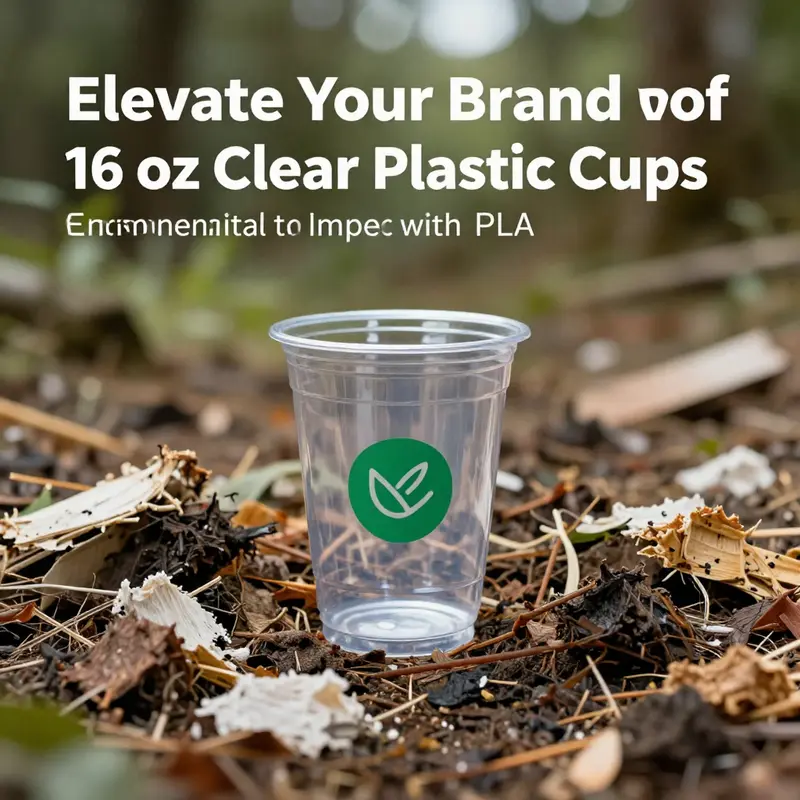
The sight of a clear cup, its contents shimmering with color and light, is often the first cue in a marketing moment. A logo stitched to the side, a color matched to a festival or brand palette, and the cup becomes a moving billboard as it passes from hand to hand. Yet the same simplicity that makes a 16 oz clear plastic cup with a logo so effective also belongs to a product whose environmental footprint deserves careful scrutiny. This chapter does not pretend to offer a definitive verdict on every possible cup in every market; instead, it layers a rigorous look at materials, production, end-of-life, and the practical decisions brands and consumers can make to reduce harm while preserving the value of branding and beverage service. The lifecycle approach matters because the environmental consequences of a disposable cup extend far beyond the moment of purchase. A single cup may seem innocuous, but millions of such cups circulate each day, and the aggregate effect becomes a real stress on ecosystems, infrastructure, and resources. The chapter traces how material choices intersect with manufacturing realities, how end-of-life technologies vary by region, and how branding decisions can either reinforce wasteful habits or steer markets toward more responsible outcomes. It also considers how a circular economy might look in a world where the 16 oz clear cup remains a familiar, convenient, and sometimes indispensable packaging element for events, foodservice, and on-the-go consumption.
At the heart of this environmental assessment is a lifecycle perspective that follows the cup from raw material extraction to production, use, and final disposal or recovery. The story is not simply about whether a cup is recyclable or compostable; it is about how the combination of materials, manufacturing energy, and disposal infrastructure shapes the likelihood of true recovery and the magnitude of residual waste. Different materials bring different strengths and challenges. Polypropylene (PP) and polyethylene terephthalate (PET) are the two main workhorses for clear, rigid beverage cups. PET is prized for its clarity, rigidity, and relatively high recyclability in many systems, yet actual recycling rates depend on local facilities, contamination levels, and consumer sorting behavior. PP, prized for its toughness and heat resistance, is more challenging to recycle in some places, and its recovery rates can lag behind PET in many municipalities. These material realities set the stage for how a logo-bearing cup behaves in real-world waste streams.
The branding dimension adds another layer of complexity. Printing inks, the color depth of the logo, and the application method all contribute to the cup’s environmental profile. Inks may use solvents or heavy metals, and additional processing steps accompany branding—laminations, coatings, or overprints—that affect recyclability or compostability. Yet, well-designed branding can also align with sustainability goals. For instance, if a logo is printed with water-based inks on a plain, recyclable cup, the process may carry a smaller chemical burden than conventional solvent-based printing. In this sense, branding is not inherently at odds with environmental stewardship; it becomes a strategic lever when paired with thoughtful materials choices and end-of-life planning.
One widely discussed but often misunderstood option in the broader packaging conversation is the use of certified compostable materials, sometimes advertised as PLA-based or other biobased formulations. In practice, however, the environmental benefits of compostable plastics depend heavily on context. PLA and similar materials can break down in industrial composting facilities that meet strict temperature and moisture criteria. In the absence of such facilities, compostable cups may persist in landfills for extended periods, potentially releasing methane as they slowly decompose under anaerobic conditions. The same is true for some certified compostables marketed as “home compostable”: many systems simply do not have the infrastructure to support such decomposition, making consumer expectations misaligned with local capabilities. In contrast, traditional PET and PP cups are not compostable in home settings either; their value often lies in the potential for mechanical or chemical recycling, which hinges on clean streams, separation from other plastics, and robust collection systems. The nuanced landscape means brands cannot rely on a single label to guarantee environmental performance. Instead, the most credible claims come from transparency around material composition, the presence or absence of compostability certifications, and clear guidance about local disposal options.
When we examine production, the energy and resource intensity of making a 16 oz clear cup becomes evident. The base resins—PET or PP—require fossil energy to extract and polymerize, then fuel the extrusion, forming, and finishing processes that shape the final cup. Even with modern, efficient machinery, the lifecycle energy demand remains nontrivial. The quest for transparency in production footprints has pushed some suppliers to publish life cycle data or third-party verifications, yet coverage remains uneven across markets. In addition to the resin itself, branding adds its own resource draw. The ink formulations, solvent usage, curing processes, and potential coatings used to ensure durability of the logo all contribute to the cup’s environmental load. In many cases, the incremental cost of branding is modest relative to the total packaging footprint, but it is precisely those incremental choices that can tilt the balance when multiplied across millions of units.
End-of-life realities deserve particular attention. A central question is whether the cup can be recycled in typical municipal programs. PET cups have a higher probability of recycling, but actual recycling rates depend on whether the cup is correctly sorted by consumers and whether local facilities can separate the cup from other materials. Contamination from food residue is a persistent obstacle; even small amounts of residue can render a stream unrecoverable or cause sorting issues that degrade the quality of the recovered plastic. Logos and labels complicate this picture in two ways. First, the inks may introduce contaminants that complicate reprocessing. Second, if a cup is collected as part of a mixed plastic stream, the branding can complicate separation and identification, potentially increasing processing costs or diminishing the quality of the recycled resin. In some regions, the presence of a logo can be a minor obstacle, while in others, it can impede recyclability more significantly. These regional wrinkles remind us that end-of-life performance is not universal, but deeply contingent on local infrastructure and governance.
The option to reclaim or reuse adds another dimension to the environmental calculus. Reusable cup programs have distinct advantages in reducing waste, but they require behavior changes, infrastructure for cleaning, and disciplined collection systems. A reusable model changes the storyline from “single-use disposal” to “circular service.” In high-traffic environments—sporting events, conferences, festivals, or campus settings—strongly implemented reuse systems can dramatically reduce material throughput. However, the transition toward reuse often encounters cost, logistic complexities, and consumer inertia. A reframing of success, therefore, involves not only the extent of recycling but the extent to which reuse reduces overall material demand and lifecycle emissions.
An additional factor is the emergence of minimalist design and more sustainable printing practices. The logic is straightforward: fewer inks, simpler color palettes, and water-based or UV-curing inks can lower the chemical load and energy intensity of printing. Some brands increasingly favor monochrome logos or single-color branding to reduce process steps and material use, while others explore substrate technologies that simplify separation in recycling streams. Even small design decisions can yield meaningful reductions when scaled to millions of cups. At the same time, branding remains a powerful business tool. The challenge is to harmonize communication goals with environmental responsibilities, ensuring that the branding does not become a barrier to system-level improvement.
The broader packaging ecosystem offers a useful contrast for this chapter’s core question: should a brand push ahead with a 16 oz clear plastic cup with a logo, or should it pivot toward alternatives that may be more sustainable in certain contexts? The answer is not a single recipe but a spectrum of choices that reflect local waste management capabilities, consumer behavior, and the strategic priorities of the business. In regions where robust PET recycling streams exist and contamination from food waste is well-managed, a PET-based logo cup can be a practical choice, provided the inks are low-impact and the product is designed with end-of-life in mind. In markets where composting facilities are more accessible and signage clarifies disposal pathways, certified compostable options might appear attractive—but only if the local composting infrastructure is indeed capable of processing them. Absent that alignment, compostable cups risk becoming another form of disposed material that never truly cycles back into useful product.
To illustrate how branding intersects with environment in tangible terms, consider the lifecycle of a typical event cup. The event hosts might require a consistent branding approach to reinforce the brand experience, while concession partners rely on a predictable supply chain and a product that performs in a range of temperatures and beverage types. The cup must withstand cold sodas, hot coffee, or iced tea without warping, leaking, or degrading the logo during service. In practice, meeting these functional demands often means that the cup’s base resin remains a fossil-fuel-derived polymer for the foreseeable future. The environmental challenge, then, is to align the cup’s performance with recovery systems that can reclaim the material rather than bury it in a landfill. This alignment often hinges on two overlapping levers: improving the accessibility and effectiveness of recycling streams and rethinking branding practices to minimize the risk of contamination and degradation in those streams.
One practical takeaway is the value of clear, locally actionable disposal guidance. If a brand or venue communicates how to sort cups, whether to rinse before disposal, and where to place them in the recycling stream, it can increase recovery rates and reduce contamination. Clear labeling, illustrated examples, and consumer education can transform a disposable item from an afterthought into a small but meaningful contributor to a circular system. Another practical lever is the collaboration between brands, packaging suppliers, and waste-management practitioners to pilot new collection models, such as dedicated cup take-back programs at events or on campuses. These programs aim to decouple the act of branding from wastefulness by turning disposal into a controlled, trackable process where cups are returned for cleaning and reuse or for higher-quality recycling.
The internal dynamics of supply chains also matter. The sourcing of resin, the energy mix of manufacturing facilities, and the proximity of printing operations to points of use all influence the cup’s overall environmental profile. A plant powered largely by renewable energy or located near major beverage distributors can lower the energy intensity of production and reduce the transportation emissions associated with distribution. Conversely, long-haul shipping of finished cups or the reliance on energy-intensive inks can tilt the balance toward higher lifecycle emissions. These factors remind us that sustainability is not a static attribute of a product; it is a portfolio of choices across the entire value chain.
In considering alternatives, it is helpful to compare the cup with a broader set of packaging choices that brands encounter in their markets. Paper-based or fiber-based cups, for example, offer different trade-offs. While they may fare better on certain metrics such as compostability in specific facilities, they introduce their own set of water-use and emissions considerations. Multi-layer structures in some paper cups complicate recycling, while hollow plastics competitors like bioplastics sometimes promise improved end-of-life outcomes but rely on specialized infrastructure to deliver those benefits. Across these options, the guiding principle remains the same: meaningful environmental progress emerges when product design, manufacturing, and waste-management systems are treated as an integrated whole, not as isolated improvements to a single component.
The issue of logos deserves particular attention in the context of environmental outcomes. The presence of branding increases the likelihood that a cup will be perceived as a premium or desirable item, which can influence consumer behavior. On one hand, branded cups may encourage reuse or disciplined event practices because they serve as identifiable, collectable items that carry perceived value. On the other hand, logos can complicate recycling if they are applied with inks that are difficult to remove or if the label demands non-standard separation. The nuance here is subtle but important: branding can amplify both positive and negative environmental signals, depending on how it is implemented and how the disposal system is designed around it. The relationship between appearance and end-of-life is not accidental; it is a function of design decisions that shape how the product travels through its lifecycle.
A useful way to think about the path forward is to recognize that packaging choices occur within a broader cultural and regulatory landscape. Public policy, municipal infrastructure, and consumer education all influence what is feasible and effective. Extended producer responsibility programs, where suppliers help finance the end-of-life management of their products, can incentivize better packaging design and more robust take-back schemes. Municipal recycling rules, contamination thresholds, and the availability of industrial composting capabilities all determine whether a given cup will be recovered or relegated to landfill. In some markets, a combination of improved recycling streams and more sustainable branding practices can tilt environmental outcomes toward substantial improvement. In others, basic access to recycling remains the limiting factor, and efforts to reduce material use or to switch to alternative materials may yield higher returns.
What all these strands suggest is that there is no one-size-fits-all answer for the environmental footprint of a 16 oz clear plastic cup with a logo. Instead, there is a spectrum of possibilities shaped by material choice, manufacturing realities, end-of-life infrastructure, and consumer behavior. Brands can move the needle by selecting materials with clearer recycling pathways where possible, investing in branding practices that minimize chemical loads in inks, and actively participating in or funding local take-back and recycling initiatives. Consumers can contribute by making informed disposal choices, supporting brands that demonstrate transparent environmental accountability, and embracing reuse over single-use when a system is in place to support it. The combination of credible material transparency, responsible branding, and robust recovery mechanisms is what moves the environmental performance of these cups from a local concern to a systemic opportunity. This is not a call to abandon branding or to pretend that every cup is perfectly benign. It is a call to recognize that branding choices are, in effect, design decisions with consequences that extend far beyond a single event or a single meal. It invites brands and their audiences to participate in a continuous improvement process—one that treats each cup as a link in a longer chain that should, whenever possible, return to services that add value instead of becoming waste that demands perpetual management.
To place branding within a practical frame, consider the packaging ecosystem as a whole and the options it offers for reducing harm while preserving function. If a brand chooses to pursue a PET-based cup with a logo, it can pair that choice with explicit disposal guidance and invest in collection systems that maximize resin recovery. If it leans toward a compostable option where local facilities exist, it should verify the facility capabilities and ensure the product can actually be processed there. If the brand wants to prioritize reuse, it can establish or participate in cup-return programs and ensure the cups are designed for multiple cycles without degrading or losing logo integrity. Each path requires different investments and partnerships, but all share a common objective: to reconcile the marketing value of a logo with the practical imperative of reducing waste and conserving resources. The conversation cannot end with a single technological fix; it must continue through improved design, smarter logistics, and a willingness to adapt in response to evolving waste-management capabilities.
As this chapter closes, the broader message emerges with greater clarity. A 16 oz clear plastic cup with a logo is more than a packaging artifact; it is a signal of the choices a brand makes about materials, production, and responsibility. The environmental footprint is not dictated by the cup in isolation but by how the cup is integrated into systems of recovery, reuse, and reduction. In markets that invest in high-quality recycling streams and clear consumer guidance, such cups can coexist with environmental goals and even support them through design choices that minimize impact. In others, the same cup can be a reminder of the gap between aspiration and capability, underscoring the need for systemic development in waste management and consumer culture. The practical takeaway, then, is not minimalism for its own sake, but a disciplined approach to packaging that acknowledges environmental costs, aligns branding with recovery opportunities, and welcomes collaboration across manufacturers, venues, and communities. This is how branding with clarity can become branding with responsibility—two outcomes that do not conflict but reinforce each other when guided by data, transparency, and shared goals.
For readers seeking a broader frame on how these considerations translate into certifications and standards, reference material from independent certification bodies can provide helpful context. The Biodegradable Products Institute (BPI) maintains guidelines around compostability and related standards that illuminate when a product labeled as compostable truly aligns with industrial or home composting capabilities. Access to such standards is essential for evaluating claims and ensuring that any shift toward compostable materials is matched by local infrastructure. External resource: Biodegradable Products Institute guidelines and information can be found at https://www.bpiworld.org.
In closing, the environmental footprint of a 16 oz clear plastic cup with a logo is a chapter in a larger story about how modern markets balance the benefits of branding and convenience with the responsibilities of stewardship. The path forward lies in better materials choices, smarter branding practices, and the creation of circular systems that reclaim and repurpose the cups we deploy. The discussion here is not a rejection of branding or a surrender to pessimism; it is a push toward a more deliberate, data-informed approach to packaging that respects both the consumer experience and the planet. And as markets, technologies, and regulations evolve, the dialogue must continue—not as a debate about what is perfect, but as a collaborative pursuit of what is practical, scalable, and genuinely better for the world in which we live and work.
Internal resource for further reading and context: eco-friendly printed-logo single-wall paper cup.
External resource: Biodegradable Products Institute guidelines: https://www.bpiworld.org.
Clarity, Craft, and Conscience: Navigating the Market for 16 oz Clear Cups with Logo in a Branding-Driven, Sustainability-Savvy Era
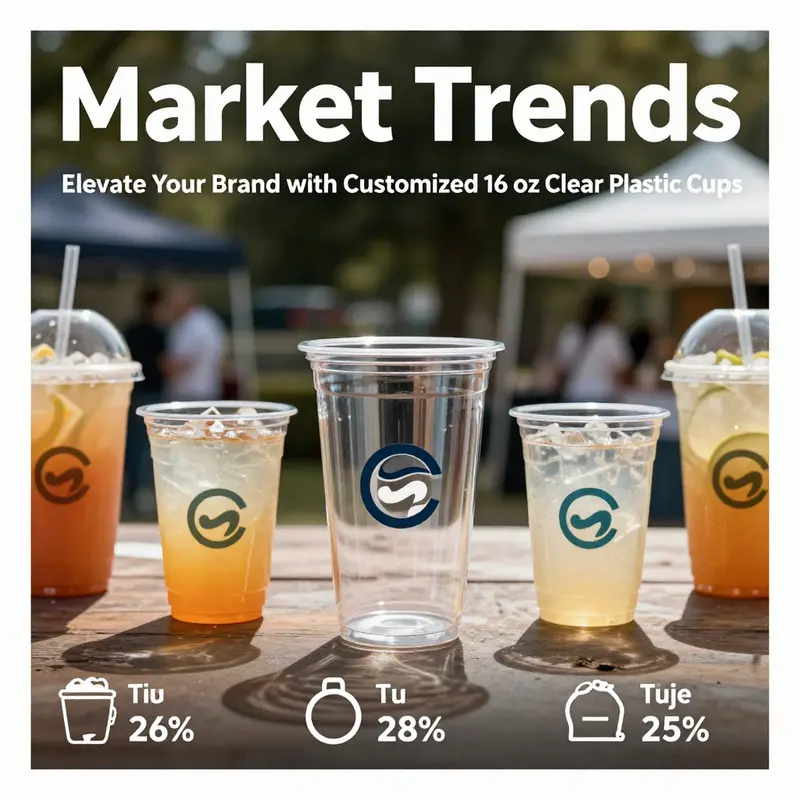
The contemporary landscape for 16 oz clear cups with a logo sits at a unique crossroads—one where the appeal of sheer transparency meets the power of branding, and where consumer expectations tilt toward environmental responsibility as much as social visibility. These cups, sized at roughly 473 ml, are designed to showcase the drink inside with an honesty that few other vessels can muster. Their crystal clarity makes the color and texture of beverages a marketing asset in its own right, drawing the eye of passersby in cafés, kiosks, and event spaces. In a single encounter, a cup becomes a canvas: the drink’s hue, the level of ice, the gradient of condensation, and the continuity of a brand’s color story fuse into a moment of perception. The practical implications are compelling as well. A 16 oz cup creates a substantial, hand-held experience without requiring a bulky container, supporting service without sacrificing portability. In a world that prizes convenience, this combination of visibility and usability helps brands communicate quality at a glance, extending the reach of logos beyond the counter to the street, the curb, and the queue. The capacity also aligns with common consumption patterns, whether a casual afternoon soft drink, a thirst-quenching iced tea, or a quick, mixed cocktail during an outdoor gathering. The cup’s form becomes a silent ambassador for the brand, a piece of packaging that continues to work after the customer has moved on. Yet as with any packaging choice, the value is not merely in aesthetics; it lies in a careful balance of printability, material performance, and lifecycle impact, each factor interwoven with the other in a dynamic market that prizes both premium presentation and responsible practice.
Branding on clear cups is not a niche tactic; it is a mainstream strategy employed across countless segments from independent cafes and mobile coffee carts to pop-up events and large-scale promotions. The ability to print or engrave logos and designs transforms a disposable object into a lasting impression, one that can survive the hustle of a crowded event or the steady pace of a busy coffee counter. The printing technologies available for these cups—screen printing, digital printing, and perhaps laser engraving in some specialized contexts—offer different aesthetics and durability profiles. Screen printing can yield bold, saturated colors that stay legible as the cup is handled and rotated, while digital printing can support multi-color designs and more intricate artwork without excessive setup costs. Engraving or debossing, though less common on clear plastic, can provide a tactile, premium feel that differentiates a brand at high-end tastings or corporate events. The right combination depends on the brand’s identity, the intended setting, and the expected disposal environment. Importantly, suppliers emphasize customization capabilities as a core selling point, framing the cup not as a generic vessel but as a branded touchpoint that reinforces recall long after the drink is finished. When a consumer later sees a bottle or a signage tablet bearing the same logo, the continuity reinforces recognition and trust. The branding power, however, depends on a careful calibration of scale, color, and legibility. A logo that is too large can overwhelm the surface and reduce readability; a design with intricate gradients may clash with the clear plastic’s inherent light transmission. In practice, many operators choose simplified, bold marks and color palettes that align with their brand guidelines while ensuring legibility in a range of ambient conditions—indoor, outdoor, shaded, or sunlit.
The market’s appetite for customization is not merely a matter of aesthetics; it reflects a broader shift in how brands engage with consumers. In an era of experiential marketing and social sharing, a well-printed cup becomes a portable billboard. Attendees at events notice the cups first, not just for the beverage but for the visual cue that signals the sponsor’s or venue’s identity. The printing interface matters here: suppliers often advertise “custom logo printing” and “branding potential” as core benefits, highlighting how small design decisions—color contrast, line thickness, and negative space—affect perception at arm’s length. The technology’s capability to reproduce consistent prints across thousands of units matters just as much as the initial visual impact. In many supplier catalogs and marketplaces, the emphasis is on scalability and reliability. The ability to place bulk orders with flexible MOQs makes these cups accessible to small cafés looking to reinforce their brand, as well as to organizers planning large productions. The outcome is a more cohesive customer journey: a single, recognizable motif on a cup that travels from the counter to the street to the social feed, with the logo becoming a recurring visual cue that anchors the brand in memory.
Sustainability, meanwhile, moves from a backdrop concern to a central criterion in purchasing decisions. The 16 oz clear cup intersects with a broader sustainability conversation that includes materials like PET and PP as well as rising interest in biodegradable and compostable options. The shift toward environmentally friendly solutions is not simply about compliance or corporate rhetoric; it reflects a real shift in consumer expectations. PLA, a bioplastic derived from renewable resources such as corn starch, has gained traction as a more eco-conscious alternative, particularly for applications where the product’s lifecycle and disposal conditions align with compostability. The appeal of PLA lies in the promise of a reduced reliance on fossil resources and a pathway toward end-of-life options that minimize environmental impact. Yet the conversation is nuanced. PLA’s compostability is contingent on industrial facilities with appropriate infrastructure. In many regions, home-composting or curbside composting is not available, which can complicate the real-world outcomes of using PLA-based cups. In response, suppliers and brands are increasingly communicating certifications such as BPI (Biodegradable Products Institute) to signal adherence to defined standards. Certification messages help buyers navigate the complexity of disposal options and assure customers that the product is designed to align with recognized sustainability practices. This transparency can also become a marketing asset, especially at events that emphasize environmental stewardship or at venues seeking to minimize waste streams.
The interplay between branding and sustainability has given rise to a nuanced market dynamic. On the one hand, many buyers still prize clarity and a clean, premium presentation that a clear cup provides. On the other hand, there is a concerted effort to pair that clarity with responsible material choices and transparent lifecycle narratives. The resulting demand patterns reflect a hybrid model: brands that want to maintain high presentation standards while signaling a commitment to the planet. Suppliers respond by offering PLA-based options, emphasizing certifications and clear disposal guidance to reassure buyers that their investment will not merely vanish in the waste stream. The market thus rewards products that can demonstrate both aesthetic impact and environmental accountability. For many operators, this means balancing cost, performance, and sustainability in a way that preserves the brand’s integrity while aligning with broader corporate or municipal sustainability goals. In practice, a brand might choose a PLA-clear cup with a printed logo for promotional campaigns where the event environment is controlled and composting facilities are accessible, while opting for traditional PET or PP cups for ongoing daily service where disposal infrastructure is more uncertain. The decision becomes a strategic choice about when to foreground branding, when to optimize for recyclability, and how to relay those choices to customers in a meaningful, credible way.
Beyond the formal considerations of materials and printing, the market is expanding the range of applications for 16 oz clear cups with logos. They are no longer confined to cold beverages and standard café service; their versatility now extends to smoothies, iced coffees, cocktails, and even hot drinks in contexts where heat-resistant versions are specified by design. This expansion is driven by the broader trend toward modular, multi-purpose packaging that reduces inventory complexity for operators who run multiple offerings from a single container system. The same cup that serves a daytime cold drink can support a later stage of a promotional event by housing a custom beverage at a different temperature profile, provided the material and construction meet the necessary safety standards. The capacity also makes them well suited for sampling programs at retail or food-service events, where a single, generous portion helps customers evaluate flavors while reinforcing branding cues. For event planners and marketers, the cups can be distributed as part of a broader experiential package that includes signage, minty ice-drift visuals, or branded napkins and straws that echo the logo. The logic is simple: consumer experiences that are cohesive and immersive leave a more lasting impression, and the cup is a small but potent piece of that experience. In markets with high event volumes or seasonal peaks, the ability to print in short runs or to customize for a limited edition campaign becomes a practical advantage. It reduces waste by enabling precise sales alignment with demand and supports a sense of exclusivity that can spur engagement and shareability on social channels.
Coupled with customization and sustainability, the market is also noticing a growing interest in the broader category of drinkware options that offer reusability or a higher perceived value. As disposable cups remain prevalent for a range of reasons, brands are increasingly exploring premium, branded alternatives that push beyond a single-use mindset. Reusable 16 oz cups, designed to mimic the aesthetic of popular coffee-house brands yet produced with a distinct brand stamp, are becoming a viable component of corporate giveaways and cafe branding strategies. This trend reflects a shift toward long-term value, where brands invest in durable, branded merchandise that can be repurposed by customers, reducing waste and reinforcing brand recall through repeated exposure. The conversation around reusables does not supersede the role of single-use custom cups in promotions and events; instead, it situates them within a continuum of options. Operators can leverage disposable cups for high-velocity service, sampling, or one-off campaigns, knowing that the market is also leaning toward durable alternatives for ongoing programs. The strategic implication for producers and distributors is clear: offer a coherent suite of solutions that allows customers to select the most appropriate tool for each moment—whether a high-visibility, single-use cup that carries a bold logo, or a reusable vessel that serves as a long-term brand touchpoint.
From a supply-chain perspective, the market for 16 oz clear cups with logos has benefited from globalization and the growth of e-commerce platforms as distribution channels. Manufacturing hubs in key regions—especially in large-scale production centers—enable rapid production and customization at scale. Buyers can source bulk orders with flexible MOQs, making it feasible for startups to test branding concepts and for established brands to launch broad campaigns with consistent quality. The online marketplace environment often highlights printing capabilities, branding flexibility, and lead times, enabling buyers to compare options quickly. The result is a more dynamic ecosystem in which brands can experiment with different designs and print strategies while maintaining a reliable supply of cups that deliver on performance and branding goals. The ease of procurement supports experimentation with color schemes, seasonal motifs, and limited-edition campaigns that foster engagement and social sharing. It also introduces a degree of price sensitivity; suppliers must balance customization depth against unit costs, particularly for small- to mid-sized campaigns. In this environment, the market rewards clear value propositions: predictable print quality, consistent clarity, robust packaging integrity, and sustainability credentials that align with brand narratives. Buyers increasingly expect these attributes to coexist in a single product and in a single purchase path, and suppliers are responding with scalable options that meet both creative and practical demands.
The broader trajectory for 16 oz clear cups with logos suggests a maturation of the category. The initial impulse—visibility through branding on a transparent surface—has evolved into a more integrated approach that considers lifecycle impact, supply resilience, and consumer perception. The best-performing offerings tend to combine strong, legible branding with materials that support responsible disposal and realistic end-of-life outcomes. In practice, this means clear cups that are not only visually striking but also backed by transparent sustainability messaging, certified materials, and reliable compatibility with widely available recycling or composting streams. The market’s leaders emphasize not only the aesthetic impact but the credibility of environmental claims, recognizing that skepticism toward greenwashing can erode trust faster than a logo can build loyalty. For buyers, the takeaway is to seek partners who can deliver a coherent package: a clear cup that reveals the beverage, a logo that remains legible under practical usage conditions, and a sustainability narrative that clients and customers can trust. When these elements align, the cup becomes more than packaging; it becomes a brand ambassador that travels from the cup rack to the consumer’s daily routine, reinforcing brand values with every sip.
In this evolving context, the choice of a 16 oz clear cup with a logo must be seen as a strategic decision, not merely a procurement item. It involves calibrating aesthetic intent, functional performance, and environmental responsibility across the entire lifecycle—from raw materials and manufacturing to end-of-life options. The interplay of customization capabilities, material choices, and market expectations creates a dynamic that rewards clarity, consistency, and credibility. Brands that invest in robust branding while communicating transparent sustainability practices are more likely to see higher engagement and stronger brand recall. Conversely, those that treat the cup as a mere afterthought risk diminishing the impact of their promotional efforts and sacrificing trust in the process. The landscape is not static; new printing techniques, evolving certifications, and shifting disposal infrastructure will continue to shape how these cups are produced, marketed, and used. Yet one constant remains clear: in a market hungry for both visibility and virtue, the 16 oz clear cup with a logo offers a pragmatic, high-visibility platform for brands to tell their story—one sip at a time.
Internal link: For a broader look at eco-friendly logo printing in beverage cups, see this resource on sustainable, printed, cold-beverage cups: eco-friendly-printed-logo-cold-beverage-cup-paper-cup-with-lid. This reference highlights how environmental messaging and branding converge across packaging formats, emphasizing the importance of credible sustainability credentials alongside bold design when audiences encounter packaging in real-world settings.
External resource: readers seeking a standards-oriented view of compostability and lifecycle claims can consult the Biodegradable Products Institute’s guidance on certified products and disposal pathways. https://bpiworld.org/
Final thoughts
As the demand for customization and sustainability grows, 16 oz clear plastic cups decorated with your logo can serve as a powerful tool for any beverage business. They not only enhance the customer experience but also align with contemporary environmental concerns, offering both functionality and branding opportunities. By embracing these eco-friendly practices, businesses can stand out in a competitive marketplace, effectively turn their cups into marketing assets, and contribute positively to sustainability efforts.