
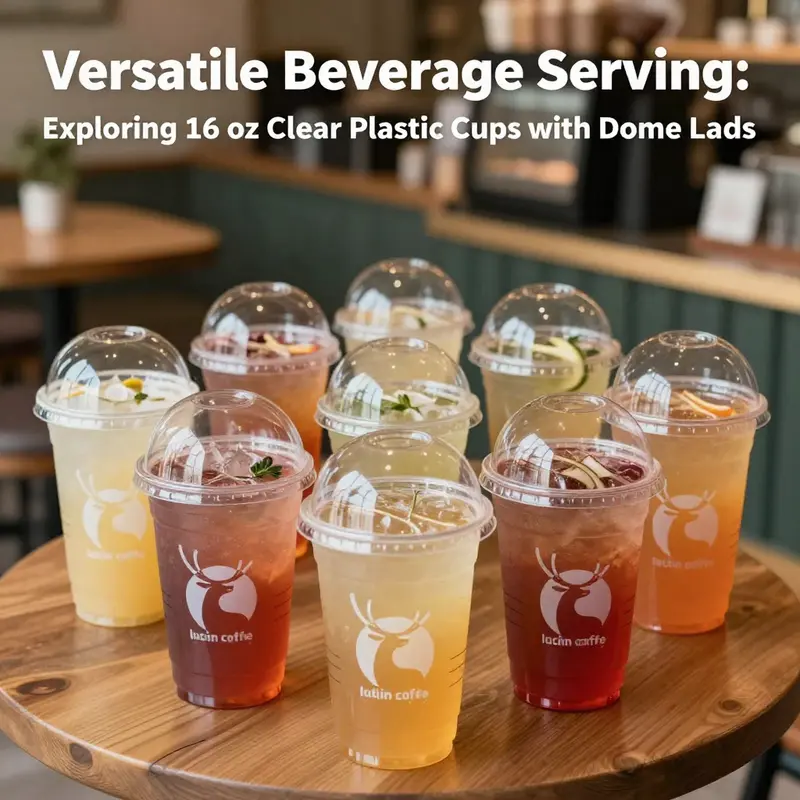
Clear plastic cups with dome lids have become a favorite among beverage suppliers, particularly in bustling settings like bubble tea shops and catering services. These stylish yet practical cups not only showcase colorful drinks but also enhance customer experience through their functionality. Throughout this article, we’ll explore various aspects of 16 oz clear plastic cups, including customization options, material properties, eco-friendly alternatives, market applications, and critical logistics to consider when incorporating these cups into your operations. Whether you’re a restaurant, food truck, or event planner, understanding these aspects can streamline your procurement process and elevate your service offerings.
Clear Potential: Customization Paths for 16 oz Dome-Lidded Cups and the Brand Story They Carry
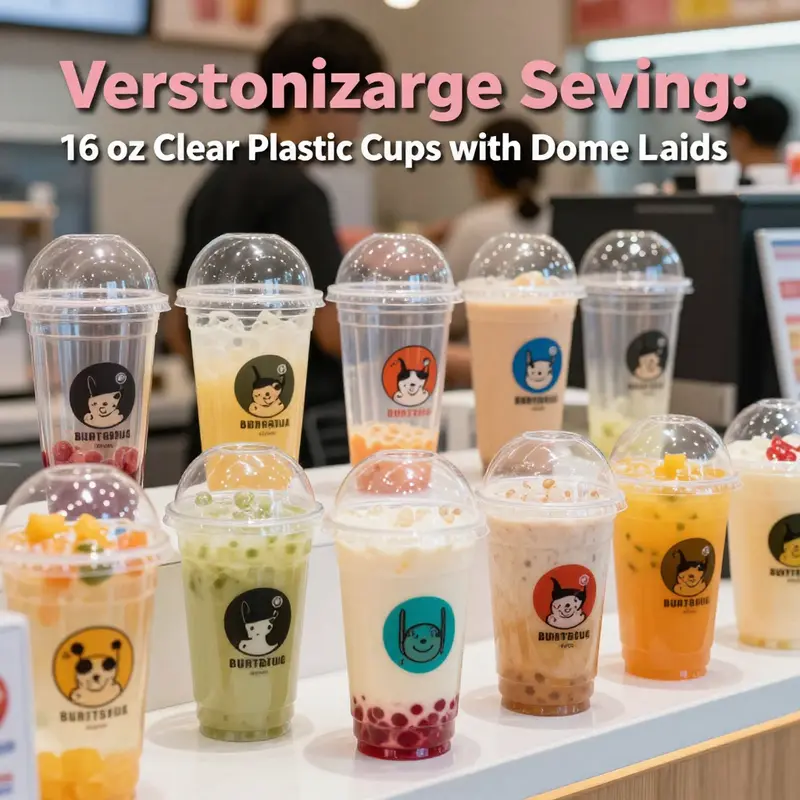
A 16 oz clear plastic cup with a dome lid is more than a simple vessel for beverages. It is a blank surface that carries a brand’s promise, a practical tool for service, and a quiet billboard that can travel from cafe counter to outdoor event with every sip. In many ways, the choice of cup design mirrors a business’s broader approach to customer experience: clarity in presentation, reliability in function, and the opportunity to weave a story through small, repeatable details. When a vendor offers customization around logos, lid features, and even the choice between PET and PLA materials, it opens a spectrum of possibilities. The interplay between visibility, spill resistance, and branding becomes tangible, especially for beverages that rely on visual appeal—milkshakes with ribbons of color, layered smoothies, or vivid toppings that invite a second look. The container becomes part of the product, not just a container for it, and that distinction matters when a brand seeks to stand out in a crowded marketplace.
From the customer’s point of view, clarity is a virtue. A transparent cup allows the drink’s color and layers to speak for themselves, while a well-chosen lid preserves freshness and minimizes spills, whether the beverage is sipped at a street festival, a busy cafe, or during a late-night study session. The dome lid, in particular, frames the drink with a soft, rounded crown that often features an integrated straw opening. This combination makes the cup especially versatile for beverages that demand a certain viscosity, such as milkshakes, smoothies, or even characteristic boba tea foams. In this sense, customization can do more than decorate the cup; it can optimize the drinking experience, guiding customers toward the right flow and the right moment of enjoyment. A well-designed lid with a straw slot, or even an embossed emblem on the dome, can communicate brand values—playful, premium, eco-conscious—without saying a word.
Brand storytelling, then, is not confined to the printed surface alone. It extends to the very materials chosen and the ways in which the product is assembled. PET remains the workhorse of clear, rigid cups: it offers excellent clarity, sturdy performance for cold beverages, and a cost structure that makes bulk orders feasible for large chains as well as independent shops. Yet there is a growing interest in alternatives that align with sustainability goals. Biodegradable PLA cups present an earth-friendly option, appealing to brands prioritizing compostability or a lower environmental footprint. The trade-offs are nuanced: while PLA can reduce certain end-of-life impacts, it also introduces considerations around composting conditions and disposal streams. For some businesses, the shift toward PLA is less about abandoning PET altogether and more about offering a dual-path portfolio—one line of standard PET cups and another line that caters to eco-conscious events or product launches. In either case, the core aesthetic—clear visibility of the beverage—remains intact, while the packaging communicates a brand’s evolving values.
Printing and branding on a 16 oz clear cup is a practical way to translate identity into a tangible, repeatable experience. Custom logo printing is widely offered by multiple suppliers, allowing brands to display their logo, messaging, or promotional artwork prominently on the cup body. This is not merely a decorative flourish; it is a scalable way to reinforce recognition at the exact moment a customer makes a purchasing decision. The potential extends beyond simple logos. Some producers offer personalized designs that can carry motivational messages, seasonal campaigns, or color schemes that align with a product drop. The result can be a cohesive, on-brand moment that travels with the cup, turning a disposable item into a small, portable advertisement.
Among the customization possibilities, the lid itself can become a site of distinctive branding. While the dome shape is the standard, lids can vary in several ways: a flat-top versus a dome silhouette, and, crucially, features such as straw holes or cross openings that accommodate different drinking styles. A dome lid may also carry embossed logos or symbols, creating a tactile layer of brand interaction. When a logo is embossed into the lid, it adds a three-dimensional texture that catches light and draws attention without requiring excessive ink on the cup body. This tactile element can be especially effective in busy retail settings where customers skim shelves and counters glance across materials rather than into full color prints.
Material choice remains central to the conversation about customization. PET’s clarity and resilience are well-suited to cold beverages and fast turnover; it keeps the beverage visually appealing and reduces the chance of clouding that could distract from the drink’s presentation. PLA, often marketed as biodegradable or compostable, resonates with brands seeking to signal sustainability to their audience. Some products even combine transparency with eco-friendly attributes, and suppliers increasingly offer printing and embossing options on PLA cups as part of an OEM/ODM program. This enables brands to align packaging with broader green narratives, whether that means communicating a recycling message, highlighting the compostability of the cup, or differentiating via color-coded lids and seals that cue customers to eco-friendly options. The decision between PET and PLA is not purely environmental; it also intersects with manufacturing lead times, cost per unit at scale, and the compatibility of inks and printing methods with each material.
In practice, the portfolio approach matters. Companies often maintain a standard 16 oz PET cup for everyday operations, paired with a PLA variant for seasonal campaigns, partnerships, or events where sustainability messaging plays a central role. Such a strategy enables consistent branding while signaling responsiveness to consumer expectations about environmental responsibility. The availability of multiple sizes—from as small as 0.75 oz to as large as 32 oz—also allows brands to craft a cohesive family of products that share a recognizable silhouette and branding language. A consistent visual identity across sizes supports cross-promotion and creates a familiar consumer experience, whether at a coffee shop, a dessert kiosk, or a festival booth.
The practicalities of procurement are worth noting for anyone contemplating customization at scale. Lead times typically run around 35 days after a deposit, and the possibility of sample fees exists, though samples are often free. For campaigns where timing is tight, negotiating lead times or exploring pre-approved templates can help. Price is influenced by volume, material choice, printing complexity, and the destination port for shipment. A well-planned program can unlock significant cost efficiencies, enabling brands to test campaigns or seasonal promotions without repeatedly retooling the packaging line. It is also worth considering that customization is not limited to the body of the cup. Lids, sleeves, and even in-cup incentives can all be part of a broader, branded ecosystem that drives customer engagement beyond the drink itself.
To illustrate how these elements come together in a live scenario, consider the path from concept to consumer. A cafe might begin with a standard 16 oz PET cup to ensure reliability and fast service in daily operations. For the daily take-away flow, custom logo printing on the body ensures that every cup reinforces the brand with high visibility. For a spring promotion, the cafe might switch to a PLA-based cup for a limited run, coupling the eco message with a promotional color palette on the lid that complements seasonal beverages. The lid could feature an embossed emblem for a tactile cue that customers notice when they grip the cup, enhancing brand recall even as the cup is set down on a table or carried through a bustling street. Across all formats, the choice of straw slot or no straw slot can be aligned with beverage types and consumer preferences, ensuring ease of use for customers and minimal spillage during transit. The net result is a coherent, multi-layered branding experience that leverages the physical properties of the cup as a powerful storytelling medium.
The conversation around customization is also a conversation about sustainability and consumer expectations. The market increasingly rewards brands that present clear, honest choices about materials and disposal. PLA cups with Biodegradable certification, for example, offer a route to communicate environmental responsibility, but they require careful messaging about disposal streams and composting conditions. The right approach blends clear branding with transparent sustainability claims, reinforcing trust with customers and event organizers who value responsible packaging. In this space, a well-executed package includes not only packaging design but also a coherent conversation about end-of-life options, recyclability, and compatibility with local waste streams. That coherence—between what the cup communicates on the shelf and what the consumer experiences in the waste stream—derived from the careful selection of materials, printing, and lid design—becomes a differentiator that extends beyond aesthetics.
When brands want to explore the tangible possibilities of customization, they often look for accessible touchpoints that demonstrate how a cup can carry a brand story beyond the beverage. The case for a conveniently designed, branded cup becomes even stronger when the cup is part of a larger ecosystem of packaging elements that reinforce the same message. For instance, a line of cups designed to be used with a particular straw size, printed with a color palette that echoes the beverage lineup, and paired with lids that offer embossed logos or integrated brand motifs creates a unified, memorable consumer experience. This integrated approach can be particularly impactful at events or pop-ups, where the visual and tactile cues of the packaging are elevated by lighting and display design. The result is a cohesive sensory impression that enhances recall and encourages repeat visits. And because the cup is a disposable item, the ability to reproduce brand elements at scale—without sacrificing quality or consistency—becomes a strategic advantage.
For readers seeking a concrete example of how customization translates into on-shelf impact, consider exploring the range of options available for eco-friendly, printed-logo cups with lids. This example highlights how a single product line can integrate branding, material choice, and practical functionality to create a compelling customer experience. eco-friendly printed-logo cold beverage cup with lid. The link demonstrates how a brand’s identity can be embedded into a disposable item, turning each cup into a portable advertisement that travels with the consumer. It also signals the feasibility of layered customization—from body print to lid embossing—and the potential for harmonizing color schemes across cup and lid to produce a unified look.
In closing, the 16 oz clear dome-lidded cup is more than a packaging choice; it is a strategic design platform. Its transparency invites the beverage to take center stage, while the lid, the print, and the material choice together tell a brand story with every lift of the cup. Whether a shop prioritizes speed, sustainability, or visibility, customization options can be tuned to balance these aims. The right mix of PET clarity, PLA sustainability, logo printing, lid configuration, and thoughtful messaging creates a packaging experience that is not disposable in spirit but enduring in perception. As businesses weigh the trade-offs, they can view the cup not as a single-use product, but as a turnkey medium for branding, customer experience, and environmental responsibility—an everyday object that carries a brand’s narrative across countless hands and occasions.
External resource: https://www.bpiworld.org
Clear Choices: The Material Science Behind 16 oz Cups with Dome Lids
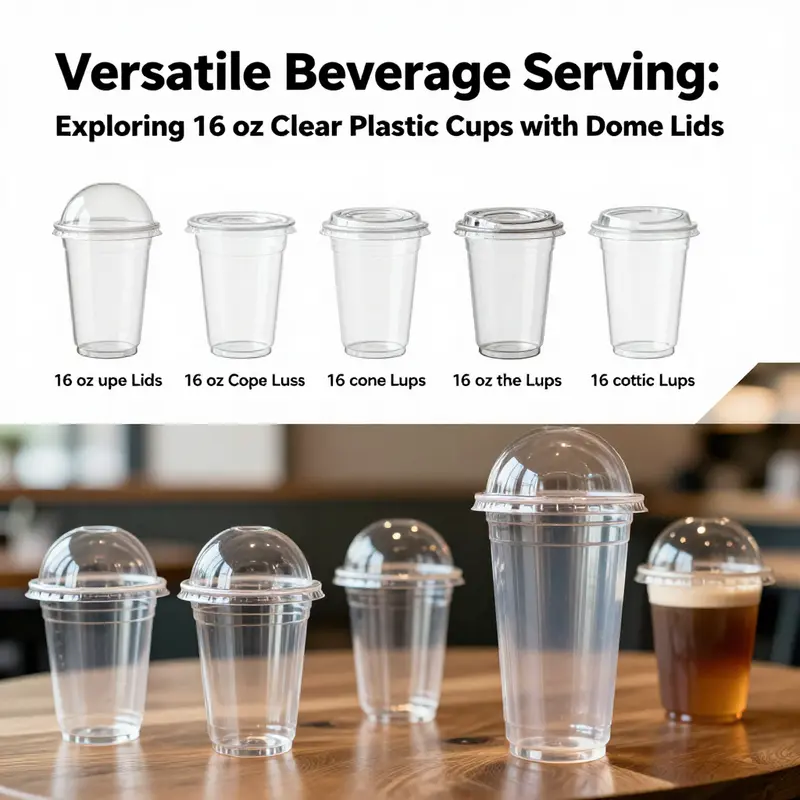
The visual appeal of a beverage can hinge as much on the container as on the drink itself. In a setting where presentation matters just as much as performance, the choice of material for a 16 oz clear plastic cup with a dome lid becomes a decision that touches flavor perception, handling ease, and even environmental impact. This chapter unfolds the material properties that underpin why PET and PP have become the default choices for these cups, how the dome lid complements each material, and what those combinations mean for the customer experience, the producer’s costs, and the broader sustainability conversation. In the end, what looks like a simple vessel is a carefully engineered platform that preserves freshness, showcases the beverage, and enables reliable service in a range of environments, from quiet coffee corners to bustling outdoor events.
Polyethylene terephthalate, commonly known as PET, is the workhorse polymer behind many clear beverage cups. Its standout feature is clarity. When a cup looks as transparent as glass, the beverage inside can be evaluated at a glance: the color of a smoothie, the gradient of a layered drink, the ice crystals suspended in a chilled beverage. That high level of transparency is not a cosmetic flourish; it is a strategic advantage. Consumers often decide what to order by how appealing a drink appears, and a PET cup frames the beverage with minimal visual distortion. The transparency is achieved through a highly regular molecular structure that reduces light scattering, letting color and texture read through with precision. Alongside clarity, PET’s rigidity is crucial. The wall thickness provides enough stiffness to resist flex under the pressure of foam and carbonation, while the base supports a stable stand when the cup is set on a counter, during transport, or while stacked in a cooler. It is this rigidity that helps prevent wobble in the hand and maintains the pristine shape of the cup when a lid is applied.
But every material carries trade-offs, and PET’s advantages come with boundaries. The temperature tolerance of PET is a defining constraint. While it performs exceptionally well with cold beverages such as iced coffee, smoothies, and chilled fruit drinks, it is not a hero for hot liquids. When hot contents approach or exceed typical hot beverage temperatures, PET can warp or soften, especially if the cup is manipulated while filled. This characteristic places PET in a category of materials best suited for cold or cool beverages, where the visual appeal remains intact and the structural integrity is preserved throughout service. Recycling remains a central consideration in the PET equation. PET is widely recyclable and is identified by resin code #1, a marker that facilitates recycling streams and helps consumer guidance. Some suppliers pursue versions that are more ambitious on end-of-life outcomes, including compostable alternatives based on PLA blends. These options—while more specialized—illustrate a trend toward aligning high-performance packaging with evolving sustainability expectations.
A parallel path in this material landscape is polypropylene, PP, a polymer renowned for heat resistance and dimensional stability. PP’s strength is its thermal tolerance. It can handle temperatures up to about 100°C, allowing hot beverages like tea or coffee to be served in a cup that remains stable and non-deforming. This feature broadens the use cases, making PP a viable option when a cafe or event needs a single cup for both hot and cold drinks. PP’s resilience extends beyond heat; its impact resistance is notable. When a cup is dropped or subjected to minor bumps during busy service, the risk of cracking is lower with PP than with some more brittle plastics. The trade-off, however, is slight; PP can be somewhat less rigid than PET, which can translate into a subtle difference in how the cup feels when squeezed or stacked. Yet for many outlets, the ability to serve a hot beverage without fear of deformation outweighs this minor flexibility.
Food safety is a universal baseline for materials used in drinkware. Both PET and PP meet international food safety standards when sourced responsibly. The safety framework focuses on how the polymer interacts with consumables, the absence of harmful migrants, and compliance with established limits for additives and processing aids. These standards are not merely regulatory checkboxes; they reflect robust testing regimes that ensure the cups perform reliably under normal handling, during transport, and in contact with typical beverages that customers enjoy daily. When combined with a dome lid, the reliability of the package is further enhanced. A dome lid creates extra headroom for frothy toppings, whipped cream, or foam layers, reducing the likelihood of spillage during transport. The lid design also often includes a straw slot, which preserves the beverage’s freshness and minimizes contamination from the environment while enabling convenient sipping for customers who want to stay upright and hands-free during a commute or stroll.
Dome lids themselves are not a monolith. They come in variants that influence how a beverage is enjoyed. The dome top provides clearance for toppings and foams while maintaining a compact footprint for stacking and shipping. The fit of the lid is a critical factor: an appropriately snug marginal seal prevents leaks during movement and storage, and the design must accommodate a degree of thermal expansion as hot or cold contents change temperature. In some configurations, dome lids feature a small dasher or pour-through element, which helps with controlled pouring for thick drinks such as milkshakes or layered beverages. A small straw slot or a cross-hole in the lid adds versatility for sipping with a straw while maintaining the seal, which is especially useful for on-the-go consumption in crowded venues or outdoor events.
Beyond the core material properties themselves, the packaging ecosystem around these cups reflects a balancing act between performance, branding, and sustainability. The basic PET or PP cup provides a clear stage for the beverage, but the options for customization and branding can be a meaningful differentiator in a crowded marketplace. Some suppliers offer logo printing with multiple color options, enabling a brand to align its beverage presentation with its visual identity. The idea of customization is not only about aesthetics; it can also serve practical purposes—such as incorporating brand guidelines that remind customers of quality or safety commitments. In the flow of a busy service, the ability to print a logo or a message on a cup can contribute to brand recall and perceived value, especially in settings where takeaway is common. For brands seeking eco-friendly branding options on this cup family, see the option described as eco-friendly printed logo cold beverage cup with lid. eco-friendly printed logo cold beverage cup with lid.
Material choice also informs the economics of production and the realities of the supply chain. PET and PP cups of 16 oz are widely available in high volumes, enabling economies of scale that help keep unit costs predictable for retailers and foodservice operators. The dome lids, while offering spill protection and beverage height clearance, add an additional layer of material and manufacturing steps. Even with the convenience of mass production, lead times, minimum order quantities, and customization costs can influence decision-making, especially when a business is launching a seasonal product or opening a pop-up venue where timing is crucial. In this context, the material properties do not exist in a vacuum; they interact with manufacturing choices, printing capabilities, and the overall packaging strategy to shape how a beverage is delivered to the consumer.
In terms of environmental considerations, the recyclability of PET remains a central thread. PET’s resin code #1 anchors its recyclability in many municipal programs, contributing to a circular approach when collection and processing infrastructure is robust. Yet the conversation is evolving. Biodegradable or compostable versions—often based on PLA blends—represent ongoing research and development aimed at reducing end-of-life impact. These variants seek to reconcile the need for a clear, rigid, food-safe cup with a sustainability narrative that resonates with environmentally conscious consumers and businesses alike. It is essential to recognize that the compostability or recyclability of any cup depends not only on the polymer choice but also on the entire system, including how the cups are discarded, the availability of composting facilities, and local recycling capabilities. The dome lid, typically a thin layer of the same or compatible plastic, follows similar considerations, though the market is beginning to introduce biodegradable lid options as well, expanding the range of sustainable packaging configurations.
From a practical perspective, the material properties discussed translate into everyday performance. A 16 oz PET cup preserves the visual appeal of a layered drink and handles foamy toppings without collapsing the sides. It maintains its shape in cold service and stacks efficiently for countertop displays or catering events. A 16 oz PP cup, in contrast, provides a reliable option when hot or warm beverages are part of the mix, offering a broader temperature tolerance without sacrificing the clarity demand of a clear cup. The dome lid, designed to minimize spills while allowing for generous headspace, complements both materials by providing a secure barrier against splashes, particularly when drinks are carried in crowded spaces. In the hands of a barista or server, the combination of a clear material and a well-fitting dome lid becomes an instrument for precise service—pouring control, lid integrity, and customer safety converge in real time as the beverage travels from cup to customer.
The discussion of material properties would be incomplete without acknowledging regulatory expectations and safety assurances that sit behind every package. Food-contact compliance, including FDA, LFGB, and EU 10/2011 guidance where applicable, serves as a baseline for what operators can rely on when choosing a cup and lid. These standards address how the package interacts with the drink, the presence of potentially harmful substances, and the material’s behavior across expected service conditions. For operators, understanding these guidelines is not a bureaucratic requirement alone; it is a practical assurance that the cup chosen for a given beverage will perform reliably from the moment it is filled to the moment it is disposed of or recycled. In practice, this means that suppliers will often provide testing data, material safety reports, and certifications that help buyers compare options across clarity, rigidity, temperature tolerance, and safety.
As markets evolve, the design space around 16 oz clear cups with dome lids expands toward smarter, more nuanced consumer experiences. The core material science remains stable: PET offers unyielding clarity and rigidity for cold drinks, while PP extends temperature tolerance into hot beverage territory with dependable resilience. The dome lid enhances spill protection and pour control, while design variations in lid geometry and straw compatibility broaden usability. The future likely holds continued refinement in both materials and end-of-life solutions, with more emphasis on compostable or bio-based options that do not compromise performance. For brand owners, the challenge is to align taste, presentation, and sustainability in a way that resonates with customers and supports responsible disposal practices. In the end, the material choices—paired with thoughtful lid design and responsible end-of-life thinking—translate into a better drinking experience, an easier handoff from staff to customer, and a packaging system that respects both the product and the planet. External reading can provide regulatory context and practical guidance on food-contact materials: https://www.fda.gov/food-contact-materials
From Clarity to Consciousness: Rethinking 16 Oz Clear Cups with Dome Lids through Eco-Friendly Alternatives
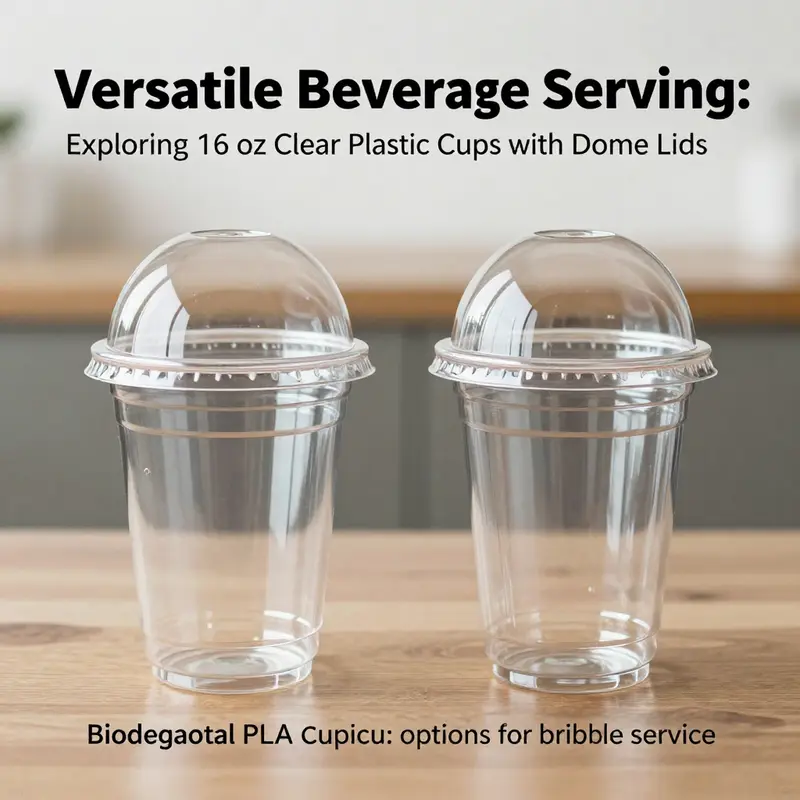
The 16 oz clear plastic cup with a dome lid has become a familiar sight in cafes, smoothie bars, and events. Its transparency showcases colors, textures, and layers—an asset when presenting layered beverages. Yet sustainability concerns are pushing brands to rethink this standard. The 16 oz format is versatile and widely used, making the environmental impact of its production and disposal important to address. The shift toward eco-friendly alternatives does not dismiss performance; it seeks to preserve customer experience while reducing waste, emissions, and end-of-life harm. A gradual approach—informed by lifecycle thinking and local waste infrastructure—offers the most practical path forward.
To understand alternatives, start with the essential materials. PET offers clarity, strength, and resistance to shattering, making it well suited for cold beverages, thick blends, and even certain dairy-based drinks. The dome lid adds spill resistance and a controlled pour, enabling customers to enjoy beverages on the move without compromising hygiene. In terms of sustainability, the PET pathway is a mixed bag. On the one hand, PET is widely recyclable in many markets, allowing a fraction of used cups to re-enter the manufacturing stream. On the other hand, the volume of single-use cups produced, transported, and disposed of creates a sizeable cumulative footprint, especially when facilities and consumer habits do not close the loop effectively. The result is a packaging ecosystem in which the perceived convenience of clear cups must be weighed against waste management realities and long-term resource use.
Compostable cups, particularly those made from PLA, present one of the most discussed environmental options. PLA, derived from plant-based sources such as corn starch or sugarcane, is designed to break down in industrial composting facilities within a range that some studies place around 90 to 180 days. The certification framework matters here. BPI-certified compostable cups adhere to robust biodegradability and compostability standards, which can provide assurance that disposal infrastructure will yield beneficial outputs rather than inert residues. The caveat is important: these cups are typically not suitable for home composting and do not necessarily perform well under all environmental conditions. Industrial composting facilities have specific temperature and moisture requirements, and where such facilities are unavailable or underutilized, PLA cups may not realize their intended environmental benefits. Even so, when used in markets with established composting infrastructure and proper consumer education, PLA-based cups offer a credible path toward reducing longer-term plastic accumulation and enabling a more sustainable end-of-life outcome.
A parallel route is recycled PET, or rPET. These cups are produced from post-consumer PET waste, looping existing plastic back into new products and supporting a more circular economy. While rPET cups retain the same visual clarity and functional performance as virgin PET, their environmental advantage stems from diverting waste from landfills and reducing the demand for virgin plastic. This approach does not claim biodegradability; rather, it emphasizes reuse and the reshaping of material flows. For operations wary of home composting or industrial facilities, rPET can offer a more pragmatic sustainability story—one that aligns with recycling programs, local waste management capabilities, and consumer expectations around circularity. In practice, rPET cups with a dome lid can maintain the clean, transparent appearance customers expect while contributing to a lower reliance on new fossil-fuel-based inputs.
A third option, often aligned with sustainable cafe programs, is paper-based cups with biodegradable linings. Paper cups, particularly those sourced from responsibly managed forests and combined with plant-based coatings or PLA linings, can offer renewability and recyclability advantages. The challenge lies in how well these cups fit the same spill-resistant and temperature-control requirements that the dome lid provides. For hot drinks, polymer-based barriers may still be necessary to prevent leaks and sogginess. For cold beverages, these paper-based solutions can perform well, but their end-of-life outcomes depend on local recycling and composting infrastructure. In some contexts, these cups are designed to be recyclable or compostable where facilities exist, but they require clear consumer instructions and reliable waste streams to maximize their environmental benefit.
Across these options, the decision matrix expands beyond material choice. It includes the capacity to print custom logos, the feasibility of OEM/ODM solutions, and the ability to tailor lid designs to specific beverage needs. The original market drivers—brand differentiation, hygiene, convenience, and the ability to keep beverages fresh and visually appealing—remain central. Yet brands that embrace eco-friendly alternatives often discover additional value in communicating environmental stewardship to customers. A packaging choice that visibly signals a sustainability commitment can reinforce a brand’s story and help align operations with broader corporate goals. For teams mindful of this alignment, the possibility to integrate an eco-conscious cup with a lid that supports branding—without compromising performance—becomes an attractive proposition. For instance, a label or print area on a PLA or rPET cup can retain vibrant color schemes and legibility while signaling a company’s environmental pledge. In practice, this means balancing the aesthetics of the cup with the durability of the print on materials that may respond differently to inks and coatings.
Industry logistics also shape how feasible these alternatives are for different businesses. Production lead times are a practical consideration. The typical timeline—around several weeks after deposit—reflects the custom nature of many orders, including color, logo, and lid configurations. Price can be sensitive to volume, the chosen material, and shipping routes. For organizations that plan ahead, negotiating bulk terms for eco-friendly options becomes a strategic lever, enabling a gradual transition rather than a sudden switch. The shift may involve staged rollouts, where a portion of the cup portfolio is replaced with compostable or recycled-content options while maintaining a consistent experiential baseline for customers. This approach helps preserve service levels, ensure supply continuity, and manage costs as the market for sustainable packaging evolves.
Lifecycle thinking is essential when evaluating each alternative. It is not enough to consider only the disposal stage; the energy consumed in production, the water used in fabrication, and the emissions associated with transport all contribute to a product’s overall footprint. PLA cups, for example, may lower fossil resource use but can entail different energy demands in manufacturing or in the composting phase. Recycled-content cups reduce virgin plastic input but rely on robust recycling infrastructure to close the loop. Paper-based options emphasize renewability and forest stewardship, yet require effective separation at end-of-life to realize their potential. The challenge—and the opportunity—lies in aligning supplier capabilities, waste-management ecosystems, and consumer behavior so that the chosen alternatives genuinely reduce environmental impact.
Consumer education is another critical piece of the puzzle. Consumers must understand how to dispose of these alternatives properly to prevent contamination of recycling streams or compost facilities. Clear labeling, public information about whether a cup is compostable or recyclable, and consistent messaging about the proper disposal pathway can dramatically improve outcomes. Brands can support this education through their own channels, in-store signage, and packaging labelling. The interplay between product design and consumer behavior matters as much as the materials themselves. A well-designed eco-friendly cup that is clearly understood by customers is more likely to be disposed of correctly, increasing the effectiveness of the sustainability strategy and supporting broader environmental goals.
Branding, functionality, and sustainability converge most clearly when a business integrates an option beyond the standard transparent PET cup with a dome lid. Consider the communication benefits of a package that signals care for the environment without sacrificing the sensory and practical attributes customers rely on. The capacity to print a logo, to maintain the integrity of the beverage through a secure lid, and to offer a cup that aligns with a company’s green commitments all contribute to a coherent brand narrative. For businesses seeking a concrete pathway, exploring options such as the eco-friendly printed-logo cold beverage cup with lid—an example of how sustainability and branding can be combined in a single product—can offer practical guidance and inspiration. This approach demonstrates how packaging decisions extend beyond mere containment to become active participants in a company’s environmental messaging and customer experience. External resource: https://greendispopack.com/product/eco-friendly-printed-logo-cold-beverage-cup-with-lid/.
In contemplating the broader landscape, it is clear that no single solution fits all contexts. The best path often blends several approaches, tailored to local waste-management capabilities and customer expectations. A cafe in a city with a robust industrial composting network might successfully deploy PLA-based cups for a portion of its cold beverages, combined with recycled-content PET for other lines. A shop in a region with strong recycling programs but less infrastructure for composting might lean more heavily on rPET cups, ensuring that the end-of-life stage is well-supported by the local system. Cafes and brands that prioritize a transparent sustainability narrative can use any of these approaches as anchors for ongoing dialogue with their customers, outlining the trade-offs and the intended environmental gains. In doing so, they transform packaging choices from a transactional moment into a meaningful component of a sustainability story that resonates with consumers and suppliers alike.
The conversation around 16 oz clear cups with dome lids, therefore, moves from a narrow focus on clarity and convenience to a broader consideration of environmental performance, supply chain practicality, and social responsibility. The path forward is not a single silver bullet but a portfolio of options that can be implemented progressively, with deliberate attention to life cycle impacts, regulatory developments, and evolving consumer values. By embracing compostable, recycled-content, and paper-based alternatives while maintaining the integrity of the drinking experience, the industry can reframe the image of the 16 oz cup from a disposable default to a responsible choice that aligns with a more sustainable future. This reframing requires collaboration among manufacturers, suppliers, waste-management providers, and retailers to ensure that the benefits of greener materials are realized from production to disposal. When these elements align, the simple act of serving a cold beverage in a dome-lidded cup becomes a tangible expression of a brand’s commitment to environmental stewardship, a signal to customers that comfort and clarity can coexist with care for the planet. This is how the next iteration of the 16 oz cup itself becomes a narrative—one of durability, responsibility, and ongoing innovation. External resource: https://greendispopack.com/product/eco-friendly-printed-logo-cold-beverage-cup-with-lid/.
Seeing Through the Glass: The Market Reach and Practical Power of 16 oz Clear Cups with Dome Lids
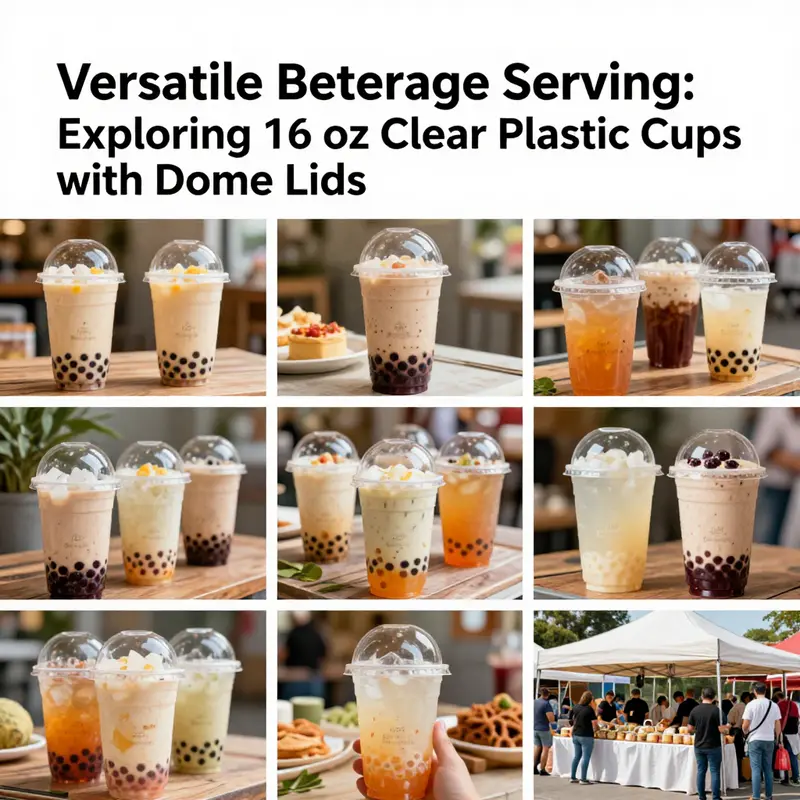
The sight of a tall, transparent cup perched on a counter always communicates clarity and appetite before a single sip has passed the lips. In the choreography of modern beverage service, the 16 oz clear plastic cup with a dome lid is less a mere vessel than a carefully engineered performance piece. It blends visibility with volume, allowing the beverage to speak through color, texture, and layering. The dome lid, more than a protective cap, unlocks headroom for foamy tops, whipped inclusions, or layered drink designs that would otherwise be compromised by a cramped mouth of plastic. This combination rewards both operator and guest: the former gains a spill-resistant, transport-ready package; the latter enjoys a visually engaging, convenient drinking experience that preserves the drink’s integrity from street to seat. In markets around the world, this quiet efficiency underpins a broad array of serving contexts, from quick service to carefully styled events, and from everyday coffees to specialty beverages that rely on a show of color and texture as much as on taste.
Behind the dome lid’s practical advantage lies a simple but powerful principle: headspace matters. When a beverage foams, layers separate, or a whipped topping holds its shape, the space above the liquid becomes part of the product’s expected performance. A dome lid with ample clearance minimizes spill risk during public handling, while also allowing customers to tip and sip in a controlled manner. The lid’s design can further accommodate a small pouring dasher or a straw slot, enabling a smooth transition from takeout to the first sip without sacrificing the drink’s presentation. In markets accustomed to fast turnover, this alignment of form and function helps shops maintain service speed without compromising quality. The transparency of the cup itself then completes the equation, turning the visual identity of the beverage—its gradient of color, the sheen of condensation, the swirl of mix-ins—into a marketing asset that can be visible from across a crowded counter or drive-thru lane.
In practice, the 16 oz size is particularly well suited to the needs of fast food and quick-service operations. Here, consistency in portion and packaging matters as much as taste. The durable PET formulation provides a stable service experience across a range of temperatures, from the chill of a cold brew to the warmth of a freshly brewed iced latte. The rigid wall structure resists deformation during stacking and transport, helping to prevent leaks when meals are shared among multiple hands or stacked in a push cart. Most importantly, the dome lid’s secure fit reduces the likelihood of accidental spills during transit, a factor that the busy environment of drive-thrus and food trucks can heavily stress. In these settings, every second saved on cleanup translates into more time for customers in line and more opportunities for upsell that keeps the operation moving smoothly.
This practical backbone is complemented by the ability to customize and brand without sacrificing performance. For beverage retailers who seek to turn packaging into a mobile billboard, there are options for logo printing and color decoration that extend the cup’s function beyond mere containment. Custom printing can be performed in multiple colors, and the option for OEM or ODM services means shops can align the cup’s print with seasonal campaigns, menu refreshes, or city-specific branding. When a drink is served inside a clear cup that carries a brand’s mark, it becomes more than a drink; it’s a tiny, portable advertisement that travels with the guest, from counter to curbside to social feed. The clear surface makes the beverage itself part of the message, allowing the vibrancy of a strawberry smoothie or the depth of a dark roast to resonate with onlookers who may be considering a purchase elsewhere. This is the moment where packaging and product design converge, turning a simple cup into a strategic asset that supports both experience and growth.
Sustainability increasingly informs how these cups are selected and used. The market recognizes that consumers want performance alongside responsibility. For businesses exploring greener options, there are increasingly available versions certified by environmental bodies that indicate compostability or biodegradability, often tied to the materials used in the cup and lid. In addition, the debate about whether PET can be responsibly recycled or replaced with PLA-based alternatives has accelerated the development of more eco-conscious solutions. For brands, the decision to pursue a more sustainable cup is not just about compliance with regulations; it is about meeting consumer expectations for transparent, responsible packaging. A clear cup can be paired with a biodegradable lid, or designed to welcome a compostable insert, depending on the operational realities of the business and the local waste infrastructure. The market’s direction is toward a family of products that preserve clarity and performance while reducing environmental impact, a balance that many operators now actively pursue in tandem with branding and cost considerations.
The sector-specific implications are illuminating. In the fast-food and quick-service restaurant space, the dome lid’s spill resistance and the cup’s crack-resistance become selling points for drive-thru excellence and on-the-go service. This aligns with the operational rhythm of busy locations, where customers expect a consistent experience whether they visit at lunch rush or late at night. The same design also translates to festivals, outdoor markets, and street fairs, where high-volume service and durable, stackable packaging are essential. The ability to maintain beverage integrity while withstanding the physical demands of outdoor environments reduces waste, improves cost control, and heightens customer satisfaction. And because the cup’s transparency adds to the visual appeal, vendors can curate a display that showcases the drink’s color and texture even from a distance, inviting impulse purchases that are anchored by clear, appetizing visuals.
In the beverage industry, where color and texture are part of the flavor narrative, the cup becomes a stage for branding. Smoothies with a spectrum of hues, layered frappes, or coffee drinks with caramel ribbons rely on the clarity of the cup to reveal the drink’s composition. Customization enables operators to align their cups with menus, creating a cohesive aesthetic across storefronts, mobile carts, and pop-up kiosks. The ability to print a logo or design up to several colors makes the cup a small, portable canvas for a brand’s identity, extending visibility beyond the dine-in experience. The combination of transparency and customization allows beverage makers to communicate quality, freshness, and creativity in every pour. This is not merely about packaging; it is about telling a beverage story that starts with the cup and ends with a satisfied customer who recognizes the brand through color, form, and presentation.
From a procurement perspective, the economics of these cups reflect their versatility. Vendors offer a wide range of capacities, with 16 oz as a standard size, but options exist from diminutive 0.75 oz portions to generous 32 oz servings. Lead times and pricing arrangements are typically structured around volume, material choice (PET versus alternatives), color, and the scope of printing. For businesses planning large-scale takeout or event-driven service, bulk orders can secure favorable pricing, while the option for samples allows teams to validate fit, print quality, and lid compatibility before committing. The production lead time is typically in the several-week range after deposit, a consideration for seasonal campaigns or new menu launches. It is a reminder that packaging choices, while seemingly simple, require careful coordination with production calendars, supplier capabilities, and logistical planning to ensure timely availability for promotions and peak-season demand.
The visual and tactile advantages of the 16 oz clear cup with a dome lid also connect to consumer psychology. A guest can gauge the beverage’s density, see the presence of inclusions, and anticipate the mouthfeel before the first sip. That transparency reinforces trust: the drink looks well-made, and the packaging signals a commitment to quality. The lid’s design further reinforces confidence by controlling pour flow and minimizing spillage while enabling convenient sipping or straw use. All these factors contribute to a smoother customer journey—from the moment a person orders to the moment they take their first refreshing mouthful. The overall experience supports higher average check values when guests perceive value in the presentation as well as in the content of the cup itself.
For readers seeking to explore practical ingredients of sustainable packaging in more depth, a related resource explores how eco-friendly, printed, and custom paper cups with lids can support branding while aligning with green initiatives. This resource highlights the broader category of disposables that share a common goal: ease of use, clean presentation, and environmental alignment in a way that does not compromise performance. In the context of this chapter, it underscores how a simple, clear cup can be part of an integrated packaging strategy that emphasizes visibility, reliability, and responsible materials. While the focus here is on a dome-lidded cup’s market applications, the underlying message is clear: packaging choices that blend function, aesthetics, and sustainability create durable value across foodservice, hospitality, and events.
To connect with practical supplier options and to see how these cups fit into broader packaging ecosystems, brands can explore related packaging solutions that emphasize eco-friendly, printed, and customizable options with lids. For instance, one might look at sustainable, eco-conscious disposables that combine a clear viewing window with a robust lid design and branding potential. Such choices demonstrate how packaging can function as a strategic channel for storytelling and customer engagement.
In closing, the market applications of 16 oz clear plastic cups with dome lids reflect a powerful convergence of visibility, practicality, branding, and sustainability. They are not simply containers but enablers of experience, capable of supporting fast service, memorable event moments, and beverage storytelling all within a single, consistent packaging platform. As consumer expectations evolve, the role of these cups will likely expand to embrace new materials, innovative lid geometries, and enhanced customization options that preserve the clarity and reliability customers expect while advancing environmental responsibility. The cup’s clear surface invites a future where design, function, and sustainability coalesce to raise the bar for what a disposable cup can achieve.
For further reading on eco-friendly cup options and related lids, you can explore a resource that delves into printed and customized disposables with lids, offering practical guidance on balancing branding with sustainability. See the resource here: eco-friendly custom paper coffee cups with lids.
External resource: For a broader overview of compostable packaging considerations and certification guidance, see https://www.bpiworld.org. This external reference provides context on how certification and material choices intersect with consumer expectations and regulatory landscapes, enriching the understanding of the market dynamics described in this chapter.
From Factory Floor to Front Counter: Navigating the Global Flow of 16 oz Clear PET Cups with Dome Lids
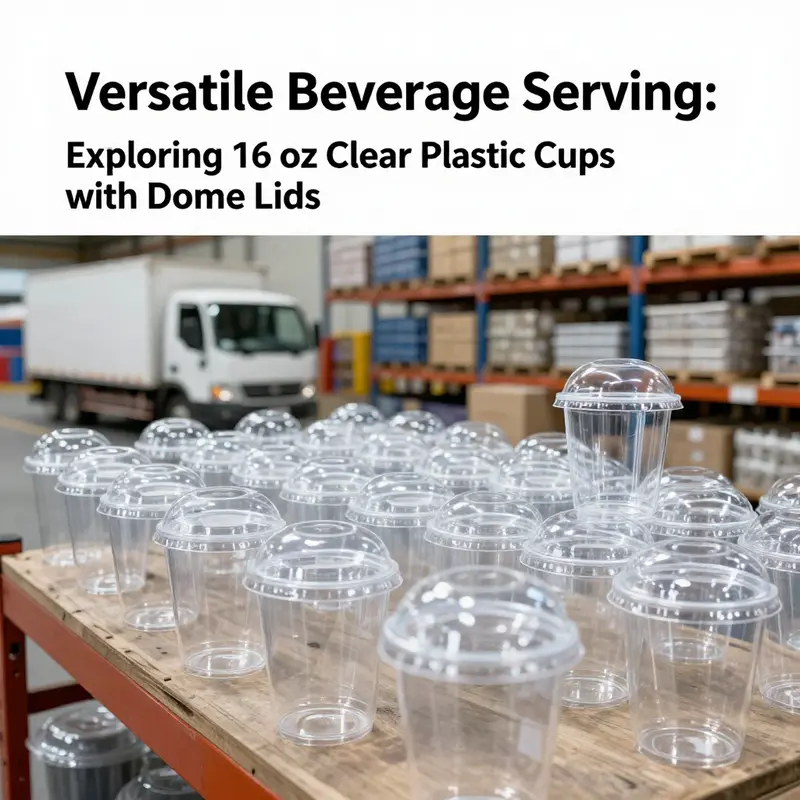
The journey of 16 oz clear cups with dome lids begins long before a cafe orders its first sleeve of cups. It starts in a finely tuned ecosystem where resin makers, mold designers, injection molders, print houses, and logistics networks sit within a compact radius of one another. In this world, a successful supply chain is less about chasing the lowest price and more about synchronizing every link in a chain that can bend, accelerate, and still maintain consistent quality. The 16 oz size sits at a sweet spot for many beverage concepts—from bright cold brews and smoothies to layered desserts and milkshakes—and the dome lid with a possible straw slot becomes a practical passport for transport, presentation, and consumer experience. This is a story of how a commodity becomes a reliable part of a brand’s promise, a story that travels from design boards to distribution centers and finally to a customer’s hand, all while keeping a tight grip on safety, sustainability, and speed.\n\nThe Chinese manufacturing landscape for these cups is especially notable for its concentration of activity in key provinces. Guangdong, Zhejiang, Sichuan, and Jiangsu form a dense cluster where suppliers often co-locate with mold makers, injection molding facilities, and printing services. This proximity isn’t merely about convenience; it is a deliberate industrial strategy that yields shorter production cycles and tighter lead times. When a factory can source resin, run molds, and deliver finished cups within a single, tightly connected region, the costs are driven down in a way that translates into competitive pricing for buyers who must respond quickly to shifting demand curves in the foodservice and retail sectors. The benefits extend beyond the factory floor. Logistics providers steeped in regional know-how can route shipments to major export hubs with a precision that feels premeditated. Ports near these hubs are adept at handling high volumes, and the throughput efficiency achieved through optimized customs clearance, streamlined packaging, and predictable inland transport reduces the time between order and receipt. For businesses with seasonal spikes or sudden promotional pushes, this capability is not a luxury; it is a strategic asset that can determine a product’s success in a crowded marketplace.\n\nMaterial integrity sits at the heart of the conversation about these cups. The PET resin that gives the cups their hallmark clarity and rigidity is a study in balance. It offers the optical purity needed to showcase layered beverages and the toughness required for cold drinks and external handling. Yet, PET’s advantages hinge on responsible sourcing and adherence to stringent regulatory standards. Buyers increasingly seek assurance that the resin meets international food safety guidelines, whether FDA, LFGB, or EU chemical regulations, and that the supply chain can provide documentation tracing resin origin and compliance. In parallel, there is a rising interest in sustainable pathways. Bioplastics such as PLA-based cups offer compostability in the right settings, aligning with brands that want to signal environmental stewardship. The decision between PET and PLA is rarely a binary choice; it becomes a strategic conversation about end-of-life stewardship, recycling infrastructure, and the geographic realities of waste management in the markets a brand serves. For many operators, the preferred solution remains PET for its performance with cold beverages, while eco-conscious brands experiment with or offer PLA variants to meet specific sustainability commitments. The evolving landscape means that a responsible supplier must be able to discuss certifications, resin provenance, and the environmental profile of every lot with clarity and accountability.\n\nCustomization is another thread that weaves through the supply chain narrative. In a market where a cup is not just a container but part of a brand story, OEM and ODM capabilities become a deciding factor for buyers who want consistent branding across markets. The ability to print logos in multiple colors, to specify dome lid features such as a cross or hole for drinking spouts, and to tailor cap types to different product lines is not merely an aesthetic preference. It is about streamlining marketing, reducing the number of SKUs, and ensuring a uniform consumer experience. When a supplier can offer a path from design concept to finished product with rigorous print quality controls and scalable production runs, a buyer gains a partner who can grow with demand. The liaison between branding and packaging is especially important for beverages that rely on visual appeal—where the transparency of the cup makes color and texture part of the product narrative. In this context, the dome lid often earns its keep by balancing spill resistance with the need for user-friendly sipping, particularly for thick or layered beverages. The dais of design also includes practical considerations like straw slots and drinking openings, which can be customized to suit consumer preferences or regional packaging norms. The result is a product that not only performs well but also reinforces a brand’s image in a crowded retail and foodservice landscape.\n\nProcurement strategies play a critical role in converting capability into reliable supply. A forward-thinking buyer crafts detailed specifications that cover order quantity, volume, color, printing needs, lid type, and destination port. Such precision helps procurement teams secure quotes within tight timeframes, often within 24 hours, and reduces the risk of miscommunication during the quotation and sampling stages. Lead times are a real constraint. A typical production cycle—from deposit to finished goods ready for shipping—can stretch to several weeks, with 35 days cited in some industry contexts. This timeline, while manageable for planned campaigns, demands careful calendar alignment for promotions or peak seasons. Sample programs, which may involve fees, are common, though many suppliers still offer samples at little to no cost to qualified buyers. The ability to validate packaging performance—how the dome lid seals, how the cup handles temperature changes, and how well the print holds up under various curing or aging conditions—before committing to larger runs is essential for risk management. A mature supplier network also demands rigorous quality assurance protocols, including batch traceability, supplier audits, and third-party testing where appropriate, to ensure each shipment meets safety and performance expectations.\n\nSustainability also informs logistics. The demand for recyclable materials and responsibly sourced resins has grown markedly as brands seek to align with consumer expectations for greener packaging. The choice between PET’s broad recyclability and the growing allure of compostable alternatives reflects a broader industry trend toward sustainability that does not compromise performance. In practice, this means buyers must evaluate the environmental certifications held by suppliers, confirm the recycling capabilities of end markets, and anticipate local regulations and consumer recycling habits. The logistics narrative thus expands beyond transportation and storage into waste streams and end-of-life considerations. A comprehensive sourcing strategy includes supplier verification of resin formulation, certification of facilities, and documentation that supports green branding claims. It also means staying agile in the face of policy changes, port congestion, and shifts in trade policy that can alter cost structures and lead times. In other words, the best into-the-market plan is as much about resilience as it is about efficiency.\n\nWithin this ecosystem, the value of robust supplier partnerships cannot be overstated. Buyers who prioritize long-term relationships often find that the most reliable suppliers are those who demonstrate consistent quality, capacity to scale, and a willingness to co-develop solutions that meet evolving consumer expectations. A durable partnership goes beyond price and delivery speed. It encompasses risk sharing, joint improvement initiatives, and transparent communication about capacity, lead times, and potential disruptions. When a supplier can offer not only a standard 16 oz cup but also a suite of related packaging options—dome lids with different insert features, alternative cap configurations, or even integrated packaging systems for cold beverages—the buyer gains a one-stop capability that reduces complexity and increases forecasting accuracy. In a climate where demand can swing with weather, events, or trends, that kind of reliability translates into steadier shelf presence and more predictable cash flows.\n\nTo close the loop, the logistics and supply chain narrative for 16 oz clear cups with dome lids is ultimately about balance. It is about balancing cost with quality, speed with sustainability, and customization with standardization. It is about leveraging regional clustering to shorten lead times while maintaining global reach through efficient export pathways. It is about ensuring that every decision—from resin sourcing to lid geometry to branding print—contributes to a consistent consumer experience. For buyers, the aim is not simply to procure a container for a drink but to secure a reliable partner for growth, a supplier who can support seasonal demands and long-term branding aspirations alike. The right choice in packaging becomes a strategic lever that helps the business tell its story more vividly, protect product integrity, and deliver a seamless customer experience from the moment the beverage is poured to the moment it is enjoyed.\n\nInternal link note: for readers exploring eco-friendly packaging paths within the same ecosystem, a related option is the eco-friendly cold beverage cup with lid, which showcases sustainable design considerations for packaging that still honors clarity and performance. Read more about sustainable options here: eco-friendly cold beverage cup with lid.\n\nExternal resource: for a real-world view of sourcing dynamics and customization options in this space, see the detailed product overview on a major supplier platform that highlights OEM/ODM capabilities and logo printing potential, including large-volume quotations and lead-time specifics. External reference: https://www.alibaba.com/product-detail/Fuling-PET-CUP-16-oz-Clear-Plastic-Cups_1600479185175.html
Final thoughts
The versatility and functionality of 16 oz clear plastic cups with dome lids make them an excellent addition to any beverage service offering. By understanding the customization options, material properties, eco-friendly alternatives, market applications, and logistics considerations, businesses in the food and beverage industry can make informed decisions that enhance customer experience and promote sustainability. Choosing the right cups can not only elevate your brand’s image but also ensure you meet the diverse needs of your clientele efficiently.