
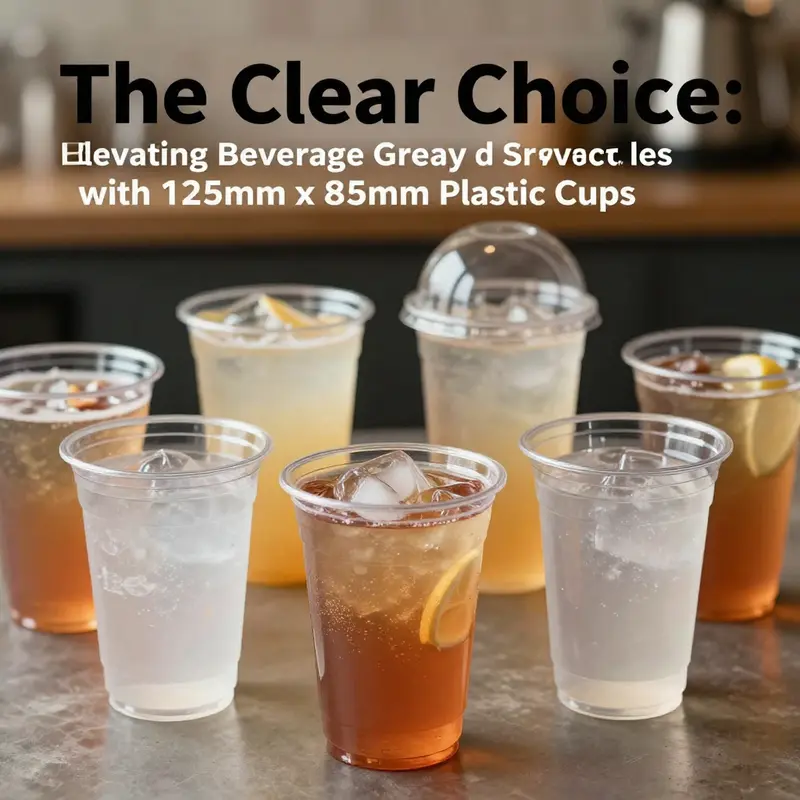
The demand for high-quality beverage service has never been greater, especially in sectors like bubble tea shops, restaurants, and catering services. One crucial component that can enhance service and impress customers is the 125mm x 85mm clear plastic cup. These cups not only offer an appealing way to display your drink creations but also ensure functionality and durability needed in fast-paced environments. In this article, we delve into the applications of these versatile cups, their material benefits, the economic implications of their market, and the important environmental considerations to bear in mind. By exploring each aspect, this guide aims to provide beverage industry professionals with the insights necessary to make informed purchasing decisions.
Visible Value: Practical Uses and Market Fit for the 125mm x 85mm Clear Plastic Cup
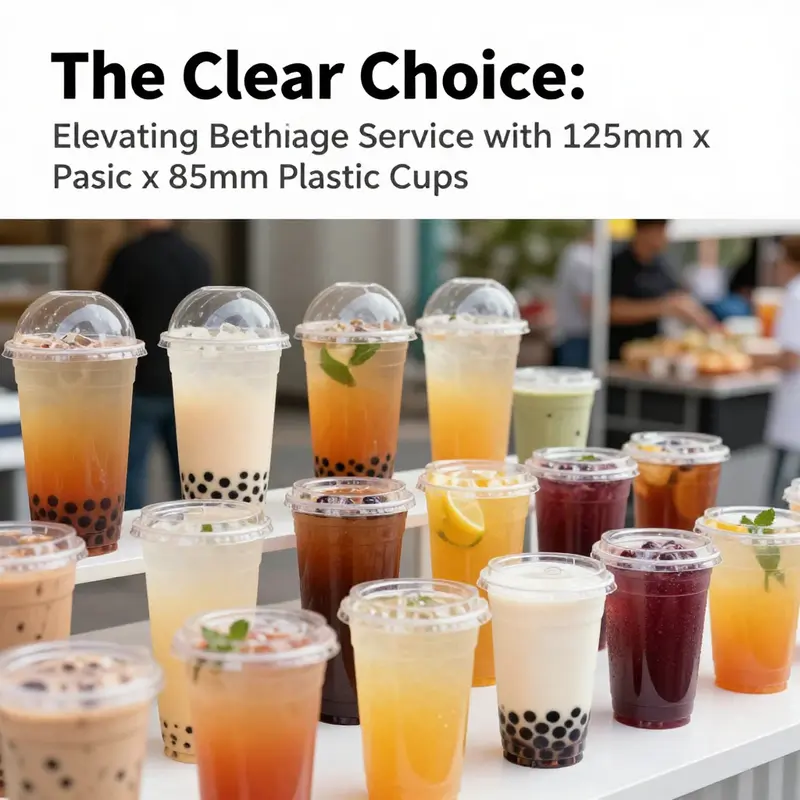
The 125mm x 85mm clear plastic cup occupies a niche where capacity, presentation, and practicality intersect. Defined by a generous top diameter and a moderate height, this size works well for drinks and layered foods that benefit from a broad surface area. The transparency of the cup turns serving into a visual experience, while the dimensions deliver useful capacity without becoming unwieldy. Across foodservice, events, retail, and catering, the cup’s particular proportions create opportunities for display, portion control, and streamlined service.
At the heart of the cup’s appeal is its ability to showcase contents. Beverages with distinctive colors, fruit-infused drinks, layered parfaits, or visually rich desserts gain immediate shelf presence when served in clear containers. The wide top makes it easy to add garnishes, lids, or dome tops without compromising the item’s look. This makes the cup especially useful for consumer-facing encounters where appearance influences purchase decisions. In cafes, grab-and-go counters, and dessert bars, the cup serves as both package and display window.
Functionality follows form. The cup’s broader diameter and lower height produce a stable footprint. That stability reduces tipping risk in high-traffic environments and helps when placing multiple cups on trays or crowded countertops. Stacking and nesting behavior also benefit from these dimensions. Efficient nesting reduces storage volume in kitchens and supply rooms, lowering logistic costs. During service, cups that nest predictably speed up set-up and loading tasks, improving throughput in busy operations.
Material choice is crucial for performance. Clear food-grade plastics such as PET and certain food-safe copolymers provide stiffness, clarity, and barrier properties. These materials resist impact, retain clarity under refrigeration, and handle cold beverages without warping. They also accept printing or labeling where branding is desired. For hot contents, specialized materials or liners are used to maintain structural integrity. The right polymer selection meets temperature needs, ensures safe food contact, and supports recycling streams where available.
Lid compatibility expands use cases. A dome or flat lid that fits securely can convert the cup into a spill-resistant takeaway vessel. Many lid designs include integrated straw ports, vent holes, or snap-fit seals that lock to the cup’s rim. These features allow the cup to serve smoothies, iced coffee, milkshakes, or desserts with whipped toppings. The availability of matching lids matters because it defines the cup’s mobility and retail suitability. When lids are leak-resistant and stackable, the combined system becomes well-suited to delivery and outdoor events.
Portion planning and menu design benefit from the cup’s size. The diameter allows for layered construction without compressing contents. Chefs and line staff can build parfaits, trifles, and layered salads with clear separation between textures. The visible layers guide portion control and enhance perceived value. For beverages, the cup accommodates crushed ice and thick textures while leaving room for garnishes. This versatility makes it a standard choice for menus that emphasize craft presentation.
Customization is a natural extension of the cup’s marketing potential. Clear surfaces take labels, sleeves, adhesive stickers, and printed bands well. Event planners often apply custom-printed sleeves or branded stickers for weddings, corporate events, and festivals. Small-batch customization reduces minimum order requirements and opens cost-effective branding possibilities for seasonal promotions. The cup becomes a mobile billboard when staff hand it to patrons or when customers carry it through public spaces.
Operationally, service teams value predictable dispensing and handling. Cup dispensers sized for the diameter improve ergonomics and speed. Automated filling lines or manual portion stations adapt easily to a consistent top diameter. A consistent rim profile ensures compatibility with heating elements, seaming equipment, or sealing machines in some operations. That compatibility reduces changeover complexity and avoids frequent equipment adjustments.
For large events and catering, the disposable nature of the cup lowers labor and cleanup costs. After use, staff collect and dispose of cups, shortening turnaround time between service rounds. When recycling programs exist, clear plastics often enter clearer waste streams thanks to their visual consistency. Many operators plan waste handling around the cup’s recyclability, combining it with education or signage to improve diversion rates.
Regulatory and safety factors are part of the selection process. Food-contact materials must comply with relevant national standards. Manufacturers frequently test for migration limits, ensure safe additives, and provide documentation for compliance. Certifications that signal conformity to health and safety norms can influence procurement decisions. Operators that supply or transport these cups must also consider labeling requirements, particularly when packaging foods that could trigger allergen or nutritional labeling obligations.
Environmental considerations weigh heavily now. While clear plastics offer many service advantages, many buyers seek lower-impact alternatives or recycled-content options. Sustainable strategies include sourcing post-consumer recycled feedstock, using thinner gauges where performance allows, or selecting polymers that participate in local recycling streams. Where compostable or recyclable paper-based solutions make more sense, operators can pivot to those formats for certain menu items. One helpful comparison is the range of eco-friendly cold beverage paper cups available through partners who focus on recyclable and compostable materials. See eco-friendly printed cold beverage paper cups for a direct alternative with sustainability benefits.
Supply chain realities influence which variants make sense. Minimum order quantities, lead times, and the availability of matching lids or sleeves affect procurement. Suppliers that stock a range of sizes and lid styles reduce lead times and simplify inventory management. For businesses scaling operations, the ability to source printed or plain cups with short turnaround becomes critical. Bulk orders lower per-unit cost, but storage capacity and capital constraints shape buying cadence.
Cost considerations include material costs, customization expenses, and waste handling fees. The cup’s material and thickness largely determine unit cost. Custom printing adds setup charges and increases lead times. However, the marketing lift from branded cups can offset those costs through improved customer recognition. Many operators calculate a total cost of ownership that includes disposal, recycling fees, and labor. When cups are recyclable, the net environmental cost may be reduced, which appeals to eco-conscious operators and customers.
Practical deployment scenarios highlight the cup’s adaptability. Retail grab-and-go stations use clear cups to tempt impulse purchases. Dessert counters rely on them for layered presentations that showcase ingredients. Mobile food vendors choose them for portability and simplicity. Event planners select them for consistent portioning across large guest lists. In every scenario, the cup’s dimensions guide how it is filled, stored, and served.
Aesthetic choices also matter. The clear finish pairs well with minimalist branding, letting the product remain the focal point. For premium presentations, teams pair the cup with kraft sleeves or printed bands to add texture. For festive settings, colored lids or custom labels add a seasonal touch. These low-cost additions elevate perceived value without changing the cup’s functional profile.
Finally, innovation continues in materials and accessory design. Advances in polymer science allow clearer, stronger cups made with less material. Lid designs improve stackability and leak resistance. Recycling infrastructure evolves, too, enabling more effective capture of clear plastics. Operators who design menus and workflows around these improvements reap efficiency gains and environmental benefits.
The 125mm x 85mm clear plastic cup is more than a container. It is a design choice that affects presentation, operations, and sustainability strategies. When selected with attention to material, lid compatibility, customization potential, and end-of-life handling, the cup integrates seamlessly into modern food and beverage workflows. For many use cases, its balance of visibility and practicality makes it a top pick for those who need an attractive, reliable, and adaptable serving vessel.
For regulatory context on safety certifications referenced during procurement, consult the official guidance on certification markings and compliance procedures: https://ec.europa.eu/growth/single-market/ce-marking_en
Material DNA and Practical Advantages of a 125mm x 85mm Clear Plastic Cup
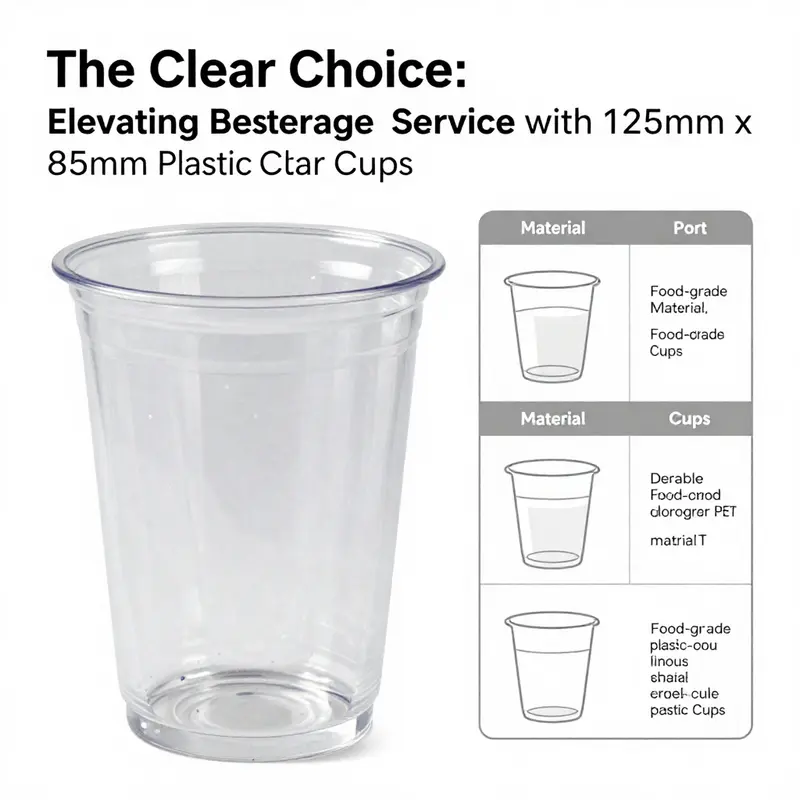
Material and form define how a clear plastic cup performs. For a cup specified at 125mm tall with an 85mm rim or base diameter, the most practical material choices and the consequent benefits flow directly from that size. This chapter examines those choices and benefits in an integrated narrative, covering material behavior, temperature tolerance, optical clarity, recyclability, compatibility with lids, and the real-world trade-offs that determine whether a 125mm x 85mm clear cup is the right choice for a use case.
At the core of most clear disposable cups lies a polymer selected for clarity, cost, and food safety. Polypropylene (PP) is the most common candidate for a cup with dimensions like 125mm by 85mm. PP balances stiffness, low weight, and chemical resistance. It is inherently food-safe when manufactured to appropriate standards and can be produced with excellent clarity. That clarity matters: a transparent wall gives immediate visual feedback on a beverage’s color, texture, and fill level, which is important for retail displays and sensory assessments. A 125mm height provides a typical single-serve volume range, while an 85mm diameter keeps the cup stable and compatible with a common size for lids. For this reason, manufacturers often specify a cup as “125mm x 85mm” to indicate height and rim diameter, which also aligns with available lid systems.
An alternative material often offered for transparent cups is polylactic acid (PLA), a bio-based polymer derived from fermented plant starch. PLA achieves comparable clarity to PP and appeals to the growing demand for compostable packaging. However, PLA behaves differently under heat; it softens at relatively low temperatures and is not suitable for hot liquids. For cold drinks, PLA provides a compostable option that can reduce landfill persistence when proper composting facilities exist. Choosing PLA for a 125mm x 85mm cup is a trade-off: improved end-of-life profile versus limited temperature tolerance.
Temperature performance is a decisive factor for material selection. Standard PP cups are designed for cold and room-temperature beverages. They resist cracking at low temperatures and remain dimensionally stable during handling. Some specialized plastics or PP grades can tolerate higher temperatures, but these are engineered products and may carry a higher cost. In some documented cases, alternative plastics have been formulated for a wide range like -20°C to 120°C, yet such performance indicates a departure from commodity PP and may involve different polymers or additives. When specifying a 125mm x 85mm cup, confirm whether it will be used for iced drinks, chilled dairy, smoothies, or heated beverages, and specify the polymer grade accordingly.
Clarity and optical quality are especially important for transparent cups intended to showcase beverages or desserts. PP and PLA each offer good optical properties when processed correctly. Injection stretch-blow molding or thermoforming with calibrated cooling gives a smooth, glossy wall that reduces optical distortion. For a 125mm height, maintaining consistent wall thickness helps avoid warpage and visual defects. Manufacturers can adjust wall gauges to improve stiffness without greatly increasing weight, preserving the proper mouthfeel and perceived quality.
Lightweight construction is a hallmark benefit of a cup this size. A properly designed 125mm x 85mm cup can be both light and rigid. Lightweight cups reduce shipping and storage costs and simplify service at events. Because the cup is unbreakable, it also offers safety benefits compared to glass in many settings. The shatterproof nature of PP and PLA reduces risk around children and in outdoor environments where dropped cups are likely.
Durability must be balanced with economy. Clear plastic cups of these dimensions are usually produced for single-use or limited reuse. They are cost-effective for large events, catering, and quick-service retail. For promotional use, the smooth surface and clear profile allow effective customization. Printing or labeling can display a logo without obscuring the beverage entirely. Custom colors can be added to the base or rim if branding requires a distinctive identity.
Recyclability and end-of-life handling are complex topics. Polypropylene is widely recyclable where municipal systems accept it, but local infrastructure varies. PLA is compostable under industrial composting conditions but can contaminate recycling streams if not separated. Clear cups are easier to sort visually at material recovery facilities when labeled correctly. When evaluating a 125mm x 85mm cup, consider the local disposal context: if customers lack access to industrial composting, PLA’s advantages may be theoretical. Similarly, CE-type certifications or equivalent compliance attest to regulatory suitability for food contact in some regions, but they do not guarantee recycling acceptance. Certification should be reviewed alongside local waste-management practices.
Lid compatibility is practical and often decisive. An 85mm diameter aligns with several dome lid systems used for cold drinks, smoothies, and milkshakes. A dome lid provides spill resistance while allowing whipped toppings or straws. Using a standardized rim diameter simplifies supply chains because the same lid SKU will fit multiple cup heights and volumes. If a 125mm height is paired with an 85mm dome lid, ensure the lid’s inner locking feature matches the cup’s rim profile. This compatibility reduces leaks and improves stackability for transport.
Safety and regulatory considerations affect material formulation and manufacturing. Food-grade resins, traceability of batches, and factory hygiene practices are important. Ask suppliers for documentation of food-contact safety and third-party testing. Small additive changes, such as slip agents or release agents used in forming, can affect surface properties and thus the adhesion of graphics or labels. Where transparency is critical, confirm that any additives will not cause clouding or haze.
Manufacturing tolerances and quality control matter for a precise 125mm x 85mm specification. Height consistency affects fill volume and label placement. Diameter tolerances affect lid fit and stackability. Good suppliers maintain process control charts and provide sample batches for approval. For high-volume runs, verify that tooling is designed to avoid flash or variation that would compromise lid fit. Stack-nesting behavior should be tested to prevent jamming in dispensing machines or automated filling lines.
Customization options extend beyond printing. Consider embossed logos or tamper-evident features molded into the rim. Variants can include reinforced rims for improved lid snap-fit, ribbed sidewalls for better grip, or slight base modifications to enhance stability. Cup geometry can be tweaked to fit cup holders in cars or vending machines. Each change affects material distribution and cost, so balance usability benefits against production complexity.
From a procurement perspective, specify the exact dimensions, material grade, acceptable tolerances, and intended end use. Request material safety data and compliance certificates when ordering a 125mm x 85mm cup. If the application involves cold dairy, high-sugar beverages, or acidic contents, confirm that the polymer grade and any printing inks are compatible. Also, plan for storage: long-term stacking can deform cups if the walls are too thin or the material not sufficiently crystalline.
Environmental messaging and labeling should avoid overstatements. If a cup is compostable, clarify the conditions required for composting. If recyclable, specify the resin code and note local variability in recycling acceptance. Clear consumer guidance reduces contamination in both recycling and composting streams. For corporate purchasers, lifecycle comparisons can be instructive: weigh raw material energy and end-of-life scenarios against reuse or alternative materials.
Operationally, a 125mm x 85mm clear plastic cup often finds its best fit in chilled beverage environments, display-ready desserts, and sampling programs. Its clarity highlights product appeal. Its light weight simplifies logistics. Its compatibility with dome lids enables spill control. When heat resistance is required, verify the manufacturer’s temperature rating and select an appropriate polymer grade.
Finally, aligning material choice to context creates the greatest value. Polypropylene suits many cold-drink use cases and offers a balance of cost, clarity, and recyclability where infrastructure supports it. PLA is attractive for compostability but is limited by temperature sensitivity and compost infrastructure. For specialized needs, alternative heat-resistant resins exist but carry higher cost and may change the cup’s clarity or recyclability profile. Asking the right questions up front—about temperature, disposal options, customization, and lid compatibility—ensures a 125mm x 85mm clear cup will perform as intended.
For those exploring alternatives or complementary options, it can be helpful to compare clear plastic cups with paper-based cold-cup alternatives, which provide distinct benefits in certain contexts. See the supplier’s offering for a best-price 8oz double plastic-free single-wall paper cup for further context on how paper and plastic solutions compare in service and sustainability scenarios: https://greendispopack.com/product/best-price-8oz-double-plastic-free-single-wall-paper-cup/.
For a technical overview of polypropylene—its properties, uses, and limitations—refer to the polypropylene resource: https://en.wikipedia.org/wiki/Polypropylene
Market Forces and Financial Realities Around the 125mm × 85mm Clear Plastic Cup
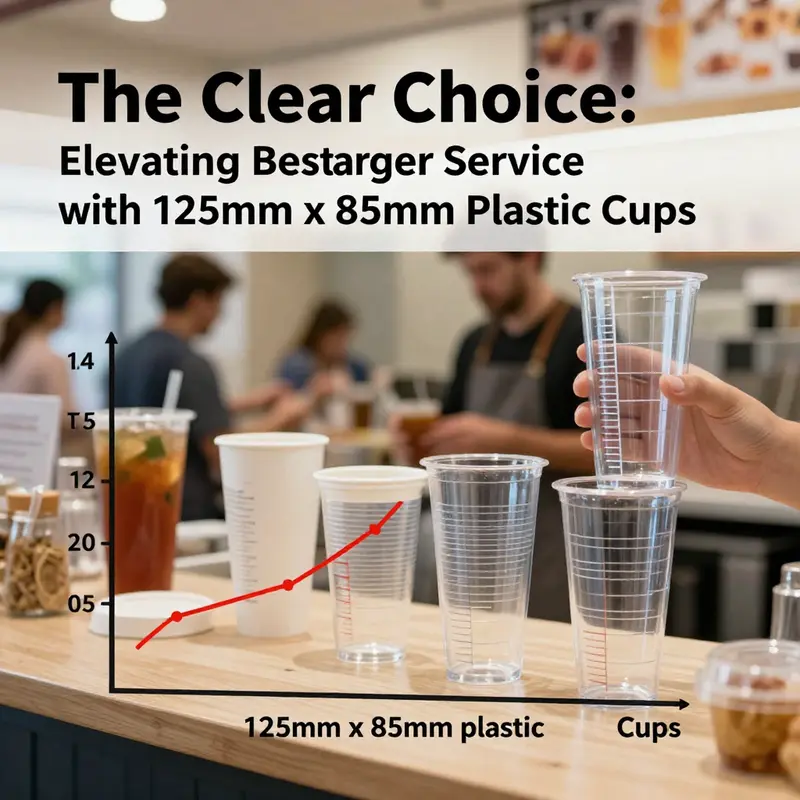
The economics of a specific item such as a 125mm by 85mm clear plastic cup cannot be isolated from larger forces shaping disposable packaging. Regulatory change, raw material volatility, shifting consumer demand, and supply-chain realities combine to determine whether a niche size thrives or fades. For manufacturers and buyers evaluating this particular format, the crucial questions are straightforward: does the size meet a meaningful need, can it be produced at a cost that sustains margin, and how will policy and market shifts affect demand over time?
Demand for a cup with roughly 125 millimeters in height and 85 millimeters in diameter aligns with common beverage serving sizes. That makes the form factor operationally attractive to cafes, food trucks, and convenience channels. But the economics hinge on more than geometry. Producers must amortize tooling and mold costs across volume. A new mold set can be a significant capital outlay. To earn a return, a manufacturer needs predictable orders and minimum purchase quantities. For customers, ordering a bespoke cup size delivers branding and fit advantages, but also raises unit cost unless volumes are sufficient.
Material cost is the most visible economic driver. Clear cups are typically formed from food-grade polymers. Prices track feedstock markets and crude oil fluctuations. When resin prices rise, margins compress unless buyers accept higher prices. Environmental policy intensifies this pressure. In many high-regulation regions, single-use plastics are restricted or taxed. Compliance can require additive measures, such as using recycled content, applying labels, or switching to different materials altogether. Each option carries cost consequences and logistical complexity.
The regulatory landscape is shifting away from loose tolerance. Directives that limit single-use plastic items, impose producer responsibility schemes, or require minimum recycled content obligate manufacturers to change sourcing and production. Those changes often produce short-term cost increases. Over time, however, they encourage investment in recycling systems and alternative materials. For a cup of the 125 × 85mm specification, the key question becomes whether conversion to recycled PET or to compostable polymers is technically and economically feasible while preserving clarity, strength, and food safety.
Markets are regionally distinct. In high-income markets, demand for single-use plastic cups has contracted under policy and consumer pressure. Sales volumes and compound annual growth rates for traditional plastic cups have declined in several regions. Manufacturers serving these markets must pivot toward recyclable designs, reusable systems, or alternative materials to retain customers. Conversely, in some emerging markets, single-use plastics remain cost-competitive and convenient, supporting continued demand for standard sizes. That geographic dispersion means producers with flexible production footprints can shift volumes to more receptive markets and maintain utilization of molds and machinery.
Another economic layer is accessory compatibility. Clear dome lids and other closures are part of the unit economics. If an 85mm diameter becomes a de facto standard for lids, then cup producers can leverage existing lid supply chains. Standardized diameter reduces buyer friction and increases the addressable market for a given cup size. Certification and compatibility with widely used lids therefore raise the commercial attractiveness of the cup. Conversely, an uncommon diameter forces buyers to adopt matching lids, increasing procurement complexity and reducing adoption likelihood.
Certification also matters. CE or similar declarations signal that a product meets regional safety and health standards. That can shorten sales cycles in regulated markets. But certification itself imposes cost. Testing, documentation, and compliance management add to per-unit cost when amortized over modest volumes. For companies weighing the investment, the decision comes down to expected lifetime volume and margin per unit. Where the cup can reach mass-market retail or large foodservice chains, certification is justified. For small, localized orders, the cost is harder to reclaim.
Innovation is not only regulatory response. Cost-saving design improvements can materially affect economics. Lightweighting reduces material use and lowers freight expense. Optimized stacking density improves pallet utilization, cutting warehousing and transport costs. Design for recyclability increases access to lower-cost recycled feedstocks. Yet these gains require engineering and trial runs. They also often require new tooling or process tweaks. The most successful producers treat innovation as continuous, not episodic. Incremental design and process improvements keep unit costs down while maintaining product function.
Economic risk for holders of legacy production rests largely on substitution. Alternatives like coated paper cups, PLA compostable cups, and reusable glass or plastic systems are increasingly viable. Each alternative carries different cost and supply attributes. Paper cups require lining for liquid resistance, which has environmental trade-offs and can complicate recycling. Compostable bioplastics may carry higher raw-material costs and face limited industrial composting infrastructure. Reusables shift cost from per-unit to logistics, cleaning, and deposit systems. The competitive pressure of these substitutes compresses price points and forces plastic cup makers to show clear advantages, such as transparency, lower cost, or superior barrier performance.
Value-chain considerations amplify the story. Downstream customers, such as cafes and quick-service restaurants, optimize based on total cost of use. That includes purchase price, storage, spoilage, and brand perception. A clear plastic cup that showcases product appearance can help sales of premium cold beverages. That marketing value can justify a modest price premium. At the same time, buyers face consumer scrutiny. Visible plastic can provoke negative reactions. Selling points such as high recycled content, recyclable design, or integration with a widely accepted lid standard strengthen the economic case.
Supply chain and logistics cannot be ignored. Clear cups require careful stacking to avoid distortion in transit. Warehousing space is a recurring cost. Freight rates, especially for imported goods, can flip a marginally profitable product into a loss. Bulk shipments reduce per-unit freight cost but increase inventory carrying costs. For companies planning to export a 125 × 85mm cup, port tariffs, customs procedures, and regional labeling requirements further influence landed cost. Manufacturers that localize production closer to final markets reduce lead times and tariff exposure but must achieve scale to justify multiple production sites.
Pricing strategy is strategic rather than tactical. Economies of scale enable very low unit prices when order volumes are large. For niche sizes, premium pricing may be necessary to cover fixed costs. Many suppliers adopt a tiered approach: offer a standard size at low cost, and charge a design or tooling premium for custom sizes. That model encourages buyers to adopt standard dimensions where possible, consolidating volumes and improving overall industry efficiency.
There are opportunities embedded in the challenges. Circular economy models can capture value from what was once waste. Collection, sorting, and high-quality recycling of PET allow suppliers to procure feedstock at lower and more stable prices over time. Partnerships with waste management firms and local authorities can create supply loops that benefit both producers and municipalities. Similarly, offering multi-component solutions, such as pre-matched cups and lids, simplifies procurement for buyers. Value-added services like on-demand printing and branding further increase average order value.
For policymakers, the economic lesson is nuance. Blanket bans can disrupt livelihoods and supply chains. Carefully designed incentives for recycled content, deposit-return systems, and infrastructure support for composting and recycling yield better long-term outcomes. For industry, proactive engagement with policy and investment in alternative materials or recycling infrastructure reduces transition costs.
For stakeholders evaluating a 125mm by 85mm clear plastic cup, practical steps clarify economics. First, establish realistic volume forecasts across markets. Second, model full landed cost, including certification, tooling, freight, and storage. Third, assess lid compatibility and whether standard lid diameters exist in target markets. Fourth, consider material options—virgin PET, recycled PET, or compostable alternatives—and quantify cost and performance trade-offs. Finally, identify downstream value levers, such as branding, bundle sales, or circular partnerships.
The market context is clear: the disposable plastic cup sector faces contraction in regulated markets and sustained demand in others. That bifurcation creates both risk and opportunity for a product sized at 125mm by 85mm. Producers able to scale, adapt materials, and integrate into circular systems will find pathways to profitability. Many buyers will prefer sizes that minimize procurement complexity and fit with existing lid ecosystems. For niche, branded offerings, the economics depend heavily on volume and the ability to charge a premium. Strategic pricing, innovation in design, and alignment with evolving policy will determine which players thrive.
For more detailed market data and forecasts, consult industry analyses such as the global packaging market trends report. External resource: Statista – Disposable Plastic Cups Market Size & Forecast (2026) (https://www.statista.com/statistics/1234567/disposable-plastic-cups-market-size-global/). Additionally, manufacturers and buyers exploring alternatives may compare options like the 8oz double plastic-free single-wall paper cup to weigh cost and environmental trade-offs. Internal resource: 8oz double plastic-free single-wall paper cup.
Designing for Reuse and Recycling: Environmental Realities of 125mm x 85mm Clear Plastic Cups
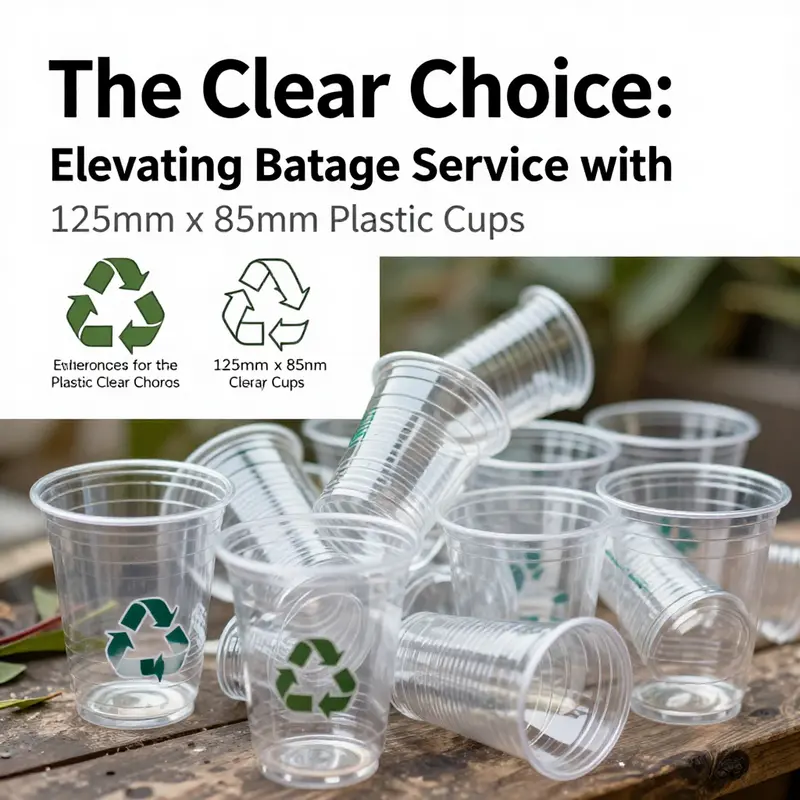
The environmental footprint of a 125mm x 85mm clear plastic cup depends on material choice, design, production, and end-of-life handling. A clear cup of these dimensions is typically used for single-serve cold drinks. Its compact size makes it convenient. That same convenience creates a disposal challenge when millions are used daily. Understanding where the impacts lie helps designers, buyers, and users reduce harm.
Material selection is the foundation. Most clear drinking cups use polyethylene terephthalate, or PET. PET is valued for clarity, strength, and barrier properties. It is also widely accepted in recycling systems under the recycling code #1. These qualities make PET a pragmatic option when clarity is required. However, PET still begins life as a fossil-fuel–derived polymer. Producing virgin PET consumes energy and emits greenhouse gases. That upstream footprint matters, especially at scale.
Using recycled PET, or rPET, reduces that impact. rPET is made from post-consumer bottles and containers. When incorporated into cup manufacture, it lowers demand for virgin resin and cuts embodied carbon. Many manufacturers can blend rPET with virgin PET to meet strength and clarity targets. For a frequent-use item like a 125mm x 85mm cup, specifying a high rPET content is one of the most effective decisions buyers can make, provided the material meets food-safety standards. Recycled content also creates market demand for collected plastic, which supports collection and processing infrastructure.
Design decisions beyond resin choice also shape recyclability. Cups with multiple materials, such as paper sleeves, adhesive labels, or non-compatible lids, complicate recycling. Dark pigments, metallized printing, or opaque coatings can render a cup unrecyclable in many municipal systems. Clear or lightly tinted PET is far easier to sort and reprocess. Minimizing multi-material assemblies keeps the cup in the single-stream recycling pathway and increases the likelihood that it will be converted back into useful material.
End-of-life behavior is a persistent hurdle. Many PET cups are contaminated with liquid residue or food particles. Contamination reduces the value of a recycling stream and can lead to rejection at the sorting facility. Placement in incorrect bins is another frequent problem, often caused by confusing disposal signage or lack of convenient collection points. For these reasons, consumer education and well-placed bins matter as much as material choice. Simple cues, like clear labels and disposal icons, increase correct sorting. On-site programs that encourage rinsing before disposal can also improve recycling rates.
Recycling technologies themselves are evolving. Mechanical recycling is the most mature pathway for PET. It involves cleaning, grinding, and melting the plastic into pellets. These pellets then become new packaging or fibers. Mechanical recycling works well for clean, homogeneous PET streams. Chemical recycling offers a complementary route, breaking polymers back into monomers for re-synthesis. This can handle more contaminated or colored streams, though it is generally higher in energy use and cost today. As chemical recycling matures, it could expand the types of PET products that can be feasibly returned to the material loop.
The infrastructure gap is the critical barrier between potential and performance. Even when a cup is technically recyclable, the local system determines whether it is processed. Large urban centers often have robust PET collection and sorting. Rural or under-resourced regions may lack facilities. When planning for a 125mm x 85mm cup, consider the distribution footprint. If the cups will be used nationally or internationally, choose materials that match the weakest link in the logistics chain. That conservative approach improves real-world recovery rates and reduces the chance that a recyclable cup ends up in landfill.
Beyond recycling, reuse is a powerful alternative. Reusable cup systems reduce waste and lifecycle emissions when implemented properly. A sturdy reusable cup designed for repeated washing will show lower environmental impact after a finite number of uses compared to single-use PET. For venues and events where reuse is impractical, hybrid models such as deposit-return schemes encourage returns and extend material life. Regardless of the path chosen, tracking real returns is essential to avoid optimistic assumptions about behavior and benefits.
Certification and transparency build trust. Certifications tied to food safety and recyclability help buyers verify claims. Independent verification of rPET content and material origin reduces greenwashing risk. Certification that a lid or cup meets specific standards can reassure customers about safety and proper use. When purchasing or specifying cups, request documentation for recycled content, compliance testing, and end-of-life recommendations from suppliers.
When single-use PET remains the chosen option, operational practices can improve outcomes. Specifying a clear, mono-material cup and a compatible lid reduces sorting errors. Promoting on-site collection points for clear plastics increases capture rates. Partnering with waste haulers to ensure streams are kept together from venue to MRF (material recovery facility) helps maintain quality. Clear communication with staff and consumers about rinsing and proper disposal preserves material value. Small investments in training and signage yield measurable gains in recyclability.
Alternatives exist and deserve comparison. Paper cups with compostable coatings, molded fiber containers, and PLA-based bioplastics each have trade-offs. Some fiber-based solutions require separate collection streams for industrial composting. Others use coatings that hamper recycling. When evaluating alternatives for a role typically filled by a 125mm x 85mm clear cup, assess the full lifecycle. Consider carbon footprint, water use, end-of-life infrastructure, and contamination potential. The optimal choice often depends on local waste management capabilities more than on theoretical material merits.
Policies and procurement standards can accelerate better outcomes. Purchasing specifications that require minimum recycled content, clear labeling for disposal, and design-for-recycling criteria push suppliers to adopt circular practices. Procurement levers can also favor takeback programs or modular lid systems that reduce material use. Public and private buyers wield significant influence. When large buyers set clear environmental requirements, suppliers respond with innovations that benefit the broader market.
Practical guidance for retailers and event organizers centers on three actions. First, choose clear PET with high rPET content and avoid mixed materials. Second, design and maintain convenient, clearly labeled collection points. Third, work with partners to verify that collected cups are actually recycled. These steps are achievable and measurably improve recovery rates. Over time, they can transform a single-use item into a component of a functioning circular flow.
Finally, communication matters. Simple, truthful on-package messages about recyclability and disposal instructions reduce confusion. For businesses, sharing annual recovery metrics builds credibility and encourages continuous improvement. For consumers, visible evidence that cups are being recycled or reused reinforces correct behavior. Small, consistent improvements in design and practice compound across millions of servings.
For operations seeking an accessory that supports circular goals, consider switching to or adding recyclable holders designed for drink cups. An example option is an eco-friendly recyclable pulp cup holder that works with common cup sizes and reduces single-use waste during transport and service. Such complementary solutions reduce dependence on additional plastic accessories and enhance the overall sustainability profile of single-use servings.
For technical reference on PET recycling best practices and system-level guidance, consult authoritative resources that synthesize current science and policy. The U.S. Environmental Protection Agency provides up-to-date guidance on PET recycling practices and considerations. https://www.epa.gov/epahome/understanding-plastic-waste#recycling-pet
Final thoughts
In summary, the 125mm x 85mm clear plastic cup is more than just a simple beverage container. It serves as a practical solution for many beverage establishments, providing an attractive, reliable, and versatile option for serving drinks. The insights shared about its applications, material benefits, economic market presence, and environmental considerations all highlight how this particular cup can meet diverse needs while supporting the operational goals of beverage retailers, food service providers, and event planners. By considering these factors, businesses can enhance customer satisfaction and align with sustainable practices, ensuring long-term success in the competitive beverage industry.