
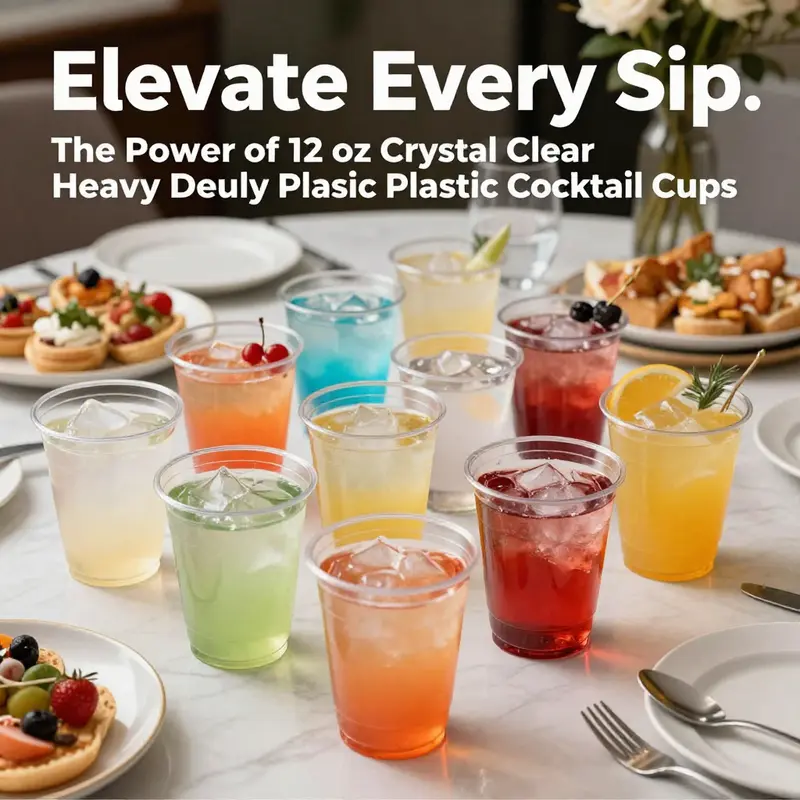
In today’s vibrant beverage landscape, the presentation and durability of drinkware are paramount. 12 oz crystal clear heavy duty plastic cocktail cups have emerged as a favored choice among professionals in the beverage and catering industry. Offering a seamless blend of aesthetic appeal and functional reliability, these cups serve various purposes, from showcasing beautifully layered cocktails at restaurants to enhancing the customer experience in bubble tea shops and food trucks. This article delves into the core components that make these cups an ideal choice, their diverse applications in events and gatherings, the current market trends influencing their popularity, and the sustainability angle that modern consumers are increasingly demanding. Each section builds a comprehensive understanding of how investing in quality disposable drinkware can enhance service and elevate brand image.
Why PET Matters: The Composition, Strength, and Practical Advantages of 12 oz Crystal Clear Heavy-Duty Cocktail Cups
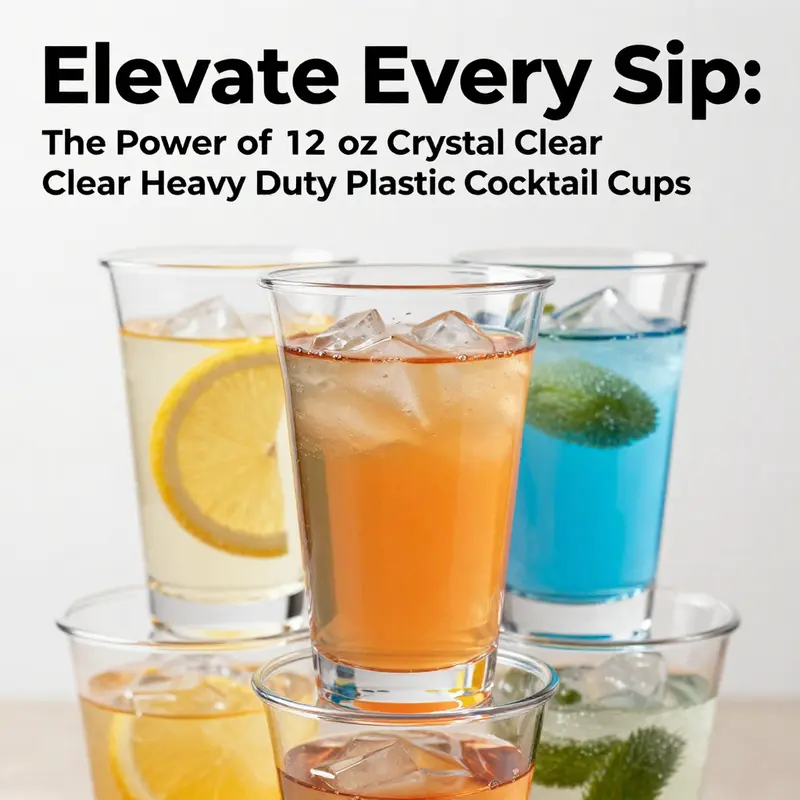
Material, Performance and Practical Benefits
The choice of material defines how a disposable cup looks, performs, and fits into modern events. For 12 oz crystal clear heavy-duty cocktail cups, that material is most often polyethylene terephthalate, or PET. PET delivers optical clarity rivaling glass, while staying light and resilient. This single property unlocks the most visible advantage: the drink itself becomes part of the presentation. Vivid colors, layered cocktails, bubbles, and garnishes remain clearly visible. Drinks look fresh and inviting, and the host achieves a premium aesthetic without the fragility of glass.
At its core, PET is a thermoplastic polyester. It forms clear, dimensionally stable sheets or molded shapes that resist cracking under normal handling. That resistance matters in real-world settings. A cup knocked against a table, passed from guest to guest, or carried over uneven flooring should not fail. Heavy-duty PET formulations add thickness and targeted reinforcement where a cup most needs it, such as the rim and base. These reinforcements prevent flexing and bulging when cold drinks sit over ice or when carbonation pushes against the cup walls.
Beyond strength, PET plays a crucial role in beverage integrity. Its barrier properties slow oxygen ingress and help preserve carbonation. For sparkling cocktails or sodas, this means fizziness retains longer than it would in a more porous container. PET is also naturally odorless and chemically stable at cold temperatures. Drinks keep their true aromas and tastes without imparting off-notes, a vital point for cocktails and specialty beverages where nuance matters.
Safety and regulatory considerations also shape why PET is the material of choice. Most heavy-duty PET drinkware is free from BPA and common phthalates. It does not soften or leach under cold conditions, so a cup holding a chilled cocktail will not change the drink’s profile. PET is also accepted by many municipal recycling programs. That recyclability addresses a major concern for event planners aiming to reduce waste footprint while preserving guest experience.
Practical design features flow from PET’s properties. A well-engineered 12 oz cup stacks efficiently, saving storage space and reducing the time required for setup. A sturdy lip allows comfortable drinking without spill-prone thin edges. Thicker bases lower the center of gravity and reduce tipping. When lids are used, PET’s compatibility with common lid designs ensures secure closures for transport and to-go orders. For venues offering mixed drink options, a single cup model can serve iced coffees, beers, and cocktails without compromise.
Durability also changes how these cups are used operationally. Servers can carry multiple filled cups on a tray without cups warping under the load. Self-serve beverage stations work without constant monitoring for spilled cups. Outdoor events benefit, too. A cold drink under sun and wind will maintain shape and containment, reducing cleanup and waste. For larger events, the reduced breakage compared to glass lowers both risk and costs associated with glass disposal and replacement.
Designers and buyers also value the optical qualities of PET. Clarity is not merely aesthetic. It helps staff and guests identify drink contents quickly, which speeds service and reduces mistakes. Transparent cups enable efficient portion control and reduce over-pouring. They serve as visual prompts for staff to refill or rotate stock. For craft drinks and layered cocktails, the cup becomes part of the branding. Clear surfaces showcase color gradients, foam heads, and garnishes in ways opaque containers cannot.
Sustainability is increasingly part of purchase decisions. PET’s recyclability gives it an advantage over many disposable alternatives. When collected and processed correctly, PET can be reintroduced into manufacturing streams. This is not a complete solution; recycling rates vary by region and depend on local systems. Yet, choosing recyclable PET over non-recyclable plastics reduces the long-term environmental burden. Event planners can combine recyclable PET cups with clear recycling signage and collection bins to increase capture rates and reduce landfill contributions.
Operational guidelines maximize both performance and sustainability. First, these cups are designed for cold and room-temperature beverages. They are not suitable for repeated exposure to high heat. Pouring boiling liquids can compromise structural integrity and release undesirable chemical changes. Second, although freezer-safe for chilled desserts or frosted beverages, abrupt thermal changes should be avoided to prevent stress cracks. Third, while labeled disposable, PET cups can be re-used in limited contexts if they are rinsed and not exposed to hot liquids. Reuse should be judged against hygiene standards in any food-service environment.
Quality control matters at purchase. Look for cups with even wall thickness, clear transparency, and consistent rims. Small imperfections such as cloudiness, ripples, or uneven walls may indicate lower-grade material or poor molding. These flaws can affect strength, leak resistance, and the overall look of a beverage. Reliable suppliers provide product specifications that list material grade, thickness, and compliance with food-contact regulations. For large orders, request samples to verify clarity and fit with lids.
Customization options broaden practical use. Printing logos, event names, or drink identifiers on PET cups can enhance branding and guest memory. While printed cups add cost, the investment yields marketing impressions and helps reduce waste when guests take cups home. Some events limit printing to a sleeve, which avoids direct ink contact with the drink surface while still creating brand visibility. For venues that rotate menus frequently, neutral clear cups provide flexibility across beverage categories.
Comparing PET to alternatives clarifies its unique niche. Glass offers the best clarity and reuse potential, but it brings breakage risks and heavier handling costs. Other plastics may be cheaper but lack PET’s clarity or barrier performance. Paper cups can be compostable, but they obscure drink appearance and often require a polyethylene lining for liquid resistance. PET strikes a balance between presentation, durability, and recyclability that suits both casual gatherings and professional events.
Logistics and storage add further benefits. PET cups nest tightly when stacked, reducing shipment volume and on-site storage needs. Their light weight reduces shipping costs and lowers the physical strain on staff during setup and teardown. Disposal streams are more straightforward than glass recycling for many venues, and many waste vendors already accept PET through established pickup services. For venues seeking to minimize single-use waste, pairing PET cup use with a robust recycling plan is an effective compromise.
Finally, consider the guest experience. A cup that looks good, holds its shape, and keeps a drink tasting right improves perception of the event. It enables beverage creativity without compromise. Guests enjoy sparkling drinks that retain bubble clarity. They appreciate a cold cocktail that won’t leak or sag when held. Staff members find service smoother with fewer spills and breakages. These small but cumulative improvements drive value beyond the per-unit cost.
For planners and operators, the takeaway is clear: material selection shapes every aspect of service, from guest perception to operational ease and environmental impact. When clarity, durability, and recyclability are priorities, PET-based 12 oz heavy-duty cups deliver a practical, attractive solution. They bridge the gap between disposable convenience and presentational quality, and they support event goals that range from upscale aesthetics to pragmatic waste management.
For buyers wanting to compare alternatives or examine packaging and specifications, a sample product listing can illustrate typical features and dimensions. https://www.amazon.com/dp/B08P6QYX4V
For additional options in disposable cup formats, consider checking related paper cup products such as the best-price-8oz-double-plastic-free-single-wall-paper-cup for hot drink scenarios: best-price-8oz-double-plastic-free-single-wall-paper-cup
Seeing Through Style: Elevating Events with 12 oz Crystal-Clear Heavy-Duty Plastic Cocktail Cups
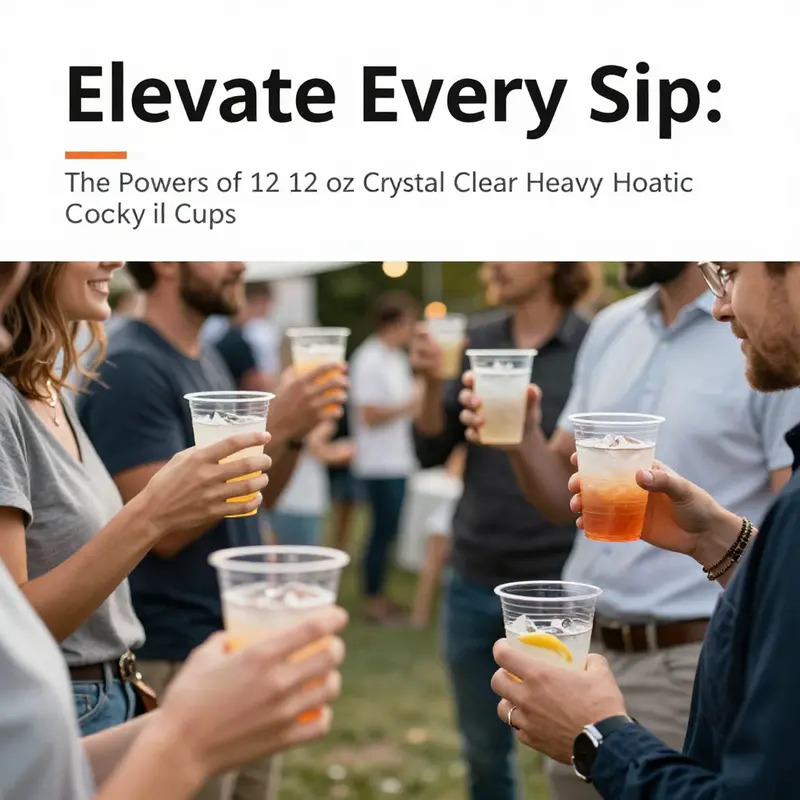
When planning an event, the moments that attendees remember often arrive in small but telling packages. The cup is one such package: a simple, practical vessel that can either fade into the background or, if chosen with care, elevate the entire drinking experience. The 12 oz crystal-clear heavy-duty plastic cocktail cup occupies a unique position in this landscape. Its combination of visual purity, rugged design, and everyday practicality makes it more than a disposable workhorse; it becomes a design element that supports the table décor, the color story of the beverages, and the pace of service. In a world where presentations can hinge on how little friction guests encounter, these cups offer a rare blend of performance and aesthetics that aligns with both the formal precision of a gala and the relaxed ease of a backyard gathering.
At the core of their appeal is the material choice. These cups are typically forged from high-quality PET, a plastic that has earned its reputation for clarity. The crystal-like transparency is not just about showing color; it is about rendering the beverage itself—its hues, its shimmer, and its carbonation—without interference. In settings where the beverage is part of the visual experience, the container should disappear, letting the liquid shine. PET’s optical properties are crucial here. When a cocktail glows with a citrus twist, or a punch looks like a sunset in a glass, the cup’s clarity ensures that guests’ eyes stay on the drink rather than on the vessel. This visibility makes even subtle flavor narratives more tangible, as hosts can highlight layered ingredients, garnishes, or the texture of ice with unimpeded contrast.
The durability of these cups adds another layer of value that isn’t always available with glassware or other plastic alternatives. Heavy-duty construction means the cups maintain their shape and integrity when carried across a bustling event floor, passed from hand to hand, or filled with a beverage that demands a robust vessel—whether it is a fizzy, carbonated drink that wants to foam and pressurize the rim or a hot-cocktail serve where steam and heat test the rim’s resilience. The practical benefit here is twofold: guests enjoy a cup that feels solid and trustworthy in their grip, and hosts enjoy a degree of risk reduction that makes last-minute rearrangements or outdoor service far more manageable. The combination of crack resistance and reliable leak-proof performance means hosts can lean into the party atmosphere with confidence, without fretting about fragile stems and shattered shards on a crowded patio.
From an operational standpoint, the single-use convenience of these cups translates into measurable time savings and cleaner logistics. In many event contexts, the ability to serve quickly and then remove the disposal container reduces the drains on staff during the crucial post-service window. When guests are moving between stations, mingling with elegance rather than waiting for glassware to be collected and cleaned, the flow of the event becomes smoother. Outdoor venues, pop-up festivities, and large corporate functions particularly benefit from this efficiency. The cups’ shape and size—compact enough to be stacked and stocked in modest space yet generous enough to hold a standard 12-ounce beverage—also contribute to streamlined service. They fit easily into standard bar workflows, so bartenders can pour, cap, and hand off drinks with a rhythm that keeps the line moving and the energy high.
One of the most striking advantages of a crystal-clear profile is how it supports the beverage’s presentation across different lighting environments. In a ballroom with uplighting or a tented event with string lights, the liquid’s color can become a focal point in the overall aesthetic. A bright strawberry hue, a deep emerald punch, or a pale, icy blue cocktail can all read as designed rather than incidental, because the cup’s seamless clarity allows those tones to read true to their palette. The glass-like appearance, achieved without the fragility of actual glass, makes the cups a flexible canvas for both the color choices of the event designer and the culinary creativity of the bartender. This is especially important when the drinks are not just beverages but social signals within the event’s narrative—festive toasts, signature cocktails, or color-coordinated drinks that align with a theme or brand palette.
Beyond aesthetics, there is a practical dimension worth noting. The PET material used for these cups is often BPA-free and odorless, addressing common guest concerns about taste and safety. In the modern event landscape, where guests arrive with heightened awareness of what goes into their food and drink, this reassurance matters. A cup that remains neutral in taste helps ensure that the guest’s palate is not overwhelmed by the container, allowing the drink itself to carry the expected flavor profile. While style and safety are not mutually exclusive, it is the combination of both that makes this cup especially versatile across event types. Weddings may call for an understated, elegant presentation that still holds up under the pressure of elegant gowns and high-volume service, while corporate events demand a professional, consistent look that communicates reliability and cleanliness. The 12 oz crystal-clear heavy-duty cup elegantly meets both needs without forcing compromises.
The spectrum of applications extends across formal and casual settings in ways that feel natural rather than forced. In formal gatherings, such as weddings or galas, the cups can function as an unobtrusive stage for champagne or wine while enabling guests to mingle freely. The transparent walls preserve the drink’s visual integrity, allowing the celebratory bubbles or the wine’s nuances to shimmer through. In these moments, the cup serves as a quiet partner to the décor rather than a centerpiece, supporting the ambiance rather than competing with it. Engagement parties and milestone celebrations benefit similarly; the cups provide a consistent, classy look that complements seasonal palettes and venue design without demanding special handling or costly glassware that might risk damage.
Casual celebrations find their own rhythm with these cups. Birthday parties, baby showers, family reunions, and holiday gatherings benefit from the cups’ sturdy nature and the convenience of disposal—especially when the menu includes a broad assortment of beverages. The ability to offer a range of drink options—from sparkling mocktails and iced coffees to hot cocktails served with appropriate lids or sleeves—without swapping out glassware for the duration of the event, reduces the cognitive load on hosts and planners. In larger corporate functions, where the goal is often to project efficiency and professionalism, the cups deliver a polished look with practical benefits. They convey a message of thoughtful provisioning—clear, crisp, and ready for the moment—without appearing utilitarian or cheap. The design language of the cup thus becomes part of the event’s overall branding, subtly reinforcing a theme of clarity, modernity, and reliability.
From an environmental standpoint, the chapter does not ignore the tension between single-use convenience and sustainability. While the cups offer clear operational advantages, the conversation around environmental impact remains important. Manufacturers increasingly offer reusable options made from food-grade materials such as polypropylene, preserving the sleek, crystal-clear aesthetic while enabling multiple uses. Even when used as disposables, PET cups are widely recyclable in many municipal programs, and they often come with recyclable packaging that supports responsible waste management. The choice, then, becomes a balance: for events with high guest turnover or limited dishwashing capacity, the disposable option reduces labor and risk; for venues with strong sustainability goals, reusable or high-recovery programs may be favored, and the cups can be part of a broader strategy that includes proper sorting and recycling. In any scenario, the emphasis is on delivering a beverage experience that is taste- and presentation-first while staying mindful of the cradle-to-cradle implications of the event’s supply chain.
Within the broader arc of event design, the cup’s role intersects with other disposable or reusable components. Lid compatibility, straw options, and sleeve design are practical considerations that influence guest comfort and service speed. A well-chosen cup should accommodate standard lids and mixing styles without compromising its structural integrity or visual appeal. It should also fit into the venue’s waste management plan, whether that plan emphasizes recycling, composting (for certain materials), or a straightforward, efficient disposal workflow. The ability to coordinate with other serviceware—such as plateware, utensils, and napkins in a cohesive color story—helps create a unified guest experience. When the color palette is managed thoughtfully, the clear cups act as a transparent stage for the drinks, while other elements of the table or bar add texture, warmth, or brightness to the setting. The result is an experience where guests notice the drink first, but the surrounding design elements support and amplify that perception rather than competing with it.
In terms of future directions, trends in clarity, strength, and sustainability will likely continue to shape the development of these cups. Advances in PET formulation and manufacturing processes promise even clearer visuals and improved resistance to cracks and deformations, while traceable supply chains offer greater transparency about sourcing and recycling. For event professionals, the ongoing evolution means more predictable performance, better alignments with venues’ environmental policies, and a broader spectrum of usage scenarios—from exquisite cocktail tasting events to large-scale outdoor festivals. The cups become a reliable constant in a design toolkit that must adapt quickly to unpredictable guest counts, shifting weather, and evolving service models.
As a narrative thread within a broader discussion of event-service vessels, the 12 oz crystal-clear heavy-duty plastic cocktail cup serves as a compelling case study in how form, function, and finish can converge. It demonstrates that a disposable container can still be a thoughtful component of design and experience. It proves that practicality does not have to come at the expense of aesthetics, and that even a simple drink vessel can reinforce a brand’s story, a venue’s ambiance, and a guest’s enjoyment. The cup’s translucence invites the eye to travel—from the rim of the glass to the surface of the ice, to the layered hues of the beverage itself—creating a moment of engagement that enhances conversation, celebration, and memory. In this sense, the cup is not merely a tool but a quiet collaborator in the craft of event storytelling.
For readers seeking to explore related considerations beyond the glass, it may be valuable to consider how other disposable or reusable serveware choices align with a given event’s goals. The visual language of container choice, the psychological cues associated with color and material, and the logistics of service and cleanup all interact to shape guest perception. To connect this discussion with broader packaging and service trends, one can examine how different formats perform across conditions, from high-energy cocktail parties to intimate receptions. The overarching lesson is simple: when the vessel is clear and strong, the drink can truly shine, and every sip carries a touch of the event’s character.
Internal link reference: For a broader look at sustainable, eco-conscious cup options that align with modern event design, see the discussion on eco-friendly, printed-logo cold beverage cups in paper cup formats. This resource provides additional context on how choosing the right cup material and print approach can harmonize with a venue’s sustainability goals while maintaining a strong presentation identity. eco-friendly-printed-logo-cold-beverage-cup-paper-cup-with-lid
External resource: A detailed external reference on disposable beverage vessel options and contemporary design considerations can be found here: https://www.amazon.com/PLASTICPRO-Disposable-Cocktail-Cups-Party/dp/B0B6QYVXZ9
null
null
Clear Vision, Clouded Footprint: Sustainability, Recycling, and the True Cost of 12 oz Crystal Clear Heavy-Duty Plastic Cocktail Cups
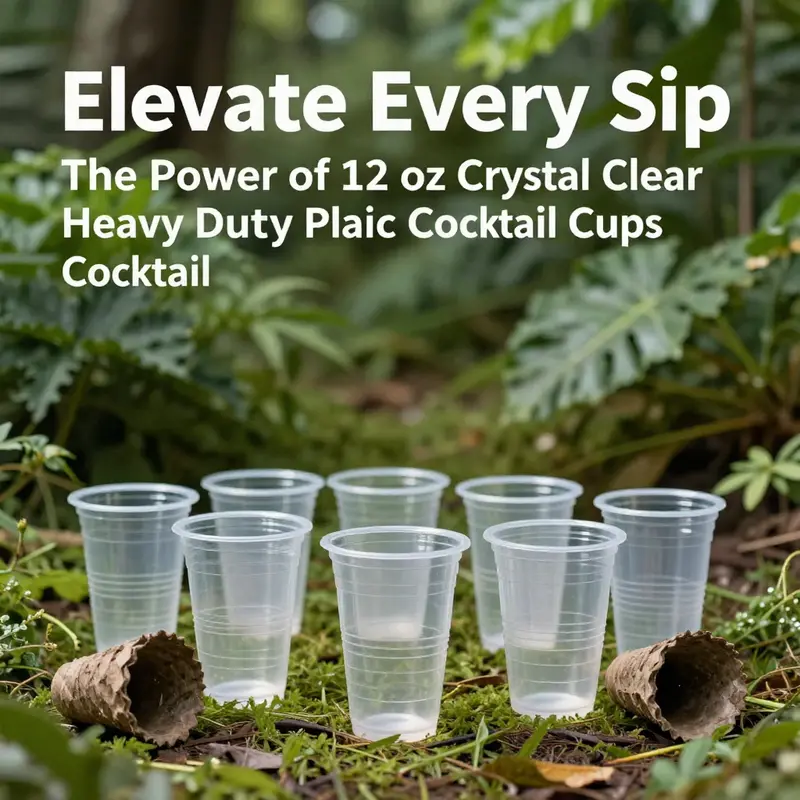
From professional events to intimate gatherings, 12 oz crystal clear heavy-duty plastic cocktail cups are everywhere. They offer a nearly invisible profile that lets the drink take center stage while they stand up to the rough handling of a busy service. The combination of clarity and strength makes them a go-to option for bartenders who want to showcase color layers, fruit garnishes, or layered cocktails without sacrificing durability. Yet the appeal of a perfectly clear, sturdy cup comes with a parallel set of responsibilities. The same properties that keep beverages looking pristine also tie these cups to a complex set of environmental questions about how they are produced, used, and disposed of after the last toast.
Most of these cups are molded from PET, a polymer prized for its clarity, impact resistance, and relative lightness. PET is marked with the recycling symbol 1, a cue that many municipalities recognize as recyclable, though system performance remains highly variable. The same features that preserve a drink’s sparkle also shape its fate after use. While some cups can be reused in controlled settings, many are designed for single-use service, making them a frequent feature in global hospitality and event operations. The environmental footprint of PET depends on more than chemistry; it depends on whether the post-consumer material is recovered, sorted, and reprocessed into a new resin that meets quality requirements for fresh packaging.
Across regions, recycling rates for PET are uneven, and single-use cups face a similar uphill climb. In the United States, EPA data for 2023 show around 30 percent of PET bottles were recycled, a benchmark that reveals substantial opportunity for improvement. Cups from the same family of materials face additional hurdles, including small size, food residues, and the inherent challenges of recovering used items from crowded venues. When cups escape the recycling stream and end up in landfills or as litter, their plastic content can persist for centuries, gradually fragmenting but rarely vanishing. The production side compounds the footprint: virgin PET is derived from fossil fuels, and the process consumes energy and emits greenhouse gases that accumulate with scale. The result is a carbon narrative that accompanies every gathering where these cups go from tap to trash.
End-of-life outcomes are also shaped by design. A cup engineered for strong impact resistance and long service life may resist crushing when ice rattles inside, but that same durability can hinder recycling if the materials are not easily separated and processed. Sorting facilities depend on correct labeling, clean streams, and consistent resin identification to keep PET from being downcycled into lower-value products. Contamination from residues or toppings can suppress quality in reprocessing and increase the likelihood of disposal in landfills. For this reason, a practical step like rinsing before disposal can play a larger role than many realize, especially in events where guests are hurried and bins are not always properly managed. Even with good intentions, the realities of catering, banquets, and festivals create imperfect waste streams that challenge the ideal of a fully circular system.
Alternatives exist along a spectrum rather than as a single fix. Biodegradable options, often plant-based, promise to reduce some end-of-life burdens. Yet many require industrial composting conditions that are not widely available in municipal programs, and they may not perform well in mixed waste streams. Other routes explore advanced PET formulations or blends designed to break down more readily under controlled conditions. These approaches are not magic bullets; they need complementary infrastructure, clear labeling, and reliable collection to deliver meaningful impact. The broader lesson is that sustainability is not a tech trick but a system design problem that rewards consistent thinking across product design, production, and post-use care.
Reuse and returnable models deserve attention, especially for venues with stable logistics. Reusable cups can dramatically reduce waste when paired with durable dishwashing capabilities, traceable sanitation, and disciplined handling. But the economics change with scale: initial capital, storage space, and the labor required for washing must be factored in. The shift from single-use to reuse often also requires changes in service flow, staff training, and customer expectations. Even so, the potential to avoid a large portion of plastic waste is real, and it pushes businesses toward a longer horizon where product life and waste reduction go hand in hand.
Brand strategy and packaging policy intersect in meaningful ways. Companies that invest in packaging innovations that fit existing recycling streams, use simpler resins, and provide transparent labeling are more likely to contribute to a more sustainable system. The conversation about sustainability increasingly centers on circularity: designing products that stay within material loops, enabling high-quality recycling, and enabling reuse where feasible. The visuals, clarity, and perceived premium feel of plushly transparent cups can be aligned with environmental narratives if accompanied by robust waste management, clear disposal guidance, and commitments to continuous improvement. The synergy between appearance and responsibility is a practical path for event planners and suppliers who want to deliver both style and stewardship.
To illustrate how sustainable thinking translates into real-world choices, consider options that extend beyond standard single-use glassware. For brands seeking alternatives that balance function and environmental responsibility, the concept of an eco-friendly printed-logo cold beverage cup with lid demonstrates how design can signal care for the planet while preserving performance. This example shows that there is room to experiment with aesthetics and messaging without sacrificing practicality. For readers curious about similar options, see this model as a stepping stone toward more sustainable practice and as a reminder that the visual appeal of a product can be aligned with its environmental narrative. eco-friendly-printed-logo-cold-beverage-cup-paper-cup-with-lid.
Beyond individual choices, the broader waste landscape demands smarter systems. PET cups, even when accepted for recycling, rely on a functioning network of collectors, sorters, and reprocessors to reclaim the material and return it to the market in a form suitable for new products. The effectiveness of that network varies by city, region, and the availability of end markets for recycled resin. The numbers can be discouraging, but they also reveal a roadmap: invest in better infrastructure, improve consumer education on proper disposal, and align incentives with real recycling outcomes. The goal is to minimize reliance on virgin resin by maximizing the yield and quality of recovered PET across the entire supply chain.
Policy and industry shifts can catalyze the changes needed. Municipal regulations that encourage standard labeling, support separate streams for plastics, and fund local recycling facilities help create a favorable environment for circularity. Manufacturers, retailers, and venues alike benefit from harmonized guidelines that reduce confusion for consumers and improve processing efficiency. In practice, the charge for event organizers is clear: plan for waste reduction from the outset, partner with suppliers who prioritize recyclability, and design experiences that guide guests toward responsible disposal. Small choices, from cup selection to bin placement, collectively advance a broader movement toward sustainable hospitality.
Staying current with the evolving science and policy landscape matters. The data on PET recycling is complex and regionally uneven, but the trajectory is toward easier, cleaner recovery and higher-quality recycled resin. The important takeaway for professionals who plan events or manage beverage service is to pursue reusable options where feasible, to support packaging innovations that fit recycling infrastructure, and to communicate a transparent environmental narrative that guests can trust. For readers seeking a structured introduction to how plastics are recovered and reprocessed, the Plastics Industry Association’s Recycling Resource Center provides a solid starting point for understanding what makes true circularity possible and where improvements matter most. As the dialogue continues, the shimmering clarity of these cups can still symbolize environmental responsibility when backed by clear action and continuous improvement. External resources: https://www.plasticsindustry.org/recycling/
Final thoughts
In conclusion, 12 oz crystal clear heavy duty plastic cocktail cups are not only a practical choice for beverage presentation but also enhance the aesthetic appeal of any drink served. Their durable construction and versatility make them suitable for various settings, from bustling restaurants to outdoor events. As market trends shift towards sustainability, investing in these cups aligns with both consumer preferences and environmental responsibility. Choosing high-quality disposable drinkware reflects a commitment to quality service and brand integrity.