
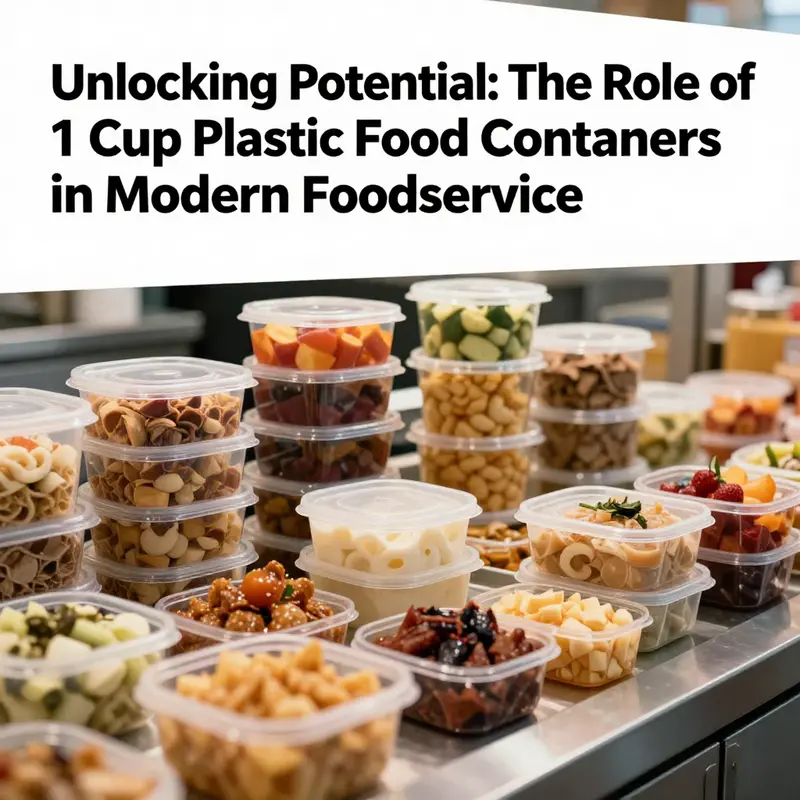
In today’s dynamic food industry, the choice of packaging can significantly impact operational efficiency and customer satisfaction. 1 cup plastic food containers emerge as crucial elements for many food service businesses including bubble tea shops, restaurants, food trucks, catering services, event planners, and corporate procurement teams. These containers not only provide exemplary convenience and practicality but also ensure safety and freshness for a wide array of food items. This article delves into the versatile benefits of 1 cup plastic food containers, the customization opportunities they offer for branding, and their sustainability features, offering insights for stakeholders looking to optimize their food service processes.
Small Vessel, Broad Impact: The Versatility of 1-Cup Plastic Food Containers in Kitchens and Beyond
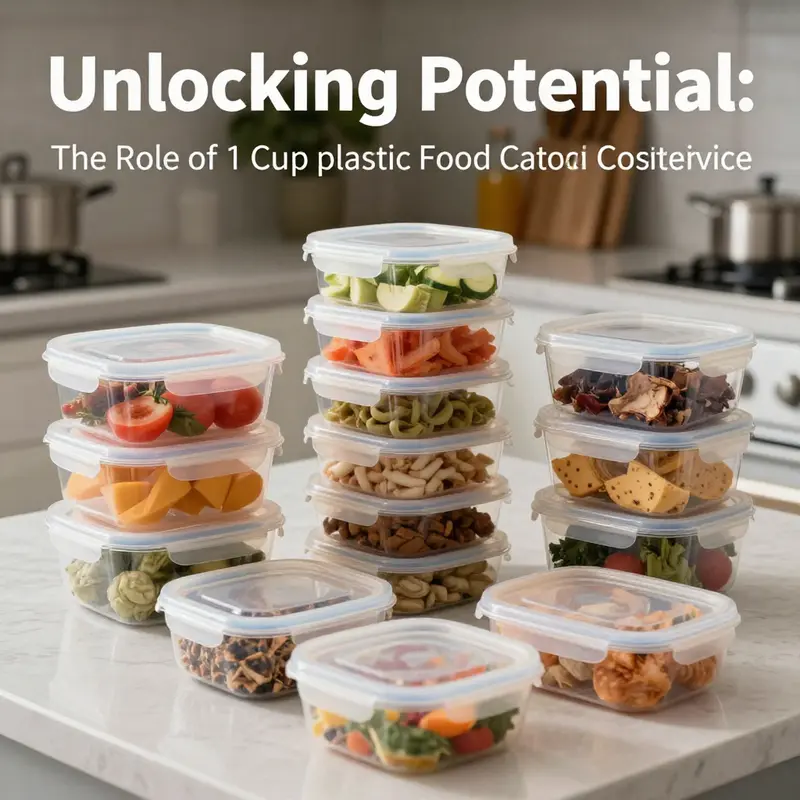
In the rhythm of daily kitchens and the choreography of professional food service, a small, steadfast tool quietly shapes outcomes more than its size would suggest: the 1-cup plastic food container. Its ubiquity is not merely a matter of convenience; it is a practical answer to the modern demand for portion control, efficient storage, and reliable presentation. This chapter follows a thread from home kitchen routines to high-volume catering, revealing how a compact, well-designed vessel can influence menu planning, inventory management, and even customer experience. It invites readers to see beyond the container’s exterior—its smooth edges, its hinged lids, its stackable silhouette—and consider the philosophy of everyday packaging that makes healthy eating, mindful buying, and responsible waste management feasible day after day.
The appeal of a 1-cup container begins with its size. One cup, roughly 240 milliliters, fits a standard single-serve portion with enough space to accommodate variations in density, moisture, and texture. For meal prepping, this size becomes a modular unit: a precise, portable portion that can be combined with multiple other units to build a day’s or a week’s worth of meals. In a home kitchen, it becomes a way to separate components—protein from starch, a sauce from its accompanying grain—so flavors remain distinct and textures stay intact until the moment of consumption. In a professional setting, the same unit scales into a robust system for batch prepping and service: a predictable, repeatable portion that supports consistent plating, predictable costs, and easier inventory planning. The idea of modular portions is not merely about controlling calories or quantities; it is about creating a framework for precision that reduces waste and supports healthier eating patterns.
Storage behavior is another pillar in the container’s utility. The design—compact, stackable, and often transparent—transforms how people approach refrigeration and freezer storage. Stackability matters because it translates into real-world space savings. A pantry or fridge crowded with mismatched containers can undermine even the best meal-prepping intentions. The 1-cup form, with its uniform dimensions, offers a clean, physical language for organization. When lids are airtight or leak-proof, leftovers stay fresher longer, which diminishes the impulse to discard food that could still be enjoyed later. The practical benefit is clear: more reliable preservation of flavor and texture, less spoilage, and improved planning that reduces the chance of overordering or overbuying ingredients.
Material science sits at the heart of these practical benefits. The majority of 1-cup containers in everyday use are crafted from polypropylene, a durable plastic designated by the recycling code #5. PP is prized for its balance of rigidity and impact resistance. It holds up under the knocks of daily handling, whether it’s being shoved into a crowded fridge, dropped in a rush, or taken to a picnic. When temperatures rise, PP’s heat resistance helps maintain the container’s shape and the integrity of its contents, making it compatible with cold storage and gentle reheating in many cases. Yet, as with any material used for food contact, the specifics matter. Manufacturer guidelines vary, and heat, pressure, and acidity can interact differently with plastics. The core message is not to assume a universal rule but to confirm temperature limits and usage directions provided by the maker. In practice, choosing high-quality, BPA-free plastics is a pragmatic stance that aligns safety with long-term value, since these materials tend to offer superior durability and reuse potential in everyday use.
Beyond the material and the geometry, the lids deserve particular attention. A dependable seal is what preserves freshness and prevents spills during transport and handling. In a busy kitchen, accidents are an everyday risk; an airtight or well-sealing lid reduces the likelihood of sauce splashes on prep counters, tables, or clothing. For catering and events, leak-proof performance becomes a small but essential part of ensuring a professional presentation and a smooth guest experience. The sentiment extends to the box’s interior ergonomics: smooth rims that are easy to clean, surfaces that resist staining, and compatibility with a standard dishwasher cycle. These features, when combined, create a container that does more than hold food. It behaves like a compact, reliable module that respects the cook’s time and the guest’s expectations.
The advantages extend into safety and convenience. Lightweight and shatterproof, plastic containers offer a safer alternative to glass, especially in households with children or for outdoor activities where the risk of breakage is higher. This practical safety aspect translates into fewer accidents and cleaner kitchens, which is particularly valuable in fast-paced environments like catering or school meal programs. Convenience, meanwhile, is not merely about portability. Microwave-safe and freezer-safe capabilities, when clearly labeled, empower users to move seamlessly from storage to reheating, a flow that reinforces efficient meal planning. For people juggling work, family life, and nutrition, these attributes turn a simple container into a facilitator of healthier choices and less daily stress. The result is not just food storage; it is a system that supports disciplined meal planning, portion control, and routine healthy eating.
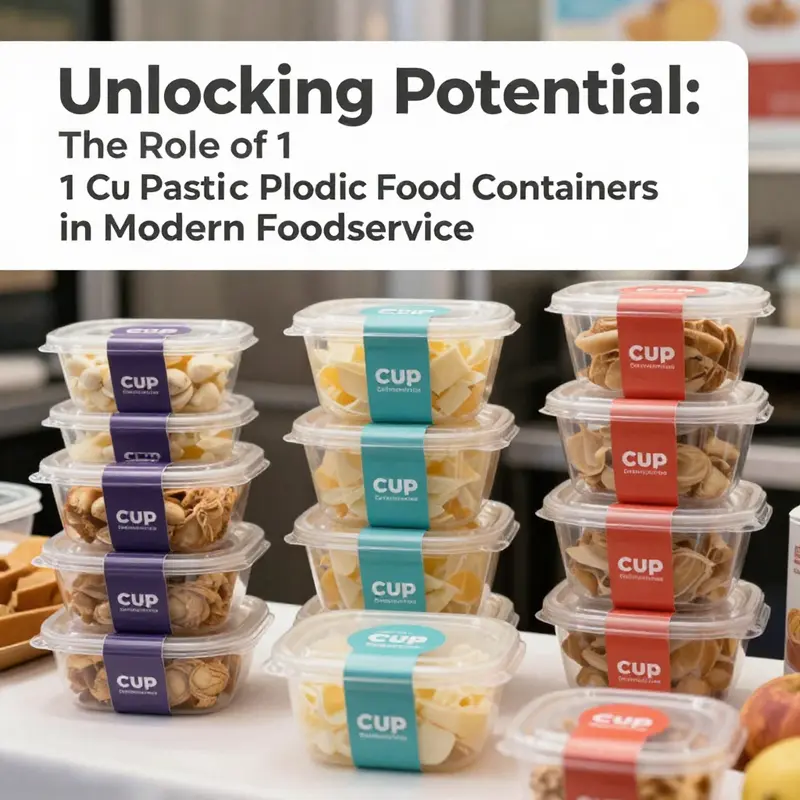
As businesses explore these containers for branding and service enhancement, customization becomes a strategic lever. Companies that supply 1-cup containers often offer options to add branding, logos, or labels, enabling a cohesive visual identity across a vendor’s packaging ecosystem. This capability can be especially impactful in hospitality and events where a consistent, professional look reinforces brand recognition and trust. Yet even without customization, the containers serve a broader marketing function: they shape the customer’s perception of portion control, care, and quality. When a guest encounters a neatly packaged, well-sealed single-serving portion, the impression is of thoughtful service and predictable reliability. In lunch programs, student meals, or corporate catering, these subtle cues contribute to customer satisfaction and repeat business by signaling that the provider values consistency and practicality as much as flavor.
The conversation about 1-cup containers would be incomplete without acknowledging questions about sustainability and long-term value. Reuse becomes a central theme when a container is designed for multiple cycles of storage and reheating. Polypropylene, as a recyclable plastic, can be repurposed or recycled at end of life, depending on local programs and facilities. The conversation around recycling codes, municipal capabilities, and consumer participation matters, because the most sustainable choice is guided by availability and behavior as much as by material chemistry. In households and businesses alike, the decision to reuse versus recycle hinges on context: the ease of cleaning, the durability of the container after repeated use, and the logistics of returning or disposing of soiled containers. Smart design and responsible disposal work together to close the loop, reducing the overall footprint of daily food packaging. This is the practical dimension of sustainability, not a theoretical aspiration, and it comes to life in everyday routines—from separating containers for the dishwasher to choosing a recycling bin that actually serves the local system.
Within the broader ecosystem of food packaging, a 1-cup container sits in a marketplace that values both performance and perception. The compatibility of PP with existing dishwashers, microwaves, and freezers means it can fit into current kitchen workflows with minimal friction. For food-service operators, these containers are a reliable backbone that supports batch cooking, portioning, and timely service. For households, they offer a simple gateway to more organized kitchens and healthier eating patterns, especially when kitchen time is at a premium. Still, the decision to use plastic should be made with awareness of the container’s life cycle. Temperature, exposure to acidic foods, and repeated cycles of use can influence long-term integrity. Consumers who prioritize longevity and safety often gravitate toward higher-quality, BPA-free plastics and adhere to recommended guidelines for reuse and cleaning, which in turn sustains both safety and value over months or even years.
The supply side of this story is as practical as the consumer-facing benefits. In bulk procurement, suppliers often present options that range from simple, stackable designs to more complex configurations that support branding and tamper-evident packaging. For restaurant and event planners, this means choosing a system that scales with demand—containers that nest efficiently, lids that seal reliably, and packaging solutions that simplify inventory management. MOQs, while a routine consideration in business purchases, are a reminder that these items are not one-off purchases but components of a broader service model. When a buyer plans for peak seasons, promotions, or catering events, the predictability of a 1-cup unit helps stabilize costs, streamline procurement, and reduce last-minute substitutions that can disrupt service quality. In short, the container’s value is amplified when it becomes part of a thoughtfully designed packaging strategy that aligns with a kitchen’s workflow and a business’s sustainability commitments.
The concept of versatility intersects with a broader conversation about packaging choices in modern food service. In a world where customers are increasingly conscious of how their meals are packaged, the 1-cup container offers a balance between practicality and responsibility. It is small enough to manage yet robust enough to handle a range of foods—from soups and sauces to yogurt, dips, or dessert portions. It can be used in homes for personal meal plans or in larger organizations for standardized servings. And it stands alongside other packaging formats as a teachable moment for customers and staff about portion control, storage best practices, and the importance of choosing materials that are safe, durable, and recyclable where infrastructure supports it. The result is a more coherent approach to meal preparation and service: one that respects the integrity of the food, the convenience of the user, and the environmental considerations that haunt modern consumption.
To bring this discussion into the daily practice of both home cooks and professional operators, consider the following perspective: the 1-cup container is not merely a vessel; it is a decision framework. It asks: How will I store this ingredient? How will I portion and present this dish? How will I reheat and reuse this component without compromising texture or flavor? How does the chosen material align with safety guidelines and local recycling capabilities? The answers form a practical guide to better meal management. They shape habits that lead to less waste, more predictable costs, and a more reliable dining experience for guests and family alike. In this sense, a seemingly simple container embodies a broader philosophy of deliberate, responsible, and efficient food handling. It makes the act of cooking, storing, and serving more deliberate and more enjoyable, turning the routine into a small act of care.
As readers absorb these ideas, a brief reflection on the packaging landscape can illuminate contrasts and reinforce good choices. For those who must evaluate packaging options for different contexts, the question is not only about capacity but about how the packaging performs in real-world use. A 1-cup container should be seen as a modular unit that integrates with colleagues—larger containers for bulk storage, smaller units for sampling, and a lid that brings security and freshness to the mix. The container’s design should respect the realities of busy kitchens, the needs of food safety, and the preferences of guests who value predictability in portion size and reliability in presentation. In this light, the 1-cup unit emerges as a practical, scalable tool that supports consistent service, mindful consumption, and a more organized approach to daily cooking and feeding.
For readers considering how to balance performance with sustainability, the take-away is clear: choose materials with favorable safety profiles, opt for sturdy designs that endure repeated use, and align procurement with local recycling capabilities. The small container can become a case study in how thoughtful packaging choices cascade into better portion control, reduced waste, and more efficient operations. When integrated with clear labeling, user-friendly lids, and a disciplined approach to cleaning and storage, it becomes a cornerstone of a kitchen that values efficiency, safety, and environmental responsibility. The journey from a single cup to a structured, reliable system is subtle but meaningful, illustrating how everyday tools support larger goals in healthful eating, cost control, and sustainable practice.
As this chapter closes its close look at the practicalities and potentials of 1-cup plastic food containers, the broader picture of packaging choice comes into sharper focus. The container is not a neutral placeholder; it is an active decision that shapes how food moves from preparation to plate. The durability, safety, and convenience of these vessels enable kitchens to function more smoothly, while their capacity to support portion-controlled meals can empower healthier eating habits for households and communities. In the realm of business, studios, cafeterias, and event venues, the container’s uniformity and compatibility simplify operations, reduce error margins, and create a dependable standard across menus and services. And in every setting, the story remains the same: a small vessel with a broad reach, one cup at a time, helping people eat well, plan ahead, and manage resources with greater confidence.
For readers who wish to explore related packaging options or to consider the broader spectrum of take-away solutions, a related pathway can offer practical guidance on choosing container types that align with branding, logistics, and sustainability goals. See a take-away packaging option that emphasizes custom branding while maintaining practical performance, such as a disposable takeaway paper cup with custom logo, which can serve as a useful point of comparison for users weighing plastic versus paper-based solutions in everyday service contexts. disposable takeaway paper cup with custom logo.
To ground the discussion in safety and guidelines, it is prudent to consult established authorities on food-contact materials. The U.S. Food and Drug Administration provides official guidelines and considerations for how materials that contact food should be managed, stored, and used to ensure consumer safety. For more detailed information, refer to the FDA’s guidance on food contact materials at the following external resource: https://www.fda.gov/food/food-contact-materials
null
null
Small Vessels, Big Footprints: The Environmental Realities of 1-Cup Plastic Food Containers
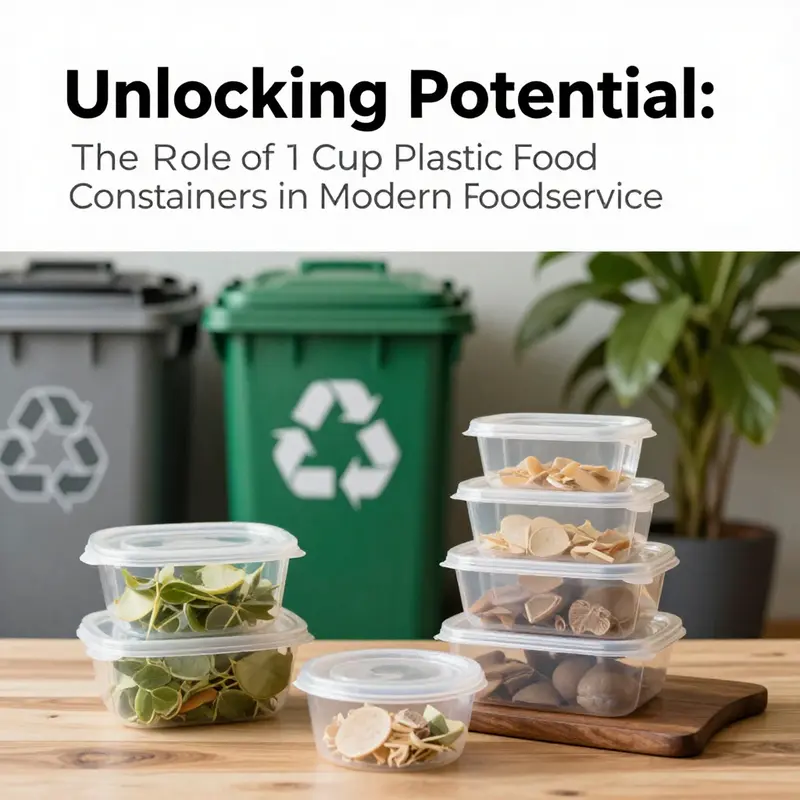
Single-serving plastic cups carry a surprising breadth of environmental implications. Their small size makes them convenient, but the lifecycle of these containers—from resin to disposal—has consequences for resource use, emissions, and waste management. A common material choice is polypropylene (PP), valued for food safety, heat resistance, and general recyclability. Yet additives, manufacturing conditions, and end-of-life options change the safety and performance profile of any given cup. While PP is frequently marketed as BPA-free, the broader plastics landscape raises questions about leachates and other additives under certain use conditions.
Recycling and recovery rates for plastics remain challenging. In many regions, only a modest share of plastic packaging is truly recycled, leaving many cups to end up in landfills or incinerators. This reality motivates designers and policymakers to pursue better labeling, improved recycling streams, and more durable reusables where appropriate. Alternatives such as polystyrene (Styrofoam) can offer cost and lightweight advantages but often come with tougher end-of-life credentials and higher environmental costs.
Beyond PP and PS, the packaging ecosystem is increasingly exploring sustainable options like bagasse, plant-based fibers, or compostable formats. When these are paired with robust end-of-life infrastructure—industrial composting or certified recycling streams—they can help shrink the plastic footprint of take-away packaging. Reusable metal and glass vessels offer another path to lower long-term impact, provided the logistics of cleaning and return are well designed. The ultimate goal is a packaging system that preserves convenience while reducing environmental harm, supported by clear labeling and resilient waste-management partnerships.
Final thoughts
1 cup plastic food containers stand out as vital tools in the food service industry, offering unmatched versatility, branding potential, and environmental responsibility. As the demand for efficient, reliable, and eco-friendly packaging solutions continues to rise, these containers provide businesses with a strategic advantage. By leveraging their benefits, food service providers can enhance operational efficiency, engage customers with branded packaging, and contribute positively to sustainability efforts. Embracing these containers could very well be the next step towards elevating your food service game and ensuring a thriving business.