
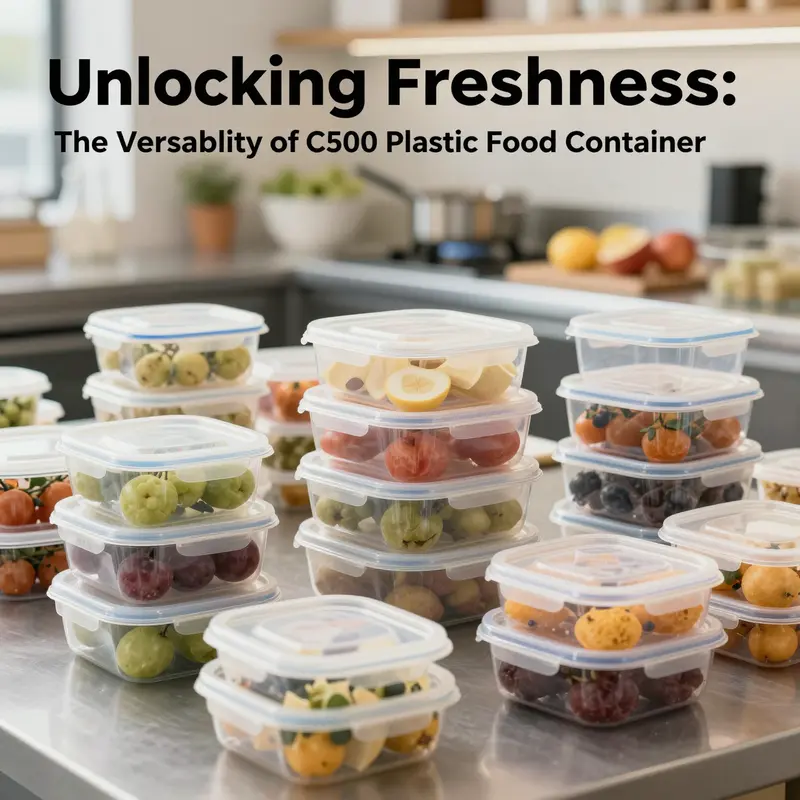
C500 plastic food containers are an essential asset in the food service industry. Whether you operate a bubble tea shop, a restaurant, or a food truck, understanding the full potential of these containers can enhance your efficiency and customer satisfaction. The C500 containers, with their optimal 500ml capacity, offer a blend of portability, durability, and safety. This article delves into the specifications, materials, and diverse applications of C500 containers, showcasing how they meet the needs of businesses while adhering to modern safety standards and environmental considerations. Each chapter will illustrate their relevance to your business, from their design efficiency to their role in maintaining food safety and quality.
C500 Plastic Food Containers: Balancing Capacity, Safety, and Space in Modern Packaging
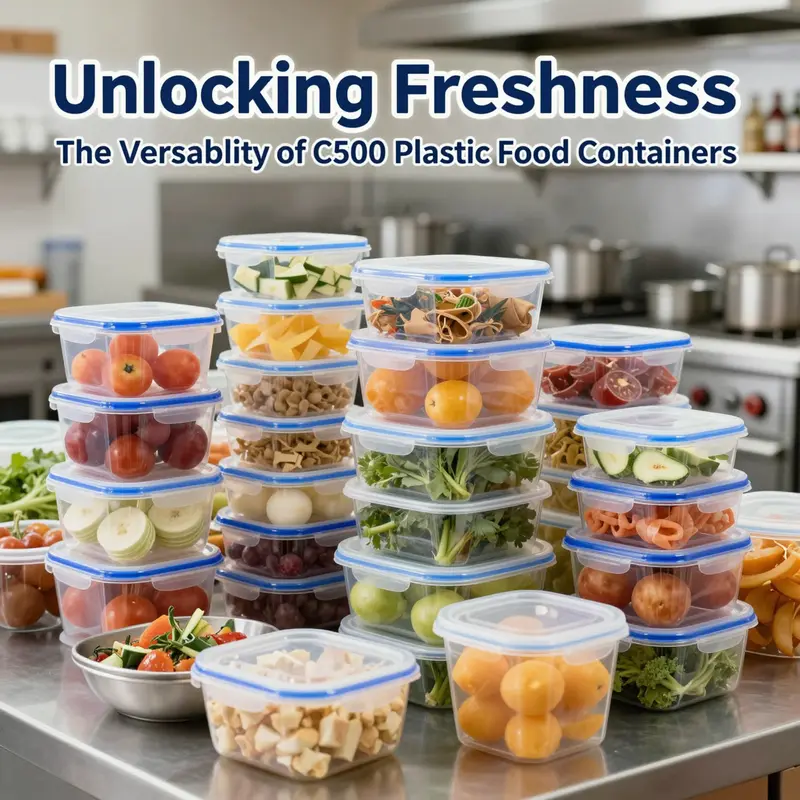
The C500 plastic food container represents a practical balance of capacity, safety, and space management in modern packaging. With a 500-milliliter capacity (about 16.9 fluid ounces), it provides a dependable portion size that suits single-serve meals, soups, sauces, and ready-to-heat items while remaining compact enough for efficient stacking and refrigeration. In busy kitchens and delivery operations, that balance translates into predictable handling, reduced waste, and a streamlined workflow.
At the heart of the C500 design is its capacity. The fixed volume supports precise portion control, easier inventory management, uniform pricing, and straightforward labeling. The rectangular or square footprint is purposefully chosen to maximize shelf and shelf-space utilization, enabling nesting, stable stacking, and compatibility with standardized racks and totes. This geometry helps operators fit more units into cold storage and transport containers without sacrificing performance.
Material choice and safety are tightly coupled with capacity. These containers are commonly molded from food-grade polypropylene (PP), a material prized for its balance of stiffness, chemical resistance, and affordability. Many PP containers marketed as BPA-free align with consumer expectations around packaging safety. While PP can tolerate brief reheating in some cases, it is not designed for high-temperature cooking or long, intense heating. Users should confirm the heat tolerance specified by the manufacturer and avoid using the container for boiling or prolonged high-temperature cooking. This precaution highlights how capacity and material limits together shape safe use.
Certifications and regulatory reassurance form part of the C500 safety posture. FDA compliance and CE conformity are among the common attestations, signaling suitability for contact with food and compliance with relevant health, safety, and environmental expectations. In practice, these marks give buyers confidence that the container will maintain product integrity during storage and transit and meet the regulatory norms of key markets.
Design language emphasizes practicality without losing freshness. The typical form is a snug lid that seals to control moisture and prevent leakage, with geometry optimized for stable stacking in service lines and carriers. Some models offer a collapsible variant or nesting features to minimize storage volume when empty, a benefit in crowded kitchens or commissaries. When coupled with the 500-ml capacity, the result is a compact, robust vessel that travels well from kitchen to consumer table.
In use across food-service and home settings, the C500 container supports a range of workflows. It serves as an everyday vessel for take-away meals, hotel or corporate catering trays, and household meal prep. Its predictable capacity couples with easy handling, efficient reheating where permitted, and straightforward disposal or recycling at the end of its life cycle.
From an environmental and sustainability perspective, the lighter weight of plastic reduces transport emissions, while durability minimizes waste from breakage compared with more fragile materials. Recyclability of polypropylene aligns with many waste-management goals, though effectiveness depends on local infrastructure and proper cleaning before recycling. Contamination and improper disposal can hinder recycling streams, so rinsing residues and following local guidelines helps maximize recovery.
The C500 format also plays a role in branding and customization. Brands can request branded lids, exterior labeling, or sustainability messaging that communicates content and heating instructions without compromising the container’s core performance. OEM/ODM suppliers enable scalable packaging programs that align container design with brand identity while preserving the functional virtues of capacity, safety, and usability.
Finally, procurement considerations matter. Transparent material specifications, verifiable heat-resistance data, and clear documentation of FDA or CE compliance help buyers manage risk and standardize across batches. In mature markets, a standard 500-ml container can anchor a broader packaging strategy that balances cost, performance, regulatory compliance, and environmental responsibility.
In short, the C500 container is more than a simple receptacle. It is a practical tool that embodies the intersection of physics and user experience, designed to support precise portions, secure transport, and responsible packaging within a dynamic food-service ecosystem.
The 500ml Question: Materials, Safety Standards, and Everyday Trust in C500 Plastic Food Containers
The simple act of lifting a C500 plastic food container from a stack of kitchenware feels almost ceremonial. It signals the convergence of practicality and responsibility: a 500-ml vessel designed to hold a portion, travel well, and keep flavors intact, all while navigating the complex landscape of materials science, food safety regulation, and consumer expectations. In a world where packaging decisions ripple through supply chains and waste streams, the C500 container is more than a convenient unit of measure. It embodies a balance between lightweight engineering and the far-reaching obligations of safeguarding what we eat. This balance rests on three core pillars: the materials themselves, the safety standards that govern their use, and the design choices that enable performance across refrigeration, freezing, reheating, and repeated handling. To understand why a 500-ml container can be trusted with food, we must trace the story from polymer chemistry to regulatory scrutiny, and then to the everyday practices that shape its acceptance in homes and workplaces alike. The journey begins with the materials—the raw but rigorously specified family of plastics that most C500 containers rely on—each selected for a particular set of strengths and limits that align with typical food service workflows and consumer expectations for safety and convenience.
At the heart of the material story are three polymers that frequently appear in C500 containers: PET, HDPE, and PP. Each brings distinct characteristics that guide where and how the container is best used. PET, or polyethylene terephthalate, is prized for its clarity and lightness, which makes it ideal for applications where visibility of the contents matters and weight must be kept to a minimum. Its barrier properties against moisture and gases help preserve freshness in the short term, which is a practical boon for take-out meals and ready-to-serve foods that pass through multiple hands and stages of storage. Yet PET has limitations. Its performance can deteriorate under higher temperatures or prolonged heating, and repeated heating can promote chemical changes that may affect flavor or safety if the container is misused. For this reason, PET containers in the C500 family are typically recommended for cold storage and reheating only when the design explicitly permits it, and they are not intended for high-temperature cooking. The emphasis is on keeping foods safe and unaltered under normal, household reheating scenarios, rather than enabling live cooking in the container itself. In other words, PET is a reliable workhorse for cold or cool-to-warm applications, but it requires discipline in how it is heated.
HDPE, or high-density polyethylene, offers a somewhat different balance. It is renowned for durability, chemical resistance, and a robust barrier against light and air when used in its opaque form. The opacity of HDPE is not just an aesthetic feature; it helps shield contents from photo-degradation and helps extend shelf life in storage and transport. Importantly, HDPE is widely regarded as BPA-free in many consumer applications, an attribute that has become a meaningful marker of safety and trust for many users. HDPE containers are also highly recyclable, which aligns with growing consumer and regulatory emphasis on end-of-life management. Depending on the specific container design, HDPE can be microwave-safe, though this, too, hinges on the product’s engineering. The key takeaway is that HDPE provides a sturdy, reliable option for longer-term storage and for foods that require a bit more ruggedness in handling and stacking, without compromising safety when used within the boundaries set by the manufacturer. The material’s ability to resist ultraviolet degradation further supports its suitability for certain display and storage environments where light exposure is unavoidable.
Polypropylene, or PP, sits at the intersection of heat tolerance and durability. PP stands out for its excellent fatigue resistance, a property that translates into longer useful life for reusable or multi-use containers. It also delivers strong chemical and moisture resistance and, crucially, higher temperature stability than PET. This makes PP particularly well-suited for containers that are intended to withstand microwave heating, freezer storage, and repeated use. PP’s thermal resilience allows it to cope with the temperature swings that kitchens often impose on storage containers, making it a common choice for C500 variants designed for reheating or for use in practical food preparation workflows where the container is expected to endure frequent handling. The trade-off for this durability is that PP can be bulkier or more opaque than PET in some designs, but it gains a favorable position in the reuse culture that many kitchens and commercial operations are trying to cultivate.
These materials do not exist in isolation. They come with a framework of safety regulations that translate raw material properties into use guidelines. In many regions, food-contact materials must meet what is broadly understood as “food-grade” status. That label is more than a marketing claim; it signifies that the material and the finished product have been tested for the potential transfer of undesirable substances to food under normal conditions of use. Regulatory bodies—such as the U.S. Food and Drug Administration (FDA) and the European Food Safety Authority (EFSA)—establish and enforce technical criteria that cover composition, additive migration, and permissible limits for contact with food. The interplay between a polymer’s chemistry and these migration limits is where science informs safety. For instance, while PET’s barrier properties are advantageous for storage, repeated heating or exposure to very high temperatures must be avoided unless the container’s design is expressly rated for such use. In contrast, PP’s higher heat tolerance broadens the range of permissible uses, yet it, too, must be vetted within the approved list of applications. The net effect is that each C500 container is matched to a set of intended uses—refrigeration, freezing, reheating, or a combination thereof—that align with the material’s safe operating window.
A practical aspect of safety that deserves emphasis is the labeling and resin-code system that many users encounter on packaging. Where PET is commonly identified with the resin code #1, HDPE with #2, and PP with #5, these codes serve as quick reference indicators for recycling streams and for consumer awareness about heat exposure and reuse potential. The codes themselves do not guarantee safety in every scenario, but they do help buyers and users navigate the broader landscape of material compatibility with food, wash cycles, and end-of-life disposal. In everyday practice, the codes become a practical shorthand: if a container bears the #1 or #2 mark, it is typically understood to be suitable for certain uses but not for high-heat cooking in the microwave; if it carries #5, it often points to a polypropylene design with reinforced heat tolerance, while still requiring attention to the specific product instructions. In other words, the codes function as a bridge between the material’s intrinsic properties and the consumer’s intended behavior, reminding us that safety is a joint responsibility between the manufacturer’s design and the user’s adherence to guidelines.
The design of C500 containers also reflects a deliberate negotiation with real-world needs. The choice of rectangular or square profiles, for instance, is not accidental. These shapes maximize stacking efficiency and optimize cabinet and refrigerator space—a practical advantage in busy kitchens and warehouses where space is a premium. A rectangular form also tends to lean toward better utilization of internal volume for seaming and sealing, which in turn supports leak resistance and containment during transport. A screw-top lid or other secure closure further reinforces containment integrity for liquids or semi-solid contents, a feature particularly valuable in meal prep and catering contexts where spills would otherwise lead to waste and waste-related costs. Yet design is not only about containment. It also concerns user experience: a lid that is easy to open and reseal, compatibility with consistent heat distribution, and resilience to repeated use in the case of reusable variants. These considerations influence not just safety but operational efficiency, reducing the likelihood of mishandling, accidental spills, and the need for repeated replacements.
From a safety governance perspective, the selection of material and the allowed use conditions reflect a layered approach. First, the manufacturer confirms the resin type and confirms that the finished container has undergone testing appropriate for its intended food-contact use. Second, the product labeling communicates appropriate usage boundaries—whether it is suitable for microwave reheating, freezer storage, or both. Third, the packaging communicates disposal or recycling instructions, guiding users toward a more sustainable end-of-life pathway. Taken together, these layers create a safety envelope around the C500 container that spans procurement, daily handling, and disposal, while acknowledging the trade-offs that different materials present. The result is a container that is small in size but large in responsibility: it must hold, protect, and preserve, while also aligning with evolving standards around heat exposure, chemical migration, and environmental impact.
As the market for C500 containers has matured, so too has awareness about the environmental implications of single-use plastics and the push toward more sustainable packaging ecosystems. In this context, the recyclability profile of each material matters. HDPE, with its robust recyclability and resistance to UV degradation, often emerges as a preferred option for longer-term storage and for products designed for repeated use where permissible. PP, with its higher heat tolerance, offers a compelling case for reusable containers in home and professional kitchens, provided that there is an established reuse protocol and proper cleaning. PET, despite its lightness and clarity, remains a strong choice for short-term storage and single-use applications, where the benefits of a transparent, transport-friendly container are most valued. Each material’s environmental calculus—recyclability rates, energy input for processing, and end-of-life handling—interlocks with consumer behavior to shape the container’s lifecycle footprint. Manufacturers increasingly seek to present a coherent story that frames these trade-offs, highlighting where frames of use are clearly defined and where innovation might shift the balance toward reuse, recyclability, or alternative materials with lower environmental footprints.
The chapter would be incomplete without acknowledging the broader context in which C500 containers operate. In retail and food-service settings, these containers must perform within strict hygiene regimes, meet temperature demands of the supply chain, and offer predictable behavior across a range of foods—from delicate salads to hearty stews. The interaction among material choice, lid design, and closure mechanisms determines leak resistance and durability under transport. The nuanced interplay among these factors explains why a seemingly simple product has to be designed with such precision. It also sheds light on the practical limits of each material. PET’s lightness can be a disadvantage when the container must withstand rough handling, while PP’s heat tolerance demands considerations about chemical compatibility with particular additives or marinades that may be present in the contents. HDPE’s opacity, while protective against light exposure for certain foods, might preclude some merchandising strategies where product visibility is a selling point. These trade-offs are not signs of weakness but rather of mature engineering that recognizes the varied environments in which C500 containers operate.
In practice, consumers and professionals alike benefit when they understand these material dynamics. Knowing that PET is best avoided for high-temperature reheating helps prevent taste and safety issues. Recognizing that PP provides a more robust path for reheating and reuse helps organizations implement safer, more sustainable workflows. Observing that HDPE can offer reliable long-term storage and strong chemical resistance clarifies decisions about preserving flavor and preventing contamination. The upshot is not a prescription for one universally “best” material, but a framework for selecting the right container for the right task, guided by the intended use, safety guidelines, and the environmental values of the user or institution. This nuance is essential in professional settings where meal-prep services, cafeterias, and catering operations rely on consistent performance across dozens or hundreds of containers per day, and where a small failure can ripple into cost, risk, and reputation.
For readers who want to explore related packaging considerations beyond plastic, one relevant avenue is to consider alternatives that sit outside the traditional polymer family. Packaging ecosystems increasingly include kraft paper options and other fiber-based solutions that offer different sustainability and performance profiles. The idea is not to dismiss plastic outright but to recognize that a robust packaging strategy may blend multiple materials, each chosen for its strengths and aligned with safety and environmental goals. See, for example, the disposable octagonal box for kraft paper packaging, which showcases how paper-based packaging can complement plastic in a broader packaging strategy. disposable-octagonal-box-for-kraft-paper-packaging
In closing, the C500 plastic food container sits at a crossroads where material science, safety regulation, and everyday utility converge. PET offers clarity and lightness for cool or short-term uses but requires careful handling when heat is involved. HDPE provides strength, durability, and a versatile safety profile with broad recyclability, while PP delivers heat tolerance and multi-use potential that suits households and professional kitchens aiming for reuse. Safety standards anchor these choices, translating polymer properties into real-world guidelines that protect consumers and support responsible disposal. The design decisions—size, shape, and closure—transform these materials into reliable vessels capable of preserving flavors and textures across the journey from kitchen to table and back into storage or disposal. As packaging evolves, the C500 family will continue to reflect how societies balance convenience, safety, and sustainability in the small, daily moments when a 500-ml container becomes the trusted container of choice for countless meals and memories. For researchers, designers, and practitioners, the story of the C500 container is a reminder that even ordinary packaging carries a complex, consequential set of decisions that shape how we eat, how we store, and how we care for the world around us.
External reference: Understanding C500 Food Containers on Alibaba: https://www.alibaba.com/product-detail/Understanding-C500-Food-Containers_1600543987482.html
C500 Plastic Food Containers: Strategic Use, Reuse, and Space-Smart Design for Modern Kitchens
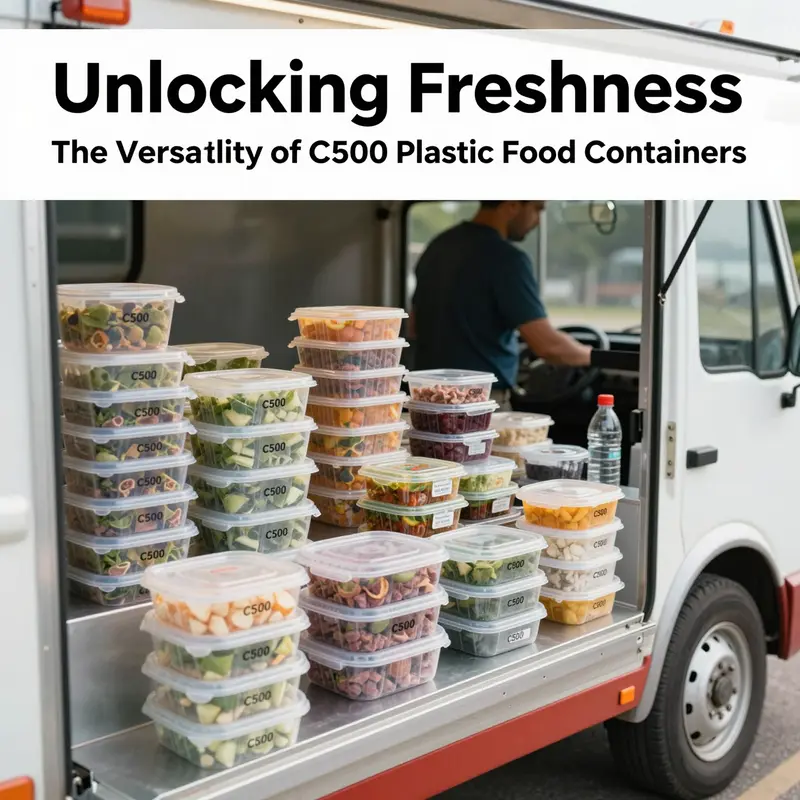
C500 plastic food containers have emerged as a quiet backbone of contemporary food handling, storage, and meal preparation. Their defining feature—the 500-milliliter capacity—strikes a practical balance between portion control and versatility. In kitchens, households, and retail settings, these containers function as compact vessels that enable pre-portioned servings, easy inventory tracking, and dependable protection from moisture, air, and contaminants. The materials used are food-grade plastics designed to meet safety standards, with clear expectations that some models support reheating in a microwave while others are intended only for reheating leftovers, not for high-temperature cooking. This distinction matters for operators who measure throughput and for households aiming to maintain flavor integrity without risking safety hazards. What makes the C500 family particularly compelling is not only its basic utility but the way its shape and durability translate into long-term performance across diverse environments.
The design ethos behind C500 containers is anchored in robustness married to lightness. They are engineered for long-term reuse, a shift that resonates with growing commitments to waste reduction and resource efficiency. In a restaurant line or a busy catering operation, the ability to reuse containers without compromising hygiene or structural integrity reduces the volume of disposable bags and wraps that would otherwise be consumed daily. In practice, a well-chosen stackable, 500-ml rectangular container becomes a workhorse, supporting tasks from ingredient storage and meal prep to cold-chain handling and finished-dish portioning. The rectangular form, in particular, is more than a matter of aesthetics. It optimizes space in refrigerators, pantries, and cold storage cages, enabling tighter packing and easier access during high-velocity service or batch processing. This alignment of form and function is a core driver of operational efficiency, often translating into measurable time savings during shift changes or in retail backrooms where space is at a premium.
From a safety perspective, the material composition is designed to be inert with common food items, resisting staining and odor absorption over repeated cycles. Yet, as with any reusable plastic standard, the cycle life depends on careful handling, thorough cleaning, and appropriate use in line with manufacturer and regulatory recommendations. In many cases, these containers are compatible with dishwashers or high-temperature sanitization processes, but such compatibility must be verified for each model because repeated exposure to heat and detergents can alter a seal, a lid, or the container’s wall strength. In practical terms, this means that a food service operation benefits from a standardized cleaning and inspection protocol: check the seal integrity, confirm the absence of cracks or clouding after multiple uses, and replace any units that show signs of wear before they compromise food safety or storage performance.
The practical implications extend into the realm of microwaving. Heating guidelines are nuanced: while some C500 designs permit reheating of prepared dishes, often only at lower power levels and for short durations, high-temperature cooking should be avoided. Operators who rely on heated offerings need to communicate clearly with both kitchen staff and guests about the safe reheating limits of each container type. Households, too, benefit from consistent messaging—micro via note cards or labeling—that reinforces how to reheat without deforming the container or affecting the food’s texture. In aggregate, clear guidance helps preserve the container’s integrity over repeated uses and sustains the consumer’s confidence in both safety and convenience.
A salient aspect of C500 containers is their balance between durability and economy. The initial purchase may appear costlier than single-use options, but the payoff emerges through continued reuse. The cumulative savings accrue not just from reduced packaging purchases but also from reduced waste disposal costs and the labor saved by streamlined portioning and organization. In commercial kitchens, this translates to fewer interruptions caused by supply shortages of disposable containers and less time spent on packaging tasks. In retail environments, stable, stackable containers simplify stock rotation and merchandising, while in homes, meal-prep routines become smoother as containers become a familiar, dependable tool rather than a disposable add-on.
The ergonomic shape further contributes to efficiency. A well-designed container feels comfortable in the hand, resists slipping from tongs or gloved fingers, and nests securely with its lid. The rectangular geometry is particularly effective because it aligns with common storage architectures. In refrigerators and freezers, vertical stacking and door-shelf organization benefit from uniform dimensions. The effect is a chain reaction: better handling reduces breakage risk, clearer labeling speeds up picking and portioning, and tighter storage minimizes energy use by keeping items colder with less air exchange. For businesses with limited cold storage, the ability to stack efficiently means more SKUs per cubic meter, which can enhance menu variety without expanding physical footprint.
Sustainability remains a central thread in the value proposition of C500 containers. Their emphasis on reuse aligns with broader efforts to minimize single-use plastics and to shift toward packaging systems that favor durability and modularity. When a venue commits to a reusable container program, it often accompanies process adaptations—defined cleaning cycles, intake and return logistics, and staff training—that collectively reduce overall waste streams. The environmental impact, in turn, extends to the supply chain: fewer raw material inflows, fewer everyday packaging wastes reaching landfills, and a tangible signal to customers about a brand’s commitment to responsible practices. Of course, the lifecycle benefits hinge on a culture of reuse rather than a mixed approach where containers are treated as single-use items after a single event. In practice, successful adoption depends on clear protocols that guarantee hygiene between uses, reliable return cycles, and transparent communication with customers about when and how to reuse containers.
An important consideration in selecting C500 containers is compatibility with the specific operational context. In commercial kitchens, the ability to store, portion, and transport meals without cross-contamination is critical. The containers must seal well, resist leakage, and tolerate the temperature range typical of prepared foods from chill to reheat. In retail settings, where products may be put back on shelf after purchase or stored on temperature-controlled displays, rigidity and snap-fit lids become essential to maintaining freshness and preventing spills. In households, the emphasis shifts toward intuitive use, easy cleaning, and reliable performance across a week’s worth of meals. Across these contexts, the consistent thread is that design efficiency—how the container fits into the user’s workflow—drives adoption and long-term value.
The notion of design efficiency extends beyond the container’s walls. It includes the packaging ecosystem: lids that seal securely, labels or embossing that stay legible after repeated washes, and optional accessories that enhance usability without compromising recyclability. A well-considered lid design, for instance, supports not just leakage protection but also stackability—lids that nest partially when empty or align perfectly with the next container in a set reduce space and improve inventory management. Each small, well-executed detail compounds into a smoother operational rhythm, especially in environments where staff transition is frequent and efficiency gains compound across the day. In this light, the C500 category embodies a philosophy: design with predictability and repeatability in mind so that every reuse reinforces reliability rather than introducing new handling complexities.
From a procurement perspective, the decision to adopt C500 containers often hinges on a balance of cost, durability, and sustainability claims. Enterprises may conduct internal audits to compare lifetime costs against disposable packaging, factoring in cleaning, energy use for sanitization, and the cost of container replacement. In communities where recycling streams are strong, the end-of-life phase offers another layer of value, as containers can be processed back into new materials rather than adding burden to landfills. However, this potential depends on the local recycling infrastructure and the material’s compatibility with existing streams. In any case, a well-articulated reuse strategy can become a differentiator for brands and institutions seeking to minimize environmental impact while maintaining service and product quality.
In sum, the C500 container is more than a simple storage vessel. It is a modular component of a broader operational system that thrives on reuse, space efficiency, and consistency. Its 500-ml capacity provides a practical middle ground that supports portion control and ingredient management without overcommitting storage space. Its rectangular form optimizes stacking and access, turning cramped pantries and busy backrooms into orderly, navigable spaces. Its durable construction sustains multiple cycles of use, cleaning, and re-filling, while its safety features and reheating guidelines ensure that the container remains a trusted partner from kitchen prep to table. The environmental benefits, when pursued with a disciplined reuse program, extend beyond waste reduction to include energy efficiency, improved inventory control, and a customer-facing narrative about responsible packaging choices.
When teams consider incorporating C500 containers into their operations, they often begin with a holistic assessment. They look at the container’s durability under typical service conditions, the ease with which staff can handle and stack them, and the reliability of lids and seals under different temperatures. They examine how the containers integrate with existing shelving, refrigerators, and transport systems. They assess whether the containers can be used across multiple product lines or meal types, which reduces the number of SKUs and simplifies stock management. And they map out a reuse workflow that aligns with sanitation requirements, storage capacity, and the business’s sustainability targets. The result is not just a set of packaging items but a cohesive practice that strengthens the efficiency and resilience of the entire operation.
For readers exploring this topic from a consumer or educator’s vantage point, the broader takeaway is that these containers support a philosophy of mindful packaging. By prioritizing reusability and space-conscious design, C500 containers help households, restaurants, and retailers reduce waste while maintaining the quality and safety of stored foods. The narrative around such containers is not solely about the physical product; it is about a system of use, care, and commitment to better packaging practices that can ripple outward to suppliers, customers, and the community at large. This is a practical example of how thoughtful design and disciplined reuse can translate into tangible daily benefits, from faster prep days to quieter moments of grocery line shopping where confidence in packaging translates into less waste and more trust.
As with any packaging decision, the real-world performance of C500 containers depends on implementation. Training staff, establishing clear cleaning and inspection routines, and setting expectations for customers about reuse contribute to a successful program. Organizations may also experiment with complementary packaging options in the same family—such as different lid designs or compatible accessory pieces—to further optimize workflows. The underlying principle remains stable: when form, function, and process are aligned, the result is not only cost savings but a more sustainable and efficient approach to food storage, preparation, and delivery. To those who oversee kitchens, retail floors, or home pantries, that alignment can be a quiet but powerful driver of daily effectiveness, turning a simple 500-ml container into a reliable partner across the food lifecycle.
Internal link note: for related discussions on eco-friendly packaging alternatives in similar product families, consider exploring content that highlights recyclable and compostable options in a format that complements the C500 conversation. For example, see this resource on eco-friendly kraft paper bowls with lids as a contrast to plastic options and a nod to diversified packaging strategies in dining and take-out contexts: eco-friendly kraft paper cup with printed logo.
External resource: for a technical overview and product-facing data on C500 food containers, see the detailed overview provided by a major supplier platform: https://www.alibaba.com/product-detail/Understanding-C500-Food-Containers_1600587947537.html
Final thoughts
C500 plastic food containers serve as a cornerstone in the food packaging sector, especially for businesses focused on efficiency, safety, and customer satisfaction. Their versatile design and robust materials make them suitable for various sectors, from bubble tea shops to catering services. Understanding their capacity, safety standards, and practical applications can greatly enhance your operational efficiency while ensuring food quality. As food service professionals, leveraging such innovative packaging solutions can set you apart in a competitive market, contributing to your overall success.