
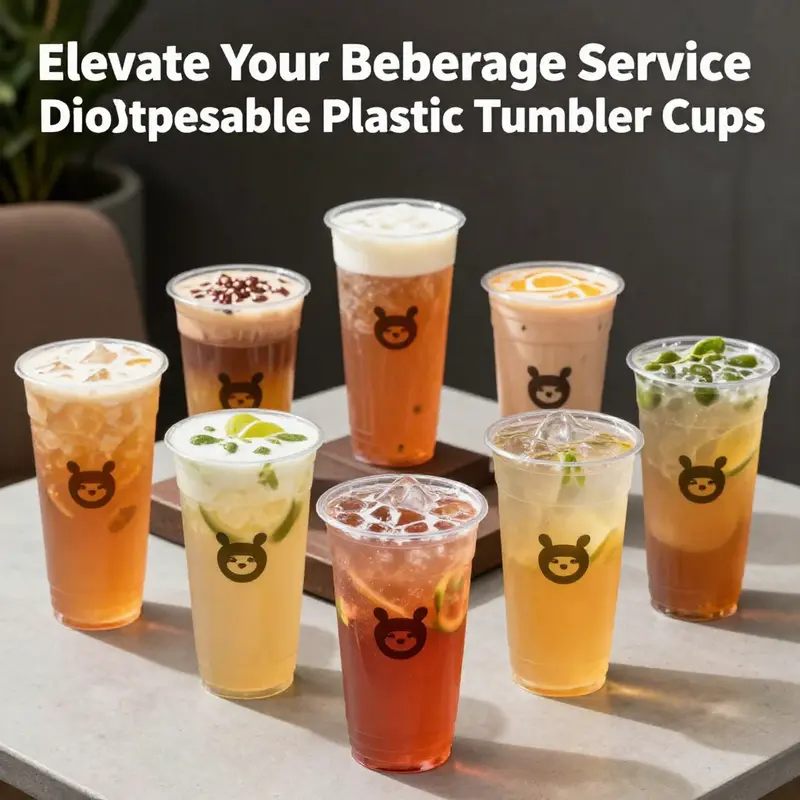
Disposable plastic tumbler cups are more than just convenient; they are essential tools for various beverage service venues, from bustling bubble tea shops to catering services and upscale restaurants. Their popularity stems from their affordability, hygienic nature, and practical design. These cups cater to diverse needs, serving everything from cold beverages to coffee on-the-go. This article will explore the different types of plastic tumbler cups available, their applications in events and gatherings, the functional features of cups with lids, and the environmental impacts of disposable plastics to help businesses make informed decisions.
Materials in Motion: How PET, PS, PLA, and PE Shape Disposable Plastic Tumbler Cups Across a Spectrum of Sizes
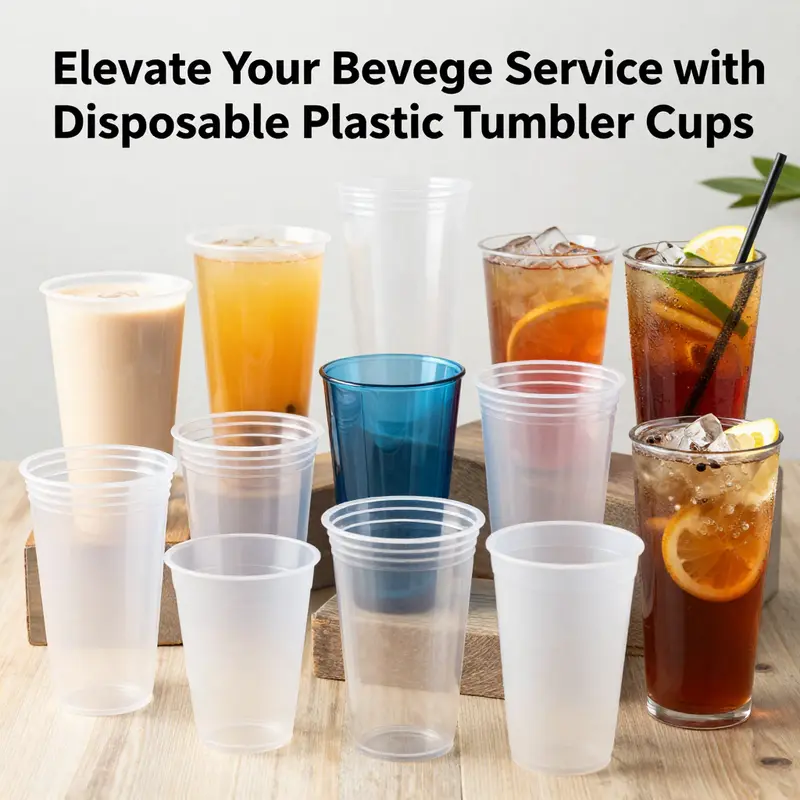
Disposable plastic tumbler cups sit at the intersection of practicality, presentation, and planning. They are more than vessels for beverages; they are a reflection of choices about weight, cost, cleanliness, and environmental impact. When we look closely at the materials that go into these cups and the sizes they come in, a quiet, almost architectural logic reveals itself. The most common material, PET, is the backbone of many one-use beverage systems. PET’s appeal lies in its light weight and its ability to resist shattering, which makes it a reliable option for handling large volumes in transient settings like conferences, festivals, and outdoor gatherings. Its clarity also matters. A transparent cup allows the color and appeal of the drink to show through, an attribute that helps beverages look appealing on buffet lines or in bar scenes. Yet PET is not a panacea. It is predominantly designed for a single use from a safety and hygiene perspective. Reuse, especially after heating or prolonged exposure to sunlight, has health and quality concerns. PET can degrade with repeated cycles of heat and time, and while it is recyclable in many municipal streams, the recycling process is not universal, and the actual recycling rate varies by region and infrastructure. These realities push planners toward careful decisions about when and where PET cups are appropriate, balancing guest experience with waste considerations and local recycling capabilities.
Polystyrene, the more niche cousin in this material family, brings a different set of properties to the table. Foam-based polystyrene, in particular, has long been prized for its insulation and lightness. An insulative cup keeps cold drinks cooler longer and can provide a tactile crispness to the experience of a cold beverage. At the same time, PS has its own caveats. When exposed to higher temperatures or certain cleaners, the material can become deformed or brittle, which can compromise both function and hygiene. For hot beverages, this is especially relevant; while foam cups exist to address insulation, the heat sensitivity of the material means careful temperature management is essential. In many settings, PS cups are chosen for cold drinks or light, room-temperature beverages where insulation is not the primary objective. The environmental conversation surrounding PS is nuanced as well. Like PET, PS cups are generally designed for single use, and while some recycling programs accept PS, contamination and foam waste complicate recycling streams. That complexity nudges event organizers and facility managers to weigh the perceived premium of insulation against end-of-life realities and waste handling logistics.
Bioplastics add another layer to the discussion. Polylactic acid, or PLA, marks a deliberate pivot toward renewables and compostability. Derived from plant-based feedstocks such as cornstarch, PLA cups are often marketed as more environmentally friendly than conventional fossil-based plastics. In practice, PLA’s compostability is not a universal guarantee. Industrial composting facilities may be able to process PLA more reliably than home composting, but accessibility to such facilities varies by community. PLA transparency is a selling point in many contexts; cups made from PLA can be clear, offering the same visual appeal as PET. Yet heat resistance typically lags behind traditional plastics. High temperatures can cause warping or deformation, and repeated exposure to heat can deteriorate the structural integrity of PLA cups. For events that hinge on a green narrative, PLA can be attractive, but it requires coordination with waste streams to ensure proper disposal and, ideally, access to composting infrastructure where it makes the most sense. The broader takeaway is that environmental claims are nuanced, and the best choice often depends on the specific venue, supply chains, and the available end-of-life options in a given locality.
A fifth material sometimes appears in the catalog of disposable cups: polyethylene, or PE. In the literature and in some manufacturing contexts, PE edges into the conversation as a component in various disposable packaging solutions. When it does show up in cup production, it tends to be in formats that emphasize durability in industrial or secondary packaging rather than as the primary body material for consumer-facing cups. The practical impact for most hospitality applications is that PE, while relevant in the broader plastics ecosystem, is not as prominent as PET, PS, or PLA for standard beverage cups. Nevertheless, awareness of PE’s role helps round out the picture of how disposable cups are engineered to meet different handling, stacking, and distribution requirements.
With the material choices in place, the size spectrum for disposable plastic tumbler cups is the other half of the equation. Sizes commonly discussed in industry literature range from compact 8-ounce portions to generous 32-ounce servings. The 8-ounce option is often reserved for samples, tastings, or children’s portions, where a lighter, more affordable option supports controlled portions and reduces waste per guest. The 12-ounce size remains a workhorse for standard soft drinks, water, or basic iced beverages at casual gatherings and office functions. It blends portability with a sense of fullness without tipping into the risk of spills, a factor that becomes especially relevant in crowded venues or fast-paced service lines. The 16-ounce size is a natural fit for iced beverages, sports events, and casual gatherings where guests expect more volume without the bulk of a larger cup. It sits at a comfortable middle ground where handling ease and consumption length are balanced. When larger servings are desired, the 20-ounce cup serves as a practical option for extended events, outdoor settings, or venues where guests may want to drink more before refilling. Finally, the 32-ounce crown captures the demand for “to-go” style large beverages, often in fast-food, concession, or casual outdoor contexts where sharing or extended sipping is anticipated.
Size does more than offer a simple measure of liquid capacity. It interacts with material choice in several consequential ways. Thicker walls, or more robust wall thickness that sometimes accompanies larger sizes, contribute to a cup’s rigidity and its ability to resist compression forces during stacking and transport. A PET cup, for instance, can carry larger volumes without buckling when the wall thickness is appropriately engineered, preserving the guest experience of a sturdy feel. Conversely, a PLA cup’s performance hinges not only on wall thickness but on the temperature envelope it can tolerate, particularly if a beverage is warmer. This is the subtle math behind the packaging choices: a given material’s temperature resilience often informs not just which beverages it can hold but which size ranges are practical for that material. In practice, this means that a 12-ounce PET cup may be perfectly suited for a standard soda or water service at a seated event, while a 16-ounce PLA cup might be favored for an event emphasizing sustainability, provided the beverages remain within a temperature window that PLA can confidently support. In a productive planning scenario, choosing a material and a size becomes a single decision with ripple effects on cost, waste, and guest satisfaction.
The conversation about materials and sizes cannot ignore the human and operational realities behind the cups. From a hygienic standpoint, single-use cups minimize cross-contamination risk between guests and simplify post-event cleanup. This hygiene dividend is a strong driver for disposable cups in high-traffic environments. It also means that the lifecycle analysis centers on production, distribution, and end-of-life handling rather than on the complexities of cleaning and sanitizing reusable ware. Yet the environmental calculus remains persistent. Recycling streams must be navigated carefully; PET and some PLA plastics are recyclable where markets exist, but mixed-material cups, or cups contaminated with residues, complicate recycling. Foam PS, while offering insulation, presents its own recycling and waste challenges. The design and procurement process often involve aligning material properties with the expected temperature of the contents, the duration of service, the typical dwell time of beverages in the cup, and the environmental policies or goals of the event or venue.
For those who want to explore responsible options without sacrificing convenience, there is a path that acknowledges both performance and waste considerations. The choice of materials and sizes should be guided by the expected beverage type, the service model, and the waste infrastructure available at the venue. In settings where guests are unlikely to heat beverages or where cold drinks dominate, PET cups with standard wall thickness and a mid-range size like 12 or 16 ounces can provide an ideal blend of usability and recyclability. In contexts prioritizing sustainability, PLA offers a compostable narrative, but organizers must verify local composting capabilities and ensure clear communication with guests about disposal. Foam-based PS remains relevant in niche situations where insulation and lightness are crucial, but its environmental footprint invites careful scrutiny and possible offsets in broader sustainability plans. And while polyethylene’s role in cups is more circumstantial, its presence in some packaging ecosystems reminds us that the cup is part of a larger material system that includes secondary packaging and lids, all of which contribute to the total waste profile of an event.
As we consider the practical implications for event design, service flow, and guest experience, the material and size choices for disposable plastic tumbler cups reveal themselves as more than a logistic detail. They shape how beverages travel through a venue, how guests perceive value, and how a site communicates its commitment to hygiene and environmental responsibility. The next layer of decision-making often involves balancing aesthetics—clarity and color of the beverage, the perceived quality of the service—with the realities of supply chains, cost per unit, and the availability of end-of-life options. For readers seeking environmentally minded options that still meet the pragmatic demands of single-use service, see the option described as eco-friendly disposable cups with lids. eco-friendly disposable cups with lids.
In sum, the materials and sizes of disposable plastic tumbler cups do not exist in isolation. They are a compact system that reflects safety standards, manufacturing realities, environmental considerations, and consumer expectations. Whether the setting calls for a crisp PET 12-ounce cup that keeps a crowd hydrated during a mid-day conference or a larger 20-ounce or 32-ounce option that supports a casual outdoor event, the interplay of material properties and capacity defines the guest experience as much as the beverage inside. As researchers and buyers continue to navigate a landscape of evolving plastics science, recycling capabilities, and consumer preferences, the focus remains on making informed choices that deliver reliable performance while aligning with broader goals for sustainability and resource stewardship.
Elegance in a Cup: Crafting Moments at Events with Disposable Plastic Tumbler Cups

In the busy tempo of contemporary events, disposable plastic tumbler cups often go unnoticed as a strategic tool rather than a mere convenience. They are the unglamorous workhorse of hospitality, chosen not for glamour alone but for the precise balance of hygiene, speed, cost control, and guest experience that modern gatherings demand. When a host aims to serve water, juice, or soft drinks to hundreds or even thousands of guests, the simplest solution can become a decisive factor in how smoothly the day unfolds. The appeal lies in a trio of traits: lightness, predictable performance, and a price point that makes large-scale service feasible. Yet beneath that practicality lies a more nuanced story. The shape, material, and finish of a disposable tumbler can influence not only the way beverages are perceived but the how easily service staff move through a crowded space, how guests interact with the beverage experience, and how waste is managed long after the last toast has faded.
The journey of these cups begins with material choice. Most disposable tumblers are crafted from polystyrene or polypropylene, each with its own set of advantages and constraints. Polystyrene cups tend to offer clear visibility of the drink inside and a rigid feel, which can convey a sense of formality in events where a crisp, glass-like impression is desired. Polypropylene, on the other hand, can provide improved impact resistance and, crucially, a sturdier base and lid compatibility for on-the-go service. For outdoor or hybrid indoor-outdoor settings, the lid-equipped variants add a layer of spill resistance that recasts the guest experience from tentative sips to confident, whole-cup enjoyment. The lightweight construction stabilizes the service workflow; staff can carry multiple cups at once, reducing trips between the beverage station and the guest tables. In environments where time is money, every second shaved from the serving process contributes to a more seamless event timeline.
Aesthetics play a surprisingly large role in what is often dismissed as a practical choice. The cups come in an array of sizes, patterns, and colors, with clear bodies that allow guests to see the drink’s color and level. That visibility can enhance brand storytelling at corporate gatherings, where color coding and themed palettes synchronize with the event’s visual language. For weddings and formal receptions, a subtle rim or a translucent body can add an element of elegance without resorting to more expensive glassware. In minimalist settings, the clean lines of a plain clear cup can harmonize with the decor’s restraint, while for festivals or theme-driven events, bold hues and graphic finishes can contribute to the atmosphere and photo opportunities. The choice of cup size also matters. Smaller tumblers in the 6 to 8 ounce range can help manage portions and reduce waste at longer functions, while larger options up to 12 ounces or more offer a casual, generous feel for self-serve stations, particularly where long cocktail hours and social mingling prevail. The design choices extend beyond shape and color. Some cups feature smooth rims that feel gentler against the lips, while others emphasize a slightly textured edge to improve grip in warm environments. The tactile quality of a cup can subtly influence a guest’s perception of the beverage’s quality, even before the first sip.
In practice, events rely on disposable tumblers not only for serving but for shaping the flow of the day. Corporate meetings, conferences, and networking events find them especially suited for hydrating attendees during long sessions. The ease of cleanup after a packed program aligns with the efficient planning that corporate organizers prize. Bridal showers and afternoon teas leverage the cups’ understated elegance to complement delicate decor and soft lighting without introducing the fragility of glass. The possibility of printing or labeling on the cups also supports a personal touch—an understated corporate logo at a general session or a thematic pattern that echoes the event’s color scheme. Even the choice of whether to include lids becomes a strategic decision. A lid can support spill resistance for outdoor stages or cocktail hours, and it can contribute to a sense of containment during transport from the kitchen to the service floor. Insulation features, when present, extend beverage temperature control, supporting guests who linger between courses or who navigate longer social conversations between sips.
One of the most interesting aspects of using disposable tumblers at events is how they can be harmonized with the broader service ecology. In large venues, the logistics of stock, distribution, and waste management are as important as the cups themselves. For organizers, the cups’ compactness and stackability translate into efficient storage and easier inventory control. A well-planned stock approach reduces the risk of shortages during peak periods and helps staff anticipate demand for different beverage stations. The fluid choreography of service becomes a dance between kitchen, bar, and events team, where each cup chosen is a small instrument contributing to a larger harmony. The presence of disposable cups also affects how the venue handles aftercare. The ease of disposal, separate from the need for crushing or rinsing, can lower labor costs and minimize the risk of broken glass, which has safety implications for crowded floors. The environmental conversation often sits at the edge of such decisions; planners increasingly weigh the disposal footprint alongside the convenience, and many attendees are responsive to sustainability messaging that accompanies the practical choice of using disposables.
The conversation around design also folds in specialized formats that address particular beverage genres. For instance, when the menu features smoothies, iced tea, or bubble tea-like drinks, slender, tall “skinny” cups have found traction. These tall, narrow vessels, with a diameter of roughly 6 to 8 centimeters and a height in the 15 to 20 centimeter range, accommodate thick textures and layered drinks while guiding guests to use a wide-stem straw for ease of sipping. Such shapes can visually elongate a beverage, making it appear more substantial in a crowded line. The same logic informs the broad spectrum of color and pattern options. A monochrome set aligned with a refined palette can convey sophistication, whereas a bright, patterned lineup can anchor a family-style feast or festival ambiance. The right mix of clarity, color, and form helps the beverage achieve presence even in a space packed with music and chatter.
Material science also informs an ongoing evolution toward more sustainable disposables. In response to environmental concerns, many suppliers introduce eco-friendly PP clear cups that combine clarity with strength while leaning on food-safe certifications and recycled content where possible. These options aim to offer a middle path: maintaining the crisp presentation of a clear cup and the structural reliability required for a busy service, while reducing the environmental burden relative to older PS-based designs. The choice between a classic PS or a more modern PP option often comes down to expected reuse patterns, the event’s waste management plan, and the host’s environmental commitments. For outdoor festivals, the robustness of PP and its resistance to impacts and temperature changes can translate into fewer breakages and less waste from damaged cups, which tangibly improves both guest experience and cleanup dynamics. In enclosed venues, the difference may be subtler but still meaningful, particularly when the event emphasizes a pristine, glass-like aesthetic.
The narrative of disposables at events is not complete without acknowledging the practical reality of on-site handling. Even the most thoughtfully designed cup cannot fulfill its promise if the supply chain falters at the loading dock. Space planning, labeling, and easy access at beverage stations become critical details. When stations are busy, staff rely on uniform cup sizes and clear, consistent labeling to minimize confusion and speed service. A well-organized station reduces queue times and creates a calmer environment in which guests can enjoy conversations and moments without feeling rushed. The interplay between the cups’ design and the station’s configuration shapes a more cohesive experience: the cup’s rim quality can affect guest comfort during extended conversations, while a secure, spill-resistant lid can prevent accidents that disrupt a speech or toast. In spaces where branding and guest experience intersect, these cups serve as a canvas. A brand’s color scheme, tone, and graphic language can be subtly echoed in the cup’s finish and prints, reinforcing the event’s narrative without overpowering the beverages themselves.
As hosts explore the spectrum of disposable options, they frequently weigh alternatives that extend beyond the cup’s edge. Paper cups, for example, may be chosen for certain events to emphasize compostability or to align with a particular sustainability narrative. They can be paired with an eco-friendly outreach plan that resonates with guests who value responsible consumption. Yet the decision is rarely black and white. The advantages of plastic tumblers in speed, durability, and form are not easily matched by other disposable formats in every context. Where breakage risk is high, where a consistent cold beverage service is essential, or where a themed or branded aesthetic calls for a specific silhouette, plastic tumblers often present the most reliable solution for ensuring guest satisfaction across a large crowd. The true challenge for event organizers is to weave these practical attributes into a story that matches the event’s mood and intentions, showing guests that the service is as thoughtful as the celebration itself.
To illustrate the balance of options in practical terms, consider the broader ecosystem of disposable tableware. The choices extend from cup to lid to straw to napkin, and each element interacts with the next. The cup’s capacity, its ability to fit standard car holders or portable drink stations, and its compatibility with lids are not separate decisions. They are part of a larger strategy to maintain service speed, guest convenience, and minimal clean-up disruption. The interplay of economy and aesthetics matters as well. Large-scale events demand bulk procurement, and the cost per unit becomes a lever for controlling overall expenditure without sacrificing the guest experience. In this sense, disposable plastic tumbler cups are not simply a product but a strategic asset that can influence the rhythm of the day—from the moment guests arrive at the registration desk to the last moment of the farewell toast.
For readers who are curious about the broader packaging landscape and how disposables fit into a sustainable event narrative, the conversation often circles back to alternatives that align with specific goals. Some hosts experiment with paper-based or compostable options for particular segments of an event, such as a VIP lounge or a cocktail hour where aesthetics and environmental messaging carry significant weight. In these moments, the disposable plastic tumbler remains a staple for its robustness and practical certainty, while the paper alternatives serve as a complementary option for audience segments that value compostability and a different visual language. The challenge, then, lies in crafting a coherent narrative for the event that respects feasibility, environmental responsibility, and guest delight. It is a balancing act that honors the practical realities of service, while still allowing room for moments of elegance and thoughtful branding.
This nuanced approach to disposable tumblers is why they persist as a dependable choice in the professional toolkit of event planners. They empower hosts to orchestrate experiences that are efficient, visually coherent, and memorable. The cups do more than hold beverages; they help manage the tempo of service and the mood of the room. They enable staff to focus on hospitality rather than logistics, and they allow guests to engage with the event confidently, knowing that the beverage experience will be clean, accessible, and comfortable. As event formats continue to evolve—with hybrid models, longer days, and more dynamic guest interactions—the role of these cups is likely to become even more integral. The industry response is incremental and pragmatic: refine the materials for safety and sustainability, optimize designs for comfort and stability, and provide flexible options that meet a wide range of event contexts. In this ongoing evolution, the humble disposable tumbler remains a central, unsung facilitator of gatherings large and small.
For readers seeking practical choices tied to the content above, there is a growing emphasis on exploring alternatives that balance the benefits of disposables with environmental considerations. Some hosts will opt for cups that emphasize recyclability or compostability, paired with clear communication about disposal choices at the event. Others will test the limits of design—investing in a more premium plastic tumbler with enhanced rigidity, better edge comfort, and a finishing that elevates the perceived value of the beverage. Regardless of the path chosen, the core principle endures: the cup is a vehicle for hospitality, and its design should serve the guest while enabling the host to manage logistics with confidence. In many respects, the best disposable tumbler is the one that disappears from view—leaving guests with a seamless, enjoyable moment and organizers with a plan that feels almost effortless in hindsight.
As this chapter winds through the practical and aesthetic considerations that shape the use of disposable plastic tumblers at events, it also nods to the broader ecosystem of event packaging. The cups are part of a dynamic conversation about waste, value, and experience. They illustrate how a seemingly simple object can influence the pace of a gathering, the quality of interaction, and the lasting memory of a celebration. The choice between disposables and more sustainable or reusable options will continue to hinge on context, budget, and values, but the central idea remains clear: in many settings, a well-chosen disposable tumbler is more than a container—it is a facilitator of connection, a facilitator of flow, and, in its own quiet way, a contributor to the success of the event. In that sense, the cup is a small but significant instrument in the orchestration of modern social life, shaping moments one sip at a time.
To explore related packaging options within the same narrative of disposables, consider a practical alternative that some hosts evaluate for specific event segments. For example, a compact, cost-effective, paper-based cup can be a complementary choice at a reception or tea service where branding and environmental messaging play a central role. This approach allows organizers to tailor the guest experience—mixing the tactile familiarity of disposables with the values they want to communicate—while maintaining the efficiency that serves large audiences. The result is a nuanced, layered strategy rather than a one-size-fits-all solution, one that respects both the joy of gathering and the realities of event logistics. And as designs continue to evolve, the line between style and practicality will keep shifting, offering new ways to delight guests without sacrificing efficiency.
For readers who want to dive deeper into related packaging choices beyond the cups themselves, further context can be found in resources that discuss eco-friendly or printed options for cold beverages in disposable formats. A relevant external perspective can be found here: External resource: Understanding China Disposable Plastic Tea Cup And Saucer.
In closing, the chapter’s throughline is not merely about the cup but about the event ecosystem that enables people to connect. The disposable tumbler is a strategic component that, when chosen with care, aligns the guest experience with operational realities. It supports cleanups, protects guests, reinforces branding, and—perhaps most critically—frees staff to focus on hospitality rather than logistics. That combination of function and finesse is what keeps disposable plastic tumbler cups relevant for a broad spectrum of events, from corporate conferences to intimate gatherings, and from afternoon teas to festive celebrations. Even as new materials and methods emerge, the core value remains steady: the right cup can quietly elevate a moment without shouting its own presence.
Lids, Lines, and Load-Bearing Simplicity: The Functional Craft of Disposable Plastic Tumbler Cups with Lids
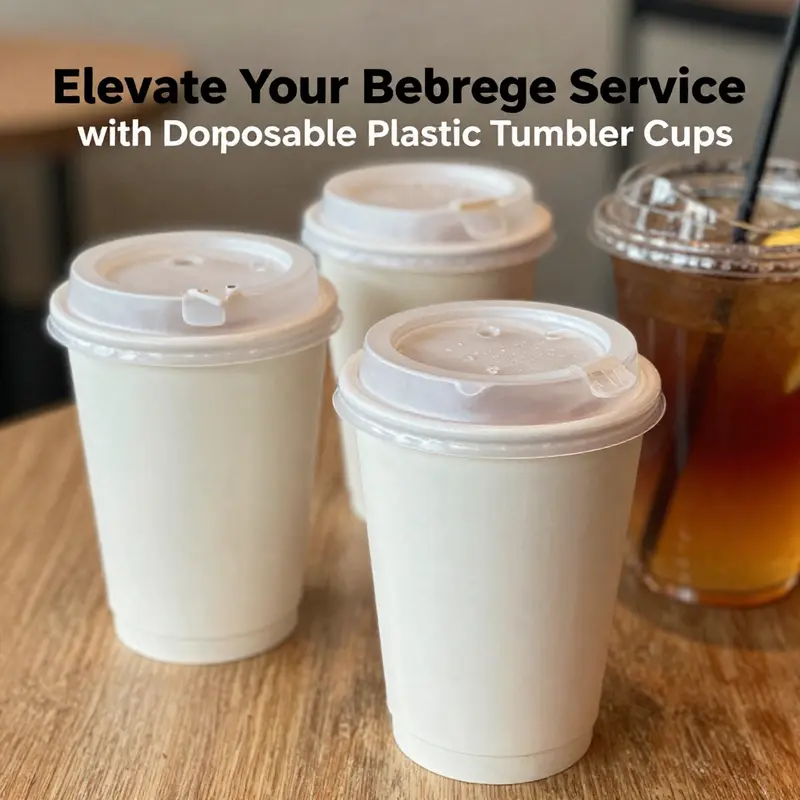
Disposable plastic tumbler cups with lids sit at a quiet intersection of practicality and design. They are not simply vessels for beverages; they are carefully engineered systems that balance hygiene, usability, and cost at scale. In many settings—from office break rooms to bustling catering events, from concerts to conference halls—these cups excel because their design anticipates real-world use: how people pick them up, transport them, sip from them, and dispose of them after a single serving. At the core of this utility is a constellation of features that, taken together, enable reliable service without the cleanup overhead traditional glassware demands. The materials themselves—most often clear PET or polypropylene (PP)—offer a light yet sturdy profile that keeps the cup affordable for bulk production while remaining visually transparent. That transparency matters in service contexts because staff and guests can quickly identify the beverage inside, which streamlines service, reduces spill risk, and supports presentation at a catered spread. The choice of material is also a practical matter: PET’s clarity and PP’s resilience to scuffing combine to produce a cup that feels sturdy enough for racking in a catering line and light enough to be carried across a room without fatigue. Sizes typically range from small 200 ml to larger 24 oz formats, offering a spectrum that suits a quick sip or a generous serving, with most standard uses skewing toward 11 oz to 12 oz equivalents for everyday beverages. Yet even within this range, the design remains focused on repeatability and efficiency, which matter in any setting where dozens, hundreds, or thousands of cups may pass through service points in a single day.
A defining feature of these cups is the lid, the counterpart that makes single-serve beverages practical for transport. Leak-resistant designs employ secure snap-on mechanisms or twist closures that lock with a deliberate, tactile click. This is not merely a matter of comfort; it is a core reliability feature. In an office corridor, during a packed event venue, or on a busy delivery route, a lid with a robust seal minimizes the risk of spills that could stain clothing, damage electronics, or ruin a guest’s experience. The sealing quality, in combination with a well-fitted cup, reduces the anxiety around movement and heat transfer. For hot beverages, even a modest insulation feature in the lid can prevent the outer surface from scalding fingers and limit thermal shock that could otherwise compromise the integrity of the cup itself. In practice, a key balance must be struck: the lid should be easy enough to remove for quick refills or for thorough cleaning in the production stage, yet secure enough to withstand transport without loosening under routine jostling. The engineering behind this balance often translates into a subtle yet critical push against the edge of product failure: a lid that leaks or pops off is not merely a blemish in a single moment but a ripple effect that erodes trust in a brand or an event’s service quality.
Ergonomics also anchor the everyday usability of disposable tumblers. The contoured shape, coupled with smooth edges, makes the cup comfortable to grip for extended periods. That comfort is not incidental; it is a deliberate design choice to reduce the risk of accidental drops, particularly when the beverage is cold, carbonated, or closer to room temperature where condensation can create a slick surface. A well-thought-out silhouette supports a natural hand position, enabling a steady transfer from storage to serving line to guest hand, and the base geometry is often tuned to fit common car cup holders. This compatibility with standard holders ensures stability during transit, which again reduces spill risk and supports consumers who use these cups on the go. In effect, the cup becomes a reliable extension of a consumer’s daily routine rather than a fragile prop that demands careful handling. The ergonomic consideration thus extends beyond the act of drinking to encompass the entire lifecycle of the cup from distribution to disposal.
A further layer of practicality comes from thermal management. While not all disposable cups are insulated, a subset features double-wall construction or an air pocket between an inner and outer wall. This arrangement slows the transfer of heat from hot beverages to the outer surface, protecting hands and enabling guests to hold a steaming drink without discomfort. It also helps preserve the drink’s temperature longer, an especially welcome trait for venues where service times are extended or where guests are free to mingle before tasting. For cold beverages, insulation minimizes condensation on the exterior, keeping surfaces cleaner and less slippery. The trade-off here is balance: double-wall or insulated designs can add cost and bulk, but for events that place a premium on user experience and presentation, the extra thickness pays for itself in perceived quality and guest satisfaction.
Another salient attribute is transparency. The clear body of most disposable tumblers allows guests and service staff to assess a drink at a glance, which enhances presentation in catering and hospitality contexts. It also supports portion control and inventory visibility, enabling better stock management during busy service periods. The material’s clarity, paired with the lid and rim design, contributes to an overall aesthetic that remains elegant enough for formal settings while maintaining the practicality of disposable use. The design ethos here respects both aesthetics and hygiene: guests see the beverage, staff verify the fill level, and the container remains straightforward to recycle or reuse in a controlled, compliant environment.
In the realm of operations, standardization matters. These cups are typically produced in standardized capacities—common measures such as 200 ml, 350 ml (about 11 oz), and 24 oz serve as practical benchmarks. This standardization streamlines the supply chain. It simplifies sorting for fulfillment centers, ensures consistent stacking and storage in production facilities, and reduces the risk of mismatched lids or mismatched bases on the line. It is a small but significant detail that translates into fewer production hiccups and faster turnaround from bake to break and back again for the next batch of events. And because these cups are designed for single-use, the elimination of washing steps translates to meaningful reductions in labor costs, water usage, and downtime in busy venues. Guests still enjoy clean, hygienic servingware, yet organizers save on labor and water, reinforcing the value proposition for disposable options in high-traffic settings.
Branding and customization also play a role in the functional value of these cups. Many manufacturers offer options to print logos or promotional artwork on the cup body or lid, turning a simple beverage into a mobile marketing or messaging opportunity. Customization can range from color accents on the rim to full-surface printing that aligns with a festival, conference, or institutional branding. While aesthetics drive the eye, the functional core remains the same: a reliable containment system that preserves beverage integrity, minimizes spill risk, and supports quick distribution. For businesses that view packaging as an extension of their brand, this combination of practical functionality and visual identity can amplify the perceived value of the serving experience. To illustrate how such branding choices can merge with sustainability considerations, one may consider options that pair branding with eco-friendly materials and lids designed for reuse in controlled, single-serve contexts, or with lids that emphasize recyclability after disposal.
Hygiene and one-time use are implicit benefits that underpin the acceptance of disposable tumblers in many settings. In healthcare facilities, schools, and fast-service environments, the absence of a shared cup or glass reduces cross-contamination risks. Single-use paradigms simplify cleaning protocols and delegate sanitation responsibilities to a single-use cycle rather than to labor-intensive sanitization. These cups are designed with strict safety and material standards in mind, and many are tested to withstand standard handling and storage conditions in bulk distribution scenarios. Users appreciate the assurance that each serving is clean and uncontaminated, and operators benefit from the predictable performance of a system that does not require extensive post-use cleanup.
Despite the strengths, the option to reuse or recycle remains a critical consideration, especially in light of growing environmental concerns around single-use plastics. Material choice bears significantly on recyclability; PET and PP are widely accepted in recycling streams, but local infrastructure, contamination risk, and end-of-life processing all influence the ultimate environmental footprint. This reality has spurred ongoing innovation in the development of more recyclable cup designs, as well as moves toward compostable or bio-based alternatives in some segments. The conversation around these cups thus often centers not only on their immediate functional benefits but also on how they fit into broader sustainability objectives, supplier partnerships, and regulatory expectations. The U.S. marketplace, in particular, emphasizes compliance with food-contact safety standards, and manufacturers frequently provide documentation that details material composition and processing tolerances. A resource that provides broader guidance on food-contact plastics materials and safety considerations is the FDA’s guidance on food-contact materials, which can help organizations align their procurement and disposal practices with safety and regulatory expectations. For readers who want to explore this further, see the FDA guidance on food-contact plastics.
As these cups continue to evolve, so too does the anticipation of what a “single-use” cup can accomplish in a world that values efficiency, hygiene, and clarity of presentation. A well-designed disposable tumbler with a lid does more than keep a drink contained; it frames a controlled, predictable service experience. It reassures guests that their beverage arrives intact, at an appropriate temperature, and with minimal risk of leakage. The lid is not merely a cap but a functional partner in the cup’s journey from storage to sipping to disposal. The cup’s body is not merely a vessel but a display of design intent—easy to grip, easy to inspect, and easy to brand. In practice, the most successful solutions in this category strike a balance among sealing reliability, ergonomic comfort, transport stability, and alignment with environmental and safety considerations. When these elements harmonize, the result is a dependable, scalable serving system that supports high-volume operations while maintaining a positive guest experience. For those seeking to explore related packaging options that complement these cups—such as eco-friendly, printed packaging options or lid designs that maximize hygiene and usability—one can find examples in related product lines that emphasize sustainable materials and thoughtful design integration, including offerings with lids and branding potential that mirror the same practical priorities. eco-friendly printed logo single-wall paper cup with lid.
In sum, the functional features of disposable plastic tumbler cups with lids represent a convergence of material science, human factors engineering, and logistical pragmatism. They are designed to perform reliably in environments where speed, cleanliness, and guest satisfaction are paramount. The choices about lids, grip, insulation, transparency, and branding are not decorative; they are foundational to the cup’s role as a dependable workhorse in modern service settings. As the market continues to evolve, these cups will likely incorporate smarter materials and more nuanced designs that further blur the line between disposability and sustainability, while still delivering the core benefits that make them indispensable for bulk beverage service. For practitioners seeking authoritative guidance on material safety and regulatory considerations, the external reference below provides additional context on food-contact materials and related issues.
External resource: https://www.fda.gov/food/food-contact-materials/food-contact-materials-issues-and-frequently-asked-questions
Footprints in the Cup: Tracing the Environmental Toll of Disposable Plastic Tumbler Cups and the Path Toward a Cleaner Future
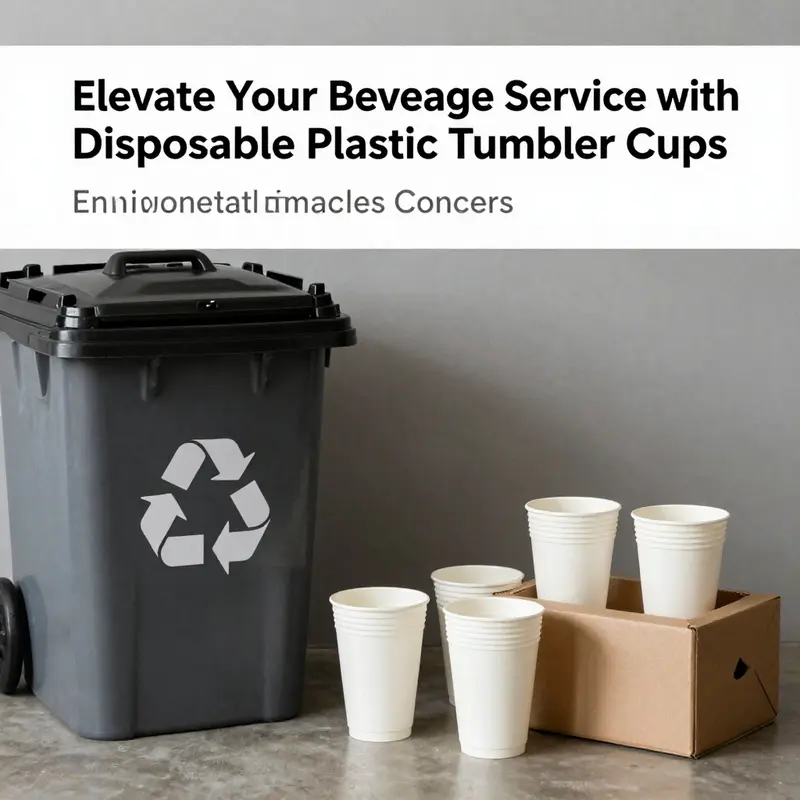
The simple act of pouring a drink into a disposable plastic tumbler cup has become a small, everyday ritual for gatherings big and small. Yet behind the familiar clink of a lidless cup or the slick shine of a clear, single‑use tumbler lies a traceable trail of resource use, energy, and waste that stretches far beyond the moment of service. These cups, often made from polystyrene or polypropylene, are designed for speed, convenience, and hygiene. They are engineered to be light, inexpensive, and available in bulk, so they can meet the demands of busy events, hospitality, and quick-service contexts. But the very properties that make them appealing—their low cost and ease of mass production—also seed a set of environmental challenges that accumulate as soon as the last guest settles their check and the last empty cup lands in a bin. Understanding this arc—from cradle to grave—reveals not only the scale of the problem but also the opportunities for more responsible decisions by producers, venues, and consumers alike.
The lifecycle story of these cups begins with material choices. Most disposable tumblers are derived from petroleum-based plastics such as polypropylene or polystyrene. These materials are celebrated for their resilience, lightweight character, and compatibility with rapid manufacturing cycles. They are not, however, renewable in the sense of being replenished quickly, and they are not biodegradable in natural environments. The consequence is a long persistence that can span centuries, turning a small daily convenience into a lasting footprint in soils, waterways, and oceans. The environmental narrative grows more complex once you consider production demands. Creating a single, modest cup requires energy and materials, and mass production multiplies those inputs into a formidable climate and resource cost. Estimates circulating in research discussions suggest that manufacturing a single plastic cup can emit around 0.1 kilograms of carbon dioxide. Multiply that by billions of cups used every year, and the scale of the emissions becomes nearly impossible to overlook. Even though improvements in manufacturing efficiency and new materials have reduced some footprints, the aggregate impact remains substantial when the cups are produced in such enormous volumes.
This breadth of consequence is not limited to climate considerations. Plastic cups contribute to broader ecological disruption through their contribution to marine litter and microplastic pollution. When discarded improperly—or when waste management systems fail to capture them—the shards of plastic break down into microplastics that infiltrate ecosystems and enter food chains. The ecological cost is not only about the visible waste but also about unseen particles that can persist in the environment for years and alter habitats, from rivers to far‑flung marine zones. The problem is compounded by the realities of waste management. Post‑consumer plastics often face downstream challenges: contamination can make recycling uneconomical, and the resulting recycling streams can be inefficient, yielding a leakage rate that continues to pollute even well‑intentioned systems. The result is a paradox where abundance and convenience coexist with scarcity of responsible disposal options. Even when recycling is technically possible, real-world outcomes depend on the quality of the collected stream, the price of alternative materials, and the local infrastructure that signals what can be accepted and processed.
Advocates for sustainability often point to biodegradable or bioplastic alternatives as a route out of this conundrum. Some cups have been marketed as PLA—bioplastics derived from plant sources. The promise is appealing: a material that could decompose more readily than traditional plastics. Yet the reality is more nuanced. PLA often requires industrial composting facilities to break down effectively, facilities that are not universally available or accessible in many places. In the absence of proper composting, PLA cups end up in landfills where they decompose slowly and can yield methane, a potent greenhouse gas. The lifecycle comparison can be favorable in specific contexts, but without robust composting infrastructure and consumer participation, the environmental gains may be limited or misdirected. The broader lesson is that choosing a “greener” material is not a panacea; it must be matched with a system that can properly process it at the end of its life.
Against this backdrop, the sustainability conversation shifts toward design decisions and behavioral shifts that can reframe the problem. One critical insight is the disproportionate impact of single-use cups when seen as a one‑time solution. Reusables, by contrast, carry a different arithmetic. The environmental cost of a reusable cup is concentrated upfront—material extraction, manufacturing, and washing—but the per‑use impact declines dramatically with repeated use. Studies have suggested that a reusable cup needs to be used roughly 10 to 20 times to offset the carbon footprint of a single-use cup, depending on the specifics of the material and the washing regime. When translated into event logistics, this implies that venues and organizers can tilt the balance by encouraging guests to reuse cups or to opt for durable, returnable serviceware. The practical realization of this shift involves careful planning: robust cleaning protocols, accessible return systems, and incentives that make the reuse choice easy and attractive for attendees.
What, then, does a more sustainable path look like in the field where disposable cups are the default? It starts with a layered approach that integrates procurement decisions, event design, and consumer behavior. Procurement can prioritize materials and products that lower life-cycle impacts, whether through reduced plastic content, alternative materials, or better end‑of‑life outcomes. Even then, the benefits can be amplified when paired with systems that actively reduce waste—arrangements that encourage people to bring their own cups, provide discounts for self‑supplied vessels, or implement a deposit‑return framework for reusable cups. The design of the service encounter matters as well. If staff and organizers craft a narrative around reuse as part of the event experience, they can reframe social norms and expectations. A well‑executed program makes guests feel part of a broader effort, not merely participants in a plastic‑centric routine. In this sense, the transition is as much about culture as it is about chemistry or engineering.
There is also room for innovation in the packaging and product ecosystem that keeps the essential functions of a disposable cup—hygiene, containment, and portability—while rethinking end‑of‑life outcomes. Some suppliers and manufacturers have begun exploring eco‑friendly paper or composite alternatives that align with circular economy principles. For readers who want to see concrete examples of these shifts in practice, there are options that emphasize recyclable or compostable pathways, and even designs that integrate lids or sleeves with a reduced environmental burden. In discussing these pathways, it is important to avoid overemphasizing a single solution. Instead, a portfolio of options—ranging from higher‑quality reusable systems to better‑designed, responsibly disposed disposable products—can meet diverse settings while improving overall sustainability. If you are exploring alternatives, consider approaching the topic with a holistic lens: how the cup is produced, how it is used, and how it is managed after its moment of use.
For readers seeking more practical, on‑the‑ground direction, one approach is to examine the full spectrum of available alternatives, including more sustainable disposables and reusable serviceware. In contexts where a disposable is truly needed, opting for options that are explicitly designed for lower environmental impact and that integrate with responsible waste management streams can be part of a broader solution. At the heart of this is a recognition that sustainability is not a single product feature but a system—one that blends materials science, manufacturing efficiency, consumer behavior, and public infrastructure. The aim is not to demonize disposable cups, but to illuminate how choices at every stage of the lifecycle can accumulate into meaningful reductions in waste, emissions, and ecological disruption.
To connect these ideas with practical pathways, consider how a venue might present reuse as the norm rather than the exception. Education and visibility matter. Signage, staff prompts, and guest engagement campaigns can normalize bringing a personal cup or selecting a reusable option when possible. At the supply level, brands and retailers can co‑design packaging and cups that minimize material use while preserving the hygienic, leak‑resistant performance that users expect. Collaboration across the supply chain—producers, distributors, event organizers, and municipal or regional waste systems—can unlock economies of scale and improve the feasibility of advanced recovery and processing options. In a world where cups are consumed in vast numbers, the cumulative effect of these coordinated decisions can be substantial.
An additional strand of this conversation involves consumer psychology and incentives. People respond to practical benefits as well as social cues. Offering a small discount for guests who bring their own cup or who reuse a cup after a single event can shift behavior without imposing a heavy burden. Similarly, investing in clear, accessible information about disposal options and the environmental rationale behind certain policies can empower individuals to participate more responsibly. This is not mere advocacy; it is a recognition that the effectiveness of any sustainability effort hinges on how well it aligns with the realities of everyday life. When people see a tangible benefit, understand the rationale, and feel part of a larger movement, the likelihood of lasting change increases significantly.
From a broader policy perspective, the conversation about disposable plastic tumbler cups intersects with regulatory frameworks, municipal waste management capabilities, and the availability of alternative disposal streams. The most enduring gains come from aligning product design, consumer expectations, and waste infrastructure. This alignment requires ongoing dialogue among policymakers, industry stakeholders, and communities to address gaps, invest in necessary facilities, and create incentives that reward responsible choices. In many cases, the most impactful improvements are incremental and iterative—better materials, smarter designs, smarter incentives, and smarter collection and processing networks coming together over time. The narrative is not a single leap but a series of deliberate steps that gradually tilt the balance toward a more sustainable equilibrium.
For those looking to explore concrete options within this shifting landscape, one pathway is to examine eco‑friendly paper cup alternatives that offer compatible lids and features for cold beverages and on‑the‑go consumption. These products illustrate how design can respond to user needs while broadening the set of end‑of‑life options. In recognizing these routes, it is essential to pair them with robust education and infrastructure so that the benefits are realized in practice and not merely in theory. The goal is to cultivate a system in which convenience and responsibility can coexist, allowing events and everyday consumption to reflect evolving values about resource use, waste, and the health of our shared environments.
In sum, the environmental impact and sustainability concerns tied to disposable plastic tumbler cups are not isolated facts but parts of a larger conversation about how society chooses to consume, dispose of, and value materials. The science points to meaningful risk if current practices persist at scale, but it also points toward actionable strategies that combine smarter design, behavioral shifts, and stronger waste infrastructure. The path forward invites producers to innovate with environmental performance at the forefront; venues to adopt reuse‑friendly service models; and consumers to participate with intention and awareness. When these elements come together, the cup—once a symbol of convenience—can become a symbol of responsible stewardship, aligning everyday consumption with the health of ecosystems and communities for years to come.
For further reading on the broader environmental toll of disposable cups, see the in‑depth analysis by National Geographic, which offers a comprehensive exploration of the issues surrounding disposable plastic cups and the implications for policy and practice: https://www.nationalgeographic.com/environment/article/disposable-plastic-cups-environmental-impact
Additionally, for readers seeking a concrete example of an eco‑friendly option that could fit into a broader sustainability strategy, one can consider resources describing reusable or paper‑based alternatives that pair well with lid designs and on‑the‑go use. A representative option can be explored here: eco-friendly paper cup with lid.
From Convenience to Sustainability: Navigating Market Currents in Disposable Plastic Tumbler Cups
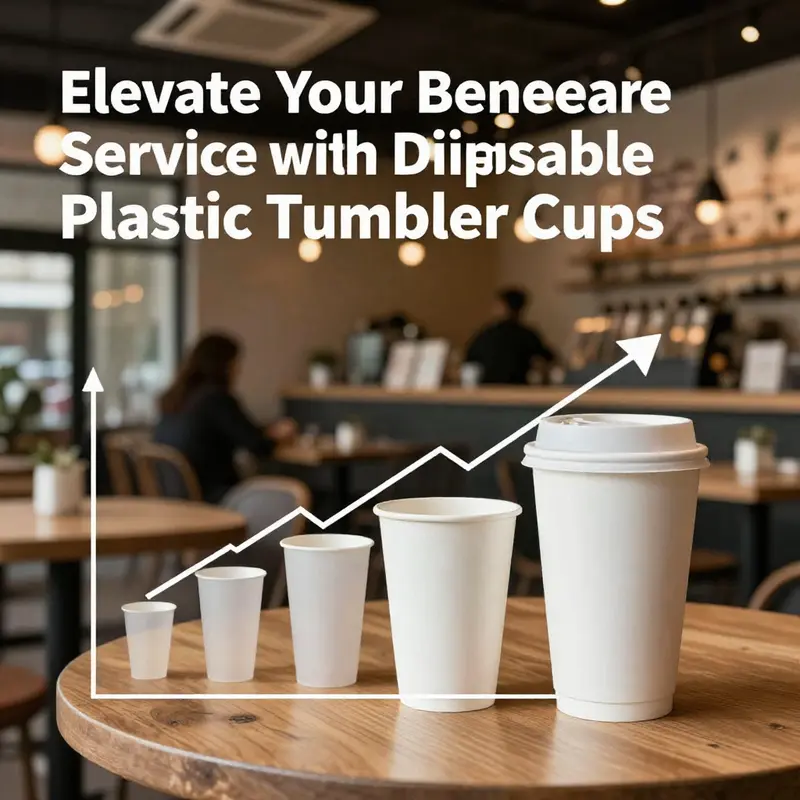
The market for disposable plastic tumbler cups sits at a critical crossroads, where the pull of convenience and economy meets the rising tide of sustainability and regulatory scrutiny. Across food service, hospitality, and retail settings, these cups have become a familiar backdrop to everyday transactions—an embodiment of speed, hygiene, and mass-scale practicality. Yet the numbers tell a more nuanced story. In 2024, the global disposable cups market hovered around 12.44 billion USD and is projected to surge toward 21.69 billion USD by 2032, marking a robust CAGR of about 7.2 percent from 2025 to 2032. This trajectory points to sustained demand, not merely as a fleeting trend but as a structural feature of how modern commerce operates. Cups are not just containers; they are facilitators of quick service, branding impressions, and even moments of social ritual at large events, coffee shop lines, and office buildings where grab-and-go beverages dominate the daily rhythm.
That growth sits atop a layered set of economic forces. Urbanization continues to compress time and expand the scale of daily beverage consumption. As more people move into dense metropolitan cores, the need for lightweight, portable drinkware that can be produced and disposed of in bulk becomes a practical necessity for operators managing staff, space, and throughput. At the same time, rising disposable incomes in many emerging economies expand demand for ready-to-use beverage solutions. Quick-service restaurants, cafes, and convenience retailers lean on the predictable costs and consistent performance of disposable tumblers to keep operations smooth during peak hours and large events alike. The result is a market that rewards efficiency and uniformity—attributes that plastic tumblers deliver in spades when temperature control is not a primary requirement.
Yet the story does not end with raw volume. The economic landscape for disposable cups is increasingly colored by material science progress and environmental awareness. Polystyrene (PS) and polypropylene (PP) cups remain the backbone for many standard-use scenarios because of their light weight and low per-unit cost. Still, the push toward sustainability is reshaping product design and supplier strategies. Bioplastics, compostable alternatives, and recycled-content formulations are moving from niche propositions to mainstream considerations, driven by consumer expectations and regulatory signals in several key markets. In regions where eco-conscious attitudes are pronounced, such as parts of Western Europe, the willingness to trade a portion of convenience for environmental responsibility has become a decisive determinant of purchase choices. Companies that align with this shift by offering greener options can differentiate themselves through branding, certification, and transparent material disclosures.
Even within single-use paradigms, consumers increasingly value hygiene and perceived safety. Disposable cups reduce cross-contamination risks and minimize cleaning regimes, which remains a compelling justification for their continued prevalence in events, hotels, and large gatherings. In a world of tight labor markets and heightened consumer expectations for clean standards, the convenience of single-use items translates into real cost savings for operators—especially when factoring in labor, water, and energy used for washing. The balance between price per cup and total cost of service becomes a dynamic calculus, with buyers weighing the incremental benefits of higher-priced sustainable options against the breadth of demand and the scale of operations.
The economic calculations also factor in the broader supply-chain realities of plastic cup manufacturing. Large-scale production enables price stability and reliable delivery schedules, which are essential when events require tens or hundreds of thousands of units within tight timelines. Capacity, logistics, and energy costs—all sensitive to macroeconomic shifts—play into the pricing of disposable tumblers. In some markets, supply gaps during peak seasons or surges in demand can widen margins for suppliers that maintain robust inventories and flexible production lines. Conversely, sudden policy changes or port disruptions can test resilience, underscoring why manufacturers pursue diversified sourcing, regionalized manufacturing hubs, and modular packaging solutions to meet varied client needs.
Amid these economic and operational pressures, the market is also being steered by a broader transition toward sustainable packaging. Demand for environmentally friendlier options is not a mere trend in a handful of enlightened markets; it is a differentiator that resonates with a wide spectrum of buyers, including event organizers, chain operators, and corporate clients seeking to bolster their sustainability narratives. This shift encompasses not only the raw materials but also end-of-life considerations, such as recyclability, compostability, and the use of recycled content. While some regions actively cultivate recycling infrastructure and consumer participation, others are accelerating the development of compostable alternatives that can fit into municipal waste streams. The result is a mosaic of regulatory landscapes and consumer expectations that operators must navigate with clarity and foresight.
Regional variation plays a pivotal role in how market trends unfold. In markets with strong environmental regulations and visible consumer demand for green products, companies tend to invest earlier in alternative materials, labeling, and supplier partnerships that provide traceability and compliance assurances. In contrast, regions where cost remains the primary driver may lag in adoption unless supplementary benefits—such as improved branding or enhanced consumer perception—are clear and compelling. The German market, for example, shows how environmental attitudes can significantly influence purchase intent, nudging buyers toward options that promise lower environmental impact even if they come at a modest premium. This nuance matters for manufacturers and distributors seeking to tailor portfolios to local preferences while maintaining a unified global supply chain strategy.
From a design perspective, the market is experimenting with features that extend the utility of disposable tumblers without eroding the core value proposition. For instance, lids and insulating elements are increasingly paired with cups to address spill resistance and temperature stability, broadening the appeal for on-the-go consumption and outdoor events. These innovations are not only about preserving beverages but also about enhancing user experience, brand visibility, and overall waste management considerations for operators who must balance guest satisfaction with operational efficiency.
Against this backdrop, the strategic considerations for buyers and suppliers converge on three core axes: cost discipline, sustainability credentials, and innovation velocity. Cost discipline remains foundational; even with rising interest in greener options, buyers must achieve predictable per-unit costs that align with menu pricing, event budgets, or corporate travel expenditures. Sustainability credentials then become a rallying point for procurement—certifications, material disclosures, and third-party validations help buyers compare offerings in a transparent way and communicate value to stakeholders who care about environmental impact. Finally, innovation velocity—how quickly new materials, formulations, and production methods can scale—determines whether a supplier can keep up with evolving customer expectations and regulatory milestones. Companies that combine aggressive R&D investments with scalable manufacturing capabilities are well positioned to capture share as the market matures.
One practical pathway through this complex landscape is the selective integration of greener alternatives alongside traditional options. Operators can maintain the reliability and cost advantages of conventional cups while gradually expanding a line of eco-friendly choices that align with regional demands and brand promises. This staged approach reduces risk, preserves service quality, and allows for learning about consumer reception to different materials and end-of-life outcomes. It also opens a channel for suppliers to demonstrate credible sustainability stories through transparent lifecycle assessments and clear labeling about compostability, recyclability, and recycled content. The goal is not to force a binary decision between plastic and alternatives but to cultivate a portfolio that offers choice without sacrificing performance or price discipline.
In recognizing the broader ecosystem, it is helpful to view disposable tumbler cups as a node in a larger network of packaging decisions. They intersect with paper-based alternatives, reusable systems, and a growing spectrum of smart packaging concepts that track usage and optimize waste streams. While this chapter has focused on the economic and market forces shaping plastic tumbler cups, the adjacent options—such as eco-friendly paper cups or enhanced-insulation designs—represent strategic avenues that can complement or gradually replace traditional single-use plastics in certain contexts. The internal dynamics are less about a single product leap and more about a transition in mindset: from a sole emphasis on per-unit cost to a nuanced calculus that weighs life-cycle impact, convenience, regulatory readiness, and brand integrity.
As the market evolves, the way forward for manufacturers and buyers lies in clear, evidence-based decision making. Operators should monitor not only price trends and capacity metrics but also consumer sentiment signals, certification regimes, and infrastructure developments that influence end-of-life outcomes. By aligning product development with evolving expectations, the industry can maintain the accessibility and hygiene advantages that make disposable tumblers so enduring, while progressively reducing their environmental footprint. The result is a more resilient market where efficiency and responsibility reinforce one another, enabling continued growth without compromising social and environmental commitments.
For readers seeking a tangible example of how sustainability and market dynamics intersect, consider the growing emphasis on scalable, eco-friendly packaging formats that can be adopted across diverse operations. This includes lightweight, recyclable cup systems that can be integrated with existing dispensing infrastructure, alongside compostable alternatives designed to fit municipal waste programs. The practical takeaway is that buyers and suppliers who map a clear path from material choices to end-of-life outcomes will be better positioned to weather price volatility, regulatory change, and shifting consumer expectations while still delivering the everyday convenience that underpins the widespread use of disposable cups.
To explore related packaging options and greener design considerations in a broader sense, you can examine resources that discuss eco-friendly single-wall paper cup solutions and their branding potential. These materials offer a complementary perspective on sustainability within the packaging landscape and provide actionable insights for operators contemplating a more diversified cup strategy. https://greendispopack.com/product/disposable-eco-friendly-printed-logo-single-wall-paper-cup/.
For a deeper, data-driven view of market size, growth, and economic drivers, external readers can consult the comprehensive market analysis. This resource offers a detailed forecast and scenario planning that can inform procurement, product development, and corporate sustainability planning. External resource: https://www.grandviewresearch.com/industry-analysis/disposable-cups-market
Final thoughts
In conclusion, disposable plastic tumbler cups serve as an indispensable resource for beverage service in various settings. From their diverse material options to their functional features, these cups cater to the evolving needs of businesses and consumers alike. While considering their environmental impact, it’s vital for businesses to weigh sustainability against convenience when choosing their disposable products. With this comprehensive overview, decision-makers in bubble tea shops, restaurants, event planning, and catering can confidently select the ideal disposable cup solutions for their service needs.