
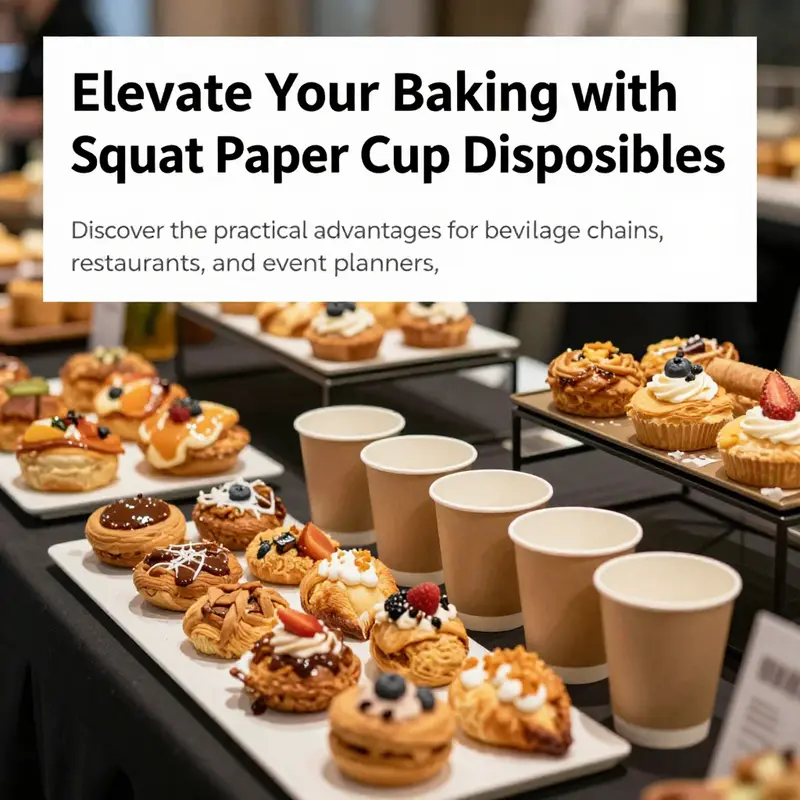
As the culinary world embraces individual portioning and convenience, squat paper cup baking disposables emerge as an optimal solution for bakeries, restaurants, and catering services. These cups are tailored for efficient baking, enabling food service professionals to streamline their offerings while maintaining an aesthetic appeal. In this exploration, we will navigate through five pivotal chapters: the structural design that supports varied batter types, stringent material safety standards, emerging market consumption trends, the sustainability equation in disposable options, and finally, the economic benefits they present to bustling food industries. Each chapter builds towards a comprehensive understanding of how these innovative baking solutions can not only enhance the baking process but also contribute positively to the business landscape.
Small Cups, Big Bake: Engineering, Aesthetics, and Practicality of Squat Paper Cup Baking Disposables
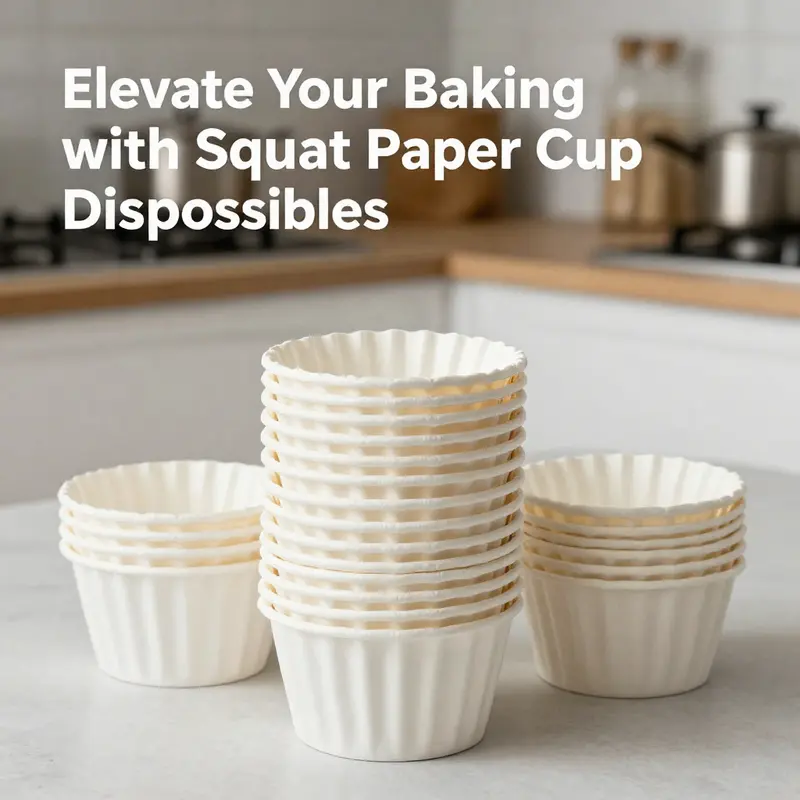
The squat paper cup used for baking sits at an intersection of kitchen practicality and packaging design. It is a small vessel with a surprisingly broad set of functions: it holds batter, withstands heat, facilitates portion control, and contributes to the visual story of a dessert. When chefs and home bakers set batter into a tray, their eyes are as much on the cup’s performance as on the bake itself. The design choices behind these disposables reflect a careful balancing act between form and function. The compact profile is not merely a matter of aesthetics; it is a deliberate decision to maximize stability within a standard muffin pan, to reduce tipping during transport, and to make handling easier for busy service environments. A squat cup lowers the center of gravity, which translates into fewer spills during assembly lines, deliveries, and display. In a bakery or at a catered event, that stability becomes a quiet ally, allowing the baker to focus on timing, texture, and balance in the batter rather than chasing wobbly cups across a tray of hot, rising batter.
Material choice sits at the core of how these cups perform under heat and moisture. They are typically made from food-grade paper, often with a greaseproof or heat-resistant coating. This coating serves several roles at once: it acts as a barrier to batter seeping into the paper, guards against grease migrating into the tray, and helps products release cleanly once cooled. The interior surface is frequently engineered to be smooth, a detail that reduces sticking and promotes an even bake. When the batter is a denser or more delicate mix—think brownie, custard, or soufflé—the cup’s structural integrity becomes even more critical. Reinforced bases and sturdy sidewalls prevent collapse during rise and prevent deformation as steam streams from the oven.
Yet the surface treatment is not merely functional. The aesthetics of these cups have evolved into a branding opportunity and a touchpoint for the consumer experience. Embossed patterns, subtle textures, and even logo stamping turn a disposable item into a tiny stage for presentation. In some markets, coatings or metallic accents—such as rose-gold-like finishes—elevate the cup from a plain vessel to a piece of consumer-facing packaging. This marriage of beauty and utility is increasingly important in places where presentation matters as much as content, such as boutique bakeries, upscale catering, and themed events. The result is a product that travels from oven to display with a presence that feels more premium than its single-use nature would suggest.
Beyond the cup’s immediate function, its design mirrors a broader trend in portion control and workflow efficiency. The squat shape corresponds to a practical arithmetic of baking. Each cup is sized to hold a discrete portion, making consistency of size and bake a repeatable achievement. The range of capacities—from the smallest bite-sized servings to larger individual portions—allows bakers to tailor experiences without changing tools. In this sense, the cup acts as a modular unit within a larger system: it harmonizes with standard muffin pans, stacks neatly for easy inventory, and supports predictable bake times when used with uniform batter. The approach to portioning dovetails with service realities—bakery counters, wedding receptions, and corporate events—where uniformity and speed are assets that translate into a smoother customer experience.
In manufacturing terms, the design reflects a pragmatic supply chain. The materials and coatings are chosen not only for heat resistance but for cost efficiency and scalability. The ability to source in bulk is a practical driver of adoption for both large kitchens and small-scale producers. In many markets, suppliers offer bulk quantities, sometimes starting in the hundred-thousands, with pricing that makes single-use packaging a feasible option for daily operations. The economic logic supports a model where the convenience of single-use cups reduces cleanup time and accelerates turnover in busy kitchens, while still delivering consistent results batch after batch. The production line for squat baking cups often includes customization options—custom printing or die-cut shapes—that enable brands to imprint a distinct look on an otherwise utilitarian object. This capacity for customization makes the cups more than disposable equipment; they become part of a brand’s narrative in-studio, at the event, or on the display counter.
From the chef’s perspective, compatibility with equipment matters as much as the cup’s own properties. These cups are designed to work with metal muffin pans for support during baking. The rigid walls, reinforced bases, and heat-resilient coatings help ensure that the batter rises cleanly without edge topple and that the finished item releases with minimal effort. A smooth interior is a recurring detail because it reduces friction during demolding, preventing batter from tearing or leaving crumbs behind on the cup itself. The result is a clean presentation, a crucial factor when portion accuracy matters for pricing, inventory, and customer satisfaction. The broader takeaway is that the cup is not an inert container; it is an active participant in the bake, shaping outcomes even before the first bite is taken.
As an instrument of branding, these disposable cups offer opportunities to tell a story. The aesthetic choices—embossing, texture, or metallic touches—are cues to quality and care. In many cases, the cups become the first point of contact with the consumer, a micro-display that reinforces the producer’s standards and taste expectations. A well-designed cup can communicate endurance, craftsmanship, and a commitment to clean, elegant presentation, which in turn influences perceived value. For events and venues that emphasize a polished image, such details can lift a dessert from simple fare to a curated experience. The subtle integration of logo and pattern into the cup’s surface is a reminder that packaging and product quality travel together in the consumer’s mind, shaping associations that extend well beyond the bakery case.
Beyond presentation, sustainability remains a live conversation around disposable baking cups. The single-use nature of the cups is at odds with environmental goals, even as the materials are chosen for performance and food safety. For responsible operators, the decision to use disposable cups often comes with considerations of waste streams, recyclability, and possible composting options, depending on local regulations and the coatings used. When sourced responsibly, these disposables can minimize cleanup downtime and maximize throughput, which is particularly valuable for high-volume venues, seasonal pop-ups, and catered experiences where speed and consistency drive success. This is where the future of such products may travel: toward materials and coatings that preserve heat resistance and release, while aligning better with environmental priorities and end-of-life options. The market has already begun to reflect this with a push toward sustainable fibers, barrier coatings that enhance compostability, and printing methods that do not compromise recyclability.
The commercial landscape for squat baking cups is as much about logistics as it is about design. OEM and ODM services enable brands to define shapes, textures, and branding in ways that align with their identity. This level of customization supports a marketplace where small bakeries can compete with larger producers by delivering a distinctive presentation without sacrificing performance. The ability to tailor dimensions, wall thickness, and bottom reinforcement means a cup can be tuned to different batters and baking profiles, from light, airy cupcakes to dense, custard-rich desserts. It is a reminder that a seemingly simple item can embody a sophisticated balance of science, art, and commerce.
For readers exploring sourcing channels, a practical note emerges. The availability of bulk options at favorable unit costs makes it feasible for a wide spectrum of operators to adopt squat baking cups as a standard tool. The decision to adopt such packaging should consider not only unit price but the total cost of ownership, including cleanup time saved, storage space, and the potential uplift in presentation and portion control. In this sense, the cup acts as a small but meaningful lever in the broader systems of kitchen efficiency and customer experience. For those who wish to explore related packaging options and design approaches, a closer look at disposable take-away cups with customizable branding can provide useful insights into how packaging design can align with culinary goals. See for example a related internal resource that discusses disposable take-away cups with custom branding and lid options, which highlights how branding and functionality can be harmonized in a single-use format. disposable-takeaway-paper-cup-custom-logo-kraft-coffee-cup-with-lid
External research and industry references further illuminate the practical side of squat paper cup baking disposables. A detailed supplier page offers a concrete example of the product category, including the plating of a portion-sized cup with a smooth interior and heat-resistant features. For readers who want to inspect the specific attributes that contribute to performance, an external resource provides a deeper look at the construction and intended use of such cups, including material certification considerations and manufacturing standards. External reference: https://www.alibaba.com/product-detail/Disposable-Squat-Paper-Souffle-Portion-Sauce_1600597483559.html
In sum, the squat paper cup for baking is a compact yet highly capable tool. It encodes a series of design decisions—shape, material, coating, and finish—that together determine how reliably a dessert can be produced, displayed, and enjoyed. It is an artifact of a broader baking ecosystem that values efficiency, consistency, and presentation. The next chapter will continue to unpack how these cups interact with other disposable packaging elements and how emerging materials and processes might redefine what a single-use cup can achieve in the kitchen and beyond.
From Paperboard to Oven: Material Standards and Safety Realities of Squat Paper Cup Baking Disposables
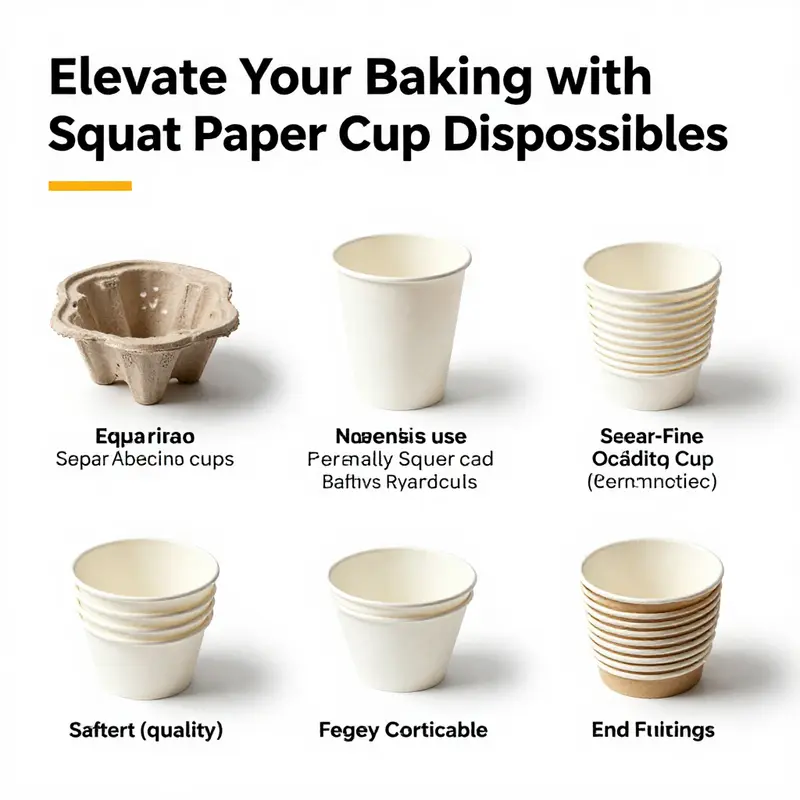
Squat baking cups sit at the intersection of convenience and performance. They must hold batter without leaking, withstand heat, and stay intact on the way from oven to table. The typical cup uses a paperboard body with a moisture barrier and a food-contact inner layer, often a polyethylene film, which provides the essential moisture barrier but also defines the limits of heat tolerance. In ordinary cold applications, these cups are fine, but baking introduces higher temperatures, moisture, and expanding batter. Many standard squat cups are not designed for oven temperatures used to bake cake batters, and the barrier can soften or delaminate if pushed beyond spec. Oven-safe variants use materials such as silicone-coated paper or fiber-reinforced laminates rated for up to around 400 F (204 C). The chemistry of coatings matters: silicone offers nonstick properties but requires compatible processing and migration controls. Food-contact regulations guide material safety: in the U.S., coatings, inks, and adhesives must meet FDA rules (21 CFR Parts 175-176) for direct contact; in the EU, Regulation (EC) No 1935/2004 governs migration limits. Suppliers provide data sheets and certificates that confirm heat resistance, non-toxicity, and compatibility with hot foods. The design trade-off between release, strength, and safety drives geometry choices: shorter height and wider mouths can improve release but increase surface area exposed to batter. A robust inner lining helps channel moisture and reduces sticking, while the outer board must resist moisture and heat to avoid delamination. For bakers and brands, oven-ready cups are accompanied by testing and documentation: migration testing under bake conditions, end-of-life declarations, and supplier COAs. From a sustainability perspective, brands are increasingly exploring compostable or recyclable options, reconciled with local waste streams and consumer expectations. The best practice is to verify that cups labeled oven-safe genuinely endure the intended baking profile, follow the manufacturer’s guidelines for temperature and bake time, and obtain clear labeling for food-contact compliance. For manufacturers, a cross-disciplinary approach – combining material science, quality assurance, and supply-chain transparency – helps ensure consistent performance and a trustworthy end-user experience. Consumers should look for explicit oven-safety labeling and refer to the accompanying data sheet if available, particularly for recipes that push batter density or require longer bake times. As the market evolves, the balance between performance, safety, and sustainability will guide new cup architectures and coatings that meet stricter migration limits, support responsible disposal, and maintain the convenience that makes squat baking cups popular.
Small-Sized, Big-Bold: Market Currents in Squat Paper Cup Baking Disposables
When a baker slides a tray of gleaming, squat paper cups into a preheated oven, the scene feels almost sculptural: tiny vessels poised to transform batter into a constellation of single-serve desserts. The squat paper baking cup is more than a disposable vessel; it is a compact instrument of portion control, presentation, and efficiency. Its design marries the needs of home kitchens with the demands of commercial bakers, caterers, and event planners who prize speed without sacrificing consistency. In dense batters and delicate soufflés alike, these cups must hold their shape, resist batter seepage, and release their prizes cleanly once cooled. They rely on food-grade paper paired with greaseproof or heat-resistant coatings that prevent sticking and leakage while preserving the integrity of the crust and the batter’s rise. This combination creates a practical, almost invisible, backbone for portioned baking that aligns with modern workflows—where speed, cleanliness, and uniformity matter as much as taste and texture.
The squat cup’s most compelling attribute is its sturdiness. Unlike thinner liners that sag under heavy batter or puff up during a bake, a well-constructed squat cup maintains its form through the crucial minutes when structure matters most. This sturdiness is especially valuable for dense batters—think brownie layers or custard-based desserts—where the risk of collapsing or warping can undermine the final presentation. The design science behind these cups emphasizes stable edges, a firm base, and a rim that lifts cleanly away from the baked product. In practical terms, that translates to fewer broken cupcakes, fewer muffin-tin tangles, and a smoother workflow that supports high-volume production without resorting to heavy-duty equipment.
Beyond performance, the squat design optimizes storage and display. The compact footprint allows bakers to maximize space in standard muffin trays, while the clean, unadorned aesthetic presents a modern, minimalist look that complements upscale dessert displays at weddings, corporate events, or pop-up markets. The visual appeal matters because the cup becomes part of the dessert’s first impression. A row of evenly proportioned, pleasantly rounded cups can elevate perception even before the first bite, reinforcing a sense of reliability and quality that customers come to expect from a brand or a bakery’s daily offerings.
Manufacturers often offer a range of capacities, from fractional portions to more generous servings, enabling both small treats and substantial single-serving desserts. The notes from industry sources point to a spectrum that might span roughly half an ounce up to about three-quarters or more for certain designs. In this context, the squat cup’s versatility stems not only from its size but also from its compatibility with different baking engines and pans. Many models rely on a pairing with metal muffin pans for structural support during baking, ensuring the cups retain their intended shape from batter pour to cooling rack. This synergy between cup and pan is a practical reminder that even disposables are most effective when used as part of a cohesive, repeatable process.
Coatings and materials are another layer of consideration. The goal is a receptive surface for batter that still releases cleanly after baking. Greaseproof and heat-resistant liners are common, yet the trade-offs between moisture resistance, release ease, and compostability continue to shape product development. Bakers who champion precision in portion control appreciate coatings that minimize batter adhesion while avoiding overpowering flavors or aromas that could subtly alter the finished product’s taste. As consumer expectations evolve toward more sustainable options, suppliers are increasingly evaluating coatings and paper grades that balance performance with environmental impact. In practice, responsible sourcing becomes a shared responsibility among manufacturers, suppliers, and buyers who demand both quality and accountability.
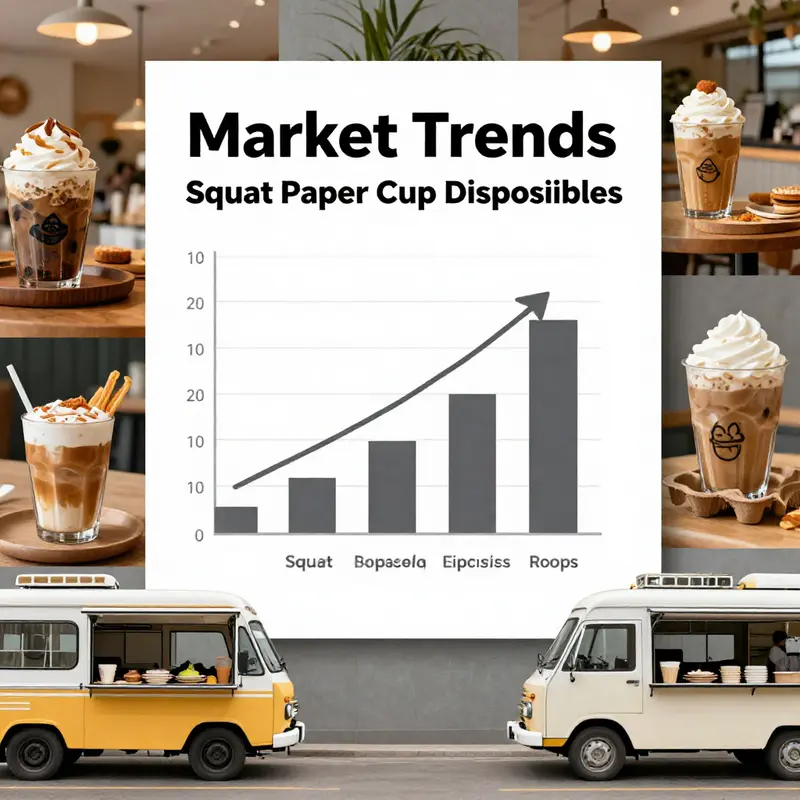
The market context for squat baking cups exists within a broader ecosystem of disposable paper products. The knowledge base confirms that while specific trends around squat cups in baking are not yet documented in depth, the overall disposable paper cup market offers relevant signals. Global consumption of disposable paper cups exceeded 220 billion units in 2018, with a per-capita figure around 32 units. The market was valued at roughly USD 8.65 billion in 2025 and is projected to grow at a CAGR of about 9.17% from 2026 to 2033. Such growth is driven by rapid urbanization and rising tea- and coffee-drinking cultures in many regions, notably in large, dense markets where single-serve formats are convenient for busy lifestyles. Even when the focus shifts toward beverages, the underlying demand for efficient, single-use packaging—whether for drinks or small desserts—creates a familiar demand pattern that can spill into baking applications.
A key dynamic shaping the broader market is the move toward sustainability. Environmental concerns are prompting buyers to scrutinize disposal methods, recyclability, and the lifecycle of single-use products. For squat baking cups, this translates into a balancing act: maintain performance and cost efficiency while offering eco-conscious options. Some producers highlight compostable liners, recycled-content papers, or coatings that enable composting with appropriate industrial infrastructure. This tension between convenience and responsibility can influence product choices in professional kitchens and at scale events, where the economics of disposables must align with environmental policies and consumer expectations. The trajectory suggests a future where customization and responsible materials coexist with reliability and affordability, rather than replacing disposables with long-term reusables overnight.
From a procurement perspective, the supply chain dynamics inform decision making as well. Leading manufacturers, particularly in high-volume regions, provide OEM/ODM services that include custom printing, diverse shapes such as square or round designs, and logo branding. This capability allows brands to align their dessert presentations with corporate aesthetics or event themes, transforming a simple cup into a piece of branded packaging. The economics of scale mean that bulk orders can reach impressive price points, with vendors citing minimums around three hundred thousand pieces and unit costs that can be as low as a few cents per cup—roughly in the low two-to-three cent range depending on specifications, coatings, and decorations. At these volumes, sight and feel matter as much as function; a cup that looks premium and performs impeccably can justify the investment in branding and customization.
In practice, buyers navigating this space must assess a few practical questions. Will the coating hold up under a long event where the cups may be touched and reused for decoration or sampling? Does the chosen sleeve or liner support easy release for a broad range of batters, from delicate chiffon to denser brownie batters? How does the design influence stacking, transport, and on-site setup? And perhaps most pragmatically, what is the total cost of ownership when considering disposable options against the labor savings of a more streamlined batch process? The answers lie in a careful balance between performance requirements, display aesthetics, and total cost, including waste disposal considerations and any sustainability programs that a business commits to.
One practical takeaway for readers charting a path into squat baking cups is to view them as part of an integrated packaging and baking strategy rather than as a stand-alone product. The cups are best deployed when they align with the bakery’s branding, production workflow, and environmental commitments. For those exploring packaging options that share foundational materials but extend into other contexts, a representative option in the kraft family is instructive. See disposable kraft-thick paper cup for hot drinks for a sense of how similar materials are used in ancillary applications, which can inform decisions about coatings, thicknesses, and branding opportunities across different product lines.
Even as these cups gain traction in baking applications, the broader market signals remain decisive. The disposable paper cup segment continues to expand, driven by urbanization, hospitality growth, and the demand for convenient, single-serve formats. Yet sustainability remains a powerful countervailing force. Buyers increasingly expect traceability and eco-friendly options, which pushes manufacturers to innovate in coatings, materials, and end-of-life solutions. In this evolving landscape, the squat baking cup serves as a microcosm of how packaging technology, consumer behavior, and environmental considerations intersect. It embodies a balance of form and function: a small vessel capable of supporting sizable flavors, delivered efficiently in a form that supports busy professionals and conscientious consumers alike. As the market matures, those who can couple reliable performance with responsible materials, customization, and scalable supply chains are best positioned to capture both the practical and aspirational values that define modern baking experiences.
External resource: For a broader market overview that illuminates the terrain in which these cups operate, see the disposable paper cups market overview. External resource.
Sustainable Portions: Rethinking the Environmental Footprint of Disposable Squat Paper Cup Baking Disposables
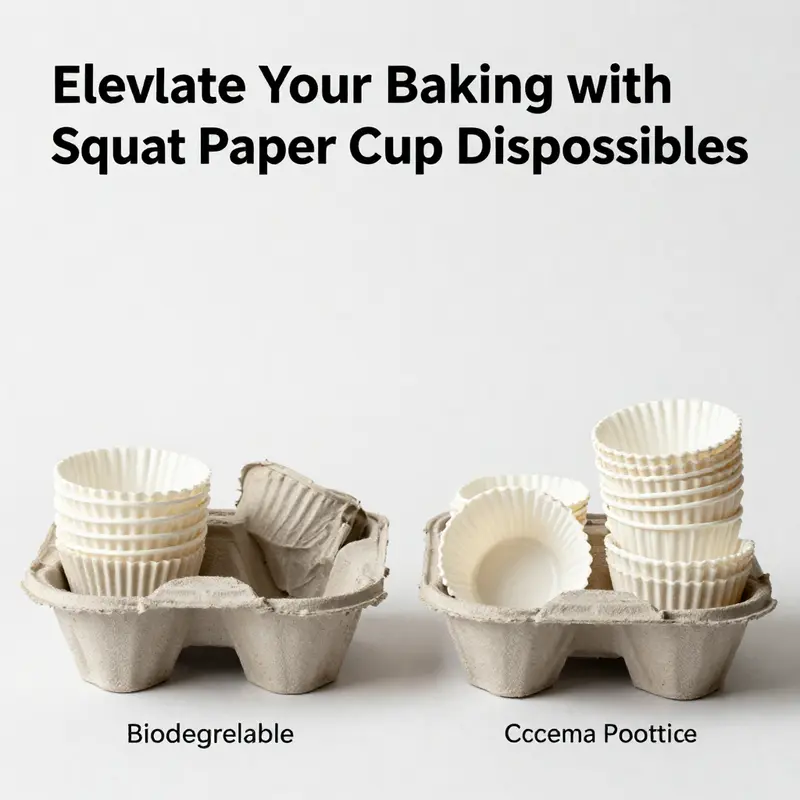
Disposable squat paper cup baking sits at a quiet intersection of convenience and consequence. In modern kitchens, these compact vessels allow a baker to portion batter with precision, bake in a single dish, and plate desserts with a neat, uniform silhouette. The squat form—shorter than a standard muffin cup—maximizes oven and pantry space and gives a clean, contemporary look to cupcakes, custards, or mini soufflés. Yet as soon as the aroma of crust and caramel fills the room, the conversation inevitably shifts from technique to responsibility. The very attributes that make squat cups appealing—their single-use nature, their ease of disposal, their compatibility with mass production—are the traits that complicate their environmental footprint. To understand sustainability here, one must trace the life of a single cup from tree or recycled fiber to tray, batter, and beyond. It is a case study in how small choices accumulate into collective waste, and how design, consumer behavior, and policy intersect in the kitchen. The paradox is practical: technique can still honor stewardship if we understand where waste starts and how it travels after the oven cools. The tension between culinary craft and environmental accountability is not a verdict against ingenuity; it is a call to map waste paths clearly and redesign decisions around them.
From Portion to Profit: The Economic Power of Disposable Squat Paper Cup Baking in the Modern Bakery
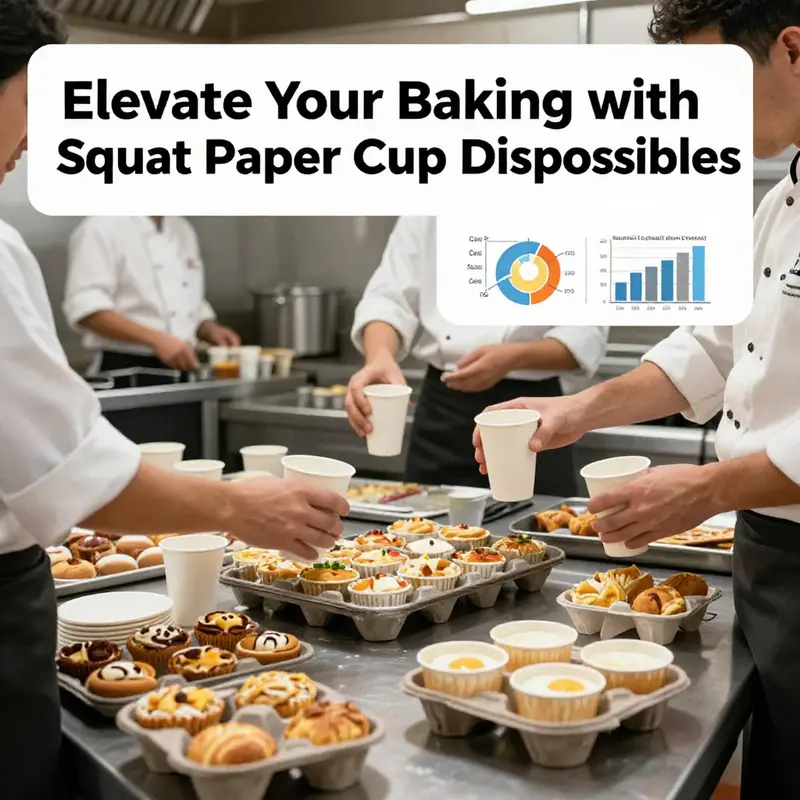
In the rhythm of a busy bakery, small choices ripple into measurable returns. Disposable squat paper cup baking liners appear simple, almost invisible, but they shape the tempo of production, the consistency of every bake, and the bottom line that keeps a business resilient. The squat form, reinforced by a greaseproof or heat-resistant coating, cradles each batter with predictable support. Size matters too: cups scaled from fractions of an ounce to a few ounces determine portion control, oven load, and display potential. When these cups nestle into standard muffin pans, they optimize the use of oven real estate, reducing gaps and empty space. The result is a smoother bake, fewer overflow incidents, and a uniform finish across dozens of trays, which translates into less waste and more reliable yield. As production lines hum, the cups become the quiet workhorses that keep throughput stable and costs predictable across shifts and seasons. This streamlining is not a single benefit but a system of efficiencies that accumulate, especially in high-volume environments where even minor deviations can multiply into substantial waste or rework.
The economic logic extends beyond bake quality and into the core mechanics of a facility. When every cup holds a consistent amount, there is less guesswork, less variance, and fewer scrapped products. Uniform browning and texture across batches reduce the rate of defective goods. In turn, material costs shrink because fewer ingredients are wasted and batch-to-batch rework is minimized. In a world where demand can wobble from week to week, the ability to sustain steady output without sacrificing quality is a form of market resilience. The cups act as a stable variable in an otherwise variable equation, locking in predictable performance and enabling more accurate planning of manpower, oven time, and supply orders. For managers watching the calendar, that predictability is a direct contributor to profitability, not a marginal improvement.
All bakeries face the specter of contamination risk, especially those that run multiple product lines or handle allergen-sensitive offerings. Disposable liners dramatically limit cross-contamination by removing the common touchpoints that might transfer flavors, residues, or traces between batches. The financial impact of this safeguard can be substantial. The costs associated with recall, reputational damage, or regulatory penalties far exceed the price of a box of liners. In facilities that prepare diverse items—nut-based, dairy-free, gluten-free—the liners become a practical barrier that protects both consumers and the brand. They offer a straightforward, scalable risk-management layer that is as valuable as any traceability system or sanitation protocol. This is not merely about compliance; it is about preserving consumer trust and long-term viability in a competitive landscape.
Maintenance and operating costs are likewise influenced by the disposable approach. Reusable pans, molds, and trays demand regular cleaning, sanitizing, and sometimes specialized equipment. The labor hours tied to washing, drying, and sanitation can be substantial in a high-output setting. By contrast, disposable liners convert that recurring maintenance burden into a one-time, per-unit cost. The labor saved—along with reduced water usage and energy for washing cycles—accumulates into meaningful operating expense reductions. In places where labor is a major cost driver, the efficiency gains from not scraping batter from metal surfaces compound quickly. The economic picture, then, favors a disposable solution when volume warrants it, because savings are realized not only in direct material costs but also in the speed and efficiency of changeovers between product lines.
Flexibility is another edge of the disposable paradigm. Modern bakeries must pivot rapidly—from seasonal flavors to limited-time offerings—without ballast from heavy, multi-use equipment. Disposable liners align nicely with just-in-time production models. A facility can switch recipes, scales, or formats with minimal equipment-related friction, knowing the cups will perform consistently regardless of batter density or sugar load. This adaptability reduces the need for capital tied up in an extensive inventory of reusable molds and pans that may lie idle when demand shifts. In practice, this means faster product introductions, shorter time-to-market, and a more responsive business model. The cumulative effect is a broader capacity to test ideas, refine recipes through real-world feedback, and integrate new SKUs without destabilizing the line.
Beyond the immediate bake room, the packaging ecosystem surrounding these disposables shapes value in marketing and branding. For brands that seek a coherent display—from the counter to the catering event—the disposable cup becomes a stage for aesthetics as well as function. The potential to pair liners with coordinated packaging options enhances perceived value and creates a streamlined consumer experience. For example, a packaging option such as a disposable octagonal box in kraft paper can be used to present a finished dessert in a visually cohesive way, reinforcing brand identity while maintaining the practical benefits of disposability. This synergy between product form and packaging is not mere window-dressing; it translates into greater impulse buys, stronger shelf presence, and a more unified story across channels. The packaging choice matters for how a dessert is perceived, stored, transported, and finally consumed, and it can influence repeat purchases as part of a branded, memorable experience. See an example of such packaging concept in related options described in industry resources: disposable octagonal kraft paper packaging.
From a supplier perspective, the economics of scale matter. The ability to source liners in bulk matters, especially for large bakeries or contract manufacturers that run continuous, high-volume cycles. The per-unit cost, while modest, compounds when multiplied across thousands of cavities in a single shift. Bulk purchasing enables further price discipline, along with stronger terms for QA and traceability. For facilities that insist on rigorous food-safety assurances, the economic argument strengthens: high-volume procurement with robust certifications ensures consistent quality, reduces risk, and supports compliance with regulatory expectations. In the end, the business case for disposable liners rests on a blend of reliability, throughput, quality consistency, risk management, and the strategic flexibility to scale production up or down with market demand.
To frame the financial picture more concretely, consider the lifecycle costs. A disposable liner is a direct material input, yet it unlocks significant savings in labor, water, energy, and downtime. When a line can switch between product types in minutes rather than hours, capacity is preserved and operating costs per unit decline. Even when the upfront price per unit seems modest, the true ROI emerges through improved yield, reduced waste, and more predictable production calendars. For modern bakeries aiming to optimize cash flow and minimize risk, investing in quality disposable liners is a strategic financial decision—one that supports sustainable growth and competitive advantage across a dynamic market. The continuous improvement mindset a production team brings to line setup, batching, and changeovers is amplified when the liner’s performance is consistently reliable, reinforcing the economic case with every batch.
As this logic unfolds, brands may also explore adjacent packaging and display opportunities that align with the disposables strategy. A cohesive approach—where the cup, the liner, and the display packaging share a common design language—optimizes both procurement and consumer appeal. Even small branding cues, such as color, texture, or micro-graphics, can be implemented on or around the disposable cups and their accompanying packaging, delivering a polished, market-ready presentation without sacrificing the efficiency gains inherent to single-use formats. In this sense, the economic benefits are not solely about cost savings; they extend to higher perceived value, stronger branding, and a more compelling in-store or event experience.
Internal link: for brands exploring related packaging options that complement disposable cup systems, see the broader packaging concept of disposable octagonal kraft paper packaging. disposable-octagonal-box-restaurant-food-kraft-paper-packaging
In sum, the economic benefits of using squat paper cup baking liners are multi-dimensional. They sharpen production efficiency and consistency, reduce cross-contamination risks, lower labor and water usage, and enable agile, just-in-time production. They also support branding and presentation in ways that can elevate a product’s market position without adding complexity to the operation. For modern bakeries, the math is compelling: a small, reliable disposable input can drive larger, tangible gains across yield, safety, speed, and brand equity. When evaluated alongside supplier offerings, volume discounts, and the potential for value-added packaging alignment, disposable liners emerge not as a mere convenience but as a strategic asset that anchors both operational discipline and growth. External market context and broader industry trends further underscore this perspective, offering frameworks for understanding how these disposables fit into evolving consumer expectations and regulatory landscapes. For a broader market context on baking and cooking paper, see the external resource below.
External resource: https://www.credenceresearch.com/report/baking-and-cooking-paper-market
Final thoughts
Adopting squat paper cup baking disposables in your culinary practice offers a multifaceted enhancement to both efficiency and presentation. Their structural design, compliance with safety standards, and alignment with current sustainability trends position them as an invaluable resource in the baking industry. As we move towards a more eco-conscious and efficient future, these cups provide a practical and economically beneficial solution for beverage chains, restaurants, food trucks, and event planners. By choosing high-quality disposable options, businesses not only streamline operations but also enhance their appeal in an ever-competitive market.